
Steyr Audio Tour: Castles, Churches & Secrets Along the Enns
Steyr is a city built on the clash of swords and the whispers of ancient power. Its cobblestones carry the weight of bloody rebellions and high-stakes political intrigue that shaped the heart of Europe. Unlock these secrets with this self-guided audio tour. Wander beyond the postcard facade to uncover buried scandals and forgotten figures that most travelers walk right past. Why did the master builders of the parish church leave a chilling anomaly in the architecture? What dark pact was forged within the silent, vaulted halls of Lamberg Castle? Which specific item was hidden under the town square floorboards to bribe a king? Traverse through centuries of drama as history comes alive at your fingertips. Feel the pulse of the past beneath your feet as you transform from a casual observer into a keeper of the city’s deepest truths. Start your journey and uncover the steel-forged mysteries of Steyr today.
Tour preview
About this tour
- scheduleDuration 40–60 minsGo at your own pace
- straighten5.2 km walking routeFollow the guided path
- location_on
- wifi_offWorks offlineDownload once, use anywhere
- all_inclusiveLifetime accessReplay anytime, forever
- location_onStarts at St. Mary's Church
Stops on this tour
Look for the pale stone facade set slightly back from the square, with two towers flanking a triangular gable and a statue of the Virgin above the round-arched main portal.…Read moreShow less
Open dedicated page →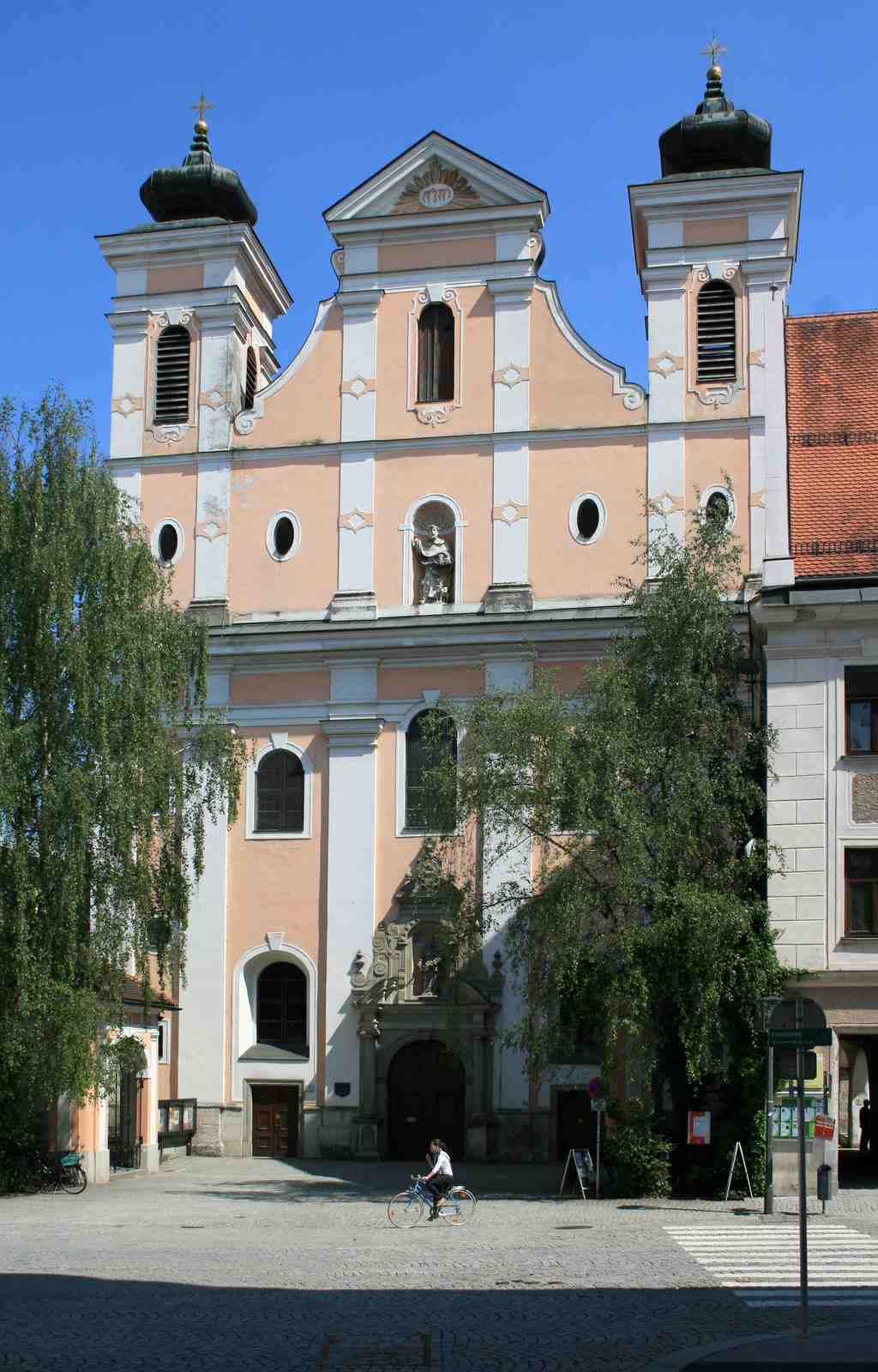
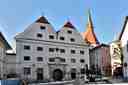
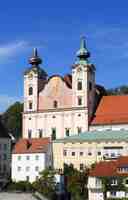
St. Mary's ChurchPhoto: Lewenstein, Wikimedia Commons, CC BY-SA 3.0. Cropped & resized. Look for the pale stone facade set slightly back from the square, with two towers flanking a triangular gable and a statue of the Virgin above the round-arched main portal.
Despite its prime spot on the Stadtplatz, Saint Mary’s is not Steyr’s parish church. It is the city parish’s daughter church, which means it serves worshippers from several nearby parishes, while baptisms, weddings, and funerals happen here only rarely.
Dominicans from Krems arrived in fourteen seventy-two and bought a house here from Georg and Wilhelm von Losenstein. They finished the church in fourteen seventy-eight... and then Steyr’s city fire of fifteen twenty-two wiped out both church and monastery. In fifteen fifty-nine, Emperor Ferdinand the First let the citizens rebuild the complex for an evangelical Latin school, the era’s serious academic school. The deal came with a clause only a lawyer could love: if the Dominicans ever needed it back, they could reclaim it for compensation. In fifteen seventy-two, the flood helped the argument along by collapsing the school’s eastern wing. All sixty students living there escaped just in time.
During the Counter-Reformation, the Catholic campaign to win ground back from Protestantism, the Dominicans returned: the church in sixteen twenty-four, the monastery in sixteen twenty-five. In the early sixteen forties, master mason Hans Tanner gave the church its baroque character, taking Munich’s Saint Michael as a model. Above you, Mary stands over the portal; higher up, Saint Dominic occupies the gable, just in case ownership needed clarifying.
If you check the before-and-after image, you’ll see the church barely changed while the square around it quietly moved into the present. On your screen, the interior photo shows the Rococo high altar and the packed, theatrical pulpit added in the seventeen seventies.
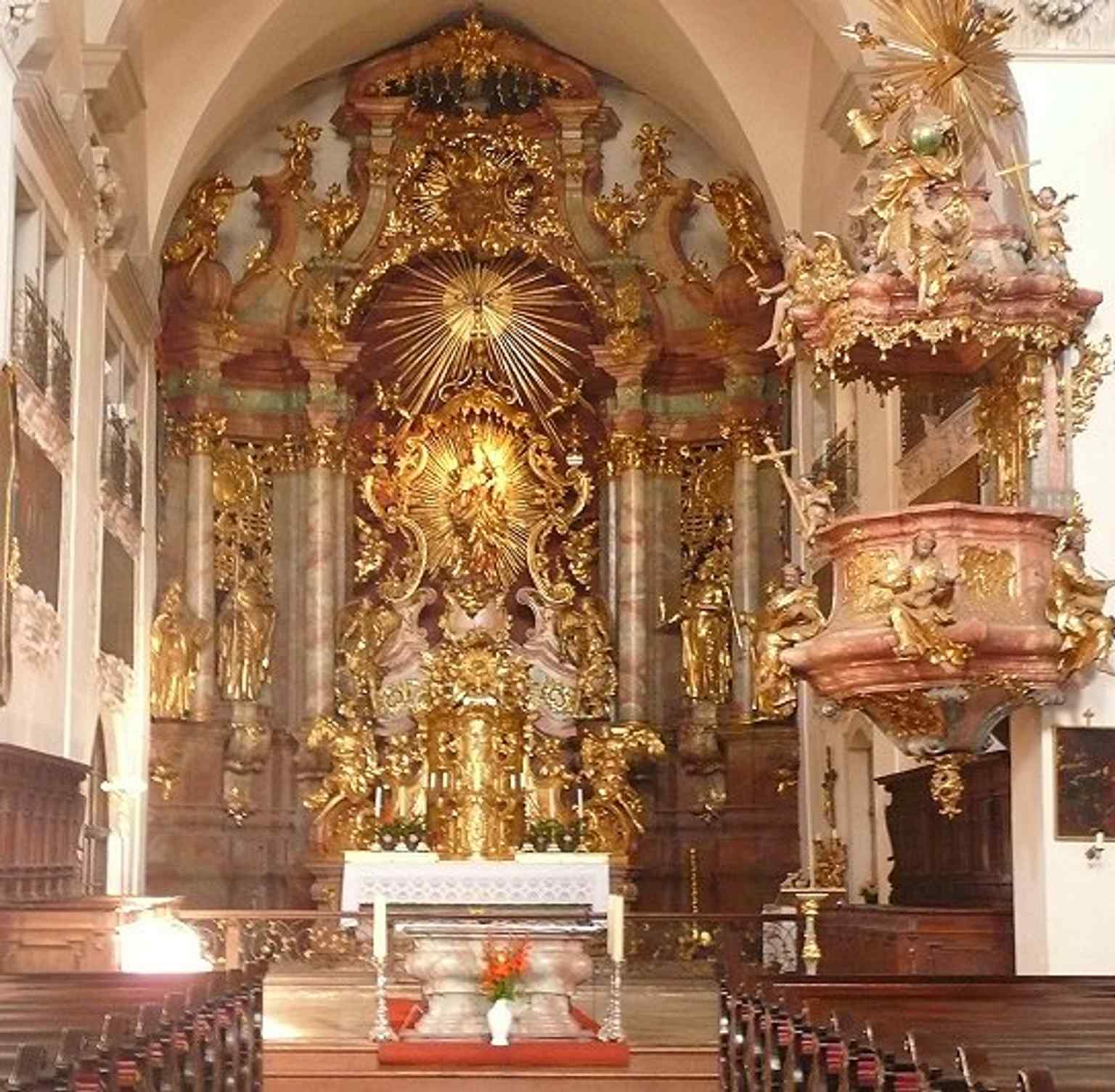
The high altar and pulpit inside the Marienkirche, reflecting the church’s rich Rococo interior updated in the 1770s.Photo: Anzi9, Wikimedia Commons, CC BY-SA 3.0. Cropped & resized. Later, the Jesuits took over, the front monastery wing became a post office, and the old refectory - the monks’ dining hall - spent years as a machine workshop. Efficient, if not exactly contemplative.
Saint Mary’s has changed roles repeatedly, but it still keeps its composure. Take a last look at the twin towers, and when you’re ready, we can head on to the next stop.
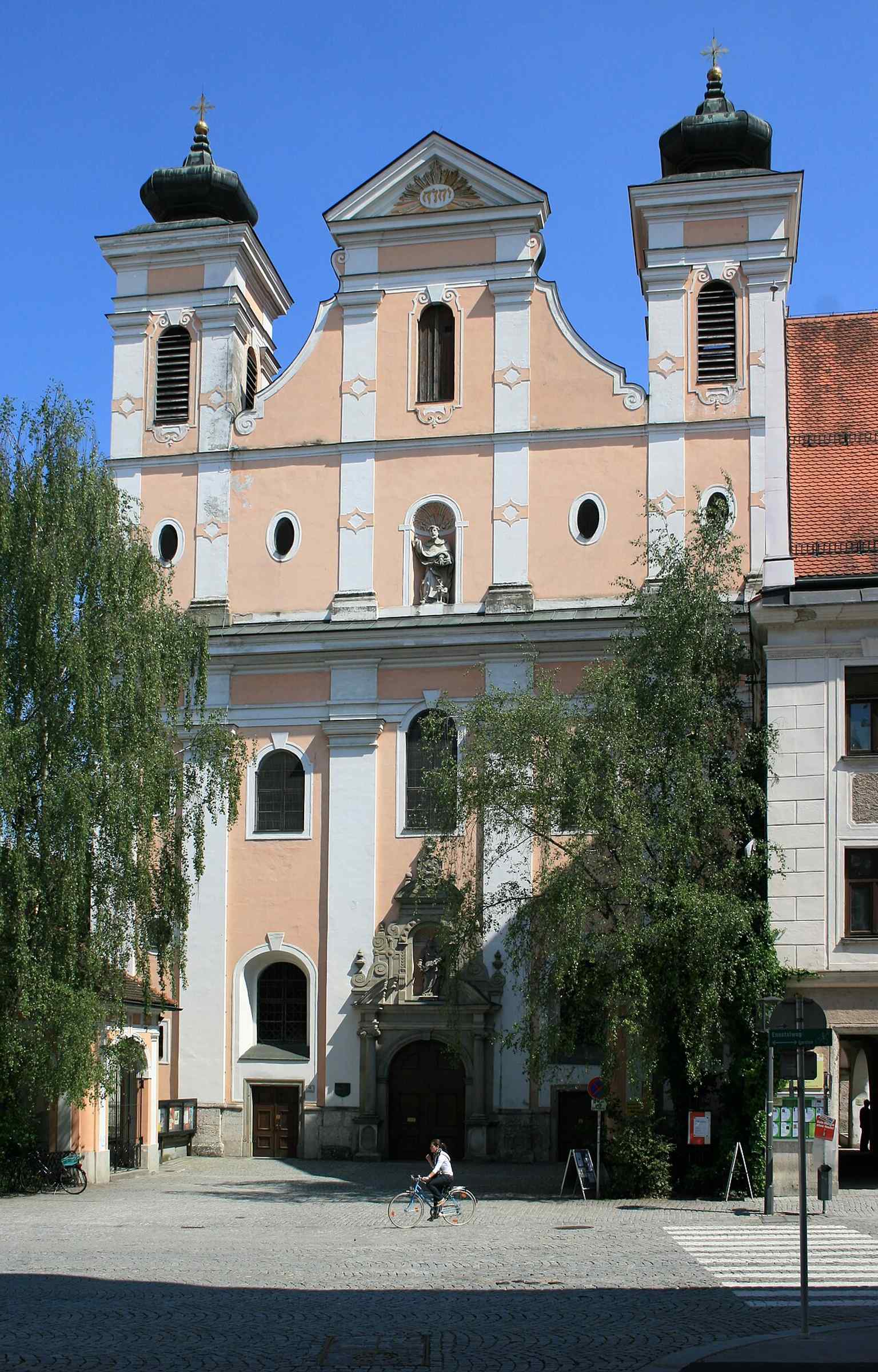
The church’s twin-tower facade on Steyr’s main square, matching the source’s description of a slightly recessed frontage facing the Stadtplatz.Photo: Christoph Waghubinger (Lewenstein), Wikimedia Commons, CC BY-SA 3.0. Cropped & resized. 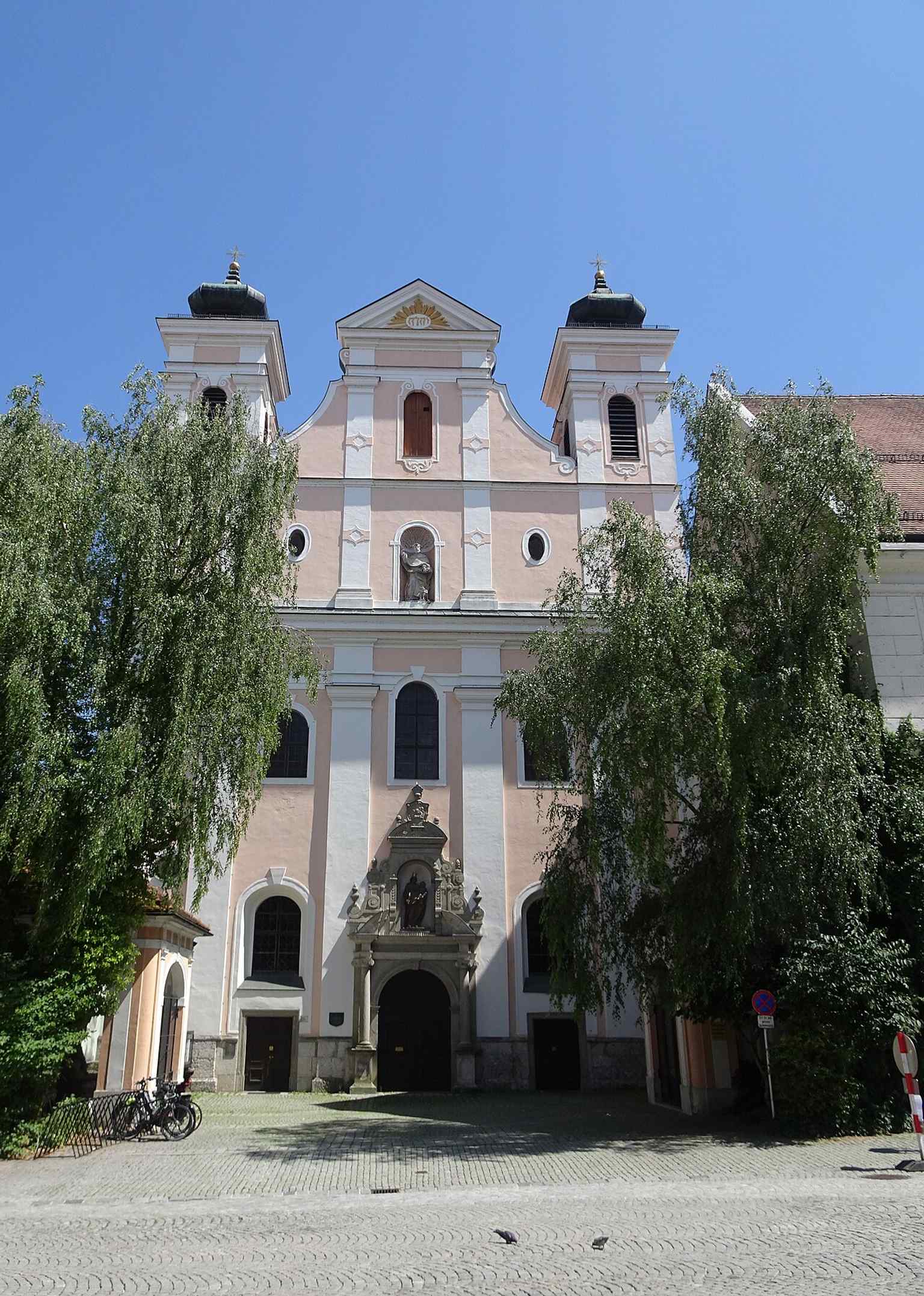
A clear full view of St. Mary’s Church in Steyr, useful for showing the landmark’s position in the historic town center.Photo: Palickap, Wikimedia Commons, CC BY-SA 4.0. Cropped & resized. 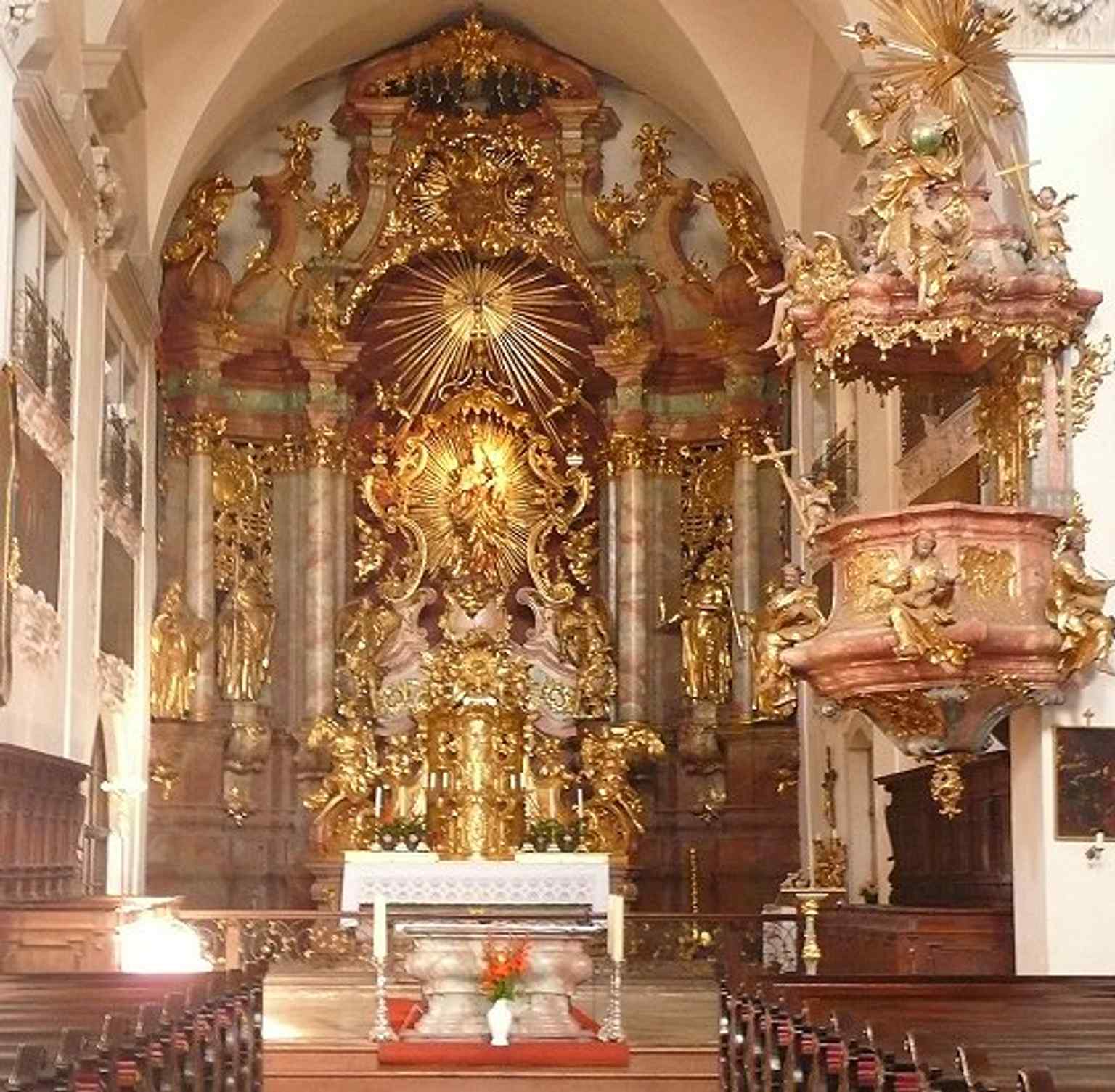
The pulpit detail inside St. Mary’s Church, one of the notable furnishings installed during the 1774–1778 renewal.Photo: Christoph Waghubinger (Lewenstein), Wikimedia Commons, CC BY-SA 3.0 at. Cropped & resized. 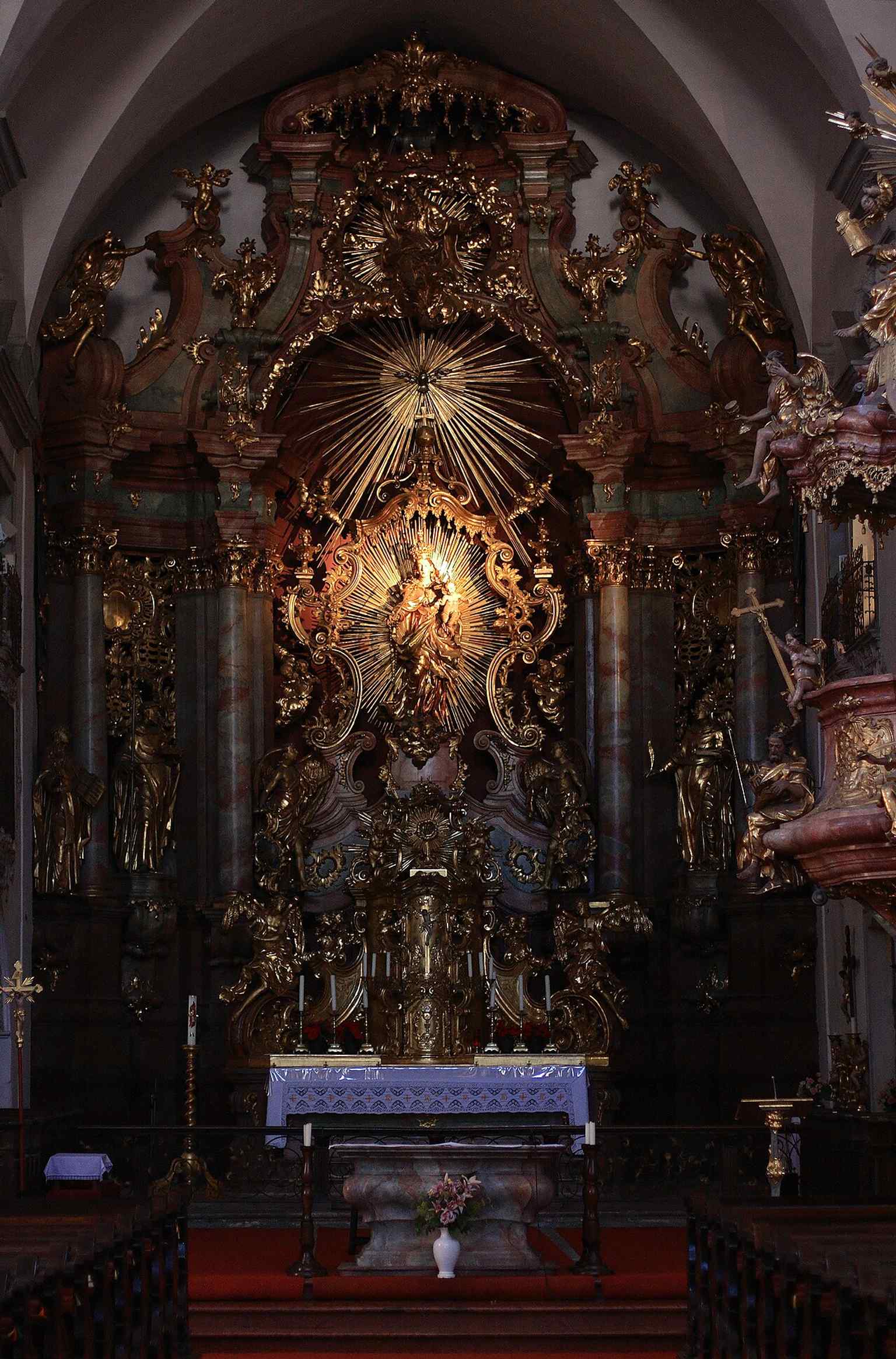
The choir area of the church, part of the baroque interior history shaped after the Counter-Reformation.Photo: Christoph Waghubinger (Lewenstein), Wikimedia Commons, CC BY-SA 3.0 at. Cropped & resized. 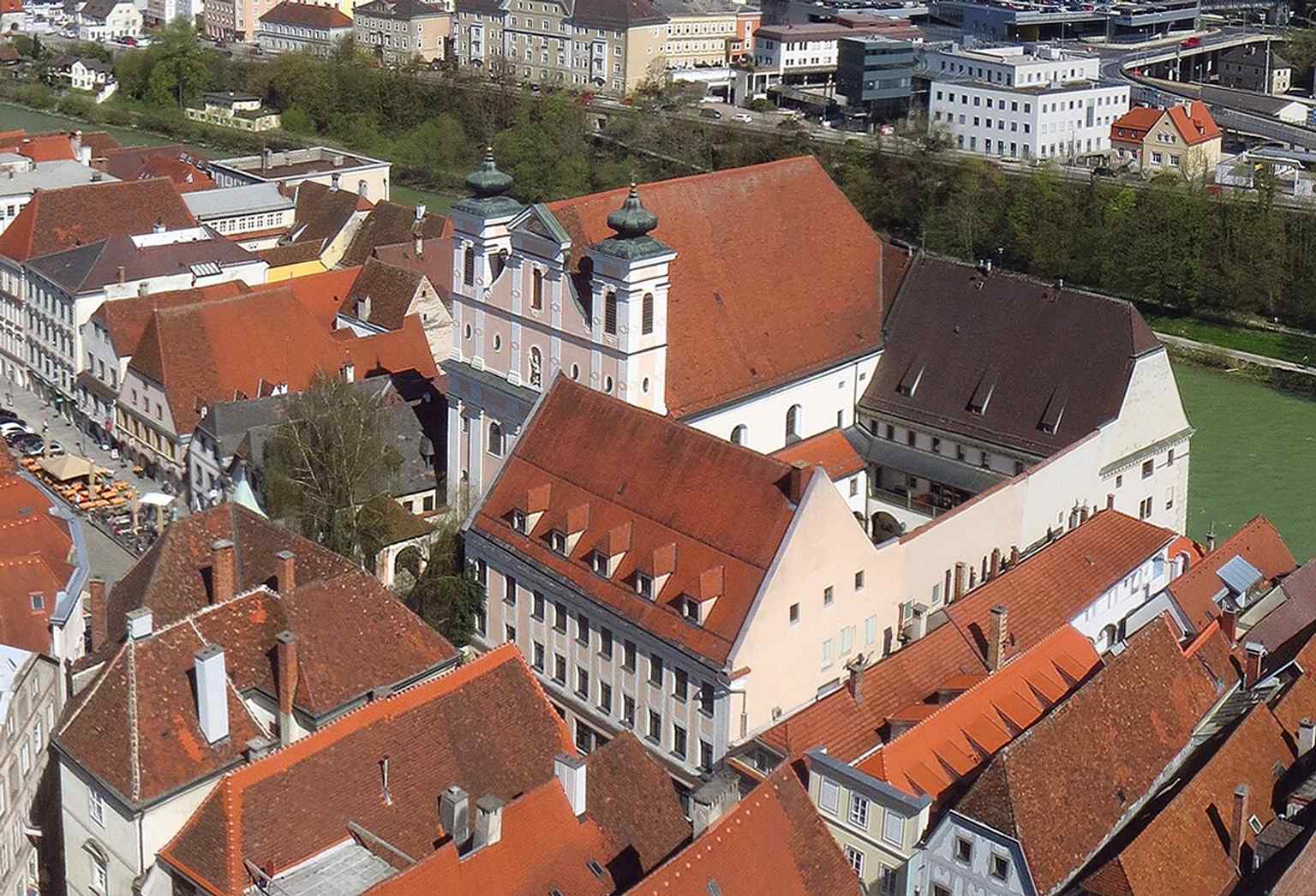
A tower view over the Marienkirche and former monastery buildings, helping place the church within Steyr’s old town ensemble.Photo: Photograph: BodipicBearbeitung (Ausschnitt erstellt, gedreht): Christoph Waghubinger (Lewenstein), Wikimedia Commons, CC BY-SA 4.0. Cropped & resized. On your left stands a broad pale stone Renaissance storehouse with a stepped double gable, rows of barred windows, and an iron waterspout poking up between the split roofs. This…Read moreShow less
Open dedicated page →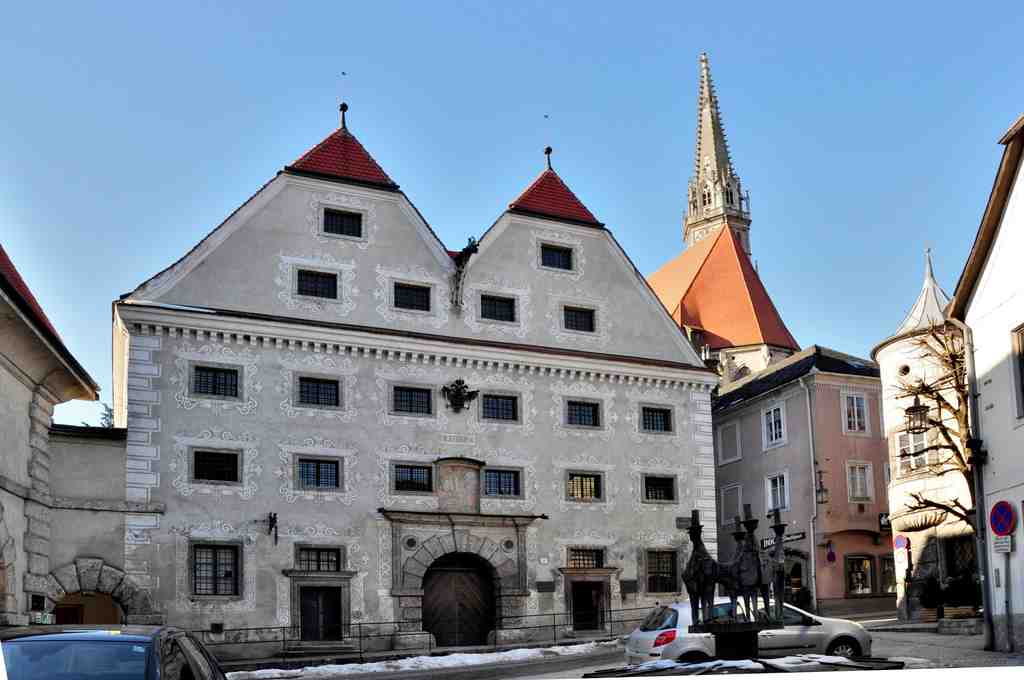
Innerberger StadelPhoto: StadtmuseumSteyr, Wikimedia Commons, CC BY-SA 4.0. Cropped & resized. On your left stands a broad pale stone Renaissance storehouse with a stepped double gable, rows of barred windows, and an iron waterspout poking up between the split roofs.
This is the Innerberger Stadel, raised around sixteen twelve and sixteen thirteen as a serious piece of utility architecture... which then acquired unusually elegant sgraffito, the scratched plaster decoration framing its doors and windows. In sixteen twenty-eight, the Innerberger iron consortium bought it, and the building took their name. Right over the heavy main gate, a fresco from the story of Joseph advertises the point of the place: storing provisions. Medieval branding, just with more Bible. Above that, you can spot the date sixteen twelve, and on the second floor a haloed double eagle carries the iron guild's coat of arms.
Inside, the ground floor uses vaulted rooms, some with stucco, while the upper floors rely on massive timber beams built to carry weight. If you want, glance at the before-and-after image; one year it looks calm, the next it's wrapped in scaffolding for its later museum revival.
Now it holds the city museum and the Steyr nativity theater. Take one last look, and when you're ready, we’ll continue to the next stop.
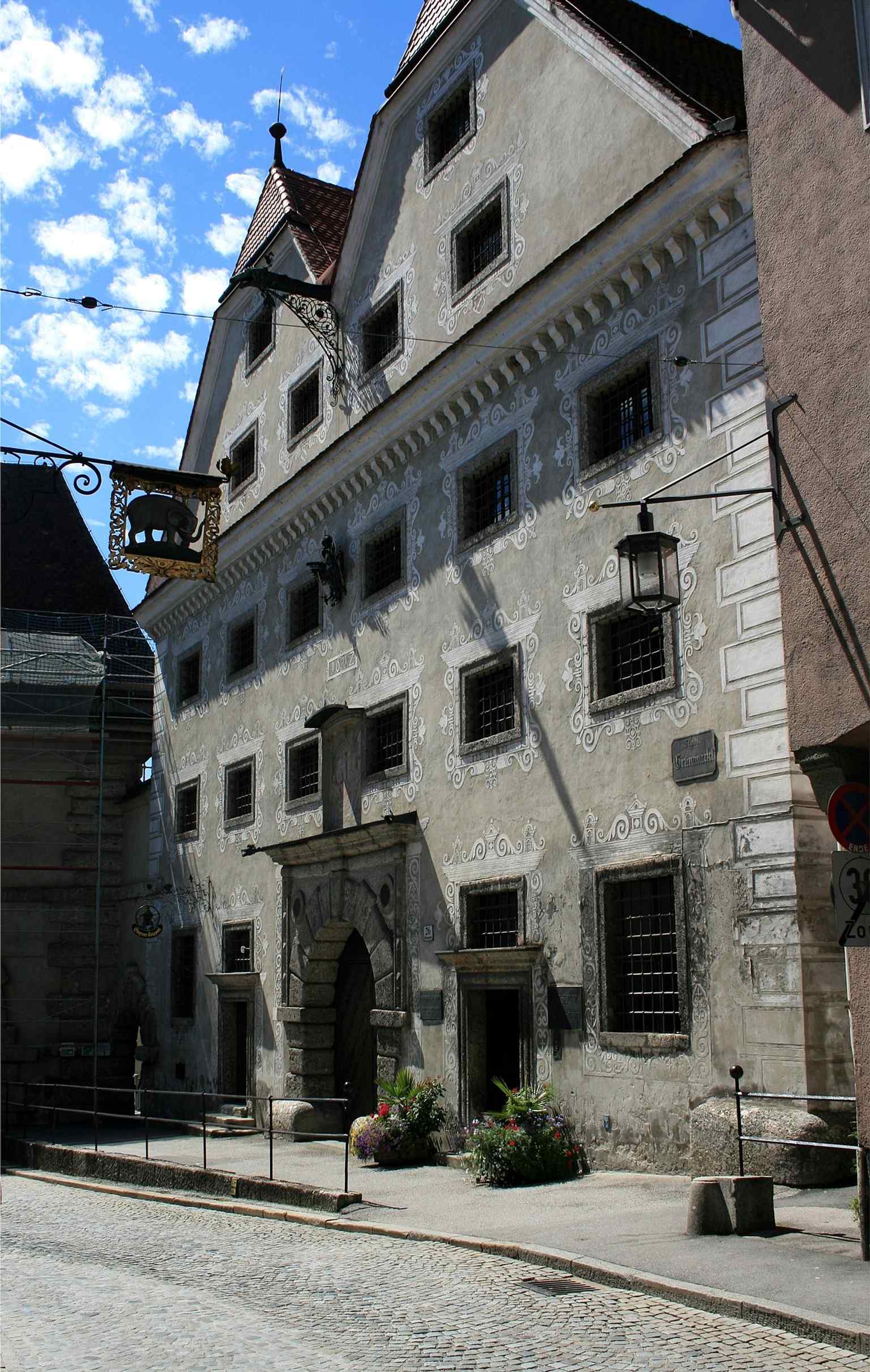
A clear view of the Renaissance Innerberger Stadel on Grünmarkt 26, the former grain store now housing the City Museum of Steyr and the Steyr nativity theater.Photo: Christoph Waghubinger (Lewenstein), Wikimedia Commons, CC BY-SA 3.0 at. Cropped & resized. 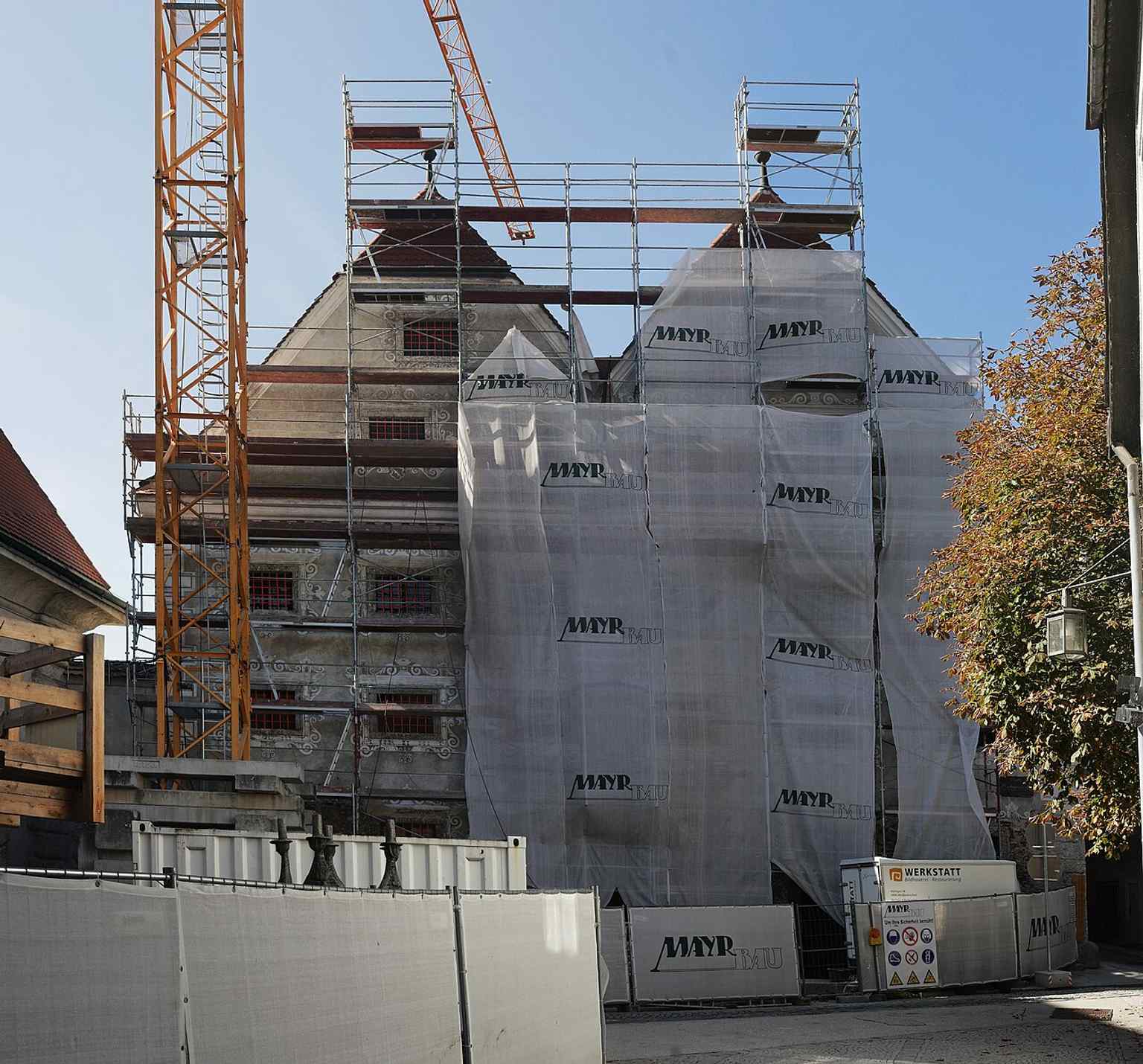
The Innerberger Stadel under scaffolding during museum renovation work, a useful record of the building before the 2021 Upper Austrian state exhibition.Photo: Christoph Waghubinger (Lewenstein), Wikimedia Commons, CC BY-SA 4.0. Cropped & resized. 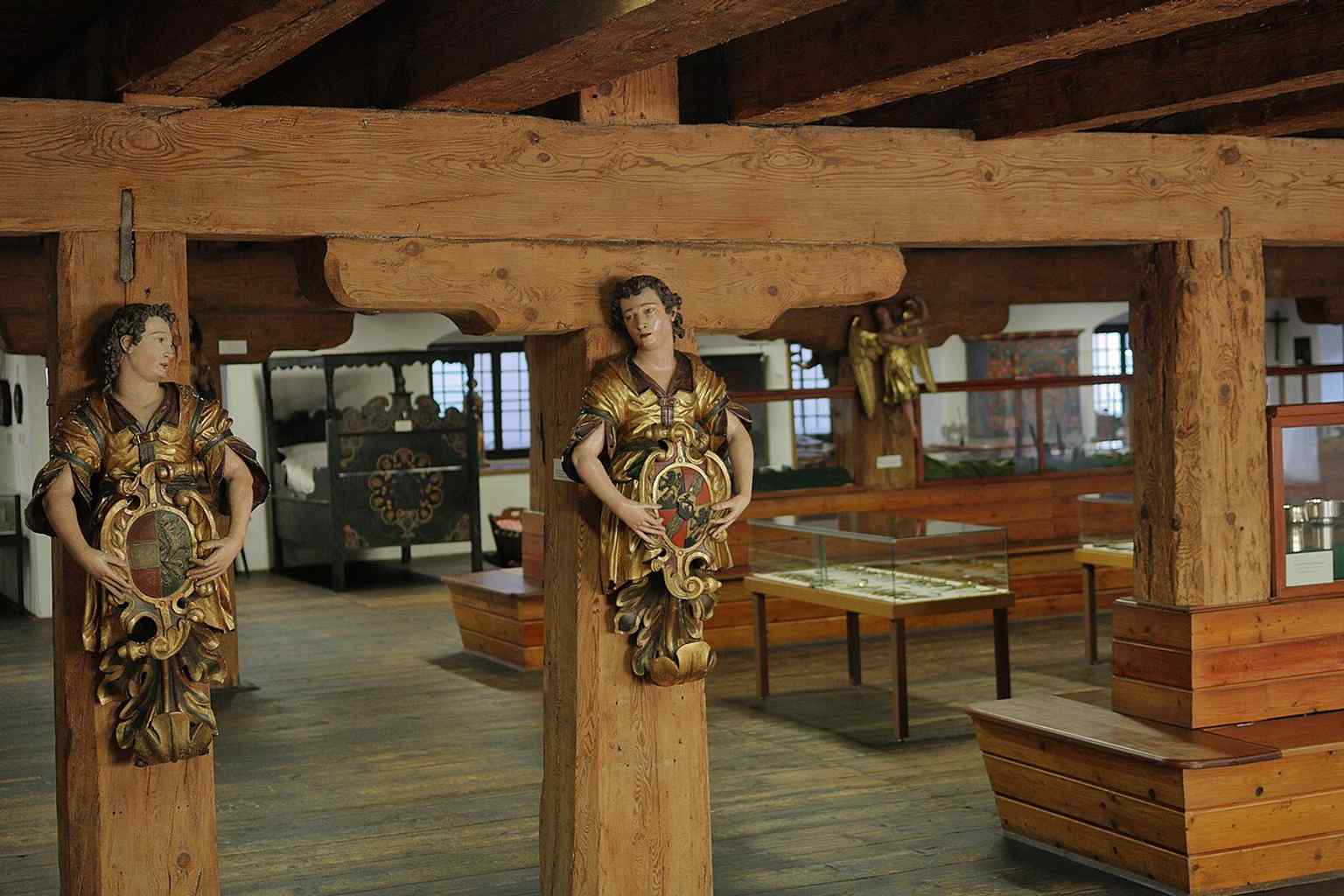
A ground-floor museum gallery inside the Innerberger Stadel, showing how the old granary has been adapted for the City Museum of Steyr.Photo: Christoph Waghubinger (Lewenstein), Wikimedia Commons, CC BY-SA 4.0. Cropped & resized. On your left rises a pale stone Gothic church with a long, steep roof, sharp buttresses, and an eighty-meter six-sided tower that stands up like a very confident exclamation…Read moreShow less
Open dedicated page →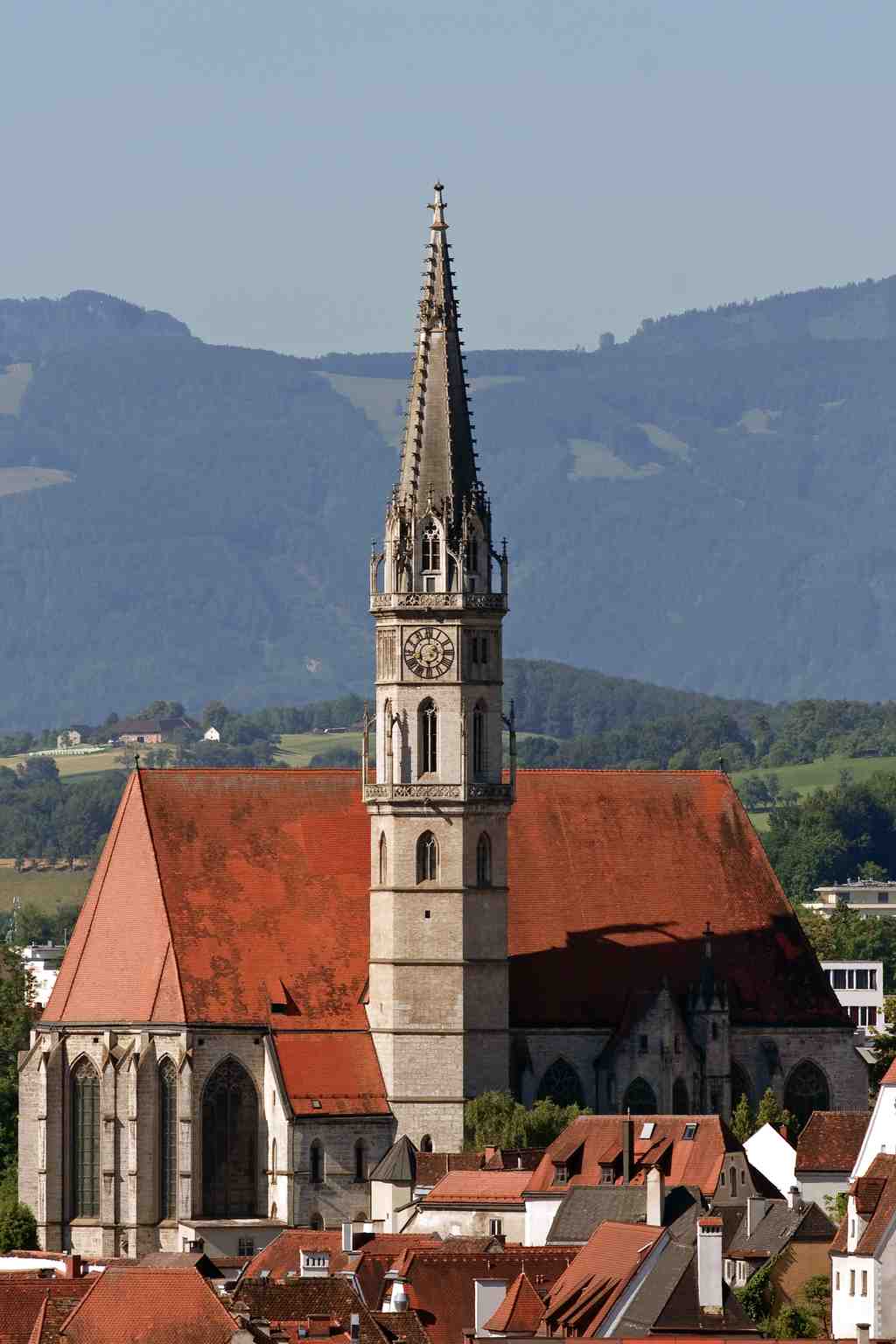
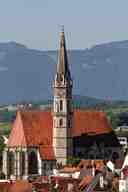
Steyr parish churchPhoto: Lewenstein, Wikimedia Commons, CC BY-SA 3.0 AT. Cropped & resized. On your left rises a pale stone Gothic church with a long, steep roof, sharp buttresses, and an eighty-meter six-sided tower that stands up like a very confident exclamation point.
This is Steyr’s parish church, dedicated to Saint Giles and Saint Coloman, and it has been the city’s main sacred building for a very long time. The first church here likely reaches back to around the year eleven hundred. We can name it securely by twelve seventy-five, and by around thirteen hundred it had become the town parish church... just in time to suffer through Steyr’s regular problem: fires.
One blaze damaged it in thirteen oh three. Then, in the fifteenth century, a booming iron town needed a bigger church, so Steyr ordered a complete late Gothic rebuild. In fourteen forty-three, the Viennese master builder Hans Puchsbaum took charge of the new choir, the sacred eastern end of the church. After he died, Laurenz Spenning vaulted the choir and added the tower, which had not even been part of the original plan. Because apparently one giant statement piece was too tempting to resist.
Construction dragged on for decades. Then in fifteen twenty-two, disaster returned. A city fire spread from the public bath, caught the church’s timber roof and scaffolding, and destroyed the roof, most altars, windows, paintings, the pulpit, and even the bells. Nothing says “nearly finished” like total combustion.
The church changed with the city. In the later sixteenth century, Lutheran preachers worked here, and the western porch took shape in that period. Around the turn of the seventeenth century, Benedictines from Garsten steered it back into Catholic hands and gave it Baroque furnishings. Then the nineteenth century swung the pendulum again. Adalbert Stifter, serving as a monument conservator, pushed a “regothicizing” campaign, stripping out much of the Baroque work to recover the medieval character. After the tower cap burned in eighteen seventy-six, Friedrich von Schmidt designed the current neo-Gothic stone top, completed in eighteen eighty-nine.
The church kept evolving even recently. Exterior restoration ran from the nineteen eighties into the early nineteen nineties, and interior work from two thousand nine to two thousand fifteen repaired the windows, roof structure, and Gothic bays, and returned the white-and-yellow color scheme inside. If you want, check the before-and-after image in the app to see how the scaffolding vanished and the full Gothic hall came back into view. And if you look at the interior photo on your screen, you’ll see that bright restored space for yourself.
The restored interior shows the bright white-and-yellow color scheme used after the 2009–2015 renovation of the nave and choir.Photo: Palickap, Wikimedia Commons, CC BY-SA 4.0. Cropped & resized. One more local claim to fame: Anton Bruckner spent summers in Steyr from eighteen eighty-four onward, lived across from the church, played here, and influenced the organ’s nineteenth-century rebuild. Steyr even gave him its first monument in eighteen ninety-eight. The man got a statue before that became normal.
This church is really Steyr in stone: ambitious, repaired, and stubbornly upright.
Take one last look at that tower... and when you’re ready, we can continue to the next stop.
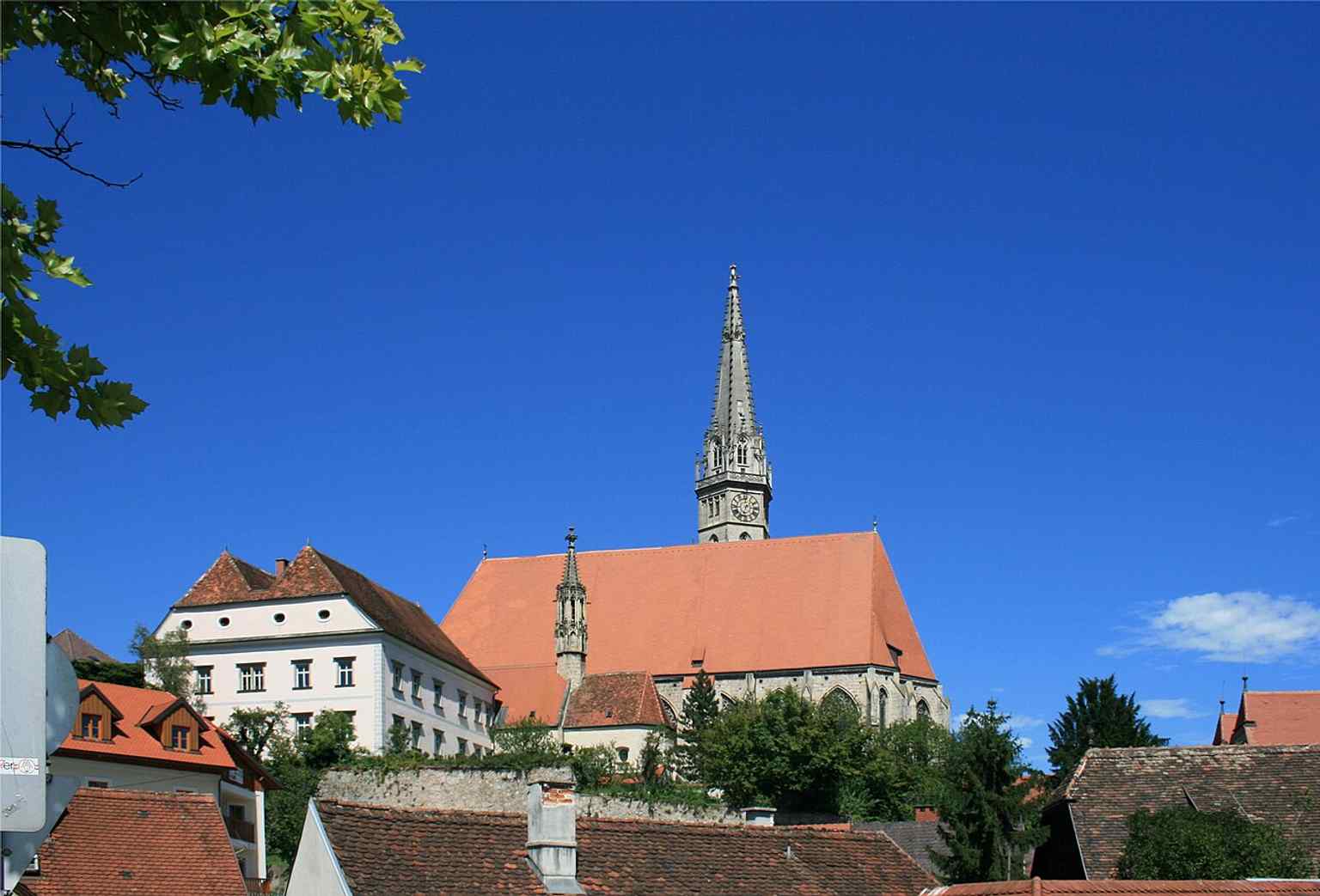
A classic view of the church complex with the parish church, Margaretenkapelle, and old parish house clustered above Steyr’s historic center.Photo: Christoph Waghubinger (Lewenstein), Wikimedia Commons, CC BY-SA 3.0. Cropped & resized. 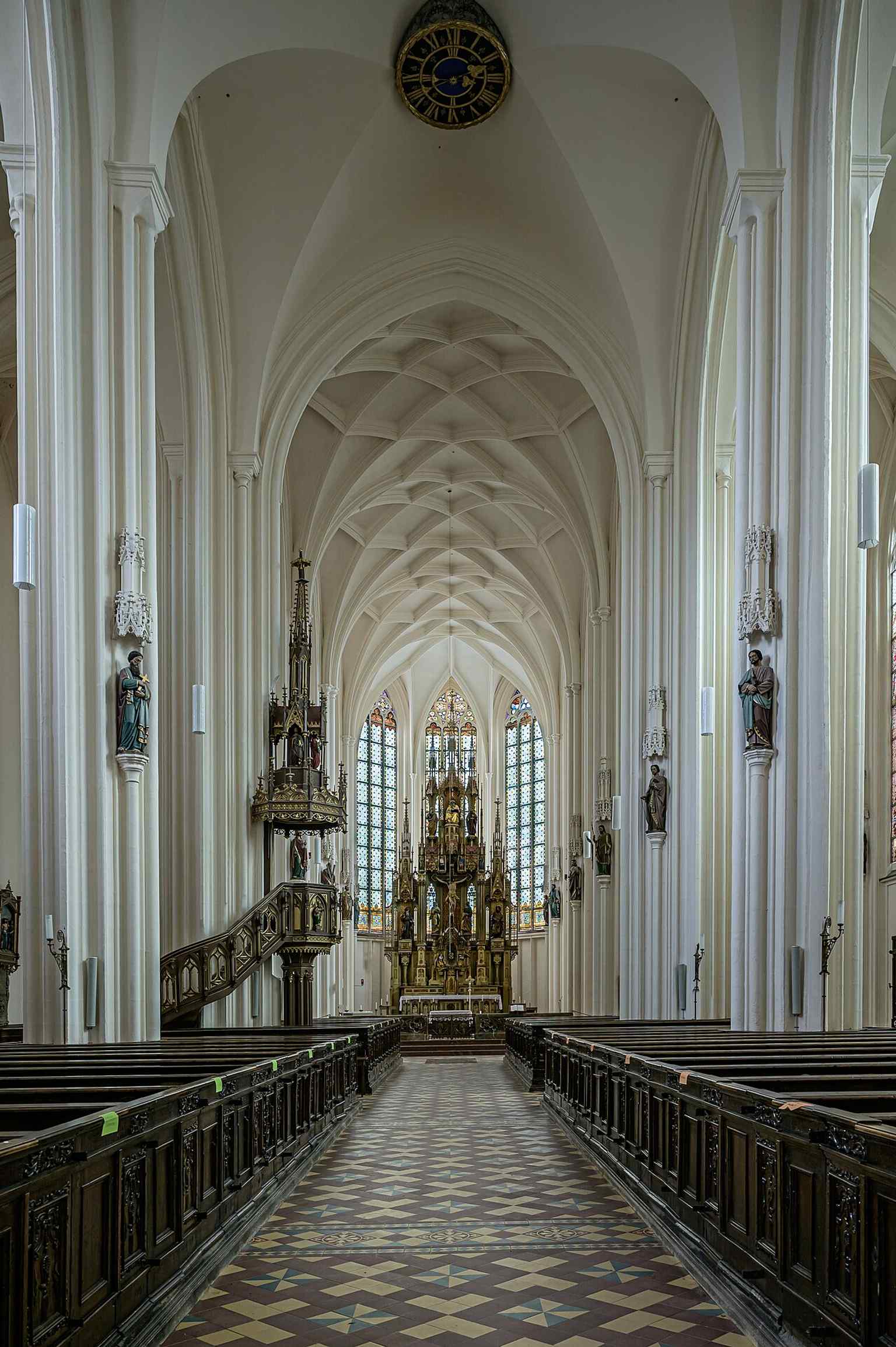
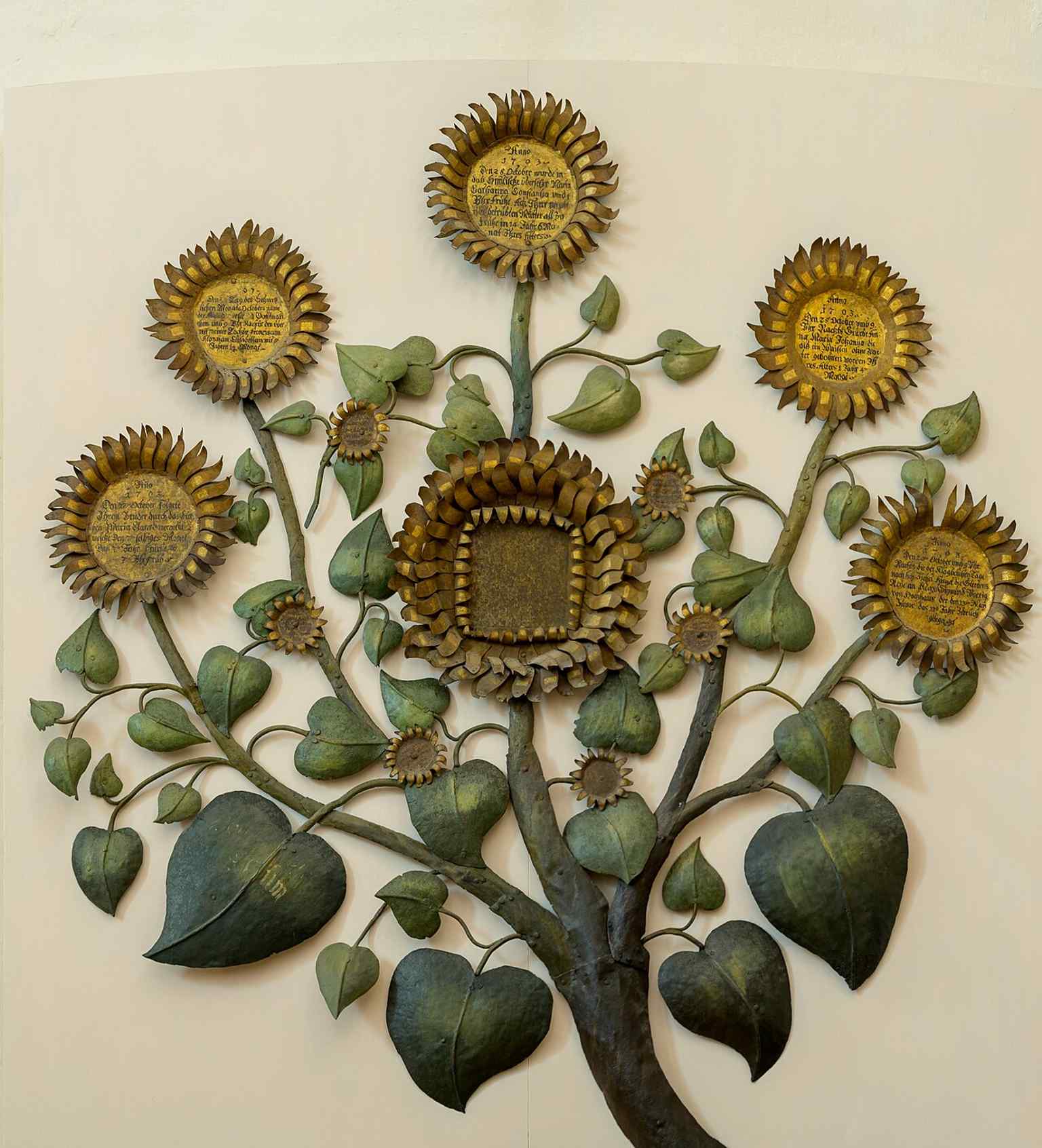
This Renaissance baptismal font dates to 1569 and is made from tin plates over a wooden core, a rare and striking material choice.Photo: Isiwal, Wikimedia Commons, CC BY-SA 4.0. Cropped & resized. 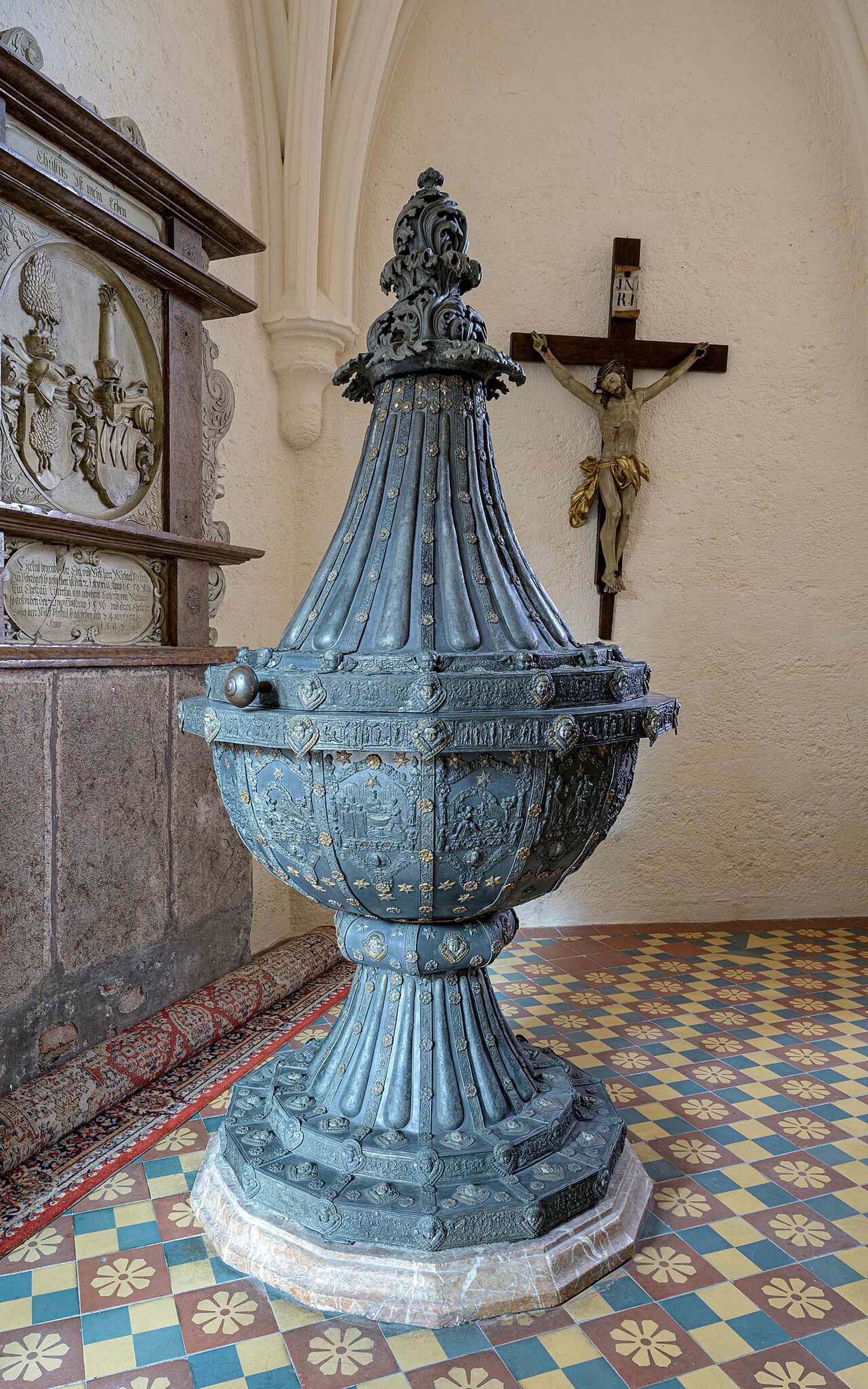
The organ gallery recalls Anton Bruckner, who played here and helped shape the church’s organ history in the 19th century.Photo: Isiwal, Wikimedia Commons, CC BY-SA 4.0. Cropped & resized. 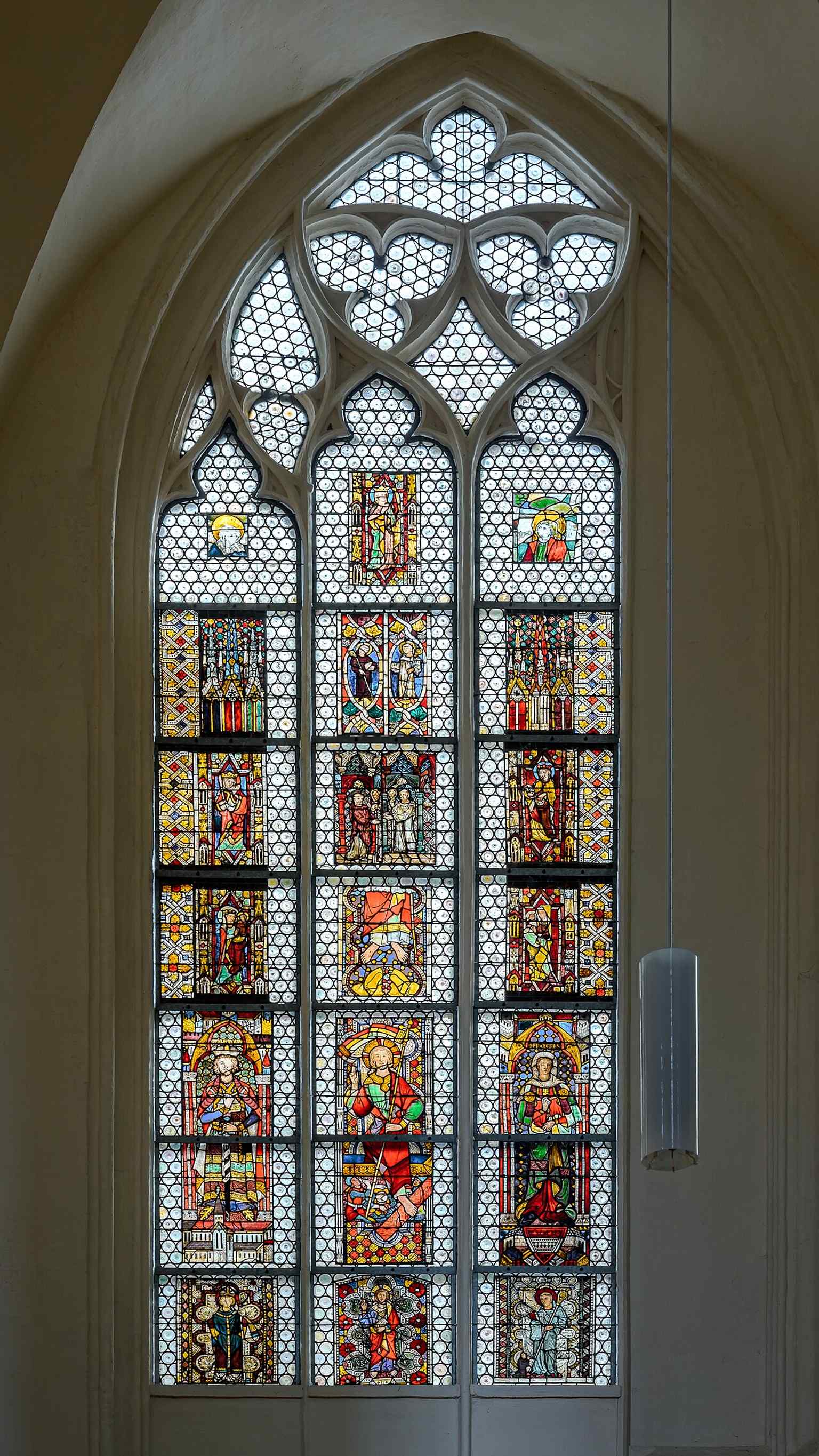
The Lamberg votive window from 1891 commemorates Franz Philipp von Lamberg and adds a political memorial layer to the church’s glass art.Photo: Isiwal, Wikimedia Commons, CC BY-SA 4.0. Cropped & resized. 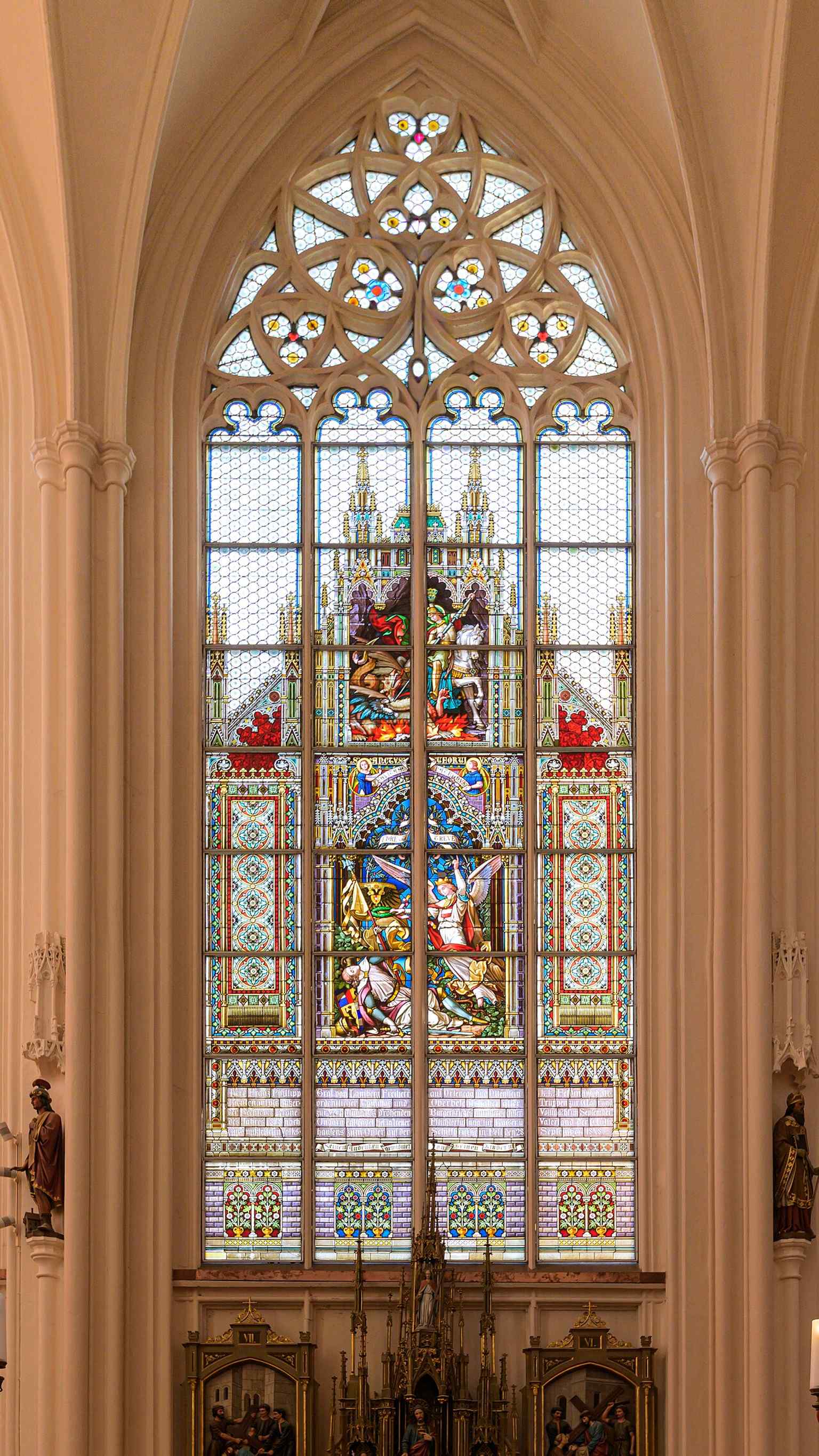
During restoration, scaffolding exposed the nave and choir structure—useful for telling the story of the church’s long conservation history.Photo: Christoph Waghubinger (Lewenstein), Wikimedia Commons, CC BY-SA 4.0. Cropped & resized.
Show 11 more stopsShow fewer stopsexpand_moreexpand_less
On your left stands a bronze figure group on tall gray granite plinths, with Josef Werndl raised above four workers and a carved band of oak leaves and weapons marking the base.…Read moreShow less
Open dedicated page →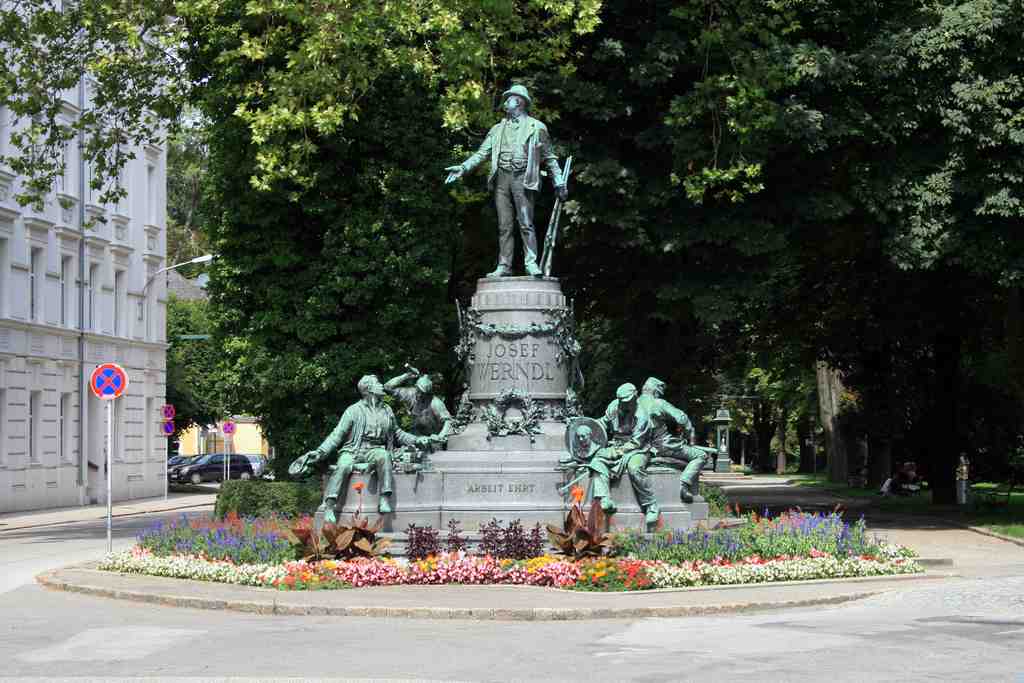
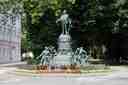
Werndl MonumentPhoto: Lewenstein, Wikimedia Commons, CC BY-SA 3.0 AT. Cropped & resized. On your left stands a bronze figure group on tall gray granite plinths, with Josef Werndl raised above four workers and a carved band of oak leaves and weapons marking the base.
This monument looks like civic gratitude... with industrial muscle attached. Viktor Tilgner sculpted it in eighteen ninety-four to honor Josef Werndl, the arms manufacturer who reshaped Steyr. He stands in the middle like a secular ruler, holding rifles in his left hand while his right points toward the men below. That gesture has a formal name, allocutio: the classic pose of a leader addressing his people. Here, the marshal’s baton got replaced by firearms. Very Steyr.
Look closely and Tilgner’s idea sharpens. The workers are not decoration. They are the point. You have a blacksmith, a fitter or assembler, an old saber maker, and a carpenter. The carpenter lifts his cap in greeting, while the saber maker holds a portrait of Werndl’s father, Leopold. If you glance at your screen, the carpenter detail makes that human note easy to catch. On the lower plinth, the inscription reads “Arbeit ehrt”... “Work honors.” Blunt, efficient, and difficult to argue with.
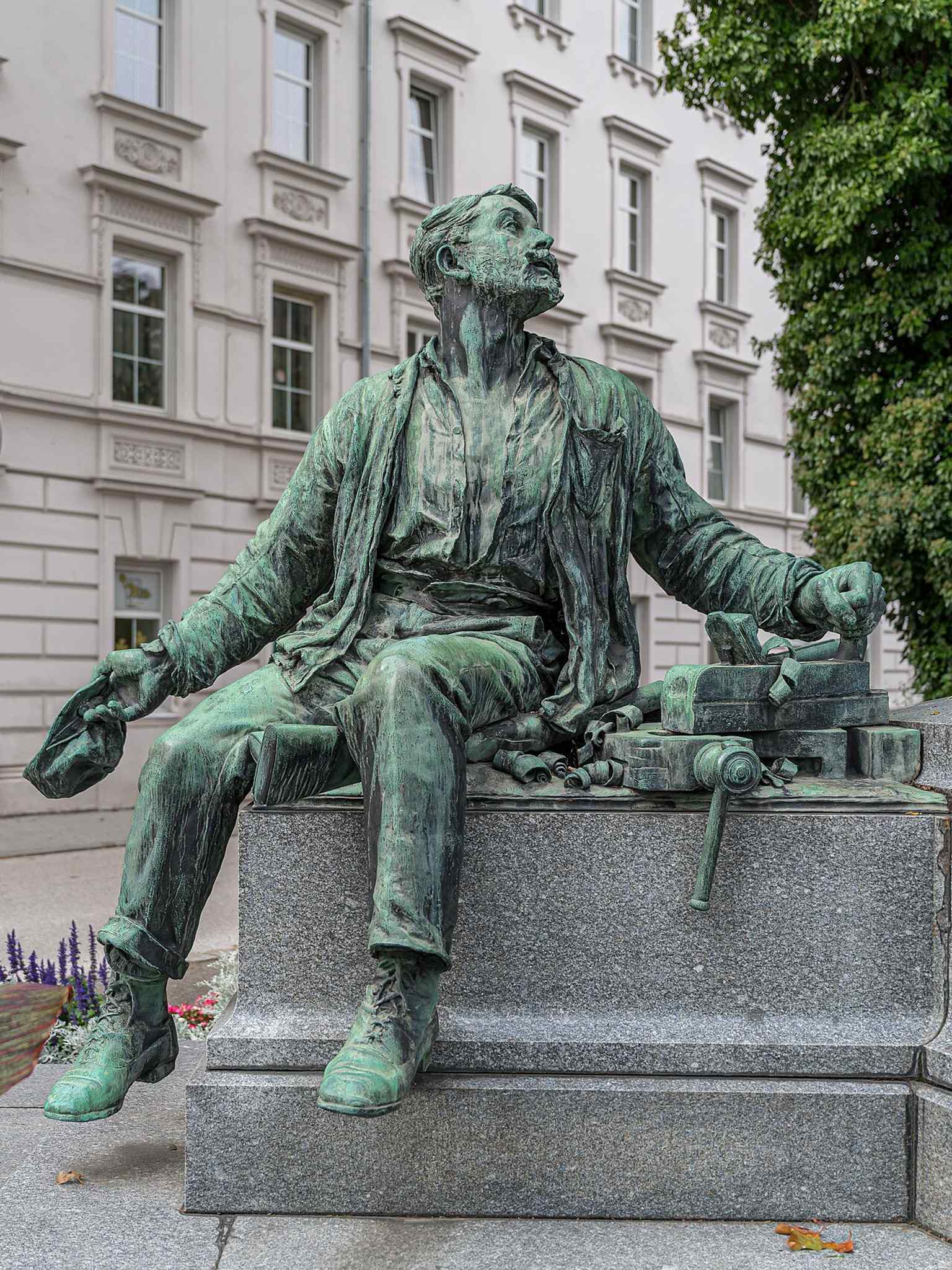
One of the worker figures below Werndl — the carpenter, part of Tilgner’s unusual monument where labor stands beside the industrialist.Photo: Isiwal, Wikimedia Commons, CC BY-SA 4.0. Cropped & resized. The city debated where to place this monument, including the town square and a hill overlooking the old weapons factory, but chose this promenade because Werndl had helped shape it himself. During the Second World War, workers removed the monument; in September nineteen forty-five, Steyr put it back. On the rear, as your app image shows, the citizens signed their thanks: “Die dankbaren Mitbürger, eighteen ninety-four”.
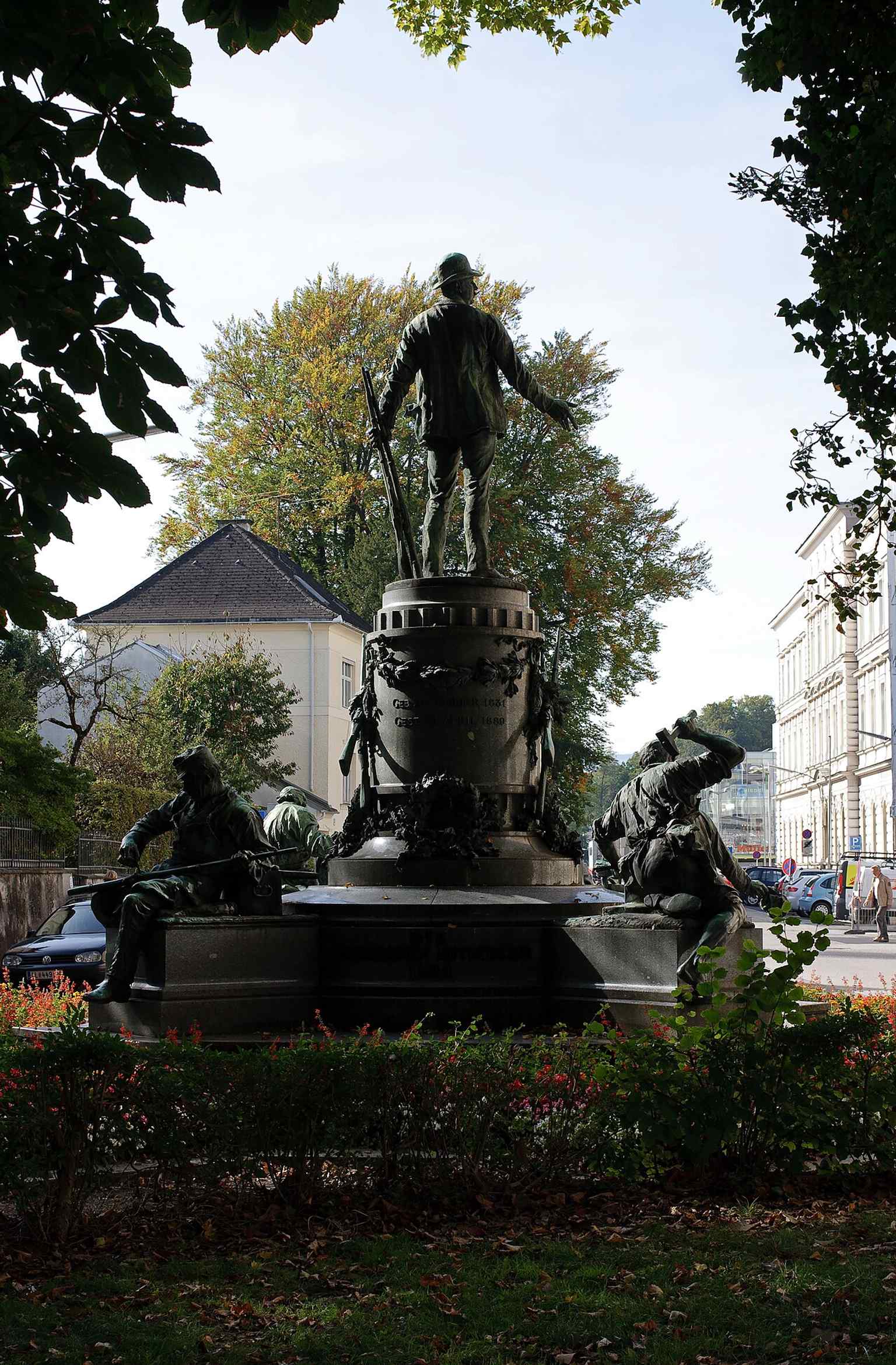
A rear view of the monument showing the inscription on the back: 'Die dankbaren Mitbürger 1894'.Photo: Foto: Christoph Waghubinger (Lewenstein) / Denkmal: Viktor Tilgner (1844 – 1896), Wikimedia Commons, CC BY-SA 3.0 at. Cropped & resized. Conveniently, the monument is accessible at all hours.
It turns industry into public memory with almost alarming confidence. When you’re ready, we can continue toward the town square.
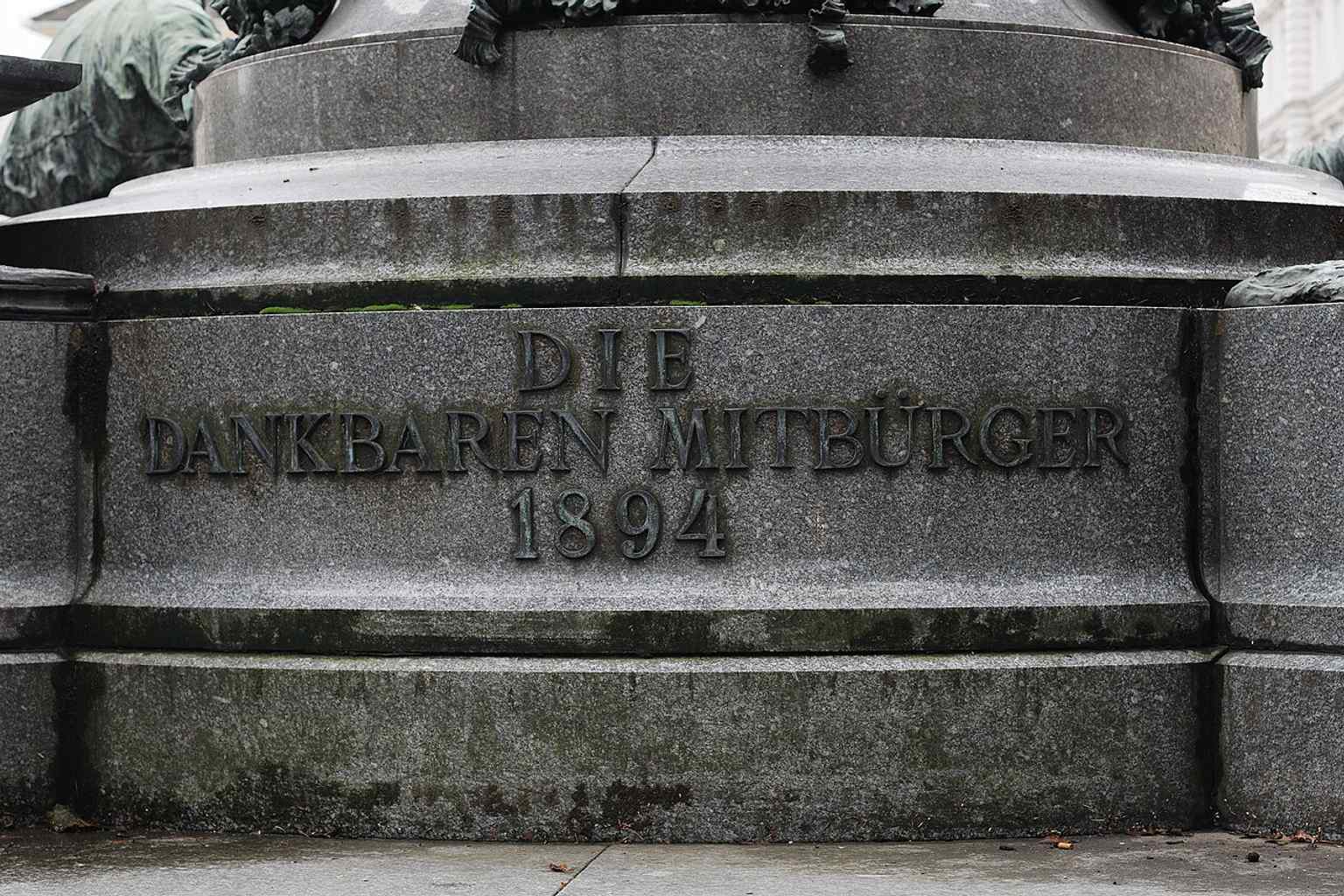
Close detail of the back inscription, linking the monument to the grateful citizens who commissioned it in 1894.Photo: Christoph Waghubinger (Lewenstein), Wikimedia Commons, CC BY-SA 4.0. Cropped & resized. 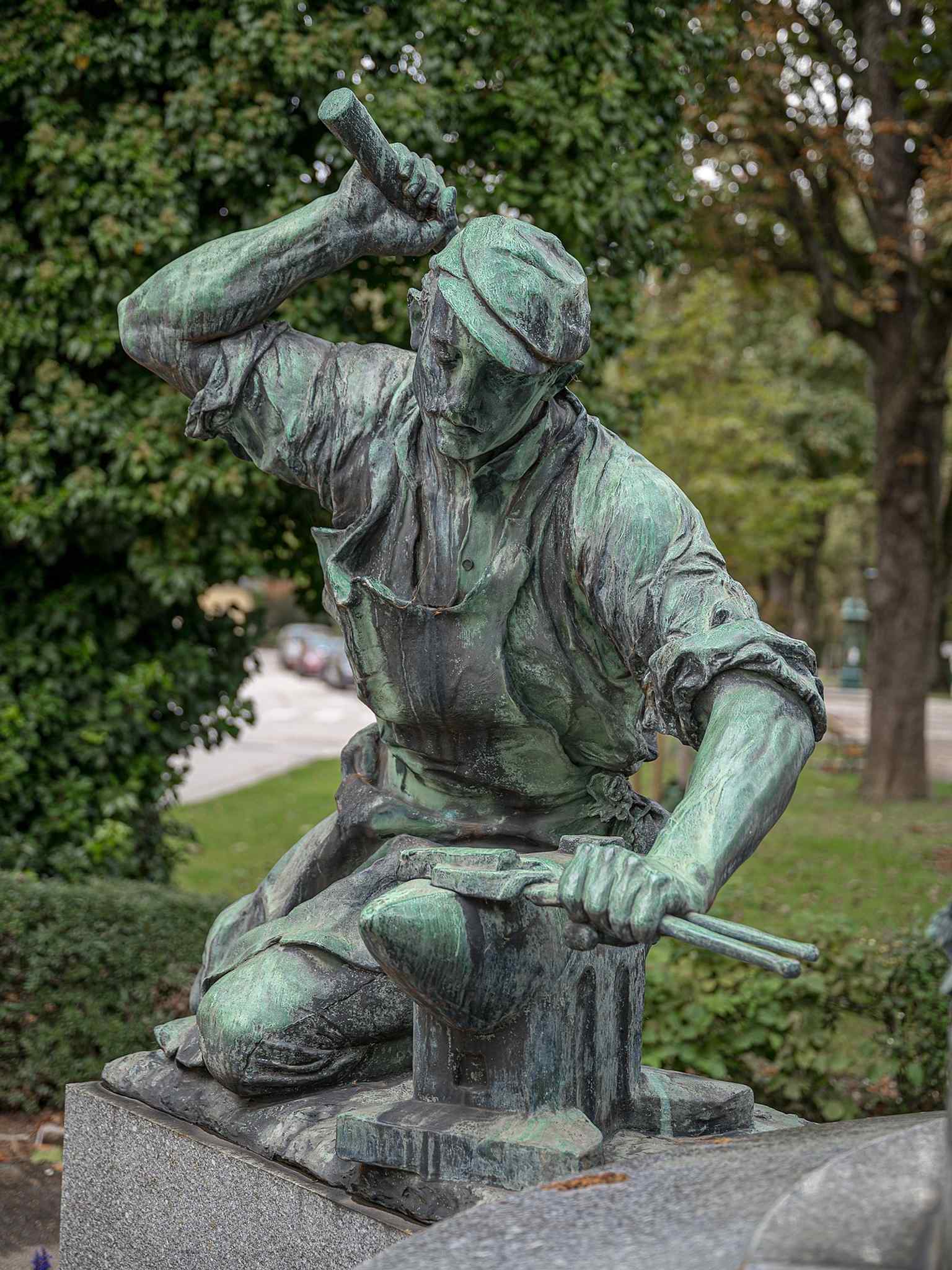
A blacksmith from the monument’s group of workers, reflecting the text’s theme that 'work honors' the monument.Photo: Isiwal, Wikimedia Commons, CC BY-SA 4.0. Cropped & resized. On your left, the square opens into a long, lens-shaped paved space lined with plaster townhouses, with the Rococo town hall and the Leopold Fountain acting as the easiest…Read moreShow less
Open dedicated page →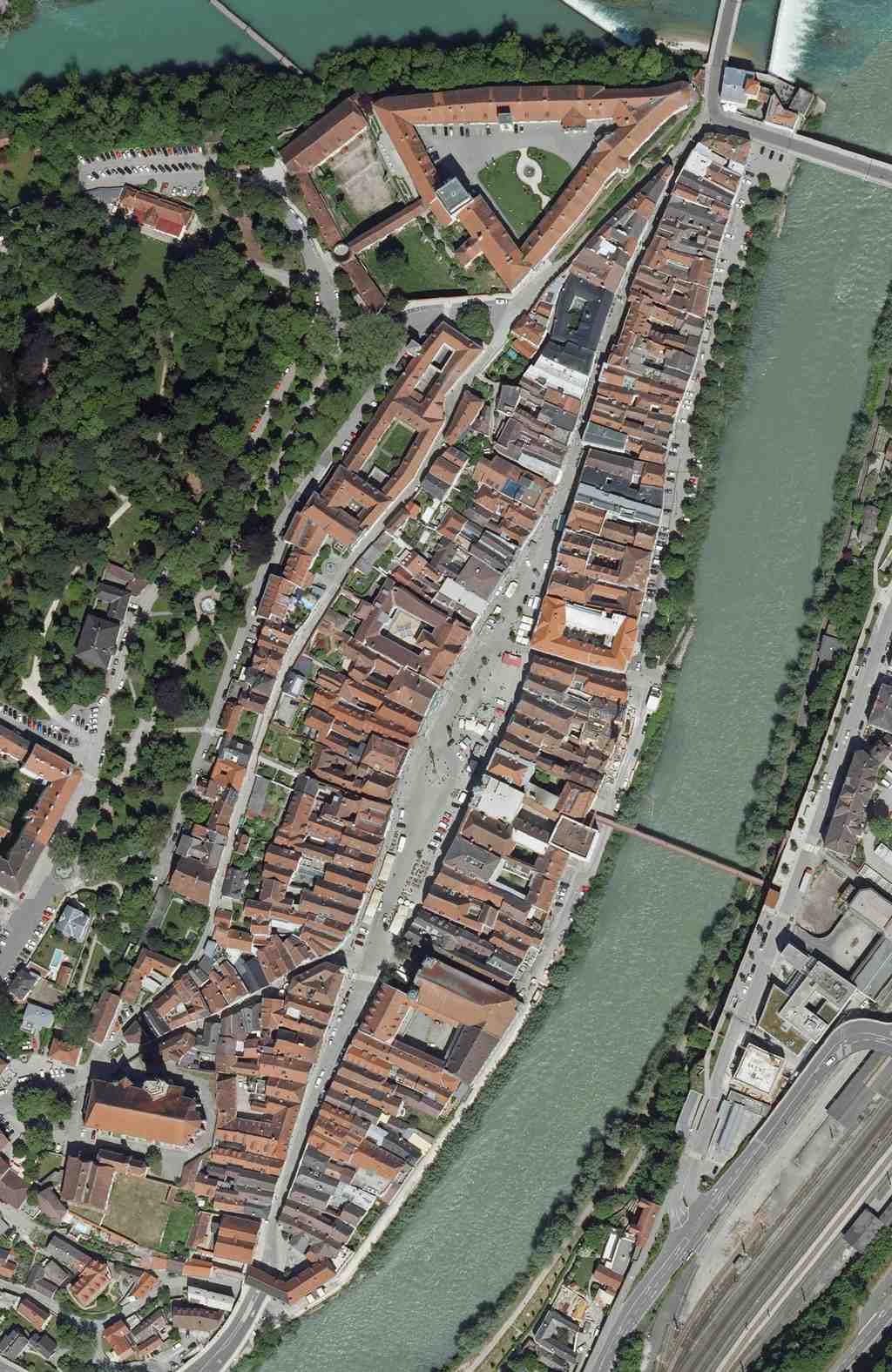
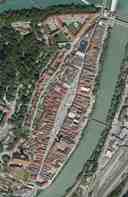
Town squarePhoto: Fotosː BEV - Bundesamt für Eich- und Vermessungswesen / Bearbeitung (Stitch, Tonwertkorrektur)ː Christoph Waghubinger, Wikimedia Commons, CC BY 4.0. Cropped & resized. On your left, the square opens into a long, lens-shaped paved space lined with plaster townhouses, with the Rococo town hall and the Leopold Fountain acting as the easiest permanent markers.
This is Steyr’s Stadtplatz, the civic center of the city and one of the best-preserved old-town ensembles in the German-speaking world... which is an elegant way of saying medieval planners got a lot right and later generations, for once, mostly resisted the urge to ruin it.
The square took shape in the middle of the thirteenth century, when two older settlement cores merged: one around Stirapurc and one around the parish church. Its odd lens shape came from an earlier road line and the slope of the ground. So no, it is not geometrically perfect. It is better than that... it is honest. If you glance at the aerial image in the app, you can see that stretched form clearly, linking the northern Enge with the southern end near Pfarrgasse and Grünmarkt.
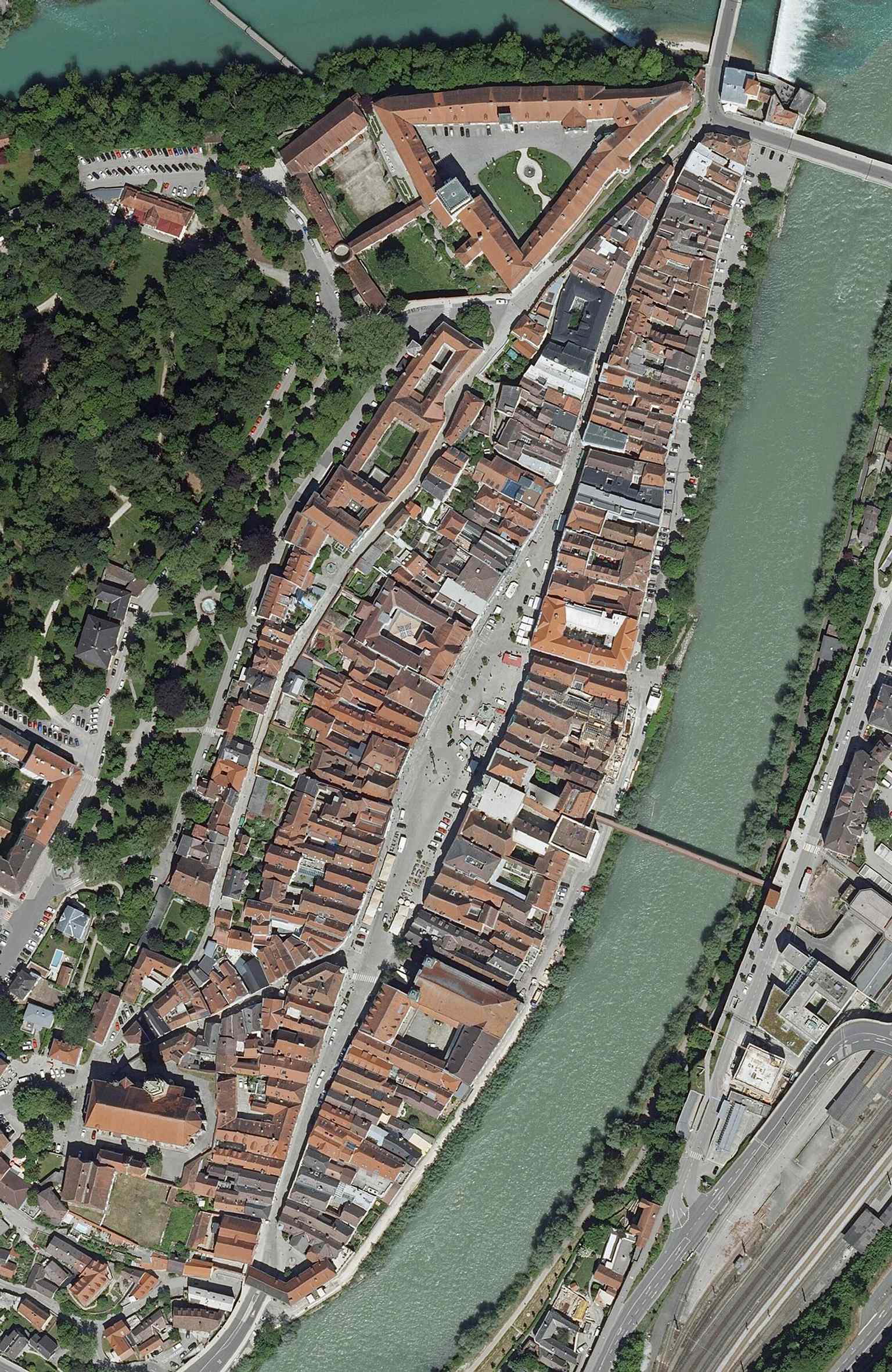
Aerial view of Steyr’s old town and the long Stadtplatz, showing how the square links the Enge Gasse and Grünmarkt in the medieval center.Photo: Fotosː BEV - Bundesamt für Eich- und Vermessungswesen / Bearbeitung (Stitch, Tonwertkorrektur)ː Christoph Waghubinger, Wikimedia Commons, CC BY 4.0. Cropped & resized. What makes this place so valuable is not just the façades, but the medieval plot lines still surviving underneath them. Many houses keep Gothic cores, even when later owners dressed them in Baroque clothes. On your screen, one of the street views shows that trick nicely: polished later façades in front, much older structure behind.
Street-level architecture on the Stadtplatz, where later baroque façades still conceal much older Gothic house cores.Photo: Miloš Hlávka, Wikimedia Commons, CC0. Cropped & resized. Several buildings here deserve a slow look. The Bummerlhaus, number thirty-two, is the oldest house on the square and Steyr’s architectural mascot, with a largely intact Gothic appearance from the fourteen nineties. The town hall, built between seventeen sixty-five and seventeen seventy-eight to plans by Johann Gotthard Hayberger, brings in Rococo, a style that enjoys curves, ornament, and a complete lack of restraint. The Sternhaus, number twelve, shows off a splendid Rococo façade with the five senses, though its core is Gothic; even the corbels, the stone brackets jutting from the wall, survived. Bombs destroyed part of that façade in the Second World War, and the city later rebuilt it true to the original.
This square also hosted Franz Schubert. He stayed here in eighteen nineteen, eighteen twenty-three, and eighteen twenty-five, first in the Stalzerhaus at number thirty-four, then in house number sixteen, now called the Schuberthaus. A plaque added in eighteen ninety still marks the visit.
In the middle stands the Leopold Fountain, installed in sixteen eighty-three with granite parts from the former Windhaag monastery. Another fountain once stood at the southern end near the Marienkirche, but workers removed the Dominican Fountain in eighteen eighty. Urban beauty, like office policy, can be brutally practical.
The city redesigned the square from twenty eighteen, widened the pedestrian area, and added more public space. During that work, someone arranged paving stones to spell “Hingerl,” the surname of a city official. He claimed the letters stood for nearby businesses. Naturally, that explanation convinced absolutely everyone. The city removed the stones.
Conveniently, this square never closes; it is open twenty-four hours a day.
Steyr’s town square is a rare thing: a market space that still shows eight centuries of urban memory without turning into a museum set.
Take your time here, and when you’re ready, we can continue to the next stop.
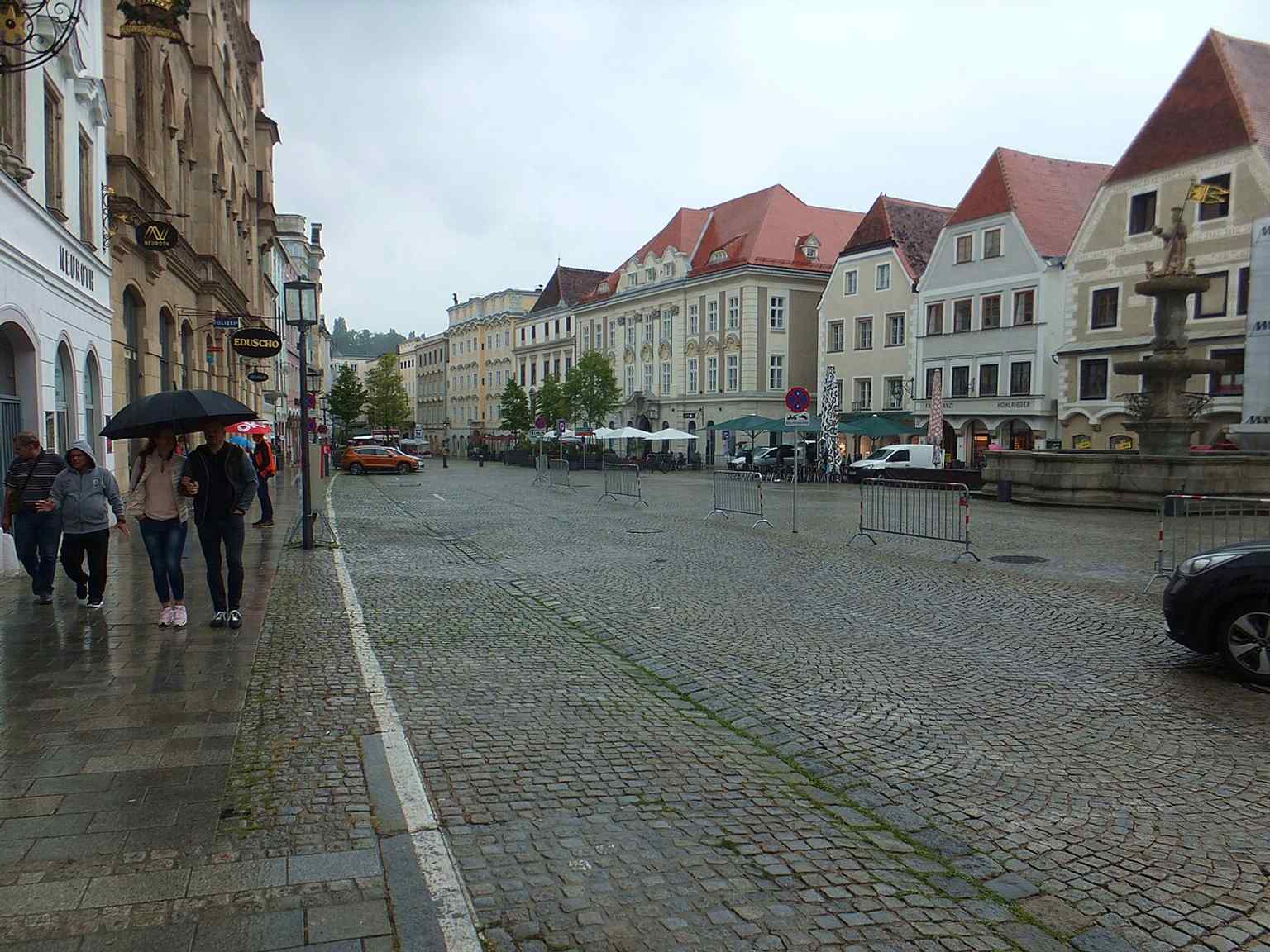
A clear modern view of the main square in Steyr, useful for orienting visitors in the city’s best-preserved historic center.Photo: Miloš Hlávka, Wikimedia Commons, CC0. Cropped & resized. 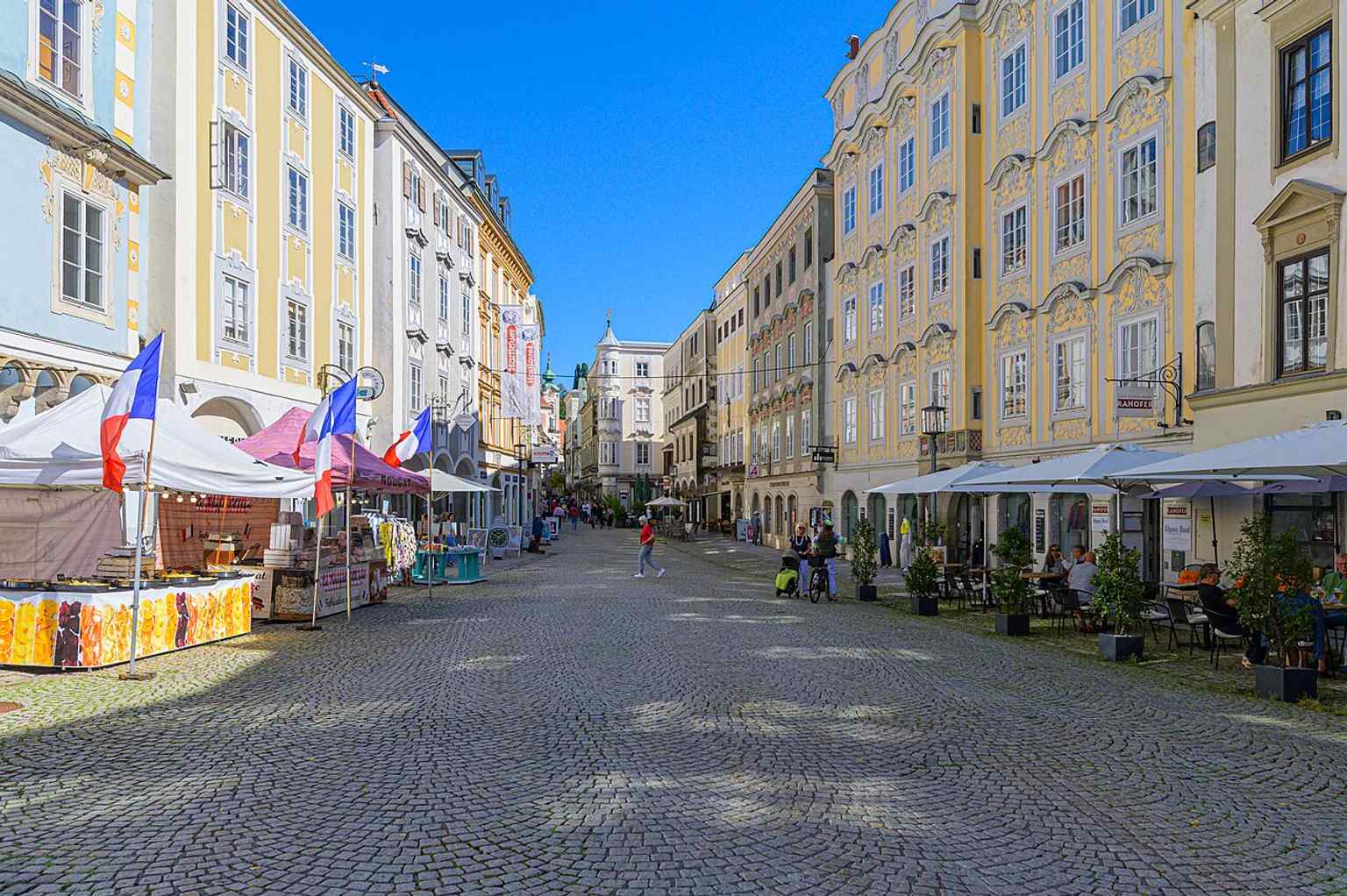
The south end of the square with Marienkirche, where a former Dominican fountain once stood before being moved in the 1880s.Photo: Miloš Hlávka, Wikimedia Commons, CC0. Cropped & resized. 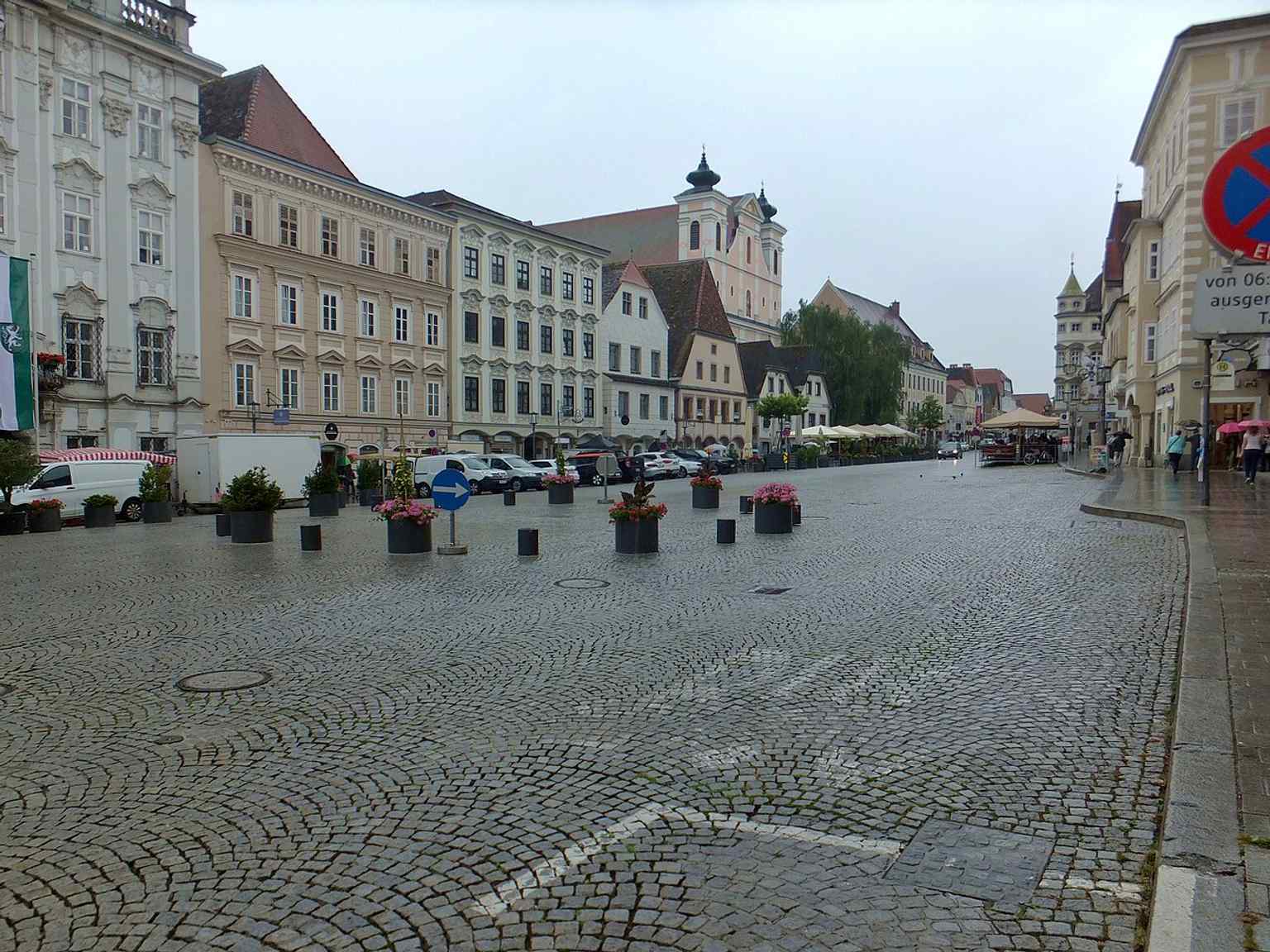
Another view of the Marienkirche end of the square, highlighting the baroque church that anchors the southern edge of the town center.Photo: Miloš Hlávka, Wikimedia Commons, CC0. Cropped & resized. 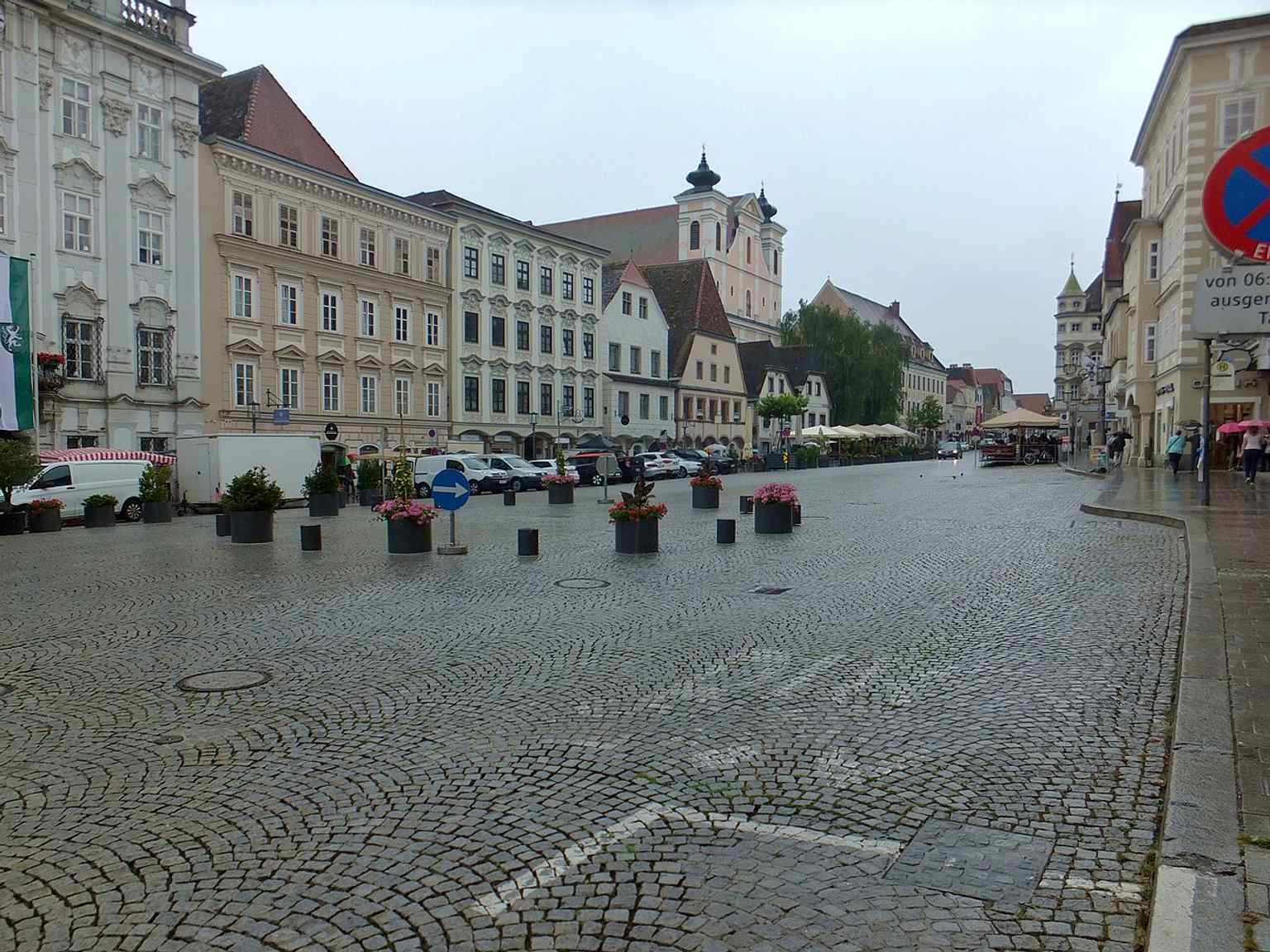
A different angle on the Stadtplatz streetscape, showing the tightly packed façades that reflect the square’s medieval parceling.Photo: Miloš Hlávka, Wikimedia Commons, CC0. Cropped & resized. 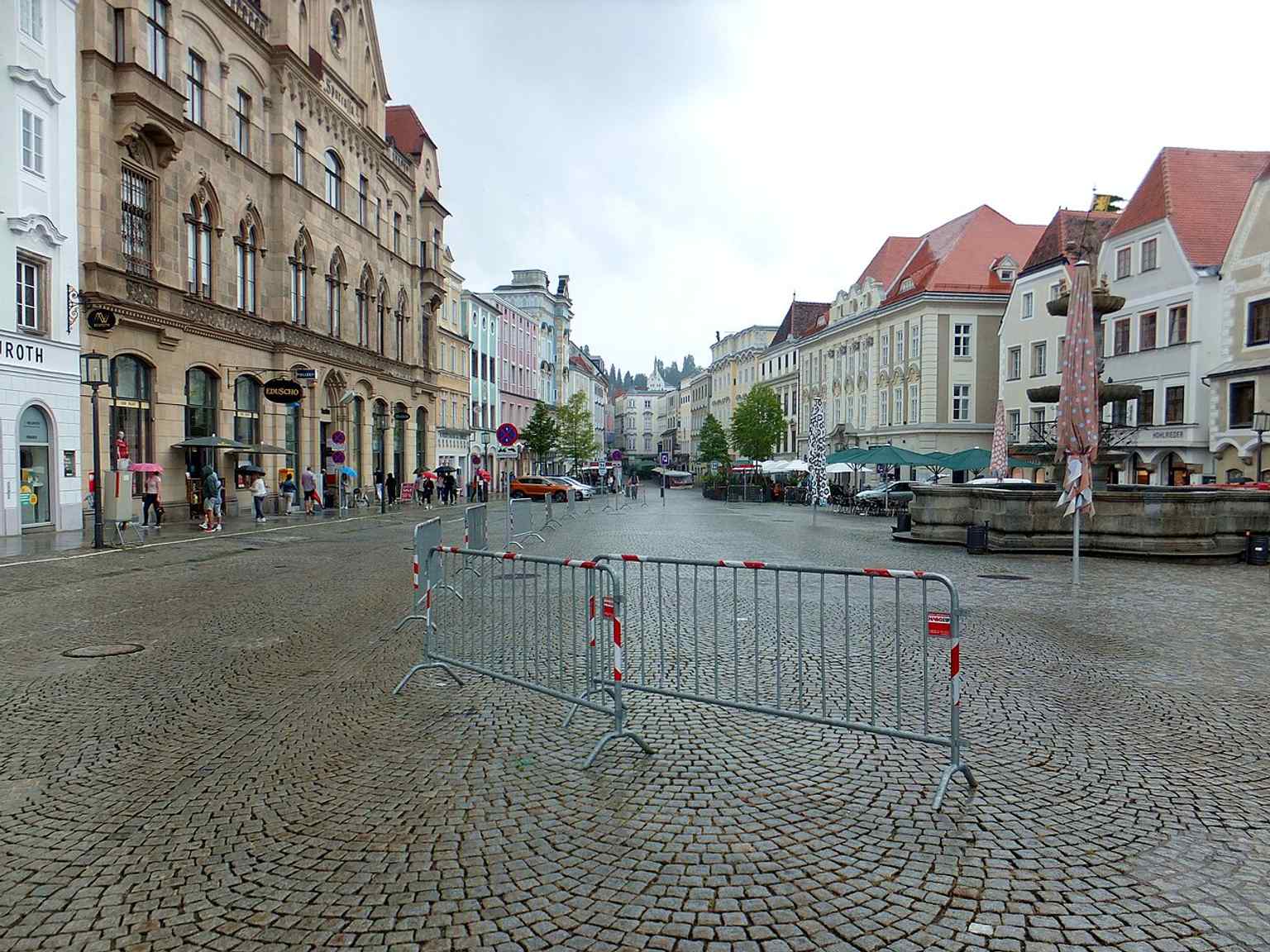
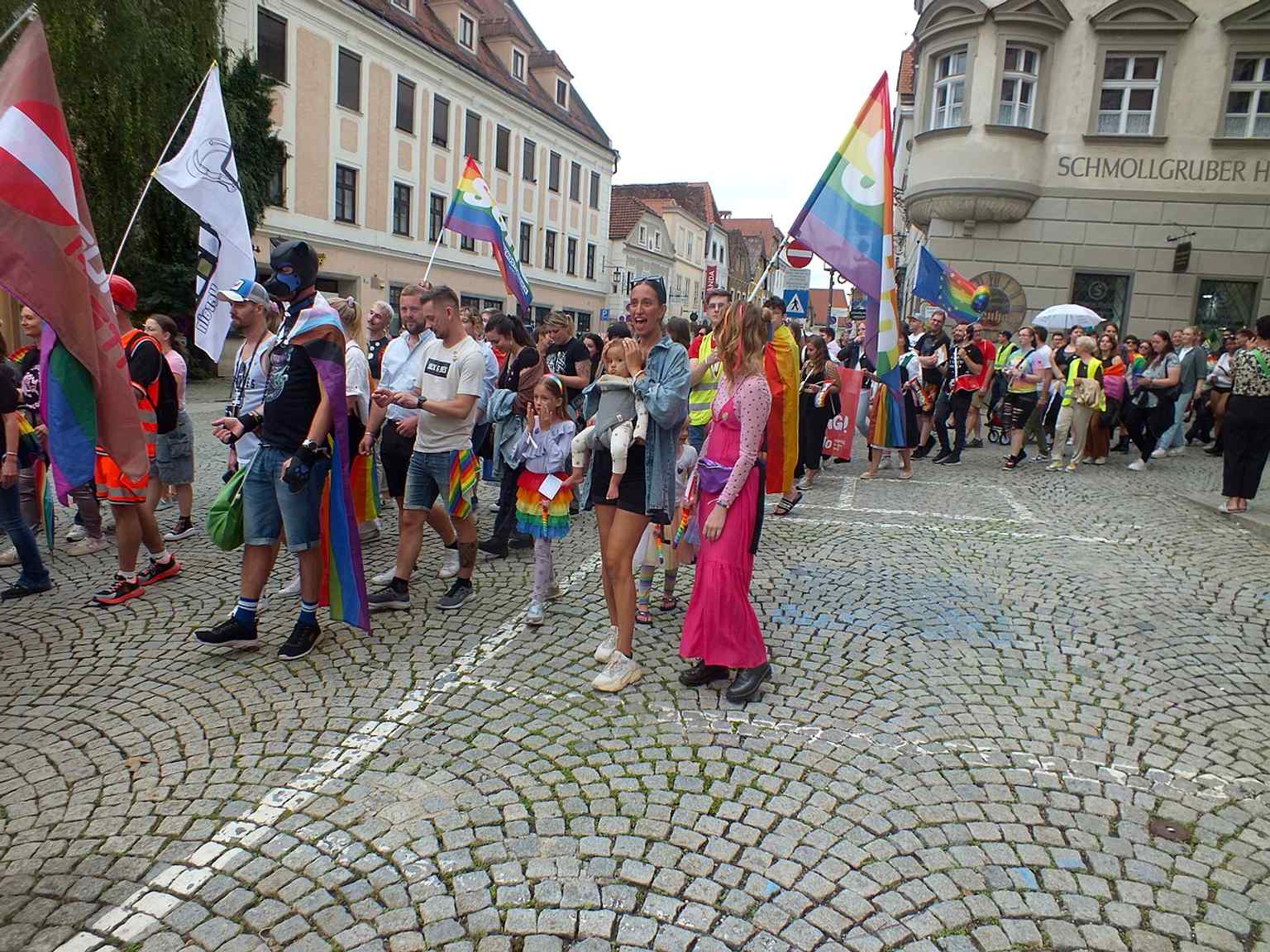
The procession into Enge Gasse marks the northern edge of the square, one of the historic boundaries named in the source text.Photo: Miloš Hlávka, Wikimedia Commons, CC0. Cropped & resized. 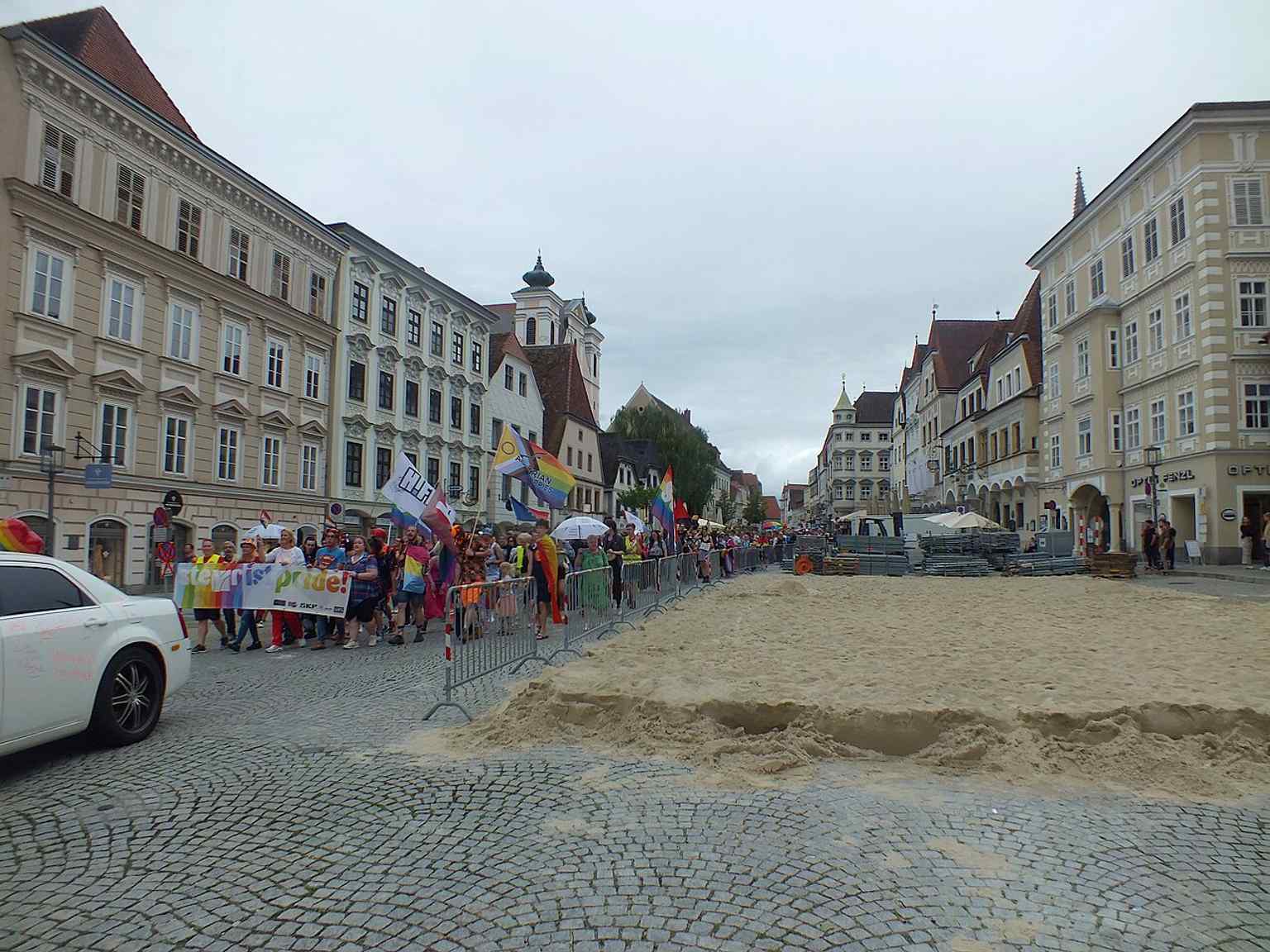
A colorful event scene on the square, illustrating how Steyr’s main plaza is used for public celebrations and gatherings.Photo: Miloš Hlávka, Wikimedia Commons, CC0. Cropped & resized. 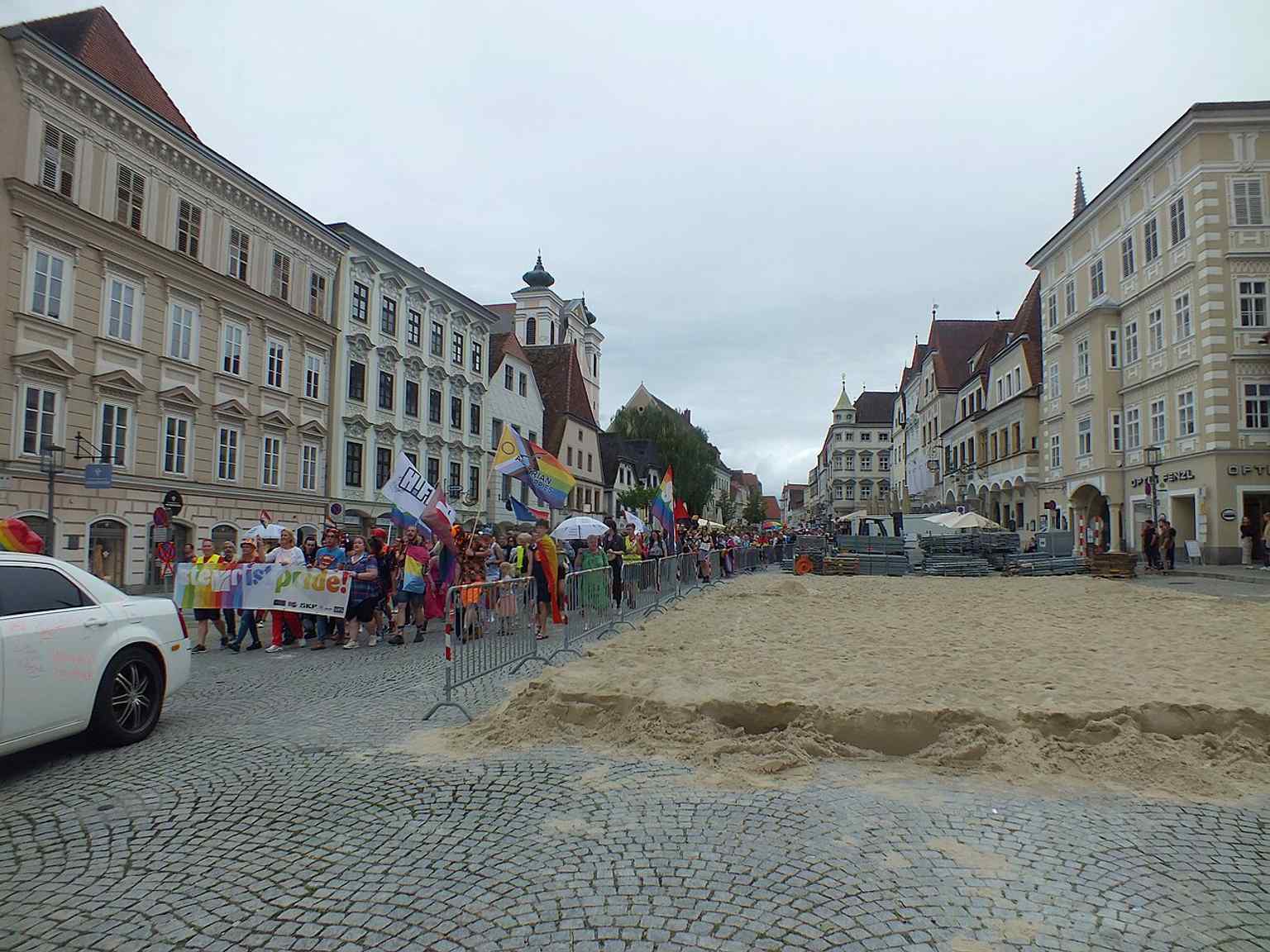
Another Pride-day view from the Stadtplatz, adding variety to the square’s role as a stage for contemporary city life.Photo: Miloš Hlávka, Wikimedia Commons, CC0. Cropped & resized. 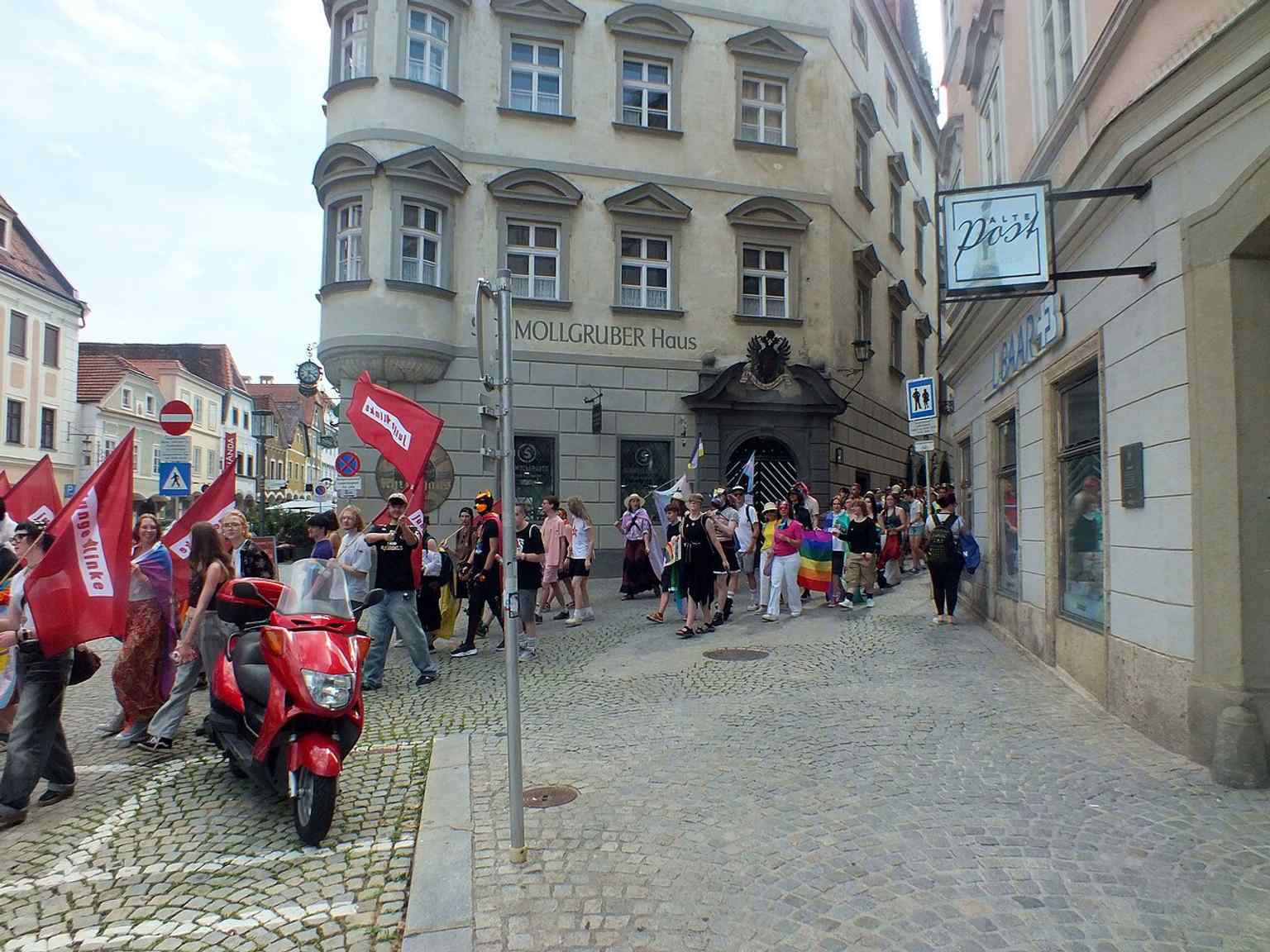
A recent parade view on the Stadtplatz, showing the square’s broad pedestrian zone after the 2018–2019 redesign.Photo: Miloš Hlávka, Wikimedia Commons, CC0. Cropped & resized. On your left, look for a pale rendered crematorium with a compact chapel-like form, clean rectangular walls, and a stepped gable that stands out above the urn cemetery. This…Read moreShow less
Open dedicated page →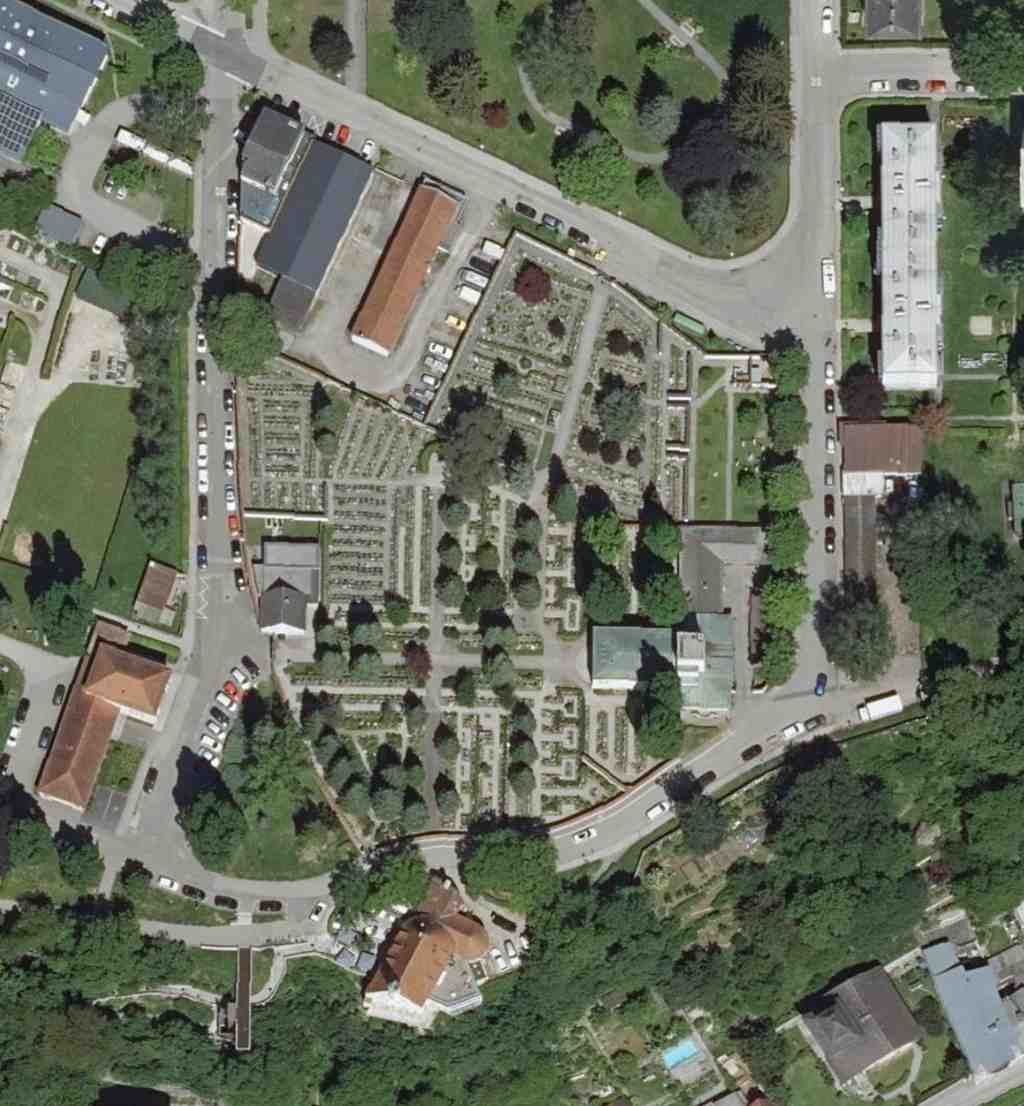
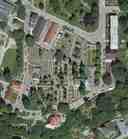
Urn cemetery at TaborPhoto: Fotosː BEV - Bundesamt für Eich- und Vermessungswesen / Bearbeitung (Stitch, Tonwertkorrektur)ː Christoph Waghubinger, Wikimedia Commons, CC BY 4.0. Cropped & resized. On your left, look for a pale rendered crematorium with a compact chapel-like form, clean rectangular walls, and a stepped gable that stands out above the urn cemetery.
This place began as an argument... and then became a landmark. In the nineteen twenties, people in Steyr started pushing for cremation, which the Roman Catholic Church opposed with impressive determination. Josef Wokral, the city’s mayor, founded an association called Flamme, or Flame, to get a crematorium built anyway. So in July nineteen twenty-six, the city council gave the group this plot beside the older Tabor cemetery, and architect Franz Koppelhuber designed the complex you see here.
Austria’s second crematorium opened here on the twenty-sixth of June, nineteen twenty-seven, right after Vienna’s Feuerhalle Simmering. Steyr was not trying to be rebellious... merely modern, which was rebellious enough. Less than two months later, the parish death register recorded its first person cremated here: Hedwig Mitterberger, the wife of the city school inspector.
If you check the aerial view in the app, you can see how this newer cemetery sits right beside the older Tabor grounds, almost like two ideas about remembrance placed shoulder to shoulder.
Then the story turns dark. During the Nazi period, this crematorium also handled the bodies of prisoners from K-Z Mauthausen and its satellite camps, at least until nineteen forty-one. In nineteen forty-eight, workers buried more than one thousand urns near the end of a connecting path. Later expansion covered that burial place with asphalt. Only in two thousand eleven, after a search prompted by the grandson of Wiktor Ormicki, did the city find the site again. It is now marked by a three-part granite cover; the image on your screen shows that stark memorial.
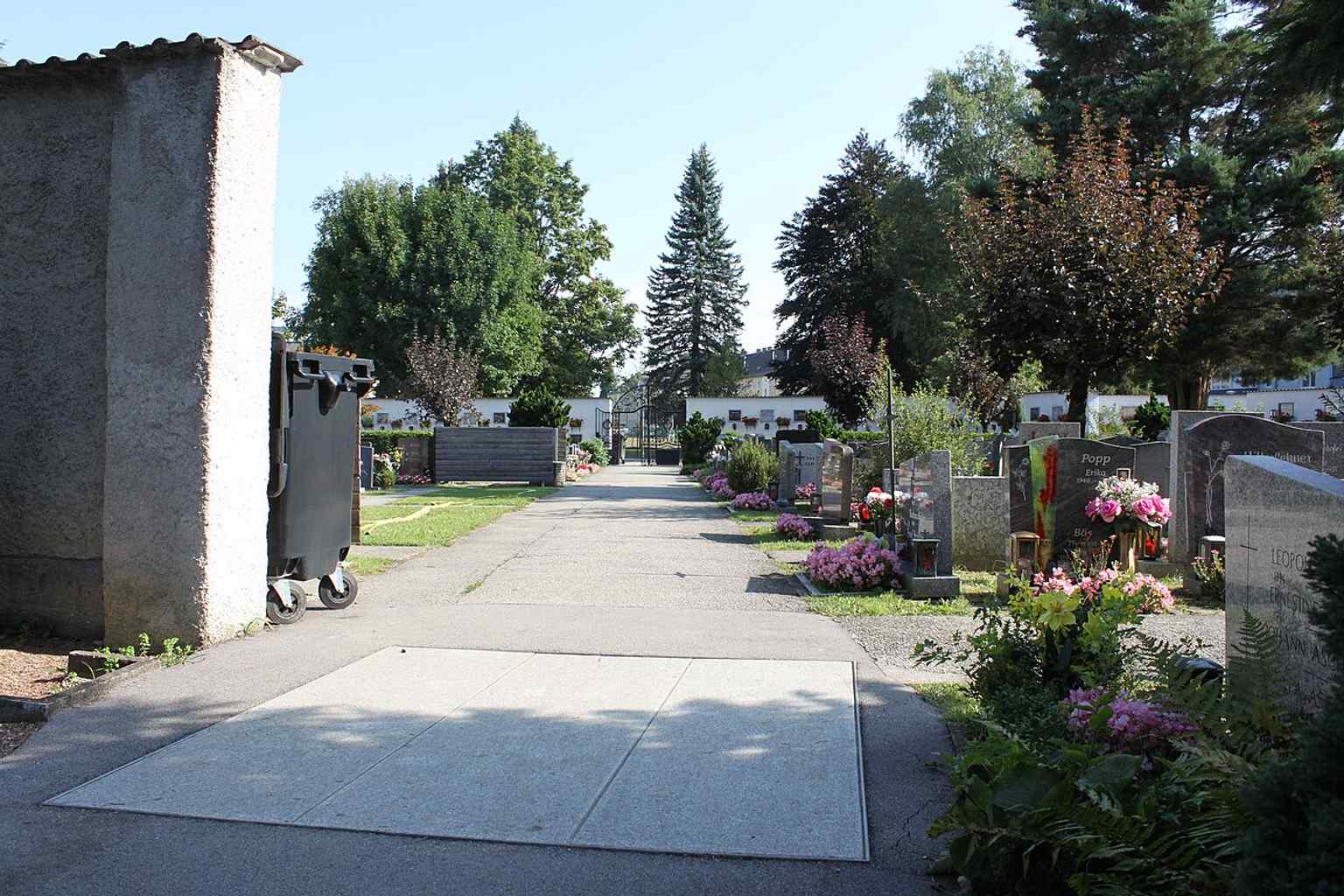
The marked burial place of KZ prisoners’ ashes, a stark reminder that the crematorium was also used during the Nazi era.Photo: Anton-kurt, Wikimedia Commons, CC BY-SA 3.0 at. Cropped & resized. The city bought the cemetery in late nineteen thirty-nine for one hundred fifteen thousand reichsmarks, roughly a few million euros today, and it has remained a municipal responsibility ever since. The grounds are open daily from seven in the morning until eight in the evening.
This is a place where civic progress and civic failure stand uncomfortably close together.
Stay a moment if you like, and when you’re ready, continue on to the next stop.
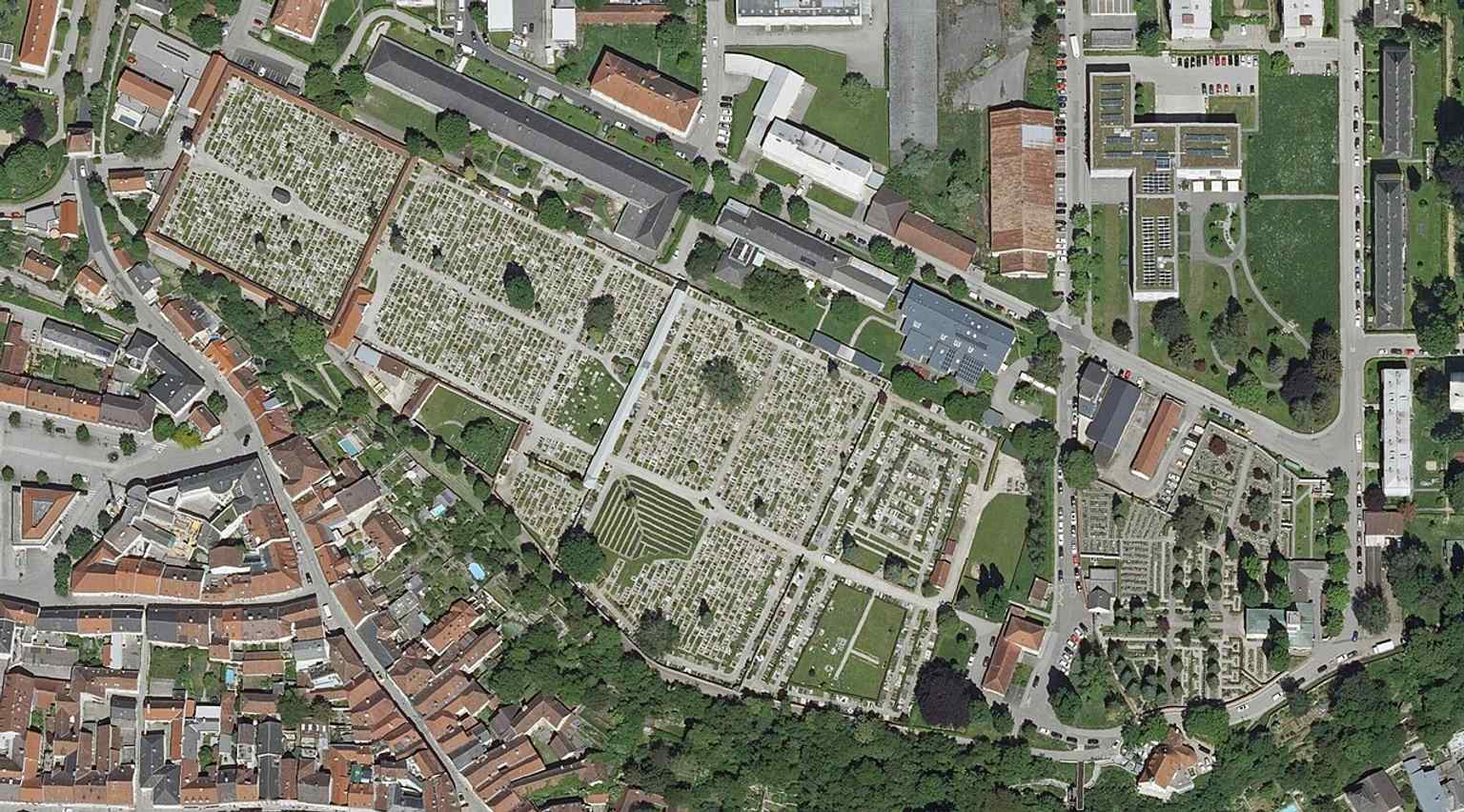
A wider aerial view of both cemeteries together, useful for understanding how the urn cemetery grew next to the Tabor cemetery complex.Photo: Fotosː BEV - Bundesamt für Eich- und Vermessungswesen / Bearbeitung (Stitch, Tonwertkorrektur)ː Christoph Waghubinger, Wikimedia Commons, CC BY 4.0. Cropped & resized. 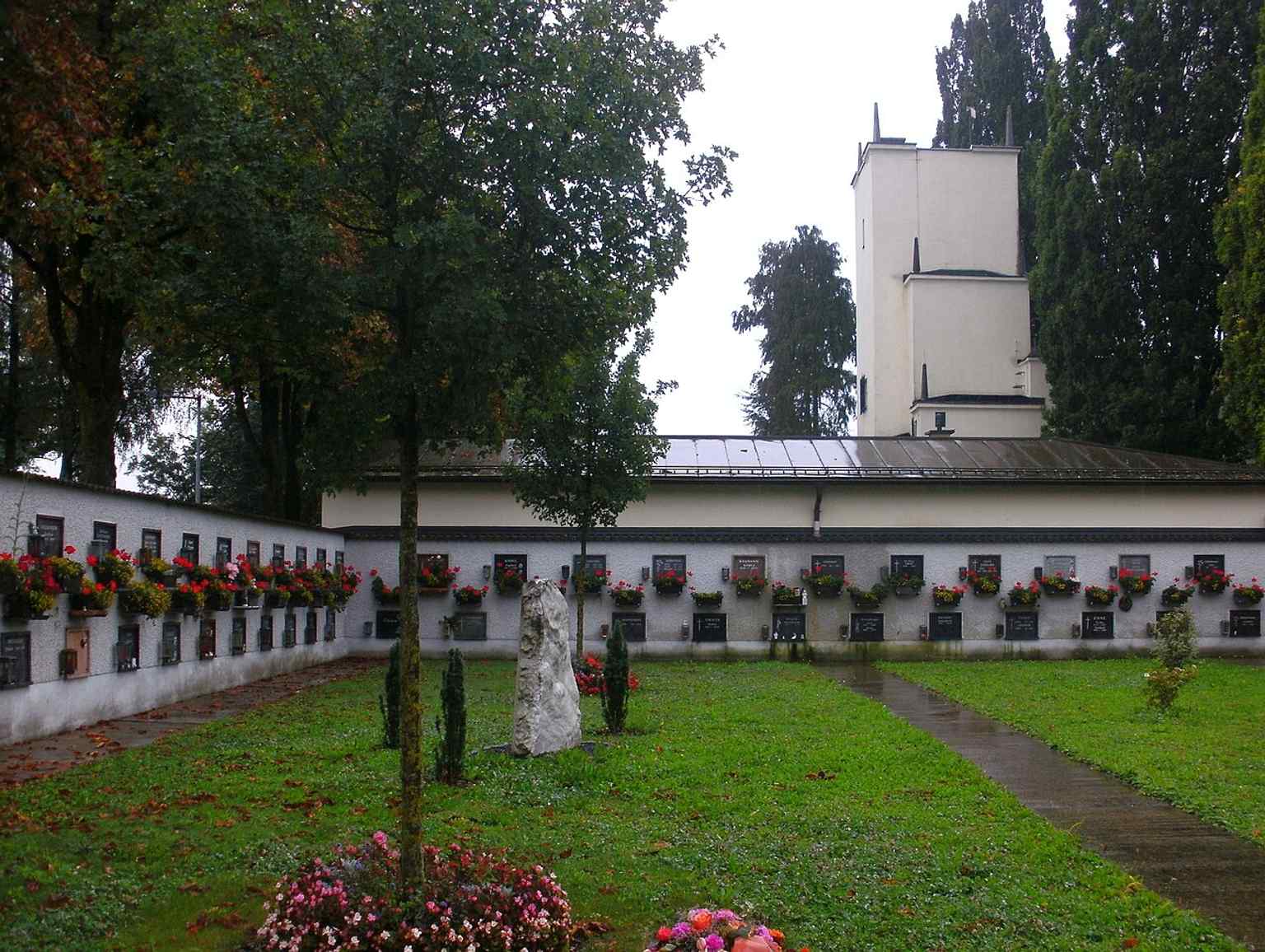
A broader view of the crematorium and urn cemetery together, showing the memorial landscape around the main building.Photo: Cyan22, Wikimedia Commons, CC BY-SA 4.0. Cropped & resized. 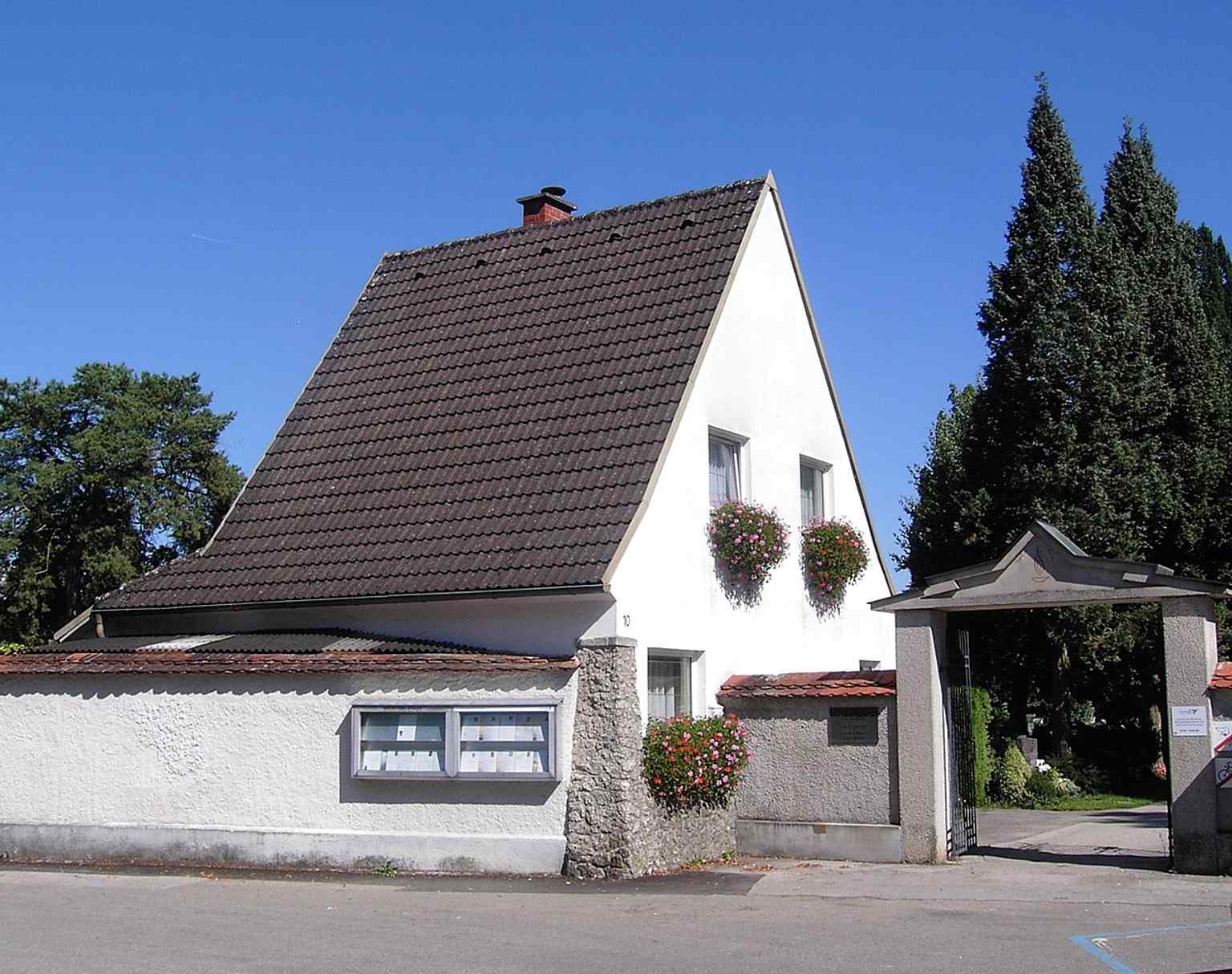
The entrance from Industriestraße, one of the access points to the cemetery grounds.Photo: Christoph Waghubinger (Lewenstein), Wikimedia Commons, CC BY-SA 3.0 at. Cropped & resized. 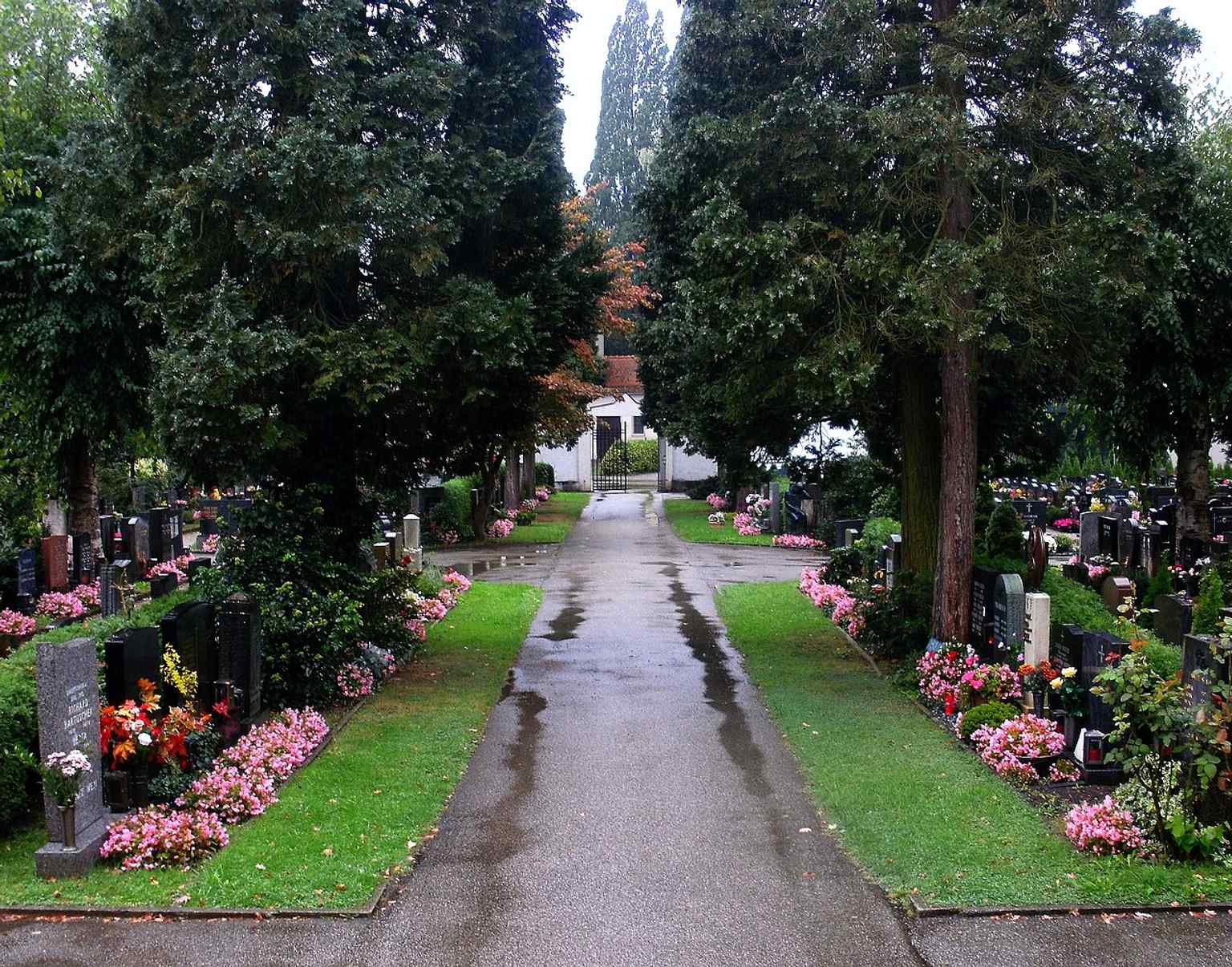
A clean overall view of the Städtischer Urnenfriedhof am Tabor, showing the peaceful cemetery layout.Photo: Christoph Waghubinger (Lewenstein), Wikimedia Commons, CC BY-SA 3.0 at. Cropped & resized. 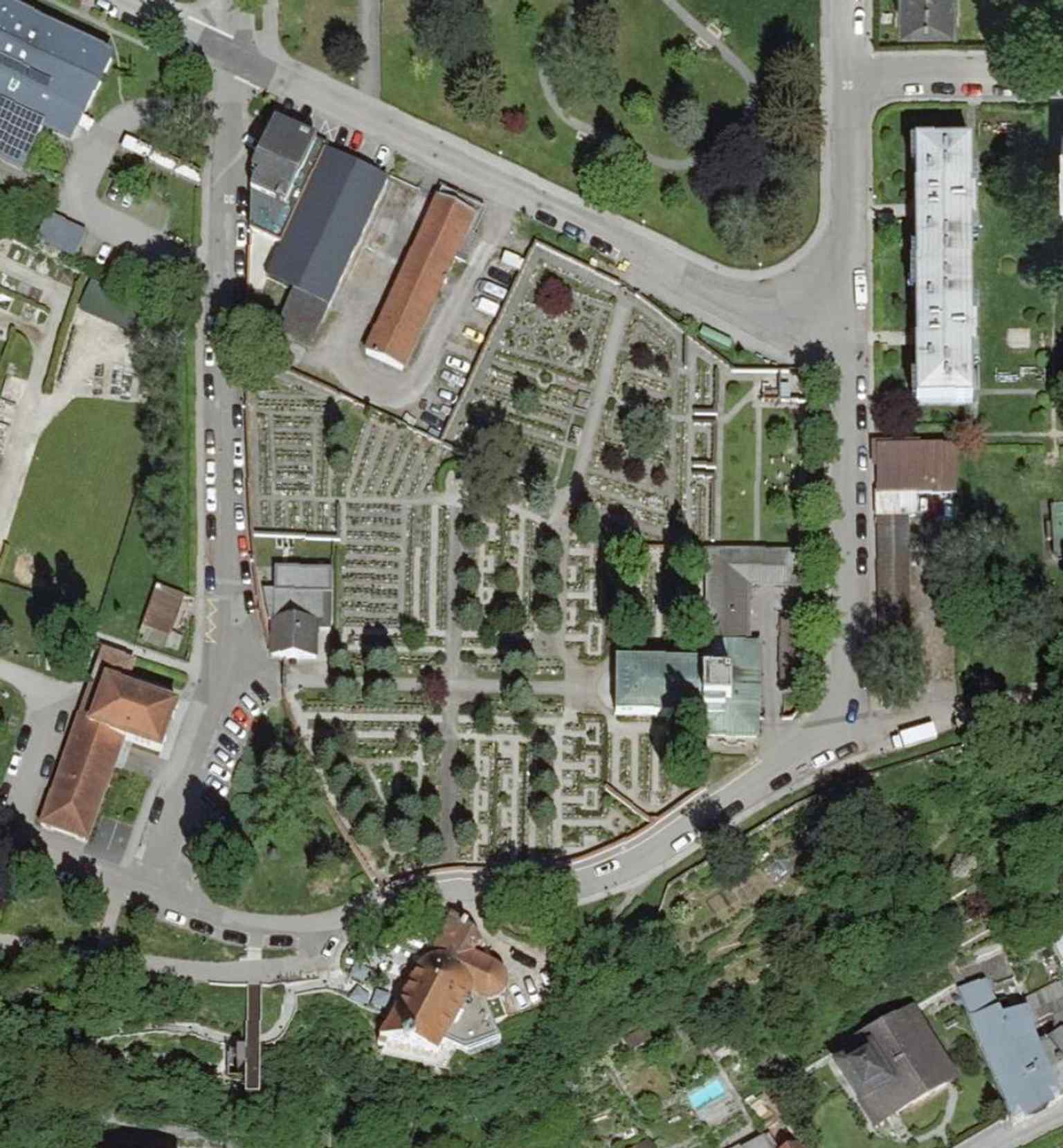
Looking from the crematorium toward the Taborweg entrance, this view connects the building with the cemetery approach.Photo: Cyan22, Wikimedia Commons, CC BY-SA 4.0. Cropped & resized. In front of you stands a pale stone entrance with a square gate tower, a rounded Renaissance arch, and an inscription band above the portal that quietly announces its age. This…Read moreShow less
Open dedicated page →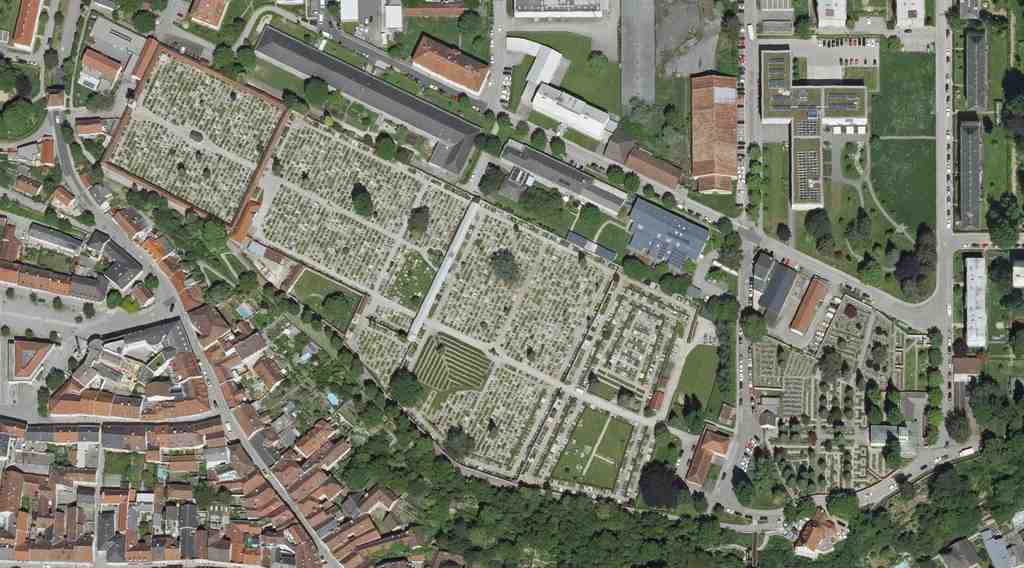
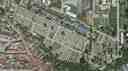
Tabor CemeteryPhoto: Fotosː BEV - Bundesamt für Eich- und Vermessungswesen / Bearbeitung (Stitch, Tonwertkorrektur)ː Christoph Waghubinger, Wikimedia Commons, CC BY 4.0. Cropped & resized. In front of you stands a pale stone entrance with a square gate tower, a rounded Renaissance arch, and an inscription band above the portal that quietly announces its age.
This is Tabor Cemetery, the city’s great burial ground: about four hectares, around eight thousand five hundred graves, and several centuries of Steyr deciding where memory ought to live. The oldest part dates to fifteen eighty-four. That includes the Renaissance gate in front of you and an arcaded walk with eighty-four burial vaults. Together they form a Campo Santo... literally a “holy field,” laid out as a square cloistered cemetery. Efficient, solemn, and very Italian in concept. Death, apparently, also appreciates good geometry.
Steyr had tried other solutions first. The burial ground by the parish church overflowed during the plague of fifteen forty-one and fifteen forty-two. Then the city chose another site on Sierninger Street, and in fifteen sixty-nine that ground started sliding toward the defensive ditch. Not ideal for long-term residents. The city bought this site by fifteen seventy-two, but a destructive flood on the Enns and Steyr rivers swallowed the funds, so construction only began in fifteen eighty-three.
Even after the walls and gate stood finished, the cemetery remained unconsecrated during the Reformation and only received formal blessing in sixteen twenty-eight from Abbot Anton the Second of Garsten. Later centuries kept adding layers: a Jewish cemetery from eighteen seventy-four with one hundred forty-one graves, including a mass grave of more than one hundred Hungarian Jews murdered on a death march; a Protestant section separated by a wall from eighteen ninety-two; and military burial areas from the First World War onward.
If you check the app image of the arcades, you can see how richly decorated that Renaissance cloister really is. And if you glance at the before-and-after view, the gate tower looks reassuringly unchanged; the presentation around it is what has sharpened over time.
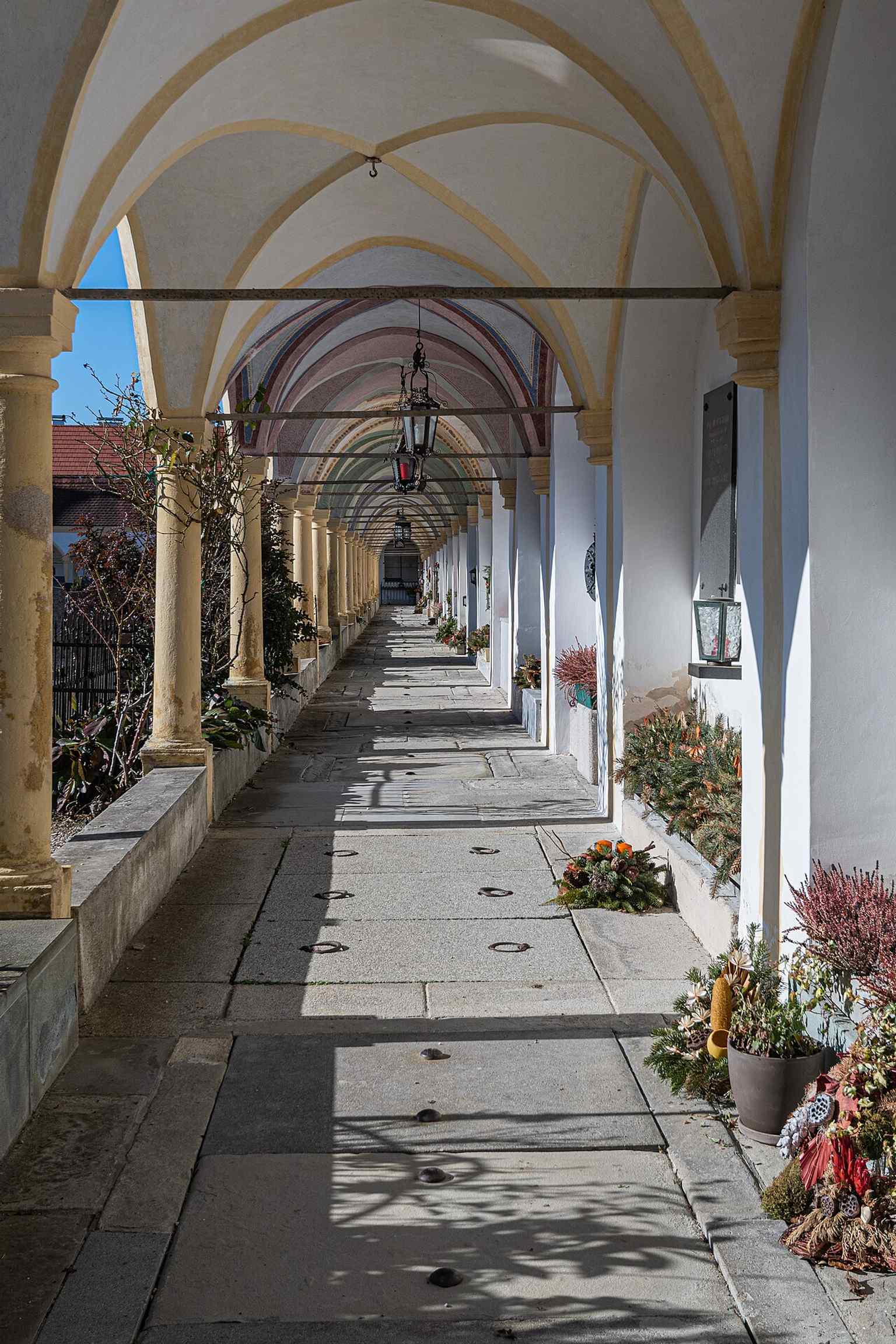
Inside the arcades, where the cemetery preserves 84 burial vaults and the richly decorated Renaissance-era cloistered walk.Photo: Isiwal, Wikimedia Commons, CC BY-SA 4.0. Cropped & resized. This cemetery holds plague, reform, industry, war, and private grief inside one remarkably disciplined enclosure, and it is open daily from seven in the morning to eight in the evening.
Take a moment here, and when you’re ready, we can continue on to St. Michael.
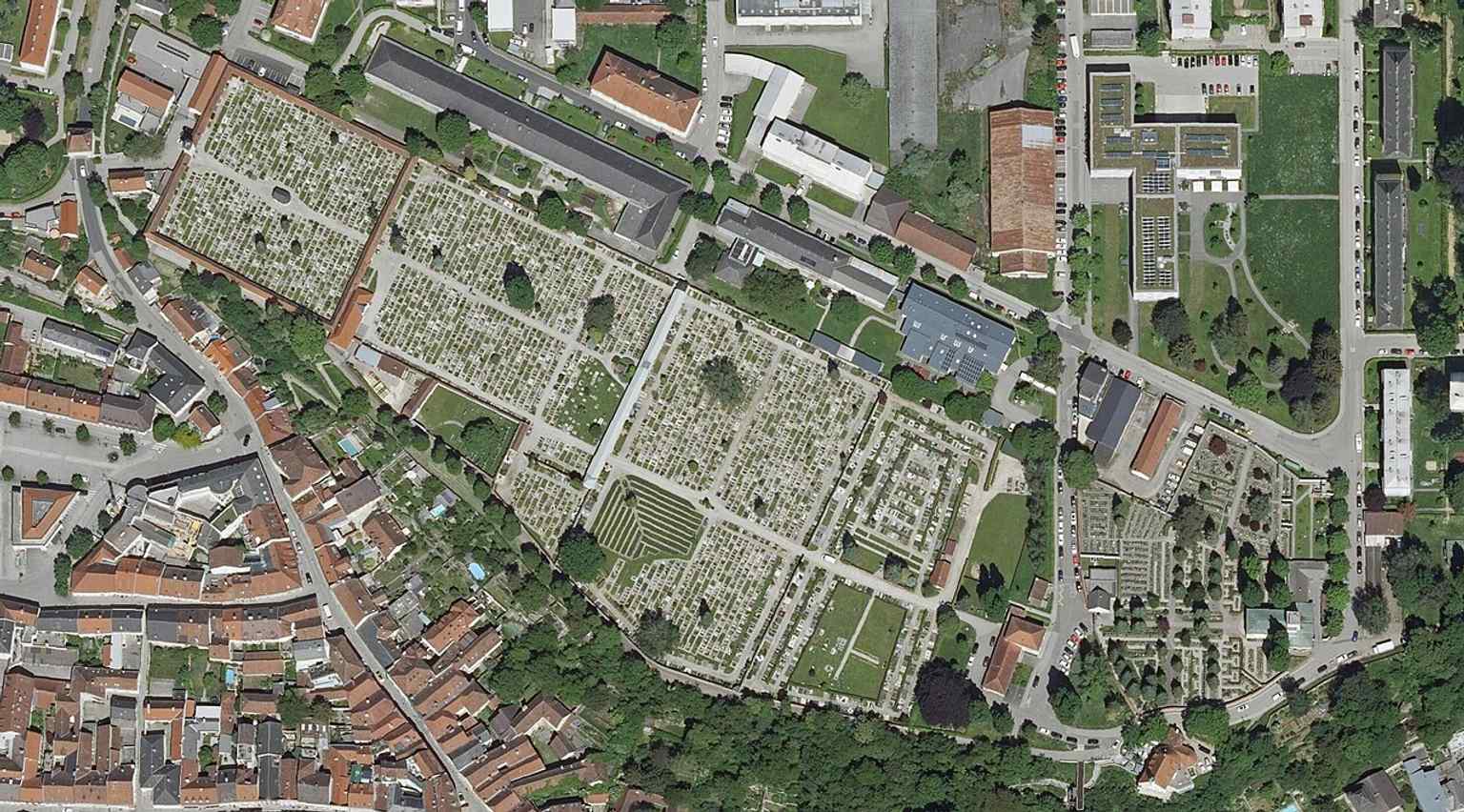
Aerial view of the Tabor Cemetery complex, showing the main burial ground beside the later urn cemetery that opened in 1927.Photo: Fotosː BEV - Bundesamt für Eich- und Vermessungswesen / Bearbeitung (Stitch, Tonwertkorrektur)ː Christoph Waghubinger, Wikimedia Commons, CC BY 4.0. Cropped & resized. 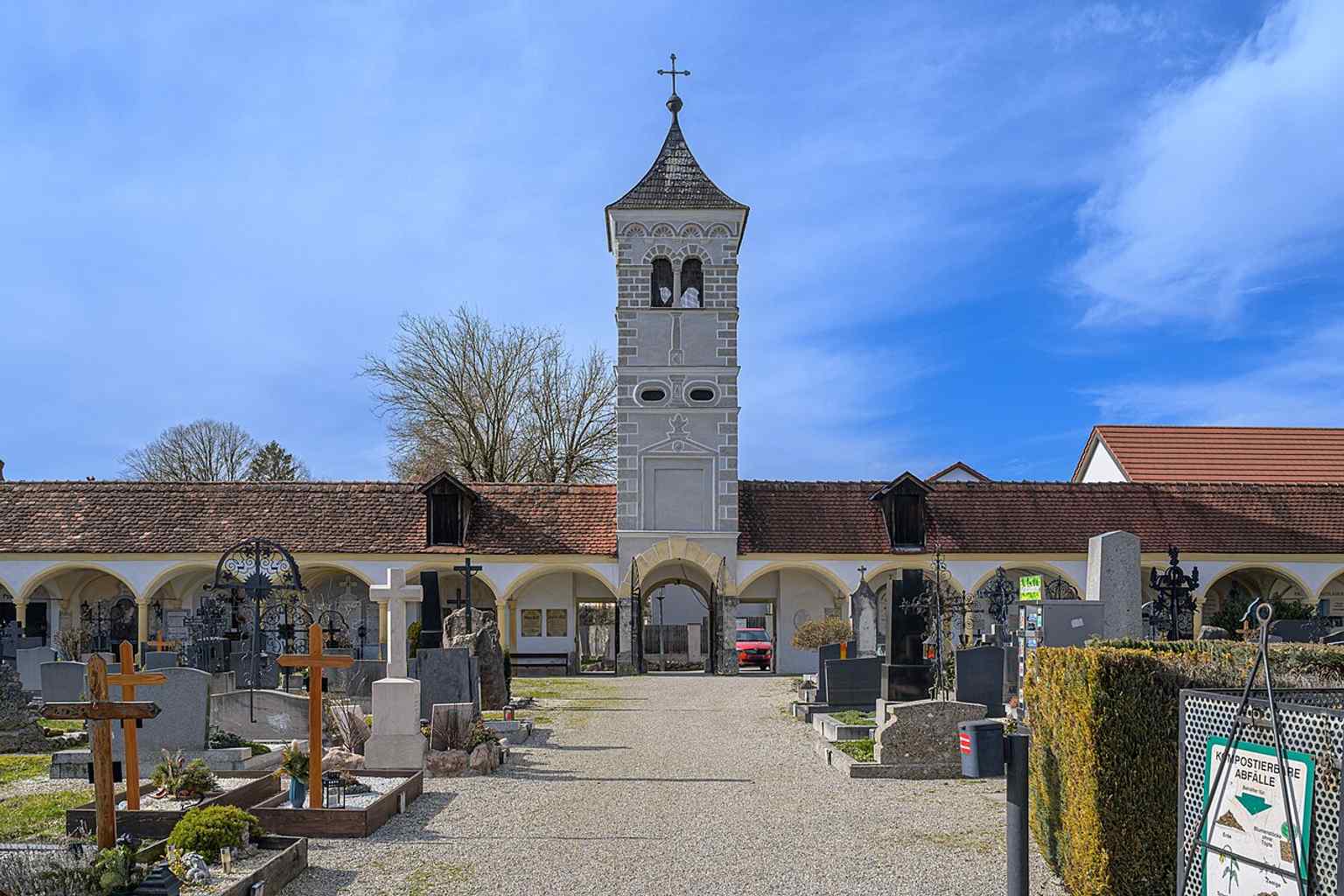
The main portal and tower at Tabor Cemetery, the historic entrance linked to the 1584 completion of the oldest section.Photo: Isiwal, Wikimedia Commons, CC BY-SA 4.0. Cropped & resized. 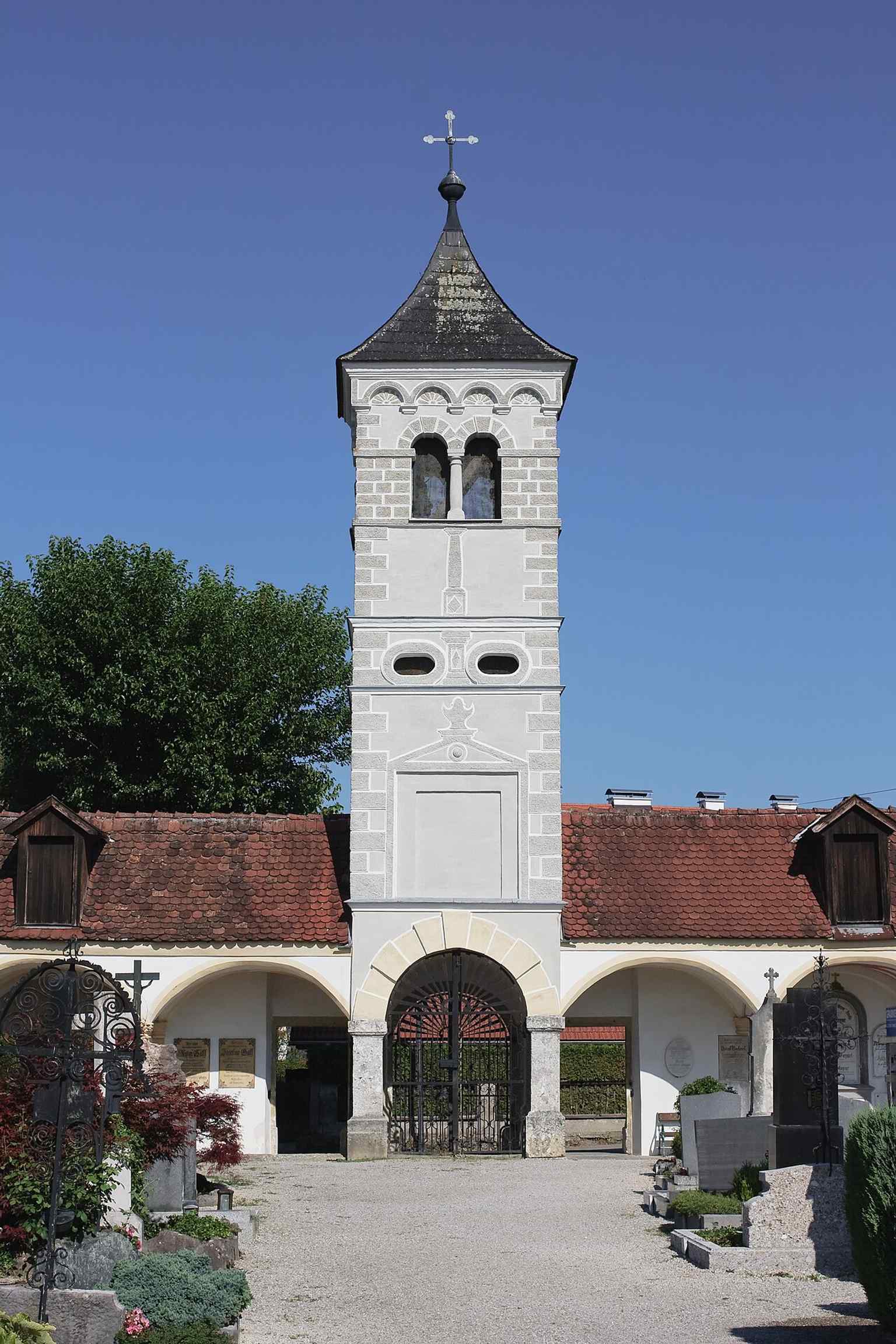
View from the arcades toward the entrance tower, highlighting the Campo Santo layout of the cemetery’s oldest section.Photo: Christoph Waghubinger (Lewenstein), Wikimedia Commons, CC BY-SA 3.0. Cropped & resized. 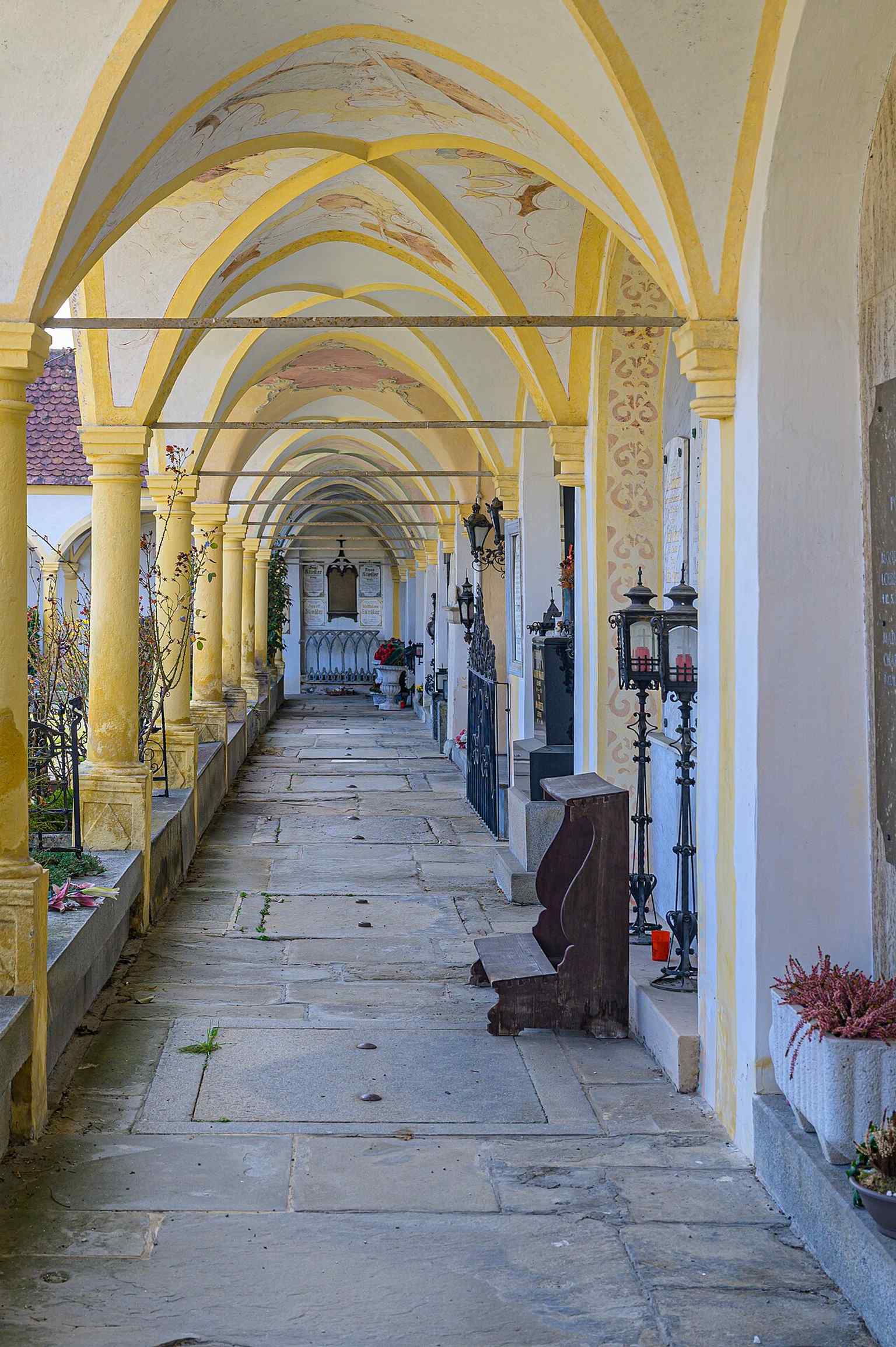
The renovated cemetery chapel, a reminder that a chapel was added to the site in the 17th century.Photo: Isiwal, Wikimedia Commons, CC BY-SA 4.0. Cropped & resized. 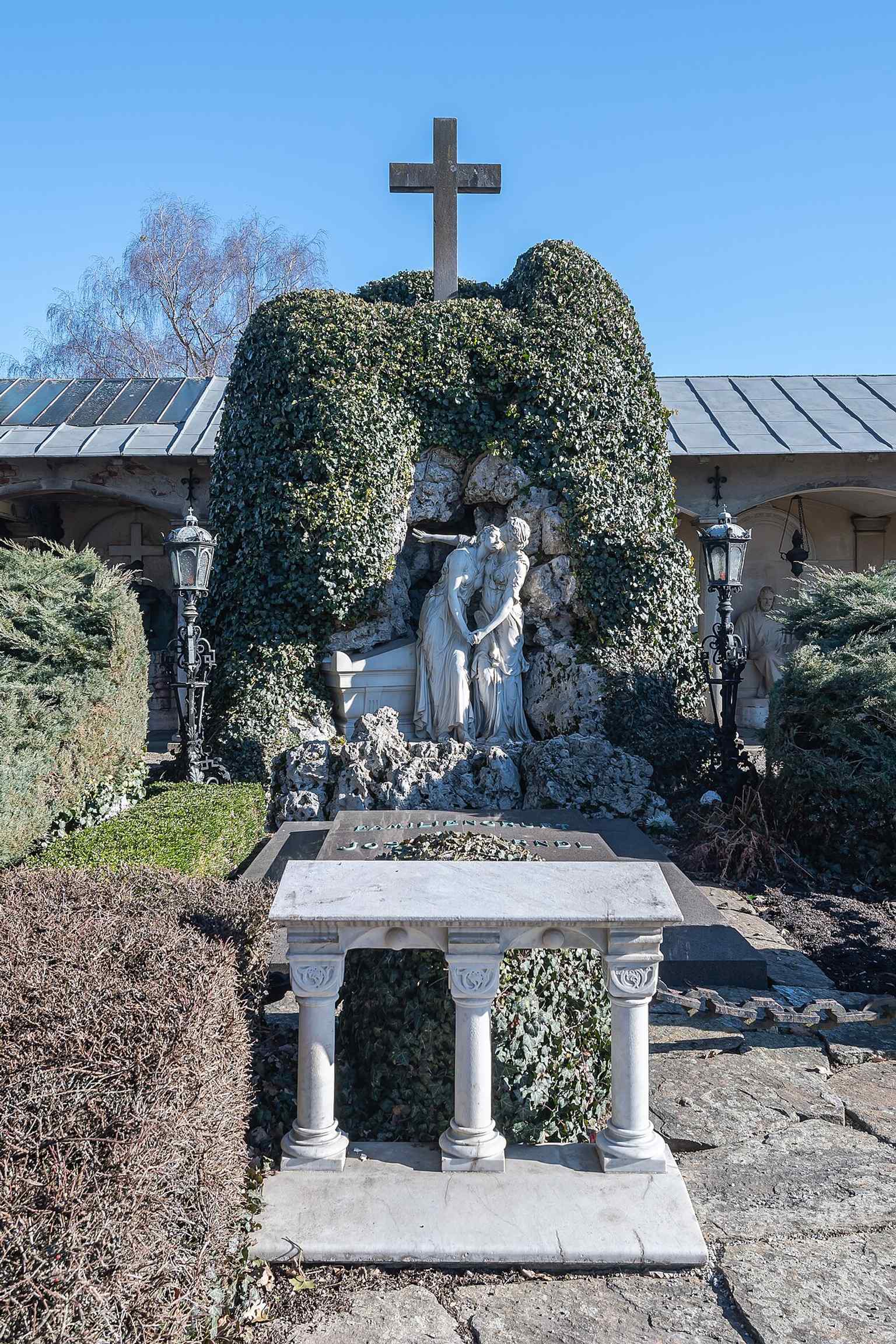
The burial vault of Josef Werndl, the arms manufacturer whose family is one of the cemetery’s best-known burials.Photo: Isiwal, Wikimedia Commons, CC BY-SA 4.0. Cropped & resized. 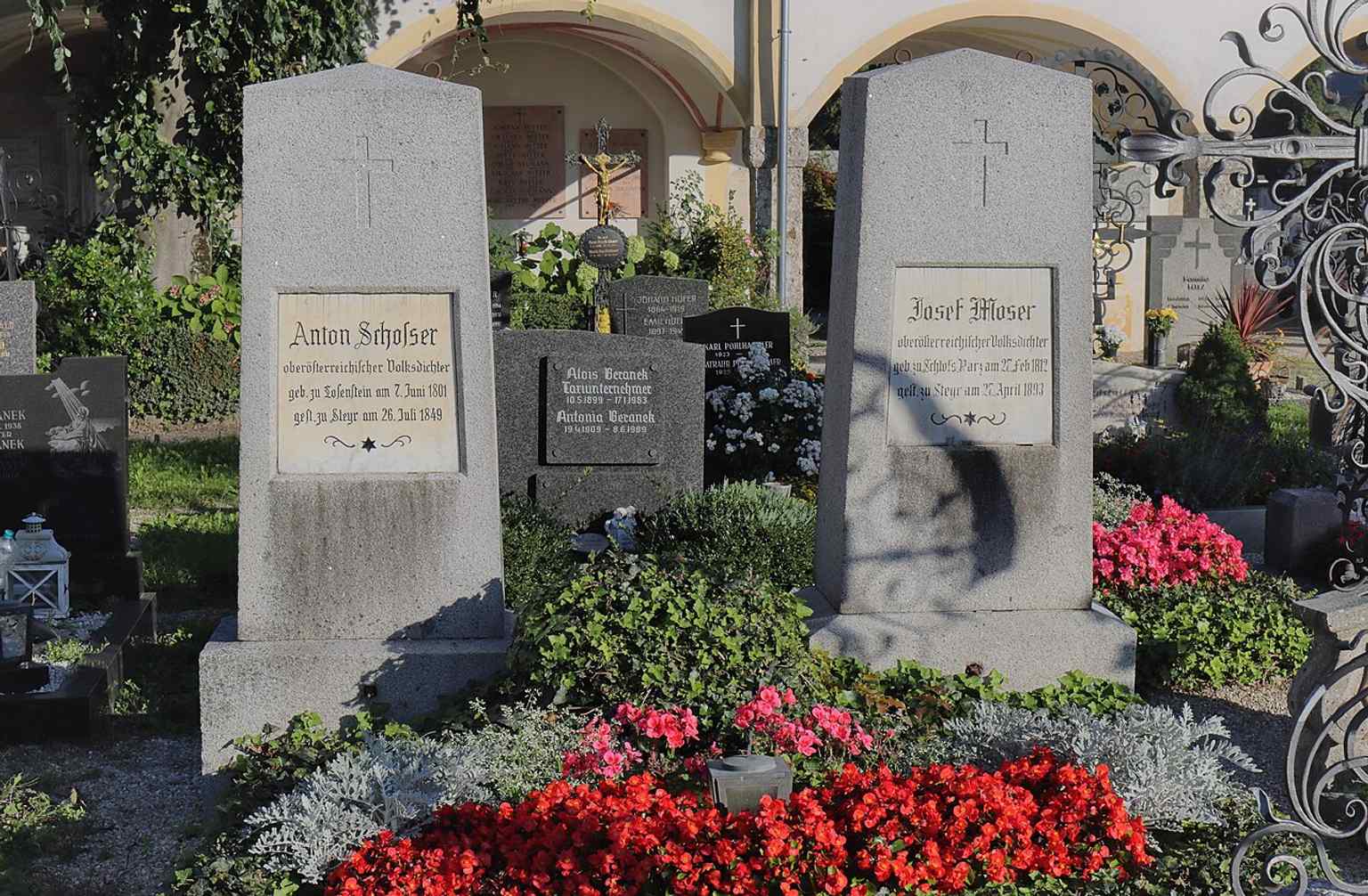
Soldiers’ graves from the end of World War I, later maintained as part of the city’s military memorial areas.Photo: Christoph Waghubinger (Lewenstein), Wikimedia Commons, CC BY-SA 4.0. Cropped & resized. 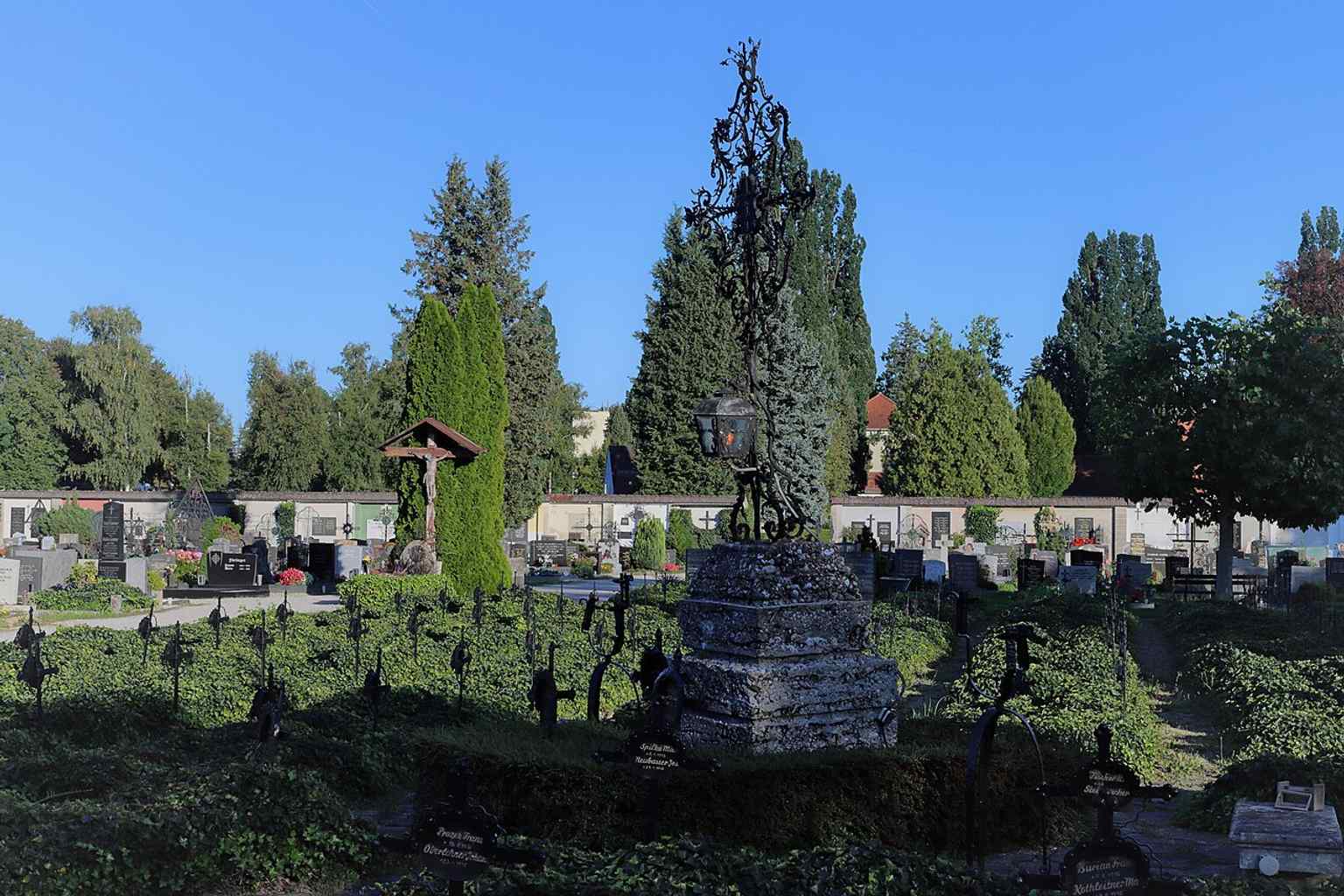
A surviving memorial in the Protestant section, separated from the Catholic cemetery by a wall since 1892.Photo: Christoph Waghubinger (Lewenstein), Wikimedia Commons, CC BY-SA 4.0. Cropped & resized. 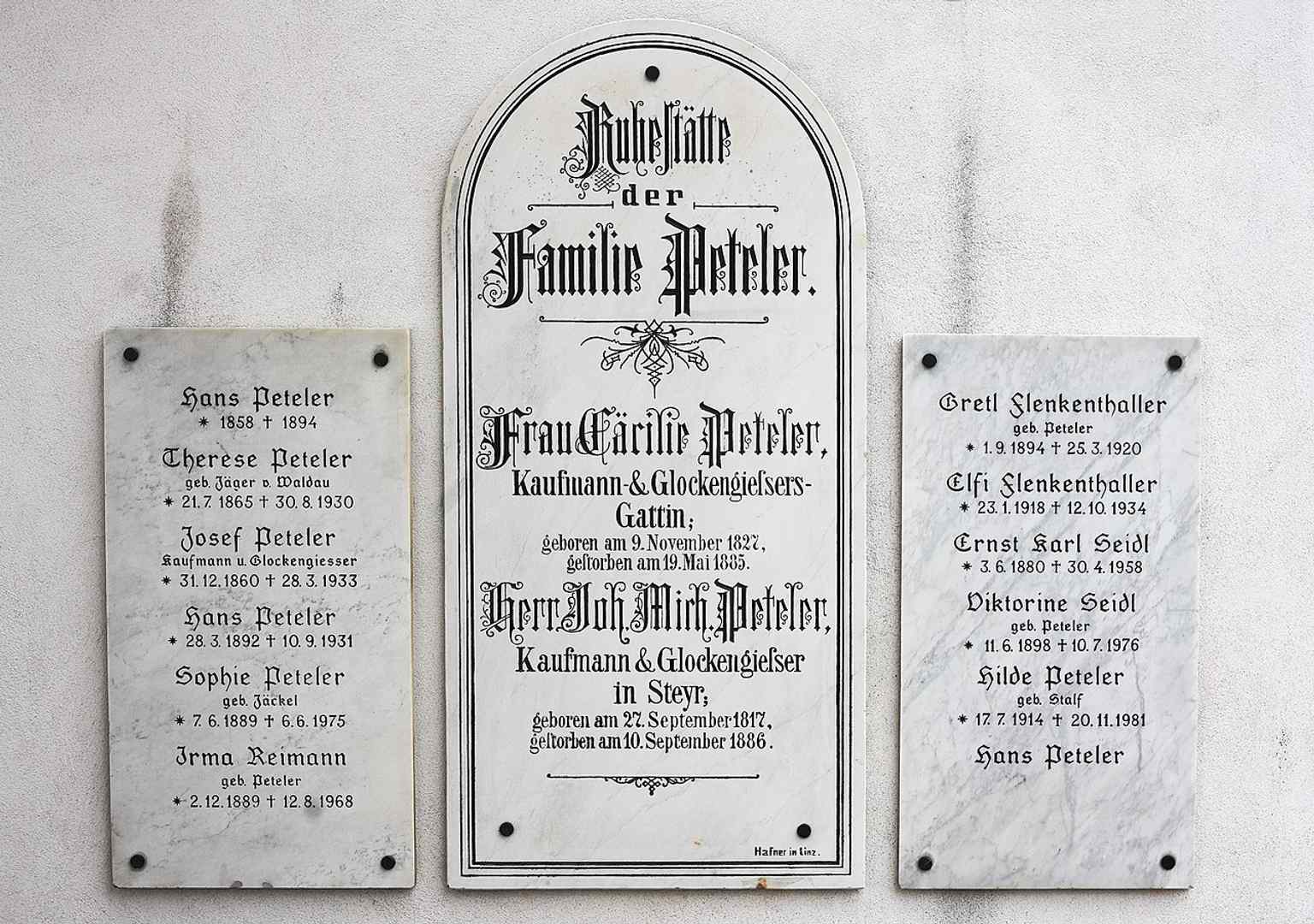
A grave in the Protestant section, illustrating the cemetery’s later denominational divisions and expansions.Photo: Christoph Waghubinger (Lewenstein), Wikimedia Commons, CC BY-SA 4.0. Cropped & resized. 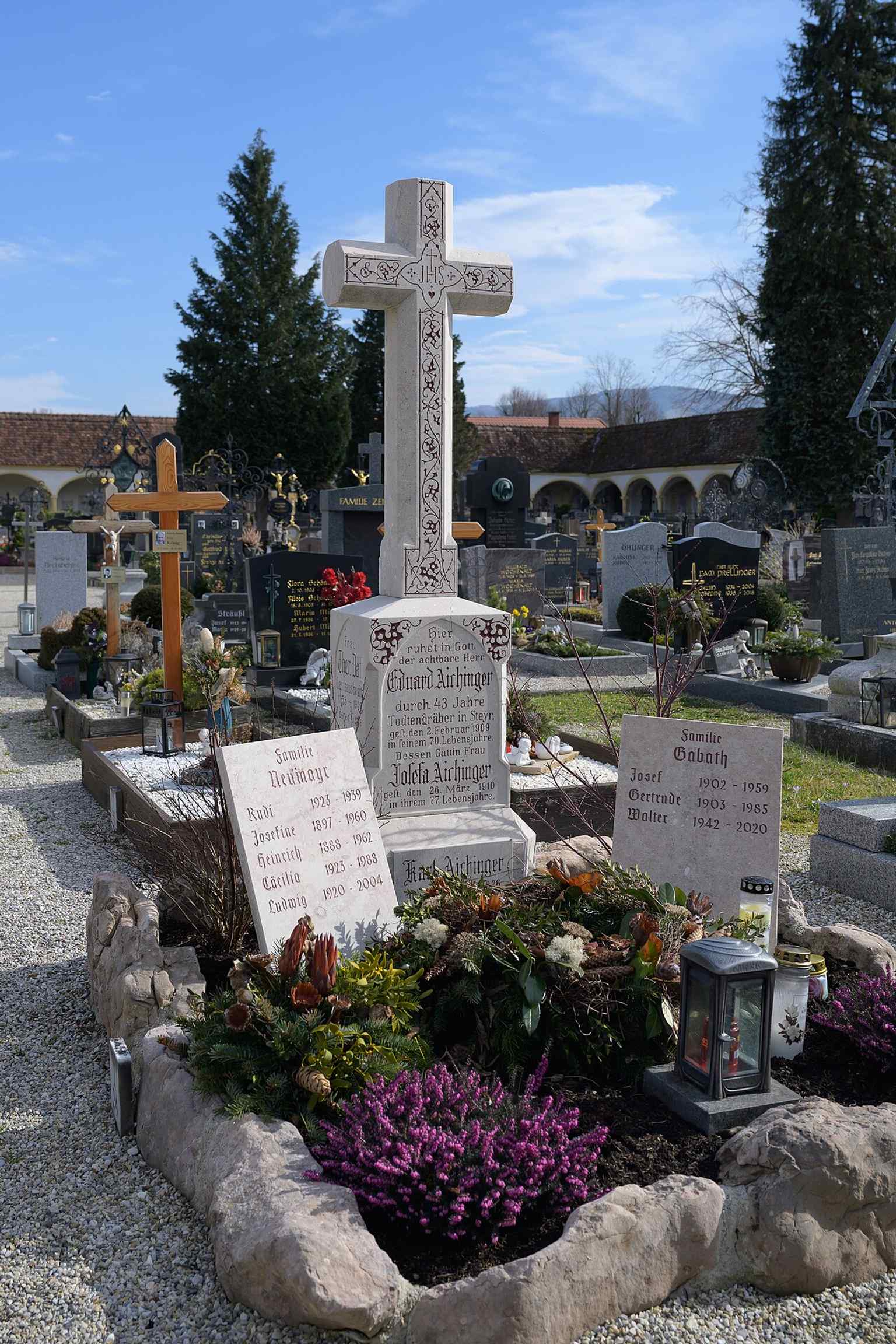
A gravedigger’s grave in the older section, one of the more unusual individual burials in the arcaded cemetery.Photo: Isiwal, Wikimedia Commons, CC BY-SA 4.0. Cropped & resized. 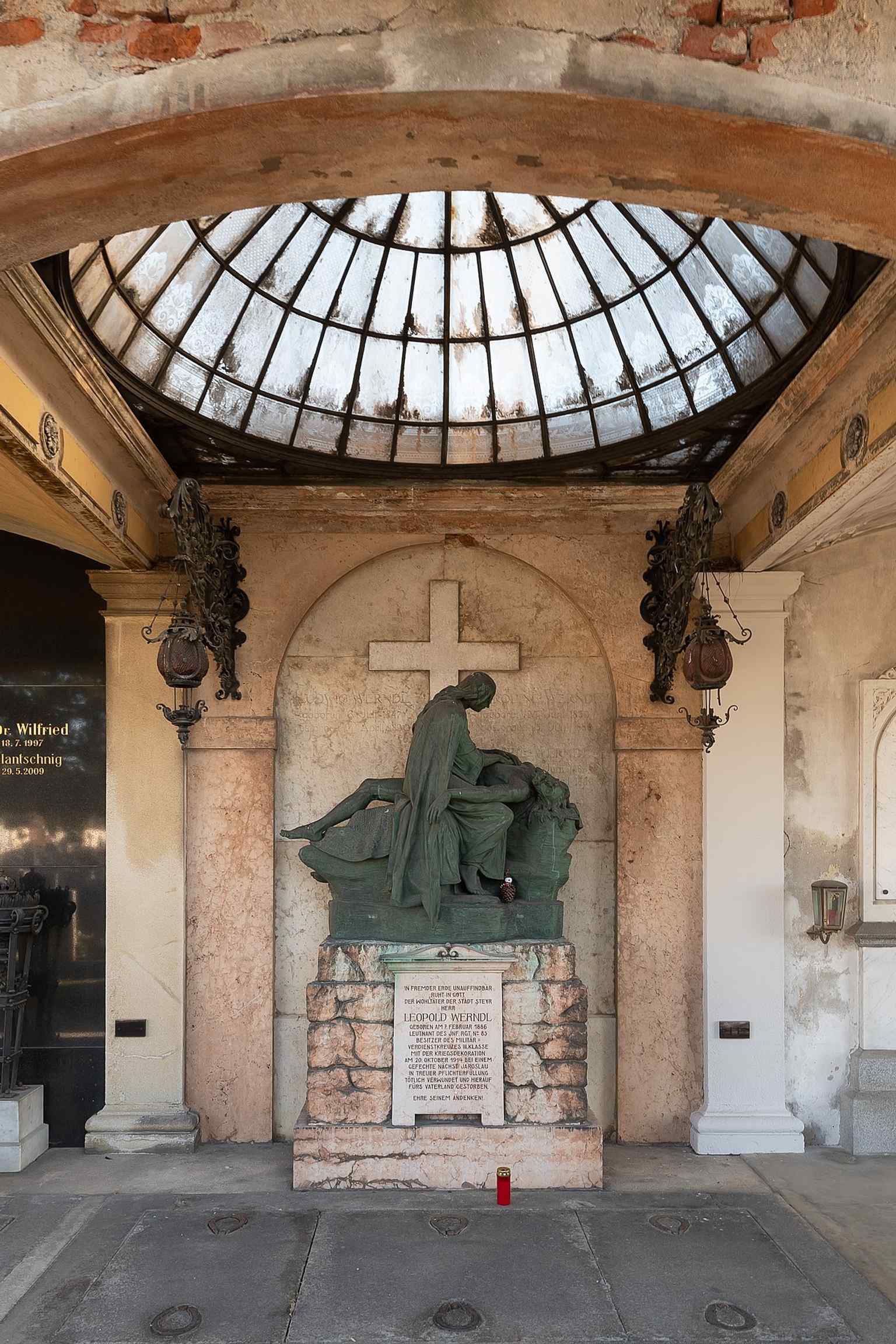
Leopold Werndl’s vault with a commemorative plaque, reflecting how family graves were later adapted and remembered.Photo: Isiwal, Wikimedia Commons, CC BY-SA 4.0. Cropped & resized. 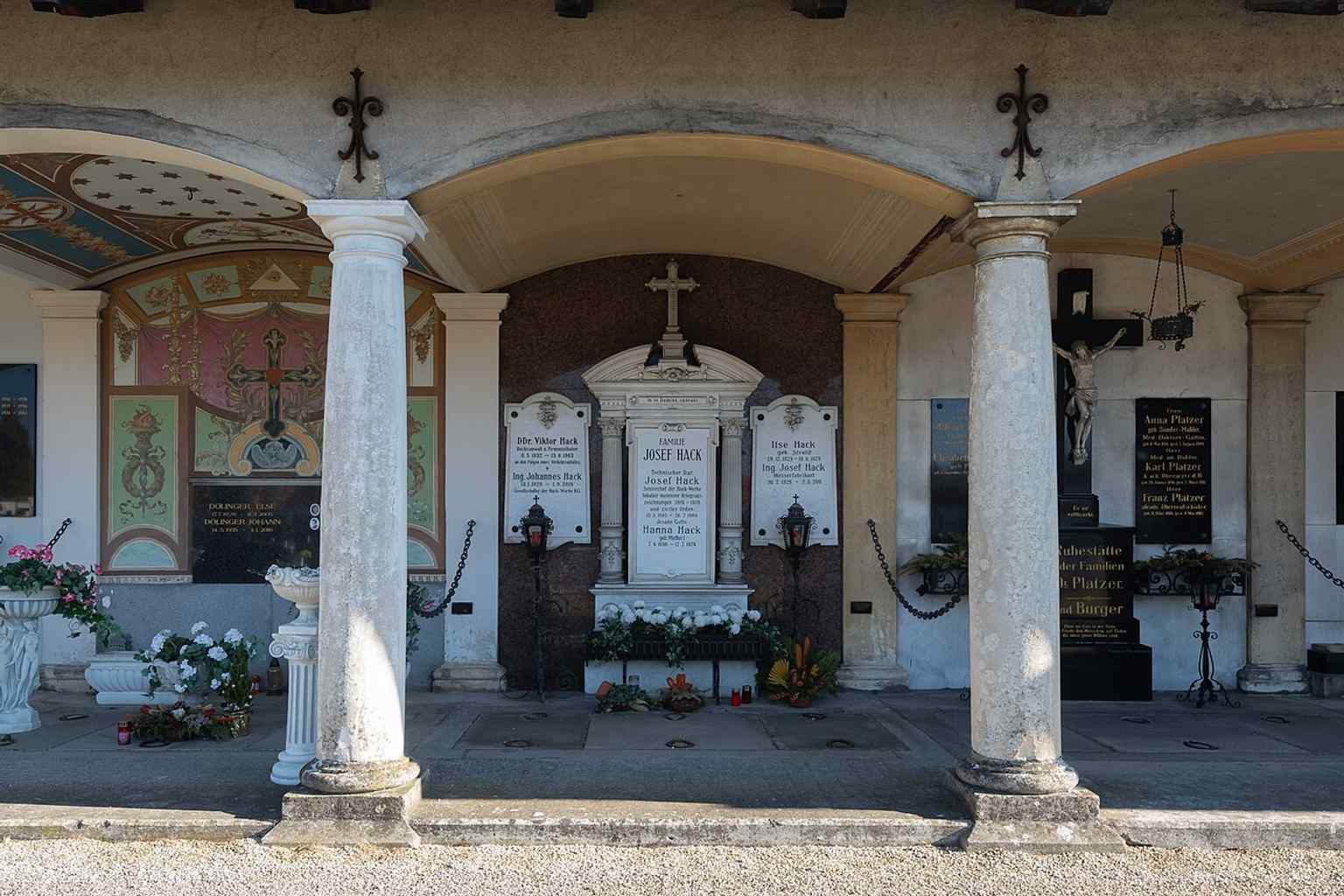
The Hack family vault, another example of the cemetery’s industrial-era burial monuments in Steyr.Photo: Isiwal, Wikimedia Commons, CC BY-SA 4.0. Cropped & resized. On your right, look for the pale stone church set high on a platform, with a broad three-story façade, twin towers, and a monumental portal pressed into the center like a command.…Read moreShow less
Open dedicated page →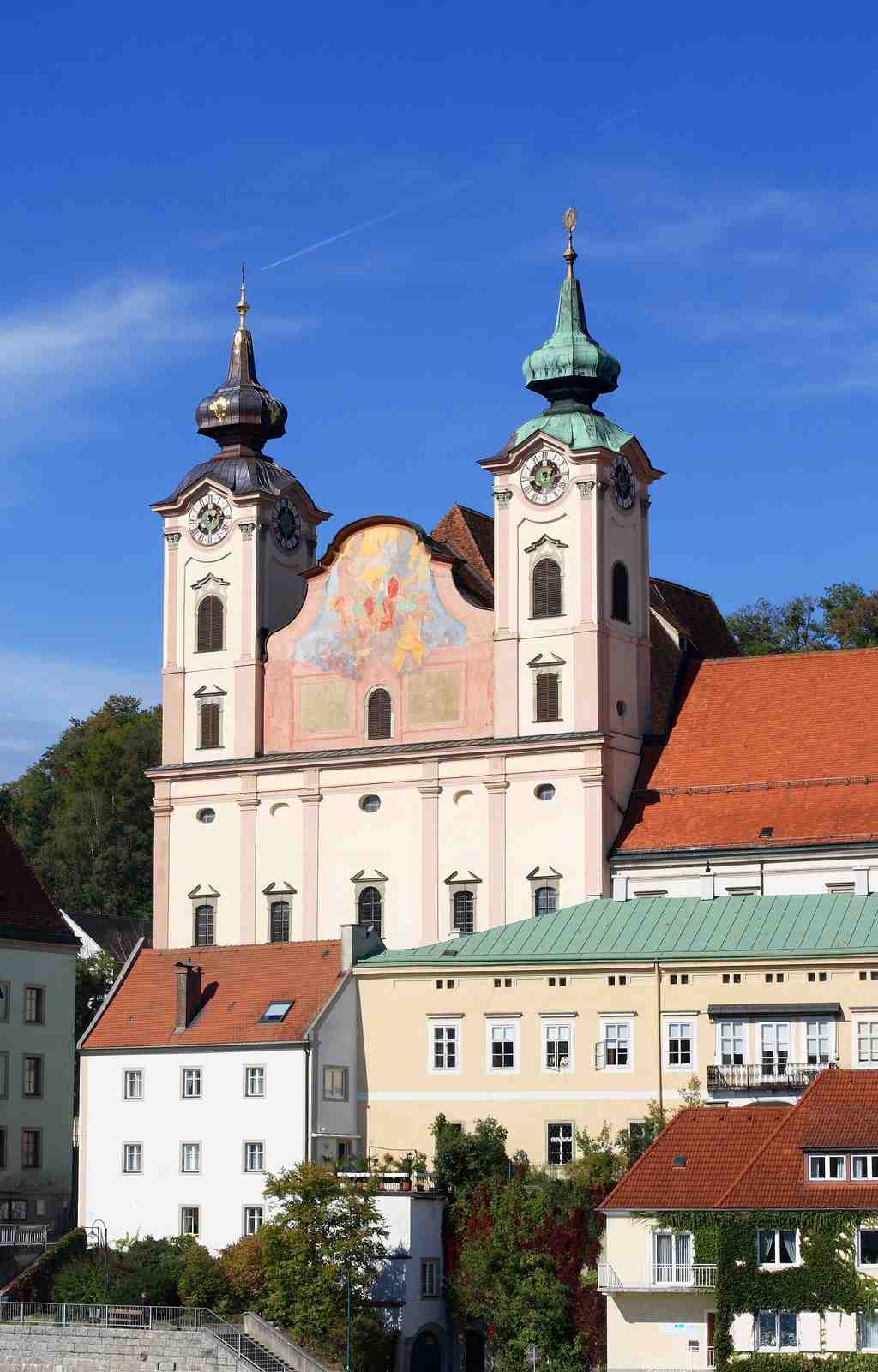
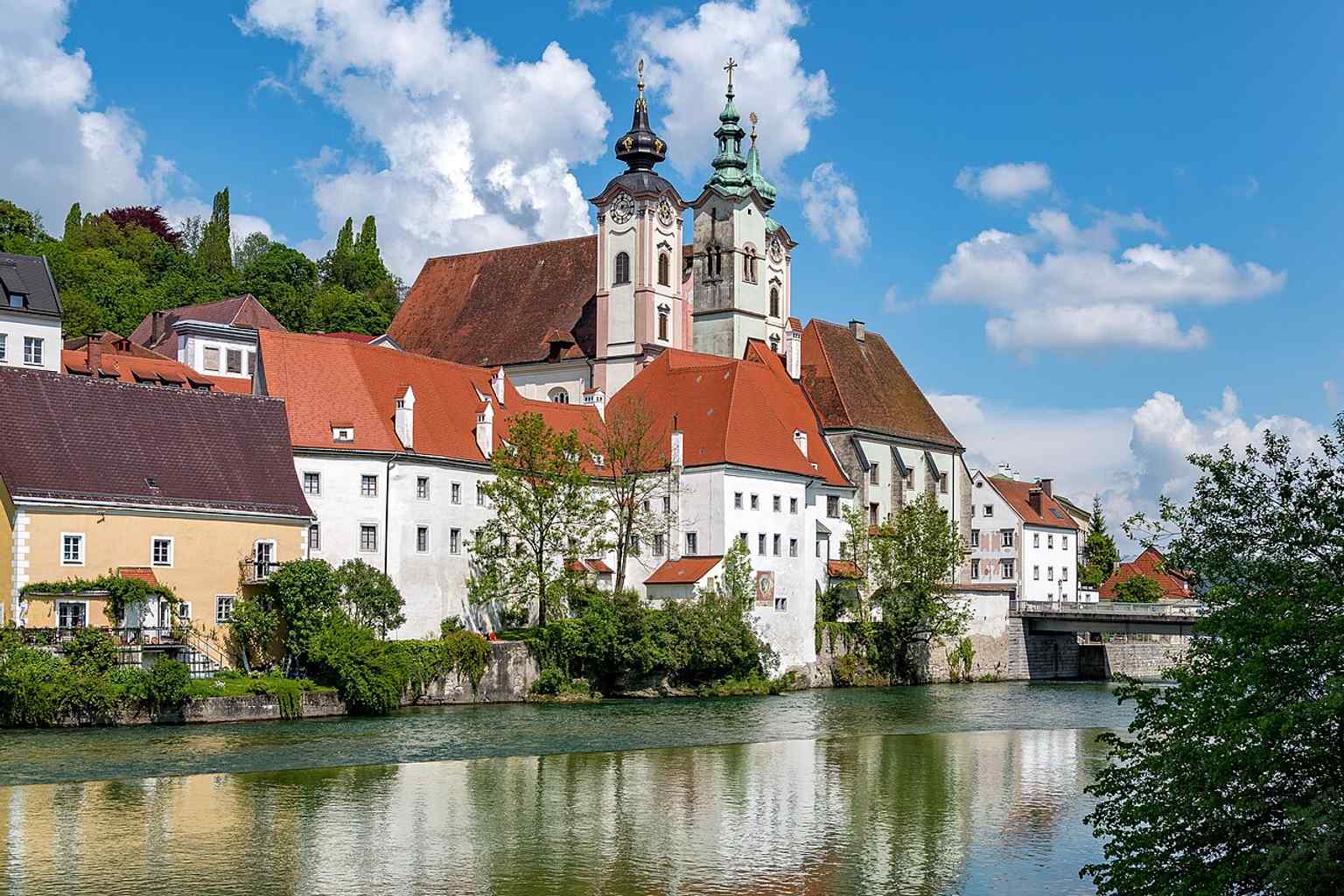
St. MichaelPhoto: Lewenstein, Wikimedia Commons, CC BY-SA 3.0 AT. Cropped & resized. On your right, look for the pale stone church set high on a platform, with a broad three-story façade, twin towers, and a monumental portal pressed into the center like a command.
From here, one fact is impossible to miss: St. Michael was built to dominate. This is the former Jesuit church of Steyrdorf, planted above the bridgehead near the meeting of the Steyr and Enns rivers so it could rule the skyline and, ideally, improve behavior. A very efficient use of masonry.
The bigger story begins in the seventeenth century. After Habsburg victories pushed back Ottoman attacks, Baroque architecture became the preferred language of Catholic renewal. Steyr had long been a center of Protestant life, so the Catholic comeback did not arrive quietly. Between sixteen thirty-five and sixteen eighty-one, three Baroque religious complexes rose here. St. Michael became the most strategic of them.
The Jesuits had entered Austria in fifteen fifty-one, invited by Ferdinand the First. They cared deeply about education, so they opened schools as eagerly as churches. In Steyr, powerful supporters like Sigismund von Lamberg and Abbot Anton Spindler of Garsten helped establish a Jesuit residence. Then, in sixteen thirty, Emperor Ferdinand the Second ordered the city to hand over eleven houses near the citizens' hospital so the Jesuits could build a church and a college. The order took over the site in sixteen thirty-two and started teaching right away. In sixteen thirty-four they cleared the houses. In sixteen forty-eight the auxiliary bishop of Passau, Ulrich Grappler von Trappenburg, consecrated the church. The twin towers were finished in sixteen seventy-seven, and the school building followed in sixteen seventy-eight. The Jesuits understood visibility, long before anyone called it branding.
If you glance at the portal photo in the app, you can catch the inscription over the entrance: Hic Deum Adora, Latin for “here adore God.” Above it stands Mary with the child Jesus, flanked by Peter and Paul, and at the very top sits the Eggenberg coat of arms. The doorway gives instructions, names the sponsors, and stages a theological cast list... all before you even get inside.
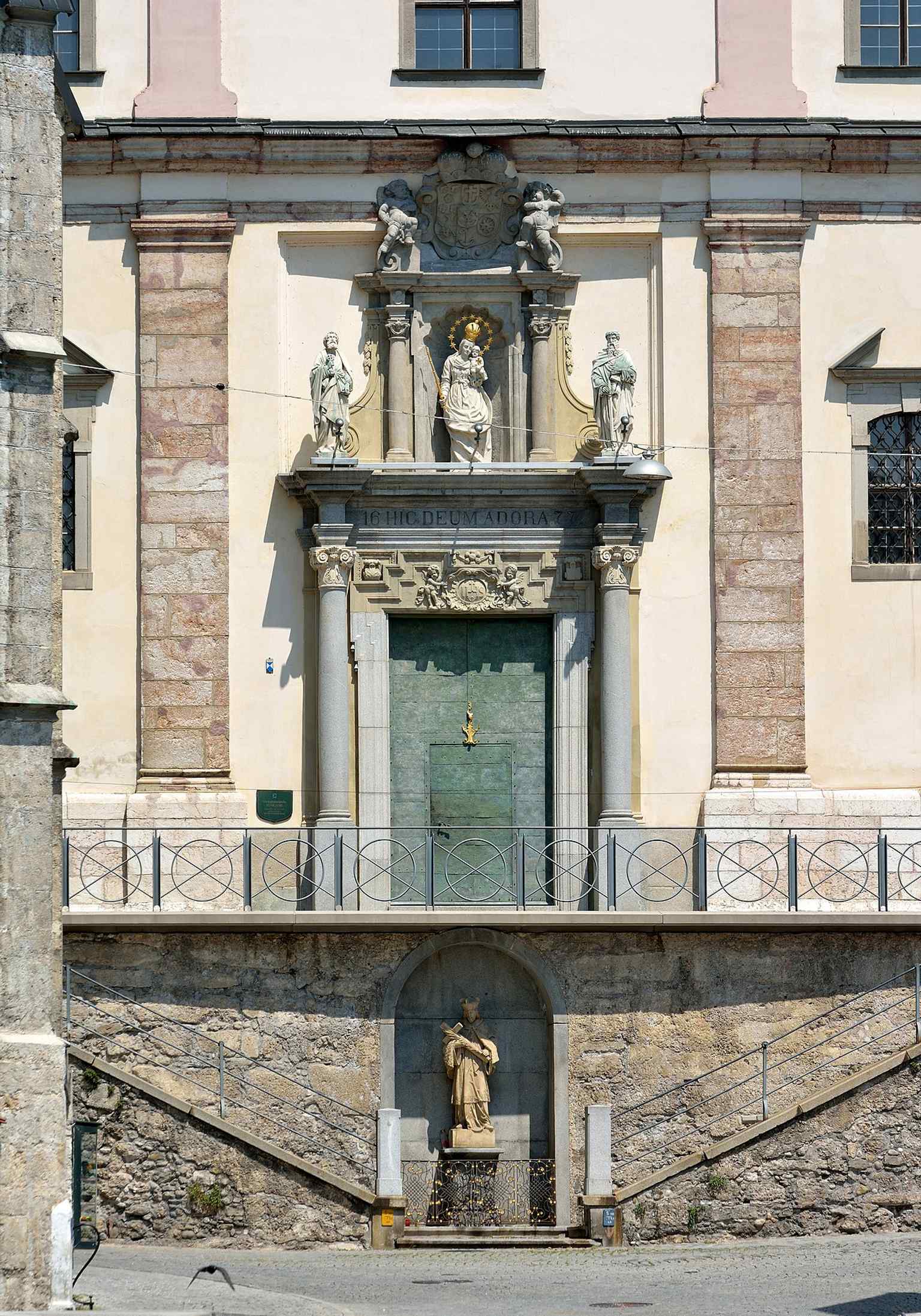
The 1677 portal with its monumental inscription HIC DEUM ADORA — a key Baroque entrance detail of the former Jesuit church.Photo: P e z i, Wikimedia Commons, CC BY-SA 3.0 at. Cropped & resized. The towers did not stay put, either. Builders raised them higher between seventeen sixty-six and seventeen seventy, and Franz Xaver Gürtler painted the gable with the fall of the rebellious angels. On the church’s left side, a larger chapel honors Saint Francis Xavier, one of the Jesuits’ great missionary heroes.
Inside, the church follows a Jesuit model also seen in Munich: one long main hall, called the nave, with side chapels tucked between heavy wall supports. On your screen, the interior image shows that layout clearly. During the major restoration in nineteen eighty-nine, conservators removed layers of later paint and uncovered frescoes from the church’s early years showing the four archangels: Michael, Gabriel, Raphael, and Uriel. For once, “restoration” did not mean someone got creative.
The church interior with its long nave and side chapels, reflecting the Jesuit wall-pillar style described in the source.Photo: Christoph Waghubinger (Lewenstein), Wikimedia Commons, CC BY-SA 3.0 at. Cropped & resized. After the Jesuit order was suppressed in seventeen seventy-three, the building found a new job. In seventeen eighty-five, under Joseph the Second’s church reforms, it became Steyr’s second parish church. Its position mattered just as much as its design: this platform sat where major roads toward Wels, Linz, and Enns converged, so the church served as a permanent announcement that the Counter-Reformation had arrived and intended to be noticed.
St. Michael turns faith, education, and urban strategy into one remarkably self-assured façade.
That portal has done its part. When you’re ready, we can continue on to Dunklhof.
A classic full view of St. Michael rising above Steyrdorf, showing how the church dominates the river crossing and the old town skyline.Photo: Anzi9, Wikimedia Commons, CC BY-SA 3.0. Cropped & resized. 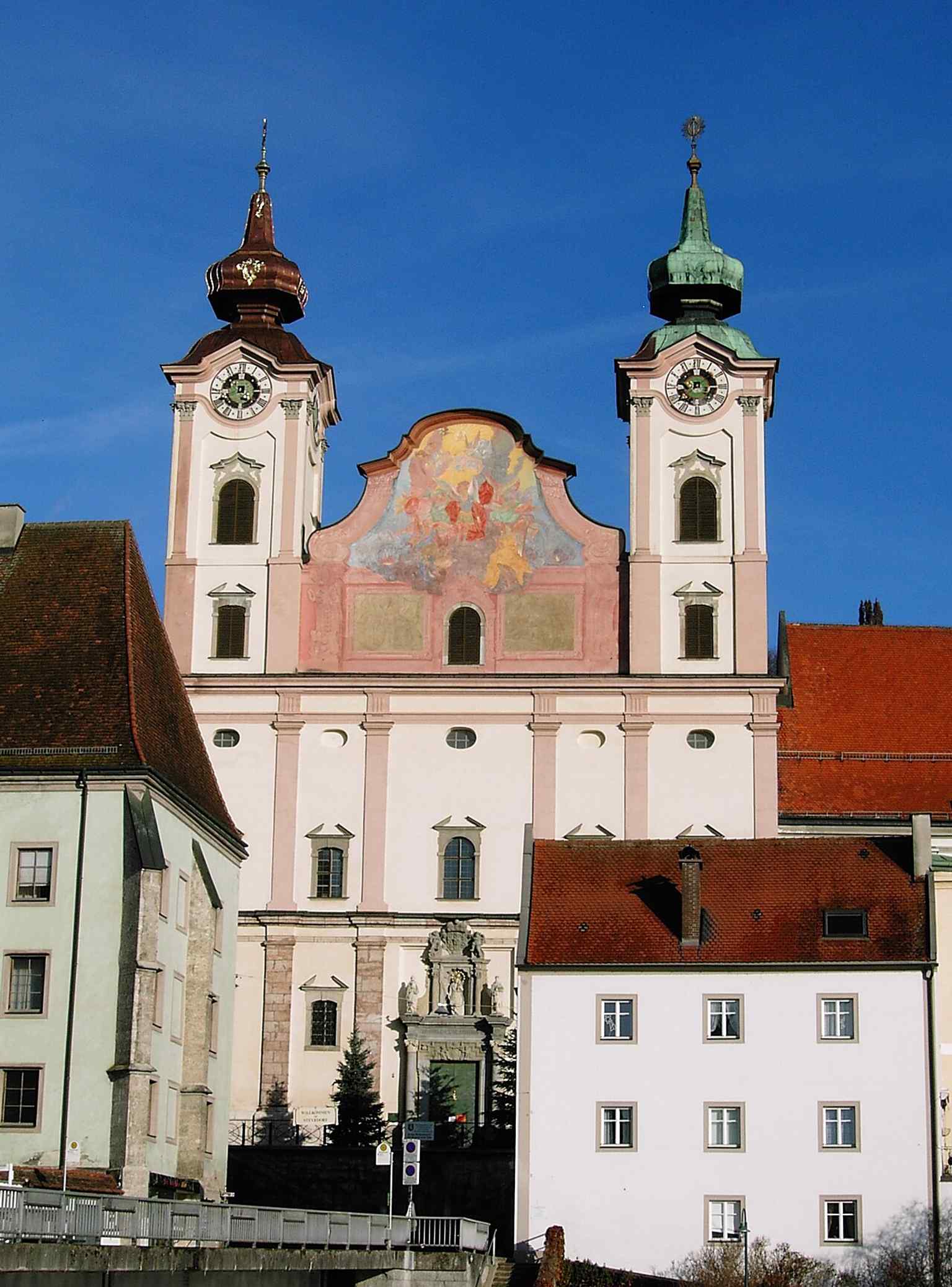
The church seen from Michaelerplatz, emphasizing its elevated position and fortress-like presence at the edge of the historic district.Photo: Bodory Thomas, Wikimedia Commons, CC BY-SA 3.0. Cropped & resized. 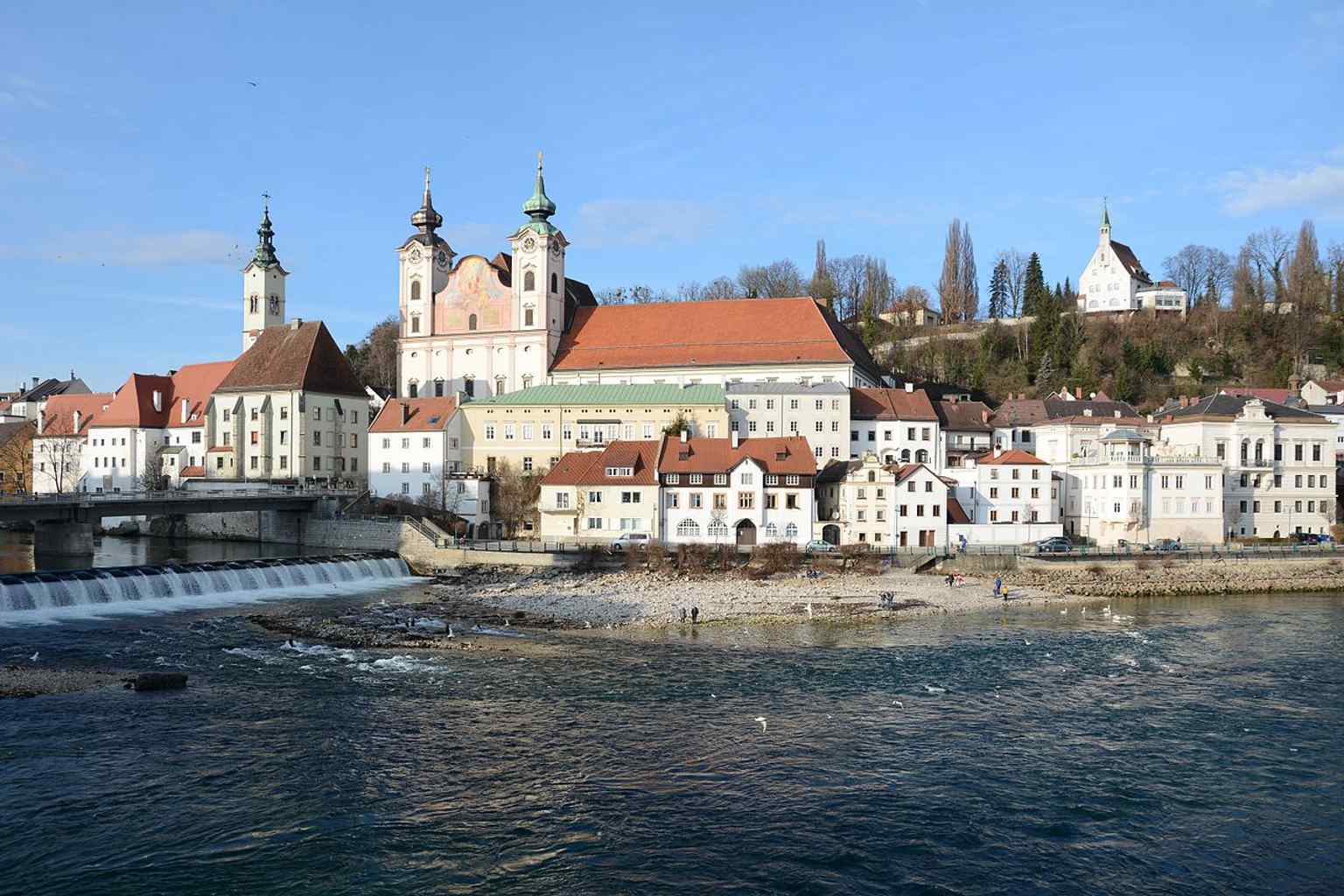
A broad riverside view from the Enns bridge, matching the source text’s description of the church’s prominent setting near the confluence.Photo: Isiwal, Wikimedia Commons, CC BY-SA 3.0 at. Cropped & resized. 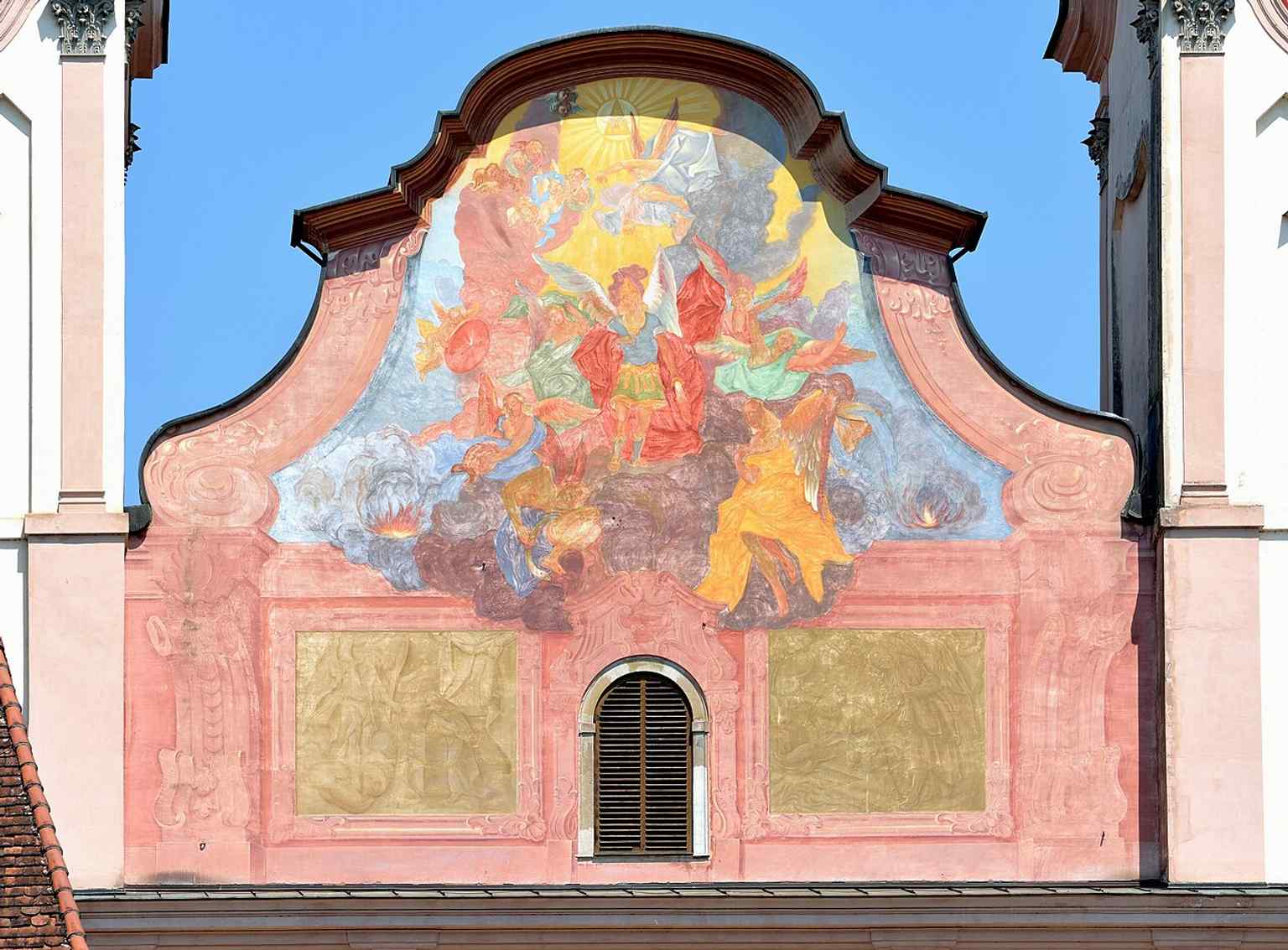
The pediment fresco by Franz Xaver Gürtler, including the dramatic angelic fall mentioned in the church’s history.Photo: P e z i, Wikimedia Commons, CC BY-SA 3.0 at. Cropped & resized. 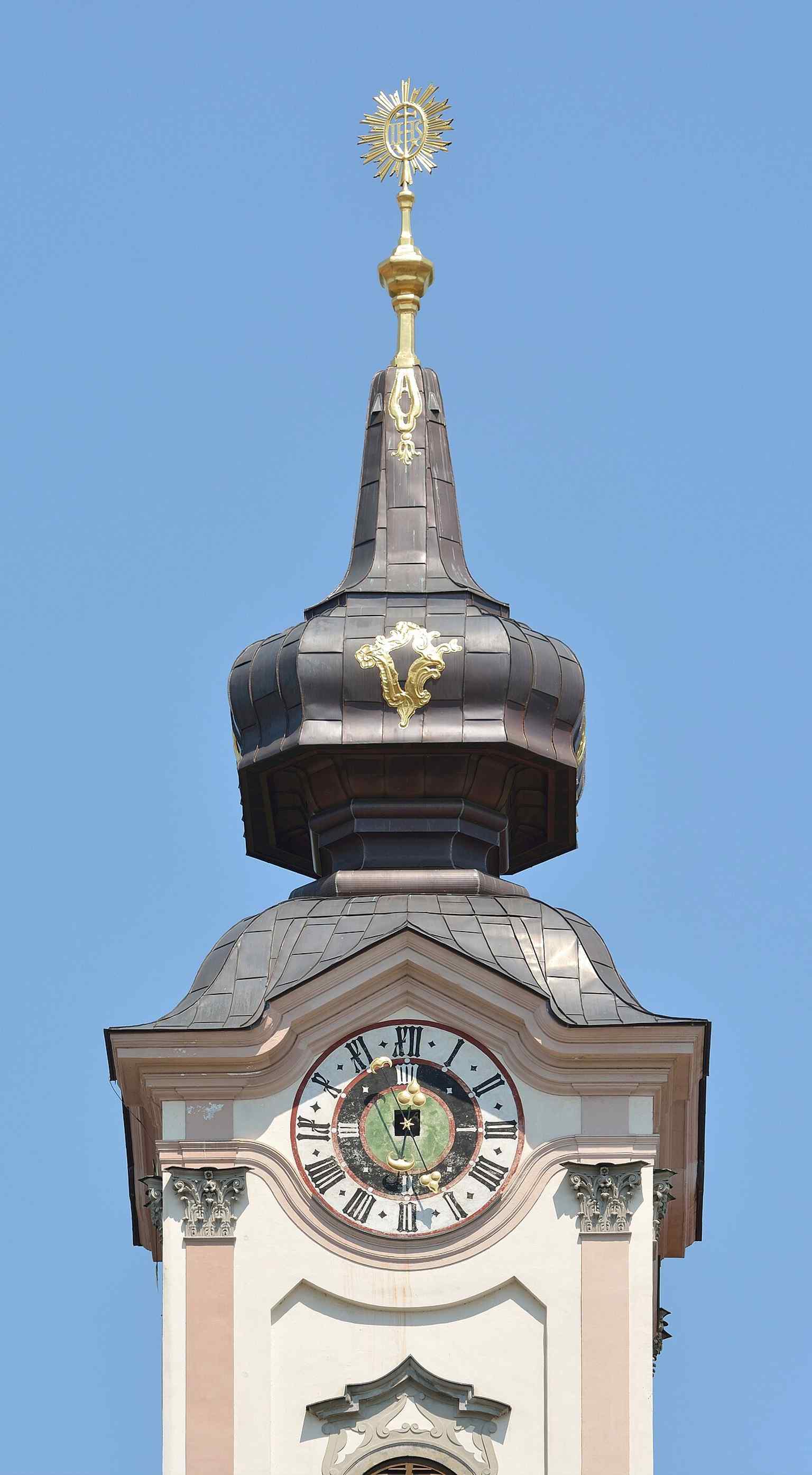
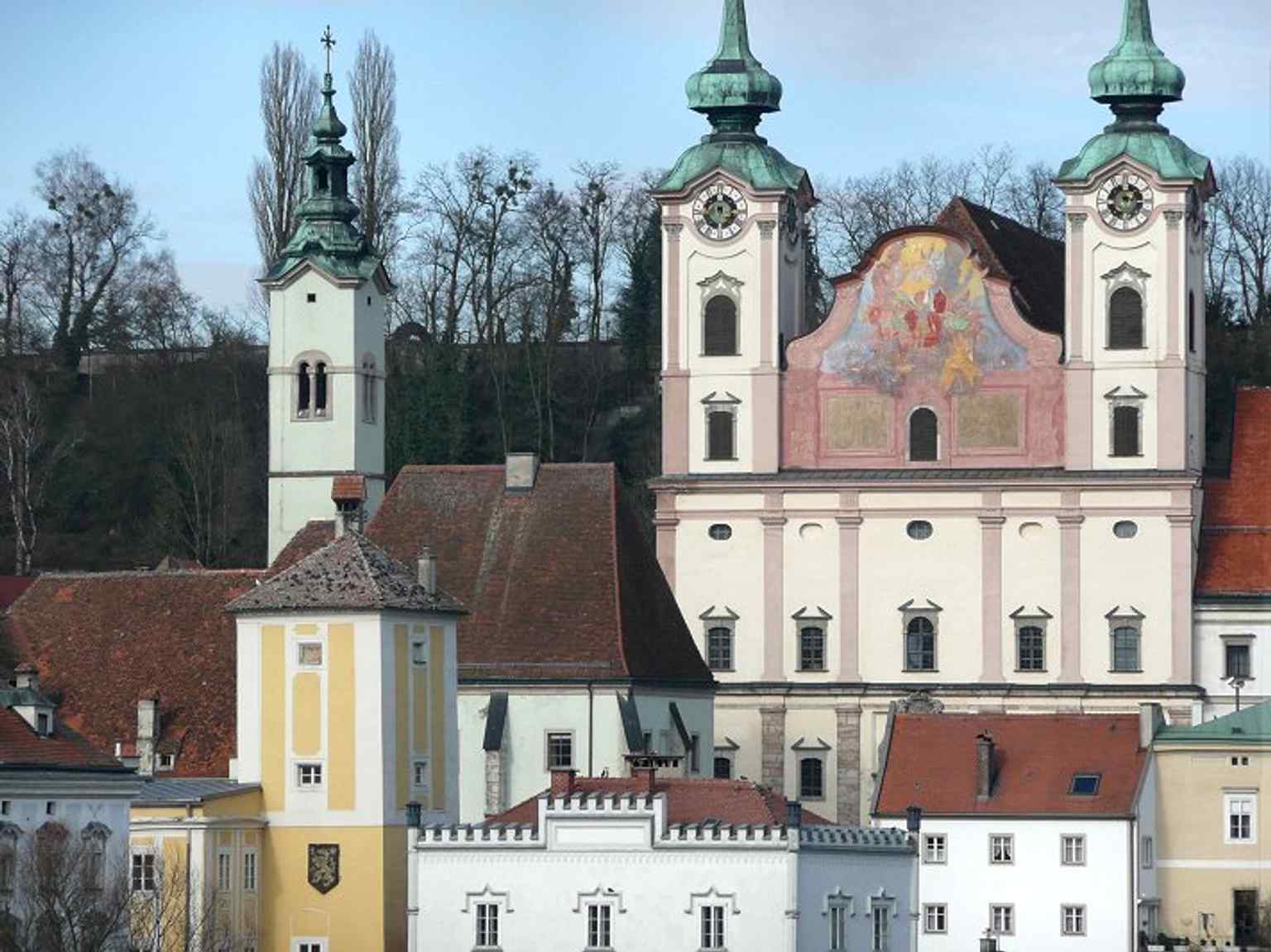
Close-up of one of the twin towers, which were completed in the 17th century and later heightened in the 18th century.Photo: P e z i, Wikimedia Commons, CC BY-SA 3.0 at. Cropped & resized. 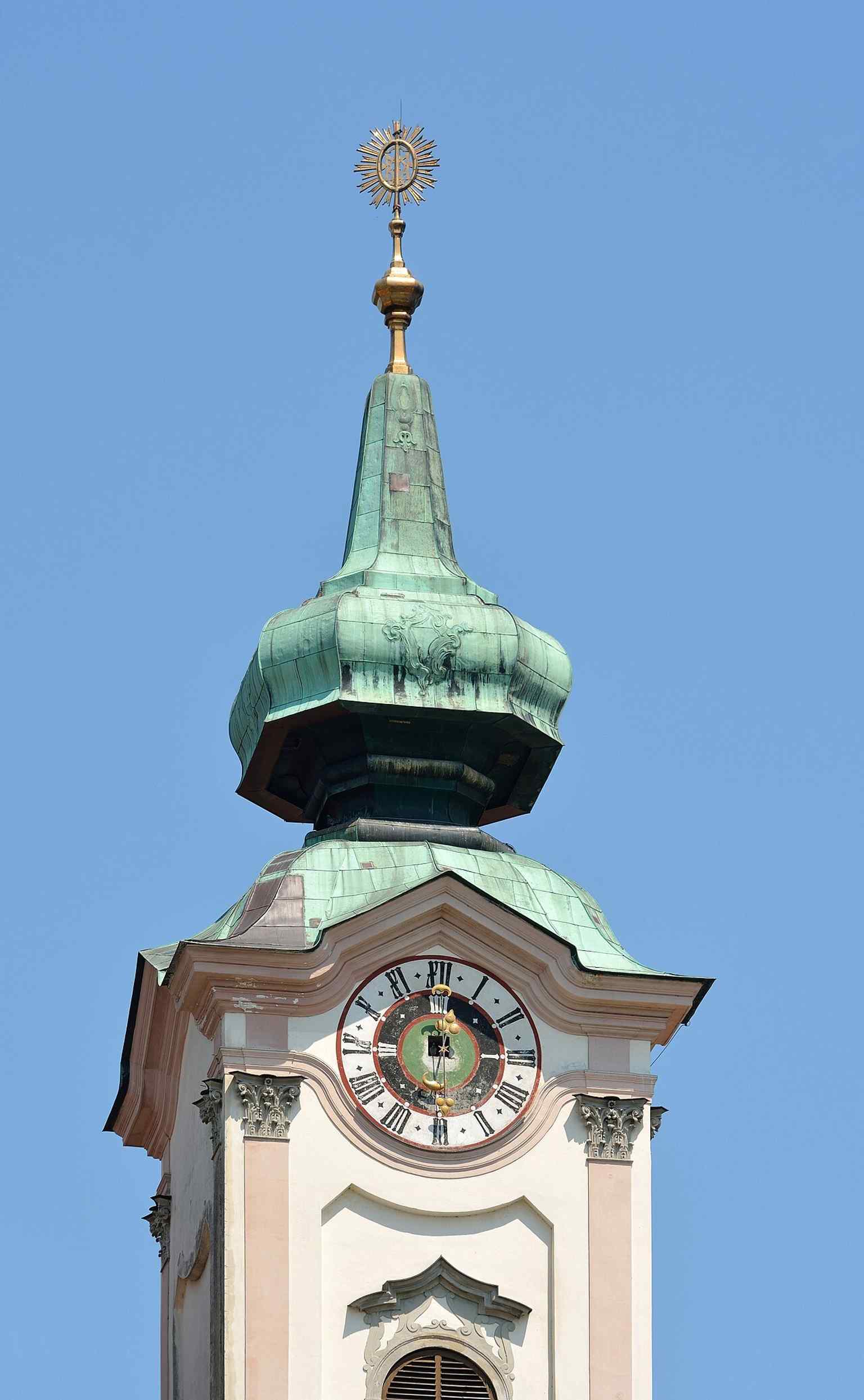
A matching close-up of the second tower, useful for showing the church’s symmetrical Baroque façade.Photo: P e z i, Wikimedia Commons, CC BY-SA 3.0 at. Cropped & resized. 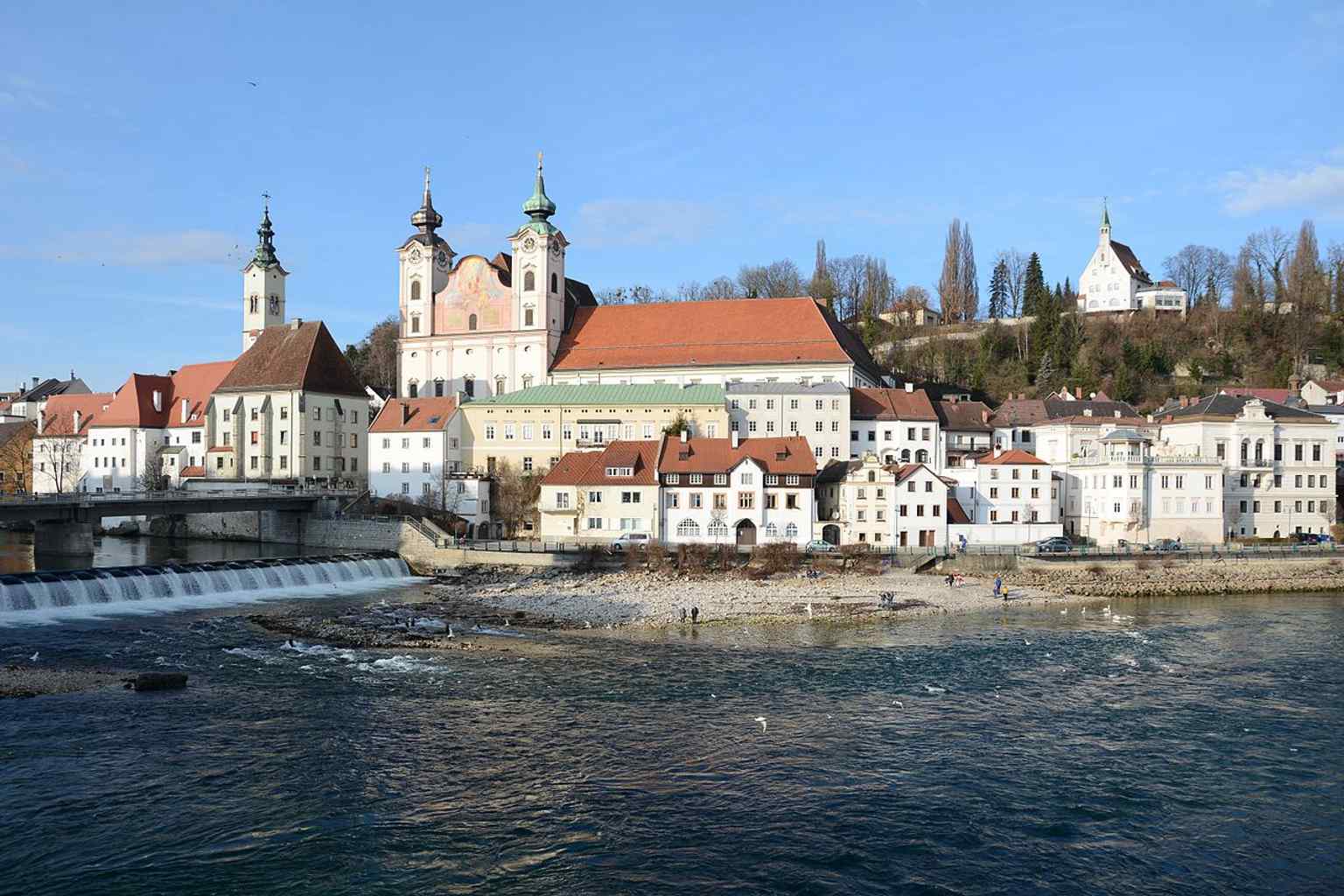
The high altar, centered on Saint Michael’s victory over Lucifer, is one of the church’s most important late-Baroque artworks.Photo: Anzi9, Wikimedia Commons, CC BY-SA 3.0. Cropped & resized. 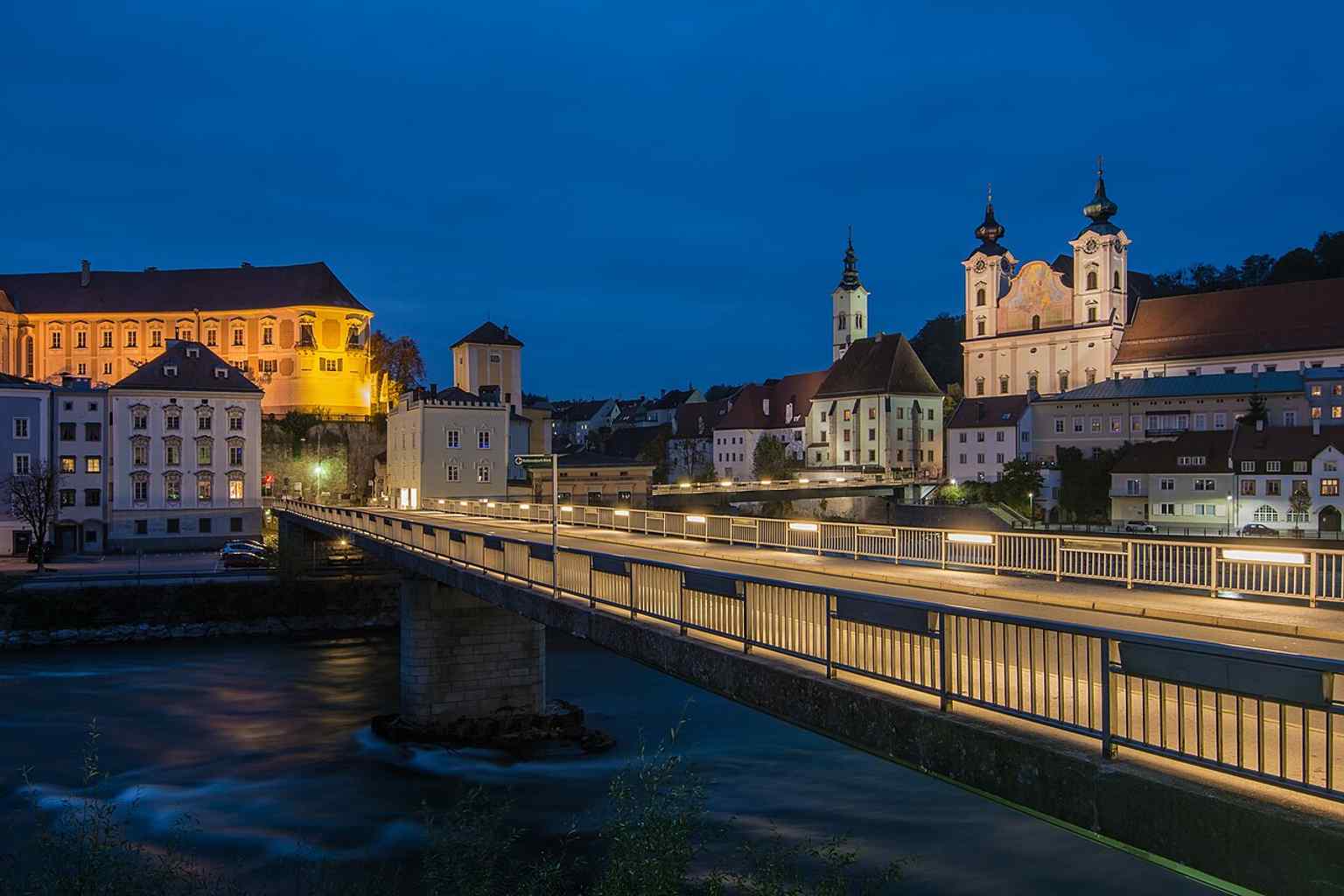
The church in relation to the Enns bridge and nearby historic buildings, highlighting its urban setting beside the river confluence.Photo: Isiwal, Wikimedia Commons, CC BY-SA 4.0. Cropped & resized. 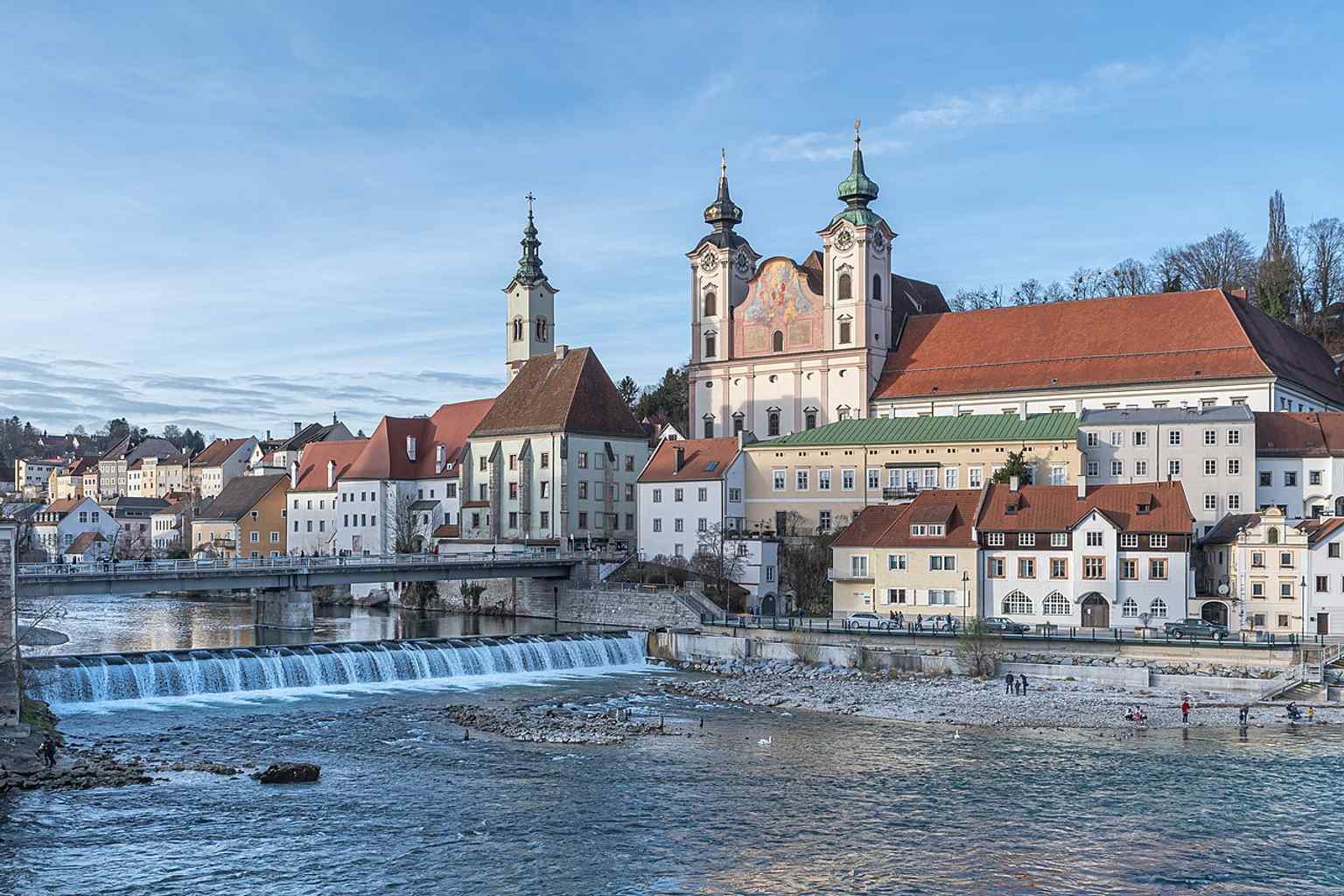
Another strong landscape view of the Michaelerkirche within the riverside ensemble at the meeting of the Steyr and Enns.Photo: Isiwal, Wikimedia Commons, CC BY-SA 4.0. Cropped & resized. 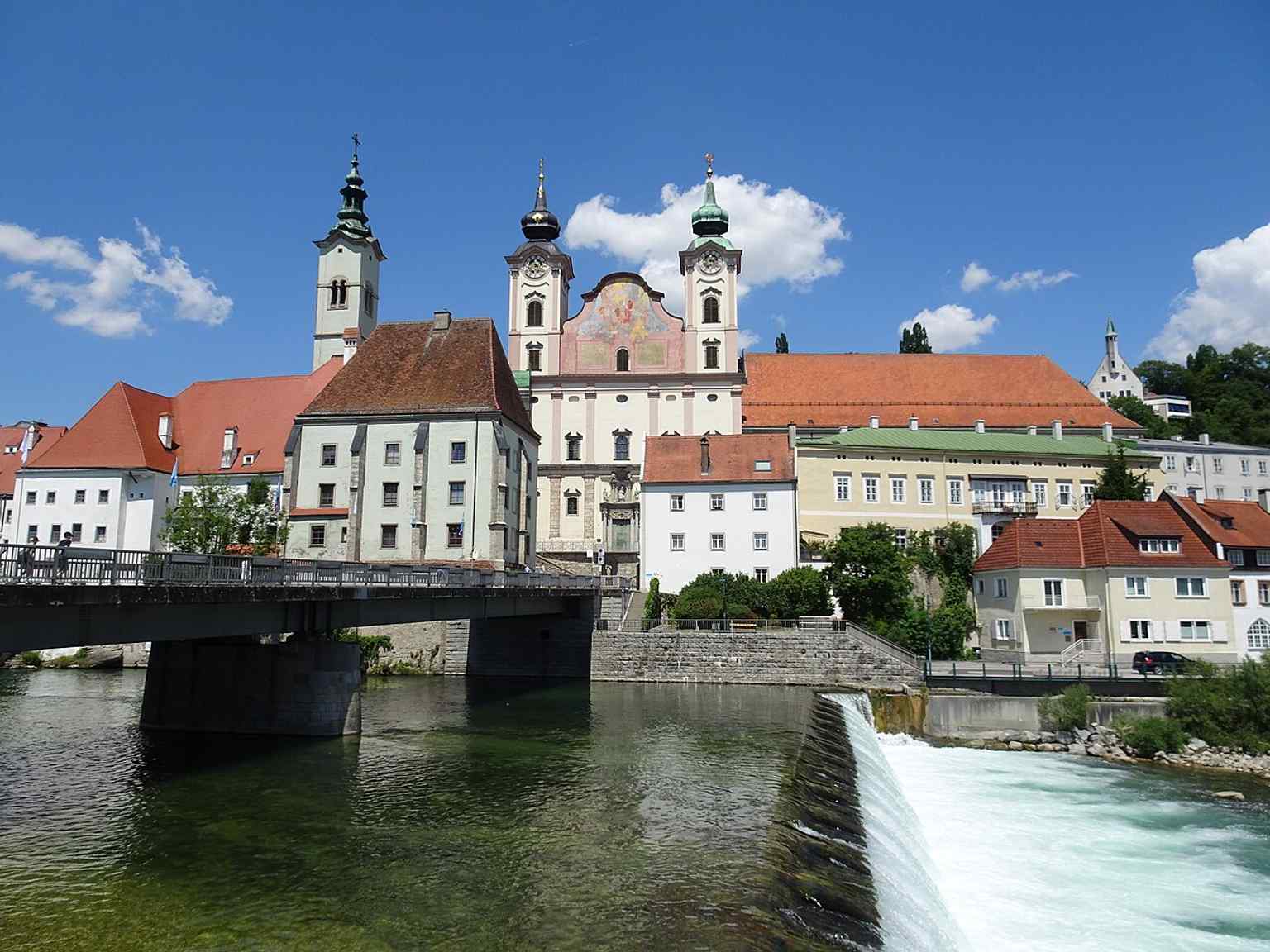
A wider confluence view placing St. Michael in the full river landscape of Steyr, where the church helps define the town’s silhouette.Photo: Isiwal, Wikimedia Commons, CC BY-SA 4.0. Cropped & resized. On your right, look for the yellow plaster house with a slightly overhanging upper floor and a steep tiled roof; that projecting facade along Kirchengasse is the unmistakable…Read moreShow less
Open dedicated page →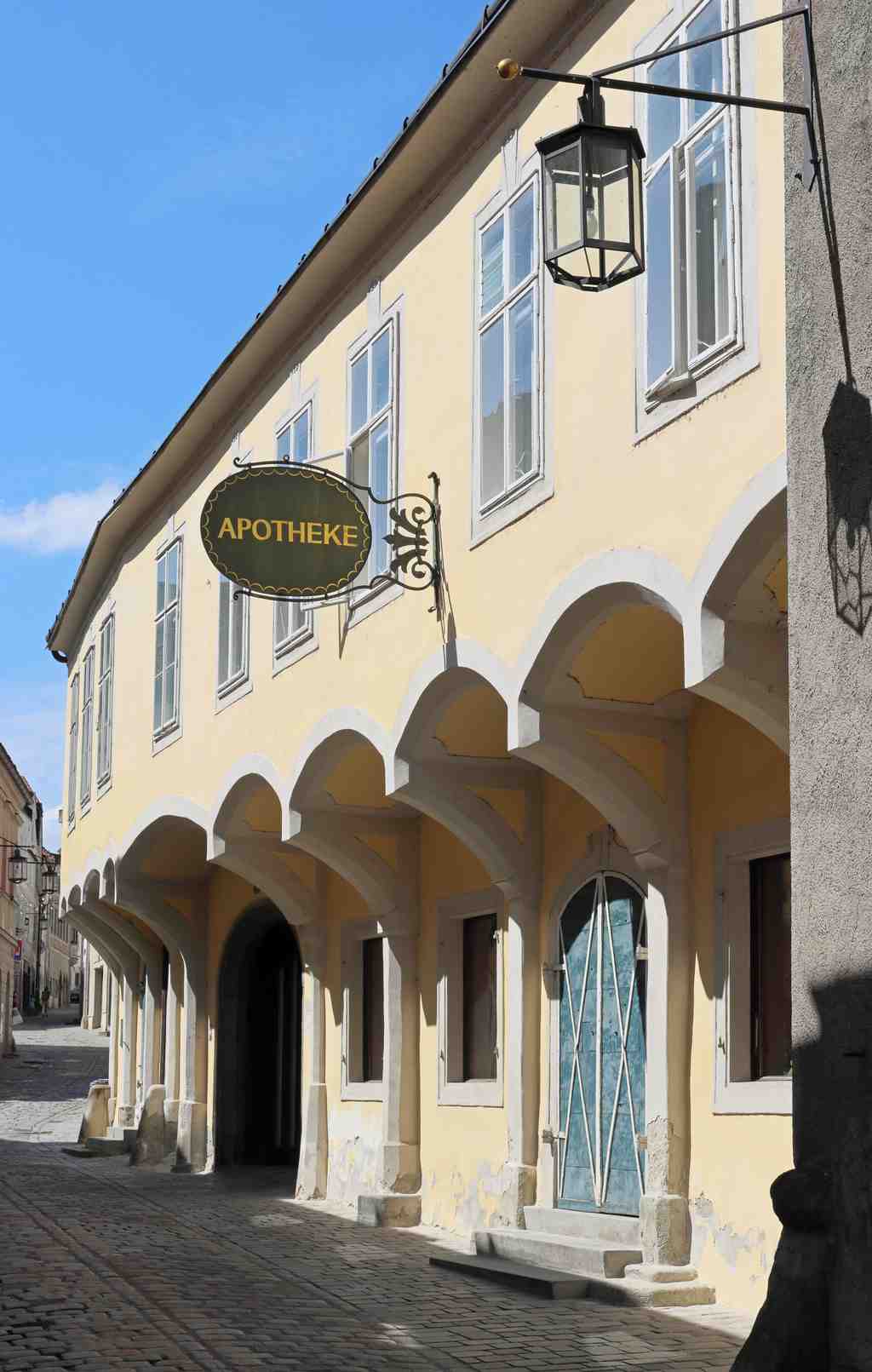
DunklhofPhoto: Lewenstein, Wikimedia Commons, CC BY-SA 4.0. Cropped & resized. On your right, look for the yellow plaster house with a slightly overhanging upper floor and a steep tiled roof; that projecting facade along Kirchengasse is the unmistakable clue.
This is the Dunklhof, once called the Stippelhof, one of Steyr’s most important late Gothic town houses. Its oldest part dates to the fifteenth century, and for a time it served as the seat of lower jurisdiction... in plain English, this is where smaller legal cases got handled, which gives the house a wonderfully practical kind of dignity. The most striking exterior feature is that overhang above you: the upper story juts forward beyond the ground floor, a structural flex from a very confident medieval builder.
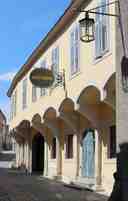
What really made the Dunklhof famous sits inside: a Renaissance arcaded courtyard from around fifteen twenty to fifteen twenty-five. An arcade is a row of open arches, and here the columns are decorated, while the corner piers carry tracery ornament, carved stone patterns that look almost like lace. If you check the image on your screen, you can see why many people call it Steyr’s finest arcaded courtyard.
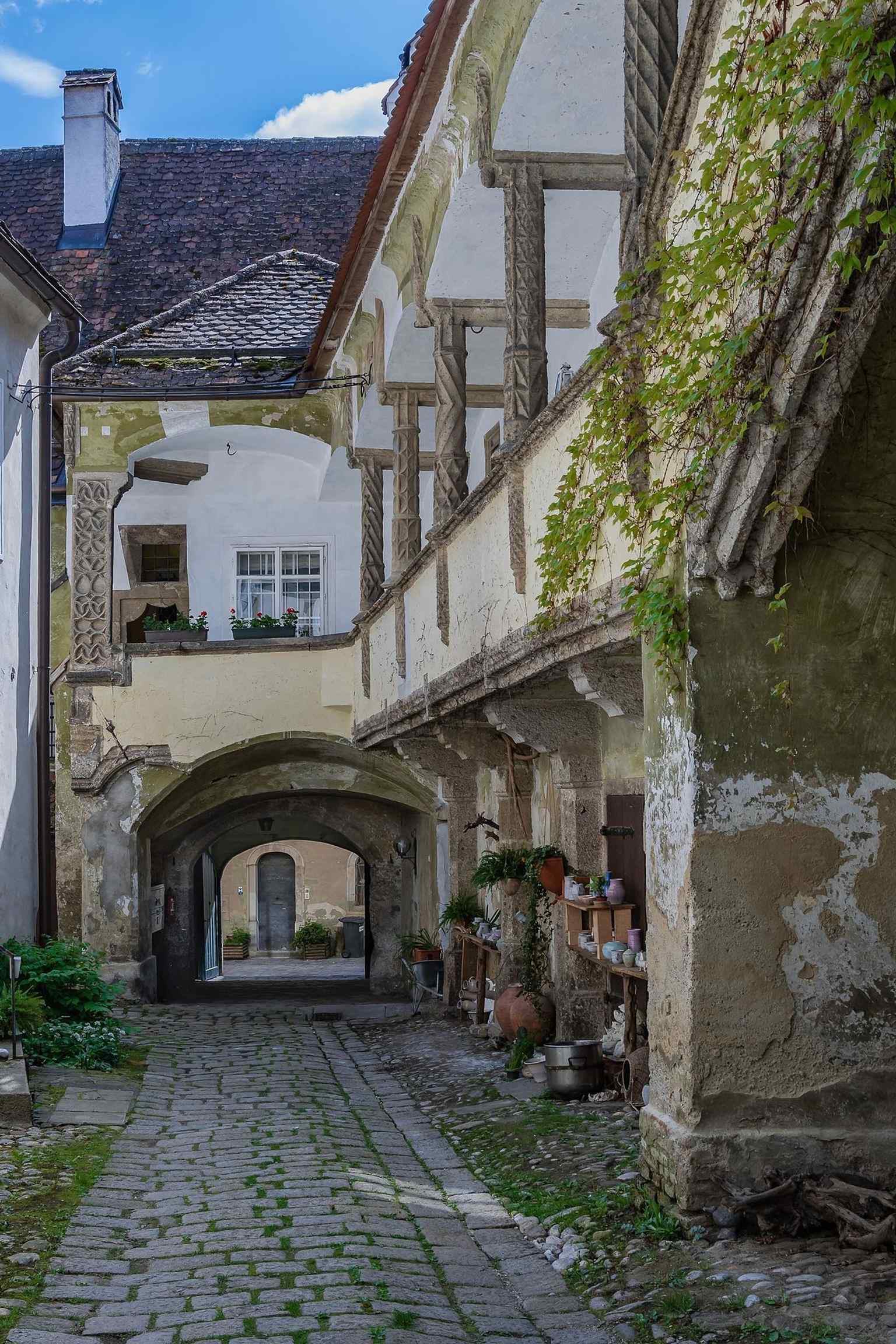
The courtyard reveals the mix of Gothic arcades and Renaissance sections that make the Dunklhof one of Steyr’s most remarkable arcaded courtyards.Photo: Christoph Waghubinger (Lewenstein), Wikimedia Commons, CC BY-SA 3.0. Cropped & resized. The house changed hands many times, and from eighteen thirty-four Christian Brittinger ran a pharmacy here. The sign still remembers the Heilige Geist Apotheke, the oldest pharmacy in Steyr. In the twentieth century, architect Heinrich Dunkl lived and worked here, and his wife, the poet Dora Dunkl, began her first “Evening Music at the Dunklhof” in nineteen fifty-nine. Some houses host people. This one hosted jurisprudence, medicine, poetry, and concerts.
Dunklhof is a townhouse with unusually good taste in second careers.
Take a moment here, and when you’re ready, we’ll head on to the next stop.
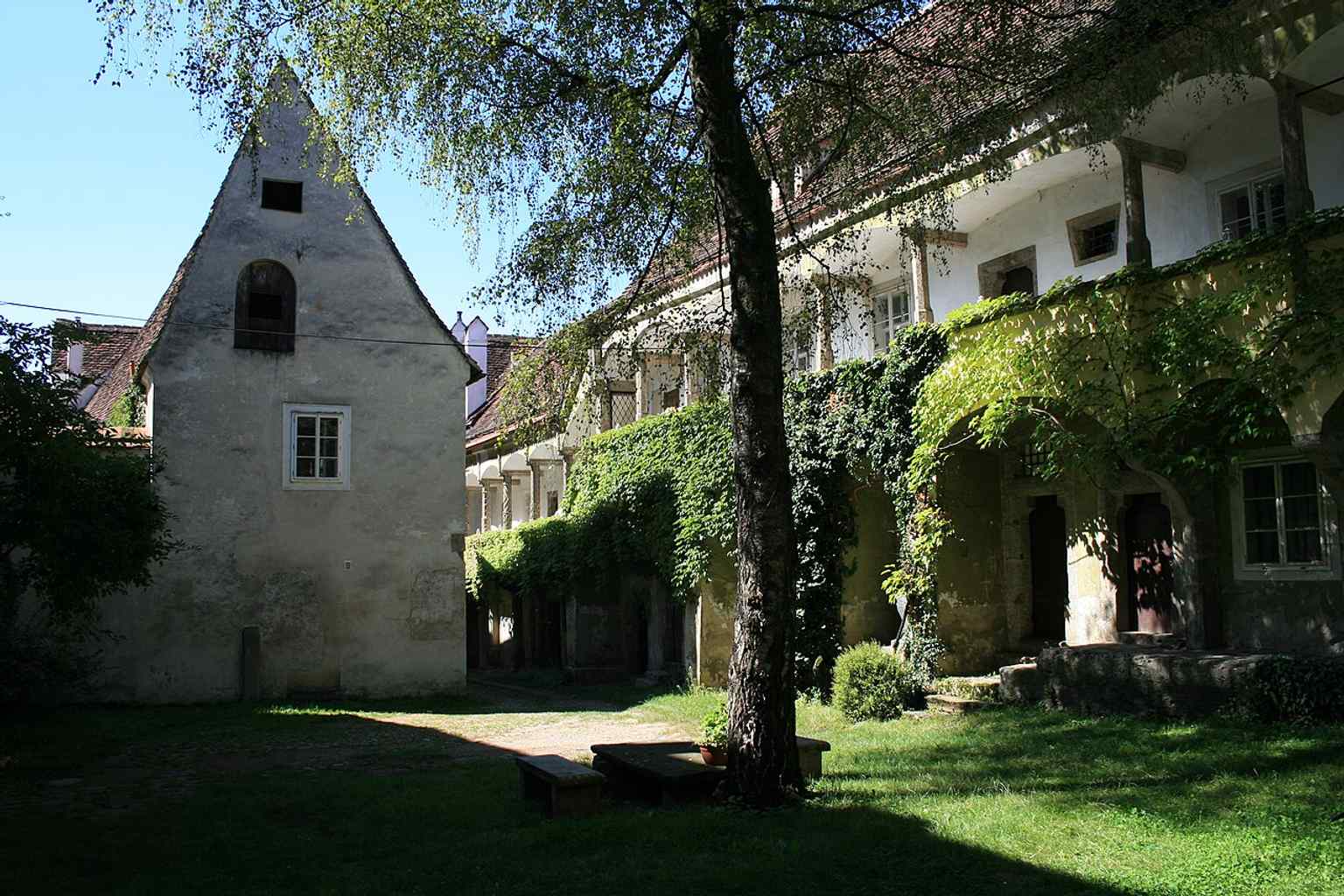
A wider view along Kirchengasse places the Dunklhof in its urban setting, with the yellow building on the left marking the historic house at No. 16.Photo: Christoph Waghubinger (Lewenstein), Wikimedia Commons, CC BY-SA 4.0. Cropped & resized. 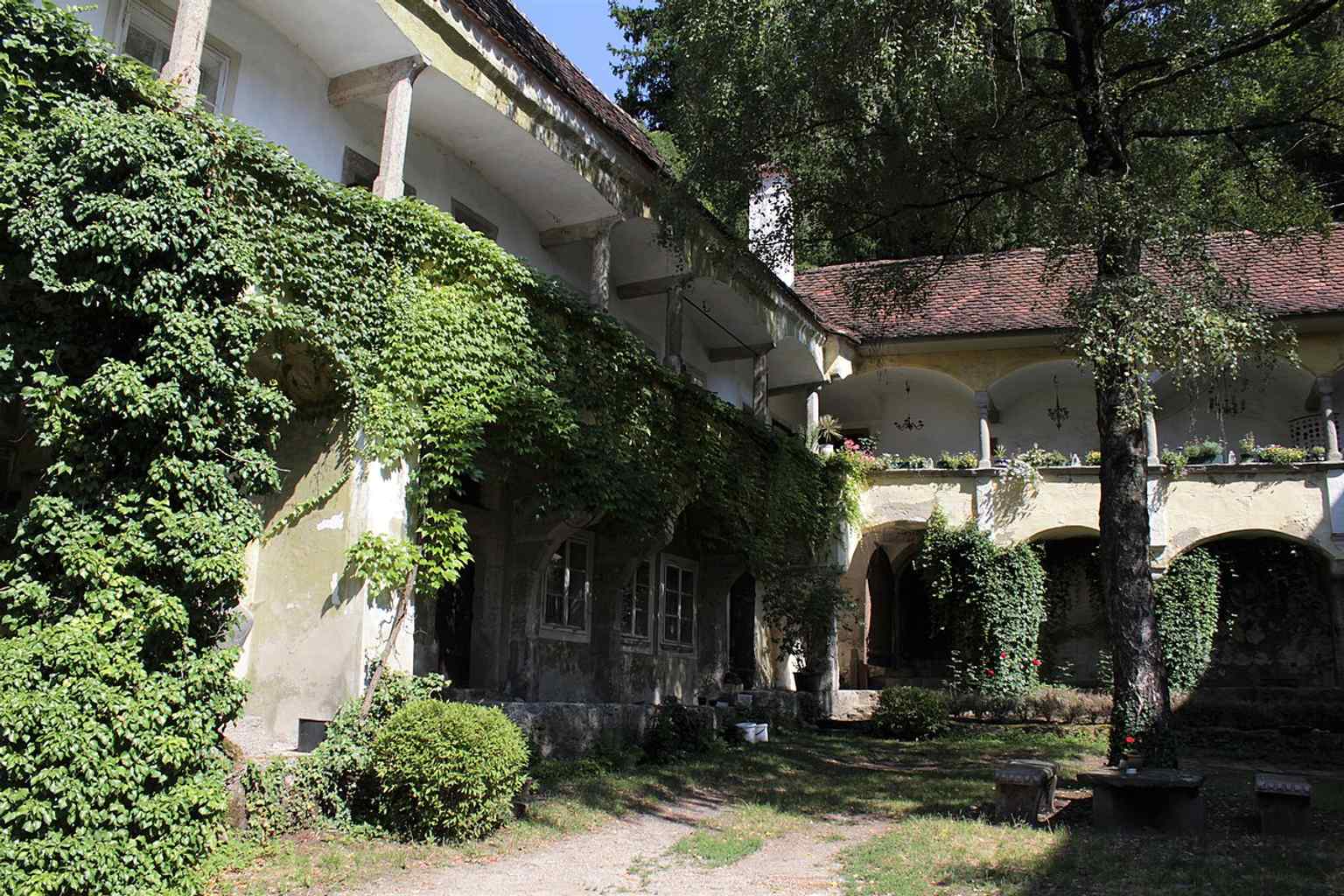
This Renaissance courtyard view highlights the elegant arcade structure dating to around 1520/25, with the decorative columns mentioned in the history.Photo: Bodipic, Wikimedia Commons, CC BY-SA 4.0. Cropped & resized. 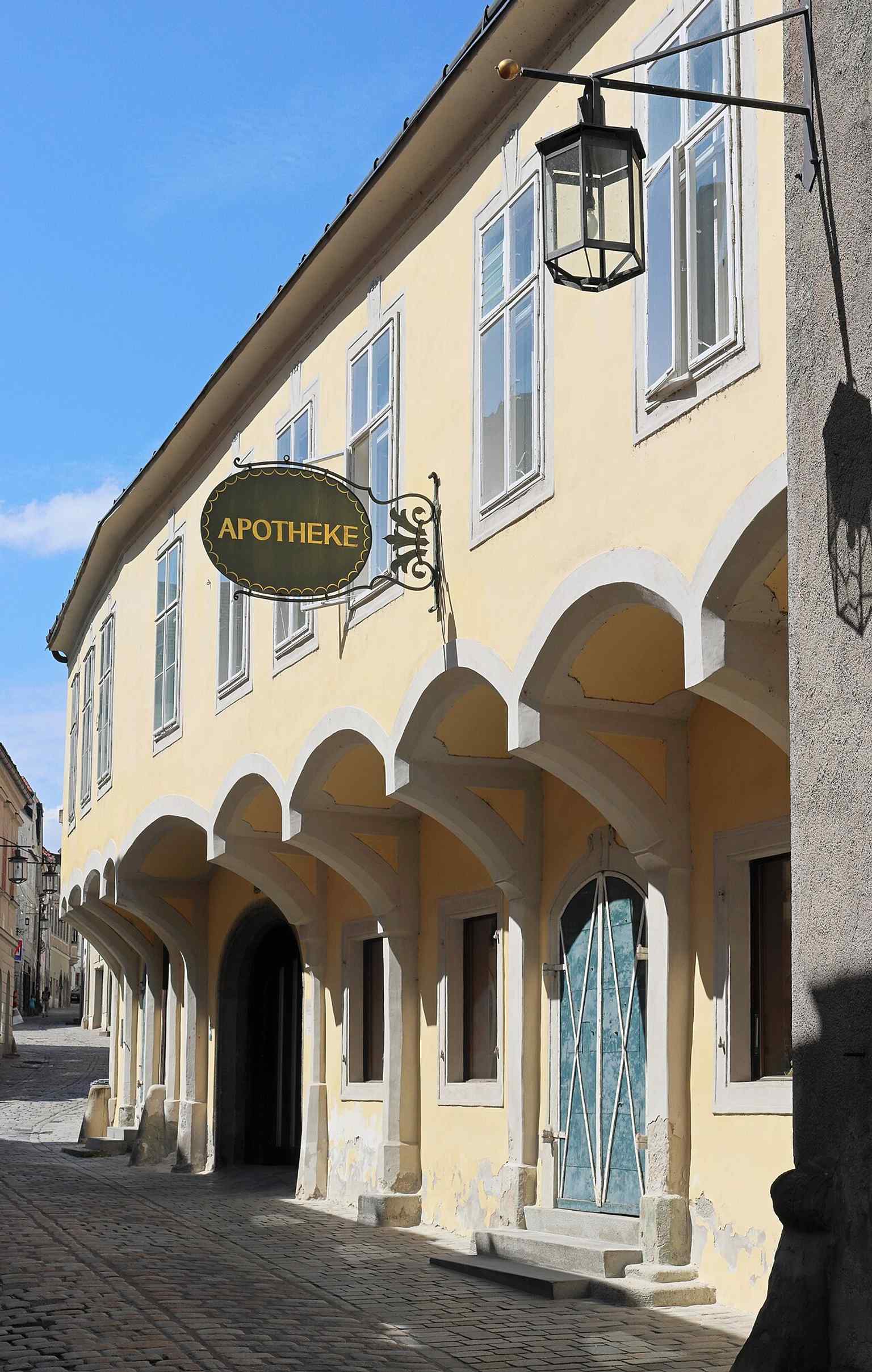
A closer look into the arkadenhof, where the restored courtyard gives a strong sense of the building’s Renaissance character and careful preservation.Photo: Palickap, Wikimedia Commons, CC BY-SA 4.0. Cropped & resized. 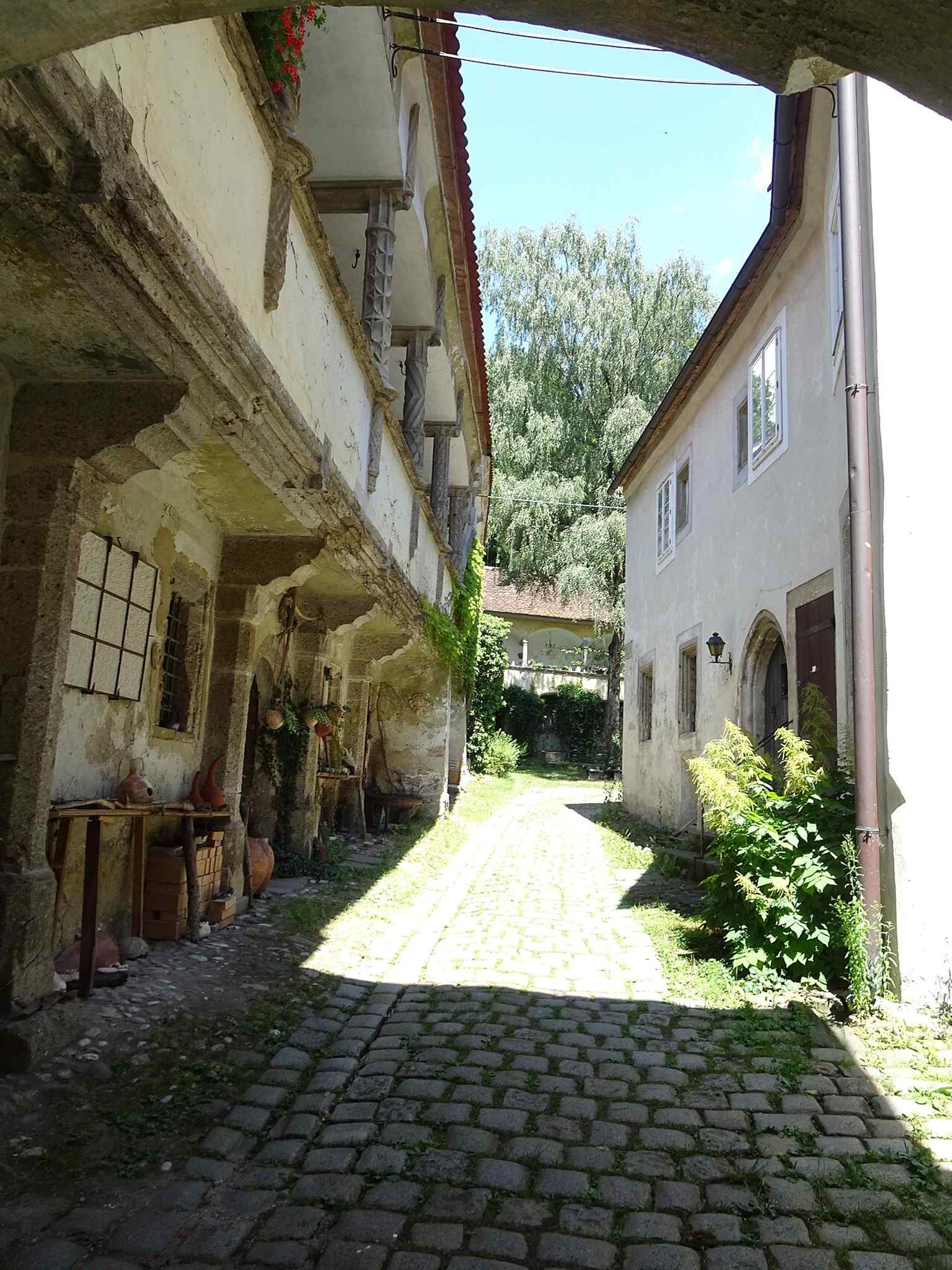
Architectural details of the courtyard arcades show the carved supports and ornament that distinguish the Dunklhof’s Renaissance additions.Photo: Palickap, Wikimedia Commons, CC BY-SA 4.0. Cropped & resized. 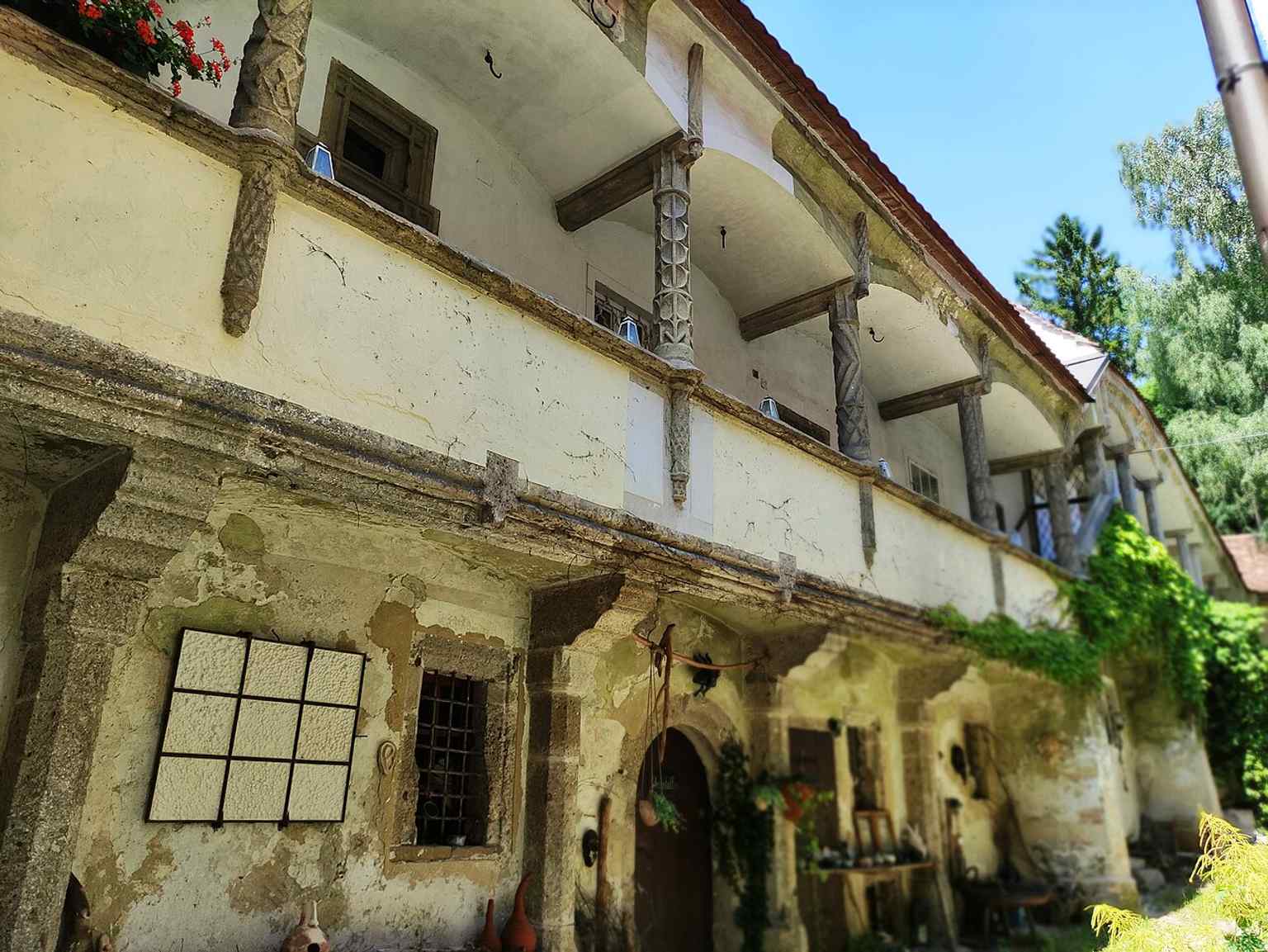
Another detailed view of the arcaded courtyard, useful for showing the preserved masonry and historic craftsmanship after the 1996 restoration.Photo: Palickap, Wikimedia Commons, CC BY-SA 4.0. Cropped & resized. 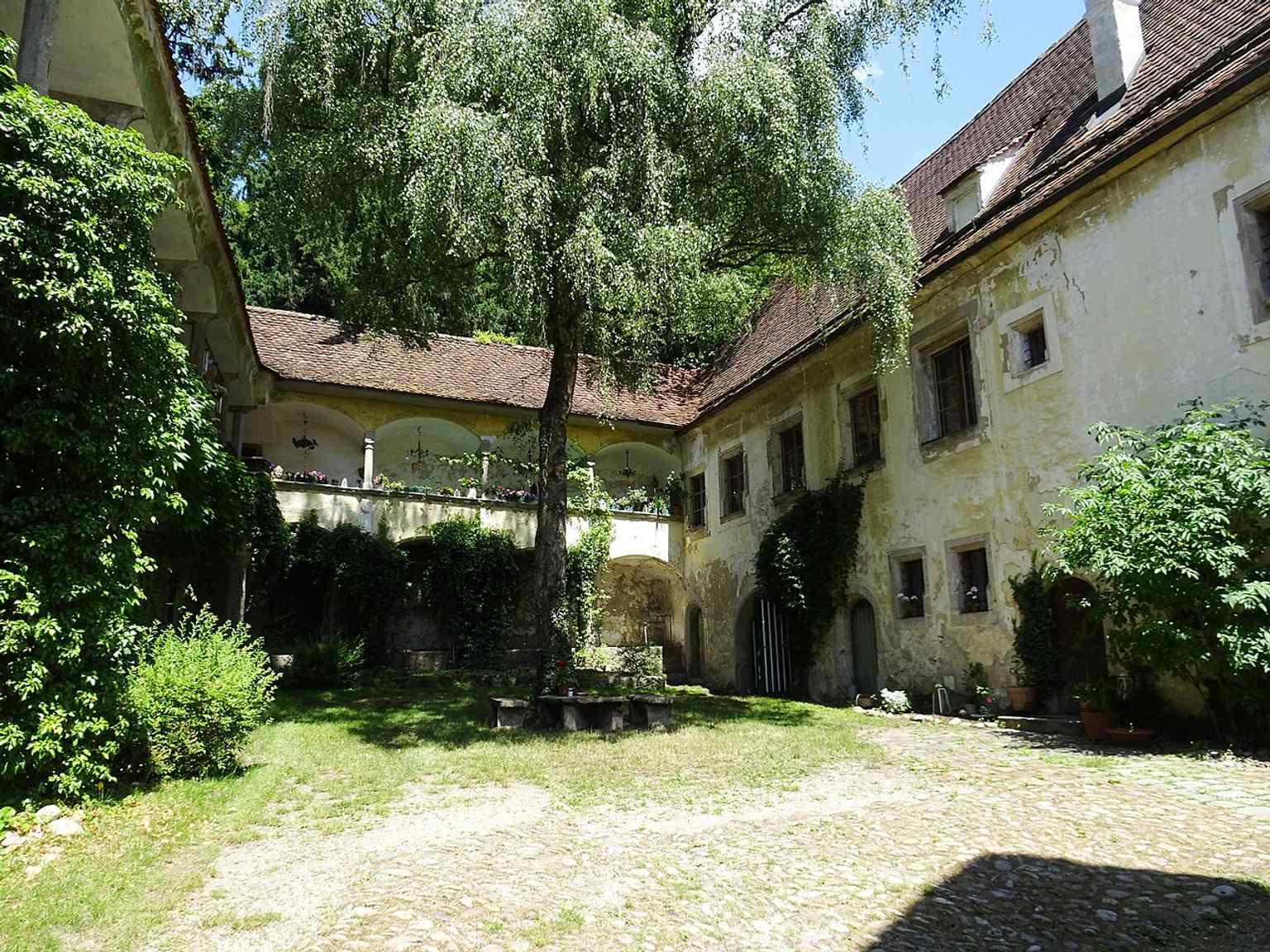
This courtyard detail helps illustrate the restored historic fabric, including the old handmade roof tiles reused in the arkadenhof.Photo: Palickap, Wikimedia Commons, CC BY-SA 4.0. Cropped & resized. 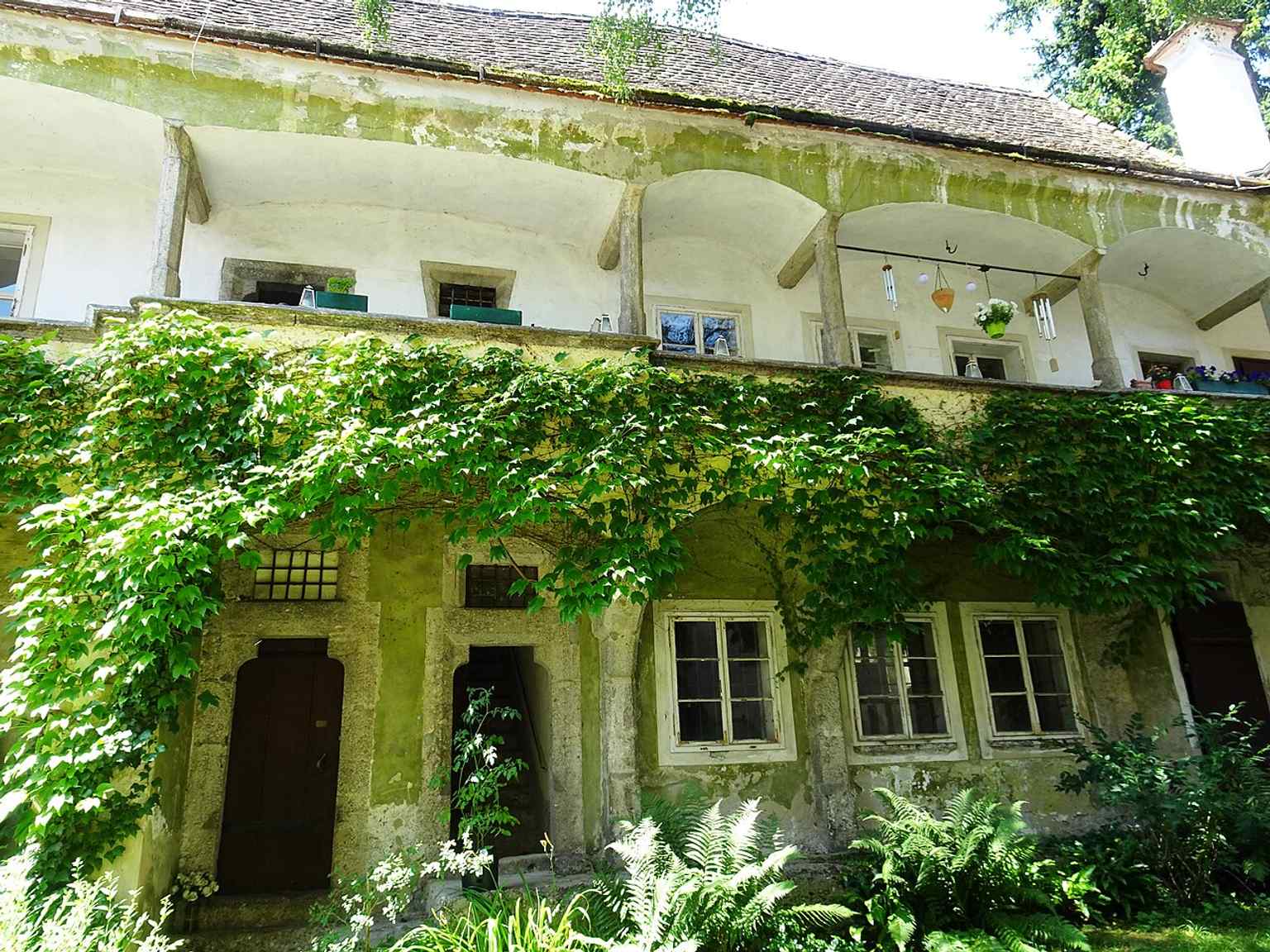
A further detail shot of the arcade and courtyard surfaces, emphasizing the decorative stonework that survives from the early 16th century.Photo: Palickap, Wikimedia Commons, CC BY-SA 4.0. Cropped & resized. 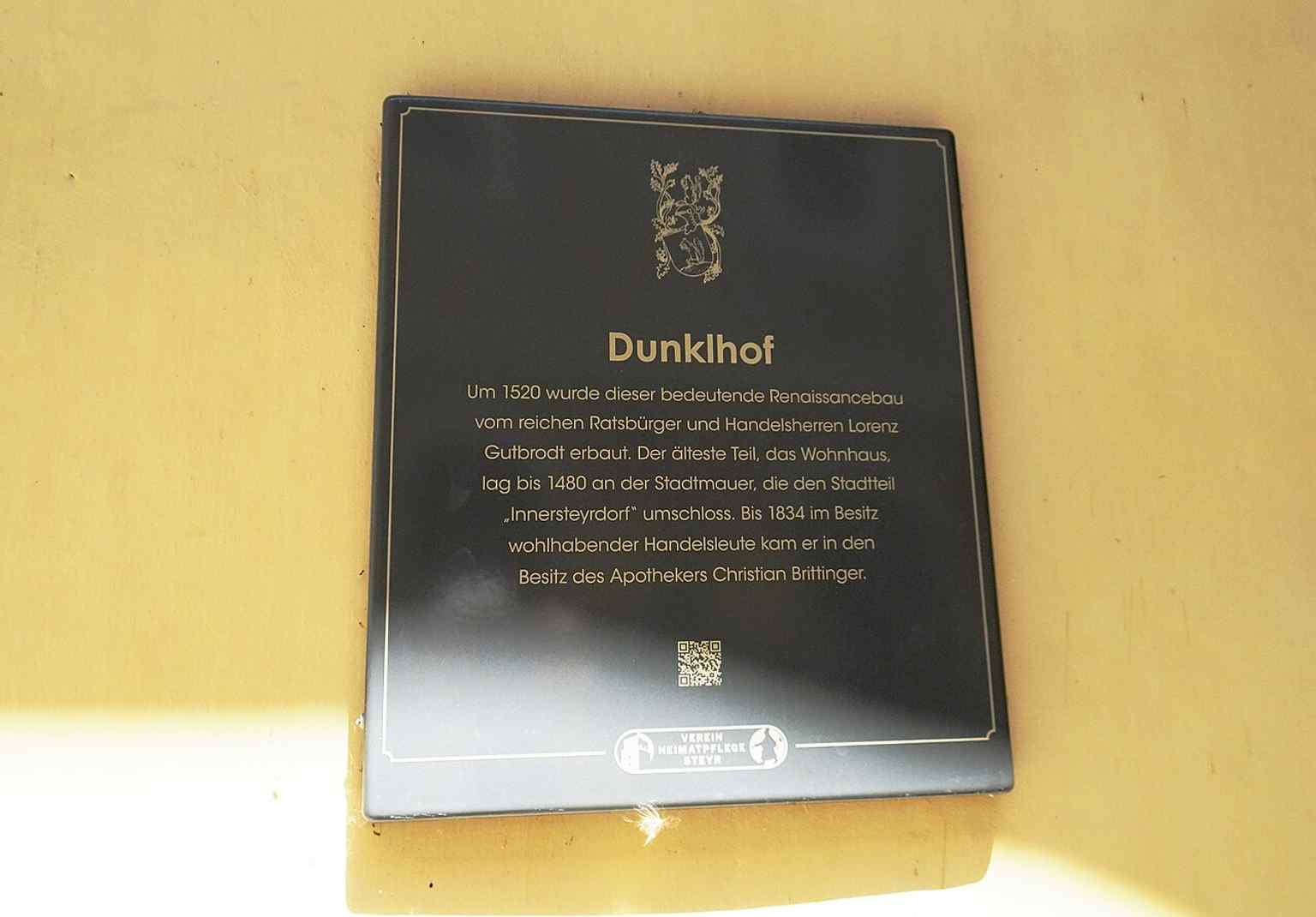
A full exterior view of the Dunklhof captures the building’s historic presence along Kirchengasse, where its upper floor projects beyond the ground floor.Photo: Palickap, Wikimedia Commons, CC BY-SA 4.0. Cropped & resized. On your left, the Museum Arbeitswelt looks like a long brick-and-plaster factory block with tall rectangular windows and the unmistakable profile of a nineteenth-century…Read moreShow less
Open dedicated page →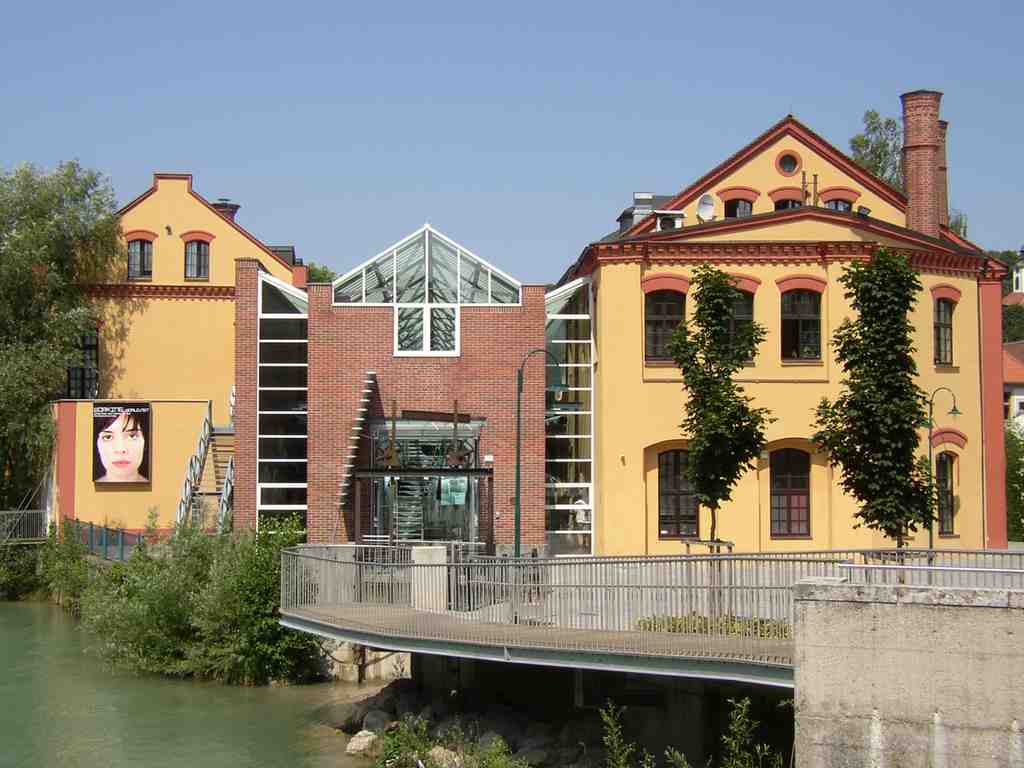
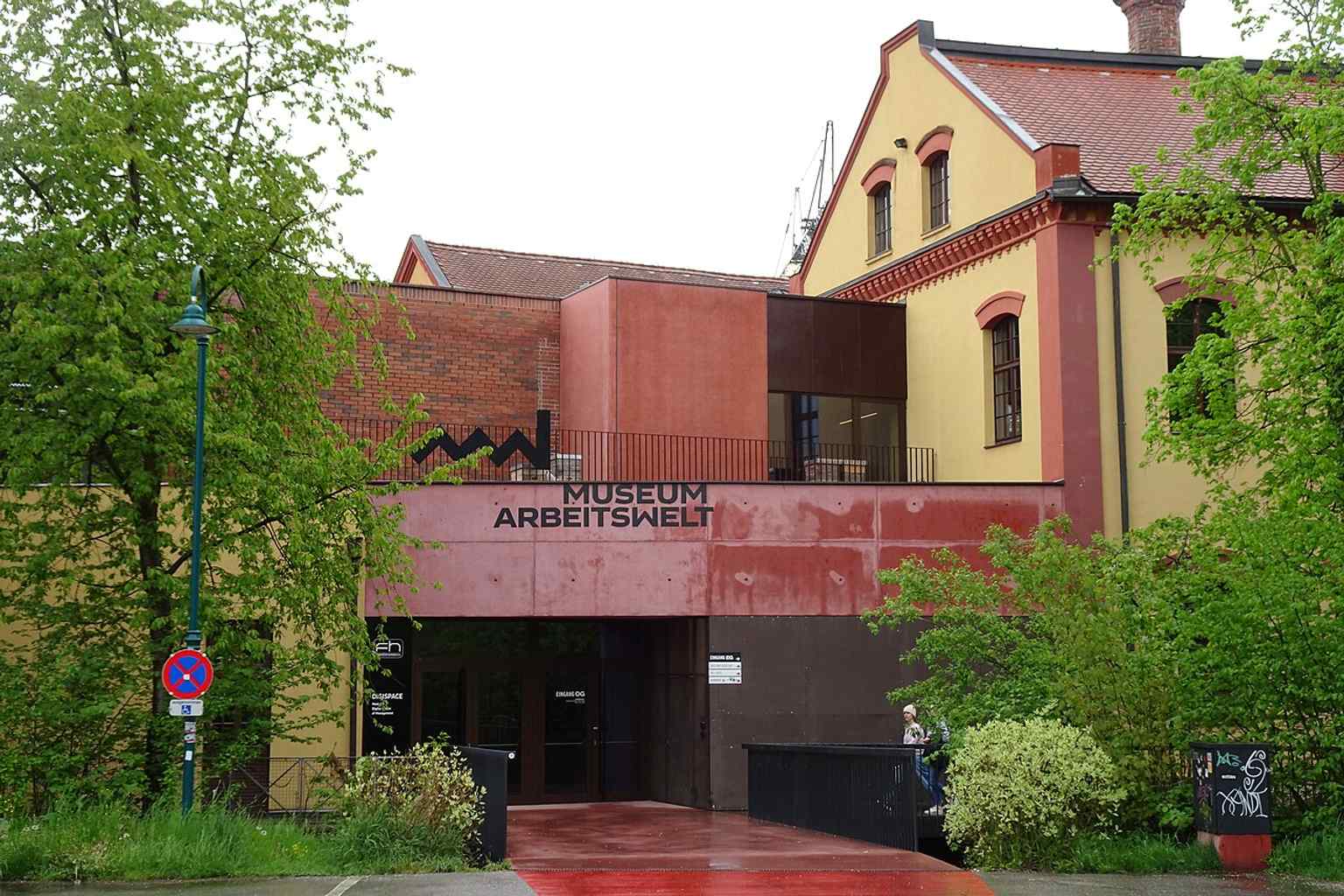
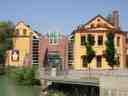
Museum Arbeitswelt SteyrPhoto: Walter Luttenberger, Wikimedia Commons, Public domain. Cropped & resized. On your left, the Museum Arbeitswelt looks like a long brick-and-plaster factory block with tall rectangular windows and the unmistakable profile of a nineteenth-century industrial complex beside the Steyr River.
This place began life in revitalized factory buildings from the mid-nineteenth century, which is fitting... a museum about work should probably not live in a ballroom. It opened in nineteen eighty-seven for the Upper Austrian state exhibition called “Work, Human, Machine: The Road into Industrial Society.” The idea came from industrial museums that started appearing in England in the late nineteen seventies, and here in Steyr the first exhibition worked so well that the museum stayed for good.
Its subject is not one machine, one company, or one heroic inventor. It tracks how life and work have changed since industrialization, which means it deals with factories, technology, politics, inequality, and the awkward fact that progress usually sends somebody the bill. Over the years, exhibitions tackled robots, the history of the computer, H-I-V and AIDS, migration, invisible work, future food, and in twenty twenty-four, protest and strikes in the countryside.
Then came disaster. In two thousand and two, the Steyr flooded and destroyed the entire exhibition area. If you check the app, image one shows the damage after the water tore through the site. The museum rebuilt and kept going, which feels very Steyr.
The site after the 2002 flood damage, a reminder that the museum had to rebuild its exhibition spaces after the Steyr River overflowed.Photo: Herbert Ortner, Wikimedia Commons, CC BY 3.0. Cropped & resized. Since two thousand and nine, its Politikwerkstatt, literally a “politics workshop,” has offered programs on democracy, racism, migration, and participation. In other words, this museum expects visitors to think, which is bold. It also helps run the Stollen der Erinnerung, the “Tunnel of Remembrance,” opened in twenty thirteen in a former air-raid bunker under Lamberg Castle, with an exhibition on forced labor, concentration camps in Steyr, resistance, and the city’s reckoning with the Nazi past. And in twenty nineteen, Austria gave the museum its national museum prize. Fair enough.
On your screen, image two shows the building doing its other job too: serving as a public meeting place for debate, culture, and civic life. If you want to go inside later, it is closed Monday and Tuesday, open Wednesday through Friday from nine to five, and Saturday and Sunday from ten to five.
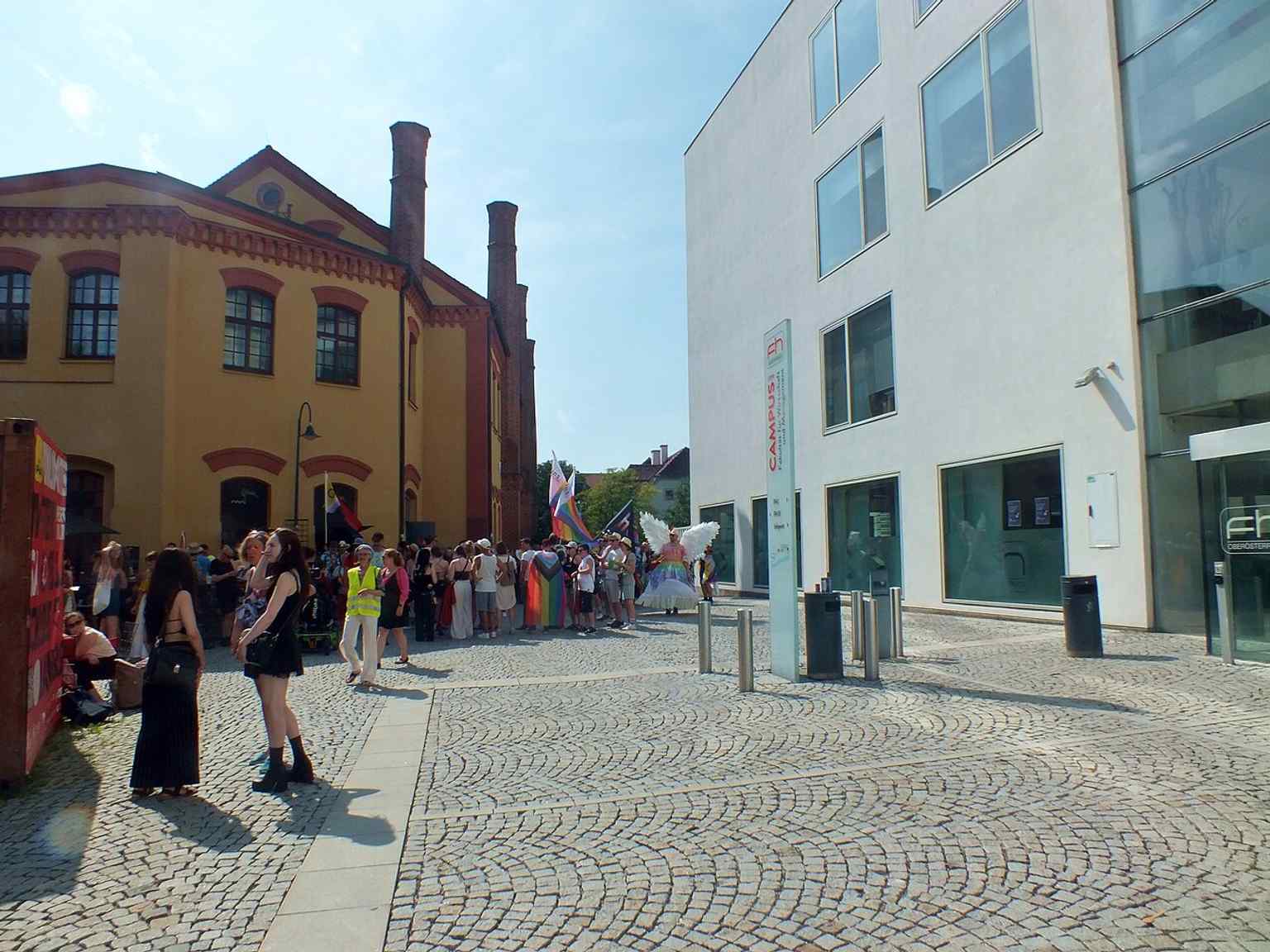
A contemporary public gathering at the museum, reflecting its role as a cultural and debate venue beyond exhibitions.Photo: Miloš Hlávka, Wikimedia Commons, CC0. Cropped & resized. This is Steyr thinking out loud about work, power, and memory.
Take your time here, and when you’re ready, we can continue to the next stop.
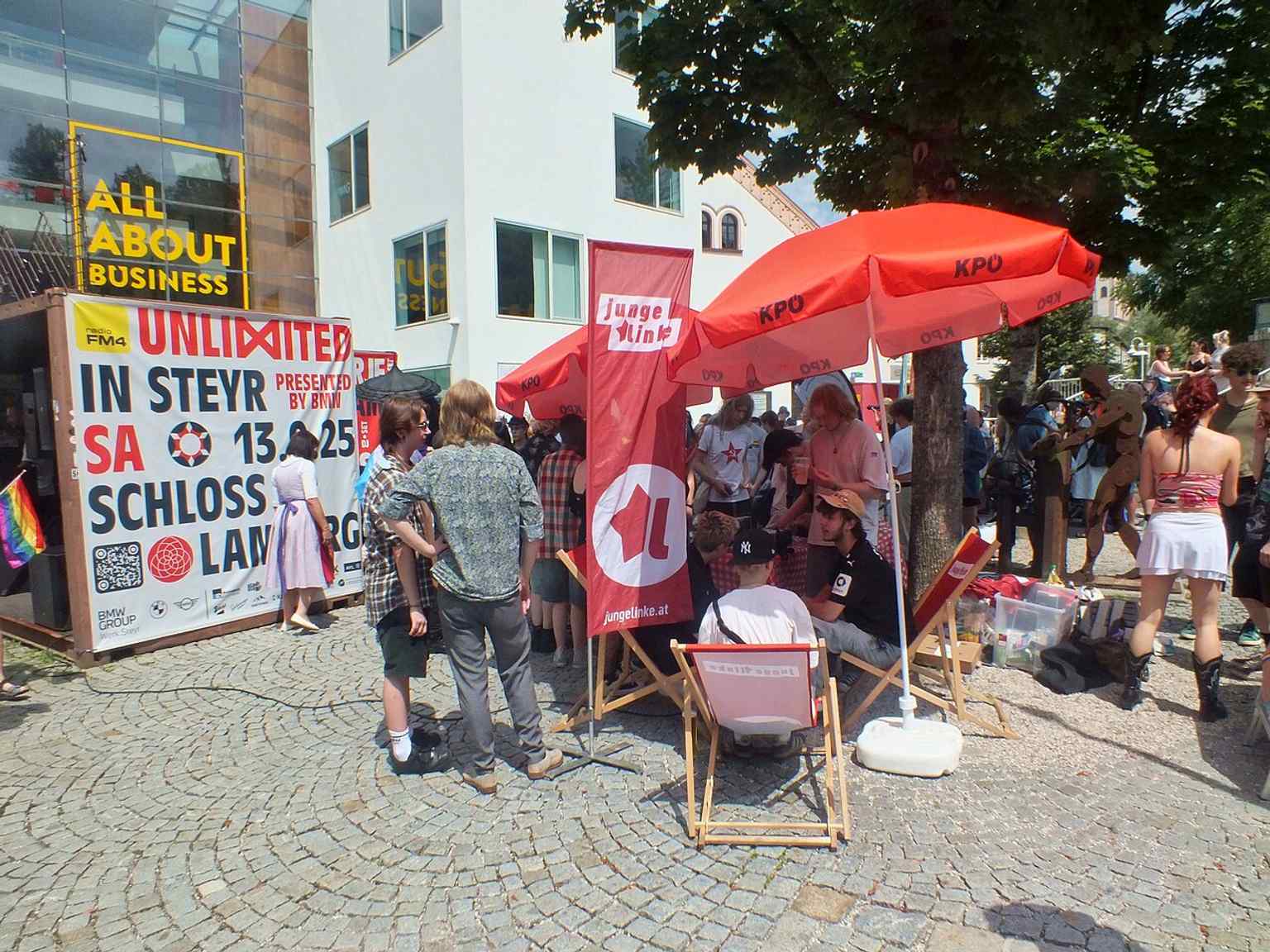
The museum as the finish point of the 2025 Pride parade, highlighting its place in civic life and public events.Photo: Miloš Hlávka, Wikimedia Commons, CC0. Cropped & resized. 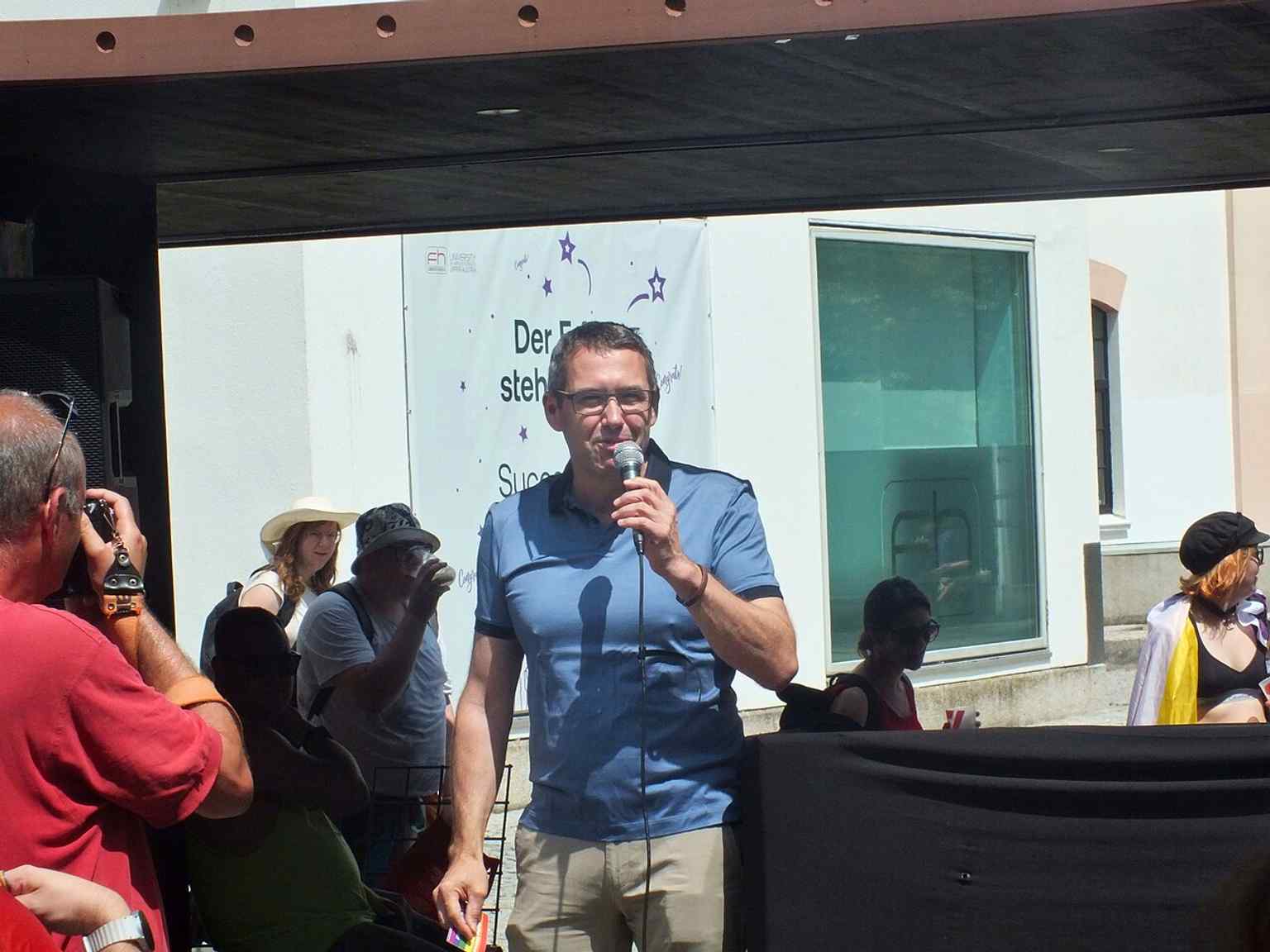
A Pride event beside the museum, echoing its focus on democracy, participation, and social issues.Photo: Miloš Hlávka, Wikimedia Commons, CC0. Cropped & resized. 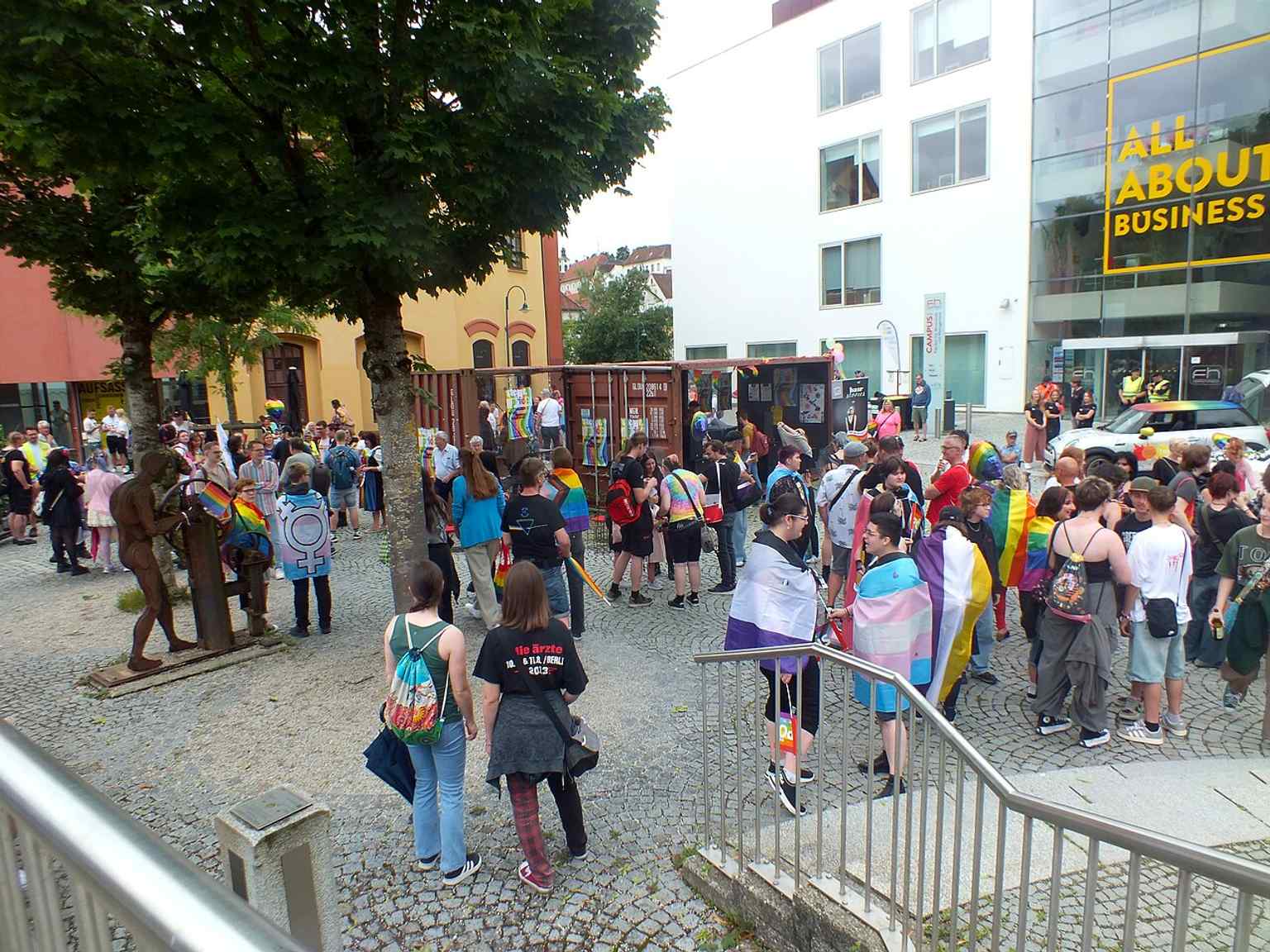
Another view of the 2025 Pride gathering at the museum, showing the building as a meeting place for diverse communities.Photo: Miloš Hlávka, Wikimedia Commons, CC0. Cropped & resized. 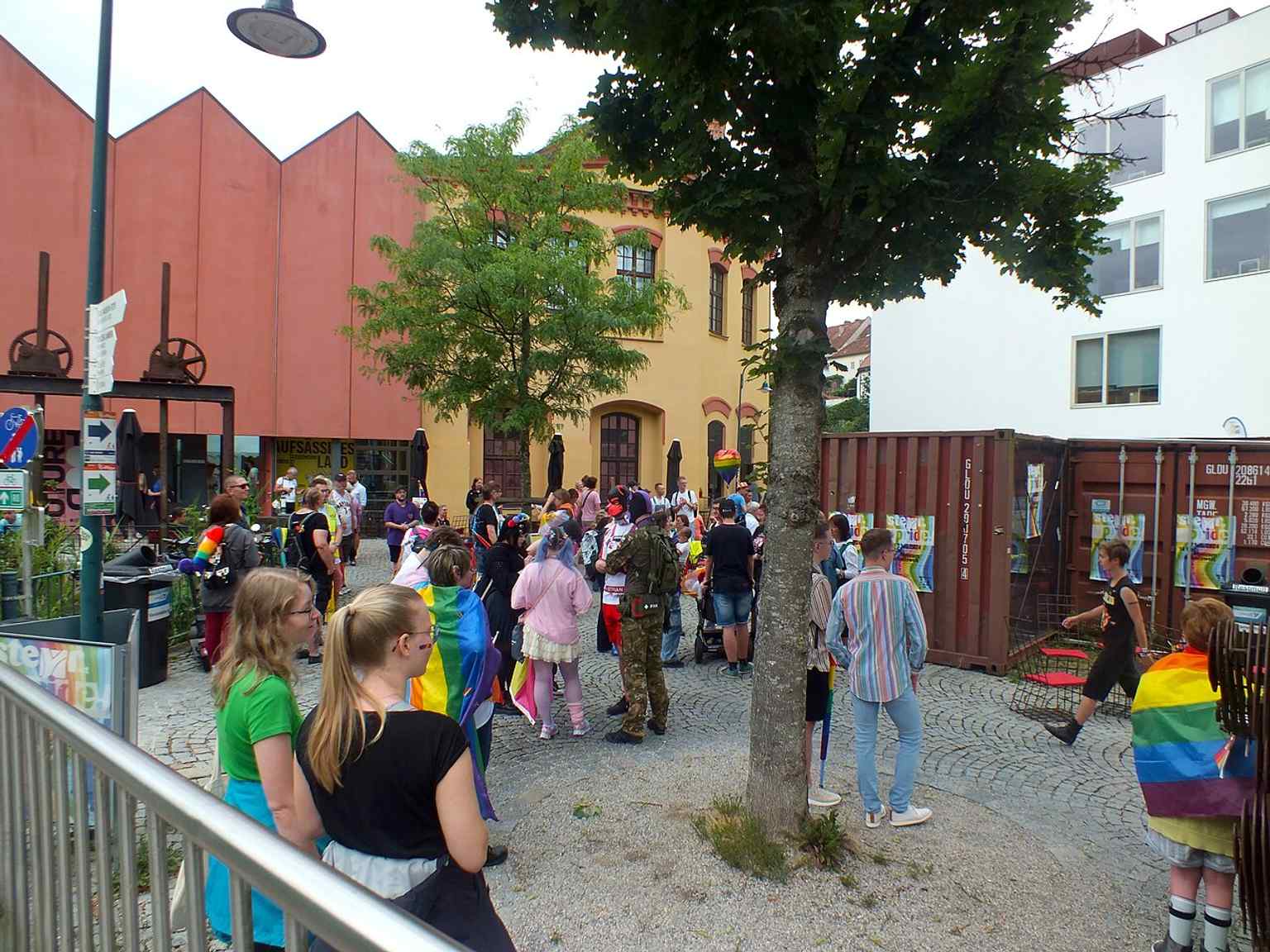
A crowd at the museum during Pride 2024, underlining how the venue hosts discussions around rights and inclusion.Photo: Miloš Hlávka, Wikimedia Commons, CC0. Cropped & resized. 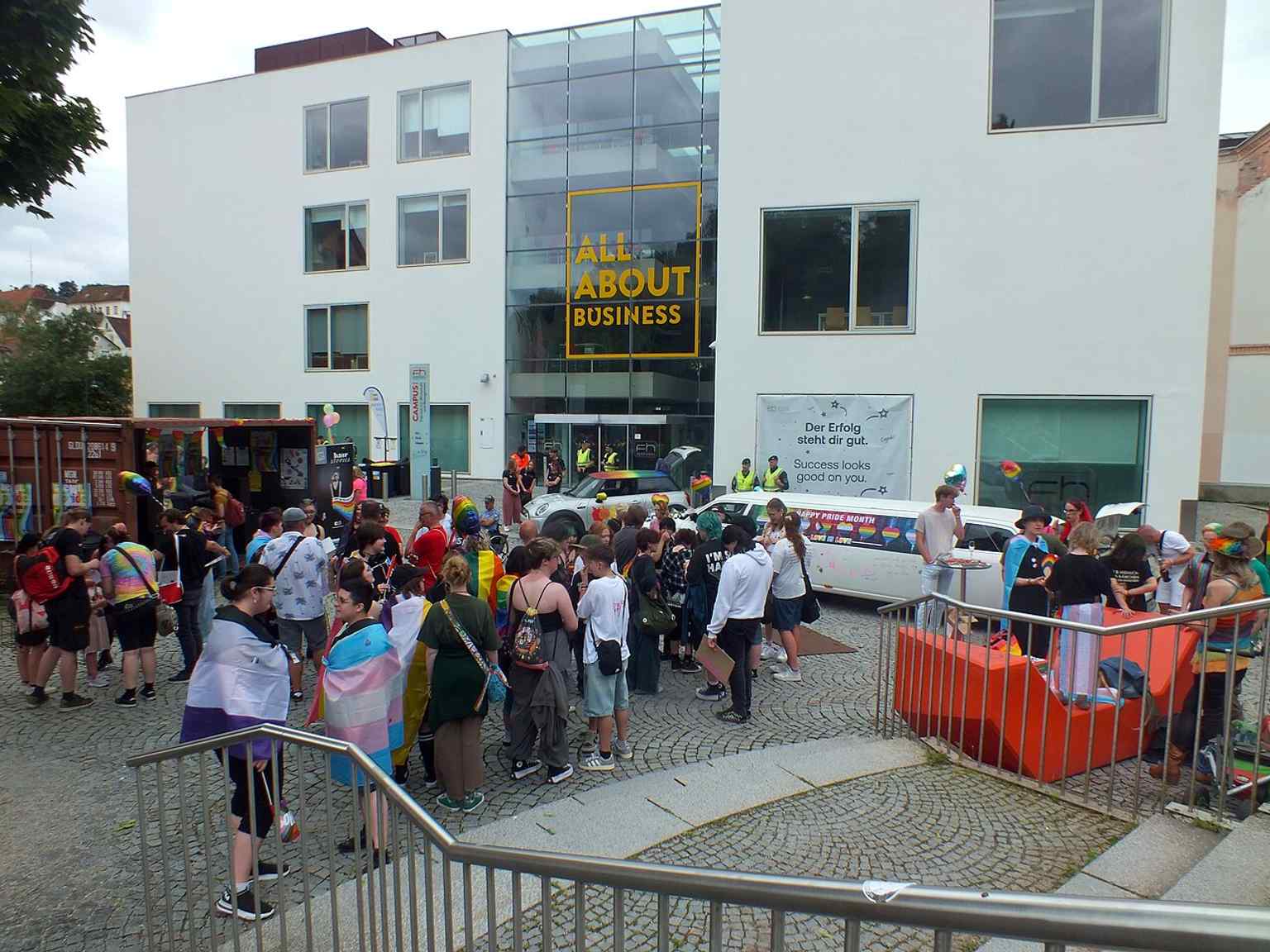
A lively outdoor scene at the museum during Pride 2024, a good fit for its role as a place for workshops and public dialogue.Photo: Miloš Hlávka, Wikimedia Commons, CC0. Cropped & resized. 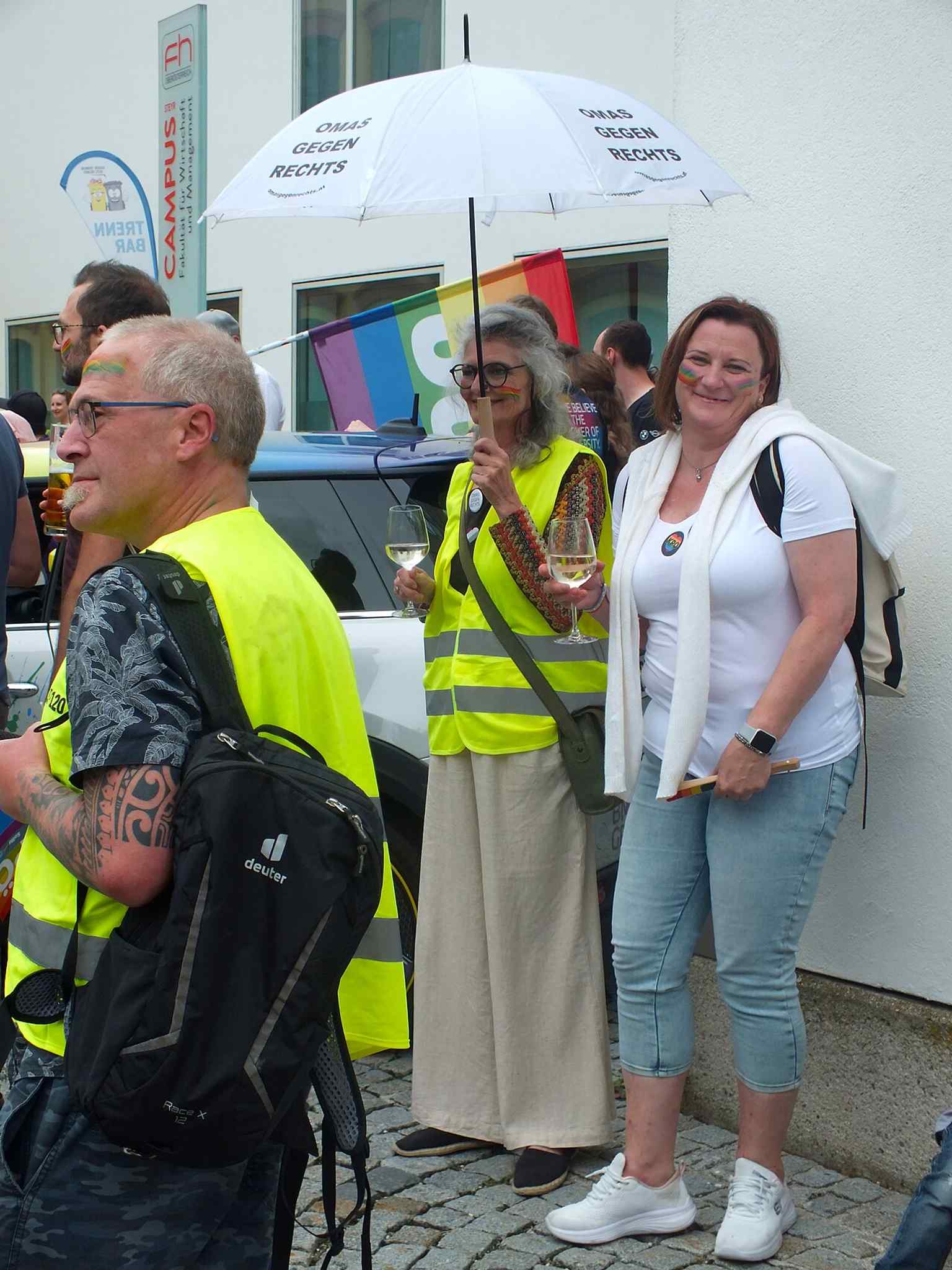
The museum as a backdrop for Pride 2024, showing its continuing use as a civic and cultural forum in Steyr.Photo: Miloš Hlávka, Wikimedia Commons, CC0. Cropped & resized. Look for the pale stuccoed baroque wings set on a triangular rocky spur, the broad moat crossed by an arcaded bridge, and the Roman Tower topped with a ring of crenellations.…Read moreShow less
Open dedicated page →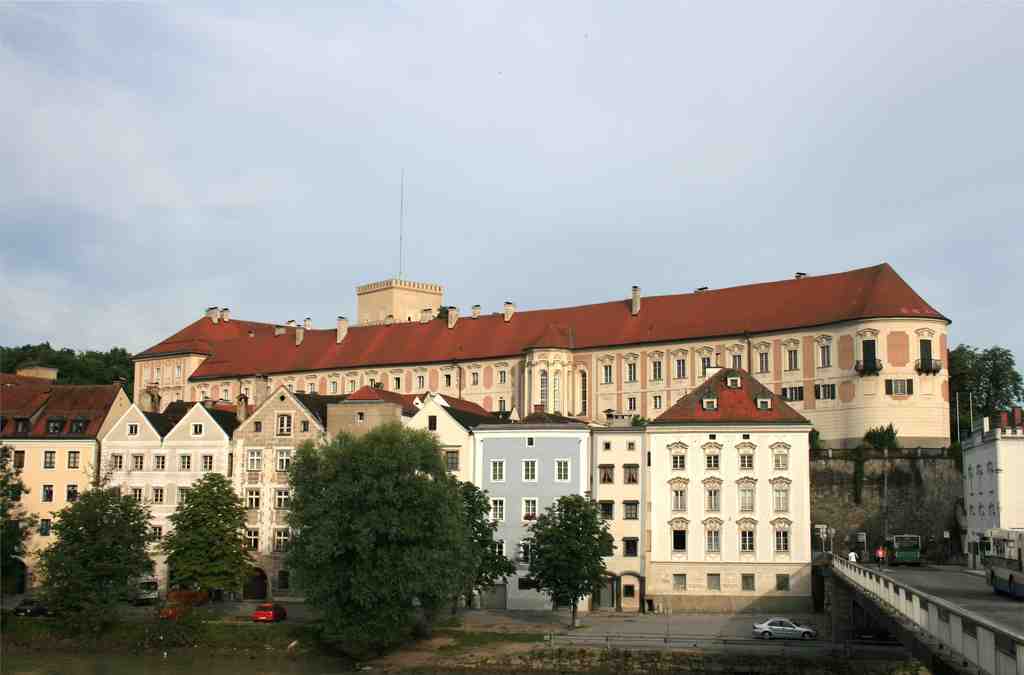
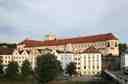
Lamberg CastlePhoto: Lewenstein, Wikimedia Commons, CC BY-SA 3.0. Cropped & resized. Look for the pale stuccoed baroque wings set on a triangular rocky spur, the broad moat crossed by an arcaded bridge, and the Roman Tower topped with a ring of crenellations.
This is Schloss Lamberg, but it began as the Styraburg, the fortress that gave both Steyr and Styria their names. People raised the first stronghold here at the start of the tenth century, and a document mentions it by nine eighty-five. The site was pure strategy: a high terrace above the meeting of the Steyr and Enns, right where routes crossed and borders mattered. If you glance at the aerial view on your screen, the logic of the location becomes very obvious, which is rude to every less well-placed castle in Europe.
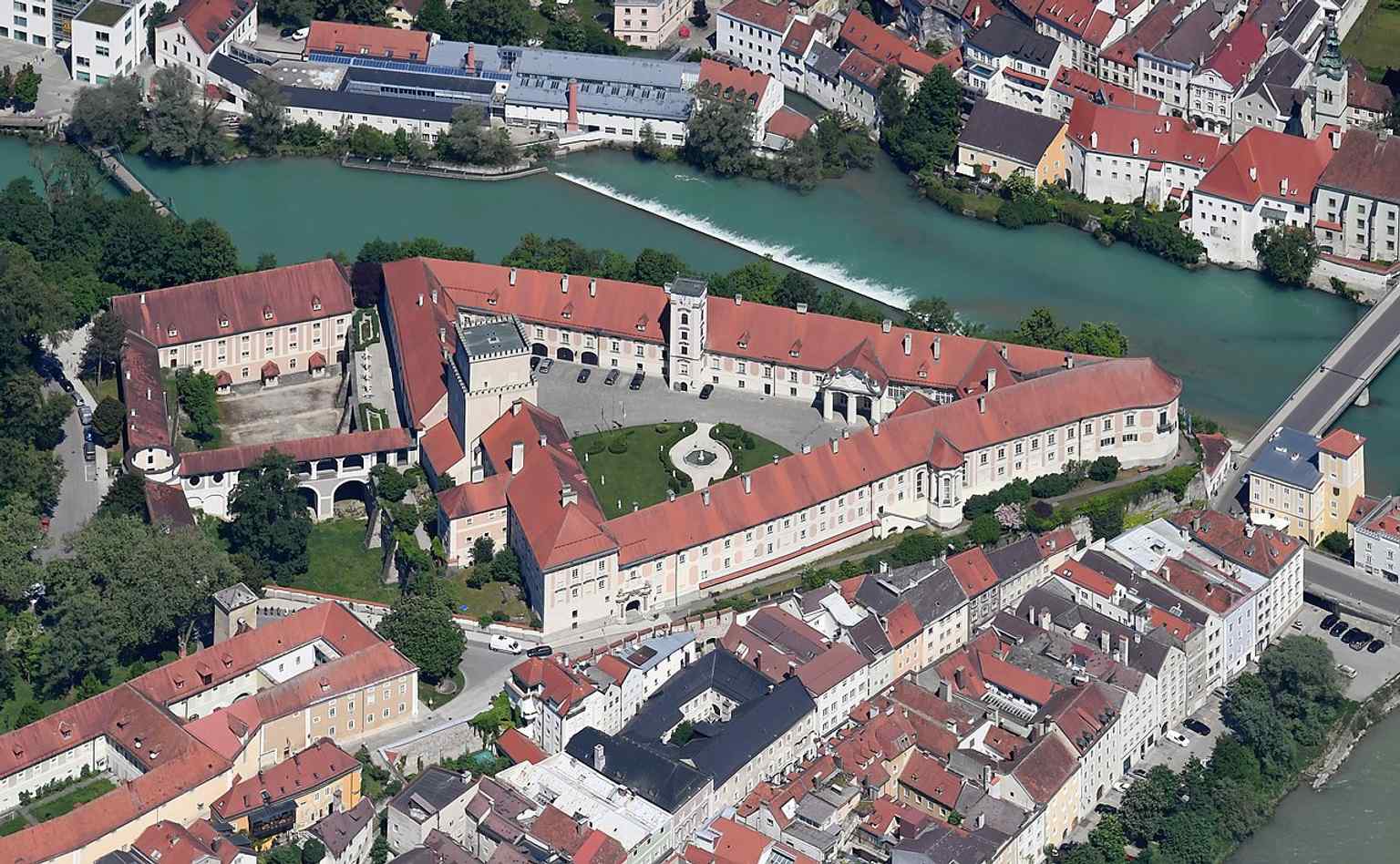
A sweeping aerial view shows Lamberg Castle on its rocky spur above the Steyr and Enns rivers — exactly the strategic site that shaped the castle’s early history.Photo: Carsten Steger, Wikimedia Commons, CC BY-SA 4.0. Cropped & resized. In ten seventy-nine, Otakar the Second made this his residence. In eleven ninety-two, the Georgenberg Pact transferred it to the Babenbergs, and later the Habsburgs took over. By then, the border role that made this place so valuable had already shaped the town below.
What you see now is mostly baroque, not medieval. In sixteen sixty-six, Count Lamberg acquired the castle and attached his family name to it for the next two hundred and seventy-two years. Then fire intervened in seventeen twenty-seven, because castles also enjoy dramatic reinventions. Architect Johann Michael Prunner rebuilt the complex in baroque form, giving it the more elegant face you see today.
Some older pieces survived. The Roman Tower, or Römerturm, is the oldest part, originally the keep, meaning the last defensive tower. Its base even includes granite blocks that may have come from the Roman legionary camp at Lauriacum. The moat is medieval too, a full defensive ditch, and the courtyard inside takes its odd triangular shape from this narrow rock spur.
The courtyard changed again in twenty fourteen and twenty fifteen, when restorers repaired the fountain and sculptures and redesigned the whole space. If you want, check the before-and-after image; the difference is pleasantly surgical. At the center stands a fountain from sixteen sixty-six with the Lamberg heraldic animal, a dog spouting water, surrounded by sandstone dwarf figures originally carved around seventeen twenty at Gleink Abbey. They are satire in stone: little baroque insults aimed at social types, fashions, and professions. Civilized mockery... very Austrian.
This place also carries harder history. In February nineteen thirty-four, the stables briefly held around eight hundred prisoners, mostly members of the Schutzbund, because the city needed space fast. In nineteen forty-three, forced laborers from the Steyr-Münichholz concentration camp subcamp built an air-raid bunker here. Since twenty fifteen, it has housed the permanent exhibition called Stollen der Erinnerung, the Tunnel of Remembrance.
Today the castle serves as a police headquarters and a cultural venue, which is a tidy summary of European history: power, repair, paperwork.
The ridge and the tower still make plain why this castle is here. When you’re ready, we can continue on to Voglsang Castle.
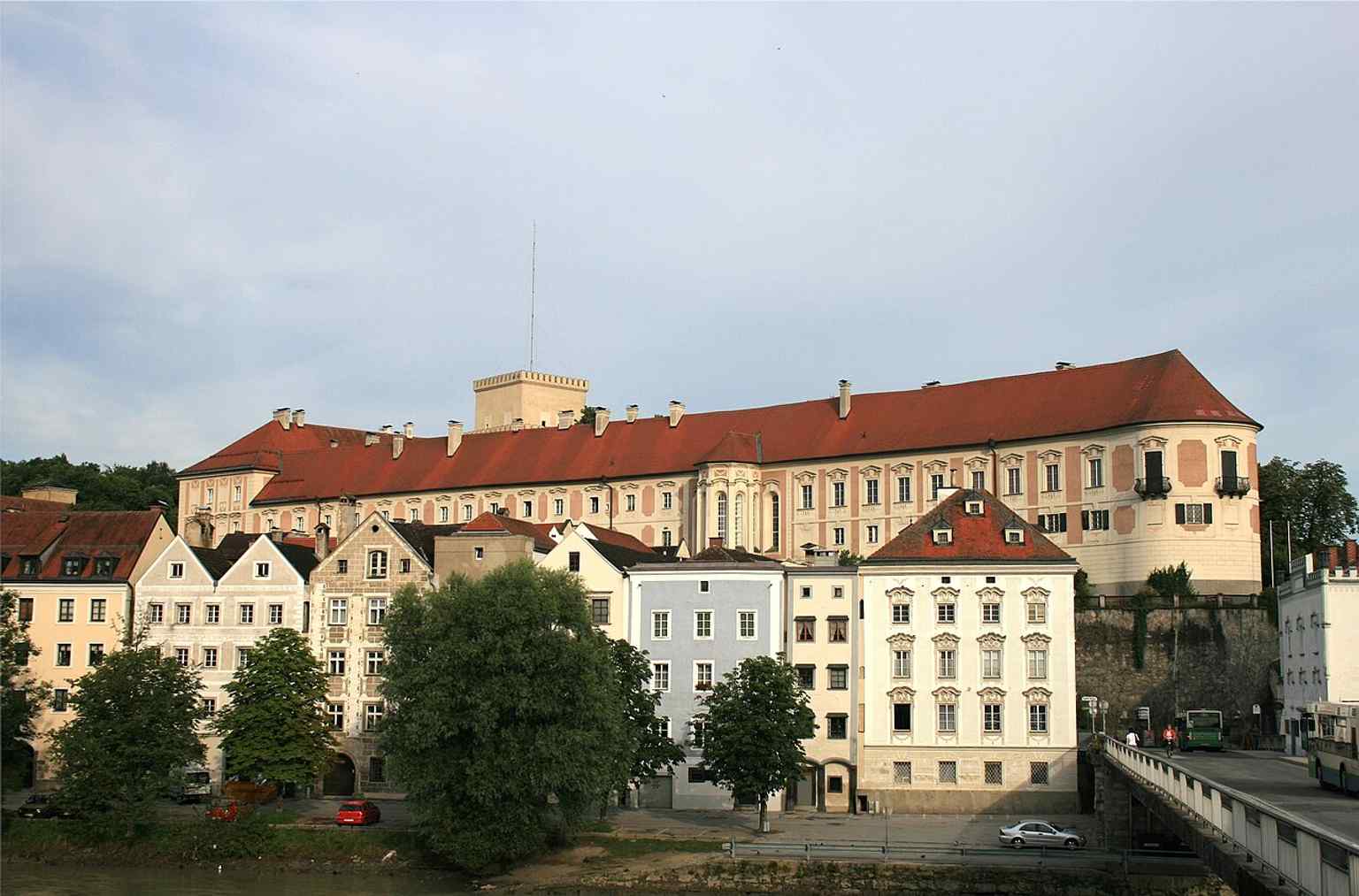
The full castle complex from outside, a good overview of the baroque palace that grew out of the medieval Styraburg.Photo: Thomas Ledl, Wikimedia Commons, CC BY-SA 3.0 at. Cropped & resized. 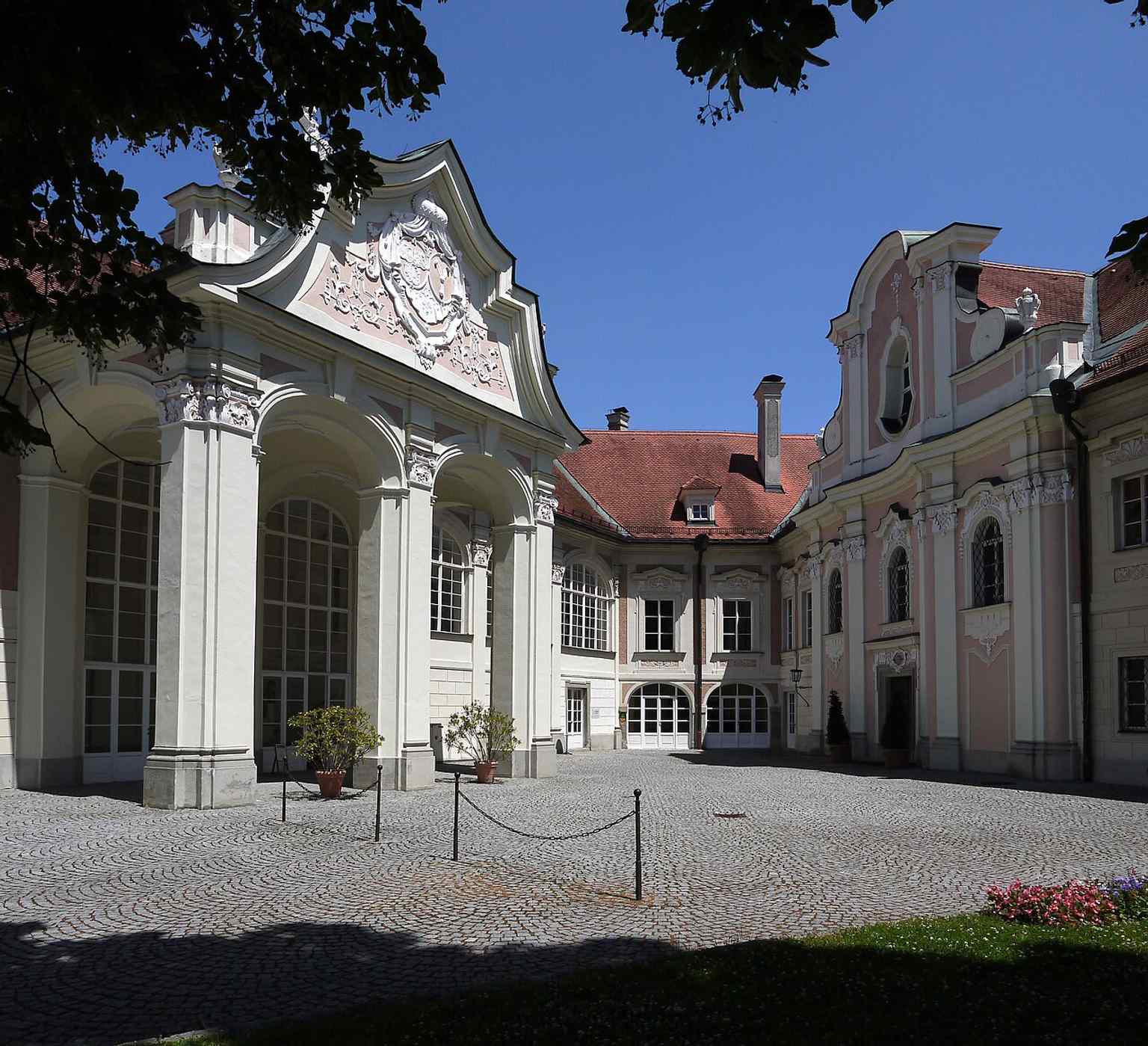
A classic view of Schloss Lamberg from Ennsdorf, highlighting how the castle dominates the hillside above the river confluence.Photo: Christoph Waghubinger (Lewenstein), Wikimedia Commons, CC BY-SA 3.0. Cropped & resized. 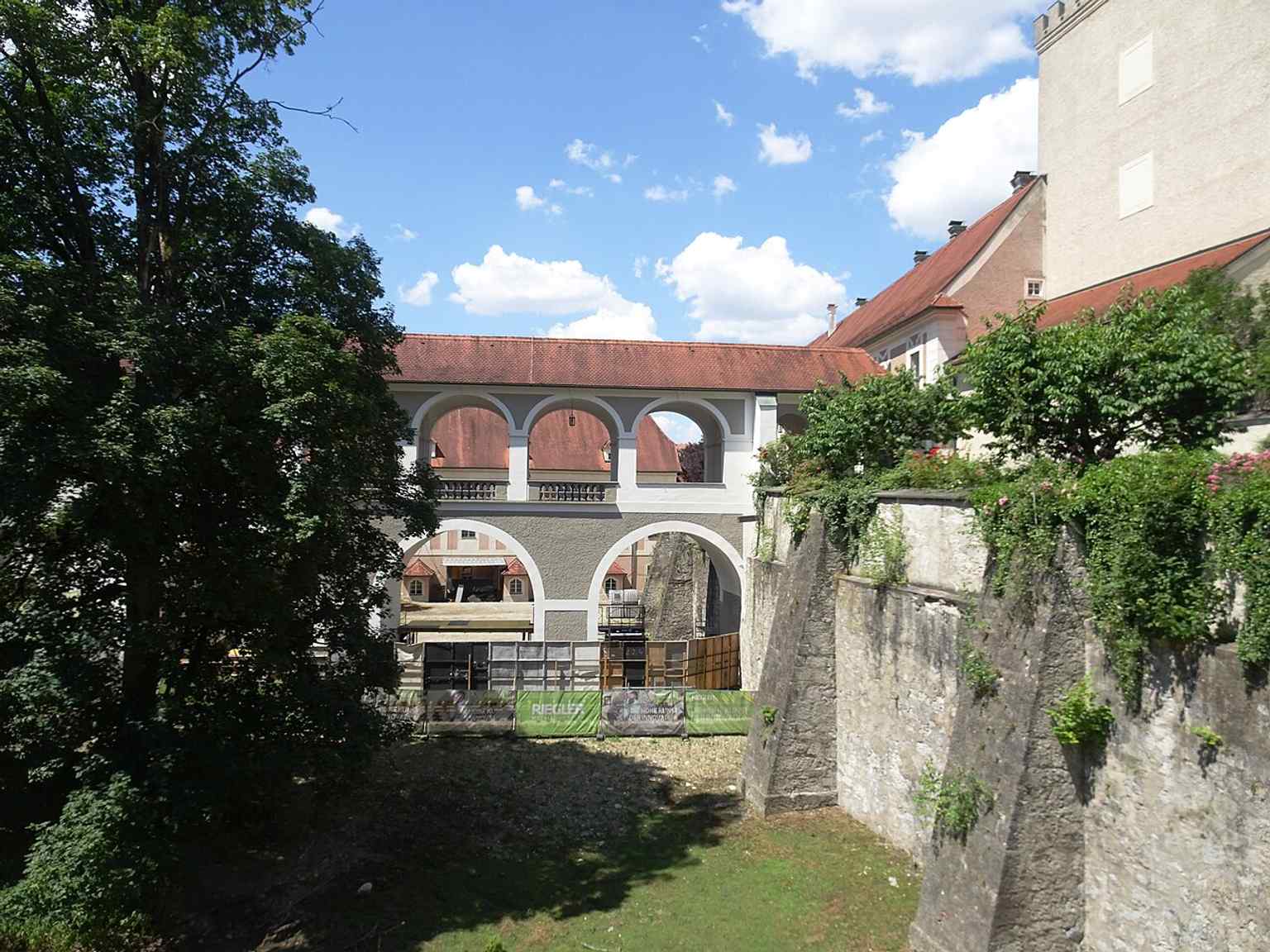
The courtyard with the Berggasse portal and seasonal statues, matching the story of the restored Schlosshof and its baroque decoration.Photo: Thomas Ledl, Wikimedia Commons, CC BY-SA 3.0 at. Cropped & resized. 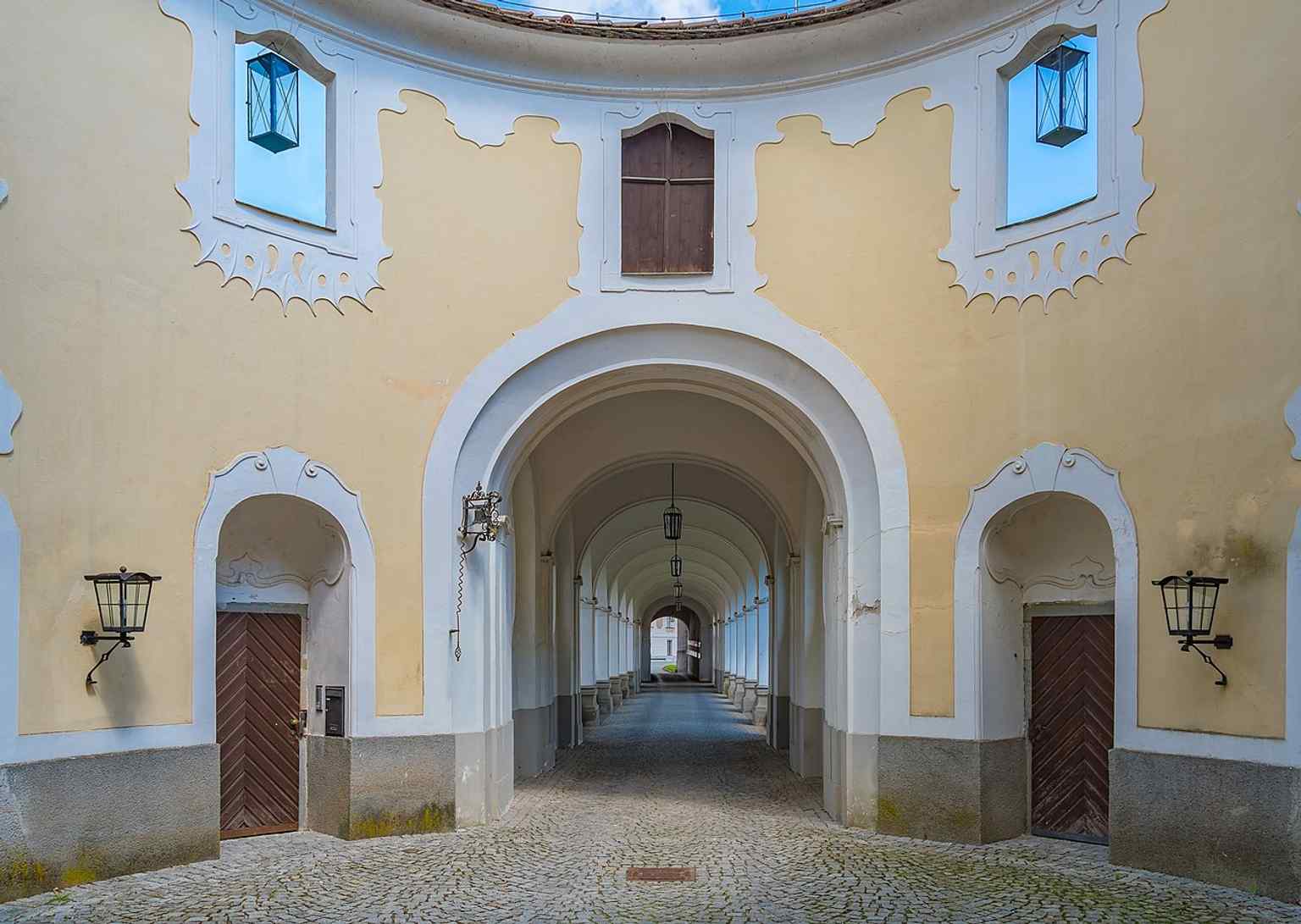
The castle courtyard in a recent state, useful for showing the renovated inner space where the fountain and sculptures were restored.Photo: Palickap, Wikimedia Commons, CC BY-SA 4.0. Cropped & resized. 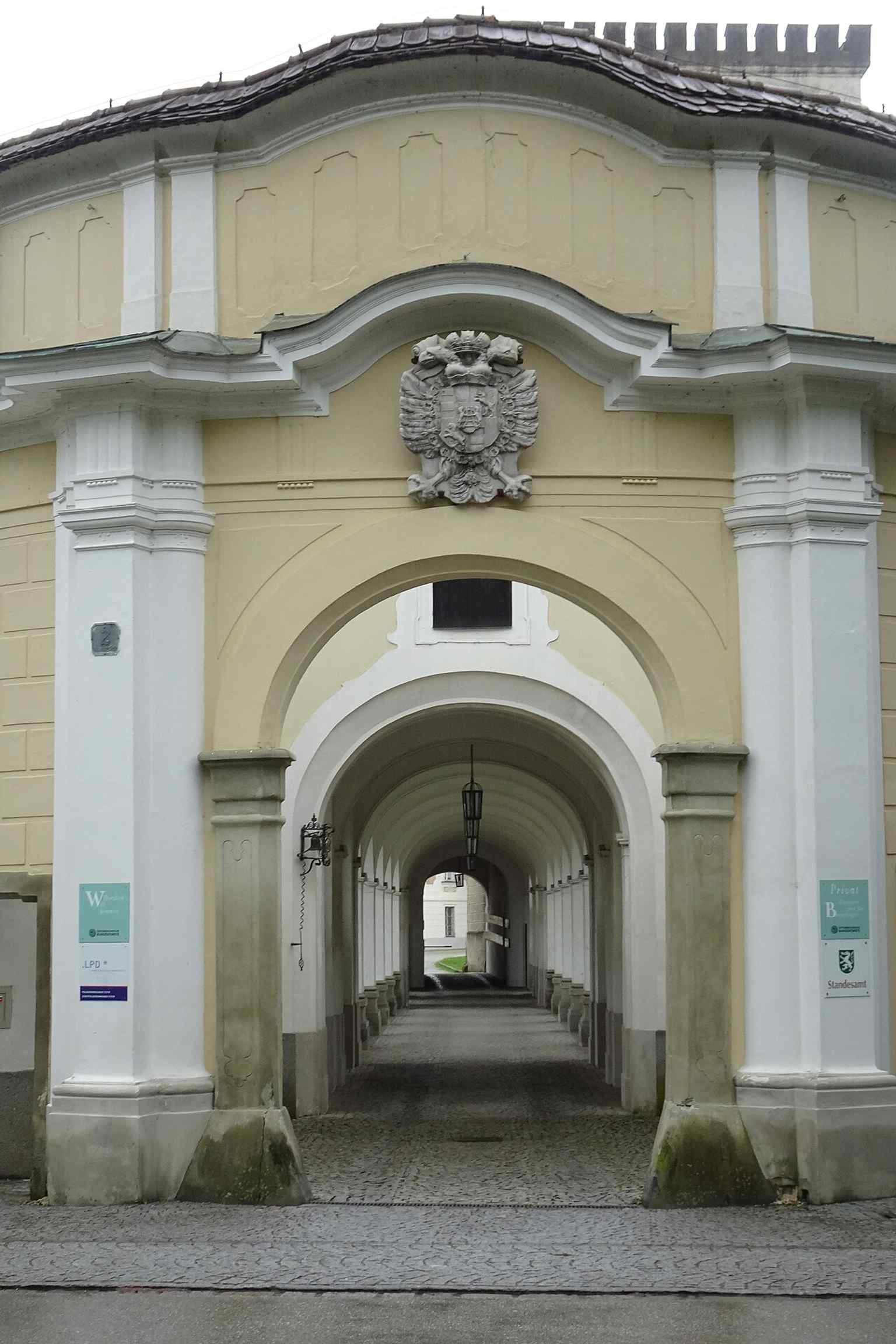
The restored courtyard fountain, one of the castle’s signature details and a centerpiece of the 2014/2015 refurbishment.Photo: Palickap, Wikimedia Commons, CC BY-SA 4.0. Cropped & resized. 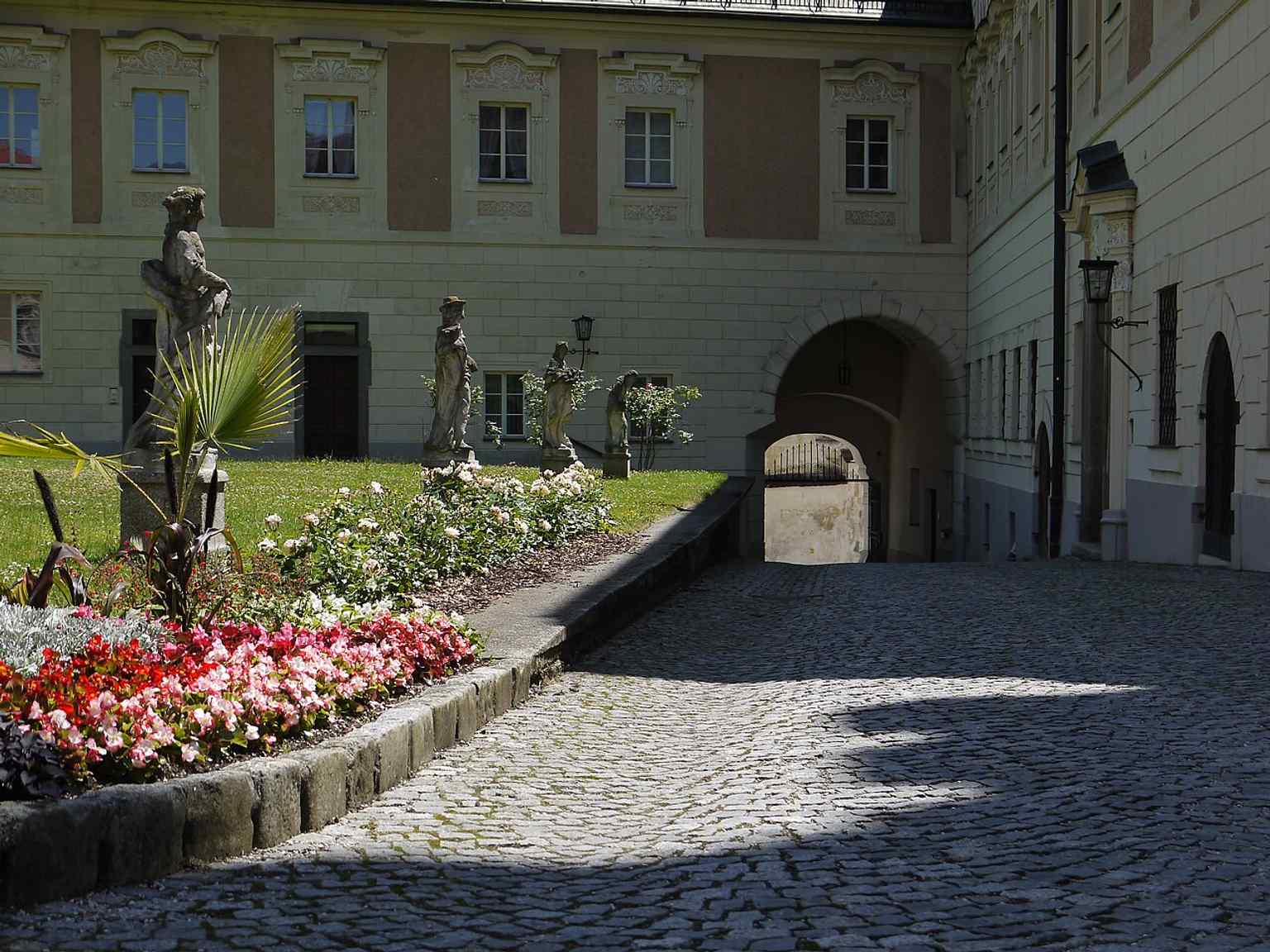
The arcaded bridge over the moat recalls the surviving castle ditch and the historic defensive layout of the old Styraburg.Photo: Isiwal, Wikimedia Commons, CC BY-SA 4.0. Cropped & resized. 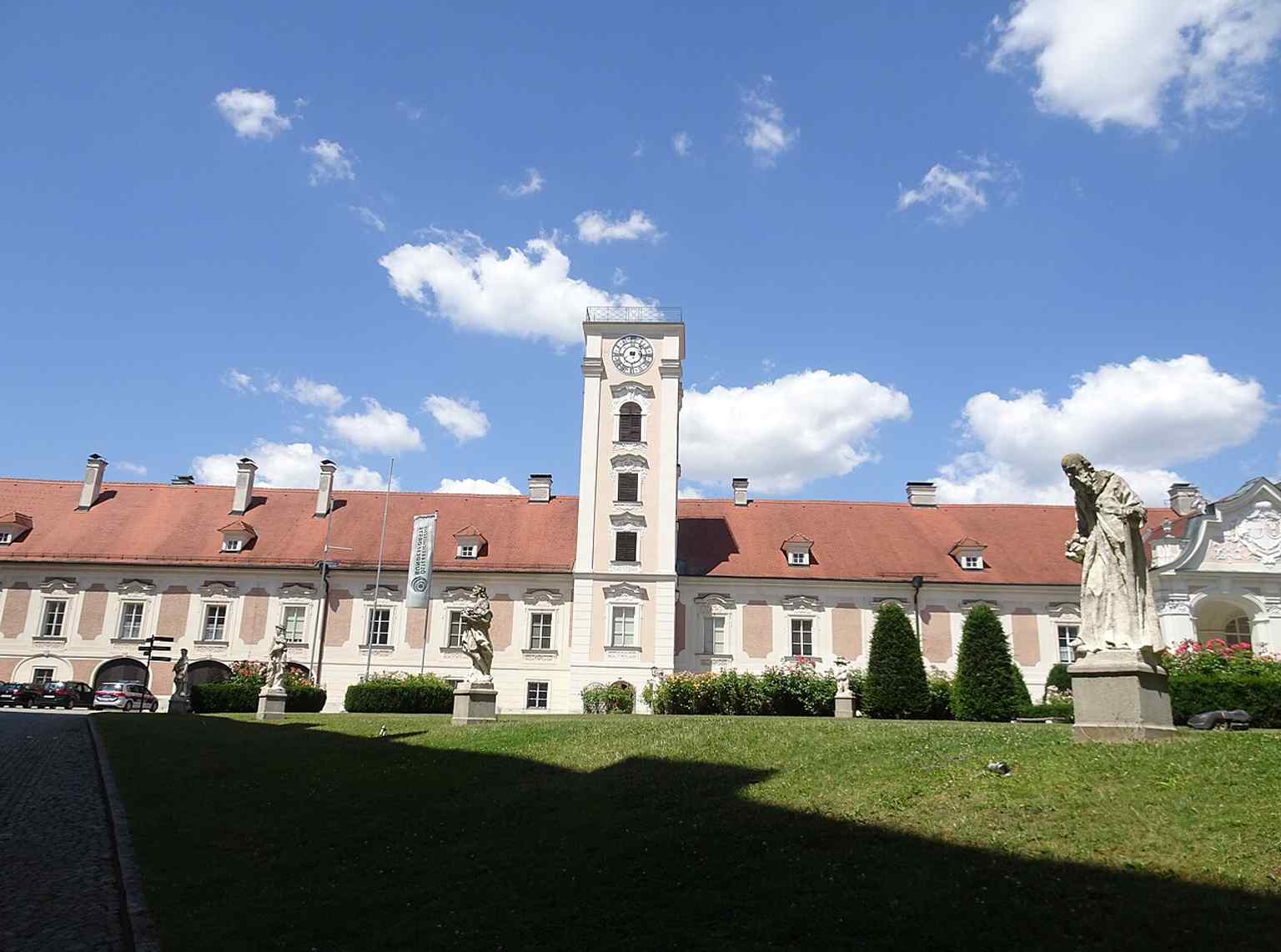
Baroque dwarf figures waiting beside the west facade — a reminder that the famous Zwergengarten pieces were moved here during courtyard restoration.Photo: Christoph Waghubinger (Lewenstein), Wikimedia Commons, CC BY-SA 4.0. Cropped & resized. 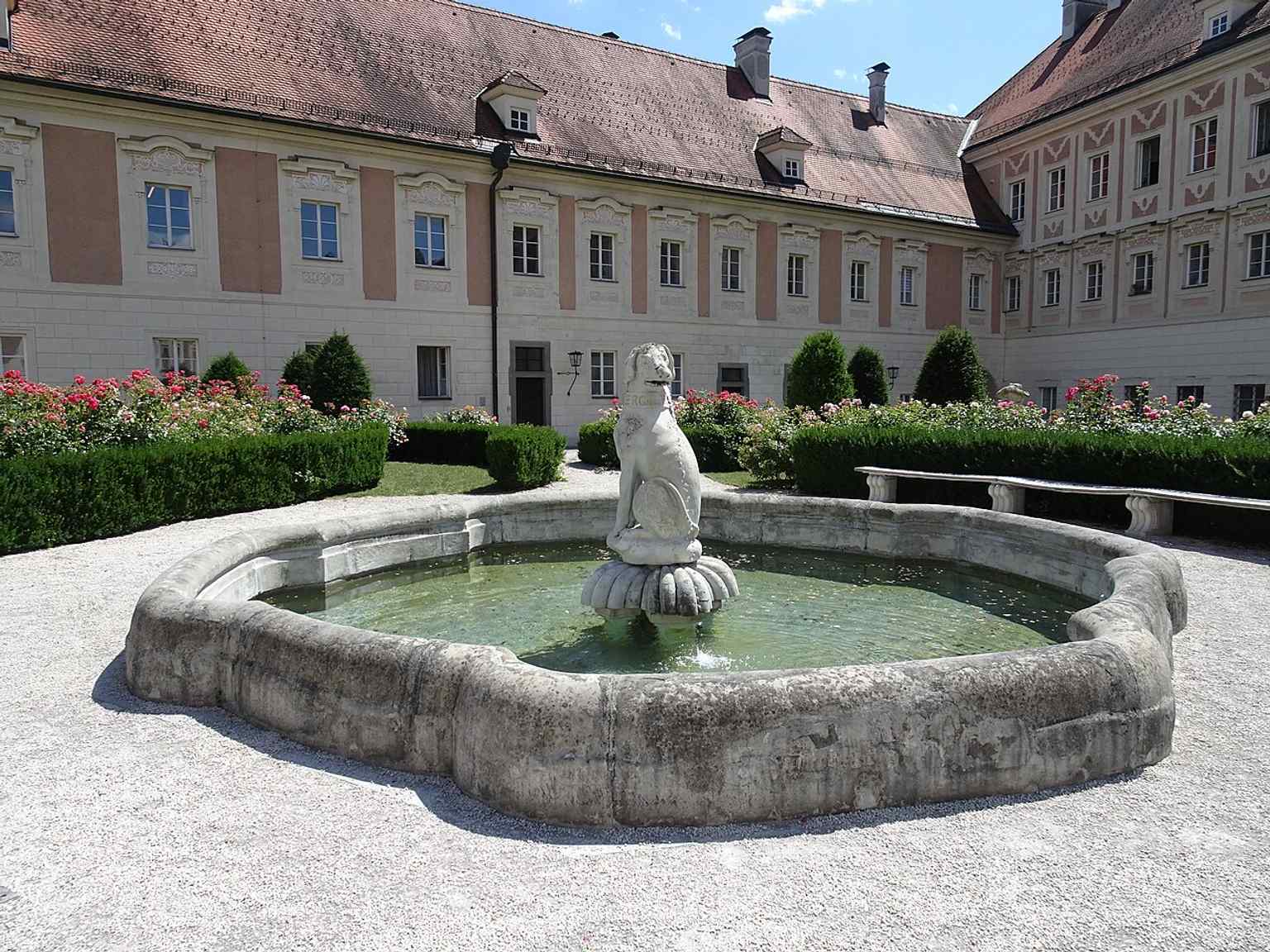
A close-up of one of the castle dwarfs, reflecting the quirky 18th-century satire figures now displayed in the Schlosshof.Photo: Isiwal, Wikimedia Commons, CC BY-SA 4.0. Cropped & resized. 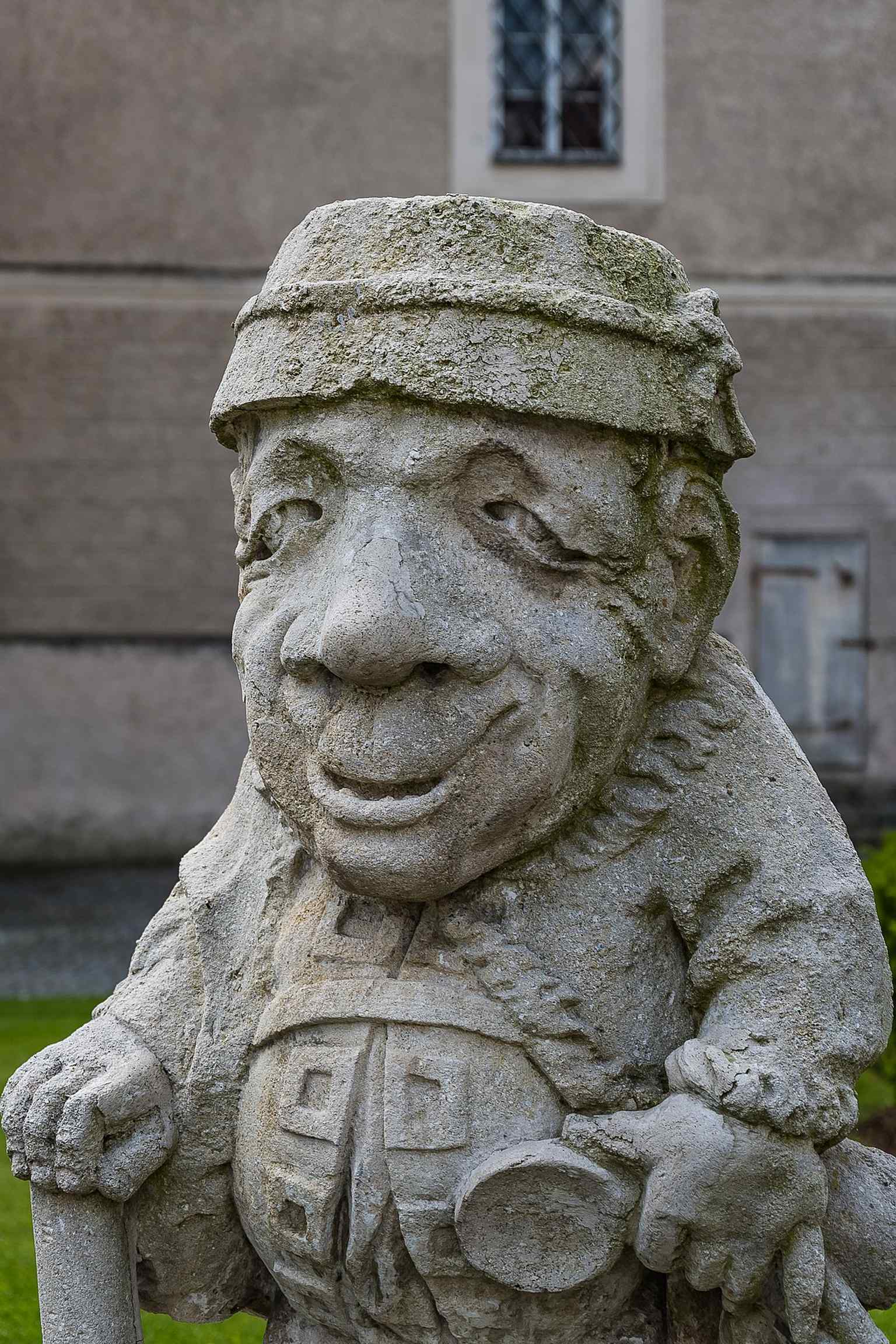
The allegory of Spring from the courtyard sculpture set, part of the seasonal figures added to Lamberg Castle’s garden ensemble.Photo: Photograph: Christoph Waghubinger (Lewenstein), Wikimedia Commons, CC BY-SA 4.0. Cropped & resized. 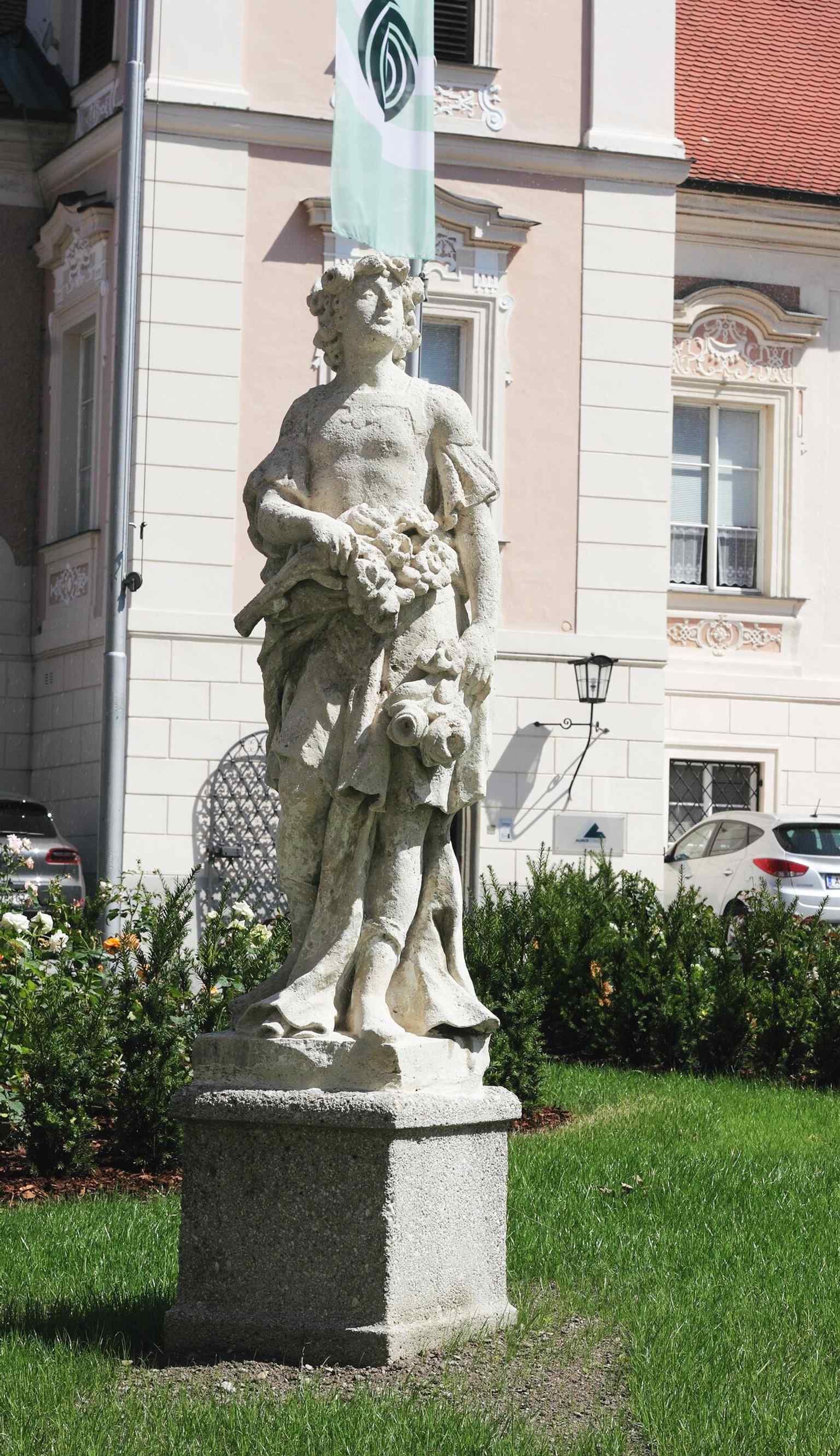
The Summer allegory adds another layer to the castle’s decorative courtyard program, installed alongside the dwarf figures.Photo: Photograph: Christoph Waghubinger (Lewenstein), Wikimedia Commons, CC BY-SA 4.0. Cropped & resized. 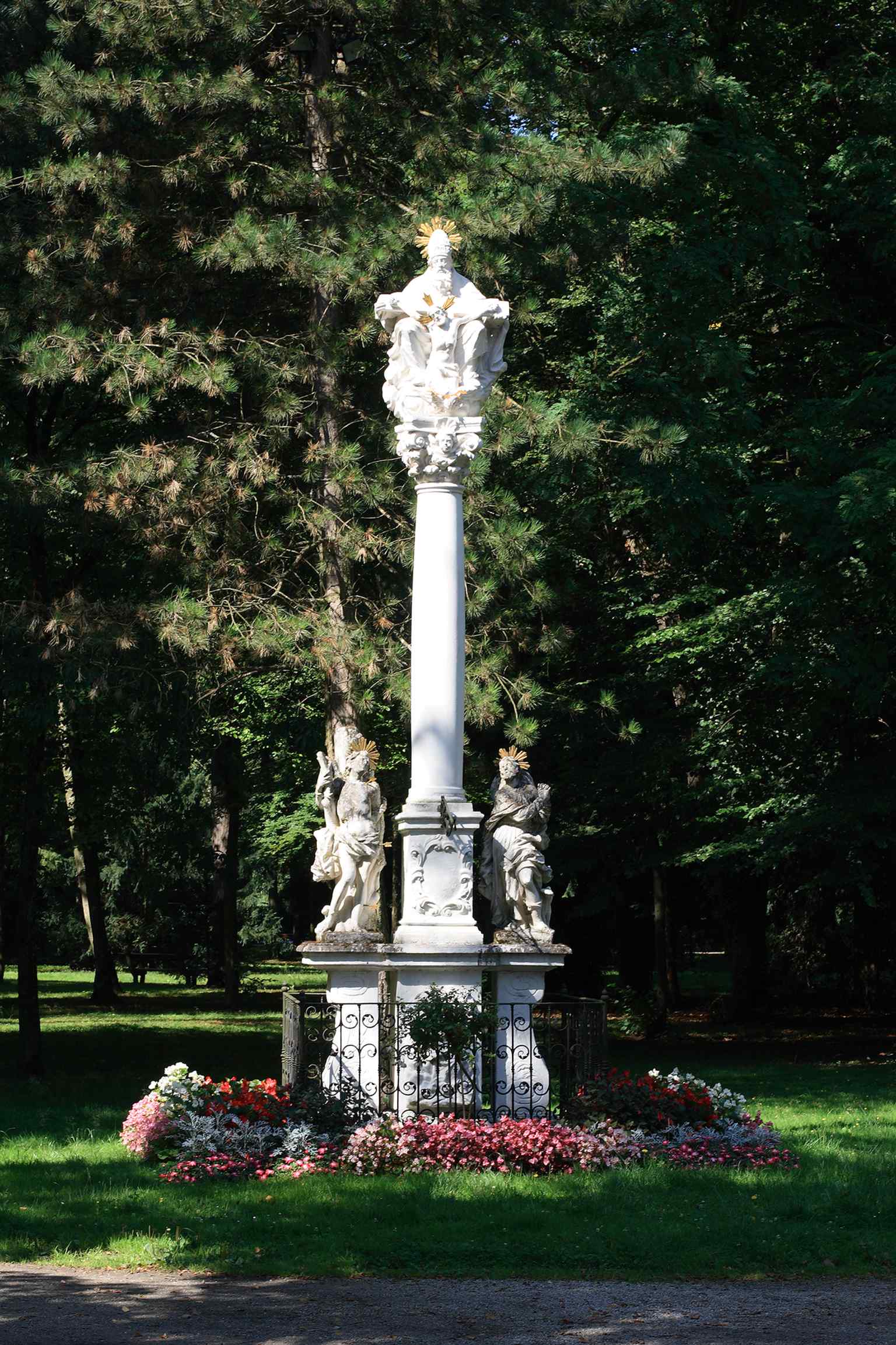
The Trinity Column in the Schlosspark links the castle grounds to the wider baroque park landscape around Lamberg.Photo: Foto: Christoph Waghubinger (Lewenstein), Wikimedia Commons, CC BY-SA 3.0 at. Cropped & resized. 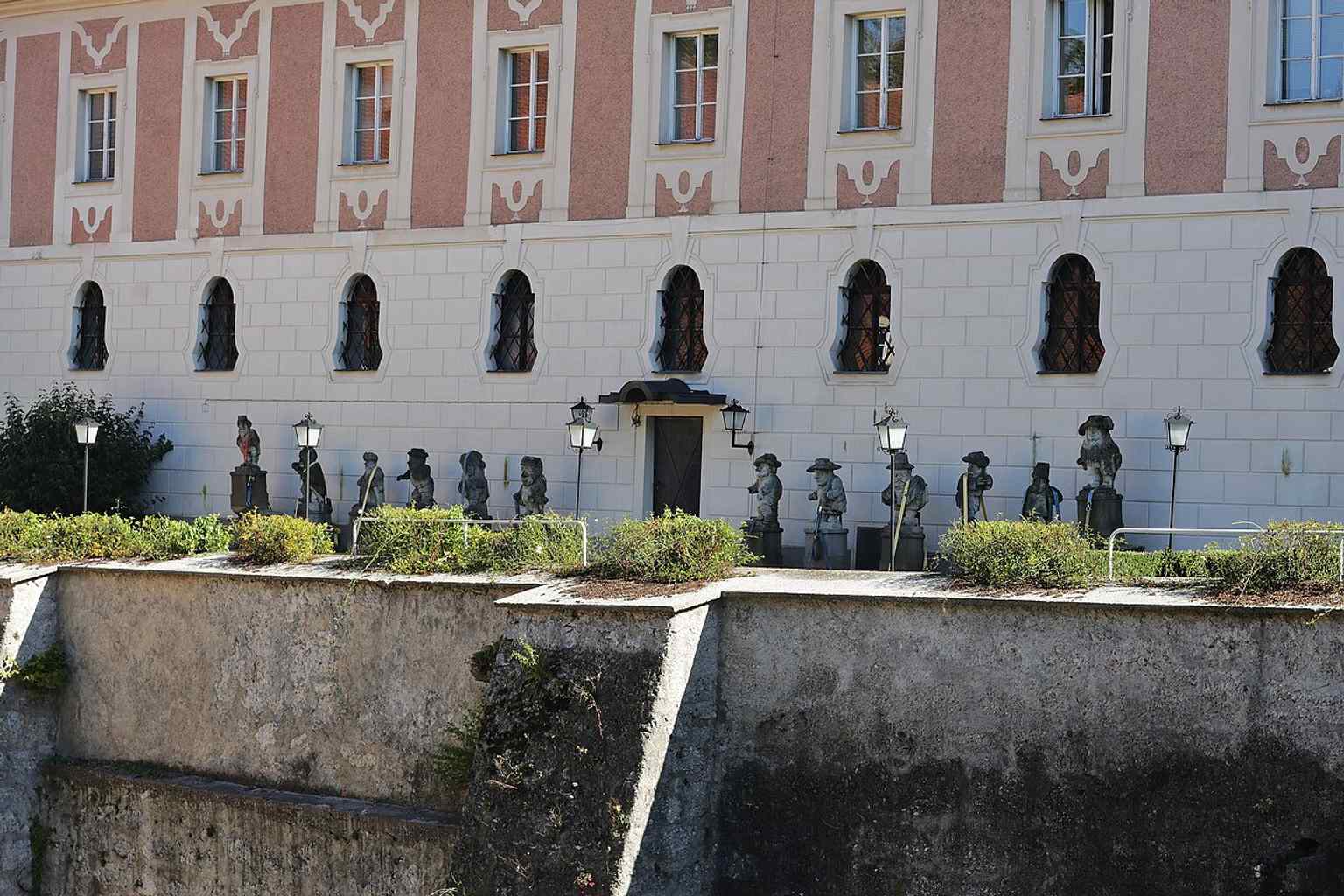
The barbacane and bridge passage show the surviving medieval defenses beneath the baroque castle complex.Photo: Clemens Mosch, Wikimedia Commons, CC BY-SA 4.0. Cropped & resized. 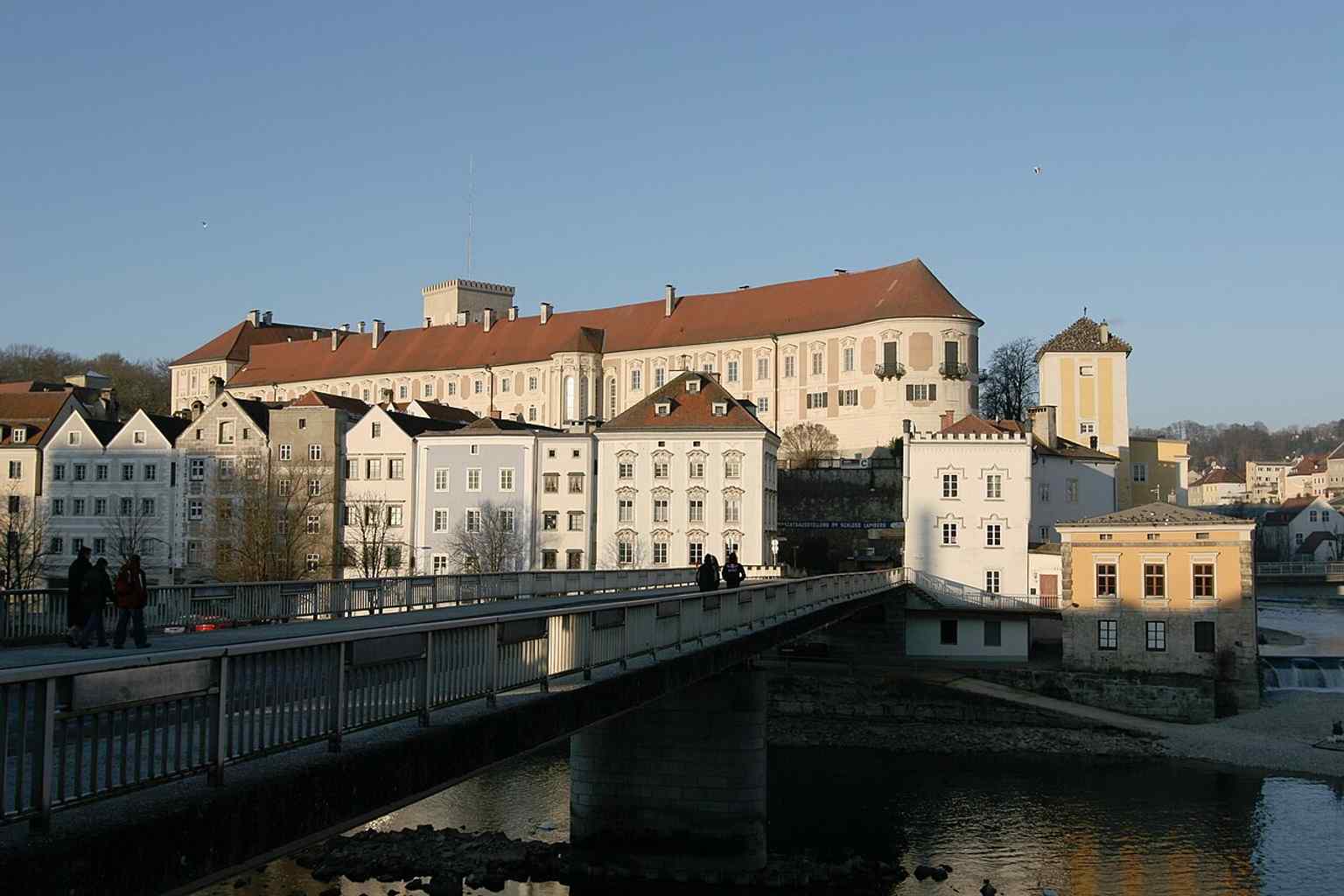
A dwarf in the castle garden, part of the relocated Gleink figures that became a distinctive feature of Schloss Lamberg.Photo: Clemens Mosch, Wikimedia Commons, CC BY-SA 4.0. Cropped & resized. On your left stands a three-story, rectangular villa on a stone-block base, marked by four corner towers and a rosette set into the central gable. This is Schloss Voglsang,…Read moreShow less
Open dedicated page →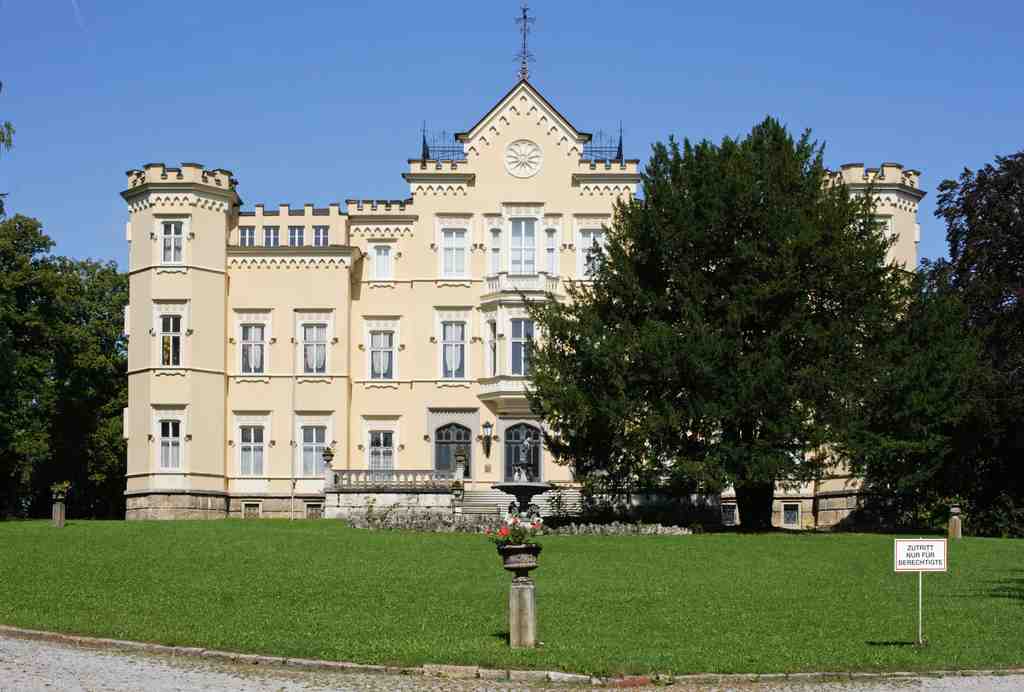
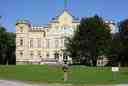
Voglsang CastlePhoto: Lewenstein, Wikimedia Commons, CC BY-SA 3.0 AT. Cropped & resized. On your left stands a three-story, rectangular villa on a stone-block base, marked by four corner towers and a rosette set into the central gable.
This is Schloss Voglsang, finished in eighteen eighty-two for Josef Werndl, the industrialist you met earlier at his monument, and designed by master builder Anton Plochberger. Werndl wanted more than a villa. He wanted a private statement with turrets. So Plochberger reportedly traveled to Scotland to study castle design, and a garden architect came along for the park. The result is neo-Gothic with Tudor Gothic touches - meaning it borrows late medieval forms, especially the Scottish kind, without pretending to be a perfect copy. In other words, it aims for noble ancestry and lands somewhere between manor house and very ambitious costume.
Look at the composition: the broad front, the battlement-like crenellations, the taller facades on the northeast and southwest sides, and the glasshouse-like roof lantern that lights the staircase inside. Even the street was part of the performance. Preuenhueberstrasse was laid out as an extra-wide ceremonial approach, because subtlety had already left the building.
Then the mood shifted. After Werndl’s wife, Karoline Antonia, died, he lost interest in living here and stayed at nearby Petzengütl instead. By eighteen seventy-eight he had already spent sixty-four thousand florins on the unfinished shell - roughly the price of a very substantial property today - and offered it to the city as a poorhouse. The city declined. He tried to sell it, complained it had serious construction faults, and even considered demolishing it. Nothing says domestic disappointment quite like “perhaps I should tear down the castle.”
The building survived by being useful: exhibition space in eighteen eighty and again during the electrical exhibition of eighteen eighty-four, then part of a public park with a palm house from eighteen eighty-five. If you check the before-and-after image, you can see how this once-isolated villa became a settled city landmark. And if you look at image two, you’ll see the old gate on the Volksstrasse side, a reminder that this estate once had a second formal entrance.
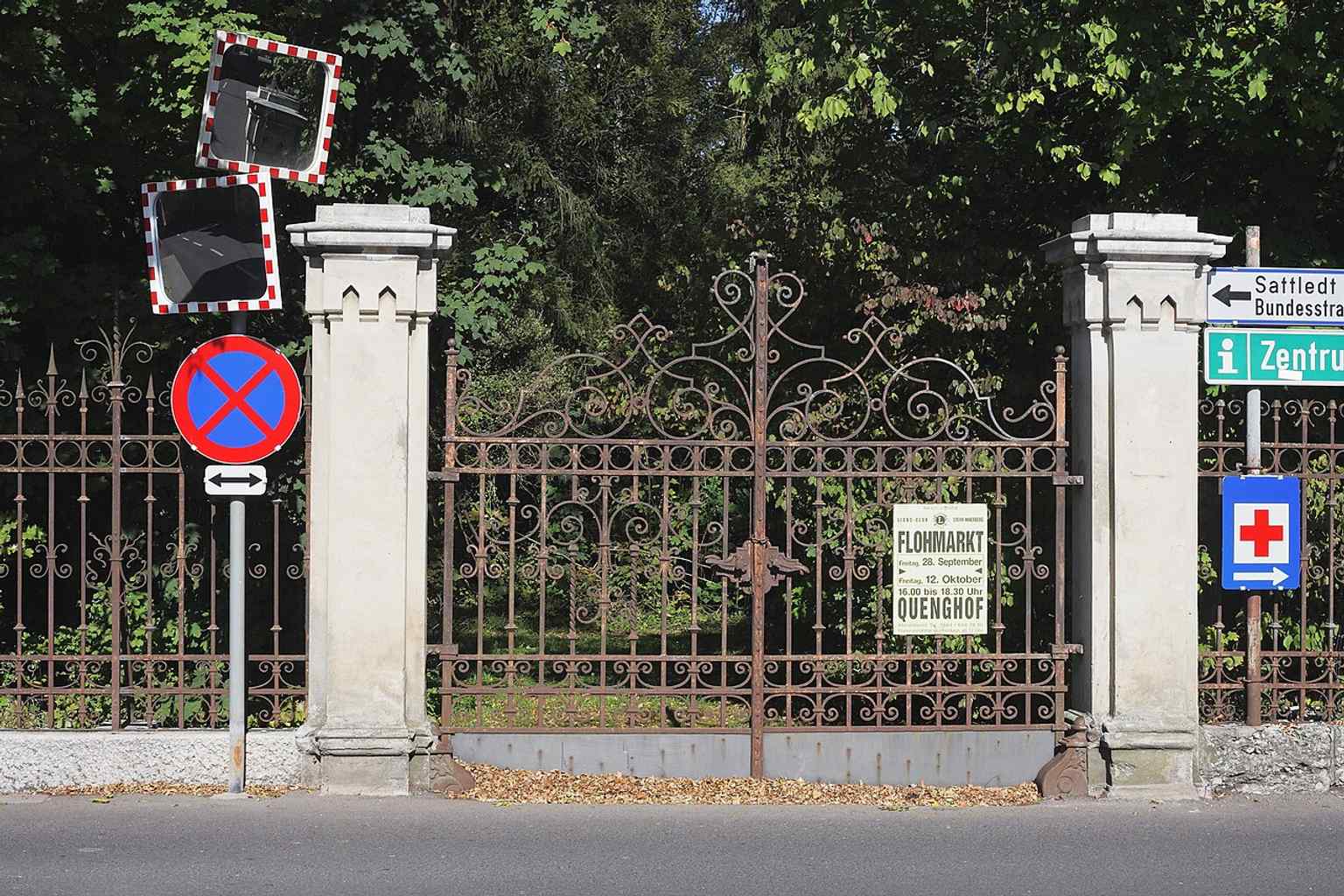
The surviving old gate to the Volksstraße/Redtenbachergasse side, one of the historic entrances still mentioned in the castle’s story.Photo: Christoph Waghubinger (Lewenstein), Wikimedia Commons, CC BY-SA 4.0. Cropped & resized. Later owners finished the interiors, lost a four-ton copper roof to wartime metal collection in nineteen sixteen, turned it into a boys’ boarding house in nineteen twenty-eight, added the attic level, and eventually converted it into senior apartments in nineteen ninety-five.
Voglsang is really a castle-shaped biography of ambition, grief, reuse, and stubborn survival.
Those towers have done enough talking for now. When you’re ready, let’s continue on to Engelseck Castle.
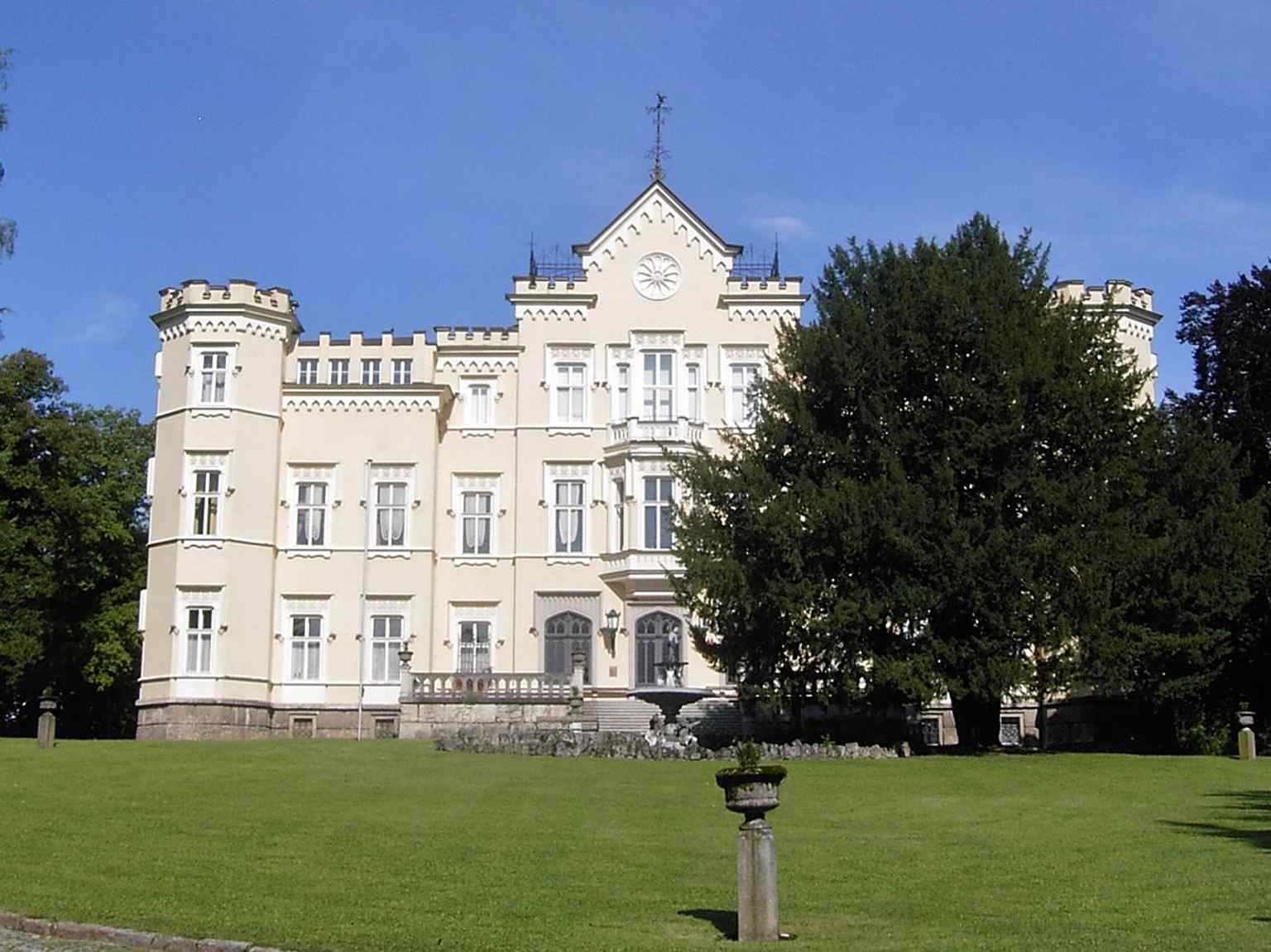
Seen from Preuenhueberstraße with the park and fountain, reflecting the landscaped setting that was part of the estate.Photo: Bodory Thomas, Wikimedia Commons, CC BY-SA 3.0. Cropped & resized. 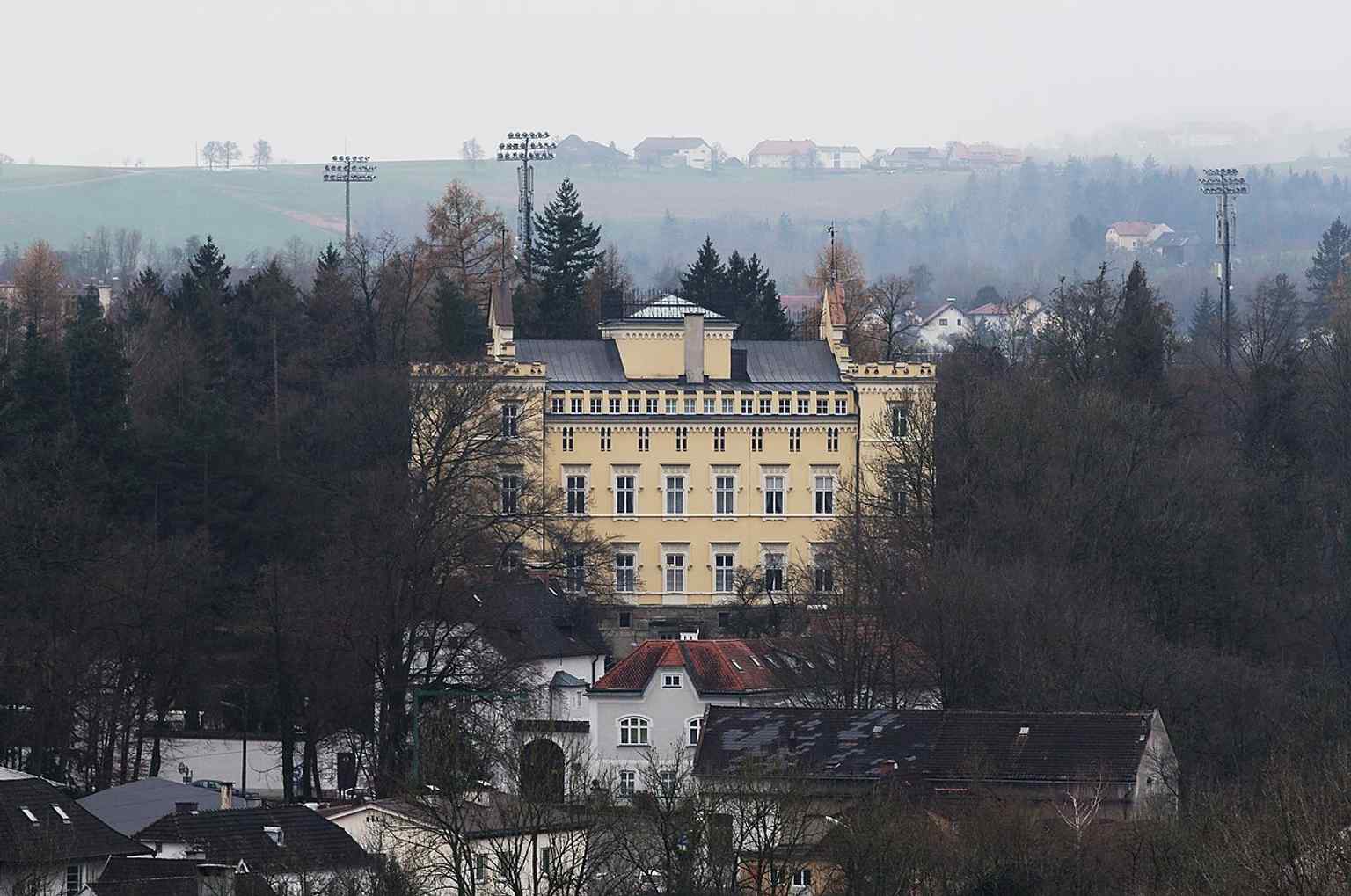
A wider streetscape view that shows how the castle sits along the ceremonial Preuenhueberstraße approach in Steyr.Photo: Christoph Waghubinger (Lewenstein), Wikimedia Commons, CC BY-SA 3.0 at. Cropped & resized. 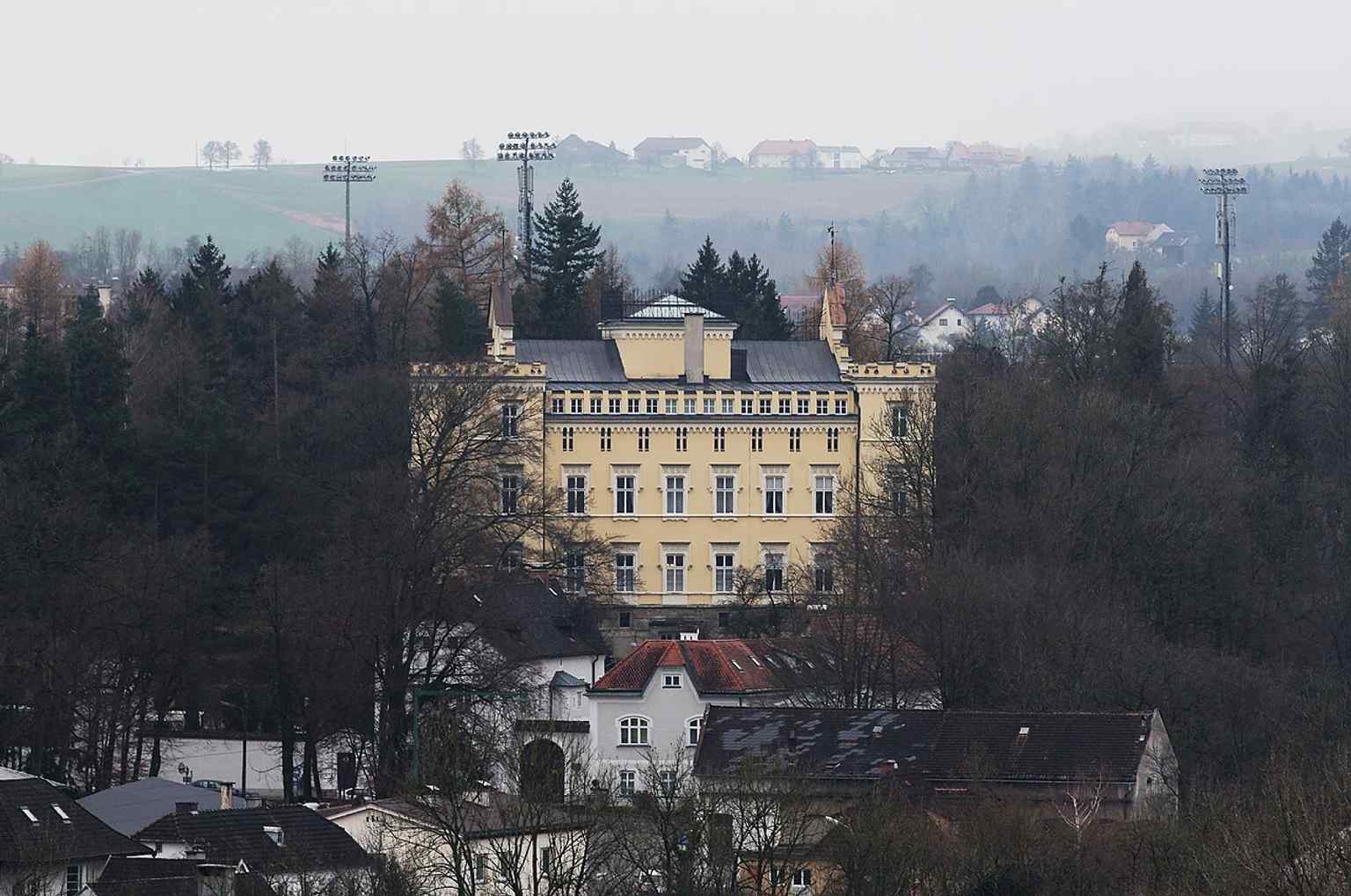
A distant elevated view from the Tabor, useful for understanding the castle’s setting within the city and the surrounding landscape.Photo: Christoph Waghubinger (Lewenstein), Wikimedia Commons, CC BY-SA 3.0 at. Cropped & resized. 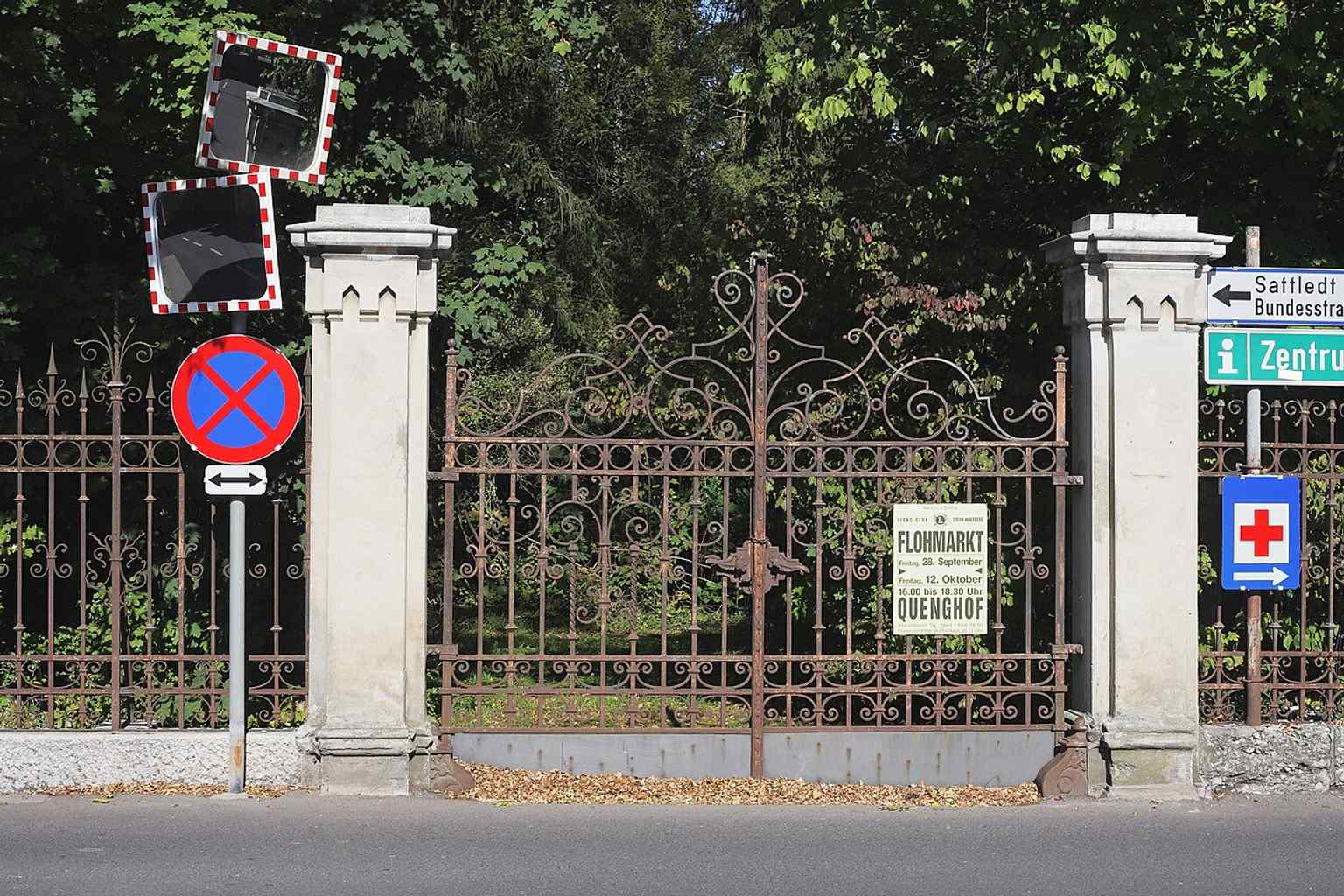
A 1893 historical illustration of Schloss Vogelsang and the Preuenhubergasse, showing the villa soon after its 19th-century creation.Photo: Franz Kulstrunk, Wikimedia Commons, Public domain. Cropped & resized. 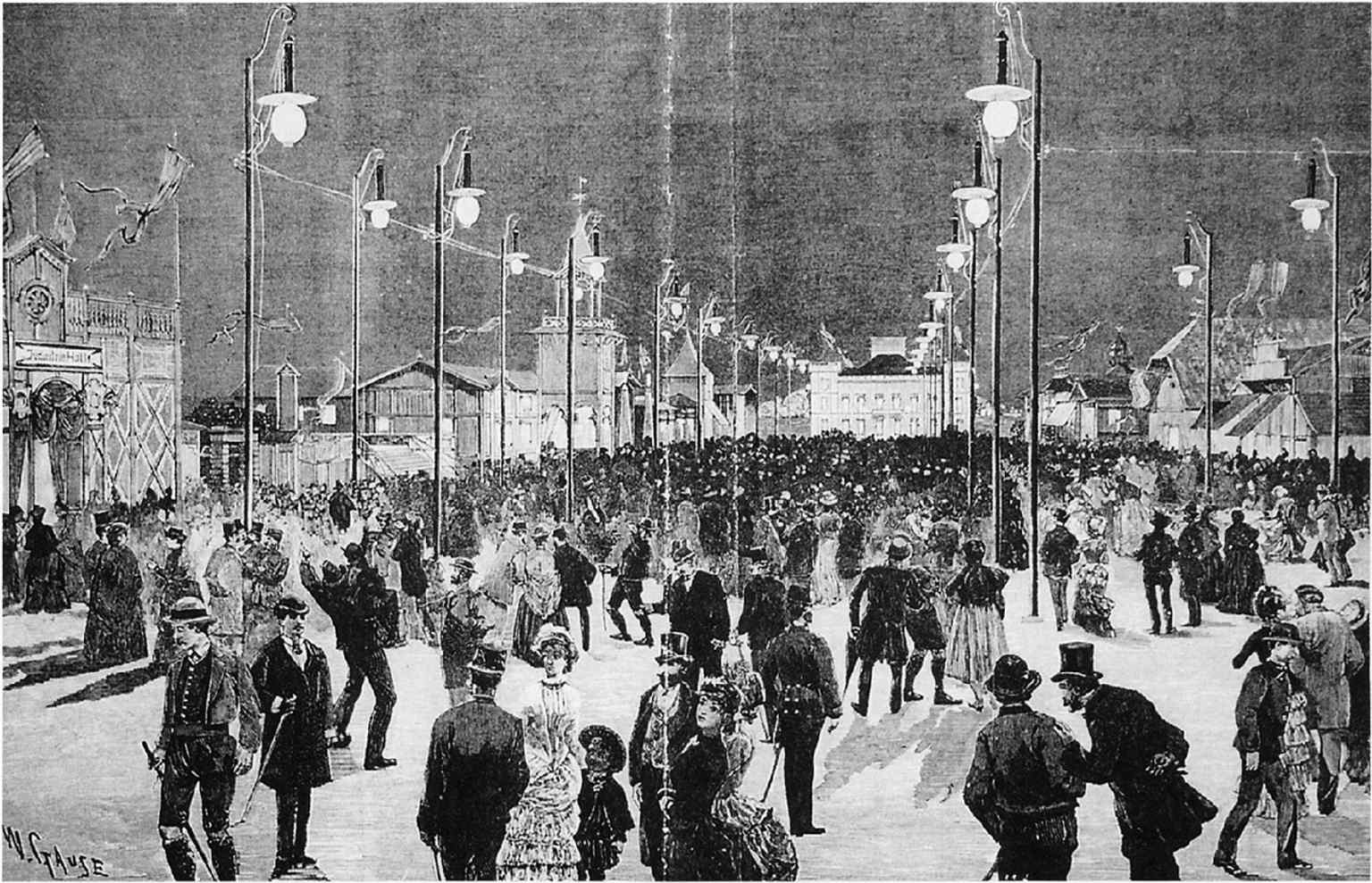
Another late-19th-century view of the castle, valuable for comparing the original appearance before later changes and additions.Photo: Franz Kulstrunk, Wikimedia Commons, Public domain. Cropped & resized. 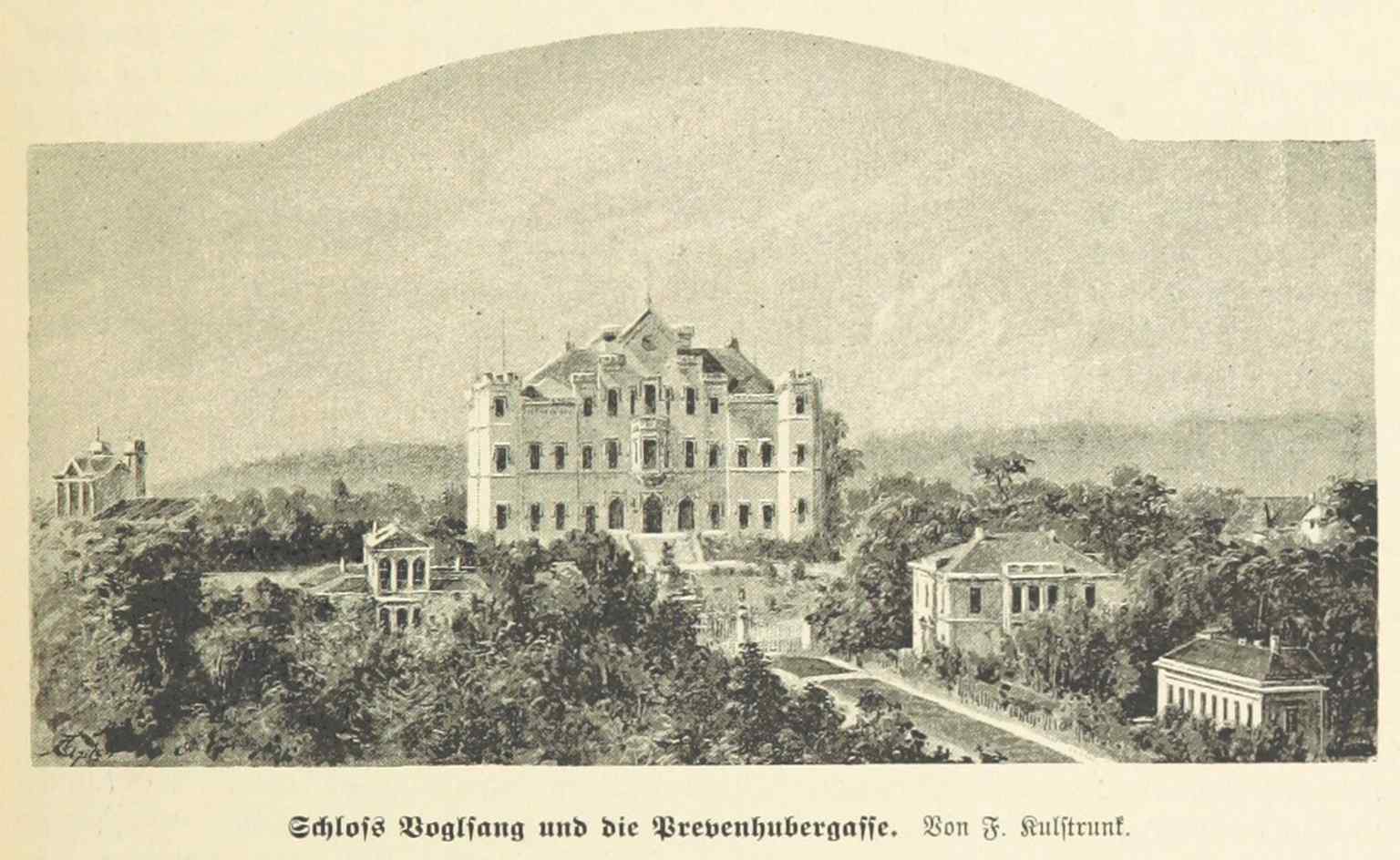
The 1884 electrical exhibition, when the unfinished castle grounds were used as a festival and display area in Steyr.Photo: Wilhelm Gause, Wikimedia Commons, Public domain. Cropped & resized. 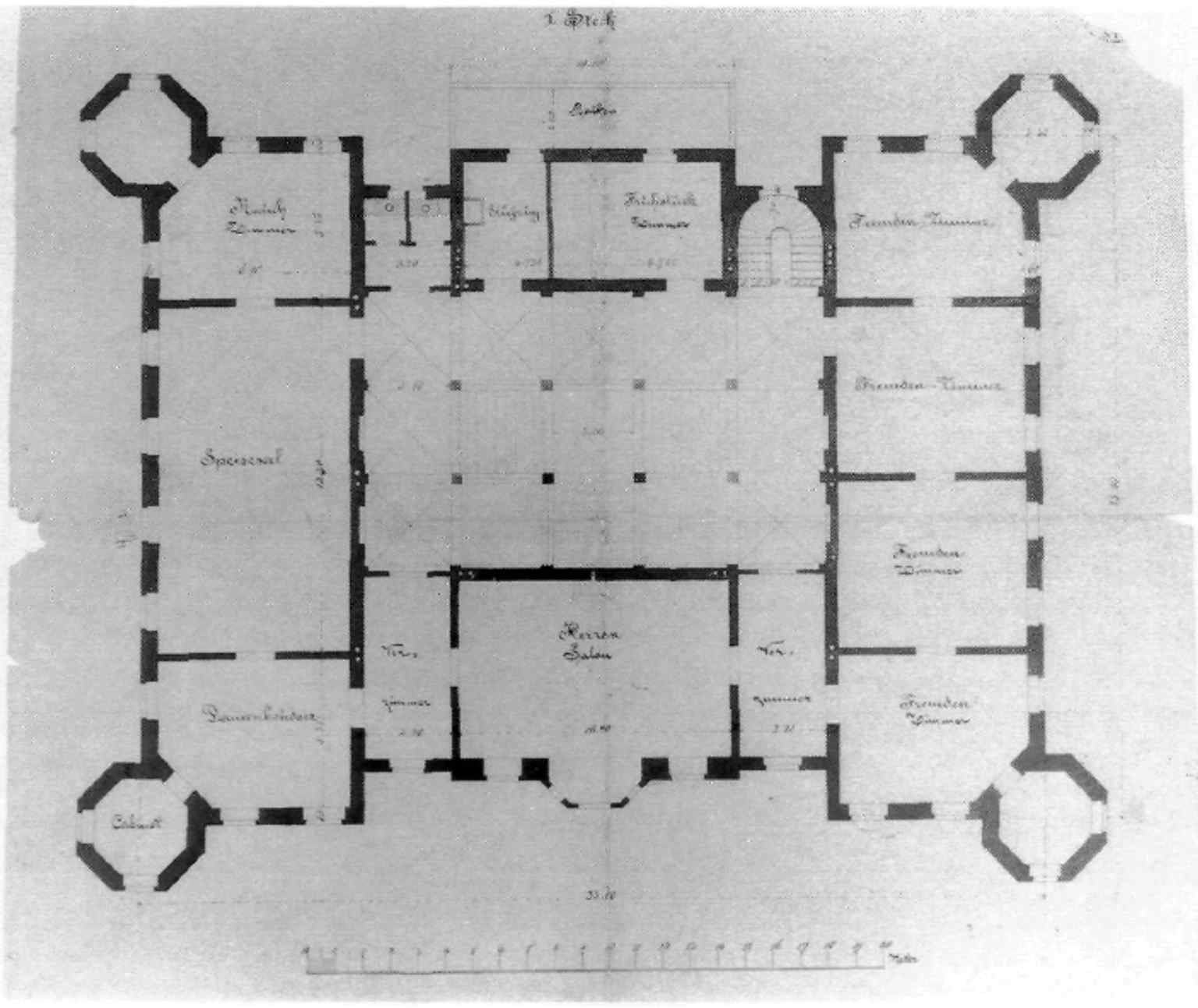
The castle framed by its park and fountain, highlighting the estate character that originally accompanied the villa.Photo: Yolo, Wikimedia Commons, CC BY-SA 3.0 at. Cropped & resized. 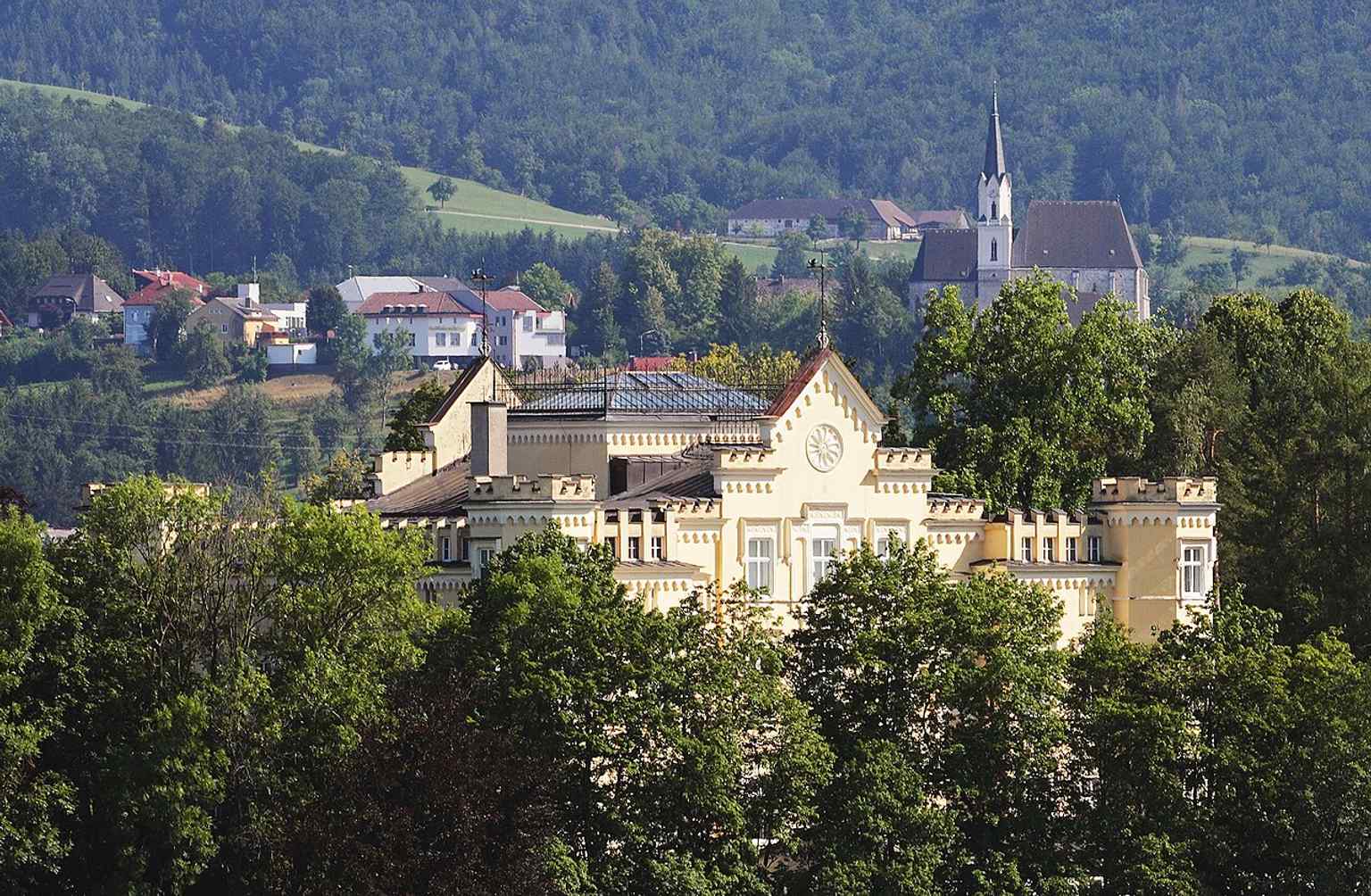
A telephoto panorama placing Voglsang Castle in the wider city context, with St. Ulrich Church visible behind it.Photo: Christoph Waghubinger (Lewenstein), Wikimedia Commons, CC BY-SA 4.0. Cropped & resized. 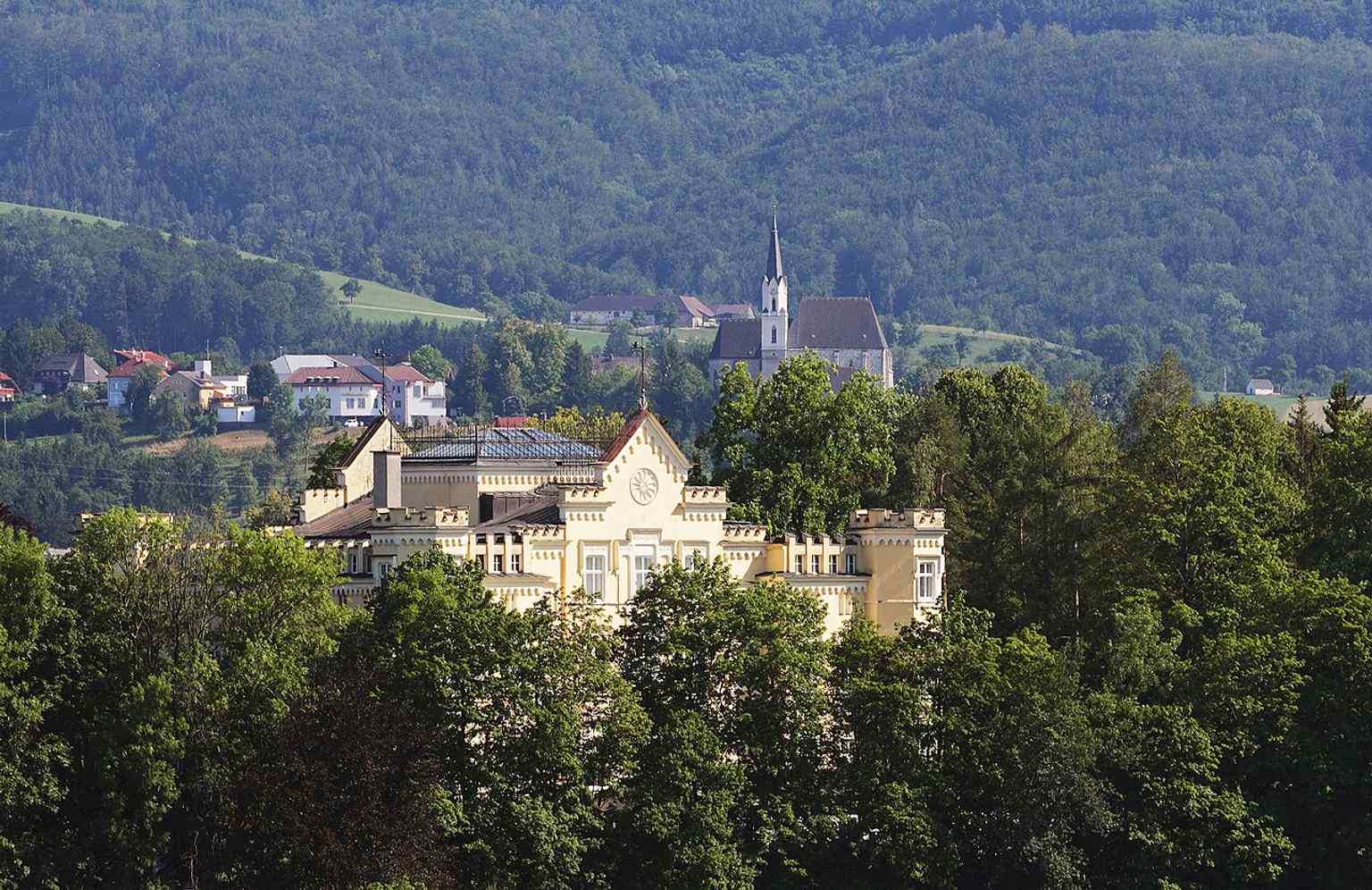
Another elevated city view that emphasizes the castle’s placement above Steyr and its relationship to nearby landmarks.Photo: Christoph Waghubinger (Lewenstein), Wikimedia Commons, CC BY-SA 4.0. Cropped & resized. On your left, look for a pale two-story Renaissance house behind a toothed stone wall, marked by a tall central tower and a statue of Saint Nepomuk set above the masonry.…Read moreShow less
Open dedicated page →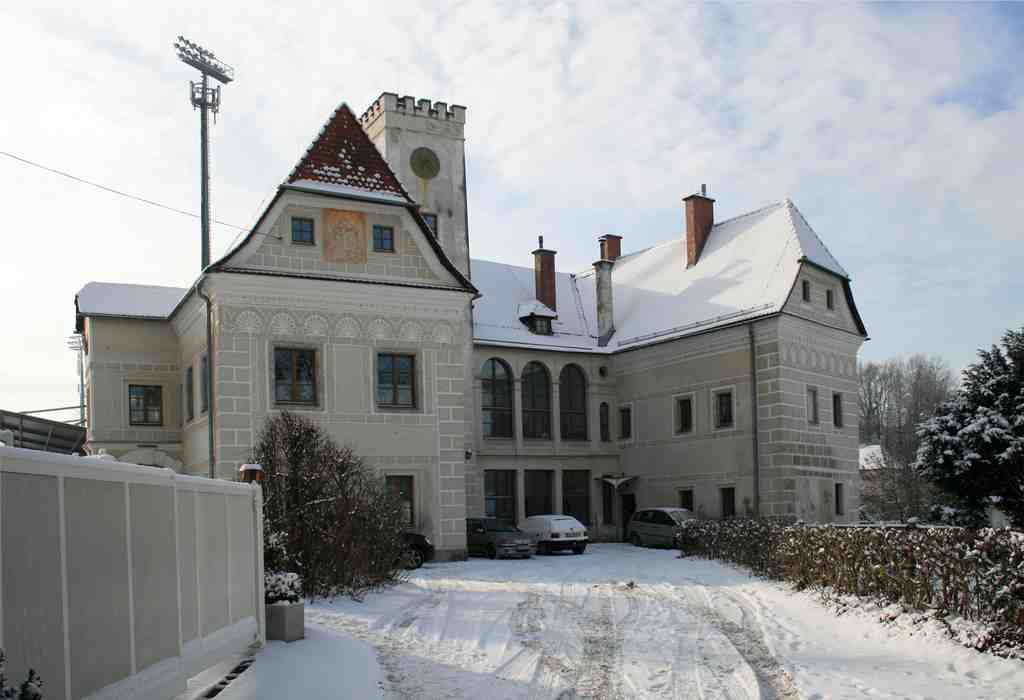
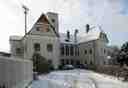
Engelseck CastlePhoto: Lewenstein, Wikimedia Commons, CC BY-SA 3.0. Cropped & resized. On your left, look for a pale two-story Renaissance house behind a toothed stone wall, marked by a tall central tower and a statue of Saint Nepomuk set above the masonry.
Engelseck looks orderly now, but for centuries it answered to a more dramatic name: Teufelseck, or Devil's Corner. That came from the Teufelsbach, a stream that runs partly underground here... which is a very efficient way to make a place sound haunted without doing any actual work. The site appears in records as early as the thirteenth century, and the core of the residence likely goes back to around fifteen hundred, probably under the wealthy cloth merchant Hans Fuchsberger, who also served as Steyr's mayor in fifteen twenty-five and fifteen twenty-six.
In sixteen forty-one, Josef Achtmarkt von Achtmarktstein bought the property, remodeled it in the Renaissance style, and in sixteen forty-two asked Emperor Ferdinand the Third to rename it Engelseck. Medieval branding, but tidier.
That redesign still shapes what you see: a three-wing layout opening the courtyard toward the front, a high central tower, and a fortified wall with battlements, those tooth-like cutouts along the top, plus two round towers. The tower once carried an onion-shaped dome; now it ends in a platform with a decorative ring of fake battlements. If you glance at the old engraving in the app, you can catch an earlier version of its self-confidence.
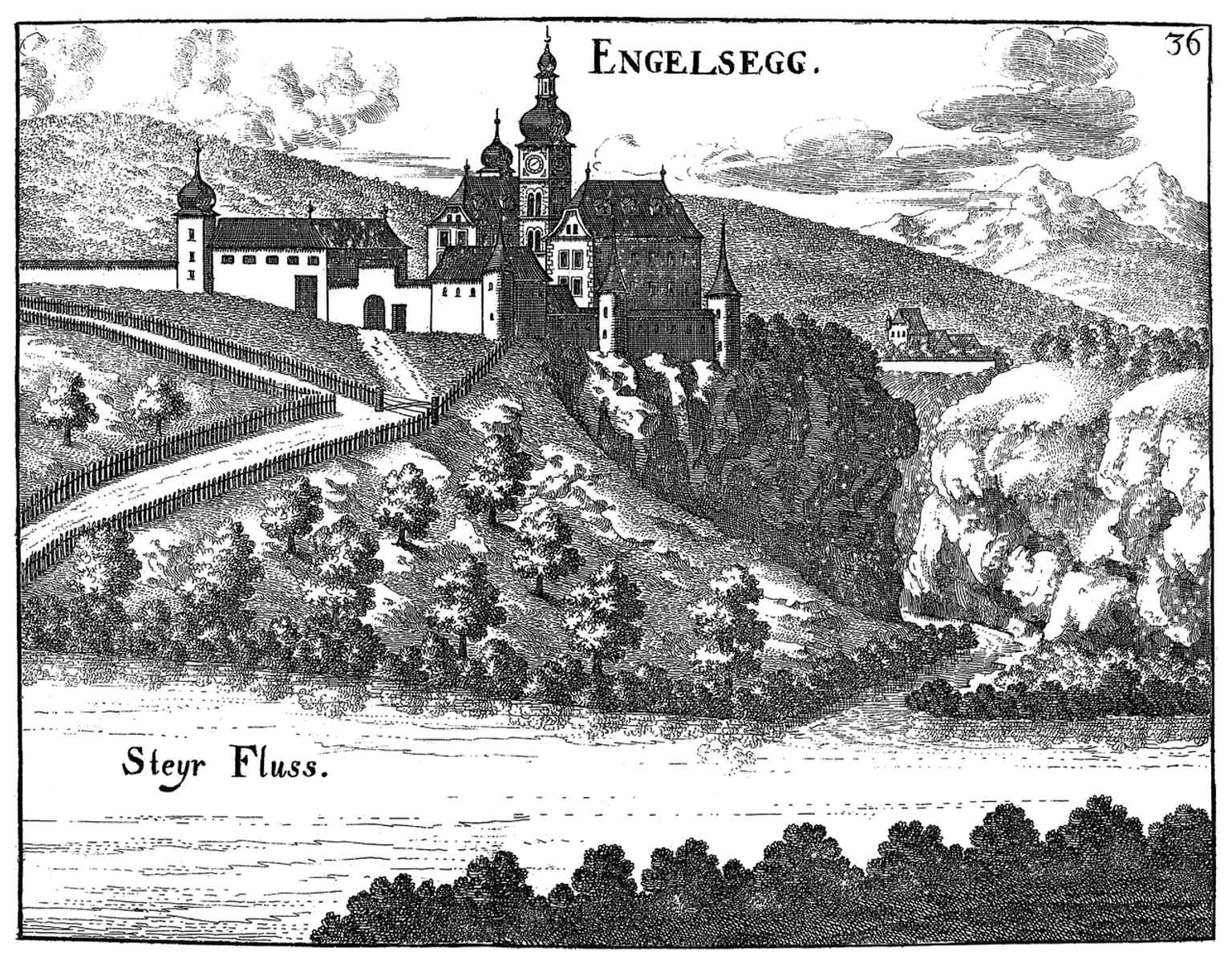
Engelseck in an old 1674 engraving — a rare look at the castle’s appearance in early modern times, long before it became municipal property.Photo: Georg Matthäus Vischer, Wikimedia Commons, Public domain. Cropped & resized. Later owners included the Riß von Risenfels family, Franziska von Rummel, Jakob Voith, Josef Werndl, and then the counts of Lamberg, before the city took over in nineteen eighteen. If you like, check the before-and-after image; it shows how Engelseck now sits more visibly inside Steyr's wider cityscape.
Engelseck is a small castle with a long memory and surprisingly successful public relations. When you're ready, we can continue on to the next stop.
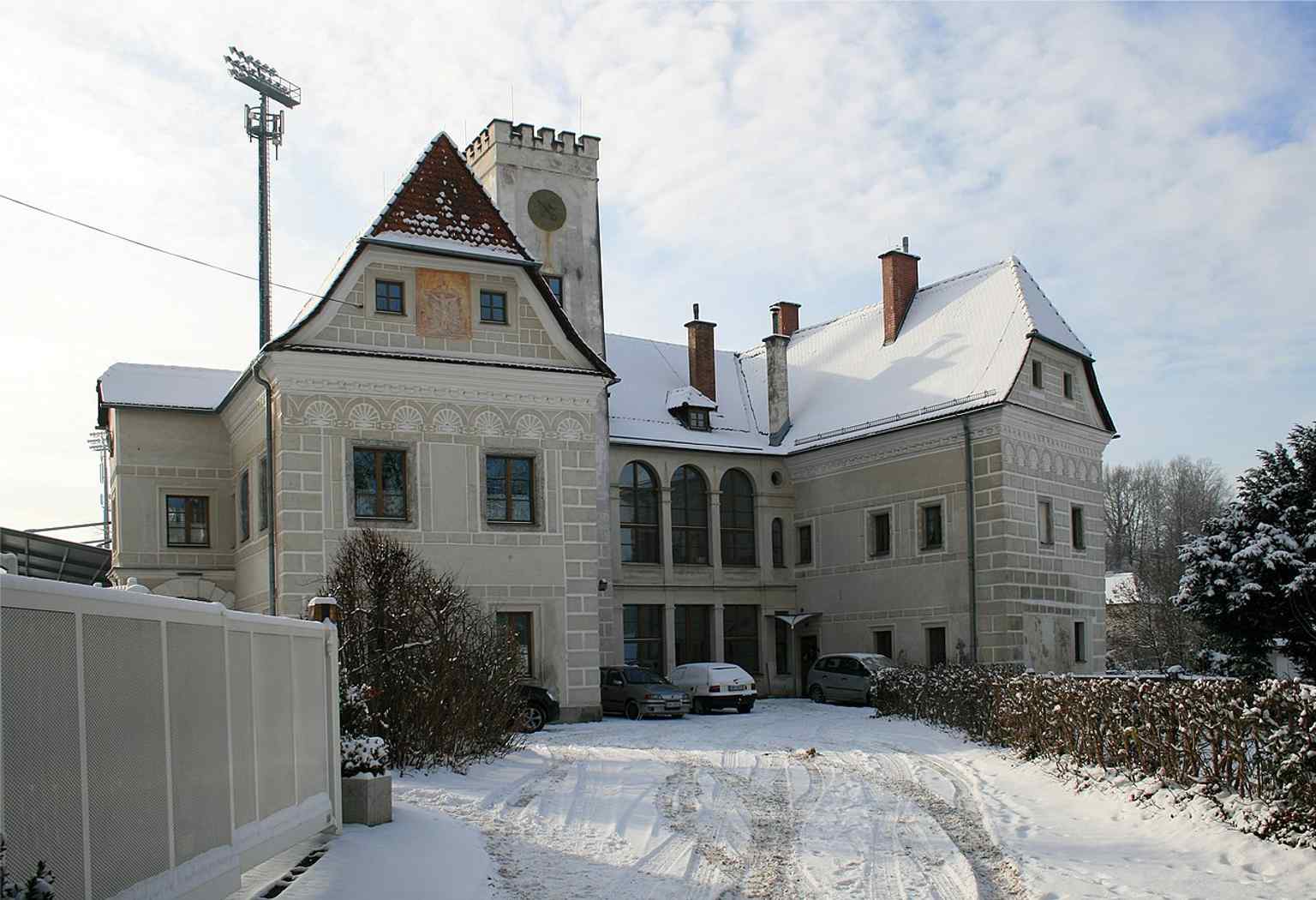
A clear modern view of English Castle in Steyr, showing the Renaissance residence as it stands today on Redtenbachergasse.Photo: Christoph Waghubinger (Lewenstein), Wikimedia Commons, CC BY-SA 3.0. Cropped & resized. 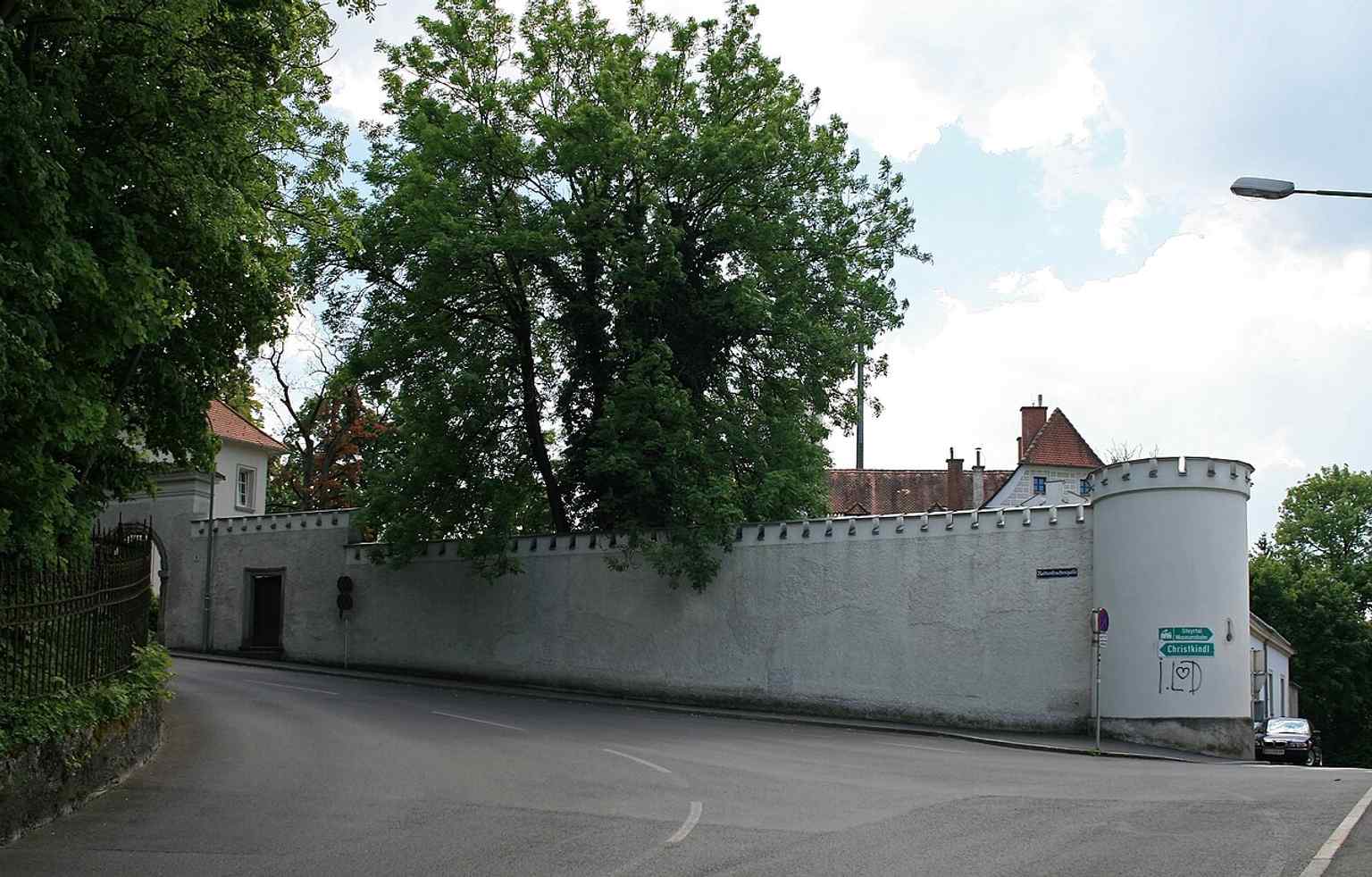
The castle’s defensive wall facing Redtenbachergasse, echoing the fortified character described in the source text.Photo: Christoph Waghubinger (Lewenstein), Wikimedia Commons, CC BY-SA 3.0. Cropped & resized. 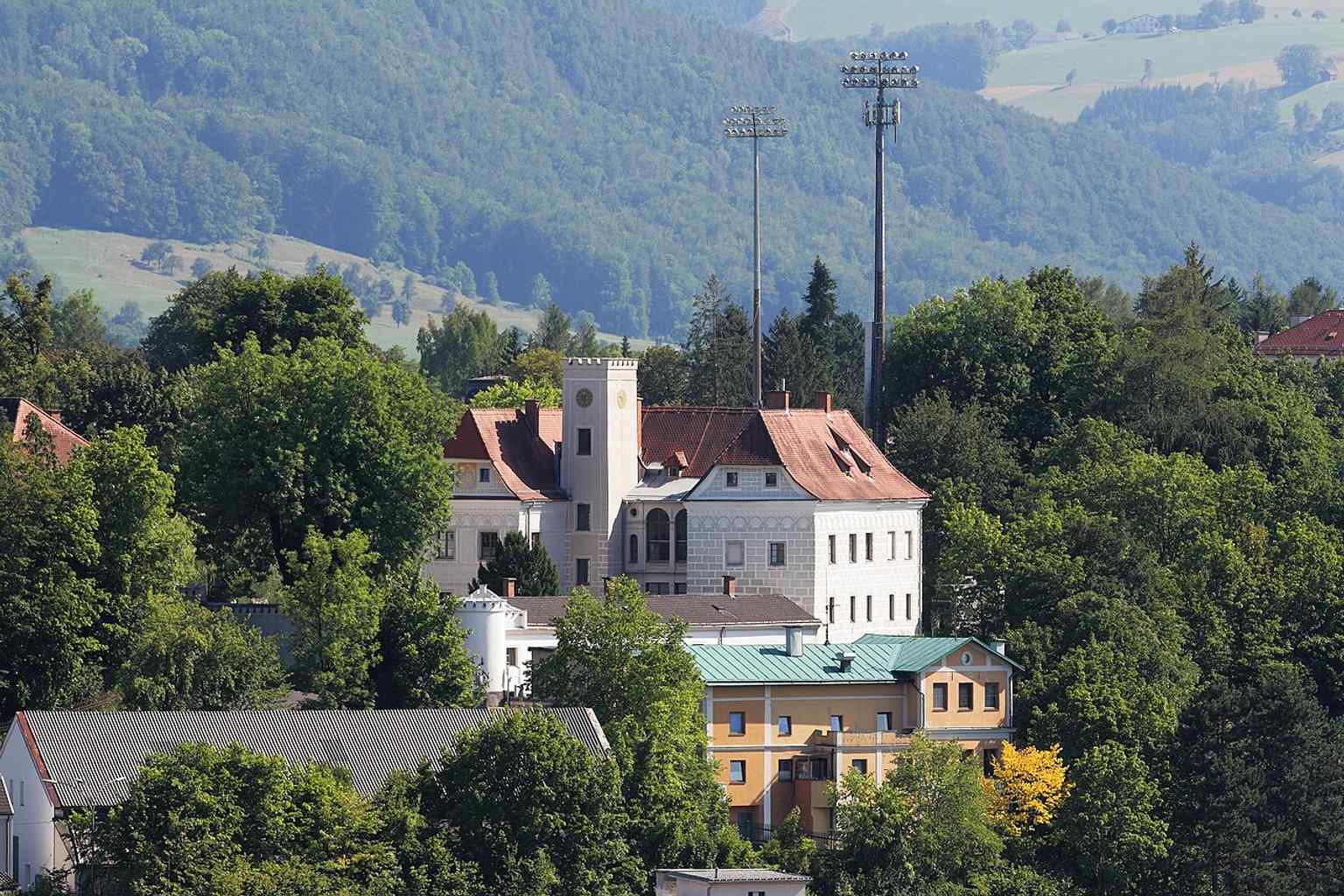
A telephoto city view that places English Castle in the Steyr landscape, matching the note that the castle overlooks the town.Photo: Christoph Waghubinger (Lewenstein), Wikimedia Commons, CC BY-SA 4.0. Cropped & resized. On your left, look for a low wooden-and-glass complex stretched in long horizontal lines, with a broad terrace and the unmistakable rank of changing cabins framing the pool.…Read moreShow less
Open dedicated page →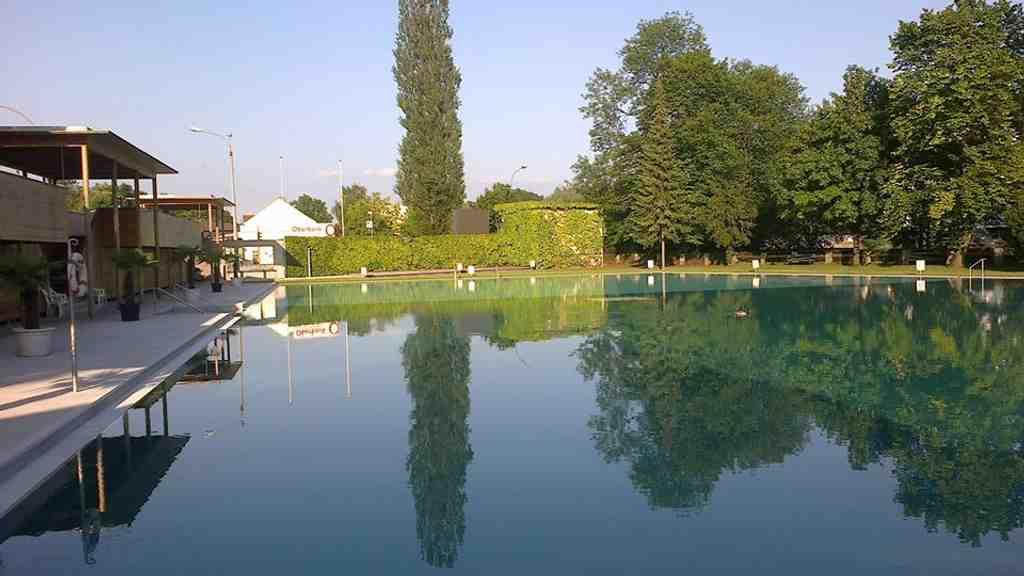
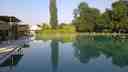
Steyr Swimming SchoolPhoto: Xperience82, Wikimedia Commons, CC BY-SA 4.0. Cropped & resized. On your left, look for a low wooden-and-glass complex stretched in long horizontal lines, with a broad terrace and the unmistakable rank of changing cabins framing the pool.
This is the Steyr Swimming School, often described as one of the oldest open-air workers’ baths in Europe... which is a wonderfully modest title for a place with a remarkably stubborn survival instinct. Josef Werndl founded the first workers’ swimming school in eighteen sixty-three on another site nearby. Then the weapons factory expanded in eighteen seventy-three, so industry quite literally pushed swimming out of the way. In eighteen seventy-four, Werndl replaced it here as the Josef Werndl Swimming and Bathing Establishment.
If the Werndl Monument made him look grand, this place shows his more practical side. He gave workers a bath, a place to swim, and even a place to skate in winter. Efficiency never sleeps. The builder and designer Josef Huber planned a U-shaped complex with an entrance pavilion, a restaurant building, and a long row of cabins with a central salon, meaning a shared social hall. The original architecture mixed spa elegance with industrial discipline: a timber frame filled with brick, halfway between a health resort and a factory that had learned some manners.
Only the basin survives from that first layout, but the idea endured. In May of nineteen fifty, Steyr-Daimler-Puch reopened the bath after major repairs. Workers rebuilt the damaged wall along the River Steyr, added filtration for the children’s pool, and completely remade the swimming basins. Then, in nineteen sixty-one, architect Helmut Reitter modernized the place again, and the old entrance building on Schwimmschulstraße disappeared.
What nearly finished it was the great flood of two thousand and two. The water wrecked the changing cabins and forced a full rethink. The city’s mayor, Hermann Leithenmayr, pushed hard to save the bath, and architects Luger and Maul led a careful return to the site’s character while making it function for modern use. If you check the photo in the app, you can see that rebuilt identity taking shape in two thousand and eight. And the cabin block on your screen shows one of the key post-flood interventions: simple, clean, and much smarter than trying to argue with a river.
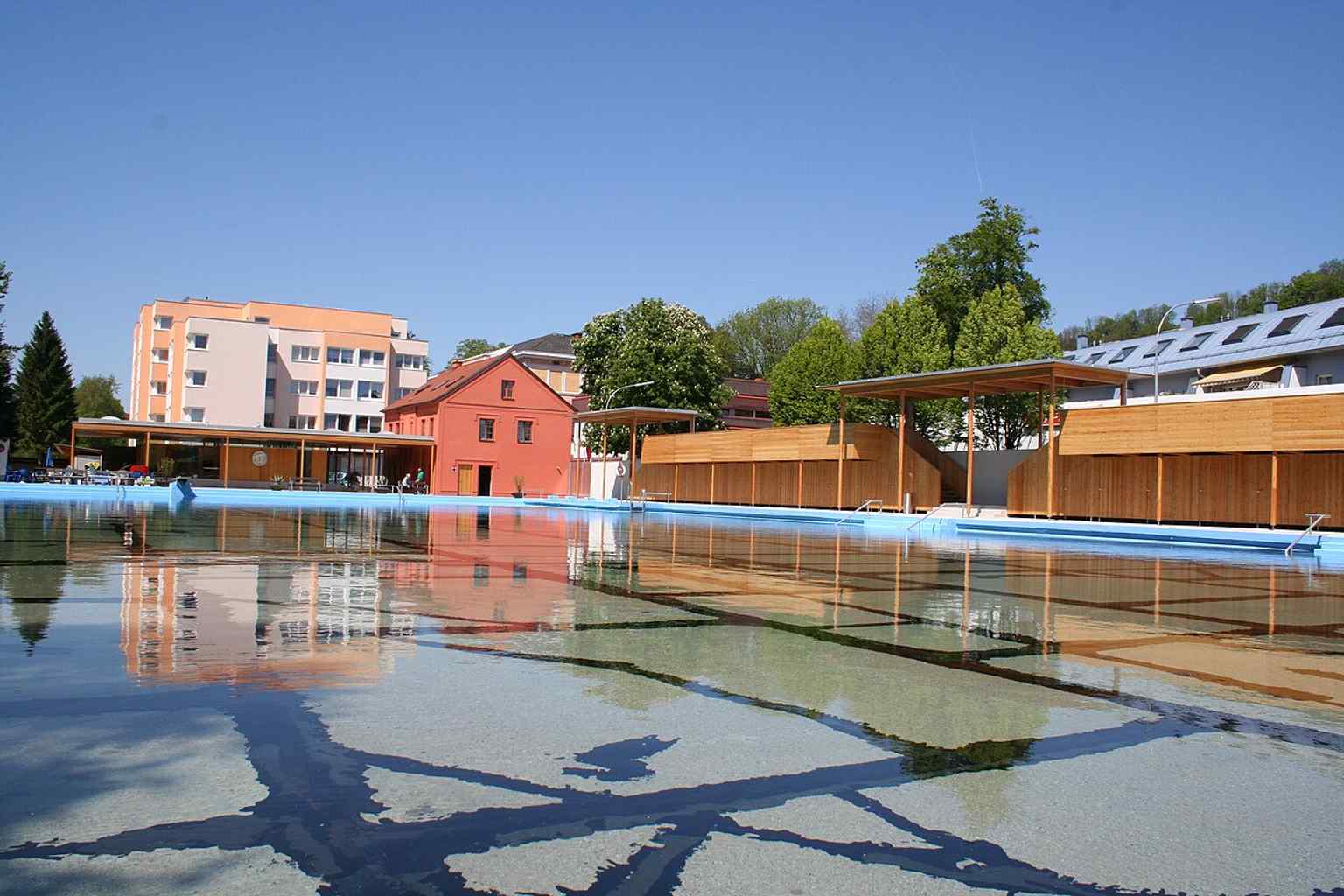
The renovated Steyr Swimming School in 2008, showing the historic workers’ bath after the post-2002 modernization phases.Photo: Robert Unterfurtner, Wikimedia Commons, CC BY-SA 3.0 de. Cropped & resized. The revival came in stages: new cabins, new sanitary rooms, a revised entrance and ticket area, terraces, a children’s pool, a riverside buffet, and by two thousand and thirteen, a fully renovated main pool. In nineteen ninety-nine, the whole site even changed hands for one Austrian schilling, when the Friends of the Swimming School association bought it to keep it alive. Since then, this bath has collected architecture and preservation awards... not bad for a place built so people could stop sweating and start floating.
If you want to return properly equipped, it’s generally open every day from nine thirty in the morning until eight in the evening.
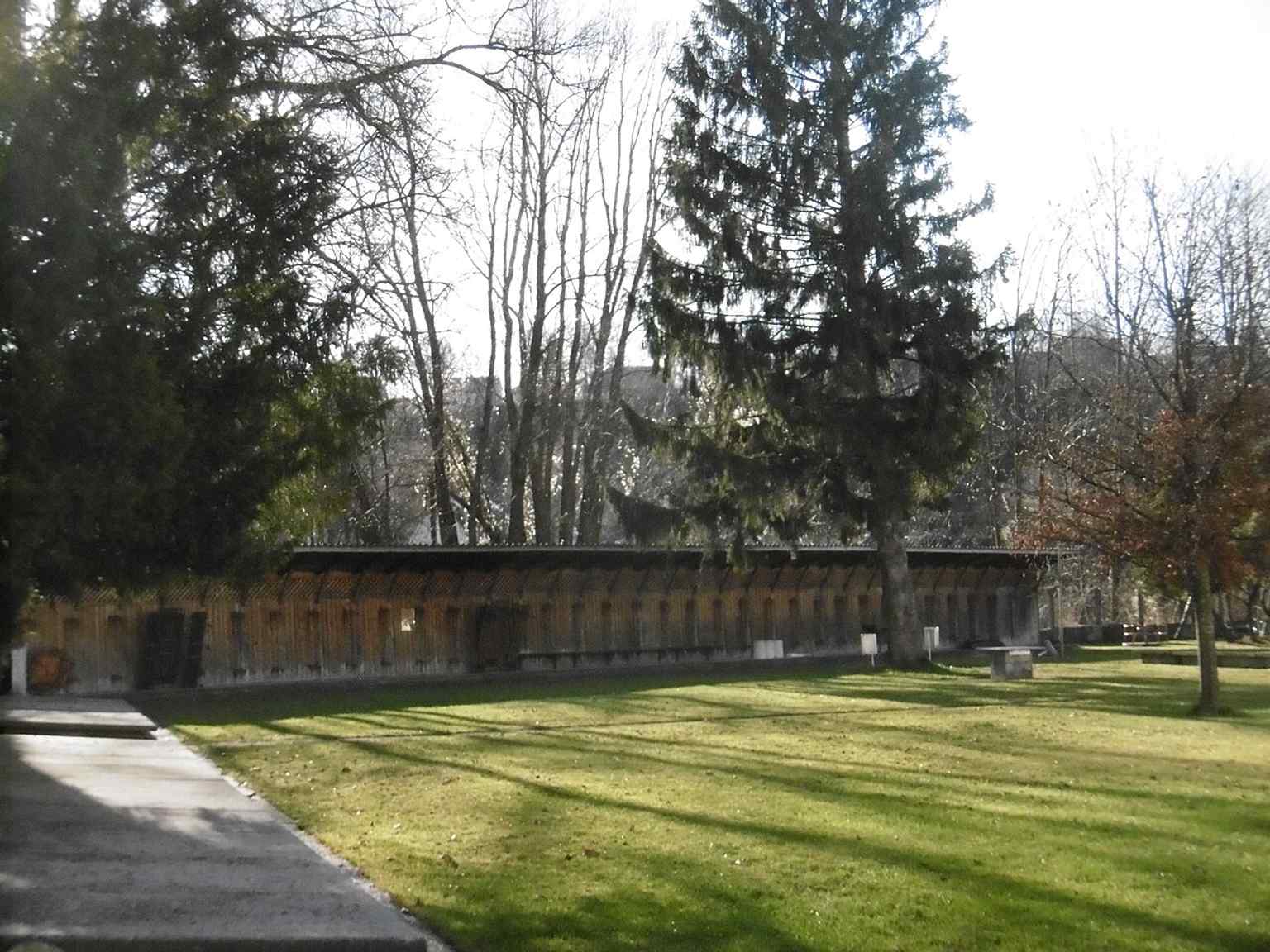
The changing cabins of the Schwimmschule — a key part of the 2003–2007 rebuild after the 2002 flood damage.Photo: Bodory Thomas, Wikimedia Commons, CC BY-SA 4.0. Cropped & resized.
Frequently asked questions
How do I start the tour?
After purchase, download the AudaTours app and enter your redemption code. The tour will be ready to start immediately - just tap play and follow the GPS-guided route.
Do I need internet during the tour?
No! Download the tour before you start and enjoy it fully offline. Only the chat feature requires internet. We recommend downloading on WiFi to save mobile data.
Is this a guided group tour?
No - this is a self-guided audio tour. You explore independently at your own pace, with audio narration playing through your phone. No tour guide, no group, no schedule.
How long does the tour take?
Most tours take 60–90 minutes to complete, but you control the pace entirely. Pause, skip stops, or take breaks whenever you want.
What if I can't finish the tour today?
No problem! Tours have lifetime access. Pause and resume whenever you like - tomorrow, next week, or next year. Your progress is saved.
What languages are available?
All tours are available in 50+ languages. Select your preferred language when redeeming your code. Note: language cannot be changed after tour generation.
Where do I access the tour after purchase?
Download the free AudaTours app from the App Store or Google Play. Enter your redemption code (sent via email) and the tour will appear in your library, ready to download and start.
If you don't enjoy the tour, we'll refund your purchase. Contact us at [email protected]
Checkout securely with 


.jpg)
.jpg)


.jpg)


.jpg)


.JPG)


.jpg)
.jpg)
.jpg)
.jpg)
.jpg)


.jpg)


.jpg)


.JPG)


.png)
.JPG)


.png)

.jpg)


.jpg)