
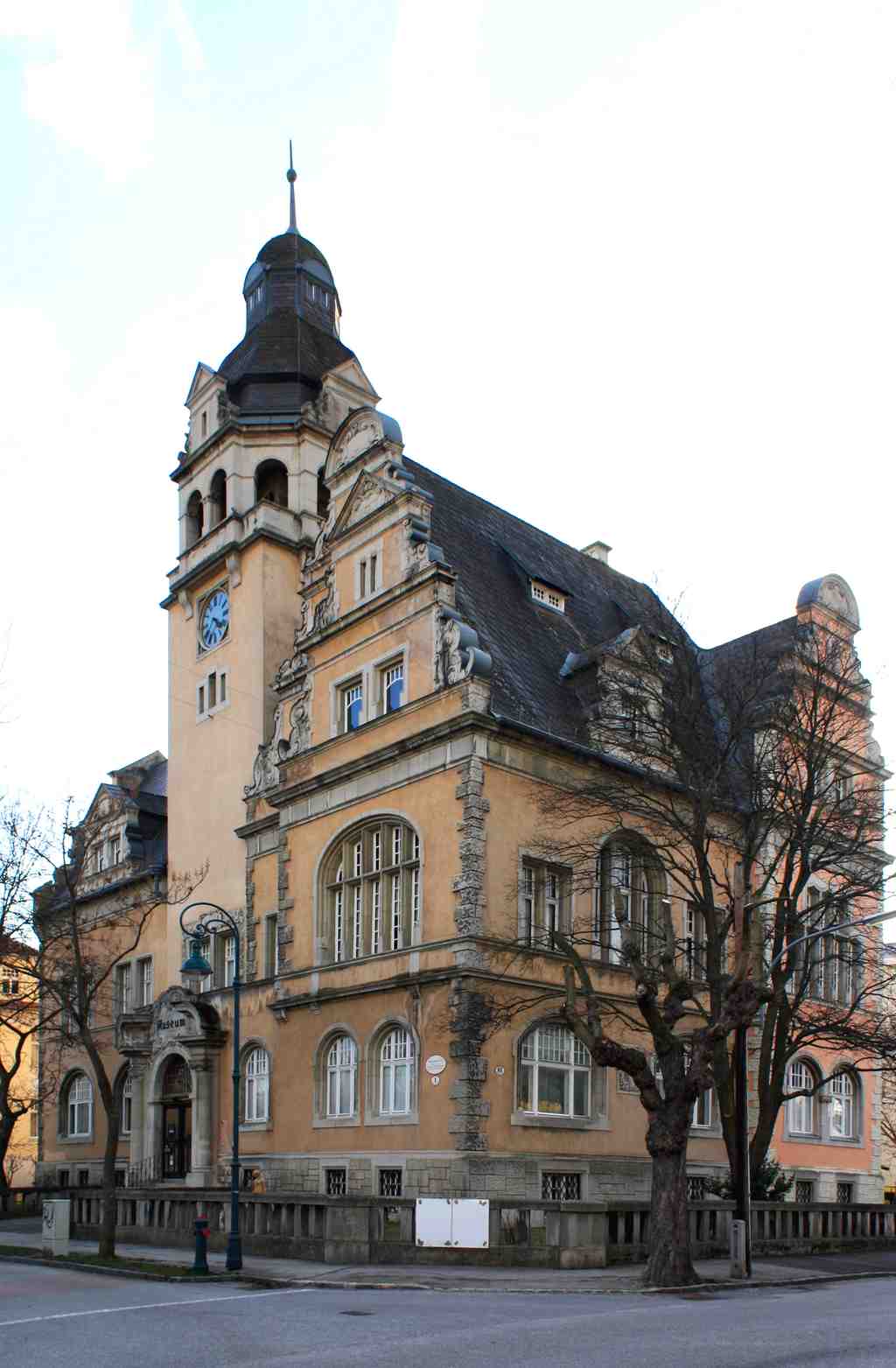
Right in front of you stands a stately yellowish-beige building with a proud corner tower topped by a clock-if you look up, you’ll spot its distinctive Renaissance-style design and the word “Museum” above the arched entrance.
Now, let’s dive into the world of the Rollett Museum. Imagine it’s the early 1900s, and the townspeople of Weikersdorf are gathering under clouds of building dust and the sound of chisels and hammers -they’ve just laid the first stone for what will soon become this grand structure, designed with a sense of drama by architect Rudolf Krausz, a man who definitely never took “plain” as an answer. By 1905, this Renaissance-inspired marvel opens as the new town hall, but-plot twist!-just a few years later, Weikersdorf itself is merged into Baden, and the building finds itself as relevant as an umbrella in the desert.
What next? Well, the townsfolk saw an opportunity. In 1912, the building’s life as a museum started rolling with a spectacular exhibition, featuring crafts, wine, and industry that would’ve had Instagram buzzing (if only it existed). That year, under the careful gaze of Archduke Rainer, the grand park next door and these ornate halls were filled with everything from snazzy snippers (the local tailors) to shoes, historical treasures, and even ancient memories tucked away in the city archives. But fate had a sense of irony-in 1914, just after the museum officially opened, the world went a bit sideways, and the doors slammed shut for twelve years.
Fast forward: WWII sweeps through, and the museum’s treasures are hurriedly shipped off for safekeeping. If only Kaumberg had agreed-these artifacts ended up smack in a war zone anyway, suffering losses and damage. After the war, the whole neighborhood, including the museum, was claimed by the Soviets and cut off by wooden barriers. You can almost picture the tension, the uncertain footsteps along these silent fences.
But Baden wasn’t about to let the Rollett Museum fade away. By 1956, restoration began, and a year later, the museum burst back into life, shining once again as the home for city collections and stories. Over the decades, the city poured in millions, modernizing every corner so that by 1995, visitors could once again wander through history in well-lit halls.
Now, about those collections: the Rollett Museum is famous for its curios, quirks, and a dash of the macabre. Dr. Anton Rollett, the city’s legendary medical examiner, botanist, and all-around collector-extraordinaire, was the original mastermind. Picture him in the early 1800s, surrounded by jars of preserved creatures, strange minerals, and enough skulls to give Hamlet existential angst. Dr. Rollett made his collection public long before it was fashionable-and after his passing, his family ensured it kept growing, eventually giving loads of treasures to the city, with one condition: the museum must always carry the Rollett name.
As you walk past, you might sense the lingering energy of exhibits that have occupied many locations-from the vanished Rollett Villa to the old Augustinian monastery and even a former poorhouse-before finally finding their forever home here. And tucked inside is a legendary skull collection, including one of the most peculiar: the only certain life mask of Napoleon himself, flanked by wax models, busts, and even a plaster cast of the wounded poet Ferdinand Raimund-the latter made by Dr. Rollett after bravely treating the dying Raimund in 1836. If the idea of 119 busts, 78 skulls, and all sorts of wild anatomical wonders doesn’t tickle your curiosity, well, you probably haven’t met the bust of Angelo Soliman, the only clearly identified figure among a group of African busts, or seen objects excavated from prehistoric digs, wine jugs from the cellars of Baden, and even memorabilia of the city’s famous thermal springs.
So as you stand here, let the tower’s clock remind you how time swirls and changes-sometimes with a bang, sometimes in the dusty shuffle of museum keepers protecting fragile wonders. Whether you like your museums with a dash of drama or just love odd collections, the Rollett Museum is where Baden’s stories gather, poised to surprise and delight every visitor.


