
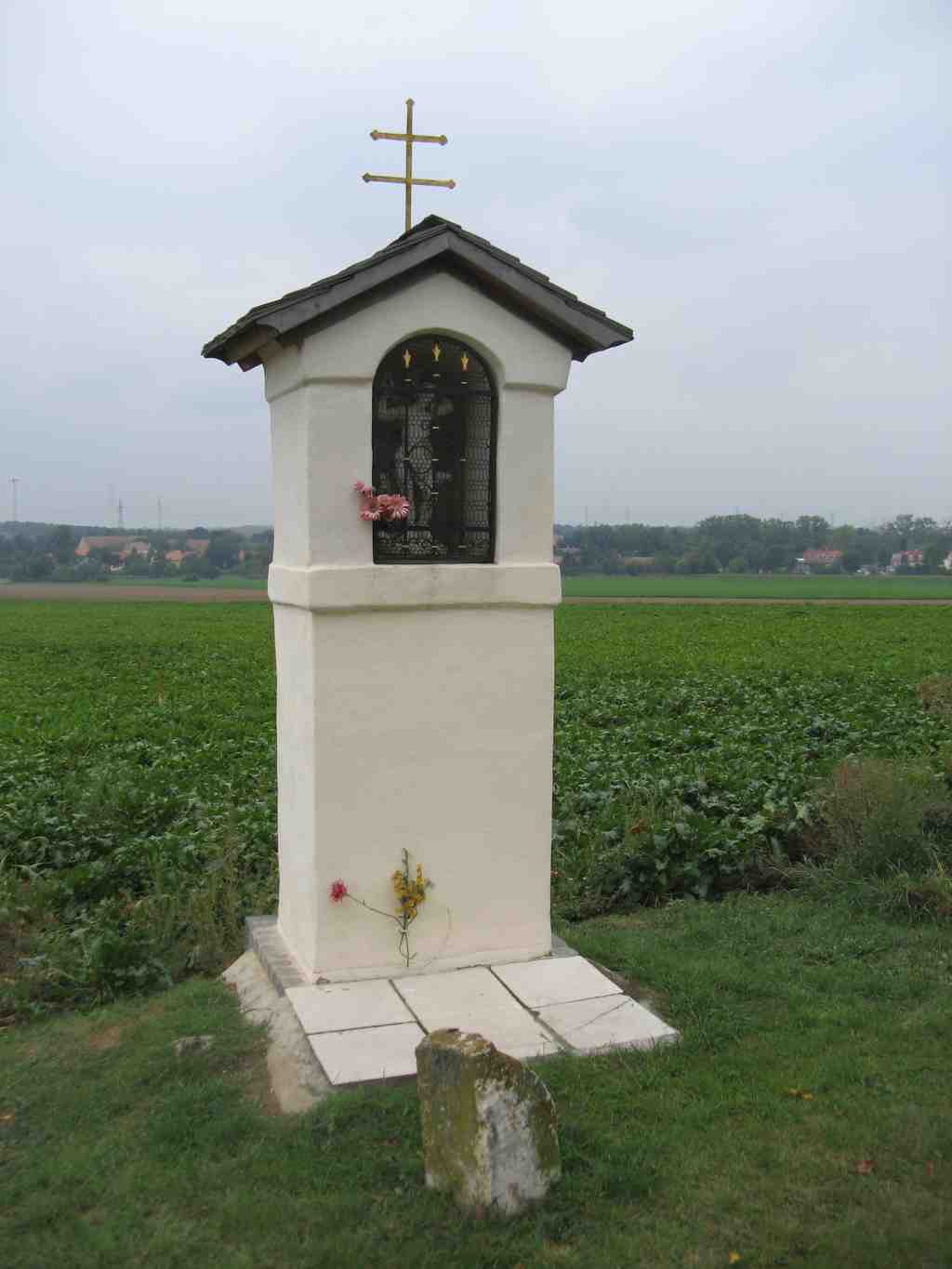
You are looking at a broad, four-sided white stucco pillar topped with a small saddle roof and a distinct, double-armed metal cross. This architectural type is known as a Breitpfeiler, a broad pillar engineered specifically to withstand the harsh elements of Vienna's rural outskirts and serve as a rigid boundary marker.
Behind the iron grate sits Saint Sebastian, the patron saint invoked against epidemics. Beneath him, you will notice a Maltese cross. That is not just a random decorative choice. The Sovereign Military Order of Malta held exclusive jurisdictional rights over this area starting way back in 1272, dictating both the physical infrastructure and the spiritual landscape of the village for centuries.
But the real weight of this site lies beneath your feet.
You are standing on top of a plague ditch. In 1713, an epidemic hit this area hard. Ten victims were buried right here in a deep hollow path. It was a grim, hasty shortcut for the dead, keeping highly contagious bodies far away from the town center. Local mutual aid societies, like the Brotherhood of Saint Sebastian, provided whatever relief they could when the community was entirely paralyzed by the outbreak.
Since these victims were buried out in unconsecrated fields, this shrine was intentionally built facing the Oberlaa Cemetery, which we visited earlier. It gave those isolated, unclean dead a direct visual and spiritual connection to the holy ground where they otherwise would have rested.
Today, much of the physical evidence of that mass grave has been erased, leveled by the expansion of the nearby railway. Yet this sturdy pillar survived, holding its ground between the living village and the memory of its deepest tragedy.
Standing over what was once a desperate, hollowed out shortcut for the dead, consider how many invisible layers of history you walk across every single day without even knowing.


