
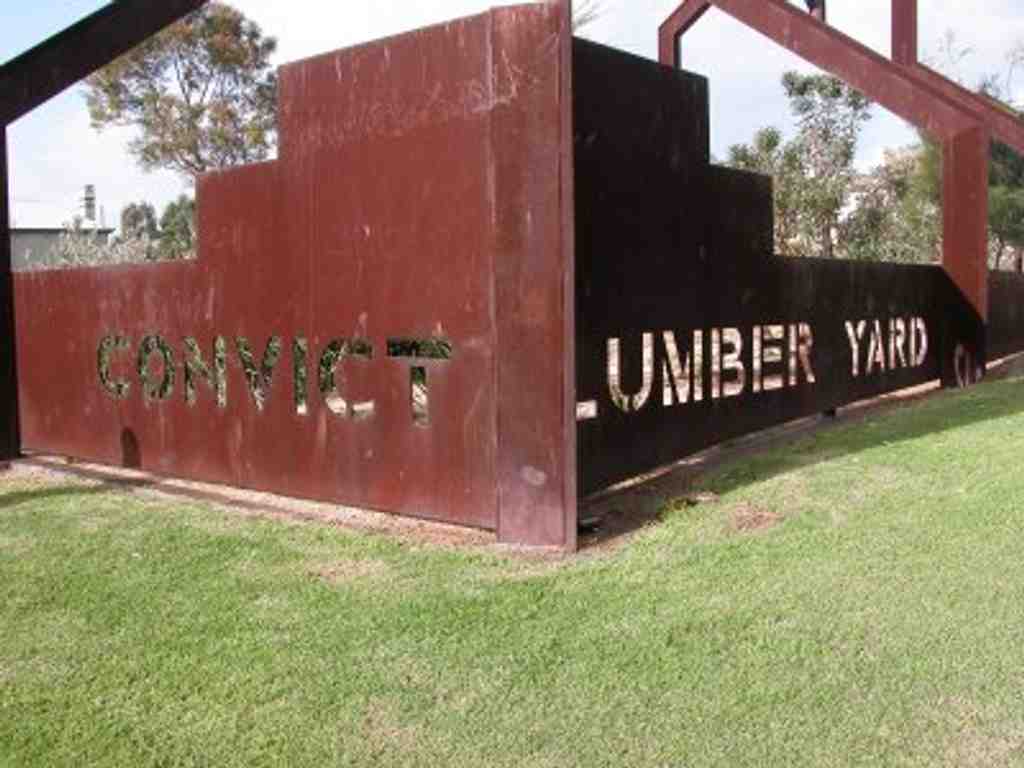
Look to your left for a striking rusty-red metal sculpture with “CONVICT LUMBER YARD” cut out in bold letters-its silhouette stands boldly in the grass, making it hard to miss.
Alright, time to step into one of Newcastle’s most intriguing patches of ground! If these grassy lawns could talk, they’d whisper tales of backbreaking work, clanging tools, and convict dreams under the blazing sun. Welcome to the Convict Lumber Yard! Picture yourself here over 200 years ago, when this peaceful spot would have sounded very different. Now, imagine the salty air mixed with the sharp, resinous scent of freshly worked timber, the clatter of carts, and the stern voices of guards. It’s 1801, and this is where Newcastle’s first convict settlement took root. Men in heavy chains, sweating through their grimy shirts, toiled day after day sawing lumber and shaping timbers for the colony.
When Newcastle’s penal era officially ended in 1822, many convicts thought the worst was over... but the site stayed busy as a lumber yard. Then, as fate would have it, in 1832 the gates swung open again-not for a fresh shipment of pine, but for another round of convict laborers. This time, their task was monstrous: to build the famous Nobby’s breakwater out in the turbulent harbor, hauling massive stones and logs, all under the watchful eyes of guards in scarlet coats. They called it “The Stockade,” which sounds dramatic enough to be a prison-themed soap opera!
The sea winds must have cheered when in 1846, the breakwater was finally finished, and the tough old days of convict occupation faded-at least, mostly. With the age of steam rolling in, the landscape changed again, swapping bricks for steel rails. By 1857, trains came puffing through as the mighty Great Northern Railway was built, knots of whistles and chugging engines filling the air. Parts of the site transformed to support the busy shipping and steam railway industries. Picture goods yards bustling with crates, porters rushing by, and the faint smell of coal mingling with salty ocean breezes.
Look behind you and you might catch a glimpse of two historical survivors: the sturdy, two-story Paymaster’s Office, where payroll secrets were once kept under lock and key, and the stately Station Master’s Residence-a real Victorian beauty, its design fit for railway royalty. These buildings saw waves of change, from customs officials to the whirr of sewing in Brett’s sail loft nearby (which, sadly, didn’t make it past 1939). There were cozy railway cottages for employees, a hall bustling with meetings, and even a tennis court on the grounds-because nothing says “railway institution” quite like a spot of tennis after your shift!
Even as railways ebbed and flowed, the land kept yielding surprises. In 1987, archaeologists paid a visit, trowels in hand, ready to sift through old layers of soil-and they hit the jackpot! Hidden just beneath your feet were the remains of Aboriginal tools, convict-built brick drains, a kiln floor, and even the well that quenched the thirst of countless laborers. It’s like the ground itself is a time capsule packed with secrets: bricks from a collapsed convict hospital, and the actual barracks walls that once enclosed so many weary workers.
What’s truly amazing is how many eras left their footprints here. This yard gives rare physical evidence of those tough-as-nails industrious convicts, and later, the busy railway workers who shaped Newcastle into the thriving city you see today. And talk about a killer view: peek through the trees, and you’ll see the harbor sparkling-the same view workers enjoyed, sometimes, between swings of the axe or when sneaking a quick break.
Today, the Convict Lumber Yard is more than just dirt and ruins; it’s proof of survival through hard times. It’s a place where Aboriginal stories, convict grit, and railway innovation all overlap, adding layers to Newcastle’s history. These old foundations, bricks, and memories create a place that is a treasure chest for archaeologists, a touchstone for the community, and yes, a fantastic set for anyone dreaming of a historical soap opera!
So, next time you walk by and feel the breeze or hear the distant clang of metal on stone, remember-you’re standing on ground that shaped New South Wales. Now, who’s ready for the next chapter?


