
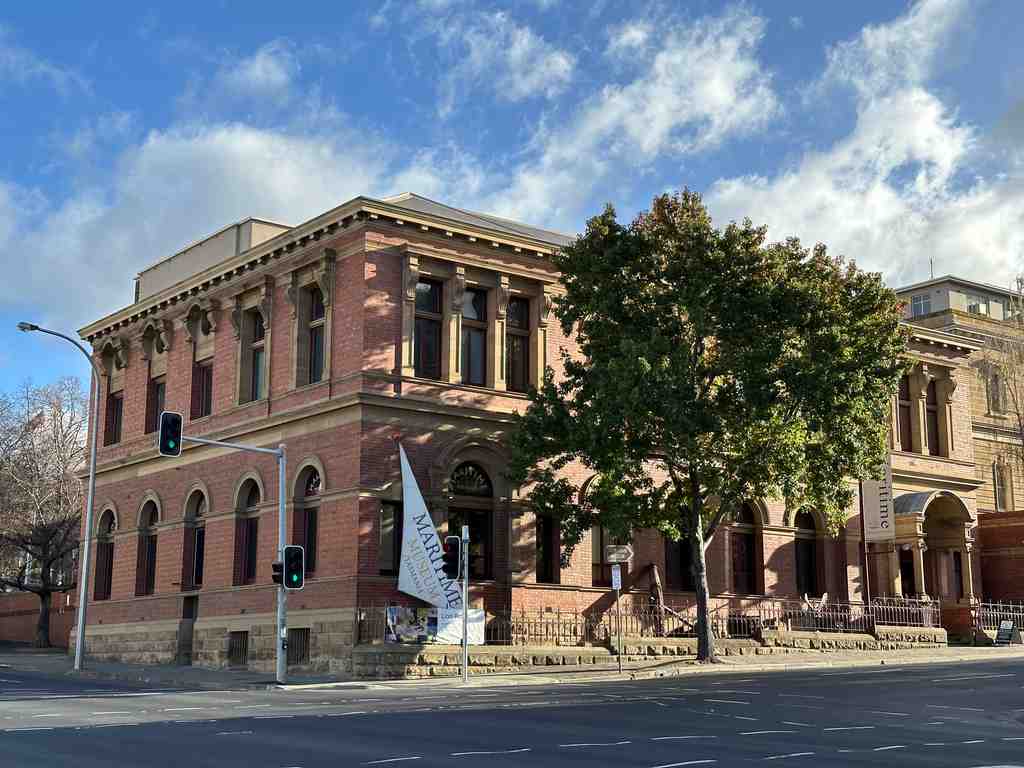
Ahoy there! You're now approaching the Maritime Museum of Tasmania, located in the stately Carnegie Building. To spot it, look for a lovely two-story red brick building with tall arched windows and decorative stone accents around the windows and doors. The building sits on a raised stone foundation, and there's a railing along the steps leading to the entrance. You'll also see a large banner hanging near the entrance with the words "Maritime Museum" boldly displayed. And just in case that didn’t catch your eye, the lovely green traffic light in front might help guide you!
Now, let's dive into some history, matey! The Maritime Museum of Tasmania is dedicated to chronicling the rich maritime legacy of the island state. Tasmania and the sea are like peanut butter and jelly-inseparable. The indigenous peoples had strong ties to the ocean long before the British arrived by sea in 1803. Since then, Tasmania has become a hub for maritime trade, fishing, and ship-building.
Did you know that maritime enthusiasts started lobbying for a museum room dedicated to this heritage as far back as the 1930s? However, the idea set sail only in 1972 when six volunteers decided to create a museum, initially housed in St. George's Church. The museum later moved to Secheron House in 1983 before anchoring itself at the Carnegie Building in 2000, with Queen Elizabeth II herself officiating the grand opening.
One of the museum's fascinating artifacts is a quirky 1836 sandstone statue likely carved by Daniel Herbert. It humorously portrays Governor George Arthur in a somewhat compromising position, believed to be part of a fountain where he was shown "gifting" the colony in a rather unique way!
So, step inside, me heartie, and embark on a voyage through Tasmania's seafaring past!


