
Tirana Audio Tour: Art, Faith, and Revolution Unveiled
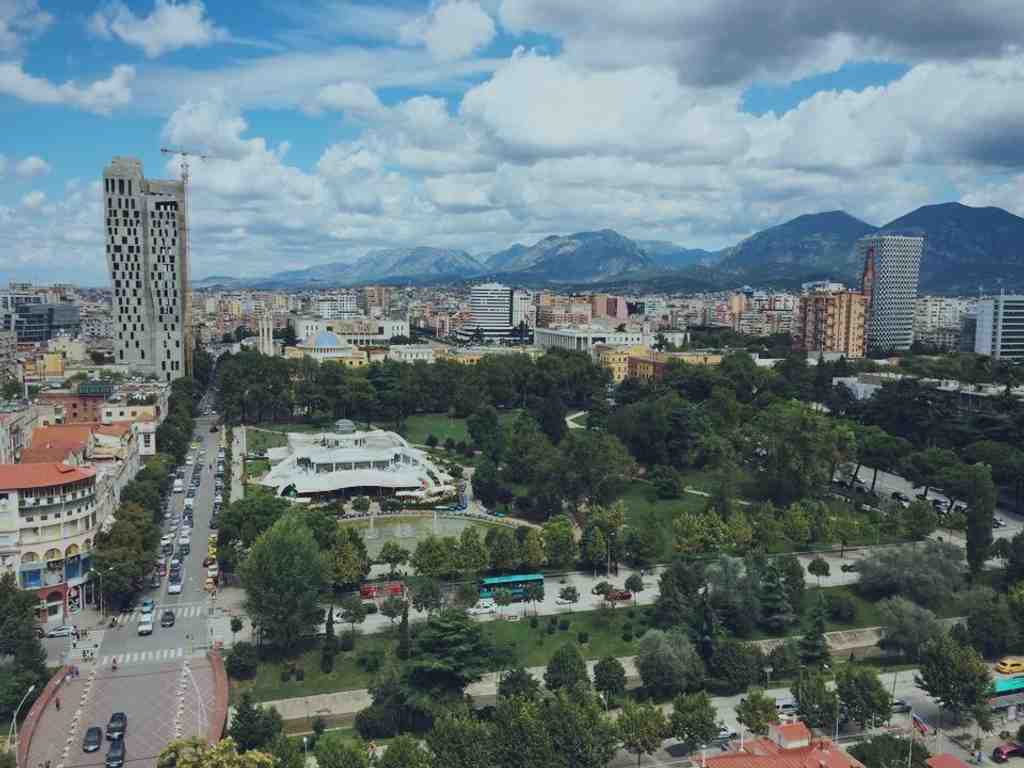
Explore the vibrant heart of Tirana on this captivating tour! Begin at the National Historical Museum, where Albania’s rich heritage comes to life through fascinating exhibits. Next, visit the stunning Et'hem Bey Mosque, a masterpiece of Ottoman architecture adorned with intricate frescoes. Finally, experience the electric atmosphere at Qemal Stafa Stadium, a hub of local sports and culture. This tour offers a perfect blend of history, art, and modern energy, leaving you with unforgettable memories of Albania’s dynamic capital!
Tour preview
About this tour
- scheduleDuration 90–110 minsGo at your own pace
- straighten3.7 km walking routeFollow the guided path
- location_on
- wifi_offWorks offlineDownload once, use anywhere
- all_inclusiveLifetime accessReplay anytime, forever
- location_onStarts at University of Arts, Tirana
Stops on this tour
lock_open 3 free previews · 10 unlock with purchase
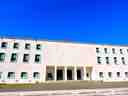
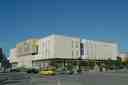
To spot the University of Arts, Tirana, look for a broad, rectangular cream-colored building with neat rows of green-trimmed windows and a red flag waving over the…Read moreShow less
To spot the University of Arts, Tirana, look for a broad, rectangular cream-colored building with neat rows of green-trimmed windows and a red flag waving over the entrance. Welcome to the University of Arts, the heartbeat of creativity in Tirana! If you listen closely, you can almost hear the distant hum of a piano being tuned or a flock of art students chatting on the steps. Now, let’s turn back the clock to 1966-what do you see? The doors fling open and out come a parade of young dreamers: ballet dancers, sculptors, actors with big voices (and even bigger hair), all ready to change the world. Back then, this was called the Higher Institute of Arts, and it was the perfect melting pot. Picture three different schools-each with their own flavors-coming together, like an artistic super smoothie! There were musicians from the Tirana State Conservatory, painters and designers from the Higher School of Fine Arts, and actors from the High School for Actors, with a name that fits a drama-Aleksander Moisiu. During Albania’s communist era, things got a little... intense. The country was close with Russia, so the halls echoed with the footsteps of strict ballet teachers and powerful classical composers. If you heard the click of a metronome in those days, you knew a Russian ballet master was nearby! Even today, the tradition continues, and the school maintains ties with the Russian School of Ballet and Classical Music. But things change, don’t they? By 1991, the institute got a promotion-like an actor landing the lead-and became the Academy of Arts. The government even gave it a new title in 2009: the “Grand Master Order”-not bad for an art school. Walk these corridors now, and you’ll find a rainbow mix of musicians, painters, and directors. The Faculty of Music might serenade you, while painters splash color on canvases and actors rehearse dramatic monologues in tucked-away studios. Legend has it, the students here are so talented that if you spill your coffee on the steps, it might turn into a modern art masterpiece! And in 2011, to celebrate the Academy’s 45th birthday, Albania printed a special stamp-so this building is literally sealed into history. So as you stand here, just imagine the passion, laughter, and maybe a few dramatic sighs that have filled this place over the years. Ready for our next creative adventure?
Open dedicated page →To spot the Qemal Stafa Stadium, just look ahead for a massive oval arena with faded blue and yellow seats surrounding a bright green football field, all nestled right in the…Read moreShow less
To spot the Qemal Stafa Stadium, just look ahead for a massive oval arena with faded blue and yellow seats surrounding a bright green football field, all nestled right in the heart of bustling Tirana with city buildings and mountains as its scenic backdrop. Now, step right up and imagine this... You're standing at the very site where the pulse of Albanian football once thundered through the city! Back in 1939, while the world was swirling with uncertainty, a young Italian architect named Gherardo Bosio dreamed up a grand Olympic stadium for the people of Tirana. It was meant to be covered entirely in shiny white marble-guess you could say it was designed to be a real “rock star!” Even though life-and war-interrupted construction, this place was always filled with the energy of hope and determination. Picture the scene: It’s just after World War II, and over 400 workers and 150 eager volunteers are racing against time to finish this giant, elliptical stadium. The marble only made it onto one stand, but the spirit of Albania was written into every stone. Galeazzo Ciano, an Italian dignitary, even placed the first stone in a ceremony back in 1939-setting in motion a decades-long story of sports, rivalry, and unity. In 1946, crowds filled the stands to bursting for the big inaugural event: the Balkan Cup! The whole city buzzed as the Albanian national team took on neighbors like Yugoslavia, Bulgaria, and Romania. Can you hear the thundering roar as Albania takes the trophy on their own brand-new field? From that moment, the stadium became a symbol. Not just an arena, but a place where dreams were built and victories became legend. Over the years, Qemal Stafa Stadium was the beating heart of Albanian football-the battleground for local teams like KF Tirana, Partizani, and Dinamo. It even got a facelift in 1974 for the 30th anniversary of Liberation Day, growing from a modest 15,000 seats to a giant amphitheater meant for over 35,000 shouting fans-though back then, you had to bring your own cushion! Oh, and here's a bit of stadium magic: in the early 2000s, this very pitch earned a spooky reputation. Newspapers called it the “Qemal Stafa Curse,” because, well, visiting teams rarely managed to win here! Between 2001 and 2004, the Albanian side simply refused to lose at home, shocking big-hitters like Greece-fresh from their Euro 2004 win! Even in 1986, future World Cup semi-finalists Belgium were shown the door with a 2-0 defeat. Maybe the ghosts of those 400 workers never stopped cheering from the stands… Like every hero, though, the stadium grew old. In the 90s, seats arrived-goodbye splinters, hello comfort! There were upgrades for journalists and even internet access for the super fans. But time marches on, and by the 2010s, the government and the Albanian Football Association were dueling over the stadium’s future: Should they rebuild or sell? After some heated debates (and surely a few missed penalties), the decision was made to pull down the old colossus in 2016. But not to worry-like a phoenix from the ashes, the Arena Kombëtare now stands right here! It’s bigger, shinier, and fit for 22,500 roaring football fanatics. The athletics track is gone, making way for pure football action, and the arena meets UEFA’s highest standards. Now, the echoes of the past mix with the cheers of the present, where every match carries the weight of history: from marble dreams to modern glory. So, standing here, you’re truly on hallowed ground-where heroes like Qemal Stafa are remembered, where legends took root, and where, for decades, teams from across Europe came and, more often than not, left scratching their heads and wondering, “How on earth did we lose here?” And if you listen carefully, maybe you’ll still hear the ghosts of games past chanting and cheering from the stands, urging today’s heroes to follow in their legendary footsteps!
Open dedicated page →
Show 10 more stopsShow fewer stopsexpand_moreexpand_less
To spot the Kapllan Pasha Tomb, look for a small, bright white stone structure with eight elegant columns arranged in a circle, standing out boldly against the modern…Read moreShow less
To spot the Kapllan Pasha Tomb, look for a small, bright white stone structure with eight elegant columns arranged in a circle, standing out boldly against the modern backdrop-there it is, right at your eye level. Now, imagine you’re back in the heart of 19th-century Tirana, where this tomb was the final resting place for the powerful Ottoman ruler Kapllan Pasha. Picture the city alive with voices and footsteps, as people passed by this impressive octagonal monument with curiosity and maybe a little respect-after all, not everyone gets eight hand-carved stone columns just for their resting place! It’s almost as if the tomb stands like a tiny marble pavilion, keeping watch as Tirana grows and changes around it. The Pasha himself once rested beneath these arches, until-plot twist!-his remains were sent to Istanbul, leaving only the tomb behind as a reminder of his rule. This spot was never lonely, though. It stood beside the old Sylejman Pasha Mosque, which sadly didn’t survive World War II, and now, the tomb endures as a tiny time machine for anyone who stops to wonder. Declared a top cultural treasure in 1948 and freshened up in the 1980s, the Kapllan Pasha Tomb now whispers tales of empires, vanishings, and Tirana’s unstoppable march into the future. So take a glance, and you might just hear the echoes of Ottoman sandals scuffling past!
Open dedicated page →Look for a long, rectangular building with tall white columns stretching across its front and the golden word "OPERA" on top-if you’re on Skanderbeg Square, it’s hard to…Read moreShow less
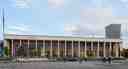
Look for a long, rectangular building with tall white columns stretching across its front and the golden word "OPERA" on top-if you’re on Skanderbeg Square, it’s hard to miss! Alright, picture yourself in the middle of bustling Skanderbeg Square back in the swinging 1960s-except Tirana wasn’t all disco balls and bell-bottoms, it was pickaxes and a fair bit of political drama! In front of you stands the Palace of Culture, a grand creation that looks straight out of a Soviet daydream, all strong lines and sturdy columns. The first stone for this dramatic building was put in place by Nikita Khrushchev himself in 1959, probably before he had his morning coffee. But before the library and the opera house took over, this area was tickled by the lively spirit of an old bazaar, with a charming Ottoman mosque whose minaret reached up like a finger pointing to the sky. Under Enver Hoxha’s strict rules-think fewer prayers, more shovels-both the bazaar and mosque vanished, making way for this imposing palace of books, music, and dramatic foot-stomping ballets. If these walls could talk, they’d sing arias about lost pasts, whisper stories from library shelves, and probably gossip about Khrushchev’s shoes! So take a breath, and let yourself imagine the energy of 1963 Tirana: new concrete, old memories, and the scent of change in the air.
Open dedicated page →Look straight ahead and you’ll spot a vast, open square paved in stone, with a bold statue of a horseman on a pedestal and a giant building adorned with a colorful mural looming…Read moreShow less
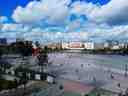
Look straight ahead and you’ll spot a vast, open square paved in stone, with a bold statue of a horseman on a pedestal and a giant building adorned with a colorful mural looming in the background-welcome to Skanderbeg Square! Now, let’s jump back in time and step into the lively heart of Tirana, right where the pulse of the city has beat for over a century. Imagine yourself standing in this enormous plaza-nearly 40,000 square meters of open space-watching families stroll, children chase pigeons, and the sunlight bouncing off the stone. The name of this grand square, Skanderbeg Square, isn’t just any old label; it’s a tribute to Albania’s most legendary hero, Gjergj Kastrioti Skanderbeg, who stands here in bronze glory atop his mighty horse. This is the man who once told invaders, “If you want my city, you’ll have to get past my moody steed first.” Okay, I might have made up the part about the moody steed, but you get the idea! When you look around, you’re standing at a crossroads of Albanian history, and the stories here are as layered as an onion with a PhD in urban planning. Back in 1917, this spot was just a modest public square laid down by the Austrians-nobody knew then it would become the centerpiece of a capital. Fast forward to 1925, and Italian architects Armando Brasini and later Florestano Di Fausto arrived, ready to transform Tirana with fancy Neo-Renaissance style and dramatic city plans. The square has seen it all: roundabouts, fountains, official parades, and, I kid you not, a revolving cast of statues. At one point, instead of Skanderbeg, Joseph Stalin himself kept watch over the crowds from atop a plinth! During the monarchy in the late 1920s and 1930s, the square was less grand, more about fountains and old bazaars-picture bustling market stalls where the grand Palace of Culture now stands. The Orthodox Cathedral, now swapped out for the modern Tirana International Hotel, was another old neighbor, replaced like an outdated sofa before guests arrive. When communism swept in, the square became a parade ground for power-Enver Hoxha, Albania’s longtime leader, had his own statue here. Imagine a cold wind, determined students, and, in 1991, a crowd who’d had enough. With a rope and a lot of courage, the people yanked the Hoxha statue down. The square became a symbol of change overnight. After the fall of communism, Skanderbeg Square kept reinventing itself, transforming, almost like a chameleon in the heart of Tirana. There have been modernizations, arguments over whether cars or people should rule this space, and even a plan for a pyramid right in the middle-can you imagine the Instagram photos? But good sense prevailed, and instead, from 2016, the city poured love, marble, and masses of plants into the square. Every stone you see beneath your feet was quarried from a different corner of Albania, so you’re basically standing on a map made of rocks, if you want to impress your friends. Today, Skanderbeg Square is a big stage-sometimes it’s a market, sometimes a place for concerts or open-air exhibitions. It’s still ringed by Tirana’s leading stars-the National Historical Museum, the Opera, fancy ministries, and the stately Bank of Albania, all keeping Skanderbeg company. And guess what? This square is now the biggest pedestrian zone in the Balkans and has won awards for its transformation. It’s where Tirana comes to celebrate, protest, remember, and relax. So as you breathe in the buzz of conversation and the echo of history, just remember: you’re standing where the past meets the future, with Skanderbeg forever watching over, making sure nobody swaps him out for another statue ever again!
Open dedicated page →To spot the Et'hem Bey Mosque, look for a beautiful, pale yellow building with a round silver dome and a tall, slender minaret rising high above the trees-it's right in front of…Read moreShow less
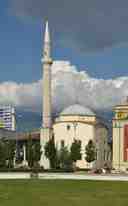
To spot the Et'hem Bey Mosque, look for a beautiful, pale yellow building with a round silver dome and a tall, slender minaret rising high above the trees-it's right in front of you, just past the green lawn. Welcome to the legendary Et'hem Bey Mosque, the jewel box of Tirana! Just imagine-standing right where you are, you’re surrounded by stories and secrets wrapped in centuries of history. Let’s take a little stroll back to the days when the mosque was first built. Picture Tirana in the late 18th century: there’s a bustling bazaar to the west, stalls packed with everything from fresh figs to silks, and the air is filled with lively chatter. Molla Bey starts the construction, but like any good drama, he doesn’t finish the job himself-it’s up to his son, Haxhi Et'hem Bey, to complete it somewhere around 1821. You could say this mosque was truly a “family project”-everyone else just has to settle for building IKEA furniture! As you look at the mosque, pay attention to the inviting portico and the impressive minaret. The outside of the mosque-just like the postcards-features delicate frescoes of lush trees, playful rivers, and dreamy bridges. Step inside (after taking your shoes off, of course!) and you’ll find more surprising artwork: painted landscapes, domes floating overhead like a soft parchment sky, and scenes that come straight out of imagination. Apparently, the artist was quite the daydreamer! On the walls, you might spot what looks like the famous Süleymaniye Mosque of Istanbul and even some landscapes no one’s ever visited in real life. But don’t let the peaceful and detailed art fool you; the mosque has seen its share of excitement. Fast-forward to the 20th century, and the story takes a wild turn. During the Communist regime under Enver Hoxha, all the houses of worship in Tirana got the “closed for business” treatment, and the Et'hem Bey Mosque became quiet except for the sound of restoration tools echoing in the 1960s and ‘70s. The government called it a “historical monument” and kept it locked up tight. But this modest mosque was destined for a big comeback! Now picture January 18th, 1991. Tensions run high. The winds of change sweep through Albania as thousands-yes, TEN THOUSAND-people gather right here. With flags waving, they march toward the locked doors. Someone’s heart must have been pounding like a drum! Everybody expected trouble from the authorities, but, in a twist worthy of a movie, the police simply let them in-no interference, no obstacles. This moment turned the mosque into a symbol of hope and the rebirth of religious freedom. So as you stand here, soaking up the sunlight and the history, you’re right in the middle of Tirana’s living tapestry-where every stone, every painted tree, has a tale to whisper if you listen closely. And if you ever get a chance, join a tour-just don’t try during prayer time, and remember: shoes off, soul open!
Open dedicated page →Directly ahead, you’ll notice a wide, lush green park with a dramatic white, terraced building-almost like something out of a spy movie-nestled right at the edge among the trees;…Read moreShow less
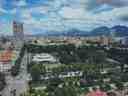
Directly ahead, you’ll notice a wide, lush green park with a dramatic white, terraced building-almost like something out of a spy movie-nestled right at the edge among the trees; that’s Rinia Park, and that unique white structure is known locally as the Taivani Center. Now, take a good breath of that fresh air, because you’re standing in the heart of one of Tirana’s most beloved escapes: Rinia Park, or “Youth Park” as it cheerfully translates. Imagine the year is 1950, the city is busy rebuilding after the chaos of war, and the folks in charge decide it’s time to create a green haven right in the center of all the hustle and bustle. The park pops up as a patch of calm-a place where families can chase their children through the grass, students can escape lectures by lounging under trees, and everyone can simply let their hair down. Now, here’s where things get a bit James Bond - on the western fringe of the park, you’ll see the famous Taivani Center, a futuristic, bright white building that’s been described as a “spider-shaped lair”. Some say it looks like the secret hideout of a movie villain, and honestly, I wouldn’t be surprised if a white cat appeared on the terrace! These days, you’ll find lively cafés, a casino, fountains tumbling down, and even a bowling alley tucked beneath it-a far cry from the cramped kitchens and drab meeting rooms of the old communist era. But it hasn’t always been smooth sailing for Rinia Park. After communism ended in the early ‘90s, illegal bars and restaurants sprang up faster than you could say “espresso”, turning this peaceful park into a bit of a wild west. The city finally stepped in around 2000, bulldozed more than a hundred buildings, and hauled out what seemed like half a mountain of debris. Today, nature has reclaimed her throne, and you’re walking among winding paths and flowers instead of piles of bricks and shady hangouts. And if you ever visit in mid-March, you’ll find Rinia Park absolutely buzzing. That’s when Tirana throws its biggest party, the Summer Festival, to say goodbye to winter and welcome the sun. Picture clowns, acrobats, jugglers, and magic tricks lighting up the lawns, marathons running through the city, and laughter filling every corner. For just one day, everyone becomes a kid again-even if you’re just here for the cotton candy! So go ahead-wander the paths, grab a coffee at Taivani, or just watch the world go by. This big green lung has seen it all, and it’s got plenty more stories left to tell. Just remember: no secret villain meetings, okay?
Open dedicated page →Look straight ahead for a grand, modern white building decorated with a giant mosaic of Albanian heroes above its entrance-if you spot people bustling past a long row of windows…Read moreShow less
Look straight ahead for a grand, modern white building decorated with a giant mosaic of Albanian heroes above its entrance-if you spot people bustling past a long row of windows and a wide staircase out front, you're standing in front of the National Historical Museum! Alright explorer, this is it-the grand finale! The National Historical Museum, or as locals call it, Muzeu Historik Kombëtar. Standing here, you’re at the heart of history-imagine stepping into the biggest time machine Albania’s ever built! The building itself is huge, stretching across nearly 27,000 square meters-enough space to fit a whole army of 1981 disco dancers when it opened! But the real magic lies within its walls. Inside, over 4,700 objects tell the tale of Albania, from heroic legends to twists of fate across the ages. The journey starts thousands of years ago-back in the time of prehistoric hunters and Illyrian warriors. Picture ancient bronze swords shining on the walls, prehistoric art, and the mysterious silver skull of an Illyrian prince-the kind of treasure Indiana Jones would trip over himself to find! There’s even a mosaic called “The Beauty of Durrës,” a masterpiece over 2,000 years old, where a woman’s face looks out from a swirl of marble flowers and vines. Talk about natural beauty-no filter needed! As you walk through the Middle Ages pavillion, the scent of tanned leather and the clang of old coins come to life in your mind. You’ll see ancient monastery gates, stitched with golden thread by a devoted monk, and coats of arms from proud Albanian princes. Imagine the tension as rulers defended their lands from powerful empires-Byzantines, Serbs, Ottomans-all vying for control. Every artifact here has witnessed battles, whispered secrets, and the ever-present hope for freedom. Now brace yourself for the era of Albanian national awakening, when the spirit of independence burned brighter than dragon fire! Here, you’ll meet Skanderbeg-the fearless hero who led his people for 25 years, right out of a chapter of epic legend. And as you pass maps and artisan crafts from every corner of Albania-Shkodër, Prizren, Elbasan, and more-you can practically hear the lively chatter of old marketplaces and the thunder of horse hooves on stony roads. The pavillion of independence whisks you to the tense days of the early 20th century. Imagine the sound of urgent debate and the shuffle of papers as patriots in Vlorë declared Albania’s freedom. Yet, it wasn’t all cause for celebration-maps on the museum walls show borders cut and recut, often by foreign powers who’d never so much as tried Albania’s strong coffee! Step further and the air fills with the scent of incense and centuries-old wood-the iconography gallery reveals glowing icons, painted by master hands who never signed their names. These saints’ faces radiate calm, sacrifice, and the quiet strength of belief, each one a silent witness to the centuries of Albanian faith and resilience. But wait, fashion fans! The ethnoculture gallery bursts with a riot of color and texture: traditional costumes from every region, and even 32 rare arbëresh outfits, testifying to the stubborn creativity and beauty of this land. You can just picture proud villagers twirling on festival day, embroidered sashes flashing in the sun. History takes a darker turn in the next gallery, packed with objects and stories from the antifascist struggle. You’ll find relics from the battlefields, resistance diaries, and even a Spanish Civil War volunteer’s cap-the echo of gunfire and whispered plans for freedom never far away. Finally, the shadowy halls of the communist genocide pavilion bring you face to face with recent wounds: photographs, court documents, and the heavy silence of lives interrupted. Here, you glimpse the strength it took to endure, resist, and rise again. So here at the museum’s doorstep, let your imagination wander through centuries where legends roamed, villagers danced, and rebels plotted by candlelight. And if you listen carefully, you just might hear the echo of their voices-inviting you in to discover Albania’s story, one fascinating artifact at a time. Ready to step inside? I promise, the only thing missing is a time traveler’s hat!
Open dedicated page →
Frequently asked questions
How do I start the tour?
After purchase, download the AudaTours app and enter your redemption code. The tour will be ready to start immediately - just tap play and follow the GPS-guided route.
Do I need internet during the tour?
No! Download the tour before you start and enjoy it fully offline. Only the chat feature requires internet. We recommend downloading on WiFi to save mobile data.
Is this a guided group tour?
No - this is a self-guided audio tour. You explore independently at your own pace, with audio narration playing through your phone. No tour guide, no group, no schedule.
How long does the tour take?
Most tours take 60–90 minutes to complete, but you control the pace entirely. Pause, skip stops, or take breaks whenever you want.
What if I can't finish the tour today?
No problem! Tours have lifetime access. Pause and resume whenever you like - tomorrow, next week, or next year. Your progress is saved.
What languages are available?
All tours are available in 50+ languages. Select your preferred language when redeeming your code. Note: language cannot be changed after tour generation.
Where do I access the tour after purchase?
Download the free AudaTours app from the App Store or Google Play. Enter your redemption code (sent via email) and the tour will appear in your library, ready to download and start.
If you don't enjoy the tour, we'll refund your purchase. Contact us at [email protected]
Checkout securely with 




