
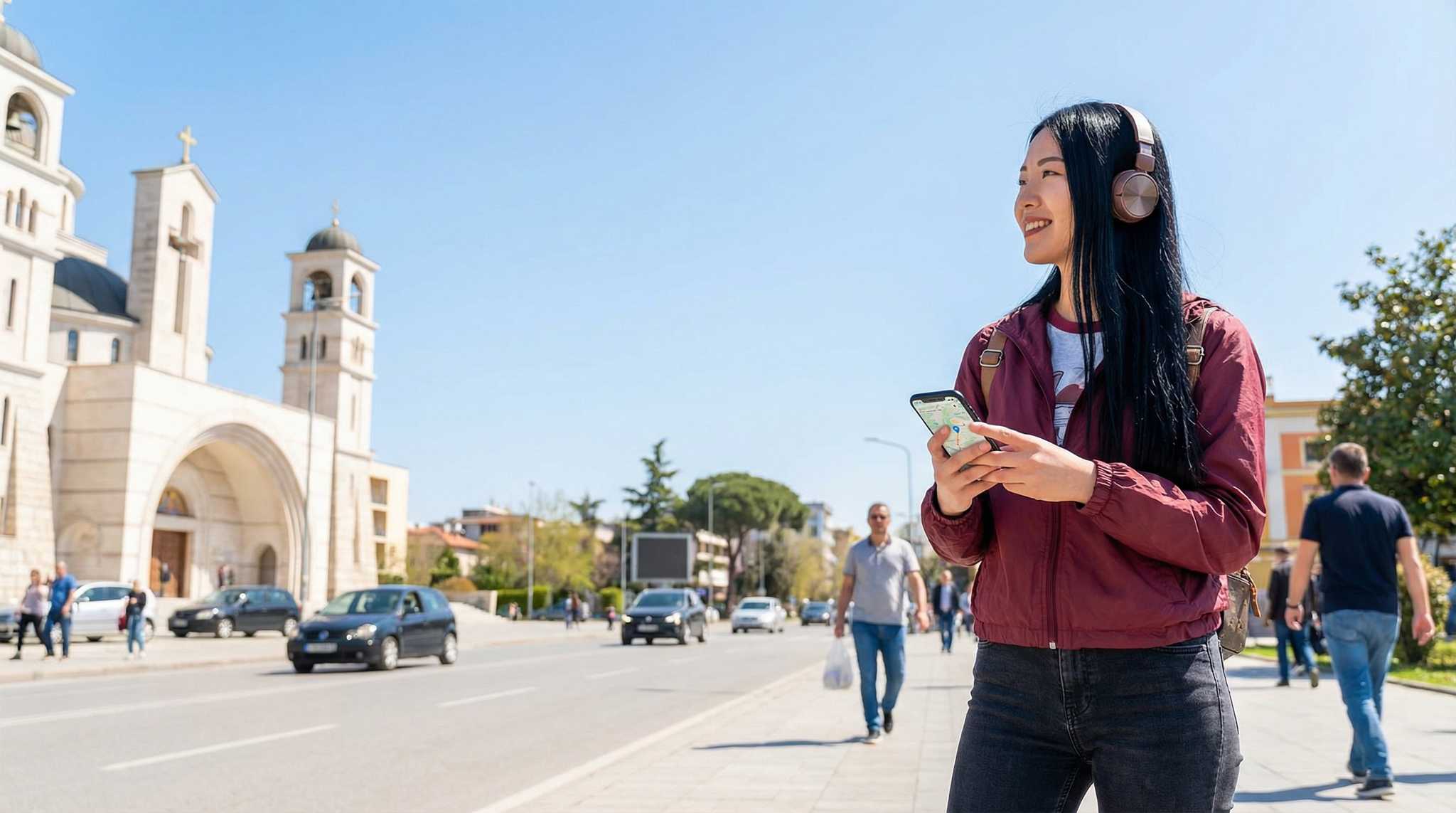
Tirana Audio Tour: Art, Cathedrals and Secrets of Culture
Join us on an exciting tour of Tirana, where you'll experience the city's rich history and cultural gems. Visit the National Historical Museum, offering fascinating exhibitions about Albania through the ages. Discover the beautiful Et'hem Bey Mosque with its delicate frescoes and peaceful atmosphere in the heart of the city. Also, catch a glimpse of Qemal Stafa Stadion, an iconic place for sports and national pride. This tour combines history, culture, and local experiences, giving you a true insight into Tirana's soul.
Tour preview
About this tour
- scheduleDuration 40–60 minsGo at your own pace
- straighten3.7 km walking routeFollow the guided path
- location_on
- wifi_offWorks offlineDownload once, use anywhere
- all_inclusiveLifetime accessReplay anytime, forever
- location_onStarts at University of Arts, Tirana
Stops on this tour
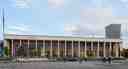
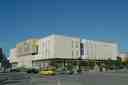
You should look out for a large, bright stone building with symmetrical green windows and three doors facing the sidewalk - and if you see an Albanian flag waving on top, you've…Read moreShow less
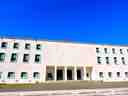
You should look out for a large, bright stone building with symmetrical green windows and three doors facing the sidewalk - and if you see an Albanian flag waving on top, you've come to the right place! Welcome to the University of Arts in Tirana! Imagine standing here in front of a building that doesn't just smell of paint but actually buzzes with creativity - you can almost hear the echo of violins and brushes hitting canvases behind those green windows. The university's main doors have seen the faces of young artists balancing their canvases, instrument cases, and dreams in and out - and perhaps a bit of nervous laughter on exam days. But try to think back to 1966, when the entire place was founded under the name The Higher Institute of Arts. Back then, there wasn't just one kind of art: musicians, painters, and actors were all trained here - all gathered under one roof, much like a large and quite colorful family. And Albania had a special bond with Russia at the time, so Russian classical melodies and the precision of ballet floated through the halls, leaving traces that actually still live on here. Do you think the teachers demand a perfect pirouette at the first meeting? Don't worry, they're kind - but the dance shoes probably still creak here and there! In 1991, the institute received the distinguished name Academy of Arts, and suddenly it was elevated to university status. Since then, the place has trained some of the most vibrant stars in Albanian theater, ballet, music, and film - not just those you see on posters, but also all those behind the scenes who create the magic. You can almost feel the nerves in the air when the acting, directing, or painting departments prepare for a performance or an exhibition opening. In fact, the university was so popular that in 2011 it got its very own postage stamp - yes, imagine the postman humming a classical tune as he delivers letters with the university on the stamp! Today, you can meet everyone from painters and fashion enthusiasts to trumpeters and filmmakers on their way to the next rehearsal, or perhaps just looking for their lost keys. It's a place filled with dreams, transformed ideas - and if you listen closely, you might hear a silly laugh behind a closed door where someone just accidentally sat on a wet painting! So, take a deep breath - you are standing in front of Albania's artistic heart, where every single day brushes swing and feet dance, and imagination runs free.
Open dedicated page →In front of you, you see the former Qemal Stafa Stadion - the large oval complex with wide, grayish-blue stands surrounding a green lawn and a running track all the way around;…Read moreShow less
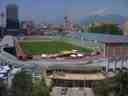
In front of you, you see the former Qemal Stafa Stadion - the large oval complex with wide, grayish-blue stands surrounding a green lawn and a running track all the way around; look for the open, impressive structure that almost towers amidst Tirana's buildings. Now, imagine we go back to 1939. The city of Tirana had only about 60,000 inhabitants, but here - in the middle of it all - the foundation was laid for something that would unite the entire nation. Qemal Stafa Stadion was designed by a young Italian architect, Bosio, who aimed for a true Olympic look, with grand gestures and ambitions for marble everywhere. But... yes, only one stand actually got marble. Can you imagine how the whole place must have smelled of fresh cement, sweating workers, and large machines in operation? The first stone was laid under solemn circumstances - imagine an important Italian minister, Galeazzo Ciano, in a stiff suit, hammering a stone into the ground with a very serious face! But work stopped abruptly when Italy capitulated, and suddenly, under German occupation, the stadium was used to store military vehicles and equipment. Quite a far cry from football fever and daily matches! After the war, the stadium awakened again. Over 400 workers and almost daily volunteers toiled to complete it. And in 1946, the stadium was finally inaugurated with a bang. Albania played in the Balkan Cup and beat nations like Yugoslavia and Romania - and imagine the cheers when the ball hit the net. The stadium was named after Qemal Stafa, a freedom hero from World War II. You can almost feel the pride in the air! Think about it, back then there was room for about 15,000 spectators - large enough for almost the entire city to show up and cheer. Since then, it was further built upon and expanded, especially leading up to the 30th anniversary of Albania's liberation in 1974. One stand grew from 10 to 28 rows, and suddenly there was room for 35,000 - but no seats back then, so you couldn't just fall asleep during a boring 0-0 match! Electronic scoreboard? It was imported from Hungary, as one does. Imagine - back then it was still something wild and new, and people almost thought it was pure magic. Qemal Stafa Stadion was not just a football venue. It also hosted the national Spartakiads: gigantic folk festivals filled with sports and entertainment, where the whole country came to compete and celebrate. Therefore, a certain "magical" atmosphere also crept into the stadium - and a rumor began to grow: "The Qemal Stafa Curse." In the 2000s, Albanian media simply believed that foreign teams were struck by bad luck here. Between 2001 and 2004, the Albanian national team did not lose a single home game - even the reigning European champions from Greece were beaten! Other teams - Belgium, Sweden, Switzerland - just had to shrug and go home with a defeat or an embarrassing 0-0 result. After 1991, the stadium underwent new modernizations: suddenly, proper seats were installed, and the capacity dropped to 19,700 - more room for sandwiches, less for Albanian bottoms! UEFA donated lighting, so now evening matches could be played, and in 2008, journalists got their own internet rooms for the first time - so live blogs could report every single offside. But even great stadiums get old and worn. In 2016, demolition began, because now something bigger and grander was to be built: Arena Kombëtare, for a total of 22,500 spectators, which now meets UEFA's highest category - and without a running track, only the grass left for the beautiful game. However, a small memory still remains: The name has always been debated! Many wanted to name it after the football hero Panajot Pano, but for most, this place will always be Qemal Stafa - the place where football, history, and Albanian pride go hand in hand! And if you listen closely during big matches, you can almost hear the cheers of the past rolling through the air…
Open dedicated page →
Show 10 more stopsShow fewer stopsexpand_moreexpand_less
In front of you, you'll find a small, open tomb in white stone with eight columns forming an octagon - just look for the bright, elegant pavilion right by the road, where it…Read moreShow less
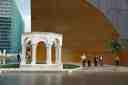
In front of you, you'll find a small, open tomb in white stone with eight columns forming an octagon - just look for the bright, elegant pavilion right by the road, where it almost shines against the backdrop of modern and rust-red architecture. Now, imagine stepping into the center of Tirana more than 200 years ago. The sound of horse hooves, the smell of freshly brewed coffee from the bazaar stalls - and in the middle of it all stands this mysterious building: Kapllan Pasja’s tomb. Here lies the city's mighty, old ruler, buried, or… so people thought! The tomb was built in 1817 by people who spared no stone or detail - eight carved columns, stones so cold they almost freeze if you touch them, all on a solid, octagonal base. But as in a good mystery, the story didn't end there; his earthly remains were later moved all the way to Istanbul! So if you look into the tomb today, it's mostly the city's old spirit you'll encounter. If you say the name Kapllan Pasja aloud here, it might still echo from the time he ruled the city. After the Sylejman Pasha Mosque, which once stood next to it, the türbe (tomb) stood a bit lonely until the municipality had it renovated in 1985. So when it rains here in Tirana and the raindrops drum on the stones, you can almost hear the footsteps of the past amidst the traffic noise of the present - and then you'll know why this small tomb has its very own charm in the middle of the city.
Open dedicated page →In front of you, you can see the Palace of Culture of Tirana - it's the large, bright building with tall columns all along the facade and a big "OPERA" sign above the entrance,…Read moreShow less
In front of you, you can see the Palace of Culture of Tirana - it's the large, bright building with tall columns all along the facade and a big "OPERA" sign above the entrance, right in the center of the square. Imagine standing here in the 1960s, where the scent of fresh cement and the sound of hammering tools filled the air. That was when Tirana needed something that would impress both neighbors and enemies - something that said: “Here, we run the show ourselves!” On this square, there used to be an old, dusty bazaar and a beautiful Ottoman mosque. But Enver Hoxha, the country's strict leader, dreamed of a place for books, opera, and ballet - not market chatter and prayers from the minaret. So he waved goodbye to both the bazaar and the mosque and invited some real celebs: the Soviet Union's Nikita Khrushchev came to Tirana and laid the very first stone himself - yes, you could almost hear the camera flashes clicking! The building's colors might not make your Instagram profile happy, but its shape and style scream “communist class party.” The building was quickly filled with everything from dancing ballerinas to books that smelled a bit of dust and revolution. Just imagine, here Tirana's inhabitants stood watching ballets from all over the world, while someone might have nudged their neighbor and asked when they would open for baklava sales in the bazaar again. Inside, both culture and excitement lurk - and perhaps even a small echo of the past bazaar atmosphere, if you listen closely. So, do you dare to go in, or will you stand firm outside like a statue in Skanderbeg's beard?
Open dedicated page →You are now looking out over an enormous, open square covered in light stone tiles, where the first thing you see is a large equestrian statue to the left - that's the impressive…Read moreShow less
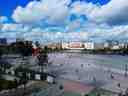
You are now looking out over an enormous, open square covered in light stone tiles, where the first thing you see is a large equestrian statue to the left - that's the impressive Skanderbeg Monument, so just follow people's gazes and Albania's flag in the wind, and you'll know you've landed right in Tirana's heart! Imagine standing here in the middle of the square, where the sun's rays dance on the stones and life buzzes: people stroll, children play, you might catch the scent of coffee from a nearby café, and around you, both old and newer buildings tower like stylish guard dogs over the city center. Here you stand not just today; you stand where Tirana's very history, drama - and, yes, a touch of megalomania - has unfolded over centuries. Skanderbeg Square, or "Sheshi Skënderbej," is named after the national hero of Albanians, Gjergj Kastrioti Skënderbeu, and his bronze equestrian statue dominates the view. If you think he looks serious, it might be because in his time he chased out the Ottomans and became a legend both at home and in the rest of Europe. But let's rewind a bit. We're talking 1917, when Austrian troops - yes, that might not sound like the start of a good vacation - built the first public square here. When Tirana became the capital in 1920, both the city and the ambitions for the square grew: fountains, a roundabout, a bazaar, and a bustling city life, even before the smartphone was invented. Imagine standing here back then, where people traded at the Bazaar, and the scent of spices and fruits from the market stalls mingled with the sound of horse-drawn carriages - and perhaps a shout from an eager vendor promising you the best price on tomatoes! But the square has also seen darker times. Under communism, it wasn't Skanderbeg, but statues of both Stalin and state leader Enver Hoxha, who held the place of honor here - certainly inspiring more awe than celebration. But in 1991, as the drama peaked with popular protests, the Hoxha statue had to be removed by angry students, and freedom fluttered through the open space. What a revolution to witness, right? The city's skyline around the square has also changed its attire over time. Notice the magnificent buildings: the National Opera, the National Historical Museum, the city hall, several ministries, and not least the Ethem Bey Mosque and the distinctive clock tower - it's a bit like seeing Tirana's version of gathering all important places on one stage. And yes, there was once talk of building a two-meter-high pyramid here in the middle! That was later dropped, but just the thought is a bit funny - and perhaps very practical for sledding in winter? For why not create the world's first multifunctional square where you can both admire national heroes and slide down in a shirt and tie! The last major makeover happened in 2016-2017, when the square received stonework from all corners of Albania - almost like a gigantic puzzle of the country's own rocks and colors. Green areas were also planted here, and Europe's largest pedestrian zone was created. And perhaps you can hear it: the square now buzzes with festivals, street markets, political demonstrations, and a daily life that has won both European and international awards. So you are not just in the center of Tirana, but in the middle of a living open-air museum full of memories, courage, and, yes, a touch of Albanian pride - and maybe a joke or two from the locals! Shall we move on, or will you stay and play Skanderbeg on the stones a little longer?
Open dedicated page →In front of you, you see the Et’hem Bey Mosque - look for the light yellow building with the elegant silver-gray dome and the tall, pointed minaret, which rises above the treetops…Read moreShow less
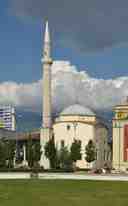
In front of you, you see the Et’hem Bey Mosque - look for the light yellow building with the elegant silver-gray dome and the tall, pointed minaret, which rises above the treetops and almost points towards the clouds. Now, imagine you're standing in the bustling heart of Tirana, where the sounds of the city blend with a hint of birdsong. But before we rush too far into the present, let's take a small step back in time. The mosque actually started as a father-and-son project back in the late 1700s - yes, it was almost the family's “little hobby home”! Molla Bey began construction around 1791, but it was only his son, Haxhi Et’hem Bey, who - after an incredible number of tea breaks and probably lots of “Dad, I can do it better!” - finished the mosque in 1821. Can you imagine the pride in that family? At that time, the mosque was not just a building, but one of the city's major gathering points; right in front lay the bazaar, where the scent of spices and fruits from the market stalls mingled with the sound of horse-drawn carriages - and perhaps a shout from an eager vendor promising you the best price on tomatoes! The city center was full of mosques, and Et’hem Bey was one of the jewels - especially thanks to its murals both inside and out. They are a bit special: Instead of calm, neutral walls, here you'll find colorful frescoes with trees, rushing waterfalls, and bridges that seem almost painted from imagination. You'd think the artist had an extra crooked look at the paint bucket that day! The prayer room itself is square and lies under the round, windowless dome. The entrance faces north, and the portico, where you can probably spot a few small birds, is filled with imaginative landscapes, even a picture of the Süleymaniye Mosque with its four minarets - yes, it almost resembles a kind of Instagram feed for 19th-century buildings. Legend has it that some of the painted islands have small sailing boats, and if you stare long enough, you might feel the breeze from the water! The mosque has also been the scene of drama. Under communist rule, all religious sites were closed, and the Et’hem Bey Mosque stood silent - for years, only dust and stillness filled the space. But... then something happened that sparked a change. In January 1991, 10,000 people defied the ban, marched into the mosque with flags and their hopes spread out like wings. The police? They watched but did not intervene. It became a turning point for religious freedom here in Albania. And as an extra twist: Inside the portico, it states that “the mosque has given eternal beauty to the city, as Hagia Sophia has given to Istanbul.” Not bad company, right? So take a moment out here, feel the sweep of history, and try to hear the echo of past prayers and market chatter. Who knows, maybe you'll have a small revelation - in any case, you have now seen Tirana's perhaps most enchanting mosque!
Open dedicated page →In front of you, you see a large, green park with a white, terraced building - the famous Taivani Center - located right on the park's western edge; look for the low, futuristic…Read moreShow less
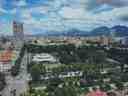
In front of you, you see a large, green park with a white, terraced building - the famous Taivani Center - located right on the park's western edge; look for the low, futuristic structure amidst all the greenery. Well, welcome to Tirana's green heart - Rinia Park, 'Youth Park'! Imagine standing in the middle of this small oasis, while the city's noise is replaced by children's laughter, rustling leaves, and a hint of freshly brewed coffee from the cafés. It all started back in 1950. Back then, the city's leaders under the communist regime decided that the people needed a break from the concrete, and so this area was transformed into a playground for both families and young people. But there was also a small, humorous twist: The park was located on the wrong side of the river, opposite “Blokken,” where the elite lived, so the young people ironically began to call the place “Taiwan.” Just imagine: Tirana's mini-Taiwan, far from exotic small islands, but filled with adventurous dreams! With 2.98 hectares to roam, the park has been the setting for everything from romantic strolls to children's bike races. If you think the white Taivani Center looks a bit James Bond-esque, you're absolutely right - the building's strange, spider-like architecture has made more than one person want to say “My name is Bond…” just for fun! Today, you'll find a bowling alley, restaurants, and a casino here. Yes, only in Albania can you enjoy a cold espresso in a building that could be a supervillain's hideout! But not everything has been smooth sailing. After the fall of communism, Rinia Park was invaded by kiosks, stalls, and small restaurants, and soon the park became more known for its somewhat shady characters than for green lawns. Mafia families in Tirana actually used the area as their small, unofficial clubhouse - I promise you, there was almost more drama here than in a Netflix series! But in 2000, the city counterattacked: Over 130 buildings were torn down, more than 45,000 cubic meters of debris were removed, and the park was transformed into the green paradise you see before you now. And then there's the biggest event that no one forgets: the Summer Festival every year on March 14th. In the spring, it swarms with happy people, circus artists, acrobats, street performers, and the whole city rejoices at winter's farewell. The air is filled with the scent of popcorn and lemon ice cream, people get their faces painted and dance late into the evening. Here, people fall in love, children get lost and found again, and all forget the small worries of everyday life just for one day. So take a moment, breathe deeply, feel the sweep of history, and try to imagine who might have been hiding behind the Taivani Center's windows. And watch your step on the lawns - you wouldn't want to stumble over a James Bond villain or a hidden mafia!
Open dedicated page →In front of you, you see a large, bright stone building with wide windows, columns, and a huge colorful mosaic on the facade - look for the impressive image facing the square, and…Read moreShow less
In front of you, you see a large, bright stone building with wide windows, columns, and a huge colorful mosaic on the facade - look for the impressive image facing the square, and you'll know you've arrived at the right place. Welcome to the National Historical Museum, Albania! Here, in the middle of Tirana's central square, you stand before more than just a building; you are looking directly into the heart of Albania's entire history. Imagine the doors sliding open, and you step into a treasure trove of 27,000 square meters, where each room tells its own dramatic story. It all began in 1981, when the museum was inaugurated with pomp and circumstance - and perhaps a little nervousness, because one must admit, it takes courage to gather 4,750 rare artifacts from almost the entire timeline of humanity! If you sniff around a bit, you can travel all the way from the first Stone Age people - those with clubs and interesting hairstyles - through the Illyrian heroes of the Bronze Age, to the Greek colonists who sailed in with their pottery, and to the Iron Age, when weapons became a bit shinier and a little less “DIY-in-the-shed.” Perhaps, if you're lucky, you'll stumble upon the silver skull of an Illyrian prince found in a tomb at Selca - on it are depicted both an Illyrian warrior and a dragon, because a little drama was certainly needed! And who knows, you might hear the sound of ancient horses galloping over the stone floor right behind you. Jumping forward to the Middle Ages, be ready to meet all the brave Albanians who defended the country against Byzantines, Ottomans, and others who had forgotten to ask permission to pass by. You'll find not just armor and old money, but also the entrance door to the monastery in Elbasan with Prince Karl Topias' coat of arms on it - yes, he really knew how to leave his mark! And if you see a tapestry that glimmers extra much, it might be the epitaph from Gllavenica, embroidered with gold thread in 1373. I wonder if the embroiderer had an extra strong cup of coffee that day? Moving a bit closer to the present, you suddenly stand in the Rilindja Pavilion. Here, you can almost hear the rush of all the thoughts, dreams, and protests that twisted through streets and hearts to make Albania free and independent. Not far from here, you can examine colorful city maps, old trade routes, and jewelry that has traveled further than most plane tickets today. And it doesn't stop here - there's a pavilion dedicated solely to iconography, where sacred faces look at you from wood, painted by renowned masters like Onufri. If only you could hear them think: “Hey, look there, a Dane with a headset!” A stone's throw further in awaits the pavilion for ethnological culture, where you shouldn't stare too long at the glittering folk costumes (otherwise you might end up wanting to try them on, and then it will be difficult to get out again without attracting attention!). Draped in patterns from all over the country, and even with space for Albanian costumes from Italy! Continue into the raw backdrop of the 20th century, where you get close to the drama, heroism, and fear from the great wars against fascism. For the first time, you step into a room where names, photographs, medals, and homemade weapons tell of the struggle against Mussolini's and Hitler's power - and where you might feel the shadow of the serious atmosphere from back then, when the world was upside down. As a final turn of the time machine's wheel, you see the pavilion for communist persecution - where harrowing stories, old letters, and black-and-white photographs tell of the years when words, hope, and freedom could be life-threatening. Here, in the museum's belly, you witness how dreams, losses, and triumphs are woven together into a colorful, living picture - just like the large mosaic above the door outside. And now, as the sunlight makes the mosaic glitter, you can almost hear the thousands of voices whispering about Albania, from ancient times to today. Thanks for the journey, my friend - and next time you lose your keys, let me know, because if I can find 4,000-year-old skulls, maybe I can help you too!
Open dedicated page →
Frequently asked questions
How do I start the tour?
After purchase, download the AudaTours app and enter your redemption code. The tour will be ready to start immediately - just tap play and follow the GPS-guided route.
Do I need internet during the tour?
No! Download the tour before you start and enjoy it fully offline. Only the chat feature requires internet. We recommend downloading on WiFi to save mobile data.
Is this a guided group tour?
No - this is a self-guided audio tour. You explore independently at your own pace, with audio narration playing through your phone. No tour guide, no group, no schedule.
How long does the tour take?
Most tours take 60–90 minutes to complete, but you control the pace entirely. Pause, skip stops, or take breaks whenever you want.
What if I can't finish the tour today?
No problem! Tours have lifetime access. Pause and resume whenever you like - tomorrow, next week, or next year. Your progress is saved.
What languages are available?
All tours are available in 50+ languages. Select your preferred language when redeeming your code. Note: language cannot be changed after tour generation.
Where do I access the tour after purchase?
Download the free AudaTours app from the App Store or Google Play. Enter your redemption code (sent via email) and the tour will appear in your library, ready to download and start.
If you don't enjoy the tour, we'll refund your purchase. Contact us at [email protected]
Checkout securely with 


