
Audioprzewodnik po Seattle: Pionierzy, lustrzane wizje i globalne innowacje
Smukła panorama Seattle skrywa sieć tajemnych dialogów, bitew wartych miliardy dolarów i niemych strażników innowacji, którzy nigdy nie śpią. Odkryj duszę ukrytą pod stalą dzięki tej wycieczce audio z przewodnikiem – zaprojektowanej tak, aby pokazać puls miasta poza Pike Place i pocztówkami, gdzie nawet rogi ulic skrywają globalne ambicje. Jaka zimna wojna toczyła się w ukrytych laboratoriach za lustrzanym szkłem? Kto wsunął zakodowane wiadomości do niemych rzeźb dla przyszłych pokoleń? I jak jedna szklanka wody z recyklingu wprawiła w osłupienie cały zarząd – i zmieniła świat? Podążaj ścieżką od lśniącej sztuki publicznej do najnowocześniejszych laboratoriów badających choroby i legendarnej Fundacji Gatesów. Każdy zakręt tętni opowieściami o buncie, nauce, skandalu i oszałamiającej nadziei. Przejdź się tymi przecznicami i zobacz Seattle, jakiego nie znałeś – odkrywając jeden wyszeptany sekret po drugim. Niech prowadzi Cię ciekawość. Rozpocznij podróż i otwórz miasto, o którego ujrzeniu większość tylko marzy.
Podgląd trasy
O tej trasie
- scheduleCzas trwania 30–50 minsIdź we własnym tempie
- straighten1.4 km trasy pieszejPodążaj wyznaczoną trasą
- location_onLokalizacjaSeattle, Stany Zjednoczone
- wifi_offDziała offlinePobierz raz, korzystaj gdziekolwiek
- all_inclusiveDożywotni dostępOdtwarzaj ponownie w dowolnym momencie
- location_onStart przy Mirall
Przystanki na tej trasie
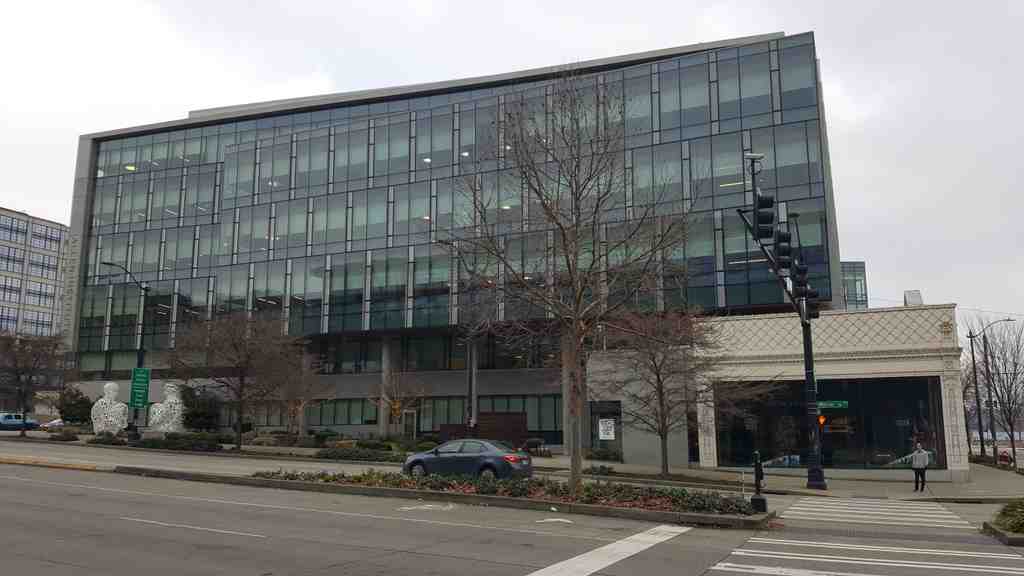
If you look to your left, right outside the glass-walled Allen Institute building at the corner of Mercer Street and 9th Avenue North, you’ll spot two large white figures sitting…Czytaj więcejPokaż mniej
If you look to your left, right outside the glass-walled Allen Institute building at the corner of Mercer Street and 9th Avenue North, you’ll spot two large white figures sitting quietly face-to-face, their bodies made out of a swirling mesh of letters. Standing in front of Mirall feels a bit like stumbling into a secret meeting between old friends who speak in silent riddles. Made by the artist Jaume Plensa, this sculpture isn’t just a pair of giant seated figures-they’re woven from the alphabet soup of eight different languages! Peer closely and you’ll find Arabic curves, Greek twists, Chinese brushstrokes, Hindu dots, Hebrew lines, Japanese brush flips, the stately Roman alphabet, and even Russian Cyrillic. It’s almost as if language itself got tired of being spoken and decided to take a seat right here in South Lake Union. Isn’t it wild to think these two are always mid-conversation, but you’ll never hear a sound? It’s a silent banter where every word is written but never spoken-sort of like texting under a strict librarian’s watch. Imagine all the stories-love letters, scientific ideas, jokes about Seattle rain-they might spell out if only they came to life for a minute! Take in the gleaming stainless steel, reflecting both the city’s energy and the soft gray skies above, and just for a second, wonder what you might say if you could join their mysterious, everlasting chat.
Otwórz dedykowaną stronę →Look ahead for two large, modern buildings with a striking green roof and plenty of glass walls-right across from the Seattle Center-those are the Gates Foundation…Czytaj więcejPokaż mniej
Look ahead for two large, modern buildings with a striking green roof and plenty of glass walls-right across from the Seattle Center-those are the Gates Foundation headquarters. Alright, take a moment and let your eyes wander across those long, grassy rooftops and glassy facades. This isn’t your average office park. Here’s where philanthropy gets a Seattle twist-big, bold, and a bit high-tech, just like the city itself. Now, let’s step back in time for a second, because the story of this place is bigger than what you see in front of you. It started quietly back in 1994, when Bill Gates-yes, the computer guy with that “Windows” thing-and his wife, Melinda, decided they wanted to do more good with their mountain of fortune. But it wasn't until the year 2000 that things really leveled up: the Gates Foundation was officially launched. Imagine the buzz-people wondered; what would two of the world’s wealthiest do now? Build another tech giant? Nope. Instead, they set out to squish global poverty and wipe out diseases that most people here in Seattle only read about. Every year, this Foundation has to give away 5% of its assets-currently, over seventy billion dollars. That’s a lot of zeros. Their mission? It’s massive: better health for everyone, everywhere, along with more opportunities in education, and a world where everyone can have clean water and decent toilets-really, they even reinvent toilets here. Can you picture a toilet that turns waste into clean water? Bill Gates actually drank a glass of that water once for a TV audience. If that’s not commitment, I don’t know what is! But hold on. The story isn’t all smooth, echoing halls and happy board rooms. There’s been drama-big decisions, some controversy, even world-shaking moments. In 2006, Bill decided to leave his daily role at Microsoft. He wasn’t getting bored; he just wanted to focus all his brainpower here, fighting malaria, funding scholarships, and basically trying to outdo Santa when it comes to giving things away. Rubbing shoulders with him is a hall-of-fame team, including Warren Buffett-yep, that Warren Buffett-who pledged his own billions to the cause. In 2010, the Gateses kicked off a project to reimagine global health education. They even teamed up with Hillary Clinton on projects for women and girls, and when COVID-19 hit, the Foundation had already built relationships worldwide, making it possible to move fast in getting help where it was needed most. Now, the building you’re in front of-it’s not just stylish. When they opened these shiny headquarters in 2011, it was Seattle’s newest eco-friendly trophy, decked out with solar panels, a “living roof,” and rainwater pools. Even the land it stands on has a cool story-it used to be a city bus base. Now, instead of the hum of buses heading out, there are conference rooms buzzing with discussions about how to end polio, send girls to school, or create a rice that saves millions of lives from Vitamin A deficiency. Over the decades, they’ve weathered a few storms, too-public criticism, legal changes, and even the challenge of keeping the founders working together after their divorce. As of 2024, Melinda stepped down, but the Foundation kept on rolling-scheduled, believe it or not, to spend itself out of existence by 2045. No trust funds lingering for centuries-just an all-in push to give it all away within 20 years of Bill Gates’ passing. It’s like a superhero promising to retire once the world’s safe. So as you stand here, right at the edge of this campus, picture not just the dollars and the headlines, but the millions of lives changed-vaccines in remote clinics, life-changing scholarships at Cambridge, or a simple, clean toilet where there wasn’t one before. You’re in the presence of Seattle’s powerhouse for hope, a machine for optimism, and perhaps the most ambitious “give it all away” project the world has ever seen. I have to say, if these walls could talk, they’d be arguing about whether to fund a new malaria vaccine or build a better toilet. Not your usual office gossip! Ready to head to our final stop? Let’s walk-who knows what future trailblazer might have just walked past you! Yearning to grasp further insights on the activities, financials or the global development division? Dive into the chat section below and ask away.
Otwórz dedykowaną stronę →


Pokaż jeszcze 1 przystankówPokaż mniej przystankówexpand_moreexpand_less
To spot the Impatient Optimist, look up above the open plaza in front of the Bill & Melinda Gates Foundation-you’ll see a massive, colorful net floating in the air, glowing like a…Czytaj więcejPokaż mniej
To spot the Impatient Optimist, look up above the open plaza in front of the Bill & Melinda Gates Foundation-you’ll see a massive, colorful net floating in the air, glowing like a dreamcatcher for the whole city. Now, take a deep breath and listen closely-you’re standing beneath a sculpture with a secret. Back in 2015, artist Janet Echelman and her team wanted to capture the very shape of a Seattle day, but not with paint or clay. Instead, they snapped a photo of the sky every five minutes for 24 hours and then, like digital wizards, spun all that color data into this huge, swooping net above you. At 120 feet long and 80 feet wide, “Impatient Optimist” isn’t just any net; it’s the heartbeat of the Gates Foundation campus, connecting Seattle to sister campuses all over the world. At night, the net comes alive, glowing with the colors of sunrise as it happens-in real time-in places as far away as Africa and Asia. It’s almost as if the sculpture is playing an epic, cosmic game of telephone. The whole thing, with its shifting lights and shimmering threads, was built to remind us how one person can change the world-or at least brighten up a rainy Seattle day. Pretty dazzling, right? And you didn’t even need to climb a ladder to get this view!
Otwórz dedykowaną stronę →

Najczęściej zadawane pytania
Jak rozpocząć trasę?
Po zakupie pobierz aplikację AudaTours i wpisz kod realizacji. Trasa będzie gotowa do natychmiastowego rozpoczęcia – po prostu dotknij \"Play\" i podążaj trasą z nawigacją GPS.
Czy potrzebuję internetu podczas trasy?
Nie! Pobierz trasę przed rozpoczęciem i korzystaj z niej w pełni offline. Jedynie funkcja czatu wymaga internetu. Zalecamy pobieranie przez WiFi, aby oszczędzać dane mobilne.
Czy to wycieczka grupowa z przewodnikiem?
Nie – to samodzielny audioprzewodnik. Zwiedzasz niezależnie, we własnym tempie, z narracją audio odtwarzaną przez telefon. Bez przewodnika, bez grupy, bez harmonogramu.
Ile trwa trasa?
Większość tras zajmuje 60–90 minut, ale to Ty kontrolujesz tempo. Wstrzymuj, pomijaj przystanki lub rób przerwy, kiedy chcesz.
Co jeśli nie zdążę ukończyć trasy dzisiaj?
Żaden problem! Trasy mają dożywotni dostęp. Wstrzymaj i wznów, kiedy chcesz – jutro, za tydzień lub za rok. Twój postęp jest zapisywany.
W jakich językach są dostępne trasy?
Wszystkie trasy są dostępne w ponad 50 językach. Wybierz preferowany język podczas realizacji kodu. Uwaga: języka nie można zmienić po wygenerowaniu trasy.
Gdzie znajdę trasę po zakupie?
Pobierz darmową aplikację AudaTours z App Store lub Google Play. Wpisz kod realizacji (wysłany e-mailem), a trasa pojawi się w Twojej bibliotece, gotowa do pobrania i rozpoczęcia.
Jeśli trasa Ci się nie spodoba, zwrócimy Ci pieniądze. Skontaktuj się z nami pod adresem [email protected]
Bezpieczna płatność przez 


