Wycieczka audio po Providence: Echa elegancji na East Side
Tajemniczy tunel przecina College Hill, a w jego cieniach odbija się echem turkot tramwajów i studencki bunt. Powyżej bluszcz oplata awangardowe fasady i stare ceglane mury, sugerując tragedie i triumfy ukrywające się na widoku. Ta wycieczka audio z przewodnikiem odkrywa East Side w Providence poprzez nieopowiedziane historie i zapomniane zakątki. Przejdź się granicą, gdzie zderzają się sztuka, polityka i wynalazczość. Usłysz głosy i historie, których większość odwiedzających nigdy nie zauważa. Kto oddał pierwszy strzał, który przerwał ciszę Arsenału Stanowego podczas nocy niepokojów społecznych? Jakie nierozwiązane pytania nawiedzają szepczące ciemności tunelu tramwajowego East Side? Które dziwaczne dzieło studenta RISD zszokowało niegdyś cały kwartał miasta? Przemierzaj alejki i wielkie aleje. Poczuj elektryzujące napięcie między radykalną zmianą a niezachwianą tradycją, gdy każdy zakręt odsłania kolejną warstwę. Dusza Providence leży tuż za jego fasadami z piaskowca. Wejdź w cienie i rozpocznij poszukiwania pogrzebanych sekretów Providence.
Podgląd trasy
O tej trasie
- scheduleCzas trwania 30–50 minsIdź we własnym tempie
- straighten1.5 km trasy pieszejPodążaj wyznaczoną trasą
- location_onLokalizacjaProvidence, Stany Zjednoczone
- wifi_offDziała offlinePobierz raz, korzystaj gdziekolwiek
- all_inclusiveDożywotni dostępOdtwarzaj ponownie w dowolnym momencie
- location_onStart przy Dom Josepha i Williama Russellów
Przystanki na tej trasie
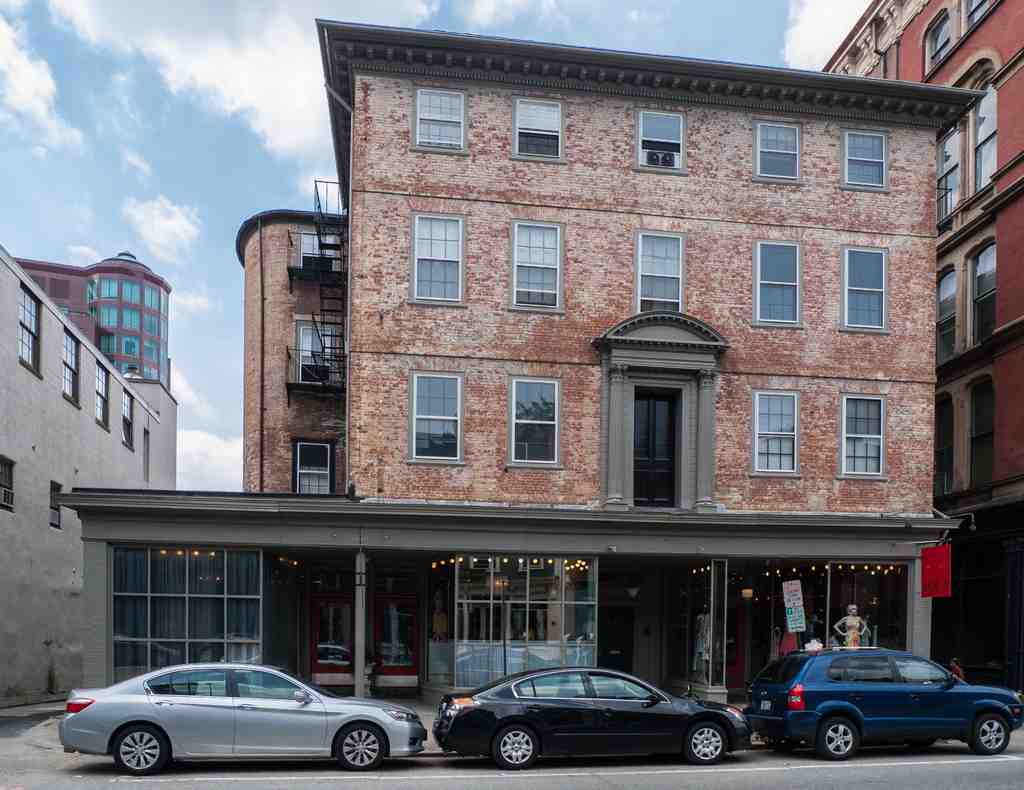
To spot the Joseph and William Russell House, look for a large, brick, cube-shaped building with an elegant doorway framed by columns, sitting above a row of shop windows right…Czytaj więcejPokaż mniej
To spot the Joseph and William Russell House, look for a large, brick, cube-shaped building with an elegant doorway framed by columns, sitting above a row of shop windows right along North Main Street. Welcome to the Joseph and William Russell House! Now, take a moment to imagine you’re standing here back in 1772-horses clopping past, merchants unloading barrels, the clink of coins in the background. This stately brick home, with its sharp Georgian lines and that fancy Corinthian doorway, was once at the center of Providence’s bustling trade with England and the West Indies. Merchants Joseph and William Russell, brothers who knew a thing or two about ambition-and a good cup of imported tea-built this house as both a residence and a symbol of their rising fortunes. The big question of the day then was: “Who built this masterpiece?” History keeps that a bit mysterious, but rumors point to Joseph Brown, a name you’ll hear popping up as we stroll through College Hill. Meanwhile, Zephaniah Andrews, the bricklayer, left his fingerprints not only here but over at the Market House and the John Brown House. Now, let’s time-travel to a hot summer in 1781. As the American Revolution raged on, a French nobleman-François-Jean de Chastellux-slept under this very roof while making plans to join Washington’s army. Imagine hushed French whispers and the scratch of maps unfurling late at night. This house wasn’t just about balls and tea sets; it also helped hatch plans that turned the tide of a war! Years rolled by, and the house saw new faces-doctors like Amos Throop, future inventors like Zachariah Allen, and eventually shoppers and guests when it became the Clarendon Hotel. By the 1870s, the city decided North Main Street could use more elbow room-so they lifted the entire building one story higher and popped some shops underneath. Imagine that jarring sound-a house on the move! Today, the Russell House is a patchwork of old and new. Its parlor woodwork lives as far away as Brooklyn and Minneapolis, and under these walls, you’ll find shops, galleries, and even artists dreaming up the next chapter. This place isn’t just a rumble of bricks-it’s the echo of all those lives, secrets, and stories stacked on top of each other.
Otwórz dedykowaną stronę →Here we are, standing in front of one of Providence’s brightest beacons of creative energy-the Rhode Island School of Design, or as the cool kids call it, RISD, pronounced…Czytaj więcejPokaż mniej
Here we are, standing in front of one of Providence’s brightest beacons of creative energy-the Rhode Island School of Design, or as the cool kids call it, RISD, pronounced “Riz-Dee.” Imagine the hum of youthful ambition, the scent of fresh canvas and clay, and the flutter of oversized sketchbooks. This is College Hill, but for more than a century, it’s been more like “Creative Hill”-and you’re right at the center of it all. Let’s rewind to 1876, when a woman named Helen Adelia Rowe Metcalf saw the future in a place no one expected-the Women’s Pavilion at the Centennial Exposition in Philadelphia. Picture her moving through a busy hall, surrounded by the smell of machine oil and freshly cut wood, dazzled by the work of female inventors and designers. Most women in her time didn’t have a way into design. But Helen did what any artist would do-she used what she had. After fundraising, she convinced her peers to invest their leftover money-not in a statue, not in a new tea set, but in a school for design in Providence. On a chilly January day in 1877, they voted. And with the sound of the vote echoing in the committee room, RISD was born. RISD was always ahead of its time. From day one, it was coeducational and gave women a direct pathway into art and design, when most schools barely let them peek through the door. The very first class had 43 students-most of them women-packed into six rooms on the fourth floor of the Hoppin Homestead Building downtown. Talk about a bohemian start. But by 1893, RISD had a home-right here on College Hill, where you can still feel the buzz of possibility in the air. The school’s story is filled not just with easels and brushstrokes, but with activism. During the Vietnam War, you might have seen students working late into the night, painting bold protest banners, and creating art with messages more pointed than a freshly sharpened pencil. One famous piece, “Leave the Fear of Red to Horned Beasts,” became a symbol far outside Providence-its image even made it all the way into a museum in Vietnam. That bold, creative spirit has never left. Whether the picket lines of recent labor strikes or the vibrant calls for racial justice, RISD’s students and faculty aren’t just artists-they’re changemakers. In 2020, they formed the RISD Anti-Racism Coalition and demanded real change, from hiring more diverse faculty to returning looted art pieces. RISD isn’t just about protest; it’s also seriously top-tier. Until recently, it topped national rankings for art and design programs and even decided to drop out of the rankings, believing no number can truly measure creativity. Its proximity to Brown University means students here and there swap classrooms and ideas-and sometimes, it’s hard to tell where one campus ends and the other begins. And let’s not forget the fun side! RISD’s sports teams have the kind of, um… “ballsy” humor you won’t find anywhere else. The hockey team? The “Nads”-yes, as in “Go Nads!” The basketball team? Simply, “The Balls.” And then, there’s their not-so-subtle mascot, Scrotie. Just imagine a 7-foot-tall, anatomically-inaccurate, prancing mascot bringing pure confusion to their Ivy League neighbors. RISD’s alumni have gone on to reimagine everything from children’s books to Hollywood films, and even co-founded Airbnb. Talking Heads, the legendary band, started right here-maybe you can still feel the echo of their guitars on quiet nights. Elsewhere on campus, the RISD Museum houses more than 100,000 works of art-making it one of the largest college art museums in the country. It’s a place where you might find ancient Egyptian mummies and cutting-edge video installations side by side. So take in the sights, the sounds, maybe even a gust of creative wind as it blows past you. RISD isn’t just an art school-it's a living, breathing canvas, splashed with more than 140 years of color, courage, and a little bit of mischief. And who knows? That creative spark in the air-it might be catching. Ready to delve deeper into the rankings and admission, campus or the risd museum? Join me in the chat section for an enriching discussion.
Otwórz dedykowaną stronę →Look straight ahead for a tunnel with a white concrete entrance set into the hill, framed by buildings on either side and marked with big "BUSES ONLY" warnings painted across the…Czytaj więcejPokaż mniej
Look straight ahead for a tunnel with a white concrete entrance set into the hill, framed by buildings on either side and marked with big "BUSES ONLY" warnings painted across the red pavement. Welcome to the mysterious and mighty East Side Trolley Tunnel! Now, take a deep breath-imagine it's the year 1914. You're right here, where the rush of city streets sputters out and the cool darkness of the tunnel begins. Back in those early days, the sounds of clang-clanging trolleys echoed through this very passage, as commuters avoided the knee-burning 10% grade of College Hill looming up above you. This tunnel was a real-life cheat code for anyone tired of climbing the seemingly endless hill where Brown University rests! At over 2,100 feet long, the tunnel runs like a secret artery beneath College Hill, its east mouth spilling out right here on Thayer Street-the very heart of student life and late-night eats. On the other end, it opens up under the watchful eyes of the Rhode Island School of Design, whose Waterman Building sits directly above the western portal. Imagine the nerves of those 1910s construction workers as they dug right under a beloved art school, bracing structures overhead and hoping nothing would tumble down! I wonder if anyone painted a nervous self-portrait during that time... The tunnel’s been a shape-shifter since day one: first for trolleys, then trackless trollies, and since 1948, it’s been the domain of buses only. It’s said the East Side Trolley Tunnel offered North America its very first “bus rapid transit” link-way before “BRT” was cool or anyone wore neon safety vests unironically! Today, about 4,500 people a day travel through, far away from rush hour’s honking chaos. But shhh-here’s a little secret: Despite those forbidding signs, local legends abound of inventive skateboarding sprints and the occasional delivery daredevil who couldn’t resist shooting the tunnel at top speed! Just don’t let the cops catch you, or you’ll pay more than a fare. Senators have toured it, artists have built above it, and regular folks have zipped through it for over a century. So when you look into that tunnel, you’re peering into a living piece of Providence’s pulse-a shortcut carved by sweat, wit, and a healthy disdain for walking up hills in fancy shoes.
Otwórz dedykowaną stronę →
Pokaż jeszcze 5 przystankówPokaż mniej przystankówexpand_moreexpand_less
To spot the Dr. George W. Carr House, look for a dramatic corner building right at the busy intersection, with a round turret that rises up like a fairy-tale tower and a jumble of…Czytaj więcejPokaż mniej
To spot the Dr. George W. Carr House, look for a dramatic corner building right at the busy intersection, with a round turret that rises up like a fairy-tale tower and a jumble of brown stone, half-timber, and shingled walls that stand out in a whimsical patchwork. Imagine standing here in 1885, listening to the clatter of horse-drawn carriages as this Queen Anne style wonder was brand new-its brick turret shooting toward the sky, the sharp rooflines framing bold patterns, and all of Providence buzzing with curiosity about the grand house on the hill. As years swept by, the Carr House saw a parade of lively characters: in 1916, the second floor was packed with engineers from the Providence Engineering Society, no doubt arguing over blueprints while trying not to spill coffee on the Victorian carpets. By 1926, artist Frank Convers Mathewson called this place home, painting away in rooms bursting with the light and inspiration only buildings like this can offer. Then came the Rhode Island School of Design, who scooped it up and gave it a new purpose-you might even still catch a faint whiff of coffee from the Carr Haus student café and hear ghostly laughter from students lounging just above the street’s hustle. If these walls could talk, I bet they’d brag they never once fell asleep during a lecture!
Otwórz dedykowaną stronę →To spot the State Arsenal, just look for a pale, castle-like building with two square towers topped with “battlements” and a giant arched wooden door-it stands boldly right beside…Czytaj więcejPokaż mniej
To spot the State Arsenal, just look for a pale, castle-like building with two square towers topped with “battlements” and a giant arched wooden door-it stands boldly right beside Benefit Street like a fortress waiting for its next adventure. As you stand here, imagine the year is 1843. The air is brisk, and the echoes of marching boots ring through the chilly Providence streets. This building before you is no ordinary structure-its two battlemented towers and gothic windows might make you think you're auditioning for a part in a medieval movie. But this is the State Arsenal, built straight after a time of political chaos called the Dorr Rebellion. Folks back then were so worried about future uprisings, they decided nothing but a full-priced armored castle would do-so in came architect James C. Bucklin, who, despite usually favoring Greek columns over gothic spires, gave this building a look that makes it seem ready for a dramatic showdown. Just imagine the clanking and echoing inside that massive hall as the Providence Marine Corps of Artillery drilled and readied themselves for action. This place wasn't just for show-during the Civil War, 10 artillery batteries were sent off from right here, their cannons and hopes rolling down Benefit Street. Those young men must have felt their hearts pounding with excitement and nerves, the air thick with the sharp smell of iron and gunpowder. During its lifetime, the Arsenal has housed not only the PMCA, but also veterans of the Grand Army of the Republic and those who fought in the Spanish-American War-layers upon layers of people with stories to tell. Oh, and in a twist more awkward than a misplaced cannonball, in 1924, the Ku Klux Klan tried to hold a secret meeting here; but Governor Flynn shut that down faster than you can say “not on my watch.” Talk about a building that’s moved with the times-literally! In 1906, they picked the whole thing up and moved it just across the lot to make way for a train tunnel. I hear the neighbors were impressed-and perhaps a bit alarmed-by the literal castle on the move. Today, the Arsenal is still alive with tradition, holding ceremonies for today’s artillery and keeping company with countless military relics. So when you look at these walls, remember, they’ve stood through rebellion, war, parades, and some serious party crashers! If you linger quietly, you just might imagine the shuffle of boots and the distant clang of medals.
Otwórz dedykowaną stronę →Look for a striking, tall square tower with a white upper section and red brick base, perched on the hillside to your left-if you see rounded arch windows and fancy woodwork under…Czytaj więcejPokaż mniej
Look for a striking, tall square tower with a white upper section and red brick base, perched on the hillside to your left-if you see rounded arch windows and fancy woodwork under wide eaves, you’ve found the Congdon Street Baptist Church! Now, picture yourself here two hundred years ago, with the echoes of a brand-new congregation filling the air. Founded in 1819, this was one of the earliest African American churches in Providence. The land? Gifted by Moses Brown himself-a big-shot abolitionist, so no pressure, right? But it wasn’t always smooth sailing. Can you believe that the original church building was actually torn down in 1869 without the church’s knowledge-by neighbors who didn’t want it around? Talk about bad manners! Still, these folks didn’t give up. In 1875, a new building rose-this very one-with swooping Italianate style, bold sash windows, and that eye-catching square tower with playful woodwork that almost begs for a marching band to appear. Inside, it’s all Victorian charm and delicate wall stencils. Fast forward to 1968: 65 brave Black students from Brown University took shelter and staged a powerful protest right here, demanding a fairer, more supportive campus. This church stands as a symbol of resilience through struggle and hope-and let's face it, it looks pretty sharp, too!
Otwórz dedykowaną stronę →To spot the Woods-Gerry House, look for a huge three-story brick mansion partly hidden by tall trees, with big arched windows and a grand porch right in front of you. Now pause a…Czytaj więcejPokaż mniej
To spot the Woods-Gerry House, look for a huge three-story brick mansion partly hidden by tall trees, with big arched windows and a grand porch right in front of you. Now pause a moment and let your imagination travel back to 1860-picture the air filled with the sound of horse-drawn carriages and the smell of freshly cut grass, as this place was brand new, standing tall and proud on Prospect Street. The Woods-Gerry House was commissioned by Dr. and Mrs. Marshall Woods, who wanted a home grand enough to fit their bustling social life-and maybe to have the fanciest address on the block! Designed by Richard Upjohn, a master architect of the time, it stands as Providence’s largest surviving 19th-century house. Take a look at its elegant Italianate features: the arched porch where ladies in hoop skirts would gossip, and a sweeping porte-cochere big enough to shield a whole family from the rain. Today it’s RISD’s Admissions office, but back when those bricks were fresh, it was a symbol of taste, wealth, and a little bit of competitive neighborly pride. Listed on the National Register of Historic Places, this building has seen Providence’s history swirl around it-just imagine all the stories hidden behind those stately walls! And if you hear someone whisper “Welcome to RISD!”-don’t worry, it’s probably just the ghosts of eager art students past.
Otwórz dedykowaną stronę →To spot the Providence County Courthouse, just look ahead for the grand red-brick building with a stately clock tower, tall arched windows, and a long line of columns across its…Czytaj więcejPokaż mniej
To spot the Providence County Courthouse, just look ahead for the grand red-brick building with a stately clock tower, tall arched windows, and a long line of columns across its front-it’s hard to miss with its elegant symmetry looming right over the street. Now, as you’re standing in front of this impressive courthouse, imagine you’re stepping into a place that’s been at the very heart of Providence’s drama for centuries-where arguments were louder than car horns and secrets heavier than the building itself! This spot has served as the city’s seat of justice for nearly 300 years, starting all the way back in 1723 when citizens gathered at a simple meeting house built by the First Congregational Society-picture wooden beams, the creak of old floors, and tales of heated town debates rolling through the chilly air. Fast forward to 1877, and the town needed an upgrade-a High Victorian Gothic courthouse rose here with turrets and brickwork you’d expect from a castle, but, as with most old buildings, it came with a few…um…fire hazards and the problem of judges getting a bit squished. So, in the roaring twenties, Providence tore down the old courthouse and, with an architect’s flourish, gave the city this massive Georgian Revival beauty you’re looking at now. As they built it, the city even picked up and moved the historic Stephen Hopkins House-imagine moving an entire house as if it was just a particularly stubborn piece of furniture! Today, behind those red bricks and granite trim, you’ll find the Rhode Island Supreme Court and Superior Court. The building is made to fit in among its historic neighbors, but at 216 feet tall, it still stands out-kind of like a lawyer in a bright polka-dot tie. Soak in the majesty, and picture the echo of powdered wigs, gavels striking with authority, and the constant pulse of justice in the air!
Otwórz dedykowaną stronę →
Najczęściej zadawane pytania
Jak rozpocząć trasę?
Po zakupie pobierz aplikację AudaTours i wpisz kod realizacji. Trasa będzie gotowa do natychmiastowego rozpoczęcia – po prostu dotknij \"Play\" i podążaj trasą z nawigacją GPS.
Czy potrzebuję internetu podczas trasy?
Nie! Pobierz trasę przed rozpoczęciem i korzystaj z niej w pełni offline. Jedynie funkcja czatu wymaga internetu. Zalecamy pobieranie przez WiFi, aby oszczędzać dane mobilne.
Czy to wycieczka grupowa z przewodnikiem?
Nie – to samodzielny audioprzewodnik. Zwiedzasz niezależnie, we własnym tempie, z narracją audio odtwarzaną przez telefon. Bez przewodnika, bez grupy, bez harmonogramu.
Ile trwa trasa?
Większość tras zajmuje 60–90 minut, ale to Ty kontrolujesz tempo. Wstrzymuj, pomijaj przystanki lub rób przerwy, kiedy chcesz.
Co jeśli nie zdążę ukończyć trasy dzisiaj?
Żaden problem! Trasy mają dożywotni dostęp. Wstrzymaj i wznów, kiedy chcesz – jutro, za tydzień lub za rok. Twój postęp jest zapisywany.
W jakich językach są dostępne trasy?
Wszystkie trasy są dostępne w ponad 50 językach. Wybierz preferowany język podczas realizacji kodu. Uwaga: języka nie można zmienić po wygenerowaniu trasy.
Gdzie znajdę trasę po zakupie?
Pobierz darmową aplikację AudaTours z App Store lub Google Play. Wpisz kod realizacji (wysłany e-mailem), a trasa pojawi się w Twojej bibliotece, gotowa do pobrania i rozpoczęcia.
Jeśli trasa Ci się nie spodoba, zwrócimy Ci pieniądze. Skontaktuj się z nami pod adresem [email protected]
Bezpieczna płatność przez