
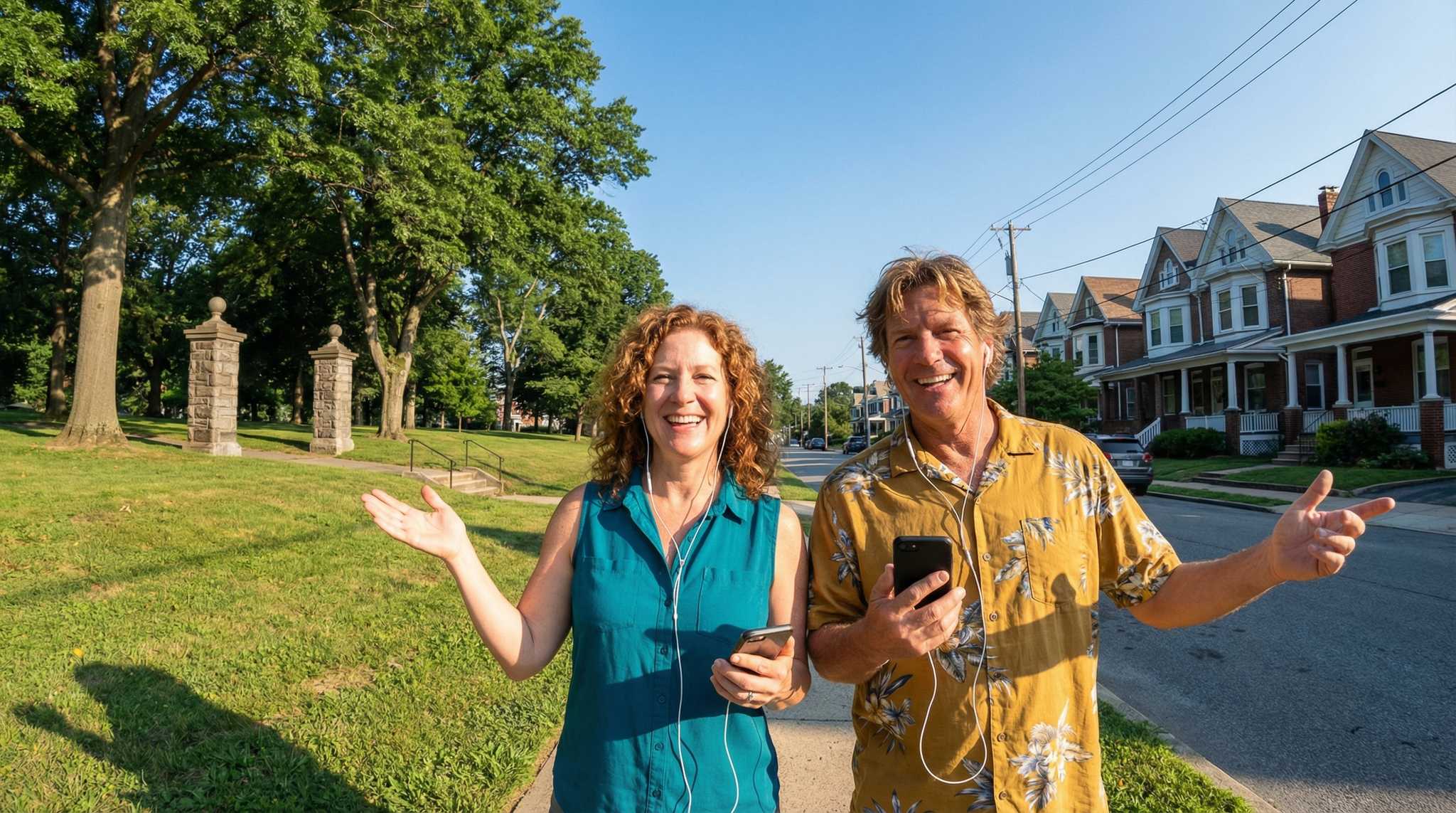
Wycieczka audio po Filadelfii: Echa historycznych ulic Zachodniej Filadelfii
W cieniu wiekowych platanów w Clark Park Filadelfia skrywa sekrety, które nigdy nie trafiły do podręczników historii – stoczone bitwy, rozpalone namiętności, rany zagojone w samej ziemi pod twoimi stopami. Wyrusz na samodzielną wycieczkę audio, która odsłania zapomniane oblicza miasta, prowadząc przez ukryte zakątki i niesławne miejsca, które większość turystów mija w pośpiechu. Spaceruj we własnym tempie i pozwól, by każdy krok odkrywał nową historię. Kto zniknął kiedyś za kulisami legendarnej Philadelphia Arena, by nigdy więcej się nie pojawić? Jakie tajemnice kryją się na dawnych terenach Szpitala Ogólnego Satterlee, gdzie tysiące ludzi walczyło o życie i wolność? Który niedoceniony bunt odcisnął swoje piętno tuż pod najbardziej ruchliwymi miejscami spotkań w mieście? Śledź ścieżki dramatu, skandalu i nadziei, podążając za pulsem Filadelfii od spokojnych ławek w parku po rozbrzmiewające echem sale. Każda ulica szepcze sekret. Każdy punkt orientacyjny kryje wyzwanie. Naciśnij „odtwórz” teraz i pozwól Filadelfii pokazać swoje prawdziwe oblicze, ukryte tuż pod powierzchnią.
Podgląd trasy
O tej trasie
- scheduleCzas trwania 40–60 minsIdź we własnym tempie
- straighten4.3 km trasy pieszejPodążaj wyznaczoną trasą
- location_onLokalizacjaFiladelfia, Stany Zjednoczone
- wifi_offDziała offlinePobierz raz, korzystaj gdziekolwiek
- all_inclusiveDożywotni dostępOdtwarzaj ponownie w dowolnym momencie
- location_onStart przy Philadelphia Arena
Przystanki na tej trasie
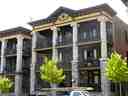
Look to your left to spot a striking row of grand, three-story brick and granite buildings with bold yellow trim and tall, elegant white columns-those are the Breslyn…Czytaj więcejPokaż mniej
Look to your left to spot a striking row of grand, three-story brick and granite buildings with bold yellow trim and tall, elegant white columns-those are the Breslyn Apartments. Standing in front of these mighty Beaux Arts beauties, you can almost hear the echo of 1913, when these five impressive buildings first rose up in Spruce Hill. Picture the clatter of streetcars, hats tipping, and the buzz of neighbors gathering on those large open porch-balconies, held up by Ionic columns that look like they were borrowed straight from a Roman temple. Each building is just the right mix of graceful and grand: thirty-eight feet wide, ninety-eight feet deep, with arching windows, curvy balconies, and little touches of terra cotta and iron that glint in the sunlight. If these walls could talk, they’d tell stories from the Roaring Twenties, the sleepy decades after, and all the way up to today-making them, in a way, official keepers of West Philly secrets. Fun fact: the apartments were so special, they landed a spot on the National Register of Historic Places back in 1982. Some say their majestic Corinthian-topped piers look so grand, they could make even ancient Roman architects jealous. So take a breath, enjoy the stonework at your feet and the columns reaching for the sky, and know you’re standing in front of one of the coolest, most stylish apartment buildings in all of Philadelphia. And if you hear a creak or two, don’t be alarmed-it’s probably just the building stretching its legs after over a century of stories!
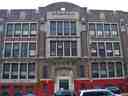
Otwórz dedykowaną stronę →Look straight ahead for a big, three-story brick school building with a grand stone entrance in the middle-right above the front doors you’ll spot “Henry C. Lea Public School”…Czytaj więcejPokaż mniej
Look straight ahead for a big, three-story brick school building with a grand stone entrance in the middle-right above the front doors you’ll spot “Henry C. Lea Public School” carved into the stone. Here you are, standing before the historic Henry C. Lea Elementary, a place where learning and history go together like peanut butter and jelly! Picture it in 1914: the paint was still drying, and kids were probably comparing whose lunch was the weirdest. Designed by Henry deCourcy Richards and built by Cramp & Co., this isn't just any old school-this is a castle of learning, complete with a raised foundation that almost makes it look like it’s standing on its tiptoes, eager to teach. Its Late Gothic Revival style, complete with a classy limestone entrance, decorative panels, and a dramatic, castle-like parapet, gives a sense of adventure to anyone walking through its doors. But here’s where it gets even cooler: for years, teachers from all over came here to learn their trade, since it was used as an “observation school.” The hallways were full not just of excited students but nervous, notebook-clutching future teachers trying to crack the code of what made good teaching tick-maybe even jotting down which kid was about to start the food fight in the cafeteria. Today, through a special connection with the University of Pennsylvania, more than a dozen departments pitch in, sparking curiosity and creativity for a whole new generation. Who would have thought that this historic school, with its brickwork and watchful window eyes, has welcomed everyone from rookie teachers to bright-eyed first graders-all under the careful gaze of Henry Charles Lea himself, the publisher and civic activist whose name it bears? I bet even he never imagined such an adventure!
Otwórz dedykowaną stronę →
Pokaż jeszcze 10 przystankówPokaż mniej przystankówexpand_moreexpand_less
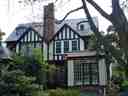
To spot Garden Court, just look for the charming house with black-and-white Tudor-style wooden beams and a tall brick chimney, peeking out behind leafy greenery right in front of…Czytaj więcejPokaż mniej
To spot Garden Court, just look for the charming house with black-and-white Tudor-style wooden beams and a tall brick chimney, peeking out behind leafy greenery right in front of you. Welcome to Garden Court! Imagine you’re standing here in the jazzy 1920s, the sidewalks busy with people dressed to impress, and the Philadelphia Inquirer whispering that this was “the most exclusive location in West Philadelphia.” Back then, this neighborhood was a patchwork of elegant homes, like the beautiful one before you, cozy rows of local shops at intersections bustling with laughter, and the occasional trolley bell chiming in the distance. Today, Garden Court is still one of Philly’s gems-home to over 8,000 neighbors, each weaving their own story into the tapestry of the area. It’s a place where cultures mix freely, where you can find kids rushing off to the Henry C. Lea Elementary School or the tiny ones holding hands at West Philly Cooperative Preschool. If you time your visit right, you’ll catch locals chatting at bus stops as SEPTA’s buses and the Route 34 trolley glide past-so don’t be startled! Whether you’re admiring the Garden Court Condominiums or just soaking in the residential calm broken only by friendly greetings, this neighborhood is a reminder that exclusivity can turn into warm, vibrant diversity over the decades. Even the ghosts of the ‘20s would have to agree… Garden Court is still the place to be!
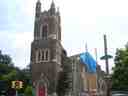
Otwórz dedykowaną stronę →To spot Calvary United Methodist Church, just look for the tall, gray stone building with striking towers, arched windows, and bright red doors standing proudly at the southeast…Czytaj więcejPokaż mniej
To spot Calvary United Methodist Church, just look for the tall, gray stone building with striking towers, arched windows, and bright red doors standing proudly at the southeast corner of 48th Street and Baltimore Avenue. Picture yourself back in 1907, when this magnificent stone church first opened its doors-gleaming new, full of echoes from bustling streetcars, and neighbors heading to worship on foot. Built by a hopeful Methodist community determined to make a spiritual home, Calvary’s grand gothic towers soon watched over decades of change. Rumor has it the bell once startled the local pigeons so badly they organized a feathery protest (okay, maybe just a lot of abrupt flapping). But Calvary’s story isn’t just stone and stained glass-it’s about welcoming everyone. When other doors stayed closed, in 1985, Calvary boldly swung theirs wide to the LGBTQ community, joining the Reconciling Ministries Network at a time when such a decision still turned a few heads, and maybe ruffled a few church hats, too. Today, if you listen closely, the building buzzes with more than worship. Whole flocks of people come and go-community groups, artists, theatre troupes, all thriving under one complicated, pointed roof. The Calvary Center for Culture and Community helps keep those ancient stones standing and the lights on for anyone needing a stage, a seat, or a safe space. So as you stand here, imagine the layers of laughter, hymns, activism, and applause-one big, spirited neighborhood hug, right here on Baltimore Avenue!
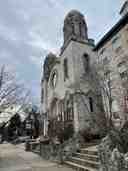
Otwórz dedykowaną stronę →Looking ahead, you’ll spot St. Francis de Sales Roman Catholic Church by its grand stone facade and its two tall, unmistakable domed towers rising above the sidewalk-just look up…Czytaj więcejPokaż mniej
Looking ahead, you’ll spot St. Francis de Sales Roman Catholic Church by its grand stone facade and its two tall, unmistakable domed towers rising above the sidewalk-just look up for those golden-tiled domes peeking through the trees and you can’t miss it! Picture yourself standing outside this grand church-wind swirling, maybe a car or two humming by on Springfield Avenue. Now, imagine it’s 1907. You would’ve seen workers, mortar on their hands, laying the very cornerstone of this church, filling the air with the sounds of hammers and clinking stone. Architect Henry D. Dagit had bold dreams-a church in the Byzantine Revival style, with a dome inspired by none other than Istanbul’s incredible Hagia Sophia. The neighborhood shared in those dreams: back then, the Irish immigrant community filled these pews every week, gathering for worship, comfort, and a strong sense of home. The real celebrity here is the Guastavino-tiled dome. While it’s certainly glorious to look at, the dome also has a sense of humor-it’s leaked ever since it was built! Entire tiles were swapped out in the 1950s, but the dome just shrugs and still lets a few raindrops in. There were even wild ideas to use copper sheathing, but parish leaders decided the neighborhood wasn’t quite ready for that kind of flash. The interior holds more mysteries. Charles Biswanger from the Dagit firm made sure the inside was just as captivating, and in 1911 the tile arch system was installed, showing off masterwork from the famous Raphael Guastavino Company. Over time, the congregation has opened its doors to a tapestry of new arrivals: Vietnamese refugees in the 1970s, then families from West Africa, African American neighbors, and university students from Penn, Drexel, and the University of the Sciences-so, if you hear a mix of accents and laughter, you’re right where you should be. Now, if you listen closely, you might hear the echo of music-the church’s mighty organ, with nearly 5,000 pipes, sometimes thunders so splendidly that even the Philadelphia Orchestra has recorded here. And talk about choir practice! The choir, the school, and the ever-busy parish-once with over 1,300 kids-form the heartbeat of this place. There’s even a bit of drama in the story: in the '60s, the altar was “modernized” with new lights, chairs, and a floating altar by some famous architects, but the congregation quickly said “no thanks” and restored tradition-the past clashing with the present, but tradition getting the last laugh. It’s a living, breathing testament to Philadelphia’s changing tides-still serving neighbors old and new, still majestic, and yes, still a bit leaky! Exploring the realm of the congregation, architecture or the schools? Feel free to consult the chat section for additional information.
Otwórz dedykowaną stronę →To spot the West Philadelphia Streetcar Suburb Historic District, look ahead for elegant old stone buildings with turrets and pointed towers, stretching along a wide avenue lined…Czytaj więcejPokaż mniej
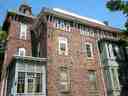
To spot the West Philadelphia Streetcar Suburb Historic District, look ahead for elegant old stone buildings with turrets and pointed towers, stretching along a wide avenue lined with trees and iron fences. Alright, you’re standing at the heart of what was once Philadelphia’s great leap from farmland to city life-welcome to the West Philadelphia Streetcar Suburb Historic District! Imagine it’s the late 1800s: you hear the distant clang of a streetcar bell as horse-drawn wagons rumble along cobblestone streets. Back then, Philadelphia only really sprawled as far as 43rd Street-beyond that? Just quiet, green farmland with the breeze rustling through tall grass. Now, in 1892, everything changes. Electrified streetcars zip down these streets, opening a whole new world to folks who want to live just outside the city, but still feel close to all the action. Imagine the excitement-a quick ride could whisk you from peaceful neighborhoods to Center City in no time. People flocked here, and suddenly brand-new houses, churches, and parks popped up all around you. And if you peek at the corner of Chestnut Street, you’ll find the majestic Christ Memorial Church, designed by Isaac Pursell, standing watch over the neighborhood like a Gothic guardian. Every stone whispers secrets of families arriving with hope and architects sketching a new future. The hum of the city and the echoes of those first streetcars are still hidden here -a place built on wheels, wires, and a bit of West Philly ambition.
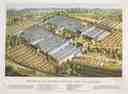
Otwórz dedykowaną stronę →To spot the site of the old Satterlee General Hospital, look around for a wide open area, now mostly parkland, where Clark Park sits-imagine rows and rows of long, low buildings,…Czytaj więcejPokaż mniej
To spot the site of the old Satterlee General Hospital, look around for a wide open area, now mostly parkland, where Clark Park sits-imagine rows and rows of long, low buildings, and hundreds of white canvas tents stretching out across the grass all the way to the edges. Now, let’s step back in time together-cue the marching boots and distant bugles! Picture it: the year is 1862, and you’re standing on what used to be the very heart of a wartime city-within-a-city. Satterlee General Hospital, once the largest Union Army hospital in Philadelphia, rose here almost overnight-built in just 40 days! The place was enormous: 34 sprawling wooden wards, hundreds of tents, and a fence so tall you’d need a ladder (or maybe a really, really ambitious squirrel) to get a peek inside. During the Civil War, this was where thousands of wounded Union soldiers, and even captured Confederate prisoners, came to recover. By the time the battles of Bull Run and Gettysburg filled up the beds, Satterlee could house a whopping 4,500 patients. At its busiest, after Gettysburg in 1863, the hospital population grew to over 6,000 people-imagine a sea of uniforms, bustling doctors, and the constant push and pull of wagons loaded with medical supplies. At the time, West Philadelphia was almost countryside, and the hospital’s 15-acre campus stretched from 42nd to 45th Street, filling up with noise, life, and sometimes heartbreak. The tough work of caring for so many fell to dedicated physicians and a group of heroic nurses, the Daughters of Charity, led by Sister Mary Gonzaga Grace. And let me tell you, these women were tough-they had to share just four utensils between all the sisters, and squeezed into a chapel so tiny they had to take turns! The commanding officer here was Dr. Isaac Israel Hayes, a former Arctic explorer-talk about a cool head in a crisis. Chaplain Father Peter McGrane was there every day, giving comfort, taking confessions, and even conducting baptisms and burials. He was joined by visitors like Archbishop James Wood, who brought encouragement when spirits ran low. By 1863, Satterlee was practically its own small city, complete with a reading room, post office, newspaper press, and even a barber shop. Over one year, the patients here ate 800,000 pounds of bread-just imagine the size of the sandwiches! Despite primitive conditions, the hospital’s team worked miracles: of some 50,000 treated, only 260 died-a jaw-dropping achievement for the time. But, as all things must, Satterlee’s story wound down after the war’s end in 1865, and the hospital closed just a few months later. The wooden halls and white tents disappeared, replaced by homes and, yes-Clark Park itself. Look for the stone stele-Satterlee’s last standing memory-and listen for echoes of courage, compassion, and maybe a joke from a tired nurse about utensils in the wind.
Otwórz dedykowaną stronę →Right in front of you, you’ll see a bronze sculpture of a thoughtful man seated on a high chair with a young girl standing below him, both brought to life on a granite pedestal in…Czytaj więcejPokaż mniej
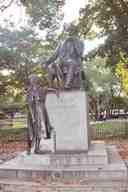
Right in front of you, you’ll see a bronze sculpture of a thoughtful man seated on a high chair with a young girl standing below him, both brought to life on a granite pedestal in the shade of Clark Park’s big trees-just look for the shimmering metal among the leaves and the words “Dickens” and “Little Nell” engraved at the base. Welcome to one of Philadelphia’s most curious treasures: the “Dickens and Little Nell” statue! Picture the scene over a century ago-greasy foundry floors, the clamor of sculptor’s tools, and the artist, Francis Edwin Elwell, sweating over molten bronze, investing his heart into two indelible figures: the famous, bearded Charles Dickens and the ever-sad, ever-hopeful Little Nell from his novel The Old Curiosity Shop. This wasn’t just any sculpture: in the late 1800s, it was a crowd favorite, scooping up prestigious gold medals and making newspaper headlines. Now, here’s the twist-Dickens himself never wanted a statue. In fact, he downright forbade any monuments! He said, "Let my books do the talking, thank you very much." But the Washington Post’s founder, Stilson Hutchins, first wanted one for London. He bailed out, leaving Elwell with his heroic, two-person statue-and nowhere to put it. The statue crossed oceans and time zones, somehow never quite finding a home. First, it sat on display in Philadelphia, then it chugged by steamship to London, where, thanks to Dickens’s ironclad will, not a single Londoner dared to buy it. So, off it went to the grand Columbian Exposition in Chicago. Picture festive chaos-a sea of people in petticoats and straw boaters-all flocking to see Elwell’s work. The New York Times called it one of the most popular pieces of the fair! And yet, even with all this attention, the statue spent a spell gathering dust in a Philadelphia warehouse until, at last, the Fairmount Park Art Association rescued it, bringing Dickens and Little Nell to Clark Park. Since 1901, these two have stood here, rain or shine, tree pollen or snowstorm, with Nell’s youthful hope shining against Dickens’s bemused wisdom. Even vandals tried-unsuccessfully!-to silence their story in 1989. Restored and resilient, they still charm passersby nearly hidden in the greenery, their legacy alive every time someone strolls by and wonders, “Why do we remember?” Well, in Philadelphia, sometimes the story is written in bronze!
Otwórz dedykowaną stronę →To spot Woodland Terrace, look for a row of stately stone twin mansions tucked beneath a canopy of leafy trees, just off the sidewalk between 40th and 41st streets. As you stand…Czytaj więcejPokaż mniej
To spot Woodland Terrace, look for a row of stately stone twin mansions tucked beneath a canopy of leafy trees, just off the sidewalk between 40th and 41st streets. As you stand here, imagine the year is 1861. The air is filled with the scent of spring, and a horse-drawn carriage creaks by on the cobblestones. Samuel Sloan, Philadelphia’s superstar architect, designed these grand homes for anyone who wanted a touch of elegance in their daily life. Each house was crafted to be impressive, but not intimidating - the perfect blend of high style and neighborly warmth. Charles M. S. Leslie, the man who brought this little dream street to life, couldn’t have predicted that one of the future residents would be Paul Cret, a creative genius who’d go on to leave his mark all over the city. Imagine Cret strolling past, brainstorming the next iconic Philadelphia building, maybe dodging an over-enthusiastic dog along the way! Woodland Terrace hasn’t lost an ounce of its charm. It’s a time capsule of West Philly’s golden age, officially declared a historic district in 1972. You can almost hear echoes of old dinner parties and whispered secrets floating down the shady, peaceful block. Step lightly - you’re walking on history’s front porch.
Otwórz dedykowaną stronę →Look straight ahead for a big, stately house made of dark stone, with pale green porches and a tower peeking up on one side-the Hamilton Family Estate stands right in front of…Czytaj więcejPokaż mniej
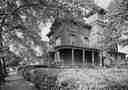
Look straight ahead for a big, stately house made of dark stone, with pale green porches and a tower peeking up on one side-the Hamilton Family Estate stands right in front of you! Imagine it’s the 1850s in Philadelphia-horses clip-clopping down dirt roads, ladies in wide skirts, and gentlemen tipping their hats as they stroll past nine fancy new homes on this very spot. The Hamilton Family Estate isn’t just one house, but an entire group of nine, each one built to impress the neighbors. These beauties were crafted from sturdy stone, with deep green porches and those overhanging cornices decorated with brackets, as if the houses are wearing a ruffled collar! Their Italianate style was the fashion statement of the day, making everyone passing by say, “Ooh la la!” But here’s the kicker-not just anyone could whip up homes this grand. Some were designed by Samuel Sloan, the famous architect whose blueprints shaped Philly’s look in the 1800s. Maybe there’s still a bit of mystery in those old walls. Can you hear the creak of wooden floors echoing with laughter from big family dinners long ago? Or feel the summer heat making the stone walls cool to the touch? As you stand here, you’re in front of a true survivor-these homes were declared historic treasures in 1979, saving them for generations of curious explorers like you. So if these walls could talk, I bet they’d have a thousand stories and at least a hundred party secrets!
Otwórz dedykowaną stronę →
Najczęściej zadawane pytania
Jak rozpocząć trasę?
Po zakupie pobierz aplikację AudaTours i wpisz kod realizacji. Trasa będzie gotowa do natychmiastowego rozpoczęcia – po prostu dotknij \"Play\" i podążaj trasą z nawigacją GPS.
Czy potrzebuję internetu podczas trasy?
Nie! Pobierz trasę przed rozpoczęciem i korzystaj z niej w pełni offline. Jedynie funkcja czatu wymaga internetu. Zalecamy pobieranie przez WiFi, aby oszczędzać dane mobilne.
Czy to wycieczka grupowa z przewodnikiem?
Nie – to samodzielny audioprzewodnik. Zwiedzasz niezależnie, we własnym tempie, z narracją audio odtwarzaną przez telefon. Bez przewodnika, bez grupy, bez harmonogramu.
Ile trwa trasa?
Większość tras zajmuje 60–90 minut, ale to Ty kontrolujesz tempo. Wstrzymuj, pomijaj przystanki lub rób przerwy, kiedy chcesz.
Co jeśli nie zdążę ukończyć trasy dzisiaj?
Żaden problem! Trasy mają dożywotni dostęp. Wstrzymaj i wznów, kiedy chcesz – jutro, za tydzień lub za rok. Twój postęp jest zapisywany.
W jakich językach są dostępne trasy?
Wszystkie trasy są dostępne w ponad 50 językach. Wybierz preferowany język podczas realizacji kodu. Uwaga: języka nie można zmienić po wygenerowaniu trasy.
Gdzie znajdę trasę po zakupie?
Pobierz darmową aplikację AudaTours z App Store lub Google Play. Wpisz kod realizacji (wysłany e-mailem), a trasa pojawi się w Twojej bibliotece, gotowa do pobrania i rozpoczęcia.
Jeśli trasa Ci się nie spodoba, zwrócimy Ci pieniądze. Skontaktuj się z nami pod adresem [email protected]
Bezpieczna płatność przez 


