Wycieczka audio po Newark: Echa innowacji i dziedzictwa
Piorun uderzył kiedyś w kamienne mury Opactwa Newark, podczas gdy studenci w pobliskich salach kreślili słowa, które miały zmienić miasto. Łatwo przeoczyć ukryty dramat Newark — ale jego ulice grzmią nieopowiedzianymi historiami. To Twoja wycieczka audio z samodzielnym zwiedzaniem, przepustka za kulisy do mrocznych zakamarków i jasnych scen Newark. Przejdź przez legendarne szkoły i święte mury, odkrywając sekrety, które większość odwiedzających zostawia nieodkryte na chodniku. Jakie zamieszki wybuchły w sercu Science Park High School, kształtując edukację na zawsze? Które zakazane dzieło sztuki wymusiło radykalną dyskusję w Newark Arts High? Dlaczego procesja mnichów zniknęła kiedyś z widoku publicznego bez śladu? Wędruj od starożytnych kamieni opactwa do tętniących życiem szkolnych korytarzy. Posłuchaj, jak polityczne bitwy odbijają się echem obok szeptanych legend i zapomnianych buntów. Każdy przystanek odsłania nową warstwę i nowy sposób na dostrzeżenie żywego pulsu miasta. Sekrety Newark czekają. Rozpocznij ukrytą historię już teraz.
Podgląd trasy
O tej trasie
- scheduleCzas trwania 40–60 minsIdź we własnym tempie
- straighten5.5 km trasy pieszejPodążaj wyznaczoną trasą
- location_onLokalizacjaNewark, Stany Zjednoczone
- wifi_offDziała offlinePobierz raz, korzystaj gdziekolwiek
- all_inclusiveDożywotni dostępOdtwarzaj ponownie w dowolnym momencie
- location_onStart przy Budynek Central King
Przystanki na tej trasie
Here you are, standing at the grand entrance of the Central King Building at NJIT - and if buildings had memories, this one would definitely need a diary with a lock! Let’s wind…Czytaj więcejPokaż mniej
Here you are, standing at the grand entrance of the Central King Building at NJIT - and if buildings had memories, this one would definitely need a diary with a lock! Let’s wind the clock back to the early 1900s. Picture Newark at that time: a city booming with industry, horse-drawn carriages rumbling through the streets, and maybe the occasional top hat tipping gentleman plotting the future. The Newark School Board had quite the ambitious idea: create a school that wasn’t just about books, but where students could get their hands dirty with wood, metal, machines, even sewing! They wanted a place that was “happier and more healthful” than home. I’m not saying their homes were rough, but if a school’s more relaxing than your house, maybe you need to talk to your parents! In 1909, the school board held an architect competition to make sure nobody could just show up with a few bricks and a whistle and call it a day. The winning architect, Mr. Myers, had big dreams. He wanted to carve out part of the earth itself, digging deep into a big rocky ledge. But the price tag for just the digging? Forty thousand dollars. Imagine trying to expense that with today’s school board - pencils might have to be handmade from tree branches just to cover the cost! So, in swept the real hero of our story: Ernest F. Gilbert, the school board’s own Head of Construction. Instead of digging, he worked out a clever plan to use the natural slope of the land, saving all that cash and keeping everyone happy - except maybe the guy selling shovels. As construction began, Gilbert coordinated with George W. Knight, the resident genius for all things heating, lighting, and ventilation. Just a week after plans went public, the board requested a whole extra floor. Talk about late-stage changes! Yet Gilbert simply rolled up his sleeves and found a way to add it without losing the building’s fantastic design. When the school finally opened in 1911, with its official dedication following in 1912, all of Newark celebrated. By 1913, the building even hosted evening classes - clearly ahead of its time for hardworking folks. Now, gaze up at those towers - they’re not just any towers, but Tudor Gothic sentinels standing watch. The main building boasts a fantastic mix of terracotta and brick, looking almost castle-like, and once inside, the structure buzzed with every kind of activity. The first floor alone housed a machine shop, a library, a metalworking lab, spaces for wood-turning, and even masonry. Upstairs, classrooms for business, laboratories for chemistry and biology, sewing and millinery rooms for crafting hats, kitchens, a laundry room - and by the time you reached the top, you might know enough to bake a cake, sew an apron, and analyze your own baking mistakes with a microscope. Initially, there was an impressive staircase outside, sweeping down and making an entrance grand enough for any dignitary or overenthusiastic student. But in the 1970s, that staircase was demolished and replaced with an indoor swimming pool. Not sure if that counts as “taking the plunge” into modernization, but there it went! After the strife of the 1967 Newark riots, the area changed, and over time, the universities grew larger around this building. In 2010, NJIT finally made Central King its own, gently ushering out the last high school students and repurposing the building for higher learning. Today, the Central King Building is in the middle of a stunning transformation - like a superhero in a renovation montage! A $750 million state grant has helped restore it while preserving the beautiful Collegiate Gothic exterior. The new Center for Innovation and Discovery is rising inside, turning old gyms and pools into labs where science and imagination collide. As you stand here, you’re witnessing an ongoing story - where ideas from more than a hundred years ago shake hands with tomorrow’s technology. And if you’re lucky, maybe a little bit of that “happier and more healthful” spirit will rub off on you too… just don’t ask me to sew a hat. My talents lie more in storytelling than millinery!
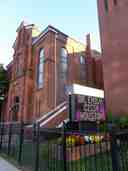
Otwórz dedykowaną stronę →To spot the New Hope Baptist Church, just look for the large, red brick building with tall arched windows and a bright digital sign by the entrance, right behind the black iron…Czytaj więcejPokaż mniej
To spot the New Hope Baptist Church, just look for the large, red brick building with tall arched windows and a bright digital sign by the entrance, right behind the black iron fence on Sussex Avenue. Take a deep breath and imagine Newark back in 1903-there’s the scent of fresh bread from nearby homes, and the air hums with hope and excitement as a small group gathers in Addie and Maggie Vine’s living room. That’s where New Hope Baptist Church began, a mission for the city’s growing African-American community-just a handful at first, but determined. Fast forward, and this church isn’t only a spiritual home; it’s been buzzing with history ever since. If these old red bricks could talk, they might sing! Whitney Houston, yes, THE Whitney, sang her very first notes in this church’s choir, surrounded by her mother Cissy and cousins Dionne and Dee Dee Warwick. The music didn’t stop there-the Monotones, famous for their doo-wop hit "Book of Love," started out in this very congregation. And it’s not just music-imagine the excitement as Cory Booker launched his campaign here, or the solemn hush as governors, and then Whitney’s own farewell, filled these halls. Weddings, funerals, and even Cissy Houston’s own final service-this church is a place where history isn’t just told, it’s sung. I hope you brought your best singing voice-because here, the past still echoes!
Otwórz dedykowaną stronę →Alright, take a moment to look at where you’re standing-right in front of what used to be the Warren Street School. Now, time to let your imagination do some heavy lifting!…Czytaj więcejPokaż mniej
Alright, take a moment to look at where you’re standing-right in front of what used to be the Warren Street School. Now, time to let your imagination do some heavy lifting! Picture this: way back in 1848, this very spot first echoed with the laughter, chatter, and perhaps the occasional “forgot my homework” excuse, as kids filed into a plain brick building, the third public school in what was-and still is-America’s third-oldest city, Newark. Fast forward to the 1890s. Imagine big dreams, busy hands, and the smell of fresh-cut timber as construction crews built a grand, castle-like structure-a school fit for a generation of ambitious learners. The school they built wasn’t just another building; its brick walls, terracotta flourishes, and slate roof all shouted, “We mean business!” You might even spot a bit of a fairytale touch: turrets, dormer windows, and masonry so solid it seemed to promise that learning here would last forever. But let’s not forget who we have to thank. The earliest schoolhouse sprang up because of one James Searing, a man generous enough to donate this patch of Newark to give local kids a brighter future. It started with two stories, divided not just by subjects, but by gender-the boys took to the top floor while the girls ruled the ground. Each group had their own assembly room, and-because no one ever gets enough algebra-two cozy recitation rooms. Warren Street School wasn’t just bricks and boards; it was a living, bustling place for over 150 years. Generations of German, Irish, Italian, and African-American children poured through its doors. And here’s a cool twist: future mayor Ras Baraka once taught in these very halls, back when his chalkboard was a lot more powerful than his mayoral pen. But as the city changed, so did the school's fate. White flight and city struggles shrank classrooms and budgets, and by 2006, as the echo of children’s footsteps faded, the mighty Warren Street School closed its doors. It didn’t fall silent right away, though; for years after, the school’s sturdy walls protected district archives, as if trying to hang onto Newark’s history even as the world shifted outside. Sadly, Warren Street met the wrecking ball in 2021. (Yes, on April Fool’s Day-trust Newark’s demolition schedule to have a sense of humor.) A suspicious fire in 2019 damaged only a tiny piece, but it was all the reason the new owner-NJIT-needed to start tearing down. People protested, historians wrote letters, and some noted the irony: the college’s own architecture faculty believed the old school could have been remade into something fresh and new. But the paperwork for landmark status didn’t come through in time, so old bricks and hand-made terracotta that had seen a century of seasons were carted off as landfill. Now, as you stand here, remember: this was more than a school. This was a proving ground, a neighborhood anchor, and a testament to the power and fragility of history. As the city plans for the future, let’s hope it remembers to take the lessons of Warren Street School along for the ride. After all, if these bricks could talk, they’d have enough stories to keep us all in school a lot longer!
Otwórz dedykowaną stronę →
Pokaż jeszcze 9 przystankówPokaż mniej przystankówexpand_moreexpand_less
Take a good look at the imposing building in front of you-this is University Hospital, Newark’s nerve center for all things medical and dramatic. It’s not just a hospital; it’s…Czytaj więcejPokaż mniej
Take a good look at the imposing building in front of you-this is University Hospital, Newark’s nerve center for all things medical and dramatic. It’s not just a hospital; it’s been the setting for real-life heroics, heartbreak, and even a few TV close-ups. Now, let’s jump back in time to 1882. Picture horse-drawn carriages rumbling over cobblestone streets and a fresh-faced Newark City Hospital opening its doors with just 25 beds. Back then, getting into a hospital bed was almost as rare as finding parking in Newark today. Fast forward to the late 1960s, a time of great change. After Newark’s civil unrest in 1967, the hospital changed hands-from the city to the College of Medicine and Dentistry of New Jersey-in a grand agreement to serve Newark’s people forever. Spoiler alert: they’re still keeping that promise. And talk about growing pains! The hospital expanded, became Martland Hospital, and eventually blossomed into College Hospital in 1979. But wait, there’s more name-changing to come: In 1981, the hospital was promoted-congratulations, University status! Finally, in 2013, it became a standalone, state-owned medical giant. By now, it’s the largest provider of uncompensated care in New Jersey. It’s a place where someone with a broken heart-literally-can get care that’s been awarded “Gold Plus” by the American Heart Association. It’s also a Level 1 Trauma Center, meaning when things go bump in the night, the lights are always on here. And for a bit of fame? ABC’s “NY Med” featured these halls. Plus, a documentary called “Don Quixote of Newark” shined a light on the hospital’s compassion during the fight against AIDS in children. University Hospital isn’t just part of Newark’s story-it’s one of the city’s beating hearts, always ready for the next emergency or, sometimes, an unscripted cameo.
Otwórz dedykowaną stronę →Not long after, in 1965, the state of New Jersey took the reins-and I don’t mean they performed a dramatic CPR rescue, but it was almost as heroic. The college was renamed the New…Czytaj więcejPokaż mniej
Not long after, in 1965, the state of New Jersey took the reins-and I don’t mean they performed a dramatic CPR rescue, but it was almost as heroic. The college was renamed the New Jersey College of Medicine and Dentistry and shifted house right here to Newark. With the Medical and Dental Education Act of 1970, things got really interesting: a merger with a budding two-year program at Rutgers and-presto!-a brand-new institution under a single board. Suddenly, the New Jersey Medical School was in the big leagues, the first and oldest med school in the Garden State. Fast forward to 1981: achievements piling up, the school became part of the University of Medicine and Dentistry of New Jersey-try fitting that title on a business card! But wait, there’s another twist. In 2013, after almost 60 years of expansions, mergers, and mouthful names, NJMS became part of Rutgers University, settling into its present form as the flagship of Rutgers Health. Don’t forget, right on this very campus sits University Hospital-home to the state’s most bustling trauma center, a place where quick thinking is as routine as morning coffee. They’re famous for liver transplants, stroke care, brain tumor programs, and even a center for bloodless surgery-yes, really! With over 500 residents in 18 programs, this is where tomorrow’s doctors get their real-world crash course. Names like Pandey, Lourenco, and Schwartz once strolled these halls-and let’s not leave out the classic overachiever, Dr. Azzariti, now a state assemblyman. In short, NJMS has provided diagnoses, discoveries, and maybe the occasional bad cafeteria meal-hey, even med schools need a little comic relief. So hats off to the oldest med school in New Jersey-saving lives, making history, and probably pulling a few all-nighters along the way!
Otwórz dedykowaną stronę →Right ahead, you’ll spot Science Park High School-just look for the modern building with its striking brick and glass façade, topped by a row of impressive solar panels angled…Czytaj więcejPokaż mniej
Right ahead, you’ll spot Science Park High School-just look for the modern building with its striking brick and glass façade, topped by a row of impressive solar panels angled toward the sky like eager sunflowers. All right, as you’re standing here, take a deep breath. Can you feel the buzz of possibility in the air? Maybe you even hear the low rumble of students or a distant bell. Science Park High School, known to locals as SPHS, isn’t just your ordinary high school. It’s a place where the tagline could be “where science meets ambition and everyone’s invited to discover something new!” Founded back in 1974, this school was actually born out of a unique local collaboration, an alliance with Newark’s universities, the city itself, and private industry. The goal? To transform Newark’s kids into the next generation of innovative leaders, whether they’re discovering black holes, solving protein puzzles, or just trying to remember where they put their homework. SPHS serves students from 7th through 12th grade, so the hallways are always abuzz with energy. Imagine, just behind those windows, almost a thousand students and nearly seventy teachers racing from one 42-minute class to another. No block schedules here-just a traditional nine-period day that keeps everyone on their toes! It’s a magnet school, so only the most motivated, college-bound students apply. What’s unique here is that every year, students take two science classes-double the fizz, bang, and eureka! By the time they’re juniors and seniors, they’re knee-deep in Advanced Placement courses like AP Calculus, AP Biology, and even International Baccalaureate classes. Word on the street? If you can survive a pop quiz here, you can survive anything. But that’s just the present. Cast your mind back a few decades. The school’s first home wasn’t this gleaming modern structure, but the old Ballantine Brewery building over on Rector Street. Back in the 1970s, SPHS took root inside the sturdy walls where beer was once brewed-imagine the ghostly clang of old barrels being rolled down the hallways! The space was taken over by Rutgers for research, then transformed into a high school laboratory for discovery of a different kind. The building stood until 2006, when Science Park’s state-of-the-art facility opened up right here on a lush, six-acre campus. On the architectural front, this building is more than just good looks. It’s green before “green” was cool, boasting solar and geothermal energy systems that keep the place heated, cooled, and humming with activity without guzzling energy. If only the vending machines were powered by science fair projects, right? SPHS loves to win-whether it’s in the labs, on debate podiums, or out on the fields. Its Chargers compete across twenty sports, from co-ed track to basketball. The trophy cases are probably groaning under the weight of state titles, especially in girls’ and boys’ track and basketball. In fact, the boys’ basketball team made a storybook comeback in 1995, clawing their way back from a 20-point hole to win the state championship. Now, that’s the stuff of legends! One last fun twist: Science Park’s debate team became famous nationwide for proving that Newark kids-regardless of background-could go toe to toe with anyone. They shattered stereotypes and set new standards, winning national competitions and inspiring countless other inner-city schools to build their own teams. Standing in front of this symbol of learning and hope, you can’t help but smile. Who knows-maybe the next big scientific discovery will come from right inside those walls. And if it involves time travel, maybe someone can go back and warn the old Ballantine brewers what was coming for their building! Eager to learn more about the academics, awards, recognition and rankings or the athletics? Simply drop your inquiries in the chat section and I'll provide the details you need.
Otwórz dedykowaną stronę →You’re standing in front of the Essex County Prosecutor’s Office, one of the busiest places in New Jersey-and trust me, it’s not just because of the morning coffee line! Imagine…Czytaj więcejPokaż mniej
You’re standing in front of the Essex County Prosecutor’s Office, one of the busiest places in New Jersey-and trust me, it’s not just because of the morning coffee line! Imagine the courthouse square bustling, lawyers hustling by, police cars pulling up, fragments of tense conversations echoing down the sidewalk. This is where some of the most dramatic, challenging, and sometimes downright puzzling cases in New Jersey’s history are tackled. Let’s travel back to colonial days-dusty streets, wooden carts, no smartphones in sight. In 1776, just as the Declaration of Independence was hot off the press, New Jersey set up its first Constitution. Law and order looked a lot different back then: county deputies worked under the state Attorney General, and the biggest concern was probably whether someone’s cattle had wandered off. But by 1822, things started getting serious: the General Assembly decided Essex County needed its very own Prosecutor of Pleas. And by 1829, Amzi Dodd became the first governor-appointed prosecutor here-you could say he set the “pleas” for everyone that followed. His very first case? Not a murder or a heist, but that someone had let water get stagnant and stinky in the old burying ground. Hey, you’ve got to start somewhere! As Newark grew, so did crime, and so did this office. By the roaring 1920s, organized crime and corruption were here to party-sometimes at the Palace Chop House, where Dutch Schultz, a notorious gangster, was shot. The investigation became almost as famous as the crime itself, with detectives piecing together the puzzle like the original Law & Order. By the 1950s, Essex County Prosecutors were busting scandals left and right, including a juicy conspiracy in the local milk industry. Yes, even your morning cereal wasn’t safe! Fast forward to the 1960s and 70s-civil unrest shook Newark, crime morphed, and prosecutors started needing teams the size of small armies. They hired more assistants, detectives, and, for the very first time, women joined the ranks. The office got tech upgrades too: forget stacks of paper, they moved to computers, digital crime scene reconstructions, and now they’re linked up with the state’s Automated Fingerprint System. The only thing left is to get an office cat. Today, about 140 prosecutors, 160 detectives, and 125 support staff work here. They handle 16,000 to 20,000 adult criminal cases every year-plus another several thousand cases involving teens. And, fun fact: a huge chunk of New Jersey’s serious crimes get tackled from right here in Essex County. About 18% of the entire state’s felony cases pass through these halls. Imagine the coffee budget! But this office isn’t just about number crunching or paperwork. It’s about real human stories-some heartbreaking, some inspiring, some straight out of a crime novel. In the 1980s, the Kelly Michaels daycare case rocked the nation-decisions made in this very building changed lives and set national legal precedents. There’s been the infamous Glen Ridge case, police brutality trials, the tragic Seton Hall dormitory fire, and the chilling discovery of starving children in a Newark basement. Each case brought tension, heartbreak, and high drama-sometimes with media vans camped outside and crowds hoping for justice. The Essex County Prosecutor is technically not elected, but appointed by the Governor for five-year terms. Think of it as a bit like being picked for jury duty-only with a lot more pressure and way more paperwork! Through the years, the title has passed from pioneers to firsts: the first African-American prosecutor, the first woman, and now leaders who’ve modernized everything from witness protection to crime scene technology. Just imagine: behind these walls, cases are solved, justice is sought, and sometimes the impossible is made possible. Whether the crime is big or small, whether it's a whodunit or a why’d-they-do-it, these folks are always on the case. Alright, let’s keep moving-unless, of course, you have some tidying up to do on your legal record!
Otwórz dedykowaną stronę →Imagine it’s 1904. Horses clop by on Market Street, streetcars rattle down the block, and workers in suspenders are stepping back to admire the grand, shiny new Essex County…Czytaj więcejPokaż mniej
Imagine it’s 1904. Horses clop by on Market Street, streetcars rattle down the block, and workers in suspenders are stepping back to admire the grand, shiny new Essex County Courthouse. Designed by Cass Gilbert-who also gave us the famous Woolworth Building in New York-this courthouse is no ordinary place to settle a debate over who gets the last slice of pizza. Top your gaze to see the gorgeous four-story rotunda, crowned with a shimmering Tiffany skylight, while the nine marble sculptures on the main façade keep a watchful eye on passers-by. Even President Lincoln himself is relaxing here, or at least his statue is; Gutzon Borglum sculpted the famous Seated Lincoln, so don’t be surprised if you feel inspired (or a little presidential) just passing by. Move a bit behind the courthouse and you’ll spot the stately Essex County Hall of Records-a limestone beauty, built between 1925 and 1927. Let’s face it: when you’re in a place with such detailed marble columns, even the paperwork seems important. Rumor has it, if you squint at the Justice William J. Brennan Jr. statue outside, he’ll give you a wise nod for your civic curiosity. This Hall is not only about neat files and record books-it’s where you’ll find the deeds and mortgages of Essex County, safely stashed away. Fast forward to the era of bell-bottoms and big ideas-the 1970s! Rising just west of the old courthouse is the Essex County Veterans Courthouse, a towering 13-story structure of glass and concrete. On the plaza sits Rosa Parks, cool and collected in bronze-Rosa’s unshakeable courage adds a silent power to the scene. The Sheriff’s Office and Prosecutor’s Office are based right here, so walk tall and try not to look too suspicious. Across from Veterans Memorial Park, you'll find the Leroy F. Smith Jr. Public Safety Building. Once a county jail-yes, that's right, a real-life jail-it was transformed into offices in the late 2000s. They even renumbered the top floor to become the magical 14th floor (I guess the architects didn’t want any arguments with superstitious staff). The building is named after Leroy F. Smith Jr., who once marched straight into a hostage crisis, alone, to talk a prisoner into releasing his captive-talk about nerve! Add a touch of modern flair, and you've got the Martin Luther King Jr. Justice Building, built just a few years ago. It’s all gleaming glass, steel, and hope for the future. Stroll down Legends Way, a walkway lined with plaques honoring trailblazers who shaped Newark’s story, and you’ll see two statues of Dr. King himself. Step into the lobby, and it's like the Oscars for civil rights: busts of John Lewis, Ruth Bader Ginsburg, Peter Rodino-and soon, Sonia Sotomayor and Thurgood Marshall. Now there’s a dinner party you'd want an invite to. Don’t overlook Veterans Memorial Park. Once a gray, lonely parking deck, it’s now a leafy space dedicated to the county’s veterans. The park is a peaceful spot-a sharp contrast to the high-stakes work going on all around it. And if you need a quick reminder of how much the landscape changes, look across 320-321 University Avenue. What was once just another building is now the Sheila Oliver Family Assistance office-named after New Jersey’s second lieutenant governor and champion for families in Essex County. Each building here, from the historic courthouse to the shiny new family courthouse under construction, tells a story of government, grit, and the persistent hope for justice and progress. If you keep your eyes open, you’ll see that public art pops up everywhere-statues, lions, plaques-each with a tale of their own. Welcome to Essex County’s nerve center, where every step is a little walk through history, and every building has a new story to tell. For further insights on the essex county courthouse, essex county hall of records or the essex county veterans courthouse, feel free to navigate to the chat section below and inquire.
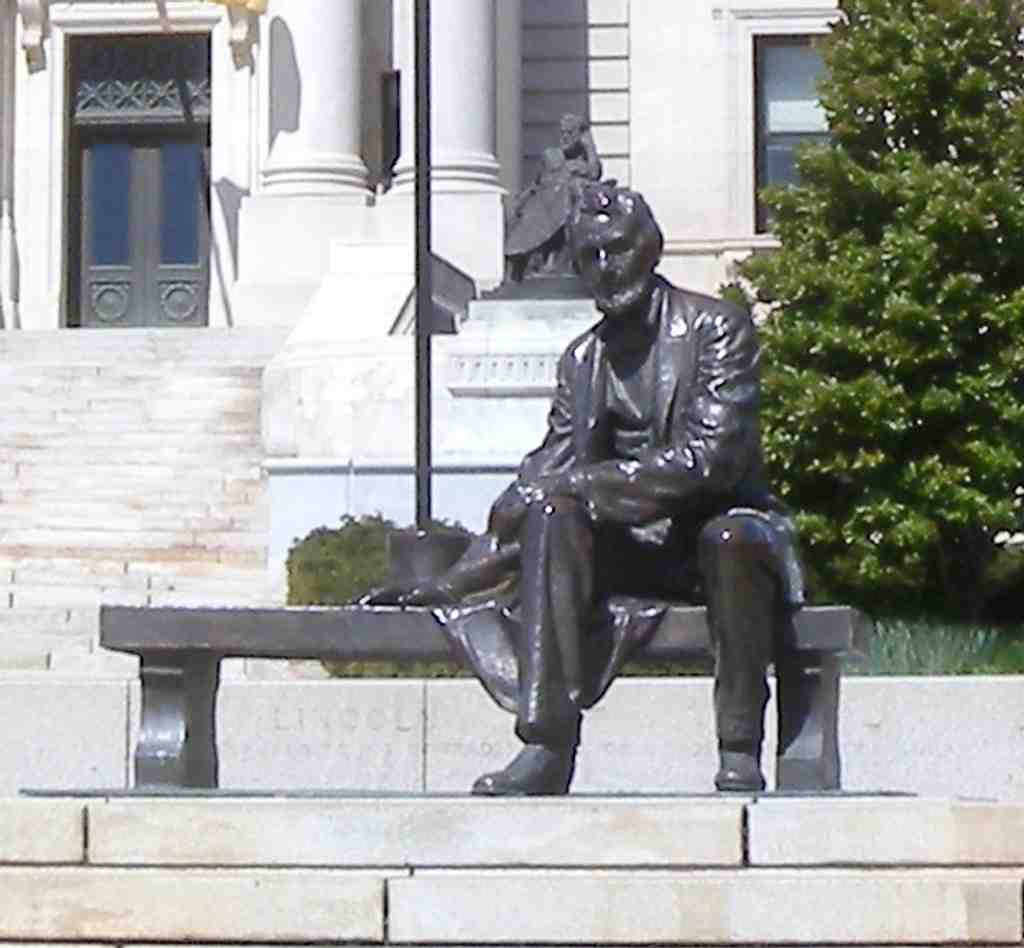
Otwórz dedykowaną stronę →To spot the Seated Lincoln, look for a larger-than-life bronze statue of Abraham Lincoln sitting quietly on a bench beside the steps to the courthouse, his tall hat set…Czytaj więcejPokaż mniej
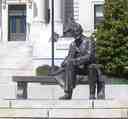
To spot the Seated Lincoln, look for a larger-than-life bronze statue of Abraham Lincoln sitting quietly on a bench beside the steps to the courthouse, his tall hat set thoughtfully by his side. Now, let’s dive into the story! Imagine it’s a bright Memorial Day in 1911-there’s a crowd buzzing with excitement right where you’re standing, and a bronze Abraham Lincoln sits quietly, looking more like he’s lost in thought than ready to give a grand speech. That was exactly what sculptor Gutzon Borglum had in mind! Instead of putting Lincoln high on a throne or tall pedestal, Borglum wanted to show a quieter, more human side of Honest Abe-maybe reflecting on tough decisions, just like he was rumored to do while sitting alone on a bench in the White House garden during the Civil War. The sculpture itself was paid for by local businessman Amos Van Horn, who certainly knew how to make a lasting impression-his bequest also funded the huge Wars of America monument nearby! But back in 1911, this Lincoln sculpture was so unusual that when President Theodore Roosevelt himself dedicated it, he blurted out, “Why, this doesn’t look like a monument at all!” Borglum just grinned; that was exactly what he wanted to hear. And here’s a fun twist: Lincoln’s visit to Newark in 1861 lasted only 45 minutes! He was on his way to be sworn in and took a short stop here at the invitation of local officials. Even though he didn’t win most people’s votes in Essex County, Newark makes up for it now with tributes like this. So, next time you need to mull something over, you’ll know where to sit and look pensive-Lincoln-style!
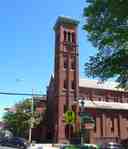
Otwórz dedykowaną stronę →Right in front of you is Newark Abbey, easy to spot with its striking red-brick walls and the tall, six-story tower rising high above the corner of Martin Luther King Jr. Blvd and…Czytaj więcejPokaż mniej
Right in front of you is Newark Abbey, easy to spot with its striking red-brick walls and the tall, six-story tower rising high above the corner of Martin Luther King Jr. Blvd and William Street-just glance up at that impressive, square tower with the green cap, and you can’t miss it! Let’s rewind the clock to the 1840s when waves of German immigrants arrived in Newark, bringing their hopes, dreams, and, clearly, a knack for finding a good hill to build on! The place you’re standing is actually one of the highest points in downtown Newark, and the monks wanted their church, St. Mary’s Abbey Church, to overlook the whole city-sort of like they were keeping an eye on everyone, just in case someone tried to sneak an extra donut at breakfast. The story began when the Benedictine monks arrived from Pennsylvania in 1857, summoned to serve the growing German Catholic community who needed a parish, a school, and maybe a little divine intervention to deal with the local “Know-Nothing” nativists. Seriously, in 1854 an angry mob of 2,500 attacked the parish church-there was shouting, glass shattering, -even tragedy. But the monks and parishioners refused to let violence have the final say. They regrouped and decided if they were going to rebuild, they’d make it grand. By 1857, they had a new church, complete with a soaring tower, thick brick walls, iron pillars inside, and round-topped windows that made the place look (and feel) massively solid…almost as if it dared anyone to mess with it twice. The Abbey and school-originally St. Benedict’s College-grew, changed, and faced more than a few rollercoasters. Imagine monks advertising in magazines in the 1980s for new recruits-“Monastery: peaceful lifestyle, occasional Gregorian chant, must love oatmeal.” And still, the Abbey kept serving the community, especially through Saint Benedict’s Preparatory School. This isn’t just any school; it has seen a whole parade of fascinating moments, from welcoming all-boys, then girls too, to students hiking the Appalachian Trail as a graduation tradition, to being the star of a 60 Minutes special-with students lacing up shoes, marching out -and even catching the attention of NBA superstar Stephen Curry with a basketball documentary. It’s not all laughter and sports, either. The Abbey has housed teens who needed a refuge, offered dorms to those from tough backgrounds, and kept the old spirit alive: tough love, rigorous schools, and daily prayer inside these towering walls. In fact, inside St. Mary’s Abbey Church, you’d see an array of murals, statues, and stained glass, including work by Munich glassmakers and American artists, all topped off with a marble altar under a domed arch that looks fit for a king, or at least a bishop. They say the design is “Rundbogenstil”-which is German for “lots and lots of arches.” And don’t forget-the bell tower was once the tallest thing for miles, chiming across Newark, signaling not just the hour, but hope and resilience, while the monks kept their traditions alive through every twist and turn. Over the decades, their mission adapted-sometimes dramatically-with changing leadership, imaginative fundraising, and a constant flow of students and parishioners. Visitors over the years have included Nigerian Cardinal Francis Arinze, a friend of the monks. Today, the community has fourteen monks, including ten priests, who run Saint Benedict’s and keep the Abbey’s heart beating for Newark. So, as you look up at that red-brick tower reaching for the clouds, just remember: this place has weathered stormy history, loud mobs, classroom chaos, and a few thousand school lunches-always standing strong. It’s living proof that a good hill, steady faith, and a dash of humor can lift you up above almost anything. Yearning to grasp further insights on the abbots, saint benedict's preparatory school or the saint mary's abbey church? Dive into the chat section below and ask away.
Otwórz dedykowaną stronę →But it's not always been a standing ovation for Arts High. By the 1970s, tough times had hit Newark and the school felt it: budget cuts, dwindling resources, and even competition…Czytaj więcejPokaż mniej
But it's not always been a standing ovation for Arts High. By the 1970s, tough times had hit Newark and the school felt it: budget cuts, dwindling resources, and even competition from other exciting arts programs popping up in places like Montclair. The future of Arts High could have turned into a tragedy, but Newark proved it would not give up on its artsy teens! In 1983, in a dazzling twist, local voters said “Bravo!” to a $62.6 million bond package. The school got an $8 million slice, which led to an 18-month makeover straight out of a Broadway set change. By 1996, Arts High was shining again-complete with science and drama labs and an auditorium restored to its original Art Deco glamour. If you peered into that auditorium, you might catch a ghostly performance or two (don’t worry, they’re friendly ghosts-mostly jazz singers and tap dancers lingering from opening night). In fact, in 2007, this school celebrated its 75th birthday with a star-studded celebration. The audience sat spellbound as Savion Glover, the legendary tap dancer and choreographer behind “Happy Feet,” hit the stage with the thunderous beat of drums played by his own students. The energy was electric! There were art exhibits, fashion shows, and even an essay contest about how the school changed lives. One thing’s for sure-no one here ever had to worry about a boring yearbook. Artists aren’t just made here; they’re launched here like fireworks. Newark Arts High boasts an incredible list of alumni: R&B’s Melba Moore, jazz legends like Andy Bey and Sarah Vaughan, acting stars like Michael B. Jordan and Mj Rodriguez, choreographers, designers, even politicians! You may be walking in the footsteps of future Oscar, Grammy, or Tony winners. By the way, if the spirit of creativity seems especially strong, that’s because, until 1997, this building was also the home of the Newark School of Fine and Industrial Arts-a hotbed of artistic ambition from students just out of high school. But don’t think it’s all jazz hands and paintbrushes! The Arts High Jaguars prowl the courts and fields of the Super Essex Conference. From shooting hoops to winning state championships in girls’ and boys’ indoor relays, there’s plenty of school spirit. Sometimes the sound of a basketball bouncing or the crack of a bat blends seamlessly with the call of a trumpet or the shouts from drama class rehearsals. Today, nearly 600 students walk these halls, guided by a dedicated staff-and yes, strict principal Regina Sharpe is on the lookout for untucked shirts and unsanctioned jazz solos in the hallway. In tough times or good, Arts High students have always had the courage to create and perform. Who knows? Maybe, with your creativity, you could be the next big name to join this extraordinary roll call! If you hear a faint melody on the breeze, it might just be the song of a thousand dreams waiting to be realized inside. Exploring the realm of the awards, recognition and rankings, athletics or the administration? Feel free to consult the chat section for additional information.
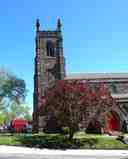
Otwórz dedykowaną stronę →To spot St. James' A.M.E. Church, look for a striking, tall, dark stone building with a grand rectangular tower and bright red doors nestled to your right, standing just behind a…Czytaj więcejPokaż mniej
To spot St. James' A.M.E. Church, look for a striking, tall, dark stone building with a grand rectangular tower and bright red doors nestled to your right, standing just behind a vivid, leafy tree. Welcome to your final stop-St. James’ A.M.E. Church! Take a deep breath and look up at those soaring, hand-cut stone walls; you can almost hear the echoes of history whispering through the Gothic arches. Imagine it’s the 1850s, and stonemasons are chipping away at local Little Falls stone to build what would become a Newark landmark. This is no ordinary church-John Welch, a renowned architect fresh from the old country, poured his heart into every pointed arch and ornate window here, making it look like it jumped right out of medieval England. The church’s life story is something of a wild ride-think of it as Newark’s ultimate comeback kid! First, it opened its doors as the High Street Presbyterian Church in 1854, the community gathering for worship beneath stained glass windows that bathed the pews in warm, colored light. These windows, by the way, don’t just block out the world-they soften sunlight into a golden haze, perfect for those who enjoy a mellow, Sunday morning snooze during the sermon, not that I’m judging! Fast forward to 1926-trouble! The congregation drifts apart, the church closes, and it seems the story is over. But not so fast! A few years later, the church is reborn as Bethel AME, then, finally, takes its proud name: St. James’ A.M.E. Church. For years, the congregation followed the spirit, worshipping in halls, back rooms, and even the ever-glamorous 94 Union Street. In the bracing cold of January 1945-a time when folks wore thick wool coats and the city streets echoed with the sounds of a nation at war-the congregation claimed this very building as their own. Here, in these walls, lives changed: in August that same year, the first wedding brought laughter, flowers, and the soft shuffle of dancing feet on those rich red carpets. For 35 years, James Ballard, legendary church sexton, kept every pew perfect and every candelabra shining. Generations of voices rose in song, the deep notes of the organ swelling over oak pulpit and velvet seats. Don’t miss the church’s unique shape-a wall of hand-chiseled stone on a steep hill, with a tower as solid as the community it serves. In the ’70s, St. James got its well-earned place on the National Register of Historic Places-imagine a flurry of camera flashes and proud grins! Then, in 2000, a grant brought this old beauty a million-dollar facelift, making her even more radiant. Fun fact: during repairs, the congregation took their celebration down the street to Arts High School-proof that community is more about people than bricks and mortar. The church isn’t just famous for its architecture-among its leaders, one even soared to become the 105th Bishop of the entire AME Church, proving greatness can rise from any pew. As you stand before St. James’, let your imagination drift through its chapters-every stone and stained glass panel tells a story of hope, perseverance, and faith shining through even the darkest times. Thanks for walking through Newark’s past with me-who knew church sightseeing could be this electrifying?
Otwórz dedykowaną stronę →
Najczęściej zadawane pytania
Jak rozpocząć trasę?
Po zakupie pobierz aplikację AudaTours i wpisz kod realizacji. Trasa będzie gotowa do natychmiastowego rozpoczęcia – po prostu dotknij \"Play\" i podążaj trasą z nawigacją GPS.
Czy potrzebuję internetu podczas trasy?
Nie! Pobierz trasę przed rozpoczęciem i korzystaj z niej w pełni offline. Jedynie funkcja czatu wymaga internetu. Zalecamy pobieranie przez WiFi, aby oszczędzać dane mobilne.
Czy to wycieczka grupowa z przewodnikiem?
Nie – to samodzielny audioprzewodnik. Zwiedzasz niezależnie, we własnym tempie, z narracją audio odtwarzaną przez telefon. Bez przewodnika, bez grupy, bez harmonogramu.
Ile trwa trasa?
Większość tras zajmuje 60–90 minut, ale to Ty kontrolujesz tempo. Wstrzymuj, pomijaj przystanki lub rób przerwy, kiedy chcesz.
Co jeśli nie zdążę ukończyć trasy dzisiaj?
Żaden problem! Trasy mają dożywotni dostęp. Wstrzymaj i wznów, kiedy chcesz – jutro, za tydzień lub za rok. Twój postęp jest zapisywany.
W jakich językach są dostępne trasy?
Wszystkie trasy są dostępne w ponad 50 językach. Wybierz preferowany język podczas realizacji kodu. Uwaga: języka nie można zmienić po wygenerowaniu trasy.
Gdzie znajdę trasę po zakupie?
Pobierz darmową aplikację AudaTours z App Store lub Google Play. Wpisz kod realizacji (wysłany e-mailem), a trasa pojawi się w Twojej bibliotece, gotowa do pobrania i rozpoczęcia.
Jeśli trasa Ci się nie spodoba, zwrócimy Ci pieniądze. Skontaktuj się z nami pod adresem [email protected]
Bezpieczna płatność przez