
Wycieczka audio po Nowym Jorku: Bohaterowie, nadzieja i wieżowce w Dzielnicy Finansowej
Tysiące historii pędzą przez te stalowe kaniony, gdzie zbijano fortuny, wieże niegdyś upadały, a historia wciąż zmienia zdanie. Nowojorska Dzielnica Finansowa kryje w sobie coś więcej niż giełdowe paski informacyjne i pospieszne kroki – tutaj każdy kwartał strzeże tajemnicy wartej odkrycia. Podczas tej samodzielnej wycieczki audio odkryj moc nieopowiedzianych historii i wślizgnij się w boczne uliczki, których większość turystów nigdy nie zauważa. Poczuj prawdziwy puls Manhattanu, warstwa po warstwie. Co wprawiło Wall Street w całkowity chaos pewnego mroźnego poranka? Które symbole wyryte na Liberty Tower kryją wskazówki do nierozwiązanych zagadek? Dlaczego kwiaty tajemniczo pojawiają się w tym samym miejscu obok Miejsca Pamięci 11 Września każdego miesiąca? Śledź polityczne bitwy ukryte pod maską architektury, podążaj za cieniami buntu i obserwuj, jak stulecia zderzają się nad brzegiem wody. Doświadcz dramatu dzielnicy, ukrytego złamanego serca i nadziei na każdym kroku. Czy jesteś gotowy, by przejść przez sekrety, których Nowy Jork nigdy w pełni nie ujawnia? Twoja historia zaczyna się teraz.
Podgląd trasy
O tej trasie
- scheduleCzas trwania 30–50 minsIdź we własnym tempie
- straighten0.5 km trasy pieszejPodążaj wyznaczoną trasą
- location_onLokalizacjaNowy Jork, Stany Zjednoczone
- wifi_offDziała offlinePobierz raz, korzystaj gdziekolwiek
- all_inclusiveDożywotni dostępOdtwarzaj ponownie w dowolnym momencie
- location_onStart przy Liberty Tower
Przystanki na tej trasie
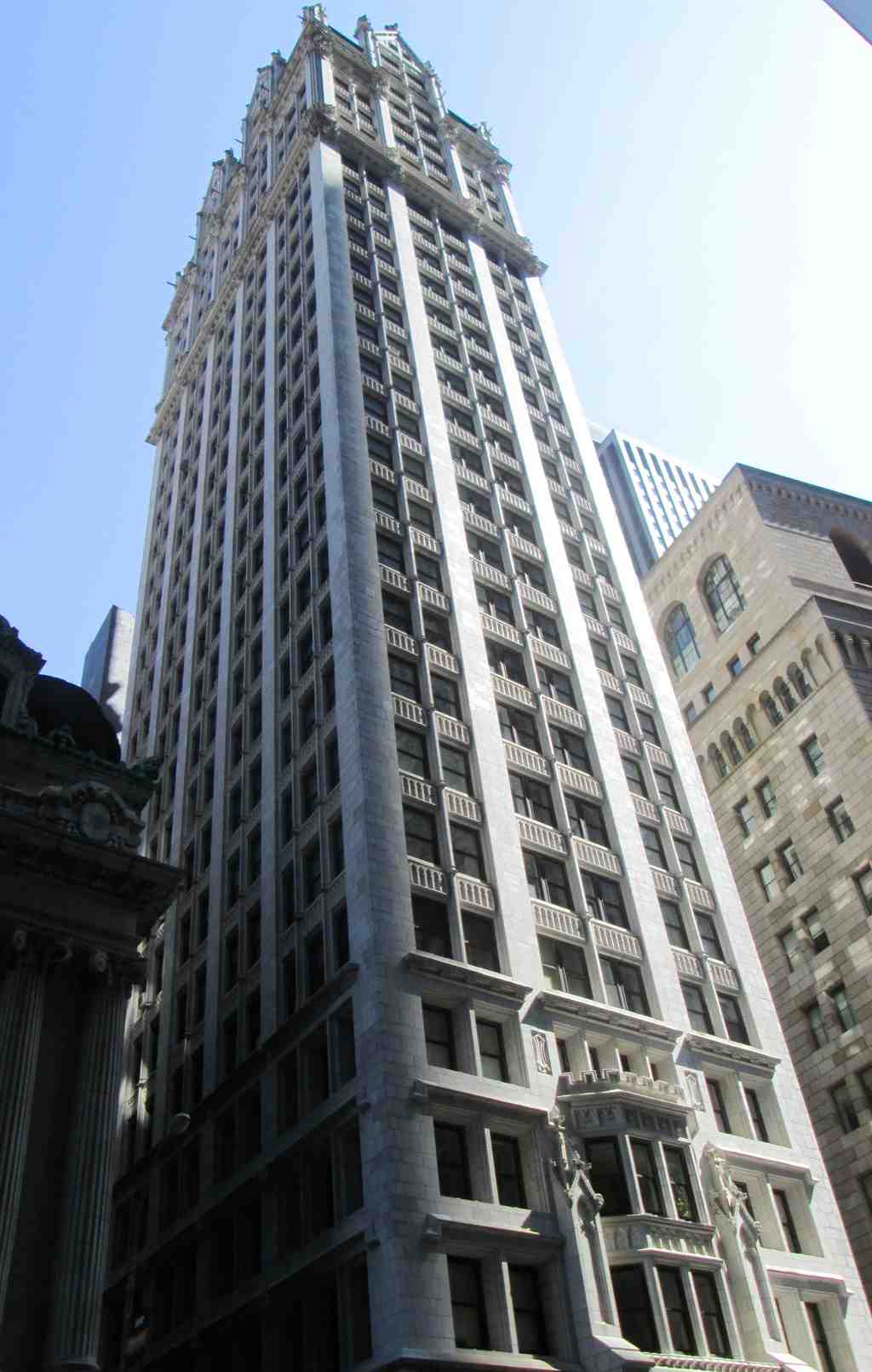
Rising above the narrow streets at 55 Liberty Street, the Liberty Tower is easy to spot by its striking white terracotta facade, completely adorned with whimsical creatures and…Czytaj więcejPokaż mniej
Rising above the narrow streets at 55 Liberty Street, the Liberty Tower is easy to spot by its striking white terracotta facade, completely adorned with whimsical creatures and capped by a soaring, castle-like top-just look up for a narrow, 33-story skyscraper that gleams differently from the neighboring stone buildings. Standing here, you’re right at the foot of a legend-a tower that, when it first opened its doors in 1910, was declared the world’s tallest building with such a slender footprint, like a sword thrusting into the Manhattan sky. Imagine the early 1900s, noisy with construction all around and the city’s skyline changing before your eyes. This tower, designed by Henry Ives Cobb, was both a feat of engineering and artistry. Not only did it rise with a steel skeleton-the latest modern marvel-but Cobb decided to dress it entirely in white terracotta, giving the building a dazzling, almost fairy-tale appearance, covered in birds, alligators, gargoyles, and fantastical ornament. Even now, if you glance along the upper walls, you can sometimes catch a glint of sunlight off a dragon or an eagle perched in the masonry. Back when the building was brand new, one of its very first tenants was a young Franklin Delano Roosevelt, whose law office sat on the second floor-before he ever dreamed of the presidency. But behind those storied doors, intrigue simmered. In 1917, as World War I brewed, this building hosted German spies using a rented office as a cover while they plotted to draw the United States into a war with Mexico and Japan. The scheme unraveled with the dramatic revelation of the Zimmermann Telegram, changing the course of world history right from these very corridors. Within a decade, the entire skyscraper was snapped up by the Sinclair Oil Company. Imagine the flurry of business in the smoky boardrooms, where deals for oil rights made here would echo all the way to Washington D.C. and erupt into the infamous Teapot Dome Scandal-a tale of bribery and political intrigue that rocked the 1920s. And when the financial power shifted Midtown and companies like Sinclair moved north, the Liberty Tower changed hands again and again, sometimes bustling with over a hundred busy tenants. But by the late 1970s, as Wall Street’s fortunes flickered, the glory days of the Liberty Tower seemed to flicker with them. At one point, the building stood two-thirds empty, abandoned, and hardly anyone believed it could revive. Enter architect Joseph Pell Lombardi, who saw possibility where others saw decay. He bought the tower for under a million dollars, launching one of the city’s first office-to-residential transformations. Picture the dusty, echoing offices ripped out and reborn as New York’s tallest co-ops south of Canal Street-the start of a whole new way to live downtown. Take a step back and look up-the base, shaft, and castle-like crown rise in perfect columns, each section with its own details. Try to pick out the vertical piers, or the rows of small windows as the stories climb higher. At the very top, green copper roofs recall the turrets of a storybook castle. Below your feet, the tower is anchored with foundations drilled nearly a hundred feet to bedrock, overcoming quicksand and hardpan. Special caissons had to be sunk just to hold this tall, slender marvel aloft in a city eager for height. Through every transformation, Liberty Tower has clung fiercely to its identity. Its restoration in the 1990s and again after September 11th-a day the tower sustained heavy damage just steps from Ground Zero-became a monumental challenge of its own, as residents worked together to save the storybook creatures clinging to the walls. Now, not only does it look as fantastical as it did over a century ago, it’s officially recognized as a New York City Landmark and part of the Wall Street Historic District. Here you are, at the crossroads of money, mystery, scandal, and resilience-where a slender, white terracotta tower once crowned the skyline, and still stands guard over Liberty Street, whispering stories through every gargoyle and bird set in stone. Yearning to grasp further insights on the site, architecture or the critical reception? Dive into the chat section below and ask away.
Otwórz dedykowaną stronę →
Najczęściej zadawane pytania
Jak rozpocząć trasę?
Po zakupie pobierz aplikację AudaTours i wpisz kod realizacji. Trasa będzie gotowa do natychmiastowego rozpoczęcia – po prostu dotknij \"Play\" i podążaj trasą z nawigacją GPS.
Czy potrzebuję internetu podczas trasy?
Nie! Pobierz trasę przed rozpoczęciem i korzystaj z niej w pełni offline. Jedynie funkcja czatu wymaga internetu. Zalecamy pobieranie przez WiFi, aby oszczędzać dane mobilne.
Czy to wycieczka grupowa z przewodnikiem?
Nie – to samodzielny audioprzewodnik. Zwiedzasz niezależnie, we własnym tempie, z narracją audio odtwarzaną przez telefon. Bez przewodnika, bez grupy, bez harmonogramu.
Ile trwa trasa?
Większość tras zajmuje 60–90 minut, ale to Ty kontrolujesz tempo. Wstrzymuj, pomijaj przystanki lub rób przerwy, kiedy chcesz.
Co jeśli nie zdążę ukończyć trasy dzisiaj?
Żaden problem! Trasy mają dożywotni dostęp. Wstrzymaj i wznów, kiedy chcesz – jutro, za tydzień lub za rok. Twój postęp jest zapisywany.
W jakich językach są dostępne trasy?
Wszystkie trasy są dostępne w ponad 50 językach. Wybierz preferowany język podczas realizacji kodu. Uwaga: języka nie można zmienić po wygenerowaniu trasy.
Gdzie znajdę trasę po zakupie?
Pobierz darmową aplikację AudaTours z App Store lub Google Play. Wpisz kod realizacji (wysłany e-mailem), a trasa pojawi się w Twojej bibliotece, gotowa do pobrania i rozpoczęcia.
Jeśli trasa Ci się nie spodoba, zwrócimy Ci pieniądze. Skontaktuj się z nami pod adresem [email protected]
Bezpieczna płatność przez 


