

Wycieczka audio po Greensboro: Echa elegancji i duchowe zabytki
Olśniewający neon w stylu Broadwayu jarzy się w zmierzchu Greensboro, sugerując sekrety, które miasto skrywa za swoimi scenami i kamiennymi fasadami. Ta wycieczka audio z przewodnikiem zaprasza do odkrycia ukrytych historii rozrzuconych między wspaniałością Steven Tanger Center a podniosłym pięknem kościoła West Market Street United Methodist Church. Prześledź żelazne nerwy buntowniczej, przemysłowej przeszłości, unikaj szeptów o szpiegostwie w cieniu budynku Jefferson Standard i zastanów się: Jaka konfrontacja rozbrzmiała niegdyś na tych uświęconych schodach? Kto organizował zuchwałe żarty w cichych ławkach kościelnych, gdy nikt nie patrzył? I dlaczego pewne rzeźbienia w cegle nad ulicami miasta są zawsze pomijane? Wejdź głębiej. Ulice zmieniają się w korytarze zapomnianych dramatów. Wieże i iglice stają się narratorami. Każdy krok przybliża Cię do objawienia — zobacz serce Greensboro tak, jak nigdy dotąd. Rozpocznij swoją podróż już teraz i wejdź w światło reflektorów Greensboro.
Podgląd trasy
O tej trasie
- scheduleCzas trwania 40–60 minsIdź we własnym tempie
- straighten3.8 km trasy pieszejPodążaj wyznaczoną trasą
- location_onLokalizacjaGreensboro, Stany Zjednoczone
- wifi_offDziała offlinePobierz raz, korzystaj gdziekolwiek
- all_inclusiveDożywotni dostępOdtwarzaj ponownie w dowolnym momencie
- location_onStart przy Budynek Vernon
Przystanki na tej trasie
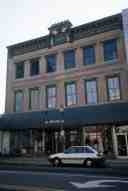
To spot the Vernon Building, look for a tall, four-story brick structure with big storefront windows on the ground floor, classic decorative trim at the roof, and the name…Czytaj więcejPokaż mniej
To spot the Vernon Building, look for a tall, four-story brick structure with big storefront windows on the ground floor, classic decorative trim at the roof, and the name “Vernon” right above you-just across from the busy street and next to newer buildings. Now, as you stand here, imagine yourself on this corner in 1883: top hats, long dresses, horse hooves clopping on the dusty road, and right in front of you, Greensboro’s grandest new building. The Vernon Building began its life selling fancy men’s clothing to all the sharp dressers in Guilford County. Will Armfield was the first to own it, and you might picture him proudly arranging fine suits behind the heavy doors. Just four years later, the building was snapped up by a railroad man named Robert Vernon and his wife Virginia. She liked the family name so much she plopped it in gingerbread cut-out letters right above, so it would watch over downtown forever. Fast forward through fashions and department stores-W. T. Grant tried their luck here, and the noisy Belk next door was eventually knocked down so Washington Street could breathe. Over time, passing through the hands of the Vernon children, cousins, and finally Ruth Best, the building always seemed to draw new owners into its story. In the 1980s, the humble Baptist Church bought it for a mere $167,500-about as much as a single luxury handbag today! Not long after, John and Beverly Meier brought women’s fashion back in, until tragedy struck: John was killed on a fabric trip in Guatemala, leaving Beverly to carry on. The ’90s brought hammers and hard hats as Milton Kern guided the Vernon’s transformation: retail on the first floor, apartments above, and a shiny penthouse up top. For over a decade, local hotspots like Liberty Oak Restaurant and snazzy shoe shops filled the ground floor. Today the old building is owned by a group of lovers of Greensboro’s spirit. Every brick carries a tale, and the Vernon’s still watching over all who pass by, as stylish as ever.
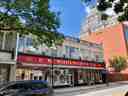
Otwórz dedykowaną stronę →To spot the Downtown Greensboro Historic District, just look for the striking red and gold Woolworth’s sign across the street-a classic storefront with tall windows, sitting below…Czytaj więcejPokaż mniej
To spot the Downtown Greensboro Historic District, just look for the striking red and gold Woolworth’s sign across the street-a classic storefront with tall windows, sitting below a beautiful old building with elegant detailing and a shiny metal roof peeking out above the trees. Welcome to the heart of Greensboro’s history, where the sidewalks are practically buzzing with stories! Close your eyes for a second and imagine the clanging of streetcars, the rumble of Model T’s, and people in their sharpest hats shopping at department stores like Thalhimer’s or Belk. Downtown Greensboro Historic District is a real-time capsule, full of everything from the grand Italianate architecture of the Vanstory Building-built way back in 1885-to the bold Art Deco flair inside the Kress building or Montgomery Ward. But maybe the most legendary chapter happened right here at Woolworth’s, where, in 1960, four brave college students quietly sat down at the lunch counter and refused to leave, sparking a pivotal moment in the civil rights movement. If you listen closely, you might even hear the murmur of determination and hope from decades ago. Whether you’re wandering by the Carolina Theatre marquee or eyeing up that towering Jefferson Standard Building, every step in this district is another chance to walk right alongside the people who shaped Greensboro. So, who’s ready for a little time travel? Don’t trip on the cobblestones!
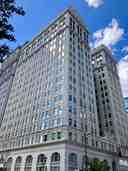
Otwórz dedykowaną stronę →Look up ahead for a tall, pale stone skyscraper with dramatic arching windows and a grand, palace-like entry-if the building in front of you looks like it belongs in a movie about…Czytaj więcejPokaż mniej
Look up ahead for a tall, pale stone skyscraper with dramatic arching windows and a grand, palace-like entry-if the building in front of you looks like it belongs in a movie about 1920s New York, you're in the right place! Welcome to the Jefferson Standard Building-once the soaring king of the Southern skyline! Imagine it’s 1923: flappers, jazz, Model Ts sputtering past, and here rises North Carolina’s tallest building, a whopping 374 feet-so tall back then, it was the biggest thing from Washington, D.C. all the way down to Atlanta. Its creator, Julian Price, was a no-nonsense insurance boss who paid cash for the entire thing. He brought in Charles C. Hartmann, a New York architect, and told him to make it grand… and debt-free. Can you picture the sound of marble slabs echoing as workers wheel in 23 train cars worth of marble for the hallways? Stare up at that U-shape, designed to let sun and air pour into every office. There are hints of Neo-Gothic drama, stately columns, even touches of Art Deco. And if you peek above the main door, you’ll spot Thomas Jefferson’s bust staring wisely out over the city, with Buffalo nickels on the ground floor windows-reminders to be thrifty! Need a little superhero action with your history? In 2009, this very spot made it onto a special edition comic book cover, with a superhero battle echoing across the skyline! The story didn’t stop in the Roaring Twenties; after mergers and a big 1990 expansion, this place became the hub for Lincoln Financial’s towering operations, blending old-school grandeur with modern hustle. So take a deep breath-feel that blend of marble, ambition, and maybe just a whiff of adventure.
Otwórz dedykowaną stronę →
Pokaż jeszcze 11 przystankówPokaż mniej przystankówexpand_moreexpand_less
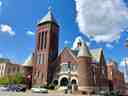
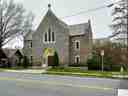
To spot the West Market Street United Methodist Church, just look for a grand red-brick building with a tall square bell tower topped by a gold cross, turret-like round sections,…Czytaj więcejPokaż mniej
To spot the West Market Street United Methodist Church, just look for a grand red-brick building with a tall square bell tower topped by a gold cross, turret-like round sections, and arched entrances right across from the courthouse. Let’s imagine our way back to the heart of Greensboro nearly 200 years ago, when this city was still so small you could count the houses on your fingers-give or take a thumb or two. The church you see standing beautifully before you today is not just a local staple; it’s a veteran of Greensboro’s history, standing proud since the 1830s. It all started with a handful of determined Methodists who squeezed into the Greensboro Male Academy to worship, hoping one day to have their very own sanctuary. Picture it: August 14, 1830, a lively crowd gathers as the very first cornerstone is set with hope and some hard-earned muscle. In no time, their tiny church boasted 64 members-a mix of white and black congregants-right in the heart of a village that barely had paved roads. If you think your family reunions are crowded, just imagine squeezing into those early pews! The story moves on. By 1849, the congregation needed more elbow room-Methodists must have had a talent for recruiting neighbors-so they built a new church on West Market Street, purchasing the plot from the fancy Greensboro Female College Trustees. By the 1850s, with nearly 200 members, the church bustled with life and, let’s face it, enough potluck dinners to feed the town. Things changed over the years: after the Civil War, many black members left the church, joining St. Matthews, the city’s first Black Methodist church, marking a significant new beginning for both communities. As the decades rolled on, West Market became Greensboro’s answer to multiplying rabbits, spawning new mission churches all over town from Centenary to Christ Church. Women got in on the action with their own Missionary Society in 1879, and a children’s group, adorably called the “Busy Bees,” began in 1880-we can only assume they were buzzing with energy! Fast forward to the 1890s, and the congregation wanted a new sanctuary yet again-not because their old one was haunted, but because Greensboro just kept growing. The current sanctuary, which you’re now standing before, was completed in 1898, and after a few years of “divine accounting,” the debt was paid off and the dedication held in 1901. Make sure to peek at those glimmering windows-they came all the way from the German pavilion at the 1893 World’s Fair in Chicago! Now that’s what I call a souvenir. As the years ticked by, this church’s story got even grander. In the roaring twenties, they added a Sunday school building; during the Great Depression, the congregation merged with Park Place for strength in numbers and, likely, casseroles. Through the 20th and into the 21st century, the church expanded with educational centers, outreach programs, and even a rooftop playground (if only those early Busy Bees could see it now). It’s been a city anchor through wars, economic struggle, and, most recently, the COVID pandemic, when worship went virtual but the community spirit remained stronger than ever. Today, the West Market Street United Methodist Church is home to spirited music-sometimes it’s the thunder of a pipe organ, sometimes the strum of guitars and beat of drums, sometimes the bright voices of kids practicing for Sunday services. All this energy, from humble beginnings to a congregation now nearing 2,000, bubbles just beneath the surface. In 2030, they’ll be celebrating their bicentennial-200 years of faith, fellowship, outreach, and, definitely, a few epic bake sales. So next time you’re in need of a story-or a little inspiration-remember this is far more than brick and stone; it’s a living piece of Greensboro’s soul. Intrigued by the services, music or the outreach? Make your way to the chat section and I'll be happy to provide further details.
Otwórz dedykowaną stronę →Standing right in front of you, Hillside looks like a grand brick mansion with steep gables, black timber framing, tall windows, and a winding stone path leading up through the…Czytaj więcejPokaż mniej
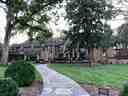
Standing right in front of you, Hillside looks like a grand brick mansion with steep gables, black timber framing, tall windows, and a winding stone path leading up through the manicured lawn-just follow the walkway and look for the massive Tudor Revival house with its distinct turret-like stair tower. Let me set the mood: imagine the year is 1929. Jazz music drifts from open windows, the air is crisp, and the great Julian Price and his wife Ethel are about to host another legendary soirée here at Hillside, their brand-new mansion. Architect Charles C. Hartmann spared no drama or storybook grandeur with this Tudor Revival dream-four stories, 31 rooms, and a stretch of brick and half-timber stretching a whopping 180 feet long. Picture the glow of hundreds of lights shining through those windowpanes. Hillside wasn’t just fancy on the outside: it came with over 7,000 square feet inside and a quirky board-and-batten gardener’s cottage nestled in the greenery nearby. This place had secrets in every nook, from hidden passageways whispered about by party guests to garden walks where high society might have plotted Greensboro’s next big thing. It was listed on the National Register of Historic Places in 1980, a testament to its starring role in the story of Fisher Park. Fast forward to the 1970s. Sandra Cowart, a sharp-witted interior designer, fell in love with Hillside’s magic and made it her home. She fought hard when asked to sell the place for demolition in 1979, saying, “I’d rather wrestle a garden hose than watch my house disappear!” When life threw curveballs, Sandra rented out rooms and gave tours, turning the mansion into a gathering spot for artist-types and, sometimes, a bit of a mystery. Over the years, the mansion filled up-furniture stacked on furniture, treasures in every corner-until it famously appeared on the TV show “Hoarders.” Sandra’s story is bittersweet: she stayed here for forty years, and after saying goodbye to Hillside, she moved into an Airstream, grateful for her memories and for making a tidy $14,000 from selling her prized collections. After Sandra, the Fuko-Rizzo family stepped in, braving a real fixer-upper situation! Alongside local preservationists, designers, and the university, they gave Hillside a total glow-up. It became a designer’s playground for one sparkling month in 2018, a showcase of modern style wrapped up in old-world elegance. But even mansion life isn’t always glamorous: there were disputes over who really owned which chairs, who got paid for what, and when parties were officially allowed to go past 10 PM! Zoning drama, neighbors calling “foul,” and city officials scratching their heads-Hillside has seen more courtroom drama and city paperwork than most historic houses ever dream of. Today, it stands as majestic (and occasionally controversial!) as ever, both a treasure of Greensboro history and an occasional topic of neighborhood debate. That’s Hillside for you: part fairy tale, part reality show, and always unforgettable.
Otwórz dedykowaną stronę →To spot Carolyn & Maurice LeBauer Park, look for the giant letters spelling “LEBAUER PARK” on the ground in front of a wide lawn, and if you look up, you’ll see a colorful,…Czytaj więcejPokaż mniej
To spot Carolyn & Maurice LeBauer Park, look for the giant letters spelling “LEBAUER PARK” on the ground in front of a wide lawn, and if you look up, you’ll see a colorful, net-like sculpture floating high above the park. Now, you’re standing at one of Greensboro’s liveliest outdoor treasures-LeBauer Park! Imagine a place that sprang up from a dream and a $10 million bequest, where gardens bloom, laughter echoes from the playground, and even dogs have their own little corner to sniff out new friends. Back in 1920, Joe LeBauer brought his silk hosiery business to town, planting the roots for a family that would become local legends. Fast forward, Dr. Maurice LeBauer became a surgical force at Moses Cone, but it was Carolyn who had the ultimate green thumb-she insisted on a park packed with gardens right here in the center of it all. When Carolyn passed away, her generous gift sparked a movement; city leaders, planners, and more than a few dreamers all worked together to transform a spot once home to a YMCA and Festival Park into a modern delight opening in 2016. But wait, don’t just gaze at the grass-tilt your head back! That mesmerizing, floating net is “Where We Met,” the largest outdoor art installation in the Southeast, crafted from a superhero material stronger than steel-no capes required. Its bright, twisting colors nod to Greensboro’s look as a textile powerhouse and, specifically, its denim-making days. Designed by Janet Echelman, the sculpture stretches an astonishing 200 by 130 feet, fluttering above gatherings, concerts, and the occasional squirrel parade. With 242,800 knots tying it all together (who counted those?), this park is both a relaxing oasis and an artful monument to Greensboro’s knack for weaving old dreams into new adventures. Soak it in-you’re experiencing the best of Greensboro’s creativity, generosity, and quirky spirit, all in one vibrant spot!
Otwórz dedykowaną stronę →Right in front of you, the Greensboro Cultural Center catches your eye with its bright green triangular rooftops, rows of large green windows, and a big colorful sign hanging…Czytaj więcejPokaż mniej
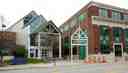
Right in front of you, the Greensboro Cultural Center catches your eye with its bright green triangular rooftops, rows of large green windows, and a big colorful sign hanging above the sidewalk-just look for the modern building with inviting glass angles. Welcome to the Greensboro Cultural Center, where you’re basically standing at the crossroads of Greensboro’s creative spirit! Imagine stepping inside this four-story hub buzzing with excitement-art galleries fill the air with color, music groups send notes floating through the halls, and dance studios pulse with energy. The second floor alone bursts with art from African American, Native American, and North Carolina artists, while the first floor hums with pottery wheels spinning and creative hands at work. If you listen carefully, you might even catch a soprano in rehearsal from Bel Canto Company or a tap of toe shoes from Greensboro Ballet. Hungry? There’s a restaurant with outdoor seating, perfect for a parade of paint-splattered artists on their lunch break. And step outside-you’re right next to Carolyn & Maurice LeBauer Park, where concerts, movie nights, and families fill the green space. Keep an eye out for the floating art installation, “Where We Met,” gently swaying above the crowds. Whether you’re here for a gallery stroll or just a snack in the sun, this is truly where Greensboro’s imagination meets the world.
Otwórz dedykowaną stronę →Look for a two-story red brick building right in front of you, with grand stone arches and big windows, looking every bit like a Renaissance palace had a surprise career change…Czytaj więcejPokaż mniej
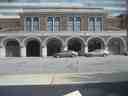
Look for a two-story red brick building right in front of you, with grand stone arches and big windows, looking every bit like a Renaissance palace had a surprise career change and decided to fight fires! Now, imagine yourself standing here in the roaring 1920s-the air smells of coal smoke and gasoline, and the street is abuzz with Model T Fords and the occasional galloping horse. Suddenly, the shiny new Central Fire Station stands out, fresh from architect Charles C. Hartmann’s drawing board. Its brick walls glow in the sunlight, and the carved granite details sparkle as if winking at you! Don’t miss those graceful arches-if you listen closely, you might even hear the echo of brave firefighters sprinting beneath them on their way to heroic rescues. Back then, a towering six-story watchtower stood guard above, letting firefighters spot trouble from miles away-that is, until it mysteriously disappeared in the early 1950s. No, the tower didn’t run off to join the circus; it was simply taken down as the city grew up around it. Since 1980, this beautiful old firehouse has enjoyed official historic status-so next time you smell smoke, just remember: the building in front of you was once Central Command for Greensboro’s bravest, always ready to dash out and save the day!
Otwórz dedykowaną stronę →Right in front of you, you’ll spot a pair of tall wooden doors crowned by stained glass windows with crosses, and above them, a round white carving of Mary holding baby Jesus; all…Czytaj więcejPokaż mniej
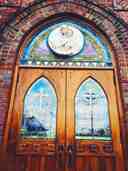
Right in front of you, you’ll spot a pair of tall wooden doors crowned by stained glass windows with crosses, and above them, a round white carving of Mary holding baby Jesus; all framed by deep red brickwork. Now picture Greensboro in the 1870s-a time when only a handful of Catholics called this city home. Traveling Benedictine priests actually journeyed from Belmont Abbey just to hold Mass in people’s living rooms! The very first Catholic church here started out as St. Anne’s, but soon took the name St. Benedict’s in honor of those tireless visiting priests. The original church was so adaptable that, after 1899, its building turned into the city’s first public high school-modern day Grimsley Senior High. The church’s journey didn’t end there, though. On this very plot, a legend came to life when St. Katherine Drexel-a future saint herself-donated $1,500 with one powerful request: always save pews for Black parishioners, even during a time of segregation. That promise made St. Benedict’s one of the first truly integrated congregations around here. And just to keep you on your toes: this place even ran a Catholic school, which later merged with its neighbor St. Pius X. St. Benedict’s isn’t just Greensboro’s Catholic mother church-it's a place built on courage, community, and a dash of saintly generosity!
Otwórz dedykowaną stronę →Right in front of you stands a striking gray stone building with a steep gabled roof and a cross at its very top-just look for the classic Gothic Revival archway facing the…Czytaj więcejPokaż mniej
Right in front of you stands a striking gray stone building with a steep gabled roof and a cross at its very top-just look for the classic Gothic Revival archway facing the street. Now, Holy Trinity Episcopal Church may appear calm and stoic with its stone walls and tall stained-glass windows, but its beginnings were a real adventure in spiritual musical chairs! Picture the year 1869: St. Barnabas Church springs up as Greensboro’s first-ever Episcopal parish, full of hopes and dreams (and maybe the odd squeaky pew). Fast-forward to 1891: a lively breakaway group sets up shop as St. Andrew’s Episcopal Mission. The plot thickens in 1910, when these two reunite-at least for a couple of years-before splitting again. It was like a holy game of tag, but with more hymns. By 1919, the community was finally ready to settle down on this very corner, with a parish house designed by the famed Hobart Upjohn. Over the years, this church evolved-converting halls into chapels, expanding sanctuaries, and surviving waves of renovation, right through the 1990s. Through it all, Holy Trinity has remained a lively anchor in Fisher Park, always ready for the next chapter-though hopefully with fewer plot twists!
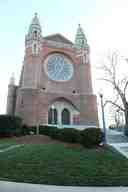
Otwórz dedykowaną stronę →Look for a grand Gothic Revival cathedral of red brick with soaring twin spires and a huge, round stained-glass window perched on a hill above lush green lawns-that’s the First…Czytaj więcejPokaż mniej
Look for a grand Gothic Revival cathedral of red brick with soaring twin spires and a huge, round stained-glass window perched on a hill above lush green lawns-that’s the First Presbyterian Church of Greensboro right ahead! Let’s step back almost 200 years to Greensboro in 1824-a small town brimming with possibility. The First Presbyterian Church was brand new, and no one in town had seen anything quite like it. Imagine a dozen people gathered under thatched hats, their voices echoing off simple wooden walls-four of those first members enslaved, drawing hope from each service. As the years rolled on and the Civil War thundered across the land, the church became not just a spiritual home but a surprising space of solidarity, where more than 30 enslaved folks found community until freedom arrived. And with that freedom, 37 former slaves branched out, full of resolve, and created Saint James Presbyterian-a neighbor church with roots in this very soil. Now, like a turtle trading shells, First Presbyterian moved around Greensboro. Its earliest three homes sat down the road at Church Street and Summit Avenue, and one of them, decked in fancy Romanesque Revival style, has become the Greensboro Historical Museum. In 1929, they settled right here, and unveiled this soaring Gothic cathedral looking over Fisher Park so proudly, you can almost hear the bricks brag about their view. This church has welcomed U.S. senators, ambassadors, college presidents, even a parade of North Carolina governors stepping inside those heavy wooden doors-imagine the secrets whispered under that giant rose window! And since 2020, for the first time, the pulpit is led by Rev. Dr. Jill Duffield-proof that even old churches know how to shake things up! Take a breath and picture the echoes of every life and every hope that’s passed through these doors. Quite a place, isn’t it?
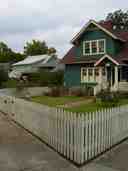
Otwórz dedykowaną stronę →To spot Fisher Park Historic District, look for the charming green house with cream trim and a classic white picket fence right ahead, surrounded by neat gardens and old trees…Czytaj więcejPokaż mniej
To spot Fisher Park Historic District, look for the charming green house with cream trim and a classic white picket fence right ahead, surrounded by neat gardens and old trees lining the sidewalk. Welcome to Fisher Park Historic District, Greensboro’s living time machine-just imagine footsteps echoing here over a hundred years ago, as families built dream homes beneath these ancient, whispering oaks. Around you stand more than 500 breathtaking houses from the early 1900s to 1930s, every one a character in this leafy drama, offering up Queen Anne’s fancy curves, Colonial Revival’s tidy pride, and the deep porches of Bungalows just begging for a summer lemonade. This neighborhood is more than pretty homes; it’s packed with stories! You might spot the grand Dixon-Leftwich-Murphy House, the mysterious Julian Price House that always has gossip swirling around it, or the solemn old Gant-McAlister House standing guard since 1910. Even the churches-First Presbyterian and Holy Trinity-have seen generations of secrets, celebrations, and more than a few folks sneaking cookies from bake sales. Officially crowned a historic district in 1992, Fisher Park is like a page from a storybook-if these shaded sidewalks could talk, oh, what mysteries and laughter they’d share! So take a big breath, listen to the old wind, and step into Greensboro’s most enchanting neighborhood.
Otwórz dedykowaną stronę →

Najczęściej zadawane pytania
Jak rozpocząć trasę?
Po zakupie pobierz aplikację AudaTours i wpisz kod realizacji. Trasa będzie gotowa do natychmiastowego rozpoczęcia – po prostu dotknij \"Play\" i podążaj trasą z nawigacją GPS.
Czy potrzebuję internetu podczas trasy?
Nie! Pobierz trasę przed rozpoczęciem i korzystaj z niej w pełni offline. Jedynie funkcja czatu wymaga internetu. Zalecamy pobieranie przez WiFi, aby oszczędzać dane mobilne.
Czy to wycieczka grupowa z przewodnikiem?
Nie – to samodzielny audioprzewodnik. Zwiedzasz niezależnie, we własnym tempie, z narracją audio odtwarzaną przez telefon. Bez przewodnika, bez grupy, bez harmonogramu.
Ile trwa trasa?
Większość tras zajmuje 60–90 minut, ale to Ty kontrolujesz tempo. Wstrzymuj, pomijaj przystanki lub rób przerwy, kiedy chcesz.
Co jeśli nie zdążę ukończyć trasy dzisiaj?
Żaden problem! Trasy mają dożywotni dostęp. Wstrzymaj i wznów, kiedy chcesz – jutro, za tydzień lub za rok. Twój postęp jest zapisywany.
W jakich językach są dostępne trasy?
Wszystkie trasy są dostępne w ponad 50 językach. Wybierz preferowany język podczas realizacji kodu. Uwaga: języka nie można zmienić po wygenerowaniu trasy.
Gdzie znajdę trasę po zakupie?
Pobierz darmową aplikację AudaTours z App Store lub Google Play. Wpisz kod realizacji (wysłany e-mailem), a trasa pojawi się w Twojej bibliotece, gotowa do pobrania i rozpoczęcia.
Jeśli trasa Ci się nie spodoba, zwrócimy Ci pieniądze. Skontaktuj się z nami pod adresem [email protected]
Bezpieczna płatność przez 


