Wycieczka audio po Baltimore: Echa i ikony legend centrum
Miasto, w którym areny rozbrzmiewają czymś więcej niż muzyką, a strzeliste iglice strzegą szeptanych tajemnic – Baltimore ukrywa wiele warstw pod tętniącymi życiem ulicami centrum. Odkryj jego nieopowiedziane historie podczas tej wycieczki audio z przewodnikiem, zaprojektowanej tak, aby ukazać twarze kryjące się za słynnymi fasadami i momenty, których większość odwiedzających nigdy nie odnajduje. Jakie zamieszki groziły niegdyś zburzeniem spokoju wokół kościoła św. Pawła? Jakie tajemnicze postacie spiskowały w korytarzach plebanii, gdy historia balansowała na krawędzi? W jaki sposób decydujący mecz koszykówki w CFG Bank Arena niemal na zawsze zmienił losy miasta? Wkrocz w samo serce zawiłej przeszłości Baltimore, klucząc między politycznymi intrygami, skandalicznymi starciami i duchowymi tajemnicami. Każdy zakątek ożywa, każdy zabytek pulsuje utraconymi głosami, a miasto przeobraża się na twoich oczach. Pozwól sekretom miasta wypłynąć na powierzchnię. Naciśnij odtwarzanie i podążaj za tym, co inni przegapiają.
Podgląd trasy
O tej trasie
- scheduleCzas trwania 40–60 minsIdź we własnym tempie
- straighten2.8 km trasy pieszejPodążaj wyznaczoną trasą
- location_onLokalizacjaBaltimore, Stany Zjednoczone
- wifi_offDziała offlinePobierz raz, korzystaj gdziekolwiek
- all_inclusiveDożywotni dostępOdtwarzaj ponownie w dowolnym momencie
- location_onStart przy CFG Bank Arena
Przystanki na tej trasie
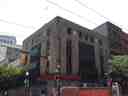
To spot the CFG Bank Arena, just look for the massive, angular beige building on the corner of Baltimore Street and Hopkins Place, marked by its bold signage and large glass…Czytaj więcejPokaż mniej
To spot the CFG Bank Arena, just look for the massive, angular beige building on the corner of Baltimore Street and Hopkins Place, marked by its bold signage and large glass entryways extending over the sidewalk. Alright, take a moment to soak in the energy outside this giant of Baltimore’s downtown. CFG Bank Arena-though you might still see “Royal Farms Arena” on some signs if they haven’t caught up yet-has been the city’s go-to powerhouse for entertainment, sports, and sometimes even a little drama since 1962. Now, if these glass panels and concrete walls could win medals, they would have a trophy case bigger than most NBA teams. Picture it: the year is 1962, and this spot was brand spanking new-a gleaming multipurpose arena named the Baltimore Civic Center. Imagine construction crews hustling and bustling, the thud of hammers and rumble of trucks. Now, what’s underneath your feet? The ghost of Old Congress Hall, where revolutionaries once plotted the course of the nation back in 1776. It doesn’t get much more historically loaded than that. You’re standing where modern rock legends and 18th-century politicians practically overlap-talk about a crossover episode! Back in the ‘60s and ‘70s, this place was the heart of sports in Baltimore. The clatter of skates on the ice and the roar of crowds showed up for the Baltimore Clippers hockey team and, of course, the NBA’s Baltimore Bullets, who later moved on and became the Washington Wizards. If you’re wondering, yes-the NBA All-Star Game dazzled fans here in 1969! Elvis crooned from this stage-twice, in two different dazzling jumpsuits. The Beatles lit up Baltimore for not one, but two shows on the same day in 1964. And if the walls still vibrate a little when you walk by-it’s probably just the memory of Led Zeppelin or Jimi Hendrix shredding through their amps at full volume. It hasn’t been all music and basketball, though-a boxing match packed thousands into the seats, Dr. Martin Luther King Jr. gave a rousing address on “Race and the Church” to a gathering of Methodist clergy, and generations of pro wrestlers flew off ropes to claim glory in the ring. The echoes of boos and cheers, the chest-slapping bravado-they all left their mark. As the decades rolled by, the arena changed names more often than a rock star’s tour bus. From Civic Center to Baltimore Arena, then 1st Mariner Arena, then Royal Farms Arena-seriously, if you blinked, you might’ve missed a sign change! But the heart of the place never shifted: always the city’s main stage, always hosting the biggest and wildest acts, from Bon Jovi and Bruce Springsteen to WWE’s tables, ladders, and chairs matches. At this rate, it deserves its own wrestling belt. The building has seen some serious upgrades, too. After another name change (hopefully this one sticks), CFG Bank Arena reopened in 2023 with a sparkling new look-sleek glass, fresh seating, and enough pizzazz to impress new generations. It didn't just bounce back-it practically moonwalked into the future! The first huge concert after the renovation? None other than Bruce Springsteen and the E Street Band. Guess he wanted to see if the new acoustics could handle all that Jersey energy. But even through all that, the soul of the arena is pure Baltimore. It’s been a stage for NCAA basketball, WNBA games, wild bull riding, anime conventions, and figure skating-sometimes all in the same month! There were rumors of tearing it down for a shiny new stadium, but Baltimoreans said, “No way!” Instead, they poured their energy (and cash) into transforming the old beast, keeping it right here in downtown. That low hum you might catch as you stand here? It’s anticipation. Something legendary could happen here tonight-or tomorrow. So, when you look up at those strong lines, think of the hands that built them, the legends that played here, and maybe keep an ear out. If you hear a faint cheer or a singer holding a long, wild note, it’s probably just history, doing its thing.
Otwórz dedykowaną stronę →To spot Read’s Drug Store, look for a plain tan brick building with blacked-out windows and a big red “DISCOUNT CENTER” sign at the corner of Howard and Lexington…Czytaj więcejPokaż mniej
To spot Read’s Drug Store, look for a plain tan brick building with blacked-out windows and a big red “DISCOUNT CENTER” sign at the corner of Howard and Lexington Streets-sandwiched between taller, older brick facades and next to construction fencing. Now, picture yourself standing here in the heart of Baltimore, just a step away from a landmark where, back in 1955, history was quietly rewritten. There’s a touch of mystery in the air-after all, not many buildings can claim they changed America while keeping such a low profile! This was once the pride of William Read, whose family sold the store to the Nattans in the days when folks rushed in with the jingle, “Run Right to Reads.” It bustled with shoppers and clinking soda glasses at the counter, a classic slice of American life. But the real story simmered beneath the surface. Imagine: it’s a chilly January day, and a handful of students from Morgan State University, working alongside the local CORE chapter, stroll in. They aren’t looking for root beer floats-they’re about to stage one of the country’s first anti-segregation sit-ins. No dramatic speeches, no shouting, just a quiet, powerful act. Seven people, half an hour, and suddenly, the rulebook on “who gets served” starts to crumble. Dr. Helena Hicks, one of those students, later remembers how spontaneous it all felt; yet, within 48 hours, the store’s president, Arthur Nattans Sr., tells the world in the Afro-American newspaper, “We will serve all customers throughout our entire stores, including the fountains…” The soda fountains whirr and fizzle, not caring about the color of anyone’s hands holding the glass. Don’t be fooled: this legendary sit-in happened a full five years before the more famous Greensboro protests-but the world, caught in its own routine, hardly blinked an eye. Over time, Read’s was sold to Rite Aid and the Nattans moved on. The original buzz faded and the store finally closed, but oddly enough, Read’s Drug Store-closed for four decades-still found its way into Rite Aid’s bankruptcy filings as recently as 2025. Nowadays, you’re looking at a building trapped between its legendary past and an uncertain future. Preservationists and activists argue: turn the old pharmacy into a civil rights museum, or let development sweep it away? Here, every cracked window seems to beg for a new purpose, while the city debates whether to preserve the memory or move on. Baltimore Heritage and the Jewish Museum of Maryland push for preservation, standing in solidarity with the spirit of early desegregation. So as you gaze at this old structure, you’re standing at a crossroads of memory, protest, and change. Sometimes, the biggest stories wear the plainest bricks.
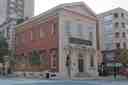
Otwórz dedykowaną stronę →Ahead of you stands a stately, brownstone-fronted building with tall arched windows and ornate stonework around the entrance-look for the sturdy structure on the corner with both…Czytaj więcejPokaż mniej
Ahead of you stands a stately, brownstone-fronted building with tall arched windows and ornate stonework around the entrance-look for the sturdy structure on the corner with both brick and beige stone among modern surroundings. Here at the corner of Eutaw Street, you’re face to face with the story of the Baltimore Equitable Society-an organization that’s been insuring Baltimore’s homes longer than the city itself has been official. Imagine, way back in 1794, a group of serious-faced Baltimoreans gathered in candlelight, determined to outsmart one of their greatest enemies: fire. Back then, a single stray spark could turn a city block into a charred memory. They wanted to ensure that, even on weeks when the only gossip in town was about Mrs. Jenkins’ runaway goat, folks could still sleep easy knowing their roofs were safe. The building before you was originally the headquarters of the Eutaw Savings Bank, built in 1857 in a stunning Italian Renaissance style. Imagine the click of horse-drawn carriages out front as well-to-do gentlemen tipped their hats and marched up those grand stairs. Over time, the bank moved across the street, and in 1889 these proud walls became home to the Baltimore Equitable Society-for over a century! Let’s rewind to the earliest days. Even before Baltimore was officially a city, the Society was writing fire insurance policies, with their very first issued on April 10, 1794. What did they insure? A three-story brick house, no castles or cathedrals-just real Baltimore homes. In that first year, 104 policies covered $129,016 of Baltimore property, and the insurance business was, shall we say, a little thriftier: their grand total of annual expenses was about $300… and yes, that included a pewter ink stand and about 50 quills! But fire was never a distant threat. On a cold December night in 1796, the Society’s first real test came when William Hawkins lost his two brick houses to a blaze. This fire swept through businesses, homes, even a church-Baltimore’s “Great Fire” at the time. That’s when the Society’s tradition began: prompt, full payment, no fuss, just helping neighbors rebuild. Their handshake was as solid as fireproof bricks. Many famous names pepper the Society’s records. Charles Carroll of Carrollton-yes, the same one who signed the Declaration of Independence-insured four brick buildings here. Even Homewood House, now a cherished part of Johns Hopkins University, was on their books. And when a customer canceled in 1866, they refunded the entire original payment-try getting that from your modern insurance agent! Through war and fire, the Society stood strong. In 1814, with the British burning Washington and Baltimore in their sights, the city prepared for the worst. When victory and peace came, everyone-including the Society’s boardroom-breathed a sigh of relief. Here’s a quirky bit: In 1865, the Society started offering “perpetual” policies, so if you played your cards right, your grandkids could still be covered under your roof, even as the price of ink stands and quills kept climbing. There’s even a bit of glamour-the famous “clasped hands” fire mark. Spot one of those black and gold plaques on a house, and you’ll know it’s protected by a handshake that’s as good as a contract. Fast-forward, and the twentieth century brought the city’s most devastating inferno: the Great Baltimore Fire of 1904. In just two days, 150 acres vanished, with damages topping $150 million. The Society’s losses alone? Nearly $2 million, but they paid every single policyholder, right on time. Through good times and depressions, world wars and urban unrest, when other companies drew “red lines” around the city, the Baltimore Equitable Society stuck to its word, a friend to every part of Baltimore. By the 1980s, they were rated "A - Excellent," a nod to centuries of steady service. Now, the Society’s old home will become the M&T Pavilion, an entertainment space, but the spirit of those historic handshakes-and the clasped hands fire mark-lives on. So next time you see those golden hands shining on a Baltimore doorstep, remember you’re glimpsing a little piece of this city’s promise to watch out for each other, come rain, wind, or-let’s hope not again-fire!
Otwórz dedykowaną stronę →
Pokaż jeszcze 12 przystankówPokaż mniej przystankówexpand_moreexpand_less
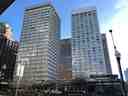
Directly ahead, you’ll spot two tall, modern towers side by side with rows of windows stretching upward-they stand out against the sky and you can’t miss the contrasting white and…Czytaj więcejPokaż mniej
Directly ahead, you’ll spot two tall, modern towers side by side with rows of windows stretching upward-they stand out against the sky and you can’t miss the contrasting white and tan faces. Alright, now that you’ve found Vivo Living Baltimore, let me paint a wild Baltimore picture for you! Imagine it’s the swinging 1960s-Eddie’s got a new suit, hair is big, Beatles songs rule the radio, and downtown Baltimore is buzzing with talk of a brand new high-rise hotel, the Statler Hilton. The year is 1967. Here, a single tower soars to 23 stories-practically brushing the clouds-with 352 gleaming rooms all designed by the globe-trotting architect William B. Tabler. The place was a beacon of modern luxury in what was once a totally different city landscape. But Baltimore dreams big, so in 1974, a second, taller tower joined the party, now rising to 27 stories. For a while, these towers watched the rhythm of the city swirl below-businesspeople in crisp suits, bellhops rushing, and the constant click-clack of luggage wheels. Behind these glassy faces, the story gets even juicier-and a little wilder. Throughout the decades, these towers became a hotel superstar: the Statler Hilton, then the Baltimore Hilton, then the Omni International, and eventually the Wyndham, Crowne Plaza, and even a Sheraton. It was a merry-go-round of names; you’d need a scorecard to keep up! Big-time deals flew through here-one year, a Middle Eastern investment group bought it; the next, it became the scene of a knock-out presidential debate between Ronald Reagan and John Anderson in 1980. Imagine the bustle-security details, news crews, and political drama swirling all around! But the hotel business is a rollercoaster. Ownership changed faster than a fan at a Ravens game, and every time the hotel rebranded, it got a new identity-Omni, Wyndham, Radisson, Holiday Inn. In 1994, it even hosted the very first WWF Hall of Fame induction ceremony, so if you hear someone body-slamming their suitcase in the lobby, don’t be alarmed, it’s just history echoing. By the 2010s, things got quieter. The hotel split in two-one tower for the Radisson, the other became a Crowne Plaza, then a Holiday Inn. The pandemic hit, lights went out, and for a while, even the buzz of elevators stopped. In March 2022, the hotels closed for good, and everyone wondered what would come next. But Baltimore loves a comeback, and in 2023, a new chapter starts: Vivo Living snaps up the shuttered towers, ready for a transformation. Instead of grand ballrooms and bustling lobbies, now there are cozy studios, smartly designed one-bedrooms, and the hum of real city living. The old hotel’s bones are still here, but the spirit has changed-a community instead of a crowd. Soon, both towers will welcome hundreds of new residents. Who knows, maybe one will have a presidential debate in their kitchen. That’s Baltimore for you-always changing, always surprising!
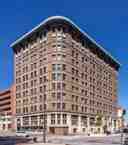
Otwórz dedykowaną stronę →To spot the Maryland State Department of Education, look for a tall, sturdy-looking brick building with many windows and a unique blue-green trim at the top, standing at the…Czytaj więcejPokaż mniej
To spot the Maryland State Department of Education, look for a tall, sturdy-looking brick building with many windows and a unique blue-green trim at the top, standing at the corner, just ahead of you. All right, welcome to the beating heart of education in Maryland! As you stand before this grand, twelve-story brick building, tap into your inner student for a moment-just don’t worry, I’m not handing out any pop quizzes. This landmark, known as the Nancy Grasmick Building, has looked out over downtown Baltimore since it was chosen as the headquarters for the Maryland State Department of Education. Imagine all the decisions about Maryland’s 1,400 schools and 900,000 students breezing through these windows. That’s a lot of school lunches, a mountain of homework, and more than a few snow day debates. Now, if you prick up your ears, you may almost hear the bustling footsteps of Baltimore’s young scholars from years past. The story of Maryland’s quest for education starts way back in the 1800s, when the very first state superintendent of schools was authorized in 1865. At that time, public schools were just starting to blossom across the varied Maryland countryside. In Baltimore, formal education had taken root even earlier: the city welcomed its first public schools in 1829 (two for boys, two for girls), and by 1839, its first boys’ high school, delightfully called simply “The High School.” It would go on to become the third oldest public high school in the entire United States-so you can say Baltimore’s always been at the head of the class! As the decades rolled on, Maryland worked to make education available to everyone. Even when challenges loomed-like regional differences stretching from the Appalachians to the sandy shores of the Atlantic, or long battles for fair schooling for African-Americans-progress kept moving. In 1867, a dedicated elementary school for Black children finally opened in Baltimore, followed by the pioneering Frederick Douglass High School, whose roots go back to a private “Douglass Institute” founded just after the Civil War. Picture the applause as Frederick Douglass himself presided over its dedication-now that’s a guest speaker! The years saw more milestones-the rise of manual training schools like Baltimore Polytechnic Institute in the 1880s, the creation of the second “colored high school” in 1910, and the eventual shift to co-ed and vocational schools. And in 1954, in a momentous wave, Maryland followed the Supreme Court's Brown v. Board of Education ruling, ending official school segregation. Of course, Maryland didn’t rest on its laurels (or its report cards). In the years following World War II, as suburbs sprawled and the baby boom echoed through the classrooms, modernization became the name of the game. By the 1970s, the clever folks who worked in this building helped redefine the Department of Education, making it a chief player in state government and helping Maryland leap into the top ranks nationwide. By 2009, Maryland’s public schools were top of the class-not only in test scores but in offering college-level courses, too. The state is so proud of those bright young minds that analyzing test scores and boosting academic performance is the name of the game here, every day. And as you stand in front of this impressive building, remember that inside, a parade of superintendents, from Nancy Grasmick to Mohammed Choudhury, have worked tirelessly to keep Maryland’s schools among the best in America. The journey hasn’t always been easy-just imagine sorting through $5.5 billion in school funding while figuring out who eats what for lunch! But somehow, among thick policy reports and the occasional spilled coffee, they manage to keep Maryland’s education story rolling along. So give a wave-this building might not hand out gold stars, but it sure has helped generations of Marylanders earn them!
Otwórz dedykowaną stronę →To spot the B&O Railroad Headquarters Building, look for a grand, beige stone structure with a distinctive H-shaped layout that towers thirteen stories above the intersection of…Czytaj więcejPokaż mniej
To spot the B&O Railroad Headquarters Building, look for a grand, beige stone structure with a distinctive H-shaped layout that towers thirteen stories above the intersection of Charles and Baltimore Streets, complete with arched windows along the lower floors and ornate sculptures above the main entrance. As you stand here on the street corner, imagine it's 1906 and the air is thick with the smell of coal smoke, a hint of steel and promise swirling through the busy heart of Baltimore. Looming above you is the brand-new B&O Railroad Headquarters Building-thirteen stories of pure ambition, reaching 220 feet into the city sky. Maybe you can feel a little vibration underfoot from rumbling trains nearby, the steady 20th-century pulse of a railroad empire that connected the East Coast to the wild and rugged West. Now, the only reason you’re able to gawk at this architectural giant today is because, just a few years before it was built, the great Baltimore Fire of 1904 roared through downtown. It devoured the B&O’s old mansion-like headquarters in a single, tragic night. But here’s where the story gets good: Instead of retreating, B&O’s executives decided to double down on Baltimore’s future. They hired Parker & Thomas, a design dream team with offices in Boston and Baltimore, and said, “Go big or go home!” After two years of backbreaking labor, the result was this palace of progress-which quickly became the largest office building in Maryland when it opened. Gaze up at those lower floors, clad in granite from New Hampshire-that stone practically sailed down from the mountains just to be part of the action. Scan higher, and you’ll spot Bedford stone and intricate terra cotta trim. It’s like a lesson in geological diversity. Over the main door, two sculptures keep watch: Mercury, the winged Roman god with a reputation for quick deliveries and clever deals-sounds like the perfect mascot for a major railroad company!-and a muscular figure named Progress of Industry. He holds a flaming torch and cradles a tiny locomotive, as if to say, “This building is not just about paperwork-it’s about moving America forward.” Step through the front doors (in your mind, anyway) and you’d have been dazzled by a main lobby dripping with elegance: seven different kinds of imported marble under your feet, two sweeping marble staircases spiraling under the glow of grand chandeliers, and Tiffany stained-glass windows casting jewel-bright patterns on the walls. Over 1,600 windows bring sunlight into a hive of activity, where roughly 1,000 people once bustled, many of them fed right inside the company’s own dining hall. The building quickly became more than an address-it was a bragging point for Baltimore’s progressiveness. When it opened, The Baltimore Sun practically swooned, calling it “a lasting monument to the city’s progress.” For three-quarters of a century, this was the control center for the mighty B&O Railroad, America’s oldest railroad titan. Presidents came and went. Wars raged. But throughout the 20th century, the marble stairs echoed with the shoes of workers-sometimes tired, sometimes triumphant. In 1914, B&O President Oscar G. Murray left behind more than blueprints: his will created a fund for railroad workers’ widows and orphans, a small ripple of kindness that still touches Baltimore’s families today. Now fast forward to the 21st century: like any world traveler, the B&O Building knows how to reinvent itself. By 2009, after massive renovations-let’s just say, if walls could talk, they’d ask for a spa day!-the place reopened as the swanky Hotel Monaco. The marble’s still here, the grand lobby sparkles, and there’s even a top-notch brasserie serving up delicious bites where railroad managers once crunched numbers. Offices, bank branches, and the laughter of wedding parties share the same air once thick with telegraphs and train schedules. So take a moment and stand still-right here, you’re mingling with the ghosts of engineers, dreamers, architects, and workers, their story carved in stone beneath Mercury’s watchful eyes. And you can be sure, just as this building stood for progress in 1906, Baltimore’s spirit of renewal lives on today. Next stop on our journey, unless you get distracted by that brasserie…
Otwórz dedykowaną stronę →To spot the Morris A. Mechanic Theatre, look for a massive, blocky concrete structure with sharp angles and pillar-like forms jutting out, almost like a giant beige fortress…Czytaj więcejPokaż mniej
To spot the Morris A. Mechanic Theatre, look for a massive, blocky concrete structure with sharp angles and pillar-like forms jutting out, almost like a giant beige fortress rising at the corner by Hopkins Plaza. Alright, here you are, standing where one of Baltimore’s most unforgettable buildings once stood-some might say unforgettable because, well, it looked a bit like a spaceship made out of concrete blocks! The Morris A. Mechanic Theatre was never shy about making an entrance. Designed by architect John M. Johansen in a bold, “brutalist” style (or, as some cheekily called it, “functional expressionism”), the theater’s rough concrete skin showed off the actual wood grain from the molds that shaped it, as if it had stubbornly insisted on wearing pajamas outside. Back in the 1960s, owner Morris A. Mechanic was a true showman, running a whole string of theaters in Baltimore. He built this theater to replace his Ford’s Grand Opera House, which he had demolished to make room for-wait for it-a parking garage! That’s right, a stage for Shakespeare or a stage for Chevys, sometimes the city had to choose. When Mechanic picked this spot, he swept away the offices of The Baltimore Sun, making room for a theater with a street-level entrance, a fan-shaped auditorium seating over 1,600 people, and even a secret weapon: an underground parking garage. The inside was full of burnt-orange vinyl and faux wood panels, giving theatergoers the feeling they were about to witness both great drama and perhaps a disco dance-off. Unfortunately, Mechanic himself didn’t see his dream completed-he died of a heart attack while the building was still under construction. But his widow Clarisse, along with the city’s mayor, opened the doors with a grand gala in January 1967. For years, the Mechanic Theatre was the place to catch Broadway’s newest hits-shows like The Wiz, Applause, and Lend Me a Tenor all tried out here before taking their final bows under New York’s lights. The applause, the laughter, the groans when someone mispronounced “Balmer”-this was the heartbeat of Baltimore’s theater scene. Still, not everyone loved the Mechanic. It was actually voted the #1 ugliest building by VirtualTourist.com in 2009. Ouch! But let’s be honest, with its chunky, protruding balconies and gear-shaped rooftop, it was more likely to start a debate on modern art than steal anyone’s beauty pageant crown. As shows grew bigger and flashier in the 1980s and ‘90s, the Mechanic began to look a bit, well, cramped. Companies tried to revive it-hoping to turn it into everything from glitzy apartments to hotels-but fate wrote a tragic script. After a decade of sitting dark, the theater was finally demolished in 2014. Even its underground parking garage lasted only a bit longer, holding out until the very end. Today, nothing new has risen exactly where it once stood-so you’re walking over a spot thick with stories. Try to picture thousands of theatergoers streaming in on a frosty January night, Baltimore’s skyline glittering above, all here to be dazzled by a show. Whether folks loved it or loathed it, the Mechanic never failed to make an impression-and in theater, that’s the greatest trick of all.
Otwórz dedykowaną stronę →You’re looking for a mighty structure built of rich red brick with bold Romanesque arches, big windows tucked deep into the walls, and those steep gabled roofs-all right on the…Czytaj więcejPokaż mniej
You’re looking for a mighty structure built of rich red brick with bold Romanesque arches, big windows tucked deep into the walls, and those steep gabled roofs-all right on the corner of Redwood Street, where “Mercantile Trust and Deposit Company” stands out like a fortress among its taller neighbors. Now, imagine it’s 1885. The streets are filled with clattering carriages and men in top hats, the city rushes around you, and right here, Wyatt and Sperry-the local masters of architecture-have just finished a building that looks more castle than bank. With its squat columns crowned in leafy stonework and stone steps made for snooping policemen, this was no ordinary bank. It was “created as a repository of Southern wealth,” its reputation for security gleaming as bright as the new penny in your pocket. If you walk along the sidewalk, take a look for the “spy steps”-those little stone bumps poking out were perfect for a late-nineteenth-century cop to hop up, grab the shiny bronze ring at shoulder height, and peer into the window. Just imagine the mischief they must’ve witnessed on a late-night patrol, or the jokes they cracked about being the original window shoppers! But nothing says ‘vault’ like the Safe Deposit’s legendary security. Picture this: a vault with towering steel walls layered with iron, concrete, and even more brick-protected by five monstrous doors. You’d need a magician, a safecracker, and a wrecking crew just to get to your valuables. And when the Great Baltimore Fire tore through the city in 1904, flames leaping, smoke choking the sky, this fortress barely broke a sweat. Bricks from the burning building next door did come crashing through the skylight, starting a fire inside, but the iron bones and fireproof design kept her standing while much of Baltimore was reduced to ashes. The outside walls and the safe deposit boxes survived-though the interior was rebuilt, the legend only grew. Fast-forward through jazz, flappers, and disco balls. The building had many lives: once even home to Club Dubai, with music spilling out onto Redwood Street. Today, after a million-dollar makeover and $6 million in improvements, it’s the beloved stage of the Chesapeake Shakespeare Company-a place where drama, secrets, and spectacle are still locked up tight, only now for your entertainment. So look up at those arches, imagine a bank that could outlast a fire, a robbery, or even history’s worst puns, and step into a place that’s always kept Baltimore’s greatest treasures safe-sometimes gold, sometimes stories.
Otwórz dedykowaną stronę →To spot One Calvert Plaza, just look for the tall, elegant white skyscraper with an abundance of windows towering sixteen stories above the neighboring buildings-it’s hard to miss…Czytaj więcejPokaż mniej
To spot One Calvert Plaza, just look for the tall, elegant white skyscraper with an abundance of windows towering sixteen stories above the neighboring buildings-it’s hard to miss as it rises clearly above its neighbors right in front of you. Now, let’s crank up your imagination to the early 1900s, when Baltimore’s skyline was a lot shorter and One Calvert Plaza soared as the tallest tower in town. Picture the buzz as workers hurried in and out of this brand-new skyscraper, their footsteps echoing off floors built strong with steel and wrapped in fireproof terra cotta-pretty modern for its day! In a twist worthy of a Hollywood blockbuster, the building bravely stood firm during the blazing Great Baltimore Fire of 1904, while other buildings around it melted into rubble. Here’s the twist: the Continental Trust Company inside was busy mixing up Baltimore’s utilities, turning a jumble of light and gas companies into one powerful system that eventually became today’s Baltimore Gas and Electric. Designed by the same folks who gave Chicago its legendary look, One Calvert Plaza wasn’t just about business; for a while, it was the king of the skyline, only topped by the famous Bromo-Seltzer Tower and its inventor’s fizzy ambitions. Today you’re standing in front of a survivor-a place deemed so important that it’s officially on the National Register of Historic Places, right at the heart of Baltimore’s heritage. Talk about lighting up history!
Otwórz dedykowaną stronę →Standing here in the middle of North Calvert Street, let’s soak in the unique energy swirling around the Battle Monument, an enduring stone sentinel right between the city’s…Czytaj więcejPokaż mniej
Standing here in the middle of North Calvert Street, let’s soak in the unique energy swirling around the Battle Monument, an enduring stone sentinel right between the city’s courthouses. This monument, rising 39 feet above you, hails from 1825, but its story is all about September 1814-those tense days during the War of 1812 when Baltimore’s fate hung in the balance. Imagine British ships looming in the harbor, Fort McHenry under hot fire, militiamen dug in at North Point and bracing for battle on what’s now Patterson Park. All of Baltimore held its breath, but its unlikely defenders-shopkeepers, dock workers, and regular folks-held the line. It took the whole city’s backbone to face the British, and the monument does something remarkable for its time: it doesn’t just honor officers but records the names of every local person who lost their life, no matter their rank. Eighteen marble layers in the base stand for the eighteen United States that banded together then-picture that early and fragile America, not even dreaming of fifty stars yet. Around you, look for the unusual Egyptian Revival touch-a cenotaph for mourning-each corner guarded by dignified griffins, as if keeping a watchful eye on history’s secrets. The column itself is carved to look like Roman fasces-an ancient symbol of strength through unity-and each cord wrapping its shaft holds the names of Baltimore’s fallen defenders. At the very top, see the figure of Lady Baltimore. She’s eight feet tall, weighs as much as a car, and grasps a laurel wreath and a ship’s rudder-a symbol that victory, direction, and pride rest firmly in the city’s hands. Fun fact: that’s actually a replica up there now. The original marble Lady Baltimore started feeling her age after nearly two centuries and was moved to the Maryland Historical Society for some R&R-Retirement and Restoration! This monument isn’t just impressive-it’s iconic. That’s her you’ll spot on Baltimore’s flag and city seal. Movie buffs might laugh to know she once had a cameo as a Washington, D.C. landmark in Live Free or Die Hard, but if you’re looking for Bruce Willis, you’ll just have to settle for Baltimore’s unbeatable spirit instead. Since 1827, this has been the oldest stone monument and first public war memorial in the United States. So while cars whirl past and the city pulses around you, realize that this spot was chosen for a reason-to honor courage, resilience, and the everyday people who stepped forward when everything was on the line. And let’s be honest, the griffins alone are worth the visit.
Otwórz dedykowaną stronę →You’re standing right in front of the formidable Federal Reserve Bank of Richmond Baltimore Branch-a place where millions once passed through in the form of cash, checks, and…Czytaj więcejPokaż mniej
You’re standing right in front of the formidable Federal Reserve Bank of Richmond Baltimore Branch-a place where millions once passed through in the form of cash, checks, and maybe a little bit of nervous sweat from bankers. Right away, you’ll notice its no-nonsense exterior: sturdy, serious, and designed to keep both money and mischief at bay. The building itself dates back to March 1918-back when flapper dresses were in and an ATM was some kind of science fiction! Over the years, the bank became the nerve center for Maryland and the broader Fifth District, which even stretches partway into West Virginia, Washington D.C., and Northern Virginia. Inside, picture marble floors and teller stations gleaming with polish under enormous arched windows. Imagine the hush, broken only by muted voices and maybe a few anxious pen clickers finalizing transactions worth fortunes. The Baltimore branch does a lot more than stash cash. It supplies coin and currency to banks, keeps an eye on financial stability, and even works with local leaders on housing fairness-yes, money matters, but so does community! It also supports educational programs, like the annual Fed Challenge, making central banking almost... fun. Tours are allowed inside, but don’t even think about sneaking a selfie-cell phones and cameras are strictly off-limits. It's top-secret stuff-or maybe they just want you to marvel at all that marble uninterrupted! Back in 1997, the branch showed it wasn’t just about cents and dollars-it bagged the U.S. Senate Productivity and Maryland Quality Award for silver-level excellence. And it’s no slouch with the paperwork either: In 2009, it handed over check processing duties to Philadelphia, marking the end of an era for that classic cha-ching sound. But don’t worry, it’s still buzzing-from tours (book in advance!) to workshops on economic forces shaking the country and the world. One quirky fact: employees here aren’t federal workers. They work for the bank itself, which means no federal pension, but at least there’s never been a government shutdown doughnut party missed! And for college students dreaming of big money-there’s even a well-paid internship, if you’re ready to relocate and live and breathe finance for a season. The old branch’s home, with its Second Renaissance Revival style, once boasted enormous marble columns and ceilings worthy of a ballroom. Today, it’s been reborn as the Lenore Apartments. Talk about an upgrade: from vaults to vaulted ceilings! And in 1983, the site was officially listed on the National Register of Historic Places-a nod to its lasting place in Baltimore’s story. So, as you stand here, just remember: every dollar has a journey, but few buildings have had so many stories to tell about it! Intrigued by the historic building, employment or the conferences? Make your way to the chat section and I'll be happy to provide further details.
Otwórz dedykowaną stronę →To spot the Fidelity Building, just look up at the grand grey stone high-rise towering above the corner of North Charles and West Lexington Streets-a fortress of arched windows…Czytaj więcejPokaż mniej
To spot the Fidelity Building, just look up at the grand grey stone high-rise towering above the corner of North Charles and West Lexington Streets-a fortress of arched windows and bold, Romanesque Revival style, impossible to miss on the city skyline. Now, plant your feet and take a moment-let’s rewind the city streets over a century. Imagine this corner back in 1894: Baltimore’s business district buzzing with horse-drawn carriages, shopkeepers, and just-built theatres. Here stands the Fidelity Building, its rough-cut granite façade gleaming under the Maryland sun, topped with a fancy mansard roof and a proud cupola at the corner, a new symbol of the city’s growing ambition. This was once the home base of the Fidelity and Deposit Company, a Baltimore original founded just two years earlier. Imagine bustling clerks, dark suits, and the faint scent of ink and paper wafting from the grand entrance. Now, here's where things get a little smoky-1904 arrives, and right across the street, the infamous Great Baltimore Fire tears through downtown. Picture chaos: flames licking the sky, sirens wailing, and buildings turned to scorched skeletons. But the Fidelity Building, perhaps with just a bit of luck or some real grit, stands strong on the edge of the burn line, spared from destruction but feeling the heat-literally! After the ashes settled, Baltimore’s cityscape changed, but the Fidelity didn't just survive-it grew. In 1912, under the leadership of Edwin Warfield, once Maryland’s 45th governor, the company looked up-way up. Seven new floors were stacked atop the original eight, the new levels clad in creamy terra-cotta that matched the dignified stone below. Imagine construction crews atop steel cages, the city swirling below, as the building stretched to fifteen impressive stories. It became a stone sentry at the edge of Cathedral Hill, gazing north toward the posh Mount Vernon mansions, with the Washington Monument peeking in the distance. Fast forward to today-if you see fences or hear the echoes of hammers and drills, it’s not ghosts of the past, but Baltimore’s next chapter. The old offices are shedding suits and pencils, trading them for kitchens and couches as the Fidelity transforms into a modern apartment hub with shops and even a restaurant on the ground floor, possibly perfect for people-watching with a pastry in hand. So, as you stand here, you’re not just looking at a building-you’re standing at the crossroads of drama, resilience, and good old Baltimore reinvention. Not bad for a pile of granite, right?
Otwórz dedykowaną stronę →To spot St. Paul’s Episcopal Church, just look ahead for a striking brick building with big rounded arches, a rose window, and two sculpted figures above the entrance-nestled…Czytaj więcejPokaż mniej
To spot St. Paul’s Episcopal Church, just look ahead for a striking brick building with big rounded arches, a rose window, and two sculpted figures above the entrance-nestled right between taller city towers on North Charles Street. Alright, you’ve made it to Old St. Paul’s Church! Imagine you’re standing where Baltimore’s history pulses beneath your feet, right on the edge of Cathedral Hill and the humming downtown. If these walls could talk, they’d have plenty of stories-and maybe even a few jokes about how they’ve outlasted most of Baltimore’s fads and fashions. Let’s rewind all the way to 1692, when this story began, back when Maryland was still just a British colony and the area around here was more wilderness than city. This site became the parish church for the original “Patapsco Parish,” one of Maryland’s first Anglican outposts. The first building wasn’t even here-it started way out where the Patapsco River meets the Chesapeake Bay, in what’s now Highlandtown and Dundalk. Can you picture old colonial folks trekking across rough land, church bells ringing to call in scattered settlers? As Baltimore Town took shape in the 1730s, St. Paul’s made its move-right up to the highest legal lot on the north side of the new town. Back then, this spot overlooked the Jones Falls stream, with a brick church facing south so the congregation could soak up both sunlight and city energy. Over time, generations of residents built, rebuilt, and reshaped this landmark-with each version grander (and, luckily, less prone to catching on fire). Speaking of fire, here’s a twist fit for a mystery novel! By the early 1800s, Baltimore was booming and so was St. Paul’s, but disaster struck in 1854-an inferno devoured the grand neoclassical building designed by Robert Cary Long Jr., 1,600 seats, Greek columns, and all. The church's cross tumbled from the burning tower, but like a phoenix, St. Paul’s rose again-this time with a bold, Italian-inspired design by Richard Upjohn. If you look closely, see those two stone bas-reliefs of Christ and Moses flanking the big round window? They were rescued from the previous church and placed here as a reminder that you can knock St. Paul’s down, but you can’t keep it down. St. Paul’s became an architectural patchwork: 12th-century Italian flair outside, Romanesque touches inside, and bits of history tugged from every era. The stained glass of the risen Christ, the baptismal font by Maximilian Godefroy, and the Bishop’s chair? All relics connecting you to two centuries’ worth of Baltimore’s most powerful and colorful characters. This church has watched Revolutionaries, War of 1812 heroes, civic leaders, and yes-even a mayor named William Donald Schaefer-pass through its doors. Let your imagination wander: think of the somber toll of gravestones once circling the church, later moved to make room for city growth, where today, you’ll find echoes of soldiers and statesmen. Don’t miss the Tiffany glass over the altar and windows by New York’s famous studios-a rainbow of light that changed as the church moved from somber Victorian orange to sunlit white, to its current brilliant blend. For nearly 150 years, the church’s professional choirs-first boys, then girls, then a mixed ensemble-filled the nave with soaring music, mixing tradition and innovation like every other part of Old St. Paul’s. In the end, you’re standing at the heart of a story stretching from colonial days to the hustle of modern Baltimore, with every brick and column holding secrets of the past. Listed on the National Register of Historic Places, and part of the Cathedral Hill Historic District, St. Paul’s isn’t just a church-it’s a survivor, a time capsule, and the spiritual godparent to nearly every Episcopal congregation around here. If you’re quiet for a moment, you might just feel the centuries swirl around you… or maybe it’s just the city traffic. Either way, take it all in, and get ready-Baltimore’s story is only just unfolding!
Otwórz dedykowaną stronę →Look ahead for a stately, three-story brick house set atop a little rise, framed by a tall stone wall and crowned by a decorative window in its pointed roof-it's the proud,…Czytaj więcejPokaż mniej
Look ahead for a stately, three-story brick house set atop a little rise, framed by a tall stone wall and crowned by a decorative window in its pointed roof-it's the proud, historic St. Paul's Church Rectory, right at the corner of Cathedral and Saratoga Streets! Picture yourself here in the late 1700s, standing on this wild, steep patch of “Cathedral Hill,” with nothing but open land behind you and just a handful of churchgoers making their way up the lane. This grand old house, built between 1789 and 1791, was one of Baltimore’s very first brick mansions, paid for in part by a town lottery-can you imagine eager citizens hoping for a jackpot, never realizing their ticket might help raise a parsonage instead of a fortune? Established on land donated by Colonel John Eager Howard, a Revolutionary War hero and local legend, the rectory sits on top of ground that witnessed everything from colonial farm fields to the grand march of Baltimore’s social heights. As you study the Classical lines and the bull’s-eye window above the front door, realize this house was once called “the Parsonage on the Hill," a fitting title for its stately, almost presidential air. It was meant for the Rev. Dr. William West-friend of George Washington, no less! Sadly, West died just before its completion, so he never slept under this roof. Instead, his grateful parishioners, with help from Howard and other Baltimore notables, saw to it that the house would serve generations of clergy. And let’s not forget the lottery that funded the build-at $2 a ticket, you didn’t just buy hope, you bought bricks! Through the centuries, this home became the nerve center of Old St. Paul’s, a bustling place where church leaders plotted parish dramas and parishioners gathered for solace and company. Think of the tall trees once shading picnics, or the laughter echoing down Saratoga Street. In the 1830s, a two-story extension popped up to the west, making room for a growing city and an even busier parish. Over time, the Rectory’s Georgian and Federalist details witnessed everything from quiet family breakfasts to church meetings buzzing with city gossip-just imagine those candlelit halls during a blizzard or a sweltering Baltimore summer, clergy robes hung by the fire to dry. But times change! By the 1990s, after more than a century as the clergy’s domain, the house was rented to outside groups, its halls echoing with the new voices of preservationists. Then, after being leased out for thirty years, the church reclaimed the building and, in a spirit of revival, launched a big renovation in 2019 under Reverend Mary Luck Stanley. Picture architects mulling over blueprints and construction crews bringing 18th-century splendor back to life. When the work was finally done, they held a “House Blessing”-a moment of cheers and hope as clergy, planners, and parishioners crossed the threshold once again, now with a fresh purpose as the Urban Retreat House and parish offices. This old mansion has also watched the neighborhood transform: it looked on as the houses of local tycoons rose nearby, as grand old hotels like the Rennert came and went, and as concrete parking garages tried their best (but not quite) to outshine the area’s vintage flair. Even Edgar Allan Poe’s literary career traces its roots to a nearby parlor-perhaps he even glanced up at this elegant roof while strolling Baltimore’s streets. Designated a vital piece of the Cathedral Hill Historic District, St. Paul’s Church Rectory proudly stands among the city’s oldest homes, a testament to stewardship, history, and just a little bit of Baltimore’s good-hearted stubbornness. Every brick tells a story-sometimes solemn, sometimes surprising, and always ready to welcome in a new era.
Otwórz dedykowaną stronę →To spot the Archdiocese of Baltimore, just look ahead for a grand Neoclassical building with tall white columns, two domed towers topped with crosses, and a glowing, welcoming…Czytaj więcejPokaż mniej
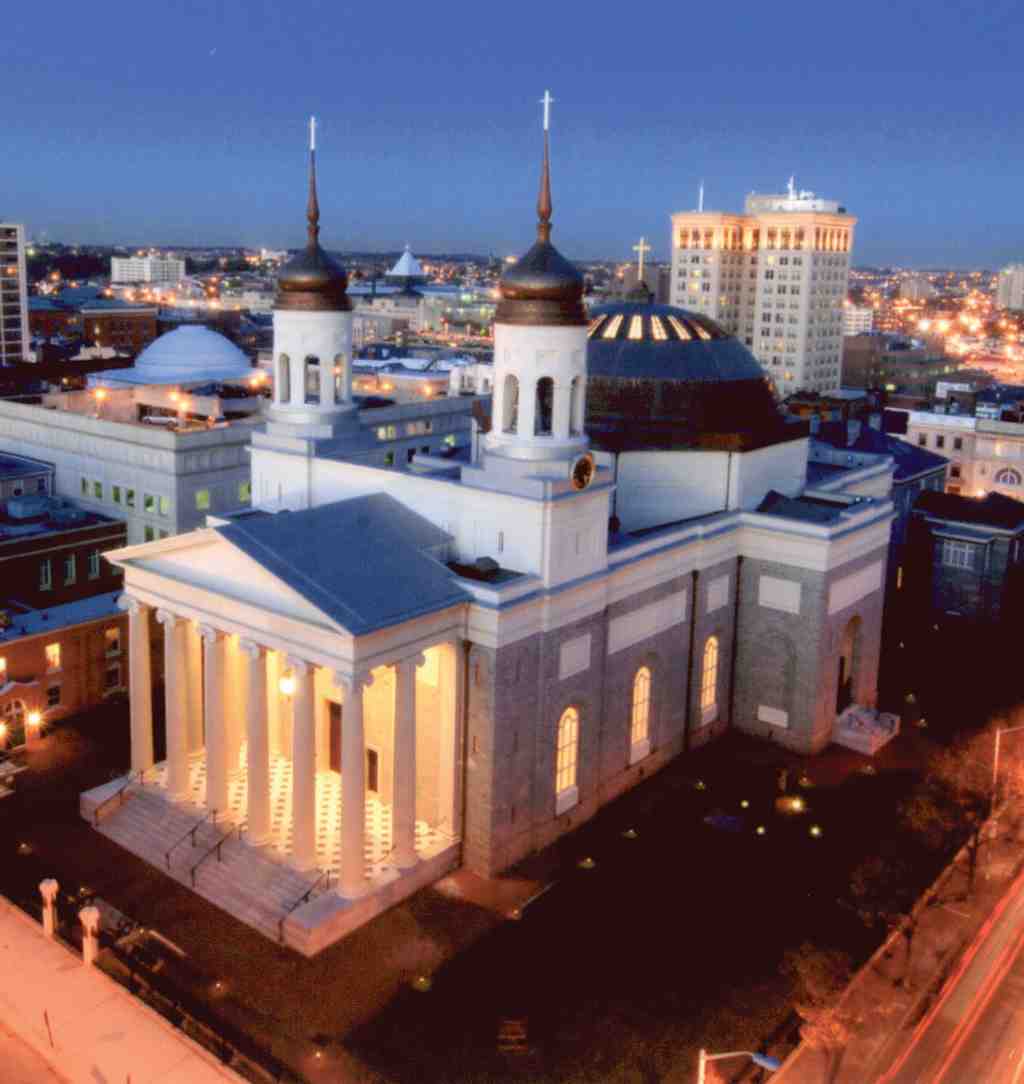
To spot the Archdiocese of Baltimore, just look ahead for a grand Neoclassical building with tall white columns, two domed towers topped with crosses, and a glowing, welcoming entryway that stands proudly against the city skyline. Welcome to the final-and most historic-stop of our journey, right here in front of the illustrious Archdiocese of Baltimore! Picture yourself back in the 1600s: imagine horse carts creaking along the dusty streets, the air buzzing with whispers of new beginnings and fresh hopes for religious freedom in colonial Maryland. If these walls could talk, they'd have stories that would make your ears tingle almost as much as the city bells! The Archdiocese of Baltimore isn’t just the heart of Catholic life in the city-it’s the oldest Catholic diocese in all of the United States! When revolutionary fever swept America and independence was won, the fledgling new nation’s Catholics were in dire need of their own spiritual leader. So, in 1784, a group of determined Maryland clergy petitioned Rome, and Pope Pius VI answered by choosing a homegrown hero, Reverend John Carroll, as the very first American Catholic superior. He even became the first bishop, and later, the first archbishop, right here, covering-get this-the WHOLE nation! That’s right: from Baltimore, Catholic leadership stretched from coast to coast, literally managing a territory so large it's a wonder Carroll didn’t ask the Vatican for a faster horse. Those early days were far from easy. Catholics in America often faced harsh discrimination; for a time, colonial Puritans even managed to make Catholicism illegal in Maryland. But faith has a way of weathering storms. As the archdiocese grew, so did the monumental events: Carroll set up the first synod-imagine twenty-two nervous priests gathering in this very spot, debating mass rules, marriage, and even who should bring the donuts. Speaking of impactful events, these grounds were the starting place for the nation's first free Catholic school for girls, thanks to Saint Elizabeth Ann Seton, and the first religious order for Black women, led by the indomitable Mother Mary Lange. You can practically hear the excited laughter of children and determined footsteps of nuns laying the foundation for social justice-quite literally! Over the centuries, the archdiocese has witnessed deeply moving chapters and dark tragedies. It fought for civil rights under Archbishop Shehan, who made sure every church and school opened its doors to everyone, regardless of color-a bold move in turbulent times. But there have also been profound challenges and heartbreak. In recent years, the archdiocese has confronted the consequences of abuse scandals, worked to seek justice for survivors, and, most recently, filed for bankruptcy in response to a flood of lawsuits-a stark reminder that even the oldest stones must sometimes be rebuilt to match the ideals they were meant to serve. Today, the Archdiocese of Baltimore covers Baltimore City and nine counties, supports hundreds of priests, deacons, and teachers, and houses two mighty cathedrals: the majestic Basilica of the Assumption (yes, the glowing marvel in front of you) and the stunning Cathedral of Mary Our Queen. So look up at those gleaming towers and the colossal columns below them and remember: this is a place where history is very much alive, where echoes of hope, hardship, and holy ambition can still be heard if you listen closely. Not bad for a place that started life as a refuge for persecuted English Catholics! And with that-our tour concludes, but Baltimore’s stories will keep on ringing, just as those distant bells do in the evening air. Eager to learn more about the episcopate, bishops or the notable individuals? Simply drop your inquiries in the chat section and I'll provide the details you need.
Otwórz dedykowaną stronę →
Najczęściej zadawane pytania
Jak rozpocząć trasę?
Po zakupie pobierz aplikację AudaTours i wpisz kod realizacji. Trasa będzie gotowa do natychmiastowego rozpoczęcia – po prostu dotknij \"Play\" i podążaj trasą z nawigacją GPS.
Czy potrzebuję internetu podczas trasy?
Nie! Pobierz trasę przed rozpoczęciem i korzystaj z niej w pełni offline. Jedynie funkcja czatu wymaga internetu. Zalecamy pobieranie przez WiFi, aby oszczędzać dane mobilne.
Czy to wycieczka grupowa z przewodnikiem?
Nie – to samodzielny audioprzewodnik. Zwiedzasz niezależnie, we własnym tempie, z narracją audio odtwarzaną przez telefon. Bez przewodnika, bez grupy, bez harmonogramu.
Ile trwa trasa?
Większość tras zajmuje 60–90 minut, ale to Ty kontrolujesz tempo. Wstrzymuj, pomijaj przystanki lub rób przerwy, kiedy chcesz.
Co jeśli nie zdążę ukończyć trasy dzisiaj?
Żaden problem! Trasy mają dożywotni dostęp. Wstrzymaj i wznów, kiedy chcesz – jutro, za tydzień lub za rok. Twój postęp jest zapisywany.
W jakich językach są dostępne trasy?
Wszystkie trasy są dostępne w ponad 50 językach. Wybierz preferowany język podczas realizacji kodu. Uwaga: języka nie można zmienić po wygenerowaniu trasy.
Gdzie znajdę trasę po zakupie?
Pobierz darmową aplikację AudaTours z App Store lub Google Play. Wpisz kod realizacji (wysłany e-mailem), a trasa pojawi się w Twojej bibliotece, gotowa do pobrania i rozpoczęcia.
Jeśli trasa Ci się nie spodoba, zwrócimy Ci pieniądze. Skontaktuj się z nami pod adresem [email protected]
Bezpieczna płatność przez