
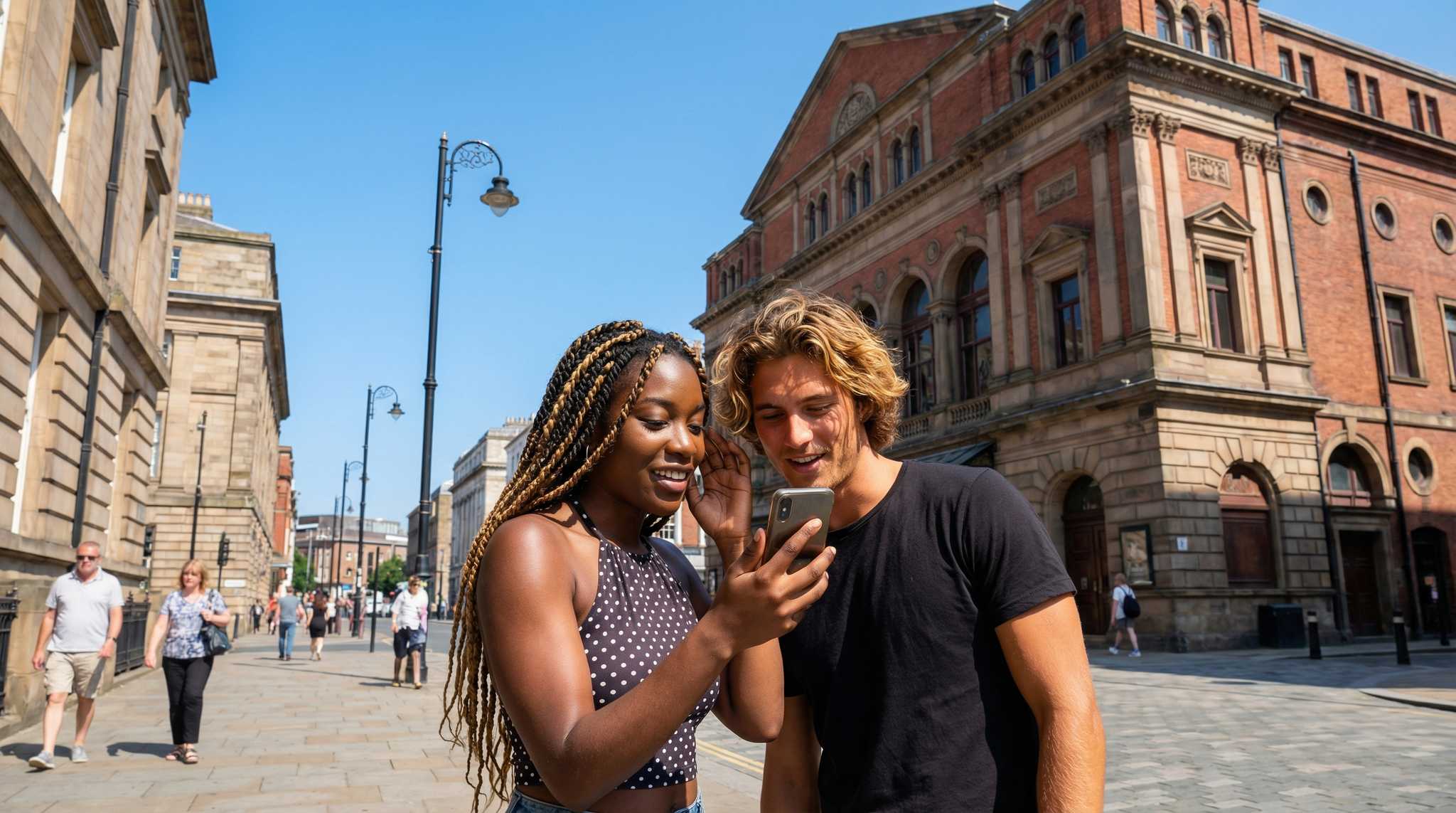
Wycieczka audio po Liverpoolu: Ikony, sztuka i legendy centrum miasta
Pod czujnym okiem kamiennych bogów i legend serce Liverpoolu bije w rytm sekretów, których wielu nigdy nie dostrzega. Starożytne kolumny wznoszą się na tętniących życiem rogach ulic, teatry skrywają szeptane skandale, a każdy budynek niesie echo buntu i odnowy. Ta wycieczka audio z przewodnikiem odkrywa to, co kryje się pod powierzchnią centrum miasta, ujawniając ukryte opowieści i dramatyczne zwroty akcji w miejscach, gdzie niewielu zagląda. Jaka walka polityczna niemal doprowadziła do zburzenia pierwszej „świątyni książek” w Liverpoolu? Która gwiazda teatralna zadebiutowała, drżąc za kulisami – zaledwie kilka godzin przed tym, jak świat uległ zmianie? I dlaczego parada gromadzących się wojsk zalała St George’s Plateau, płosząc gołębie? Spaceruj w cieniu klasycznych portyków i pod wieżami z czerwonej cegły, gdzie zderzają się historie. Od intryg z wyższych sfer po dzikie protesty – odkryj Liverpool na nowo dzięki żywym opowieściom, które zamieniają każdy punkt orientacyjny w scenę rewolucji, śmiechu i przetrwania. Rozpocznij podróż już teraz i zobacz, co te milczące kolumny czekały, by ci opowiedzieć.
Podgląd trasy
O tej trasie
- scheduleCzas trwania 40–60 minsIdź we własnym tempie
- straighten4.6 km trasy pieszejPodążaj wyznaczoną trasą
- location_onLokalizacjaLiverpool, Wielka Brytania
- wifi_offDziała offlinePobierz raz, korzystaj gdziekolwiek
- all_inclusiveDożywotni dostępOdtwarzaj ponownie w dowolnym momencie
- location_onStart przy The Lyceum, Liverpool
Przystanki na tej trasie
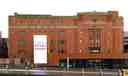
To spot the Royal Court Theatre, look for a massive, striking red-brick building right across the street with bold vertical lines, angular Art Deco features, and a giant sign…Czytaj więcejPokaż mniej
To spot the Royal Court Theatre, look for a massive, striking red-brick building right across the street with bold vertical lines, angular Art Deco features, and a giant sign reading “Liverpool’s Royal Court”-you really can’t miss it! Now that you’re here, let your imagination travel back through the sights, sounds, and dramas of Liverpool’s most beloved theatre! Legend has it that beneath your feet, there’s a 12th-century well-who’d have guessed this spot started out humbly as a water source before all the glitz and glamour? The site once rang with the excited shouts and applause from John Cooke’s travelling circus in the 1820s, and soon after, crowds came for grand operas, wild plays, and the unforgettable spectacle of Pablo Fanque, the circus star immortalized in the Beatles' “Being for the Benefit of Mr. Kite!” Over the years, the theatre was reborn and rebuilt, each time rising from the ashes-sometimes literally! In 1933, a fire razed the previous building, forcing a five-year wait before the dazzling Art Deco palace in front of you finally swung open its doors in 1938. Imagine opening night: shining lights, gleaming nautical-themed interiors inspired by the Queen Mary ocean liner, and hundreds spilling into the stalls, circle, and balcony to be swept away by stories from near and far. World War II tore through Liverpool, bombs raining down and buildings crumbling all around-but not the Royal Court. This theatre stood its ground, surviving the blitz like a true Scouse superstar. Inside, Liverpool folks sought a small escape from the world outside, watching legends like Ivor Novello, Margot Fonteyn, Margery Manners, and John Gielgud command the stage. Here, a young Richard Burton first tried out his famous voice, and, in 1957, Judi Dench played her very first professional role, trembling with nerves backstage. But just when you thought the Royal Court couldn’t get more exciting, it transformed into a rock ‘n’ roll haven in the 1980s, swapping Shakespeare for shoulder pads and synths! Icons like David Bowie, R.E.M., Iron Maiden, U2, and even Ozzy Osbourne brought booming concerts to Roe Street, shaking these historic walls in a new way. Even the British band Def Leppard shot their music videos here in 1981-if you listen closely, you just might hear the faint echoes of electric guitar licks from the past. The story doesn’t end there! After Rawhide Comedy Club took ownership in 2005, the theatre returned to its roots, with laughs, local talent, and plenty of Scouse spirit. You’ll find three tiers inside-the Stalls, Grand Circle, and Balcony-where today’s crowds sit cabaret style, sometimes sipping drinks and enjoying a meal before curtain-up. There’s even a special Studio in the old basement lounge, now hosting everything from stand-up comedy to brand-new plays written by Liverpool’s up-and-coming playwrights. The Royal Court has always been more than just a theatre; it’s Liverpool’s laughter laboratory and drama factory. The Christmas shows here-like “The Scouse Nativity” and “Little Scouse On The Prairie”-practically come with their own local accent! And let’s not forget the theatre’s role as a pantomime powerhouse, turning out dazzling “annuals” long before TV or cinema stole the spotlight. At one point, Liverpool had more theatres than you could shake a stick at, but the Royal Court always stood tall among them. If you listen to stories from the old days, you’ll hear about spectacular sets, chorus lines one hundred strong, and cheeky comedians wowing the crowds. Even when the city’s fortunes waned, and panto almost disappeared, the Royal Court kept reinventing itself-blending nostalgia and novelty, history and hilarity. Today, the Royal Court is Grade II listed, a badge of honor recognizing its place at the heart of Liverpool’s heritage and community life. Hundreds of shows later, the curtain’s still going up, and the next act is always just around the corner. So take a deep breath, take in the grandeur, and imagine the generations of Liverpudlians who’ve laughed, wept, and cheered within these sturdy red-brick walls. Who knows? Maybe tonight, you’ll be part of the next unforgettable story! Curious about the present, technical or the shows? Don't hesitate to reach out in the chat section for additional details.
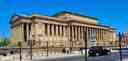
Otwórz dedykowaną stronę →Directly ahead, you’ll spot St George’s Hall by its grand row of towering columns-just look for the massive stone steps and the classical Greek façade stretching wide along the…Czytaj więcejPokaż mniej
Directly ahead, you’ll spot St George’s Hall by its grand row of towering columns-just look for the massive stone steps and the classical Greek façade stretching wide along the street, almost seeming to glow golden in the sunlight. Now, take a deep breath and imagine-right where you’re standing, there was once no magnificent hall at all, but Liverpool’s very first infirmary. By the early 1800s, Liverpudlians loved their music festivals so much that they started dreaming of a concert hall fit for thousands, mixed with a dash of serious business-like court cases and formal dinners. So, in 1838, when Queen Victoria grabbed her crown, the city laid the first stone for what would become St George’s Hall, kicking off a contest for the best design. The winner? A young London upstart named Harvey Lonsdale Elmes, barely 25, who thought, “Why not combine music and law under one colossal roof?” I’d say that’s multitasking, Victorian style. Walk up the steps, and you’re retracing the path of Victorian judges-and maybe a few folks hoping their singing was better than their alibi. The Hall opened in 1854, but tragedy struck before Elmes could see it finished. The baton was passed to a series of architects (and probably a few stressed engineers), all determined to make this hall “surpass most public buildings in the country.” In the end, it cost over £300,000-a princely sum back then, unless you’re shopping for a London flat today. Inside, you’d find yourself under a soaring arched ceiling inspired by the Baths of Caracalla-Romans knew how to do grandeur, and so did Liverpool. Picture this: the Great Hall, glittering with over 30,000 tiles beneath your feet, the air fresh and warm thanks to Britain’s first ever public building air conditioning system. Yes, in the damp north! The heating system was so complicated you’d need a team of workers opening and closing flaps to keep the temperature just right. Instead of just music, the Hall witnessed everything from Charles Dickens’ dramatic readings to jury deliberations in murder trials, and even epic banquets for 800 local VIPs. They say the organ here was once the biggest in the country-and nothing says “welcome to court” like a thunderous pipe organ solo. The outside is packed with stories too. Peer up at those sixteen Corinthian columns and imagine statues of Queen Victoria and Prince Albert keeping watch over St George’s Plateau, where thousands gathered during the First World War to see Lord Kitchener’s rally. Sometimes, over 30,000 men enlisted for the army right where the taxis gather today. The Plateau has also seen the wild homecomings for Liverpool’s football teams, emotional memorials for John Lennon and George Harrison, and even Ringo Starr drumming on the very roof to launch Liverpool’s Capital of Culture year. Now, that’ll wake the pigeons up! One of my favourite quirks: the Hall claims the honor of being the world’s first air-conditioned building, long before anyone could complain about the humidity on Twitter. And if the walls feel like they’re watching you, maybe they are-over the years, St George’s Hall has been a courthouse, a filming location for everything from “Peaky Blinders” to “The Batman,” and even centre stage for Eurovision’s semi-final draw in 2023. Every bit of this colossal place-from its lost sculptures of Britannia, to the tales of rallies and concerts, to its secret tunnels and grand jury rooms-feels like it’s bursting with drama, artistry, and Liverpudlian pride. So, take your time, let your imagination stretch-right here, you’re not just outside a building, you’re at the heart of Liverpool’s living story. And if you ever feel a sudden chill, don’t blame the ghosts-maybe it’s just that famous Victorian air conditioning kicking in again! To expand your understanding of the structure, events held at the building or the organ and organists, feel free to engage with me in the chat section below.
Otwórz dedykowaną stronę →
Pokaż jeszcze 11 przystankówPokaż mniej przystankówexpand_moreexpand_less
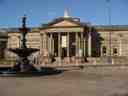
Look ahead for a grand, sand-coloured building with majestic columns, towering statues flanking the entrance, and a decorative fountain in front-if you see that, you’ve found the…Czytaj więcejPokaż mniej
Look ahead for a grand, sand-coloured building with majestic columns, towering statues flanking the entrance, and a decorative fountain in front-if you see that, you’ve found the Walker Art Gallery! Now, take a breath and imagine stepping into a world where every brushstroke tells a secret and every marble pillar has witnessed centuries of stories. The Walker Art Gallery, standing proudly in front of you here on William Brown Street, is more than just an art gallery-it’s a time machine, bursting at the seams with dramatic tales, astonishing art, and just a bit of Liverpudlian luck (and stubbornness)! First, let’s wind the clock back to the year 1819. Picture a gentleman named William Roscoe, his fine art collection carefully arranged, and then … disaster! His bank takes a tumble, and he’s forced to sell his cherished paintings. But Liverpool, never one to give up on a good story, rallies around him. Instead of Roscoe’s collection being scattered to the winds, his pals buy it up and, over time, it forms the beating heart of the gallery you see today. It’s practically a soap opera-banking failures, loyal friends, and art rescued from the jaws of fate! As Liverpool grew, so did its love for art. Throughout the 1800s, clubs and societies tried to outdo each other collecting masterpieces, which led to fierce competition. Eventually, both groups fizzled, but their works found a home here, making the Walker the ultimate winner. By 1877, thanks to local architects Cornelius Sherlock and H. H. Vale, this magnificent neo-Classical building opened its doors, all smoothed stone, tall windows, and those impressive columns you can see up close. The gallery is named after Sir Andrew Barclay Walker, a former mayor, savvy brewer, and proud donator-yes, the Walker Gallery is forever linked to beer! Maybe that’s why everyone seems so cheerful inside. Start to imagine the hustle and bustle here when Liverpool hosted its very first Autumn Exhibition in 1871-there were so many paintings, it was like the Oscars of art. Over the next forty years, the collection grew more dazzling, with legendary acquisitions like Yeames’ “And when did you last see your father?” and Rossetti’s dreamy “Dante’s Dream.” The gallery became the place to go for a slice of culture with your fish and chips. But things weren’t always so peaceful. During World War II, this very building transformed from a house of art to a fortress of potatoes and bread, as the Ministry of Food took over-forget priceless canvases, it was all about ration books and tinned spam! The collection was sent into hiding (imagine Rembrandt under someone’s bed!) and only returned for a glorious reopening in the booming postwar years. And the Walker Art Gallery didn’t rest on tradition. Extensions in the 1880s and 1930s brought with them seismic exhibitions, from Picasso’s bold lines to Gauguin’s exotic colours. In recent times, modern legends like Lucian Freud and David Hockney have graced the walls, not to mention a certain cheeky Banksy statue in Room Three-a real 18th-century priest’s bust, face replaced by pixelated bathroom tiles, a secret side-eye at scandals of the day. Only in Liverpool, eh? The Walker’s collection sweeps you from shimmering Gothic ivories through golden Victorian dreams, up to the shock and pop of the present. There are Italian masterworks, Dutch landscapes, sculptures and even a Beatles link with Stuart Sutcliffe’s only painting on permanent display here in Liverpool. If one of these statues could talk, imagine what it’d say: “You think you’ve seen it all? Wait until you see Room Seventeen!” Not a place for stuffy silence, the Walker is home of the John Moores Painting Prize-the UK’s biggest painting competition since 1957. Every two years, excitement crackles as artists battle it out for the crown, with occasional controversy, wild colours, and plenty of opinions flying! And if you time it right, special exhibitions pop up like surprise parties, from Bridget Riley’s dizzying dots to the wild “Punk Victorian” Stuckists. So, whether you’re an art connoisseur or just in need of a good story, you’ll find more tales inside the Walker’s echoing halls than you can shake a paintbrush at. Go on, step inside-the next masterpiece might just be your favourite yet. And if you see a suspicious number of paintings involving improbable hats, you’ll know you’re in the right place!
Otwórz dedykowaną stronę →To spot the Church of Our Lady and Saint Nicholas, look for a tall, sand-coloured stone building with an intricate, openwork spire towering above the modern glass offices…Czytaj więcejPokaż mniej
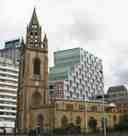
To spot the Church of Our Lady and Saint Nicholas, look for a tall, sand-coloured stone building with an intricate, openwork spire towering above the modern glass offices nearby-its clock-faced tower stands proudly, making it easy to pick out against the city skyline. Welcome to the Church of Our Lady and Saint Nicholas-known lovingly as “St Nick’s” by locals. As you stand here beside its impressive tower, picture yourself centuries back, with the salty air of the Mersey river swirling around you and ships creaking at their moorings where the river once lapped right up to the church garden walls. This site has been watching over Liverpool’s sailors and townsfolk for nearly 800 years. That’s longer than football’s been around-imagine having to explain offside to someone from 1250! Back in medieval times, this spot hosted St Mary del Quay-a humble stone chapel built by the 1250s. It looked down onto a busy river quay, playing host not just to prayers, but to the hopes and worries of a little town on the rise. As Liverpool’s fortunes boomed and ships crowded the Mersey with cargoes of cotton and sugar, the chapel quickly outgrew itself. By 1355, Liverpool’s people needed more space for their worship, so construction started on what would become our current church, dedicated to both the Virgin Mary and St Nicholas-the patron saint of sailors. You can almost imagine the anxious loved ones craning to catch sight of returning ships, whispering prayers under this ever-watchful spire. Through plague, prosperity, and storm, this church stood its ground. In 1361, as plague swept Liverpool, the churchyard was the city’s main burial ground. By the late 15th century, the church was twice the size it had been, with special chapels supported by wealthy patrons, each lighting a candle for their soul. If walls could talk, these would whisper tales of seafaring and survival, of prayers for safe voyages and safe returns. Come the Reformation, things changed: the ornate chapels for private prayers vanished, and the church, like the country, adapted to new ways of worship. By the 18th century, Liverpool’s population was exploding-hardly surprising considering this chaotic port city was humming with news, trade, and travelers. St Nick’s had to add galleries for all the newcomers squeezed into its pews, each family paying rent to sit beneath this roof. And around 1746, the crowning glory: the now-famous spire topped by a gleaming golden ship-shaped weather vane. It’s Liverpool’s answer to a “missing ship” joke-more on that in a moment! St Nick’s didn’t just live through history; it sometimes felt it crashing down. On a February morning in 1810, as congregants gathered and bells chimed, the spire came tumbling down onto the nave, killing 25 people-most of them children from a local charity school. Imagine the shock and heartbreak as the smoke and dust cleared, and the city came together to rebuild, refusing to let this church’s story end in ruins. By 1815, a new tower and lantern stood firm, their bells pealing once again above the river. During World War II, the story took another dramatic twist. German bombs fell on Liverpool, flames gutted the main body of the church, and once again only the determined sandstone tower remained, silent but unbowed. Rebuilding was slow, but by 1952, a new and very different church opened its doors. Architect Edward C. Butler dared to place the altar at the western end-a little Liverpool twist on tradition! The nave soared taller than before, the sanctuary crafted with wood carvings of vines, and beautiful stained glass bathed the inside in gentle color. Inside you’ll find touches from every era. There’s a stunning war memorial for the Cunard Steamship Company, the Maritime Chapel with its bronze statue of Our Lady aboard a boat, and a cross made from the charred timbers, a reminder of the resilience to rebuild after wartime destruction. Tucked away in the north corner is the Book of Remembrance, listing mariners lost at sea-fitting for a church that’s long watched over Liverpool’s sailors. Ah, and that weather vane atop the tower? It’s shaped like a ship and part of local legend. People jest, “I’ll be waiting till Dick docks,” meaning never-referencing the ever-absent Richard Donnelly, a ship no one can quite recall seeing in port. Though history sleuths say the ship never truly existed, the city prefers its myth. After all, every good port city needs a tall tale or two. So as you look up at the lantern spire-still pointing skyward despite all its trials-imagine the prayers, laughter, and stories that have swirled around St Nick’s for almost eight centuries. It’s Liverpool’s steadfast guardian, watching over the river, the city, and generations of dreamers headed for land or sea. Wondering about the st mary del quay, reformation and beyond or the fatal accident? Feel free to discuss it further in the chat section below.
Otwórz dedykowaną stronę →Look ahead for a grand, light stone building with two domed towers, each topped by a giant green mythical bird and big clock faces near the top-this is the famous Royal Liver…Czytaj więcejPokaż mniej
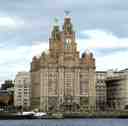
Look ahead for a grand, light stone building with two domed towers, each topped by a giant green mythical bird and big clock faces near the top-this is the famous Royal Liver Building rising prominently by the waterfront. Welcome to the mighty Royal Liver Building! Take a good look at those two proud towers soaring into the sky, and you’ll spot the legendary Liver birds perched up top-like two giant feathery guardians keeping watch. Don’t worry, you’re in just the right spot to see why this building is one of Liverpool’s most cherished sights. Now, let’s time-travel back to 1911. Imagine the excitement as crowds gathered by the River Mersey for the grand opening. People gazed up at this brand-new skyscraper made almost entirely of reinforced concrete-something nearly unheard of back then. Skeptics called it “impossible to build,” but Liverpool’s spirit has never been scared of a challenge! In fact, the foundation stone was only laid three years earlier, but the city needed a new head office for the massive Royal Liver Assurance group-which, itself, was set up to help families when the main wage-earner tragically passed away. Imagine more than 6,000 people working for the society, all needing room to stretch their elbows-a bit like a flock of Liver birds searching for office desks instead of fish. Rising to 98.2 meters (that’s 322 feet high, just to the top of the spires-not even counting the birds!), the Royal Liver Building was once one of the tallest in the country. And those birds? Bella and Bertie, as they’re affectionately known, look out over the city and the sea. Some say Bella is watching for handsome sailors, while Bertie’s keeping an eye on whether the pubs are open-a full-time job, if you ask me! Their heads are three and a half feet long, wings twelve feet wide, and each bird carries a sprig of seaweed in its mouth-because nothing says “majestic” like a healthy lunch. Pop quiz: Why are those Liver birds chained up there? Is it because the architect feared they’d fly away and Liverpool would disappear? Or just because a bird that big catches a lot of wind? Either way, local legend has it that if Bella and Bertie ever take flight, Liverpool itself would cease to exist! It’s probably the most dramatic insurance policy the city could get. On top of that, each tower boasts enormous clock faces, measuring over seven meters across-bigger than Big Ben’s! Mariners arriving along the Mersey could see the time just by glancing up. Fun fact: these are known as the “George clocks,” because they ticked for the very first time the moment King George V was crowned in 1911. Talk about regal timing! Inside, the building has always been a hive of activity. In the 1950s, the Royal Air Force even took over the sixth floor for a while, using it as a secret hub to oversee movements of troops and supplies in the post-war years. And after two world wars, new electronic chimes were installed to honor Royal Liver members who never returned. At night, if you’re near the docks, you’ll see those clock faces glowing like friendly eyes surveying the city they watch over. For decades, the Royal Liver Building was the proud home of the Royal Liver Assurance group, until they merged with Royal London in 2011. Since then, it’s attracted a whole new flock of tenants: banks, TV companies, a law firm, and of course, Everton Football Club-yes, even the Blues wanted a piece of the view! In 2017, the building sold for a whopping £48 million, proving that even after a hundred years, the Liver Birds are still the real landlords in Liverpool. And just when you think this place can’t get more interesting, in 2019, the West Clock Tower opened to the public for regular tours-not just once a year on Heritage Open Days. You can climb right up and get a beak’s-eye view of the city yourself! So whether you’re listening to the wind howl around the towers or watching the sunlight glint off those ancient domes, you’re standing in the shadow of a true giant. Next time someone asks what keeps Liverpool running, just point right up here-two mythic birds, a thousand legends, and a city that never stops dreaming. Wondering about the description, tenants or the gallery? Feel free to discuss it further in the chat section below.
Otwórz dedykowaną stronę →Look straight ahead for three grand, historic buildings right on the waterfront, their stone facades and towers looming large where the land meets the river-the Pier Head is where…Czytaj więcejPokaż mniej
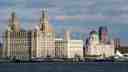
Look straight ahead for three grand, historic buildings right on the waterfront, their stone facades and towers looming large where the land meets the river-the Pier Head is where the city’s heart beats against the waves. Welcome to Liverpool’s Pier Head, where the River Mersey laps at the stones and stories swirl in the salty air. As you stand facing these majestic buildings, imagine the years peeling back, one by one. Once, right where you are now, was George's Dock, built in 1771, which would have bustled with sailors shouting, ropes creaking, and the heavy soak of saltwater on the wind. By the 1890s, though, the dock had outlived its usefulness-too shallow for the newer, brawnier ships, it slipped into redundancy like an old sea dog long past his prime. Now, the real drama: two powerful Liverpool bodies-one, the Mersey Docks and Harbour Board, and the other, the upbeat Corporation of the City of Liverpool-locked horns like rival captains fighting over a treasure map. Their negotiations dragged on for years, led by some of the grandest names in Liverpool’s history: Lord Derby for the City, and Robert Gladstone, kin to the famous W.E. Gladstone, for the Board. At last, the city bought the site for £277,399, and the plans began to stack up higher than a pile of shipping crates. If you listen closely, you might almost hear the clatter and clamor as the Port of Liverpool Building started to rise in 1903, a stone symphony topped with a beautiful central dome, hurrying to finish by 1907. But what makes the Pier Head truly dazzling is what came next. Unable to sell the other plots, the city was rescued by the quirky Royal Liver Friendly Society. They offered less than the city hoped-imagine asking for a fiver and getting three quid and a half-chewed sweet-then promptly planned to build a skyscraper that left the city aghast! That’s the Royal Liver Building you see with its pair of grand clock towers, each one guarded by a mythical Liver Bird who, legend has it, will flee if Liverpool ever loses its heart… or maybe just if it rains too much. Then came the Cunard Building, finished just before World War I. Picture it as a grand Italian palace misplaced in the northwest, all stately columns and dignity-a fittingly grand HQ for a shipping company whose ocean liners once ferried queens, soldiers, and dreamers across the Atlantic. Together with the Port of Liverpool Building, the Cunard, and the Liver Building, these three became known as the “Three Graces,” a trio so impressive they could give the gods a run for their money. But the Pier Head has always been about more than stone and steel. Step around the open plazas and you’ll see Canada Boulevard, memorial plaques underfoot remembering brave Canadians lost at sea. In the heart of the square, an equestrian statue of Edward VII stands proudly, looking a tad like he’s waiting for a ferry that never comes. Speaking of ferries, just over there you’ll find George’s Landing Stage-the home port of the famous Mersey Ferries, which have battled wild weather and sinking docks more times than a grizzled sea captain could count. Oh, and if you listen to the stories whispered by the wind, you’ll hear tales of the Titanic. The Titanic Memorial here honors the brave engineers who kept the lights burning as the ship slipped beneath the waves. There’s also remembrance for Merchant Navy sailors, Chinese merchant seamen, and the legendary Captain Johnnie Walker, whose convoy escorts turned the tide in the Battle of the Atlantic. Take a moment to imagine the roar of trams and buses-the Pier Head was once a key hub for Liverpool’s land transport, with the echoing rumble of the city’s old trams rattling off into the past. The Leeds and Liverpool Canal link, opened in 2009, now lets boats glide right by, connecting 127 miles of English waterways and giving new life to Liverpool’s historic waterside. Today, this place might look peaceful, but it thrums with memories-a thousand greetings and goodbyes, the hope and heartbreak of travelers setting out and coming home. The Pier Head saw liners and ferries, waves of migration and commerce, pride and the occasional project disaster (raise your sails for the doomed “Fourth Grace” shaped like a fluffy cloud). Through all the changes, the Graces watch over Liverpool, icons of resilience, pride and… let’s be honest, a fair bit of architectural bravado! Soak it in and imagine yourself at the crossroads of history, adventure, and a dash of Scouse charm. Curious about the landmark buildings, landing stages or the land transport? Don't hesitate to reach out in the chat section for additional details.
Otwórz dedykowaną stronę →To spot the Cunard Building, just look for the grand, light-coloured rectangular building right in front of you, with its stately rows of large windows and ornate carvings at the…Czytaj więcejPokaż mniej
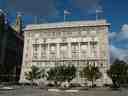
To spot the Cunard Building, just look for the grand, light-coloured rectangular building right in front of you, with its stately rows of large windows and ornate carvings at the top, proudly flying several flags from its roof along the waterfront between its two famous neighbours. Right, here we are, standing before the majestic Cunard Building-Liverpool’s very own slice of Renaissance Italy, with a dash of Greek drama thrown in for good measure! Imagine you’re in the hustle and bustle of the early 1900s. The city is alive, steamships toot their horns along the Mersey, and everything smells faintly of coal and adventure. The Cunard Steamship Company needed a new home-somewhere grand enough for ship designers, bookkeepers, and hopeful passengers about to cross the Atlantic in style. So in 1914, architects William Willink and Philip Thicknesse set to work, taking inspiration from grand Italian palaces and a sprinkle of New York’s Beaux-Arts movement. By 1917, their vision stood complete: this grand building, with its crisp Portland stone façade, huge windows, and enough marble inside to make even the Romans jealous. As you stand here, you’ll see why it’s called one of the Three Graces, lining up with the Royal Liver Building and the Port of Liverpool Building like old friends at a fancy dress party. The windows look out over the river, but don’t forget to take a peek at the details-statues of Britannia, Neptune, and scenes from stormy seas guard the walls, alongside symbols of peace and war and even references to the farthest reaches of the world. Why? Because Cunard wasn’t just sending people to New York, they dreamed of connecting the globe. Step back in time for a moment. It’s 1934-Cunard has just joined forces with its rival, the White Star Line, and together they’re the kings of the ocean. From inside these very offices, engineers and artists brought icons like the Queen Mary and Queen Elizabeth liners to life. Imagine the buzz on the upper floors, design teams shouting over blueprints and sunlight streaming through vast windows. Down below, suitcases clattered along the marble corridors. First class passengers, dressed to impress, waited in opulent lounges, while those in second and third class gathered in their own separate rooms, hearts pounding with anticipation. Picture wartime Liverpool too. The sub-basement down there, somewhere deep below your feet, was an air raid shelter-candles flickering as workers huddled together and bombs thundered outside. That same basement was also the city’s Air Raid Precautions HQ. If the building could talk, I bet it would say, “You don’t know pressure until you have the fate of half the city’s people resting on your reinforced concrete!” By the 1960s, the glamour of sea travel faded, and Cunard sailed off to Southampton, leaving this building to adapt and reinvent itself again and again: new owners, new tenants, a home for businesses and the British Music Experience. Even in recent years, there was talk of turning it into a cruise terminal, but the cost of modern security and border control was too high. It’s a survivor, really-just like Liverpool itself. Make sure not to miss the War Memorial at the west side of the building-a tall, elegant column topped with the figure of Victory, standing proud on the prow of a ship. Designed to match the Greek-inspired details of the building, it remembers Cunard’s brave employees lost in both world wars. Take a moment to read the inscription-“Pro Patria”-For One’s Country-and imagine the emotional ceremonies that have taken place here. So whether you see this building as a palace fit for kings, a hive of hope for migrants and dreamers, or just a really fancy place to work, the Cunard Building is a storyteller all on its own-every stone whispering tales of mighty ocean journeys, changing fortunes, and the relentless spirit of Liverpool.
Otwórz dedykowaną stronę →Take a look straight ahead and spot the grand building with a giant dome in the center and four corner turrets - that’s the Port of Liverpool Building, proudly showing off its…Czytaj więcejPokaż mniej
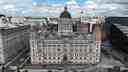
Take a look straight ahead and spot the grand building with a giant dome in the center and four corner turrets - that’s the Port of Liverpool Building, proudly showing off its ornate stonework and Edwardian Baroque charm! Now, picture yourself a century ago, with the salt air swirling and the constant hum of ships along the river. Right here, standing tall by the water’s edge, this magnificent building was born from the dreams of Liverpool’s dockmasters, who wanted their headquarters to be as impressive as the city’s bustling port. Designed by Sir Arnold Thornely and F.B. Hobbs, and constructed between 1904 and 1907, this was no ordinary dock office. It was built to shout, “Liverpool is the gateway to the world!” If you listen closely, you can still imagine the distant clang of ship bells, and the footsteps of clerks hurrying inside to keep the empire’s trade running. When the Mersey Docks and Harbour Board decided to fill in George’s Dock and build right here, they wanted a headquarters you couldn’t miss. Seven brave groups of architects threw their hats into the ring, but it was Thornely and Hobbs whose design won-though the final look changed shape many times along the way. The now-iconic dome on top? That was a last-minute addition, inspired by plans for Liverpool’s cathedral. Some board members weren’t exactly fans at first; legend has it they grumbled that the Port Authority wasn’t in the business of “beautifying the town.” Good job for us they lost that argument, because now that dome draws your eyes up in awe. Back in 1907, workers sweated through the city’s fog and drizzle, digging foundations down up to forty feet just to keep this place standing firm by the river. They used a brand-new trick: a reinforced concrete frame, clad with creamy Portland stone, strong enough to laugh in the face of fire and floods alike. Imagine 35,000 tons of concrete beneath your feet! That sturdy design would prove itself during the chaos of World War II, when bombs struck the building and flames tore at its eastern wing. Even then, thanks to its clever engineering, only quick repairs were needed before staff could march right back in. Step closer, and you’ll notice all the little details that reflect Liverpool’s love affair with the sea. Look for mermaids, shells, dolphins, and anchors carved into the iron railings and stonework, as if Neptune himself was watching over the dock workers here. Either side of the main entrance stand statues of women-Commerce and Industry-ushering in the port’s leaders every morning, sometimes with the smell of sea spray and fresh cargo drifting in from the Mersey. Inside, beneath the soaring central dome, was a glittering mosaic compass on the floor, and hallways dressed in marble, Spanish mahogany, and bronze. Rumor has it a quarter of the building’s cost went merely on the decorations! If you managed to sneak inside, you’d find grand staircases lined with stained glass-look for Poseidon, ships’ bells, and dedications to far-off lands Liverpool traded with, from Singapore to Australia. For 87 years, this was where big decisions were made: trade routes mapped out, crises managed, triumphs celebrated. When the Dock Company moved out in 1994, there were probably a few tears (and maybe an extra-long lunch break). A new owner stepped in and, between 2006 and 2009, poured millions into restoring the faded glory-picnics on the river-facing piazza and luxury apartments went up top. But the history clings to every surface, from polished stone to the dome towering 220 feet above. Today, as you look up at that dome, reflect on all the storms this building has weathered-literal and metaphorical. And next time someone tells you architecture is boring, ask if their office survived a bombing, outlasted empire and industry, and still looks ready for an adventure. Now, onward to our next stop-but don’t forget to wave goodbye to Liverpool’s most story-filled stone giant!
Otwórz dedykowaną stronę →Take a look to your left-you’ll spot Liverpool Castle as a solid fortress, built from large blocks of stone, with thick round towers and a sturdy gatehouse, perched on a raised…Czytaj więcejPokaż mniej
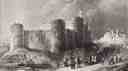
Take a look to your left-you’ll spot Liverpool Castle as a solid fortress, built from large blocks of stone, with thick round towers and a sturdy gatehouse, perched on a raised mound at the edge of a rocky moat. Welcome to Liverpool Castle! Imagine standing here almost 800 years ago, in the 1230s-the air thick with the scent of earth and stone, and the distant echo of builders shouting as William de Ferrers, a powerful Earl, orders his men to raise a mighty castle to watch over King John’s new port. The ground rumbles beneath your feet as they hack out a deep moat right from the bedrock, 20 yards wide-enough to keep out anyone who had funny ideas about breaking in. Now picture the castle on top of this man-made plateau, a maze of high stone walls joined by chunky towers-three at first, with a fourth added in 1442, as if someone decided a proper stronghold really needs an upgrade. The main gatehouse faces Castle Street, keeping a watchful stone eye on everyone coming and going, and there’s a secret passage running beneath the moat, just in case a dramatic escape is needed. There’s even a dovecot below the walls, flocks of pigeons fluttering-imagine the cooing and beating of wings-or an orchard stretching down to the Pool where everything smells faintly of apples and fresh grass. Inside these walls, there’s a grand hall for feasts, a cozy chapel for quiet prayers, and even a brewhouse and bakehouse-because defending the town is tough work and, apparently, you can’t do it on an empty stomach! It’s the height of medieval comfort: if you ignore the odd draft and the occasional sound of swords clanging outside. Let’s crank up the tension. It’s the year 1315, and Robert de Holland is suddenly the new boss in town, thanks to feudal patronage, but not everyone’s happy. Adam Banastre and his mates decide today’s the day for a good ‘ol rebellion, swords in hand. They storm the castle-but within the hour, their dreams of heroism are as battered as their pride, and the castle still stands firm. Not all is mud and mayhem, though. In 1323, King Edward II himself kicks off his royal boots and stays here for a week-perhaps enjoying the echoing halls or the view across the river, where the Pool glimmers like a shield. Later, Edward III uses Liverpool as his launchpad for wars in Scotland and Ireland, and the castle becomes a busy traffic jam of soldiers on horseback. As centuries roll by, Liverpool Castle suffers the rough-and-tumble of history. There’s drama as Sir Richard Molyneux is made constable in 1440 (which, to be fair, doesn’t mean he gets to boss everyone around... just some people), and then the addition of that fourth tower I mentioned-clearly, builders never get bored around here. But by the late 1500s, the place has become a real fixer-upper-so much so that it’s described as “in utter ruin and decay,” with pigeons possibly having more fun than the people. Yet, even at its lowest, there’s talk of repairs and using the castle’s Great Tower as a giant, slightly draughty storage cupboard. The castle’s final chapters are full of twists. During the English Civil War in the 1640s, it’s tug-of-war time as it’s taken by Prince Rupert’s army, snatched back by Sir John Moore, and then, in 1689, Protestant supporters of William of Orange decide it’d make the perfect headquarters-honestly, this place changed hands more often than a hot potato. Finally, as the 18th century dawns, the townsfolk sigh and give in: the lease is up, the old stone walls are coming down, and amazingly, some of those ancient rocks probably wound up in the city’s dock, recycled like medieval Lego. By the early 1700s, the once-mighty Liverpool Castle is replaced by churches, finally giving way in 1899 to the monument you see today. But, the ghost of the castle lives on in a way-a mysterious replica rises at Lever Park near Chorley in the early 1900s, like someone just couldn’t let go of Liverpool’s noble past. So next time you hear a seagull or the clang of construction, pause and think: right here, on this busy square, knights once stood, pigeons once perched, and Liverpool first found its fighting spirit. To expand your understanding of the construction, description or the replica, feel free to engage with me in the chat section below.
Otwórz dedykowaną stronę →To spot the Nelson Monument, look ahead for a towering bronze group atop a round stone base, crowned by a striking figure with dramatic drapes and flags-it stands out with its…Czytaj więcejPokaż mniej
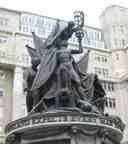
To spot the Nelson Monument, look ahead for a towering bronze group atop a round stone base, crowned by a striking figure with dramatic drapes and flags-it stands out with its heroic nude figure and the proud inscription: “ENGLAND EXPECTS EVERY MAN TO DO HIS DUTY.” So, here we are in Exchange Flags, standing before Liverpool’s very first piece of public sculpture-a dramatic celebration of Admiral Horatio Nelson! Let’s go back in time to 1805, just as news of Nelson’s dazzling victory at the Battle of Trafalgar reached Liverpool. The city’s leaders must have felt their hearts beat a little faster, because they wasted no time at all-they decided Nelson needed a monument worthy of his legend. The city council pledged £1,000 to start, but soon the people of Liverpool joined in, their pockets crackling with pride. In just two months, nearly £9,000 flooded in-imagine that kind of crowdfunding today! Lloyd’s underwriters, the West India Association, even the merchants whose fortunes crossed the ocean, they all chipped in. The city wanted something BIG. A special competition found Matthew Cotes Wyatt as the winning designer-never mind he was a bit of a newcomer! He got a little help from sculptor Richard Westmacott, just to keep things shipshape. By 1812 the first stone was ready, and on a crisp October day in 1813-exactly eight years after Nelson’s death-the great monument was unveiled. Bells rang, and Liverpool’s Exchange was ablaze with patriotic excitement. Now, look up at the base. It’s huge-over 29 feet tall, with a circumference to march around! At its foundation, four somber, manacled prisoners sit in deep thought. Each one represents one of Nelson’s key victories-Cape St Vincent, the Nile, Copenhagen, and of course, Trafalgar itself. Above them, the chains loop down from the mouths of fierce lion heads, connecting power and struggle. Between the statues, you’ll spy bronze panels that capture other moments of seafaring triumph-testaments to the drama and thunder of battle at sea. And just above, the famous message: “ENGLAND EXPECTS EVERY MAN TO DO HIS DUTY.” That call rang out over the waves at Trafalgar, but here, it sends a little shiver down your spine as you stand in its shadow! Now, the monument’s upper story is a real showstopper. There’s an idealized Nelson-noble, heroic, and completely unbothered by clothing, standing tall with his right arm hidden beneath a flag. Beneath one foot, a cannon; beneath the other, a fallen enemy, like the world’s most dramatic game of hopscotch. Around him whirl the symbols of victory-crowns, flags, ropes, anchors. Victory herself floats above, crowning Nelson, while Death-creepy as ever-stretches out a hand. Behind stands Britannia, with her laurel wreath and Nelson’s medals, and off to one side, a British sailor readies to stride into history. You know, the monument was so important that in 1866 they picked the whole thing up and moved it here when the Exchange grew too big for its boots-replacing the stone base with sturdy granite. During World War II, a secret bunker was even built underneath it, with air flowing up through the monument itself-imagine the generals plotting away, Nelson keeping quiet watch overhead. Recently, for the 2023 Eurovision celebrations, this old monument got a new look-2,500 sandbags piled around as an art installation in solidarity with Ukrainian cities hiding their own statues. It’s been a witness to centuries of triumph, turmoil, and imagination. Go ahead-give Admiral Nelson a proper salute before we head to our next stop!
Otwórz dedykowaną stronę →Just ahead, in front of the Liverpool John Moores University Avril Robarts Library on Tithebarn Street, you’ll spot a massive, bright yellow sculpture that looks half banana, half…Czytaj więcejPokaż mniej
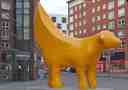
Just ahead, in front of the Liverpool John Moores University Avril Robarts Library on Tithebarn Street, you’ll spot a massive, bright yellow sculpture that looks half banana, half lamb-it’s hard to miss, with a giant curving “tail” and a friendly, chunky body! So here we are-face to face with Liverpool’s most gloriously odd mascot: the Superlambanana! Imagine you’re a sailor docking at Liverpool’s bustling waterfront a hundred years ago, the air thick with the smell of wool and tropical fruit-because, yes, the city’s docks were bursting with both sheep and bananas. Now, fast-forward to the wild 1990s and you’ve got an artist, Taro Chiezo, who looked at this bit of history and thought, “Wait! What if I made a creature that’s half sheep, half banana?” And thus, the Superlambanana was born-sort of like a mad scientist’s pet, but in the best possible way. Chiezo himself built a teeny tiny model, just a few inches high, but it took a team of Liverpool artists-Andy Small, Julian Taylor, Tommy Reason, and Ray Stokes-to bring this eight-tonne, seventeen-foot-tall beast to life. They hammered together a wire-mesh skeleton, slathered on concrete and fiberglass like chefs icing a novelty cake, and ended up with something that looked a bit weird at first… and then, suddenly, felt impossible to imagine Liverpool without. You might chuckle now, but when Superlambanana first appeared for the 1998 ArtTransPennine Exhibition, folks were baffled. Some laughed, some grumbled about wasted money, and some flat out scratched their heads. A lamb and a banana? Really? But that’s the magic of Superlambanana. It’s a nudge and a wink to Liverpool’s past-a reminder that in this city, even the wildest ideas just might work. It’s also a cheeky warning about the risks of genetic engineering. You can almost hear someone whisper, “Don’t let the scientists mix up the sheep and the fruit!” But Superlambanana didn’t just sit in one spot and soak up the Merseyside drizzle. Oh no! This sculpture has traveled, showing up all over town like a yellow, four-legged Where’s Wally. You’d see it on The Strand, near the famous Liver Building, then popping up at Williamson Square, or even at Spike Island in Widnes. Sometimes it was yellow, but it’s been pink for a breast cancer charity, spotted like a Friesian cow during a local prank, and painted purple to remind people to stop smoking. In 2023, during the Eurovision Song Contest here in Liverpool, it proudly wore the blue and yellow of Ukraine, a symbol of solidarity and hope. And then, there was the Superlambanana’s grandest adventure: in 2008, for Liverpool’s run as European Capital of Culture, the city hatched 125 smaller Superlambananas. It was like a flock of cheerful, surreal creatures took over the streets, perched everywhere from shopping centers to office buildings and, in one wild case, even on top of a mountain in North Wales! Locals and visitors alike spent months chasing down every last Superlambanana, with a special guide in hand, snapping photos and picking their favorite. When it was all over, these mini-mascots were auctioned off-one fetched an incredible £25,000, and the sales together raised more than half a million pounds for charity. Not bad for a mutant fruit-sheep! But there was a twist! The original Superlambanana was only ever on loan from Chiezo, and rumors swirled Liverpool might lose its beloved beast to Manchester. Imagine the scandal! Thankfully, a deal was struck. The artist agreed that a brand-new replica, crafted by the original team, could remain in Liverpool for 80 glorious years. So what you’re standing before now isn’t just a fun-and funny-sculpture. It’s a symbol of Liverpool’s spirit: odd, creative, generous, sometimes controversial, but always unforgettable. So as you gaze up at this fantastical creature under Liverpool’s often-dramatic sky, imagine the stories it could tell: Smiling at passing students, braving the paintbrushes of campaigners and pranksters, or, for a few shining weeks, sharing the city with its wildly colorful offspring. Not bad for something born from bananas and a bit of wild imagination, eh? Intrigued by the origin, time in the liverpool area or the after liverpool? Explore further by joining me in the chat section below.
Otwórz dedykowaną stronę →
Najczęściej zadawane pytania
Jak rozpocząć trasę?
Po zakupie pobierz aplikację AudaTours i wpisz kod realizacji. Trasa będzie gotowa do natychmiastowego rozpoczęcia – po prostu dotknij \"Play\" i podążaj trasą z nawigacją GPS.
Czy potrzebuję internetu podczas trasy?
Nie! Pobierz trasę przed rozpoczęciem i korzystaj z niej w pełni offline. Jedynie funkcja czatu wymaga internetu. Zalecamy pobieranie przez WiFi, aby oszczędzać dane mobilne.
Czy to wycieczka grupowa z przewodnikiem?
Nie – to samodzielny audioprzewodnik. Zwiedzasz niezależnie, we własnym tempie, z narracją audio odtwarzaną przez telefon. Bez przewodnika, bez grupy, bez harmonogramu.
Ile trwa trasa?
Większość tras zajmuje 60–90 minut, ale to Ty kontrolujesz tempo. Wstrzymuj, pomijaj przystanki lub rób przerwy, kiedy chcesz.
Co jeśli nie zdążę ukończyć trasy dzisiaj?
Żaden problem! Trasy mają dożywotni dostęp. Wstrzymaj i wznów, kiedy chcesz – jutro, za tydzień lub za rok. Twój postęp jest zapisywany.
W jakich językach są dostępne trasy?
Wszystkie trasy są dostępne w ponad 50 językach. Wybierz preferowany język podczas realizacji kodu. Uwaga: języka nie można zmienić po wygenerowaniu trasy.
Gdzie znajdę trasę po zakupie?
Pobierz darmową aplikację AudaTours z App Store lub Google Play. Wpisz kod realizacji (wysłany e-mailem), a trasa pojawi się w Twojej bibliotece, gotowa do pobrania i rozpoczęcia.
Jeśli trasa Ci się nie spodoba, zwrócimy Ci pieniądze. Skontaktuj się z nami pod adresem [email protected]
Bezpieczna płatność przez 


