AudaTours logoAudaTours

Wycieczka audio po Dunfermline: Podróż w czasie

Audioprzewodnik13 przystanków

Królewska twierdza wznosiła się niegdyś ze skalistego serca Dunfermline, kształtując wieki dramatycznych wydarzeń pod zielonym baldachimem, wciąż tętniącym tajemnicami. Ta wycieczka audio z przewodnikiem odsłania kulisy dawnej stolicy Szkocji, prowadząc przez owiane legendą doliny i ciche muzea, gdzie większość odwiedzających dostrzega jedynie powierzchowność. Jaka ukryta wiadomość jest wyryta w zacienionych kamieniach Wieży Malcolma? Kto zniknął po zaciekłym sporze w XIX wieku w mglistym porannym świetle Parku Pittencrieff? I dlaczego pawie są na zawsze wplecione w dziedzictwo pewnego filantropa? Przejdź od ruin twierdzy do bujnych parków, a następnie do miejsca narodzin przemysłu. Wzdłuż krętych ścieżek i za żelaznymi bramami przeżyj na nowo walki o władzę, szeptane skandale i historie śmiałków, którzy właśnie tutaj rzucili wyzwanie losowi. Każdy krok przynosi objawienia, które ukazują Dunfermline w nowym, olśniewającym świetle. Gotowy, by odkryć to, co kryje się pod wiekowymi kamieniami Dunfermline? Ukryta historia miasta czeka.

Podgląd trasy

map

O tej trasie

  • schedule
    Czas trwania 40–60 minsIdź we własnym tempie
  • straighten
    4.2 km trasy pieszejPodążaj wyznaczoną trasą
  • location_on
  • wifi_off
    Działa offlinePobierz raz, korzystaj gdziekolwiek
  • all_inclusive
    Dożywotni dostępOdtwarzaj ponownie w dowolnym momencie
  • location_on
    Start przy Wieża Malcolma

Przystanki na tej trasie

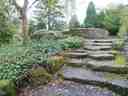
  1. As you approach Malcolm's Tower in Pittencrieff Park, keep an eye out for a series of stone steps that lead you up towards a stone platform. This area is surrounded by lush…Czytaj więcejPokaż mniej

    As you approach Malcolm's Tower in Pittencrieff Park, keep an eye out for a series of stone steps that lead you up towards a stone platform. This area is surrounded by lush greenery and ivy, with trees providing a peaceful canopy overhead. The stones might be a little mossy, adding to that ancient, mystical feel. The remains of the tower itself are enclosed by an oval-shaped modern wall, built to protect the historic foundations of this impressive fortress. Now, let's dive into the history of this fascinating landmark! Malcolm's Tower, also known as Malcolm Canmore's Tower, marks the site of significant historical importance. Imagine this: back in the mid-11th century, Malcolm III of Scotland decided to move the center of royal power from Forteviot to Dunfermline. He settled on this defensible rocky outcrop, making it the seat of Scottish royal power. Picture this scene of strong stone walls perched high above a ravine, making it almost impregnable-an ideal fortress. In fact, this fortified position is where Dunfermline gets its motto: "Esto rupes inaccessa," which translates to "Be an inaccessible rock." Now that's a motto fit for a fortress! But our story doesn’t end there. The tower also played witness to the union of Malcolm III and his queen, Princess Margaret, in 1070. Margaret brought about innovations that transformed the Scottish Church and left a lasting legacy. Though today, all that remains of the tower are foundational fragments, it once boasted around twenty small apartments spread across two stories and an attic. Quite the medieval royal residence! Enjoy soaking in the echoes of the past here at Malcolm’s Tower, a place rich with tales of kings, queens, and ancient defenses!

    Otwórz dedykowaną stronę →
  2. Ah, you're approaching the legendary Pittencrieff Park, often lovingly referred to by locals as "The Glen." As you stroll down the path, direct your gaze towards those grand,…Czytaj więcejPokaż mniej

    Ah, you're approaching the legendary Pittencrieff Park, often lovingly referred to by locals as "The Glen." As you stroll down the path, direct your gaze towards those grand, ornate gates standing proudly in front of you. Made of iron and flanked by large stone columns, these gates are a striking prelude to the beauty that lies beyond them. Pittencrieff Park, which Andrew Carnegie, the steel magnate-turned-philanthropist, purchased in 1902, is a gift to the people of Dunfermline. One of the park's most notable features is the rugged glen that slices through the city's heart. This glen, full of historical significance, includes the remains of Malcolm's Tower, which once provided a strategic defensive lookout. Patrick Geddes, a forward-thinking urban planner, was also attracted to the project, which aimed to balance urban development with the preservation of the park's rich history. While his and another renowned landscape designer’s plans weren't fully implemented, their ideas still influenced the park’s current design. As you explore further, you'll spot Pittencrieff House, a 15th-century gem that served as a museum detailing the park’s natural history. The park itself is teeming with life, from the nine resident peacocks that proudly strut around to the memorial bench commemorating rock star Stuart Adamson. Don't miss the grand statues, the lovely dovecot, and the vast green spaces perfect for leisurely strolls. Oh, and if you're feeling a bit adventurous, keep in mind that the Dunfermline Parkrun has called this park home since 2015. So, take your time, enjoy the sights, and soak in the unique combination of nature, history, and community spirit that makes Pittencrieff Park so special. For a more comprehensive understanding of the pittencrieff house museum, park features or the friends of pittencrieff park, engage with me in the chat section below.

    Otwórz dedykowaną stronę →
  3. As you approach stop number 3, the Andrew Carnegie Birthplace Museum, you'll want to look out for a charming, stone-built cottage with a red, tiled roof and a couple of dormer…Czytaj więcejPokaż mniej

    As you approach stop number 3, the Andrew Carnegie Birthplace Museum, you'll want to look out for a charming, stone-built cottage with a red, tiled roof and a couple of dormer windows popping out from the top. Positioned on Moodie Street, this quaint little building is quite distinct with its classic Scottish architecture. You'll notice the black doors prominently featured on the front façade - these lead you directly into the world of one of Scotland’s greatest sons, Andrew Carnegie. Now, let me take you back in time! The Andrew Carnegie Birthplace Museum is dedicated to the life of Andrew Carnegie, the celebrated Scottish-American industrialist and philanthropist. Imagine being born in this humble 18th-century weaver's cottage and rising to become one of the richest and most generous men of the 19th century! That's quite a leap, isn't it? The museum is operated by the Carnegie Dunfermline Trust and preserves the very cottage where Carnegie was born in 1835. His father was a weaver, laboring away on a hand loom until the advent of large factory looms began making such cottage industries obsolete. Andrew's family, embracing political activism and self-education, faced tough times and emigrated to the United States when Andrew was just 13. Louise Whitfield Carnegie, Andrew's wife, purchased this very cottage in 1895. The original condition of the cottage has been largely preserved, giving you a real feel of the early environment that nurtured Carnegie’s formative years. In 1928, James Shearer added a memorial hall in a 17th-century Scottish baronial style, connecting to the cottages through a quaint passage. This museum isn’t just about the past, though. It showcases an array of exhibits ranging from Carnegie’s industrial achievements in the U.S., to arts, sciences, and even puppets from Sesame Street! How’s that for a trip through history? Oh, here’s a titbit to impress your friends: in 2019, this museum won the Family Friendly Museum Award - the first Scottish institution to earn that honor. So as you stand here, you’re not just in any museum, you’re in an award-winning portal to the life of one of history's great philanthropists! Go ahead, step inside and let the echoes of history tell you more about the life and legacy of Andrew Carnegie. Enjoy your visit!

    Otwórz dedykowaną stronę →
Pokaż jeszcze 10 przystankówPokaż mniej przystankówexpand_moreexpand_less
  1. As you approach the Dunfermline Carnegie Library, you'll spot a beautifully imposing stone building with sharply pointed turrets and intricate architectural details. Keep an eye…Czytaj więcejPokaż mniej

    As you approach the Dunfermline Carnegie Library, you'll spot a beautifully imposing stone building with sharply pointed turrets and intricate architectural details. Keep an eye out for the sharp angles and detailed carvings around the windows and doorways. The main entrance features an impressive arched doorway that beckons you in, and you'll notice the intricate details near the top of the building, which give it a majestic atmosphere. Now, standing in front of it, let’s dive into its story! The Dunfermline Carnegie Library opened its doors on August 29, 1883. This wasn’t just any library - it was the world’s first Carnegie Library, generously funded by Andrew Carnegie, the Scottish-American businessman and philanthropist. He donated a whopping £8000 to establish this intellectual hub, and it clearly paid off with over 2,500 Carnegie Libraries following its lead. Designed by Edinburgh architect James Campbell Walker (who also designed the nearby City Chambers), this facility was a marvel from the start, although it quickly outgrew its space. By 1904, the need for expansion was evident, and the Carnegie Dunfermline Trust added a considerable extension to better serve the community. Not even the First World War could impede its progress, with the extension finishing in 1922. Jumping ahead a little, another addition was made in 1993, this time to the south, accommodating new meeting and exhibition rooms, children’s and music libraries, as well as a local history room. Transformations didn’t stop there; the library closed in 2014 for two years due to a comprehensive museum and art gallery project, finally reopening in 2017 with a state-of-the-art design by Scottish architect Richard Murphy. Interestingly, an archaeological dig on this site in 2013 unearthed various historical artifacts, including a medieval building’s foundation, providing a fascinating glimpse into Dunfermline’s storied past. All in all, Dunfermline Carnegie Library is not just a place for books; it’s a standing testament to the community’s evolution, a sanctuary of knowledge and history, beautifully intertwined with the legacy of Andrew Carnegie. Enjoy your visit!

    Otwórz dedykowaną stronę →
  2. As you approach Dunfermline Abbey, you'll spot it towering majestically ahead. Look for the impressive structure with its robust Romanesque features and distinctive spire to the…Czytaj więcejPokaż mniej

    As you approach Dunfermline Abbey, you'll spot it towering majestically ahead. Look for the impressive structure with its robust Romanesque features and distinctive spire to the left. The word “KING” is prominently visible on the tower, giving you a big hint that you’ve arrived at the right place! Now, let's dive into the fascinating history of Dunfermline Abbey in a fun way. Welcome to Dunfermline Abbey! This Church of Scotland parish church sits on the ancient site of a large medieval Benedictine abbey. Established in 1128 by King David I of Scotland, it’s an enduring relic of resilience. The abbey owes its origin to an even older priory founded by Malcolm III and his queen, St. Margaret. The abbey faced turmoil during the Scottish Reformation in 1560, when it was confiscated and sacked. But like a tough Scotsman in a kilt, it stood its ground! Some parts were repaired and continued to serve the community, with the impressive Romanesque nave dating back to the 12th century still demanding admiration. You see, this place was so significant that Edward I of England once held his court here during the winter of 1303. He must have had some wild medieval parties! Unfortunately, the abbey faced a string of disasters-like a soap opera with lots of drama-buildings burned, walls collapsed, and even the central tower tumbled down in 1753. Adjacent to the abbey, you'll find the ruins of Dunfermline Palace, hinting at past royal grandeur. The abbey was a hotspot for pilgrims, thanks to the reliquary shrine of Saint Margaret. Today, the abbey church, revamped in a Perpendicular style, still serves as a parish church, graced by the Reverend MaryAnn R. Rennie since 2012. So, here stands Dunfermline Abbey! Echoes of history, a smorgasbord of architectural marvels, and an enduring symbol of strength and faith. Enjoy exploring this magnificent piece of Scotland's royal and religious past!

    Otwórz dedykowaną stronę →
  3. Ah, I see you're approaching the majestic Dunfermline Palace! As you walk towards it, look for a striking, fortified structure of warm, weathered stone. It boasts a central tower…Czytaj więcejPokaż mniej

    Ah, I see you're approaching the majestic Dunfermline Palace! As you walk towards it, look for a striking, fortified structure of warm, weathered stone. It boasts a central tower with a pointed, conical roof and remnants of grand windows that speak of its regal past. The arches and solid stone walls navigating the entryways are hard to miss - they silently tell tales of yesteryears’ grandeur. Now, let's dive into its fascinating history! Dunfermline Palace, or what's left of it, was once a bustling royal residence. It shares its space with the historic Dunfermline Abbey, creating a site that buzzes with the energy of its medieval and renaissance past. Belonging to the care of Historic Environment Scotland, this is a scheduled monument, meaning that every stone here is a piece of Scottish heritage. The palace was a beloved haunt for many Scottish monarchs. This royal saga kicks off in the 11th century with Malcolm III, who made Dunfermline his capital. Can you imagine, this very spot was once the epicenter of the kingdom? Moving into medieval times, Kings David II and James I were both born here. The palace forms an essential part of the Abbey's original guest house layout, featuring a gatehouse connected to the main structure. James IV showed a great interest in its remodelling around 1500. He was quite a hands-on guy, frequently visiting to offer tips to masons and craftsmen - talk about a king who knew his DIY! Anne of Denmark, wife to James VI, spruced it up even more in the late 16th century, making Dunfermline Palace a place fit for a queen (literally!). It was she who brought enhancements to the building, including the now non-existent "Queen's House." She played host to various characters, including her jester Tom Durie, who had a knack for stumbling into secrets! James IV and Margaret Tudor also enjoyed their time here, though they faced the occasional plague scare. It seems royal life had its ups and downs too! As you stand here, take a moment to picture the royal banquets, political intrigues, and grand celebrations that once filled these ancient stones. Dunfermline Palace isn't just a ruin - it's a timeless tapestry soaked in history!

    Otwórz dedykowaną stronę →
  4. To spot Dunfermline City Chambers, look for a grand, majestic building at the corner of Bridge Street and Kirkgate. It has an impressive asymmetric facade lined with turrets and a…Czytaj więcejPokaż mniej

    To spot Dunfermline City Chambers, look for a grand, majestic building at the corner of Bridge Street and Kirkgate. It has an impressive asymmetric facade lined with turrets and a prominent clock tower that’s sure to catch your eye. The structure is adorned with various stone carvings and busts, which add to its regal charm. You'll notice its French Gothic style, complete with intricate details and a touch of historic elegance. Now, let’s dive into the fun facts about Dunfermline City Chambers! This impressive municipal facility is not just any building; it's a Category A listed gem, serving as the home for the local area committee of Fife Council. Way back in 1771, there was an old town house here that simply couldn’t keep up with Dunfermline’s rapid industrial growth, so it was time for an upgrade. Out with the old, and in with the new! Fast forward to 1876, and the foundation stone for this architectural marvel was laid. It was designed by James Campbell Walker in a stunning French Gothic style and completed in May 1879. The design features a striking clock tower, turrets, and elaborate doorways. Keep an eye out for the heraldic stones-these might have been salvaged from the old Dunfermline Palace nearby. The building's stonework includes fascinating busts of historical figures like Malcolm Canmore, Queen Margaret, Robert the Bruce, and Elizabeth de Burgh. Inside, the council chamber boasts an oak hammerbeam roof, a true gothic feature. And here’s a quirky tidbit: the basement once contained police cells! The Chambers served as the royal burgh headquarters until 1975, then as the district council quarters until 1996. Nowadays, it’s the venue for marriages, civil partnerships, and local registration office duties. Also, art enthusiasts can admire Sir Joseph Paton's painting of Queen Margaret and Malcolm Canmore within its walls. Soaking up all this history might just make you feel like you've traveled back in time!

    Otwórz dedykowaną stronę →
  5. Ah, there you are! Right in front of you is the Dunfermline Guildhall, with its towering spire that pierces the sky like a needle. To help you identify it, look for the elegant…Czytaj więcejPokaż mniej

    Ah, there you are! Right in front of you is the Dunfermline Guildhall, with its towering spire that pierces the sky like a needle. To help you identify it, look for the elegant three-stage clock tower topped with a spire. It's pretty hard to miss! The Guildhall, also known as The Guildhall & Linen Hall, sits on the High Street in Dunfermline. This storied building has stood since 1811, originally commissioned by local merchant guilds with dreams of making Dunfermline the county town of Fife. Designed by Archibald Elliot in a neoclassical style, the Guildhall is constructed from ashlar stone, showcasing a symmetrical seven-bay frontage on the High Street. Take note of the central bay, which sticks out slightly. Here, you'll spot a distinctive square-headed doorway with a fanlight, framed by lancet windows on the ground floor, and a Venetian window on the first floor. Pilasters flank these features, supporting an entablature with triglyphs and a modillioned pediment above. Behind this pediment, rises the iconic clock tower, boasting round-headed windows in the first stage, then transitioning to an octagonal shape with clock faces and louvred openings, capped by a spire. Initially, this grand building operated as a linen hall, bustling with merchants trading locally-made linens. By 1817, it had transformed into the "Spire Inn" and ran as a public house for thirty years before taking on a more judicial role as the Dunfermline Sheriff Court in 1850. For over a century, it stood as the main courthouse, until being repurposed back to a pub, a job centre, and finally, in 2012, once again embraced its roots as "The Guildhall & Linen Hall" under the Wetherspoons banner. Quite a versatile building, wouldn't you say? It's worn many hats over the years, from linen trading to dispensing justice, before settling back into its role as a cozy public house. So, why not step inside, grab a seat, and enjoy a pint where history and modern life blend seamlessly together? Cheers!

    Otwórz dedykowaną stronę →
  6. Ah, I see you've arrived at what used to be the Dunfermline Upper railway station. Don't let the "upper" in its name fool you-you're still standing on good ol' terra firma! This…Czytaj więcejPokaż mniej

    Ah, I see you've arrived at what used to be the Dunfermline Upper railway station. Don't let the "upper" in its name fool you-you're still standing on good ol' terra firma! This station has quite the history. It opened on December 13, 1849-the same day Dunfermline folks realized they needed a train station after maybe one too many horse-and-carriage catastrophes. It was born under the care of the Edinburgh and Glasgow Railway, serving not just as a people mover but also boasting a large goods yard and a sizeable goods shed to the north. Imagine it buzzing in its prime with the sound of hustle and bustle! Now, to the east of the station was a locomotive shed. This wasn't just your standard garden shed, mind you-it's where the mighty locomotives rested their weary wheels before their next big journey. Signal boxes were sprinkled here like toppings on a sundae. The east and west signal boxes opened in 1880, though the east one got an upgrade in 1916 and eventually took over the west one’s role in 1927. Busy seesawing between ‘green’ and ‘stop,’ these boxes made sure the trains ran smoother than your morning coffee. It started out simply as "Dunfermline" but got promoted to "Dunfermline Upper" on June 2, 1890, just to clear up the confusion from its sibling station, Dunfermline Lower. A little name change can go a long way! With changing times, the station saw its last train on October 7, 1968. It's been quite the journey for this spot-a true piece of Dunfermline's history. Shall we choo-choo onward to our next stop?

    Otwórz dedykowaną stronę →
  7. You're now approaching the Kingsgate Centre, which should be right in front of you. Look for a modern-looking building with a sleek design. You'll notice the large glass façade…Czytaj więcejPokaż mniej

    You're now approaching the Kingsgate Centre, which should be right in front of you. Look for a modern-looking building with a sleek design. You'll notice the large glass façade and the "Debenhams" signage prominently displayed. There are also distinct structural elements on the roof and around the edges, creating a contemporary feel. Marks and Spencer and the former Debenhams store anchor the main entrances to the shopping centre. The Kingsgate Centre, located right in the heart of Dunfermline, is an indoor shopping haven. It's an expansive facility that underwent a significant extension and refurbishment in 2008, so it's quite the mix of the old and the new! You’ll find a three-storey car park perched on the roof, like a hat that's just right. Inside, the centre is home to 74 retail units spread over two floors, offering everything from fashion to food, and more. Whether you're a shopaholic or just looking for a spot to grab a coffee, the Kingsgate Centre has got you covered. So, take your time and enjoy exploring this bustling retail hub-you never know what treasures you might find!

    Otwórz dedykowaną stronę →
  8. You're now approaching the impressive Carnegie Hall of Dunfermline! To spot it, look for a large, elegant stone building with distinctive Art Deco features. You'll recognize it by…Czytaj więcejPokaż mniej

    You're now approaching the impressive Carnegie Hall of Dunfermline! To spot it, look for a large, elegant stone building with distinctive Art Deco features. You'll recognize it by its prominent rectangular windows and symmetrical form, flanked by columns with intricate designs. The sign "Carnegie Hall" in grand red letters is hard to miss, proudly greeting visitors above the entrance door. Carnegie Hall is an Art Deco theatre located in Dunfermline, Fife, Scotland. Named after the industrialist and philanthropist Andrew Carnegie, who was born right here in Dunfermline, this building boasts a special connection to the town. Designed by the talented architects Muirhead and Rutherford, it officially opened its doors in 1937, shining like a new gem in the cultural landscape. By 1993, it was rightfully designated a Category B listed building, ensuring its preservation for future generations. Now, here's a fun tidbit: the legendary comedian Billy Connolly recorded his 1976 album "Atlantic Bridge" here at Dunfermline's Carnegie Hall, as well as at its famous namesake in New York. Talk about connecting across the Atlantic! Next door, you'll find the Music Institute, which has its own fascinating story. Formerly called Benachie House, this building was converted into the institute between 1933 and 1937, and originally dates back to around 1865. It's quite the journey back in time and testament to the ever-evolving landscape of Dunfermline! Feel the history pulsating through those stone walls, and imagine the laughter and music that have filled this hall over the decades. Enjoy basking in the cultural glow of Carnegie Hall!

    Otwórz dedykowaną stronę →
  9. Alright, you should be able to spot Viewfield House right in front of you. You’ll notice it’s a stately, square, three-storey Palladian villa made of sandstone and ashlar blocks.…Czytaj więcejPokaż mniej

    Alright, you should be able to spot Viewfield House right in front of you. You’ll notice it’s a stately, square, three-storey Palladian villa made of sandstone and ashlar blocks. The building stands out with its central bay featuring a shallowly projecting pediment. The ground floor has a rusticated exterior, and there's a heavy entablature supported by white columns flanking the front door. Welcome to Viewfield House, a grand building with quite the history! Built around 1808 for James Blackwood, the Provost of Dunfermline, this house has seen a few changes over the years. It's a category B listed building, with three storeys topped off by a pitched grey slate roof. The architecture is something to marvel at. The central bay creates a focal point with a shallow pediment and beautiful Palladian windows on the first floor. It's built with smooth sandstone ashlar, which gives it an elegant, timeless look. The ground floor's rusticated exterior adds some textured charm, and the basement is rock-faced for that robust feel. To get to the front door, you ascend a set of steps flanked by white columns. Above the door is a semicircular fanlight, adding some extra flair. Architectural buffs might appreciate that the doorcase is modeled after The Tower of the Winds in Athens. Inside, you'd be greeted by a decorative entrance lobby with plasterwork in Adam style, including roundels, fan vaulting, and an oval ceiling. Towards the back, there’s a dogleg staircase with a cast iron balustrade and an octagonal lantern. The house had substantial grounds surrounded by trees in the 19th century, making it quite the scenic spot. Over the years, it has been home to various notable figures, including the family of John Finlay, a wealthy merchant from Calcutta. In 1915, the house was bought by the Carnegie Trust and became home to the Carnegie Trust's Craft School from 1920, where students learned various crafts from furniture making to embroidery. After serving a stint with the WRNS during WWII, the house returned to the Trust but eventually closed in 1963. It continued to be used for craft classes until 1980 and was split into flats in 1982. So, while you admire the architecture, just imagine the hustle and bustle of its vibrant history!

    Otwórz dedykowaną stronę →
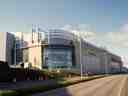
  10. As you approach St Leonard's Church on Brucefield Avenue, you'll notice its distinct features that make it stand out. The church boasts a rectangular building with a five-bay nave…Czytaj więcejPokaż mniej

    As you approach St Leonard's Church on Brucefield Avenue, you'll notice its distinct features that make it stand out. The church boasts a rectangular building with a five-bay nave and a notable circular tower on the east end. This tower, reminiscent of early Celtic Scottish churches, is a key visual marker. The building itself is constructed from stone, giving it a solid and historical feel, typical of the neo-Romanesque style. To spot it while you're walking, look for the tall circular tower and the traditional church architecture. Now, let’s dive into some fun facts about this landmark. St Leonard's Church is a congregation of the Church of Scotland. The current building replaced a corrugated iron church which had been erected in 1894, but only got its current structure between 1903 and 1904, with the church hall being completed a bit later in 1908. It was designed by Peter MacGregor Chalmers in a neo-Romanesque style, giving it that beautiful, yet sturdy look. The church hall got an upgrade on the north side in 1987. What's truly fascinating is its Category B listing, which it earned due to the unique blend of Romanesque and early Christian architecture. Between you and me, it's like a little architectural time machine, transporting you back to early Celtic Scotland. So, as you admire this majestic building, imagine the bustling congregation from 1904 and how this space has stood the test of time, continuing to be a beacon of community and faith in Dunfermline. A little slice of history and a wonderful spot to end your tour!

    Otwórz dedykowaną stronę →

Najczęściej zadawane pytania

Jak rozpocząć trasę?

Po zakupie pobierz aplikację AudaTours i wpisz kod realizacji. Trasa będzie gotowa do natychmiastowego rozpoczęcia – po prostu dotknij \"Play\" i podążaj trasą z nawigacją GPS.

Czy potrzebuję internetu podczas trasy?

Nie! Pobierz trasę przed rozpoczęciem i korzystaj z niej w pełni offline. Jedynie funkcja czatu wymaga internetu. Zalecamy pobieranie przez WiFi, aby oszczędzać dane mobilne.

Czy to wycieczka grupowa z przewodnikiem?

Nie – to samodzielny audioprzewodnik. Zwiedzasz niezależnie, we własnym tempie, z narracją audio odtwarzaną przez telefon. Bez przewodnika, bez grupy, bez harmonogramu.

Ile trwa trasa?

Większość tras zajmuje 60–90 minut, ale to Ty kontrolujesz tempo. Wstrzymuj, pomijaj przystanki lub rób przerwy, kiedy chcesz.

Co jeśli nie zdążę ukończyć trasy dzisiaj?

Żaden problem! Trasy mają dożywotni dostęp. Wstrzymaj i wznów, kiedy chcesz – jutro, za tydzień lub za rok. Twój postęp jest zapisywany.

W jakich językach są dostępne trasy?

Wszystkie trasy są dostępne w ponad 50 językach. Wybierz preferowany język podczas realizacji kodu. Uwaga: języka nie można zmienić po wygenerowaniu trasy.

Gdzie znajdę trasę po zakupie?

Pobierz darmową aplikację AudaTours z App Store lub Google Play. Wpisz kod realizacji (wysłany e-mailem), a trasa pojawi się w Twojej bibliotece, gotowa do pobrania i rozpoczęcia.

verified_user
Gwarancja satysfakcji

Jeśli trasa Ci się nie spodoba, zwrócimy Ci pieniądze. Skontaktuj się z nami pod adresem [email protected]

Bezpieczna płatność przez

Apple PayGoogle PayVisaMastercardPayPal

AudaTours: Audioprzewodniki

Rozrywkowe, niedrogie, samodzielne piesze trasy

Wypróbuj aplikację arrow_forward

Uwielbiany przez podróżników na całym świecie

format_quote Ta trasa była świetnym sposobem na poznanie miasta. Historie były ciekawe, bez przesadnego scenariusza, i uwielbiałam możliwość zwiedzania we własnym tempie.
Jess
Jess
starstarstarstarstar
Trasa po Tbilisi arrow_forward
format_quote To był solidny sposób na poznanie Brighton bez poczucia bycia turystą. Narracja miała głębię i kontekst, ale nie przesadzała.
Christoph
Christoph
starstarstarstarstar
Trasa po Brighton arrow_forward
format_quote Zacząłem tę trasę z croissantem w jednej ręce i zerowymi oczekiwaniami. Aplikacja po prostu idzie z Tobą, bez presji, tylko Ty, Twoje słuchawki i fajne historie.
John
John
starstarstarstarstar
Trasa po Marseille arrow_forward

Nieograniczone audioprzewodniki

Odblokuj dostęp do KAŻDEJ trasy na świecie

0 tras·0 miast·0 krajów
all_inclusive Odkryj Bez Limitu