

Wycieczka audio po Solothurn: Katedry, twórcy i osobliwe zakątki
Każdy kamień w Solothurn skrywa tajemnicę, ale niewielu zdaje sobie sprawę, jak wiele z nich wciąż rozbrzmiewa echem skandali, smutku i zapomnianej radości. Podczas tej wycieczki audio z przewodnikiem odkryjesz katedry, ukryte biblioteki i boczne uliczki, które większość turystów mija, nie podejrzewając nawet, co się tu naprawdę wydarzyło. Dlaczego nocny spisek pogrążył Katedrę św. Ursusa w chaosie podczas najciemniejszej nocy w Solothurn? Jakie tajemnice kryją się za niepozornym oknem Gabinetu Sentymentalnej Literatury Trywialnej? I kto zaryzykował wszystko, by ocalić te mury przed ogniem i ruiną – uzbrojony jedynie w odwagę, a może w gęsie pióro? Wędruj po starożytnych schodach i skąpanych w słońcu placach, gdy pod Twoimi stopami rozgrywają się dramaty oddania, katastrof i bujnej wyobraźni. Przemierzaj wieki rewolucji i romansów, gdzie każdy zakręt obiecuje coś nieoczekiwanego. Spójrz na Solothurn nie jak na pocztówkę, ale jak na żywą legendę. Rozpocznij swoją przygodę już teraz. Historie miasta czekają, jeśli wiesz, gdzie nasłuchiwać.
Podgląd trasy
O tej trasie
- scheduleCzas trwania 50–70 minsIdź we własnym tempie
- straighten3.2 km trasy pieszejPodążaj wyznaczoną trasą
- location_onLokalizacjaSolothurn, Szwajcaria
- wifi_offDziała offlinePobierz raz, korzystaj gdziekolwiek
- all_inclusiveDożywotni dostępOdtwarzaj ponownie w dowolnym momencie
- location_onStart przy Katedra w Solothurn
Przystanki na tej trasie
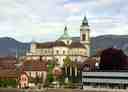
To spot Solothurn Cathedral, look for a grand white neoclassical building with a massive copper-green dome and a tall bell tower, rising majestically above the old town roofs…Czytaj więcejPokaż mniej
To spot Solothurn Cathedral, look for a grand white neoclassical building with a massive copper-green dome and a tall bell tower, rising majestically above the old town roofs right by the hillside. Welcome to the mighty St. Ursus Cathedral! If you’re feeling adventurous, just imagine the centuries of drama that have unfolded right where you’re standing. This massive white stone beauty, topped with a shining green dome and a bell tower with a copper onion hat, is more than just a church-it's a witness to stories of heroes, villains, earthquakes, and even a secret or two. And if you listen closely, you might almost hear the echo of its famous boys’ choir, the oldest in Switzerland, warming up through the ages. Long, long ago-back in the 3rd century-the legendary Roman martyrs Ursus and Victor refused to bow to the emperor’s idols. Instead, they stood their ground, earning themselves a ticket to sainthood (and unfortunately, a rather nasty end). Their courage became legendary in Solothurn, with tales spreading far and wide of their devotion and their link to the Theban Legion. By the 5th century, Saint Ursus was already venerated here, and the first humble church rose on this very site. Now, the story gets a bit mysterious-historians can’t quite agree exactly what was built here first. Some say there may have been a Romanesque church beneath your feet, while others think the evidence is as slippery as a spring morning! Fast forward to 1294-that’s when a Gothic church proudly stood here, but even that was not the final act. In medieval times, this church became the focus of city tensions, high drama, and, believe it or not, murder! Picture this: it’s 1382, the Solothurner Mordnacht, or “murder night.” A powerful count, deep in debt, plots with a canon to let his men sneak into the city and force the Solothurners to forgive his debts. Lucky for Solothurn, a brave farmer named Hans Roth blows the whistle just in time-and the outraged townsfolk storm right into a mass and, well, let’s say things got messy in the church! Now that’s history with a bang. Time kept on ticking and this sacred spot continued to evolve. In 1519, while digging beneath the altar, townsfolk unearthed a casket with two skeletons-rumored to be none other than Ursus and Victor themselves! The church became a marvel, supported by kings, filled with a vibrant college of canons who, like any tight-knit group, sometimes squabbled a bit too much with the city leaders. The centuries brought repairs, expansions, and even more drama. The nave was widened in the 1600s, and the choir rebuilt after an earthquake cracked the walls-nature certainly left her mark. By the 18th century, it was clear the old Gothic structure had seen better days. When the Wendelstein tower collapsed with a mighty crash in 1762, Solothurn called in a renowned architect. But wouldn’t you know it, even famous architects and city officials can’t always get along-he was kicked off the job and his nephew finished the work! The new Solothurn Cathedral you see today was dedicated in 1773. Its magnificent western facade is adorned with statues of saints and heroes, with Moses and Gideon flanking the grand staircase, and dramatic reliefs capturing the trials and triumphs of Saints Ursus and Victor. If you were here in 1853-or perhaps if you’re a time traveler-you’d have felt an earthquake rumble beneath your toes, and later, in 2011, the church faced its greatest peril yet: an arson attack, filling the grand domes with smoke and sorrow. But resilient as ever, the people of Solothurn restored their beloved cathedral, even installing a new marble altar. Inside, the air is sweet with reverence and history, and if you hear the organ, you’re listening to a tradition that stretches unbroken since the 1700s. Or perhaps, just perhaps, the voices of the boys’ choir might carry through the stone, mingling with the whispers of centuries past. So take a moment, breathe in the sense of time and wonder, and know that you’re standing at the heart of Solothurn’s spirit-where legend, faith, and a pinch of mischief all meet beneath those mighty domes. Don’t worry, though-the only thing you’re likely to witness today is a breathtaking view and maybe a stray choir rehearsal! Want to explore the patronage, building exterior or the music in more depth? Join me in the chat section for a detailed discussion.
Otwórz dedykowaną stronę →If you look straight ahead, you’ll spot an impressive stone church with a tall, onion-shaped green tower and a grand dome rising above surrounding rooftops-it’s hard to miss among…Czytaj więcejPokaż mniej
If you look straight ahead, you’ll spot an impressive stone church with a tall, onion-shaped green tower and a grand dome rising above surrounding rooftops-it’s hard to miss among the nearby houses and gardens. Now, take a deep breath and imagine you’ve just stepped back in time-because standing before you is the legendary St. Ursus Cathedral, the majestic heart of Solothurn! Picture this: for over a thousand years, people have looked up at this very hill, where churches have come and gone like chapters in a very, very long storybook. In fact, two older churches probably stood right here, their secrets buried beneath your feet-and perhaps just a few ancient ghosts comparing architectural notes. But the grand cathedral you see today took shape in the 18th century. It all started in 1762, when an Italian architect named Gaetano Matteo Pisoni rolled into town. The old church was-let’s just say-looking a bit tired, and local leaders wanted something dazzling. After a few false starts, some passionate debates, and plans that would make any council meeting feel exciting, Pisoni’s fresh vision finally won the day. His nephew, Paolo Antonio, took up the mantle alongside him. Stones were cut from the nearby Jura mountains, so you could say the building is very “locally sourced.” And if you listen closely, you can almost hear the echo of chisels on stone as the cathedral began to rise. Of course, nothing ever goes as planned. Just as work was getting underway, a key tower called the Wendelstein came crashing down during a church service-don’t worry, the only thing it injured was everyone’s nerves! That changed everything: construction switched to a total rebuild. The new plans gave the cathedral a single, mighty onion-domed tower instead of the original two, mainly because, well, who wants to pay for a second tower when you could spend that money on marble altars and golden knickknacks? As you stand outside, look up at that soaring 66-meter tower. For years, this was the home of the tower guard, who had perhaps the best-and windiest-view in Solothurn. On sunny days, you can climb all 249 steps to see where he lived, with breathtaking views across the old town and the Aare river, although you’ll get your cardio for the week! The outside, with its baroque style, is all about drama-curves, statues, that sweeping staircase of 33 steps divided in threes, and fountains on each side. If you’re curious about the numbers, three is a lucky number here in Solothurn. The inside, designed with early classical, or “neoclassical,” style, is a secret world of smooth marble, delicate stucco, and gentle light filtering through arched windows. Here you’ll find 11 altars, all of different marbles, and a treasure trove including a remarkable manuscript from the 10th century and an ancient statue of Mary. But it wasn’t all peace and prayers. In 2011, a terrible arson fire struck, sending smoke curling through these historic halls. Luckily, the city rallied to restore the cathedral, and today’s altar-shaped from brilliant white Carrara marble-draws inspiration from Leonardo da Vinci’s Last Supper. As you gaze up at those statues and carvings, notice the reliefs above the doors, telling stories of Solothurn’s patrons, Saints Ursus and Victor, who were legendary Roman soldiers-so you could say bravery runs in these stones. And every summer, the air inside fills with music from the grand organ, whose pipes have rung out for centuries, except when they’re taking a break for a tune-up. So next time you hear the bells toll through Solothurn, remember the centuries of faith, drama, fire, and even bureaucratic wrangling that shaped the St. Ursus Cathedral. It’s not just a church-it’s the city’s memory, standing strong, one loyal stone at a time. If you're curious about the building description, equipment or the organs, the chat section below is the perfect place to seek clarification.
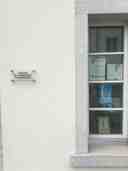
Otwórz dedykowaną stronę →To spot the Cabinet for Sentimental Trivial Literature, look for a simple cream-colored wall with a silver sign next to a stone-framed window displaying vintage posters and book…Czytaj więcejPokaż mniej
To spot the Cabinet for Sentimental Trivial Literature, look for a simple cream-colored wall with a silver sign next to a stone-framed window displaying vintage posters and book covers-just keep your eyes peeled for a subtle literary treasure trove! You’ve arrived at one of Solothurn’s quirkiest (and most charming) stops-the Cabinet for Sentimental Trivial Literature! Take a deep breath and imagine yourself stepping back in time, as if a faint whisper of rustling old paper drifts from behind that window. Founded in 1996 by the ever-curious journalist Lotte Ravicini-Tschumi, this house safeguards the kind of stories that used to set hearts fluttering, especially those of 19th-century women dreaming of adventure, love, and a dash of drama. Inside-though we’re just outside for now-there are nearly 3,600 books, most in German, lining the cozy rooms from floor to ceiling. Picture sentimental tales of romance, young girls scribbling secret wishes, and heroes galloping through distant lands. But this place isn’t just about books; it’s an experience! There’s a Biedermeier parlor that makes you imagine a stern aunt instructing you on proper tea manners, a fashion and costume room worthy of a quick twirl, and an event chamber where you can almost hear the gentle clink of teacups and the murmur of laughter. Every three years, with a burst of excitement, they hand out the Ravicini Prize-yes, there’s a real award for studying these so-called “trivial” stories. The big question they’re always asking here? What counts as true literature, and what’s just delightful kitsch? It’s a debate that could tickle your brain like a feather dusting off a forgotten love letter. So next time you pass by, remember: hidden behind this modest window are shelves full of emotions, mysteries, and the sort of tales that once made people swoon or sigh-sometimes at the same time!
Otwórz dedykowaną stronę →

Pokaż jeszcze 14 przystankówPokaż mniej przystankówexpand_moreexpand_less
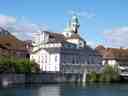
Ahead of you is a stately white mansion with tall windows and a classic triangular gable, nestled right at the river’s edge-just look for the elegant building between the old…Czytaj więcejPokaż mniej
Ahead of you is a stately white mansion with tall windows and a classic triangular gable, nestled right at the river’s edge-just look for the elegant building between the old stone bridge and the cathedral’s green domes. Alright, dreamers and art-lovers, welcome to the former Kantonales Kulturzentrum Palais Besenval! Imagine, the year is 1990, and the doors you see before you are creaking open for the very first time as a cultural hotspot. You step in and the scent of fresh paint and possibility fills the air. This place wasn't always just a pretty face on the river-oh no, for a decade it was the heart and soul of art and creativity in Solothurn. Inside, the ground floor buzzed with excitement as artists, poets, and dreamers mingled among paintings, sculptures, and sketches. The walls often echoed with laughter and the quiet hush of admiration from visitors exploring two grand exhibition rooms. Out back, the garden (maybe you can catch a peek from here) was once alive with summer art parties and open-air installations-sometimes it looked more like a magical forest than a city garden. But this place was more than exhibitions; it was a bridge-connecting people from every corner of the canton and, thanks to grand ideas, even reaching far beyond. And sometimes, magic happened, like when the legendary Friedrich Dürrenmatt’s quirky doodles joined his sharp words for a spectacular show, or when Hermann Hesse’s friendship with painter Cuno Amiet inspired an entire exhibit-imagine art and literature swapping secrets across the room! All great stories have a twist, and Palais Besenval’s came with a sigh and the shuffle of papers: in 2000, the government’s tight new budget forced the center to close its proud doors. Its last act? A haunting exhibition called “Totentanz”-the Dance of Death-reminding everyone that nothing lasts forever. But fear not: the spirit of the Palais lives on, as Solothurn’s cultural heart now beats at Waldegg Castle. For now, give the building a grateful nod-its walls could tell a thousand stories!
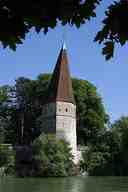
Otwórz dedykowaną stronę →To spot the Krummturm, just gaze across the river-right in front of you stands a tall, old stone tower with a steep, slightly crooked red-tiled roof peeking through the leafy…Czytaj więcejPokaż mniej
To spot the Krummturm, just gaze across the river-right in front of you stands a tall, old stone tower with a steep, slightly crooked red-tiled roof peeking through the leafy trees on the water’s edge. Now, as you stand here gazing up at the Krummturm, let me paint a picture: close your eyes and imagine it’s the late 1450s. The air is thick with tension, and the people of Solothurn are whispering nervously about the fierce Armagnac mercenaries who’ve attacked Swiss lands nearby. The city leaders, determined to defend their homes, decide that what Solothurn really needs is a brand-new defensive tower-sturdy, tall, and just a little bit mysterious. So, in about 1454, work begins on the Krummturm. But, boy, did this tower take its sweet time to finish! Imagine the sights and sounds of the medieval construction site: heavy stones being hauled around, tired masons muttering in frustration, and plenty of impatient glances as the years dragged on. To make matters worse, Solothurn had just spent most of its money buying up land and rights in all the surrounding villages, so by the time it came to pay the workers-well, let’s just say the city purse was as empty as a forgotten well. In fact, people got so frustrated that they nicknamed the tower the “Kumuff”-which means something like “Barely rising up.” As if to say, “Will this thing ever get finished?” But finished it was, finally, in the early 1460s. Now, the name “Krummturm”-or “Crooked Tower”-sounds like you’re about to see something that’s bending sideways. But here’s the quirky bit: don’t trust your eyes! The tower itself stands tall and straight, but its pointed roof is what does the trick-seeming to tilt at odd angles. This isn’t a builder’s blunder. The tower’s base is an uneven five-sided shape, and the way the spire sits on top with four uneven triangles as its roof panels makes it look crooked from most spots. So if you feel a bit dizzy looking up, don’t worry-it’s the architecture playing tricks on you! The Krummturm is not just a relic; it’s the oldest structure in Solothurn that’s never been changed. Inside, there’s even a 10-meter-deep dungeon-probably cold and creepy-once used to hold prisoners. And after centuries standing guard, in 1947 it got a new job as the local artillery association’s clubhouse and museum, finally opening its doors for curious visitors in time for the group’s 75th birthday. So here you are, outside a tower that’s watched over Solothurn for over 560 years. It’s a place built out of fear, finished with stubborn pride, and now invites you to admire a roof that’s always just a little off balance-just like life itself!
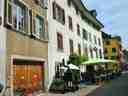
Otwórz dedykowaną stronę →To spot the Genossenschaft Kreuz, look for a pale building with a red Swiss cross sign hanging above the entrance and a cluster of blue chairs and green umbrellas out front - it’s…Czytaj więcejPokaż mniej
To spot the Genossenschaft Kreuz, look for a pale building with a red Swiss cross sign hanging above the entrance and a cluster of blue chairs and green umbrellas out front - it’s buzzing with life right on your right. Now, let’s step into the story! For over four centuries, the Kreuz has been a witness to Solothurn’s secrets and celebrations. Imagine, back in 1601, the spot in front of you was the place to go if you wanted a wild story-and maybe a wild night. The old Kreuz was known as a “grubby dockside bar” with a shady red-light reputation. Sailors, strangers, and questionable characters swapped tales and clinked glasses in smoky corners. But in 1973, a group of dreamers with big ideas turned this ship around. They made it Switzerland’s oldest cooperative pub. No more smoky intrigue-well, maybe just a little! The Kreuz became the living room for the left-leaning, a place where young rebels debated and plotted for a better world over hearty plates of food. Ever heard of the “Group for a Switzerland Without an Army”? Yup, those world-changers were founded right here at these tables, and they host their loud debates to this day. The hotel above was once abandoned-imagine employees living in a big, communal flat, cooking dinner together and arguing about books late into the night. By 1985, the hotel reopened, and it’s never lost that spirit of community. You’ll see it’s simple, practical, even beautiful-no gold chandeliers, just honest floors, great food, and laughter floating out the windows. Writers like Otto F. Walter and Peter Bichsel loved it here; you can almost hear their typewriters clacking. When Solothurn’s film and literary festivals roll into town, the Kreuz hums with jazz, blues, poets, and pranksters. Financial trouble nearly sank the place around the year 2000, but a new focus on quality-think local veggies with an international twist-brought crowds from every walk of life, not just the revolutionaries. So sit, listen, and take in the buzz. These walls have heard cheers, protests, and perhaps the occasional argument about whether jazz or singer-songwriters rule the stage. Don’t worry; you won’t have to decide. This place is all about coming together-no secret handshake required!
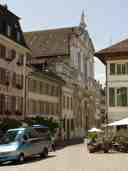
Otwórz dedykowaną stronę →To spot the Jesuit Church, look straight ahead at the majestic two-story white stone façade with a triangular gable and statues, nestled elegantly between historic buildings on a…Czytaj więcejPokaż mniej
To spot the Jesuit Church, look straight ahead at the majestic two-story white stone façade with a triangular gable and statues, nestled elegantly between historic buildings on a cobbled street. Welcome, intrepid explorer! You’re standing before the Jesuit Church of Solothurn, a place that has watched over the town’s bustling heart for more than three centuries. Imagine yourself in the late 1600s - the world smells of fresh stone, sawdust, and wet mortar, as workers hustle about, hauling blocks and timber. At that time, news had just swept through the aristocratic halls of Solothurn: the powerful Jesuit order was coming to town on a grand mission to strengthen Catholic resolve! They had the backing of Solothurn’s Grand Council, French nobles, the town’s wealthiest families, and even the illustrious French King Louis XIV, whose ambassador lived right here. So, the year is 1680, and a man with a vision - Jesuit Heinrich Mayer - begins the plans for this magnificent house of worship. The school and church grow together like twins, with the church opening its doors in 1689 under the shimmering shadow of King Louis’ emblem, still visible on the façade if you look up. The entrance is framed by imposing Tuscan and Ionic pilasters, and nestled in niches you’ll see not just any old stone faces - but key Jesuit saints. On the lower left stands Ignatius of Loyola, the fierce founder, and opposite him the adventurous missionary Francisco de Xavier. Up top, you’ll spot Francisco de Borja and Aloisius von Gonzaga. And crowning it all, the Queen herself: a statue of Mary Immaculate carved from Solothurn limestone. Step back in time, and you might hear the chatter of students rushing to the Jesuits’ college, ready for lessons that, in those days, replaced the musty old medieval school. For almost a hundred years, the Jesuits guided souls, only for dramatic change to arrive in 1773. Word from Rome! Pope Clement XIV had dissolved the Jesuit order, pressured by skeptical monarchs of Europe. Some say even the angels on the altar paused their singing that day. But Solothurn’s people weren’t about to let the place gather dust - services and learning continued, even without the Jesuit fathers. As you look at the façade, consider the layers of history behind its clean lines: a facade twice restored after storms of neglect. In the 1800s and early 1900s, the old church was nearly left to crumble. There’s a moment of drama in 1927 - a real nail-biter - when, after years of darkness and closed doors, a company nearly bought the church to tear it down for shops and offices. Can you picture it? Solothurn so nearly lost this beautiful building! Thankfully, tough townsfolk and some federal Swiss money saved the Jesuit Church from the wrecking ball, starting a series of careful restorations. Inside, it smells today of incense and old wood, but look deeper and picture the candles burning as craftsmen Pietro and Giacomo Neurone shape the splendid stuccowork on the ceilings. High up in the altar, gilded angels glint in flickering candlelight, as if whispering secrets. There’s more: the main altar, perfectly matched to the choir space, crowned with an artwork of Mary’s ascension and guarded by golden cherubs. And when the organ starts to play, you can almost hear the soaring summer sounds of concerts that still echo through the church. Imagine the swell and hush as organist Benjamin Guélat records music there in 2019 - 22 registers of sound, just waiting to lift you up. This church is no dusty relic - it’s both a survivor and a showstopper, with a main hall ingeniously filled with daylight, thanks to brilliant architects who made sure the galleries and chapels would always be bathed in sunshine. Skilled builders from the region of Vorarlberg honed their craft here, setting a standard that would inspire churches across Switzerland and beyond. And for a hidden twist: tucked inside, you’ll find the Lapidarium, the stone museum of Solothurn, where history’s weightiest secrets are waiting in the wings. So, pause here, take a breath, and let the spirit of centuries fill your imagination - not just with sounds, but with stories, secrets, and survival. This is the Jesuit Church, and it’s as full of surprises as ever - if these stones could only speak, oh, the tales they’d tell! Intrigued by the architecture, equipment or the organ? Explore further by joining me in the chat section below.
Otwórz dedykowaną stronę →To spot the Museum Altes Zeughaus Solothurn, look for a large, brownish building with a steeply peaked roof and rows of white-framed windows standing right in front of you on the…Czytaj więcejPokaż mniej
To spot the Museum Altes Zeughaus Solothurn, look for a large, brownish building with a steeply peaked roof and rows of white-framed windows standing right in front of you on the cobblestone square-its sturdy stone base and heavy doors give it the appearance of an old fortress. Right where you’re standing, imagine yourself whisked back over 400 years to 1609, when this grand building first opened its doors-not to families or merchants, but to battle-ready soldiers! For centuries, this was the fortress-like heart of Solothurn’s defenses, a warehouse bristling with muskets, swords, cannons, and all kinds of clanking armor, ready for anything from ceremonial parades to very real wars. Picture the old cobblestones rumbling under the weight of wagons piled with military gear, and stern-faced commanders barking orders as metal gleams in the early morning sun. Solothurn, back then, was a fiercely independent city-state, always ready to defend its freedom from ambitious neighbors or distant emperors. If these walls could talk, they’d probably whisper secrets of many a nervous night during the Swabian War in 1499. Imagine local soldiers pacing inside, knowing their next battle might decide Solothurn’s fate. Or take a peek inside the museum’s “Hall of Armor” and you’ll find something utterly unique: a life-size cast of the historic Tagsatzung of Stans-a legendary peace conference in 1481 where ruffled city folk and grumpy country boys argued until Niklaus von Flüe himself showed up and stopped a war with a powerful speech. You’d think wrestling with armor is tough until you have to wrestle with Swiss politics! By 1907, the clanging swords fell silent, and this formidable armory transformed into the museum you see today, telling stories not just of battles, but of the people behind the armor, from the Middle Ages right up to World War I. After a modern makeover from 2014 to 2016, it’s now a place where history comes alive-minus the risk of being drafted into a medieval army. And remember: if you bump into any knights inside, don’t worry-they’re just part of the exhibition!
Otwórz dedykowaną stronę →To spot the Franciscan Fountain, just look for a compact, six-sided stone basin with a tall, decorative fluted column crowned by a fancy Corinthian capital, nestled right in front…Czytaj więcejPokaż mniej
To spot the Franciscan Fountain, just look for a compact, six-sided stone basin with a tall, decorative fluted column crowned by a fancy Corinthian capital, nestled right in front of the Franciscan Church. Alright, take a moment to imagine you’ve hopped into a time machine-set the dial for 1628! The Franciscan Fountain you’re standing in front of wasn’t always basking in churchly glory. It actually started its life in the quiet backyard of Hauptgasse number 58, springing to life thanks to a certain Junker Hans Jakob Wallier who got special permission on August 14th, 1628, to build it in his courtyard. Now, don’t let its size fool you-the basin may be small, but the details are full of drama! Picture a sturdy trough, its stone walls bulging outward like it’s about to spill a secret. At its heart stands a column, lavishly decorated, with mischievous stone faces and a gaping mouth for the water spout-almost as if the fountain itself has seen centuries’ worth of village gossip and just can’t keep quiet. And perched above that, there’s the date of its birth and the mark of a proud stonemason. Over the years, this little marvel has been moved and touched up quite a bit-by 1960, it landed here after the old Giblin Mill was demolished. Crafted from hearty Solothurn limestone, it’s had a few “facelifts,” but its playful spirit shines through, making you wonder: what stories would it spill, if only stones could talk?
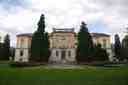
Otwórz dedykowaną stronę →To spot the Solothurn Museum of Art, look ahead for a grand cream-colored building with tall arched windows and stately columns, nestled between towering evergreen trees and…Czytaj więcejPokaż mniej
To spot the Solothurn Museum of Art, look ahead for a grand cream-colored building with tall arched windows and stately columns, nestled between towering evergreen trees and surrounded by a peaceful garden. Welcome to the Kunstmuseum Solothurn! Picture yourself stepping back in time to 1902, when this impressive museum first opened its doors as the “Museum of Art and Sciences.” Back then, it was the ultimate cabinet of curiosities-its halls filled not only with masterpieces, but also things like a mammoth tooth, a swamp crocodile, and even a so-called “ethnological collection.” In those days, curious Solothurners would wander past mysterious objects from foreign continents, as the spirit of adventure was as thick in the air as the dust on the old exhibits. A typical visitor might have heard the as they strolled between glittering beetles, ancient bones, and bizarre relics of colonial travel. That mix of science and art came with its own cloud of odd stories and even stranger beliefs. Imagine the eccentric naturalists of Solothurn, busy labeling a bizarre jumble of skulls, Japanese trinkets, and a crocodile, all in the same corner. Sometimes, it must have felt like a mad scientist’s attic! The so-called science of the time was, let’s just say, not the most enlightened, and thankfully, those strange and problematic studies vanished in the 1970s. The weirdest things left behind? Some truly exotic trees in the garden-including a mighty sequoia, a living relic of the museum’s more adventurous days. With new space freed up, the museum transformed into a true temple of art. Today, as sunlight sparkles off the modern glass and stone, you’ll find one of Switzerland’s richest collections. The paintings inside stretch from the late Middle Ages to the present. Look out for small but mighty masterpieces, like the “Madonna in the Strawberries,” painted around 1425, and Hans Holbein’s famous “Solothurn Madonna” from 1522. Swiss landscapes blossom across the walls-think snow-topped peaks and shimmering lakes painted by artists like Caspar Wolf and Ferdinand Hodler. The museum is especially proud of its Solothurn-born stars. Frank Buchser brought adventures from around the globe back to these rooms, Otto Frölicher painted home scenes with heartfelt detail, and Cuno Amiet’s colorful creations marked the leap from art nouveau to modernism. More recent icons like Jean Tinguely bring iron sculptures that might clang and clatter just as you pass by. The story here is one of change-old bones and wild trophies replaced by bold colors, modern masterpieces, and art that keeps growing with every decade. As you stand outside, listen to the breeze through those ancient trees and imagine all the chapters this building has lived through. Who knows? Maybe you’ll leave with your own story to add.
Otwórz dedykowaną stronę →You’re now standing in front of Regiobank Solothurn - but imagine the year is 1819. The streets buzz with horses’ hooves and whispering townsfolk in their Sunday best, clutching…Czytaj więcejPokaż mniej
You’re now standing in front of Regiobank Solothurn - but imagine the year is 1819. The streets buzz with horses’ hooves and whispering townsfolk in their Sunday best, clutching coins with hope. Back then, this humble spot saw the birth of the very first bank in the entire canton. Picture small shopkeepers and farmers, hands weathered and hearts hopeful, lining up outside the Ersparniskasse der Stadt Solothurn, as it was called, eager to keep their savings safe and maybe, just maybe, dream a little bigger. It wasn’t just a bank - it was a lifeline, offering ordinary people a place to store their money, which in turn financed humble dreams: a bigger field, a sturdier roof, a new bakery on the corner. Most of the loans went straight into bricks and mortar, making Solothurn what it is today. This bank’s specialty? Hypothecary loans. If you ever want a lesson in financial patience, just look at their numbers: from 54 million francs of loans in 1950 to an eye-watering 2.39 billion by 2019. But things weren’t always so straightforward. In 1865, another player entered the scene: the Solothurnische Leihkasse, shaking things up and competing for business. The two banks were close - like siblings who pretend to ignore each other until dinner time. They finally decided to join forces in 1990, becoming today’s Regiobank Solothurn. For some of you, that was just “the 90s,” but for banks, that’s practically yesterday. Today, Regiobank still stands proud and independent, with five branches and a team of over 120 people, including nine eager apprentices. If you listen carefully, you might just catch the sound of old ledgers closing and new dreams being written down. Trust, after all, is the real currency here - and in Solothurn, it’s always in good supply.
Otwórz dedykowaną stronę →To spot the Baloise Bank, look for a modern, boxy building with large glass windows, blue trim, and the bank’s blue signs on either side of the entrance, located straight ahead…Czytaj więcejPokaż mniej
To spot the Baloise Bank, look for a modern, boxy building with large glass windows, blue trim, and the bank’s blue signs on either side of the entrance, located straight ahead across a tidy courtyard with geometric hedges. Welcome to the Baloise Bank, where the world of finance gets a uniquely Swiss twist! Imagine standing here when, back in 2000, a big change swept through Solothurn’s banking scene: the mighty Baloise Group, who usually dealt in insurance, bought up the well-known Solothurner Bank SoBa, previously called Solothurner Kantonalbank. Suddenly, this place wasn't just where you’d stash your francs-it was where insurance and banking shook hands and became best friends. Thanks to Basler Versicherungen, the bank gained access to a network that stretched all across Switzerland. Picture a team of financial superheroes, capes replaced by calculators, ready to help not just private customers, but also small and mid-sized businesses with top-tier advice. But don’t think this bank is all serious suits and no personality! Baloise is a bit of a brainiac. In 2010, they came up with Baloise Investment Advice, which uses something called behavioral economics. Translation: they try to figure out why people make those “oops, shouldn’t have done that” choices with their money, so they can help customers avoid hidden mistakes. How’s that for having your back? You might also notice that Baloise likes to move with the times. In May 2019, they embraced Google Pay-having already jumped on the Apple Pay and Samsung Pay train. No more fumbling for coins while hurriedly buying coffee in the morning! Today, the Baloise Bank isn’t just a local name; it's a quite stylish regional bank with a national reputation, all while staying rooted here in Solothurn. Behind all those sleek glass panes, over 8,000 people across the Baloise Group work to keep your future feeling just a little more secure. You could say the atmosphere is a mix of Swiss precision, digital innovation, and just a hint of mystery-after all, who really knows what goes on in the Swiss vaults?
Otwórz dedykowaną stronę →Right ahead, you’ll spot the Loreto Chapel by its steep tiled roof, modest cream walls, and that unmistakable octagonal tower topped with a curvy onion dome gleaming above the…Czytaj więcejPokaż mniej
Right ahead, you’ll spot the Loreto Chapel by its steep tiled roof, modest cream walls, and that unmistakable octagonal tower topped with a curvy onion dome gleaming above the fields-just follow the little path that leads straight to it. Now, just imagine the year is 1649-there’s a whiff of something old and mysterious in the air, and beyond the busy sounds of Solothurn’s streets, this quiet meadow is all anticipation. Picture Schultheiss Johann Schwaller, a serious man with grand ideas, his boots muddy from travel, returning from Italy with stories burning in his heart. He claims he’d been to Loreto and found help there-he owed it all to the Loreto Madonna herself! Still, historians wonder if there was a little extra nudging from a certain Capuchin friar, Ludwig von Wyl, nearby. Maybe our friend Johann wanted a bit of divine favor and a little political sparkle too. Originally, Schwaller tried to build his chapel inside the Capuchin church or perhaps in Oberdorf, but fate, and a well-timed offer from the Sisters of the Name of Jesus, found him a spot right here-the land fresh from being a field just a few years before. October 15th, 1649 was a big day: a papal nod from Nuntius Boccapaduli, followed by a solemn stone-laying ceremony attended by local dignitaries. Only a year passed before, voilà! The chapel stood, ready for marvel and awe. Now, step inside with your mind’s eye. The sacred house is tucked to the east, a compact room divided by a tall wooden partition. There’s a humble wooden altar, a special corner designed to be the kitchen of the Holy Family, complete with a so-called Holy Chimney-no, not for making pizza, but for praying! The west side holds a turret chapel where the sunlight sometimes sparkles on the simple, paint-fresh walls. If you peek inside, imagine the day in 1650 when treasures arrived from Italy: a copy of the revered Black Madonna, bowls and plates-symbols of the Holy Family’s kitchenware. Just think, this isn’t just any copy; it’s one of the first Loreto Chapels built north of the Alps, alongside its sisters in Fribourg and Hergiswald. Through years of gratitude, tears, and faith, gifts filled the walls-little images, thank-you notes, wooden statues of St. Anne and Joseph, all guardian witnesses to secrets and wishes whispered through centuries. So as you stand here, let yourself sense the layered hush, the earnest hopes, and maybe share a smile with Schwaller’s restless spirit-after all, just imagine what tales this little chapel has stored in its walls, waiting for the next curious visitor. Ready to step toward our final stop? Off we go!
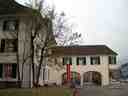
Otwórz dedykowaną stronę →Ahead of you, you’ll see the Solothurn Central Library’s creamy yellow façade with green shutters and a long arched gateway, just behind a couple of slender trees-look for the red…Czytaj więcejPokaż mniej
Ahead of you, you’ll see the Solothurn Central Library’s creamy yellow façade with green shutters and a long arched gateway, just behind a couple of slender trees-look for the red sign marked "Zentralbibliothek" and you’re in the right spot. Welcome to the final stop of our tour: the Solothurn Central Library, or as the locals call it, die Zentralbibliothek! Now, I know at first sight, it might just look like a quiet building, but don’t be fooled-this place holds more secrets, stories, and drama than a bestselling mystery novel. Picture this: the year is 1763. The world is abuzz with the Enlightenment, wigs are big, and even book borrowing is a privilege for just a handful of rich families. The first version of this library was set up thanks to Franz Jakob Hermann (give him a silent thanks), who gathered donations from Solothurn’s upper crust. Back then, the library operated out of the town hall-or rather, squeezed into a book room. Not too cozy if you were hoping to curl up with a book on a rainy Swiss day. Now, imagine creaking wooden floors, dust swirling around ancient tomes, and the murmur of distant voices as the authorities argued over who could actually read these precious books. At one point, things were so strict, students were banned from even setting foot inside, unless they were nearly ready for university! You had censorship committees, inspectors breathing down the librarians’ necks, and books that sat locked away, just gathering cobwebs. But the tempest of history swept through-first with the Helvetic Republic taking over spaces for government work, then the dramatic “liberal revolution” of 1838, which threw open the library doors to every citizen, like an all-you-can-read buffet. I imagine someone must have shouted “Freedom!” while waving a copy of Goethe in the air. Fast-forward to the late 19th century: enter the Kantonsbibliothek, born to save books from dissolved monasteries after the Kulturkampf. Books filled with secrets from Jesuit professors, Franciscan friars, and even the famous Mariastein Abbey found refuge within these walls. It was like the Avengers of libraries-each collection brought unique superpowers. The big twist came in 1930. Out of practical need and a desire to unite, the city and canton libraries merged, forming the mighty Zentralbibliothek. Fuss and feathers flew over where the new library should stand. After a failed competition, a generous local, Emil R. Zetter, gifted his house to the cause, so the library settled in its current location. In 1958, the new look was complete, blending a 17th-century patrician summer house-the Gibelin-Zetter Haus-with a sleek, modern expansion. Inside, the library is a treasure chest, holding over 800,000 items: handwritten manuscripts, rare prints, medieval fragments, sheet music, maps, and more. It isn’t just for serious researchers-there’s a bright, bustling space for children, where you can still smell crayons and fresh paper, and a comfortable reading hall that hosts book launches and lively lectures. The library once even had a museum of books, and for nearly 50 years, its music department built one of Switzerland’s biggest public music collections-over 43,000 sounds, from vinyl to digital streaming. The walls could tell you about censorship battles, the storm of indignation when a librarian resigned rather than follow church censors, and arguments over which books were safe to read; sometimes the library attitude was: “Let’s keep learning behind closed doors-just in case!” Throughout the years, the Zentralbibliothek has been home to stories big and small: exhibitions for local artists, society meetings, and even pottery lectures. If you listen closely, you might almost hear the echoes of excited voices discussing a new book find, the careful clink of teacups during lectures, or even a laugh as a local historian uncovers an old mystery note tucked inside a forgotten volume. So here it stands-part noble house, part modern marvel, always a living record of Solothurn’s stories. Whether you’re after a medieval manuscript, a catchy tune from the archive, or just a quiet corner to read, the Zentralbibliothek is both memory bank and meeting place for everyone. Congratulations-like the collection inside, you’ve completed a journey through the ages! If you wish, step inside and let a new chapter begin.
Otwórz dedykowaną stronę →





Najczęściej zadawane pytania
Jak rozpocząć trasę?
Po zakupie pobierz aplikację AudaTours i wpisz kod realizacji. Trasa będzie gotowa do natychmiastowego rozpoczęcia – po prostu dotknij \"Play\" i podążaj trasą z nawigacją GPS.
Czy potrzebuję internetu podczas trasy?
Nie! Pobierz trasę przed rozpoczęciem i korzystaj z niej w pełni offline. Jedynie funkcja czatu wymaga internetu. Zalecamy pobieranie przez WiFi, aby oszczędzać dane mobilne.
Czy to wycieczka grupowa z przewodnikiem?
Nie – to samodzielny audioprzewodnik. Zwiedzasz niezależnie, we własnym tempie, z narracją audio odtwarzaną przez telefon. Bez przewodnika, bez grupy, bez harmonogramu.
Ile trwa trasa?
Większość tras zajmuje 60–90 minut, ale to Ty kontrolujesz tempo. Wstrzymuj, pomijaj przystanki lub rób przerwy, kiedy chcesz.
Co jeśli nie zdążę ukończyć trasy dzisiaj?
Żaden problem! Trasy mają dożywotni dostęp. Wstrzymaj i wznów, kiedy chcesz – jutro, za tydzień lub za rok. Twój postęp jest zapisywany.
W jakich językach są dostępne trasy?
Wszystkie trasy są dostępne w ponad 50 językach. Wybierz preferowany język podczas realizacji kodu. Uwaga: języka nie można zmienić po wygenerowaniu trasy.
Gdzie znajdę trasę po zakupie?
Pobierz darmową aplikację AudaTours z App Store lub Google Play. Wpisz kod realizacji (wysłany e-mailem), a trasa pojawi się w Twojej bibliotece, gotowa do pobrania i rozpoczęcia.
Jeśli trasa Ci się nie spodoba, zwrócimy Ci pieniądze. Skontaktuj się z nami pod adresem [email protected]
Bezpieczna płatność przez 


