Wycieczka audio po Gironie: Odkrywanie sekretów Barri Vell
Kamienni strażnicy maszerują wzdłuż panoramy Girony, szepcząc sekrety wiatrowi i obserwując wieki dramatu rozgrywającego się w dole. Wkrocz do Girony z tą wycieczką audio z przewodnikiem i odkryj ukryte opowieści, których większość turystów nigdy nie słyszy – echa intryg, skandali i buntu, które ukształtowały miasto od jego murów po wodne serce. Dlaczego żołnierze stali niegdyś bezsennie na Murach Girony, gdy cienie przemykały przez mgłę? Jakie tajemnice kryją się za dostojną fasadą Ratusza – i jakie gorące spory zmieniły bieg historii w jego kamiennych korytarzach? Kto odważył się zbudować dom tak daleko nad rzeką Onyar, że wywołało to plotki na całe pokolenia? Podążaj starożytnymi ścieżkami nad spalonymi słońcem dachami, wejdź do tajnych sal narad i obserwuj kolorowe domy odbijające dzikie historie w rzece poniżej. Z każdym krokiem poczuj, jak legendy Girony ożywają, i zobacz miasto tak, jak widzą je tylko wtajemniczeni. Mury słuchają – czy odpowiesz na ich wezwanie? Rozpocznij swoją podróż już teraz.
Podgląd trasy
O tej trasie
- scheduleCzas trwania 40–60 minsIdź we własnym tempie
- straighten2.8 km trasy pieszejPodążaj wyznaczoną trasą
- location_on
- wifi_offDziała offlinePobierz raz, korzystaj gdziekolwiek
- all_inclusiveDożywotni dostępOdtwarzaj ponownie w dowolnym momencie
- location_onStart przy Mury Girony
Przystanki na tej trasie
To spot the Girona Wall, just look for a long, impressive stretch of ancient stone running along the edge of the old city. It’s best seen above the rooftops, lined with cypress…Czytaj więcejPokaż mniej
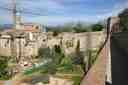
To spot the Girona Wall, just look for a long, impressive stretch of ancient stone running along the edge of the old city. It’s best seen above the rooftops, lined with cypress trees, and stretches toward sturdy towers that almost seem to keep an eye on you. If you see a path raised up along the edge, with incredible views over the city, congratulations-you’re right next to the famous wall of Girona! Now, take a deep breath, because you’re standing in front of centuries of history. Picture yourself in the Middle Ages: armies on the horizon, the air tense with anticipation, the city’s fate hanging in the balance. Girona was no ordinary town-its location meant it was a key crossroads for armies, merchants, and anyone daring enough to travel between kingdoms. To keep everyone inside safe, the people of Girona built these huge stone walls, using blocks of local sandstone-big, cold, and incredibly tough. In fact, if you knock on the wall, you might hear some ancient echoes or at least make a pigeon very confused. But don’t worry, the only invaders today are curious travelers like you. The wall isn’t just for defense anymore-it’s an invitation to discover. You can walk along the top, feeling the rough stones under your fingertips, with the wind in your hair and the city stretching out below. Keep an eye out for the towers, which once kept out attackers, but now give you some of the best panoramic views in Girona. Four main entrances, and plenty of towers, each with their own secrets-like a real-life choose-your-own-adventure book! Imagine standing guard here long ago, peering into the distance, wondering if you’d spot a friend or a foe… or possibly the world’s slowest courier. Now, instead of danger, you get the unbeatable peace and spectacle of the city’s red rooftops and gentle hills in the distance. So, what do you say? Ready to walk in the footsteps of medieval sentinels-and work off that extra churro?
Otwórz dedykowaną stronę →Look straight ahead for a large, stone façade that rises proudly above the narrow street. You’ll spot Girona City Council by its stately rectangular windows with black iron…Czytaj więcejPokaż mniej
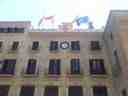
Look straight ahead for a large, stone façade that rises proudly above the narrow street. You’ll spot Girona City Council by its stately rectangular windows with black iron railings, and a neat row of flags fluttering at the very top-catching the wind like colorful banners at a festival. Just above the entrance, you can’t miss the round clock set between two windows, always ready to remind politicians that they shouldn’t take too many coffee breaks. Right now, you’re standing in front of a building where decisions about Girona have been made for centuries. It’s not just a place for paperwork and meetings-imagine the air buzzing with the chatter of heated debates and the clinking of old coins as tax collectors hurried through these halls long ago. In modern times, this is where Girona’s neighbors choose who leads the city, and every four years, the ballots stack up, secrets hidden inside. Maybe you can smell the anticipation of election day, mixed with the ancient scent of stone and old books. Legendary mayors have walked through these doors, like Carles Puigdemont, who started here and eventually ended up leading the whole region of Catalonia. It’s like going from school president to president of the cool kids’ club, but with a lot more paperwork. Today, Marta Madrenas is the leader here, making decisions for everything from parks to potholes. The building’s stories are full of suspense-politicians always worrying about debts and budgets, making sure Girona’s “alive debt” stays healthy. And if you listen closely, you can almost hear the anxious tapping of calculators and whispers about balancing the city accounts. Before you go, take a moment to imagine how many secrets these stone walls have kept-a mix of politics, drama, maybe even a little comedy. After all, Girona’s city council building isn’t just about rules; it’s about generations of people trying to make their city better… and sometimes just trying to keep up with the clock!
Otwórz dedykowaną stronę →Look straight ahead to the river - that’s where the magic happens! The Houses of the Onyar rise up right over the water, hugging the edge as if they were daring each other not to…Czytaj więcejPokaż mniej
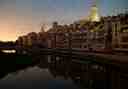
Look straight ahead to the river - that’s where the magic happens! The Houses of the Onyar rise up right over the water, hugging the edge as if they were daring each other not to fall in. Their facades are a patchwork of warm reds, sunny yellows, creamy whites, and rusty oranges. Some windows bulge out, others pull back, each house shaped by years of creative ideas and maybe a little mischief. When the evening lights glow, as you might see now, the whole scene doubles itself in the river below - Girona’s own upside-down world. Standing here, imagine life centuries ago when these houses started popping up, built on what was once the city’s medieval wall. No two are exactly the same, since everyone wanted a little extra space - so they just kept building out, right over the river! From narrow gaps to broad galleries, the wooden shutters and glass panes seem to play peek-a-boo with the sun and the passersby. If you look closely, you’ll notice one house that stands out, crisp and white, as if it dressed up special for today - that’s Casa Masó. It was the home of Rafael Masó, an architect who put his own stamp on Girona in the early 1900s. The building’s iconic white face nods to modern style but fits snugly into the jumble of its neighbors. Let’s be honest, these houses have seen their ups and downs. Once, they may have been more practical than pretty, but after a big facelift in 2010, their colors became the talk of the town. Some people say the shades are perfect, others miss the older look - a true Girona debate! But without a doubt, the view is one of the most recognizable in all of Spain. So, take a breath, listen to the river, and enjoy the feeling of old stories and new lives in every creak of those overhanging beams. If houses could talk, I bet these would have some wild rumors from centuries past! Shall we wander onward?
Otwórz dedykowaną stronę →
Pokaż jeszcze 12 przystankówPokaż mniej przystankówexpand_moreexpand_less
Right ahead, you’ll see Casa Marieta tucked beneath the covered arcades of Independence Square. To spot it, look for a line of big arched windows and doorways hugging the…Czytaj więcejPokaż mniej
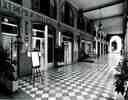
Right ahead, you’ll see Casa Marieta tucked beneath the covered arcades of Independence Square. To spot it, look for a line of big arched windows and doorways hugging the checkered floor beneath a long, high ceiling. The name “Casa Marieta” is painted above the entrance. And yes, those classic streetlights at the doorway aren’t just for show-they’ve probably seen more soups and secrets than most people! Look for the menu stand out front and the cozy curtains behind the glass. So here you are, standing outside one of Girona’s most beloved landmarks. Imagine you’re under these grand ceilings more than a hundred years ago, with the scent of fresh bread and roasting meats drifting out the door. Casa Marieta opened its doors in the late 1800s-possibly 1890 or 1892-when the square was alive with farmers, traders, and the clatter of horse carts resting after a day at the city’s biggest fruit and vegetable market. Back then, it was first called “Bar Trol,” then “Ca la Bartrola,” and finally took the name Casa Marieta after Maria Vinyoles, known affectionately as “the Marieta.” She ran not only a restaurant here, but a little boardinghouse-so if you had a heavy meal and couldn’t walk straight, well, you didn’t have far to go! Travelers and townsfolk would come for a homemade meal, maybe a glass of wine, or to sleep off the excitement of market day. Just imagine Maria herself bustling around, making sure visitors from far and wide felt at home. She bought the business from her bosses and turned it into a family legacy-three generations! Picture rustic tables, steaming soup, and laughter echoing under these arches. Casa Marieta was famous enough to get cheeky mentions in newspapers, and during the Spanish War of Independence in 1808, this very square gained its current name. Through all its years-wars, renovations, triumphs, and tribulations-Casa Marieta has stayed full of life, warm welcomes, and the smell of traditional Girona cooking. So if you feel hungry, don’t blame me-this is where the best local stories start with a meal and end with a nap!
Otwórz dedykowaną stronę →Look straight ahead-a graceful, rusty-looking structure stretches across the Onyar River, gently curving with simple, clean lines. That’s the Sant Feliu Pedestrian Bridge! You’ll…Czytaj więcejPokaż mniej
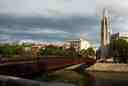
Look straight ahead-a graceful, rusty-looking structure stretches across the Onyar River, gently curving with simple, clean lines. That’s the Sant Feliu Pedestrian Bridge! You’ll spot its warm, weathered steel against the old stone walls and the tall, pointed tower of San Feliu Church rising to the right. The bridge is low and sleek, with a wide deck inviting you to stroll straight over the water, from Devesa Park behind you toward Saint Feliu Square. Now, take a moment to stand here. The wind off the river might carry the distant sound of laughter, or the click-clack of footsteps crossing the steel. When this bridge opened in 1998, people must’ve marveled at how something so modern could fit in among the ancient towers and laundry-flapping windows. This is no accident-engineers wanted it slender and minimal. It’s almost as if it tiptoes between the centuries. Just imagine you’re a local, crossing from the green calm of Devesa Park into the stories and tangled alleyways of old Girona. The bridge’s single, sweeping span truly feels like a leap over time-freed from heavy stone arches, only a thin slice of metal flies above the river. At night, the steel almost glows, reflecting city lights, and the entire old quarter seems to lean over to see what’s new. And here’s a fun fact to ponder while you cross: during construction, they built the bridge in three separate steel pieces-like giant Lego blocks! They had to lift them carefully into place. I like to imagine the engineers silently holding their breath-please, no dropped pieces, not into the Onyar! But everything fit, the welders did their magic, and just like that, Girona got a bridge as modern as a whisper but as solid as a handshake. So go ahead and cross. Let your footsteps echo on the metal deck-and if you hear the river bubbling beneath, that’s just Girona’s way of welcoming you.
Otwórz dedykowaną stronę →To spot the Church of San Felix, look up and ahead for a tall, pale stone tower that rises high above the nearby buildings, its spire crowned with intricate details and flanked by…Czytaj więcejPokaż mniej
To spot the Church of San Felix, look up and ahead for a tall, pale stone tower that rises high above the nearby buildings, its spire crowned with intricate details and flanked by smaller pointed turrets. Notice the big circular window-like a giant eye-and the fortress-like stonework around the base. If you’re standing at the front, you’ll also see a grand baroque entrance outlined against the sky. Take a moment and imagine you’re looking at Girona’s original superstar-before the cathedral stole the show! The Church of San Felix was once the heart of the city. Picture the air filled with the gentle echo of footsteps and hushed voices as people removed their hats and stepped softly through its doors. San Felix’s story stretches way back-almost a thousand years! It started during the earliest days of Christianity. But don’t let that fool you-this church is no one-hit wonder. Its construction took centuries, picking up different styles like a traveler collecting souvenirs: Romanesque bones, Gothic towers, and a Baroque face-lift for a bit of dramatic flair. The church sits where an ancient Roman road once passed. They say San Felix himself-a Christian martyr honored by all-lies buried nearby. When builders started working, they discovered eight stunning sarcophagi from the 3rd and 4th centuries. Just think, these stone coffins once held men and women from a lost world, now resting inside the peace and dim light of the church. Oh, and there’s a dash of drama! In the year 717, while Girona was under Muslim rule, this church was the city’s stand-in cathedral, since the real one had been changed into a mosque-talk about an identity crisis! Take a good look at the calling-card features: sturdy walls to shelter it from past attacks, the elegant arches separating the three naves inside, and the high Gothic bell tower, built to ring out over the rooftops. If you spot animal or plant carvings on the columns, you’re seeing what’s left of the old Romanesque cloister, each one telling stories of saints, miracles… and probably a few wild medieval parties. And here’s a painter’s secret: During a 20th-century restoration, they peeled away layers of old whitewash, revealing beautiful Gothic colors on the vaults above-like discovering a hidden picture beneath an old painting! Today, it’s still filled with echoes-chants, whispers, the clink of candles, and maybe, if you listen carefully, the stories of all those centuries gone by. Ready to head to your next stop? I promise, there are more surprises just round the corner!
Otwórz dedykowaną stronę →You’re almost there! As you walk down Ballesteries Street, look for a graceful row of colorful riverfront facades-Masó House is a bright spot among them, with elegant windows and…Czytaj więcejPokaż mniej
You’re almost there! As you walk down Ballesteries Street, look for a graceful row of colorful riverfront facades-Masó House is a bright spot among them, with elegant windows and a certain sturdy shyness, quietly announcing its importance. The house is at number 29-it’s not the tallest on the block, but if you spot a building with a bit more style, character, and that lovely Barcelona-inspired flair, you’ve found it. Now, step a bit closer and soak in the view. Alright, picture yourself standing in front of a true time machine. This isn’t just any house in Girona-it’s the birthplace of Rafael Masó, one of the city’s most famous architects. If these walls could talk, they’d probably tell stories from a century ago, about dinners with twelve hungry siblings, countless family celebrations, and the sound of busy hands sketching designs by candlelight. Rafael didn’t just live here-he turned home improvements into high art! Back in 1910, Rafael started his first bits of tinkering right here, designing all kinds of clever objects to impress his parents. Imagine gifting your mom an elegant lamp or sewing up a fancy tablecloth just in time for her birthday-except, you know, making it beautiful enough that art historians would drool over it a hundred years later. Talk about pressure! And then, when Rafael’s dad asked him to redesign the whole house, Rafael didn’t just fix a squeaky step or a leaky pipe. He gave Masó House a new soul-using traditional Catalan touches, swooping wood staircases, colorful glass, and custom-made everything. Even the dining room-yep, the one you see in the photo-shows off his taste for comfort mixed with grandeur. Those thick wooden chairs just beg you to sit down for a family meal (although, perhaps not without an invitation from the Masós). Don’t be misled by the quiet outside: inside these walls, the Masós collected art, hosted painters, and filled the house with laughter and sometimes a heated debate or two over Sunday paella. Now, the house belongs to the city and is managed by the Rafael Masó Foundation. Since 2012, everyone-yes, even us modern mortals-can step through and catch a glimpse of daily life from a century ago. So, while you’re standing outside, let your imagination do a little time traveling. Who knows, maybe if you press your ear to the door, you might hear the faint clink of silverware on fine plates-or the creak of Rafael on the stairs, plotting his next masterpiece. Shall we head on to our next discovery?
Otwórz dedykowaną stronę →As you make your way to stop number 3, keep your eyes peeled for something a bit unusual! You’ll spot the remains of the Convent of San Francisco de Asís not as a towering church,…Czytaj więcejPokaż mniej
As you make your way to stop number 3, keep your eyes peeled for something a bit unusual! You’ll spot the remains of the Convent of San Francisco de Asís not as a towering church, but hiding in plain sight inside some of Girona’s modern shops. Look for those beautiful, pointed arches made of old stone, standing quietly behind glass and fashion displays-a curious blend of medieval mystery and modern chic. Now picture this: it’s the 1200s. The air is filled with the gentle sound of chanting monks and the clatter of sandals on stone floors. The convent was once full of life, with friars moving about, and the community growing larger with every decade. This wasn’t just any old monastery-its church was consecrated in 1368 and grew so important that even the Pope took notice. In 1666, Pope Alexander VII gave the convent a special connection to Rome, granting it the same religious perks as the grand Archbasilica of Saint John Lateran. But time plays tricks. Imagine the tension in the air as the city changes, and parts of the old convent disappear, bit by bit. Where you’re standing now, only a handful of gothic arches remain, cleverly woven into shops that line Avenida de San Francisco and Calle Nueva. Shop owners, proud of this peculiar history, make sure the arches stand out-so you get to walk through history while searching for a perfect handbag! It’s hard not to chuckle at the thought: monks once whispered prayers here, and now you might overhear someone debating which purse matches their shoes. If you turn your attention to other corners of Girona, you’ll find pieces of the convent scattered about, like a giant Lego set: some arches ended up in Casa Solterra, others in the church atrium at S’Agaró. All these fragments hint at a much grander world lost beneath your feet. Long ago, this community was packed with friars-up to seventy living, studying, and praying here at once. The sound of turning pages in the convent library must’ve been constant, the shelves stacked with precious books from as early as the 1400s. Imagine rare manuscripts glowing in the candlelight! And here’s a bit of drama for you: when Girona’s streets expanded and religious orders changed, the convent was pulled apart and only these traces survived. Through war, politics, and changing times, these stubborn stones refused to be forgotten. So, as you stand in front of these arches, look closely-and you’ll see old Girona winking back at you, inviting you to discover its secrets with every step forward.
Otwórz dedykowaną stronę →As you approach the Convent of Santo Domingo, take a look just ahead and to your right. You’ll notice an imposing, pale stone structure that almost glows in the sunlight. Its…Czytaj więcejPokaż mniej
As you approach the Convent of Santo Domingo, take a look just ahead and to your right. You’ll notice an imposing, pale stone structure that almost glows in the sunlight. Its walls are solid and thick, like it was built to withstand centuries, and you’ll see a large set of stone steps leading up-like the invitation to a mystery. Two tall evergreen trees stand sentinel at the entrance, their shadows leaving sharp lines across the ancient stone. If you follow the steps with your eyes all the way up, you’ll see a small turret poking out to the right and a section of the church reaching skyward, topped by pointed Gothic windows. Alright, time for a little time travel! Imagine you’re standing here in the 13th century. Instead of traffic and smartphones, you’d hear the distant murmur of monks in deep discussion, the clang of a bell ringing through the old city. This convent was born in 1253, dreamed up by Bishop Berenguer de Castellbisbal, who invited the Dominican order to set up right here. The place is a bit of a medieval mash-up-a mix of a quiet convent, a church dedicated to the Annunciation of Mary, and not one but two stone courtyards called cloisters. The church, built in the primitive Catalan Gothic style, has just a single, grand nave. Picture yourself gliding inside on a beam of dusty sunlight, the tall, thin windows casting little rivers of light on the stone floor, while side chapels lie tucked between the thick walls-perfect for a secret prayer or maybe even a forbidden snack. But don’t let the peaceful vibe fool you. In the 1600s, things got a bit dramatic: Baroque chapels popped up, and the church interiors were redecorated, turning up the wow-factor. And if you’re a fan of mysterious characters, you’ll love knowing this place was home to Nicolau Eimeric, a real-life inquisitor with quite the collection of secret manuscripts. Over time, the convent has seen battles, sieges, and some wild events-imagine the echoes of marching boots during the siege of Girona in 1809, or monks packing up their things when the church was closed in the 1800s. Believe it or not, it even became a barracks for soldiers. Today, though, the only thing you might hear is the sound of students rushing to class-the convent houses the Faculty of Arts for the University of Girona. Not a bad place to study, right? Who knows, maybe some of the old ghosts help out with the homework. Alright, take your time gazing up at the stone and breathing in the centuries. When you’re ready, our next stop will take us even deeper into Girona’s fascinating history!
Otwórz dedykowaną stronę →As you approach the Girona Art Museum, look for a grand, pale stone building with tall, slender cypress trees standing like guards at the entrance. The façade is a patchwork of…Czytaj więcejPokaż mniej
As you approach the Girona Art Museum, look for a grand, pale stone building with tall, slender cypress trees standing like guards at the entrance. The façade is a patchwork of small medieval windows and elegant arches, topped by a square tower that stands out against the sky. You’ll know you’re in the right spot when you see the old stone walls rising above you, and people gathered around-some taking photos, others just soaking up the atmosphere of history. Now that you’re standing in front of this magnificent building, you might hear your footsteps echo on the stone plaza. Imagine stepping back in time-this isn’t just an art museum; it’s Girona’s old Episcopal Palace, and it’s been watching over the city for more than a thousand years. If these stones could talk, they’d tell tales of bishops, feasts, and maybe even the occasional ghostly whisper. Inside, the art collection sweeps through centuries-think of it as a time machine made of paint, stone, and stained glass. You’ll travel from the mysterious faces of the Romanesque era to the wild expressions of Modernism, and everywhere in between. The museum is famous for its medieval treasures, especially the altar from Sant Pere de Rodes-one of those pieces so ornate, you’ll wonder how ancient hands managed all that detail by candlelight. There are also whole rooms dedicated to sparkling glass, rustic ceramics, and splendid objects that once lit up Catholic rituals. And don’t miss the temporary exhibits-there’s always something new to discover, whether it’s a forgotten local artist or a modern experiment dripping with color. The story of this museum is woven from many threads. It began seriously growing in the 1800s, when people realized: “Hey, maybe we shouldn’t let all our best art end up as birdhouses or lost in grandma’s attic.” Over the years, bishops, artists, and ordinary folks have all added their finds to the collection. The building itself has survived nearly everything-expansions, wars, and a never-ending parade of visitors all eager to peep inside its ancient halls. So, before you step in, take a moment to look at the grand stone walls. You’re not just about to walk through a museum-you’re stepping into layers of Girona’s past, full of passion, mystery, and the constant search for beauty. And remember, if you hear a soft “whoosh,” it’s probably just the echoes of history… or maybe the air conditioning. Enjoy this time capsule!
Otwórz dedykowaną stronę →As you approach, look for an old stone wall with a gentle arch over a small recess. Right in the center, you’ll spot a metal grating with a menorah design. The wall is made from…Czytaj więcejPokaż mniej
As you approach, look for an old stone wall with a gentle arch over a small recess. Right in the center, you’ll spot a metal grating with a menorah design. The wall is made from pale, weathered stones that almost seem to tell their own story, with a few vines creeping in from the corner. The ground is covered with reddish tiles, making the whole spot feel cozy and a bit hidden, like a secret tucked away from the busy city. Now, standing here, imagine yourself back in the twisting streets of medieval Girona. This was once the heart of the city’s vibrant Jewish community-a place filled with lively chatter, the scratch of quills writing prayers, and the faint scent of parchment and old stone. You’re right in front of what was once the Girona Synagogue, built back in the 1200s, when stories weren’t just passed around, they were being written right here by scholars like Nachmanides-a man so wise, even his beard probably had something to say. This wasn’t just a place for prayer; it was a center for Kabbalah, the mystical side of Judaism. Imagine scholars huddled under flickering candlelight, piecing together riddles of the universe, and maybe arguing about who got the last olive at dinner. But history hasn’t always been kind. The synagogue saw turmoil-a brutal massacre, moments of restoration, and finally, with the Alhambra Decree in 1492, it was sold off, ending centuries of Jewish life in Girona. Can you feel the echoes, the mix of learning and loss in these old stones? There’s a kind of hush here, as if the walls themselves are holding their breath, remembering. Today, this place is part of the Bonastruc Museum. Instead of prayers, you’ll find stories-fragments of pottery, old tombstones, and letters that survived the ages. It’s no longer a secret, but a window back into a once-thriving world. And you, my friend, get to stand right at the threshold of history. Not bad for a day’s walk, right?
Otwórz dedykowaną stronę →As you approach, direct your gaze to the solid, gray stone building right next to the grand staircase of the cathedral. The Pia Almoina is hard to miss-it stands with a…Czytaj więcejPokaż mniej
As you approach, direct your gaze to the solid, gray stone building right next to the grand staircase of the cathedral. The Pia Almoina is hard to miss-it stands with a fortress-like presence, boasting thick medieval walls, tall arched windows, and a rather serious face among its colorful neighbors. The top of the building almost looks like battlements ready for a medieval stand-off, and if you spot a few bright green window stickers, you’re in exactly the right place. Now, imagine yourself back in the 1200s. The air is crisp and full of whispers-people in heavy cloaks hurry past, their footsteps echoing against the stone. This building, the Pia Almoina, was where the poor and needy could come for help, right beside the giant cathedral. Founded in 1228 by Arnau d’Escales, who must’ve been one of the most generous neighbors you could have, the Pia Almoina cared for those who needed food or shelter. By the 1400s, the building spread out, swallowing up old houses from the Jewish quarter. It saw new faces pass through its thick doors-hungry, hopeful, or maybe a little nervous about what was inside. But let’s fast-forward a bit. After centuries of handing out alms, and then a royal decree in the late 1700s (imagine the sound of clanking keys and heavy locks), it was sold off to ordinary folks. Later, the building became a bustling school, full of shouts, laughter, and probably a flying chalk or two! Today, you’re looking at a building that houses Girona’s architects-so if you spot anyone squinting at the angles or measuring the shadows, they’re probably not plotting a daring heist, just admiring the Gothic design! Honestly, if walls could talk, these stone blocks would have some wild stories about centuries of kindness, clever deals, and enough inherited property paperwork to make your head spin. Now-ready for the next step? Let’s continue up those famous cathedral stairs and see what other secrets Girona has up its sleeve!
Otwórz dedykowaną stronę →Okay, here we are! If you’re looking for the Girona Cathedral, just lift your eyes to the skyline in front of you. You can’t miss it: a grand, pale stone staircase rises wide and…Czytaj więcejPokaż mniej
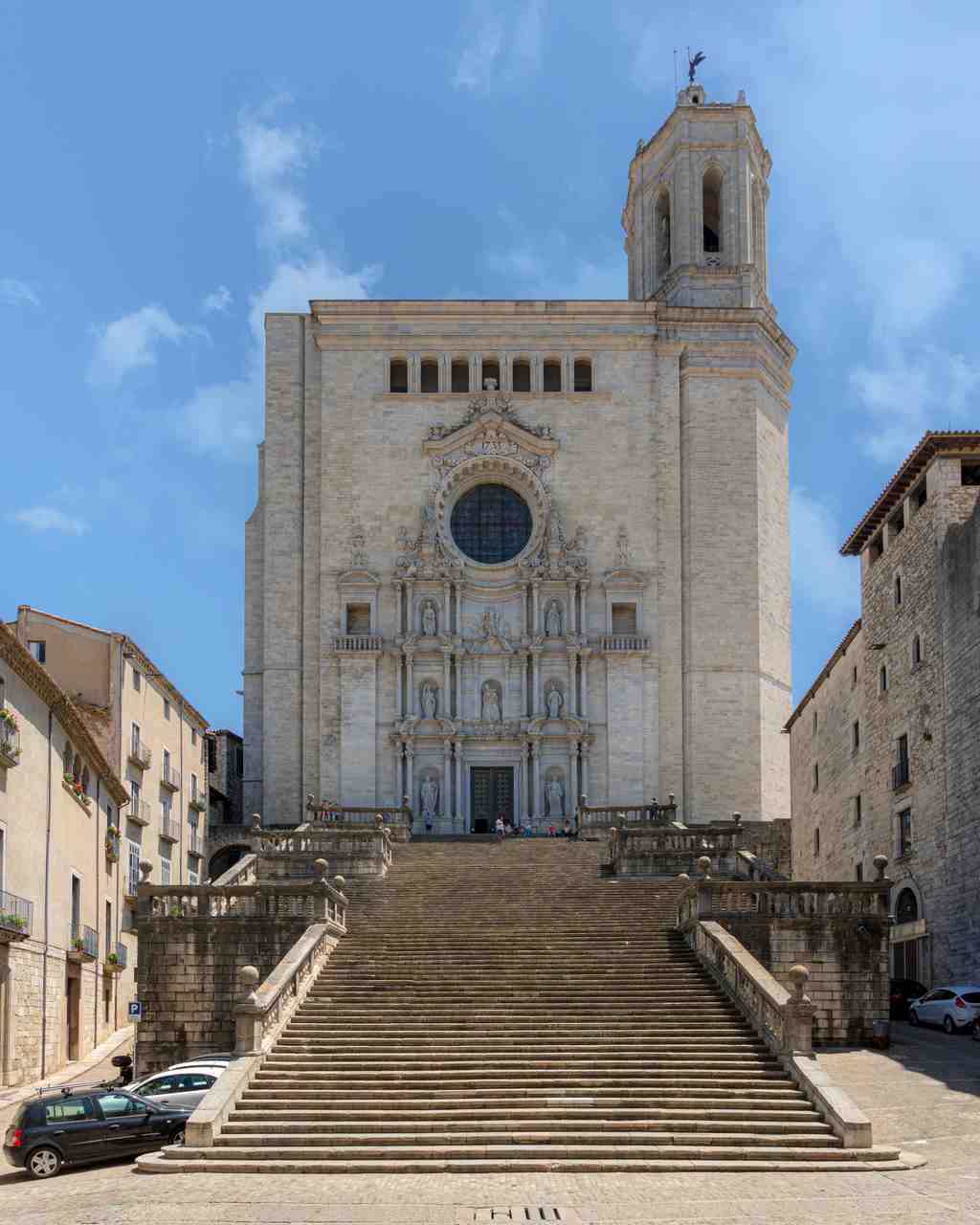
Okay, here we are! If you’re looking for the Girona Cathedral, just lift your eyes to the skyline in front of you. You can’t miss it: a grand, pale stone staircase rises wide and steady from the street, leading up to a massive, fortress-like building. The façade towers above you, decorated with statues and intricate carvings, and right at the top, a tall bell tower points to the sky. If you feel a bit out of breath-good news, you’ll only have to walk up those 90 steps if you want a closer look! Now, let your mind wander back almost a thousand years, to when they first started building this cathedral. Imagine the ringing of hammers echoing off the stones, and the smell of fresh-cut limestone in the air. Underneath it all, this hill was once the site of a much older church. It was turned into a mosque when the Moors swept through in the 700s, and then, with the thundering arrival of Charlemagne and his army, it became a Christian site once again in the 9th century. All this-right under your feet! This cathedral is a bit of a master of disguise. It started out Romanesque-kind of simple and sturdy-but as tastes changed, the builders couldn’t resist adding a dramatic Gothic nave. And not just any nave: the *widest* Gothic nave in the world, over 23 meters across! How wide is that, you ask? Well, if you laid three giraffes down head-to-toe across it, you’d still have room for someone’s lost umbrella. Don’t just give all your attention to the front, though. Check out the pair of bell towers above-the old one, square and strong, dates back to the days of knights and nobles, while the newer, octagonal one began construction all the way back in the 1500s... and then took several centuries to finish. Imagine being the guy in charge of that project: “Yeah, we’re running just a little behind schedule.” The main entrance is pure drama: a grand Baroque façade, built to impress, and a staircase where you could imagine a whole army running up-or maybe just a bride and her father, late for a wedding. The statues decorating the front are actually fairly new, created in the 1960s by local sculptors. They keep a watchful eye on everyone who walks past, so if you feel judged, just remember-they’re art critics at heart! If you step inside, notice how your footsteps echo under the towering vaulted ceiling. Stained glass windows splash colored light onto ancient stone. Ten side chapels line the apse, each with its own secrets-a marble altar here, a centuries-old Gothic sarcophagus there. You can almost hear the whispered prayers of all those who have come here before you. Or maybe that’s just the wind sneaking in through the old stone walls. It’s a building designed for awe and wonder-from the rose windows up above that catch sunlight like jewels, to the clever blend of Romanesque roots and dramatic Gothic dreams. It’s seen centuries of battles, celebrations, repairs, and reinventions. So, go ahead-snap a photo, whisper a wish, or just take a moment to stand quietly. You’re sharing space with a thousand years of history, and I’d say that’s pretty cathedral-licious. Ready for the next stop? Ready to delve deeper into the exterior, interior or the romanesque cloister? Join me in the chat section for an enriching discussion.
Otwórz dedykowaną stronę →To spot the Arab Baths, just glance through the large stone archway ahead. Look for a circle of elegant columns rising out of the shadows, surrounding a quiet central pool, all…Czytaj więcejPokaż mniej
To spot the Arab Baths, just glance through the large stone archway ahead. Look for a circle of elegant columns rising out of the shadows, surrounding a quiet central pool, all framed by rough, ancient stone walls. If you see sunlight streaming down from above and a sense of hidden mystery, you’re in the right place. Now, you’re standing in front of Girona’s famous Arab Baths-though, spoiler alert, they’re not quite as “Arab” as their name suggests. Built back in 1194, these Romanesque baths were actually crafted by Christians, but they cleverly copied the style of North African Muslim bathhouses. It’s almost like they were the medieval version of a “theme restaurant,” and who doesn’t love a bit of historical cosplay? Imagine the scene here centuries ago: the hustle and bustle of bathers, chatting and laughing, steam curling into the air from warm pools. You’d start your visit in the changing room, stashing your tunic in one of the niches along the wall-hopefully remembering where you left it. Next stop: the cold room, with its fancy octagonal pool right in the middle, under a small dome that lets sunlight pour in like a golden spotlight. Eight slender columns rise up around the pool, holding up the dome, and topping it off is some lively decoration-think leaves and even the odd animal. Once you’d braved the chilly plunge, you’d move to the tepid room, where warmth seeps into your bones. Then, finally, you’d head into the hot, steamy chamber, heated from below just like the Roman baths-imagine the sound of bubbling water and the shuffling of feet on hot stone. All this relaxation was suddenly disrupted one day in 1285, when a siege by outside forces badly damaged the building. But Girona folk are nothing if not practical-a local noble restored the baths, and people kept soaking until the 1400s. Later, a group of Capuchin nuns moved in. Their idea of luxury? Using this exotic bathhouse as a kitchen, a pantry, and-here’s a twist-even a laundry room. It wasn’t until the 1800s that the “Arab Baths” name caught on, making it sound way more mysterious and exotic than “Medieval Giant Laundry Room.” Finally, the baths became public in 1929 and were restored, so what you’re seeing today is a rare slice of medieval daily life, preserved in stone. So take a deep breath, soak up the cool, echoing calm of this place, and imagine Girona’s people through the centuries, chasing both comfort and clean feet in these ancient walls. Now, ready to towel off and head to the next stop?
Otwórz dedykowaną stronę →To find the Monastery of San Pedro de Galligans, just look for a strong and sturdy stone building ahead of you, with thick walls and a distinctive octagonal bell tower rising…Czytaj więcejPokaż mniej
To find the Monastery of San Pedro de Galligans, just look for a strong and sturdy stone building ahead of you, with thick walls and a distinctive octagonal bell tower rising above it. The tower almost looks like it wants to stretch high enough to get a better view of Girona. You’ll spot the round, arched windows and a beautifully simple rose window on the front, surrounded by greenery and old stone columns. It stands a bit apart from the busy city-perfectly peaceful, almost as if it’s been waiting for visitors for centuries. Now, as you stand here, let’s step back in time. Imagine it: In the late 900s, what was once just quiet countryside became home to this Benedictine abbey, thanks to a sneaky deal between Count Ramón Borrell and a rather ambitious abbot. Suddenly, you’d see monks in long robes shuffling past, and hear the gentle hum of prayers mixing with birdsong and the wind in the trees. Back then, there were never many monks here-just enough to fill a small dinner table, really. Six monks, six clerics, and their abbot. Makes you wonder if they ever argued about who did the dishes! The monastery’s story isn’t all peaceful, though; for a time, it controlled the whole Sant Pere neighborhood-until the king decided he wanted his power back. The tower you see, with those beautiful double windows and Lombard-style arches, was even upgraded to double as a mini fortress when times got rough. The church you’re admiring right now has stood since 1130. If walls could talk, these would tell you about quiet baptisms and whispered secrets in the tiny Romanesque cloister to your right. Step closer and you can almost feel the coolness of the stone and see ancient carvings in the columns: plants, lions, even a mermaid or two, like a medieval monk’s cheeky doodle. Nowadays, this building is home to Girona’s archaeology museum. But if you listen carefully, who knows-you might just catch the laughter of monks, the clink of ancient coins, or the creak of a heavy wooden door swinging shut behind someone sneaking in a little late for prayers. So take a moment. Look up at the bell tower-and imagine all the eyes that have gazed up at it, filled with hope, a bit of fear, or just admiration for its sturdy grace after so many centuries. History isn’t just old stones; it’s every story this quiet corner of Girona has witnessed.
Otwórz dedykowaną stronę →
Najczęściej zadawane pytania
Jak rozpocząć trasę?
Po zakupie pobierz aplikację AudaTours i wpisz kod realizacji. Trasa będzie gotowa do natychmiastowego rozpoczęcia – po prostu dotknij \"Play\" i podążaj trasą z nawigacją GPS.
Czy potrzebuję internetu podczas trasy?
Nie! Pobierz trasę przed rozpoczęciem i korzystaj z niej w pełni offline. Jedynie funkcja czatu wymaga internetu. Zalecamy pobieranie przez WiFi, aby oszczędzać dane mobilne.
Czy to wycieczka grupowa z przewodnikiem?
Nie – to samodzielny audioprzewodnik. Zwiedzasz niezależnie, we własnym tempie, z narracją audio odtwarzaną przez telefon. Bez przewodnika, bez grupy, bez harmonogramu.
Ile trwa trasa?
Większość tras zajmuje 60–90 minut, ale to Ty kontrolujesz tempo. Wstrzymuj, pomijaj przystanki lub rób przerwy, kiedy chcesz.
Co jeśli nie zdążę ukończyć trasy dzisiaj?
Żaden problem! Trasy mają dożywotni dostęp. Wstrzymaj i wznów, kiedy chcesz – jutro, za tydzień lub za rok. Twój postęp jest zapisywany.
W jakich językach są dostępne trasy?
Wszystkie trasy są dostępne w ponad 50 językach. Wybierz preferowany język podczas realizacji kodu. Uwaga: języka nie można zmienić po wygenerowaniu trasy.
Gdzie znajdę trasę po zakupie?
Pobierz darmową aplikację AudaTours z App Store lub Google Play. Wpisz kod realizacji (wysłany e-mailem), a trasa pojawi się w Twojej bibliotece, gotowa do pobrania i rozpoczęcia.
Jeśli trasa Ci się nie spodoba, zwrócimy Ci pieniądze. Skontaktuj się z nami pod adresem [email protected]
Bezpieczna płatność przez