
Wycieczka audio po Bilbao: Opowieści z panoramy miasta i ukryte perły Abando
Szkło, stal i gotyckie iglice przebijają niebo nad Bilbao, ale Abando skrywa swoje najbardziej niezwykłe sekrety na poziomie ulicy. Nowoczesne wieżowce, takie jak Bizkaia, lśnią obok kościołów, w których niegdyś rozbrzmiewały echa buntu i szeptanych intryg. Ta wycieczka audio z audioprzewodnikiem zabierze Cię w głąb ukrytej strony Abando, odkrywając historie i widoki często pomijane przez zabieganych podróżnych. Poczuj, jak ulice pulsują zapomnianymi opowieściami i odkrywaj to, co nieoczekiwane, na własnych warunkach. Jaki cichy skandal rzucił niegdyś cień na wielkie sale Kutxabanku o północy? Jaki tajny pakt zmienił kościół San Vicente de Abando w scenę historycznego hazardu? Dlaczego jedna ulotna chwila na tych tętniących życiem ulicach na zawsze zmieniła lokalną politykę? Poruszaj się po mieście, w którym każdy krok może zmienić Twoją perspektywę, przechodząc od wzniosłych ambicji do cichych objawień. Każdy zabytek otwiera się niczym rozdział miejskiej tajemnicy czekającej na rozwiązanie. Gotowy, by odkryć prawdziwe Abando i podążyć szlakiem miejskich sekretów?
Podgląd trasy
O tej trasie
- scheduleCzas trwania 40–60 minsIdź we własnym tempie
- straighten2.5 km trasy pieszejPodążaj wyznaczoną trasą
- location_on
- wifi_offDziała offlinePobierz raz, korzystaj gdziekolwiek
- all_inclusiveDożywotni dostępOdtwarzaj ponownie w dowolnym momencie
- location_onStart przy Wieża Bizkaia
Przystanki na tej trasie
Look for the tallest building around with shimmering, purple-tinted glass panels and white grid lines, standing boldly between the leafy trees and the wide avenue-this is the…Czytaj więcejPokaż mniej
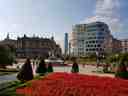
Look for the tallest building around with shimmering, purple-tinted glass panels and white grid lines, standing boldly between the leafy trees and the wide avenue-this is the Bizkaia Tower, and you really can’t miss it! Now, take a deep breath and imagine the hustle and bustle of Bilbao nearly sixty years ago. It’s 1969, the world is changing fast, and here, right on this epic spot, the Bizkaia Tower is about to open to eager spectators on Gran Vía. Crowds gather, craning their necks upward as 21 stories of modern ambition stretch to 88 meters high-at that time, it’s the absolute king of Bilbao’s skyline! Designed by star architects Enrique Casanueva, Jaime Torres, and José María Chapa, this was the “it” place: a glimmering glass curtain wall, colored windows giving the façade a playful, ever-changing mood, and volumes and heights that make you want to keep on staring. For decades, few other skyscrapers would even dare rival it. But before this glass giant arrived, another building owned the ground-since 1903, the Banco de Vizcaya’s fancy headquarters sat here, designed by José María de Basterra, until the time came to make way for the future. The brand-new tower drew inspiration all the way from Copenhagen’s SAS tower by Arne Jacobsen, so you could say this building carries a bit of Danish design magic, too. From day one, this was where the money flowed! The tower became the headquarters of Banco de Vizcaya, and you’d see sharp-suited bankers zipping in and out, their minds on numbers and new deals. As the city grew, so did the ambitions inside: in 1988, the bank merged into BBV, and later on, all the big decisions for BBVA, one of Spain’s banking giants, were made right inside these walls. Of course, things never sit still for long. Fast-forward to the early 2000s, and the “glass king” wasn’t just a bank fortress anymore. The world shifted, office spaces emptied, and-here’s a twist-BBVA tried to sell the building for 125 million euros. But the place had picked up a little unwanted guest: asbestos! It took a major clean-out before new suitors could even dream of taking over. Several deals fell through, and the tower’s fate hung in the balance like a high-wire act. Yet the Bizkaia Tower isn’t scared of a makeover. In 2018, the building got snatched up by new investors and, like a superstar getting ready for a comeback tour, underwent a massive facelift! They stripped its façade, restored its colors, and brought back that vibrant, nearly-pink shimmer it had proudly flaunted when first unveiled. All 1,116 windows were swapped out, letting the tower dazzle once more on sunny Bilbao days. But things got even busier inside! The lower floors welcomed an enormous Primark-so if you forgot your socks for this walk, now you know where to dash. Upstairs, a high-tech European entrepreneurship hub set up shop, buzzing with new ideas and hopeful future moguls. The local government, always keen to make the most of prime real estate, moved hundreds of their own staff to these top floors-though with the twists of bureaucracy, who knows where everyone’s desks will ultimately land! There was even a point when a famous sculpture, “Elogio del hierro III” by Eduardo Chillida, graced the entrance, greeting visitors with serious steel charisma-now it lives by the Museum of Fine Arts, but you can still feel echoes of Bilbao’s creative spirit tugging at you as you stand here. Just think: from global banking deals to tech startups, from high fashion shopping to government intrigues, Bizkaia Tower is like a vertical slice of Bilbao’s ambition and resilience. So, as you gaze up at the rows of colored windows reflecting the city life below, picture all the drama, hope, and laughter that’s soared through these floors for more than half a century. Not bad for a building that started as a home for bankers and wound up becoming one of Bilbao’s proudest modern landmarks. If only these walls could talk-they might just ask you for a loan… or offer you a job!
Otwórz dedykowaną stronę →

Pokaż jeszcze 11 przystankówPokaż mniej przystankówexpand_moreexpand_less
Directly in front of you, you’ll spot two giant, sleek towers of blue-tinted glass rising above the river-just look up, and the reflections on their shimmering façades will catch…Czytaj więcejPokaż mniej
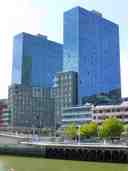
Directly in front of you, you’ll spot two giant, sleek towers of blue-tinted glass rising above the river-just look up, and the reflections on their shimmering façades will catch your eye. Welcome to Isozaki Atea-or, as it’s known in English, the Isozaki Gate! Now, as you stand here beside the river, try to picture yourself standing before a massive doorway to the twenty-first century. Designed by the renowned Japanese architect Arata Isozaki, along with local architect Iñaki Aurrekoetxea, this striking complex is much more than just a pair of glass towers. Look closely: there are actually seven buildings here, but those two twin towers are the real stars, stretching 82 meters high with twenty-three stories each. That’s roughly the height of twenty giraffes stacked on top of each other, but don’t try this at home-giraffes hate paperwork. You might be surprised to learn that this futuristic spot was once home to a rather dull old customs warehouse-hardly the kind of thing to get your sightseeing senses tingling. Private initiatives had tried to bring new life to the area, but none could quite pull it off. Meanwhile, the city had a bigger puzzle: how do you knit together the bustling daily life of the city center with the old industrial heart along the river? To make things trickier, the nearby footbridge, Zubizuri, designed by Santiago Calatrava, didn’t quite solve the connection. Bilbao always turned its back on the river like a moody teenager. There was even a pesky fourteen-meter height difference between river and city to overcome-like Bilbao’s own city-sized hurdle race. Cue the hero’s entrance-Isozaki's design! The solution wasn’t just towers, but a monumental staircase, almost fifty meters wide, inspired by grand European plazas like you’d find in Rome. Now, instead of keeping apart, the riverfront and the city center are connected by this bold new gate-a true entranceway to modern Bilbao. And those two glass towers? They’re not just pretty faces. With 317 apartments and loads of commercial space, they’re home to UNESCO Etxea and several cultural organizations. And the price of living here? Well, let’s just say if you find spare change in the couch, keep checking-it could take a while to reach 800,000 euros. Of course, it wouldn't be a Bilbao building without a touch of drama! Remember that Zubizuri bridge? Isozaki’s new plans meant cutting into Calatrava’s creation-and the famous architect took the city to court, furious at the changes to his work. The city stood its ground (and saved on a few expensive glass repairs), but in the end, a judge said Calatrava’s rights had been damaged-though the bridge connection stayed. Since then, Isozaki Atea has stood as Bilbao’s sparkling invitation to the future, bridging the divide between the industrial and the everyday. As you look up at those glass surfaces, you’re not just seeing skyscrapers-you’re looking right at the city’s new face, where international visions and local pride meet above the river.
Otwórz dedykowaną stronę →To find the Church of San Vicente de Abando, look for a grand Renaissance stone building right in front of the Albia Gardens, topped with an elegant bell tower that quietly peeks…Czytaj więcejPokaż mniej
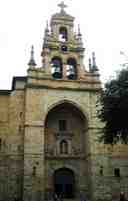
To find the Church of San Vicente de Abando, look for a grand Renaissance stone building right in front of the Albia Gardens, topped with an elegant bell tower that quietly peeks above the neighboring modern constructions. Picture yourself standing here in bustling Bilbao, with the city’s hum swirling around you. Imagine stepping back in time, over 400 years ago, when this was just the tiny anteiglesia of Abando, its heart beating right where the peaceful Albia Gardens rest today. Now, before you stands the majestic San Vicente de Abando, a place whose stones have witnessed centuries of prayers, secrets, and-let's be honest-a few impatient wedding guests. Let’s go all the way back to the late 12th century. The very first church here, built in 1190, was a Gothic creation-think tall arches, mysterious shadows, and knights probably running late for mass. This original house of worship was funded by the noble lords of Ayala and Salcedo, whose generosity set off a chain of church building that would last for centuries. Fast forward to 1549, and the townsfolk decided it was time for an upgrade: enter Juan de Arratia and a team of stonemasons ready to leave their mark. They got to work, replacing the medieval church with the Renaissance marvel you see today, finally wrapping things up by the mid-1600s. Well, good things take time-and apparently a few generations! You’re looking at what may be the finest example of a columned Renaissance "hall church" in the entire Basque Country. Step a little closer and look up: eight mighty cylindrical columns, so smooth you might be tempted to give one a hug (just watch out for the parish priest). These columns rise up to support a forest of vaults overhead, each webbed with stone ribs, locking together like puzzle pieces and bathing the nave in filtered, almost magical light. The church is perfectly rectangular-no hiding spots or secret corners for misbehaving choir boys-just 37.9 meters long and 28 meters wide, pure and symmetrical. But the drama isn’t only inside. Peer at the main façade, built in 1556 from solid Axpe and Arrigúnaga stone. The old Gothic side door is still here too, tucked away amidst later additions and topped by a small sculpture of Our Lady of Sorrows, perhaps keeping an eye out for tardy parishioners. Unmistakably perched above the main door, you’ll see a stately neo-baroque bell tower and spire added in 1901-designed by José María Basterra in a moment when Bilbao’s architects decided that “bells and whistles” should be taken literally. Step inside with your imagination: five golden altarpieces gleam, although they’re newer, designed in a rich but slightly theatrical style-let’s just say the original artists couldn't have imagined so much gold leaf! The main altarpiece, the work of local craftsman Juan Blas de Hormaeche, mixes neoclassical flair with baroque drama. Meanwhile, tucked away in various chapels and nooks, you’ll find treasures like statues by Higinio Basterra, a bronze relief of Lost Souls by Lorenzo Fernández de Viana, and a heartbreakingly beautiful Virgin Dolorosa, carved to dress in mourning for centuries of parish grief. The church has its tales of both tragedy and gratitude, such as the plaque inside honoring the survivors of the Steamship Fernando, wrecked off Portugal in 1943-when a shipwreck earned its own prayer niche, you know Bilbao was closely tied to the sea. If the air feels a little learned, you might be sensing the presence of Antonio de Trueba, the famous Basque writer whose remains rest within these walls. And by the baptismal font, it’s easy to imagine the little feet of Sabino Arana-a founding father of Basque nationalism-being dipped in centuries past, as sunlight poured through modest rounded windows. So here, at San Vicente de Abando, you’re not just seeing bricks and mortar; you’re standing at the crossroads of medieval hope, Renaissance ambition, maritime gratitude, artistic devotion, and the endless stories of Bilbao’s heart. And remember, if you hear the bells after you leave, that’s just San Vicente reminding you to come back and visit-he’s a bit clingy, but only in the best way!
Otwórz dedykowaną stronę →To spot the Plaza del Ensanche, look for an open square just ahead, bordered by wide streets and dominated on one side by the striking, modernist Edificio Ensanche-a large, pale…Czytaj więcejPokaż mniej
To spot the Plaza del Ensanche, look for an open square just ahead, bordered by wide streets and dominated on one side by the striking, modernist Edificio Ensanche-a large, pale stone building with tall windows and an impressive central atrium. Picture standing here in the 1940s-Bilbao buzzing with optimism, and architect Germán de Aguirre drawing up plans for this unique building, which first opened as a busy market. Imagine local families crowding around fresh produce stalls, voices rising and falling amid the aromas of cheese and baked bread. Over time, though the market days grew quieter, the building was reborn more than once: now it houses everything from city offices to a photography center and even the headquarters for designers, wood crafters, and the beloved local newspaper. The central atrium? It hosts lively art exhibitions, surprising pop-up fairs, and the kind of events where you half expect to see a magician pulling a rabbit from a hat just beside someone discussing urban planning. And below ground, another transformation is underway-a new parking garage is being carved into the earth, with two extra floors, 200 underground spaces, and soon, more green areas and a new pedestrian street up above. So as you stand here, you’re in Billy the Builder’s dream-always under construction, always reinventing itself, and always ready for the next chapter.
Otwórz dedykowaną stronę →Right ahead, you’ll spot Jado Square by its grand multi-story building with mansard rooftops and ornate balconies, plus that eye-catching fountain with three proud lion statues…Czytaj więcejPokaż mniej
Right ahead, you’ll spot Jado Square by its grand multi-story building with mansard rooftops and ornate balconies, plus that eye-catching fountain with three proud lion statues surrounded by trees and wooden benches. Welcome to Jado Square! You’re standing in one of Bilbao’s grandest little corners, right in the heart of the Ensanche. It’s not just another plaza-imagine stepping into 1948, when city architect Germán Aguirre Urrutia dreamed up this wide-open space. In those days, horses were probably jealous of these future 3,200 square meters made just for people like you. Fast forward to 2007, and the square got a complete makeover, adding lush gardens, cozy benches, and a quirky mix of birch, lime, and sweetgum trees. Don’t miss the three lions showing off around the fountain-rumor has it they’re the true kings of Bilbao! Now, take a stroll and spot the impressive house designed by architect Gregorio Ibarreche for the mighty Sota family, who also had the Ibaigane Palace built close by-clearly, someone liked prime real estate! And if you look the other way, you’ll see the bronze sculpture called “Maternity” by Lorenzo Frechilla del Rey, adding a touch of warmth since 1966. Metro Moyua isn’t far for your next leap across the city-but for now, enjoy Jado Square’s calm buzz and leafy green charm.
Otwórz dedykowaną stronę →Right in front of you, you’ll spot a bold, rectangular palace that looks as if it were carved from stone especially for royalty-with a richly-decorated facade, a big shield…Czytaj więcejPokaż mniej
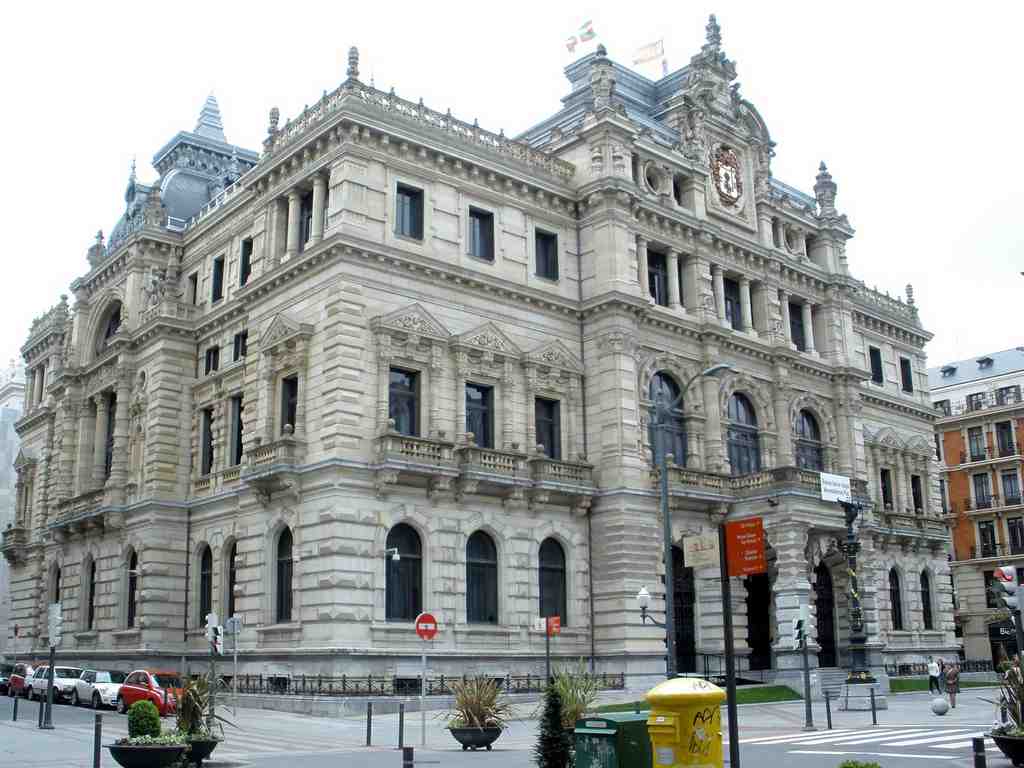
Right in front of you, you’ll spot a bold, rectangular palace that looks as if it were carved from stone especially for royalty-with a richly-decorated facade, a big shield topping the entrance, and grand balconies above arches along Gran Vía. Now, let your eyes wander over this solid and majestic building-yes, you’re not hallucinating, that’s really diamond-cut stone sparkling in the light, almost like the palace wants to dress up for a party every day! Back in the late 1800s, architect Luis Aladrén Mendivil designed this place to impress everyone, mixing and matching historic styles like a chef who couldn’t decide on just one dessert. The outside alone is a buffet of amazing details: porches, balustrades, sculpted coats of arms, and ornamental touches everywhere you look. Inside, the grand staircase splits and organizes the building, leading up to rooms bursting with furniture, paintings, and colorful ceilings. Here’s something fit for a royal soap opera: inside the Salón del Trono, two gigantic murals by José Echenagusia Errazquin show epic moments from Basque history-these are so iconic, they still get printed in textbooks! And don’t miss the tale of Eugenia de Montijo, the Empress of France, who gifted a pair of vases to the palace-if only all our visitors were so generous. The Palace of the Provincial Council of Vizcaya has been mixing power, art, and just a touch of royal flair, for over a century.
Otwórz dedykowaną stronę →Looking ahead, you’ll spot Plaza de Federico Moyúa by its sweeping elliptical shape, ringed with classic buildings and the neat, geometric flowerbeds at its center-just follow the…Czytaj więcejPokaż mniej
Looking ahead, you’ll spot Plaza de Federico Moyúa by its sweeping elliptical shape, ringed with classic buildings and the neat, geometric flowerbeds at its center-just follow the curve of the road and you can’t miss its sense of grandness right in the heart of Bilbao! Take a deep breath-imagine you’re standing here in the 1940s as workers bustle around, laying stones for José Luis Salinas’ fresh new design for Bilbao’s central plaza. This space was named in honor of Federico Moyúa, a twice-serving mayor with a knack for guiding the city through thick and thin-though, rumor has it, he never had to deal with today’s traffic jams! The plaza itself became the city’s heartbeat, a spot where elegant English and French gardens tickle your nose with the subtle scent of flowers, and finely crafted steel streetlights gleam even through Bilbao’s drizzle. Picture it: for decades, people circled round and round on foot-some say so often that their shoes wore grooves into the pavement-until, in 2017, two daring crosswalks were unveiled, finally letting locals cut straight across. Just a few years back, in 2018, hopes were high for Moyúa to become a car-free haven, but with every passing year, the dream played hide-and-seek, almost like the plaza’s own little mystery novel. Look around at the grand palaces and hotels: the stately Carlton, the evocative Chávarri Palace, or Casa Montero just down the way, and the Aurora, all telling tales of old Bilbao. Whispered stories linger, too, of the vanished eagle once perched atop the taxation building, retired in 2017-a feathered nod to changing times. Grab the metro at Moyúa, or watch buses zip to the airport, and you’ll feel the plaza’s pulse, ever restless, ever alive. Plaza Moyúa truly is a crossroads-of history, humor, and the very soul of the city.
Otwórz dedykowaną stronę →


Najczęściej zadawane pytania
Jak rozpocząć trasę?
Po zakupie pobierz aplikację AudaTours i wpisz kod realizacji. Trasa będzie gotowa do natychmiastowego rozpoczęcia – po prostu dotknij \"Play\" i podążaj trasą z nawigacją GPS.
Czy potrzebuję internetu podczas trasy?
Nie! Pobierz trasę przed rozpoczęciem i korzystaj z niej w pełni offline. Jedynie funkcja czatu wymaga internetu. Zalecamy pobieranie przez WiFi, aby oszczędzać dane mobilne.
Czy to wycieczka grupowa z przewodnikiem?
Nie – to samodzielny audioprzewodnik. Zwiedzasz niezależnie, we własnym tempie, z narracją audio odtwarzaną przez telefon. Bez przewodnika, bez grupy, bez harmonogramu.
Ile trwa trasa?
Większość tras zajmuje 60–90 minut, ale to Ty kontrolujesz tempo. Wstrzymuj, pomijaj przystanki lub rób przerwy, kiedy chcesz.
Co jeśli nie zdążę ukończyć trasy dzisiaj?
Żaden problem! Trasy mają dożywotni dostęp. Wstrzymaj i wznów, kiedy chcesz – jutro, za tydzień lub za rok. Twój postęp jest zapisywany.
W jakich językach są dostępne trasy?
Wszystkie trasy są dostępne w ponad 50 językach. Wybierz preferowany język podczas realizacji kodu. Uwaga: języka nie można zmienić po wygenerowaniu trasy.
Gdzie znajdę trasę po zakupie?
Pobierz darmową aplikację AudaTours z App Store lub Google Play. Wpisz kod realizacji (wysłany e-mailem), a trasa pojawi się w Twojej bibliotece, gotowa do pobrania i rozpoczęcia.
Jeśli trasa Ci się nie spodoba, zwrócimy Ci pieniądze. Skontaktuj się z nami pod adresem [email protected]
Bezpieczna płatność przez 


