
Audioprzewodnik po Sybinie: Wieże, opowieści i ponadczasowe cuda
Kamienny smok strzeże panoramy Sybina, a jego sylwetka została wyrzeźbiona przez stulecia tajemnic i burz. Ta wycieczka z audioprzewodnikiem poprowadzi Cię przez starożytne uliczki i rozbrzmiewające echem dziedzińce, odsłaniając ukryte dramaty i historie kryjące się za najbardziej kultowymi zabytkami miasta. Usłysz dzwony katedry nie tylko jako muzykę, ale jako wezwanie splecione z polityczną intrygą. Jaki sekret w Wieży Rady wywołał nocny bunt, który podzielił rodziny? Dlaczego tajemniczy uczony zniknął na zawsze z Uniwersytetu im. Luciana Blagi, pozostawiając po sobie jedynie plotki? Jaki dziwny protest rozpoczął się niegdyś od jednej kartki pożółkłego pergaminu na schodach katedry? Podążaj krętymi uliczkami pełnymi intryg, poczuj zderzenie przeszłości z teraźniejszością i obserwuj, jak historia Sybina ożywa z każdym krokiem pod Twoimi stopami. Odkryj sekrety smoka. Rozpocznij swoją przygodę w Sybinie już teraz.
Podgląd trasy
O tej trasie
- scheduleCzas trwania 40–60 minsIdź we własnym tempie
- straighten2.9 km trasy pieszejPodążaj wyznaczoną trasą
- location_on
- wifi_offDziała offlinePobierz raz, korzystaj gdziekolwiek
- all_inclusiveDożywotni dostępOdtwarzaj ponownie w dowolnym momencie
- location_onStart przy Muzeum Historii Farmacji w Sybinie
Przystanki na tej trasie
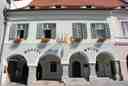
To spot the Museum of the History of Pharmacy, look for a pale building with elegant arches at street level, green wooden shutters, and a lineup of flags above the entrance right…Czytaj więcejPokaż mniej
To spot the Museum of the History of Pharmacy, look for a pale building with elegant arches at street level, green wooden shutters, and a lineup of flags above the entrance right in the heart of Piața Mică. Welcome to Sibiu’s own mix of Hogwarts and Sherlock’s apothecary - the Museum of the History of Pharmacy! Imagine the year is 1568 and you’re passing this impressive building: its arcades echo with the sounds of hurried boots, its gothic and Renaissance windows peer down like watchful eyes, and if you sniff the air just right, you might catch a ghostly whiff of medicinal herbs. This remarkable place once served as one of the earliest pharmacies in the city, with roots going all the way back to around 1600, when it was known by the mysterious name “La Ursul Negru,” or The Black Bear. Sibiu boasts the very first documented pharmacy in all of Romania-founded way back in 1494-so this address has seen over five centuries of trials, remedies, and, let’s be honest, a few questionable potions. But we’re not just talking dusty bottles and drab ledgers! Step through the old stone arches and you’ll find more than 6,600 items: ancient medicine bottles, whirring pill-making gadgets, massive bronze mortars, books, secret recipes, and even a rare homeopathic collection with nearly 3,000 pieces. You’ll even see original Viennese furniture from 1902, which no doubt has its stories (and maybe a misplaced pill or two). A special bit of trivia-Samuel Hahnemann, the brilliant mind who created homeopathy, worked right here as the personal doctor and secretary to Baron Brukenthal. And let’s not kid ourselves-being surrounded by so many odd-smelling concoctions must’ve inspired some wild scientific theories! So, as you stand here, picture scholars and apothecaries dashing about, debating the newest cures, and mixing up the next big “miracle” elixir-though hopefully with fewer side effects than a frog turning into a prince.
Otwórz dedykowaną stronę →Just ahead, you’ll spot a long, luminous white building with a row of arched entrances along its base-look for the tall windows above and the warm glow from the lights guiding…Czytaj więcejPokaż mniej
Just ahead, you’ll spot a long, luminous white building with a row of arched entrances along its base-look for the tall windows above and the warm glow from the lights guiding your way. Welcome to the Museum of Ethnography and Saxon Folk Art "Emil Sigerus," which isn’t just a collection of old stuff-it’s a time machine wrapped inside the legendary House of Arts, whose vaulted arches have been standing watch since at least 1370. Imagine you’re walking into a place where over 8,900 treasures are tucked away: shining ceramics, intricate Saxon textiles, embroidered wonders, and painted furniture that looks almost too pretty to sit on. The museum was born in 1997, and like a detective story, its keepers have traveled far and wide, hunting for cultural gems, sometimes received as heartfelt donations and sometimes carefully tracked down and bought. You might say they’ve got the Sherlock Holmes of Saxon heritage on their team. Wander a little further and you’ll be standing above an extraordinary vault-the museum’s original exhibition space was right here in the cellar, filled with the country’s most dazzling collection of tile stoves, some of which have cracked more than a few chilly Transylvanian winters. The entire stash moved up to the attic when the House of Arts was restored, leaving behind echoes of lively exhibitions about painted furniture, haban pottery, and the “morality tales” that once shaped daily Saxon life. And the story doesn’t stop in Sibiu. The museum reaches out to fellow culture-lovers as far as Gundelsheim, Germany, swapping stories and launching all kinds of joint research adventures. Whether you’re imagining the vibrant lives of Saxons past or picturing the museum staff lugging heavy painted cabinets up to the attic, you’re seeing history handed from one generation to the next-sometimes as embroidered as a Saxon blouse, and just as full of surprises.
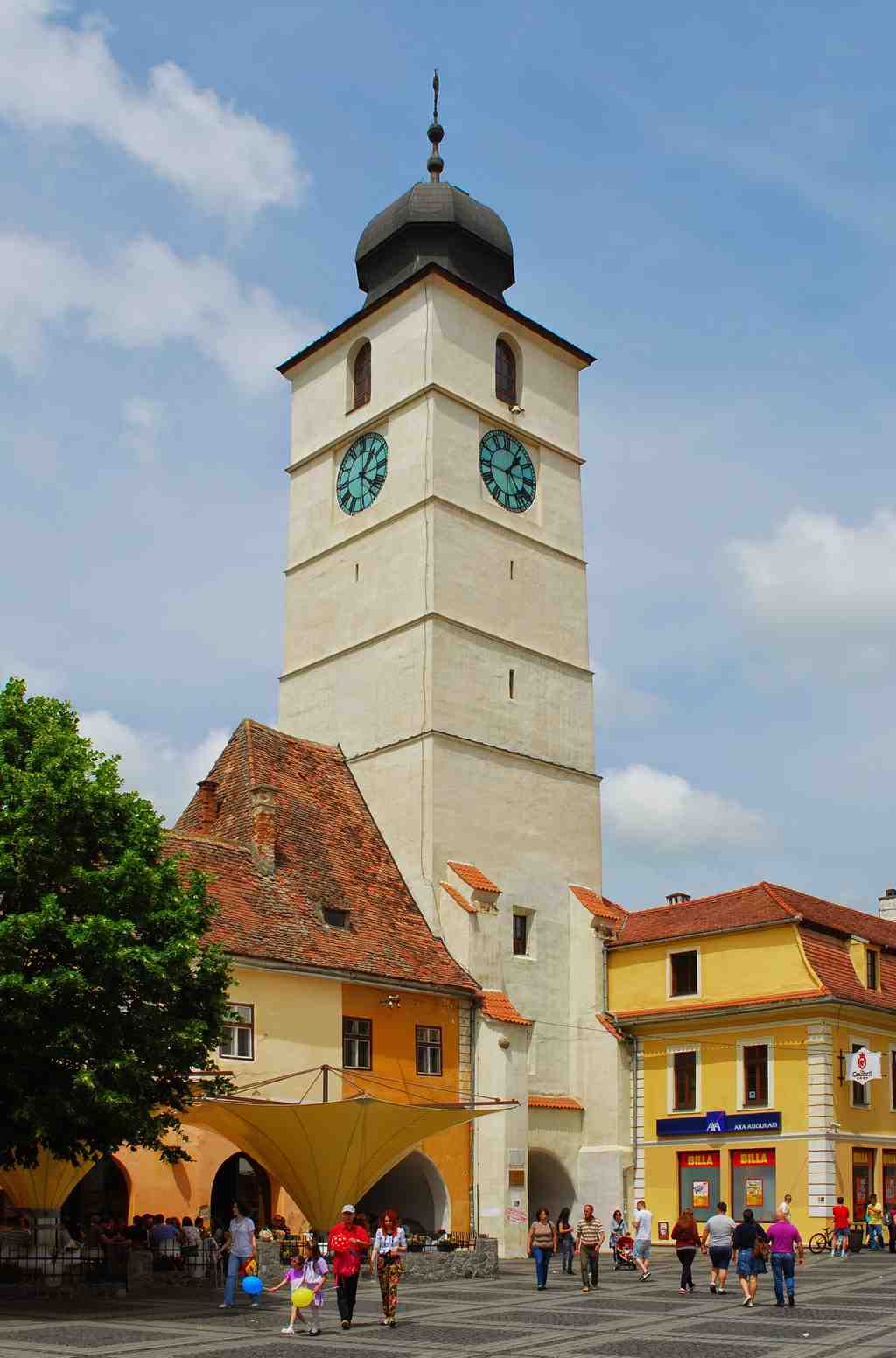
Otwórz dedykowaną stronę →To spot the Council Tower, look for a tall, cream-colored tower with a black domed roof and big green clock faces, rising right where the narrow street from the Small Square meets…Czytaj więcejPokaż mniej
To spot the Council Tower, look for a tall, cream-colored tower with a black domed roof and big green clock faces, rising right where the narrow street from the Small Square meets the Main Square. Welcome to the legendary Council Tower-one of Sibiu’s most iconic sentinels! Imagine the air filled with the scent of roasting chestnuts, merchants shouting their deals, and shoes scuffing over ancient cobblestones. This tower you see before you has been watching over the city since the 13th century, like a particularly nosy neighbor who never sleeps. It all began when the tower was built as the entrance gateway right into Sibiu’s fortified heart. Despite the medieval city’s many face-lifts over the years, that old stone core from centuries ago is still hiding inside, up to the tower’s first floor. Not bad for something older than most cake recipes. Originally, the Council Tower was part of the second protective belt that wrapped Sibiu-think medieval “extra safe mode.” Knights, traders, animals, and even the odd royal coin (literally-archaeologists found one lost here from King Andrew II’s reign in the early 1200s) have all passed this spot. The archway below your feet once meant you were passing from the noisy Small Square, buzzing with local life, straight into the grand halls of the Great Square. But this mighty tower has a flair for drama! Over the years, earthquakes, storms, and even bad luck brought the structure tumbling more than once. The most notorious event was in 1585 when the upper floors actually collapsed, burying poor painter Johann David while he worked on the dome. Talk about a tough day at the office! Like any stubborn Sibiu landmark, though, the tower was back on its feet soon after. By 1588, the city finished rebuilding, even adding a Latin plaque above the arch to brag about the makeover-because if you survive a proper collapse, you really should brag a little. Throughout history, the Council Tower has been the city’s jack-of-all-trades. Need somewhere to stash grain? Check. Spot wildfires? It’s got the best views. Lock up the less cooperative townsfolk for a little “time-out?” Why not add “prison” to the resume! Over time, it was even stuffed with all sorts of curiosities: a natural sciences museum at one point, and medieval treasures from the Brukenthal Museum in another chapter. If this building had a CV, it’d outshine most of us. But the real star feature? Climb up the spiral staircase-watch your step, it’s as narrow as a whisper-and you’ll reach the viewing deck. From here, you can spot not just the zigzagging lanes and rooftops of Sibiu, but all the way to the blue-tinged ridges of the Făgăraș Mountains. No wonder city watchers kept an eye out for both trouble and treasure from the top. If you stand facing the tower, notice those tall buttresses sloping in and the little relief sculptures peeking out-one of them is a lion, possibly a relic from the tower’s Renaissance “glow-up” in the 1500s. And right under your nose, the wide stone arch links Little Square and Big Square, having survived fires, ambition, and even modern curiosity. The marble plaque placed in 1964 reminds everyone that this was once a crucial gateway for Sibiu’s defenses-and that, after yet another renovation, the tower came sparkling back in the 1960s, ready for its closeup. Nowadays, the Council Tower is both lookout and storyteller. Exhibits change inside, but the view stays timeless, offering a perspective on a city that has always managed to dust itself off, fix its roof, and get right back to business. So if you hear the clock ticking and the faint laughter of children in the square, just remember-you’re standing in the shadow of almost eight centuries of history. And not once has the tower complained about the view. To delve deeper into the historian, uses or the architecture, simply drop your query in the chat section and I'll provide more information.
Otwórz dedykowaną stronę →
Pokaż jeszcze 11 przystankówPokaż mniej przystankówexpand_moreexpand_less
To spot the Museum of Universal Ethnography "Franz Binder," look for the pale green, castle-like building right in front of you, with pointed white turrets and decorative trim…Czytaj więcejPokaż mniej
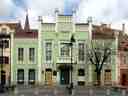
To spot the Museum of Universal Ethnography "Franz Binder," look for the pale green, castle-like building right in front of you, with pointed white turrets and decorative trim standing proudly in Piața Mică-almost as if it’s auditioning for the role of “Friendliest Fortress” in a fairy tale! Now, as you’re standing by those whimsical towers and solid, green doors, imagine this building back in the 1860s, freshly built in its neo-Gothic style, bustling with the chatter of Sibiu’s craftsmen. The place was once called the House of Small Craftsmen’s Association-a sort of VIP lounge for the guilds! Later on, after World War II, the building tried on a few different hats; known as Hermes House, it played everything from a commercial space to a boring admin office. But don’t let all that past seriousness fool you-there’s plenty of adventure tucked behind these walls. In 1993, someone had a bright idea: turn this into a museum bursting with stories and treasures from all around the globe! That’s how Sibiu ended up with Romania’s one-and-only museum devoted entirely to extra-European cultures. Imagine: more than 3,000 objects, each with its own journey-costumes from China, toys from Japan, snakeskin masks from Indonesia, and even a wooden sarcophagus carrying an Egyptian mummy over 2,000 years old! Don’t worry, there’s no curse-unless you count the spell of curiosity that hits every visitor. Look up at the ornate façade, and you might wonder who once gazed from these windows. When the building was restored in 1989, they discovered heraldic plaques from Valentin Frank von Franckenstein, a judge who ruled the city long ago, poetically translating Ovid’s works into Romanian and Hungarian-truly a multilingual multitasker. Inside, the permanent exhibition-called “From the Culture and Art of World Peoples”-features dazzling artifacts brought home by adventurous Saxons like Franz Binder, who dared to journey up the Nile’s wild White stretch. The African collection is especially powerful, thanks to Franz’s 19th-century explorations, but there are treasures from every continent. Over the years, donations have poured in from embassies far and wide: China, India, Ecuador, and even a U.S. collector named Kate! Some museum exchanges even brought in rare Japanese toys. So, whether you imagine yourself as an explorer, a poet, or just someone who loves a good story, the Franz Binder Museum will make you feel like the whole world fits right here in Sibiu-just remember not to challenge the mummy to a staring contest!
Otwórz dedykowaną stronę →To spot the Brukenthal National Museum, look for the grand cream-colored building with a steep, reddish-tiled roof and elegant arched windows-it stands right in the heart of…Czytaj więcejPokaż mniej
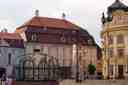
To spot the Brukenthal National Museum, look for the grand cream-colored building with a steep, reddish-tiled roof and elegant arched windows-it stands right in the heart of Sibiu’s main square, next to an ornate stone fountain and opposite the fancier, more decorative corner building. Welcome to the Brukenthal National Museum, where every stone has a story and you’re about to meet a baron with a real obsession for collecting! Imagine the year is 1790-the air is thick with the scent of old books, and gold-framed paintings are arriving faster than you can say “Transylvania.” Baron Samuel von Brukenthal, governor of the Grand Principality of Transylvania and probably the original “collector-of-everything” type, starts filling his opulent city palace with art, rare books, and curious treasures. And trust me, he didn’t do things by halves. Now, picture yourself outside these distinguished walls in 1817, right when doors creak open to reveal this dazzling collection to the public. That makes this museum the oldest of its kind in modern-day Romania! But don’t get too comfortable-there’s so much more going on inside than just paintings staring back at you. Swing into the Art Galleries and imagine wandering among masterpieces from European giants-Flemish-Dutch still lifes with tulips practically bursting from their vases, German forest landscapes shrouded in mist, aristocratic Italians who seem to whisper, “Ciao!” as you pass. Upstairs, the Brukenthal Library is a labyrinth of over 300,000 historic volumes, including a jaw-dropping, 16th-century illuminated breviary that would make any Harry Potter fan jealous. Oh, and that’s just the palace! Across Sibiu, you can dig into the Museum of Pharmacology, where wooden jars and glass bottles line Viennese-style counters-just scratch and sniff for a real “old apothecary” vibe. Apparently, it was in a basement here that Samuel Hahnemann invented homeopathy, with rows of antique medical instruments nearby that look more like props from a mad scientist’s lair. There’s also the Museum of History, where Gothic architecture stands proud, home to stories of Sibiu’s transformation from its medieval roots to a modern city. In the Museum of Natural History, dusty cases swell with a million wonders: shimmering minerals, odd fossils, and rare butterflies-enough to make Darwin cancel his next voyage. And last but not least, try not to duck when you walk by the Museum of Arms and Hunting Trophies-those walls are covered with antlers and swords from every era, with trophies so extravagant they probably made even the bravest hunters blush. So, whether you’re after art, science, swords, or secret recipes for 18th-century headache cures, the Brukenthal National Museum offers a little bit of wonder and a lot of character behind every corner. Isn’t it wild to think you’re standing in the center of centuries of collecting-and maybe, just maybe, hoping you don’t get lost among the 300,000 books! Ready to delve deeper into the the art galleries, the brukenthal library or the the museum of pharmacology? Join me in the chat section for an enriching discussion.
Otwórz dedykowaną stronę →A quick glance gives you centuries in a single sweep-look for pastel fronts like the Widner-Reussner-Czekelius House, or the sly windows of the Lutsch House watching you back.…Czytaj więcejPokaż mniej
A quick glance gives you centuries in a single sweep-look for pastel fronts like the Widner-Reussner-Czekelius House, or the sly windows of the Lutsch House watching you back. Peel your eyes for the Lies Bridge-historians say it creaks if someone tells a fib on it! Palaces. Schoolhouses. The old slaughterhouse-turned-Art House, once busy with butchers, now tells stories with sculptures not sausages. And statues! Emperor Francis I chills in his niche, while scholars and poets-like Gheorghe Lazăr and Friedrich Schiller-keep an eye on the crowds... and maybe on you, too. There’s even a “Blue House” that isn’t actually blue. Sibiu likes a good joke. Enjoy every quirky sight-this square has nerves of stone, but the city’s heart is warm and welcoming!
Otwórz dedykowaną stronę →You’re now standing face to face with the majestic Holy Trinity Cathedral of Sibiu, a sight as colorful as a children’s birthday cake and nearly as grand as its inspiration, the…Czytaj więcejPokaż mniej
You’re now standing face to face with the majestic Holy Trinity Cathedral of Sibiu, a sight as colorful as a children’s birthday cake and nearly as grand as its inspiration, the Hagia Sophia. The first thing you’ll notice is the bold mosaic of red and yellow bricks, a combination so vivid that if you squint, you might half expect to see it wiggle like a baroque accordion. But no, that’s just your eyes adjusting to over 50 meters of pure architectural ambition. Picture yourself here in 1857, when Andrei Șaguna, the Orthodox Metropolitan, hatched a plan that was so big, he decided to write to Emperor Franz Joseph himself. The Emperor liked the idea so much, he chipped in 1,000 gold coins-the kind of donation that makes modern crowdfunding look like a lemonade stand! Other not-so-shabby donations poured in, including thousands of florins from Șaguna himself. After Șaguna passed away, support didn’t stop; people wanted something that would stand the test of time-or at least a couple of world wars. In 1902, any hopes the neighborhood had for their little Greek church staying put were dashed: eight houses and one church went down, and in their place, this gigantic cathedral began to rise. Picture the clang and rattle of tools as architect Iosif Schussnig oversaw the build. Out of 31 proposed designs, it was two Budapest architects, Virgil Nagy and Iosif Kamner, who took the prize. Those tall spires you see-two short, two impossibly tall-are topped with onion domes that look like someone thought, “What if a bell tower was also a cupcake?” Inside, the dome stretches nearly 25 meters high, painted with a vision of Christ Pantocrator encircled by angels, thanks to local painter Octavian Smigelschi. Stained glass glistens, while round mosaics above the entrance display Jesus and the Four Evangelists, watching as visitors come and go. A fun fact-during World War I, the army melted down three of the bells to make cannons, which is probably not what the congregation prayed for. It took until 1926 for those bells to ring again. Since its grand consecration in 1906, the cathedral has seen fresh paint, dazzling frescoes, and the addition of electric lights-so much for medieval darkness! Even today, services fill the air daily, from Divine Liturgy to Vespers. If you feel a bit small as you gaze up, just remember: this cathedral stands on the shoulders (and donations!) of generations, and doesn’t mind sharing a little bit of grandeur with every visitor who stops by.
Otwórz dedykowaną stronę →To spot The Potters' Tower, just look for a stout, rectangular stone tower with a reddish pointed roof rising above old brick walls, right along the cobblestone street, casting a…Czytaj więcejPokaż mniej
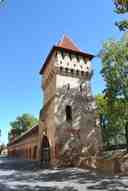
To spot The Potters' Tower, just look for a stout, rectangular stone tower with a reddish pointed roof rising above old brick walls, right along the cobblestone street, casting a mix of sun and shadow beneath the trees. Now, while you’re standing here, picture the year as something like 1460 and the street bustling not with tourists and phones, but with the sound of potters shaping clay just within these defenses. The Potters’ Tower-built in the fifteenth century by the local Saxon potters’ guild-wasn’t just a quiet corner piece; it was a vital part of Sibiu’s third ring of fortifications, designed to keep out any ambitious invaders with dreams of castle-conquering glory. If you think your job is stressful, imagine being a potter here, switching from spinning pottery to defending the city, all before lunch. This tower, with its tough stone ground floor and brick upper level, was built for business. You can still see the keyhole-shaped gun slits, perfect for aiming an arquebus at anyone who got too close for comfort. In the 1400s and 1500s, the tower would have bristled with activity during threats, but usually, it just watched quietly over the artisans and townsfolk, like a stern grandma with a heart of stone (quite literally). Through the centuries, the tower saw repairs and upgrades; after all, even the best fortification needs a makeover. Notice how the lower half of the connecting wall next to it is stone, while the top part is added brick-a clear sign that the city kept raising the stakes (and the walls) as enemy artillery got bigger and meaner. The clever defensive walkway up top, arched and covered, let defenders sprint between towers without getting drenched-or worse, peppered by arrows or more modern projectiles. But not every day here was a tale of cannonballs and chaos. Imagine the guilds’ celebrations, the secret whispers between watchmen, or that one potter who always dropped clay on the stairs. The Potters’ Tower is the middle sibling between the Carpenters’ and Arquebusiers’ Towers, forming a tough trio on Cetății Street-one of the best-preserved stretches of medieval fortification in Romania. It stands as proof that Sibiu’s strength was built, quite literally, by its own citizens-one stone, one brick, one determined guild at a time. And if it looks like it’s keeping an eye on you, don’t worry-it’s just making sure you appreciate its hard work.
Otwórz dedykowaną stronę →In front of you, you’ll spot a stout, round tower at its base made of red and grey stone, rising upwards to an octagonal top with an overhanging section under a pointy tiled…Czytaj więcejPokaż mniej
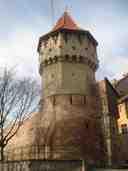
In front of you, you’ll spot a stout, round tower at its base made of red and grey stone, rising upwards to an octagonal top with an overhanging section under a pointy tiled roof-just look for the tallest medieval structure along the wall on your right, topped with that cheerful red hat! Now, let’s step into the shoes of a medieval carpenter, shall we? Imagine the clang and chatter of tools as the Saxon carpenters of Sibiu built this very tower back in the 14th century-yes, that’s right, the Carpenters’ Tower has stood guard here for nearly 700 years, putting even the oldest IKEA bookcase to shame! This wasn’t just any old tower; it was one of the most important protectors of the city, forming part of Sibiu’s third ring of defensive walls. It’s actually the most northern of three towers along Cetății Street, right at the edge of the old town. Back then, things could get exciting-or, well, terrifying-quickly if you were on guard duty. The tower’s clever design blends a circular stone base with a pronounced ledge, then transforms into an octagonal fort above, bristling with arrow slits and special holes called “keyholes” for shooting at unwelcome guests, mostly people who forgot to RSVP to the city’s safety. The upper part even juts out over the lower wall, supported by sturdy stone consoles with little openings for, well, dropping things on anyone who thought “siege” sounded like a good weekend activity. Over the centuries, while wars and weather battered Sibiu, the Carpenters’ Tower stood strong-with a few repairs and a facelift or two, most recently in 2007. Today, its walls still whisper stories of watchful nights and sharp-eyed defenders. So next time you hear your neighbor hammering, just remember: they’re following a proud Sibiu tradition of carpenters who helped defend a city. Don’t mind the ghosts-if you listen closely, some say you can still hear the tap-tap of centuries-old hammers echoing off the stone.
Otwórz dedykowaną stronę →


Najczęściej zadawane pytania
Jak rozpocząć trasę?
Po zakupie pobierz aplikację AudaTours i wpisz kod realizacji. Trasa będzie gotowa do natychmiastowego rozpoczęcia – po prostu dotknij \"Play\" i podążaj trasą z nawigacją GPS.
Czy potrzebuję internetu podczas trasy?
Nie! Pobierz trasę przed rozpoczęciem i korzystaj z niej w pełni offline. Jedynie funkcja czatu wymaga internetu. Zalecamy pobieranie przez WiFi, aby oszczędzać dane mobilne.
Czy to wycieczka grupowa z przewodnikiem?
Nie – to samodzielny audioprzewodnik. Zwiedzasz niezależnie, we własnym tempie, z narracją audio odtwarzaną przez telefon. Bez przewodnika, bez grupy, bez harmonogramu.
Ile trwa trasa?
Większość tras zajmuje 60–90 minut, ale to Ty kontrolujesz tempo. Wstrzymuj, pomijaj przystanki lub rób przerwy, kiedy chcesz.
Co jeśli nie zdążę ukończyć trasy dzisiaj?
Żaden problem! Trasy mają dożywotni dostęp. Wstrzymaj i wznów, kiedy chcesz – jutro, za tydzień lub za rok. Twój postęp jest zapisywany.
W jakich językach są dostępne trasy?
Wszystkie trasy są dostępne w ponad 50 językach. Wybierz preferowany język podczas realizacji kodu. Uwaga: języka nie można zmienić po wygenerowaniu trasy.
Gdzie znajdę trasę po zakupie?
Pobierz darmową aplikację AudaTours z App Store lub Google Play. Wpisz kod realizacji (wysłany e-mailem), a trasa pojawi się w Twojej bibliotece, gotowa do pobrania i rozpoczęcia.
Jeśli trasa Ci się nie spodoba, zwrócimy Ci pieniądze. Skontaktuj się z nami pod adresem [email protected]
Bezpieczna płatność przez 


