
Wycieczka audio po Sassari: Echa szlachty, świętych i kamienia
Starożytne cienie Sassari szepczą pod skąpanymi w słońcu ulicami, gdzie książęce intrygi i uniwersyteckie sekrety pulsują tuż poza zasięgiem wzroku. Podczas tej wycieczki audio z audioprzewodnikiem podążaj ścieżką od historycznych sal Uniwersytetu w Sassari do cichych tajemnic Pałacu Książęcego i wzniosłego majestatu Katedry św. Mikołaja. Odkryj pogrzebane skandale, niespokojne rewolucje i historie, które przewodniki pomijają. Kto spiskował w celu obalenia władzy królewskiej w bogatych murach pałacu? Jakie zakazane odkrycia w bibliotece uniwersyteckiej wstrząsnęły elitą miasta? I jaki niezwykły nocny rytuał pozostawił nieatarte ślady na kamieniach San Nicola? Przejdź przez ukryte dziedzińce i rozbrzmiewające echem marmurowe korytarze. Poczuj dreszczyk emocji, odkrywając zamaskowaną historię Sassari, słuchając, patrząc i poznając miasto odmienione przez sekrety ukryte pod twoimi stopami. Cienie czekają. Naciśnij odtwarzanie, aby odkryć, co naprawdę ukrywa Sassari.
Podgląd trasy
O tej trasie
- scheduleCzas trwania 40–60 minsIdź we własnym tempie
- straighten2.3 km trasy pieszejPodążaj wyznaczoną trasą
- location_on
- wifi_offDziała offlinePobierz raz, korzystaj gdziekolwiek
- all_inclusiveDożywotni dostępOdtwarzaj ponownie w dowolnym momencie
- location_onStart przy Kościół Santa Maria di Betlem
Przystanki na tej trasie
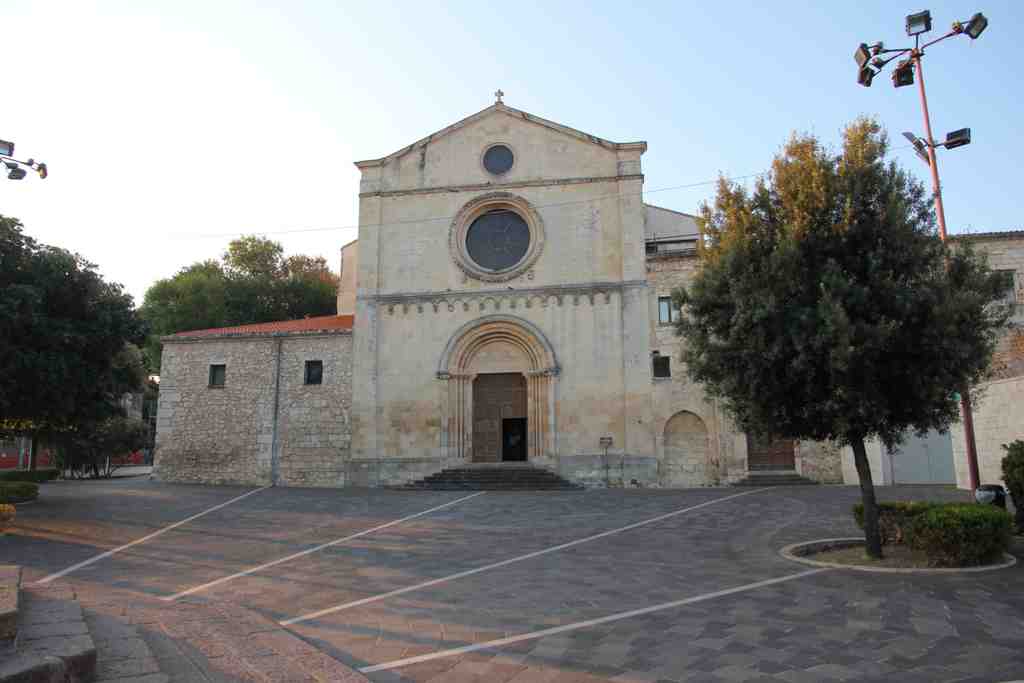
To spot the Church of Santa Maria di Betlem, look for a broad, sand-colored stone facade with a tall triangular gable, topped with a simple cross, a large round rose window at the…Czytaj więcejPokaż mniej
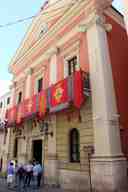
To spot the Church of Santa Maria di Betlem, look for a broad, sand-colored stone facade with a tall triangular gable, topped with a simple cross, a large round rose window at the center, and a pair of solid wooden doors at the base, facing out over a wide open square. Welcome to the Church of Santa Maria di Betlem, the grand old soul of Sassari! Right now, you’re standing before a facade that’s been watching the world go by since the 1200s-imagine all the sandals, sabots, and maybe the occasional lost flip-flop that’s wandered these very stones! Back in those early centuries, the air would have swirled with the scent of incense, and the gentle murmurs of Franciscan friars settling into their new home after being gifted this spot by the local judge-quite the real estate upgrade from their humble beginnings. Over the years, this church became Sassari’s ever-changing architectural scrapbook. In the 1400s, they kicked off a massive makeover-think of it as the medieval version of “extreme church makeover”-expanding the building, stacking on glorious late-Gothic chapels, and creating that enormous ribbed vault up above the altar. It echoed with the voices of friars, the whispers of the faithful, and the swish of long robes. This place was so influential, young Francesco Zirano, who became a priest and later a blessed martyr, got his own spiritual start right here in the late 1500s. Walk around and you’ll see more chapters added to this story: a rounded apse in the 1600s, new vaults in the 1700s, and then, in the early 1800s, Frate Architect Antonio Cano swooped in with a flourish of Rococo and Neoclassical style. He even swapped out the old wooden ceiling for elegant stone vaults, and crowned the church with a dramatic elliptical dome. His renovations were so epic, the poor original Gothic bell tower just gave up and collapsed! Not to worry-a new cylindrical bell tower rose in its place, courtesy of another architect, Antonio Cherosu. And don’t miss the details-at the entrance, if you peek closely, you’ll spot ancient gravestone carvings from the 1200s. Meanwhile, deep under your feet, radar has recently discovered a lost burial ground concealed beneath modern floors. Need more intrigue? Outside, a statue was put up to honor Francesco Zirano, only to be vandalized and quietly moved to the convent courtyard. Finally, tradition marches on-this is still the meeting ground for no fewer than seven local guilds, from masons to seamstresses, gardeners to drivers. Sassari’s heartbeat truly thrums through these walls, echoing past and present.
Otwórz dedykowaną stronę →You’re looking for a grand, cream-colored building with an ornate, highly decorated Baroque façade and three large arches-just look straight ahead for the most impressive and…Czytaj więcejPokaż mniej
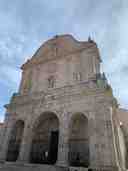
You’re looking for a grand, cream-colored building with an ornate, highly decorated Baroque façade and three large arches-just look straight ahead for the most impressive and towering church front in the whole square! Welcome to the mighty Cathedral of San Nicola, Sassari’s very own “spiritual skyscraper!” Picture this: you’re in the heart of the city, piazza del Duomo, and the sun picks out delicate shadows in every carved swirl, every statue, and every curve across the front of this colossal church. The cathedral stretches over 30 meters high, showing off as the biggest and boldest church face anywhere in Sardinia. Can you imagine the city’s medieval folk, gazing up at this same view in awe? Now, this site’s history is nothing short of an epic saga-a bit like the ultimate season finale, but with extra incense. The earliest version of this church was already around by the 1100s, appearing in ancient documents alongside monks and mysterious medieval scribblings. But here’s the wild part: beneath the present-day altar, some stones come from even older Roman and paleochristian buildings, surviving way down below like historic stowaways! In the 1200s, a bigger, bolder church rose right on top, built in the Romanesque-Pisan style-they liked their churches chunky back then, sort of like stone refrigerators. For a long stretch, up until the late 1200s, this was the only parish in town. Imagine everyone lined up for Sunday service, shuffling their feet and muttering about the draft. Enter the 1400s: Sassari starts booming, and there’s church drama. The bishop’s chair is moved here from Porto Torres-a real ecclesiastical power move-and San Nicola is promoted to Sassari’s cathedral. Suddenly, the architects get ambitious: out with the old, in with the fancy! They tear down, reconstruct, and add Catalan Gothic flair, with sharp-angled vaults and new chapels. But hey, not everything was smooth sailing. By the 1600s, one end of the church started feeling a little unstable-let’s just say not every Baroque party finishes well-so the first of three bays was demolished for safety. Instead of panicking, the locals decided to embrace a whole new look. By the 1700s, the breathtaking Baroque façade you’re admiring was proudly in place, decked out with swooping arches and more statues than a superhero convention. If you look up, you’ll spot three ornate niches on the second level, home to the three turritan martyrs, and perched even higher, the statue of none other than Saint Nicholas himself. And as the cherry on top-quite literally-the Father Eternal keeps watch at the apex, surveying Piazza del Duomo. Swing your gaze to the left, and you’ll see the proud bell tower-its bottom square, a silent nod to the church’s Romanesque roots, decorated with elegant narrow windows and arches. Above that, an octagonal turret with a bright dome pokes up: an 18th-century addition, because apparently, church towers need their own stylish hats. Walk inside-just in your mind for now-and the air turns cool and dim. The massive single nave is split into two soaring sections adorned with ribbed, star-shaped vaults, blending Gothic shadows with dreamy Catalan light. On either side, chapels glow with ancient art: there’s the fiery Martyrdom of Saints Cosmas and Damian painted in the early 1700s by Carlo Maratta, and nearby, a fresco depicting Sant’Antioco, harking back to 1614. On your right, you spot the gleaming marble pulpit, hand-carved by Giuseppe Gaggini in the 1800s, showing four evangelists deep in conversation. Maybe they’re debating where to have lunch. At the center where the nave meets the transept, a Renaissance dome stretches overhead, its base dotted with sixteen windows, letting in slivers of Sardinian sun. Each corner below showcases an emblem of the four evangelists-though only one, the eagle of Saint John, has stuck around for the encore. To your right, the Chapel of the Blessed Sacrament sparkles with late-Baroque marble and paintings of the Last Supper. To the left, the Chapel of Saint Anne glows golden, while a solemn stone mausoleum guards the memory of Count Placido Benedetto di Savoia-a reminder that even noblemen crave cathedral real estate. Move toward the altar, and marble lions flank your path, as if silently daring you to approach. Here sits the 17th-century main altar, topped with a rare Sienese painting called the Madonna del Bosco. Behind it, the apse unfolds into two sacred chambers, one square and Gothic, the other round and 1700s chic, wrapped in carved wood choir stalls where generations of voices have soared. So, as you stand on these well-trodden stones, you’re not just seeing a building-you’re plugged straight into centuries of faith, rivalry, disasters, and dazzling creativity. The Cathedral of San Nicola wears its history like an embroidered cloak, heavy with stories, and just a bit fabulous. Who knows, maybe Saint Nicholas himself is listening in, ready for the next great chapter.
Otwórz dedykowaną stronę →Standing before you now is the Church of San Giacomo, a site that’s seen more costume changes than an actor at a Sardinian carnival. Nestled in a courtyard that peeks onto Via…Czytaj więcejPokaż mniej
Standing before you now is the Church of San Giacomo, a site that’s seen more costume changes than an actor at a Sardinian carnival. Nestled in a courtyard that peeks onto Via Decimario, this church is tucked between some rather grand neighbors: Palazzo Farina, known as the “Merchant’s House” thanks to an apothecary named Diez, and the stately Palazzo Manca di Mores, nowadays the Peretti residence. But don’t be fooled by the quiet courtyard scene-San Giacomo has weathered six centuries of secrets, drama, and skulls (but more on those skulls in a moment). Let’s swirl back to the 1200s. Imagine Sassari as a medieval town, the air thick with incense, murmurs of prayer, and the clang of craftsmen at work. In 1269, while much of Europe was distracted by crusades and castles, here the foundations of San Giacomo-or as it was then known, the Church of the Holy Sepulchre-were laid, a fact proudly inscribed on a stone now kept at the Sanna Museum. Walk inside today and you’ll see a copy of that ancient slab, still boasting the year “Anno Domini 1269”-because good branding lasts for centuries. The church has had more second acts than a persistent opera singer. In the 1400s, Archbishop Pietro III Spano (the last archbishop of Torres and, as luck would have it, the first of Sassari) ordered a neighboring house for canons to lead cloistered lives. Back then, the church mostly served as their oratory, the canons living next door, probably sharing gossip through thin stone walls. But by the 1500s, the canon life was out of style, and the building was handed over to a new landlord-the Arciconfraternity of Orazione e Morte, a brotherhood so solemn they only let nobles in. Their name might give you chills: the “Prayer and Death” Confraternity. Their seal? An hourglass, a skull with crossed bones, and a cross. Move over, pirates, you have competition. They rebuilt the church twice-legend has it, their first attempt at renovation collapsed almost immediately, as if Sassari’s spirits wanted a say in the décor. Undeterred, they tried again, and finally in the early 1600s, the church was dedicated to their patron, Saint James (that’s San Giacomo, or for friends: Jago). Fun fact: the whole city chipped in 200 ducats for the project-a pretty penny at the time! Pass through the courtyard today and admire the simple façade, marked by a tidy, triangular pediment and hearty paraste framing its edges. Peer upwards: above the archway, you’ll spot a niche where a statue of San Giacomo once stood, now relocated to the side entrance, still keeping watch over incoming visitors. Right above, the classic hourglass and skull mark the brotherhood’s influence-no one ever complained about service running late, with so many reminders of immortality. The best part? The quirky touches. Check out the grotesque gargoyles peering from under the cornice of the Farina house-they’re not monsters, just innovative drainage systems for rainwater, giving stormy days a bit of medieval theatre. The bell tower, crafted like a delicate sail, is another delight: slender, elegant, marked again with that insistent skull and bones motif. Inside, the nave stretches out in a neat rectangle crowned by a barrel vault. But the heart of the church is its Gothic Capilla Mayor-imposing ribs arching in stern yet beautiful defiance, leading up to an 18th-century stucco crest of Pope Pius X flanked by angels. On either side, the chapels are a lesson in Sardinian baroque flair. The left hosts a wooden crucifix, originally from the now-vanished Church of Santa Elisabetta. To the right, San Maurizio appears valiantly on horseback, flanked by statues pressed into a golden shine after a zealous restoration. And don’t miss the touching Pietà: the Virgin Mary, heart pierced by a silver dagger, cradling Christ just taken from the cross-a masterpiece attributed to Giuseppe Antonio Lonis. There’s even a sibling statue next door in the Cathedral of San Nicola. Processional banners, including one from 1826 signed by Gaetano Basso, decorate the space, as does a gilded throne for the Eucharist, a late 18th-century Venetian or Austrian creation. So next time someone says Sassari is sleepy, remind them this church survived centuries, revelled in the macabre, and sports some of the best rain spouts in town. That’s anything but boring.
Otwórz dedykowaną stronę →

Pokaż jeszcze 11 przystankówPokaż mniej przystankówexpand_moreexpand_less
To spot the National Art Gallery of Sassari, look for a large, pale pink building with simple rectangular windows and a wooden entrance door topped by the words “MUSEO NAZIONALE”…Czytaj więcejPokaż mniej
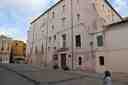
To spot the National Art Gallery of Sassari, look for a large, pale pink building with simple rectangular windows and a wooden entrance door topped by the words “MUSEO NAZIONALE” right on the quiet piazza - if you see the big wall and old-fashioned windows, you’re in the right place! Now that you’re standing before the National Art Gallery, let your imagination whisk you back through centuries of secrets and transformation. Imagine the steps beneath your feet echoing with the hurried tread of Jesuit priests in black robes, their whispers drifting on the Sardinian breeze. This very building once rang with lessons and lectures, as it started life back in 1611. It was commissioned by the Archbishop of Oristano, Antonio Canopolo, as a Jesuit college-a place to mold minds and spirits in the heart of Sassari. Within these thick walls, the past is a patchwork quilt. Sardinia’s fate was shaped here: first by the Jesuits spreading knowledge in the city since 1559, then by royal decree, changes, and even the occasional friendly neighborhood banishment! That’s right - the Jesuits were expelled, came back, got kicked out again, and the place changed hats more times than a student trying on graduation caps. After being a religious seminary, a boarding school, and later a prestigious "Domenico Alberto Azuni" high school, by the twentieth century, the grand old building had fallen into neglect and disrepair, its echoing halls waiting for another chance to shine. Fast forward past cobwebs and creaking doors, and along came the cavalry: a massive restoration in the 1980s, with funding from - get this - the national lottery! Maybe someone scratched off a winning ticket and decided what Sassari really needed was a top-notch art gallery. The next time someone questions your lottery scratch card investment, just tell them you’re funding future culture! In 2008, the doors swung open, revealing a transformed space to house treasures the city had been itching to show off. The art inside wasn’t so much acquired as adopted - generous citizens, canny collectors, and philanthropic families donated over 400 works, including medieval religious panels, Renaissance portraits, and enough mythological scenes to fill Mount Olympus. The works aren’t squashed together willy-nilly; they’re sorted by theme: religious art, myths, historical scenes, portraits, lively still lifes, and more, zigzagging through the eras from medieval days all the way to the bustling 1900s. The National Art Gallery isn’t just about dusty paintings. Picture the first floor glowing with saints and legends from the 1600s and 1700s, donated by the likes of Giovanni Antonio Sanna, a man who believed that art should be shared, not hidden behind closed doors. Head upstairs and you’ll discover bold Sardinian artists of the 20th century splashing color and soul onto canvas: see works by Mario Paglietti, Filippo Figari, and the whimsical genius of Edina Altara, with her roomful of playful mirrors and ceramics-proof that art can be both serious and seriously fun. This old college even once starred in a movie set, when the Taviani brothers’ “Padre padrone” filmed its most dramatic scenes here in the 1970s. Every stone and window may have a tale to tell - from schoolchildren dragging their feet to art curators sweeping dust from forgotten frames. Does it all sound a little bit magical, haunted, or maybe just filled with centuries of memories? The next time you visit, listen closely. Maybe you’ll hear the faint scratch of a paintbrush or the echo of a student’s laughter, swirling around the pillars and canvas - the real artwork, perhaps, is the story that never stops unfolding. Intrigued by the the headquarters, the restoration or the pinacotheca? Explore further by joining me in the chat section below.
Otwórz dedykowaną stronę →Right in front of you is a striking neoclassical building with a salmon-pink and pale yellow facade, four tall decorative columns, a grand balcony with ornate ironwork, and a…Czytaj więcejPokaż mniej
Right in front of you is a striking neoclassical building with a salmon-pink and pale yellow facade, four tall decorative columns, a grand balcony with ornate ironwork, and a triangular pediment up top-a sure standout among its neighbors on corso Vittorio Emanuele II. Now, let’s imagine what this spot was like centuries ago. Where you’re standing now wasn’t always a theater-back in the days of medieval Sassari, this was the nerve center of the city. The original palazzo di città, the town hall, stood proudly here, complete with its handy arcades, council chambers, secretarial office, and even a courtyard where city officials might have swapped the latest rumors along with council reports. By the end of the 16th century, the palazzo had grown upwards, gaining a new floor so that even more official business could be crammed in. Let's face it, even back then, paperwork always seemed to expand to fill the space available! But time has a way of wearing even the grandest buildings down. By the early 1800s, the old palazzo was on its last legs and city life was bustling right through the walls. King Carlo Felice, with a flair for modern upgrades, decided Sassari deserved something more fitting, so in 1826 the site was transformed. Giuseppe Cominotti, the city architect, got to work designing the beautiful neoclassical structure you see today-a scene-stealer with its elegant columns and grand balcony. It was built in the shape of a horseshoe, inspired by the fashionable theaters of Turin, and was designed to add a little bit of drama (both literally and architecturally) to city life. Here’s something for your next trivia night: the building’s split personality as both municipal headquarters and public theater turned out to be a bit awkward-so much so, the city council packed up and moved, first to Palazzo Manca di Usini, and later, to Palazzo Ducale. The theater side stayed, rolled up its sleeves, and took center stage. Of course, buildings are like actors-they pick up a few scars from the job. In the 20th century, fires and neglect did their worst, but with a dramatic comeback in 1967 and another restoration in the 2000s, the theater is alive and well, still hosting concerts, plays, and art exhibitions-many in the local Sassarese dialect. One of the city’s treasured traditions, the Faradda di li candareri, still puts the Civic Theatre in the spotlight. Every August, the mayor appears out on that grand balcony, raising a toast to wish everyone “A zent’anni!”-to a hundred years! Sometimes that speech gets applause, sometimes a few cheeky whistles-but hey, that’s democracy for you. The Civic Theatre isn’t just a building, it’s a living character in the city’s ongoing story, always restless and ready for its next act. And yes, you might secretly want to take a bow as you pass by!
Otwórz dedykowaną stronę →To spot Palazzo Manca di Usini, look for a grand, pale-white building with a simple, elegant façade and rows of evenly spaced windows, right in the heart of the lively Piazza…Czytaj więcejPokaż mniej
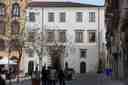
To spot Palazzo Manca di Usini, look for a grand, pale-white building with a simple, elegant façade and rows of evenly spaced windows, right in the heart of the lively Piazza Tola, sandwiched between bustling shops and shaded trees. Now, let’s travel back in time together! Imagine yourself strolling these streets in the 1500s, when this palace was the pride of Don Giacomo Manca, the lord of Usini and later the Duke of Asinara. Close your eyes for a second-hear the clatter of horses and the whispers about the city’s most fashionable home, the envy of every noble in Sassari. As decades rolled by, the palace changed as much as the city itself. In the 1700s, things got a little tight-so they just added an entire third floor! Each window holds its own story, except for those tiny ones down at the warehouse; those were strictly for the shy barrels and secret supplies. If you listen closely, you might hear the echoes of city officials from 1865, busily planning to transform this grand home into the new city hall. And today, the walls are silent with the wisdom of books, as the city’s library. So, whether you’re a fan of history, hidden treasures, or just suspiciously even windows, Palazzo Manca di Usini has plenty to intrigue your imagination!
Otwórz dedykowaną stronę →Right in front of you, you’ll spot a statue of a stately figure standing high on a stone pedestal, with the name Domenico Alberto Azuni carved into it-set against pastel buildings…Czytaj więcejPokaż mniej
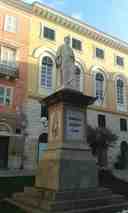
Right in front of you, you’ll spot a statue of a stately figure standing high on a stone pedestal, with the name Domenico Alberto Azuni carved into it-set against pastel buildings and framed by windows and balconies, it’s hard to miss! Now, imagine yourself stepping back in time: centuries ago, this spot was nothing like the bright, open square you see today. Instead, it was a cramped wedge of street, hemmed in by the old Santa Caterina church with its grand stairway and the imposing entrance gate of the Governor's Palace-so big, locals even held carnival balls in its carriage house! Built before 1278, the church was later expanded with chapels and a polygonal bell tower, much like Santa Maria di Betlem. But all grand things come to an end-in 1853, both the church and the palace were knocked down, after falling into ruin, making room for fresh air and new beginnings. Only old drawings and a few faint memories remain. This tiny piazza, once called Piazzetta Santa Caterina, was transformed into a proud triangle dedicated to Sassari’s own legal star, Domenico Alberto Azuni, thanks to university students in 1862. Since then, his statue has watched over the flow of daily life and laughter, standing as a friendly reminder: here, even the smallest spaces can hold centuries of stories!
Otwórz dedykowaną stronę →Our story begins in 1558 with Alessio Fontana-no, not a famous Renaissance coffee-slinger, but a generous resident who donated his entire fortune for the creation of a Jesuit…Czytaj więcejPokaż mniej
Our story begins in 1558 with Alessio Fontana-no, not a famous Renaissance coffee-slinger, but a generous resident who donated his entire fortune for the creation of a Jesuit college here in Sassari. By 1562, diligent Jesuit fathers were already giving lessons. Imagine small groups of students, their brows furrowed, puzzling over volumes of philosophy and theology as the salty island wind fluttered through open windows. Fast forward to 1617. After much insisting from the Jesuits, the town leaders, and Archbishop Antonio Canopolo (who did more fundraising than a modern university with a new football stadium), King Philip III finally gave the college the grand title of “Regia Università Sarda”-the Royal Sardinian University. It could officially grant degrees in philosophy and theology, which must have caused quite a stir in the city. I wonder if anyone threw their graduation cap in the air yet? Or just their hats. The university’s fortunes rose and fell with the tides of history, each storm leaving its marks. In 1632, the privilege of granting degrees in Law and Medicine was secured. Suddenly, you could study to become a philosopher or a physician-or, for those with a taste for drama, both at once. Over the centuries, the university expanded its faculties. By 1765, under the rule of the House of Savoy, reforms modernized the curriculum and brought a whiff of continental air: new professors arrived from Piedmont, bringing European ideas and, we hope, decent cheese. The central building you see rising before you, the Palazzo dell’Università, has evolved almost as much as the university itself. Built on less-than-glamorous grounds-a refuse pile and old brickworks-the original structure was started in 1611. Each addition and renovation bears a layer of history. After all, where else could you find two distinct courtyards: one for students and one adjacent to the old Jesuit quarters? In 1927, the façade was redone in reinforced concrete, decorated with late Renaissance flair. Today, when you walk beneath its portico, you’re strolling in the footsteps of centuries of students seeking shelter from sudden downpours. Step inside-at least in your mind-to the grand Aula Magna, a masterpiece decorated by Mario Delitala in the 1920s. Imagine the sweeping frescoes depicting the founding moments of the university. Scenes of solemn table discussions and historic royal charters are painted with vibrant gestures. Even the ceiling is alive: an allegorical painting of four muscled, statuesque figures representing the first four faculties-Law, Veterinary, Medicine, and Pharmacy-draped in streaming, colorful ribbons. Delitala even designed the doors and the cattedra, a monumental lectern almost intimidating enough to make students forget their stage fright. The library has its own secret stories, starting with Jesuit priests bringing rare tomes and continuing with 17th-century donations from archbishops. At one point, after a roof collapse in 1837, the precious books spent five years in limbo-if those pages could talk, they’d probably complain about the draft and demand better lighting. Through revolutions, royal proclamations, and countless reforms, the University of Sassari has grown into a modern institution. Today it boasts a crop of faculties from architecture to veterinary medicine, and a library system with over 600,000 items-enough to make the most dedicated student weep with joy (or panic during exam season). So as you gaze up at this historic building, remember: behind every stone and every echoing hallway, generations of thinkers, dreamers, and even the odd prankster have marched through the centuries, eager for knowledge and maybe just a little keen on skipping class. Who knows? Maybe the next chapter of this university’s story is waiting for you to write it. Seeking more information about the university palace, faculty of medicine or the features? Ask away in the chat section and I'll fill you in.
Otwórz dedykowaną stronę →You’re standing where the heart of Sassari kept its wildest secrets and its sternest guards. Right in front of you was once the mighty Castle of Sassari-a fortress with enough…Czytaj więcejPokaż mniej
You’re standing where the heart of Sassari kept its wildest secrets and its sternest guards. Right in front of you was once the mighty Castle of Sassari-a fortress with enough stories to fill its dungeons (and let’s be honest, probably enough ghosts to fill its towers). Close your eyes, and just imagine the wind carrying shouts and orders from soldiers back in the 1300s, when the Aragonese and rebellious Sassaresi clashed here. The castle rose around 1330, just as the city was throwing not one, but two rebellions at the powerful Crown of Aragon. Talk about neighborhood drama! It was built in an unusual trapezoidal shape, wrapped in five sturdy towers-one in each corner and one jutting proudly from the center. Right where you’re standing, people once crossed a stone bridge over a deep, gleaming moat to reach the heavy southern doors. Picture guards stationed above you, peering from arrow slits, ready to welcome (or not welcome) visitors with cannons pointed toward Sassari’s central square. But as centuries passed, the castle’s job description got rewrites. It served as a soldier’s base under the Spanish, a nest for the Inquisition-yes, the only official one in Sardinia from 1563 (!)-and even as a fortress for the Savoy’s army well into the 1800s. The castle became something of an overachiever: part-guardhouse, part-courthouse, and more than a bit of jailhouse. Inside, prisoners scratched secret hopes and twisted fears into the walls: medieval graffiti, some macabre, some saintly, some possibly the medieval version of “I was here.” Sometimes the jail doubled as a water cistern. Now that’s recycling! In 1877, the powers that be decided the old fortress was in the way of modern ambitions. They tore most of it down to make space for the Lamarmora barracks-home to the famous Sassari Brigade. But they weren’t thorough in their job. Some two stories of the old fortress survived, hidden just below the new piazza. In the 2000s, as archaeologists dug into these layers, it was as if the castle itself had secretly been hoarding evidence for centuries. They found mosaic-tiled floors, sturdy foundations, and the legendary XIV-century moat, nearly nine meters deep in places! Things get even more interesting underneath. Starting in the Middle Ages, people knew there was water nearby-a circular fountain called the “Pozzo Regio,” with water so clear folks doubted it was from Sassari at all. The local geology, with its underground rivers called “dragonaie,” kept the fortress and the town well supplied, even in the toughest sieges. By the late 1800s, there was even a flower-shaped stone fountain marking the spot-five petals, sprouting water thanks to a shiny new aqueduct. Now, if you think life here was all dungeons and dares, think again. By the 1500s, there was a busy little maiolica pottery factory next door, churning out bright ceramics-which probably made for colorful shrapnel if those cannons ever misfired! During World War II, when Sassari trembled under air raids, locals hurried down into deep, echoing tunnels beneath your feet, dug out as bomb shelters. Picture a warren of narrow, four-meter-high tunnels, stretching for 150 meters-even linking up with the city post office. These dark passageways sometimes broke right into ancient medieval corridors, which were probably just as surprised as the townsfolk. As you tour the area today, you get glimpses through glass and steel into the castle’s deepest stories-two floors of underground bastions, secret doors, and sunlit walkways beside what was once the castle moat. If you want to see where Sassari kept its most valuable secrets, its feistiest prisoners, and perhaps even the odd Inquisitor with a taste for pottery, you couldn’t be standing in a more legendary spot. And remember, if you hear any strange sounds coming from underground, it might just be the plumbing. Or maybe... the castle’s old ghosts, trying to organize another rebellion! Onward to the next stop-where the legends only grow!
Otwórz dedykowaną stronę →To spot the Museum of the Sassari Brigade, look for a sand-colored building with large wooden doors, bold Italian and European flags above the entrance, and “Caserma Lamarmora”…Czytaj więcejPokaż mniej
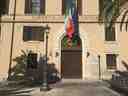
To spot the Museum of the Sassari Brigade, look for a sand-colored building with large wooden doors, bold Italian and European flags above the entrance, and “Caserma Lamarmora” written across the top-right at the ground level in Piazza Castello. Alright, brave explorer, imagine yourself transported back in time-soldiers in crisp uniforms march past you, echoing the proud traditions of the legendary Sassari Brigade. Step through these doors and you’ll find a treasure trove from 1992, built to honor the dashing feats and traditions of the Brigade meccanizzata “Sassari,” especially during the thunderous days of the First World War. The walls whisper stories through photographs, letters, dusty medals, and even stunning reconstructions of the muddy, nail-biting trenches that snaked their way across old battlefields. Each corner reveals something new-the sweat of the 151st and 152nd Infantry Regiments, the tension and laughter that lived side by side among Italian soldiers, and the unforgettable cry of victory over the roar of cannons. It's a place where you can almost smell leather boots, feel anticipation in the air, and maybe, just maybe, hear a ghostly “Forza Paris!” that used to rally soldiers for Italy. Step inside and you’re not just reading a history book-you’re walking on hallowed ground where courage and a bit of Sardinian humor still linger.
Otwórz dedykowaną stronę →Look across the Piazza d’Italia for a large, elegant, golden-yellow rectangular building with ornate, arched windows grouped in twos and threes, a grand stone balcony above its…Czytaj więcejPokaż mniej
Look across the Piazza d’Italia for a large, elegant, golden-yellow rectangular building with ornate, arched windows grouped in twos and threes, a grand stone balcony above its central doorway, and a rooftop lined with a decorative balustrade. Standing before Giordano Palace, let yourself slip back to the late 1800s, when the square buzzed with gossip about its newest arrival. Picture the sound of chisels echoing off stone as workers busied themselves in November 1877, turning senator Giuseppe Giordano Apostoli’s bold dreams into reality. Apostoli wasn’t just any senator-he’d founded the newspaper “La Sardegna,” so you can guess he liked making headlines, and his palace was certainly headline-worthy! The plans started off with the engineer Giuseppe Pasquali, but in a twist of fate he passed away mid-project, and the finishing touches-every last quirky, beautiful decoration-were delivered by architect Luigi Fasoli. They wanted something that would make people gasp and maybe even trip over their own feet out of admiration. Mission accomplished, I’d say! Glance at the ground floor: rugged pink trachyte stone punctuates the base, while columns guard the entrance like loyal knights holding up the grand balcony. Pointy arch-shaped windows and doors form a rhythm that dances along the entire façade-watch for those bifora windows on the main floor, like pairs of eyes peeping out, then look up for the delicate trio-lobed ones above. Up top, the façade is lined with neat little arches and crowned with a lacy balustrade, giving it that special Venetian Gothic flair. Inside? Imagine glittery Neo-Gothic halls gleaming with painted ceilings by the artist Bilancioni, ornate mosaics, and that dazzling 'yellow room' with its floor mosaic picturing a dancer. Though the palace’s treasures changed hands-first a home for the Giordano family, then taken over by the Banco di Napoli in 1921-you can still spot bits of the original decor, and perhaps, just maybe, catch the echo of elegant footsteps and whispered secrets hidden in corners. Mystery, history, and a dash of aristocratic drama-who needs a soap opera when you have Giordano Palace? Ready to delve deeper into the the façade, the interior or the image gallery? Join me in the chat section for an enriching discussion.
Otwórz dedykowaną stronę →You can spot Piazza d’Italia by looking for the grand building with a neoclassical facade, standing right in front of you with tall windows, a central staircase, and a beautiful…Czytaj więcejPokaż mniej
You can spot Piazza d’Italia by looking for the grand building with a neoclassical facade, standing right in front of you with tall windows, a central staircase, and a beautiful clock at the top. Welcome to the true living room of Sassari! Right now, you’re standing where the city likes to gather, gossip, and-let’s be honest-show off a bit. Imagine this place back in the 1800s, a brand-new piazza carved just outside the old medieval walls, designed by a clever engineer named Enrico Marchesi. It was supposed to be octagonal, but, like my attempts at baking a pizza, it wound up more rectangular in the end. They started building in 1872, and soon, this piazza became the city’s elegant centerpiece, a perfect meeting point on the old Roman road connecting Port Torres to Cagliari. Ahead, the palazzo della Provincia dazzles you with its neoclassical flair, while the neo-gothic Giordano Palace adds a splash of drama. In the center, you’ll find the monument to Vittorio Emanuele II-a 19th-century king who never missed a good unveiling. From here, covered porticos whisk you toward the old castle, and wide avenues stretch like arteries into modern Sassari. With laughter, festivals, and maybe a few political debates, Piazza d’Italia has seen it all. Ready to keep exploring? Or perhaps you want to wave to the king’s statue first!
Otwórz dedykowaną stronę →To spot the Palazzo della Provincia, look straight ahead for a grand cream-colored building with tall arched windows, elegant columns, and an ornate clock above the entrance in…Czytaj więcejPokaż mniej
To spot the Palazzo della Provincia, look straight ahead for a grand cream-colored building with tall arched windows, elegant columns, and an ornate clock above the entrance in the center, flanked by statues lining the roof. Now, let’s dive into the story! Imagine the year is 1872. Sassari’s city officials, squeezed into disjointed buildings like sardines in a can-Teatro Civico, Palazzo d’Usini, and Palazzo Ducale-decide enough is enough! They band together, scrape together a whopping 600,000 lire (which would buy you a lot of gelato), and declare: it’s time for a palace worthy of their ambitions. The chosen spot? The northeast side of what is now the glorious Piazza d’Italia-back then, just a dusty field as large as a football pitch. Picture the hustle and the excitement as plans unfurl for a palace in the latest late neoclassical style, something to make the neighbors jealous. The responsibility falls to two determined engineers, Giovanni Borgnini and Eugenio Sironi, who stubbornly insist on working side by side. Construction gets underway with local firms building the shell, fashioning fixtures, and-one can only imagine-quarreling over the color of the drapes. On October 18, 1873, shovels strike the ground. In a dizzying five years, the new Palazzo is ready, with intricate frescos finishing up by 1882 and the proud civic clock, crafted in Turin, set ticking away from 1880. Not bad, except the final bill? A jaw-dropping 1,100,000 lire. Worth every penny, if you ask the officials-who now lounge in 265 rooms across a sprawling 4,456 square meters. The main entrance (take a peek at those elegant steps!) opens into a grand atrium where silent marble slabs remember the local fallen of the Great War; just past this, a corridor connects visitors to luxurious salon after salon. You’ll find parquet floors polished enough for a ballroom dance and ceilings so high you might get a nosebleed from just looking up. The most famous room? The Sala Sciuti, the heart of the building. On the top floor, you’ll find this enormous council chamber, its vaulted ceiling stretching a dizzying 12.6 meters. There are 12 sculpted figures here, the moors with bandaged eyes, frozen mid-story. Back in 1875, the city challenged artists across Italy to imagine a grand mural-a scene to inspire pride. Emerging victorious, Giuseppe Sciuti from Sicily gets the job. Not content with mere sketches, he hunts down ancient costumes and arms, and even sketches locals to capture Sassari’s true spirit. The finished fresco tells the story of Giommaria Angioy riding into town in 1796, bringing a breeze of rebellious hope. But there’s more: a second, grand mural shows the Proclamation of the Sassari Republic. Here, elders gather in the old town hall, intently listening as ambassadors of Sassari debate with Genoa, winning precious self-rule in 1294. Spot Eleonora d’Arborea and Amsicora lurking on the walls-local legends caught in paint. Up above, an allegory of the Fatherland unfolds, dazzling in just 90 square meters. There’s a touch of modern artistry, too; in 1983, Aligi Sassu gifted a mighty painting of Prometheus that now guards the grand staircase. Meanwhile, in 1899, the city crowned it all with a monument to King Vittorio Emanuele II-placed right outside, perfectly in line with the entrance. Today, the Palazzo della Provincia isn’t just a vital hub for the city’s government, it’s a symbol-so iconic it’s even pictured on the 29th page of the Italian passport. So, as you gaze at those imposing columns and that dignified clock, remember: this palace was born from ambition, vision, and just a hint of architectural one-upmanship. And if anyone asks, yes-265 rooms do require a very good map and maybe a pair of roller skates! Exploring the realm of the the palace, the main façade or the the interior? Feel free to consult the chat section for additional information.
Otwórz dedykowaną stronę →


Najczęściej zadawane pytania
Jak rozpocząć trasę?
Po zakupie pobierz aplikację AudaTours i wpisz kod realizacji. Trasa będzie gotowa do natychmiastowego rozpoczęcia – po prostu dotknij \"Play\" i podążaj trasą z nawigacją GPS.
Czy potrzebuję internetu podczas trasy?
Nie! Pobierz trasę przed rozpoczęciem i korzystaj z niej w pełni offline. Jedynie funkcja czatu wymaga internetu. Zalecamy pobieranie przez WiFi, aby oszczędzać dane mobilne.
Czy to wycieczka grupowa z przewodnikiem?
Nie – to samodzielny audioprzewodnik. Zwiedzasz niezależnie, we własnym tempie, z narracją audio odtwarzaną przez telefon. Bez przewodnika, bez grupy, bez harmonogramu.
Ile trwa trasa?
Większość tras zajmuje 60–90 minut, ale to Ty kontrolujesz tempo. Wstrzymuj, pomijaj przystanki lub rób przerwy, kiedy chcesz.
Co jeśli nie zdążę ukończyć trasy dzisiaj?
Żaden problem! Trasy mają dożywotni dostęp. Wstrzymaj i wznów, kiedy chcesz – jutro, za tydzień lub za rok. Twój postęp jest zapisywany.
W jakich językach są dostępne trasy?
Wszystkie trasy są dostępne w ponad 50 językach. Wybierz preferowany język podczas realizacji kodu. Uwaga: języka nie można zmienić po wygenerowaniu trasy.
Gdzie znajdę trasę po zakupie?
Pobierz darmową aplikację AudaTours z App Store lub Google Play. Wpisz kod realizacji (wysłany e-mailem), a trasa pojawi się w Twojej bibliotece, gotowa do pobrania i rozpoczęcia.
Jeśli trasa Ci się nie spodoba, zwrócimy Ci pieniądze. Skontaktuj się z nami pod adresem [email protected]
Bezpieczna płatność przez 


