
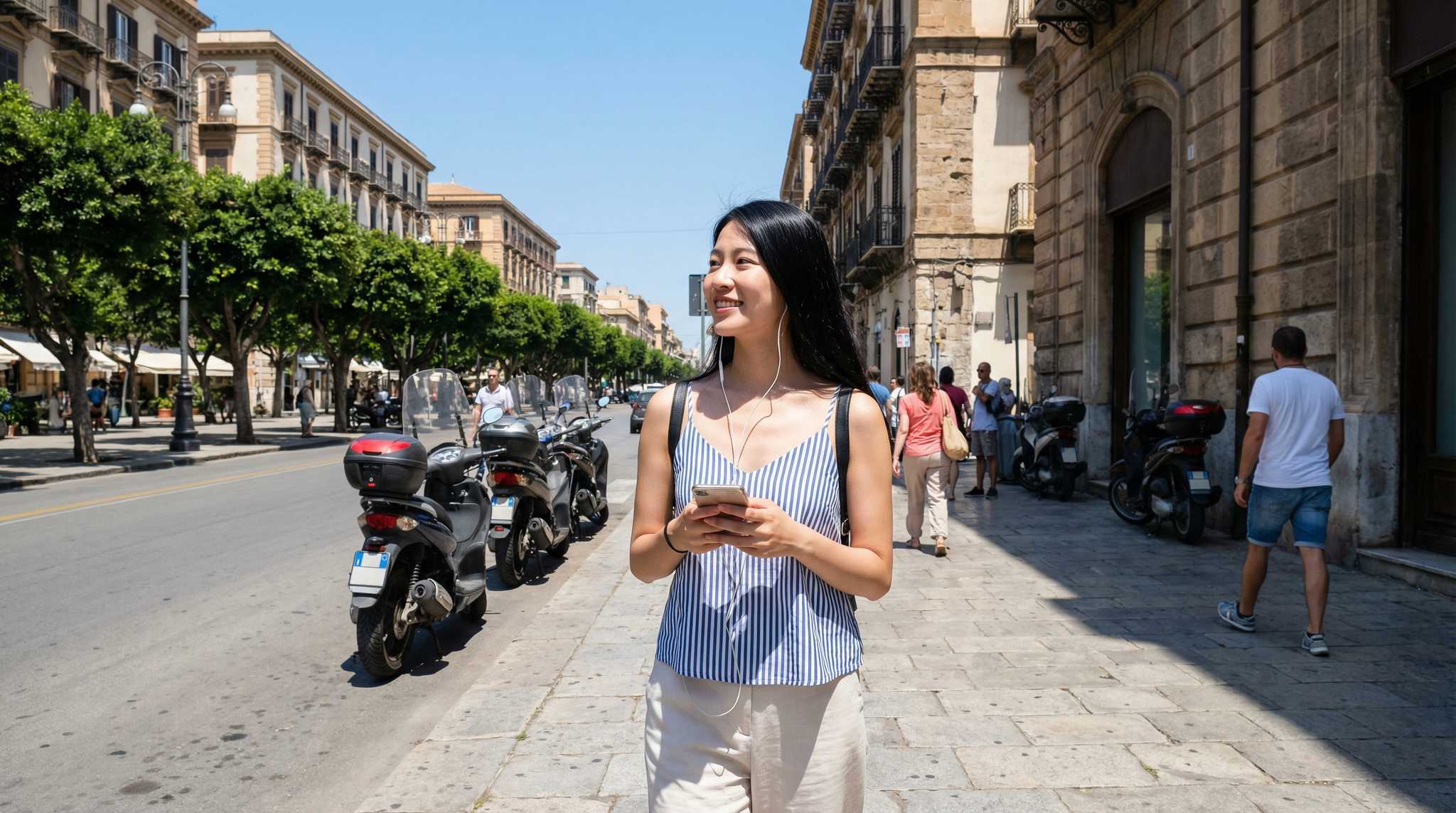
Wycieczka audio po Palermo: Od bulwarów Belle Époque do ukrytych sanktuariów
Palermo nie tylko zdradza swoje sekrety w słońcu – ukrywa je za wielkimi bulwarami, zielonymi ogrodami i okazałymi willami. Przejdź się tętniącą życiem aleją Via Notarbartolo, podążaj zacienionymi ścieżkami Villa Trabia i idź wzdłuż Viale della Libertà, gdzie wciąż unosi się duch dawnej arystokratycznej chwały. Ta wycieczka z audioprzewodnikiem odkrywa porywające historie i pomijane zakątki, o których zapominają nawet miejscowi. Jaki desperacki skandal sprawił, że niegdyś potężna willa niszczeje w ciszy? Dlaczego jedna wystawa niemal z dnia na dzień zmieniła dzikie gaje pomarańczowe w reprezentacyjną ulicę Palermo? I jak niesławna zbrodnia przy Via Notarbartolo prześladowała całą epokę? Niech twoje kroki prowadzą przez warstwy buntu, architektonicznych ambicji, szeptanych spisków i botanicznych cudów. Odkryj nieustanną transformację Palermo, poruszając się między słońcem a cieniem, by spojrzeć na te ulice zupełnie nowymi oczami. Gotowy, by odkryć żywą przeszłość miasta? Zanurz się w nią – każdy zakątek kryje sekret czekający na ciebie.
Podgląd trasy
O tej trasie
- scheduleCzas trwania 30–50 minsIdź we własnym tempie
- straighten4.2 km trasy pieszejPodążaj wyznaczoną trasą
- location_on
- wifi_offDziała offlinePobierz raz, korzystaj gdziekolwiek
- all_inclusiveDożywotni dostępOdtwarzaj ponownie w dowolnym momencie
- location_onStart przy Via Notarbartolo
Przystanki na tej trasie
Take a look around you: Via Notarbartolo is a broad, straight avenue lined with tall, cream- and ochre-colored buildings, palms, and plenty of urban hustle, so just follow the…Czytaj więcejPokaż mniej
Take a look around you: Via Notarbartolo is a broad, straight avenue lined with tall, cream- and ochre-colored buildings, palms, and plenty of urban hustle, so just follow the busy stretch of cars and people as they move between shops, apartments, and buzzing local life. All right, here you are-standing on one of Palermo’s grandest urban stages, Via Notarbartolo! Don’t let the commuters and café-goers distract you too much, because this street has lived many lives. Imagine for a moment it’s the late 1800s-horse hooves and the distant clang of bells echo as workers break new ground for an ambitious project that would carve Palermo in half, linking the glittering sea to the shadowy slopes of Monte Cuccio. Back then, Palermo wanted to modernize, and so Felice Giarrusso’s 1885 city plan dreamed up this very avenue, a bold line drawn through old gardens and fields. But, as with all great Italian stories, a twist-what began as a simple road soon morphed into a sought-after address for the city’s rising bourgeoisie, all eager to escape the cramped old town for these fresh northern neighborhoods. The city wanted something new, so they built wide roads-some as wide as twenty meters!-with perfectly perpendicular cross streets. Look left and right, and you'll spot the legacy of those early city planners. See those handsome apartment buildings? Imagine them as they once were: two or three stories high, dripping with the playful curves and colors of Sicilian Liberty style, each wrapped in private gardens. It was almost a “garden city” model, inspired by northern Europe but with a dash of Palermo flair. The owners would take the ground floor, soak up the scent of orange blossoms, and rent the floors above-always with an eye on a little profit! But time rushed forward, and in the 1930s, the road stretched farther, finally connecting to Piazza Ottavio Ziino. There was just one problem: a stubborn railway line cut the new suburb off from the rest of the city. For years, there was a creaky level crossing here, with villagers pausing to let rattling trains go by-a relic of a slower, rustic Palermo. And here comes the drama: by the 1960s, the city exploded! Not just with people-Palermo grew from a sleepy port town into a metropolis of concrete- but with scandals, too. They called it the “Sacco di Palermo,” or the Sack of Palermo, when waves of new construction swept away the old villas and gardens. Suddenly, quick-rising apartment blocks and office towers pushed out the Liberty-style homes, and even the mighty Villa Cupane-once the avenue’s scenic endpoint-fell victim to the bulldozers. This part of Via Notarbartolo changed its name to Via Leonardo da Vinci, and became the new business address of Sicily’s government offices. In reality, these “improvements” squeezed out green spaces, making more room for tall buildings-and more profit for those who built them. But there’s a bit of mystery on this street, too. Via Notarbartolo is named after Marquis Emanuele Notarbartolo, a former mayor and the director of one of Sicily’s biggest banks. He became rather famous, but sadly, not for throwing any grand parties-he’s known as one of the mafia’s first “famous victims.” Just imagine the conversations whispered in doorways and behind shuttered windows after his untimely end. Despite the ups and downs, the avenue is never without life. Picture shoppers dashing for that new pair of shoes, civil servants rushing to their offices, and neighbors chatting from balcony to balcony. The English Garden sits along one side, offering shade and birdsong, and Notarbartolo Station-the modern gateway to Palermo’s train network-bustles with travelers. And even as cars zoom along and scooters zip by, you can find a bit of peace: benches to sit on, fountains to watch, flowers planted in bright mosaics. Via Notarbartolo is a place where old dreams and new ambitions still meet every day. So, take a deep breath-you’re standing in the heart of Palermo’s living, breathing transformation. Ready to keep moving? Let’s walk onward to the next stop!
Otwórz dedykowaną stronę →To spot Villa Trabia, look through the tall palm trees ahead-behind them you'll see a grand cream-colored villa with brown trim, its entrance framed by a small…Czytaj więcejPokaż mniej
To spot Villa Trabia, look through the tall palm trees ahead-behind them you'll see a grand cream-colored villa with brown trim, its entrance framed by a small courtyard. Alright, welcome to the green oasis of Villa Trabia! Take a deep breath in-smell that blend of crisp leaves and a hint of sweet flowers? This garden paradise has been delighting visitors for centuries. Imagine yourself here in the 1700s: the land was just a modest farm until Don Paolo Spinelli decided he wanted something grander, trading chickens and hay for fountains and elegant walkways. Just picture carriages rumbling down the main path as the local elite came to marvel at the transformation. After Spinelli’s time, the estate fell into the hands of the Gaetani family, Princes of Cassaro. They lined up everything in one neat, regal axis: villa, fountain, garden avenue, and-just to show off-a bridge with a panoramic lookout that probably inspired a few love stories and secret meetings. Oh, and don’t trip over your own feet searching for hidden treasure; the real treasure is all around you, in the lush greenery underfoot and overhead. Then came Giuseppe Lanza Branciforti, the Prince of Trabia, who gave this villa the name you see today. By 1881, the garden was ready for its dramatic makeover; Princess Sofia of Trabia was determined to follow the latest fashion and turned it into a romantic park, complete with curling paths, statues peeking out from the bushes, and fountains burbling away while rare, exotic plants from every corner of the globe rooted themselves in Sicilian soil. If you hear a soft rustle, it could be the spirit of the old gardener, Vincenzo Ostinelli, who once tended this place so carefully he turned it into a “miniature botanical garden.” Over 2,000 species of plants grew here, and today, if you look up, you’ll spot towering Himalayan pines, lush Japanese trees, Australian Grevilleas, and the proud Mediterranean oaks. But-like every good tale-there’s a darker twist: after the sad death of the last prince, Raimondo Lanza di Trabia, in 1954, Villa Trabia was abandoned and nature tried to take it back. Don’t worry, you won’t have to hack your way through a jungle; the city of Palermo rescued the villa in 1984 and returned it to glory. Now, this enchanting villa is buzzing with life again, housing a library and places for all ages to gather, laugh, and learn. Villa Trabia isn’t just a beautiful stop on your walk-it’s a whole world of stories, secrets, and blooming surprises.
Otwórz dedykowaną stronę →To spot Viale della Libertà, just look straight ahead for a wide road lined with rows of leafless plane trees and elegant, historic buildings on each side-if you see a grand…Czytaj więcejPokaż mniej
To spot Viale della Libertà, just look straight ahead for a wide road lined with rows of leafless plane trees and elegant, historic buildings on each side-if you see a grand boulevard stretching into the distance, you’ve found it! Now, as you stand here on this vibrant avenue, close your eyes for a second and imagine the scene centuries ago. Instead of cars and bustling crowds, this was wild countryside, filled with orange groves where the city’s noble families wouldn’t dare wander after dark-not because of ghosts, but because it was simply “too far.” For a long time, people thought, “Why leave the lively city for an endless field of oranges?” Palermo’s heart was elsewhere, but little did they know, change was coming. Everything shifted at the end of the 1800s with the Exposizione Nazionale. As if by magic, a grand exhibition rose at the very start of this street, drawing people northward. The exhibition was temporary, but its impact lasted forever. When it ended and the pavilions came down, urban dreamers and mighty architects seized the moment. They turned these fields into an avenue of dreams-up went elegant villas, each with its own flavor of Sicilian glamour. Some of those beautiful villas, like the famous Villa Deliella, are lost to time, but if you look around, you can still spot treasures like the Florio house and others nestled among the trees. Strolling down Viale della Libertà today, you’re walking a street so grand that the composer Richard Wagner once called it the Champs-Élysées of Sicily-Paris, eat your heart out! The avenue unfolds in two distinct styles: the first section, nearest to the city’s historical core, has grand central lanes just for cars with wide sidewalks perfect for people-watching. The second stretch, past the English Garden, feels greener and more modern, with the gardens taking over part of the road. Legend says if you listen closely, you might hear the whispers of those long-gone aristocrats grumbling about mud on their shoes-guess we all hate traffic in our own way! Nowadays, art enthusiasts and sightseers love Villa Zito, which keeps the tradition alive as a treasure box for Sicilian paintings. So take a deep breath, listen to the rhythm of the city, and remember-you’re standing where citrus once ruled, now one of Palermo’s most prestigious and lively streets has blossomed in its place.
Otwórz dedykowaną stronę →
Pokaż jeszcze 7 przystankówPokaż mniej przystankówexpand_moreexpand_less
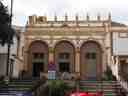
To spot the Church of Santa Maria di Monserrato, look straight ahead for a distinctive pale façade with three grand arches and a raised staircase lined with an iron fence, topped…Czytaj więcejPokaż mniej
To spot the Church of Santa Maria di Monserrato, look straight ahead for a distinctive pale façade with three grand arches and a raised staircase lined with an iron fence, topped by a balustrade that almost looks like chess pieces waiting for their next move! Now, let’s dive into the story, and trust me, this church has seen more drama than a Sicilian soap opera! Imagine yourself in the Palermo of the 1500s, outside the city walls, where nobleman Pietro de Luna owned lands and a lovely villa. Back then, this area was just calm countryside-well, at least until 1575 when history decided to spice things up. That year, a devastating plague, imported in true pirate fashion by corsairs, swept through the region. The villa and grounds you’re standing by were turned into a lazzaretto, a gloomy quarantine house for the sick. If you listen carefully, perhaps you’ll hear an echo of coughs, or maybe just someone sneezing in the café behind you. After the crisis, life rolled on, but this building kept reinventing itself-think of it as Palermo’s version of a very determined chameleon. By 1600, Luca Cifuentes stepped in, dusted the place off, and made it a temporary home for Sicily’s Viceroys, those high-profile politicians arriving in the city, always looking for somewhere luxurious to stay while crowds got ready to welcome them triumphantly. Still, plagues have a habit of knocking twice, and in 1624, a new wave hit. Just when you think you’ve washed your hands of the last outbreak, Palermo gets a relapse! Another lazzaretto. But the winds of fate soon shifted again: by 1668, the church was transformed into a refuge for poor girls under the care of the Congregation of the “Rifugio dei Poveri.” Suddenly, this place was alive with the sounds of young laughter and hope, its mission fueled by generous patrons and growing spiritual fervor. Here’s a quirky twist: in 1690, a famous preacher arrived and led a heartfelt procession through the neighborhood to gather donations for these girls’ refuge. Legend has it, on the plain before the villa, they planted seven crosses-one for each of Mary’s seven sorrows. Suddenly, this area earned a brand new nickname: the Plane of the Seven Crosses. I can’t guarantee you’ll find all those original crosses today, but keep your eyes peeled-they say old stories sometimes leave faint footprints. The church’s architectural history reads like Palermo’s greatest hits. The façade facing you was finished in 1853, thanks to the celebrated architect Giovan Battista Filippo Basile. He carved out those distinctive arches and gave the church its unique blend of Gothic, Norman, Chiaramonte, and even Catalan flavors. It’s almost like a recipe with all Palermo’s best ingredients-you just need a pinch of sunshine and a dash of sea breeze! Step inside in your imagination: a single nave, three side altars tucked into serene chapels, and a ceiling painted with swirling angels and Mary grieving at the foot of the cross. The interior almost vibrates with the memory of processions and prayers, especially during Holy Week when emotional rituals for Mary of the Seven Sorrows fill every corner with songs and candlelight. But history wasn’t finished testing this place. In 1943, World War II bombs blasted through Palermo, nearly wiping out the entire complex-except the tenacious chapel. Surviving destruction, it was rebuilt, adapted, and continued serving as a sanctuary of hope, even as the city modernized around it. And when the ancient Church of Santa Lucia al Borgo, once nearby, was destroyed, many of its precious artworks and statues found a safe haven here. In a way, this church became a guardian, cradling memories and relics of lost fellowships. Fast-forward to modern times: restoration teams worked their magic in the early 2000s, polishing the murals, strengthening the roof, and restoring its shining face as the city’s own little miracle of resilience. As you stand here, take a moment to listen-not just with your ears, but with curiosity. The footsteps of viceroys, the prayers of quarantined souls, the laughter of rescued girls, and the determination of restorers-they all echo in these stones. Now, wasn’t that a whirlwind? From plagues and politicians to bombs and blessings, this old church has seen it all-proving that in Palermo, even a quiet building can tell the most adventurous tales. Ready to continue? I promise the next stop will have fewer epidemics, but you never know in this city… If you're curious about the facade, internal or the church of santa lucia al borgo, the chat section below is the perfect place to seek clarification.
Otwórz dedykowaną stronę →To spot Palazzo Ziino, look for a grand neoclassical building with tall, elegant windows, rows of charming balconies, and four fluted Corinthian columns standing proudly on the…Czytaj więcejPokaż mniej
To spot Palazzo Ziino, look for a grand neoclassical building with tall, elegant windows, rows of charming balconies, and four fluted Corinthian columns standing proudly on the front. Now, as you stand right in front of this majestic palace, picture the scene here in Palermo at the end of the 19th century-horses clop by on cobblestone streets, and everyone’s talking about the magnificent new building ordered by Ottavio Ziino, a man who never did things by halves. He had a vision for a home that would wow everyone, and with a bit of financial magic from Vincenzo Florio Jr. and the brainpower of his architect brother Nunzio, Palazzo Ziino opened its doors in 1895. For decades, the Ziino family called this place home, with grand parties echoing up through the noble floors, and whispers in the servants' quarters above. But don’t get too cozy-by the 1960s, like forgotten leftovers in a grand old fridge, Palazzo Ziino was sold to the state, and by the 1980s, its glory had seriously faded. Palermo’s city council bought it just in time for its 100th birthday, but honestly, it was so run-down you could almost hear it sigh. During the big restoration, the insides got a makeover to make space for art exhibitions. Imagine peeling wallpaper, missing paintings, and old fireplaces-some designed by the famous Giuseppe Damiani Almeyda-just waiting to tell their stories. The grand decor suffered from thieves, removals, and time, but the spirit lingered, especially in the fabulous “gipsoteca,” a secret stash of plaster sculptures from Sicily’s top artists-opened only for special occasions. On days like those, you might just hear the faint sound of chattering art lovers, maybe even a ghostly lawyer, peeking down to see if his home is ready for another century of stories. Intrigued by the architecture, decorations or the the plaster cast gallery? Explore further by joining me in the chat section below.
Otwórz dedykowaną stronę →To spot the Church of San Francesco di Paola, look for a cream-colored stone facade standing proudly above a row of low, leafy trees; you’ll notice its central arched gable,…Czytaj więcejPokaż mniej
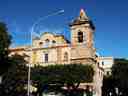
To spot the Church of San Francesco di Paola, look for a cream-colored stone facade standing proudly above a row of low, leafy trees; you’ll notice its central arched gable, flanked by tall pillars, and a robust square bell tower with a pointed top just to the right. Welcome, friend, to a spot in Palermo where history has a habit of popping up when you least expect it-sometimes wearing a habit, sometimes wielding scissors! You’re now standing in front of the Church of San Francesco di Paola, but believe me, this place has seen more costume changes than a theater troupe. Imagine: back in the early 1300s, when armory was still all the rage and horse carts clattered through the city, this site was home to the humble church of Santa Oliva. Local legend whispered that Santa Oliva herself was buried right here beneath your feet-though Palermo’s local legends are so numerous, they could fill the pews on a Sunday. Fast forward a couple of centuries and the “tailors’ guild”-yes, literally the medieval fashionistas-became the keepers of the little church. If you look closely at the lower reliefs on the facade, you’ll spot a pair of scissors, a small nod to these savvy sarti who stitched their way into the building's history. But while their handiwork was sharp, the church wasn’t large enough for the plans of the next arrivals: the Order of the Minims, followers of San Francesco di Paola. This was no ordinary crew; their founder was known for both miraculous deeds and a wicked sense of humility. The local Viceroy, almost as if snapping his fingers at destiny, negotiated their arrival, and with the blessing of Pope Clement VII, the Minims took over in 1523. Now, just imagine the bustling construction site as gothic arches began to rise, vaulting toward the heavens-those tall ribbed ceilings with hanging keys you can glimpse inside are hidden clues to its original style. Yet fashion trends even in stone can change with the wind: as the 16th century progressed, the gothic gave way to the swagger of mannerism and eventually to the opulence of baroque. It’s like the church just couldn’t resist a makeover or three! As the walls grew more extravagant, so too did the decorations, with marble swirling on every surface, frescoes popping up over your head, and angel heads peeking out where you’d least expect them. By 1594, with the church’s expansion complete, it was officially dedicated to San Francesco di Paola-the same saint whose name blazes out in golden rays at the top of the portal, inscribed with one magic word: Charitas, meaning charity. Speaking of the portal, give it a good stare! Those angels’ faces and busts of Madonna delle Grazie, Sant’Oliva, and San Francesco perched up there were sculpted by Giacomo Gagini in the 1500s. With all these figures looking down, one almost expects them to lean in and share the city gossip. Through the centuries, this church moonlighted in almost every role: after the suppression of religious orders in the 19th century, the massive adjoining convent became home to a military barracks. The army, I’m afraid, had little interest in frescos or cherubic stares-most of the baroque paintings and stuccoes were lost or plastered over. During World War I, the nave was stacked high with sacks of grain instead of hymns. But like any good hero in Sicilian tales, the church was never down for long. In 1905, after some clever persuasion from Cardinal Lualdi, the Minims were allowed back, even if only in a modest corner above the nave. Then came a flurry of repairs: restoring damage from wars and finally, a fresh revival in the 2010s brought back the church’s sparkling interior. Step inside-virtually, or with your own feet-and your eyes feast on a single grand nave lined with chapels, each telling its own color-splashed story. You’ll meet Palermo’s four patron saints, see miracles painted above, and spot hidden treasures: marble tombs of nobles, the miraculous staff of San Francesco in a crystal box, the sarcophagus of a princess, even a legendary well said to have provided miraculous water from the days of Saint Oliva. The church’s life still pulses with annual processions: every May, they parade a shining silver statue of San Francesco through the streets, and every June, another for Sant’Oliva-one festival rumored to lighten the darkest curses cast by the Sicilian sun. And if you listen very closely-maybe when the bell tower rings-you just might hear the whispers of tailors’ shears, the chants of humble friars, the stomp of soldiers’ boots, and the joyful laughter of pilgrims, all tangled up together in this wonderfully unpredictable, ever-fashionable corner of Palermo. Now, onward to our next stop-but watch your step! With all this history underfoot, you never know when another legend might pop up to say a quick “buongiorno.” If you're keen on discovering more about the facade, architecture or the internal, head down to the chat section and engage with me.
Otwórz dedykowaną stronę →In front of you is Via Ruggero Settimo, a striking straight avenue lined with tall, elegant buildings on both sides-just look ahead and you’ll spot it marked by bustling crowds,…Czytaj więcejPokaż mniej
In front of you is Via Ruggero Settimo, a striking straight avenue lined with tall, elegant buildings on both sides-just look ahead and you’ll spot it marked by bustling crowds, shops, and the promise of Palermo’s stylish heart. Welcome to Via Ruggero Settimo, the beating heart of Palermo and often called the city’s “living room” by locals-and trust me, it’s much livelier than my living room ever gets! Imagine you’re here in the late 1700s: the street was freshly drawn into the city’s map as a grand extension of Via Maqueda, designed by none other than the Marquis of Regalmici. Picture elegant old palaces rising around you, like Siciliano, Santo Stefano Della Cerda, and Notarbartolo di Villarosa-some crafted by the genius architect Giuseppe Venanzio Marvuglia. The air is filled with the scent of fresh coffee from luxury cafés, and the streets echo with the sound of horse-drawn carts. For generations, this avenue sparkled with the most luxurious shops in Palermo. Today, most high-end designers have moved elsewhere, but the glamour lives on, especially on Sundays when the road magically closes to cars and transforms into a pedestrian paradise just for you. Soak in the elegance-after all, for a street once known as “the drawing room” of Palermo, all that’s missing is someone to offer you a cup of tea!
Otwórz dedykowaną stronę →You won’t spot the meteorological station on this map, but when you’re right at Piazza Verdi, look for a small, official-looking building set apart from the theaters and…Czytaj więcejPokaż mniej
You won’t spot the meteorological station on this map, but when you’re right at Piazza Verdi, look for a small, official-looking building set apart from the theaters and cafés-sometimes with a few antennas or weather instruments perched on top, quietly observing the sky. Now, let’s step into the world of Palermo’s very own weather-watching nerve center! Imagine - right where you’re standing, for more than half a century, meteorologists have been on a never-ending mission to read the city’s mood swings: baking August afternoons with a sizzling record-hot 45 degrees Celsius (they probably cooked their lunch on the pavement in ’99!), to the rare chill in January 1963, when the mercury shivered down to just 1.6 degrees. Every day, behind those windows, experts track Palermo’s gentle breezes and the sharp, sun-scorched gusts that sometimes tear through the city. If these walls could talk, you’d hear whispers of umbrellas opening in sudden downpours and people sighing with relief as sea breezes cool the sizzling piazza. And what’s their secret? Numbers! They scribble and tap and glance out-transforming the chaos of clouds into predictions that help Palermo decide between a beach day or a cozy night in. So the next time you complain about the weather, remember the heroes in here have been watching the skies just for you since before most of us ever owned a thermos!
Otwórz dedykowaną stronę →
Najczęściej zadawane pytania
Jak rozpocząć trasę?
Po zakupie pobierz aplikację AudaTours i wpisz kod realizacji. Trasa będzie gotowa do natychmiastowego rozpoczęcia – po prostu dotknij \"Play\" i podążaj trasą z nawigacją GPS.
Czy potrzebuję internetu podczas trasy?
Nie! Pobierz trasę przed rozpoczęciem i korzystaj z niej w pełni offline. Jedynie funkcja czatu wymaga internetu. Zalecamy pobieranie przez WiFi, aby oszczędzać dane mobilne.
Czy to wycieczka grupowa z przewodnikiem?
Nie – to samodzielny audioprzewodnik. Zwiedzasz niezależnie, we własnym tempie, z narracją audio odtwarzaną przez telefon. Bez przewodnika, bez grupy, bez harmonogramu.
Ile trwa trasa?
Większość tras zajmuje 60–90 minut, ale to Ty kontrolujesz tempo. Wstrzymuj, pomijaj przystanki lub rób przerwy, kiedy chcesz.
Co jeśli nie zdążę ukończyć trasy dzisiaj?
Żaden problem! Trasy mają dożywotni dostęp. Wstrzymaj i wznów, kiedy chcesz – jutro, za tydzień lub za rok. Twój postęp jest zapisywany.
W jakich językach są dostępne trasy?
Wszystkie trasy są dostępne w ponad 50 językach. Wybierz preferowany język podczas realizacji kodu. Uwaga: języka nie można zmienić po wygenerowaniu trasy.
Gdzie znajdę trasę po zakupie?
Pobierz darmową aplikację AudaTours z App Store lub Google Play. Wpisz kod realizacji (wysłany e-mailem), a trasa pojawi się w Twojej bibliotece, gotowa do pobrania i rozpoczęcia.
Jeśli trasa Ci się nie spodoba, zwrócimy Ci pieniądze. Skontaktuj się z nami pod adresem [email protected]
Bezpieczna płatność przez 


