
Audioprzewodnik po Mediolanie: Kamienie, cienie i historie zapomnianych wieków
Biblioteka, która niegdyś ukrywała tajne notatniki Leonarda. Wieżowiec majaczący niczym obca placówka nad starożytnymi ulicami. Cienie wciąż utrzymujące się po jednym wstrząsającym wybuchu. Mediolan to miasto o warstwach głębszych niż marmur i tajemnicach mroczniejszych niż jakikolwiek wybieg mody. Ta wycieczka audio z własnym przewodnikiem zdziera wypolerowaną powierzchnię miasta, aby odsłonić ukryte historie pulsujące pod spodem. Spaceruj we własnym tempie, aby odkryć dramatyczne momenty, szeptane bunty i skandale pominięte w przewodnikach. Jaki mroczny motyw doprowadził do szokującego zamachu bombowego na Piazza Fontana? Dlaczego Torre Velasca wywołała oburzenie swoją dziwną sylwetką? Jakie zakazane teksty Biblioteca Ambrosiana próbowała niegdyś chronić? Wędruj przez stulecia w jedno popołudnie. Każdy zakręt prowadzi do nieopowiedzianych sekretów i skandali odbijających się echem po brukowanych uliczkach. Zobacz Mediolan tak, jak widzieli go kiedyś powstańcy, bibliotekarze i wizjonerzy. Sekrety miasta czekają. Naciśnij start i zacznij.
Podgląd trasy
O tej trasie
- scheduleCzas trwania 40–60 minsIdź we własnym tempie
- straighten4.3 km trasy pieszejPodążaj wyznaczoną trasą
- location_on
- wifi_offDziała offlinePobierz raz, korzystaj gdziekolwiek
- all_inclusiveDożywotni dostępOdtwarzaj ponownie w dowolnym momencie
- location_onStart przy Zamach na Piazza Fontana
Przystanki na tej trasie
To spot the site, look for a large, stone-clad rectangular building on the corner with tall, symmetrical windows and the inscription “Banca Nazionale dell’Agricoltura” right above…Czytaj więcejPokaż mniej
To spot the site, look for a large, stone-clad rectangular building on the corner with tall, symmetrical windows and the inscription “Banca Nazionale dell’Agricoltura” right above the entrances-it dominates the street and is hard to miss! Now, take a moment to imagine Milan as it was on a chilly December afternoon in 1969: the air heavy with city sounds, trams rattling by, people hustling in and out of the grand bank before you. But suddenly, the ordinary hum of Piazza Fontana was broken by a violent, world-changing blast. The explosion ripped through the banking hall inside this very building, snatching away 17 lives and injuring 88 in a single, horrifying instant. Shoes and papers were left scattered across the marble floors, and Milan's heart skipped a beat. The bombing wasn’t some random act-it was planned with chilling precision as part of a string of attacks across Italy that day. Just imagine the confusion: in Rome, a bomb exploded in another bank, and yet another device was found, unexploded, at the Tomb of the Unknown Soldier-enough to give any detective a headache and a twitchy eye! The group behind this? Ordine Nuovo, an ultra-right-wing paramilitary organization with a taste for chaos and a name that sounds more like a secret society than a terror cell. Their goal was as sinister as it gets: to make Italians fear the left wing so much that the country would turn away from democracy. But hold on-it gets messier. The police, desperate to point the finger, arrested dozens of local anarchists, including one named Giuseppe Pinelli. Here’s where we take a turn into real-life mystery. Pinelli died-he fell or was thrown, depending on who you ask-out of a fourth-floor police station window. The story the police gave? "Suicide." But this only made people even more suspicious. After three grueling days of questioning, with tired minds and jittery nerves, many claimed he simply fainted and toppled out. The officer in charge, Calabresi, was eventually cleared, but public anger grew so hot that he himself became the target of revenge-he was murdered by left-wing militants a few years later, sparking even more court cases and controversy. For decades, the investigations whirled on, like a never-ending circus with new suspects, endless trials, double acquittals, and confused witnesses-there was even a guy who forgot everything after a stroke! Right-wing extremists, secret service agents, American spies, and a host of shadowy figures passed through the Milanese courts. Even members of Italy’s own intelligence services were found guilty-not of the bombing itself, but of muddying the waters, hiding evidence, and spiriting witnesses out of the country. This wasn’t only about bombs, but about power and secrets. The infamous “strategy of tension” meant the public was supposed to blame communists for the bombing, but those plans backfired spectacularly. Rumors even swirled that the CIA knew about the attacks but kept quiet, arms folded, like a poker player who knows all the cards but refuses to show his hand. In the end, although courts eventually attributed the bombing to the Ordine Nuovo group, many escaped justice thanks to legal loopholes and a mountain of lost evidence. Standing here today, maybe with a tram dinging in the distance or Milan’s traffic alive all around, it's hard to picture the crackling tension that once filled this square. Yet this somber, stately building witnessed a drama big enough for any movie-filled with mystery, sorrow, and more plot twists than a detective novel. So yes, Piazza Fontana may look calm now, but in 1969, it was the epicenter of a story that shook Italy to its core. And don’t worry-I promise, the only surprise today is how much history is waiting right beneath your feet...or maybe just behind that next corner! Yearning to grasp further insights on the piazza fontana, official investigations and trials or the state security service? Dive into the chat section below and ask away.
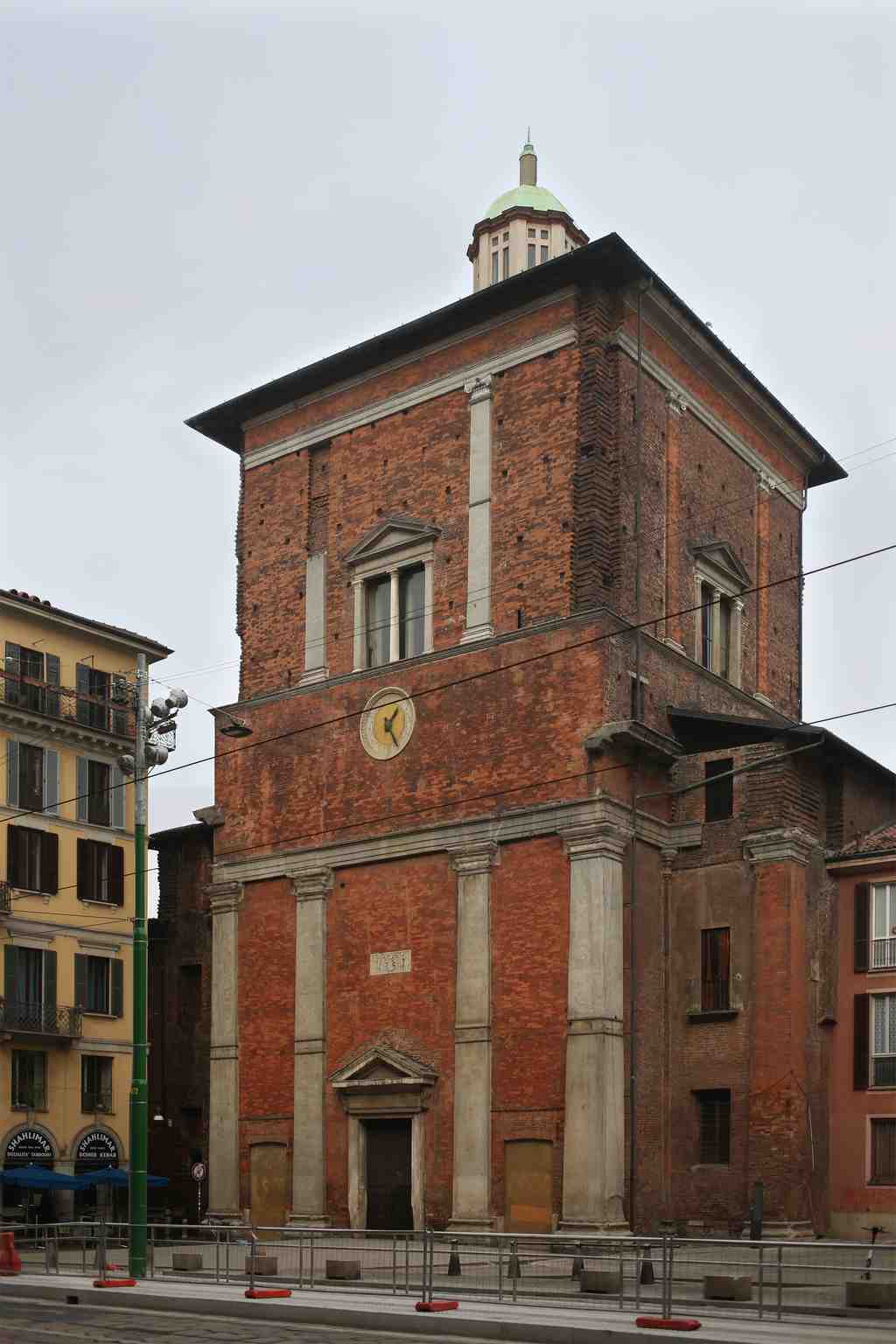
Otwórz dedykowaną stronę →Look ahead and you’ll spot a powerful block of red brick with pale columns and a dusty old clock, topped with a curious little octagonal lantern peeking above the roof-this is the…Czytaj więcejPokaż mniej
Look ahead and you’ll spot a powerful block of red brick with pale columns and a dusty old clock, topped with a curious little octagonal lantern peeking above the roof-this is the Basilica of San Nazaro in Brolo. Now, let’s imagine Milan in the year 386. Instead of the rumble of trams, you’d be hearing sandals slap against ancient Roman stone, while Bishop Ambrose, one of Milan’s most legendary figures, is deep in thought about two big topics: how to celebrate the resurrection of Jesus… and perhaps, how to stop his toga from getting caught in the wind. Back then, Ambrose decided to build a church so bold, so new, that to enter it was to walk straight into a symbol-quite literally-of faith, laid out in the shape of a cross. This church, the Basilica of San Nazaro in Brolo, became the oldest “Latin cross” church in Western art, its shape chosen to honor the resurrection. When the walls first rose, Milan was the proud capital of the Western Roman Empire. The basilica stood beyond the protective city walls, right alongside the Via Porticata, a grand, column-lined road marching all the way to ancient Rome. Out there, travelers would spot a row of columns-one of which survives, built right into the basilica-with four more standing out back, like ancient sentinels, quietly reminiscing about Roman days gone by. But Milan is a city that loves drama, and so did this basilica. In 1075, a massive fire swept through and left these stones charred and shaken. Like a phoenix in Romanesque style (well, with a lot more scaffolding and fewer feathers), the church was rebuilt with solid vaults, a mighty octagonal dome, and sturdy bell tower. And as all good Milanese buildings seem to do, it changed with the fashions: Renaissance nobles came along, slapping a brand-new hat on the church-the grand Mausoleum Trivulzio designed by Bramantino-in the 1500s. If you’re wondering why the original church seems a little shy, well, that mausoleum covers its original face like an elaborate Venetian mask. It’s a marriage of Renaissance elegance and old Roman stone, and if these walls had in-laws, they’d probably be arguing about who gets credit for the architecture. The name “Brolo”? That’s a leftover from Milan’s medieval municipal politics: the basilica took its name from the Broletto Vecchio, the city’s original seat of government, which once sprawled just beside it, before palace politics moved on elsewhere. Inside, you’d find treasure upon treasure: the right transept holds a vivid scene of the Crucifixion, carved by Bonino da Campione in the 14th century, and just opposite, Bernardino Lanino’s Renaissance vision of the Last Supper. A staircase takes you to the beautiful Chapel of Saint Catherine, glowing with Renaissance art and a ceiling dome inspired by Brunelleschi and Bramante-two architects who never met a dome they didn’t like. The basilica is layered with secrets-walk the cloister-like shadows and you’re tracing the footsteps of Roman funerals, medieval bishops, kneeling emperors, and all the saints whose relics Ambrose tucked beneath the altar. In the ground under the basilica, archaeologists have uncovered ancient stones and mosaics dating back to those earliest days. There are even glimpses of frescoes from the 7th and 8th centuries-tiny time machines painted right onto the walls. You’re standing in front of nearly 1700 years of religion, politics, art, and even a touch of Renaissance family drama. Don’t forget to ponder the old clock and those somber bricks-they’ve seen more chapters of Milanese mischief and miracle than you could fit in a dozen guidebooks. And if you hear the church organs practicing, that’s just the next echo of a building that’s been performing history for centuries.
Otwórz dedykowaną stronę →
Pokaż jeszcze 11 przystankówPokaż mniej przystankówexpand_moreexpand_less
Here you are, right by the mysterious remains of the Crypt of San Giovanni in Conca, nestled in the heart of Piazza Missori. Imagine yourself standing where emperors, artists, and…Czytaj więcejPokaż mniej
Here you are, right by the mysterious remains of the Crypt of San Giovanni in Conca, nestled in the heart of Piazza Missori. Imagine yourself standing where emperors, artists, and even a few overambitious city planners once left their mark! Picture the scene some 1,500 years ago, when the early Christian community decided to build a basilica here, at a time when Milan’s skyline was ruled by Roman domes and the chariots made more noise than modern traffic. Back then, the ground you’re standing on dipped gently, forming a hollow, or a “conca.” Naturally, the basilica took its name from this curious dip in the landscape-a setup that would later save parts of the crypt from utter destruction. If the place feels ancient, it’s because you’re literally standing at one of the last two original Romanesque crypts in Milan, a survivor from the chaos of centuries. In its earliest days, this was the Basilica Evangeliorum, dedicated to the powerful family of evangelists-no single saint got all the glory back then. Over the years, though, the honor narrowed down and the church took St. John the Evangelist as its patron, most likely because he seemed less likely to complain about all the renovations. Fast forward to the 11th century, when Milan was a battlefield of power and faith. The basilica you see the remains of was rebuilt with elegant Romanesque arches after an enthusiastic visit from Frederick Barbarossa left parts of the city, including this church, a little worse for wear. Yet, the basilica was constantly reborn: rebuilt after sieges, expanded for noble families, and freshened up in the 16th century, when the Carmelite monks moved in and jazzed up the façade with all the flair of the Renaissance. I mean, who doesn’t like a little Baroque makeover? The Visconti lords were so taken by the church’s beauty that they just moved right in, making it a private family chapel in the 14th century. Between frescoed walls and chandeliers, Bernabò Visconti and his wife Beatrice Regina della Scala found their final resting places here-but not exactly after living happily ever after. Let’s just say that Bernabò’s life had a dramatic, poisoned-tasting end, thanks to an ambitious nephew. Imagine high medieval towers, monks chanting, and above all, secrets swirling in the crypt below. The crypt itself holds marble fragments and ancient sarcophagi, including one heroic warrior, forever flexing his muscles in a toga-not quite the Roman equivalent of a gym selfie, but close. There’s even a fragment of a marble floor, its elegant black and white hexagons and triangles speaking for the style of the old basilica. Among the treasures once here: rare Roman mosaics unearthed during 19th-century excavations, and a collection of funerary inscriptions that hint at powerful, long-forgotten Milanese nobles. At one point, the church’s bell tower was used not just to call for prayers, but as an astronomical observatory-imagine a monk balancing a telescope, probably wishing for a coffee break. But just when you think this place had seen it all, along came the 20th-century planners, and with courtesy typical of the era, declared that the basilica was “in the way” of modern traffic schemes. Between 1948 and 1952, the grand church was sacrificed to the car-leaving only the crypt and a stubby piece of apse behind, with the lovely old façade moved brick by brick to another part of town. Talk about a church on the move! So, here you are, face to face with Milan’s ancient resilience-decorated capitals, haunting sarcophagi, and marble fragments that outlasted emperors, poisons, and bulldozers. If you listen closely, this crypt has more stories than you could ever fit into a 21st-century city block. And one thing’s for sure: Milanese history isn’t just set in stone-it sometimes gets up, dusts itself off, and finds a new place to stand. If you're curious about the description, historical testimonies of san giovanni in conca or the image gallery, the chat section below is the perfect place to seek clarification.
Otwórz dedykowaną stronę →Right in front of you stands the grand Palazzo Carminati, easy to spot with its elegant, pale pink facade lined with tall windows, vertical columns, and intricate stone pinnacles…Czytaj więcejPokaż mniej
Right in front of you stands the grand Palazzo Carminati, easy to spot with its elegant, pale pink facade lined with tall windows, vertical columns, and intricate stone pinnacles along the roof-just look directly across the square from the Duomo and you can’t miss it! Now, picture yourself in the buzzing heart of Milan, right here in Piazza del Duomo, where Palazzo Carminati has been turning heads since the late 1800s. Back then, it all started with a wealthy silver magnate named Giacomo Cesati, who wanted to make a statement with his new palace. The building itself has an irregular shape, split in two by the so-called "Passaggio Duomo," a hidden passageway that links this lively piazza to the bustling Via Orefici behind. Its facade is truly a Milanese fashion show: elegant plaster, high vertical pilasters, windows crowned with sharp triangular pediments, and a rooftop trimmed with stone pinnacles like icing on a cake. But don’t bother sneaking around the back-the rear side used to face a shabby alley and got no fancy decorations! The real magic, though, started in the 20th century. That’s when giant illuminated signs burst onto the facade, lighting up the square and turning the building into Milan’s symbol of modern, commercial life. The neon glow became so iconic it even inspired poetry-Umberto Saba wrote about these lights! Imagine the roaring 1920s, then fast-forward to the swinging ‘60s, and there’s a cheerful TV ad: right here, Ernesto Calindri calmly sipping Cynar in the chaotic square, the dazzling billboards behind him claiming to protect him from “the stress of modern life.” At one point, there were grand plans to put a massive new fountain in front, but they never happened-lucky for us, or you wouldn’t have this perfect view! In 1999, Milan decided it wanted a cleaner look and took down all those signs, ending an electrifying era. Today, this palace keeps a little of that glitz in its stones, a reminder that Milan loves to dress up-day or night!
Otwórz dedykowaną stronę →Let’s set the stage: It’s the dawn of the 17th century, and Milan is buzzing under Cardinal Federico Borromeo’s leadership. As a man obsessed with knowledge (and possibly with the…Czytaj więcejPokaż mniej
Let’s set the stage: It’s the dawn of the 17th century, and Milan is buzzing under Cardinal Federico Borromeo’s leadership. As a man obsessed with knowledge (and possibly with the world’s largest shopping list for rare manuscripts), the Cardinal sent agents scrambling across Europe and the Mediterranean. Imagine these emissaries, hats askew, dodging stormy seas-and stormier monks-on a quest for forgotten tomes in dusty monasteries. Sometimes, a whole monastic library was traded for piles of “modern” books. Somewhere, an Irish monk might have traded away Cicero's lost speeches for the latest, hottest news from 1608… like a 17th-century Netflix swap! Inside, picture a vast reading hall, bathed in the cool light of those towering semicircular windows. Instead of books chained to tables-a strict rule in medieval libraries-the Cardinal insisted books be shelved safely behind brass grills, ringing the high, coved ceiling. That’s right! Here, you could actually take down a book and read it. Take that, Florence! By 1609, this was one of the very first public libraries in Europe. They even had a printing press and a literal school for classical languages. So, if, say, you wanted to learn Greek, spot an original copy of Homer, and gossip about Lucrezia Borgia’s love life (her “prettiest love letters in the world” are here), this was Milan’s go-to hangout. The collection rapidly grew thanks to agents with nerves of steel: braving pirates in the Adriatic, charm-thieving Venetian auctioneers, and locals in Corfu who really didn’t want outsiders poking around their manuscripts. At one point, the Cardinal’s man in Corfu paid for Greek manuscripts by the pound, like rare cheese. “How much for that Iliad?” “A few extra pounds, grazie!” Some items arrived with stories worthy of a blockbuster. When they acquired Gian Vincenzo Pinelli’s Paduan collection, pirates on the Adriatic nearly made off with the best volumes before most of the library finally limped into Milan. And what treasures! Leonardo da Vinci’s own Codex Atlanticus, bursting with doodles, inventions, and possibly plans to win Milan’s bake-off with a better bread-slicing machine. There are ancient love letters, a Homer from the fourth century, and, somewhere in a dusty corner, a copy of Dante’s Divine Comedy from the 1300s. Even the mysterious Muratorian Fragment-oldest example of a Biblical canon-calls this place home. The drama didn’t end there: Napoleon’s troops grabbed Leonardo’s notebooks and a bizarre aerial screw invention, spiriting them away to Paris-never entirely returned. In World War II, bombs crashed through the roof, leaving charcoal echoes-but thanks to an urgent evacuation, almost all the priceless volumes escaped. Artists, popes, and poets all passed through these doors. Lord Byron, always the romantic, tried to steal a lock of Lucrezia Borgia’s hair on his visit. Mary Shelley arrived later, hoping for mischief, but security was tight-apparently, after a recent theft, touching the relics would get you the stern librarian’s glare of doom. So many languages echo here: Latin and Greek, sure, but also Arabic, Hebrew, Turkish-even a Japanese book hand-printed in 1596! Every manuscript whispers part of a forgotten world. Sometimes, if you listen closely, it’s as if the rustle of vellum and the murmur of readers-maybe even Cardinal Borromeo himself-still float through the air. So take a look at those walls and windows-if only books could talk, the stories would fill every street in Milan. And if you suddenly crave a good mystery or a centuries-old scandal, you’ll know exactly where to go next. Yearning to grasp further insights on the background, building or the collection? Dive into the chat section below and ask away.
Otwórz dedykowaną stronę →In front of you stands the Basilica of San Lorenzo, easy to spot by its grand, pale stone façade with three arched entrances, a domed octagonal tower rising high above, and…Czytaj więcejPokaż mniej
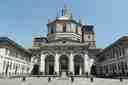
In front of you stands the Basilica of San Lorenzo, easy to spot by its grand, pale stone façade with three arched entrances, a domed octagonal tower rising high above, and flanked by two imposing old brick towers-don’t confuse it with any ordinary church, this one is truly monumental. Alright, picture yourself right here in Milan almost 1,600 years ago, when emperors strolled these very streets, and the city’s fate teetered between glory and disaster with the breeze. This basilica was built back when Milan was called Mediolanum and was actually the capital of the Western Roman Empire-no small deal! While most other churches brag about their Gothic spires or their fancy decorations, San Lorenzo stands out with its massive octagonal dome. Back in late antiquity, around the year 400, architects here weren’t just constructing another church, they were making architectural history; this is one of the earliest centrally-planned churches in Western Christianity. Imagine the city bustling with Romans, horse carriages bouncing over the cobbles, and priests whispering prayers in echoing Latin beneath these very stones. The basilica’s story is a true soap opera, complete with disasters, miracles, and rebuilds. In the Middle Ages, San Lorenzo survived not one, not two, but three massive fires! The roof and dome collapsed several times-talk about a leaky problem-and for centuries, Milanese builders raced to patch up the damage. Sometimes it felt like the basilica had more lives than a cat. During one rebuild in the Renaissance, the dome fell again in the middle of a religious ceremony-thankfully, nobody lost their head, literally or figuratively. These non-stop repairs did have a funny side effect: every grand architect who was anybody, from Bramante to Leonardo da Vinci, stopped by to study the place. Bramante even took inspiration from its central plan when he started dreaming up the first designs for St. Peter’s Basilica in Rome! Now, let’s look a little closer at the building’s curious shape. The church’s floor plan is a tetraconch-don’t worry, that’s just a fancy way to say it’s built around a central square with four grand apses sticking out like the points of a compass. This bold design was so impressive that Renaissance scholars and artists traveled here just to figure out how such a huge dome could sit on such an unusual base. Milan’s river of ideas brought in influences from across the ages: you’ll find ancient Roman columns outside-those tall pillars in front called the Columns of San Lorenzo-looted from a Roman temple that once stood nearby. But wait, it gets more mysterious. Urban legends once claimed this very spot was haunted by unlucky pagan spirits after an ancient temple to Hercules supposedly burned to the ground. Some said Emperor Maximian had a hand in building it, others swore the mausoleum of Galla Placidia, that legendary imperial princess, was hidden under the church. None of this was ever proved, but the real secret was found only two centuries ago, when archeologists discovered the stone foundations had clearly been set right after the year 390, using leftover blocks from the demolished Roman amphitheater nearby. Now that’s what I call eco-friendly recycling! Inside, the basilica keeps its time-traveling credentials strong. Two of its oldest chapels-the octagonal Sant’Aquilino and Sant’Ippolito-hide pieces of the earliest Christian mosaics and colored marbles, with Christ and his apostles peeking at you from the walls. The air in those chapels is thick with centuries of incense, marble cool under your fingertips. During a stormy year in 1585, a miracle was said to have happened: a sick woman was cured in front of a painting of the Madonna, and soon enough, donations flooded in to save the crumbling basilica once again. So as you stand right here, you’re in the company of emperors, ancient architects, curious Renaissance geniuses, and more than a few heroic Milanese repairmen. Next time your roof leaks, just remember: in Milan, a collapsed dome is just another chapter in a never-ending story! Yearning to grasp further insights on the the early christian remains, architecture or the ordinaries' ordinaries? Dive into the chat section below and ask away.
Otwórz dedykowaną stronę →You’ll spot the Diocesan Museum by looking for a modest brick building with a modern entrance, nestled among leafy trees, and marked with big round logos that say “Museo…Czytaj więcejPokaż mniej
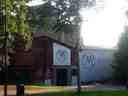
You’ll spot the Diocesan Museum by looking for a modest brick building with a modern entrance, nestled among leafy trees, and marked with big round logos that say “Museo Diocesano.” Now, imagine you’re standing where the gentle hum of nature mixes with the city breeze, the dappled sunlight sliding through tree branches and glancing across centuries of history-welcome to the Diocesan Museum of Milan! This place isn’t just a museum; it’s like Milan’s treasure chest, and you’ve got the keys for the day. Don’t worry, I checked-no booby traps or rolling boulders… although keep an eye out for enthusiastic art lovers! The story of this museum actually stretches far deeper than its walls. Dreamed up back in 1931 by the Blessed Ildefonso Schuster, a cardinal who really loved his job, the idea was simple: protect and celebrate the artistic riches created for Milan’s churches, and let everyone enjoy them. It took a few decades (you know how Italian construction can be), but finally, in 2001, thanks to Cardinal Carlo Maria Martini, the museum opened right here, in the restored cloisters of the old Dominican convent at Sant’Eustorgio. Can you feel the centuries under your feet? During World War II, this whole spot was battered, nearly silenced by bombings, but like a phoenix covered in art supplies, it’s come roaring back, full of color and stories. Picture the bustling convent life, monks shuffling by with secret sourdough recipes, then flashes of destruction during the war, now replaced by the peaceful flow of people eager to witness beauty. It’s not just old paintings and sculptures-it’s a place that blends faith, resilience, and one seriously impressive art collection. Inside, you’ll find a journey through twelve different sections, almost like a spiritual scavenger hunt. The entrance corridor welcomes you with three massive Flemish tapestries showing adventures of Emperor Constantine-imagine all the drama of a Netflix series, but from the 1600s and stitched in wool! The next room breathes the story of Sant’Ambrogio, Milan’s famous bishop and city protector, whose presence shaped everything from church doctrine to local bakery hours. Among the treasures is his fourth-century bier, where, legend says, his body rested before being laid to eternal rest-talk about a VIP lounge. Then, just beyond, you’ll discover masterpieces torn straight from the canvas of Lombard history: Michelino da Besozzo’s “Corteo dei Magi” parades in vibrant color, while the haunting “Crocifissione” by Anovelo da Imbonate quietly invites you to contemplate fate and faith. These works have journeyed from humble parishes and grand cathedrals all across Milan, united here to tell their stories together-like a family reunion, but with less awkward small talk and more jaw-dropping artistry. And don’t let anyone fool you-the church knew how to throw a party. In the Arciconfraternita hall, there are paintings of Eucharistic miracles that once adorned the Duomo for Corpus Domini celebrations. Imagine the spectacle: miracles flying left and right, saints and angels everywhere... it must have been a feast for the senses (and hopefully the caterer wasn’t late). For a touch of bling, the liturgical furnishings display everything from glittering reliquaries to silver chalices. Some are so fancy, you almost expect Milan’s fashion week to strut right out of the past. There’s even a golden book cover from the Delfinoni workshop that would put any modern influencer’s accessories to shame! The museum also hosts a parade of private collections from Milan’s great archbishops, packed with paintings by Italian masters, rare treasures from Tuscany and beyond. There’s a surrealist twist too: works by Ambrogio Magnaghi, and even dramatic, slashed sculptures by Lucio Fontana, who designed major doors for the Duomo itself. For a little art-world mystery, keep an eye out for works by big names like Van Gogh or Delacroix, tucked here almost as if by magic-or testamentary whim. So as you stand here, feel the heartbeat of faith and creativity, survive a few art history riddles, and maybe, just maybe, pick up inspiration for your next doodle. Ready to open the next chapter of Milan’s story? Let’s head onward!
Otwórz dedykowaną stronę →Right in front of you, you’ll see two sturdy stone towers joined by a brick wall with arched gateways and medieval battlements running along the top-look directly toward the…Czytaj więcejPokaż mniej
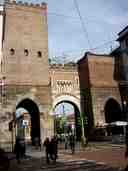
Right in front of you, you’ll see two sturdy stone towers joined by a brick wall with arched gateways and medieval battlements running along the top-look directly toward the broad, fortress-like entrance with smaller stone arches on either side, and you can’t miss the unmistakable outline of Milan’s Medieval walls. Welcome to one of Milan’s best time machines! These old stones have seen more drama than a soap opera and held more secrets than a magician’s hat. Picture Milan in the year 1156-a city bracing itself for war, with worries as heavy as the walls before you. Back then, it was more swords and shields than designer handbags and aperitivos. The city’s Roman walls had just been smashed by the legendary emperor Frederick Barbarossa during a siege that tore through Milan in 1162. Ouch, that’s what you call a bad day for city planning. So how do you recover? You call in a military engineer-Guglielmo da Guintellino, an absolute whizz from Genoa. With a magician’s flair and probably quite a few tired workers, Guglielmo oversaw the creation of a defensive barrier that was wider, longer, and-well, muddier than before. These fortifications weren’t made from shining marble or mountain stone. Milan sat far from any good rockpiles, so the workers dug deep and piled up whatever earth they found-then braced it with wooden palisades and built lookout towers from timber. The city’s rivers were recruited, too. The Seveso and the Pudiga were cleverly diverted to fill the new moats, their waters flowing in broad ditches around the city. You weren’t just protected from invading armies-you had city-sponsored water features, centuries before that became trendy. But no wall lasts forever, especially with pesky things like gunpowder arriving on the scene. The invention of cannons and better siege weapons in the 16th century made these earth and wood fortresses a bit like trying to ward off a thunderstorm with an umbrella. So, the medieval walls were eventually replaced by the mighty Spanish walls, built entirely in solid stone. Yet, in their heyday, these walls traced a great circle, hugging Milan like a giant protective arm, broken only by gates and smaller pusterle that opened the way to other towns-names you can still spot across the city if you know where to look. There was Porta Romana, where statues kept watch over travelers; grand Porta Nuova with its double arch and traces of ancient portcullises; Porta Ticinese, still standing today with two robust towers; and lower pusterle, those little secret gates for locals and light traffic. Some of Milan’s grandest churches-Sant’Ambrogio, San Lorenzo, San Babila-were outside the walls, sparking the growth of lively settlements and trade. For centuries, the moats dug around these walls didn’t just defend the city-they hosted boats, turning the Cerchia dei Navigli into a network of watery streets where Milanese rowed and transported goods almost in the shadow of those battlements. You might say it was a city where your loaf of bread could travel by boat before you ate it. And if you’re hunting for traces of the past, you’re in the right spot: you can see the Porta Nuova here, dating all the way back to the 1100s, those lateral towers leaning forward as if to eavesdrop on today’s traffic. Around the city, other portals survive-Porta Ticinese with its square towers and single arch, and the remains of ancient walls along via San Damiano, almost hidden like secret bookmarks in Milan’s modern story. Even a carved she-wolf from the old Porta Orientale has dodged destruction and now perches on a building in Corso di Porta Venezia. The old moats? They were used for centuries and only finally covered over in the 1930s. These walls might be battle-scarred and battered, but they set the shape of modern Milan, tracing lines that later roads and neighborhoods still follow, proof that even the toughest defenses can end up charming pedestrians, cyclists, and the occasional digital tour guide like yours truly. So give these stones a wink-they survived emperors, engineers, and the occasional creative city planner. And they’re still standing, after nearly nine centuries of Milan’s highs, lows, reinventions, and aperitivo hours.
Otwórz dedykowaną stronę →


Najczęściej zadawane pytania
Jak rozpocząć trasę?
Po zakupie pobierz aplikację AudaTours i wpisz kod realizacji. Trasa będzie gotowa do natychmiastowego rozpoczęcia – po prostu dotknij \"Play\" i podążaj trasą z nawigacją GPS.
Czy potrzebuję internetu podczas trasy?
Nie! Pobierz trasę przed rozpoczęciem i korzystaj z niej w pełni offline. Jedynie funkcja czatu wymaga internetu. Zalecamy pobieranie przez WiFi, aby oszczędzać dane mobilne.
Czy to wycieczka grupowa z przewodnikiem?
Nie – to samodzielny audioprzewodnik. Zwiedzasz niezależnie, we własnym tempie, z narracją audio odtwarzaną przez telefon. Bez przewodnika, bez grupy, bez harmonogramu.
Ile trwa trasa?
Większość tras zajmuje 60–90 minut, ale to Ty kontrolujesz tempo. Wstrzymuj, pomijaj przystanki lub rób przerwy, kiedy chcesz.
Co jeśli nie zdążę ukończyć trasy dzisiaj?
Żaden problem! Trasy mają dożywotni dostęp. Wstrzymaj i wznów, kiedy chcesz – jutro, za tydzień lub za rok. Twój postęp jest zapisywany.
W jakich językach są dostępne trasy?
Wszystkie trasy są dostępne w ponad 50 językach. Wybierz preferowany język podczas realizacji kodu. Uwaga: języka nie można zmienić po wygenerowaniu trasy.
Gdzie znajdę trasę po zakupie?
Pobierz darmową aplikację AudaTours z App Store lub Google Play. Wpisz kod realizacji (wysłany e-mailem), a trasa pojawi się w Twojej bibliotece, gotowa do pobrania i rozpoczęcia.
Jeśli trasa Ci się nie spodoba, zwrócimy Ci pieniądze. Skontaktuj się z nami pod adresem [email protected]
Bezpieczna płatność przez 


