
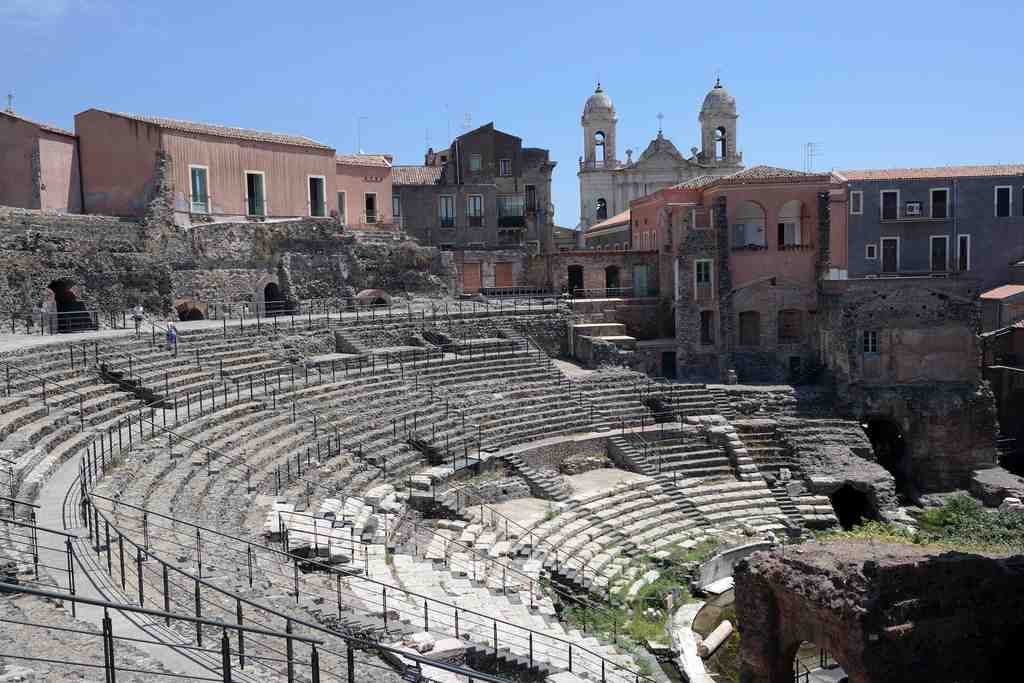
A potem nadeszło długie niszczenie. W XI wieku hrabia Roger nakazał robotnikom zerwać szlachetny marmur, kolumny, a nawet bloki lawy z teatru, aby pomóc w budowie katedry św. Agaty. Tak więc część piękna utraconego tutaj pojawiła się po cichu w kościele, który odwiedziliśmy wcześniej. Do VI i VII wieku teatr wyszedł już z użycia. Zamieszkały w nim rodziny. Korytarze zamieniły się w pokoje. Orchestra służyła nawet jako plac rzeźni bydła. Później okolicę wypełniły opowieści o zakopanych skarbach i tajnych tunelach prowadzących do ośrodków władzy. Archeolodzy nigdy nie znaleźli tych przejść, ale opowieść mówi coś prawdziwego: pokolenia wiedziały, że to miejsce kryje w sobie więcej, niż pokazuje.
To, co najbardziej mnie porusza, to ludzki wymiar odzyskiwania tego miejsca. Bombardowania podczas II wojny światowej rozerwały gęsto zabudowaną dzielnicę nad teatrem, a archeolog Guido Libertini wykorzystał te bolesne wyrwy, aby odsłonić starożytne siedzenia. Późniejsze zespoły kontynuowały wykopy, ale zrobiły też coś delikatniejszego: zdecydowały się zachować niektóre młodsze domy zbudowane nad monumentem, dzięki czemu teatr może opowiadać historię rzymskiej Katanii oraz rodzin, które mieszkały tu wieki później.
Jeśli chcesz odwiedzić wnętrze później, obiekt jest zazwyczaj otwarty codziennie od dziewiątej rano do siódmej wieczorem.
Ten teatr wydaje się mniej ruiną, a bardziej miastem uczącym się pamiętać o sobie.
Kiedy będziesz gotowy, ruszaj dalej w stronę kościoła św. Franciszka z Asyżu przy Niepokalanym Poczęciu.
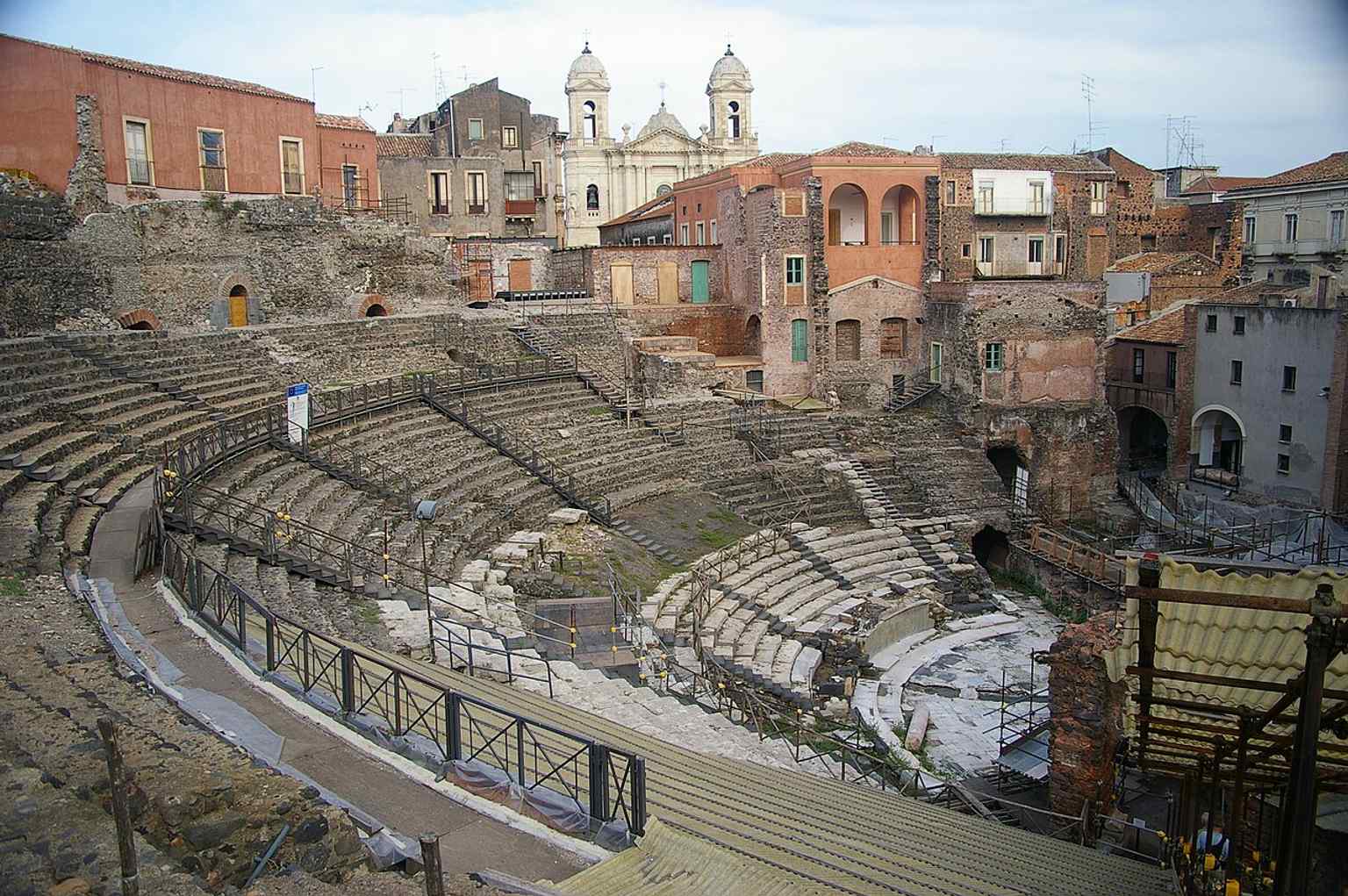
And then came the long unmaking. In the eleventh century, Count Roger ordered workers to strip fine marble, columns, and even lava blocks from the theater to help build the Cathedral of Sant’Agata. So some of the beauty lost here quietly reappeared in the church we visited earlier. By the sixth and seventh centuries, the theater had already slipped out of use. Families settled into it. Corridors turned into rooms. The orchestra even served as a cattle butcher’s yard. Later, people filled the neighborhood with stories about buried treasure and secret tunnels running toward seats of power. Archaeologists never found those passages, but the tale says something true: generations knew this place held more than it showed.
What moves me most is how human the recovery was. Bombing in the Second World War tore open the crowded quarter above the theater, and archaeologist Guido Libertini used those painful gaps to uncover the ancient seats. Later teams kept excavating, but they did something gentler too: they chose to preserve some younger houses built over the monument, so the theater could tell the story of Roman Catania and of the families who lived here centuries later.
If you want to visit inside later, the site generally opens every day from nine in the morning to seven in the evening.
This theater feels less like a ruin than a city learning to remember itself.
When you’re ready, continue on toward the Church of Saint Francis of Assisi at the Immaculate Conception.





