
Wycieczka audio po Yogyakarcie: Dziedzictwo i najważniejsze atrakcje
Pomnik ze złotym szczytem wznosi się o świcie, lśniąc nad ulicami, które niegdyś rozbrzmiewały echem rewolucji i intryg. Historia Yogyakarty ukryta jest na widoku – wyryta w potężnym Tugu, szeptana wzdłuż elektryzującego odcinka Jalan Malioboro i zamknięta w zniszczonych murach fortu Vredeburg. Podczas tej samodzielnej wycieczki audio odkryjesz barwne opowieści i tajemne zakątki pomijane przez zwykłych turystów. Gdzie pałacowa władza gwałtownie starła się z kolonialnymi ambicjami? Jakie nierozwiązane zagadki kryją się w cieniach cel Vredeburga? I który huczny nocny festiwal niemal na zawsze zmienił Malioboro? Przenieś się w czasie pod starożytnymi łukami i na tętniących życiem nocnych targach. Poczuj, jak każdy krok budzi duchy rebeliantów, arystokracji, artystów i zwykłych marzycieli. Na koniec podróży zobaczysz Yogyakartę jak nigdy dotąd – miasto pulsujące dramatyzmem i ukrytymi cudami. Kolejny rozdział czeka pod lśniącym złotem Tugu. Naciśnij odtwarzaj, aby odkryć jego sekrety już teraz.
Podgląd trasy
O tej trasie
- scheduleCzas trwania 30–50 minsIdź we własnym tempie
- straighten4.1 km trasy pieszejPodążaj wyznaczoną trasą
- location_onLokalizacjaYogyakarta, Indonezja
- wifi_offDziała offlinePobierz raz, korzystaj gdziekolwiek
- all_inclusiveDożywotni dostępOdtwarzaj ponownie w dowolnym momencie
- location_onStart przy Tugu Yogyakarta
Przystanki na tej trasie
Tugu Yogyakarta was built way back in 1755 by Sri Sultan Hamengkubuwono I. Originally known as Tugu Golong-Gilig, it was a round-topped monument symbolizing unity. The monument…Czytaj więcejPokaż mniej
Tugu Yogyakarta was built way back in 1755 by Sri Sultan Hamengkubuwono I. Originally known as Tugu Golong-Gilig, it was a round-topped monument symbolizing unity. The monument was quite the tall one, standing proud at 25 meters. That’s like stacking about 14 of those cartoonishly tall top hats on top of each other! Now, one day the earth decided to do a little dance-also known as an earthquake-in 1867, and down the mighty monument toppled. But don’t worry, like a phoenix rising from the ashes (or more like a monument rising from the rubble), it was rebuilt by the Dutch colonial government in 1889. They gave it a makeover, changing its shape and reducing its height to 15 meters. Think of it as Tugu Yogyakarta 2.0! One quirky feature is that the monument was originally aligned with the southern sea, the Yogyakarta palace, and Mount Merapi. It’s like the Sultan had his own GPS system! Speaking of meditation, legend has it that the Sultan used the monument to get his Zen on while facing Mount Merapi. Talk about having a majestic meditation spot! In 2012, the monument got another snazzy update with 22-carat gold ornamental paintings. Bling, bling! Now, it’s more than just a monument; it’s a symbol of history, unity, and resilience. Feel free to snap some pictures, and don’t forget to give a nod to its golden top. Shall we march on to our next stop? Let's head over to Jalan Malioboro!
Otwórz dedykowaną stronę →Running north-south, this street connects the Kraton (royal palace) to Mount Merapi, which aligns with local beliefs and traditions. It's like the Yogyakarta version of a…Czytaj więcejPokaż mniej
Running north-south, this street connects the Kraton (royal palace) to Mount Merapi, which aligns with local beliefs and traditions. It's like the Yogyakarta version of a perfectly aligned selfie! Why? Because everything happens here! From hotels to restaurants to shops, Jalan Malioboro is a hub of bustling activity. The sidewalks are buzzing with small stalls selling everything from batik clothes to quirky souvenirs. If your suitcase was looking a little empty when you arrived, it won't be by the end of your stroll. And it gets even better in the evening! Prepare your taste buds for a treat with the open-air street restaurants called "lesehan." Picture yourself sitting on mats, enjoying local food under the stars. Trust me, the atmosphere is magical. Also, keep your eyes and ears open for street performers. Musicians, painters, and performers turn this street into their stage. You might just catch the next big star before they become famous. On the northern end, you'll find the historic Hotel Garuda, now known as the Grand Inna Malioboro. It's like staying where history hangs out. And for those who love a bit of historical irony, back in the day, the street had an advertisement that played on the name 'Malioboro' and 'Marlboro'-how’s that for a cheeky bit of marketing? Lastly, don’t miss the side streets and alleys branching off, as they hold as much charm and importance as the main street itself. And if you’re around for the Malioboro Night Festival, well, lucky you! It's a vibrant circus of live music, traditional arts, and yes, even fashion shows. Fun fact, there are three bus stops along Jalan Malioboro, so if you ever get lost, just remember: every bus stop is a step closer to another adventure! So go on, explore, shop till you drop, and remember, the magic of Yogyakarta truly starts here. Enjoy your stroll down Jalan Malioboro, where every corner tells a story!
Otwórz dedykowaną stronę →Originally built in 1760 at the request of Dutch governor Nicolaas Harting, the fort was constructed on land provided by Sultan Hamengkubuwono I. The initial fort was a relatively…Czytaj więcejPokaż mniej
Originally built in 1760 at the request of Dutch governor Nicolaas Harting, the fort was constructed on land provided by Sultan Hamengkubuwono I. The initial fort was a relatively simple structure made of wood, with four bastions, or, in simpler terms, four corners where they could look out and say, “Hey, who's that approaching?” Fast forward to 1767, and the wooden fort gets a major makeover, becoming a more permanent structure supervised by Dutch architect Frans Haak. Then in 1787, it got a new name: Fort Rustenburg, meaning "resting fort," which sounds almost like a spa for soldiers! But hold your horses (or cannons)! In 1867, an earthquake decided the fort needed another makeover and completely destroyed it. When it was rebuilt, it was renamed Fort Vredeburg, or "peace fort," which given its history, may have been a bit optimistic! During World War II, the Japanese took over the fort, turning it into a headquarters and prison. After Indonesia declared independence in 1945, the fortress served as a military post, barracks, and later, a prison for suspected communists. In 1947, a pivotal event occurred here honoring the 40th anniversary of Budi Utomo. Ki Hadjar Dewantara suggested converting the fortress into a cultural institution. The fort then embarked on another chapter as major renovations were completed in 1982. By 1992, it officially opened as a museum chronicling Indonesia's struggle for independence. Now, Fort Vredeburg Museum boasts an impressive collection of old photographs, historical artifacts, and dioramas. These dioramas turn history into three-dimensional scenes that immerse you in events from the capture of Pangeran Diponegoro in 1830 to Sukarno's return in 1949. So, whether you’re a history buff or just here for the Instagram shots, Fort Vredeburg has something for everyone. Ready to march on to the next stop? Onward!
Otwórz dedykowaną stronę →

Pokaż jeszcze 3 przystankówPokaż mniej przystankówexpand_moreexpand_less
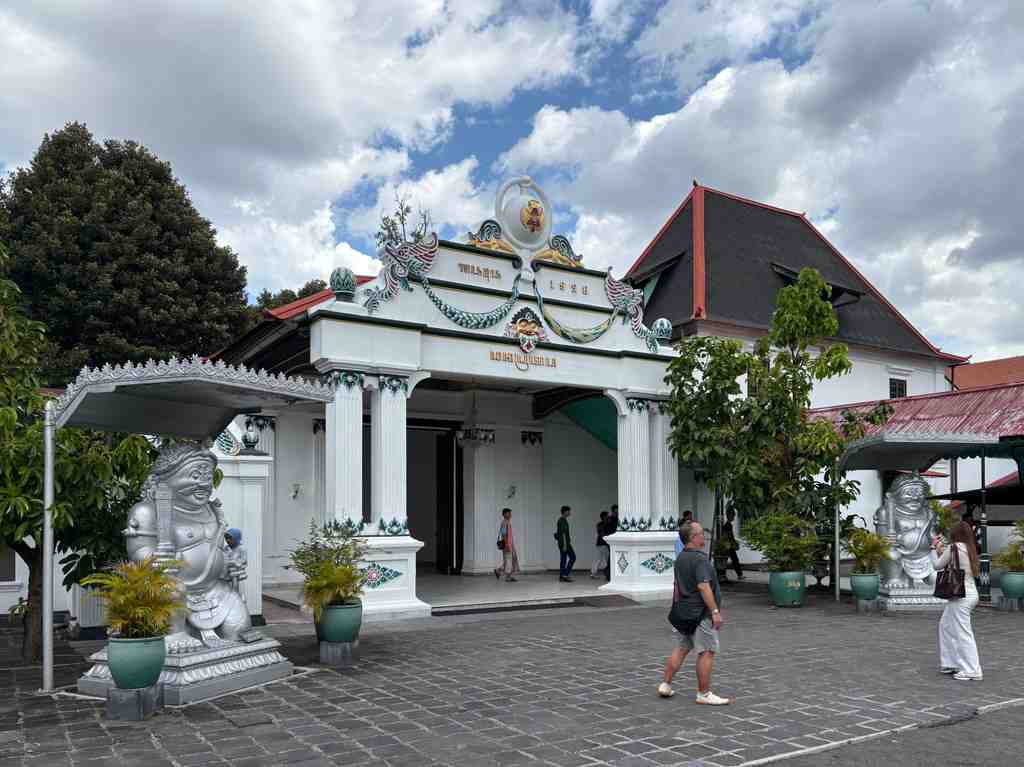
Built way back in 1755-1756 by Sultan Hamengkubuwono I, this place has seen it all. From the Treaty of Giyanti to battles with the British (who, by the way, left after realizing…Czytaj więcejPokaż mniej
Built way back in 1755-1756 by Sultan Hamengkubuwono I, this place has seen it all. From the Treaty of Giyanti to battles with the British (who, by the way, left after realizing they were more suited to tea times than ruling a Sultanate), this palace is a testament to resilience and grandeur. Think of it as Yogyakarta's very own royal soap opera, with a few earthquakes and rebuilds thrown in just to keep things interesting. The Kraton isn’t just a place where the Sultan and his family live; it’s a living, breathing center of Javanese culture. It even has its very own museum showcasing royal artifacts that scream “regal flair.” You might even get inspired to redecorate your living room! You’ll notice the architecture is a harmonious blend of traditional Javanese styles with a sprinkle of Portuguese, Dutch, and Chinese influences. It's like a multicultural architectural potluck! The buildings are mostly Joglo-style, which means they have trapezoidal roofs supported by central pillars, often in dark green or black adorned with gold highlights. A fashion statement that Madonna would be jealous of. The main courtyard is covered with sand from the south coast-talk about bringing the beach vibes home! And those sturdy walls? They're not just for show. They incorporate the Semar Tinandu style and even have insulating walls (Renteng or Baturono) with unique traditional ornaments. Don't miss out on the pillars and wooden elements, which are basically the palace's way of flaunting its royal bling. They match in color and are usually decked out with motifs of flora, fauna, or natural elements. And if you think the exterior is something, wait till you see the interior tiles or marble floors-it's like walking on a piece of art. Interestingly, the road leading up to the palace is lined with Tamarind and Spanish cherry trees, making it a grand entrance fit for a Sultan! Fun fact, Tugu Yogyakarta, which we saw earlier, symbolizes the unity between the Sultan and the people. It's like a big royal hug that brings everyone together. So, take it all in, and remember, you're not just visiting a palace; you're stepping into centuries of history, culture, and a bit of royal extravagance. Enjoy your royal stroll!
Otwórz dedykowaną stronę →Imagine this: over 200 years ago, you'd find a complex of four main areas. One part had a large artificial lake with islands and pavilions in the west, another had a bathing…Czytaj więcejPokaż mniej
Imagine this: over 200 years ago, you'd find a complex of four main areas. One part had a large artificial lake with islands and pavilions in the west, another had a bathing complex in the center, a set of pavilions and pools in the south, and a smaller lake in the east. Today, only the central bathing complex remains preserved. The rest has been taken over by the Kampung Taman settlement. Here's a fun fact: the name Taman Sari comes from Javanese words meaning 'beautiful garden'. And yes, it was as pretty as it sounds-filled with vibrant flowers and lush greenery. The Dutch even called it a "water castle" because, by shutting the water gates, the gardens could become immersed, transforming the area into a magnificent aquatic fortress. The construction began during the reign of Sultan Hamengkubuwono I and saw its completion under Sultan Hamengkubuwono II. The place was masterfully designed with European influences-thanks to Tumenggung Mangundipura's trips to Batavia (modern-day Jakarta) to study European architecture. The British invasion in 1812 caused significant damage to the structure, but don't let that dampen your spirits! The remaining buildings still reflect the beauty and grandeur of a time when the Sultan would come here to relax and meditate after a hectic war-filled life. You can almost imagine Sultan Hamengkubuwono I saying, "I need a break," and thus Taman Sari was born-a royal retreat for relaxation, with a dash of defense and a sprinkle of meditation. The relaxing pools, which once were maintained with intricate hydraulic works, are a beautiful reminder of the past. So, take a breath, imagine the splendor of bygone eras, and maybe splash a bit of imaginary water as you walk around. And remember, it's not just a water castle-it's a testament to royal ingenuity and a place where history floats beautifully! Yearning to grasp further insights on the etymology, buildings or the around taman sari? Dive into the chat section below and ask away.
Otwórz dedykowaną stronę →


Opinie
Najczęściej zadawane pytania
Jak rozpocząć trasę?
Po zakupie pobierz aplikację AudaTours i wpisz kod realizacji. Trasa będzie gotowa do natychmiastowego rozpoczęcia – po prostu dotknij \"Play\" i podążaj trasą z nawigacją GPS.
Czy potrzebuję internetu podczas trasy?
Nie! Pobierz trasę przed rozpoczęciem i korzystaj z niej w pełni offline. Jedynie funkcja czatu wymaga internetu. Zalecamy pobieranie przez WiFi, aby oszczędzać dane mobilne.
Czy to wycieczka grupowa z przewodnikiem?
Nie – to samodzielny audioprzewodnik. Zwiedzasz niezależnie, we własnym tempie, z narracją audio odtwarzaną przez telefon. Bez przewodnika, bez grupy, bez harmonogramu.
Ile trwa trasa?
Większość tras zajmuje 60–90 minut, ale to Ty kontrolujesz tempo. Wstrzymuj, pomijaj przystanki lub rób przerwy, kiedy chcesz.
Co jeśli nie zdążę ukończyć trasy dzisiaj?
Żaden problem! Trasy mają dożywotni dostęp. Wstrzymaj i wznów, kiedy chcesz – jutro, za tydzień lub za rok. Twój postęp jest zapisywany.
W jakich językach są dostępne trasy?
Wszystkie trasy są dostępne w ponad 50 językach. Wybierz preferowany język podczas realizacji kodu. Uwaga: języka nie można zmienić po wygenerowaniu trasy.
Gdzie znajdę trasę po zakupie?
Pobierz darmową aplikację AudaTours z App Store lub Google Play. Wpisz kod realizacji (wysłany e-mailem), a trasa pojawi się w Twojej bibliotece, gotowa do pobrania i rozpoczęcia.
Jeśli trasa Ci się nie spodoba, zwrócimy Ci pieniądze. Skontaktuj się z nami pod adresem [email protected]
Bezpieczna płatność przez 


