
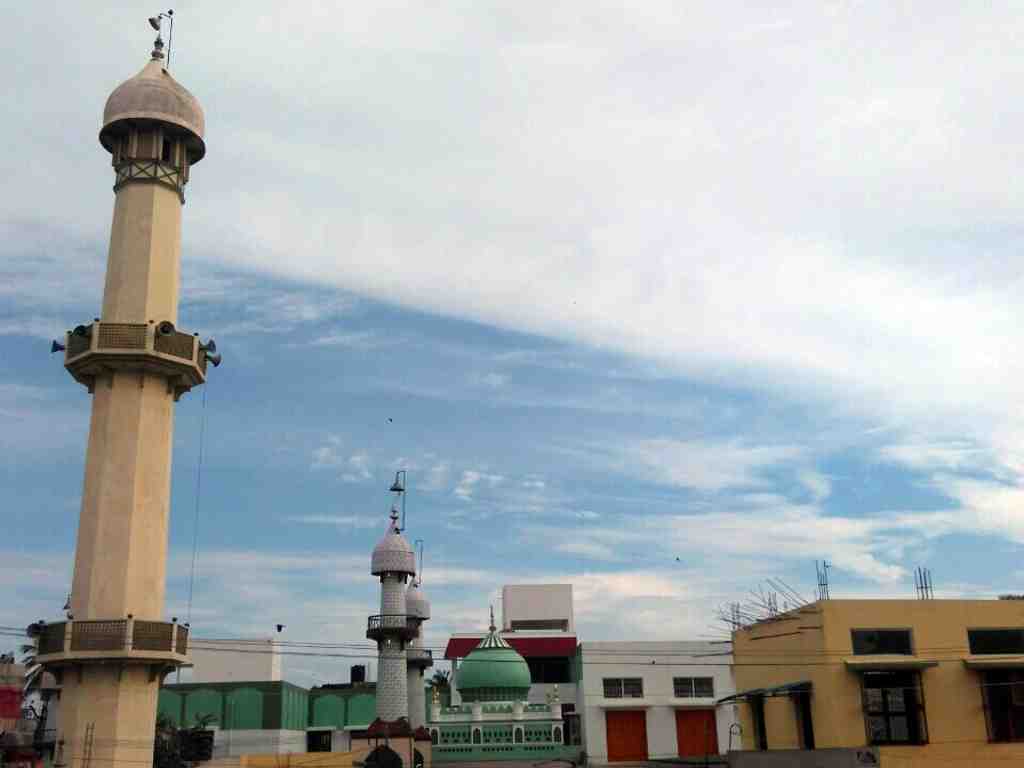
Wycieczka audio po Ćennaj: Wycieczka audio po majestatycznych meczetach Ćennaj
Miasto, w którym każdy róg ulicy szepcze sekrety minionych imperiów i zapomnianych intryg – Ćennaj to coś więcej, niż widać na pierwszy rzut oka. Wyrusz w podróż z audioprzewodnikiem przez ukryte meczety i kręte dzielnice, gdzie władza, poezja i rebelia odcisnęły trwałe piętno. Odkryj historie, które umykają większości turystów, przemierzając kamienne dziedzińce i ciche kopuły, w których rozbrzmiewają echa zakazanych modlitw i skandali politycznych. Dlaczego Kompania Wschodnioindyjska zajęła ziemie Bahrama Junga po nagłej zdradzie? Jaki stary sekret kryje się za królewskimi łukami Masjid-o-Anwari? I w jaki sposób dwaj bracia-budowniczowie są spleceni zarówno z duchowym dziedzictwem, jak i kolonialnym dramatem? Wędruj przez stulecia z każdym krokiem, śledząc wyblakłą chwałę, rywalizację i zapomniane marzenia mieniące się pod zgiełkiem nowoczesności. Pozwól, by każdy punkt orientacyjny zmienił sposób, w jaki Ćennaj odsłania przed Tobą swoje oblicze. Usłysz to, czego inni nigdy nie słyszą. Rozpocznij swoją wycieczkę po ukrytej historii już teraz.
Podgląd trasy
O tej trasie
- scheduleCzas trwania 30–50 minsIdź we własnym tempie
- straighten4.7 km trasy pieszejPodążaj wyznaczoną trasą
- location_on
- wifi_offDziała offlinePobierz raz, korzystaj gdziekolwiek
- all_inclusiveDożywotni dostępOdtwarzaj ponownie w dowolnym momencie
- location_onStart przy Meczet Hafiza Ahmada Khana
Przystanki na tej trasie
Pokaż jeszcze 3 przystankówPokaż mniej przystankówexpand_moreexpand_less
You are now standing at the Triplicane Big Mosque, also known as the Wallajah Mosque, located on Triplicane High Road in Chennai. This mosque, constructed in 1795, was built by…Czytaj więcejPokaż mniej
You are now standing at the Triplicane Big Mosque, also known as the Wallajah Mosque, located on Triplicane High Road in Chennai. This mosque, constructed in 1795, was built by the family of Muhammad Ali Khan Wallajah, the Nawab of Arcot. Designed in the Mughal architectural style, it features a large prayer hall, a tank, and a spacious ground in front. Remarkably, the entire structure was built using granite without the use of iron or wood. The mosque highlights a spirit of cultural harmony, as evidenced by the Nawab’s friendly relations with Hindus, even appointing a Hindu as his chief personal secretary. A Persian chronogram inscribed by Raja Makhhan Lal Bahdur Khirat, the Hindu Munshi of the Nawab, can be found at the entrance to the prayer hall. The Big Mosque is not only the largest in Chennai but also one of the oldest, remaining active as a place of worship today. It is administered by the Prince of Arcot Endowments Trust, with a significant number of its administrative staff being Hindus, reflecting peaceful coexistence between the two religions. Historically, the Nawab of Arcot was a staunch ally of the British and was granted Chepauk Palace for his administrative and military needs. When the Nawab moved to Chepauk in 1768, approximately 20,000 Rowther Muslims followed, forming one of the largest Muslim communities in South India after Hyderabad. The Nawab had judicial control over the region, with all cases adjudicated under Muslim Law. This mosque’s construction added to the rich cultural tapestry of Triplicane, which was already home to the renowned Hindu Parthasarathy Temple and the Portuguese Christian stronghold of San Thome. Over time, modifications were made to the mosque, including the addition of golden finials to the spires during the regime of Azam Jah. The mosque incorporates a vast tank to the northeast and a large open ground, often filled with worshippers, especially during significant Islamic festivals like Bakrid and Ramzan. The architectural style of the mosque, particularly its two minarets, reflects Mughal influence but does not adhere strictly to any single style. Scholars suggest this variation was due to the influx of North Indian Muslims in the area. Inside, the mosque houses an image of the Persian scholar Barool, who is believed to have come from Lucknow to educate the royal family. As you observe this historical and cultural landmark, recognize its significance not just as a place of worship, but as a symbol of the harmonious mingling of diverse cultures in Chennai.
Otwórz dedykowaną stronę →You are now standing outside the Big Mosque in Poonamallee, a significant historical landmark in Chennai. Constructed in 1653 during the rule of the Golconda Sultanate, it was…Czytaj więcejPokaż mniej
You are now standing outside the Big Mosque in Poonamallee, a significant historical landmark in Chennai. Constructed in 1653 during the rule of the Golconda Sultanate, it was built by Rustam, the son of a Golconda courtier named Astirabad Dhulfiqar. Notably, it was the first mosque in Tamil Nadu to be constructed in the Indo-Saracenic style, setting a precedent for future architectural endeavors in the region. The mosque adheres to the principles of Ahle Sunnath-Wal-Jama'th, a notable aspect of its religious foundation. This structure has been documented for its historical significance in "Madras, Chennai: A 400-year record of the first city of Modern India" by S. Muthiah, underscoring its importance in the recorded history of Chennai. Take a moment to observe the intricacies of its design and the historical context it stands within. This mosque is not just a place of worship, but also a testament to the rich cultural and architectural heritage of the region.
Otwórz dedykowaną stronę →


Najczęściej zadawane pytania
Jak rozpocząć trasę?
Po zakupie pobierz aplikację AudaTours i wpisz kod realizacji. Trasa będzie gotowa do natychmiastowego rozpoczęcia – po prostu dotknij \"Play\" i podążaj trasą z nawigacją GPS.
Czy potrzebuję internetu podczas trasy?
Nie! Pobierz trasę przed rozpoczęciem i korzystaj z niej w pełni offline. Jedynie funkcja czatu wymaga internetu. Zalecamy pobieranie przez WiFi, aby oszczędzać dane mobilne.
Czy to wycieczka grupowa z przewodnikiem?
Nie – to samodzielny audioprzewodnik. Zwiedzasz niezależnie, we własnym tempie, z narracją audio odtwarzaną przez telefon. Bez przewodnika, bez grupy, bez harmonogramu.
Ile trwa trasa?
Większość tras zajmuje 60–90 minut, ale to Ty kontrolujesz tempo. Wstrzymuj, pomijaj przystanki lub rób przerwy, kiedy chcesz.
Co jeśli nie zdążę ukończyć trasy dzisiaj?
Żaden problem! Trasy mają dożywotni dostęp. Wstrzymaj i wznów, kiedy chcesz – jutro, za tydzień lub za rok. Twój postęp jest zapisywany.
W jakich językach są dostępne trasy?
Wszystkie trasy są dostępne w ponad 50 językach. Wybierz preferowany język podczas realizacji kodu. Uwaga: języka nie można zmienić po wygenerowaniu trasy.
Gdzie znajdę trasę po zakupie?
Pobierz darmową aplikację AudaTours z App Store lub Google Play. Wpisz kod realizacji (wysłany e-mailem), a trasa pojawi się w Twojej bibliotece, gotowa do pobrania i rozpoczęcia.
Jeśli trasa Ci się nie spodoba, zwrócimy Ci pieniądze. Skontaktuj się z nami pod adresem [email protected]
Bezpieczna płatność przez 


