Wycieczka audio po Antigua Guatemala: Echa imperiów i ukryte portale
Pod malowniczymi wulkanami i pastelowymi arkadami Antigua leży miasto ukształtowane przez trzęsienia ziemi, ambicje i wieki niespokojnych intryg. Ta wycieczka audio z samodzielnym zwiedzaniem zaprasza do zajrzenia za fasady barokowych katedr i wielkich pałaców, odkrywając ukryte dramaty i nieopowiedziane historie, które odbijają się echem na każdej brukowanej uliczce. Jaki mrożący krew w żyłach sekret pchnął mieszkańców do zamieszek wewnątrz Palacio de los Capitanes Generales? Jaki tajemniczy inspektor, owiany sekretem, doprowadził do upadku jednego z najpotężniejszych władców regionu podczas Audiencji Królewskiej? I dlaczego krypta Katedry w Antigua Guatemala wciąż intryguje historyków labiryntem zamurowanych tuneli? Poczuj przesunięcie w czasie, spacerując wśród zniszczonych łuków i skąpanych w słońcu placów – przeżywając na nowo królewskie skandale, powstania, wygnania, chwile radości i szeptane zniknięcia, które ukształtowały cały kontynent. Każdy krok odkrywa pogrzebane opowieści, zamieniając znane ruiny w sceny buntu i widowiska. Gotowy, by uchylić rąbka tajemnicy Antigua i poznać jej niesamowitą przeszłość? Najgłębsze historie miasta czekają tuż przed Tobą.
Podgląd trasy
O tej trasie
- scheduleCzas trwania 30–50 minsIdź we własnym tempie
- straighten2.0 km trasy pieszejPodążaj wyznaczoną trasą
- location_onLokalizacjaAntigua Guatemala, Gwatemala
- wifi_offDziała offlinePobierz raz, korzystaj gdziekolwiek
- all_inclusiveDożywotni dostępOdtwarzaj ponownie w dowolnym momencie
- location_onStart przy Katedra w Antigua Guatemala
Przystanki na tej trasie
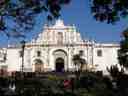
To spot the Antigua Guatemala Cathedral, look for an impressive white Baroque façade with arched doorways, tall columns, and sculpted saints gazing down from niches above the main…Czytaj więcejPokaż mniej
To spot the Antigua Guatemala Cathedral, look for an impressive white Baroque façade with arched doorways, tall columns, and sculpted saints gazing down from niches above the main entrance, right across from the central plaza. Now, as you stand in front of these massive wooden doors and take in the sunlight glinting off the pale stone, I want you to imagine this exact spot nearly five centuries ago. It’s 1545, and after a trek from the ruined Almolonga Valley, workers are hauling stones and rubble to create what they hope will become the heart of a new city. This cathedral-sometimes called San José Parish today-was meant to stand as a monument to faith and resilience. But Antigua has always been a restless place, and even as the first walls began to rise, tremors would rattle the valley, sending cracks creeping along the masonry and hopes tumbling just as easily as stones. Undaunted, builders tried again and again. Imagine the scene on that pivotal day in 1669 when the entire temple was demolished for safety, the sound of stone crashing to earth, only for work to begin anew under master builders like Juan Pascual, José de Porres, and the Spanish engineer Martín de Andújar Cantos. The result was a second grand sanctuary, consecrated at last in 1680 after a generation’s wait, its construction carefully overseen, with each column and medallion painstakingly crafted by hand. Picture now the splendor that once filled this space: a towering dome supported by sixteen shining columns clad in gleaming tortoiseshell, the main altar filled with the exquisite figures of the Virgin Mary and the Apostles-each sculpted from pure ivory. On festival days, candles would flicker and the echo of bells ringing from high towers would spill over crowds gathered in the plaza as clouds of incense swirled in the air. In 1743, excitement reached fever pitch when the cathedral was declared a Metropolitan seat. Word spread that a precious embroidered pallium had traveled all the way from Europe. Nobles and clerics in their carriages and humble townsfolk alike poured into Antigua to witness Archbishop Molina’s grand entrance. The city burst into celebration-imagine the joy, the firecrackers exploding in showers of sparks, church bells chiming and the aroma of feasts wafting through the streets. The city entertained itself for over a week with spectacular fireworks, indigenous dances, bullfights, and horse races filling the main square right where you stand now. But Antigua is a city that never entirely sleeps soundly-not with the mountains watching from a distance and the earth shifting below. The devastating Santa Marta earthquake of 1773 struck, shaking the foundation of the cathedral, splitting walls, and sending chapels crumbling. Picture townsfolk rushing to salvage what they could, relics and furniture hurriedly moved to the University building nearby. The magnificent dome now gave way to ruin, and for many years the abandoned nave became a cemetery and shelter for roots and bats. Walk inside, and you’d have found a shadowy labyrinth of crypts and mysterious tunnels beneath the stone floor, their purpose still unknown to this day. As the cathedral’s main altar was moved to the new capital of Guatemala City, time and more earthquakes left their mark. In the decades that followed, parishioners tried to breathe new life into the ruins-an effort led by energetic priests like Rafael José Luna. Yet for years, this grand structure stood lonely and neglected, roots bursting through the cracked stone, its air thick and musty, and flocks of night birds and bats swooping through the arcades at dusk. Now, as you stand in the sunlight in front of this ancient façade, you’re only seeing the surface. Beneath your feet lie stories: of builders stubborn in the face of disaster, of grand banquets for archbishops with fireworks blazing overhead, of secret crypts and lost relics, and quiet moments when the city around you held its breath as the ground moved. Everything you see here-these elegant columns, worn steps, and the solemn faces of stone saints-is a reminder that Antigua has always rebuilt, always celebrated, and always remembered, no matter how many times the earth asked it to start again.
Otwórz dedykowaną stronę →To spot the Palacio de los Capitanes Generales, look across the southeast side of the Central Plaza for a grand two-story building with a long row of elegant white arches and…Czytaj więcejPokaż mniej
To spot the Palacio de los Capitanes Generales, look across the southeast side of the Central Plaza for a grand two-story building with a long row of elegant white arches and large stone columns stretching along its yellow facade. Now, pause for a moment and let your gaze linger on this massive palace-imagine yourself in Antigua centuries ago. The year is 1558. The city was alive with the footsteps of soldiers, the clatter of horses hooves across cobblestones, and the gentle creak of wooden floors above. This was the very first two-story building in town-a symbol of Spanish power and ambition, with rows of sturdy arches holding up the weight of colonial rule and dreams of gold. At the dawn of Spanish rule in Guatemala, the Captain General himself lived here, surrounded by luxury. Picture stately carriages rolling up, ladies in elegant dresses, the hum of hushed conversations about politics and distant wars. In those days, behind this façade, high society mingled with the gears of government-the Royal Tax Office counting silver and coins, officers planning troop movements, and clerks busy with ink and parchment. The prison sat somewhere below, echoing with the clank of chains. By the end of the 17th century, the palace had grown into a truly impressive structure, a beacon topped by columns and a wide wooden entrance. Yet, Antigua, set in a valley surrounded by volcanoes, has always danced with disaster. In 1717, a quake called San Miguel snarled through the city, shaking those grand walls. The townspeople, fearing their lives might crumble just as their homes did, were ready for rebellion. So angry were they that they rushed the palace, filling its halls with cries of protest, demanding their city not be abandoned. It took soldiers to restore peace. But Antigua’s troubles were far from over. In 1751, the San Casimiro earthquake struck. Imagine the ground rolling beneath your feet, the largest building in the city cracking, losing parts of its face, its upper stories split. Yet, the palace endured, rebuilt piece by piece by determined hands, its structure stubbornly refusing to disappear. As if nature delighted in testing this city, the most devastating shake came in 1773, on the day of Saint Martha. The earth trembled so fiercely the city seemed to sigh-a deep, rumbling groan as stone and mortar collapsed and thunder crashed overhead. In that chaos, Antigua’s food and water supplies broke down, and people fled to the mountains. The palace became the stage for desperate meetings-the captain general, the clergy, and local leaders debating whether to abandon the city forever. Eventually, the decision came: the seat of power would move to a safer place, the Ermita Valley. What remained of the palace was stripped bare. Work crews took everything movable-doors, balconies, even the beautiful columns-to use in the new capital. For years, the proud old building stood empty, its shell battered by time and rain. Imagine walking past in the 1800s; wild grass grew in the plazas, the palace was silent but for the wind whistling through empty rooms, the echo of footsteps from another era. By the end of that century, hope shone again. Some families returned, and the stone columns that had been stored for nearly a hundred years were used to put a new face on the palace. The jail reopened, government offices came alive once more, with the soft scratch of pens and the shuffling of papers echoing inside. Yet nature still wasn’t finished. In 1976, another fierce earthquake shook Antigua, toppling part of the palace’s eastern side. Today, the building stands restored, a survivor. The palace is alive again, and in its rooms you might find a museum, the offices of the police, or the heartbeat of tourism for all of Guatemala. So as you stand here, you’re not just looking at a building-you’re seeing the spirit of a city that simply refused to be erased. Its arcades and columns have witnessed drama, disaster, and rebirth. They are silent storytellers, waiting for you to listen.
Otwórz dedykowaną stronę →To spot the Royal Audience of Guatemala, look for the grand building with a long row of white arches and columns stretching along the cobblestone street in front of you-it's…Czytaj więcejPokaż mniej
To spot the Royal Audience of Guatemala, look for the grand building with a long row of white arches and columns stretching along the cobblestone street in front of you-it's impossible to miss with its upper balcony draped in vivid purple banners. Now that you’re standing before these arches, imagine the year is 1543. The air is thick with anticipation and the sound of horses’ hooves on cobblestones was a regular echo here. Before you is not just a building-it was, for centuries, the beating heart of Spanish rule in Central America. This wasn’t merely a courthouse. It was the highest seat of power for the entire Kingdom of Guatemala, a realm stretching across the lands we now know as Guatemala, Belize, El Salvador, Honduras, Nicaragua, Costa Rica, and even the distant state of Chiapas in Mexico. The Real Audiencia of Guatemala, as it was famously called, began with a royal decree in 1542-imagine the excitement and uncertainty as new officials arrived, robes fluttering, ready to take up their duties. Strangely, its first home wasn’t even in Guatemala, but a city named Valladolid de Comayagua, far off in present-day Honduras. Spanish officials shuffled maps and borders, making decisions that would reshape the fate of countries for centuries to come. But these stone arches have their secrets. The Audiencia governed not only justice but also life and death, handling criminal cases no one could appeal. The men who sat in judgment-called Oidores-walked these balconies in elegant finery, earning princely salaries and wielding the power of “His Majesty’s Council.” They were also known as Alcaldes del Crimen, or “Criminal Mayors,” responsible for everything from taxes and censuses to the running of hospitals and pharmacies. You might have seen soldiers posted at the entrance, reinforcing the idea that this was a place of both respect and fear. Throughout the 1500s and 1600s, the air around these halls crackled with both tension and intrigue. After a ruler named Juan Núñez de Landecho became far too powerful for his own good, a secret inspector named Francisco Briceño arrived in disguise, hiding within the city’s shadows. No one except the monks of the Order of Mercy knew who he truly was. When the time was right, he struck-arresting Landecho and even imposing a massive fine. Landecho tried to escape by boat, but he vanished at sea, never to be seen again. It must have felt like the plot of a Spanish adventure novel right here beneath these arches. Political storms swept through these chambers as territories shifted back and forth. The Audiencia was moved to Panama once, stripping Guatemala of much of its power. But thanks to voices like the persuasive Bartolomé de las Casas, the Spanish Crown eventually brought the Audiencia-and its authority-back to Guatemala, restoring her place as the Queen of the Highlands. The Oidores returned, with their stately processions and booming proclamations. In the centuries that followed, these walls oversaw the splitting, merging, and governing of a vast, beautiful, and often turbulent land. They managed provinces with names as poetic as Soconusco, Chirripó, and Pacaca. New jobs and riches would appear-one Oidor even became the proud overseer of the royal mint, collecting a tidy income. Others ran the crusade tribunal or decided the fate of towns across hundreds of miles of wilderness. You can almost imagine the heated discussions echoing from those arched upper galleries, as messengers rushed in bearing the latest edicts from Madrid. Today, as you stand beneath the same arches where judges, governors, and soldiers once stood, listen to the history vibrating through the stones. Think of the secrets these walls could tell: of power lost and won, of bold political intrigue, and of a city that rose, fell, and rose again. The Royal Audience wasn’t just a building-it was the pulse of an entire empire, and now, for a moment, it is part of your own story. Intrigued by the territory, functioning of the hearing or the see also? Explore further by joining me in the chat section below.
Otwórz dedykowaną stronę →
Pokaż jeszcze 8 przystankówPokaż mniej przystankówexpand_moreexpand_less
As you stand here, look ahead and you’ll see Antigua Guatemala stretching before you, a city of pastel buildings laid out in a perfect grid, encircled by three towering…Czytaj więcejPokaż mniej
As you stand here, look ahead and you’ll see Antigua Guatemala stretching before you, a city of pastel buildings laid out in a perfect grid, encircled by three towering volcanoes-just look for the sweeping stone archways, crumbling church facades, and red-tiled roofs set against the dramatic mountain backdrop to find your way right to its heart. Let’s step back in time together, to a place where every cobblestone seems to remember centuries of earthquakes, processions, and royal decrees. Imagine the air here filled with the scent of fresh corn tortillas, the distant hum of a church bell, and the swirl of cool mountain breezes slipping through streets that have witnessed both disaster and renewal. Antigua wasn’t always called Antigua. Long ago, when Spanish conquistadors first arrived, they built their capital atop a Kaqchikel-Maya city and named it Santiago de los Caballeros, the City of Saint James-Saint James, you’ll recall, stands as the city’s patron, his spirit lingering in every festivity. After a devastating volcanic mudslide destroyed the second capital in 1541, the shaken colonists moved here, to the lush, green Panchoy Valley, and founded the third capital in 1543-for over two centuries, Antigua reigned as the seat of the mighty Kingdom of Guatemala, stretching north into Mexico and far down into Central America. As you explore these streets, it might surprise you to know that the elegant checkerboard layout you see was by royal design. The powerful Spanish crown insisted on right angles and symmetry, and at the city’s bustling center, government palaces and magnificent cathedrals rose up, their carved stone facades almost daring the earth to shake again. Yet, the earth did just that-again and again. Mighty earthquakes rattled through town in 1530, 1575, 1585, and again in 1717 and 1751. Close your eyes for a moment; listen as great bells clang and tumble, as frightened townsfolk run into the square, confessing to the heavens as the ground rolls beneath them. Each disaster left scars and stories, but always, the city found a way to rebuild. Antigua was not just the home of governors and generals-it was the heart of learning and faith. Here, Franciscan friars opened a school for thinkers and dreamers, where philosophers and mathematicians shared ideas. The Jesuits, too, taught the city’s elite; the halls of “San Lucas” overflowed with the sons of noblemen, their heads filled with Latin and logic. The city glowed with creative energy, and in 1681, it celebrated the founding of the University of San Carlos Borromeo, the first institution of its kind in this part of the world, where future lawyers, priests, and doctors would study by flickering candlelight. Yet even amidst lofty learning, the city’s heart beat for the poor. Picture a humble friar, Pedro de San José Betancourt-Santo Hermano Pedro-tending to the sick, comforting the orphaned, and founding shelters for anyone who had nowhere else to turn. His efforts sparked new ways of teaching and healing, and his order-the Betlemitas-became the first born in the Americas. Antigua’s prosperity brought glory and beauty: beautiful plazas, fountains flowing at the town’s heart, and stately Spanish Baroque churches painted in yellow, white, and soft rose. Yet caution always lingered-when the mighty San Miguel earthquake battered Antigua in 1717, many citizens wondered if it was time to move. Protesters filled the Royal Palace, demanding to stay, and for decades, the battle over leaving or rebuilding continued. But then, in 1773, disaster struck again. The Santa Marta earthquakes turned gilded domes to dust and split monastery walls. The Spanish Crown had enough-decreed that the capital would be moved, this time for good, to what is now Guatemala City. Antigua was suddenly known only as “la Antigua Guatemala”-the Old Guatemala-a place abandoned but never forgotten, its broken churches standing like silent witnesses. Years passed. By the 20th century, visitors found a city of haunting ruins. Prince Wilhelm of Sweden, traveling here in 1920, described roads choked with dust and towering piles of fallen stones, churches filled not by worshippers but by grazing mules and families living among the shattered walls. Yet, the city’s spirit refused to fade. Craftsmen restored old buildings, and Antigua’s sunlit plazas once again welcomed the sounds of laughter, music, and bustling market stalls. Today, as a UNESCO World Heritage Site since 1979, Antigua’s Baroque splendor and resilient soul make it one of the world’s most enchanting cities. Stroll past chocolate makers and cafés, hear the rolling drums of Holy Week processions, and fill your eyes with the wild beauty of the volcanoes standing guard. You’re in a city defined by its passion for tradition, its embrace of the future, and its promise that even after disaster, hope and beauty always return. Interested in a deeper dive into the population, antigua guatemala in the 21st century or the economy? Join me in the chat section for an insightful conversation.
Otwórz dedykowaną stronę →To spot the Museum of the Ancient Book, look for a building with a clear sign reading “MUSEO del LIBRO ANTIGUO” in bold, modern letters as you approach-this marks the entrance to…Czytaj więcejPokaż mniej
To spot the Museum of the Ancient Book, look for a building with a clear sign reading “MUSEO del LIBRO ANTIGUO” in bold, modern letters as you approach-this marks the entrance to a place where centuries-old stories rest. Now, take a moment and let your imagination wander back in time. The year is 1663, and Antigua is alive with the gentle clatter of wooden presses and the sharp scent of ink. You’re standing in front of the very building that introduced printed words to Guatemala. Before this, messages traveled slowly, written by careful hands. But then, within these old walls, the city’s first printing press began its rhythmic work. Inaugurated as a museum in 1956 by two visionaries-Rigoberto Azmitia and David Vela-this place holds more than just old books; it holds the excitement and even mystery of ideas set free for the first time. Inside, there’s a replica of that first press, an enormous and almost magical machine, thanks to old plans rescued by students from UNE. Imagine the thrill as the first book in Guatemala was printed here: “Explicato apologética,” its ink still wet, the air filled with anticipation as workers wondered if the city and the country would ever be the same. Some visitors report a strange hush in the museum’s four exhibition rooms, as if the past lingers, waiting to tell its secrets. You’ll find bibles in many languages and thick, weighty books like the “Chronicle of the Province” or the rare “Arte de la lengua metropolitana del reino cakchiquel o guatemálico.” There are even mysterious lithographic stones and weathered university documents called “tarjas,” whispers from classrooms centuries ago. Every corner crackles with silent tension: the fear that books might once have been lost to fire, time, or conquest-and the hope that print could protect Guatemalan stories forever. Isn’t it curious that in a quiet city, surrounded by volcanoes, the printing revolution began right here? Step inside if you dare…the stories within are waiting for your imagination.
Otwórz dedykowaną stronę →You’re standing before what once was the legendary Hotel Museo Uxlabil, a place that whispers with memories from Antigua’s golden age. Imagine the Pellecer family, wealthy and…Czytaj więcejPokaż mniej
You’re standing before what once was the legendary Hotel Museo Uxlabil, a place that whispers with memories from Antigua’s golden age. Imagine the Pellecer family, wealthy and respected, living here for five generations-hosting elegant gatherings on starry nights, their laughter echoing through these old stone walls. Step closer in your mind and picture the marvels indoors: precious antiques lining the halls, every corner revealing a secret of the past. The marble bathtub, so massive it reportedly weighs two tons, was once the ultimate sign of luxury. Can you picture hauling that through narrow, cobbled streets? Even the delivery men must have swapped wild stories about it over the years. But the true gems hang on the walls-two grand paintings by Toribio Jerez, the famed Nicaraguan artist. Painted in the mid-1800s, they show the faces of church pastors, their eyes watchful and wise. Each brushstroke seems to link the Pellecers not just to Antigua, but to far-off Nicaragua and a wider web of influence. Imagine the candlelight flickering over their solemn gazes during the quiet of the night. In 2009, the story changed. New owners transformed the building, adding lush gardens, a sunny rooftop, and peaceful courtyards-a reinvention as Hotel Casa Antigua. Yet, if you listen closely, perhaps you’ll still hear a hint of the old family’s secrets and laughter carried on the Antigua breeze.
Otwórz dedykowaną stronę →Look in front of you for a long, elegant building with rows of cream-colored arches stretching across two levels, crowned by a decorative stone crest at the top-this is the…Czytaj więcejPokaż mniej
Look in front of you for a long, elegant building with rows of cream-colored arches stretching across two levels, crowned by a decorative stone crest at the top-this is the National Museum of Art of Guatemala. As you stand here, close your eyes for a moment and imagine the clatter of hooves on cobblestones and voices echoing between the arches-a time when this building was the heart of colonial power. This grand structure, the Palacio de los Capitanes Generales, is not just any building-it’s a piece of history, standing here since the 16th century, its stones soaked with the stories of conquest, struggle, and art. Once, it was the seat of the Captaincy General of Guatemala, making decisions that shaped all of Central America. Picture velvet-robed officials peering from behind the arches, debating the fate of nations. Now, step back into the present. Since September 10, 2021, this majestic palace has worn a new hat: it’s the National Museum of Art of Guatemala. It’s as if those old, dignified stones took a deep breath and woke up, filling their rooms with vibrant creativity. You’re about to enter over 842 square meters of gallery space that holds the very soul of Guatemala-sculptures, paintings, and artifacts from as far back as the ancient Maya, to the colonial age, and onward into the bustling days of the Republic. Inside, you might sense the quiet power of a lintel from Tikal Temple III, or the awe of encountering offerings buried for millennia-a whisper from King K’utz Chman himself perhaps. The museum, freshly transformed in two phases, has drawn in crowds: on its first day after reopening, more than 500 excited visitors explored its new treasures. Since then, over 175,000 curious souls have wandered its halls, all eager to discover the magic inside. So, as you walk through those arches, remember: you’re not just stepping into a museum-you’re passing through layers of time, standing in a place where art and history hold hands, welcoming you into the true heart of Guatemala.
Otwórz dedykowaną stronę →To spot the Church of San Pedro Apóstol, look for a tall, yellow baroque façade with striking white trim, arched doorways, and a corner where the church and the hospital meet at…Czytaj więcejPokaż mniej
To spot the Church of San Pedro Apóstol, look for a tall, yellow baroque façade with striking white trim, arched doorways, and a corner where the church and the hospital meet at right angles, forming a small atrium. Now, let’s step back in time together. Close your eyes for a moment and picture yourself here in the mid-1600s. The bustling sound of carts on cobblestone and distant church bells fills the air as you stand in front of a brand new hospital and chapel, a lifeline for the city’s sick and poor. Bishop Bartolomé González Soltero, a man devoted to helping others, has just bought this land, dreaming of a grand hospital. By 1648, the first patients have already arrived-scared, hopeful, and desperate for comfort. Side by side, the church rises in pale yellow stone, with its façade climbing above you, the central section lifted a little higher, crowned with a bell tower perched above a delicate iron balustrade. Architect Joseph de Porres strolled these very streets, watching masons climb the scaffolding as the city buzzed with rumors: Would this place become the center of Antigua’s religious life? For a time, it was. In fact, for decades before the grand cathedral was finished, this very building served as the main cathedral of Santiago de los Caballeros, the old name of Antigua Guatemala. Inside, the hospital was a refuge, and the whispers of grateful patients mixed with the prayers echoing from empty niches above the entrance, always awaiting statues that never arrived. Tragedy struck in 1773: mighty earthquakes shook Antigua, leaving cracks in the walls and worry in every heart. Yet, this place endured. If you step inside today, you’ll find a bell from the distant Canary Islands, sent to honor Saint Pedro de San José de Betancur, whose acts of charity are captured in a mural nearby. His legacy still lingers like a gentle breeze in the courtyard, as if inviting you to become woven into the story of kindness that continues in these very walls.
Otwórz dedykowaną stronę →To find the Papenoe House, look for a large, classic colonial home on the corner, with a lush courtyard garden dominated by an ancient cypress tree right in the middle-just ahead…Czytaj więcejPokaż mniej
To find the Papenoe House, look for a large, classic colonial home on the corner, with a lush courtyard garden dominated by an ancient cypress tree right in the middle-just ahead of you, its tree branches twisting up over brightly colored flower beds, framed by thick white walls and a tiled roof. Standing here, you’re about to step into a slice of Antigua’s deep and winding history, all hidden behind these peaceful walls. Imagine, if you will, the year is 1762. The lady of the house, Venancia López, surveys her property with the keen eye of someone about to make history. She’s just purchased two neighboring houses, each echoing with centuries of stories-a patchwork assembled from earlier ruins and grand dreams, first belonging to Jacomé de Piña, then passed down through proud Portuguese settlers, city scribes, and well-connected families. But the story of Casa Popenoe starts even earlier: in the mid-1500s, when this very plot belonged to a man named Jacomé de Piña. With the city buzzing, horses clip-clopping along the cobbled streets, the neighborhood was alive with the comings and goings of powerful families. Over time, the house grew from simple origins, changing hands through hardship and fortune-passing to the Cota family, themselves connected to the first days of Spanish conquest, and then, through layers of debt and generosity, supporting even a hospital for sick indigenous people. Each new resident left a mark: Some, like the Estrada sisters who lived here nearly half a century, filled the space with quiet devotion and firm resolve. Others, like presbítero Sotomayor, brought the place to life with stories-imagine the low murmurs of gatherings, the hush of a physician tending to patients in need, perhaps a sudden peal of laughter or a heated debate floating upward into the corridors. Through it all, the house stood firm-even as earthquakes shook its foundations or the world outside grew tangled with politics and rivalries. Fast forward to 1762, and everything starts to change. Venancia and her husband, Andrés Guerra, a Spanish-born military man and important government scribe, have big plans: two separate homes are joined into one, merging distinct histories, levels, and layouts under a single roof. She takes out a massive loan to rebuild-not just to create a family home, but to signal their arrival among Antigua’s new elite. The construction hums with activity, while Venancia oversees everything: the white walls, the intricately shaped windows, the signature archways inspired by the grand University of San Carlos, and garden beds echoing the stylish designs of the city’s greatest churches. Yet, life is never simple. In 1773, a huge earthquake shakes Santiago de Guatemala, crumbling walls and scattering families. The once-grand house is left in ruins, and the Guerra family must start over in a new capital, mourning what was lost and trying to repair what they could. The story turns mysterious as ownership passes from one hand to another, sometimes legally, often with sections of the old house simply taken over by opportunists. By the time the 20th century arrives, Casa Popenoe is battered and worn, its garden wild, its rooms echoes of forgotten voices. Enter Wilson Popenoe, an intrepid American botanist, in 1930. He and, at first, his wife Dorothy, then Helen, pour their hearts into reviving the soul of the house. It becomes a jewel-painstakingly restored, with every tiled floor and wooden beam echoing centuries of highs and lows. Their daughter, Marion, would later give the house to the Universidad Francisco Marroquín, ensuring its memories would endure for future generations. And now, as you stand before the ancient cypress presiding over the vibrant garden, take a moment to imagine all those who once passed through this courtyard-the quiet sisters, the determined scribe, the ambitious couple rebuilding their future, and the botanist who gave the house new life. Each stone and blossom here whispers secrets of Guatemala’s past, the triumphs and tragedies woven together like the ivy that hugs these old walls.
Otwórz dedykowaną stronę →In front of you, you’ll see a weathered stone courtyard with an old fountain at its center, surrounded by faded arches and walls, some covered in vibrant, flowering…Czytaj więcejPokaż mniej
In front of you, you’ll see a weathered stone courtyard with an old fountain at its center, surrounded by faded arches and walls, some covered in vibrant, flowering bougainvillea-this is the entrance to the Iglesia y Convento de las Capuchinas. Imagine yourself in Antigua Guatemala back in the early 1700s. Here, the Capuchin nuns arrived in a city bustling with anticipation, and the King of Spain himself-King Felipe V-gave his blessing to build this place. As you stand here, picture the thick walls freshly built, a sense of hopeful energy in the air, and the soft footsteps of women seeking a new life full of purpose and discipline. Unlike the grand convents before it, Capuchinas was radical. For the first time, women without wealth could join; the doors opened to poor ladies who longed for spiritual service but couldn’t afford a dowry. Inside, life was strict and humbling: the nuns practiced poverty and penance, surviving only on the generosity of their town, with fasting and prayer shaping their days. Imagine the echo of prayers through stone corridors, the rhythm of life measured by bells and candlelight. There were two kinds of nuns here-urban and discalced; some walked barefoot as a sign of ultimate humility and devotion. But fate wasn’t always kind. The earthquakes of 1751 and then the monstrous shake in 1773 left broken walls and crumbling towers. The convent’s heart was heavy when the Captain General ordered it abandoned, its halls suddenly silent, its gardens left to wild bloom. Decades later, in 1920, a curious visitor-Prince Wilhelm of Sweden-marveled at the secrets this building held. Underneath your feet, hidden passages twist through old stone, connecting the monks’ cells in a perfect circle around a mysterious common chamber. Not a convent, but a maze of solitude and sisterhood, each cell watching over the other in silence. Imagine the laughter, the discipline, the longing for the world outside-layered here among ruins, bougainvillea blooms, and the echo of ancient footsteps beneath the stones.
Otwórz dedykowaną stronę →To spot the Arco de Santa Catalina, look straight ahead for a striking, bright yellow arch stretching across the street with a clock sitting right on top, perfectly framed by the…Czytaj więcejPokaż mniej
To spot the Arco de Santa Catalina, look straight ahead for a striking, bright yellow arch stretching across the street with a clock sitting right on top, perfectly framed by the colonial buildings around it. Now that you’re standing before its golden curves, imagine yourself here in the 17th century, when this wasn’t just an iconic photo spot but a secret passageway for nuns. Picture the lively street, echoing with the calls of vendors and the clatter of horse hooves, while behind those archway walls, the nuns from the Santa Catalina convent moved silently from their cloister to the school across the way. They weren’t allowed to walk out in public, so this arch hid their steps, protecting them from curious eyes and the sun’s burning glare. Fast forward to the 1830s, and listen-do you hear the ticking of a brand-new clock above? It’s a proud addition from a time when Guatemala was changing, a beacon of punctuality and progress during the Central American Federation. Local legend tells of hidden glances and whispered secrets as the nuns hurried across, their footsteps muffled high above the busy avenue you’re now standing on. As the sunlight hits the yellow walls, know you’re watching centuries of stories pass through this arch, stories echoed all the way to Guatemala City, where its twin stands as the proud face of the Post Office. Stand here for a moment, right at the center of Antigua’s heart, and imagine all the hidden lives the Arco de Santa Catalina has watched unfold.
Otwórz dedykowaną stronę →
Najczęściej zadawane pytania
Jak rozpocząć trasę?
Po zakupie pobierz aplikację AudaTours i wpisz kod realizacji. Trasa będzie gotowa do natychmiastowego rozpoczęcia – po prostu dotknij \"Play\" i podążaj trasą z nawigacją GPS.
Czy potrzebuję internetu podczas trasy?
Nie! Pobierz trasę przed rozpoczęciem i korzystaj z niej w pełni offline. Jedynie funkcja czatu wymaga internetu. Zalecamy pobieranie przez WiFi, aby oszczędzać dane mobilne.
Czy to wycieczka grupowa z przewodnikiem?
Nie – to samodzielny audioprzewodnik. Zwiedzasz niezależnie, we własnym tempie, z narracją audio odtwarzaną przez telefon. Bez przewodnika, bez grupy, bez harmonogramu.
Ile trwa trasa?
Większość tras zajmuje 60–90 minut, ale to Ty kontrolujesz tempo. Wstrzymuj, pomijaj przystanki lub rób przerwy, kiedy chcesz.
Co jeśli nie zdążę ukończyć trasy dzisiaj?
Żaden problem! Trasy mają dożywotni dostęp. Wstrzymaj i wznów, kiedy chcesz – jutro, za tydzień lub za rok. Twój postęp jest zapisywany.
W jakich językach są dostępne trasy?
Wszystkie trasy są dostępne w ponad 50 językach. Wybierz preferowany język podczas realizacji kodu. Uwaga: języka nie można zmienić po wygenerowaniu trasy.
Gdzie znajdę trasę po zakupie?
Pobierz darmową aplikację AudaTours z App Store lub Google Play. Wpisz kod realizacji (wysłany e-mailem), a trasa pojawi się w Twojej bibliotece, gotowa do pobrania i rozpoczęcia.
Jeśli trasa Ci się nie spodoba, zwrócimy Ci pieniądze. Skontaktuj się z nami pod adresem [email protected]
Bezpieczna płatność przez