
Audioprzewodnik po Atenach: Bogowie, legendy i ruiny pod Partenonem
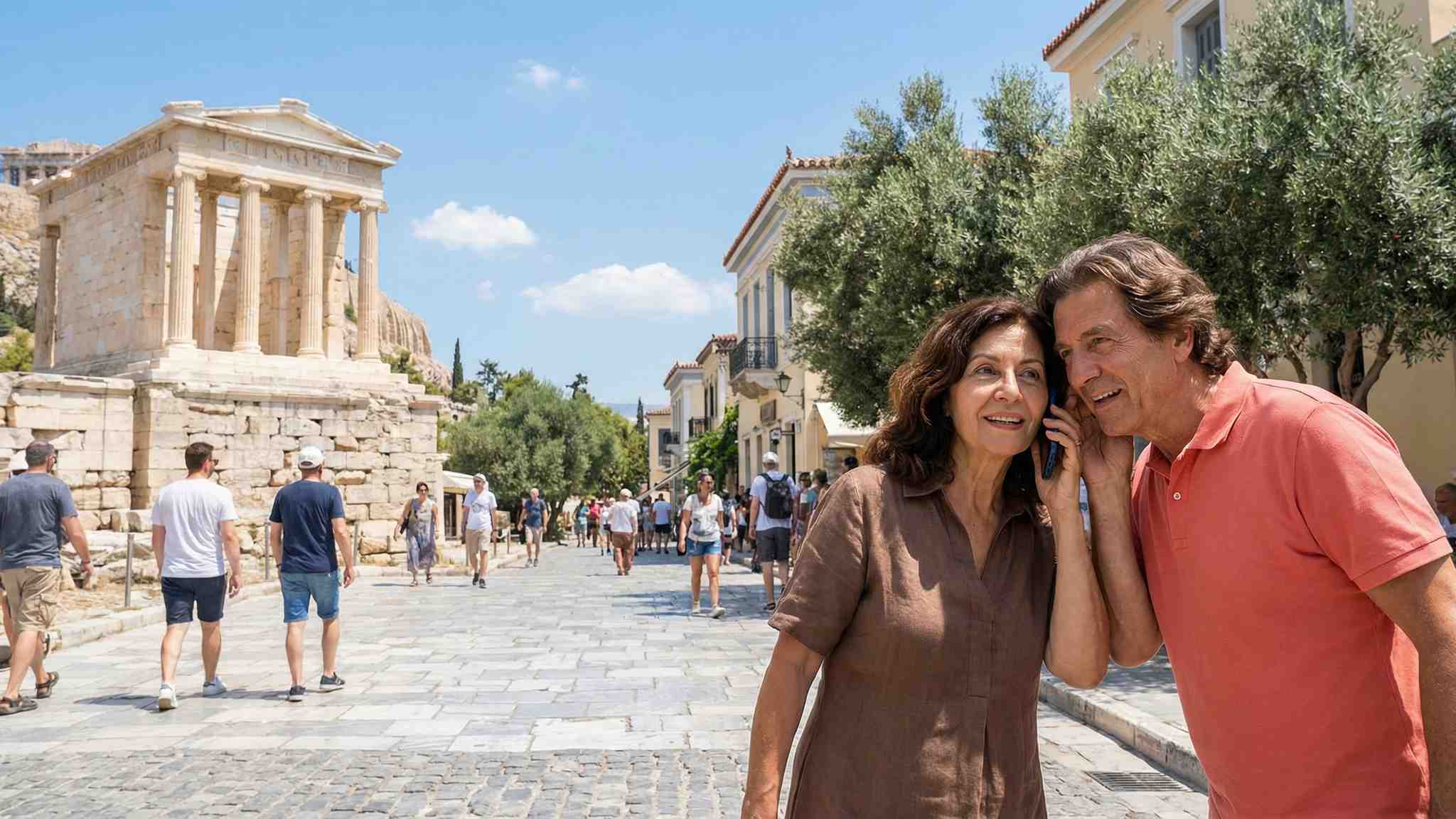
Wysoko nad Atenami marmurowe kolumny przecinają niebo tam, gdzie bogowie i ludzie knuli niegdyś rewolucje i zdrady. Pod idealną symetrią Partenonu i cienistymi kariatydami Erechtejonu, wieki ambicji i buntu szepczą poprzez starożytne kamienie. Odkryj sekrety miasta dzięki tej wycieczce z audioprzewodnikiem. Poznaj ukryte historie i zapomniane zakątki, które większość turystów mija bez zastanowienia. Dlaczego zdesperowany władca trzymał miasto jako zakładnika w tętniącym życiem sercu Agory? Jaki upiorny spór podzielił świątynię Ateny, odbijając się echem przez wieki? I jaki skandaliczny rytuał sprawił, że pokolenia szeptały o tym, co naprawdę wydarzyło się w świetle księżyca? Poczuj napięcie i zachwyt, gdy każdy krok wciąga Cię głębiej w zawiłe dziedzictwo Aten. Śledź polityczne intrygi, święte tajemnice i stracone sprawy, podczas gdy miasto ożywa pod Twoimi stopami. Rozpocznij swoją podróż. Ateny czekają, by ujawnić to, co kryje się pod ich marmurową skórą.
Podgląd trasy
O tej trasie
- scheduleCzas trwania 40–60 minsIdź we własnym tempie
- straighten4.1 km trasy pieszejPodążaj wyznaczoną trasą
- location_on
- wifi_offDziała offlinePobierz raz, korzystaj gdziekolwiek
- all_inclusiveDożywotni dostępOdtwarzaj ponownie w dowolnym momencie
- location_onStart przy Sanktuarium Afrodyty Uranii
Przystanki na tej trasie
To spot the Ancient Agora of Athens, look ahead for a wide, open expanse filled with low, weathered stone ruins and scattered marble columns, set against grassy ground and framed…Czytaj więcejPokaż mniej
To spot the Ancient Agora of Athens, look ahead for a wide, open expanse filled with low, weathered stone ruins and scattered marble columns, set against grassy ground and framed by trees and distant hills. Welcome to the heart of ancient Athens-the Agora! Picture yourself surrounded by curious voices, merchants calling out, and the lively shuffling of sandals on packed earth as people gather for business, debates, and maybe just a little gossip. This bustling hub was once the social and commercial soul of the city, lying in the shadow of the Acropolis to the southeast and bounded by hills that watched over every deal and drama. Here, people came to shop, argue, celebrate, and maybe even run for their lives during an occasional chariot mishap. On the north side, you would have seen the Stoa Poikile, or Painted Stoa, adorned with vibrant murals and echoing with laughter as Athenians mingled and swapped stories-imagine it as the favorite coffee shop, minus the frappes. Not far off stood the Altar of the Twelve Gods, a sacred postal code everyone wanted, while the imposing Stoa Basileios held court for Athenian officials. And if you want to find some Roman flair, head near Hadrian Street where archaeologists uncovered the remains of an ancient Basilica. Crossing to the east, you’d have noticed the grand Stoa of Attalos. Envision popping into shops lining a cool shaded walkway, outwitting haggling merchants, or just people-watching like a true Athenian philosopher. Today, the Stoa is reborn as the Museum of the Ancient Agora, preserving treasures from clay pots to political portraits. Nearby was the Library of Pantainos, offering more than just books-its maze of rooms gave scholars and merchants alike somewhere to brainstorm, conspire, or hide from the midday sun. To the south, you’d meet the grand Middle Stoa, the largest monument of its age, as well as bustling markets, temples, and even a fountain house where women (and who knows, a philosopher or two) would pause to refill their water jugs and catch up on the latest city news. The west boasted civic buildings like the Bouleuterion where Athens’ democracy took shape and the striking Temple of Hephaestus, crowned with dazzling marble statues carved by masters like Phidias and Alcamenes. Speaking of marble, the Agora was a sculptor’s paradise. In the 5th century BC, marble-workers busied themselves here, chiseling everything from statues of gods-watch out for falling noses!-to elegant sundials and even kitchenware. Phidias himself, the rock star of ancient carving, left his mark here, as did his associates and rivals. If the Agora had a “Walk of Fame,” it would be scattered with bits of marble, evidence of generations of artists at work. There’s a softer side too: this was a lively stage for women, from savvy market sellers hawking perfume and fruit to priestesses leading grand religious festivals. Daughters of aristocrats could be seen making offerings at goddess shrines or leading rituals, proving the Agora wasn’t just a boys’ club after all. As you stand here, close your ears for a moment-not to my great jokes, of course!-and imagine the sounds of history: the clatter of pottery, the lively banter, the stomp of marble-workers at their craft. After centuries buried and forgotten, the Agora was finally uncovered by determined archaeologists, with discoveries ranging from coins and statues to letters from a slave, giving us rare glimpses of life beyond the headlines. Today, the Agora may look peaceful and sunbaked, but don’t be fooled-there are thousands of years of stories scattered among these ruins. Every stone, every column, every stretch of shade holds a secret. So, fancy yourself a citizen of ancient Athens for a moment and let your imagination run wild. Would you strike it rich, win a debate... or just get lost looking for a good olive? Want to explore the buildings and structures of the classical agora, gender roles in the athenian agora or the marble-workers in the athenian agora in more depth? Join me in the chat section for a detailed discussion.
Otwórz dedykowaną stronę →
Pokaż jeszcze 11 przystankówPokaż mniej przystankówexpand_moreexpand_less
Right in front of you rises the rocky hill of the Areopagus, and oh, what stories it could tell if it sprouted lips! Picture yourself here thousands of years ago-a place where…Czytaj więcejPokaż mniej
Right in front of you rises the rocky hill of the Areopagus, and oh, what stories it could tell if it sprouted lips! Picture yourself here thousands of years ago-a place where solemn judges gathered under the Greek sun, squinting at the mighty Acropolis, deciding cases so serious even the gods might glance down nervously. The name "Areopagus" itself comes from “Ares’ Rock,” because once upon a myth, the god Ares stood trial here, accused of a rather nasty crime against the son of Poseidon. Now, wouldn’t you love to be a fly on that ancient marble? But the Areopagus isn’t just some old mythological crime scene-it’s the backbone of justice in Greece, even today. This place is both the ancient and modern symbol of the highest court in the land; in modern times, it’s called upon not just for law, but for national crisis too. If the country can’t form a government, the President of Greece may invite the head of the Areopagus to step in and help steady the ship until elections set sail again. Fast-forward a bit-imagine the first court decision here back in 1835. The court then moved into a grand building that has since turned into the Numismatic Museum. Today, the judges-called areopagites, which is quite the title-work from a striking modern courthouse on Alexandras Avenue, which, believe it or not, sits on the grounds where old city jails once stood. There are seventy-four lifelong areopagites (they hang up their gavels at 67), plus a president, a prosecutor, ten vice presidents, and eighteen assistant prosecutors, all working away in nine different departments. Fun fact: six of those wrestle with civil law, while three take on the criminal cases-no rocks thrown these days, just laws argued over. Here, on this weathered hill, Greek justice stretches from the age of legends right up to today’s headlines. And you, my friend, are standing exactly where mighty decisions and mythic drama have collided for centuries!
Otwórz dedykowaną stronę →If you’re looking for the Erechtheion, just ahead you’ll spot a striking marble temple with tall Ionic columns and, most famously, six elegant statues of women-called…Czytaj więcejPokaż mniej
If you’re looking for the Erechtheion, just ahead you’ll spot a striking marble temple with tall Ionic columns and, most famously, six elegant statues of women-called Caryatids-standing on the south porch like ancient guardians. Now, take a deep breath and let’s time travel! Imagine yourself on the north side of the Acropolis, thousands of years ago. The Erechtheion, with its dazzling marble and blue limestone frieze, must have glittered in the sunlight, especially with golden touches and colored glass shining on sunny days. This temple is not your usual Greek design; it’s actually a bit quirky-with its uneven ground and jumble of sacred spaces for different gods, it’s like Greek Mythology’s version of a multi-purpose hall! As you stand here, you’d hear the gentle hiss of wind swirling around the columns. Built in the later stages of the grand Acropolis project, possibly started in a rare break during the Peloponnesian War, the Erechtheion is famous for housing legends. Here, Athena and Poseidon were both worshipped, and somewhere inside, people believed there was a mark from Poseidon’s trident and a saltwater well from his battle with Athena. Plus, the spot may have been home to Athens’ oldest, most mysterious relics-a wooden statue of Athena, spoils from war, and the mythical serpent said to guard the city. But wait-notice how the building seems off-balance? They say it’s because it had to squeeze in so many sacred nooks: a tomb for Erechtheus, altars for Zeus and Poseidon, and even the famous Olive Tree that Athena gave to the city. Folks have debated for centuries if all these shrines and tombs were ever together under one roof or if this temple is even what ancient writers really meant by "the Erechtheion." But the debate itself adds to the mystery, and for now, we’ll nod at the marble and say, “Well played, Ancient Greece!” The real stars, though, are those six Caryatids. Look at them-graceful as ever, each a bit different from the next, holding up the porch with effortless elegance. There used to be six of them here, but a certain Lord Elgin decided one would look better in his British collection-if you listen closely, you might even hear the distant mumbles of protest from Athena herself! No one’s really sure who these women were supposed to represent-priestesses, mourning daughters, or simply an artistic tribute to everyday women who served Athena. Over the centuries, this building has survived fires, sieges, cannonballs, and earthquakes. It’s been a church, a bishop’s palace, and even, so rumor has it, an Ottoman residence (perhaps even a harem!), though there’s no solid proof of sultans lounging about. Each shift left its scars, making the Erechtheion a living history of Athens’ chaos and creativity. As you look around, imagine artists and architects feverishly sketching and measuring, some with British accents arguing over which pillar belonged here or there. During the Greek War of Independence, this temple was battered; the Maiden Porch collapsed under cannon fire, and antique-hunters chipped away at the ruins. Still, Athens’ spirit refused to let go. In the 19th and 20th centuries, teams of experts and dreamers restored what they could, fitting ancient stones together like a 2,000-year-old jigsaw puzzle. So, in front of you stands the Erechtheion: a sacred shelter for legends, a survivor of wild times, and a symbol of just how complicated-and beautiful-history can be. If these stones could talk, just imagine the stories they’d spill.
Otwórz dedykowaną stronę →Just ahead and up on the stone bastion, you’ll spot a small, elegant white-marble temple with four columns at both the front and the back-it stands like a jewel on the edge, with…Czytaj więcejPokaż mniej
Just ahead and up on the stone bastion, you’ll spot a small, elegant white-marble temple with four columns at both the front and the back-it stands like a jewel on the edge, with the sky and city as its backdrop. Now, picture the year is around 420 BC, and this compact temple was brand new-its marble gleaming under the same brilliant sunlight you feel now, perched on this steep outcrop right as visitors entered the Acropolis. Welcome to the Temple of Athena Nike, a shrine honoring not just one, but two powerful goddesses: Athena, famous for her wisdom, and Nike, the winged goddess of victory. Imagine Athenian citizens rushing up these very steps, their sandals slapping the stone--their hearts filled with hope for triumph in the long and brutal Peloponnesian War. Unlike the massive Parthenon, this temple feels almost like a precious little trophy, which is fitting because it was built to celebrate victories, especially the mighty ones over the Persians at battles like Plataea. The rich marble, quarried from Mt. Penteli, carries stories of glory and war, recounted in remarkable friezes that run along the top. These reliefs would’ve been vivid, carved with cavalry charges, scenes of armored warriors, and feasts of the gods. Up close, you’d have seen a dramatic assembly of Athena, Zeus, and Poseidon themselves, essentially the ancient Greek version of a “who’s who in Olympus.” Early in its history, this site held only a humble statue: Athena seated, pomegranate in one hand, helmet in the other-a bit like she was saying, “here you go, victory and abundance, but let’s keep it smart, shall we?” Over time, the Persians came, their boots thundering up the hill, destroying the old sanctuary. But Athens rebuilt, as it always did, and by 420 BC, the architects completed this petite wonder-four Ionic columns in front, another four in back, and dazzling white marble all around. Every detail spoke of hope. The citizens would have seen the famous Nike Parapet-protecting people from falling, but also carved with lively scenes of Nikes setting up trophies and sacrificing to their patroness. Atop the temple was a statue of Nike-but this one was special. She had no wings. The Athenians decided their victory shouldn’t ever fly away, so they kept their Nike grounded-a victory here to stay! Some say they even called her Apteros Nike, or “wingless victory,” just to make sure there were no surprises. The cult of Athena Nike was always in the hands of a priestess chosen by lottery, probably one of the earliest examples of equal opportunity employment. Through the centuries, the temple endured a wild ride-first ruined by Persians, then rebuilt by hopeful Athenians, untouched for hundreds of years, only for its marble to be pinched by Ottomans in 1686 to build new defenses. The poor little temple was completely torn down and only put back together, like a huge ancient jigsaw puzzle, when Greece gained independence. In the 1800s, archaeologists raced about, collecting blocks of marble buried under centuries of dust. Even today, the temple changes, with restoration work ongoing-some of its most beautiful friezes live happily ever after in the Acropolis Museum nearby. The Nike Parapet, with its wet-drapery carvers that rival the best fabric designers of any era, once showed Nike bending down to remove her sandal-a mysterious gesture likely meant for those about to enter and worship, a tradition of respect. Now, as you stand here, feel the marble beneath you and the wind swirling up from the city. Imagine ceremonies, frantic chisel tapping and hammer strikes, the hopes of a city poured into every block. The Temple of Athena Nike is proof that even the smallest triumphs can stand larger than life on the edge of history. If you're curious about the architecture, friezes and parapets or the cornice and cyma, the chat section below is the perfect place to seek clarification.
Otwórz dedykowaną stronę →To spot the site of the Fall of the Acropolis, look up at the mighty hill crowned with stone walls and the iconic ruined temples-right at the heart of Athens’ skyline, towering…Czytaj więcejPokaż mniej
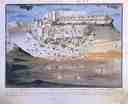
To spot the site of the Fall of the Acropolis, look up at the mighty hill crowned with stone walls and the iconic ruined temples-right at the heart of Athens’ skyline, towering over the city just as it did in 1822. Now, let’s dive into one of the most dramatic moments in Athens’ story-a scene full of grit, desperation, and just a little dark comedy. Imagine the Acropolis looming before you, not only as a breathtaking backdrop, but as a fortress under siege. The year was 1822. For nearly four centuries, since 1456, the Turks had ruled this ancient stronghold, and their flag flew atop its sacred stones for generations. But that year, change was in the air. Just months earlier, most of the Turkish garrison had been called away, leaving only a handful to defend the city. Sensing an opportunity, Greeks spread throughout the islands stormed into Attica and, like a surprise pop quiz, caught the city off guard. By early November 1821, revolutionaries liberated Athens itself. But-a big “but”-the Turks had retreated to the Acropolis, fortified themselves, and slammed the gates shut, like kids clutching the last cookie in a jar. The Greeks tried to storm the citadel, but it was a tough nut to crack, and so began the great siege. It wasn’t long before the Greeks tightened their grip, especially after they captured a nearby position called Serpentzé, choking off almost every Turkish supply route. The days grew hotter, water grew scarce, and desperation seeped into every corner of the Acropolis, along with the smell of gunpowder and-let’s be honest-a lot of very thirsty soldiers. By 1822, the siege had turned into a staring contest, with the Greeks getting reinforcements-fierce islanders, relentless locals, even a French philhellene named Olivier Voutier and a troop of thirty Germans. Voutier aimed his cannons from the Pnyx hill, ready to rattle the fortress (though, rumor has it, his aim wasn’t exactly Olympic). Meanwhile, beneath the ground, the crafty engineer Konstantinos Chormovas began to dig, targeting the third gate with a secret tunnel. You know you’re in trouble when your enemy starts borrowing tactics from cartoons-tunneling under your feet! In April, they finally blew up the third gate. The explosion shook the fortress and both sides hurled themselves into a fierce, chaotic battle, hand-to-hand in the shadow of ancient columns. Philhellenes-and their wild mustaches-won respect for their bravery. After brutal losses, the Greeks stormed through the breach, pressing the defenders deeper into the heart of the Acropolis. Inside, the Turks faced misery: food they had, but water had run out, all wells poisoned or sealed off until only the strongest could endure. Sickness and starvation spread, and at last, with fear-mixed with exhaustion and a bit of hope-the Turks sought to end their ordeal. Negotiations crept forward, with French and Austrian consuls brokering the terms. On June 9th, 1822, the commanders gathered-the city’s leaders, the generals, a bishop in solemn robes. With a handshake and scribbled signatures, the fortress was surrendered. Imagine standing here on the morning of June 10th. After months of tension, a triumphant procession marched in, led by the Metropolitan of Athens and shadowed by a troop of grinning soldiers. The Turkish commander handed the keys over, not to some stern general, but to the bishop himself. An awkward pause, a sigh of relief, and almost as an afterthought, someone remembered-somebody fetch them water! The exhausted Turks, parched and defeated, were at last saved from thirst. Yet, the day wasn’t without one last twist. As the Greek commander Panagiotis Ktenas tried to fire a salute cannon, disaster struck-he fell from the wall and was killed, cutting the celebration short. His brother took command, and life, with all its strangeness, went on. Of the original 2,500 Turks trapped inside, fewer than half survived those grim months. Some remained, choosing to stay in their homes-a testament to the complex ties of this ancient hill. So, right where you stand, the fate of Athens changed hands after 366 years. Today, the Acropolis watches over a free city, and its battered stones remember a siege of courage, cunning, and just a dash of chaos. Yearning to grasp further insights on the the liberation of athens - the beginning of the siege of the acropolis, the evolution of the siege in 1822 or the the fall of the acropolis? Dive into the chat section below and ask away.
Otwórz dedykowaną stronę →To spot the Asclepieion of Athens, look for pale marble ruins with a section of three tall columns standing side by side against the base of the rocky Acropolis hill, just up from…Czytaj więcejPokaż mniej
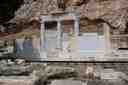
To spot the Asclepieion of Athens, look for pale marble ruins with a section of three tall columns standing side by side against the base of the rocky Acropolis hill, just up from scattered ancient stones and a small plaque labeled “Temple of Askleipios.” Welcome to a place where ancient Athenians came in search of something we’re still chasing today-a little healing and a touch of hope! Right in front of you, imagine yourself back in 419 BCE, just west of the Theatre of Dionysus, as Athens battles plague and war. The air is thick with incense and nervous anticipation. Telemachos, probably not known for his bedside manner, founds this sanctuary to honor Asclepius, the god of medicine, and his daughter Hygieia, which is just like naming your hospital today after Dr. House and Nurse Joy. The sick flock here, not for fancy surgeries, but for dreams-yes, dreams! People would actually sleep overnight on thin mats in the Doric stoa, hoping for a divine house call. If you woke up with a god's advice, congratulations-you might just get better! This wasn’t just a hospital, it was a mini-universe of hope. The temple and altar took center stage, where grateful Athenians brought offerings, while two stoas-the sturdy two-storied Doric one and its Ionic neighbor-welcomed all you overnight guests and hungry priests. The Doric stoa, with its mighty columns, ran alongside the sacred spring; a tiny cave with cool water trickling from the rock behind you. Next to it, a round pit built into the cliff-at first glance, maybe a wishing well, but actually a site for mysterious sacrifices to local heroes and “earthly” gods. Talk about an all-inclusive healing resort! As you stroll, notice the old entryway to the west, where in Roman days, they jazzed things up with a new propylon, welcoming folks into this ancient healthcare center. Later, as Athens changed, Christianity took the stage, demolishing temples and recycling stones into a grand basilica, and then, even later, a pair of tiny Byzantine chapels arrived, each leaving its sketch on this chalkboard of history. And let’s not forget the real celebrities here: the priests of Asclepius! Chosen by lottery almost like divine bingo, each got a year to play the healer-unless you were Roman, where appointments lasted a lifetime. Thanks to those lists, historians can date moments in Athens as accurately as a modern calendar. Today, with restoration work underway, you’re standing where miracles, mysteries, and maybe a few ancient snores once echoed. If you feel a cool breeze or sense an odd dream coming on, don’t worry-it’s just history whispering secrets from the time when every night promised a cure.
Otwórz dedykowaną stronę →Right in front of you stands a tall, round, marble structure set on a stone base, with slender columns wrapped around its sides-look just ahead in the center of Lysicrates Square,…Czytaj więcejPokaż mniej
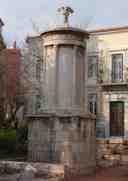
Right in front of you stands a tall, round, marble structure set on a stone base, with slender columns wrapped around its sides-look just ahead in the center of Lysicrates Square, where its elegant circular form rises above the pavement like a timeless trophy. Now, let’s step back in time and hear the astonishing tale of the Lysicrates Monument, or as some Athenians cheekily called it, Diogenes’ Lantern-though personally, I think it looks more like a cake stand for giants! Close your eyes for a moment and imagine ancient Athens in 334 BC. Instead of cars beeping and tourists snapping photos, you’d have crowds of excited citizens, vibrant festivals, and the sounds of singers and musicians practicing for the city’s legendary drama contests. Here on Tripodon Street-as famous to the Athenians as Hollywood Boulevard is to us-stood a row of splendid tripods, glimmering in the sunlight. These weren’t ordinary trophies; they were awarded to wealthy patrons, or “choregoi” as they were called, who paid for the chorus in the dramatic competitions held during the Dionysia festival. Imagine being so proud of your prize that you actually build a building just to show it off to your neighbors! That’s exactly what Lysicrates did. After his sponsored play won the grand prize, he wanted his bronze tripod-a three-legged cauldron that looked rather like something a wizard would use-to be seen by everyone in Athens. How best to display such a prestigious award? Why, by perching it on top of this cylindrical marble structure, standing on a square base, and circling it with Corinthian half-columns decorated with vine leaves and tiny tripods. If you look closely, you’ll see even more stories: a frieze of carved figures depicting the tale of Dionysus, the wine god, and his wild capture by Tyrrhenian pirates-who, legend says, were turned into dolphins for their trouble. Plot twist: don’t mess with the god of festivals! Over the centuries, this elegant “trophy tower” survived countless city adventures. In the late 1600s, a group of French Capuchin monks bought it and actually built their monastery around it! Imagine monks quietly reading or studying in what was once the proudest advertisement a theater patron could build. They even nicknamed it “The Lantern of Demosthenes”, although Demosthenes never kept his lunch in here, as far as I know. The monument even played a role in bringing tomatoes to Greece, thanks to a monk named Francis who planted the first tomato plants in the monastery's gardens-rumor has it, the first Greek salad may have started just a stone’s throw away from you! But there’s more-adventurous visitors, like the British Lord Byron, stayed in the monastery, and the monument’s unusual design became famous far beyond Athens. Artists and architects sketched it, and soon copies sprung up everywhere from Edinburgh in Scotland to Sydney in Australia. If you’ve ever seen a fancy dome or an elaborate garden monument in London or New York, chances are it was inspired by good old Lysicrates flaunting his theatrical glory. During the Greek War of Independence, the Capuchin monastery was destroyed by fire, but the plucky little monument survived, battered yet dignified, a symbol of Athens’ spirit. Later, there were even hilarious attempts to ship it off to England, but the monument proved too heavy (and, let’s be honest, probably too stubborn) to be moved-so here it remains, standing firm in the heart of Athens. So as you look up at this remarkable column, spare a thought for Lysicrates, theater-loving patrons, cheeky pirates, tomato-planting monks, and all the people and stories who have kept this beautiful monument alive in the heart of the city. Now, shall we move on to our next adventure?
Otwórz dedykowaną stronę →To spot the Arch of Hadrian, look for a towering, ancient marble gateway standing right at the edge of the bustling avenue; its grand, single arch is topped by columns and a small…Czytaj więcejPokaż mniej
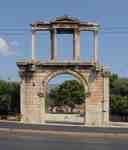
To spot the Arch of Hadrian, look for a towering, ancient marble gateway standing right at the edge of the bustling avenue; its grand, single arch is topped by columns and a small pediment, rising high and proud against the open sky. Take a deep breath-here you are, standing before the Arch of Hadrian, a monumental marble gateway so grand, you half expect some ancient emperor to walk through any minute, perhaps wearing a toga and looking for the nearest souvlaki stand. The marble shimmers in the Athenian sunlight, still showing off its stature despite nearly two millennia of weather and exhaust fumes from modern Athens. Imagine the sound of distant footsteps echoing through the stone arch, the murmurs of Athenians greeting the arrival of a new age. This arch wasn’t always surrounded by traffic and selfie-takers. Picture ancient Athens: dusty roads lined with columns, the scents of olive oil and roasting meats wafting through the air as crowds gathered. It wasn’t just any gateway-it marked the road from the heart of Athens toward the great Temple of Olympian Zeus, and, in the early 130s AD, excitement buzzed. Why? Emperor Hadrian was coming-the Roman ruler who loved Greece so much, he practically tried to out-Greek the Greeks! The Athenians wanted to greet him with a monument that would stop chariots in their tracks. The arch is pure Pentelic marble from Mount Pentelikon-the same stone as the Parthenon, though Hadrian’s arch, well, was made from the batch that might have had a few too many “character marks.” There’s no cement holding it together, only marble blocks tightly clamped, standing without mortar-a true feat of ancient engineering! Standing 18 meters tall and more than 13 meters wide, its graceful symmetry and Corinthian capitals are a real “look at me!” moment from every side. But what really makes the arch a conversation starter are the two inscriptions, each on opposite sides. One side, facing the dear old Acropolis, declares, “This is Athens, the ancient city of Theseus.” That’s right, the hero who wrestled Minotaurs and charmed princesses gets his own shout-out. Stroll through to the other side-bam!-the inscription reads, “This is the city of Hadrian, and not of Theseus.” Ouch! That’s the Roman emperor making it clear that the new city belongs as much-or maybe even more-to him. Could you imagine walking through and thinking, “Am I in Theseus’ Athens, or Did Hadrian just gentrify the place?” For centuries, people puzzled over what these messages meant. Was this arch a line in the sand, dividing old Athens from the shiny, Hadrian-renovated side? Turns out, not quite-the wall was actually a bit farther away. Now historians believe the inscriptions were Hadrian’s playful way of saying he was breathing new life into the whole city, not just part of it. Think of it as Athens’ biggest rebranding campaign. Above you, the upper level of the arch is a showcase of Roman refinement. Its three window-like openings were once closed with thin stone screens (long gone now), and there may have been colorful painted reliefs or even statues-perhaps Theseus and Hadrian themselves, locked in an eternal marble stare-off. But there’s a twist! Despite fancy theories, no one has found actual evidence of the dowels or supports that would have anchored statues atop the arch. Some say there were never statues, others think artworks disappeared long ago. The mystery lingers, giving the arch a kind of ghostly grandeur. Over the centuries, the arch stood tall while centuries of change rushed by-sometimes buried up to its knees, yet never crumbling completely. When early tourists mapped it in the 1700s, it was still almost as high as you see it now. Modern pollution may have stained the marble, but your eyes are still capturing nearly two thousand years of history standing firm. So, as you finish your tour, picture the cheers for Hadrian, the debates about who really “founded” Athens, and the eternal marble joke between king and emperor-reminding you, as all good monuments do, that every city has more than one story to tell. And if you hear a faint echo as the wind slips through those marble openings, maybe that’s just Athens whispering its secrets to you.
Otwórz dedykowaną stronę →

Najczęściej zadawane pytania
Jak rozpocząć trasę?
Po zakupie pobierz aplikację AudaTours i wpisz kod realizacji. Trasa będzie gotowa do natychmiastowego rozpoczęcia – po prostu dotknij \"Play\" i podążaj trasą z nawigacją GPS.
Czy potrzebuję internetu podczas trasy?
Nie! Pobierz trasę przed rozpoczęciem i korzystaj z niej w pełni offline. Jedynie funkcja czatu wymaga internetu. Zalecamy pobieranie przez WiFi, aby oszczędzać dane mobilne.
Czy to wycieczka grupowa z przewodnikiem?
Nie – to samodzielny audioprzewodnik. Zwiedzasz niezależnie, we własnym tempie, z narracją audio odtwarzaną przez telefon. Bez przewodnika, bez grupy, bez harmonogramu.
Ile trwa trasa?
Większość tras zajmuje 60–90 minut, ale to Ty kontrolujesz tempo. Wstrzymuj, pomijaj przystanki lub rób przerwy, kiedy chcesz.
Co jeśli nie zdążę ukończyć trasy dzisiaj?
Żaden problem! Trasy mają dożywotni dostęp. Wstrzymaj i wznów, kiedy chcesz – jutro, za tydzień lub za rok. Twój postęp jest zapisywany.
W jakich językach są dostępne trasy?
Wszystkie trasy są dostępne w ponad 50 językach. Wybierz preferowany język podczas realizacji kodu. Uwaga: języka nie można zmienić po wygenerowaniu trasy.
Gdzie znajdę trasę po zakupie?
Pobierz darmową aplikację AudaTours z App Store lub Google Play. Wpisz kod realizacji (wysłany e-mailem), a trasa pojawi się w Twojej bibliotece, gotowa do pobrania i rozpoczęcia.
Jeśli trasa Ci się nie spodoba, zwrócimy Ci pieniądze. Skontaktuj się z nami pod adresem [email protected]
Bezpieczna płatność przez 


