AudaTours logoAudaTours

Audioprzewodnik po Heidelbergu: Umysły, mity i rytmy rzeki

Audioprzewodnik11 przystanków

Pojedynczy kamień na Starym Mieście w Heidelbergu kryje w sobie sekrety stuleci, podczas gdy przełomowe odkrycia zmieniające świat odbijają się echem w przeszklonych laboratoriach tuż za rogiem. Ta samodzielna wycieczka z audioprzewodnikiem poprowadzi Cię przez ukryte dziedzińce, legendarne sale wykładowe i stowarzyszenia, które niewielu przyjezdnych ma szansę zobaczyć. Pozwól, by zapomniane skandale, legendy i odkrycia odmalowały spokojniejsze zakątki miasta w żywych barwach. Jakie wybuchowe wydarzenie zmusiło Wyższą Szkołę Pedagogiczną do zmiany zasad z dnia na dzień? Jaki tajny pakt w Niemieckim Centrum Badań nad Rakiem zwiększył jego światowe wpływy – i na zawsze zmienił los pewnego naukowca? I dlaczego w WKStV Unitas Ruperto Carola wciąż szepcze się o pojedynku, który zakończył się tragicznie? Przemieszczaj się między zacienionymi uliczkami a blaskiem nadrzecza, gdy historie wychodzą na jaw, a prawda ściera się z mitem. Poczuj tętniący życiem puls Heidelbergu poprzez akademickie spory, polityczne intrygi i widmowe ślady rewolucji. Odkryj najlepiej strzeżone sekrety miasta – zacznij słuchać i zajrzyj pod powierzchnię już teraz.

Podgląd trasy

map

O tej trasie

  • schedule
    Czas trwania 30–50 minsIdź we własnym tempie
  • straighten
    5.8 km trasy pieszejPodążaj wyznaczoną trasą
  • location_on
    LokalizacjaHeidelberg, Niemcy
  • wifi_off
    Działa offlinePobierz raz, korzystaj gdziekolwiek
  • all_inclusive
    Dożywotni dostępOdtwarzaj ponownie w dowolnym momencie
  • location_on
    Start przy Instytut Badań Medycznych im. Maxa Plancka

Przystanki na tej trasie

  1. To spot the Max Planck Institute for Medical Research, look for a long, modern brick building with rows of square windows and a wide green lawn out front-just keep an eye out to…Czytaj więcejPokaż mniej

    To spot the Max Planck Institute for Medical Research, look for a long, modern brick building with rows of square windows and a wide green lawn out front-just keep an eye out to your left for the building’s clean lines and rectangular shape. Welcome to the Max Planck Institute for Medical Research! Right here, where you’re standing, science history echoes through the air-imagine the soft buzz of research, the scratch of chalk on blackboards, and lively debates echoing down the hallways. Let’s step back in time to 1927, when this place was born as the Kaiser Wilhelm Institute for Medical Research. Germany was between wars, jazz floated through radios, and a visionary named Ludolf von Krehl had a wild idea: bring together top minds in chemistry, physics, biology, and medicine under one roof. It’s a bit like forming a superhero squad, but for science. Back then, researchers here wanted to understand life itself with the freshest tools of physics and chemistry. The atmosphere was electric, as if every test tube might reveal a new secret. This tradition of curiosity paid off: since its founding, six Nobel Prize winners have called this institute home! Can you imagine Nobel laureates Otto Fritz Meyerhof sprinting down the hall to share physiology breakthroughs or Richard Kuhn stirring up new chemistry experiments? If these walls could talk, they’d probably sound pretty witty-and extremely clever. The Institute has always changed with the times. In the swinging 1960s, as biology was revolutionized by the discovery of DNA, a new department was created just to explore molecular biology. Fast-forward to the 1980s and 90s-think big hair, neon socks, and, right here, intense investigations on muscle and nerve cells. Over the decades, new departments popped up, each with its own character, tackling everything from cell physiology to biomedical optics. A single hallway walk could take you past a physicist peering into the structure of molecules, a chemist brewing up new substances, and a biologist dreaming of synthetic tissues. But let’s add a dash of modern adventure: the Institute’s latest research is focused on the secret lives happening inside living cells. Imagine scientists, armed with super-powered microscopes and a mountain of patience, trying to watch how molecules dance in real time. There are currently four main departments here: Biomolecular Mechanisms, Chemical Biology, Cellular Biophysics, and Optical Nanoscopy. Each one is like a different detective agency, with experts using chemistry, physics, and state-of-the-art tools to crack the codes of life. One group even designs new reporter molecules-like microscopic journalists-that help translate what’s happening inside a cell! It’s all about making the invisible world visible. Inventive minds here invent! The Optical Nanoscopy department, led by Stefan Hell, aims to see things so tiny that not even light should be able to reveal them-classic scientists, always questioning the rules. Meanwhile, researchers in Cellular Biophysics are exploring how to create cell-like materials and even designer immune cells. It’s as if someone built a playground for future medicine. Let’s also not forget about the sound of collaboration-a blend of eager footsteps, quiet lunchroom chatter, and the occasional cheer when an experiment finally works. Now, the Institute is expanding to Heilbronn, adding artificial intelligence to its medical research playground. So, next time you walk past this brick-and-windowed wonder, picture history makers and future shapers puzzling over the mysteries of life. Your feet are planted right where Nobel dreams, scientific breakthroughs, and a whole lot of coffee come together. And who knows? With all that brainpower, maybe one day they’ll invent a way to predict the punchline to my next joke before I finish it! Welcome to the heart of curiosity in Heidelberg. Yearning to grasp further insights on the research, emeritus group biophysics or the max planck center with the participation of the institute? Dive into the chat section below and ask away.

    Otwórz dedykowaną stronę →
  2. To spot the German Cancer Research Center, look ahead for a large, modern glass-and-concrete building with the blue “dkfz.” sign at the top and a big blue-and-white banner on its…Czytaj więcejPokaż mniej

    To spot the German Cancer Research Center, look ahead for a large, modern glass-and-concrete building with the blue “dkfz.” sign at the top and a big blue-and-white banner on its facade, partly hidden behind leafy trees. Welcome to the German Cancer Research Center - or DKFZ, as the locals call it. Standing here, you can almost feel the quiet buzz of science unraveling the mysteries of cancer just meters away. The building itself might look like your average, modern research institute, but let me tell you, the stories packed into these walls are anything but ordinary. Let’s set the scene: It’s 1964, and Germany is looking for a way to lead the fight against one of humanity’s scariest enemies - cancer. Enter the legendary Heidelberg surgeon, Karl Heinrich Bauer. Fueled by determination (and possibly a ridiculous amount of strong coffee), Bauer’s vision comes to life right here. Soon, teams of scientists, doctors, and students start pouring in, uniting under a single goal: cracking the cancer code. Back then, there were no fancy MRI machines or high-speed computers. But what they did have was passion, creativity, and hope. Picture halls echoing with footsteps, urgent conversations in the stairwells, and the constant flickering of lab lights late into the night. As time marches on, the DKFZ only grows busier. In 1975, it becomes part of Germany’s circle of “Big Science” institutions, and in 1977, it joins the German Research Foundation. The word is out: If you want to make history in cancer research, this is the place. Fast forward to 2008, and the world’s eyes are on DKFZ when Harald zur Hausen, once the center’s chairman, scores a Nobel Prize for discovering that certain viruses can actually cause cancer. How’s that for a plot twist? Oh, and just to keep things extra dazzling, Stefan Hell, another DKFZ superstar, wins the Nobel Prize in Chemistry for making the invisible visible using groundbreaking microscopy. It’s almost as if Nobel Prizes are handed out here like party favors! A key to the DKFZ’s power is its sheer size: over 3,000 people, more than 100 departments, all collaborating in a high-stakes relay against disease. Their research covers everything from studying cells under ultra-high-powered microscopes to understanding how lifestyle and genes affect cancer risk. Here, the future of cancer treatment is being written before your very eyes-sometimes, they even send new therapies right from the laboratory bench to the hospital bedside. The DKFZ is also a champion of teamwork. It teams up with hospitals, universities, and even industry giants like Siemens and Bayer in the international race to cure cancer. During the COVID-19 pandemic, the DKFZ acted fast, launching a national helpline with other cancer organizations to help worried patients across Germany. The sense of duty here isn’t just about research-it’s about people, helping anyone with cancer find answers and hope. These scientists don’t just work for today, either. They nurture the next generation-PhD students training at their world-renowned school, gifted teens from the Life-Science Lab, and young researchers dreaming up tomorrow’s headlines. Every year, the DKFZ opens its doors to the curious public, running events and publishing an easy-to-understand magazine all about their discoveries. If you ever get a burning question about cancer, their Cancer Information Service is just a phone call away. Look up now at the glass windows and modern lines-inside, you might imagine the soft clattering of computer keys, lab glassware, and minds in motion. From international research alliances with Israel and France to bold partnerships taking on tobacco and developing new ways to shoot down cancer cells, this place has more scientific energy than a lightning storm. So, if these walls could talk, you’d probably hear a thousand stories about courage, curiosity, and the everyday drama of discovery, played out by an all-star cast of scientists determined to change the world-one breakthrough at a time. Curious about the research, cooperations and alliances or the offers for the public? Don't hesitate to reach out in the chat section for additional details.

    Otwórz dedykowaną stronę →
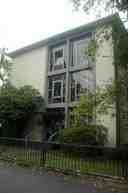
  3. In front of you is a tall, pale yellow building with a striking row of vertical windows above its front entrance, standing just off the street with the name “Bunsen-Gymnasium”…Czytaj więcejPokaż mniej

    In front of you is a tall, pale yellow building with a striking row of vertical windows above its front entrance, standing just off the street with the name “Bunsen-Gymnasium” clearly visible above the columns. Imagine you’ve just stepped into a whirlwind of young ambition and old stories! Welcome to the Bunsen-Gymnasium, a school with a spirit as colorful as the yellow façade you see, named after the legendary chemist Robert Wilhelm Bunsen, whose scientific spark once lit the halls of Heidelberg’s university nearby. But don’t worry, you won’t need a Bunsen burner to enjoy this story. Back in 1940, things were rather different here. The world was weighed down by war, but even in such heavy times, Heidelberg had education on the mind. The Bunsen-Gymnasium was born as the Robert-Bunsen-Schule-a daughter school of the Philipp-Lenard-Schule, which would later be called Helmholtz-Gymnasium. But the building was often on the move: from the former teachers’ training institute across town, to sharing cramped quarters with Helmholtz-Gymnasium, all before finally finding a true home in the Neuenheimer Feld, the very edge of academic Heidelberg. During the early years, the school could be called “boys only - with a Latin twist”-classes brimmed with young men decoding ancient texts. It wasn’t until 1969 that brave girls strode in, beginning with just one class focused on French, while the other classrooms still echoed with Latin recitations and the English alphabet. Full coeducation wasn’t embraced until the groovy days of 1973-yes, believe it or not, by then you could have a roaring game of dodgeball with both boys and girls on the same team. You might notice the building itself has grown up alongside its students, with extensions added in 1955, 1965, and 1971. Then in 2016, the school opened a sparkling new wing for the sciences, earning architects a prize for their smart design. So, if you detect a whiff of scientific excitement today, it’s not just leftover chemistry experiments-it’s the pride of a school at the cutting edge. Despite all the evolution, Bunsen-Gymnasium never forgot its roots in both language and science. Today’s students can soak up French or English, or dive deep into math and the sciences. It’s even part of an elite AbiBac program, meaning graduates can roam not just Heidelberg, but also the avenues of Paris and beyond, their diplomas glowing on both sides of the Rhine. The ties run strong with schools in France, including a partner campus in Wissembourg, and students collect French language certificates like some people collect stamps. Here, classroom learning blends with the world outside. The local physics institute even supplies the school with up-to-date weather data-so, if you hear students arguing whether it’s going to rain, they probably have the stats to back it up. Budding sports scientists from Heidelberg’s university get teaching practice here too, creating lessons that leave both students and teachers gasping for breath-but always smiling. A roll call of alumni could fill trophy cabinets from Cambridge to Columbia and beyond. You’re following in the footsteps of Nobel Prize laureates, innovative journalists, artists, top judges, and even basketball stars. All this, just beyond the big windows where, at this very moment, someone inside might be solving a tricky math problem, learning their first words in French, or perhaps dreaming of the day their own name might be part of the Bunsen legacy. Now, let’s see what the rest of Heidelberg has to offer! Exploring the realm of the building, location, courses or the cooperation? Feel free to consult the chat section for additional information.

    Otwórz dedykowaną stronę →
Pokaż jeszcze 8 przystankówPokaż mniej przystankówexpand_moreexpand_less
  1. Take a good look around you-welcome to the Heidelberg University of Education, where the future teachers of Germany gather their wits, sharpen their pencils, and, I suspect, drink…Czytaj więcejPokaż mniej

    Take a good look around you-welcome to the Heidelberg University of Education, where the future teachers of Germany gather their wits, sharpen their pencils, and, I suspect, drink quite a lot of coffee! Imagine, it’s 1962. The doors have just swung open for the first time. There’s an air of nervous excitement as teachers-to-be file in, the shuffle of shoes echoing in the new halls. The university began with a big challenge: Germany faced a desperate shortage of teachers after World War II. To fix it, Heidelberg’s education pioneers launched intense training courses. Maybe not quite Hogwarts, but for future educators, this was absolutely magical! Back in those early days, just a handful of experts-visionaries like the sociologist Ernst M. Wallner-helped craft a place that combined scientific research with real classroom practice. Soon, classrooms filled with lively debates from students dreaming of making a difference in primary, secondary, and special education. The crowd quickly grew-so much so that by the mid-1970s, the number of students exploded from 700 to over 3,300! If you’d strolled through the university on a cold morning in 1975, you might’ve slipped on packed hallways, dodged chatty students discussing everything from philosophy to soccer, and caught whiffs of chalk dust in the air. Today, this isn’t just a school-it’s a living laboratory for education, bursting at the seams with three major faculties. There’s the faculty of education and social sciences, home to psychology and special education; the faculty of culture and humanities, with institutes for languages, art, music, and philosophy; and the faculty of natural and social sciences, where aspiring science and math teachers conduct experiments that sometimes-if we’re honest-go “pop!” and “bang!” You could almost imagine a chemistry lecture interrupted by an unexpected explosion -just a typical Tuesday, as I hear it. This university never sits still. Over the years, it’s expanded across Heidelberg with 14 different locations, offering not only teacher training but also degrees in sign language interpretation, health promotion, and media education. There are even special programs for lifelong learners-because apparently, learning how to teach really does take a lifetime! They offer a dizzying number of master’s and bachelor’s degrees, from E-Learning and Media Education to Prevention and Health Promotion, so whatever your passion, there’s a classroom here that fits. Innovation has always been at the core of this place. The partnership with Heidelberg University led to the Heidelberg School of Education, launching joint master’s programs that blend tradition with new teaching approaches. There’s a UNESCO chair dedicated to world heritage education, and you can even find a research garden-the Ökogarten, or Garden of Diversity-where future science teachers can literally dig into their studies. And if that doesn’t sound fun enough, there are centers packed with drama, theater, and music. You might wander these corridors and hear music carries from a classroom, or catch laughter from a drama workshop. The university has seen a parade of memorable characters-rectors and professors who shaped generations. Legendary educators, philosophers, and even a few mathematicians so brilliant, they could calculate your age from the ringing of a school bell (and probably would, for fun). Honorary citizens and professors like Maria Böhmer and Ernst Meyer have made their mark, ensuring the Heidelberg University of Education will always be more than just classrooms and textbooks-it's a place where ideas come alive, buildings burst with memories, and every corner hums with possibility. So as you stand here, listen for echoes of past students bustling to class, and remember-you’re at the very heart of Heidelberg’s engine for knowledge, curiosity, and a bit of academic mischief. And if you ever wonder how many teachers it takes to change a light bulb, don’t worry-here, they’ve researched the answer! Eager to learn more about the faculties, courses of studies or the workplaces and centers of excellence? Simply drop your inquiries in the chat section and I'll provide the details you need.

    Otwórz dedykowaną stronę →
  2. To spot St. Raphael in front of you, look for a large yellow-brick church with a grand, symmetrical facade crowned by statues, a striking green-topped bell tower with a clock, and…Czytaj więcejPokaż mniej

    To spot St. Raphael in front of you, look for a large yellow-brick church with a grand, symmetrical facade crowned by statues, a striking green-topped bell tower with a clock, and rows of elegant arches-right in line with the trees and Werderstraße. Now, let’s step into the story of St. Raphael, a church with roots as deep as its stones and bells are resonant. Imagine the end of the 19th century: the Neuenheim neighborhood of Heidelberg is bustling, swelling with people, and-plot twist-the old local church belongs to the Protestants! But the Catholics kept multiplying until they simply needed a home of their own. This is how St. Raphael was born, not out of thin air, but out of a pressing need and a wave of new arrivals. Take a moment to soak in the facade. Those yellowish bricks, the round arches reaching for the sky, and that ornate facade-well, they’re straight out of Italy’s architectural playbook. If you squint, you might almost feel the spirit of Pisa’s grand cathedral peeking through the arches. The pyramid-roofed tower to your left channels Venice, too, and on top, a group of statues keep watch; if you're thinking, “That looks kind of heavenly,” you’re onto something! But here’s where the story takes a turn for the touching-St. Raphael isn’t just named after any angel. The church was built in part thanks to the generosity of a grieving family, who donated a large sum to honor their son, Raphael Slidell von Erlanger, a zoology professor who left this world too soon. His memory, and even his epitaph, live on here. The parish inherited its unusual name in his honor, so you’re not just looking at any St. Whatever-this is a St. Raphael with a very personal backstory. Now, travel back to the first Christmas in the nearly finished church, in 1904, with excitement shimmering through the chilly winter air. A year later, Archbishop Thomas Nörber made it official with a blessing-and probably a very grand hat. Through wars, reforms, and changing times, the church has adapted. The original grand altars are gone, and the interior has seen modern touches-keeping the faith but ditching some of the furniture. During the 1960s, St. Raphael was remodeled in line with new traditions, and the latest renovations just two decades ago brought a deep blue ceiling, inspired by old medieval dreams. Look inside if you can-the north-side stained-glass windows have survived from the early days, showing saints in glowing color. On the south side, you’ll see windows that replaced those lost in World War II; they now tell Angel Raphael’s story from the Old Testament. Oh, and if you hear music, it might be the mighty organ, installed in 2016 with a whopping 32 registers-imagine the sound shaking the pews! And finally, don’t miss the five bells above. The oldest-the proud survivor of two World Wars-weighs over a ton. When it rings, it echoes with the hope and gratitude, loss and love, woven into the story of St. Raphael, the church with a heart as big as its bells are loud.

    Otwórz dedykowaną stronę →
  3. You’ll spot the Astronomical Computing Institute right ahead of you-a modern, cream-colored building with large square windows framed in grey, peeking out from behind a few trees…Czytaj więcejPokaż mniej

    You’ll spot the Astronomical Computing Institute right ahead of you-a modern, cream-colored building with large square windows framed in grey, peeking out from behind a few trees and shrubs. Now, imagine you’ve landed at a place where minds are so sharp they can map the stars themselves! The Astronomical Computing Institute, or ARI as the locals call it, has quite the cosmic backstory. The fun began way back in 1700-just imagine powdered wigs and twinkling candlelight-when the first astronomers, led by Gottfried Kirch, started tallying up the stars in Berlin. Fast-forward to 1874: with astronomers scrambling to keep up with the ever-growing number of calculations, Wilhelm Foerster said, “Let’s build a whole institute!” And they did, right next to the Berlin Observatory. Here, amid the whir of pencils on paper, stargazers mapped the heavens! When Berlin became too hot to handle during wartime, the institute’s brains (and their precious calculations) were whisked away to the quiet countryside and, finally, to peaceful Heidelberg after World War II. Since then, ARI has become the international headquarters for figuring out exactly where the stars and planets will be-down to the tiniest fraction of a second. Their calculations fill entire yearbooks, calendars, and even guide stargazers across the world. They’re also the masterminds behind stellar catalogues, so precise that if an alien needed directions to Earth, ARI could probably help. Oh, and a fun tidbit: there’s even an asteroid named after ARI-and after a hundred years, they threw a “star-studded” 300th birthday bash right here! So while the building may look calm and quiet, inside, cosmic mysteries are being worked out every single day.

    Otwórz dedykowaną stronę →
  4. To spot the Neckarwiese, just look to your right along the north bank of the Neckar-it's the broad, green stretch of parkland where people are relaxing and boats drift gently on…Czytaj więcejPokaż mniej

    To spot the Neckarwiese, just look to your right along the north bank of the Neckar-it's the broad, green stretch of parkland where people are relaxing and boats drift gently on the water. Now, take a deep breath and soak in the lively hum around you-this is the Neckarwiese, Heidelberg’s biggest patch of green, over five hectares wide and packed with life, history, and, if you’re lucky, the occasional flying frisbee. Picture yourself here centuries ago-the river was a bustling highway for Roman soldiers and merchants, complete with a stone-pillared bridge guarded by a nearby Roman fort. Fishermen’s humble boats lined the shore, a scene of quiet and simple rhythm, very different from today’s picnic baskets and volleyball games. By the late 1800s, this was still just a rugged riverside strip until the city of Neuenheim was incorporated into Heidelberg; only then did it start to grow into the much-loved public park it is today. The 1920s brought a big change: the Neckar was made into a regular waterway for shipping. People worried this would ruin the boat trips everyone loved, but instead, the improved riverbanks made the Neckarwiese even better (and wider!). Oddly enough, though, the park still has a wild side-being just a meter above river level means it turns into a swampy swimming pool whenever the river gets rowdy with floods. Neckarwiese isn’t just for lazy afternoons-it’s the stage for rowing regattas, sports festivals, vibrant kids’ theater, city cycling days, football fever, public parties, and fireworks of all sorts. The place practically buzzes from spring through autumn, and sometimes even heats up with debates over noisy evenings and sizzling barbecues. As you stand here, imagine all those centuries and celebrations flowing through this giant green heart-who knows, maybe you’ll witness history in the making, or at least have the perfect spot for a riverside nap!

    Otwórz dedykowaną stronę →
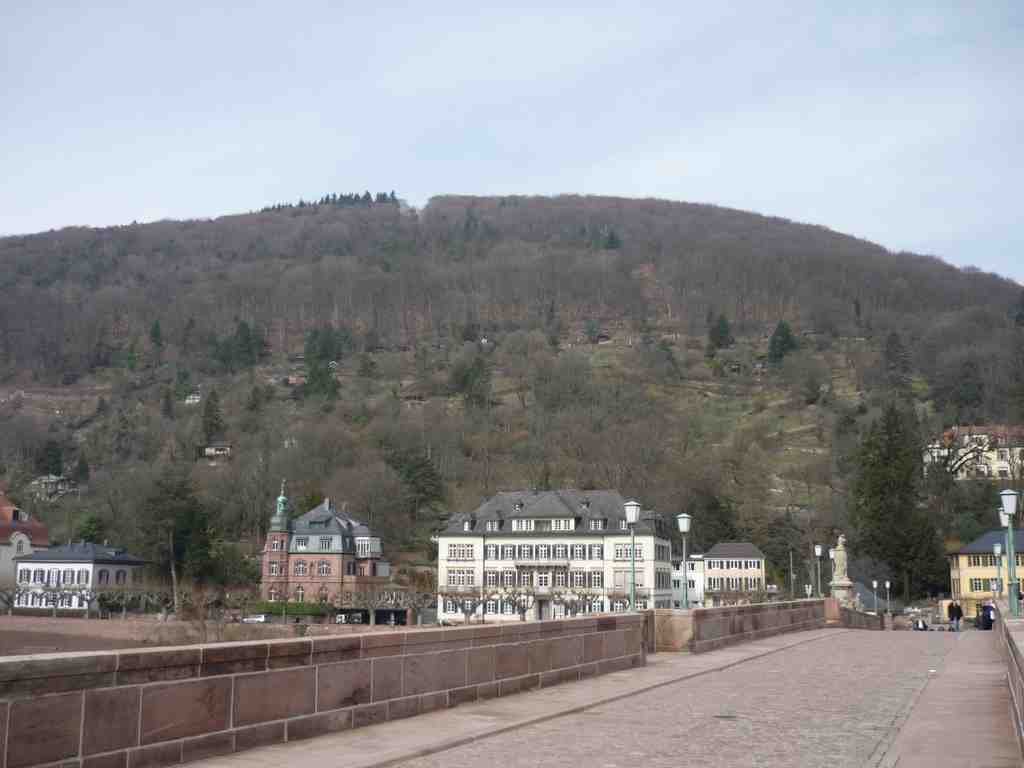
  5. In front of you is a broad, modern bridge spanning the Neckar River with green railings and a row of tall flagpoles, easy to spot as it stretches across to the hillside…Czytaj więcejPokaż mniej

    In front of you is a broad, modern bridge spanning the Neckar River with green railings and a row of tall flagpoles, easy to spot as it stretches across to the hillside neighborhood of Neuenheim. Now, take in the cool air sweeping off the Neckar - this bridge is more than just concrete and steel, it’s a time machine disguised as a shortcut. If you’d been here around 2,000 years ago, you might have squelched through a muddy river ford nearby while Roman soldiers built the very first bridges to tame the wild waters. Even back then, this stretch of river was a prime spot for crossing, and sharp-eyed Romans took full advantage in the 80s… the 80s AD, that is! Fast-forward to the 13th century and travelers floated across by ferry, feeling every wobble as they clung to barrels and ropes. As centuries rolled on and horse carts rattled louder in old Heidelberg, city leaders knew the medieval ferry just wouldn’t cut it. In 1877, the mighty “Friedrichsbrücke” rose here - grand, modern, and at 243 meters, long enough to make even the bravest carriage-horse break a sweat. By 1905, traffic was ballooning, so the bridge got a major facelift: extra lanes, streetcars, and a grand reopening in honor of Grand Duke Friedrich I. For a brief moment, it really was “the new bridge,” though drivers still grumbled about cobblestone potholes. But history had one more river to cross: World War II. Retreating armies blew up the bridge in 1945, silencing years of footsteps and rumbling carts. In the chaos that followed, American forces cobbled together a temporary wooden bridge so shaky it was nicknamed “Wooden Friedrich” - and when local mushrooms started attacking the foundations, well, let's just say the bridge had a real fungi problem. By the late 1940s, Heidelberg rallied again, giving birth to the concrete, beam-style span now before you. Crafted to fit the valley’s grand landscape, it fits in like a keystone rather than a sore thumb. It finally got its new name in 1964, honoring Theodor Heuss, a beloved President who’d walked these planks himself. And you can thank the work crews of the 1990s for the bridge’s sleek new look - built broad enough for trams, traffic, and those grumbling drivers who never seem satisfied. So next time you cross, give a nod to the Romans, the rowers, the mushroom battlers, and everyone who turned this bridge into the heart of Heidelberg!

    Otwórz dedykowaną stronę →
  6. Look directly across the grassy Neckarwiese towards the river and you'll spot the Heidelberg Rowing Club as a modern, pale building with large, glassy windows and a sign that…Czytaj więcejPokaż mniej

    Look directly across the grassy Neckarwiese towards the river and you'll spot the Heidelberg Rowing Club as a modern, pale building with large, glassy windows and a sign that proudly reads "Heidelberger Ruderklub 1872 e. V." above the entrance. Now, let’s spin the tale of the Heidelberg Rowing Club! Picture yourself standing here in the early morning mist-back in 1872, when mustaches were wild and boats were mainly powered by tea and stubbornness. A few adventurous souls from the Bismarck boat group got together and decided rowing needed an upgrade, so they founded the original club. What started as the “Deutscher Flaggen-Club” soon became the anchor for all Heidelberg rowing, pulling in every local rowing enthusiast by 1875. Just five years later, the club celebrated its very first out-of-town regatta victory. Imagine the cheers and the slap of oars on water echoing through the valley. But the club didn’t just float by on nostalgia. In 1928, two brave members-Heinrich Bender and Rudi Wild-packed their rowing dreams and headed off to compete at the Olympics in Amsterdam. Fast forward to the year 2000, when this very boat house, the club’s luxurious ninth home, opened its doors to let even more Heidelbergers chase river glory. Today, you’d find nearly 450 active members gliding up and down the club’s stretch of the Neckar, from the venerable Old Bridge to the Wehrsteg footbridge, every May organizing the grand Heidelberg regatta that attracts rival rowers from near and far. This club has never been one to snooze by the riverside-its trophy shelf is groaning under the weight of victories: from the 1891 Frankfurt island title, to world championships, European titles, sprint victories in the 2000s, and strong showings even in the fierce Bundesliga. But wait-rowing isn’t the only game here. That “rowdy” energy spills out onto the rugby field! Thanks to Edward Hill Ullrich, who translated rugby rules into German (because, let’s face it, Germans love good rules), the HRK birthed the very first dedicated rugby group in the country. In summer, they rowed; in winter, they played rugby. And boy, did that tradition pay off! 14 rugby championship titles, 3 cup victories, and a mountain of youth and women’s titles later, the HRK rugby squad turned from scrappy side to legend. They even snagged a spot in the European Challenge Cup-though, after a little drama with club ties and some complicated sports politics, that particular adventure ended with club officials giving the referee a very stern look. So, whether your heart beats to the slap of oars or the pounding feet on a rugby field, the Heidelberg Rowing Club has room for both the river’s calm and the pitch’s chaos. Sometimes, when the teams meet after a long day, you’ll hear laughter as loud as any cheer for a winning goal.

    Otwórz dedykowaną stronę →
  7. You’ve made it to the WKStV Unitas Ruperto Carola, a place that’s seen more history, debates, and, let’s face it, shared student dinners than your average Heidelberg kitchen!…Czytaj więcejPokaż mniej

    You’ve made it to the WKStV Unitas Ruperto Carola, a place that’s seen more history, debates, and, let’s face it, shared student dinners than your average Heidelberg kitchen! Picture yourself standing where generations of students have gathered, heads buzzing with ideas, and probably a little caffeine. This isn’t just any old student house - it’s the heart of a tradition dating back to July 11, 1900. Back in the very beginning, Unitas was more like a dinner club for ambitious young minds. The earliest meetings happened at Hotel Luxor, where students would debate, plan, and occasionally argue over who got the last piece of bread. But this modest start quickly gained momentum. As more students joined from other cities like Bonn, Munich, and Freiburg, Unitas became a thriving network-a bit like a vintage version of your favorite group chat, only in person and with more Latin. The numbers swelled until World War I changed everything. The devastating loss of six members cast a shadow on the group, and their meeting place, Hotel Luxor, had to close its doors. But the spirit of Unitas was tougher than a three-day-old baguette. Despite the hardships, more and more students flocked to the society. In fact, by May 20, 1931, Unitas had grown so much that it branched out, founding the Mannheim-based Unitas Rheno-Palatia. By the late 1920s, Unitas Heidelberg acquired its own headquarters in Klingenteichstraße 19. But the peaceful days didn’t last. With the rise of the Nazis and the infamous “Heidelberg Asparagus Dinner”-and, honestly, who knew spargel could cause such a scandal-all student associations were under threat. If this sounds like the plot of a Netflix drama, get this: Unitas refused to dissolve itself, standing up for its beliefs. Unfortunately, that didn’t go over well with the regime. On June 20, 1938, Unitas Heidelberg was forcibly disbanded as a “state enemy.” But in an act of creative resistance, the students managed to transfer the ownership of their house to the caretaker, dodging a government takeover by the infamous Waffen-SS. Not bad for a group famous for organizing study sessions, right? After the war, Unitas shot back to life. The broader Unitas network regrouped in 1948, and by early 1949, Heidelberg’s circle was meeting again. The original house, though, was lost to history, thanks to that wartime technicality. Still, nothing - not even administrative paperwork - could keep down the Unitas spirit. By the late 1950s, Heidelberg’s Unitas could boast over 80 members, a real crowd by student society standards. Ever wonder about the name? “Ruperto Carola” is a mash-up honoring Heidelberg University’s founders: Ruprecht I and Karl Friedrich. And just like the university itself, much of the early business was done in Latin - perfect for keeping professors on their toes, or maybe their dictionaries close by. Now, here’s where things stop being just a “boys’ club.” Unitas opened up early, letting women participate in unofficial club events all the way back in 1909. By 2003, women actually moved into the house itself, and in 2005, they set up their very own society. Today, Unitas Heidelberg is unique in the city: it’s the only student house hosting two different organizations in a kind of collegiate coexistence. That’s modern history for you-no more keeping the pie to just one group! Today, the hallways buzz with around 35 active members, making Unitas the biggest student society in Heidelberg. Each semester, they take on charity projects-a Christmas market stand here, a marathon fundraiser there. They’ve helped children’s hospices in Mannheim, refugee initiatives, orphanages, and even programs in Bolivia. Who said students only think about exams? And the alumni? More than 250 old members-some politicians, abbots, and, believe it or not, even a judge of Germany’s highest court-still support the club. With every academic year, this grand house gathers new voices, fresh ideas, and more than a few strong opinions about cafeteria coffee quality. So take a look at this building. The history here wasn’t just written in dusty books, but lived in noisy dinners, whispered plans, and bold decisions. If a student society can outsmart dictators, outlast wars, and occasionally out-caffeinate itself, well, I’d say that’s a legacy worth celebrating!

    Otwórz dedykowaną stronę →
  8. To spot the Philosopher’s Trail, look up the hillside rising across the river from the Old Town; you’ll notice a rugged, tree-lined path snaking through the greenery above the…Czytaj więcejPokaż mniej

    To spot the Philosopher’s Trail, look up the hillside rising across the river from the Old Town; you’ll notice a rugged, tree-lined path snaking through the greenery above the handsome villas-if you’re near the old bridge, you just need to look slightly right and upwards at the slopes, and there it is. Now, let’s step into the story-take a deep breath, because what you see ahead was once the secret stage for some of Germany’s greatest thinkers to hatch wild ideas, poetic verses, and maybe daydream about skipping class. Imagine this: the Philosopher’s Trail, just about two kilometers long, starts out with a wickedly steep and winding climb-so steep, in fact, that your thoughts might be more about catching your breath than pondering the mysteries of life, at least on the first seven hundred meters! That lower half winds past some of Heidelberg’s fanciest addresses, where, back at the dawn of the 20th century, the esteemed Physical Institute of the university settled in, safely tucked away from city tremors. Keep walking and you’ll pass where renowned zoologist Hugo Merton lived-before he was forced to flee Nazi Germany and seek safety in England. Nobel Prize-winning physicist Hans Jensen, too, roamed here, picking out buildings for the university in the 1950s. So if you feel your brain buzzing along the way, don’t be surprised: you’re sharing the path with intellectual heavyweights. But here’s where it levels out-and so do your chances of both catching your breath and catching the best view in town! As you meander along the nearly flat main stretch, you’ll find the quaint Philosopher’s Garden, almost a hidden lookout. Lean on the stone wall, and behold: the Neckar River below, the red rooftops of Heidelberg’s Altstadt, the regal Heidelberg Castle, and far across the Rhine plain. Look closely for a metal plaque inviting you to reflect on the nature of truth-no pressure, right? Just the kind of philosophical brain-teaser that would have fit right in with the thinkers who made this place famous. You’ll pass a bust of Joseph von Eichendorff, a romantic poet who studied here for a spell, with one of his poems engraved near your feet. At the far end is the Hölderlin memorial, marking where the poet sang Heidelberg into literary eternity. And if you wander just a bit more, there’s a stone commemorating the tiny Engelskirche church, lost to time. Of course, if you fancy a challenge, try the Snake Path-zigzagging up in true “Indiana Jones meets grad student” style. But no matter which route you wander, every stone, tree, and view has a story of students, philosophers, poets, and a dash of romantic mischief. Legend says the name came from those early students, taking breaks from dry textbooks to stroll, debate, and, probably, steal a kiss or two under the grapevines. Here, you’re in good company-who knows what ideas the trail will spark in you today!

    Otwórz dedykowaną stronę →
Najczęściej zadawane pytania

Jak rozpocząć trasę?

Po zakupie pobierz aplikację AudaTours i wpisz kod realizacji. Trasa będzie gotowa do natychmiastowego rozpoczęcia – po prostu dotknij \"Play\" i podążaj trasą z nawigacją GPS.

Czy potrzebuję internetu podczas trasy?

Nie! Pobierz trasę przed rozpoczęciem i korzystaj z niej w pełni offline. Jedynie funkcja czatu wymaga internetu. Zalecamy pobieranie przez WiFi, aby oszczędzać dane mobilne.

Czy to wycieczka grupowa z przewodnikiem?

Nie – to samodzielny audioprzewodnik. Zwiedzasz niezależnie, we własnym tempie, z narracją audio odtwarzaną przez telefon. Bez przewodnika, bez grupy, bez harmonogramu.

Ile trwa trasa?

Większość tras zajmuje 60–90 minut, ale to Ty kontrolujesz tempo. Wstrzymuj, pomijaj przystanki lub rób przerwy, kiedy chcesz.

Co jeśli nie zdążę ukończyć trasy dzisiaj?

Żaden problem! Trasy mają dożywotni dostęp. Wstrzymaj i wznów, kiedy chcesz – jutro, za tydzień lub za rok. Twój postęp jest zapisywany.

W jakich językach są dostępne trasy?

Wszystkie trasy są dostępne w ponad 50 językach. Wybierz preferowany język podczas realizacji kodu. Uwaga: języka nie można zmienić po wygenerowaniu trasy.

Gdzie znajdę trasę po zakupie?

Pobierz darmową aplikację AudaTours z App Store lub Google Play. Wpisz kod realizacji (wysłany e-mailem), a trasa pojawi się w Twojej bibliotece, gotowa do pobrania i rozpoczęcia.

verified_user
Gwarancja satysfakcji

Jeśli trasa Ci się nie spodoba, zwrócimy Ci pieniądze. Skontaktuj się z nami pod adresem [email protected]

Bezpieczna płatność przez

Apple PayGoogle PayVisaMastercardPayPal

AudaTours: Audioprzewodniki

Rozrywkowe, niedrogie, samodzielne piesze trasy

Wypróbuj aplikację arrow_forward

Uwielbiany przez podróżników na całym świecie

format_quote Ta trasa była świetnym sposobem na poznanie miasta. Historie były ciekawe, bez przesadnego scenariusza, i uwielbiałam możliwość zwiedzania we własnym tempie.
Jess
Jess
starstarstarstarstar
Trasa po Tbilisi arrow_forward
format_quote To był solidny sposób na poznanie Brighton bez poczucia bycia turystą. Narracja miała głębię i kontekst, ale nie przesadzała.
Christoph
Christoph
starstarstarstarstar
Trasa po Brighton arrow_forward
format_quote Zacząłem tę trasę z croissantem w jednej ręce i zerowymi oczekiwaniami. Aplikacja po prostu idzie z Tobą, bez presji, tylko Ty, Twoje słuchawki i fajne historie.
John
John
starstarstarstarstar
Trasa po Marseille arrow_forward

Nieograniczone audioprzewodniki

Odblokuj dostęp do KAŻDEJ trasy na świecie

0 tras·0 miast·0 krajów
all_inclusive Odkryj Bez Limitu