Wycieczka audio po Tartu: Mity, mosty i legendy serca Estonii
Pod zielonym baldachimem Tartu najstarsze wzgórze miasta kryje sekrety, które przetrwały imperia. Tutaj opancerzeni wojownicy stoją zastygli w oporze, a zrujnowane katedry rzucają ciche cienie, zachęcając ciekawskich do głębszego spojrzenia. Ta wycieczka audio z przewodnikiem odkrywa historie często pomijane przez tłumy lub przewodniki. Przemierzaj kręte ścieżki i starożytne twierdze, aby odkryć ukryte zakątki, gdzie mit zaciera się z rzeczywistością. Co skłoniło księcia Wiaczkę do ostatniego, desperackiego oporu na płonących wałach Jurjewa? Czyje szepty rozbrzmiewają po północy pod zrujnowanymi łukami Katedry w Tartu? Dlaczego dziwnie pusta tablica w pobliżu Wzgórza Katedralnego wskazuje na zaginiony rozdział historii? Podróżuj przez polityczne oblężenia, bunty, ciche skandale i nierozwiązane zagadki. Przechodź od trawiastych kopuł do strzelistych ruin, gdy przeszłość i teraźniejszość zderzają się pod twoimi stopami. Każdy zakręt przynosi nową falę odkryć — każdy pomnik jest świadkiem ambicji, odwagi i straty. Gotowy, by podążać śladami bohaterów i wyrzutków? Rozpocznij spacer tam, gdzie brązowe miecze są zawsze wzniesione.
Podgląd trasy
O tej trasie
- scheduleCzas trwania 40–60 minsIdź we własnym tempie
- straighten3.9 km trasy pieszejPodążaj wyznaczoną trasą
- location_on
- wifi_offDziała offlinePobierz raz, korzystaj gdziekolwiek
- all_inclusiveDożywotni dostępOdtwarzaj ponownie w dowolnym momencie
- location_onStart przy Wiaczko i Meelis podczas obrony Jurjewa
Przystanki na tej trasie
To spot the monument, look to your side for a dramatic bronze sculpture of two armored warriors-one pointing west with a sword and shield, the other beside him tensely clutching a…Czytaj więcejPokaż mniej
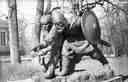
To spot the monument, look to your side for a dramatic bronze sculpture of two armored warriors-one pointing west with a sword and shield, the other beside him tensely clutching a crossbow-half-concealed among the trees on a grassy rise. As you stand here, can you feel the tension in the air, as if the forest itself is holding its breath? This statue of Vyachko and Meelis captures a moment from a distant, dangerous year-1224-when the city we now call Tartu was known as Yuriev, its wooden walls the last hope against the advance of German crusaders. Imagine the clang of chain mail as Prince Vyachko, cloaked in Russian armor, lifts a steady hand and points to the west-toward the looming threat. Next to him, Meelis, a young Estonian in a national cap, tightens his grip on his crossbow, eyes burning with resolve toward that same horizon. The story is as real as the pressure in their posture. The town of Yuriev had been a Russian-founded fortress even before Russia was baptized, but by the 13th century, it stood at the crossroads of mighty ambitions. The German Sword Brothers, driven by the Catholic Church’s holy mission, demanded the conversion of the Baltic pagans. The Estonians, fiercely independent, wanted none of it. Rebellion sparked across the land. When all seemed lost, the cry for help reached Russian princes. The response was Prince Vyachko, a man of the old Rurik bloodline, sent to command Yuriev with two hundred swords at his back. The city’s wooden towers and icy riverbanks echoed with the hopes of all those resisting conquest. It is under these very walls that this legend-and this monument-were born. Twice, Vyachko’s defenders threw back the armored crusaders, arrows and bolts hissing through the smoky air. But there was no miracle, no sudden salvation from Novgorod-reinforcements only made it as far as Pskov-and soon the garrison stood alone. In one of the most desperate moments ever felt in these lands, Vyachko, arm outstretched to the west, held the line with Meelis, son of the fallen elder Lembitu, at his side. The city eventually fell; both became martyrs in the struggle for survival and freedom. Their sacrifice, wrapped in smoke and freezing mud, echoed through centuries. Of the two figures before you, Vyachko is a prince with deep roots in the chronicles of Slavic history. Meelis springs from another sort of legend-his story comes from the imagination of Estonian writer Enn Kippel, whose 1941 novel told of a brave youth convincing a great prince to stand and defend Yuriev. In the statue, their friendship across cultures becomes a symbol: swords of steel, hearts united. For years, this monument sat in the shadows-not simply hidden by trees, but almost forgotten by official guides. Installed here on the Kassitoome hill in 1980, a gift for Tartu’s 950th anniversary, it became a quiet witness to new eras. Sometimes, as in 2008, vandals struck, sawing away Vyachko’s sword by night, leaving the warrior’s hand haunted and empty. Still, the spirit remains: these two figures gaze eternally toward the west, challenging you, as all who pass, to remember courage and friendship at the darkest of times. In Soviet days, this group was hailed as a symbol of unbreakable ties between Estonian and Russian peoples, even gracing the cover of a celebrated volume on Estonian SSR history. Yet the monument itself stands without a single explanatory plaque, nearly swallowed by summer leaves, quiet as a secret. You have found a place where myth and reality interlace beneath the old trees-where even without words, stone and bronze speak of bravery, hope, and the long, unfinished tale of Tartu.
Otwórz dedykowaną stronę →As you walk up the curving pathway to your left, look ahead and a little uphill-you’ll spot the enormous, red-brick ruins of the Tartu Cathedral towering above the green lawns,…Czytaj więcejPokaż mniej
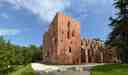
As you walk up the curving pathway to your left, look ahead and a little uphill-you’ll spot the enormous, red-brick ruins of the Tartu Cathedral towering above the green lawns, with its mighty, fortress-like walls and tall empty windows catching the light. Take a deep breath and imagine yourself standing here nearly a thousand years ago, when this hill-called Toomemägi, or Cathedral Hill-was thick with ancient forests and crowned by a vast wooden stronghold. Back then, powerful pagan chieftains watched over the Emajõgi River from this very spot, their fortress standing as the heart of old Estonian power. But everything changed in 1224, when Christian invaders stormed the hilltop, tearing down the fortress, erasing centuries of stories, and marking the beginning of a new era. Almost at once, the victors began to build-first a stone bishop’s castle, and then, slowly, the immense cathedral rising before you now. Imagine the clang and echo of medieval stonework filling the air as masons and craftsmen shaped red bricks for a new and mighty house of worship. The cathedral grew in stages from the late 1200s. People buried their loved ones here in graveyards that hugged the walls, while priests and bishops lived in houses just steps away. Its grand arches, soaring up in Brick Gothic style, were dedicated to Saints Peter and Paul, guardians of the city. By the time the 15th century ended, those twin towers on either side of the entrance rose so high, travelers swore they matched the great towers of Notre-Dame in Paris! But not for long. Feel the chill in the air as the scene darkens-the mid-1500s bring the earthquake of Reformation. On a winter’s morning in January 1525, crowds charged in, smashing icons and shattering the cathedral’s forgotten peace. With the Bishop of Dorpat banished and religious wars raging across Livonia, the cathedral was left to rot. Fires, battles, and neglect allowed weeds to push up between the stones. Cornered by shifting armies-first Russians, then Poles, then Swedes-the proud towers crumbled. By the 1760s, instead of ringing with bells, they became platforms for cannons and lookout posts, the main entrances sealed by heavy walls, as Tartu had moved on and the cathedral slipped quietly into ruin. But history’s tide turned again. In 1802, Tsar Alexander I founded a new university here, and a wave of serious, curious scholars swept into Tartu. Among the ruins, an ambitious German architect named Johann Wilhelm Krause built a three-story library inside the old walls. Imagine the footsteps of students and professors bouncing off ancient bricks as they climbed the same spiral stairs their medieval predecessors once ascended-ghostly echoes of parchment, ink, and debate in the air. The cathedral, in a strange twist of fate, became the intellectual heart of the renewed city, even as the outside was left a wild, windwhipped shell. Throughout the 20th century and beyond, the building changed roles yet again. A water tower was placed where priests once chanted. The museum of the University of Tartu moved in, opening its doors with treasures from centuries of academic life-books, maps, and inventions displayed in the shadow of shattered arches. Offices, classrooms, even an art department have called these walls home, each one layering another chapter on top of ancient foundations. Step back and notice the park around you. In the 1800s, Toomemägi was greened into a leafy haven, dotted with monuments-statues to poets, scientists, and visionaries. Pathways wind to the Angel Bridge, the Supreme Court, and even an anatomy theater. This hill, once alive with conflict and conquest, is now a place for walks, stories, and reflection. Yet, on crisp evenings, as the last sun glances off those enduring red towers, you might just hear the whispers of ancient priests, the songs of old Estonians, and the dreams of scholars echoing between the stones-reminding you that here, every era has left its voice. If you're keen on discovering more about the decline of the cathedral, university or the toomemägi, head down to the chat section and engage with me.
Otwórz dedykowaną stronę →Directly ahead of you, you’ll spot a gentle grassy hill rising between tall trees, with a long staircase climbing right up its center-just follow the steps and you’ll know you’re…Czytaj więcejPokaż mniej
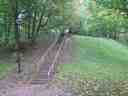
Directly ahead of you, you’ll spot a gentle grassy hill rising between tall trees, with a long staircase climbing right up its center-just follow the steps and you’ll know you’re at Domskaya Gorka. Take a deep breath and let your imagination wander back over a thousand years; you’re standing on Toomemägi, the heart of Tartu’s ancient beginnings. Think of this hill long ago, before these tidy steps-thick woods and the distant sound of the Emajõgi river, locals building wooden fortifications to protect their homes from rivals or unexpected visitors. You might hear axes pounding, the soft rustle of leaves, shouts traveling up from the valley. By the 7th century, this place was alive with the urgency of defense. In your mind’s eye, picture perched wooden towers, lookouts keeping eyes sharp for any movement in the distance. Later, medieval times brought stone and even more drama-a bishop’s castle rose here, casting long shadows and impressing all who approached. Imagine monks, soldiers, and students crowding the grounds, secrets and laughter echoing through the mist. Over centuries, Toomemägi became the wise old storyteller of Tartu, gathering landmarks: a mighty cathedral, grand bridges with curious names like Angel and Devil, and the observatory peering at ancient stars. Even today, as you walk these quiet paths, you’re walking atop centuries of tense moments, midnight schemes, and echoes of every soul who ever called this hill home.
Otwórz dedykowaną stronę →
Pokaż jeszcze 12 przystankówPokaż mniej przystankówexpand_moreexpand_less
Right in front of you, you’ll see the Angelov Bridge: a light, classical-style pedestrian bridge spanning the cobblestone street below, framed by elegant yellow pillars and…Czytaj więcejPokaż mniej
Right in front of you, you’ll see the Angelov Bridge: a light, classical-style pedestrian bridge spanning the cobblestone street below, framed by elegant yellow pillars and crowned with a medallion and Latin inscriptions-just where the street gently slopes beneath its welcoming arch. Let’s pause for a moment and let your imagination drift back two centuries, to a time when this hillside was much less peaceful than it feels today. Picture the busy heart of old Tartu, when steep slopes and a deep ravine made it hard for students and professors to hurry between the university’s grand new buildings on the hill. They needed a shortcut; and so, in 1816, the first version of this very bridge was built, created by the celebrated architect Johann Wilhelm Krause. With its stone columns (three grouped together, evoking the feel of ancient temples) and its graceful wooden span, the bridge looked like a ceremonial gateway into a world of knowledge and discovery. Imagine the thud of footsteps echoing across new planks, the crisp air teasing the edges of long university coats, and carriages rumbling beneath--while the name Alexander I, the Russian Tsar, nearly found its place atop the bridge, but ultimately never appeared. The story doesn’t stop there. As decades passed, and the city grew, time and weather wore the bridge down. By the 1830s, the crossing needed a new champion. Enter Moritz Hermann Jacobi, famous for his breakthroughs in electrical engineering but, right here in Tartu, also a professor of civil architecture. He reimagined the bridge just a little sturdier, swapping the grouped Doric columns for strong rectangular pillars. Still, he kept its stately look and even dreamed up a romantic Latin motto for the frieze. He hoped it would inspire all who passed beneath: “Otio et Musis”-for leisure and the Muses. But a stern university supervisor swapped it for the version you see now: “Otium reficet vires,” which means, “Rest restores your strength.” Take a breath-perhaps the bridge restores a bit of your strength, too. People often ask: why do we call it the Angelov Bridge? The answer is steeped in playful mystery and a little bit of mischief, echoing Tartu’s own habit of mixing legend with truth. Some say its real name originally meant the “English Bridge,” because of ideas about English-style gardens here-but local historians have cast doubt on that story. Instead, listen to this: when the bridge was renovated in 1913, it received a medallion bearing the face of Georg Friedrich Parrot, the university’s first rector, celebrated for his vision and, as people joked, for his gentle, “angelic” features. So, “Angelov” might just mean the bridge of the angelic-faced rector! But there’s a rivalry in the air, too. Not far from here stands the Devil’s Bridge-stark, dark, and somber, its name a dramatic counterpoint. According to some, locals loved the contrast: bridges for light and dark, for the angels of learning and the devils of authority, each structure almost daring the other to claim the city. Now, imagine the bridge at the end of the 19th century: it’s a stage! University choirs gather on both bridges, facing off in a battle of songs. Rival student groups, their voices ringing in the cool air, filling the park with melody and laughter-. Even today, student choirs still perform their concerts on these bridges, though the contests have mellowed into joyful tradition. Through it all, the bridge endures. There was a scare not long ago, when a fire broke out on a spring night in 2012 and charred the wooden trim along the upper edge, filling the street with sharp smoke and anxious whispers. Fortunately, the main structure and Parrot’s serene medallion survived unscathed, and the bridge was soon restored to welcome another century of footsteps from students, dreamers, and wanderers like you. So, as you stand here, caught between Tartu’s past and present, think of the thousands who have walked this path before. The Angelov Bridge isn’t just a crossing. It’s a symbol of rest, study, humor, resilience, and the delicate balance between shadow and light that defines this enchanting town. Feel the echoes of history beneath your feet as you move on to the next chapter of your journey.
Otwórz dedykowaną stronę →Straight ahead, you’ll spot the Devil's Bridge-a sturdy arching structure of gray concrete stretching across the dip between grassy hills, with a round medallion at its center…Czytaj więcejPokaż mniej
Straight ahead, you’ll spot the Devil's Bridge-a sturdy arching structure of gray concrete stretching across the dip between grassy hills, with a round medallion at its center above the road below. Now, take a good look at this rather mysterious bridge. You’re standing beneath the Devil’s Bridge-or as locals call it, Kuradisild. This isn’t just a span for crossing: it’s a gateway to Tartu’s tangled past, layered with stories of emperors, students, and curious bits of legend. If you listen closely, you can almost hear the echoes of history swirling beneath its stone arch, especially on moody, windy days like this. The Devil’s Bridge was built here in 1913, yet there’s nothing devilish about its construction-no horns, no fire, just a cold arch of iron-reinforced concrete. It’s strictly a pedestrian bridge, and it elegantly stretches over Lossi Street, connecting the Domberg Hill’s slopes. At the center, a medallion stares down at you. On one side, facing towards Vallikraavi Street, there’s the carved face of Tsar Alexander I with the old Latin, "Aleksandro Primo," and on the other, numbers marking the tricentennial of the Romanov dynasty, 1613-1913. Imagine, for a moment, the pomp and pride of the Russian Empire that once reached even here in Tartu. But if you wonder why it’s named the Devil’s Bridge, well, here’s a twist. Long ago, in the mid-1800s, the first major bridge at this very spot was built of wood, arching over a street so sharply angled that it resembled the much-feared Devil’s Bridge in Switzerland-site of a legendary battle. Locals thought this dark, looming shape, so different from its companion across the valley, should be called the Devil’s Bridge, while the much lighter, friendlier arch nearby was nicknamed Angel’s Bridge. The names stuck, and over time, became official. Some believe the bridge earned its name to mark a division-one bridge embodying light and reason and the other, darkness and old imperial power. See, when the new, concrete Devil’s Bridge was built in 1913, its decor boldly proclaimed loyalty to the Russian rulers, drawing an almost playful contrast to the Angel’s Bridge, which celebrated the spirit of knowledge and progress. But let’s slip further back into history: before these bridges existed, the Toomemägi hill was sliced by a ravine, making travel between the university’s buildings a true nuisance, especially in the grim, wet seasons. The first bridges were wooden, faintly gothic, and creaky-imagine the anxious footsteps of 19th-century students and professors as they hurried across to their lectures, the fog curling up from below. Those bridges wore out in the harsh winters; one crumbled, another followed, each time replaced by something sturdier, until finally, the present devilish arch was forged from concrete, almost overnight by historical standards-just three months of building in the summer of 1913. And, as with any grand old place, rituals have emerged. Student choirs, with voices swelling in friendly competition, began to meet on these very bridges. In the shadow of the Devil’s arch and under the brighter face of the Angel’s Bridge, male and female academic choirs answered each other with soaring songs. Even today, on special evenings, you might catch the Tartu University men’s chorus singing here, their voices filling the space beneath these ancient arches. If you close your eyes, you might just imagine the music drifting through the dusk above Lossi Street, mixing with distant laughter and the soft roll of bicycle tires. So, whether you believe in a real devil-or simply the ghosts of history-the Devil’s Bridge stands watch in Tartu, both a relic and a living link in a story still being sung.
Otwórz dedykowaną stronę →Look ahead for a light-yellow building with tall windows and a quietly official presence; you’ll spot it near the heart of Tartu’s academic district, surrounded by leafy trees and…Czytaj więcejPokaż mniej
Look ahead for a light-yellow building with tall windows and a quietly official presence; you’ll spot it near the heart of Tartu’s academic district, surrounded by leafy trees and with the buzz of students passing by. Take a slow breath as you stand outside the Estonian Folklore Archives, wrapped in the gentle hush of history. Imagine that, inside these walls, more than a million pages whisper of songs, riddles, legends, and stories, carefully gathered over a century and a half. The archives began their journey in 1927, when a group of determined scholars wanted to collect and protect the living memories of Estonia - the old tales sung by grandmothers at the fireside, jokes whispered in fields, and the mysterious songs of distant villages. It all started with Jakob Hurt, a pastor who loved stories so much he convinced thousands across Estonia to write down their traditions and send them in. These manuscripts, some scrawled on yellowing pages, others beautifully inked by schoolteachers and farmers, slowly made their way here after Hurt’s death, first to Helsinki, and finally home to Tartu. But the story of these archives isn’t peaceful. Picture this: the world growing darker in the 1940s, the rumble of tanks in the streets, orders barked in foreign tongues. The archives have survived not one, but two ferocious occupations-first by the Soviets, then the Nazi Germans. Imagine the staff in the middle of the chaos, frantically rushing out into cold winter nights to hide their treasures from bombs and censors, stuffing fragile papers into suitcases and hiding them in country homes. In their haste, they knew that every riddle or folk song carried in those bundles might be lost forever. During the Soviet years, these rooms saw an even quieter battle. Censors pored over every tale and song, blacking out the laughter of blue jokes, ripping out pages of sly satire and anti-Soviet whispers. Some things were smeared in ink, others lost to scissors and glue. For years, the very names of great collectors like Oskar Loorits were blotted from catalogs, and staff mapped out new, official ways to hide stories outside the party line. Yet the spirit of the Estonian people proved too stubborn. Even when all seemed lost, archivists smuggled odd jokes and forbidden legends into hidden folders, tips of rebellion under the noses of watchful censors. Fieldwork continued, as groups of folklorists piled into muddy buses each spring and autumn to gather tales in distant villages, their boots thick with the scent of pine and earth, tape recorders hissing as the next song began. When technology finally broke through in the 1990s, shelves were lined not only with boxes but with tiny memory cards and growing digital files. The once-quiet rooms now click with the sound of computer keyboards, as students and researchers hunt down runic songs, ghost stories, and even PowerPoint presentations about magic mushrooms. What makes this place truly remarkable is its embrace of all voices: not just Estonian, but the folklore of Russians, Swedes, Baltic Germans, Jews, Latvians, and Romani people. Some of the earliest folklore came from Baltic Germans, curious academics jotting down Estonian tales for fun, while later, schoolchildren and volunteers-sometimes more than 1,400 people-collected tales from their own families and neighbors. If you walk through the corridors, you might imagine finding a Jewish Yiddish lullaby next to a rough-handwritten Romani fable about the stars, or a set of haunting Baltic-German ghost stories pressed between neat Estonian manuscripts. All of these treasures have now leapt into the digital age, stored in Kivike-the “Virtual Cellar”-where you can read, listen, or even watch the traditions once again. Whether it’s a wax recording of an old folk song, a blurry black-and-white photo of a village festival, or a rare film reel showing children chasing spirits through spring meadows, these bits of heritage all live on, open to anyone curious enough to look. So as you stand here, under Tartu’s sky, imagine the laughter, anxiety, and hope bottled up in the archives. Every creak of the door, every whisper of air, is the sound of thousands of voices who refused to let their stories fade. Fascinated by the collections, collections of ethnic minorities or the web-based databases of the estonian folklore archives? Let's chat about it
Otwórz dedykowaną stronę →To spot Vanemuine, look ahead for a large, modern building with a combination of grey and reddish-brown walls, geometric patterns, and tall flagpoles in front-its boxy form rises…Czytaj więcejPokaż mniej
To spot Vanemuine, look ahead for a large, modern building with a combination of grey and reddish-brown walls, geometric patterns, and tall flagpoles in front-its boxy form rises behind bare winter trees, standing out clearly on your left side. Now, take a moment to feel the chill in the air and imagine this ground bustling with life and voices over 150 years ago. The story of Vanemuine isn’t just the tale of a building-it’s the birth of Estonian theatre and the evolution of a nation’s identity. Picture a dark evening in 1865; a group of passionate Estonians gathered together not in this modern hall, but in a simple society house filled with hope, laughter, and the nervous excitement of anticipation. On June 24, 1870, the audience sat shoulder to shoulder, their eyes glistening with pride, as Lydia Koidula’s play “The Cousin from Saaremaa” took the stage. Backdrops painted by candlelight, actors whispering lines in the wings-suddenly, the first words in Estonian rang out, and a nation found its dramatic voice. At first, Vanemuine’s home was humble, but the theatre’s ambitions were anything but. Beneath the soft glow of gas lamps, local craftsmen performed German comedies and Estonian tales alike, the stage shaded by fresh scents from two ornamental fountains, though their waters had to be tamed-lest they soak the poor orchestra’s instruments! As you stand here, the wind rustling in the trees behind you, imagine August Wiera, a man said to burst with energy, teaching villagers to sing, dance, and act, blending music and drama while rallying Tartu’s people to the cause of national culture. Tragedy, though, lingers in every great story. In 1903, flames roared through the original Vanemuine Society House. For a moment, the dream teetered on ruin. But from those ashes, hope sprouted anew. By 1906, a striking new hall arose on this very land, crafted by Finnish architect Armas Lindgren-dark, heavy towers facing the street, but a sunlit, open garden inviting the city in. Visitors said the building itself felt alive: sturdy and protective, but also welcoming and bright. The decades that followed were a whirlwind of drama both onstage and off. Directors arrived with fierce convictions: Karl Menning, who saw theatre as a school for the soul, insisted on deep, psychological performances and even founded a symphony orchestra here. Later, the lights dimmed for lighter fare-operettas and comedies-until war broke out and Vanemuine’s walls shook under bombing raids. Once, almost the entire company performed outdoors in the garden, as streaks of searchlights passed overhead during World War II. Still, the theatre’s spirit proved unbreakable. After the bombings, artists and actors literally rebuilt Vanemuine with their bare hands, assembling costumes, sets, and dreams in a shell of a building that was once the German Theater of Dorpat. Troupes danced into the Soviet era with ballet, poetic Estonian plays, Soviet propaganda, sometimes even subversive new works-a delicate balancing act atop a political tightrope. Can you hear the echo of applause, murmurs of actors behind the curtain, the distant overture of an orchestra beginning? Over the years, fires ravaged the “little house” and state officials censored scripts, but Vanemuine’s people persisted, always returning with renewed vigour. In the 1960s, bold young directors staged plays full of symbolism and rebellion; their innovations brought both adoring crowds and wary Soviet censors. By the 1970s, Vanemuine was the most visited theatre in Estonia, touring as far afield as Moscow, Finland, and even Belgrade. Today, Vanemuine is not just one building but three-the “big house” you see, the intimate “little house,” and the grand Concert Hall where melodies soar above the city. Hundreds of artists, dancers, singers, and musicians share these stages each season. If you close your eyes, you might hear their stories ripple through time-the notes of a ballet, the laughter of a farce, the quiet hope of a small country finding its own bright spotlight at last.
Otwórz dedykowaną stronę →To spot Tartu Town Hall, look straight ahead for a grand pale-pink building with white trim, a classic triangular pediment, and a tall black clocktower topped by a golden…Czytaj więcejPokaż mniej
To spot Tartu Town Hall, look straight ahead for a grand pale-pink building with white trim, a classic triangular pediment, and a tall black clocktower topped by a golden sphere. Imagine yourself over two hundred years ago, right here in the heart of Tartu. The smell of smoke still lingers in the air, for the city has just survived a devastating fire. The townspeople are gathering, full of hope and nerves, as the first stones of a new town hall are laid on this exact spot-a place where two past town halls had each met their end. Picture craftsmen swarming the area, their voices mingling with the clang of hammers. German architect Johann Heinrich Bartholomäus Walther-serious, bespectacled, and covered in chalk dust-oversees the construction. He’s not only building this town hall, but also a grand house across the square, running from site to site, sleeves rolled up, mind buzzing with blueprints. The building soon rises in early neoclassical style, its clean lines softened by a touch of Rococo swirls. Baroque details appear in the steeple overhead, where a carillon of bells is installed-imagine that music drifting daily over the bustling square. Now, lean closer: behind these proud white columns and pink walls, life pulses in surprising ways. The original plan includes not only offices for the city council, but also a prison, and a mysterious storage room packed with weights and measures. The building is always bursting at the seams: even today, a pharmacy still finds a corner of this busy spot. And here’s a bit of magic-every year, just before Christmas, the mayor steps onto the balcony and announces Christmas Peace, just as townsfolk have done for centuries in far-off cities like Rauma and Turku. Stand and imagine: the cold air tingles, hushed crowds gather, and the bells ring out, marking a new moment of peace for the city of Tartu.
Otwórz dedykowaną stronę →In front of you, you’ll spot a gallery glowing with white marble-like statues-figures from ancient Greece frozen in dramatic poses, all set against colorful, ornately painted…Czytaj więcejPokaż mniej
In front of you, you’ll spot a gallery glowing with white marble-like statues-figures from ancient Greece frozen in dramatic poses, all set against colorful, ornately painted walls and polished wooden floors through an open doorway. Step closer and imagine you’ve just walked into another world-one where Greek gods stand tall, philosophers quietly think, and heroic figures seem to whisper secrets of ancient times. This is the University of Tartu Art Museum, the oldest art museum in all of Estonia, established in 1803 back when students here learned at the grand Imperial University of Dorpat. It’s not just art that fills this space, but a feeling-a hush of mystery and wonder that only ages and empires can bring. These statues you see aren't originals from Greece, but faithful plaster copies made life-sized, allowing everyone in Tartu, for over 200 years, to feel as if they’d traveled straight to Athens or Rome. The museum’s greatest secret, though, is quietly kept in the shadows: two Egyptian mummies, once young boys, brought here long ago by an intrepid collector. Some nights, people say, the air feels a little colder near them, as if the boys’ stories are still trying to escape their wrappings. So while you marvel at the myths carved in stone, imagine the journeys of all these artworks-and the silent adventures they continue to have, year after year, in this room of memory and shadow.
Otwórz dedykowaną stronę →If you’re looking for the Tartu St. John’s Church, simply glance ahead to spot an impressive, tall brick tower with a dark, sharply pointed roof that rises above the surrounding…Czytaj więcejPokaż mniej
If you’re looking for the Tartu St. John’s Church, simply glance ahead to spot an impressive, tall brick tower with a dark, sharply pointed roof that rises above the surrounding buildings-it’s hard to miss along this old cobbled street. Now, as the evening sun glows against these storied red bricks, let’s step back together through hundreds of years into one of Estonia’s oldest churches-a place that has quietly watched Tartu’s history unfold, brick by ancient brick. Imagine yourself standing here in the early 1300s: The air is thick with the scent of clay, and artisans are busy stacking huge, hand-shaped bricks to build thick walls, each layer echoing with the laughter and shouts of medieval workers. The first mention of this church goes all the way back to 1323, but even before these bricks, legend has it there was a small wooden chapel here in the twelfth century. You can almost feel the presence of those early worshippers-perhaps seeking shelter in this sacred spot as the world outside changed and rumbled around them. Life around the church was never dull. Wars tore through Tartu, and this building was caught in the chaos. During the Livonian War in the 16th century, cannonballs thundered across the city. The church stood wounded, but not defeated. Then, a few centuries later-in 1775-a huge fire swept through the city, crackling hungrily as it destroyed homes nearby and licked at the church’s stones. And just as the city rebuilt, along came the Northern War and even World War II, each time toppling what stood, leaving behind scars and stories as workers returned again and again to restore this church to life. What truly makes St. John’s Church so magical is hidden in its details-look closely at the walls beside you, at the arches and the niches. There once stood over a thousand handmade terracotta figures-saints, angels, villagers, each one different, each a little masterpiece. There is no building anywhere in medieval Europe quite like this one for its sheer number and artistry of terracotta sculptures. Historians even whisper that some of these characters might have been inspired by real townsfolk from old Tartu. Today, only about 200 have survived, peek-a-booing from behind layers of plaster and centuries of dust, rescued from the ruins after bombs cracked open the walls in 1944. Fun fact: Sometimes, the sculptors carved dragons, stylized lilies, or strange, leafy faces onto the capitals, a touch of fantasy and faith mingled together. And if you have a head for heights, know that 135 narrow, worn stone steps spiral up the steeple to a sweeping view over the city, where you can imagine centuries of townspeople-priests, children, musicians-looking down on a city forever transforming. The church has kept evolving, too. By the 1800s, it was spruced up with classical details by architect Georg Friedrich Geist, though, sadly, some of the ancient sculptures were covered or removed for that “modern” look. But time, and fire, have a sense of humor: during WWII, a bomb set the church ablaze, and as the smoke cleared, many of those hidden medieval figures peeked out again, freed from their plaster prison. This place is not just for quiet prayer. Today, the old nave spills over with music; the Winter Music Festival fills these ribbed arches with the soulful notes of grand pianos and soaring operatic voices. It’s even hosted exhibitions by National Geographic, drawing crowds who marvel not just at the art, but at the very space holding it. So, pause for a moment and let your hand graze the ancient brick. Imagine the terracotta faces looking down at you, the echo of song swirling overhead, mingling with the footsteps of workers, worshippers, and soldiers from centuries gone by. And let the magic of St. John’s-its resilience, its secrets, and its art-carry you forward to the next chapter of Tartu’s story.
Otwórz dedykowaną stronę →Look for a grand, cream-and-orange building right on Rüütli street, with crisp white flags flanking a red-roofed entrance-if you see bright banners and a welcoming doorway, you’ve…Czytaj więcejPokaż mniej
Look for a grand, cream-and-orange building right on Rüütli street, with crisp white flags flanking a red-roofed entrance-if you see bright banners and a welcoming doorway, you’ve found the Estonian Sports and Olympic Museum. Now, let’s step closer and imagine the air around you buzzing with the thrill of competition and victory. This isn’t just any ordinary building-these old walls, touched by the sun and swept by Estonian winds, hold the excitement, heartbreak, and glory of more than a century of sporting dreams. Picture the scene at the start of the 20th century, when in smoky club rooms of the Kalev society in Tallinn, newsboys, teachers, and even a few wrestlers whispered about something daring: a museum just for sport. Unthinkable! Museums were for paintings or old bones, not for men and women sweating and striving, chasing dreams on muddy fields or icy lakes. And yet this idea grew. By the roaring 1920s, talk of celebrating Estonia’s sporting spirit became official business. Imagine the spark in the eyes of Tõnu Võimula, a former wrestler, as he began to collect battered gloves, medals heavy with memories, photos, and stories-every object telling of a race won or lost, a leap or throw that made history. But time, as you know, is relentless. War rolled across Estonia, dreams and collections tucked away, almost lost. Yet Tõnu, in a final act as dramatic as any finish line dash, entrusted his treasures and his vision to Johannes Laidvere, a sports historian at Tartu State University. The dream flickered but never died, and in the hopeful air of 1963, a committee led by the energetic Aksel Tiik finally brought the museum to life. It was humble at first, run by enthusiasts after work, surviving on dedication and love for the game. But word spread! Soon, a national museum was created with official blessing, and under Olaf Langsepp’s guidance, the collection bloomed-sports cups stacked high, photographs crackling with history, stories echoing through the halls. By the 1990s, the collection had simply outgrown its old church wing. The solution was as bold as a winning sprint: the old Tartu post office on Rüütli Street, a building whose stone bones reach back to the Middle Ages. Workers unearthed secrets in its cellars, medieval walls left exposed like veins in a distance runner’s leg. They shored up the foundations and fitted new spaces filled with light and promise. In 2001, just as the world spun into a new millennium, the museum opened its doors here, where you stand now, the smell of fresh paint still lingering in the stairwells. Time marched on. New directors came and went, each adding something unique, like layers of muscle on an athlete in training. The museum’s collections exploded in size-by 2002, there were over a hundred thousand objects! But more than trophies, the museum gathered stories: of children training in snowy fields, of Olympic heroes returning home to parades, of quiet defeats and roaring crowds. In 2020, after a modern transformation, the museum revealed its greatest gift: "The Story of Estonian Sport." This isn’t just an exhibit, but a journey-imagine stepping into a rally car simulator, your heart pounding with every turn, or standing in the Hall of Fame among giants. Fifty legends gaze down at you from illuminated screens, their stories told in golden reels and glittering plates. There are relics from the past, medals shining, jerseys stained with honest effort, and even grim reminders-moments of foul play, heartbreak, and recovery. There’s always something new behind these doors. One year it might be a wild ride through extreme sports-parkour, skateboarding, skydiving, and the wild courage that tempts gravity. Another year, you might find the tale of "Tartu is on Fire!", a nod to the great blaze of 1775 that started next door, as if recalling the energy that built both sport and city. Each exhibition is alive-filled with unexpected treasures, like a cyclist’s odd memorabilia, or autographs from champion athletes, or even old photographs that smell of rain, snow, and dusty fields. Today, the museum is a living, growing archive not just of sport, but of the beating, striving heart of Estonia itself. As you linger here, perhaps you can hear in the rush of wind or distant echo of a crowd, the voices and cheers of generations who believed in something bigger: the love of fair play, the joy of movement, and the thrill of the chase. The Estonian Sports and Olympic Museum isn’t just about sport-it’s the story of a nation leaping toward its dreams, again and again.
Otwórz dedykowaną stronę →To spot Hugo Treffner Gymnasium, look to your left for a grand cream and yellow building with tall windows and a slightly ornate, historic facade-it stands proudly on the corner,…Czytaj więcejPokaż mniej
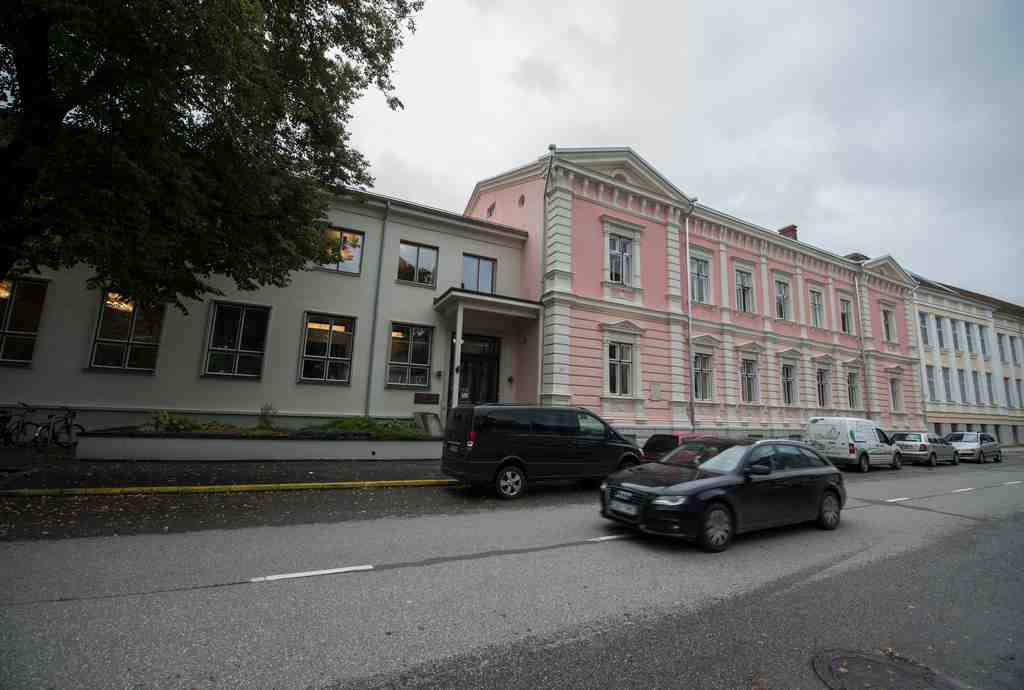
To spot Hugo Treffner Gymnasium, look to your left for a grand cream and yellow building with tall windows and a slightly ornate, historic facade-it stands proudly on the corner, impossible to miss among the more modern surroundings. Now, pause here a moment and let your imagination drift back to the late 1800s. Picture the cold December of 1883, where the first eager students-some with patches on their coats and hopeful eyes-hurried through the snow to study inside Hugo Treffner’s ambitious new school. At that time, Estonia was still under the shadow of larger empires and most educational doors were closed to ordinary Estonian children, but here, Hugo Treffner, himself descended from Austrian nobility and with a family story shaped by centuries-old journeys and the Thirty Years’ War, created something radical: a school where even the sons of peasants could dream big. Imagine voices echoing off rented walls, chalk squeaking as lessons in German filled chilly rooms, before the school finally found this home-expanded and reshaped over decades. It was a place of firsts; in the late 1800s there were no age limits, and you could find boys of all sizes sitting shoulder to shoulder, eager to learn. But history swept through like a wild wind. Just as the young school finally settled here, the language changed to Russian under the growing pressures of empire. Then, national awakening stirred secret meetings and whisperings in the corridors. Many of the group "Young Estonia," who fueled Estonia’s culture and independence, once marched these halls with their hearts full of ideas and rebellion. Can you sense it? The footsteps of future poets, scientists, and leaders-dreaming up the Estonia we know today. The early 1900s brought growing pains. There were years of poor harvest, when the scent of fresh bread was rare in students' homes and numbers dwindled. But the school never lost its flame. In 1912, the founder Hugo Treffner himself died and the future seemed uncertain. The school was almost renamed, almost lost, as directors and alumni debated over its fate in smoky rooms, but it pulled through-thanks to devoted alumni determined that the name Hugo Treffner would never be forgotten. When the First Republic of Estonia was finally born, Hugo Treffner Gymnasium became a flagship for education. In those days the air was filled not just with the hum of studies, but celebration too. Imagine the bustle of drama productions, chess club matches, and the sound of music drifting out onto the streets. There were fiery club debates, folk dances, and energetic choir rehearsals-already showing the diversity and spirit that shine today. The world wars and occupations cast their shadows here. In 1941, as the Germans stormed in, the original building was destroyed. Imagine smoke and the crackle of fire, and then quiet-the heart of the school temporarily stopped. During the Soviet years, students formed underground resistance groups, using code words and secret meetings to honor the banned blue-black-white flag. Yet, through all this, the gymnasium pressed on, becoming a co-educational school in 1954 and opening new wings and new sciences programs in hopeful bursts of progress. The modern story is no less exciting. After Estonia’s independence returned, Hugo Treffner Gymnasium was reborn as just a school for the final three years; students now race through these hallways for a shot at the country's top universities. Its classrooms are lively with debates in history and philosophy, laboratory bursts of excitement in chemistry, the rustle of folk costume, and the rise and fall of choir voices. International friendships stretch across Germany, France, Latvia, Sweden, and Finland every year through exchanges and music. And if you listen very carefully-beyond the city streets-you might catch the ghostly echoes of great minds at work: famous writers, diplomats, scientists, and even opera singers who once walked up these very steps and gazed at the world with curiosity. So, as you stand here, remember: this isn’t just a building. It’s generations of dreams, determination, and resilience woven into stone. The spirit of Hugo Treffner and all his students lingers-welcoming each new visitor into the story of Estonia’s future. For further insights on the curriculum, partnerships with schools from abroad or the notable alumni, feel free to navigate to the chat section below and inquire.
Otwórz dedykowaną stronę →To spot the Assumption Cathedral, look for a tall, white stone church with peeling green details, an octagonal dome, and a slender spire rising above the trees. Imagine standing…Czytaj więcejPokaż mniej
To spot the Assumption Cathedral, look for a tall, white stone church with peeling green details, an octagonal dome, and a slender spire rising above the trees. Imagine standing here in Tartu, where history seems almost thick in the air, and this cathedral stands solemn and proud, its white walls touched by time. On this very ground, the footsteps of medieval monks once echoed from the old Dominican monastery of Mary Magdalene, founded back in the 1200s. Centuries later, after Russian troops swept through in 1704, Tartu built its first Orthodox church here-though fire ravaged it one summer night in 1775. But the spirit of the city couldn’t be broken. By 1783, people gathered to see the new stone cathedral rise-a place of hope, built in a cross shape, later crowned with a grand dome and four corner chapels. Inside, beneath chilly arches, rest two brave priests, Michael Bleive and Nikolai Bezhanitsky, whose courage in the face of revolution still stirs the heart. The building itself has witnessed love, too; in 1921, the famous poet Igor Severyanin exchanged vows here, the bells ringing with possibility. Now, as the cathedral watches over the city, its walls hold the whispered secrets of the past-and remind us how faith and resilience can weather any storm.
Otwórz dedykowaną stronę →Look straight ahead along the Town Hall Square, and you’ll spot a pale, three-story building that tilts noticeably to one side-it’s the quirky Leaning House, home to the Tartu Art…Czytaj więcejPokaż mniej
Look straight ahead along the Town Hall Square, and you’ll spot a pale, three-story building that tilts noticeably to one side-it’s the quirky Leaning House, home to the Tartu Art Museum. As you stand in front of this unusual building, let your eyes wander up its slanted walls and try to imagine the countless stories tucked inside its rooms. The Tartu Art Museum is not just a keeper of pictures and sculptures-it’s a treasure chest of Southern Estonia’s creative soul, where every surface has witnessed brushes of hope, fear, and excitement for more than eight decades. Founded in 1940 by the passionate artists of the Pallas association, this museum began as a dream-one that barely had time to settle before the storms of World War II arrived. Imagine, back then, a small group of artists, hands stained with paint, scribbling ideas by candlelight as they argued about what “art” should mean for a place like Estonia trying to find its own voice. When the museum first opened its doors at Suurturg 3, everything felt new and fragile. Just one year later, the world turned upside down: war came, and the precious collection of paintings and sketches had to move again and again, hiding from bombs and fire. In 1943, disaster nearly struck-a German bombing raid crumbled the brick building on Lai Street where the museum’s art slept. Picture anxious curators and townspeople scrambling in the rubble, pulling dusty frames and rolled paintings from the debris, their hearts pounding, desperate to save not just images, but memories and ideals. Somehow, most of the collection survived. After the war, the museum found refuge in various buildings, like a restless spirit searching for calm, until settling at Vallikraavi 14, where it could finally breathe. Yet, as the years passed and the collection swelled with thousands more works-from the bright strokes of the Pallas school to the wild experiments of modern artists-the old building started to buckle beneath the weight. By 1999, visitors could no longer wander those halls; the precious art needed protection from light, temperature, and time itself. But the museum wasn’t done. In 1988, it claimed the Leaning House as its new stage-a slightly comical, pink-tinged house with a visible tilt that makes you feel, for a moment, as though you’re in a storybook where buildings might tiptoe off if you’re not looking. The tilt happened long ago-a noble family, the Barclay de Tollys, had it built in 1793, not knowing the earth beneath was uneven. Over the years, the weight of history literally made it lean until the walls felt as though they might tumble onto the cobbles. Clever Polish restorers stabilized it, rescuing its charm so it could become the museum’s most beloved home. Today, step inside and you’re entering a space crammed with history-three floors of ever-changing exhibitions, an educational classroom that echoes with the whispers of young artists, and a cozy art bookstore where you can linger over the mysteries of line and color. The first works in the museum’s collection came from the hands of Pallas members-Estonian pioneers like Ida Anton-Agu, whose “Interior” set the tone, and visionaries like Konrad Mägi, Ado Vabbe, and Karin Luts. They painted the heartbeats of Tartu, its forests and faces, shaping the way Estonians saw themselves. Even before these Estonian artists, there was a proud tradition-painters like Johann Köhler and Julie Wilhelmine Hagen-Schwartz, capturing the hopes and doubts of the National Awakening and Baltic German eras. Russian masters like Ivan Aivazovsky and Natalia Goncharova add distant flavors to the collection, connecting Tartu to centuries of Europe’s restless art world. Today, the Tartu Art Museum holds around 23,000 works-paintings, sculptures, graphics, eye-opening video performances, and sound art that rattles the imagination. Some exhibitions have sparked heated debates-like the cheeky, scandalous “MÖH? FUI! ÖÄK! OSSA! VAU!” that dared to question what’s shocking or sacred in art, or the powerful show “My Poland,” grappling with the heavy echoes of the Holocaust through modern Polish eyes. Leading the museum were visionaries like Rael Artel, who brought global perspectives, and Signe Kivi, who was once the national Minister of Culture. So as you gaze at the Leaning House, let yourself feel this mix of old and new-an art museum that leans bravely, never quite upright, inviting every visitor to look at the world a little differently, just like the artists whose work lives within.
Otwórz dedykowaną stronę →You’re looking across the Emajõgi River-just ahead, its gentle curve is lined with leafy trees, the bright red roofs of the old town clustered to your left, and the white arch of…Czytaj więcejPokaż mniej
You’re looking across the Emajõgi River-just ahead, its gentle curve is lined with leafy trees, the bright red roofs of the old town clustered to your left, and the white arch of a pedestrian bridge in the distance acts as your north star for spotting the heart of Tartu. Imagine standing here hundreds of years ago, when the area was covered with thick forests and the only sound was the steady ripple of the Emajõgi River. Tartu, a city whose story is stitched into every stone, was born as a small settlement as early as the 5th century. By the 7th century, locals had already fortified Toome Hill-a wooden stronghold defending their home from outsiders. Traders and warriors passed by, and by the 9th and 10th centuries, this was a bustling hub for inland trading, a place full of horses, shouting traders, and the clang of metal goods exchanged from far away. Then came flames and the roar of armies. In 1030, Yaroslav the Wise of Kievan Rus conquered the fort and called it Yuryev. Time blurred and enemies changed: the fort was burned in 1061 by tribes from the west, rebuilt, seized by Novgorod troops, retaken again. It was a place where people never quite laid down their swords-or their dreams. In the 13th century, the thundering hooves of the Livonian Brothers of the Sword, a crusading order, arrived, and the city changed forever. By now, the world knew this place as Dorpat. Markets were filled with a mix of Estonian, German, and Russian voices, each bringing their own language and recipes, their customs and ambitions. Throughout the Middle Ages, Dorpat was known for its imposing bishopric, whose looming fortress overlooked the river and tradesmen’s carts rattling on the cobbled streets. The town’s importance grew as it joined the Hanseatic League, its warehouses brimming with salt, furs, grains, and exotic spices. From time to time, it was caught in the crosshairs of mighty neighbors-raids, sieges, and shifting empires: Polish and Swedish kings, Russian tsars, all eager to stamp their influence on the city. The town survived the onslaughts of Ivan the Terrible, who captured Tartu during the Livonian War, and then again switched hands between Poland and Sweden, until in 1632 the Swedish King Gustavus Adolphus gave Tartu the lifeblood that still defines it today: a university. With its new university, Tartu flourished as the “Athens of the Emajõgi,” nicknamed after its river, which means “mother river.” The city became a magnet for thinkers and scholars, home to wild ideas, heated debates, and the arts. Yet the centuries were never gentle-fires devastated the medieval heart, especially the enormous Great Fire of 1775. Tartu, in smoke and ruin, was rebuilt in elegant Baroque and Neoclassical style, the wide boulevards now lined with stately buildings and shops. Under the Russian Empire, it became known as Derpt and later Yuryev, enduring both the glories of scientific discovery and the trauma of forced change. By the 20th century, Tartu stood at the crossroads of empires during two world wars. Bombings, invasions, and occupations shook the foundations, leaving scars still visible in missing city blocks and elegant old ruins. The mighty Kivisild, a famous stone bridge, was reduced to memories. For decades during Soviet rule, much was lost, yet resilience grew. Residents whispered stories, painted, wrote, and kept their culture alive-even when foreigners were forbidden to visit, and bombers thundered on the outskirts at Raadi airfield. Today, as you stand by the river where traders, students, and invaders once met, you find a city reborn. The old town’s red roofs are lively with markets, students’ laughter spills from outdoor cafes, and each summer, Tartu celebrates its Hanseatic Days with jousting and craft fairs, honoring its trading past. Tartu is now Estonia’s “intellectual capital”, home to the oldest theatre, the nation’s Supreme Court, and the Estonian Song Festivals that fill the city with music and hope. In 2024, Tartu proudly stands as the European Capital of Culture, inviting the world to share in its stories, old and new. Each stone, tree, and river ripple is part of a city that has always survived, always welcomed change-and always kept its heart beating fiercely by the Emajõgi. Curious about the names and etymology, geography or the economy? Don't hesitate to reach out in the chat section for additional details.
Otwórz dedykowaną stronę →
Najczęściej zadawane pytania
Jak rozpocząć trasę?
Po zakupie pobierz aplikację AudaTours i wpisz kod realizacji. Trasa będzie gotowa do natychmiastowego rozpoczęcia – po prostu dotknij \"Play\" i podążaj trasą z nawigacją GPS.
Czy potrzebuję internetu podczas trasy?
Nie! Pobierz trasę przed rozpoczęciem i korzystaj z niej w pełni offline. Jedynie funkcja czatu wymaga internetu. Zalecamy pobieranie przez WiFi, aby oszczędzać dane mobilne.
Czy to wycieczka grupowa z przewodnikiem?
Nie – to samodzielny audioprzewodnik. Zwiedzasz niezależnie, we własnym tempie, z narracją audio odtwarzaną przez telefon. Bez przewodnika, bez grupy, bez harmonogramu.
Ile trwa trasa?
Większość tras zajmuje 60–90 minut, ale to Ty kontrolujesz tempo. Wstrzymuj, pomijaj przystanki lub rób przerwy, kiedy chcesz.
Co jeśli nie zdążę ukończyć trasy dzisiaj?
Żaden problem! Trasy mają dożywotni dostęp. Wstrzymaj i wznów, kiedy chcesz – jutro, za tydzień lub za rok. Twój postęp jest zapisywany.
W jakich językach są dostępne trasy?
Wszystkie trasy są dostępne w ponad 50 językach. Wybierz preferowany język podczas realizacji kodu. Uwaga: języka nie można zmienić po wygenerowaniu trasy.
Gdzie znajdę trasę po zakupie?
Pobierz darmową aplikację AudaTours z App Store lub Google Play. Wpisz kod realizacji (wysłany e-mailem), a trasa pojawi się w Twojej bibliotece, gotowa do pobrania i rozpoczęcia.
Jeśli trasa Ci się nie spodoba, zwrócimy Ci pieniądze. Skontaktuj się z nami pod adresem [email protected]
Bezpieczna płatność przez