
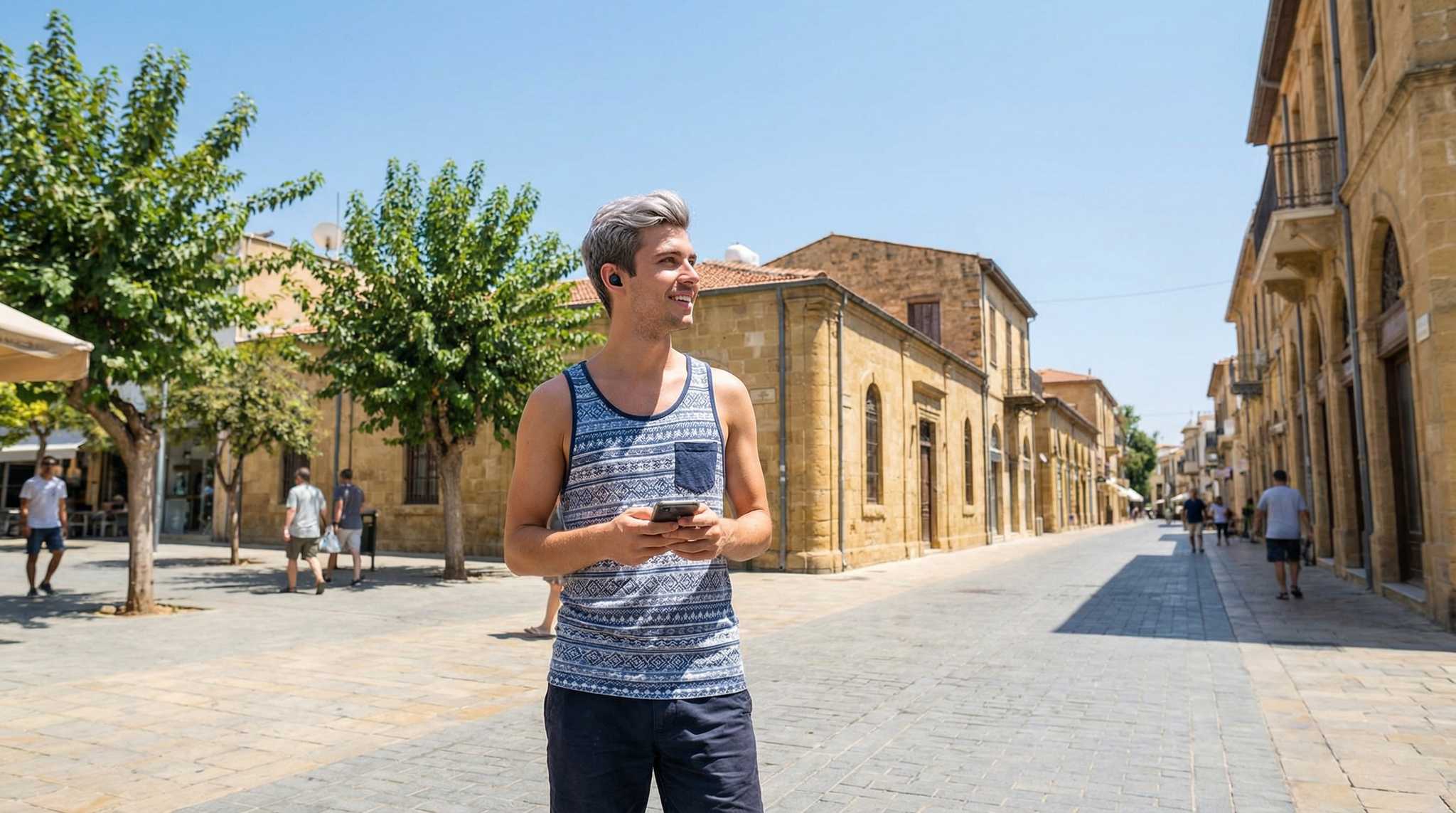
Audioprzewodnik po Nikozji: Ukryte skarby i ponadczasowe mury
Ulica niegdyś odgrodzona drutem kolczastym i napięciem teraz tętni życiem w sercu Nikozji, ale cienie rebelii, tajemnic i skandali wciąż czają się tuż pod twoimi stopami. Wyrusz w tę samodzielną podróż z audioprzewodnikiem, aby odkryć ukryte opowieści na tętniących życiem placach i w zabytkowych szkolnych korytarzach – odsłaniając warstwy, których większość podróżnych nigdy nie dostrzega. Co sprawiło, że mury ulicy Ledra w końcu runęły po dziesięcioleciach podziału? Czyje głosy odbijają się echem od wielowiekowych kamieni Placu Faneromeni, szepcząc o rewoltach i utraconych wolnościach? Dlaczego Gimnazjum Pancypryjskie skrywa tak wiele historii o odwadze, zapomnianych pożarach i nocnych spiskach? Poruszaj się między słońcem a cieniem, podążając krętymi trasami miasta, śledząc dramatyczne ucieczki, ciche protesty i chwile nadziei wykute na każdej brukowanej ścieżce. Każdy krok zmienia znane ulice w sceny epickich dramatów i sekretnych historii czekających na odkrycie. Gotowy, by prześledzić ślady rewolucji i miejsca, gdzie pokój przebił się przez kamień? Rozpocznij swoją podróż – prawdziwe serce Nikozji wzywa.
Podgląd trasy
O tej trasie
- scheduleCzas trwania 40–60 minsIdź we własnym tempie
- straighten4.7 km trasy pieszejPodążaj wyznaczoną trasą
- location_on
- wifi_offDziała offlinePobierz raz, korzystaj gdziekolwiek
- all_inclusiveDożywotni dostępOdtwarzaj ponownie w dowolnym momencie
- location_onStart przy Ulica Ledra
Przystanki na tej trasie
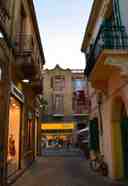
To spot Ledra Street, look ahead for a narrow pedestrian avenue lined with elegant old stone buildings, busy shopfronts, and colorful signs, framed above by charming wrought iron…Czytaj więcejPokaż mniej
To spot Ledra Street, look ahead for a narrow pedestrian avenue lined with elegant old stone buildings, busy shopfronts, and colorful signs, framed above by charming wrought iron balconies, with bright shop windows inviting you further in as people bustle past. Now, take a deep breath and imagine this street not just as a shopper’s paradise, but as the very heartbeat of Nicosia! Ledra Street-right where you’re standing-was once known as “The Murder Mile.” Sounds dramatic, right? Picture yourself back in the 1950s and 60s, when this street was at the center of tension between British forces and nationalist fighters. Believe it or not, the quiet stones beneath your feet have seen commotion, danger, and history in the making! But Ledra isn’t just about drama-it stretches 1 kilometer, connecting the vibrant south of Nicosia to the equally colorful north. The name itself goes way, way back to when there was an ancient city-kingdom called Ledra, founded in 1050 BC. It’s almost as if every pair of shoes walking here is reenacting thousands of years of stories. Let’s move forward to the 1960s, when things heated up between the Greek and Turkish Cypriot communities. Tensions rose, people retreated to their own neighborhoods, and suddenly Ledra Street was right in the middle of a divide. Soldiers, sandbags, and barbed wire-this was once the frontline! The rough “Green Line,” patrolled by British military and later by the UN, sliced right through the city, leaving Ledra’s shopkeepers to dust their shelves in ghostly silence on one side while life continued on the other. Imagine the surreal silence-once a street full of laughter and shopping bags, now sealed tight. You’re standing where, for 34 long years, families could only dream of crossing to the “other side.” The southern stretch was finally pedestrianized in 1998, becoming a peaceful walkway, but for decades, the buildings on either side of the buffer zone were left crumbling-caught between worlds. As the years passed, the longing to reconnect only grew stronger. Both sides made several bold, almost theatrical gestures. In 2005, the Turkish Cypriot side tore down one of the walls and started building a bridge, only to take it down again under pressure. Clearly, both sides knew building peace wasn’t as easy as building a bridge! The real curtain-lifting moment came in 2008. With a new president in the south and a fresh spirit of negotiation, Ledra’s wall finally crumbled for good. UN teams cleared mines, shored up old buildings, and-drumroll, please-on the morning of April 3rd, Ledra Street was opened to regular people just like you. There were ribbons, there were officials, there were balloons set free at the moment after 34 years of division. Imagine the emotions-tears, laughter, and heartfelt reunions as citizens wandered into neighborhoods they’d only heard about for decades. Of course, opening the street didn’t mean turning off all the tension overnight. The checkpoint briefly closed that same day for a few hours due to military confusion, but after a spot of diplomatic wrangling, the gates opened wide again. Today, if you cross to the Turkish-controlled north, you’ll go through a checkpoint and get a little slip as your visa-what a souvenir! But on the south, there’s no immigration checkpoint at all, just a quiet hope for peace. Ledra Street is more than a bridge between neighborhoods: it’s a place of activism and creativity. Whether it’s peace protests, chains of citizens joining hands for unity, or even a parade of 600 elephant-themed artworks transforming the checkpoint into a festival of hope-Ledra is a street that refuses to be silent. So as the shop windows glitter around you and the smell of strong Cypriot coffee drifts from nearby cafes, remember: every step you take here adds to the story-one that’s still being written, right under your feet. Onward to the next stop, where the echoes of history keep calling! Want to explore the location, activism or the economy in more depth? Join me in the chat section for a detailed discussion.
Otwórz dedykowaną stronę →To spot Faneromeni Square, just look ahead for a spacious, sunlit plaza surrounded by golden stone buildings, with a grand church featuring tall arches and a bell tower dominating…Czytaj więcejPokaż mniej
To spot Faneromeni Square, just look ahead for a spacious, sunlit plaza surrounded by golden stone buildings, with a grand church featuring tall arches and a bell tower dominating the right side. Welcome to Faneromeni Square! As you stand here, imagine the footsteps echoing on these stones over centuries, where the heart of old Nicosia still beats strong. If you glance to your right, you’ll see the impressive Faneromeni Church, built back in 1872. It’s not just any church-she’s the largest within the old city walls and is truly a blend of styles: Neoclassical columns, Byzantine arches, and even a dash of Medieval Latin flair. Back in the day, this site was home to an ancient Orthodox nunnery. Makes you wonder what secrets those walls would whisper if they could! Right across, notice the Faneromeni School. Believe it or not, this was the first all-girls school in Cyprus, opened all the way in 1857. Imagine the excited chatter of young girls-and maybe the occasional giggle as they tried to escape a tricky lesson! The school aimed to teach girls to read and write at a time when such things were pretty rare. But just when you think things were peaceful… pause and look at the Marble Mausoleum on the east side of the church. This white memorial stands for four brave clerics who were executed by Ottoman rulers in 1821, during a tense revolt tied to the Greek War of Independence. It’s a place of real solemn memory. Surrounding you now are beautiful neoclassical façades and the Faneromeni Library-each building with Greek and Cypriot touches. In modern times, this spot has transformed from the old town center to a lively gathering place for artists, musicians, free spirits and activists. You might spot a poetic protest poster, a busker strumming a guitar, or a group deep in animated discussion. Faneromeni Square-history’s secret stage, where every stone tells a new story!
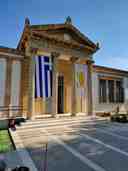
Otwórz dedykowaną stronę →Right in front of you, you’ll spot a grand neoclassical entrance with four tall columns and two large flags-one blue-and-white, one yellow-and-white-hanging above a stone…Czytaj więcejPokaż mniej
Right in front of you, you’ll spot a grand neoclassical entrance with four tall columns and two large flags-one blue-and-white, one yellow-and-white-hanging above a stone staircase, making the Pancyprian Gymnasium hard to miss! Now, take a moment to stand still, breathe in, and let’s travel together-back over two hundred years. Imagine the soft clack of your shoes against the old stones as you join the ranks of curious students under the hot Cypriot sun. Here, opposite the archbishopric, stands a school that’s not just old, but legendary-the oldest still-operating high school in all of Cyprus! It all started in 1812, when Cyprus was still under Ottoman rule, and a determined Archbishop Kyprianos, with perhaps a twinkle in his eye and a stubborn streak, decided to found the Hellenic School of Nicosia. Back then, parents probably worried more about their kids’ ink stains than their screen time! Before this building stood, the Ellinomouseion-founded in 1753-once occupied this very spot. But the Pancyprian Gymnasium quickly became the place where sharp minds gathered, with lessons echoing through its corridors. The first principal, Delios Ioannis, took the lead in 1893, just as the school expanded to rival the lyceums of Greece-meaning lucky students here could march off to the University of Athens. Now, if you think the students were just busy with exams, think again! Many fought in famous battles-like the Greek War of Independence, the Balkan Wars, and the EOKA struggle. Maybe there were students daydreaming at their desks, secretly heroic, just waiting for the bell to ring? One night in 1920, a fire swept through and destroyed the original building, its shadows flickering over hidden corners. But out of the ashes, the school rose again, this time in elegant neoclassical style. Beneath the main entrance lies a crypt of secrets, where whispers say Archbishop Kyprianos plotted for freedom in hushed late-night meetings. Try not to accidentally join a secret society if you wander too close! Today, the Severios Library holds over 60,000 manuscripts-enough for a lifetime’s worth of lost homework excuses. Step into its halls and you’d find the likes of Nobel winner Christopher Pissarides and several presidents of Cyprus among its alumni. Even famous professors taught here, such as novelist Lawrence Durrell and celebrated poets. So as you stand here, imagine the generations of laughter, rebellion, and ambition swirling around you. A place of tradition, mystery, and a dash of adventure-the Pancyprian Gymnasium will always be the school where Cyprus’s story keeps marching on. Ready to delve deeper into the grounds, notable alumni or the notable professors? Join me in the chat section for an enriching discussion.
Otwórz dedykowaną stronę →
Pokaż jeszcze 11 przystankówPokaż mniej przystankówexpand_moreexpand_less
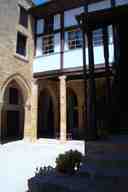
To spot the Hadjigeorgakis Kornesios Mansion, look for a grand two-storey building made of warm yellow sandstone with elegant arches, sturdy pillars, and wooden-framed windows…Czytaj więcejPokaż mniej
To spot the Hadjigeorgakis Kornesios Mansion, look for a grand two-storey building made of warm yellow sandstone with elegant arches, sturdy pillars, and wooden-framed windows which surround a quiet central courtyard. Welcome, traveler! Standing here, you’ve found yourself at the doorstep of one of Nicosia’s most enchanting time machines. This mansion belonged to Hadjigeorgakis Kornesios, who-prepare yourself-wasn’t just your average neighbor, but the sultan’s dragoman, the official interpreter and one of the most powerful figures in Cyprus during the Ottoman era. Imagine the year is 1793: the city smells of warm bread from nearby homes and the chatter of merchants drifts in the air. Now, picture a man dressed in fine Ottoman robes striding across this very courtyard, his every move watched by both friends and jealous foes. Kornesios's power grew rapidly, his pockets growing heavier and his enemies growing sneakier. For thirty years, he whispered into the ears of rulers, translating secrets and shaping decisions-until trouble brewed like a strong Cypriot coffee. Jealous rivals plotted and, in a dramatic twist worthy of any soap opera, Kornesios was summoned to Constantinople, where he lost not only his wealth but also his head. Talk about an occupational hazard. But his home remains! Take a good look: the mansion is built in the shape of a Greek “Π” and wraps itself around a peaceful garden-a hidden world of fountains and an old private hammam, or bathhouse. Can you hear the echo of slippers on cool stone or the splashing of water? Servants once bustled on the ground floor, preparing feasts in the kitchen, while guests were led up the wooden stairs to the grand reception room, dazzling with gilded woodwork and flashes of color. Today, thanks to a heroic effort to save it from demolition, this remarkable house isn’t just a relic-it’s a museum, offering free entry so you can wander halls once reserved for Cyprus’ elite. Enjoy your journey into the past, and remember-watch out for ambitious interpreters!
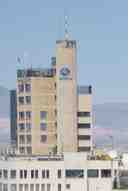
Otwórz dedykowaną stronę →Look up and ahead for a tall beige building with a tower section, large blue-and-yellow Shacolas signs, and flags on top-it stands out above the old town’s rooftops. Welcome to…Czytaj więcejPokaż mniej
Look up and ahead for a tall beige building with a tower section, large blue-and-yellow Shacolas signs, and flags on top-it stands out above the old town’s rooftops. Welcome to the towering Shacolas Tower! You can’t miss it-this giant of Nicosia has been raising eyebrows (and necks) since 1959. Locals once knew it as the Manglis Tower, named after the bold Costas Manglis who built it, hoping to scratch the sky long before it was trendy. Imagine the buzz when it opened-people from all over would come to marvel, craning their necks and maybe even feeling a bit dizzy from the height, since this was the tallest building in Cyprus for nearly twenty years! The first five floors are where today’s treasures live-H&M has moved in, but picture, decades ago, the offices of the General Engineering and the Hellenic Mining Company bustling with sharp-suited workers. If you feel hungry for a view, the sixth floor was once a lively cafeteria with a panoramic sweep of the city, a place where romances began and secrets were whispered over coffee. But the real surprise is the 11th floor-an observatory and museum, with telescopes and binoculars ready to let you gaze out across the entire capital. There, the past hugs the present: listen to the city’s story in many languages, gaze at old photographs, and spot the places you've just explored. It’s like history with altitude-don’t look down if you’re scared of heights!
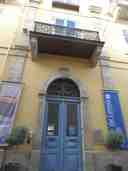
Otwórz dedykowaną stronę →To spot the Leventis Municipal Museum of Nicosia, look for a charming yellow building with a striking blue double door framed by stone columns, and just above, an ornate…Czytaj więcejPokaż mniej
To spot the Leventis Municipal Museum of Nicosia, look for a charming yellow building with a striking blue double door framed by stone columns, and just above, an ornate wrought-iron balcony. Now, take a moment to stand right here and imagine you’re about to step through a time machine, wrapped in a cozy Mediterranean blanket of warm sunlight. What you see in front of you is far more than a museum - it’s the guardian of Nicosia’s memory, where every stone, costume, and photograph inside whispers forgotten secrets about the city. But don’t worry, no ghosts allowed - unless you count centuries-old pottery trying to tell you their stories! The tale of this museum begins not so long ago - well, at least by Cyprus standards! In 1984, the mayor of Nicosia, Lellos Demetriades, dreamed this place into existence. But, like any great hero, he needed a wise partner: the A. G. Leventis Foundation. They bought and lovingly restored this very building, bringing the city’s tangled, dramatic history under one roof. If you’ve ever wished you had an adventurous ancestor with a mysterious attic, you’ll feel right at home here. Inside, you’ll find treasures from as far back as 3000 BC - that’s older than your average lost sock behind the washing machine! Ancient artifacts, elegant costumes, photographs capturing moments of joy and sorrow, and even medieval pottery all await you, hungry to share their tales. Imagine the clatter and clink of old jewelry, the rustle of silk from the royal courts, map-makers hunched over parchment drawing Cyprus as they saw it centuries ago, and the excited voices of locals and travelers through the ages. The museum’s story didn’t stop once its doors opened in 1989. Members of the Association of the Friends of the Museum (and yes, you can join, for just 5 Cyprus Pounds a year!) continue to help it grow, finding new treasures and saving them for all to see. Special events, exhibitions, and workshops fill the rooms with laughter, questions, and the sort of hush that falls when children stumble on something strange and wonderful. There’s even a little shop - perfect for picking out a quirky antique replica or a book to impress your friends back home. People come here to wander from modern-day Nicosia right back to its ancient roots, every step echoing stories of old. And if you listen carefully, you just might hear the city’s heartbeat, carried through the centuries, waiting for someone new-like you-to fall in love with it. Now, shall we peek inside? No time machine necessary, just a curious mind and a good pair of shoes!
Otwórz dedykowaną stronę →Look for the futuristic, flowing concrete shapes right in front of you-it's hard to miss the wide plaza with dramatic white lines and sculptural benches, surrounded by city…Czytaj więcejPokaż mniej
Look for the futuristic, flowing concrete shapes right in front of you-it's hard to miss the wide plaza with dramatic white lines and sculptural benches, surrounded by city buildings and a hint of old Venetian walls to one side. Now, welcome to the vibrant heart of Nicosia-Eleftherias Square, a place where the past and the future meet for a cup of coffee and sometimes, a little argument about who has the better sense of style! Close your eyes for a second and imagine the buzz-honking taxis, laughter from city folk, and the distant sound of footsteps echoing on the wide, modern pavement. Not long ago, the center of the city’s life was actually Faneromeni Square, but after 1974, the spotlight moved here. A quick history quiz: did you know that Eleftherias Square wasn’t even part of the original medieval city plan? Nope! This patch of land never fit into the old Venetian walls’ script. Back in the day, this spot was called Metaxa Square, named after a Greek general. But let’s be honest-names in this city are like socks, they get changed as soon as someone spots a hole! After a public competition in 1974, “Eleftherias” or “Freedom” Square was born, and it’s lived up to its name ever since, acting as a crossroads for bustling avenues-Ledra, Onasagorou, Stasinou, Omirou, Kostaki Pantelidi, Konstantinou Palaiologou, and Evagorou-all meeting like old friends for a reunion. And what a reunion it’s been! Political rallies, wild street parties when Cyprus joined the European Union, spontaneous sports events, and once, an entire crowd gathered in a peaceful protest-imagine chants rising, banners fluttering, and a spirit of togetherness buzzing in the air. Even if the square is not entirely pedestrianized, when there’s something big going on, traffic gets redirected, as if the city quietly makes way for the people. But there’s more drama in this square’s story than a soap opera! In 2005, a call went out for a new design-an international contest! The winning duo? The famous Zaha Hadid and local architect Christos Passas. Now, some people raved about their ultra-modern plan while others… well, let’s just say there were more debates and critiques here than in a Cypriot coffee shop! Archaeological treasures were found during construction, which meant the architects had to rethink the whole plan. And then, oh boy, the delays! The whole thing took over six years to finish, with locals grumbling about blocked roads and detours. But when it opened in 2021, the city had a brand-new, award-winning heart. Not everyone loves the pyramid-shaped cypress trees or the bold, futuristic look-let’s be honest, you’d need sunglasses at noon in the summer! But most agree this square is a glowing example of Cyprus uniting its history, its green heart, and its urban energy into one, epic plaza. It’s a place where people argue, celebrate, mourn, and dream. And just think-the design has even won big awards, like the European Architecture Prize in 2022 and a State Prize in early 2023 for its lead architect. So, as you stand here, among sweeping lines and the echoes of centuries, take a moment to feel the restless energy of Nicosia swirling around you. Freedom, change, joy, and a little dash of bold design-Eleftherias Square has it all!
Otwórz dedykowaną stronę →Now, let’s turn up the drama. Just weeks after it opened, World War II broke out. Cyprus, usually famous for its sunshine, grew tense with the threat of war. You might hear the…Czytaj więcejPokaż mniej
Now, let’s turn up the drama. Just weeks after it opened, World War II broke out. Cyprus, usually famous for its sunshine, grew tense with the threat of war. You might hear the echo of hurried footsteps, the clatter of stretchers as brave British and Cypriot soldiers were wheeled into safety, far from the fighting, but not always safe from the rumble of a distant bombing raid overhead. For 67 years, this hospital’s hallways were filled with stories-newborn babies’ first cries, anxious family hugs, and probably more than a few people grumbling about hospital food. But, as medicine raced forward, the old place just couldn’t keep up-think trying to run a high-speed internet connection on a dial-up computer! So, in 2006, the last patients were rolled over to the brand new hospital, and the old building closed its doors with a long sigh. What came next? Controversy, of course! Some believed this Bauhaus beauty deserved historical respect, while others eyed the real estate for shiny new projects. The Green Party protested, the architects grumbled, but, in the end, demolition crews moved in. On June 15, 2010, the final walls came down. So, as you stand here among the eucalyptus trees, imagine all those voices, hopes, and memories that once filled this place. It’s a spot full of history’s whispers-now, a little quieter but never fully forgotten.
Otwórz dedykowaną stronę →To spot the House of Representatives, look for a stately modern building often adorned with the emblem of Cyprus-a sun with a smiling face, much like the friendly design you see…Czytaj więcejPokaż mniej
To spot the House of Representatives, look for a stately modern building often adorned with the emblem of Cyprus-a sun with a smiling face, much like the friendly design you see before you. Now, take a good look at those official-looking doors-behind them lies a story packed with drama, hope, and just a little bit of “only in Cyprus” charm. Let’s step into the shoes of those who’ve walked these halls since the Republic of Cyprus was born. Imagine it is 1960: the air is thick with excitement, as Cyprus celebrates its independence. The first parliamentary elections fill this place with anticipation and clattering footsteps. Representatives from different communities-Greek, Turkish, Armenian, Latin, and Maronite Cypriots-all gather, determined to make history in this brand-new heart of democracy. There was a sense of unity, but also a wave of nerves-after all, nobody here had ever run an entire country before! The House of Representatives, by its Greek name “Voulī́ tōn Antiprosṓpōn” or Turkish name “Temsilciler Meclisi,” is unique in all of Europe: it’s the only parliament inside a fully presidential system in the entire European Union. Every five years, new voices join the chorus-fifty seats, originally divided with 35 for the Greek community and 15 for the Turkish community, all chosen by proportional representation. Later, sensing that running a country sometimes takes more than fifty opinions (imagine trying to agree on just one kind of halloumi for the cafeteria!), the seats expanded to eighty-56 for Greek Cypriots and 24 left open in case Turkish Cypriots decided to return. And here’s where the story takes a dramatic twist. The Constitution of Cyprus, while promising freedoms and rights, also created a bit of a political Rubik’s Cube. For the parliament to change laws about taxes or municipalities, both Greek and Turkish representatives had to agree-a process that was, let’s say, less than speedy. You can almost hear the frustrated sighs and the rustling of papers as debates stretch long into the night. In 1961, a small group of Turkish Cypriot representatives used their power to block a key tax bill, leaving the country in a tax limbo for four years-certainly one way to keep things interesting! Then, in December 1963, following tensions and intercommunal violence, the Turkish Cypriot representatives withdrew. Their seats remain empty to this day, a silent yet powerful reminder of the complexities and the ongoing story of Cyprus. But the House didn’t falter; instead, it took on new duties, enacting special laws to help those displaced by the events of 1974, supporting missing persons’ families, and striving for economic recovery. These chambers have seen heated arguments, heartfelt speeches, and the relentless sound of debate echoing off the marble and wood. Every time you hear about the House dissolving itself, picture a group of determined politicians packing up, setting a date for the next election, and then-because you can’t keep Cypriot democracy waiting-arranging to meet again within just two weeks. Imagine the scramble and the excitement! Here, urgency is part of the job. The seat allocations themselves follow the boundaries of Cyprus’s districts, reinforcing just how closely the nation’s identity is tied to its geography-as if each dusty road, sunburned field, and lively village square has a little say in what happens here. Of course, every grand building needs a leader. Over the years, the President of the House has changed hands, each one adding a new chapter to the tale. Most recently, Annita Demetriou took up the gavel, continuing the tradition of guiding Cyprus through both calm seas and stormy debates. The Vice-President’s seat, constitutionally reserved for a Turkish Cypriot, still waits for a rightful occupant-one of those bittersweet details that gives the building a sense of anticipation, as if it’s pausing mid-sentence. Today, as you stand here, imagine the steady hum of voices arguing, uniting, laughing, sometimes disagreeing, but always working toward something bigger. This building holds not just the laws of Cyprus, but dreams and disappointments, courage and compromise-a sunlit emblem of hope and, just like its friendly logo, the promise to keep smiling no matter what. So before you move on, pause for a moment, and tip your imaginary hat to a house that has weathered storms and still stands ready for the next chapter. To delve deeper into the elections, composition or the last election results, simply drop your query in the chat section and I'll provide more information.
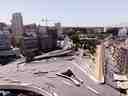
Otwórz dedykowaną stronę →To spot Solomos Square, just look for the large modern bus station with shiny glass roofing and clusters of bright blue city buses, often surrounded by crowds of people waiting or…Czytaj więcejPokaż mniej
To spot Solomos Square, just look for the large modern bus station with shiny glass roofing and clusters of bright blue city buses, often surrounded by crowds of people waiting or chatting under the lights. You’ve made it to the heartbeat of Nicosia’s urban adventure-Solomos Square! Stand here and take a moment: the air is full of the hum of city life, the soft whoosh of buses pulling in, and snippets of conversation in every direction. More than 50,000 people bustle through here every single day, making this spot one of the liveliest crossroads on the island. People are off to school, work, or maybe just grabbing a late-night souvlaki-everyone’s got somewhere to go! Back in 2010, the square got a shiny new makeover thanks to the initiative of Mayor Eleni Mavrou, and since then, the pace hasn’t slowed down one bit. Fast forward to 2022 and the city’s bus network took a leap into the future with Wi-Fi on board and a handy app-the ultimate combo for savvy travelers and sleepy commuters alike. No more guessing when your bus will appear! It’s not just a city hub, though; this is the launchpad where buses zoom off to every corner of Cyprus. So, imagine all the reunion hugs, tired feet, and hopeful glances up at the digital board from folks in a hurry to catch the next adventure. If you listen closely, you might hear the square whisper, “Where to next?”-which, frankly, is the best question in any journey!
Otwórz dedykowaną stronę →



Najczęściej zadawane pytania
Jak rozpocząć trasę?
Po zakupie pobierz aplikację AudaTours i wpisz kod realizacji. Trasa będzie gotowa do natychmiastowego rozpoczęcia – po prostu dotknij \"Play\" i podążaj trasą z nawigacją GPS.
Czy potrzebuję internetu podczas trasy?
Nie! Pobierz trasę przed rozpoczęciem i korzystaj z niej w pełni offline. Jedynie funkcja czatu wymaga internetu. Zalecamy pobieranie przez WiFi, aby oszczędzać dane mobilne.
Czy to wycieczka grupowa z przewodnikiem?
Nie – to samodzielny audioprzewodnik. Zwiedzasz niezależnie, we własnym tempie, z narracją audio odtwarzaną przez telefon. Bez przewodnika, bez grupy, bez harmonogramu.
Ile trwa trasa?
Większość tras zajmuje 60–90 minut, ale to Ty kontrolujesz tempo. Wstrzymuj, pomijaj przystanki lub rób przerwy, kiedy chcesz.
Co jeśli nie zdążę ukończyć trasy dzisiaj?
Żaden problem! Trasy mają dożywotni dostęp. Wstrzymaj i wznów, kiedy chcesz – jutro, za tydzień lub za rok. Twój postęp jest zapisywany.
W jakich językach są dostępne trasy?
Wszystkie trasy są dostępne w ponad 50 językach. Wybierz preferowany język podczas realizacji kodu. Uwaga: języka nie można zmienić po wygenerowaniu trasy.
Gdzie znajdę trasę po zakupie?
Pobierz darmową aplikację AudaTours z App Store lub Google Play. Wpisz kod realizacji (wysłany e-mailem), a trasa pojawi się w Twojej bibliotece, gotowa do pobrania i rozpoczęcia.
Jeśli trasa Ci się nie spodoba, zwrócimy Ci pieniądze. Skontaktuj się z nami pod adresem [email protected]
Bezpieczna płatność przez 


