Wycieczka audio po Calgary: Podróż przez kultowe serce Calgary
Beltline skrywa więcej tajemnic, niż sugeruje to jego lśniąca panorama. Poza szklanymi wieżowcami Calgary i owianymi historią arenami, pod stopami tętni historia, a dramat czai się za każdym rogiem. Oto Twoje zaproszenie na wycieczkę audio z przewodnikiem, która odkrywa historie stojące za ikonami Beltline – miejscami, które wielu pomija w pośpiechu. Odkryj zapomniane skandale, nagłe bunty, zaskakujące bitwy sportowe i echa sławy, które wciąż unoszą się na tych ulicach. Kto w ostatniej chwili próbował obalić wartą ponad miliard dolarów umowę dotyczącą areny? Jaki zaginiony artefakt może wciąż nawiedzać fundamenty legendarnego Stampede Corral? Który z mieszkańców zgubił kiedyś klucze, wywołując jedną z najdziwniejszych przygód w windzie w historii Beltline? Przenieś się z niebotycznych wysokości do wstrząsających ziemią starć, gdy historie ożywają z każdym krokiem. Zobacz Victoria Park w nowym świetle: naładowany ambicją, nawiedzony przez legendy i rozświetlony spektaklem. Gotowy, by zanurkować pod lśniącą powierzchnię miasta? Naciśnij odtwarzanie i pozwól Calgary ujawnić to, co ukrywa na widoku.
Podgląd trasy
O tej trasie
- scheduleCzas trwania 30–50 minsIdź we własnym tempie
- straighten5.8 km trasy pieszejPodążaj wyznaczoną trasą
- location_on
- wifi_offDziała offlinePobierz raz, korzystaj gdziekolwiek
- all_inclusiveDożywotni dostępOdtwarzaj ponownie w dowolnym momencie
- location_onStart przy Arriva Tower
Przystanki na tej trasie

To spot the Arriva Tower, look up for a sleek, glassy high-rise with a modern curve and a mix of brick and sandstone at the base, standing tall above the trees on the edge of…Czytaj więcejPokaż mniej
To spot the Arriva Tower, look up for a sleek, glassy high-rise with a modern curve and a mix of brick and sandstone at the base, standing tall above the trees on the edge of Victoria Park. Welcome to Arriva Tower, the soaring glass giant that rises into Calgary’s skyline like a beacon! Standing here, you’re next to a 34-story marvel, 418 feet tall, shimmering with blue-tinted windows that reflect the changing Alberta sky. At street level, the base glows with brick and sandstone-reminders of the old Warehouse District style-while the upper stories stretch boldly towards the clouds. If you listen closely at rush hour, you might even catch, making this spot feel alive with the pulse of Beltline. Arriva Tower’s story is a real Calgary rollercoaster-urban ambition, a bit of chaos, and plenty of drama. It all kicked off in April 2005, when the ground shook with excitement and the first shovel hit the dirt. The developers imagined not one, but three luxurious towers, creating the city’s hottest living space just north of the Stampede Grounds. By late 2007, residents were moving in, enjoying sparkling city views, a restaurant downstairs, a dental office if you chipped a tooth on your steak, and even a spa for after your wildest Stampede adventure. But-like any good saga-trouble came knocking. In 2009, financial woes halted work on the twin towers meant to join Arriva. For a while, the plots sat quiet except for the occasional bird-almost as if the city was holding its breath. Enter the new owners, determined and full of fresh energy. They finished what others couldn’t, raising The Guardian towers to a record-breaking height and giving Calgary even more reason to look up. So, standing here, you’re beside not just a building, but a symbol of a city that never gives up. Next time you need a confidence boost, remember: Arriva took a few hits and still stands tall. And hey, at least this tower never loses its keys!
Otwórz dedykowaną stronę →To spot Scotia Place, just look straight ahead for a shimmering, modern arena with softly glowing lights and a curved outer wall; its bold, illuminated entrance and the sign…Czytaj więcejPokaż mniej
To spot Scotia Place, just look straight ahead for a shimmering, modern arena with softly glowing lights and a curved outer wall; its bold, illuminated entrance and the sign “Scotia Place” should stand out above the lively crowd gathered around. Alright, get ready for a story with more twists than a Stanley Cup playoff series! You’re standing in front of Scotia Place, Calgary’s soon-to-be crown jewel for sports and entertainment. Take it all in-the anticipation in the air, the buzz of the crowd, the echo of footsteps and conversation all around you. It feels like a sneak peek into the city’s future, but to understand what this place means, let’s rewind a bit and set the stage. Imagine it: the year is 2015, and Calgary’s hockey and football fans are buzzing with rumors of something huge-an idea floating through city hall and corner pubs. That idea? CalgaryNEXT! It was a wild dream: not just a new hockey rink, but a mega-complex along the Bow River, with seats for 19,000 raving hockey fans, a new home for the Calgary Flames, Calgary Hitmen, and even space for the Roughnecks lacrosse team. Not enough? How about a 40,000-seat football stadium for the Stampeders, where echoes of cheers and stomping feet would spill into the city streets? Calgary was aiming BIG-picture it as a sports lover’s wonderland. Except, there was a catch. Or should I say, a slapshot straight at the taxpayers’ wallets! The price tag started at $890 million, but like a snowstorm that just keeps on coming, estimates doubled. Politicians scratched their heads, citizens grumbled, and Mayor Naheed Nenshi looked at the numbers and said, “Wait a second-is this a dream, or a nightmare?” The city would have owned the buildings, but the private team management would have skated away with the profits, and the land would dodge property tax like a quick forward dodging a defenseman. People debated, cost projections soared, and in 2017, city council skated away from CalgaryNEXT like it was a puck on thin ice. But don’t hang up your jersey yet! The hockey crowd doesn’t give up that easy. In 2017, a “Plan B” skated onto the scene: an arena closer to the Scotiabank Saddledome-right here in Victoria Park. The new proposal got the green light in 2019: a $550 million event center, just north of the Saddledome, with big dreams and even bigger screens. The city would own it, the Flames’ ownership would run the show, and for 35 years, Calgary fans were promised the Flames would stay put-no relocating anytime soon. Of course, just like in overtime, the drama wasn’t over. Costs started sneaking up-past $600 million-thanks to tricky designs and land that wasn’t quite as level as the team hoped. Add in more accessibility concerns, then a little surprise from the city: extra costs for climate plans and infrastructure. The city and Calgary Sports and Entertainment Corporation exchanged heated passes about who would cover what. In a tense moment worthy of playoff hockey, CSEC pulled out right before Christmas 2021. Picture it-a city full of disappointed fans and an arena project left in limbo. But Calgary isn’t called “Cowtown” for nothing! The story didn’t end with a buzzer beater. In April 2023, hope returned-like a comeback in the third period. With a press conference and a brand-new blueprint, the city, the province, and the Flames' owners struck a grand deal: $1.22 billion for an event center and surrounding district improvements. The city invested more than half a billion, the Flames paid over $700 million across decades, and the province chipped in to build a rink for the community and help tear down the old Saddledome. That’s right, even demolition got its place in the big plan! With agreements signed in October 2023 and shovels in the ground by July 22, 2024, Scotia Place is truly rising from the dreams-and debates-of an entire generation. Now, as construction crews work and anticipation builds, you’re glimpsing history in the making. In a few years, these walls will ring with the roar of the crowd and the clang of hockey pucks. Each echo here will carry stories of epic games, passionate fans, and a city that never gave up on having a world-class home for its biggest events. So next time someone tells you an arena is just bricks and seats, you can tell them: here in Calgary, it’s more like a living legend-one that took years of drama, determination, and a whole lot of Canadian grit.
Otwórz dedykowaną stronę →Right in front of you is the Stampede Corral-a big, boxy building with grey concrete walls, splashed with colorful murals of rodeo scenes and bold red letters that spell “CORRAL”…Czytaj więcejPokaż mniej
Right in front of you is the Stampede Corral-a big, boxy building with grey concrete walls, splashed with colorful murals of rodeo scenes and bold red letters that spell “CORRAL” on the side; just look for the bright artwork of bucking broncos, cowboys, and the tall smokestack to know you’ve arrived. Now imagine you’re standing here in the early 1950s, the air crisp with excitement, maybe the faint whiff of popcorn and sawdust drifting by. This wasn’t just a building-this was the beating heart of Calgary’s sports and entertainment world. When the Corral first opened its doors in 1950, it was the largest arena in Canada west of Toronto! Folks marveled at the size, and for the first time, every seat had a clear view-no pesky columns blocking the action, only the roaring crowd and the echo of skates slicing the ice. If you listened closely on a winter night, you’d hear thousands of fans packed in, cheering as the Calgary Stampeders hockey team battled their rivals from Edmonton. On December 26, 1950, the Corral’s very first hockey game saw the Stampeders crush the Edmonton Flyers 5-0, a standing-room-only crowd filling every inch of space to witness a piece of history. But hockey was just the opening act. Over the years, the Corral hosted everything from world-class figure skating-a whole arena holding its breath as blades flicker across the glittering ice-to the thundering chaos of rodeo competitions, with hooves and dust and wild cheers. During the city’s famous annual Stampede, this place really came alive: cowboys, wrestlers, and rock stars all strutting their stuff under the blinding lights. The arena built its legend on versatility. It welcomed international tennis stars during the Davis Cup, and never once saw Canada lose on its clay. Even the Olympics passed through in 1988, with figure skating and ice hockey drawing the world’s eyes to this very spot. You may not expect it, but the Corral’s walls once thrummed with everything from pro wrestling bodyslams (Stampede Wrestling’s biggest names, like Bret Hart and Jake Roberts, electrified fans here) to concerts by Alberta’s own Joni Mitchell and later, wild spectacles from the likes of Insane Clown Posse during a rowdy Juggalo Weekend. But nothing lasts forever-not even legends. After more than 70 years, the amps quieted and the lights dimmed. By 2021, the Corral was demolished to make way for a gleaming new expansion of the BMO Centre. The decision was tough-officials knew the old Corral couldn’t keep up with modern codes or the city’s growing dreams. Still, its spirit lingers, captured in the stunning sports photo collection preserved by the Calgary Stampede Archives-a treasure trove that took two years and $75,000 to restore before the end came. So as you stand here, listen for echoes of crowded joy and buzzer-beaters, rodeo yells, and distant rock chords. The Stampede Corral may be gone, but wow, what a stampede it left behind!
Otwórz dedykowaną stronę →
Pokaż jeszcze 7 przystankówPokaż mniej przystankówexpand_moreexpand_less
You’ve just arrived at Calgary’s historic Victoria Park district. Now, while there’s no election booth or red carpet for politicians rolling out in front of you, this spot once…Czytaj więcejPokaż mniej
You’ve just arrived at Calgary’s historic Victoria Park district. Now, while there’s no election booth or red carpet for politicians rolling out in front of you, this spot once held the buzz and hopeful suspense of democracy in action! Picture it: the swinging sixties, but instead of groovy disco moves, you’ve got campaign posters, loudspeakers, and neighbors debating over coffee about which candidate would best represent them in the Legislative Assembly of Alberta. From 1967 to 1971, Victoria Park wasn’t just a community - it was *the* name on everyone’s ballot, its own special riding! People here would gather at local bakeries and on street corners, imagining a future where their voices shaped Alberta’s future. But there was only one chance to cast that decisive vote, a single contest in 1967. Talk about pressure! Four years later, the folks in the Legislature decided to get creative with their maps and split the area up, probably after one too many heated “whose street is it anyway?” debates. So, Victoria Park’s electoral fame faded as it was divided among new districts with fancy names like Calgary-Buffalo and Calgary-Bow. Still, if you listen closely to the breeze-or maybe to an old lawyer on his lunch break-you might hear stories of civic pride and neighborhood excitement from those brief, shining democratic days. And isn’t that a victory all its own?
Otwórz dedykowaną stronę →Look just ahead and slightly to your left-Barb Scott Park is easy to spot thanks to its large, silvery, twisted sculpture sitting boldly at the edge of the sidewalk, with…Czytaj więcejPokaż mniej
Look just ahead and slightly to your left-Barb Scott Park is easy to spot thanks to its large, silvery, twisted sculpture sitting boldly at the edge of the sidewalk, with high-rises peeking from behind. Now that you’ve found it, let’s step right into the story of Barb Scott Park! Imagine you’re standing here on a lazy summer afternoon-the scent of fresh grass drifting by, playful laughter echoing off the garden beds, and sunlight glinting off the metal shell of the Chinook Arc, the park’s showstopper. This park is dedicated to Barb Scott, a no-nonsense Calgary Alderman who served the city longer than some people keep their houseplants alive-24 years! Talk about dedication to the community. The Chinook Arc in front of you isn’t just a quirky piece of art. At night, it magically lights up with color, inviting everyone to interact and enjoy a dance of lights. You can walk, jump, or even have your own dramatic moment under its glowing curves, and the arc responds with waves of color-think of it as Calgary’s friendliest robot. In the winter, the park transforms again with a pop-up skating rink-suddenly you’re gliding past the very spot where council meetings used to be all business. What makes this place special isn’t just its garden beds or cozy benches, but the feeling that anything can happen here-a spontaneous picnic, a surprising art show, a snowball fight, or just a quiet moment in the city. And that’s just how Barb Scott would’ve wanted it: a little park full of big possibilities.
Otwórz dedykowaną stronę →To spot Lougheed House, look ahead for a grand sandstone mansion with tall cone-shaped towers, a steep red roof, and an elegant garden wrapping around its sturdy, castle-like…Czytaj więcejPokaż mniej
To spot Lougheed House, look ahead for a grand sandstone mansion with tall cone-shaped towers, a steep red roof, and an elegant garden wrapping around its sturdy, castle-like walls. Welcome to Lougheed House-also known in its fancier days as “Beaulieu,” which means “beautiful place” in French, and, well, it’s hard to argue with that name, don’t you think? Picture yourself standing outside this 14,000-square-foot marvel, the crisp air carrying the scent of blooming garden flowers as sunlight bounces off its rough sandstone walls. If you listen closely, you might just hear the echo of footsteps crunching on gravel from a long-ago party guest arriving in their finest attire. It all began in 1891, when James Alexander Lougheed, a newly appointed senator who probably looked great in a top hat, decided that Calgary needed a mansion fit for royalty-or at least for a senator and his wife, Isabella Hardisty, and their steadily growing family. The mansion quickly became something of a palace on the Prairies. The Lougheeds hosted parties that were the talk of the town: sparkling galas, elegant garden gatherings, and more than a few epic billiards matches under the soft glow of “modern” electric lights. The governor general, Prince Arthur, once strolled these grounds, along with Princess Louise and Princess Patricia. And in 1919, none other than the Prince of Wales stood out in the formal garden, shaking hands and enjoying tea under Alberta’s big, blue sky. Now, as you gaze up at those corner towers-yes, the ones that look like they might hide a secret passage-I bet you’re imagining the inside. This place was the definition of luxury at the time: running hot water, electric lights, Spanish mahogany woodwork, marble fireplaces, hand-painted glass, and enough rooms to get lost in after just one too many glasses of sherry. The newspapers said it best: “it leaves nothing to be desired.” You can almost hear the happy chatter drifting out through the windows during one of those grand socials. But the story of Lougheed House is about more than stylish parties. After Senator Lougheed’s death in 1925, the mansion’s fate became uncertain. The city took over in the 1930s, but the walls didn’t fall silent for long: soon, this grand house adapted to the times, serving as a training center for young women, then as a barracks for the Canadian Women’s Army Corps during World War II-imagine those boots stamping up the staircase-and even as a Red Cross blood clinic in the basement. It was a home, then a refuge, then a place of service. Over the years, Lougheed House saw many uses, from a YMCA annex to years of neglect. For a long stretch, despite a grand exterior, it sat empty-imagine dust swirling in those fancy rooms as Calgary changed all around it. But in 1977, Alberta finally recognized the house’s importance, designating it a Provincial Historic Resource, and in 1992, it was officially named a National Historic Site of Canada. The gardens were brought back to life, the building repaired, and the memories dusted off for the next curious visitor-you! Today, you stand outside a building that’s not just a mansion or a museum. It’s a survivor, a storyteller, and-let’s be honest-a show-off, flaunting its Queen Anne Revival towers and elegant French Chateau style. Its rooms have whispered with secrets, laughter, and history for over a century, hosting everyone from high society guests to war heroes and everyday Calgarians. If you listen carefully, you might still catch the faint sound of distant music or the proud heartbeat of old Beaulieu-welcoming you to its next chapter.
Otwórz dedykowaną stronę →Once upon a time (not too long ago!), this area was just another part of the city, with unremarkable buildings and sleepy sidewalks. But like an underdog in a superhero movie, the…Czytaj więcejPokaż mniej
Once upon a time (not too long ago!), this area was just another part of the city, with unremarkable buildings and sleepy sidewalks. But like an underdog in a superhero movie, the district transformed. Designers, dreamers, and a few folks with wild hairdos moved in. Suddenly, shops overflowed with armchairs that could double as modern art, funky lamps, and enough kitchen gadgets to make a chef giddy. As you walk here, you might overhear heated debates about "minimalism versus maximalism," and you’ll probably see more colors and patterns than in a box of cereal. Ever wonder where interior designers go to get inspired-or just to pick up something to impress their friends back home? Right here! If you look closely, you might even spot a designer clutching fabric samples like a treasure hunter clutching a map. So, whether you're on the hunt for a statement lamp or just want to soak up some of the area’s creative buzz, the Design District is Calgary’s invitation to dream big, decorate boldly, and maybe-just maybe-treat yourself to something awesome.
Otwórz dedykowaną stronę →Alright, take a look around and find yourself standing at a spot that was once the epicenter of Alberta’s political drama-yes, the old headquarters of the Wildrose Party! Just…Czytaj więcejPokaż mniej
Alright, take a look around and find yourself standing at a spot that was once the epicenter of Alberta’s political drama-yes, the old headquarters of the Wildrose Party! Just picture the air charged with heated debates, campaign posters fluttering in the wind, and echoes of passionate speeches almost vibrating off the walls. This wasn’t just any political office; it was home base for a movement that once threatened to pull the very roots out from under Alberta’s government! Back in 2008, Alberta’s political landscape was about as settled as a prairie after a tornado. The Alberta Alliance Party shook hands (and probably compared wild rose lapel pins) with the unregistered Wildrose Party of Alberta, merging into a single force…and adopting the province’s flower in their name. Now, that’s branding you can sniff from a mile away! They burst onto the election scene that year as the Wildrose Alliance, setting out bold promises: fixed election dates, more direct democracy, higher personal tax exemptions, and a good shake-up of health care and royalties. It sounded fresh, but like sprinkling rose petals before a parade-everything looked pretty but was trampled quickly. When the votes came in, they netted just under 7%-which must’ve stung worse than a bee in a bonnet! Their single seat was lost by a mere 39 votes. Ouch. But hey, what’s a party without a little adversity, right? The real plot twist happened in 2009. Dissatisfaction with the ruling Progressive Conservatives was brewing like a kettle left on high. Along comes Paul Hinman, Wildrose’s outgoing leader, with a surprise by-election win in Calgary-Glenmore. Imagine the sound of champagne corks popping and politicians gasping right here! That victory cracked the Conservative monolith, and the Wildrose started gathering support. The party voted in Danielle Smith as leader-she quickly became a household name. By the end of 2009, the Wildrose was leading in the polls. Suddenly, the old political order was jittering in its boots. 2010 brought more plot twists: two former PCs and an independent MLA crossed the floor and joined the Wildrose, sending shockwaves through Alberta’s political circles. The party now had its first recognized caucus, bringing legitimacy and, more importantly, a lot of attention. The lead-up to the 2012 election felt electric with suspense. Media pundits mused about a Wildrose tidal wave that could put them in charge. But come election night, it turned out their support was concentrated in the rural heartland and less so in the major cities. The PCs held on, but Wildrose surged to 17 seats and, for the first time, became the official opposition. Not too shabby for a party with floral roots. But with roses come thorns. The next stretch was pure political opera: internal struggles, MLAs crossing the floor back to the PCs-including leader Danielle Smith herself, which shocked supporters and left the Wildrose caucus gutted. Those who defected? Most found the grass on the other side wasn’t so green after all-they lost their seats in the 2015 election. Yet, like that stubborn flower on the prairie, Wildrose kept coming back. Former federal MP Brian Jean took the helm, quickly rallying the troops. The 2015 election, though wild and unpredictable, saw Wildrose return as the official opposition-even as the NDP surprised everyone and snatched up a majority government. Talk about Alberta politics doing the hokey pokey: you put your left foot in, you take your right foot out, and you shake things all about! But the Wildrose’s story was about unity and, at last, merger. In 2017, Wildrose and the PC Party announced plans to blend into a single, right-of-centre powerhouse-the United Conservative Party (UCP). It took some paperwork Olympics (since you couldn’t just merge parties like you’d blend smoothies), but after wild debates and membership votes, the deal was done. Wildrose and the PCs hung around on paper just long enough to dodge pesky asset forfeitures, finally dissolving in February 2020. To be here is to stand at a crossroads of Alberta’s political saga. Imagine tense strategy meetings, the scent of campaign coffee, the thrill of a new poll-history happened right beneath your feet. So next time you spot a wild rose blooming by the sidewalk, give it a nod. It’s more than a pretty flower; it once symbolized hope, rebellion, and the power to stir up this province like never before. Ready to head to the next stop? Let’s keep this tour rolling before someone tries to rope us into a campaign!
Otwórz dedykowaną stronę →To spot Central Memorial Park, look ahead for a grand sandstone building topped with classical columns and a big triangular pediment, right behind a towering bronze statue…Czytaj więcejPokaż mniej
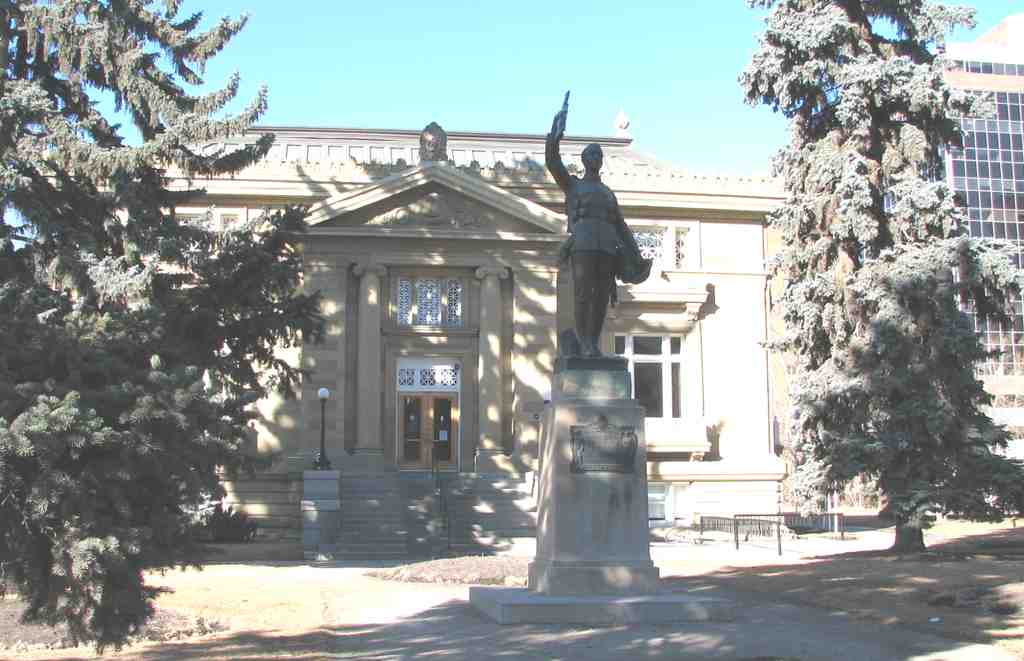
To spot Central Memorial Park, look ahead for a grand sandstone building topped with classical columns and a big triangular pediment, right behind a towering bronze statue standing on a stone pedestal, all nestled between big evergreen trees. Welcome to Central Memorial Park-Calgary’s oldest park, where the past is always just beneath your feet! Picture it: you’re standing on land that’s been beautifully landscaped since 1889, designed in a Victorian style with curving paths, neat flower beds, and robust trees older than your favorite grandparent. On a sunny day like this, you can almost hear the distant laughter and click of horse hooves from a time when top hats were the latest thing in fashion and telegrams were the hottest tech. But let’s time travel a bit. This whole block-now a calm green refuge-was once the heart of a young, growing Calgary. The park’s grand prize is the Memorial Park Library, Calgary’s very first library and a designated national historic site since 2018. Imagine the library in its early days, full of wide-eyed readers-and maybe one or two hopeful writers-splitting their time between reading dusty old tomes and sneaking peeks at their crushes over the tops of hefty encyclopedias. Yet, there’s more here than beautiful buildings: you’ll notice that striking statue, one and a half times the size of a real person, showing a soldier seated atop a sturdy horse. The sculptor, Louis Philippe Hébert from Quebec, had a flair for the dramatic-he even spotted the model for this statue, Eneas McCormick, while standing on the steps of Sacred Heart Church. Hébert’s vision? To build a statue “taller than your trees” that would honor Albertans who fought in the South African Boer War from 1899 to 1902. The horse, by the way, once belonged to none other than rancher Pat Burns, whose moustache probably deserved a statue of its own! Life wasn’t all sunshine and roses-tragedy strikes even in the best of parks. The creation of the South African War Memorial grew from a sobering mystery: the body of an unknown English soldier was found in a Calgary ditch, a silent victim of lead poisoning. Soldiers banded together, collecting funds and memories, so their friend-and all who served-wouldn’t be forgotten. Hébert’s statue, unveiled in 1914, doesn’t even name the famous Colonel Boyle riding atop. Instead, the dates on the pedestal-1899 to 1902-remind everyone this is a tribute to all who sacrificed, not just one man. Now, if you wander further, you’ll find the tall cenotaph, dedicated in 1928 with an enormous crowd watching and hundreds of wreaths laid in hushed respect. The granite benches nearby carry moving inscriptions. One urges us: “May we live as nobly as they died.” Seriously, how’s that for motivation on a Monday morning? Remembrance Day here is truly something special. Every November 11, veterans, families, and soldiers gather in crisp uniforms to lay wreaths, pay respects, and show the city’s heart still beats for its heroes. But wait, it’s not all serious! On the eastern end of the park, you’ll spot another statue-a World War I era soldier, proud and ready. Today, the park bubbles with activity: author events from Wordfest fill the library’s second floor with stories and laughter, and every August, SHAW PRIDE decks the grounds with vibrant murals by artists from all walks of life, joined together by a colorful rainbow sidewalk. So whether you’re here to remember, reflect, or just catch some sun with a book, Central Memorial Park is proof that history isn’t something you leave behind-it’s something you walk right into. If you stand very still and listen-maybe even close your eyes-you just might imagine the echo of old parades, distant voices, and the hopeful scratch of pens on paper. That’s the sound of memory, and you’re standing right in its heart.
Otwórz dedykowaną stronę →You’ve made it! Take a good look around-right here is where the legendary Victoria Arena once stood. Picture it: the year is just before World War I, and the air is alive with…Czytaj więcejPokaż mniej
You’ve made it! Take a good look around-right here is where the legendary Victoria Arena once stood. Picture it: the year is just before World War I, and the air is alive with excitement, the smell of popcorn drifting through the cold, the sharp scrape of skates echoing off wooden beams. Back then, this place was called the Horseshoe Arena, built for the army, but pretty soon, it became a cradle of puck dreams in Calgary. After 1918, the name switched to Victoria Arena, and so did the spirit-suddenly, it was all about hockey. Imagine the Calgary Tigers charging across the ice in the roaring 1920s, the crowd stomping their feet to keep warm and cheer their team. The Tigers played in the Western Canada Hockey League all the way to 1934, and the arena became the stuff of sports legend. It even got a tech upgrade in 1932: artificial ice. That meant the slapshots got sharper, and the games got frostier-without any help from Mother Nature. Lloyd Turner, the Tigers’ manager, became boss of the place that same year. He must’ve been the big cheese on skates! By the time the 1946 Allan Cup rolled around, Victoria Arena was packed, bursting with fans watching the Calgary Stampeders chase down that championship. The Stamps hosted again in 1950. Once, you might’ve even seen horse shows or livestock parades parade right where hockey heroes used to skate-talk about switching hats, or, uh, helmets for horseshoes. In its later years, the arena became a curling rink with four chilly sheets of ice and two more tucked away in sheds. The bleachers, though, got a little too risky and were blocked off, making fans lean in close for those tense, final throws. Finally, in 1950, Victoria Arena passed the torch to the shiny new Stampede Corral next door. But in its day, this place wasn’t just an arena; it was the beating, shouting, cheering heart of Calgary’s sports scene. And hey, if you ever feel a mysterious chill here, maybe it’s not the Canadian weather-maybe it’s the ghosts of hockey past, still playing their endless, epic game!
Otwórz dedykowaną stronę →
Najczęściej zadawane pytania
Jak rozpocząć trasę?
Po zakupie pobierz aplikację AudaTours i wpisz kod realizacji. Trasa będzie gotowa do natychmiastowego rozpoczęcia – po prostu dotknij \"Play\" i podążaj trasą z nawigacją GPS.
Czy potrzebuję internetu podczas trasy?
Nie! Pobierz trasę przed rozpoczęciem i korzystaj z niej w pełni offline. Jedynie funkcja czatu wymaga internetu. Zalecamy pobieranie przez WiFi, aby oszczędzać dane mobilne.
Czy to wycieczka grupowa z przewodnikiem?
Nie – to samodzielny audioprzewodnik. Zwiedzasz niezależnie, we własnym tempie, z narracją audio odtwarzaną przez telefon. Bez przewodnika, bez grupy, bez harmonogramu.
Ile trwa trasa?
Większość tras zajmuje 60–90 minut, ale to Ty kontrolujesz tempo. Wstrzymuj, pomijaj przystanki lub rób przerwy, kiedy chcesz.
Co jeśli nie zdążę ukończyć trasy dzisiaj?
Żaden problem! Trasy mają dożywotni dostęp. Wstrzymaj i wznów, kiedy chcesz – jutro, za tydzień lub za rok. Twój postęp jest zapisywany.
W jakich językach są dostępne trasy?
Wszystkie trasy są dostępne w ponad 50 językach. Wybierz preferowany język podczas realizacji kodu. Uwaga: języka nie można zmienić po wygenerowaniu trasy.
Gdzie znajdę trasę po zakupie?
Pobierz darmową aplikację AudaTours z App Store lub Google Play. Wpisz kod realizacji (wysłany e-mailem), a trasa pojawi się w Twojej bibliotece, gotowa do pobrania i rozpoczęcia.
Jeśli trasa Ci się nie spodoba, zwrócimy Ci pieniądze. Skontaktuj się z nami pod adresem [email protected]
Bezpieczna płatność przez