AudaTours logoAudaTours

Antwerp Audio Tour: From Scholarly Tapestries to Sacred Art

Audioprzewodnik14 przystanków

Sekrety Antwerpii kryją się za skromnymi ceglanymi fasadami i w mrocznych zaułkach, gdzie wielowiekowe bunty odcisnęły swoje piętno na cichych placach. Samodzielna wycieczka audio po tych zawiłych uliczkach ujawnia to, o czym milczą przewodniki – zakazane spotkania, dramatyczne ratunki i nieoczekiwane sojusze, które ukształtowały to niespokojne miasto. Kto ryzykował życie, by przemycać protestanckich wiernych przez oświetlone świecami tunele? Jakie bezcenne dzieło sztuki zniknęło, gdy zagraniczni żołnierze szturmowali kościół św. Katarzyny o północy? Dlaczego XIX-wieczny uniwersytet niemal wywołał skandal z powodu kawy i filozofii? Śledź starcie ukrytej wiary i otwartego buntu, przemieszczając się od akademickich dziedzińców tętniących debatami do kościołów, które niegdyś ukrywały całe społeczności. Stań tam, gdzie runęły wieże, gdzie sekrety zmieniały właścicieli, a nadzieja migotała jak światło latarni w historii Antwerpii. Miasto zachowuje swoje najlepsze historie dla tych, którzy chcą słuchać – rozpocznij podróż i odkryj to, co kryje się pod powierzchnią.

Podgląd trasy

map

O tej trasie

  • schedule
    Czas trwania 40–60 minsIdź we własnym tempie
  • straighten
    2.8 km trasy pieszejPodążaj wyznaczoną trasą
  • location_on
    LokalizacjaAntwerpia, Belgia
  • wifi_off
    Działa offlinePobierz raz, korzystaj gdziekolwiek
  • all_inclusive
    Dożywotni dostępOdtwarzaj ponownie w dowolnym momencie
  • location_on
    Start przy Uniwersytet w Antwerpii

Przystanki na tej trasie

  1. But let’s hop back in time for a moment. Imagine it’s 1852. Horses trot down the street and the air smells of ink and paper. Here in Antwerp, the Jesuits opened the Saint-Ignatius…Czytaj więcejPokaż mniej

    But let’s hop back in time for a moment. Imagine it’s 1852. Horses trot down the street and the air smells of ink and paper. Here in Antwerp, the Jesuits opened the Saint-Ignatius School for Commerce-a school so ahead of its time that it ended up being one of the first places in Europe where you could study business, philosophy, and law together. Not a bad setup if you’re looking to launch your own 19th-century lemonade stand! Fast forward through the roaring 1960s-when the Beatles were big and university life was bigger-the school became UFSIA and joined up with two other public institutions: RUCA and UIA. In 2003, all three decided, "Why compete when we can join forces?" Like superheroes teaming up, they merged into today’s University of Antwerp. They even became Belgium’s first officially pluralistic university, where students were (and are) invited to explore big questions-religious, philosophical, and ethical-sometimes all in one coffee break. This university is all about choice. Fancy studying science or law? Or maybe architecture-because, hey, doesn’t everyone want to design at least one secret lair? There are 34 bachelor programs, 83 master’s, and studies in everything from design to medicine, spread across six very different campuses. Some are nestled right here in the heart of the city, while others are surrounded by peaceful trees on Antwerp’s green belt. The University isn’t stuck in the past, either. It’s making waves in the global rankings and, in 2020, even made headlines by putting student safety first during the pandemic. Proactive and caring-now that’s a quality you want in your teachers, right? So as you stand here, imagine the generations of students who have bustled by, books in hand, ideas flying, shaping not just their future but the future of Antwerp itself. Ready to learn more secrets of the city? Let’s head outdoors toward our next stop. I promise, there will be less homework! Want to explore the faculties, academic ranking or the notable alumni in more depth? Join me in the chat section for a detailed discussion.

    Otwórz dedykowaną stronę →
  2. You’re nearly there! Look straight ahead for a solid, pale stone church with a sloped, almost triangular roof and a little lantern-shaped bell house perched right on top. There’s…Czytaj więcejPokaż mniej

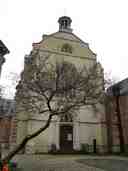
    You’re nearly there! Look straight ahead for a solid, pale stone church with a sloped, almost triangular roof and a little lantern-shaped bell house perched right on top. There’s a bare, twisty tree reaching toward its entrance-almost as if it’s trying to shake your hand. The big wooden doors and the soft, carved details above them give away its late-Gothic style. This is the Brabant Mount of Olives, tucked away on the Lange Winkelstraat! Now, imagine stepping back in time. Antwerp’s streets are far quieter-except for a few horses clomping past. This church once belonged to a secret Protestant community, hiding when it was dangerous just to believe the “wrong” thing. The Brabant Mount of Olives wasn’t just a landmark, but a lifeline for Antwerp’s Protestants during the Austrian Netherlands. No big flashing signs here-just whispers, nervous laughter in candle-lit rooms, and a painter named Jacob Jordaens, who hosted secret gatherings in his own home. If walls could talk, these would probably gossip! The first stone was placed in 1615 by Isabella of Spain herself, along with her very powerful husband Albrecht. But power shifts fast in Antwerp-first the Catholics, then the Protestants, then armies marching through. At one wild point, this church was a horse stable, then a bakery for soldiers, and after a fire, its tower crashed down with a heart-stopping roar. Talk about multitasking! Finally, in 1821, with the drama cooled and a new king in town, the church was handed to the Protestants. The old tower was never rebuilt, but a bell was hung in a neat little cage up top, where it still sits today. If you hear a distant toll, you’ll know whose story is echoing across Antwerp-it’s the memory of secret faith, stubborn hope, and a church that just refused to disappear. Ready for the next stop? I promise, fewer horses-though no guarantee on ghosts!

    Otwórz dedykowaną stronę →
  3. You’re almost there! To spot St. Catherine’s Church, look for a humble red-brick building with pale stone trim, standing quietly right beside the cobblestone street. Up above the…Czytaj więcejPokaż mniej

    You’re almost there! To spot St. Catherine’s Church, look for a humble red-brick building with pale stone trim, standing quietly right beside the cobblestone street. Up above the entrance are two statues tucked in their niches like guardians, and right at the top sits a faded, weathered circular clock that looks like it’s seen more rain than sunshine. The main door is framed in gray stone-and next to it there’s a pointed arch doorway that looks like it’s come out of a medieval postcard. Here’s what you’re standing in front of: once upon a time, this was the heart of the Antwerp Beguinage-a community for women who wanted a life of piety but didn’t fancy being nuns. Back in 1617, the Beguines needed their own little church, so they built it right here. But history can be dramatic-imagine French soldiers marching in, snatching away priceless paintings in 1794, and the church itself almost got erased, brick by brick, except for its choir. But the story wasn’t over. In 1821, the Beguines came back to reclaim their space, and by 1827, the rebuilding began. Look all around you; the bricks you see tell a tale of resilience. By 1830, the bells were ringing again. The church got a bit of a makeover in the 19th century, with stylish furniture and dramatic new flair-the cross-shaped design is from this era, thanks to architect Pierre Bourla, who loved a bit of neo-gothic drama almost as much as he loved a good hat. Peer through the windows (not too closely-you might bump your nose), and you’ll spot soaring stained glass from the 1880s, glowing with light. Six windows, each filled with the holy and the heroic, bathed in color and telling stories all their own. Inside, this church is a treasure chest: there’s the “Mocking of Christ,” and “Christ in the Garden of Olives,” both by Antwerp masters of the 17th century. And if you ever wanted to see true drama, keep an eye out for the “Descent from the Cross” by Jacob Jordaens-a painting that’s almost as intense as rush hour at the Antwerp station. So, here you are. In front of a church that’s survived demolition, plundering armies, and centuries of change. Not bad for a little red-brick building hiding on Rodestraat 39! Ready for the next stop?

    Otwórz dedykowaną stronę →
Pokaż jeszcze 11 przystankówPokaż mniej przystankówexpand_moreexpand_less
  1. Right ahead of you is Ossenmarkt-easy to spot if you look for the open, slightly triangle-shaped square lined with those charming old houses. See that tall stone column rising up…Czytaj więcejPokaż mniej

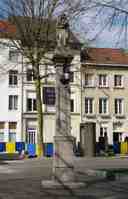
    Right ahead of you is Ossenmarkt-easy to spot if you look for the open, slightly triangle-shaped square lined with those charming old houses. See that tall stone column rising up with a statue on top? That’s our star today: a high gray pedestal topped by a statue of Mary holding her child, watching over the square like a protective neighbor. Around her are benches shaded by trees, perfect for people-watching or sneakily sharing a waffle. Now, imagine you’re standing here centuries ago when Ossenmarkt first opened in 1517. The air would be thick with the sound of mooing and bargaining-the square was a bustling cattle market! Picture the shouting traders, the curious bystanders, and, of course, the cows trying to look nonchalant about their future. Look closely at that statue’s pedestal. It’s older than it looks-a whopping 308 years old! Originally it was a pump column with the year 1716 engraved on it, and only later did it become a showcase for Floris de Cuijper’s statue of Mary and the Child, which has been here since 1947. If you listen carefully, maybe you can hear the echo of old pump handles clanging in the background-or perhaps just the sound of someone’s bicycle bell. Notice those facades around you? Most are from the 19th and 20th centuries, but if you squint a little, you’ll spot two stepped gables on the north side, older and proud of it. They’ve watched the square change over hundreds of years-cows and traders replaced by students and café-hoppers. Fun fact: underground, Ossenmarkt has kept a little mystery. There’s been talk of building a new pre-metro station right below your feet, but for now, it’s just dreams and blueprints. So, for now, the only thing rumbling under the square is your stomach if you skipped lunch. Take a breath, feel the mixture of history and modern city life, and-whatever you do-don’t try to round up any imaginary cattle. They’ve moved on, but the spirit of the old market is still here, waiting for the next great story to unfold!

    Otwórz dedykowaną stronę →
  2. Take a moment to look up at the Capuchin Monastery in front of you. Doesn’t it look peaceful, almost as if time just slowed down on this little corner of Antwerp? But if these…Czytaj więcejPokaż mniej

    Take a moment to look up at the Capuchin Monastery in front of you. Doesn’t it look peaceful, almost as if time just slowed down on this little corner of Antwerp? But if these bricks could talk, I bet they’d have more gossip than a soap opera set! Let’s roll back to the year 1619. This spot was once home to the zusters from Oostmalle, a group of determined sisters with a dream of quiet prayer-until, of course, Antwerp happened. By 1630, they built their own monastery right here on Korte Winkelstraat. But as history likes to do, it shook things up. In 1798, the monastery was closed down-so much for peace and quiet. Then, in 1856, the Capuchin monks took over. Picture them looking around and thinking, “Well, this old monastery is more warehouse than house of worship,” because for years, that’s what it was-a storage place. But the Capuchins cleaned things up and put the church back to its holy use. Now, don’t let the serious brick facade fool you-inside, the St. Francis Church is humble, but graceful. See that small pointed roof and the statue of Saint Francis in the niche? It’s almost like he’s standing guard, making sure nobody sneaks in an extra bag of warehouse goods. The organ, if you ever peek inside, has its own travel story. Built by Emile Kerkhoff back in 1910, it started out in a different Capuchin monastery in Izegem. When that was demolished, the organ packed its pipes and moved here in 2017. Talk about a musical second act! And, tucked away in the monastery garden is a statue of Our Lady, Immaculate Conception, from 1859. It’s survived demolitions, relocations, and probably a few stormy Antwerp afternoons. So next time someone says monasteries are boring, just remember this one: once a home for sisters, turned into a warehouse, reborn by monks, expanded, renovated, and still quietly watching over Antwerp-definitely not your average monastery story, right? Ready for our next stop? The Kipdorp Bridge awaits. Let’s hope the only thing stacked there is a great view!

    Otwórz dedykowaną stronę →
  3. To spot the Kipdorp Bridge, look just ahead to where the street dips a little and open your eyes for the old, sturdy stonework peeking through modern surroundings. You might…Czytaj więcejPokaż mniej

    To spot the Kipdorp Bridge, look just ahead to where the street dips a little and open your eyes for the old, sturdy stonework peeking through modern surroundings. You might notice a long, arched structure nestled partly under the Opera Square. The historical stones almost look like they’re emerging from the depths, stubbornly refusing to be forgotten in this busy city. Let’s imagine it’s the 1500s. You’re standing right outside the brand new Kipdorp Bridge, stretching an impressive 90 meters across! Back then, it was part of Antwerp’s high-tech Spanish city wall. Seriously, this was their version of airport security. You would hear the clatter of wagon wheels, clopping horses, and the buzz of travelers trying to make it through before the gates closed tight for the night. Emperor Charles V ordered the wall to be built after a wild attack tried to topple Antwerp. He thought, “Let’s make this city impossible to conquer!” So they built a wall that soared ten meters high, with five epic city gates-one of which was right here: the Kipdorppoort. Fancy Italian architects and our own Gilbert van Schoonbeke masterminded the works. This wasn’t just any wall, it was a Renaissance fashion statement, with pentagon-shaped bastions and even a moat. If you’re guessing there were lots of confused ducks, you’re probably right. This spot became the city’s most critical passage in and out of Antwerp. Anyone seeking fortune-or a good pie-coming from the Kempen or North Brabant had to cross this bridge. The Kipdorp Gate was open from an impressively early 3:30 in the morning during summer. Sleepy-eyed travelers, beware: if you arrived late, you’d be sleeping under the stars with the city walls for company. Now picture 1583. Angry shouts and clashing swords echo as French troops dash toward the gate, desperate to take the city. Spoiler alert: They didn’t, thanks to the sturdy defenses here! Fast forward to the 1800s and the grand wall is taken down to make way for boulevards-a city’s way of getting a new haircut. Most of the Kipdorppoort disappeared, but when workers recently dug up the streets for a tram line, they struck archaeological gold: ancient pottery, toy fragments, coins, and even an 83-centimeter-long sword, possibly dropped mid-battle or maybe during an especially dramatic lunch break. Historians never say. Today, you can admire the uncovered remains both from above and below, glimpsing layers of Antwerp’s history sandwiched right here among glass and concrete. So, next time you cross this spot, imagine guards scanning the horizon, sleepy merchants hurrying across, or the clank of armor echoing through the early morning mist. This bridge may seem quiet now, but its stones remember everything.

    Otwórz dedykowaną stronę →
  4. Look right ahead-you can’t miss this one! The Artesis Plantijn University College is that striking, modern building with a diamond-patterned skin stretching across its facade. It…Czytaj więcejPokaż mniej

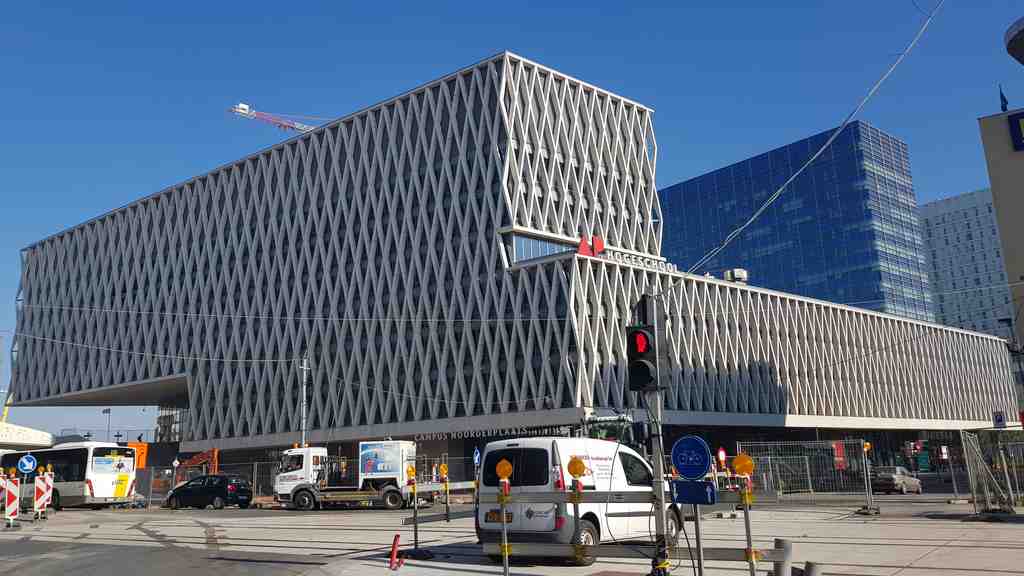
    Look right ahead-you can’t miss this one! The Artesis Plantijn University College is that striking, modern building with a diamond-patterned skin stretching across its facade. It looks a bit like a giant waffle… if waffles were made out of concrete and glass. The silver, crisscross design seems to catch the sunlight and bounce it all around you. Up near the top, look for the red “AP” logo and the word “HOGESCHOOL.” The bold lines and geometric style make it stand out from the crowd of more traditional buildings in Antwerp-kind of like an architectural rebel. Now, step up and imagine you’re about to enter a hive of creativity, research, and, yes, the occasional exam panic. Behind those cool walls, over 16,000 students dive into everything from music and science to law and design-think of it as Antwerp’s brain in full workout mode! This university is actually quite young, officially coming together in 2012, when two schools joined forces: Artesis Hogeschool and Plantijn Hogeschool. If you listen really closely, you might hear the echoes of thousands of footsteps and ideas bouncing through all ten of its campuses, scattered not just here in Antwerp, but reaching out to Mechelen and Turnhout. And the best part? No matter if you’re into jazz at the Royal Conservatory, inventing gadgets, training to be a teacher, or hatching the next big business scheme, there’s a department here ready to help you shine. At any moment, you might spot students rushing to lectures, teachers armed with stacks of books, or even a flash mob if you’re lucky. That’s normal here! So take a deep breath-smell that fresh concrete and coffee in the air-and imagine the future leaders, artists, scientists, and even tour guides like me, all sharpening their skills right behind these walls. Not bad for a place barely old enough to buy itself a pint, right?

    Otwórz dedykowaną stronę →
  5. Take a look at this charming little chapel standing before you! This is the Nativity Mother of God Chapel-once a Roman Catholic chapel, and now the heart of the Romanian Orthodox…Czytaj więcejPokaż mniej

    Take a look at this charming little chapel standing before you! This is the Nativity Mother of God Chapel-once a Roman Catholic chapel, and now the heart of the Romanian Orthodox community in Antwerp. It’s tucked away on Sint-Jacobsmarkt 15, almost as if it enjoys hiding secrets from passersby. Picture Antwerp in the 1990s: a handful of Romanian voices echoing in different church halls, searching for a place that would feel like home. First, their prayers filled the halls of St. Andrew’s Church. Then, off they went-like a wandering choir-to the St. Anna Chapel, also called the Emperor’s Chapel. You could say this was the time of musical chairs, church edition! But, just like a good mystery novel, the story didn’t stop there. When their lease ran out in 2003, the parish was once again on the hunt. They found refuge in the Mira Bari Chapel at the Apostolaat der Schippers, before finally settling here, at this beautiful protected chapel in 2006. Now imagine the soft glow of candles inside, the scent of incense curling up toward the vaulted ceiling, and voices singing ancient melodies-some of which haven’t changed for centuries. The Romanian Orthodox Church, which this parish belongs to, is one of the oldest Christian churches in the entire world. You could say it’s outlasted trends, empires, and quite a few questionable fashion choices over the years. So, as you stand here, remember: this building may look small and quiet from the outside, but inside, it holds a patchwork of journeys, traditions, and stories from far and wide. And unlike my jokes, those stories never get old!

    Otwórz dedykowaną stronę →
  6. Take a look ahead, just past the rooftops. See that huge, chunky stone tower rising up, looking like it once wanted to challenge the clouds? That’s St. James’ Church. Its rugged,…Czytaj więcejPokaż mniej

    Take a look ahead, just past the rooftops. See that huge, chunky stone tower rising up, looking like it once wanted to challenge the clouds? That’s St. James’ Church. Its rugged, unfinished tower looks a little like a giant stone lantern-just imagine what it would’ve been like if they’d finished the original plan. It was supposed to be even taller than the cathedral down the street, but… well, let’s just say Antwerp ran into a few money troubles! So, if you spot a pale gray church with a stumpier-than-expected tower and a long row of tall Gothic windows, you’ve found your stop. Now, while you’re standing in front of this grand old church, picture the bustle of medieval Antwerp. Pilgrims with dusty boots-some fresh from the road to Santiago de Compostela-crossing the square. Back in the 1400s, this spot was just a small hostel for tired travelers. Fast forward to the grand ambitions of Antwerp’s golden age, and suddenly, everyone wanted a church that showed just how important the city had become. The architects stuck stubbornly to the Gothic style, even though the Baroque craze was sweeping Europe by the time they finished in the 1600s. The outside stayed all pointed arches and stone tracery, while inside it's all swooping baroque curves-like a serious person who secretly loves to dance the tango. Here’s my favorite part-the church hides the grave of Peter Paul Rubens, the superstar painter of old Antwerp. That’s right, the man who made angels and mythic heroes look downright real is resting in the eastern chapel, surrounded by centuries of local legends. St. James’ quickly became the church where Antwerp’s richest citizens wanted their names carved in stone. There are more than 1,300 graves under your feet, and rumors say the air is filled with mysterious stories, especially when the organ thunders to life. Oh, and a little drama for you-during wartime and religion-fueled chaos, priests here cut a deal with the French invaders to spare the church’s treasures, saving priceless wood carvings and stained glass from destruction. If you see sunlight streaming through the windows, that’s new glass shining down, since the old panes were blown out in World War II. Don’t miss the choir stalls with woodwork so detailed, you might expect them to start whispering gossip from the 1600s. Imagine a wedding held here-the artist Rubens himself tied the knot in this very place-or a Cardinal climbing the worn stone steps. Whether you hear echoes of ghosts or just the wind, St. James’ Church is proof that even unfinished dreams can become unforgettable.

    Otwórz dedykowaną stronę →
  7. You’re standing in front of Callewaert Vanlangendonck Gallery-one of Antwerp’s havens for abstract art and creative surprises. If these brick walls could talk, they’d probably…Czytaj więcejPokaż mniej

    You’re standing in front of Callewaert Vanlangendonck Gallery-one of Antwerp’s havens for abstract art and creative surprises. If these brick walls could talk, they’d probably debate color theory with you or whisper about wild gallery openings. This gallery first opened its doors in 2012, launched by two art lovers: Yoeri Vanlangendonck and Brecht Callewaert. Just a year later, they were already expanding-imagine the paint still drying while they rolled out a second space! By 2017, the gallery had claimed a beautiful 17th-century building nearby, lovingly restored to fit both old soul and modern creativity. Even Minister of Culture Sven Gatz and the university’s rector came to celebrate the grand opening-trust me, you haven’t seen excitement until you’ve seen culture ministers around abstract art. Inside, you’ll find works by some real legends of Belgian abstract art: Guy Vandenbranden, Paul Van Hoeydonck, and Pol Bury, just to name a few. It’s like the Avengers, but everyone fights with shapes and colors instead of capes and shields. The gallery also carefully guards the artistic archives for these modern masters-think less "Indiana Jones and the Lost Ark," more "Curator and the Locked Filing Cabinet." But don’t worry-it’s not just a shrine to the past. Callewaert Vanlangendonck is always buzzing with new energy, teaming up with contemporary artists like Koen van den Broek and Guillaume Bijl. Every visit is a bit of a gamble; you never know whether you’ll run into a wild new installation or a silent sea of minimalist masterpieces. Sometimes you’ll spot freshly published art books or limited edition prints here too. Take a moment here: breathe in, let your eyes wander, and let your imagination run just a bit wild. After all, abstract art is about what you see-and sometimes what you don’t see. The real mystery is whether these avant-garde artists know what their paintings mean... or if they’re waiting for someone to figure it out!

    Otwórz dedykowaną stronę →
  8. To spot the Burgundian chapel, look up at the building in front of you on Markgravestraat 17. The chapel sits a bit hidden-it's actually perched above you on the first floor of…Czytaj więcejPokaż mniej

    To spot the Burgundian chapel, look up at the building in front of you on Markgravestraat 17. The chapel sits a bit hidden-it's actually perched above you on the first floor of what used to be a grand old city house, with its deep red bricks, tall Gothic windows, and a small bay window sticking out like the nose of a curious cat. If the sun is out, you might catch a splash of color from those stained-glass windows high above. Alright, take a deep breath and imagine yourself stepping back in time about 500 years-watch out for those puffy trousers, they were all the rage! The year is around 1490, and this chapel is the private jewel of the powerful Immerseel family, meant for quiet prayers and maybe a bit of gossiping about the Duke of Burgundy. Jan I van Immerseel, who had a taste for luxury (and, apparently, for drama), asked for this masterpiece to be built. Over the centuries, the chapel switched hands like an antique at an auction, survived some pretty rough times, and at one point-brace yourself-there was a fat-melting workshop in here. The smell must’ve been… memorable. When you gaze up, picture the late Gothic vaults crisscrossing above, almost like stone spiderwebs. Look closely at the stonework: you’ll see tiny carvings-tools from the Passion story-hidden up there as if carved for a treasure hunt. Along the walls, shields and curling vines creep across the plaster, telling stories of Burgundian princes, and even showing the epic marriage of Philip the Good to Isabella of Portugal. It’s like a medieval Facebook wall, but with way better art. Now, those amazing stained-glass windows you see? They’re like ancient comic books, showing off the mighty friends and in-laws of the House of Burgundy in glorious color. The original glass barely survived the centuries, but the 19th-century restorers brought them sparkling back to life-though I’m sure the cleaning bills were astronomical. So, as you stand here, let the echoes of choral singing and shuffling noble shoes fill your mind. Imagine secret meetings above, a hushed intrigue below, and a world where every stone tells a story of power, pride, and an impressively persistent chapel. And if you feel a sudden chill-don’t worry, it’s probably just Jan I checking to see who’s visiting his old private sanctuary.

    Otwórz dedykowaną stronę →
  9. To spot the Snijders&Rockox House as you’re walking, keep an eye out for a townhouse that looks like it’s come straight out of Antwerp’s golden age. You’ll see brick walls with…Czytaj więcejPokaż mniej

    To spot the Snijders&Rockox House as you’re walking, keep an eye out for a townhouse that looks like it’s come straight out of Antwerp’s golden age. You’ll see brick walls with large windows, stone-framed doorways, and perhaps a little peek of its hidden inner garden. It sits shoulder-to-shoulder with its neighbors, but its Renaissance and Baroque details help it stand out-especially those elegant gables and the inviting sense that, behind those walls, something special is waiting. Alright, you’re standing outside the Snijders&Rockox House, once home to not one, but two giants of Antwerp: Frans Snyders, the animal-painting genius, and Nicolaas Rockox, the city’s most rockin’ mayor. Imagine the street back in the 1600s-there’d be a scent of herbs wafting out from the hidden garden, carriages rattling by, and maybe even the distant sound of a lute. The house itself was the epicenter of intellectual life, a place stuffed with secrets. Wealthy merchants and politicians would stride through its carved doors in their stiff collars, discussing plans over the finest tapestries and art money could buy-think of the original “Antwerp high society social club,” but with more ruffs and less Instagram. You might not see Rubens himself, but his spirit lingers here: a few of his masterpieces were made for these very rooms, including the powerful “Samson and Delilah.” Legends say the rooms still hum with stories-of deals made, art traded, and perhaps a glass or two of wine spilled on those precious Renaissance tables. Take a moment to savor the idea of walking where artists and thinkers once debated and dreamed. Today, the KBC Bank’s collection lets you do some art-spotting just as they did, with paintings and sculptures set up as they would have been centuries ago. It’s a bit like time travel, only with better lighting and less risk of catching the plague. So as you stand here, just outside, soak in the rich colors, the fancy history, and-if you listen closely-you might even hear the faint rustle of a silk gown, or the quiet “clink” of a 17th-century coin changing hands inside. Don’t be shy, step closer and get ready to wander through Antwerp’s artistic heart!

    Otwórz dedykowaną stronę →
  10. As you’re approaching Stadswaag, look for the wide, open square lined with cobblestones beneath your feet. All around you, there are benches tucked under leafy trees-their…Czytaj więcejPokaż mniej

    As you’re approaching Stadswaag, look for the wide, open square lined with cobblestones beneath your feet. All around you, there are benches tucked under leafy trees-their branches reaching overhead and splashing golden light all over the stones. On every side, you’ll spot rows of charming old buildings, with brick facades and hints of history in every window. Café terraces and bicycles are scattered about, and there’s a peaceful, cozy vibe-almost as if the city itself is taking a break here. Now, let’s rewind a few centuries and set the stage. Picture Antwerp in the 1500s-horses clopping on these cobbles, merchants hustling wares, the air thick with the promise of trade (and, well, maybe the occasional whiff of cheese). This square was laid out in 1548-yes, you heard right, nearly 500 years ago!-by a clever man named Gilbert van Schoonbeke. Back then, in the heart of all this trading, stood the city’s mighty weighing house. Imagine it right in the center: goods rolling in, officials checking their scales, everyone nervously hoping their herring or cloth wasn’t a gram too light or too heavy. The square got the name Stadswaag around 1800, but don’t bother looking for the old “New Weigh House”-it was used until 1819, then vanished, perhaps to the same legendary place where socks go missing (seriously, no one really knows). Today, this spot is a leafy oasis, perfect for students, locals, and even the occasional wandering tour guide like me, who needs to catch their breath. Oh, and fun fact-someone once thought about digging a giant underground metro tunnel beneath your feet, but for now, we just have the thrill of imagining subway trains whooshing below these quiet cobbles. Keep your ears open-sometimes, if you listen just right, you might hear the echoes of old traders and their secrets drifting on the Antwerp breeze. But don’t worry-no need to weigh your pockets before you wander off to our next stop!

    Otwórz dedykowaną stronę →
  11. To spot the Royal Academy of Fine Arts, just look ahead for a small, elegant white building nestled under a canopy of lush, green trees. The word “ACADEMIE” appears right at the…Czytaj więcejPokaż mniej

    To spot the Royal Academy of Fine Arts, just look ahead for a small, elegant white building nestled under a canopy of lush, green trees. The word “ACADEMIE” appears right at the top above tall, arched windows. A simple metal fence runs along the front, and you’ll notice the gates and a banner sign hanging down to the side. If you hear the gentle rustle of leaves, that’s your clue you’ve reached the right spot. Now, take a second to stand here and imagine the buzz of creatives through the centuries! This building, the Royal Academy of Fine Arts Antwerp, is one of Europe’s oldest art academies - it’s been here since 1663, when David Teniers the Younger, who was quite the local art celebrity, asked the king of Spain for royal permission to start an art school. Back then, Antwerp was the kind of place artists would flock to for a solid paintbrush education. Just think: Irish, Polish, Dutch, and German students all nervously clutching their portfolios, eyes wide with hope. Over the years, it wasn’t just painters-future greats like Henry Van de Velde, who basically invented the “designer architect,” and even Vincent van Gogh dipped their brushes in Antwerp’s paints right here. Here’s a plot twist! In the 1980s, the Antwerp Six exploded onto the scene from this very academy-when everyone thought Belgian fashion meant just raincoats, these six shook up the whole world’s catwalks. If you could peek inside, you’d see halls where students still work, nervously looking up at towering portraits of Rubens and Van Dyck. Today, over 500 students-from over 40 countries-make art, design wild costumes, or invent the next “big thing” in fashion. Legends, dreams, the occasional spilled paint-this little building has seen it all. So as you stand here, imagine Antwerp’s “nurse of painters” watching over the next generation. Who knows, maybe you’ll hear the scratch of a pencil or catch a glimpse of tomorrow’s artistic star hurrying by. Interested in a deeper dive into the 19th century, 20th and 21st centuries or the nurse of painters? Join me in the chat section for an insightful conversation.

    Otwórz dedykowaną stronę →

Najczęściej zadawane pytania

Jak rozpocząć trasę?

Po zakupie pobierz aplikację AudaTours i wpisz kod realizacji. Trasa będzie gotowa do natychmiastowego rozpoczęcia – po prostu dotknij \"Play\" i podążaj trasą z nawigacją GPS.

Czy potrzebuję internetu podczas trasy?

Nie! Pobierz trasę przed rozpoczęciem i korzystaj z niej w pełni offline. Jedynie funkcja czatu wymaga internetu. Zalecamy pobieranie przez WiFi, aby oszczędzać dane mobilne.

Czy to wycieczka grupowa z przewodnikiem?

Nie – to samodzielny audioprzewodnik. Zwiedzasz niezależnie, we własnym tempie, z narracją audio odtwarzaną przez telefon. Bez przewodnika, bez grupy, bez harmonogramu.

Ile trwa trasa?

Większość tras zajmuje 60–90 minut, ale to Ty kontrolujesz tempo. Wstrzymuj, pomijaj przystanki lub rób przerwy, kiedy chcesz.

Co jeśli nie zdążę ukończyć trasy dzisiaj?

Żaden problem! Trasy mają dożywotni dostęp. Wstrzymaj i wznów, kiedy chcesz – jutro, za tydzień lub za rok. Twój postęp jest zapisywany.

W jakich językach są dostępne trasy?

Wszystkie trasy są dostępne w ponad 50 językach. Wybierz preferowany język podczas realizacji kodu. Uwaga: języka nie można zmienić po wygenerowaniu trasy.

Gdzie znajdę trasę po zakupie?

Pobierz darmową aplikację AudaTours z App Store lub Google Play. Wpisz kod realizacji (wysłany e-mailem), a trasa pojawi się w Twojej bibliotece, gotowa do pobrania i rozpoczęcia.

verified_user
Gwarancja satysfakcji

Jeśli trasa Ci się nie spodoba, zwrócimy Ci pieniądze. Skontaktuj się z nami pod adresem [email protected]

Bezpieczna płatność przez

Apple PayGoogle PayVisaMastercardPayPal

AudaTours: Audioprzewodniki

Rozrywkowe, niedrogie, samodzielne piesze trasy

Wypróbuj aplikację arrow_forward

Uwielbiany przez podróżników na całym świecie

format_quote Ta trasa była świetnym sposobem na poznanie miasta. Historie były ciekawe, bez przesadnego scenariusza, i uwielbiałam możliwość zwiedzania we własnym tempie.
Jess
Jess
starstarstarstarstar
Trasa po Tbilisi arrow_forward
format_quote To był solidny sposób na poznanie Brighton bez poczucia bycia turystą. Narracja miała głębię i kontekst, ale nie przesadzała.
Christoph
Christoph
starstarstarstarstar
Trasa po Brighton arrow_forward
format_quote Zacząłem tę trasę z croissantem w jednej ręce i zerowymi oczekiwaniami. Aplikacja po prostu idzie z Tobą, bez presji, tylko Ty, Twoje słuchawki i fajne historie.
John
John
starstarstarstarstar
Trasa po Marseille arrow_forward

Nieograniczone audioprzewodniki

Odblokuj dostęp do KAŻDEJ trasy na świecie

0 tras·0 miast·0 krajów
all_inclusive Odkryj Bez Limitu