
Wycieczka audio po Launceston: Przechadzka po historycznym sercu Launceston
Stado makaków japońskich wygrzewa się w tasmańskim parku miejskim, podczas gdy rzut beretem stąd, wiktoriańska sala strzeże sekretów pod swoją okazałą wieżą. Ciche ulice Launceston skrywają walki o władzę, nierozwiązane zagadki i odurzający aromat legendarnego trunku. Ta wycieczka audio z przewodnikiem odkrywa warstwy, które większość turystów pomija, prowadząc przez zielone parki, wystawne sale i owiane legendą browary, gdzie historia ukrywa się na widoku. Czy gorące debaty w Albert Hall wywołały niepokoje w całym mieście? Jaki osobliwy prezent doprowadził do powstania nieprawdopodobnej kolonii małp w City Park? I który kufel w browarze Boag's Brewery został niemal utracony przez skandaliczny sabotaż? Przejdź od bujnych ogrodów, przez ozdobne fasady, aż po śmiałe ceglane mury. Każdy krok ożywia szeptane intrygi i zapomniane historie, gdy na własne oczy widzisz przemianę Launceston. Rozpocznij swoją podróż już teraz i odkryj, co kryje się za elegancką maską miasta.
Podgląd trasy
O tej trasie
- scheduleCzas trwania 40–60 minsIdź we własnym tempie
- straighten4.7 km trasy pieszejPodążaj wyznaczoną trasą
- location_onLokalizacjaLaunceston, Australia
- wifi_offDziała offlinePobierz raz, korzystaj gdziekolwiek
- all_inclusiveDożywotni dostępOdtwarzaj ponownie w dowolnym momencie
- location_onStart przy City Park w Launceston
Przystanki na tej trasie
As you approach City Park in Launceston, keep an eye out for lush greenery and well-manicured gardens. The park has grand entrances with wrought iron gates, and inside you will…Czytaj więcejPokaż mniej
As you approach City Park in Launceston, keep an eye out for lush greenery and well-manicured gardens. The park has grand entrances with wrought iron gates, and inside you will find a delightful blend of nature and history. You might notice the elegant architecture of the Albert Hall, which stands prominently within the park. If you follow the paths, you'll come across a pond, vibrant flower beds, and plenty of open space to explore. One of the highlights, and a particularly fun spot, is the Monkey Island, where you'll see the delightful Japanese macaques! Welcome to the City Park, a charming slice of Launceston’s history! Dating back to the 1820s, this park has seen its fair share of changes. Initially a government allotment, it transformed into a beautiful botanical garden thanks to the Launceston Horticultural Society, and finally opened to the public in 1863. Don’t miss the curious monkeys at Monkey Island - a gift from Launceston's sister city, Ikeda in Japan. These cheeky macaques are always a hit! Wander around and enjoy the various attractions from historical statues, like the statue of Tasmanian botanist Ronald Campbell Gunn, to the captivating John Hart Conservatory built in 1932. Be sure to check out the gorgeous bandsstand, duck pond, and playground. And if you’re here in February, you might just catch Festivale, the park’s annual food festival. Just imagine, even a miniature railway once snaked around this park during the Tasmanian Industrial Exhibition in 1891! Soak it all in, and just remember, if you come across a plinthed cannon, it’s from the Crimean War - a true piece of history sitting pretty in the park. Enjoy your stroll in this heritage-rich park, a true gem in Launceston’s crown!
Otwórz dedykowaną stronę →
Pokaż jeszcze 11 przystankówPokaż mniej przystankówexpand_moreexpand_less
As you continue your walk down St John Street, look to your right for an impressive building that stands out with its striking Italianate style. This is the Launceston Town Hall,…Czytaj więcejPokaż mniej
As you continue your walk down St John Street, look to your right for an impressive building that stands out with its striking Italianate style. This is the Launceston Town Hall, and it’s absolutely unmissable with its grand colonnade, featuring a series of tall, white columns. The building’s ornate detailing and the flags fluttering atop it give it a regal look, akin to a historical European palace. The Launceston Town Hall, located at 18/28 St John Street, was commissioned in 1864 by the Launceston Town Council. The project was designed by architect Peter Mills, and the foundation stone was laid on 21 April 1864 by the then Governor of Tasmania, Thomas Gore Browne. Imagine how it was in those days-think horse-drawn carriages stopping by what was then a burgeoning civic hub! By 1867, the Town Hall was ready to serve the community. But over the years, it experienced several expansions and modifications. Think of it as a grand old house that has been renovated to keep up with the times. In 1906, it got its first major expansion, but the grand addition took place in 1936 when the building’s colonnade was extended, adding five new columns to the original four. This gave it even more of a pronounced majestic look. If the building could talk, it would tell you about the makeover in 1970, and a few more touch-ups in 1988 and 1994. All these efforts have kept it looking as glorious as ever. The main façade, with its imposing colonnade, truly stands as a testament to its historic and architectural significance in Launceston. So, take a moment to appreciate the grandeur of the Town Hall, and if you’re lucky, you might even catch a glimpse of some official activity or a community event happening inside!
Otwórz dedykowaną stronę →As you approach, you'll notice St Andrew's Kirk on your right. Look for a striking building with a tall, narrow spire reaching for the sky, like a finger pointing to the heavens.…Czytaj więcejPokaż mniej
As you approach, you'll notice St Andrew's Kirk on your right. Look for a striking building with a tall, narrow spire reaching for the sky, like a finger pointing to the heavens. The façade is cream-colored with Gothic-inspired features, including arched windows and intricate details. The spire, tapering elegantly, and the large archway at the entrance make it quite distinctive. Keep an eye out for the leafless tree in front, it's like nature’s way of pointing you towards the Kirk! Now, let’s dive into a bit of history, shall we? St Andrew's Kirk, located right here on St John Street, is more than just a pretty face. This Presbyterian church serves the Presbytery of Bass and has been doing so for quite a while! It all started back in 1831 when the Scottish community of Launceston decided they needed a place to worship, leading to the construction of the Scotch National Church on Charles Street. But as the congregation grew, so did their need for a larger building. Fast forward to the 1840s, they decided to build a new church closer to Launceston’s business district. They found the perfect spot, which used to be a watch house (talk about a makeover!). They advertised for designs and the winning entry came from William Henry Clayton. Despite being smaller than requested, his design featured a charming Gothic-inspired style built with local bricks and sandstone. The foundation stone was laid in 1849, and within 15 months, the church was ready. With a cost of almost £3,956 (in installments, no less), the construction by William Tyson, a member of the congregation himself, was completed, and the church opened its doors in December 1850. As more members flocked in, the church saw various extensions and alterations. The most significant was the addition of St Andrew's Chambers. Over the years, various modifications modernized the interior, including a new vestibule, additional seating, and up-to-date sound and lighting equipment. So here you are, standing before a landmark that’s not only a piece of architectural beauty but also a vessel of rich history!
Otwórz dedykowaną stronę →As you approach the Majestic Theatre, keep an eye to your right. You’ll spot a grand, creamy-hued building with a majestic (!) archway right in the center. Above the entrance,…Czytaj więcejPokaż mniej
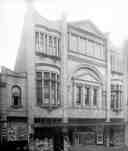
As you approach the Majestic Theatre, keep an eye to your right. You’ll spot a grand, creamy-hued building with a majestic (!) archway right in the center. Above the entrance, you'll see three tall windows flanked by classic columns, which add to the Grecian charm. The word “Majestic” should still be visible above the arch - it's a historic giveaway that you’re in the right place! The Majestic Theatre is indeed a piece of cinematic history in Launceston. This fabulous former theatre and cinema opened its doors to a full house on the 2nd of June, 1917, thanks to the efforts of Greek-Australian businessman Marino Lucas. It was a dazzling place back in the day with room for 1,510 excited patrons, separated into the dress circle, stalls, and back stalls. Marvel at the architecture influenced by Lucas’s Greek heritage, with a design that local newspapers once compared to the ancient Pantheon. During World War I, this place wasn't just for watching movies; it was the liveliest cinema in Tasmania! Did you know that the fame of the Majestic’s success even spread to Melbourne? Marino’s brother, Anthony Lucas, influenced by this theatre, went on to build the iconic Capitol Theatre there. The Majestic even had its brush with film fame, premiering Ken Hall’s "Gone to the Dogs" in 1939 and hosting actor Michael Pate in 1950 to promote "Sons of Matthew." But like many grand old theatres, the rise of television meant curtains for the Majestic - the final film shown was "Sweet Charity" in February 1970. The Pitt brothers, Neil and Don, rescued the building from disuse, turning it into a menswear store while preserving a slice of its cinematic past. Inside, you’ll still find the 1929 projection equipment on display. And for a touch of the eerie, the Majestic Theatre even inspired a horror novel, "Encore," about fictitious hauntings. This piece of Launceston cinema history continues to captivate, long after the final credits rolled. Enjoy the view!
Otwórz dedykowaną stronę →As you walk down St. John's Street, keep your eyes peeled to the left. You'll spot the Launceston Synagogue standing proudly with its unique trapezoidal facade. Looking straight…Czytaj więcejPokaż mniej
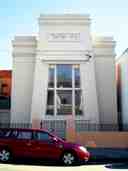
As you walk down St. John's Street, keep your eyes peeled to the left. You'll spot the Launceston Synagogue standing proudly with its unique trapezoidal facade. Looking straight ahead, you'll see a large window bearing a Star of David. The building is painted in a subtle, light color, which makes the Star of David and the building's architectural details stand out even more. The Launceston Synagogue is quite a historical gem! Built in 1844 and consecrated in 1846, this building is Australia's second-oldest synagogue, right after the one in Hobart. Isn't that neat? Designed by Richard Peter Lambeth and constructed by the Tasmanian builders Barton and Bennell, this synagogue is also the oldest place of non-Christian worship in Launceston. From 1884 until about 1871 and then again during the 1930s until 1961, it served as an active synagogue, reopening once more in 1984. Back in the 1840s, the plucky Launceston Hebrew Congregation raised £500 to purchase the land for this building. Unique for its Egyptian revival architecture - a rare sight in Australia - it has a distinct trapezoidal facade and a significant window with the Star of David. In 1989, it was listed with the National Trust of Australia, ensuring its preservation and renovation. And how about this for an interesting tidbit? In 1847, arrangements were made for Jewish prisoners in Hobart and Launceston to attend synagogue and refrain from work on the Sabbath. So, as you stand before this beautiful and historic building, imagine the stories it could tell - a window into the past and a testament to the vibrant history of the community.
Otwórz dedykowaną stronę →As you're walking along, keep your eyes peeled to your left and look for a striking mix of red and cream-colored stonework with a prominent clock tower - that's St John's Church.…Czytaj więcejPokaż mniej
As you're walking along, keep your eyes peeled to your left and look for a striking mix of red and cream-colored stonework with a prominent clock tower - that's St John's Church. The church is set amidst some lush greenery, adding a welcoming touch to this grand piece of history. Now, about St John's, let me take you on a little time journey. St John's Church is the oldest in Launceston, with its construction starting way back in 1824. Imagine the early settlers rolling up their sleeves and getting to work on what would become one of the oldest surviving churches in all of Australia! Though it's had its fair share of facelifts over the years, the tower and the first pair of windows in the nave remain as original as a vinyl record collection. Perched at the corner of St John Street and Elizabeth Street, St John's is like the elder statesman among the five churches facing Prince's Square. Here's a fun fact: the church bell was cast by the Whitechapel Bell Foundry in London. Fancy that, a piece of London ringing through Launceston! Oh, and let's not forget Thomas Sharp, the church's organist from 1857 to 1875. Imagine those Sunday services with Sharp playing, it must have been quite the melodic treat! Enjoy your visit and feel the echoes of history as you explore!
Otwórz dedykowaną stronę →As you approach Prince's Square, keep an eye out to your left. You'll see a beautifully laid out park with perfectly symmetrical paths converging towards the center. You won't…Czytaj więcejPokaż mniej
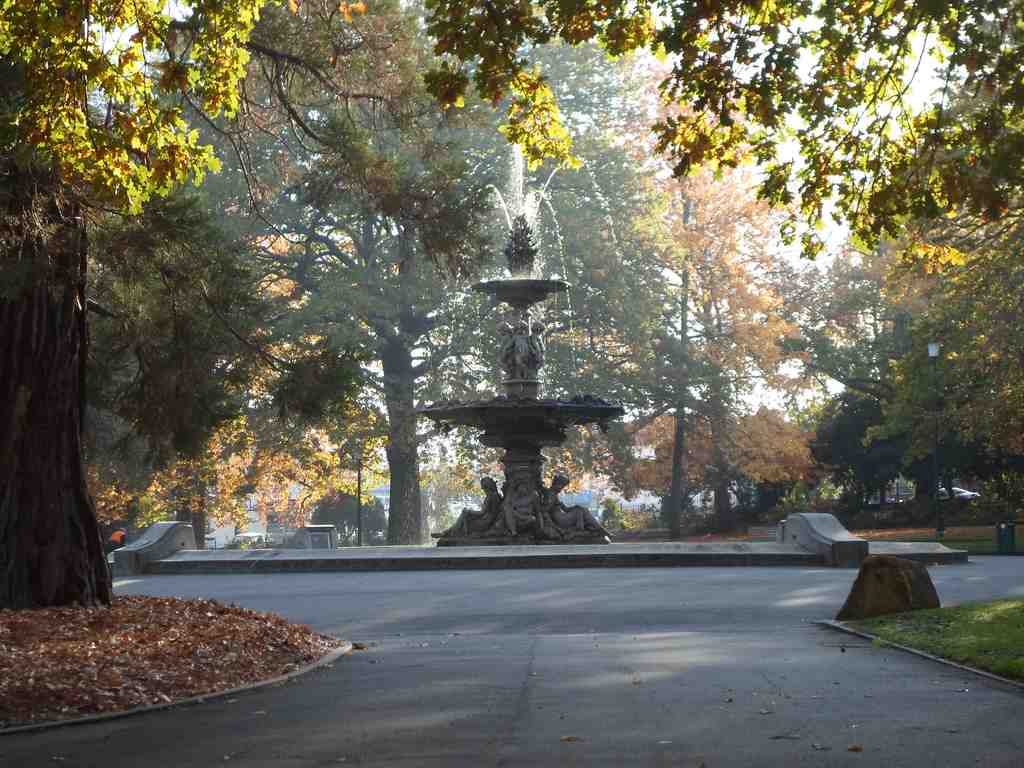
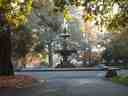
As you approach Prince's Square, keep an eye out to your left. You'll see a beautifully laid out park with perfectly symmetrical paths converging towards the center. You won't miss the iconic Val d'Osne Fountain standing proudly amid this natural splendor. The trees around are stunning with their leaves creating a lovely canopy above. Now let’s dive into the history and charm of Prince's Square! Established in 1858 from an old brickfield, Prince's Square has blossomed into an essential cultural hub and a heritage park in Launceston. Surrounded by Elizabeth Street, St John Street, Frederick Street, and Charles Street, this verdant oasis boasts symmetrical design and the bronze gilded Val d'Osne Fountain at its heart. Once a clay pit used in constructing the first brick buildings in the settlement, the square was later transformed into a grand park. Notably, the bricks made here helped build St John’s Anglican Church right across the street! In 1851, this very square hosted an election for the new Legislative Council in Van Diemen's Land. By 1853, it witnessed a grand congregation when Launceston celebrated its new municipality status and the end of convict transportation. The enthusiastic locals, alongside the Launceston Horticultural Society, set out to make this park a stately gathering place. Lovingly designed by curator Thomas Wade, the park saw the addition of lavish paths, fences, and an array of trees including oaks and sequoias. The Val d'Osne Fountain, a magnificent centerpiece, was added a year later in 1859. Funny enough, there’s a local myth about this fountain: it was supposedly meant for Launceston in Cornwall, England but ended up here in Tasmania due to a shipping mix-up! In 1868, the Duke of Edinburgh’s visit inspired the park's renaming from St John’s Square to Prince's Square. He even planted two oak trees during a memorable candlelit celebration. So take a moment to soak in the history and beauty of Prince’s Square, and maybe let your imagination wander back to the days of brick-making, grand celebrations, and a town coming into its own!
Otwórz dedykowaną stronę →As you're walking along Frederick Street, keep an eye to your left-you can't miss Christ Church and Milton Hall. Look out for the striking red brick church with an impressive…Czytaj więcejPokaż mniej
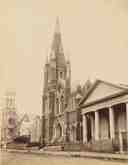
As you're walking along Frederick Street, keep an eye to your left-you can't miss Christ Church and Milton Hall. Look out for the striking red brick church with an impressive octagonal spire reaching to the sky, flanked by turrets and buttresses. Directly next to it, you'll see the grand portico with four Doric columns supporting a pediment that reads "Milton Hall," and if you squint, you might just make out the old inscription for "Launceston High School". Both sets of buildings give off a distinctively historic vibe, like they've seen a lot of Launceston history. Now, on to the fun part! Christ Church and Milton Hall are like a historic double act, each playing a significant role in Launceston's early days. Milton Hall, formerly known as St John’s Congregational Church, was built around 1841-42 by the pioneering John West. You’ll spot it easily with its Greek Revival style and stately Doric columns. This hall has seen its fair share of big moments-from fiery debates about convict transportation to housing the very first vision of the Australian flag! Talk about being in the thick of things. Right next door is Christ Church, originally constructed as a smaller church but given a mighty makeover between 1883-1885 into the grand Gothic Revival beauty you see today. Courtesy of architects Granger & D'Ebro, it now boasts that show-stopping octagonal spire, a collection of turrets, and ever-solid buttresses. Plus, inside you have a c. 1875 organ by Bevington & Sons that promises some impressive acoustics. What's particularly touching is one of its stained-glass windows, depicting the Calling of Matthew. It was a notable piece at the Tasmanian Exhibition of 1891-92. While the church once served as the City Baptist Church until 2021, it is now under new management, giving it a fresh chapter in its historic story. So, take a moment to appreciate these twin landmarks. They've been homes to schools, debates, worshipping communities, and more-a true snapshot of Launceston's diverse history. Enjoy soaking up the atmosphere of history as you look around!
Otwórz dedykowaną stronę →Alright, dear traveler! You should be approaching the Church of the Apostles now, and it’ll be on your right. Keep an eye out for a charming structure with Gothic Revival…Czytaj więcejPokaż mniej
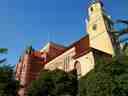
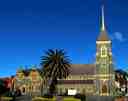
Alright, dear traveler! You should be approaching the Church of the Apostles now, and it’ll be on your right. Keep an eye out for a charming structure with Gothic Revival features. This landmark stands out with its dark stone exterior and contrasting light-colored accents around the windows and doors. The tall, pointed bell tower and sharp spire under the vast blue sky are hard to miss. You might also spot a grand palm tree right in front of the main entrance. Now, let's dive into its fascinating history! The Church of the Apostles is a Catholic church here in Launceston, part of the Archdiocese of Hobart. Back in 1838, the local Catholic community had no fixed place of worship, so they set up a temporary chapel on Cameron Street. That same year, the government allocated land on Margaret Street for a permanent chapel dedicated to Saint Joseph. The foundation stone for St. Joseph’s was laid in March 1839, and the church was inaugurated by October 1842. Two decades later, the church needed a refresh-it was showing its age. The decision was made to construct a larger church, designed by Tasmanian architect Henry Hunter. In September 1864, Bishop Willson laid the foundation stone for the new Church of Mary, Queen of the Apostles. By October 1866, the nave and aisles were built, and the church was opened for religious services in November that same year. Construction continued into the late 19th century, with various sections and the tower being completed in different stages. Fun fact: The bell tower, designed by Peter Staunton, didn’t get finished until 1989, a century after its foundation stone was laid! The interior features the original stone high altar, a pulpit crafted from blackwood and huon pine by Timothy Earley, and a magnificent pipe organ dedicated in 1933, housed within two flanking columns. This church is not just a place of worship but a treasure trove of history and architectural beauty. Ready to move on, or lingering to admire this beauty a bit longer? You’ve got quite a landmark before you!
Otwórz dedykowaną stronę →As you approach stop number 13, Launceston College, look to your right! Prepare to be greeted by a grand, stately building that stands proud with its striking combination of red…Czytaj więcejPokaż mniej
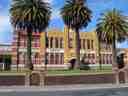
As you approach stop number 13, Launceston College, look to your right! Prepare to be greeted by a grand, stately building that stands proud with its striking combination of red brick and light brown stone. The large Palm trees in front give it a distinctive tropical vibe - you can't miss them. Look for the words "Launceston College" boldly marking the central entrance. Now, for a fun fact-filled dip into history! Launceston College is like a time traveler of sorts. Established in 1913, it originally opened as Launceston State High School. Over time, it has adapted not just its curriculum but also its name, evolving to its current identity. This school isn't just any boring old place; imagine attending classes in a location that once housed the Launceston Female Factory and Gaol built way back in 1834. Yes, you could say it has a bit of a past! The college stands out for its diverse offerings - from a gymnasium complex complete with a swimming pool, sauna, and rock climbing wall (who said school isn't fun?), to a full-on commercial training restaurant, an FM radio station, and even a TV studio. They pretty much have everything but a spaceship! In addition to the fantastic facilities, it places a strong emphasis on the arts. Students get to indulge in annual stage productions. Over the years, they’ve performed hits like "Grease", "Matilda", and "Seussical." Talk about a high school musical! But that’s not all! The International Student Program allows students from around the globe to experience Aussie education. The college's influence extends beyond borders with various overseas travel opportunities. And for the bookworms among you, Launceston College has published several fascinating documents about its history and milestones, including a centennial reflection titled "100 years of excellence: Launceston State High School to Launceston College 1913-2013." So, standing here, you're not just in front of a school, but a landmark rich in history, brimming with opportunities, and no short of a few surprises up its sleeve!
Otwórz dedykowaną stronę →
Najczęściej zadawane pytania
Jak rozpocząć trasę?
Po zakupie pobierz aplikację AudaTours i wpisz kod realizacji. Trasa będzie gotowa do natychmiastowego rozpoczęcia – po prostu dotknij \"Play\" i podążaj trasą z nawigacją GPS.
Czy potrzebuję internetu podczas trasy?
Nie! Pobierz trasę przed rozpoczęciem i korzystaj z niej w pełni offline. Jedynie funkcja czatu wymaga internetu. Zalecamy pobieranie przez WiFi, aby oszczędzać dane mobilne.
Czy to wycieczka grupowa z przewodnikiem?
Nie – to samodzielny audioprzewodnik. Zwiedzasz niezależnie, we własnym tempie, z narracją audio odtwarzaną przez telefon. Bez przewodnika, bez grupy, bez harmonogramu.
Ile trwa trasa?
Większość tras zajmuje 60–90 minut, ale to Ty kontrolujesz tempo. Wstrzymuj, pomijaj przystanki lub rób przerwy, kiedy chcesz.
Co jeśli nie zdążę ukończyć trasy dzisiaj?
Żaden problem! Trasy mają dożywotni dostęp. Wstrzymaj i wznów, kiedy chcesz – jutro, za tydzień lub za rok. Twój postęp jest zapisywany.
W jakich językach są dostępne trasy?
Wszystkie trasy są dostępne w ponad 50 językach. Wybierz preferowany język podczas realizacji kodu. Uwaga: języka nie można zmienić po wygenerowaniu trasy.
Gdzie znajdę trasę po zakupie?
Pobierz darmową aplikację AudaTours z App Store lub Google Play. Wpisz kod realizacji (wysłany e-mailem), a trasa pojawi się w Twojej bibliotece, gotowa do pobrania i rozpoczęcia.
Jeśli trasa Ci się nie spodoba, zwrócimy Ci pieniądze. Skontaktuj się z nami pod adresem [email protected]
Bezpieczna płatność przez 


