
New York City Audiotour: Veerkracht en Reflecties in het Financiële District
In de schaduw van de Liberty Tower, waar glazen reuzen oprijzen uit straten die ouder zijn dan de natie zelf, schuilen geheimen onder elk trottoir en elke steen. Deze zelfgeleide audiotour ontsluit de verborgen geschiedenis van het Financial District en onthult zijstraten en verhalen die door de haastige menigte over het hoofd worden gezien. Laat gefluisterde legendes en begraven waarheden je reis transformeren in een avontuur dat alleen de insiders van de stad kennen. Welke catastrofe bij het National September 11 Memorial beïnvloedt nog steeds beslissingen die worden genomen in de hoogste kantoren? Welke opstandige daad veroorzaakte paniek in directiekamers en galmt na in oude steegjes? En waarom veroorzaakte een gewone lunchpauze een schandaal dat bijna een fortuin ten val bracht? Voel de hartslag van New York terwijl voetstappen leiden van heilige herdenkingsvijvers naar wolkenkrabbers die veldslagen en verraad hebben overleefd. Elke bocht brengt gedurfde ontdekkingen en onvergetelijk drama. Ben je klaar om te wandelen waar legendes nooit slapen? Begin het verhaal onder de torenhoge gebouwen.
Tourvoorbeeld
Over deze tour
- scheduleDuur 30–50 minsGa op je eigen tempo
- straighten0.5 km wandelrouteVolg het geleide pad
- location_onLocatieNew York, Verenigde Staten
- wifi_offWerkt offlineEén keer downloaden, overal gebruiken
- all_inclusiveLevenslange toegangOp elk moment opnieuw afspelen, voor altijd
- location_onStart bij Liberty Tower
Stops op deze tour
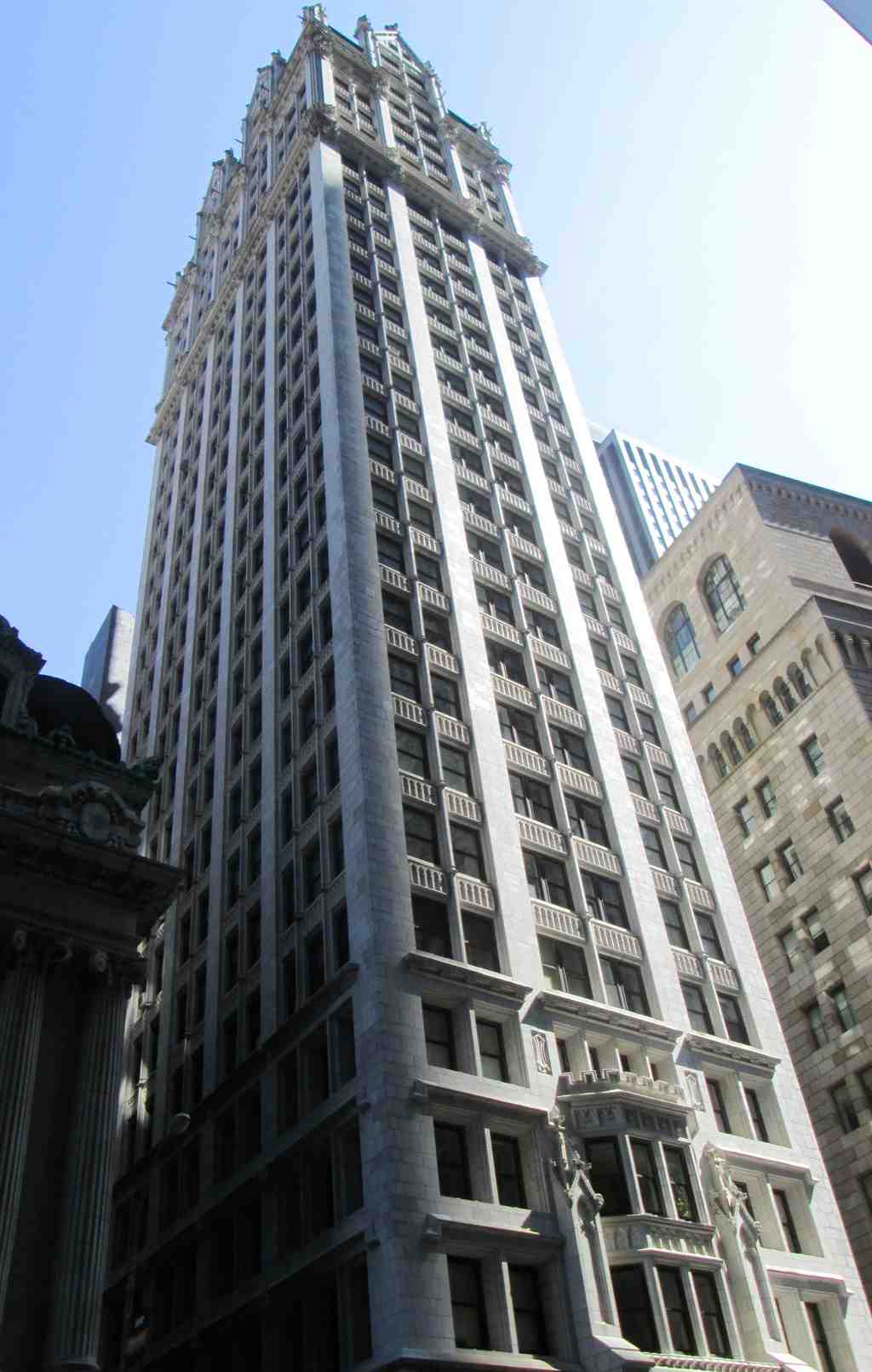
If you look upwards toward Nassau and Liberty Streets, you’ll spot a slender, bright white tower covered in intricate terracotta details-gargoyles, birds, and fanciful creatures…Meer lezenToon minder
If you look upwards toward Nassau and Liberty Streets, you’ll spot a slender, bright white tower covered in intricate terracotta details-gargoyles, birds, and fanciful creatures guarding a Gothic crown high above the clustered Financial District. Here you are, right at the foot of the Liberty Tower. It rises like a storybook castle, squeezed into a tiny plot but stretching a dizzying 33 stories above these bustling streets, its white terracotta gleaming in the sun-no matter how crowded the city feels, this building dares you to look up and catch its ambitious personality. Imagine the year is 1910: suffocating with excitement and the steam of progress, Manhattan is booming. Henry Ives Cobb, an architect with wild ideas from Chicago and Paris, is hired to craft something bold, something that almost pokes the clouds-he chooses English Gothic. Not for a cathedral, but for an unapologetic office tower, clad from foot to rooftop in terracotta. Over 3,000 blocks of it, filled with quirks and characters carved into the walls. You could search for hours spotting alligators and creatures peering down at you! What made the Liberty Tower extraordinary wasn’t just its lacework of ornament but its insane proportions. The floor area ratio was over 30 to 1, making it the slimmest skyscraper in the world when it was finished. The whole thing rises on a plot of land that’s just 5,200 square feet. Its foundations sink down a remarkable 94 feet, built into soggy, treacherous ground with caissons so deep they were second only in the entire city. It was a gamble. The construction even triggered a series of mortgages, defaults, and legal struggles-nearly leaving the building unfinished before tenants even moved in. Inside, the marble lobby was once covered with lively murals-a tribute to the ambitions and fleeting youth of New York, and even the legendary William Cullen Bryant, whose “China Tower” newspaper office stood here before all this steel and terracotta. The tenants of Liberty Tower were fittingly ambitious: one of the first was the law office of Franklin D. Roosevelt, practicing here in his pre-presidential days, along with major insurance companies, brokers, and, rather secretly, German spies during the feverish days leading up to World War I. Then came Sinclair Oil, snapping up the entire building right after WWI. The place was buzzing with negotiations, and even the notorious Teapot Dome scandal was cooked up here-oil deals, bribery-a juicy slice of American history, played out in these narrow offices. When oil moved uptown, so did Sinclair, and the Rockefeller family took over before passing it through a carousel of owners. By the late 1970s, things were gloomy. The neighborhood was half-abandoned, and Liberty Tower stood almost empty-almost ready for a big sleep. Instead, Joseph Pell Lombardi stepped in, betting everything, with just $25,000 down, that New Yorkers would soon crave city living again. He stripped away the dusty cubicles and reimagined the place for homes, making this the Financial District’s first major office-to-residential conversion. It wasn’t easy-moving day for new residents meant raw, unfinished spaces and kitchens and bathrooms yet to be built. Still, the building sparked a trend, inviting life back into this part of the city. Of course, Liberty Tower has endured more than its share of trouble: battered by the collapse of the World Trade Center nearby in 2001, followed by years of costly repairs-residents pitched in to restore thousands of terracotta sculptures on its ornate exterior. But time and again it’s survived, returned, and now stands tall, crowned and proud, as both a city landmark and a symbol of rebirth-one that hides wild stories and wild creatures in plain sight, still keeping watch from its Gothic perch. As the traffic rushes by, pause and let your mind fill those old offices with the ambitions, secrets, and dramas of a century of New Yorkers. Fascinated by the site, architecture or the critical reception? Let's chat about it
Open eigen pagina →
Veelgestelde vragen
Hoe begin ik de tour?
Download na aankoop de AudaTours-app en voer je inwisselcode in. De tour is direct klaar om te starten – tik gewoon op afspelen en volg de GPS-geleide route.
Heb ik internet nodig tijdens de tour?
Nee! Download de tour voordat je begint en geniet er volledig offline van. Alleen de chatfunctie vereist internet. We raden aan om te downloaden via wifi om mobiele data te besparen.
Is dit een groepsrondleiding met gids?
Nee - dit is een audiotour met eigen gids. Je verkent zelfstandig op je eigen tempo, met audiovertelling via je telefoon. Geen tourguide, geen groep, geen schema.
Hoe lang duurt de tour?
De meeste tours duren 60-90 minuten, maar jij bepaalt het tempo volledig. Pauzeer, sla stops over of neem pauzes wanneer je wilt.
Wat als ik de tour vandaag niet kan afmaken?
Geen probleem! Tours hebben levenslange toegang. Pauzeer en hervat wanneer je wilt – morgen, volgende week of volgend jaar. Je voortgang wordt opgeslagen.
Welke talen zijn beschikbaar?
Alle tours zijn beschikbaar in meer dan 50 talen. Selecteer je voorkeurstaal bij het inwisselen van je code. Let op: de taal kan niet worden gewijzigd na het genereren van de tour.
Waar vind ik de tour na aankoop?
Download de gratis AudaTours-app uit de App Store of Google Play. Voer je inwisselcode in (verzonden per e-mail) en de tour verschijnt in je bibliotheek, klaar om te downloaden en te starten.
Als je niet tevreden bent met de tour, betalen we je aankoop terug. Neem contact met ons op via [email protected]
Veilig afrekenen met 


