
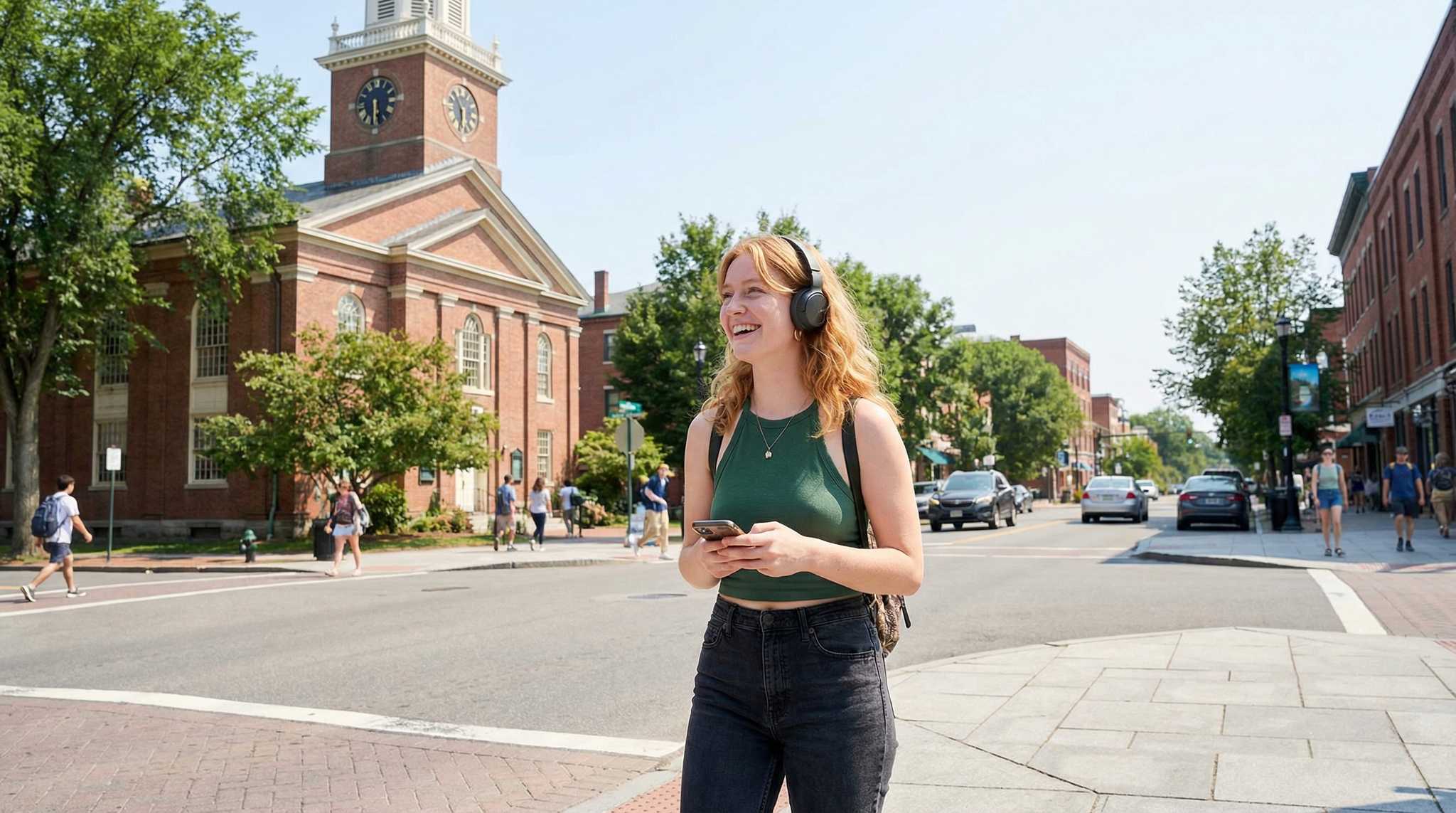
Burlington Audiotour: Heilige Torens en Historische Straten
Blote baksteen ontmoet torenhoge spitsen waar de stille straten van Burlington ooit weergalmden van rechtbankdrama en gefluisterde geheimen. Onder de serene façade aan het meer van de stad liggen verhalen van felle juridische confrontaties, verborgen daden van rebellie en sporen van schandalen die de meesten nooit opmerken. Deze zelfgeleide audiotour leidt door de over het hoofd geziene hoekjes en beroemde gevels van Burlington, en onthult de verborgen lagen van de geschiedenis en personages die te stoutmoedig zijn voor schoolboeken. Ontdek wat andere reizigers missen terwijl verhalen zich ontvouwen precies waar ze gebeurden. Welk geheim veroorzaakte paniek in de Districtsrechtbank van de Verenigde Staten voor het District Vermont? Waarom veroorzaakte de hoeksteen van de Kathedraal van de Onbevlekte Ontvangenis controverse onder de stadsbewoners? Wie werd uit het Burlington Memorial Auditorium gesleept te midden van een merkwaardig extravagante protestactie? Loop door eeuwen van conflict, geloof en verandering. Elke stap onthult nieuw drama en onverwachte schoonheid – zie Burlington niet alleen als een stad, maar als een levend verhalenboek. Duik erin en laat Burlington onthullen wat het verborgen heeft gehouden.
Tourvoorbeeld
Over deze tour
- scheduleDuur 30–50 minsGa op je eigen tempo
- straighten4.0 km wandelrouteVolg het geleide pad
- location_onLocatieBurlington, Verenigde Staten
- wifi_offWerkt offlineEén keer downloaden, overal gebruiken
- all_inclusiveLevenslange toegangOp elk moment opnieuw afspelen, voor altijd
- location_onStart bij Eerste Baptistenkerk
Stops op deze tour
You are standing before a sturdy rectangular building of red brick, anchored by a central square tower that ascends into a distinctive, multi-tiered green steeple. Look closely at…Meer lezenToon minder
Open eigen pagina →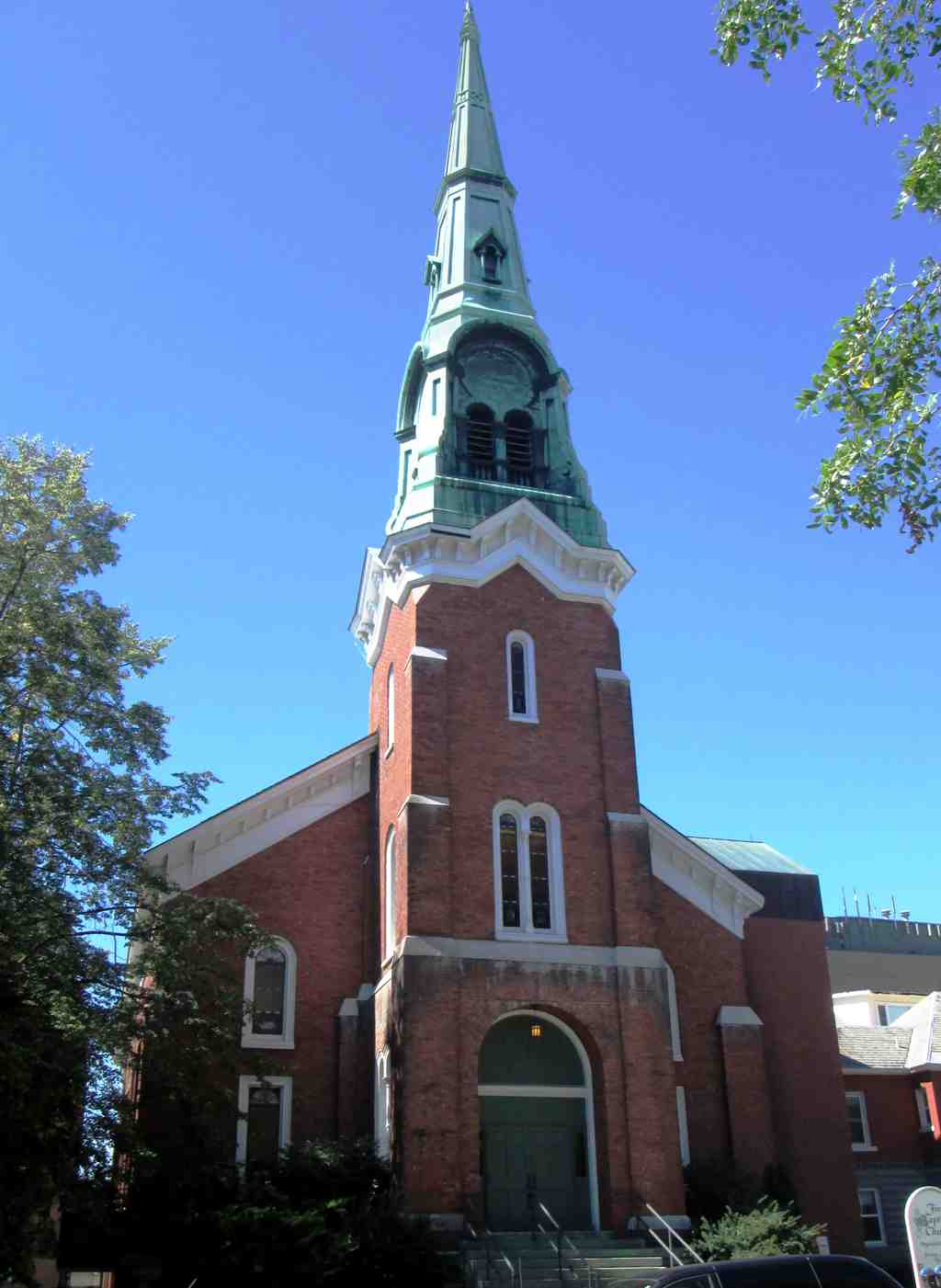
First Baptist ChurchPhoto: Beyond My Ken, Wikimedia Commons, CC BY-SA 4.0. Cropped & resized. You are standing before a sturdy rectangular building of red brick, anchored by a central square tower that ascends into a distinctive, multi-tiered green steeple. Look closely at this structure, because its dramatic physical evolution mirrors the restless spirit of the city around it. Burlington has never been a place to simply stand still and preserve the past under glass. Instead, this city is defined by constant architectural and social reinvention, adapting and transforming itself to meet the ambitions of each new era.
In the 1860s, the growing Baptist congregation commissioned a new building, but the original plans were a disaster. Master builder Thomas Hill spotted fatal structural and stylistic flaws immediately. They brought in Boston architect John Stevens to review the work, and he bluntly told the committee their design was twenty-five years out of date. You can glance at your screen to see the bold Italianate design he proposed instead. Italianate architecture, popular in the mid-19th century, favored tall, arched windows and decorative roof brackets to signal wealth and modernity.
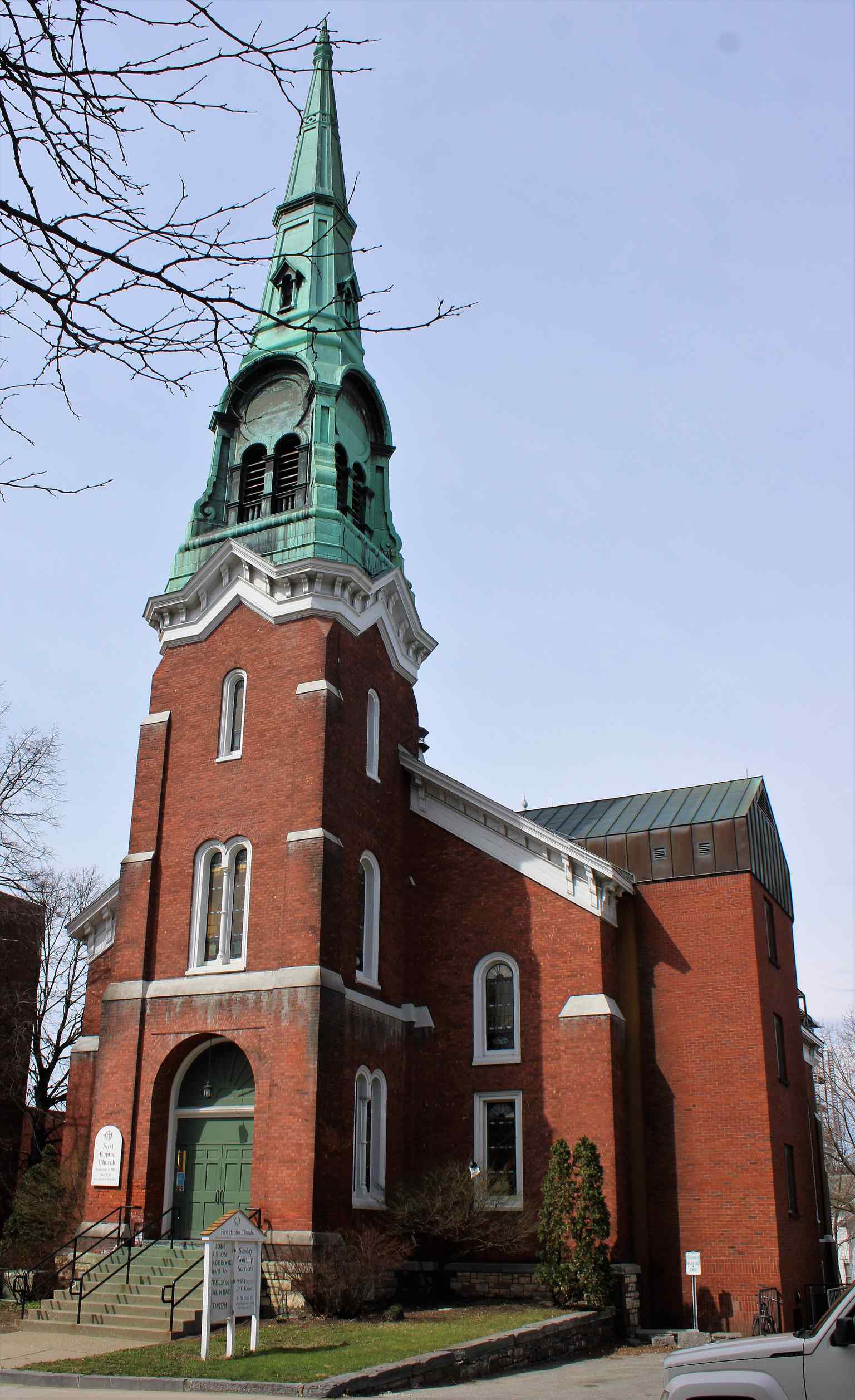
This view highlights the First Baptist Church's Italianate design, a style so modern for its time that the architect, John Stevens, had to completely overhaul the initial plans provided by the church committee.Photo: Farragutful, Wikimedia Commons, CC BY-SA 4.0. Cropped & resized. The redesign delayed the project and pushed the final cost to $32,550, which is over $600,000 today. Fortunately, they had Lawrence Barnes in the pews. He was a wealthy local industrialist, and his deep pockets largely funded the construction.
Yet, what you see today is not what Barnes paid for. When dedicated in 1864, the church was covered entirely in wood. It was not until 1905 that the congregation completely encased the wooden frame in the red brick you see now, adding the stained glass windows shown on your app. The iconic steeple was also transformed later. In 1910, the spire was wrapped in copper. Over the decades, exposure to the air caused the copper to oxidize, a natural chemical reaction that developed the pale green patina making it such a recognizable marker on the skyline today.
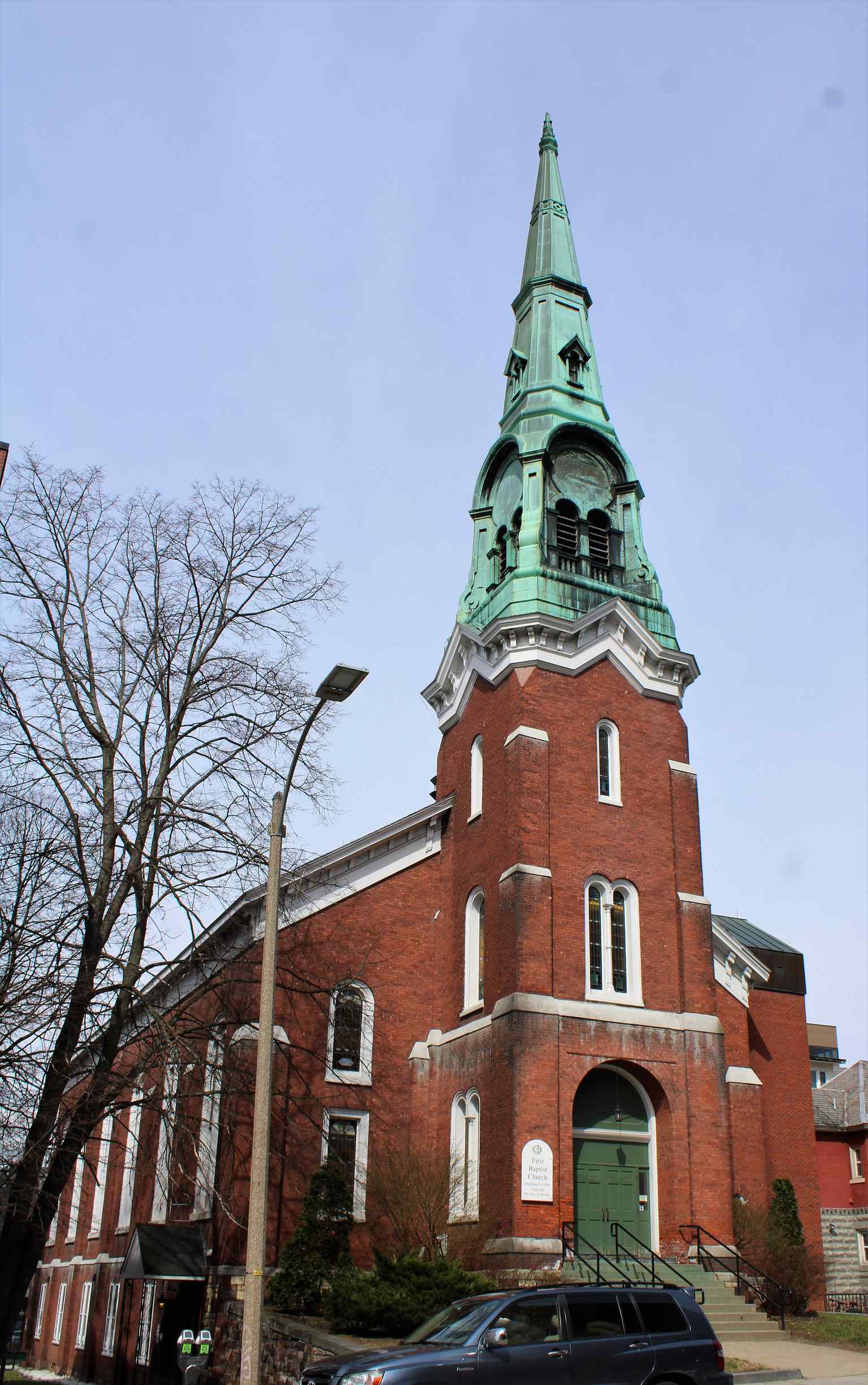
The church's iconic red brick exterior wasn't original; it was clad in wood until a major 1905 renovation, when the stained glass windows were also installed.Photo: Farragutful, Wikimedia Commons, CC BY-SA 4.0. Cropped & resized. Inside sits a massive, 10,000-pound pipe organ built by the famous Hook brothers in 1864. It is a rare survivor, having escaped the 20th-century trend of electrifying old instruments. But its immense weight slowly crushed the floor beneath it. In the mid-1990s, church members rallied to completely rebuild the floor with specially engineered trusses to save the historic pipes.
As for the congregation's original 1845 church? It met a highly unusual secular fate. The Burlington Times newspaper bought the old building, ripped off the belfry, and dragged their heavy printing presses right into the sanctuary.
The First Baptist Church welcomes visitors on Sunday mornings and most weekday mornings except Wednesdays. Now, let us walk toward the pedestrian center of the city, heading to the Church Street Marketplace just a few minutes away.
You will see a wide, brick-paved pedestrian avenue stretching forward, framed by multi-story brick facades with decorative cornices and a long row of cast-iron streetlamps. Born…Meer lezenToon minder
Open eigen pagina →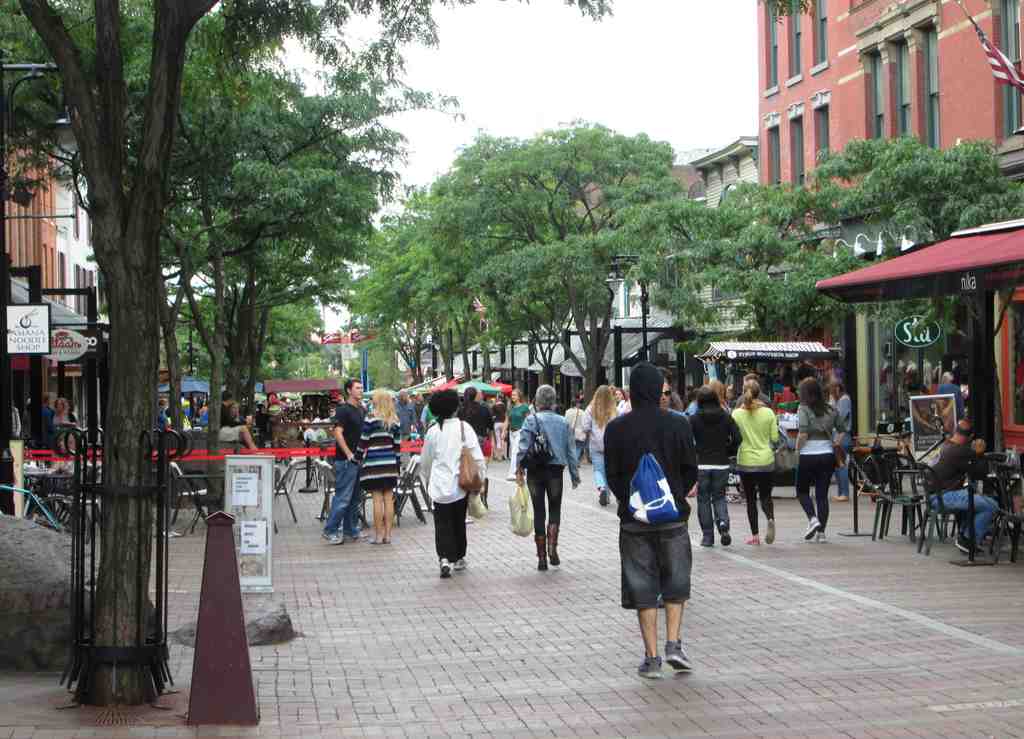
Church Street MarketplacePhoto: Beyond My Ken, Wikimedia Commons, CC BY-SA 4.0. Cropped & resized. You will see a wide, brick-paved pedestrian avenue stretching forward, framed by multi-story brick facades with decorative cornices and a long row of cast-iron streetlamps. Born from a radical one-day urban renewal experiment in 1971, this lively corridor has become the undisputed beating heart of Burlington's civic life. That single experimental street fair completely reinvented the downtown experience, proving that a city could prioritize people over cars.
But getting here was not easy. Funding this vision sparked intense political drama. In 1979, a massive 1.5 million dollar municipal bond... a type of loan taken out by a city to raise funds, worth about six million dollars today... was passed to build it. A 39-year-old Bernie Sanders used this debt as a wedge issue during his underdog mayoral campaign. He fiercely criticized the bond, arguing downtown businesses should pay for it themselves, not the taxpayers. In a twist of political irony, Sanders achieved a shocking upset victory, and months later found himself cutting the ribbon on the very marketplace he had campaigned against.
Take a moment to look around the pedestrian mall as you walk. Notice the rhythm of the street, and see if you can spot any buskers... that is, street performers who entertain crowds for tips... or perhaps catch a glimpse of the massive 124-foot-long mural by Pierre Hardy celebrating the city's lively culture painted on a nearby alley wall.
The busker ecosystem here is famously robust, regulated by strict annual video auditions to ensure high-quality entertainment. It is a true community hub that also serves as an incubator for young entrepreneurs starting out with food carts. If you glance at your app, you can see a historical view of the street looking north from Main Street, showing how these grand historic buildings create a continuous, vibrant urban canyon.
Despite this commercial success, Church Street has seen its share of growing pains regarding public space. To manage the bustling crowds, the city once implemented a highly controversial universal trespass policy. Under this strict rule, a person who caused trouble at a single participating business could be banned from dozens of other shops on the street. In 2004, a young local musician had a dispute with his employer at a department store. Because of that single incident, he was placed on the trespass list and banned from the entire Burlington Town Center and dozens of other stores for a full year without ever being convicted of a crime, sparking intense debates about constitutional rights and public access.
The businesses along this stretch generally welcome visitors Monday through Saturday from 10 in the morning to 7 in the evening, and Sundays from 11 to 5. Let us slowly walk away from the lively energy of the marketplace toward a site of historic tragedy and triumph, the Cathedral of the Immaculate Conception, which is about an 8-minute walk away.
On your left stands a striking modern structure defined by its sharply angled, green standing-seam copper roof resting on bands of brown brick, capped with a prominent simple…Meer lezenToon minder
Open eigen pagina →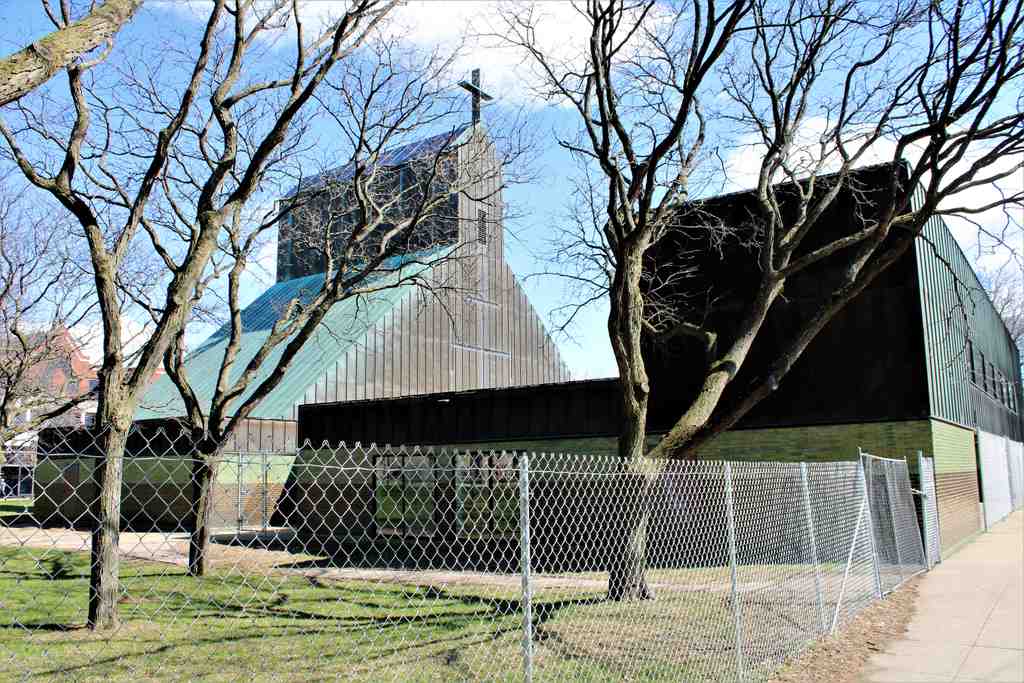
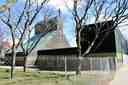
Cathedral of the Immaculate ConceptionPhoto: Farragutful, Wikimedia Commons, CC BY-SA 4.0. Cropped & resized. On your left stands a striking modern structure defined by its sharply angled, green standing-seam copper roof resting on bands of brown brick, capped with a prominent simple cross. This geometric sanctuary, completed in 1977, represents just one layer of a location deeply defined by destruction, ambition, and rebirth.
The story begins with the original parish built here in 1832. It was led by Father Jeremiah O'Callaghan, an Irish immigrant known as the Apostle of Vermont, a fearless priest who practically laughed in the face of mob threats. Around midnight in May 1838, an anti-Catholic nativist mob-members of a political faction fiercely hostile to immigrants-set the original wooden church ablaze, burning it entirely to the ground. The conspirators had plotted to carry Father O'Callaghan out of town on a rail and banish every Irish resident from Burlington. The flames consumed everything, leaving behind nothing but a single silver chalice that had been stored safely in the priest's home.
The mob intended to drive the congregation away, but they severely misjudged the priest. Father O'Callaghan publicly declared that he was absolutely not afraid of their intimidation. Following the devastating fire, Burlington witnessed a profound display of community resilience. Sympathetic Protestants, appalled by the midnight bigotry, crossed deep religious and social divides to offer substantial financial support. Their united contributions ensured the Catholic congregation could rapidly rebuild a much stronger church.
This cycle of devastation and reinvention became a defining characteristic of this land. That rebuilt church was eventually replaced by a magnificent Gothic Revival cathedral in 1867, a towering building constructed from local redstone and marble. It stood as a monumental landmark until March 1972, when a young man named Timothy Austin deliberately set a fire inside. As firefighters battled the blaze, the heavy bell tower collapsed into the nave, the soaring central hall of the church. Austin was arrested nearby, confessed to the police, and ultimately pleaded innocent by reason of insanity, which led to his confinement at a state psychiatric hospital.
Determined to endure, the diocese hired prominent architect Edward Larrabee Barnes to design the modernist building you see today, purposefully using dark brick and copper to blend with the surrounding locust trees. Though declining attendance eventually forced its closure in 2018, the site remains a testament to a community that continually rebuilds itself from the ashes.
Our journey through the city's transformation continues. We now leave behind these historic crimes of violent intolerance, walking toward a place that untangles modern tales of deception and conflict. We will head next to the United States District Court for the District of Vermont, just a three-minute walk from here. For those curious about the site's administration, the grounds maintain operating hours from 9 AM to 3 PM Monday through Thursday, remaining closed Friday through Sunday.
Toon 8 stops meerToon minder stopsexpand_moreexpand_less
You will know you have arrived when you spot the building's official seal, a distinct circular emblem featuring a proud bald eagle grasping olive branches behind a striped shield,…Meer lezenToon minder
Open eigen pagina →
United States District Court for the District of VermontPhoto: Federal government of the United States, Wikimedia Commons, Public domain. Cropped & resized. You will know you have arrived when you spot the building's official seal, a distinct circular emblem featuring a proud bald eagle grasping olive branches behind a striped shield, surrounded by bold white lettering. Welcome to the United States District Court for the District of Vermont. Take a glance at your phone to see a map outlining this federal district, which holds jurisdiction over the entire state with locations in Brattleboro, Rutland, and right here in Burlington.
This city has constantly adapted to face the complex realities of modern society, shifting its institutions to meet new challenges. Inside these walls, quiet authority wrestles with chilling crimes and profound questions of civil rights.
In 2025, this courthouse hosted a trial that felt more like a dark thriller. Prosecutors alleged that a man named Serhat Gumrukcu financed a plot to kill his former business partner, Gregg Davis, over a multimillion dollar oil deal that had gone terribly wrong. The hired hitman, Jerry Banks, took the stand here and calmly explained to the jury how he lured Davis out of his home on a January night in 2018.
Banks was disguised as a United States Marshal, wearing a tactical vest, flashing red and blue vehicle lights, and carrying a fake arrest warrant for financial crimes. Picture being pulled from your home by a man wearing a badge. How easily could any of us be deceived by the sheer illusion of authority? After placing the victim in handcuffs under the guise of a lawful arrest, Banks drove him to a remote area and ended his life.
But justice here takes many forms. In 2020, Judge William K Sessions the Third delivered a major victory for prisoners in a case called West versus Smith. He certified a class action lawsuit... a type of legal case where one person sues on behalf of a much larger, affected group. Inmates argued the state was denying them access to expensive, life saving Hepatitis C medication to save money. The plaintiffs argued this violated the Eighth Amendment, the constitutional rule forbidding cruel and unusual punishment.
Sometimes, the people upholding the law find themselves entangled in it. Look at your screen to see Christina Nolan, who served as United States Attorney here from 2017 to 2021, placing a high priority on prosecuting illegal firearms cases. In a striking twist, security personnel at the Brattleboro courthouse discovered a handgun on her during a routine screening in 2025. She later declined a court diversion program... an alternative legal path designed to keep offenders out of the traditional justice system.
The scale of human ambition, the demand for fairness, and the constant reshaping of right and wrong play out daily in the rooms beside you. Yet, long before federal courts anchored this community, it was faith that provided the ultimate laws of the land. We are now going to explore those deep historical roots. The Unitarian Church is just a three minute walk away.
Look to your right for the stately red brick meeting house, defined by its tall, tiered white wooden steeple and the prominent clock face mounted directly above the main entrance.…Meer lezenToon minder
Open eigen pagina →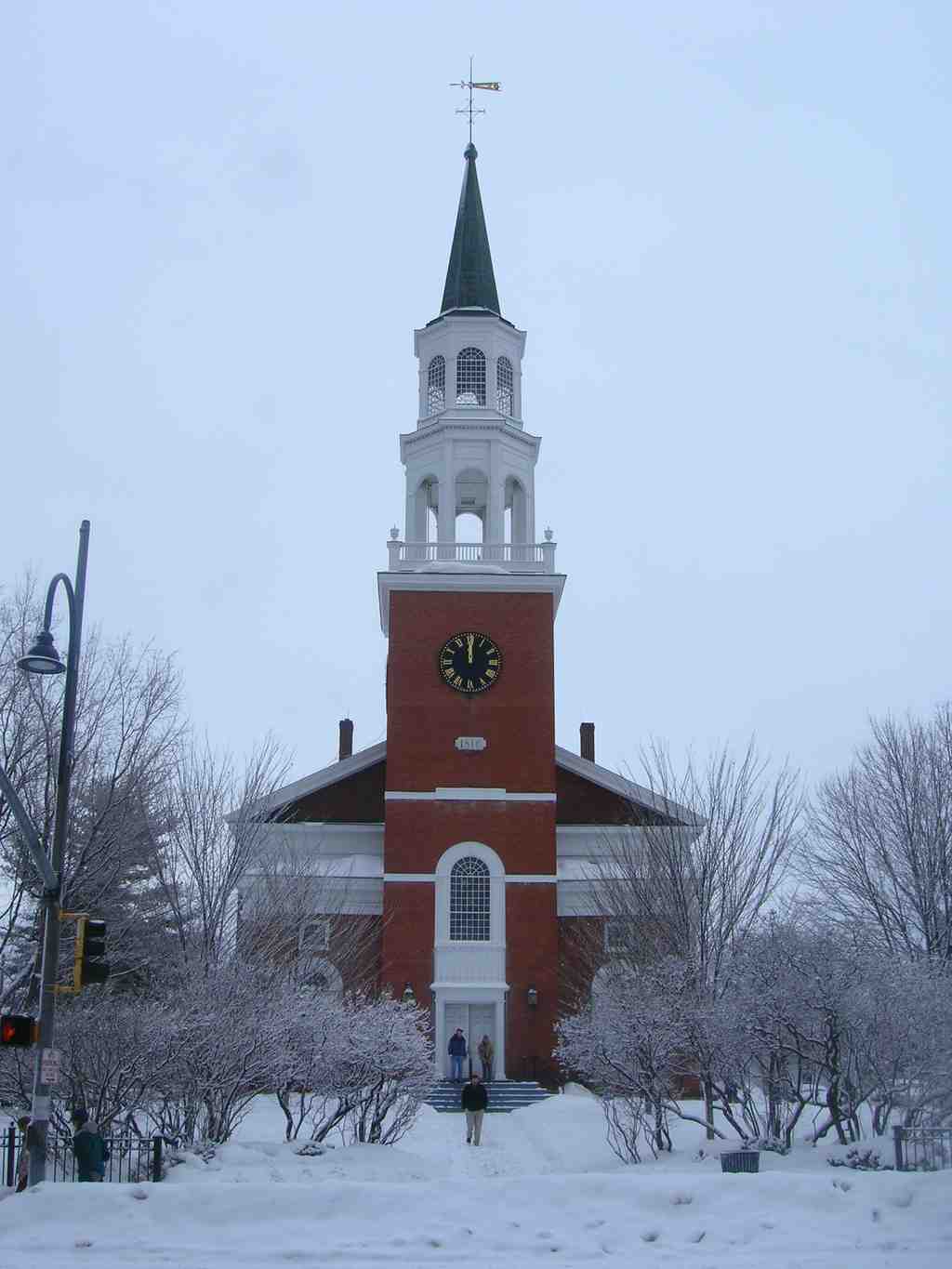
Unitarian ChurchPhoto: Niranjan Arminius, Wikimedia Commons, CC BY-SA 4.0. Cropped & resized. Look to your right for the stately red brick meeting house, defined by its tall, tiered white wooden steeple and the prominent clock face mounted directly above the main entrance.
This is the Unitarian Universalist Meeting House. It is the oldest remaining place of worship established by European settlers in this city. Built in 1816, its very presence dictated the layout of the town. Standing right at the head of the avenue, this single building gave the marketplace its name. If you check your screen, you can see how it stands as a historic sentinel over the area.
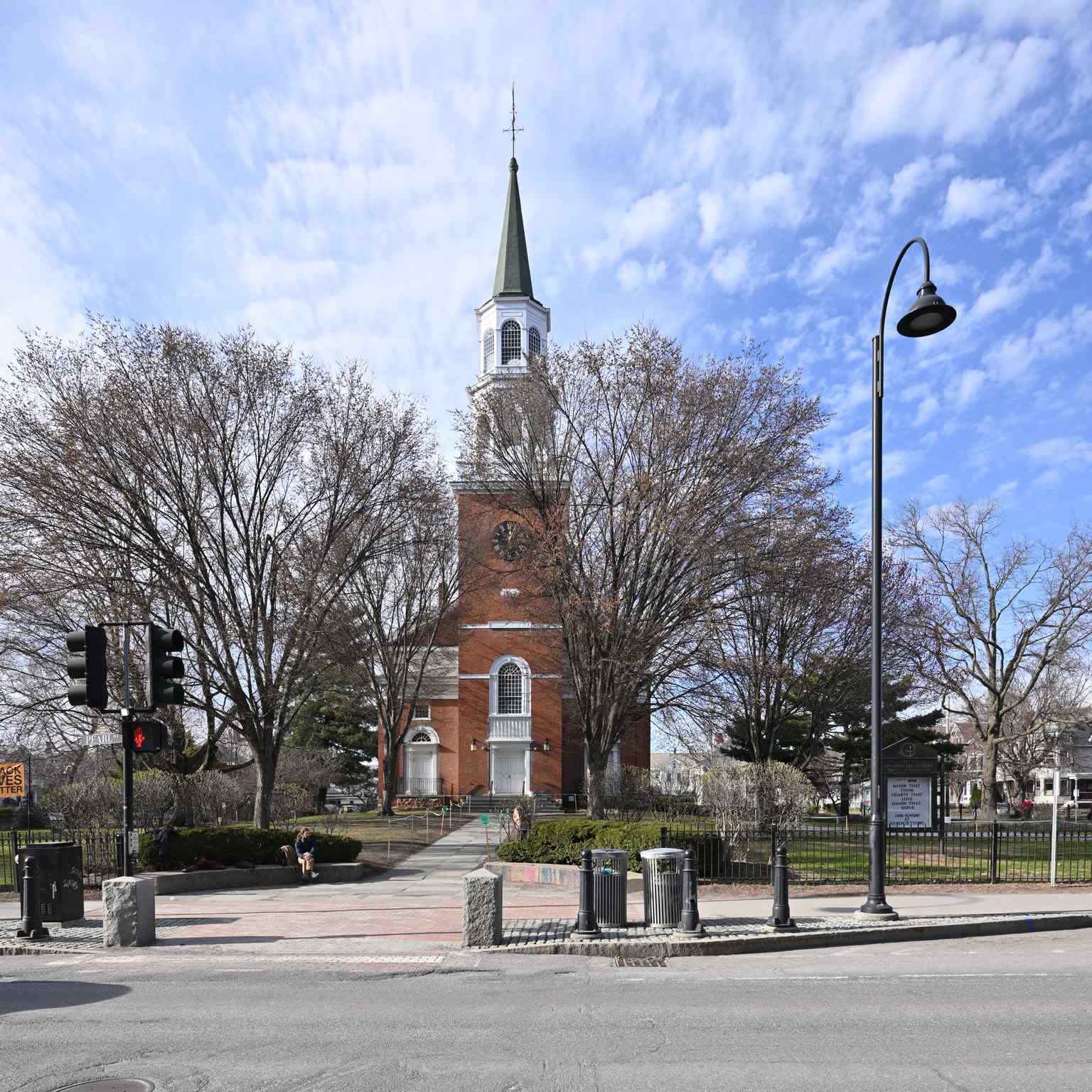
The Unitarian Universalist Meeting House, seen here, is the oldest remaining place of worship established by European settlers in Burlington, Vermont, and gave the city's iconic Church Street its name.Photo: G. Edward Johnson, Wikimedia Commons, CC BY 4.0. Cropped & resized. But the creation of this congregation was born from intense division. In the early eighteen hundreds, the local Congregational society split over theology. One side embraced the Trinitarian view, a strict Calvinist belief in the holy trinity and predetermined salvation. The other faction, the Unitarians, rejected those rigid doctrines in favor of a more liberal approach. The theological rift was so tense that the community's first minister resigned rather than choose a side.
The Unitarians pressed forward, hiring an English architect to design a masterpiece. The community rallied to build it. They hauled massive timbers from a nearby river valley, fired the bricks right here in Burlington, and hammered every nail by hand. The total cost was around twenty-three thousand dollars, which translates to roughly half a million dollars today. They even brought an organ all the way from Boston by sleigh.
The original bell hanging in that tower was cast by the famous patriot Paul Revere. Unfortunately, it cracked twelve years later during a particularly vigorous ringing. The congregation had to send it to New York to be melted down and recast. Decades later, the town purchased the cracked bell metal for about five hundred and ninety dollars, roughly nineteen thousand dollars today.
The building you see today has survived over two centuries of change, testing the congregation's spirit time and again. In 1954, lightning struck that soaring white steeple, causing hidden dry rot that eventually tilted the spire dangerously to the east. It had to be demolished. But during the Great Depression, the Works Progress Administration, a federal relief program, had sent architects to meticulously document the church's dimensions. Thanks to those exact drawings, the city was able to reconstruct the steeple precisely as it was, reinforcing this new version with a modern steel frame.
As the physical structure adapted, so did the people inside. In 1845, the church quietly removed a segregated seating sign from its balcony, taking a definitive early step toward racial integration. Today, that drive for inclusivity continues. Each June, they host a Flower Communion. Congregants bring a flower to the service and leave with a different one, a beautiful ritual celebrating human diversity and theological pluralism, the idea that multiple different belief systems can peacefully coexist. It is a powerful reflection of a community that has constantly reshaped itself to become stronger and more united.
If you happen to be walking by between Tuesday and Thursday midday, their doors are typically open for a few hours. When you are ready to continue, let us walk toward another congregation that has adapted through the centuries, the First Methodist Church, located just a seven-minute walk away.
On your right stands a commanding masonry church built from dark purplish stone, featuring a steep gabled roof and a soaring square belfry topped with an octagonal steeple. This…Meer lezenToon minder
Open eigen pagina →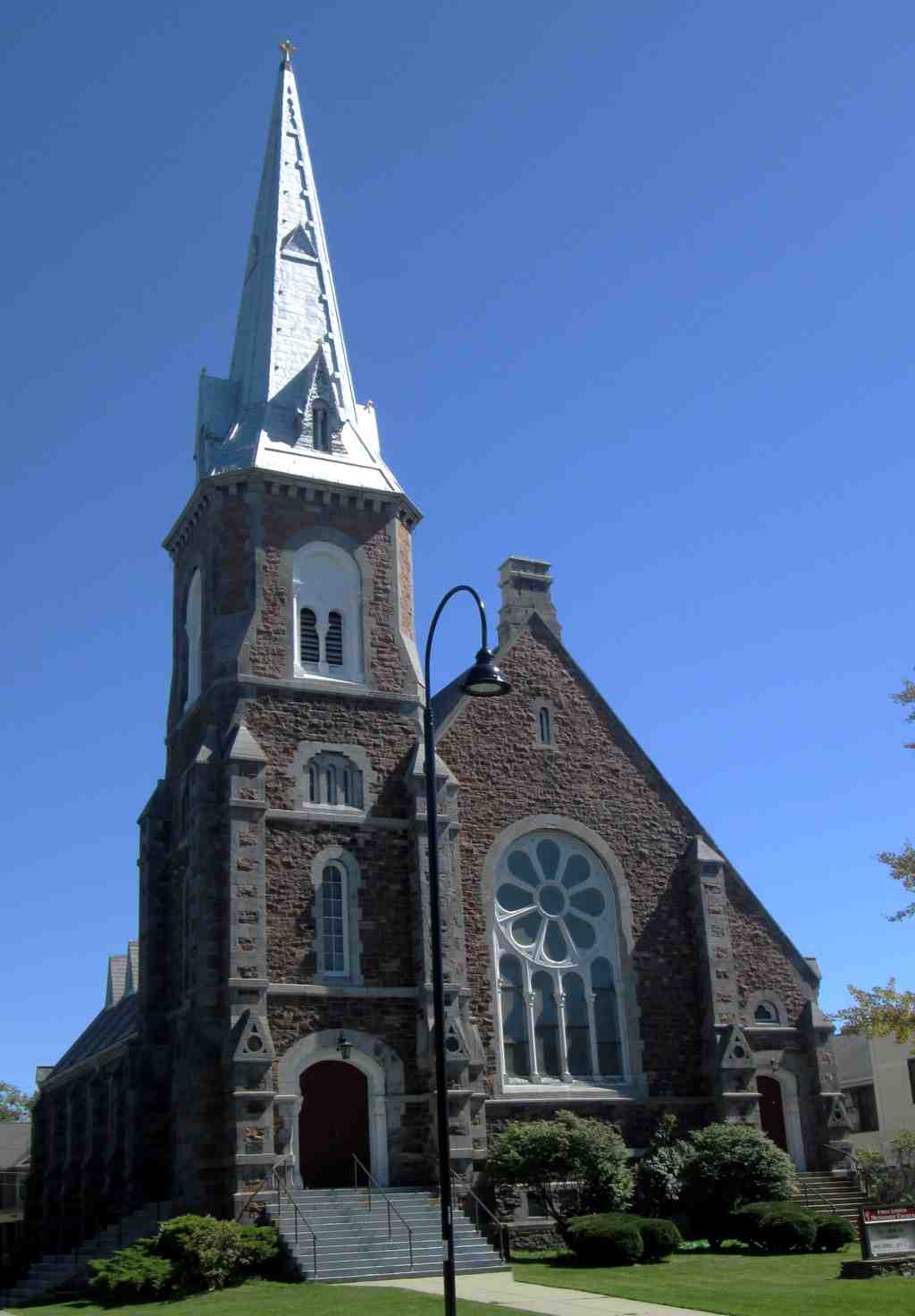
First Methodist ChurchPhoto: Beyond My Ken, Wikimedia Commons, CC BY-SA 4.0. Cropped & resized. On your right stands a commanding masonry church built from dark purplish stone, featuring a steep gabled roof and a soaring square belfry topped with an octagonal steeple. This is the First Methodist Church, completed in 1869.
Examine the walls. While people often mistakenly call it red sandstone, the primary material is actually Willard's Ledge stone, a locally quarried limestone that gives the building its distinct, rich hue. You can pull up the second image in your app to see how the builders deliberately contrasted this dark stone with the lighter grey sandstone trim, which was shipped down from the Isle La Motte quarries north of the city.
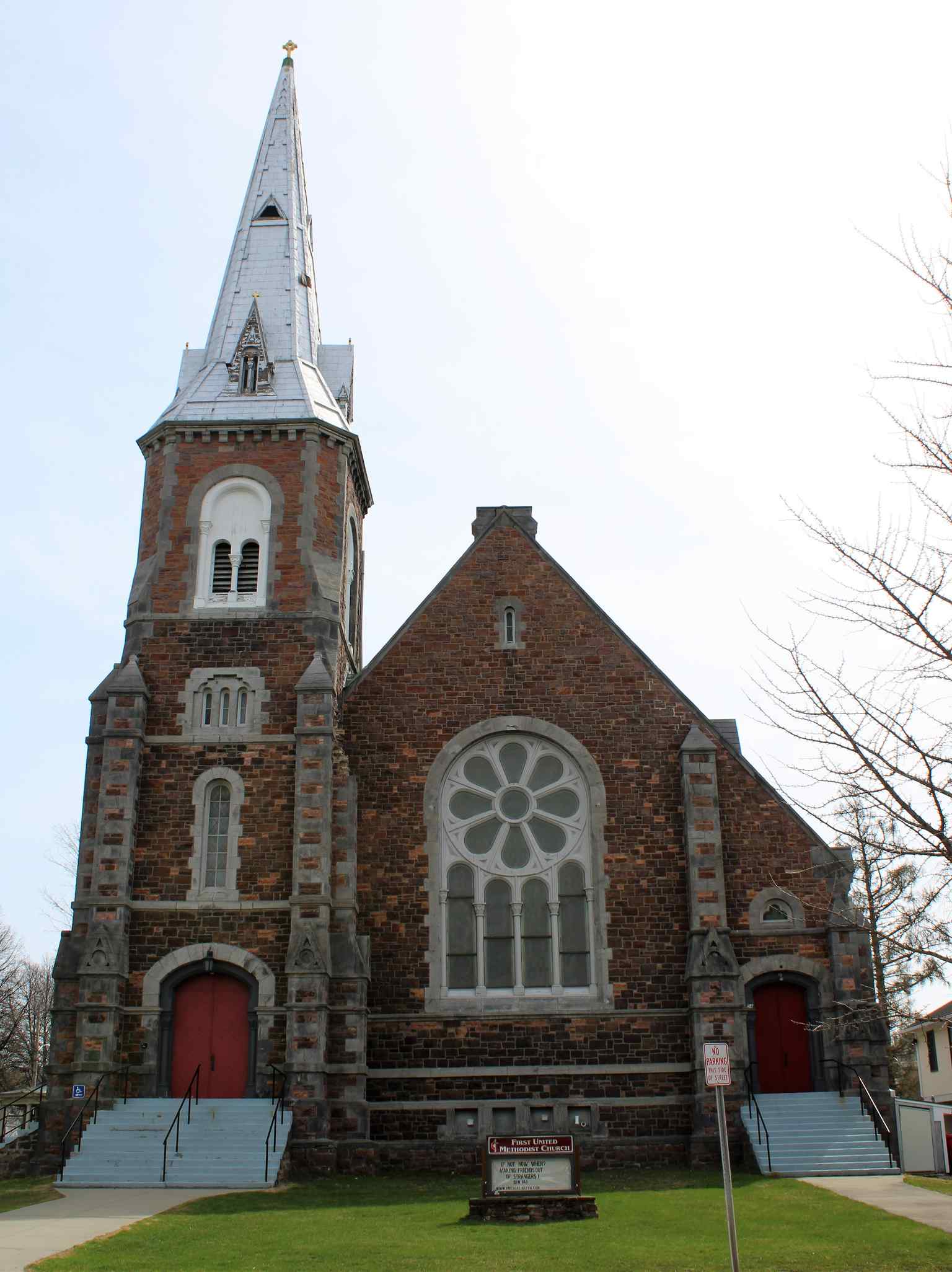
Observe the distinctive masonry of the church, built with purplish Willard's Ledge stone and trimmed with lighter grey sandstone from the Isle La Motte quarries, a deliberate contrast in materials.Photo: Farragutful, Wikimedia Commons, CC BY-SA 4.0. Cropped & resized. The architect, Alexander Rice Esty, designed this building in the Romanesque Revival style. That architectural style is defined by a feeling of massive, unshakeable weight, which you can see in the thick walls, the stabilizing buttresses, and the smooth, round arch tops of the windows. Esty was a celebrated designer who later oversaw construction for major federal buildings, and he clearly built this church to last.
And it needed to. This congregation laid its roots here in the 1820s, meeting in temporary spaces until they built their first house of worship on this exact spot. When they replaced it with this stone fortress, they ensured their legacy would endure. This heavy, robust construction has helped the church weather more than a century and a half of punishing northern winters. But perhaps more remarkably, it survived the wave of mid twentieth century urban renewal that swept through downtown. While neighboring congregations lost their original homes to sweeping redevelopment projects or devastating fires, this sturdy sanctuary held firm. Today, it holds the rare distinction of being one of only four churches built before 1880 that still remain standing in Burlington.
The story of a city is often told by what it manages to save, and what it dares to build next. As we leave this quiet monument to endurance, we will walk toward a massive civic project born from a completely different era of ambitious mayoral planning. Let us continue on toward the Burlington Memorial Auditorium, about a six minute walk from here.
Before you stands a massive red brick structure characterized by its distinctive stepped roofline with curved parapets and a broad set of stone stairs leading to three tall…Meer lezenToon minder
Open eigen pagina →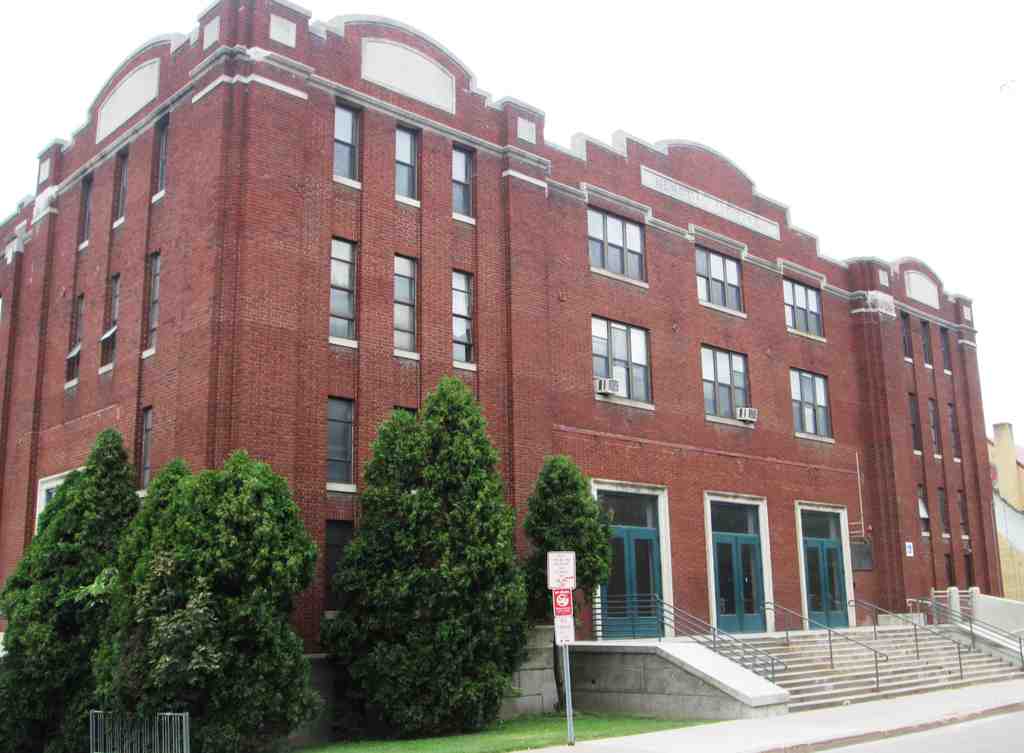
Burlington Memorial AuditoriumPhoto: Beyond My Ken, Wikimedia Commons, CC BY-SA 4.0. Cropped & resized. Before you stands a massive red brick structure characterized by its distinctive stepped roofline with curved parapets and a broad set of stone stairs leading to three tall entrance doors. In the mid-1920s, this building represented a bold, incredibly expensive attempt at downtown reinvention.
Mayor Clarence Beecher had a grand vision for Burlington. He wanted to build a memorial to honor the city's First World War veterans, but he also wanted that memorial to generate income. A monument is noble, but a convention center pays the bills. So, the concept for the Burlington Memorial Auditorium was born.
Initially, the city had secured a massive bond and planned to attach the auditorium to a new city hall. The public, however, demanded a standalone arena. In 1926, voters passed a referendum, which is a direct public vote on a specific proposal, allocating 150,000 dollars, roughly 2.6 million dollars today, to build a sprawling independent venue designed by local architect Frank Lyman Austin.
But as anyone familiar with municipal construction knows, initial budgets are rarely more than polite fiction.
Almost immediately, it became obvious that the allotted funds were entirely inadequate. Austin scrambled to revise his blueprints. He slashed decorative details and shrank the building's footprint, desperately trying to stop the financial bleeding. Construction stalled while the administration panicked.
Sensing weakness, former Mayor James E. Burke pounced. In early 1927, Burke wrote scathing open letters to the local newspaper criticizing the spiraling costs. He weaponized the budget crisis, using the scandal of municipal overdrafts to announce his own renewed candidacy for mayor.
Beecher was cornered. With the project in jeopardy, his administration was forced to return to the taxpayers and ask for an additional 100,000 dollars. In a rather surprising display of civic commitment, the public overwhelmingly approved the extra funds. The final price tag ultimately landed at over 204,000 dollars, or about 3.6 million dollars in today's money.
When it finally opened in 1928, it was undeniable in its scale. It featured a massive main hall with a proper proscenium stage. A proscenium is simply the architectural arch that frames a stage, separating the performers from the audience like a picture frame. Take a quick look at the before and after image on your screen to see how this grand civic centerpiece has anchored the corner while the surrounding streetscape evolved over the decades.
For nearly ninety years, it was the beating heart of local culture, hosting everything from Amelia Earhart to amateur boxing matches. Decades later, its basement even became a legendary, city-funded sanctuary for underground punk rock. It stood as a testament to a community constantly adapting its spaces, until structural decay forced its closure in 2016.
We have just explored the messy, expensive reality of public ambition. Next, we will see what happens when limitless ambition is entirely personal. We are directing our path toward the university campus now, where the opulent Grasse Mount awaits you, about a twelve-minute walk away.
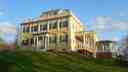
Look to your right at the large, box-shaped brick mansion painted a creamy yellow, crowned by a prominent rooftop cupola, a small dome-like observation structure, surrounded by a…Meer lezenToon minder
Open eigen pagina →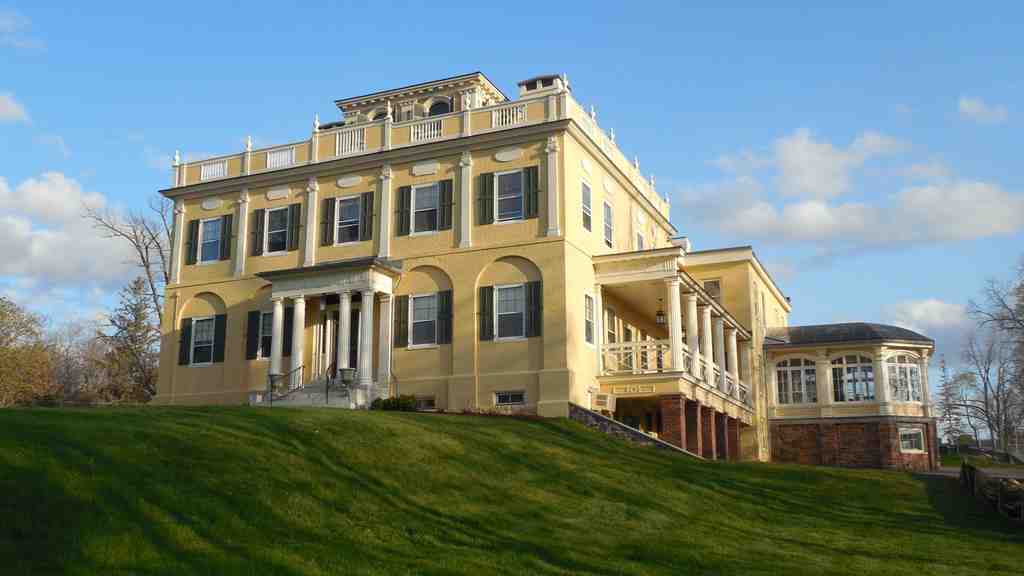
Grasse MountPhoto: Niranjan Arminius, Wikimedia Commons, CC BY-SA 4.0. Cropped & resized. Look to your right at the large, box-shaped brick mansion painted a creamy yellow, crowned by a prominent rooftop cupola, a small dome-like observation structure, surrounded by a white balustrade.
The history of this city is often written in the grand estates that line its streets. Massive personal wealth shaped these monumental homes, transforming the landscape as ambitious men sought to carve their legacies into the very architecture. But wealth is a fragile foundation. The land this house sits on was originally owned by Ira Allen, a founder of the University of Vermont and a celebrated officer in the American Revolution. He lost this land to a local merchant named Thaddeus Tuttle, who built this estate in 1804, only to die in utter ruin.
While Ira Allen was abroad in Europe attempting to buy arms for the Vermont militia, he was arrested and detained for several years. During his prolonged absence, Tuttle seized his opportunity. Historical accounts reveal that Tuttle falsified land records to steal the property right out from under Allen.
Tuttle poured his ill-gotten gains into constructing this sophisticated example of Federal domestic architecture, an early American building style known for strict symmetry and classical details. If you look at your screen, you can see these features closely, like the elegant columns of the portico and the prominent fanlight window above the main entrance. He built a monument to his own success. Yet his mercantile business operated almost entirely on barter, exchanging goods rather than handling actual cash. Without hard currency flowing in, the staggering cost of maintaining this massive estate was simply more than he could bear.
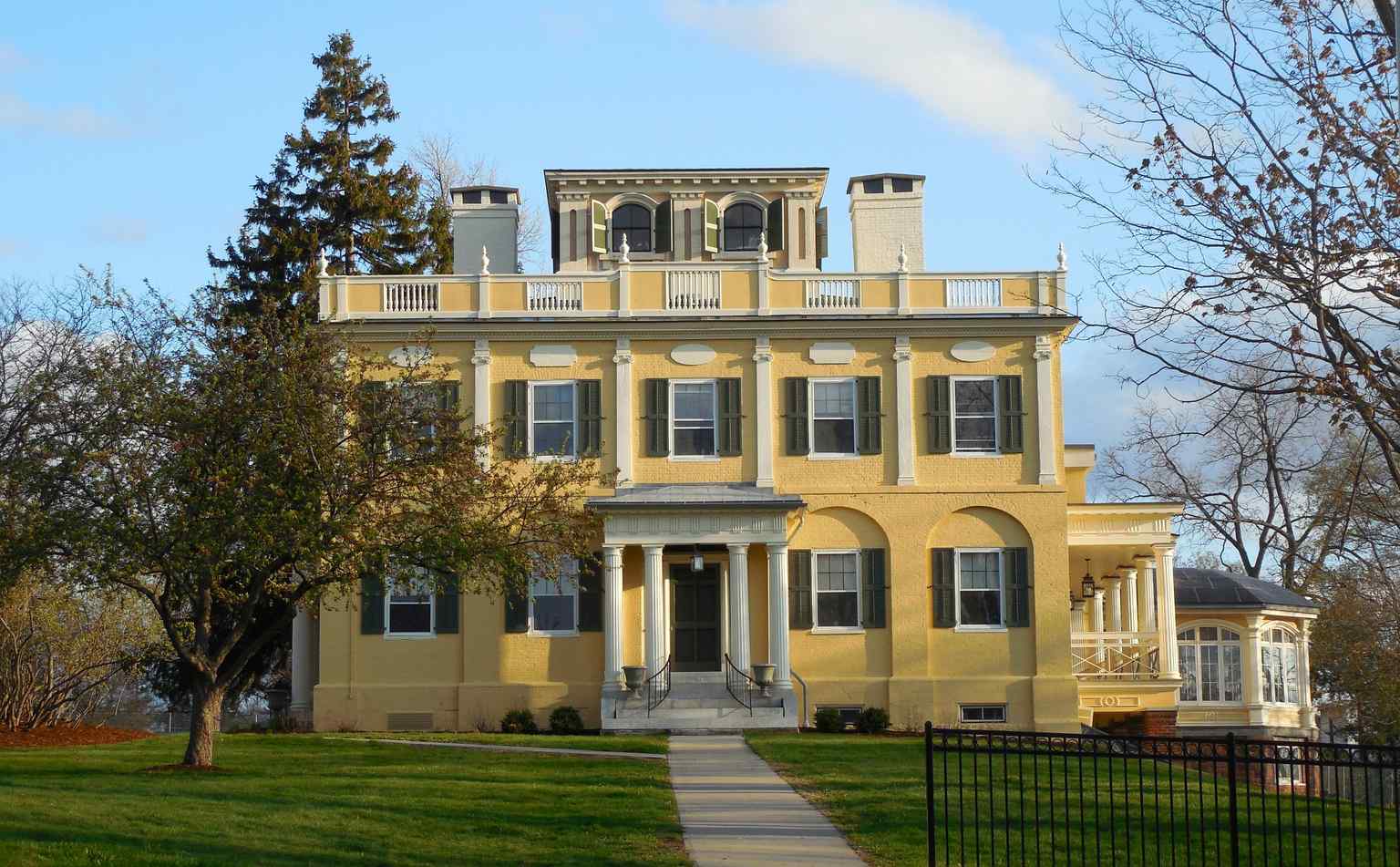
This sophisticated example of Federal domestic architecture features Ionic pilasters, a Doric portico, and a prominent fanlight above the main entrance.Photo: Niranjan Arminius, Wikimedia Commons, CC BY-SA 4.0. Cropped & resized. By 1824, his financial empire had collapsed. Bankrupt and defeated, Tuttle was forced to sell the estate for just six thousand dollars, roughly one hundred and seventy thousand dollars today. He spent his final years living modestly in a store building just west of the estate, forced to watch other men enjoy the mansion he built.
The tragic loss of his fortune and home left a heavy mark on the property. According to local folklore, the ghost of Thaddeus Tuttle still haunts these halls, desperately trying to reclaim in death what he lost in life. Over the years, staff and students have reported hearing strange voices in empty rooms and witnessing heavy doors being slammed shut by invisible hands.
Despite its dark beginnings, the estate found a higher purpose. In 1895, the University of Vermont purchased the mansion and converted it into the university's very first women's dormitory, a bold step in the city's continuous cycle of growth and adaptation. You can look at the before and after image on your app to see how the estate evolved from a private residence into a historic campus cornerstone.
These cycles of ambition and ruin define the shifting fortunes of this city. There are other monuments to immense wealth waiting for us just down the street, so let us continue on to the Daniel Webster Robinson House.
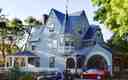
On your right stands a sprawling, pale blue wood-shingled house, easily recognizable by the pointed octagonal turret projecting from its front and the large rounded archway of the…Meer lezenToon minder
Open eigen pagina →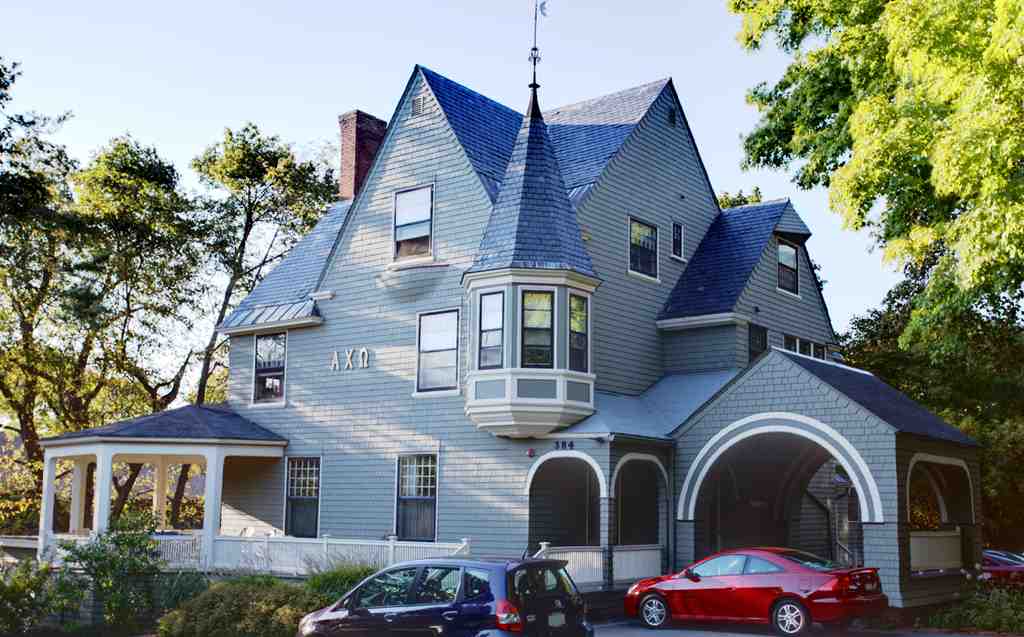
Daniel Webster Robinson HousePhoto: jdpf, Wikimedia Commons, CC BY-SA 3.0. Cropped & resized. On your right stands a sprawling, pale blue wood-shingled house, easily recognizable by the pointed octagonal turret projecting from its front and the large rounded archway of the covered drive. Look at your screen for a clear view of its intricate exterior. This is the Daniel Webster Robinson House, built in 1885.
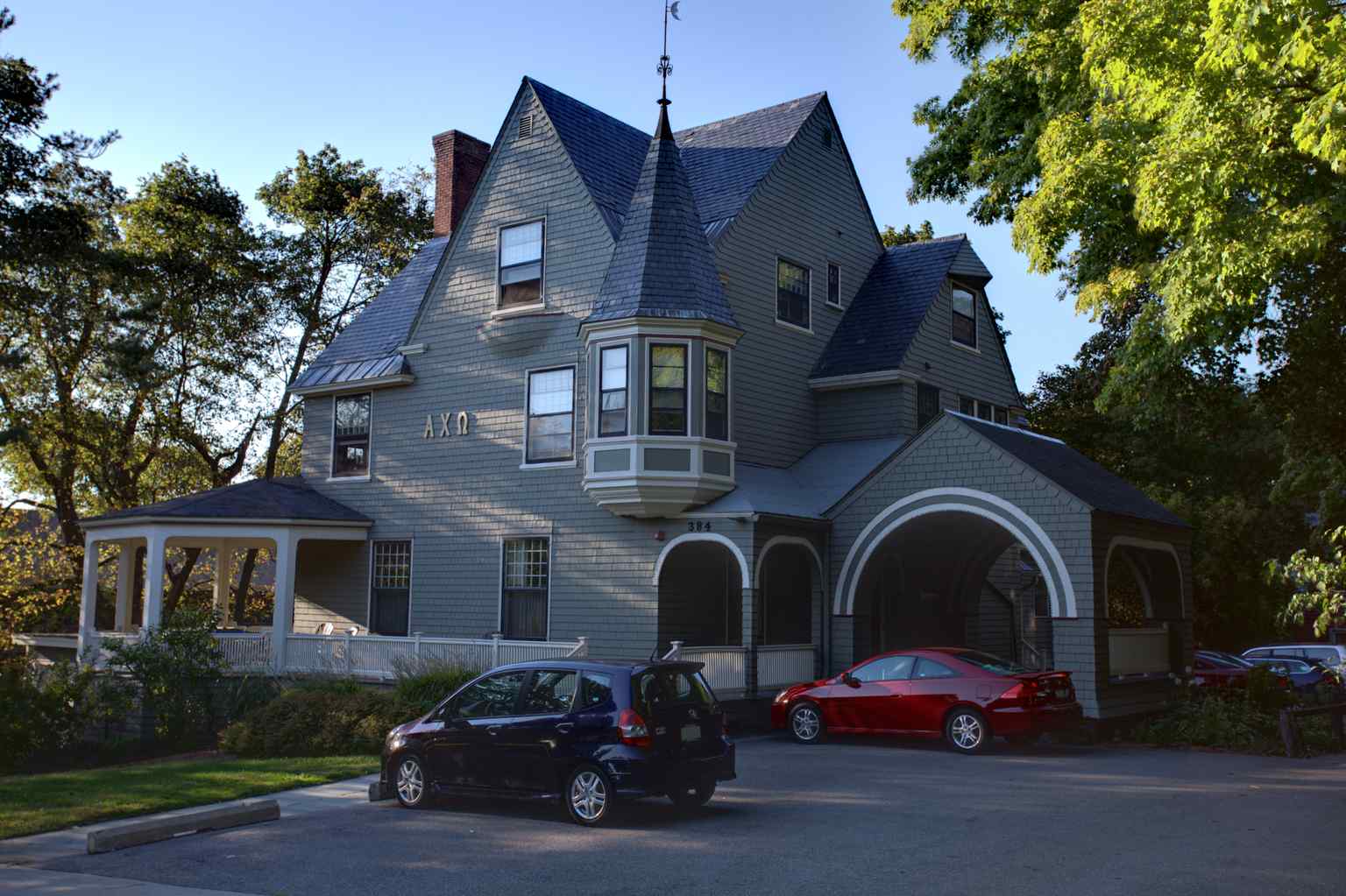
This Queen Anne style mansion, designed by the acclaimed firm Peabody and Stearns, was built in 1885-1886 for lumber magnate Daniel Webster Robinson.Photo: jdpf, Wikimedia Commons, CC BY-SA 3.0. Cropped & resized. It stands as a physical monument to Burlington's waterfront lumber boom. During the late nineteenth century, Canadian timber was floated into the harbor, milled here, and shipped by rail. The lumber piles along Pine Street grew so massive they formed a wooden maze, requiring workers to assign street names to the passages just to navigate them. This booming waterfront industry generated the immense wealth that physically built the grandest parts of the city.
Daniel Webster Robinson managed a massive timber firm. He used his fortune to hire a major Boston architectural firm to design this residence. It is a classic example of Queen Anne architecture, a style famous for asymmetrical shapes, varied textures, and dramatic rooflines.
Robinson lived a life of high society success until his death in 1909. It is a sharp contrast to the tragic financial ruin of Thaddeus Tuttle, whose former home we explored previously. Robinson's legacy held firm, but the fate of his house took a strange turn.
In 1911, a prominent surgeon named Dr. Harris R. Watkins bought the property, hosting lavish gatherings for nearly two decades. When he died in 1930, a bizarre controversy erupted. He had named a specific trust company as his will's executor. However, shortly after his death, that company merged with a larger bank. The new bank abruptly seized control of Watkins's assets and this house without legally applying to the probate court.
This move sparked a bitter lawsuit. The estate accused the bank of acting as an executor de son tort. That is a legal term for someone who wrongfully assumes authority to manage a deceased person's estate without court permission. While the courts untangled this financial mess, the grand mansion sat entirely vacant for a year.
Once settled, the empty house found a vibrant second life. In 1931, it became the home of the Alpha Iota chapter of the Alpha Chi Omega sorority. Despite the daily wear of a collegiate residence, the students have been meticulous stewards, preserving the original, finely detailed woodwork Robinson installed over a century ago.
The wealth of industry ultimately paved the way for university life. Let us walk toward the heart of the campus to see how this civic ambition was channeled into education. Our next stop, the Ira Allen Chapel, is a nine minute walk away.
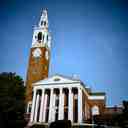
On your right stands a commanding red brick structure built in the shape of a cross, anchored by a soaring bell tower with four large clock faces and fronted by a classic portico…Meer lezenToon minder
Open eigen pagina →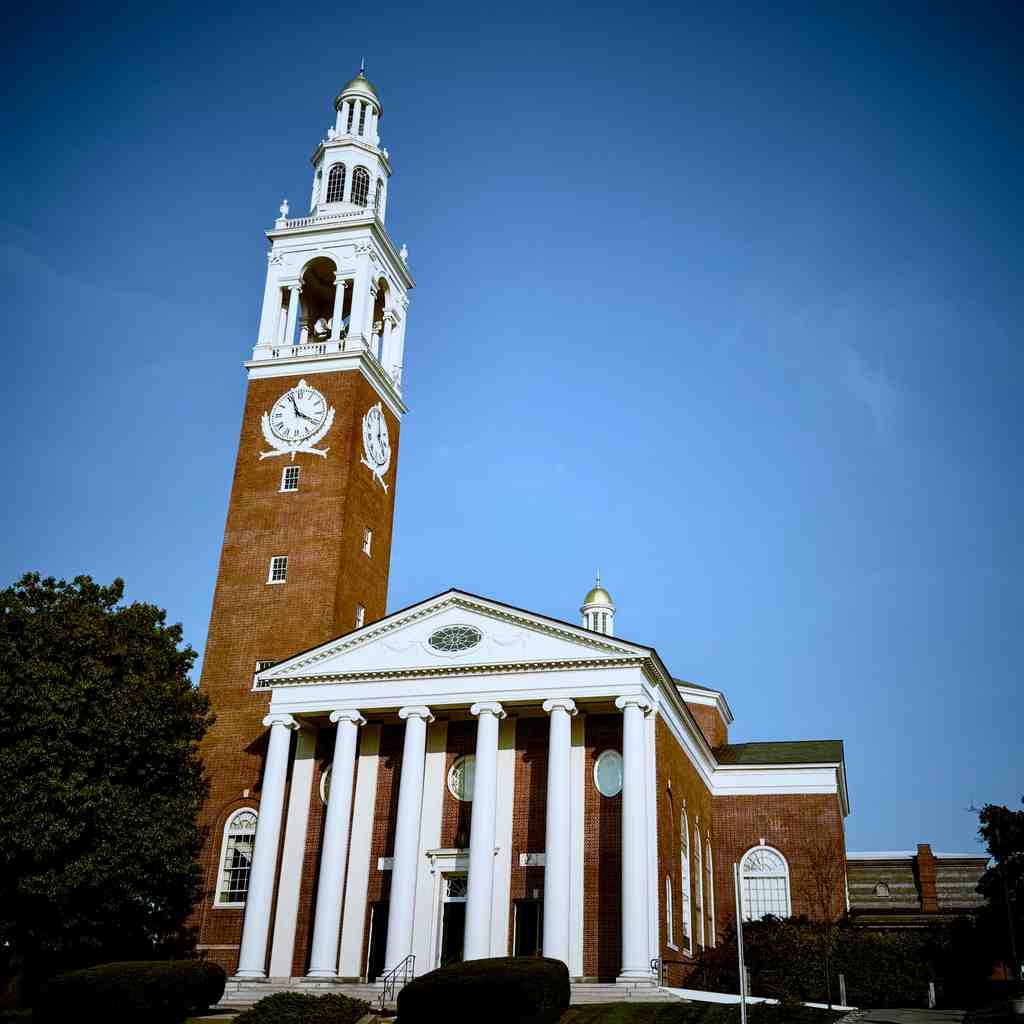
Ira Allen ChapelPhoto: HeyTomek, Wikimedia Commons, CC0. Cropped & resized. On your right stands a commanding red brick structure built in the shape of a cross, anchored by a soaring bell tower with four large clock faces and fronted by a classic portico of six towering white columns. This is the Ira Allen Chapel.
It is a magnificent structure, but its very name carries a touch of historical irony. Ira Allen, the founder of this university, actually left behind a rather damaged reputation. He never followed through on his initial founding pledge of four thousand pounds, a massive sum meant to construct the original campus buildings. For over a century, his fiduciary lapses cast a shadow over his legacy.
Yet here stands his monument. The existence of this chapel is the result of private wealth single handedly reshaping a public institution. It is entirely thanks to James Benjamin Wilbur, a wealthy businessman who made his fortune in ranching and banking before retiring to Vermont in 1909. Wilbur became deeply fascinated by Vermont history, and specifically by Ira Allen. He amassed a massive collection of documents and ultimately decided it was his sacred duty to restore Allen's reputation.
In 1924, Wilbur offered the university board an extraordinary two hundred thousand dollar endowment, roughly three and a half million dollars today, on the condition that they build a chapel named after the founder. Watch the iconic Ira Allen Chapel transform from a scaffolding-clad construction site in 1925 into the stately Colonial Revival landmark that anchors the university green today.
The renowned architectural firm McKim, Mead, and White designed the chapel. The building forms a classic Latin cross. If you were to walk inside, you would stand in the nave stretching one hundred and thirty-five feet and intersecting with shorter perpendicular wings. Take a moment to check your screen, where you can see the bronze statue of Ira Allen that Wilbur commissioned and donated just a few years prior to funding this building.
Over the decades, this space has constantly adapted to the needs of its students, reflecting a community always pushing forward. In its early years, chapel attendance was actually compulsory. But by 1957, the university realized that as a state funded institution, they could not legally mandate religious worship. The chapel evolved into a secular gathering space. Its pews have seated thousands who came to hear luminaries ranging from poets and Supreme Court justices to civil rights activists. It even watches over the ashes of the renowned American philosopher John Dewey, who is interred just north of the building.
The campus grounds and the exterior of the chapel are open twenty-four hours a day, all week long. As we prepare for our final destination, we will leave the realm of private fortunes and turn toward the democratization of learning. Please continue to Morrill Hall, about a six minute walk away.
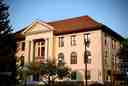
In front of you stands a wide three-story building constructed from light-colored brick, anchored by a prominent central entrance where two massive granite columns support a…Meer lezenToon minder
Open eigen pagina →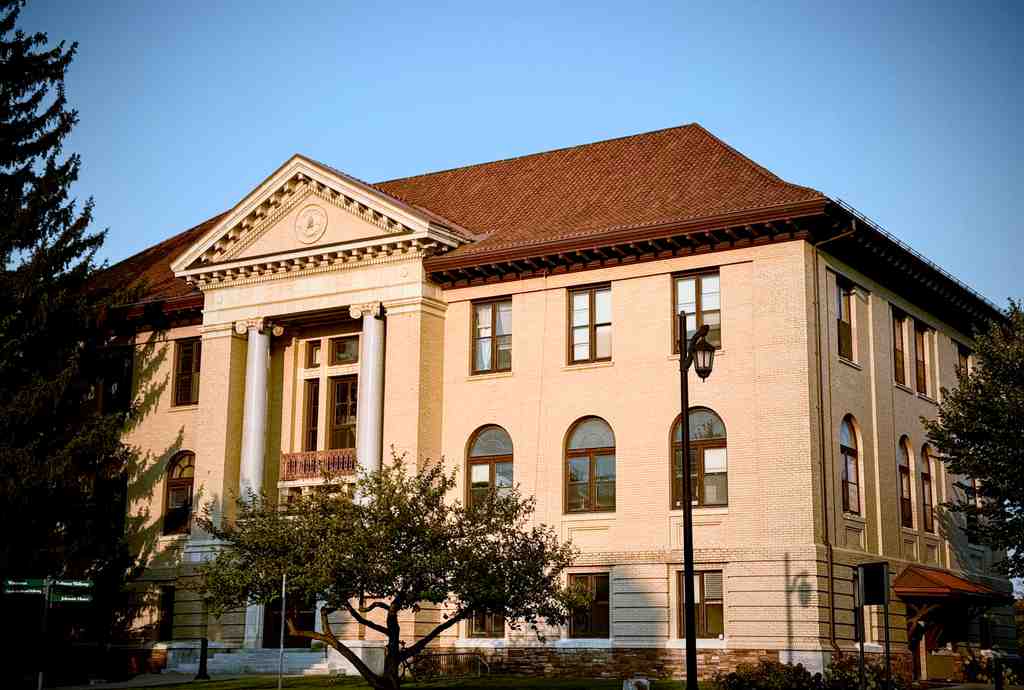
Morrill HallPhoto: HeyTomek, Wikimedia Commons, CC0. Cropped & resized. In front of you stands a wide three-story building constructed from light-colored brick, anchored by a prominent central entrance where two massive granite columns support a triangular roofline. We just left the chapel named for Ira Allen, and ironically, the very ground this building sits on was once tangled in his complicated legacy. Ira had promised a massive estate to his niece Lucinda, but when she came of age, he refused to hand it over due to his own financial troubles. Lucinda and her husband sued him in a monumental legal battle and won, securing the land that would eventually host this institution.
This structure is named after Justin Smith Morrill, a US Senator who changed the course of American higher education forever. You can check your screen to see a detailed view of the entranceway, where those massive granite columns donated by Morrill's son stand beneath a pediment, which is the triangular upper part of the facade, adorned with the Great Seal of Vermont.
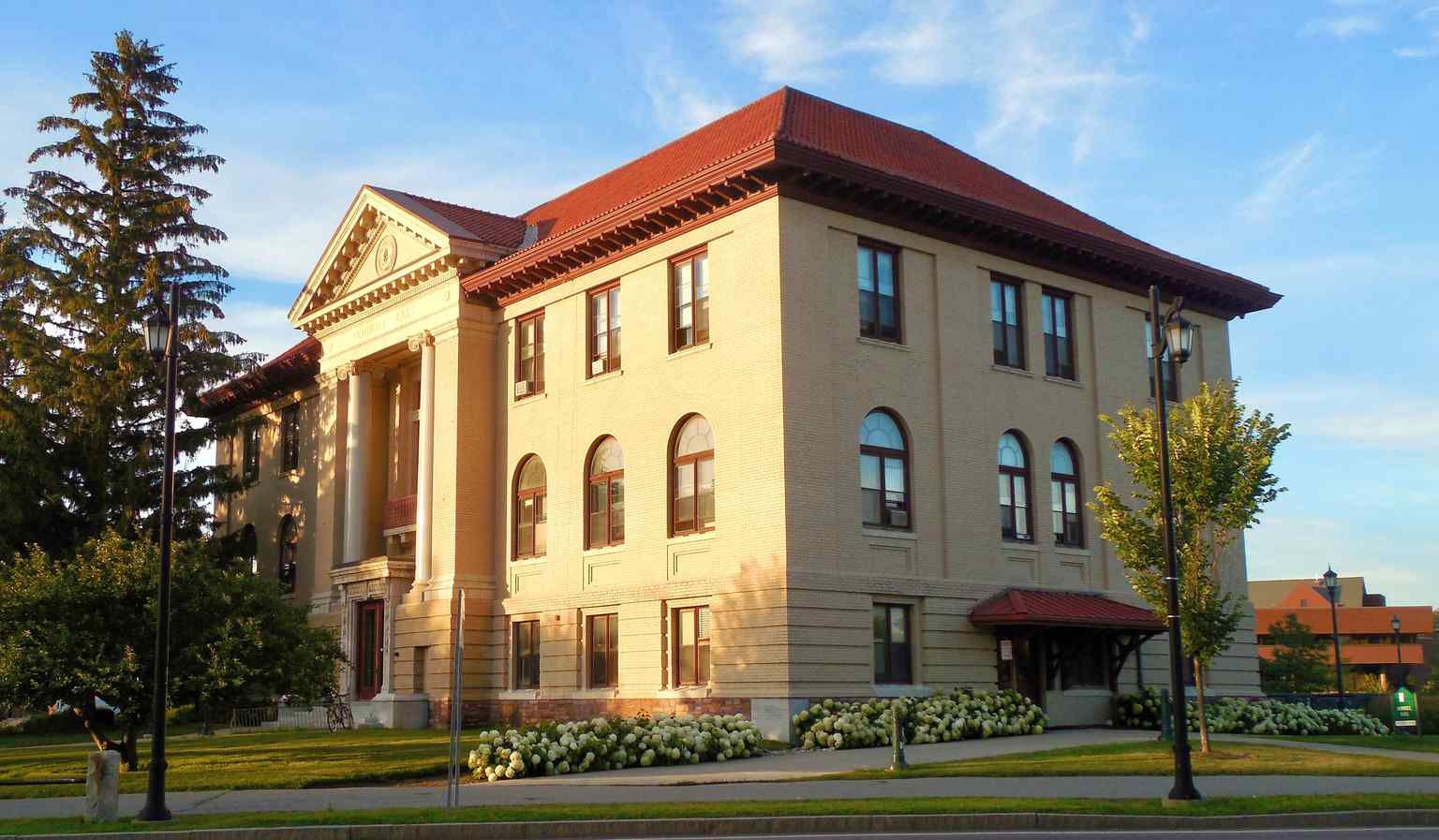
The main entrance features two massive granite columns, donated by Senator Morrill's son, and is topped with a pediment adorned with the Great Seal of Vermont.Photo: Niranjan Arminius, Wikimedia Commons, CC BY-SA 4.0. Cropped & resized. Senator Morrill fought to establish the Land-Grant Acts, which created public universities across the country. But it was not an easy fight. His first attempt at passing the legislation was vetoed by President James Buchanan. Most politicians would have conceded defeat, but Morrill viewed his political persistence as the ultimate act of civic resilience. He pushed the initiative again and again until his second attempt was finally signed into law by President Abraham Lincoln in July 1862.
This act was built on Morrill's progressive conviction that science should be the center of the educational process. More importantly, he argued that higher learning should not be restricted to the wealthy elite. Education, he believed, belonged to students of all social and economic backgrounds.
When it was built in 1906, this was the first building on the university campus funded entirely by the state, using an appropriation of sixty thousand dollars, which is roughly two million dollars today. That investment in accessible education was immediately put to the test. In 1909, Professor Bertha Mary Terrill became the first woman to join the university faculty. Given only a single, unfinished storage room in the basement for her new Home Economics department, she shoveled out the leftover plaster herself to build her classroom.
She embodied the very spirit of this place. The ongoing story of this city is written in moments like that... moments of profound determination and continuous transformation. From a niece fighting for her rightful inheritance, to a senator refusing to accept a presidential veto, to a pioneering woman carving out space for practical learning.
As our tour comes to a close, it is fitting to end here. This city's enduring history of bold ambition and unwavering grit ultimately culminates in these halls of learning, where the future is still being built, one student at a time.

Veelgestelde vragen
Hoe begin ik de tour?
Download na aankoop de AudaTours-app en voer je inwisselcode in. De tour is direct klaar om te starten – tik gewoon op afspelen en volg de GPS-geleide route.
Heb ik internet nodig tijdens de tour?
Nee! Download de tour voordat je begint en geniet er volledig offline van. Alleen de chatfunctie vereist internet. We raden aan om te downloaden via wifi om mobiele data te besparen.
Is dit een groepsrondleiding met gids?
Nee - dit is een audiotour met eigen gids. Je verkent zelfstandig op je eigen tempo, met audiovertelling via je telefoon. Geen tourguide, geen groep, geen schema.
Hoe lang duurt de tour?
De meeste tours duren 60-90 minuten, maar jij bepaalt het tempo volledig. Pauzeer, sla stops over of neem pauzes wanneer je wilt.
Wat als ik de tour vandaag niet kan afmaken?
Geen probleem! Tours hebben levenslange toegang. Pauzeer en hervat wanneer je wilt – morgen, volgende week of volgend jaar. Je voortgang wordt opgeslagen.
Welke talen zijn beschikbaar?
Alle tours zijn beschikbaar in meer dan 50 talen. Selecteer je voorkeurstaal bij het inwisselen van je code. Let op: de taal kan niet worden gewijzigd na het genereren van de tour.
Waar vind ik de tour na aankoop?
Download de gratis AudaTours-app uit de App Store of Google Play. Voer je inwisselcode in (verzonden per e-mail) en de tour verschijnt in je bibliotheek, klaar om te downloaden en te starten.
Als je niet tevreden bent met de tour, betalen we je aankoop terug. Neem contact met ons op via [email protected]
Veilig afrekenen met 


