Whitby Audiotour: Abdijen, Ankers en Verhalen uit de Oude Stad Tour
Een stenen fort rijst op uit de klif, afgetekend tegen de onrustige Noordzee—Whitby Abbey, al meer dan duizend jaar zowel baken als slagveld, nodigt u uit om de wilde geheimen van Whitby te ontdekken. Tijdens deze zelfgeleide audiotour dwaalt u door kronkelende straatjes en beklimt u door de wind geteisterde trappen, terwijl u verhalen ontrafelt die de meeste bezoekers nooit horen—legendes verborgen in elke verwoeste muur en verweerde grafsteen. Waarom kozen middeleeuwse koningen deze kliffen voor een bijeenkomst die de kerk van Engeland voorgoed veranderde? Welke mysterieuze aanwezigheid inspireerde Bram Stoker om zijn wereldberoemde vampierverhaal te schrijven tussen scheve grafstenen? Welke schandalige wending leidde ertoe dat rijke families hun grandeur opgaven en een statig huis lieten verkruimelen? Elke stap voert u door verloren kloosters, politieke intriges, door storm geteisterde schandalen en in de tijd bevroren momenten. Volg de opkomst en ondergang van dynastieën met elke zoute windvlaag en zie Whitby verschuiven van griezelige legende naar levendige realiteit. Durf te lopen waar heiligen, dichters, piraten en vampiers hun sporen achterlieten—begin uw avontuur nu.
Tourvoorbeeld
Over deze tour
- scheduleDuur 40–60 minsGa op je eigen tempo
- straighten4.6 km wandelrouteVolg het geleide pad
- location_onLocatieWhitby, Verenigd Koninkrijk
- wifi_offWerkt offlineEén keer downloaden, overal gebruiken
- all_inclusiveLevenslange toegangOp elk moment opnieuw afspelen, voor altijd
- location_onStart bij Whitby Abbey
Stops op deze tour
Look across the open grassy headland and you’ll spot the dramatic stone arches and towering ruins of Whitby Abbey silhouetted high on the East Cliff, with the sea and sky…Meer lezenToon minder
Look across the open grassy headland and you’ll spot the dramatic stone arches and towering ruins of Whitby Abbey silhouetted high on the East Cliff, with the sea and sky stretching out behind it-if you’re wandering up from town, just lift your eyes towards the cliff’s edge and you can’t miss its haunting, majestic outline. Welcome, brave explorer! Here you stand at the mighty remains of Whitby Abbey, a place that’s witnessed everything from poetry to pirates, saints to storms, and even a world-famous vampire! Take a deep breath-the North Sea wind here is always ready to give you a whiff of salty history. In the year 657, this spot was little more than wild, windy cliffs and crashing waves, when King Oswy of Northumbria decided to plop a monastery right on this headland and call it Streoneshalh-try saying that three times quickly on a cold morning! He put Lady Hilda in charge, a woman who seemed part saint, part action-hero, and fully determined to turn this rocky outcrop into a center of peace and learning. Imagine the year 664, monks and nuns shuffling about, debating when to celebrate Easter. The Synod of Whitby was a medieval meeting hotter than any episode of “Game of Thrones,” with kings, abbots, and bishops deciding whose calendar ruled the kingdom, the old Celtic tradition or the new Roman one. It all sounds polite, but you can bet there were a few whispered arguments by candlelight. King Oswy, after much discussion and probably a few crossed arms, decided to follow Rome-kicking off nearly a thousand years of Easter egg hunts on the Roman timetable. But fate can be trickier than a Yorkshire fog! In the late 800s, those fearsome Viking raiders, Ingwar and Ubba, swept over the headland. With their wild hair and worse manners, the Danes sacked the place and left it desolate for more than two centuries. The monastery was just a memory, and the only guests were the wind and ghosts of the past. Sometime after, a mysterious place called “Prestebi”-meaning “a place of priests” in Old Norse-turned up in the Domesday Book, hinting that a religious spirit lingered on among the ruins. Leap forward to the 11th century, when a soldier named Reinfrid swapped sword for staff and persuaded noble William de Percy to give him the ruins so he could build a new monastery. Percy was generous; he handed over land, churches, mills, and half the medieval North Sea coast! Together, they rebuilt the abbey and called for brother monks and nuns from all over. For centuries, this abbey flourished-a Benedictine marvel. It echoed not just with prayers, but with stories like Cædmon the poet-monk, who sang hymns so beautifully, even the cows in the fields looked up in admiration (probably hoping he’d sing about greener grass). Of course, all good parties come to an end, and in the 1530s, King Henry VIII-never much of a party guest-ordered the whole abbey shut down during the Dissolution of the Monasteries. The monks packed their bags, the abbey’s riches moved to the king’s coffers, and the buildings began their slow crumble into the hauntingly beautiful ruins you see now. Sailors, though, were grateful-a big stone abbey on a cliff is hard to miss when you’re out at sea. Whitby Abbey became the world’s fanciest lighthouse, minus the light. But wait, the story isn’t done! In 1914, during the Great War, German battlecruisers shelled the abbey from the sea-imagine, the great stone arches echoing with the thunder of distant guns. Some of the ruins still bear scars from that morning, when history paid another unwelcome visit. Now, keep your eyes peeled-because surrounded by salty air and squawking gulls, you’re not only standing where saints, poets and Norsemen once stood-but also at the site that inspired Bram Stoker’s Dracula! In the novel, Count Dracula transformed into a dog and bolted up the 199 steps right from the harbor, through the churchyard, and up to these towering, moonlit ruins. People say he’s still around-so if you see a large dog eyeing you hungrily, maybe walk briskly... just in case. Today, Whitby Abbey is a protected treasure, watched over by English Heritage and admired by all who approach these crumbling stones. And if you decide to pop into the museum at nearby Cholmley House, you’ll find even more secrets tucked away in the echo of the past. All of this, standing proudly on a cliff, waiting for you to discover it-one shadow and one salty breeze at a time. Fascinated by the streoneshalh, whitby or the abbey possessions? Let's chat about it
Open eigen pagina →To spot Cholmley House, look for the grand, symmetrical stone building right in front of you, with rows of tall windows and a decorative doorway at the center, set just beside the…Meer lezenToon minder
To spot Cholmley House, look for the grand, symmetrical stone building right in front of you, with rows of tall windows and a decorative doorway at the center, set just beside the edge of the Abbey ruins. Now, imagine yourself stepping back in time to 1672. Picture the grand Cholmley House the day it was finished, full of bustle and excitement-maybe a hint of jealousy from the neighbors, too! Sir Hugh Cholmeley had just finished building this magnificent banqueting house, a place meant to impress. You would have entered through the square forecourt, now called the Stone Garden, which proudly showed off a replica of the Borghese Gladiator statue-because honestly, who wouldn’t want a famous Roman warrior greeting their guests? But life here wasn’t always feasts and laughter. Before this house, the Cholmeley family actually lived in the battered old gatehouse left behind after Henry VIII shut down the Abbey in 1539. Imagine them huddled in the draughty rooms, staring at the ruined walls and dreaming of something grander. Finally, with the new Cholmley House, they got their precious slice of grandeur by the sea. But fate can be a little dramatic. In 1743, just as the Cholmeleys inherited another, even bigger estate-Howsham Hall-they packed up and abandoned this beauty at Whitby. The house waited in silence, and years of Yorkshire storms took their toll. One wild night in 1790, the north roof blew off and, in those days, that usually meant “goodbye” to that part of a building. The grand hall started to crumble, lonely and forgotten, until a new owner-the Strickland family-slapped on some big iron arches in 1866 to stop it toppling down the hill. Yes, nothing says “Welcome Home!” like a giant metal brace in your living room. Eventually, the government stepped in, patching and restoring, until today Cholmley House has a new job: welcoming visitors to Whitby Abbey. So as you stand here, you’re right where feasts echoed, storms raged, and history left its mark, all with just enough mystery and drama to keep the place lively. It’s almost as if even the stone walls here have stories to tell-if only you could get them to talk!
Open eigen pagina →To spot St Mary’s Church, look up to the east cliff and you’ll see a solid, square stone tower with a clock, crenellated battlements along the top, and ancient gravestones…Meer lezenToon minder
To spot St Mary’s Church, look up to the east cliff and you’ll see a solid, square stone tower with a clock, crenellated battlements along the top, and ancient gravestones clustered around - a bit like a fortress watching over Whitby. Here we are, standing in front of Whitby’s legendary St Mary’s Church, where the mighty tower rises like a loyal guardian and the headstones stand at odd, windswept angles, as if they’re gossiping about centuries past. Take a deep breath-the salty North Sea breeze, a whiff of wild grass, and perhaps, if you listen carefully, echoes of footsteps on the old Church Steps behind you. And what steps they are! There are 199 in total, so if you made it up here, congratulations-you’ve just completed Whitby’s most famous stairmaster session. The story of St Mary’s Church begins way, way back around 1110, with stones so old they practically remember the Norman invasion. Built at the edge of a rocky cliff, it’s been watching over Whitby for hundreds of years, weathering fierce gales and time itself. Over the centuries, each era left its mark: the square tower and some of the thick stone walls date back to the 12th and 13th centuries, making you feel a bit like you’ve arrived at a medieval castle rather than a church. Funny thing, the tower’s embattled look wasn't for archers-just good old fashioned style, topped off with a 16th-century parapet. Today, it houses eight bells, with six proudly inscribed ‘Whitby 1762.’ I imagine the seventh and eighth felt a wee bit left out when they arrived in 1897. The outside might look imposing, but step in and you’d find a cozy confusion of box pews, galleries, and even a quirky three-level pulpit from the 1700s. Some pews are labelled ‘For Strangers Only’-so if you ever wanted to sit in the ‘outsider’ section and feel like a mysterious traveler, this is your place. And tucked in the shadows north of the chancel there’s a grand Jacobean pew, perfect for a bit of old-time people watching, if only these walls could talk. St Mary’s graveyard is famous in its own right. Bram Stoker, on a stormy night in Whitby, drew inspiration from these tombstones for his legendary vampire tale, Dracula. Imagine: a pale moon, wind howling through the graveyard, dark shapes amid crooked stones, and somewhere behind you the silent ruins of Whitby Abbey. Bram Stoker described how clouds and sun grappled in the sky, making the churchyard and Abbey appear and vanish as though haunted by shifting shadows. It’s not hard to picture a cloaked figure-or something less human-lurking among the stones. But drama isn’t only left to the novels. The cliff here sometimes decides it wants a bite of the churchyard, thanks to wild rainstorms and tricky drainage. In 2012, land slipped so severely that Whitby residents found old bones tumbling onto the street below! Don’t worry, the church is built on a solid slab of rock-“no danger,” said the experts, though the rule now is to watch your step and stick to the open pathways. So as you stand here, feel the centuries gathered under your feet, the soft chime of history in the air, and let your mind wander through tales of knights, ministers, vampires, and windswept secrets. And if you see any suspicious bats, well, maybe don’t follow them into the graveyard!
Open eigen pagina →
Toon 9 stops meerToon minder stopsexpand_moreexpand_less
Right in front of you is the Old Town Hall-just look for a grand stone building propped up on thick columns, topped with a clock tower and peeking out over the cobbles like an old…Meer lezenToon minder
Right in front of you is the Old Town Hall-just look for a grand stone building propped up on thick columns, topped with a clock tower and peeking out over the cobbles like an old judge keeping watch. Now, close your eyes for a second (unless you’re walking, then maybe just squint and imagine). Picture this square two hundred years ago-fishmongers shouting about their sardines, carts rattling across the stones, and folks ducking in and out of the neoclassical archways beneath these thick Tuscan columns. This is Whitby’s Old Town Hall, a bit like the neighborhood’s “headquarters” back in the day. It was dreamt up by Nathaniel Cholmley, who must have been the sort of lord who liked to leave his mark, and built by Jonathan Pickernell-the same fellow who worked on the piers down at the harbor. Pickernell was something of a master builder, so it’s no wonder this place has held together since 1788, even if it does sometimes drop a stone or two (watch your head!). Back then, the open ground floor-where you’re probably standing-would have been buzzing with traders selling everything from eggs to eels. Above you, up the spiral staircase at the center, the real drama occurred. That upper floor wasn’t just home to a clock, it was the courtroom. The bell above would toll, echoing through the narrow streets, and you’d know someone was about to answer for their misdeeds-some unlucky folks even found themselves locked in the stocks outside as the whole town watched. But it wasn’t all crime and punishment. In 1823, a group of bright minds gathered here, forming Whitby’s very first Literary and Philosophical Society. Imagine them, dusty from the cliffs, bringing in fossils and ideas, dreaming of a museum for everyone. Nowadays, it’s quieter, but there’s still a whiff of history in the air-paint peeling, sea breeze rattling old windows, the clock quietly counting away the years. So next time you hear a bell, maybe look over your shoulder-you never know what stories these walls still have to tell!
Open eigen pagina →To spot the Captain Cook Memorial Museum, look for a striking red three-storey building with large white windows and a sign saying "MUSEUM" just ahead on Grape Lane, right by the…Meer lezenToon minder
To spot the Captain Cook Memorial Museum, look for a striking red three-storey building with large white windows and a sign saying "MUSEUM" just ahead on Grape Lane, right by the harbourside. Now, take a deep breath-it’s time for a voyage back in time worthy of Captain Cook himself. Imagine you’re standing right where a young James Cook, the son of a farm labourer, first set foot as a wide-eyed apprentice, eager for adventure. This building, Walker’s House, has stood here since 1688, its white-shuttered windows once flickering with candlelight as Whitby’s harbour filled with the sounds of busy sailors outside. Back in 1746, Cook was apprenticed to Captain John Walker, a respected merchant seaman and shipowner whose family bought this house in 1729. Young Cook’s journey from a humble grocery boy in the nearby village of Staithes to an explorer would begin right here, perhaps with him lugging coal buckets up through the harbour’s misty alleys or peeking through these very windows at vessels bobbing in the river. The house was bustling-three stories, plus an attic, furnished in the solid style of a well-to-do shipping family. Picture Cook, a little nervous, climbing the creaky stairs (or maybe tripping over his own feet in excitement-after all, genius can be clumsy). Walker didn’t always lodge his apprentices here-usually he sent them home for the winter, but when space allowed, it was the attic for them! Imagine Cook huddled under the sloping beams, burning the midnight oil (literally) as Mary Prowd, the kindly housekeeper, handed him candles so he could study his navigation. No Netflix for Cook-just algebra, geometry, trigonometry, and dreams of the great unknown. Even the house itself kept secrets. Over 250 years after it was built, archaeologists discovered a hidden kitchen deep under today’s ground level, its brick floor arranged in a herring-bone pattern. They found the slipway, where coal and ships’ stores were once loaded directly from the courtyard into the waiting hulls. Imagine the bustle-the shouts, the rumble of cartwheels, the splash of the river, the sharp tang of salt and coal dust. Captain John Walker was no slouch either-a master mariner who ran shipping up and down the coast, and after his father’s death, built the business with his brother. When the family shifted to banking and insurance, the slipway got covered up, but in Cook’s day, the house was a hive of maritime action with the smell of tar and timber never far away. And Cook? He came back just once after making his name as the world’s most famous explorer-during the winter of 1771-72, freshly returned from his epic voyage across the Pacific. Imagine the excitement in the house. John Walker lined the household up for a proper, stiff-necked welcome. But Mary Prowd, bursting with emotion, couldn’t contain herself, throwing her arms around “honey James” with a shriek of delight. Today, the house is bursting with stories. As the Captain Cook Memorial Museum, it holds true treasures: original letters from Cook and his fellow voyagers, intricate ship models, and dazzling drawings by the artists who sailed with him to the farthest corners of the globe. There’s even a prized painting of Matavai Bay, Tahiti-purchased thanks to local supporters-hanging proudly on the walls alongside ancient maps and curious artefacts from the places Cook charted for the first time. The museum isn’t just a time capsule; it’s a living celebration, showered with awards, and adored by visitors who come to imagine themselves in the shoes-or should I say, sea boots-of Whitby’s most famous apprentice. So, next time you burn the midnight oil studying, remember Captain Cook in his tiny attic, dreaming of stars, storms, and distant islands. And who knows? With a little spark (and maybe a few extra candles), you might find your own adventure waiting.
Open eigen pagina →Right in front of you, you’ll spot the Whitby Swing Bridge stretching across the River Esk-look out for its striking red underbelly and blue-and-white railings, standing proudly…Meer lezenToon minder
Right in front of you, you’ll spot the Whitby Swing Bridge stretching across the River Esk-look out for its striking red underbelly and blue-and-white railings, standing proudly among the riverside buildings. Now, as you stand here with the cool North Sea breeze and the gentle hum of Whitby’s bustle, picture this spot centuries ago, where townsfolk and traders stared at what began as a humble old wooden bridge. Back in 1351, King Edward III-yes, the fellow with a beard fit for a wizard-allowed tolls to be collected here so they’d have enough coins jingling in their pockets to keep the old bridge standing. Just imagine people grumbling about the toll in the 1550s, a whole six pounds a year, which in today’s money could bring you a mountain of fish and chips! But let’s not just stroll past history! In 1629, when the locals realized the wooden bridge just wasn't holding up, the justices rolled up their sleeves and promised a grander design-one with moving parts! By 1766, Whitby swapped the clunky wood for a brand-new drawbridge, costing £3,000, a princely sum back then, almost like building a spaceship. The bridge that’s here now started to take shape in 1835 with its first swing, and by 1909, the marvel you see here was unveiled with electric motors whirring and crowds gathering. It was opened by Mabel Theresa Duncombe, who probably felt more like a stage magician than a lady of society, as she watched the bridge’s two leaves begin to move independently, letting boats sail through and people marvel on either side. But don’t think building it was a walk in the park. When workers dug the foundations, they hit a thick seam of coal deep below the river-the sort of plot twist that would have the engineers clutching their hats! They sank the base even deeper, all while the river watched silently above. Today, the Whitby Swing Bridge works hard-sometimes slower than a seagull eyeing your chips-opening for boats near high tide, then quickly snapping shut so life can keep moving on both banks. Now, to dodge those wild traffic jams, only the heaviest vehicles, and buses at busy times, can cross over. So next time you see the bridge swing open, wave at the boats slipping past, and remember: this spot has been the beating heart of Whitby for over 600 years, stubborn, sturdy, and still turning heads.
Open eigen pagina →Look ahead for a bright white building with large bay windows and a black sign reading “THE MAGPIE CAFE”-you’ll spot it easily by the crowd queuing all along the pavement! Now,…Meer lezenToon minder
Look ahead for a bright white building with large bay windows and a black sign reading “THE MAGPIE CAFE”-you’ll spot it easily by the crowd queuing all along the pavement! Now, let your nose do some of the sightseeing-the salty tang of the North Sea floats in the air mixed with that glorious smell of fried fish as you stand by the legendary Magpie Café. Imagine the year is 1937: the world outside Whitby is bustling and chaotic, but within these sturdy 18th-century walls-once a merchant’s house-locals and travelers alike are discovering the joys of the very first fish and chips served here. Fast forward to today, and there’s always a lively queue snaking down the street, proof that the Magpie’s fish suppers are an experience worth waiting for. Legend has it they source their fish fresh right out of the sea, from Lockers Fish, and serve it piping hot with a side of golden chips that crunch like crispy autumn leaves underfoot. The Magpie Café has weathered storms both literal and metaphorical. Take 2017, for instance. One night, while everyone was tucking into cod and mushy peas, trouble was brewing above. Suddenly: -a fire sparked up late, chasing seven fire engines to tackle the flames. Barely catching their breath, another blaze erupted the very next day, this time swallowing the roof and charring the dining floor to cinders. Yet, like a phoenix among seagulls, the Magpie didn’t just survive-it was reborn, reopening seven months later, good as new, and as enthusiastic about their chips as ever. So, whether you’re a hungry traveler or a curious local, you’re about to taste fish and chips crowned the best in Britain, earning raves-even a perfect 10 from Rate My Takeaway’s Danny Malin. Just remember, if the queue looks long, it’s not just for food-it’s for a bite of Whitby’s own delicious history.
Open eigen pagina →To spot the Whitby Pavilion, look down the sloping hill toward the seafront for a large red-brick Victorian building with white window frames and fancy gables, perched just above…Meer lezenToon minder
To spot the Whitby Pavilion, look down the sloping hill toward the seafront for a large red-brick Victorian building with white window frames and fancy gables, perched just above the beach with the North Sea shimmering behind it. Now, imagine stepping back in time to the late 1800s, when George Elliott had a big idea: he wanted to give Whitby a place for laughter, music, and maybe a bit of gossip too! With its grand barrel-vaulted ceilings, the Pavilion once buzzed with saloon chatter, clinking glasses, and the rustle of elegant Victorian dresses as folks strolled around the pleasure grounds outside. Picture a band playing in the Floral Hall-the air warm with summer nights and the tap-tap of dancing shoes echoing under colourful lights. After World War I, the Pavilion had a makeover and became the heart of Whitby’s social life, but not all stories have a happy dance-sadly, the old Floral Hall eventually got so rickety, it had to be torn down in 1989. But fear not! Like a phoenix with a taste for scones and cinema, the Pavilion rose again, adding the Northern Lights Suite for exhibitions and cosy café chats, and even doubling up as a cinema since 2011. With room for 380 people-or a dancefloor if you're feeling fancy-the Pavilion is still a beacon by the sea, ready for stories, music, and the next grand event. Now, who’s up for a bit of toe-tapping history?
Open eigen pagina →To spot Whitby Town F.C., look for a large black and white crest featuring the name "Whitby Town FC" above three bright green ammonite spirals on blue-and-white wavy stripes - it…Meer lezenToon minder
To spot Whitby Town F.C., look for a large black and white crest featuring the name "Whitby Town FC" above three bright green ammonite spirals on blue-and-white wavy stripes - it should be right in front of you, marking the proud home of the club. Welcome to Turnbull Ground, the heart and soul of Whitby Town Football Club, where the air’s thick with anticipation and history crackles beneath your feet. Here, on Upgang Lane, locals have braved fog, rain, and the odd brisk sea breeze just to cheer for the famous “Seasiders.” Look at those blue shirts with their flash of white, black, and red-yes, intentionally reminiscent of Italy’s Sampdoria. Someone once said it’s the snazziest kit north of the Thames, but don’t quote me on that! Step back to 1880, when this club first took its place on the pitch, calling itself Streaneshalch Football Club. Imagine the crunch of boots on frosty grass and the excited chatter before a local derby. Whitby started life as an underdog, playing friendlies against Scarborough, whom they swiftly defeated 2-0-sparking a rivalry more heated than a cup of Yorkshire tea left on the radiator. Rugby may have ruled these parts, but Whitby and a handful of others pushed “soccer” into the hearts of North Yorkshire. In those early days, a local legend named John Nicholson wore the captain’s armband for nearly a decade. The Whitby-Scarborough rivalry grew so intense that the 1886-87 County Cup final victory over Scarborough led to years of tit-for-tat, disputed pitch sizes, and, eventually, one of the country’s first football riots. Picture the chaos: Scarborough fans chasing Whitby players to the railway station, the shouts echoing under brooding Yorkshire clouds. It’s said young Albert Drabble, a Whitby player attacked that day, died soon after-but while the cause was uncertain, the shadow hung over local football for years. Throughout the years, the club changed names, merged with rivals, flirted with obscurity, and, more often than not, played the underdog card with style. By 1893, they joined the Northern League, won a title in 1899, but often struggled with travel costs-sometimes resorting to friendlies just to survive. The story didn’t end there, though. After World War I, Whitby was split between two teams-Whitehall Swifts and Whitby Town-who wisely joined forces in 1926, hoping to channel Whitby’s “illustrious past.” By 1949, Whitby Town F.C. was reborn. The post-war decades saw the Seasiders rise, famously reaching Wembley in the 1965 Amateur Cup (though losing 3-1). The trophy cabinet filled up, especially with six Northern League Cups, five North Riding Senior Cups, and even the rare Rothman’s National Knockout. But it was the famous FA Vase win at Wembley in ‘97-defeating North Ferriby United 3-0-that still brings a happy tear to many an old supporter’s eye. Whitby’s had its brushes with FA Cup magic, too, shocking league teams and almost going on a giant-killing adventure. In the 1983-84 season, they roared back from 2-0 down to beat Halifax 3-2 in the FA Cup first round. Imagine the roar of the Turnbull Ground after that winner! Managers have come and gone, heroes and heartaches have arrived in waves-Harry Dunn, the legendary boss, led the club to its greatest heights, while tough times meant heartbreak and the odd relegation near-miss. New stands went up, like the West Stand in the mid-2000s, and the passion never faded-even when, more recently, the club was fighting to survive in the “seventh tier” of English football. If you listen closely, you might still hear the echoes of a last-minute winner or the thunder of boots on muddy turf. The ground holds the laughter, heartbreak, and spirit of generations. Today, under the leadership of manager Gary Liddle and with a loyal crowd of up to 3,500, the story continues, every kick echoing both the pride and stubbornness of Whitby Town. No matter the league or weather, this club has grit in its boots and dreams in its heart-and if you ever wonder which club has the boldest kit, just look around. Whitby Town: always blue, always battling, never boring.
Open eigen pagina →Look ahead for a cream-coloured building surrounded by the greenery of Pannett Park, with big windows inviting you in-if you see lots of display cases and glass inside, you’ve…Meer lezenToon minder
Look ahead for a cream-coloured building surrounded by the greenery of Pannett Park, with big windows inviting you in-if you see lots of display cases and glass inside, you’ve found Whitby Museum. Welcome, explorer! You’re about to enter Whitby Museum, a true treasure chest of curiosity, run by the passionate folks of the Whitby Literary and Philosophical Society since 1823. Imagine stepping back to a time when explorers and poets swapped stories by candlelight, their voices echoing off these very walls. Inside, you’ll find the wonders of Whitby gathered under one roof-Jurassic fossils from an age when giant marine reptiles ruled the seas, piles of twisty ammonites, and mysterious pieces of Whitby jet, glistening like black glass. But that’s just the start. Here, you can discover the brave adventures of Captain James Cook and the legendary HM Bark Endeavour, or dive into gripping tales of Whitby’s whaling days, when men braved icy winds for a taste of the big catch. There’s a whole section on the natural world too, showing off the hidden beauty of North Yorkshire’s wild coast and moors. And if you prefer your mysteries extra spooky, brace yourself-for the infamous Hand of Glory. That’s right-a real dried and pickled hand of a hanged man, once whispered to have magical powers. Try not to let your imagination run away with you if you sense a chill in the air! The museum is also a keeper of stories-its reference library bursting with tales of how folk lived and worked here over the centuries. And once, believe it or not, there was even an ancient Egyptian mummy resting quietly among these artifacts. Today, as sunlight dances on the glass, you’re invited to be part of Whitby’s unwritten story. So take a deep breath-this isn’t just a museum, it’s where the past comes alive, and sometimes, gives you a playful shiver!
Open eigen pagina →To spot St Ninian’s Church, just look to the side of Baxtergate for a grand, brown-bricked building with tall, arched windows and black wrought iron fencing up a short flight of…Meer lezenToon minder
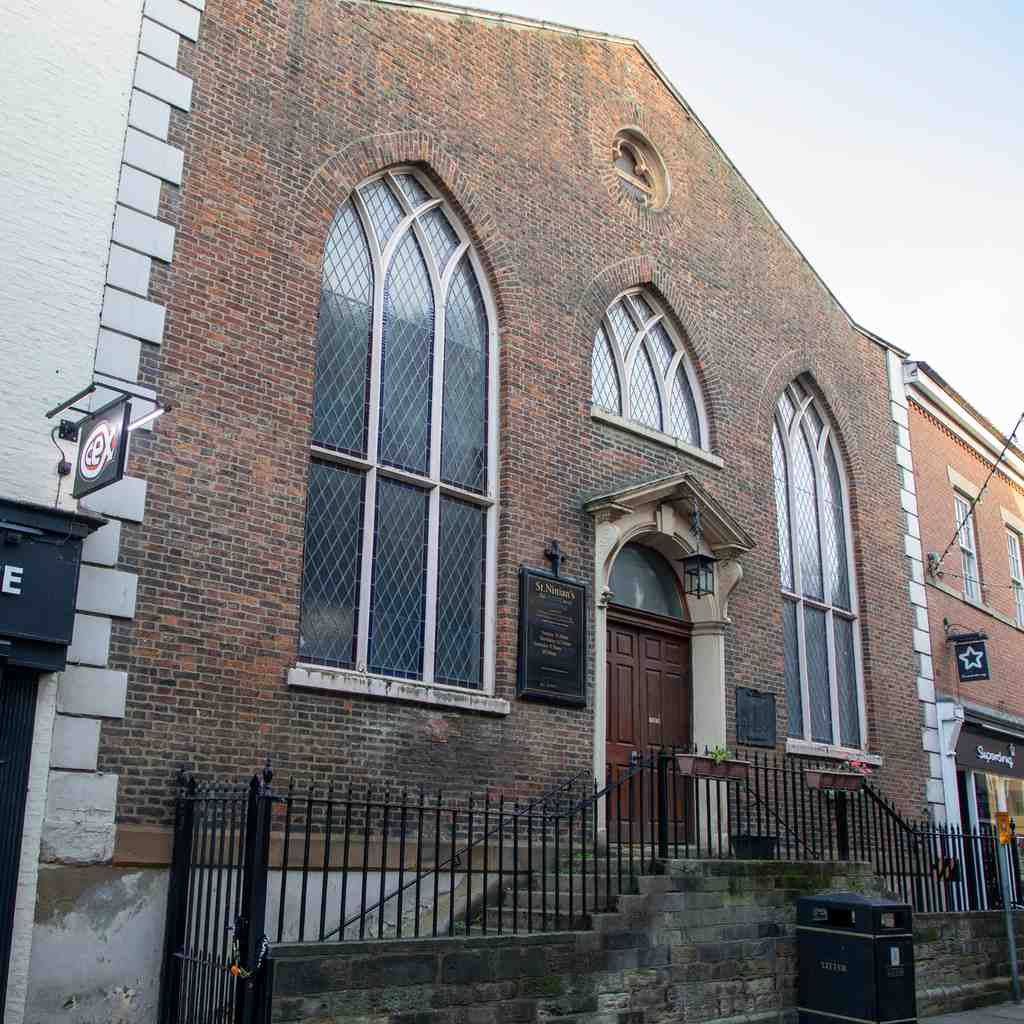
To spot St Ninian’s Church, just look to the side of Baxtergate for a grand, brown-bricked building with tall, arched windows and black wrought iron fencing up a short flight of stone steps. Now, take a moment and let your imagination walk you back through time, right here in front of St Ninian’s Church. Picture the late 1700s, when Whitby’s shipbuilders were hammering away down by the harbor, sawdust swirling through the salty air. On days when the shipyards were quiet, these same men would haul their tools up here and lend a hand building this very chapel, using timbers as sturdy as those they shaped into Captain Cook’s world-famous ships. Just imagine the, echoing from inside as they crafted not only a church but a little slice of Whitby’s soul. St Ninian’s isn’t your average church. It’s what they call a proprietary chapel-the only one in all of Yorkshire, and one of just a handful in England. What does that mean? Well, instead of the Church of England holding the deeds, it was the townsfolk themselves who pooled their money-thirty locals, to be exact, each shelling out £64 for their own pew, a princely sum back then. They didn’t just get a seat for Sunday service-they became part-owners! Everyone else pitched their pennies into the collection plate to pay the minister, who, by the way, wasn’t picked by the bishop, but by these original patrons. Local power-now that’s Yorkshire grit. You wouldn’t have to trek up the famous 199 steps to St Mary’s on the cliff with cold rain blowing in off the North Sea; no sir! St Ninian’s stood right here, a true haven for those living on the west bank of the river. And though it’s not big on tradition-notice how the altar inside doesn’t even face east, which usually earns churches a few raised eyebrows-it was always bursting with practical charm. The church became the second oldest Anglican church in town, yet always a bit of an outsider, never quite fitting in with the big diocese. Now let’s talk drama-because St Ninian’s had plenty! Even from the earliest days, its ties to the sea ran deep. Owners like Thomas Fishburn helped build ships for Captain Cook-yes, the very ships that sailed to find Terra Australis! In fact, Fishburn’s Yard crafted three of those legendary vessels, a fact that makes this church practically tremble with maritime secrets beneath your feet. But St Ninian’s wasn’t stuck in the past, oh no. Skip ahead to the 1990s, and it became the first church in all of Britain to leave the established Church of England over the debate around women priests. The congregation didn’t go quietly-they broke away and joined the Anglican Catholic Church, and, just a few decades later, the church went independent altogether. Picture it: meetings of frustrated owners-descendants of those original thirty-trying to track each other down across centuries of inheritance, bankruptcies, and lost paperwork. You almost expect a treasure map to turn up among the pews! Inside, the craftsmanship truly shines. The walls boast nearly 30,000 feet of sawn timber, and the three-sided galleries were assembled by handy shipbuilders under the direction of mast-maker Isaac Allanson. Even the cupboards in the vestry are made to look just like lockers you'd find on a sailing vessel. If you walked in during a quiet evening, you could almost smell the waxed wood and hear a faint. Of course, time wasn’t always gentle. The church’s slate roof traveled all the way overland from Hull since shipping by sea was dangerous during the American War of Independence. There were renovations aplenty: from box pews being swapped for regular benches, reducing the number but certainly upping the comfort, to updates by architect Edward H Smailes in the 1890s. And yet, if you glanced up during a service, you’d still spot the original galleries-unchanged since the 1770s. Though church bells were brought in the late 19th century, strangely, they never hung in the belfry-so you won’t hear them ringing out today. What you might hear, however, is the echo of voices from a time when William Scoresby, a famed Arctic explorer turned priest, was inspired here, or maybe Ernest Stroud preparing a passionate sermon in the ‘60s. But in 2019, the doors closed for good as a house of worship. These days, a loyal group of supporters look after the place, opening it up for visitors. With its patchwork past, quirky ownership, and steadfast link to Whitby’s shipbuilders and adventurers, St Ninian’s is proof that you don’t have to be the biggest or the oldest to be unforgettable. And let’s be honest-if you’ve ever wanted your own pew, or thought church ownership involved a bit more nautical drama, this is the story for you. Step back and take it all in… and if you listen closely, you might just catch the faint, a reminder of all the Whitby folk who walked this way before you.
Open eigen pagina →To spot the Whitby engine shed, look just beyond the railway tracks for a long, low stone building with large, rounded archways and a row of tall, narrow windows running along its…Meer lezenToon minder
To spot the Whitby engine shed, look just beyond the railway tracks for a long, low stone building with large, rounded archways and a row of tall, narrow windows running along its side. Now, take a deep breath and imagine stepping back in time, right where you stand. It’s the mid-1800s, steam is king, and this very shed is brand new, its stone walls still smelling faintly of the River Esk, whose waters once lapped at this reclaimed land. You might have heard the clatter of horses' hooves not too long before-right up until the York & North Midland Railway swapped out horses for steam engines in 1847. The shed itself rose on the bones of earlier industry, built on ground where the Whitby and Pickering Railway’s very first station stood, and even before that, where shipbuilders like Thomas Fishburn launched vessels with a splash into the harbor. Picture the air, thick with coal smoke and the hiss of steam, as engines rumbled in for the night after working the lines to Loftus, Stockton, Middlesbrough, and Malton. You could spot a worker shifting between the two internal tracks or hear the metallic clang of wheels and bogies being swapped out on the sidings. Just outside, maybe kids watched in awe as the giant locomotives turned, creaking and groaning on the massive 50-foot turntable, before heading back out to adventure. During its heyday, this shed was more than just stone and tracks. It had a workshop, a forge-perfect for fixing up the battered old engines-and an office bustling with the daily business of running railways. You might notice the west side has no windows; that’s because a steep bank stands just beyond, making for a gloomy wall but keeping the wind at bay. Even the route inside was a bit of a puzzle: engines entered only by a reversal maneuver at the Bog Hall signal box-imagine trying to park a massive train backwards without a scratch! One of the most curious sights would have been the “Whitby Bogies,” Edward Fletcher’s quirky 4-4-0 steam engines, specially built to handle tricky turns through Newton Dale and steep climbs heading out of Grosmont and Pickering. Then came the chunkier NER Class W 4-6-0T, with extra space for coal and an appetite to match. And when the tourists left in the off-seasons, Sentinel steam railcars took up the slack, puffing steadily through the quiet months. Danger didn’t stay away, either. Imagine the night in 1940-an air raid shakes the town as bombs rain down, smashing the goods shed and reducing the engine shed’s offices to rubble. But the shed stood strong, and trains kept rolling... until the age of steam finally wheezed out in 1959, replaced by the relentless advance of diesel engines. Now, if you peek in today, you might find holidaymakers instead of hardworking railmen-because the old shed has swapped steam and steel for cozy apartments. It’s one of just a handful designed by G T Andrews that still survive in North Yorkshire, and in 1991 it even made the grade as a protected historic building. So, as you stand by these tracks, take a moment to imagine the ghosts of grinning engine drivers, the clang of hammers, and the ever-present promise of the North Yorkshire railways. Who knows, maybe the old “Whitby Bogies” are still rumbling around in the echoes of history-if you listen close, you might just hear them!
Open eigen pagina →
Veelgestelde vragen
Hoe begin ik de tour?
Download na aankoop de AudaTours-app en voer je inwisselcode in. De tour is direct klaar om te starten – tik gewoon op afspelen en volg de GPS-geleide route.
Heb ik internet nodig tijdens de tour?
Nee! Download de tour voordat je begint en geniet er volledig offline van. Alleen de chatfunctie vereist internet. We raden aan om te downloaden via wifi om mobiele data te besparen.
Is dit een groepsrondleiding met gids?
Nee - dit is een audiotour met eigen gids. Je verkent zelfstandig op je eigen tempo, met audiovertelling via je telefoon. Geen tourguide, geen groep, geen schema.
Hoe lang duurt de tour?
De meeste tours duren 60-90 minuten, maar jij bepaalt het tempo volledig. Pauzeer, sla stops over of neem pauzes wanneer je wilt.
Wat als ik de tour vandaag niet kan afmaken?
Geen probleem! Tours hebben levenslange toegang. Pauzeer en hervat wanneer je wilt – morgen, volgende week of volgend jaar. Je voortgang wordt opgeslagen.
Welke talen zijn beschikbaar?
Alle tours zijn beschikbaar in meer dan 50 talen. Selecteer je voorkeurstaal bij het inwisselen van je code. Let op: de taal kan niet worden gewijzigd na het genereren van de tour.
Waar vind ik de tour na aankoop?
Download de gratis AudaTours-app uit de App Store of Google Play. Voer je inwisselcode in (verzonden per e-mail) en de tour verschijnt in je bibliotheek, klaar om te downloaden en te starten.
Als je niet tevreden bent met de tour, betalen we je aankoop terug. Neem contact met ons op via [email protected]
Veilig afrekenen met