
Norwich Audio Tour: At Work
Norwich was rich long before England had factories. Six centuries of worsted weaving, a third of the population speaking Dutch, a 1583 'house of correction' that put women to spin and men to grind malt, a Wensum canal that floated Caen stone to the cathedral works yard, fifteen per cent of the city in shoe factories by 1900, an insurance giant born above a wine merchant's vaults, and an Edwardian architect who built the offices, arcades and department stores where the new clerks and shop-girls worked: it all happened inside one square mile. This self-guided audio tour walks that mile. From Strangers' Hall — the merchant's house where Mayor Sotherton lodged refugee Dutch weavers in 1565 — through a 1670 weaver's cottage, the friary where the Strangers worshipped in Dutch until 1929, the Elizabethan Bridewell that 'set the poor on work', the Norman market that has traded since 1086, the medieval Guildhall, a bespoke shoemaker still hand-stitching on the same shopfront since 1874, the only independent department store in the city, George Skipper's Art Nouveau arcade, the Marble Hall of Norwich Union, the keep where Robert Kett was hanged, the Anglo-Scandinavian first marketplace, the cathedral gate built by Agincourt's Sir Thomas Erpingham, the medieval water-gate that delivered the cathedral stone — and ending at the seven-bay medieval trading hall of merchant Robert Toppes, who exported the Norwich worsted that built it all. Walk slowly. The buildings still hold their shape, and the working lives still hold their names.
Tourvoorbeeld
Over deze tour
- scheduleDuur 40–60 minsGa op je eigen tempo
- straighten5.0 km wandelrouteVolg het geleide pad
- location_onLocatieNorwich, Verenigd Koninkrijk
- wifi_offWerkt offlineEén keer downloaden, overal gebruiken
- all_inclusiveLevenslange toegangOp elk moment opnieuw afspelen, voor altijd
- location_onStart bij Strangers' Hall
Stops op deze tour
Look for the dark timber-framed frontage with its jettied upper storey, leaded windows, and carved entrance canopy tucked into the line of the street. This house opens our story…Meer lezenToon minder
Open eigen pagina →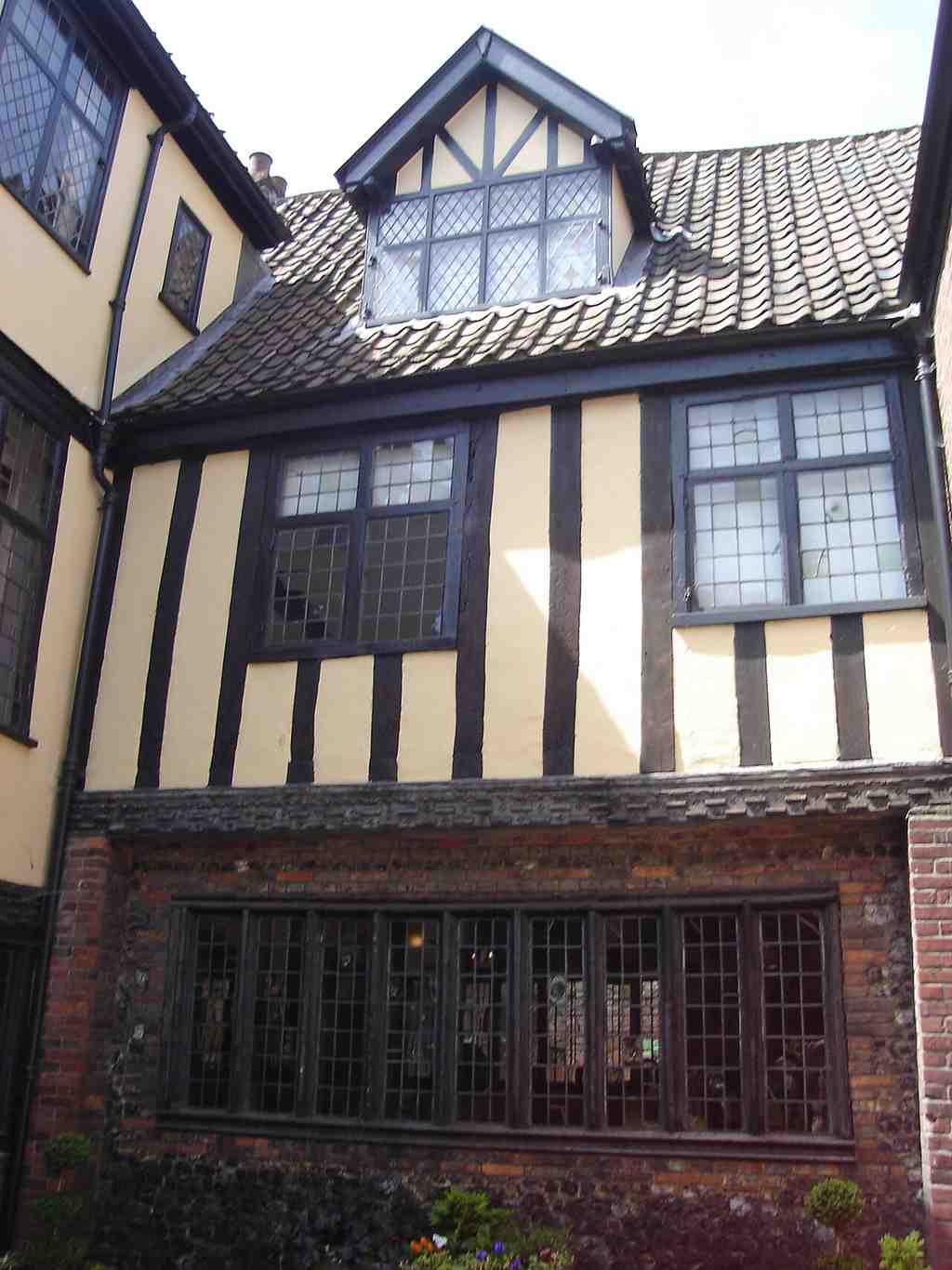
Strangers' HallPhoto: Northmetpit, Wikimedia Commons, CC0. Cropped & resized. Look for the dark timber-framed frontage with its jettied upper storey, leaded windows, and carved entrance canopy tucked into the line of the street.
This house opens our story neatly, because Norwich made its money from cloth for roughly six centuries. From medieval worsted wool, through the refugees’ lighter “New Draperies,” to Victorian shawls, the city’s working life kept coming back to thread, loom, dye, and sale. Cloth moved through upstairs rooms lit by broad weavers’ windows, through merchants’ houses like this one, through civic inspection halls, and, because cities never waste a workforce, through institutions that put the poor to spinning too.
Strangers’ Hall looks like one house, but it grew in layers. The oldest bit is a medieval undercroft - a vaulted storage room - from around the thirteen twenties, where goods were stored and shown off. If you glance at the image on your screen, you can see that stone-boned space still doing its quiet, stubborn job. Above it, merchants and mayors kept adding ranges, rooms, stairs, and a grand hall through the fifteenth, sixteenth, and seventeenth centuries.
The name points to the people who helped rescue Norwich when the cloth trade began to sag in the fifteen sixties. In fifteen sixty-five, Mayor Thomas Sotherton secured royal permission from Elizabeth the First for twenty-four Dutch and six Walloon Protestant weaving families to settle here, with households up to three hundred people. Some lodged in this very house. Within just a few years, their numbers surged; by fifteen eighty-three, Norwich counted four thousand, six hundred and seventy-eight “Strangers” - about a third of the city. That is not a sprinkle of newcomers. That is a city being rewoven.
They brought skills, new fabrics, and new methods that rebuilt the local economy. They also worshipped in Dutch at Blackfriars’, which we’ll reach later. And yes, Norwich’s football nickname traces back to another habit associated with these communities: keeping canaries. Cities are funny that way; they remember themselves in odd little feathers.
One more thing at the start of this tour: many of the workers who kept this place, and this city, going barely appear in the records. Women spun wool in workrooms, kept household looms going, finished garments, served in shops, and later filled typing pools and factory lines. Their labor paid the bills; their names often vanished. We’ll call them out when we can, and when we can’t, we should notice the silence.
If you want a better sense of the exterior’s patchwork life, check the app image of the frontage. It’s a merchant’s house, a warehouse, a refuge, a museum... and a survivor. Leonard Bolingbroke saved it from demolition in eighteen ninety-nine, paying one thousand and fifty pounds - roughly well over a hundred thousand pounds in today’s money - and opened it as a folk museum the next year.
So, hold onto the name Sotherton: grocer, mayor, and host in a city desperate enough to import skill, and smart enough to do it. From here, head toward the Bridewell, where the trade kept going in humbler hands for another century, about a four-minute walk away. If you plan to come back inside, Strangers’ Hall usually opens only on Wednesdays and Saturdays.
On your right, look for a long flint-and-stone hall with a steep roof, tall pointed windows, and the unmistakable church-like length of a medieval nave stretched along the street.…Meer lezenToon minder
Open eigen pagina →On your right, look for a long flint-and-stone hall with a steep roof, tall pointed windows, and the unmistakable church-like length of a medieval nave stretched along the street.
This is St Andrew’s and Blackfriars’ Hall, and it carries one of Norwich’s favorite habits: taking one building and giving it several lives. The Dominicans arrived in Norwich in twelve twenty-one, though they only took over this site in thirteen oh seven, after the earlier Penitential Friars here were suppressed. Those friars had settled here from twelve fifty-eight. The Dominicans expanded the precinct, built a great church for preaching, and after a fierce fire in fourteen thirteen damaged the place and killed two friars, they rebuilt. What stands here now largely comes from that fifteenth-century recovery.
If you glance at the image on your screen, the old interior gives away the scale of it all: this was no modest chapel, but the nave, the great central body of a church built to hold a crowd and project a sermon to the back wall.
Now, to understand why a friary church became tangled up with cloth, taxes, and city rulebooks, you need the civic rules of trade. From fourteen oh four onward, Norwich was an autonomous county-corporate, run by its own Mayor and twenty-four Aldermen. The Mayor also served as Clerk of the Markets, fixing the price of bread and beer, checking standard weights and measures, and forbidding food sales before the cathedral bell rang for Lady Mass at six in the morning. Norwich did love a regulation.
At the Reformation, the city corporation bought this place in stages: eighty-one pounds in fifteen forty, then one hundred and fifty-two pounds in fifteen forty-four. Mayor Augustine Steward drove the plan. If you want a face to pin the scheme on, he’s on your screen now. He split the church in two. The chancel - the eastern part around the old altar - became Blackfriars’ Hall, a chapel. The nave became St Andrew’s Hall, a “fair and large hall” for civic use. And remarkably, civic use here has carried on, one way or another, ever since.
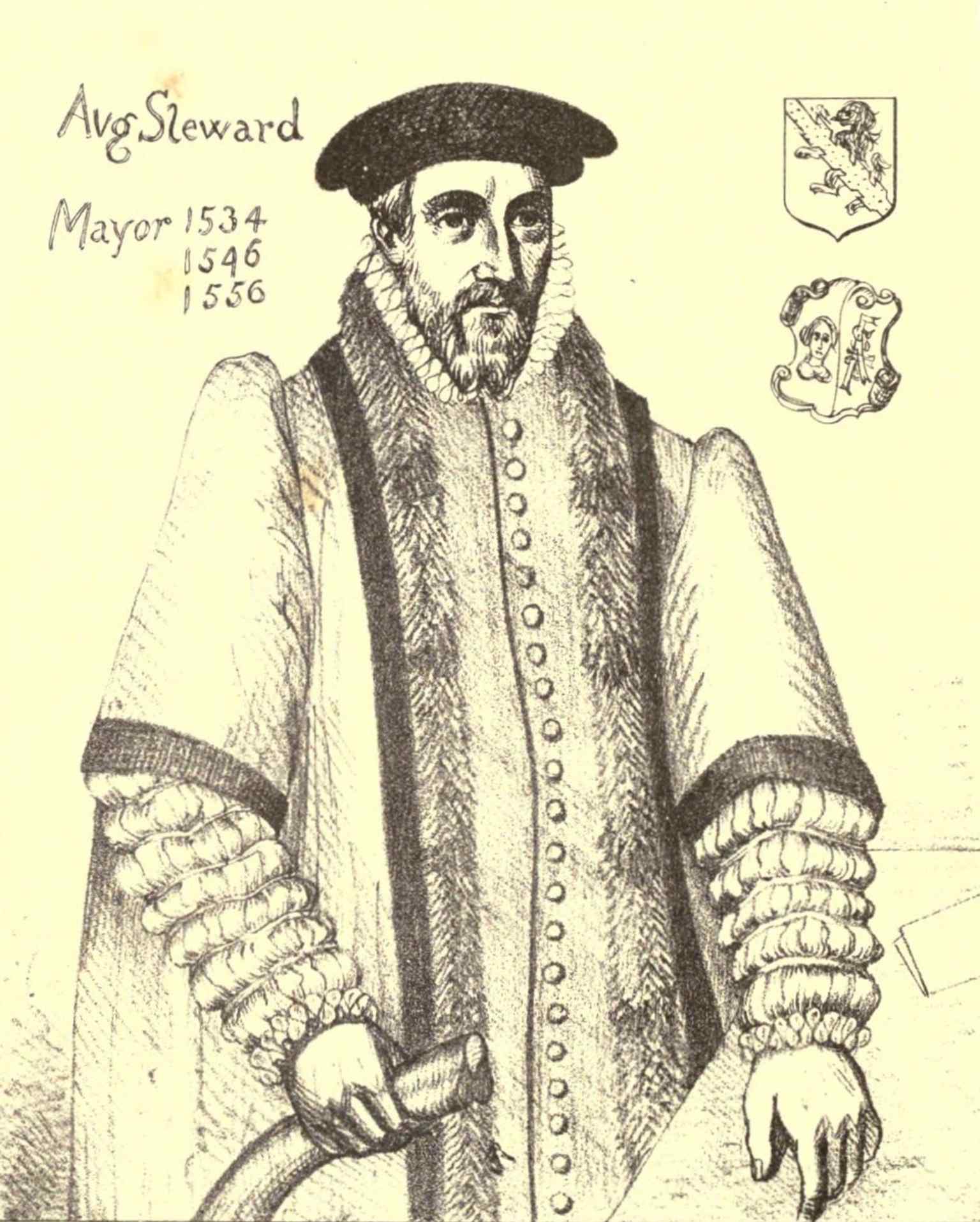
A portrait of Augustine Steward, the mayor who bought and divided the church into St Andrew's Hall and Blackfriars' Hall in the 1540s.Photo: Unknown authorUnknown author, Wikimedia Commons, Public domain. Cropped & resized. Then the Strangers entered the story: from fifteen seventy-nine, the chancel became known as the Dutch Church, and Dutch services continued here for centuries. One of its ministers, Johannes Elison, had his portrait painted by Rembrandt in sixteen thirty-four, and his monument still hangs in the chancel.
The city welcomed Stranger skills, but not with a loose hand. In fifteen seventy-one, Norwich issued a Book of Orders for the Straungers of the City of Norwiche: twenty-four articles laying down how textiles should be made. Sealers and Searchers - inspectors, basically - examined every piece of cloth in the Sealing Halls. Good cloth received the city arms, castle and lion. Norfolk-made fabric got the castle alone. Stranger work received an aleyne seal - “alien,” in plain English - set in a ring. So here, in one complex, Norwich offered migrants a place to worship and then measured their cloth to the inch. Generous, but with paperwork.
When you’re ready, leave this long friary nave behind and head on, past the memory of the medieval house of correction around the corner, toward Sherwyn House on St George’s Street - about six minutes away.
Toon 12 stops meerToon minder stopsexpand_moreexpand_less
Look for the dark flint flat arch, the steep-gabled ferry house joined to it, and the low opening that marks the line of the old canal. This quiet little gateway did serious…Meer lezenToon minder
Open eigen pagina →Look for the dark flint flat arch, the steep-gabled ferry house joined to it, and the low opening that marks the line of the old canal.
This quiet little gateway did serious work. Before anyone raised Norwich Cathedral in the twelfth century, the monks dug a chance here - that means a narrow canal - from the River Wensum straight into the masons’ yard inside the precinct. Caen limestone for the cathedral came across the Channel from France, then up the Yare and Wensum, and under this route to the building site. Medieval logistics... not glamorous, but very effective.
In the fifteenth century, builders threw this flat-arched watergate across the canal. Around seventeen eighty, people filled the waterway in, but the gateway stayed, like a surviving bookmark from Norwich’s trading life. And it was never only about cathedral stone. Timber from the Baltic came up here, iron from Sweden, plus lead and glass - the plain, heavy stuff that keeps a city alive.
The Wensum worked as the city’s spine for about nine centuries, carrying bulk goods in both directions: stone up to the cathedral works yard, and mustard, beer, and worsted cloth down toward Yarmouth. This watergate is the clearest surviving end point of that traffic; Dragon Hall and the King Street merchant complex grew along the same bank. If you glance at the app, the old ferry scene makes that working river easier to picture.
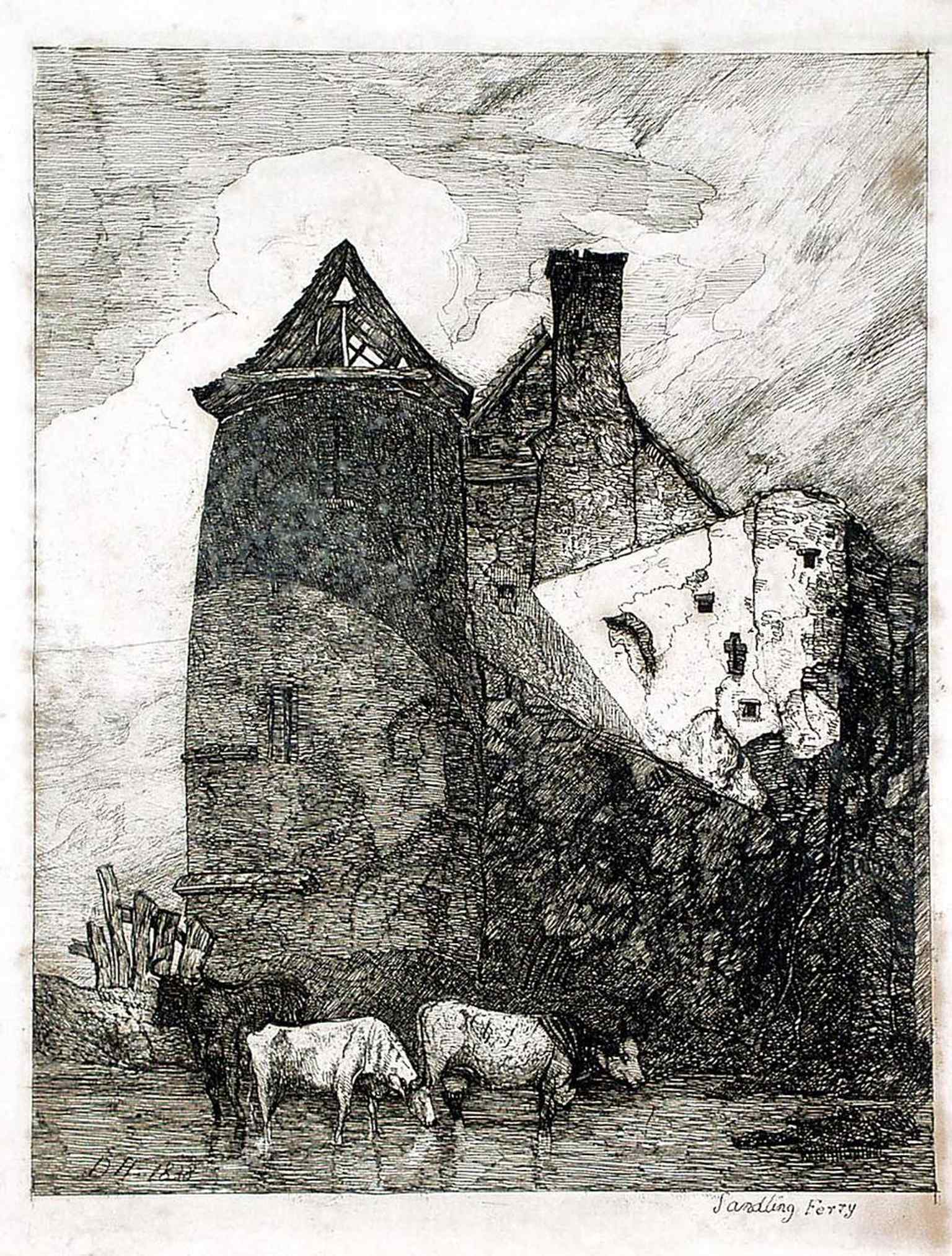
Sandlings Ferry in the 1830s, showing the old river crossing near Pulls Ferry before the ferry was discontinued in 1943.Photo: David Hodgson, Wikimedia Commons, Public domain. Cropped & resized. Later, John Pull ran the ferry and a pub here from seventeen ninety-six until eighteen forty-one, when bankruptcy stopped him; the crossing itself kept going until nineteen forty-three. After a rescue effort and restoration in the late nineteen forties, it survived to outstare us all. Follow the towpath south toward King Street, then we’ll turn on to Bowhill and Elliott on London Street, about eleven minutes away. Handy thing, this stop never closes.
On your left, look for the long flint and stone hall, with an east wall patterned like a chequerboard and a small clock turret perched above it. This is Norwich Guildhall, the…Meer lezenToon minder
Open eigen pagina →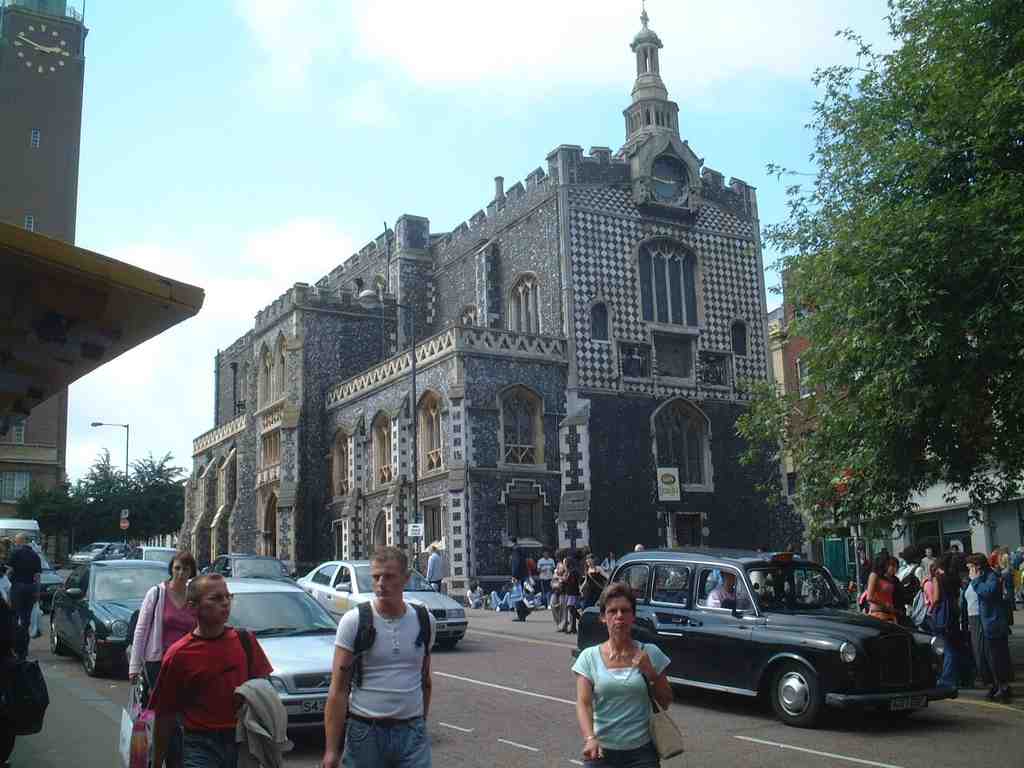
Norwich GuildhallPhoto: Wikimedia Commons contributor, Wikimedia Commons, Public domain. Cropped & resized. On your left, look for the long flint and stone hall, with an east wall patterned like a chequerboard and a small clock turret perched above it.
This is Norwich Guildhall, the largest medieval civic building outside London, and really the place where Norwich learned to govern itself. In fourteen oh four, Henry the Fourth gave the city a charter that let it choose a Mayor and twenty-four Aldermen and act as its own county, instead of answering to Norfolk. Norwich got to work in fourteen oh seven, finished by about fourteen thirteen, and the first Mayor, William Appleyard, even contributed materials to help the project along.
That chequerboard wall is more than decoration. Medieval tax officials counted money on a checked cloth, and that is where we get the word Exchequer, meaning the government treasury. Public finance, born from a patterned tablecloth. Here, officials ran the courts, collected taxes, kept the city’s official weights, and fixed the price of bread and beer. If your loaf came up light, or your ale cost too much, this building had opinions.
If you look at the image on your screen, you can see the east end rebuilt in the fifteen thirties after an earlier collapse. And there is a darker story here too. Thomas Bilney, an early Reformation preacher, waited in the dungeon, now the undercroft, a vaulted basement, before officials burned him at the stake in August fifteen thirty-one.
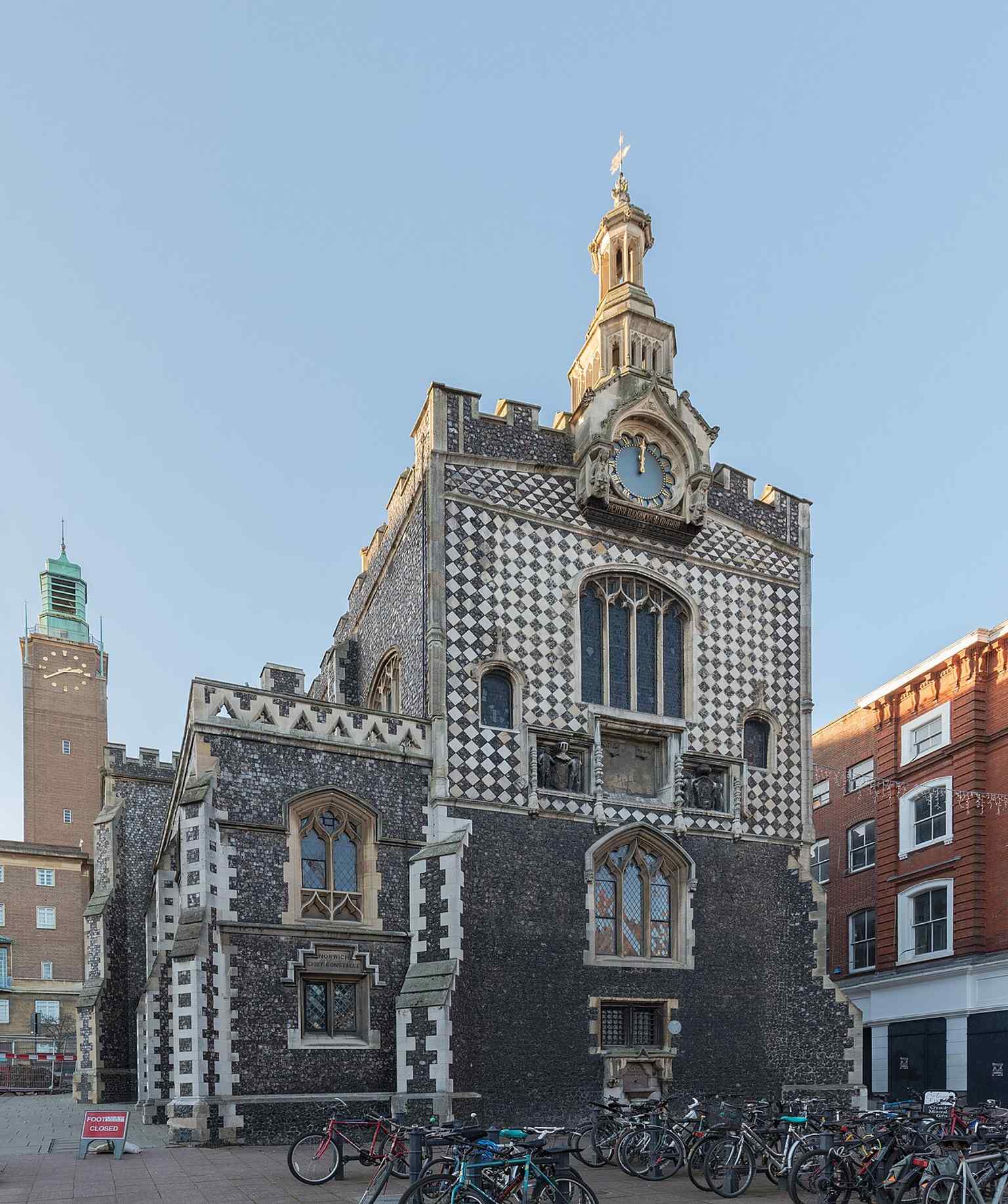
A crisp modern view of Norwich Guildhall, a Grade I listed landmark whose east end was rebuilt in the 1530s after earlier structural collapse.Photo: Diego Delso, Wikimedia Commons, CC BY-SA 4.0. Cropped & resized. Take one last look at that chequerboard... then head round the corner into the lanes toward London Street and the old shoe quarter. Norwich Market is about three minutes away.
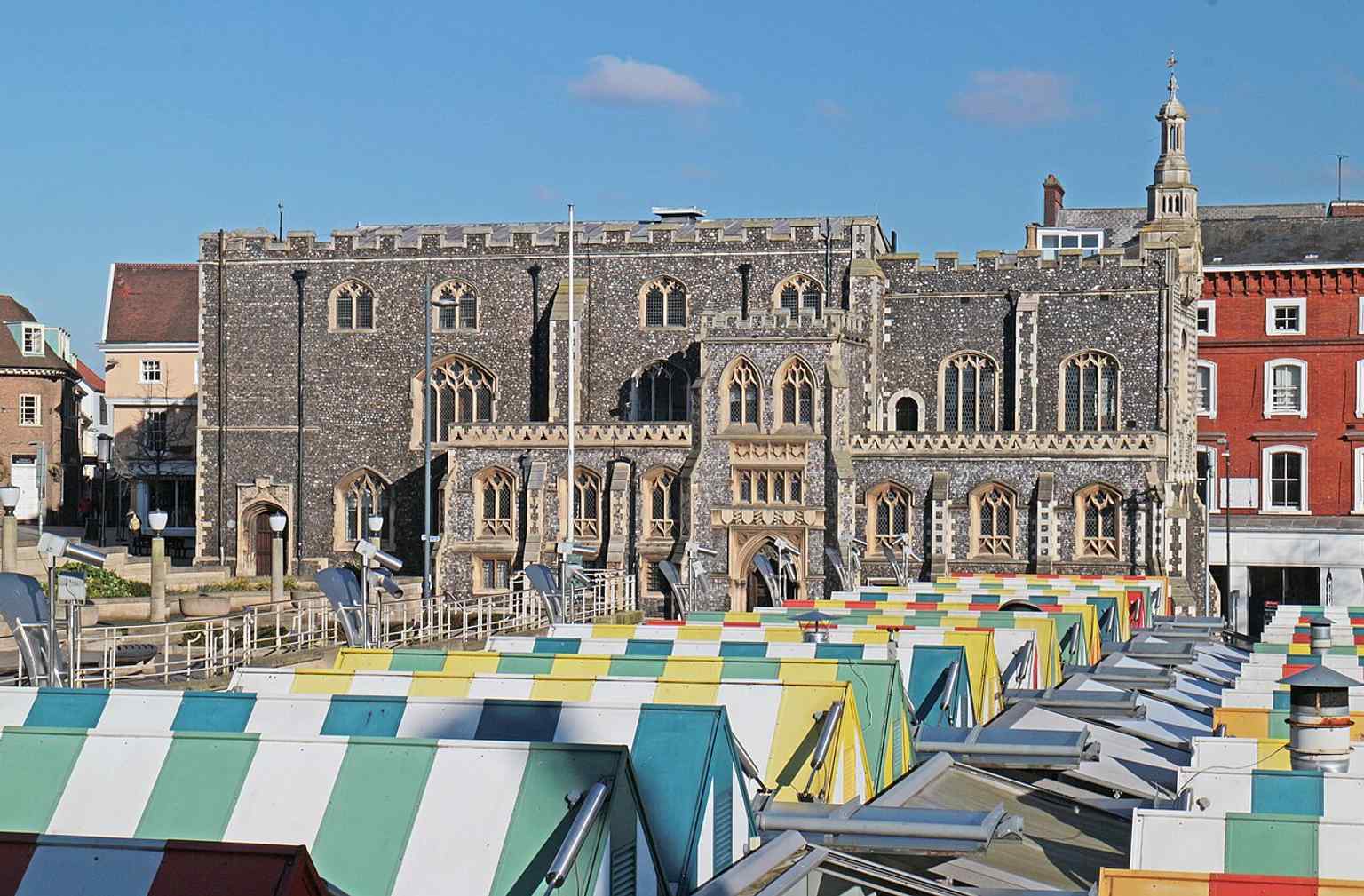
The Guildhall’s full Market Place façade, showing the great medieval civic building that Henry IV’s charter helped Norwich build for self-government.Photo: Juha Agren, Wikimedia Commons, CC BY-SA 4.0. Cropped & resized. 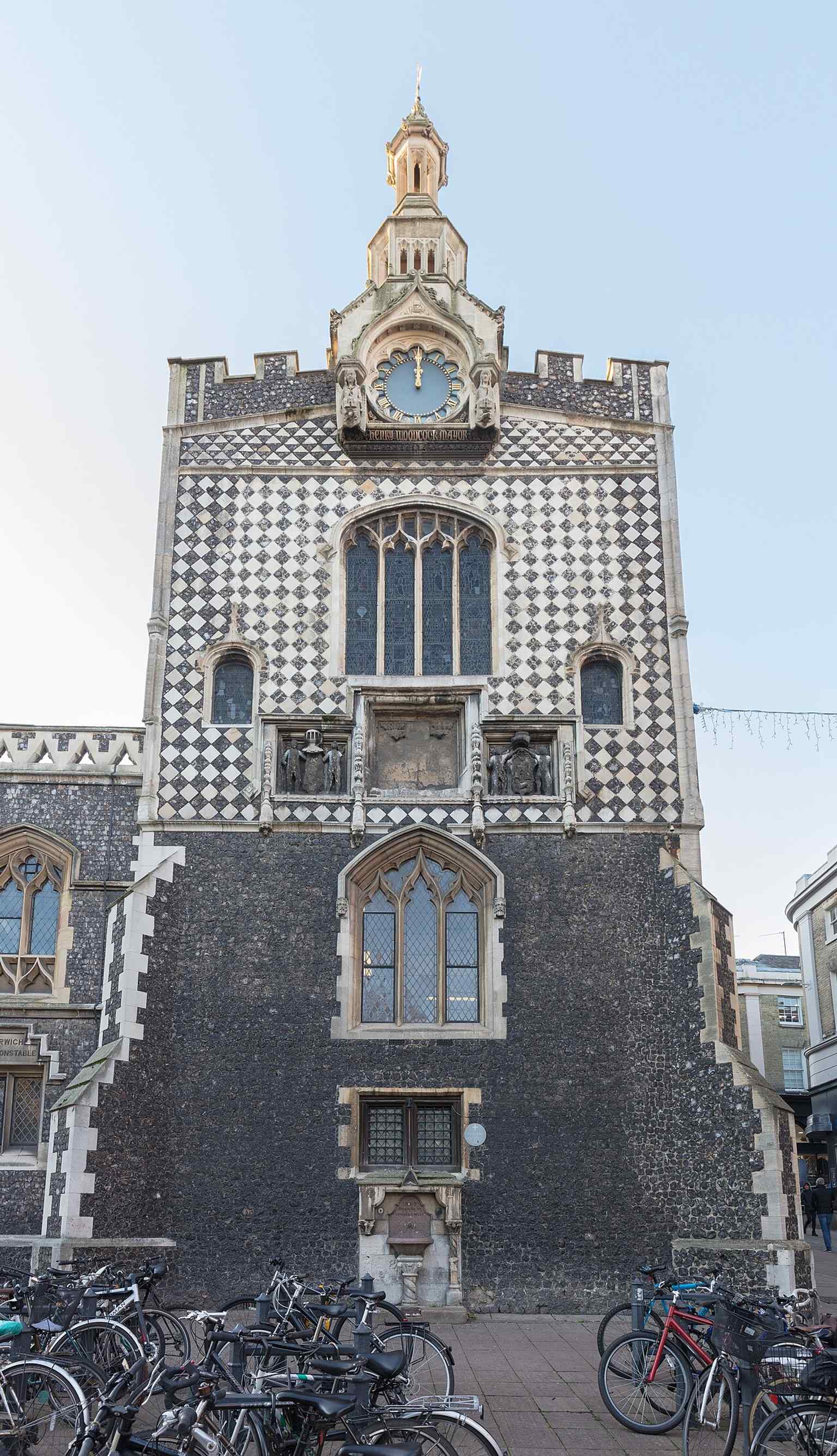
A close look at the Guildhall’s stonework and façade details, echoing the building’s later additions and 16th-century rebuilding on the east side.Photo: Diego Delso, Wikimedia Commons, CC BY-SA 4.0. Cropped & resized. 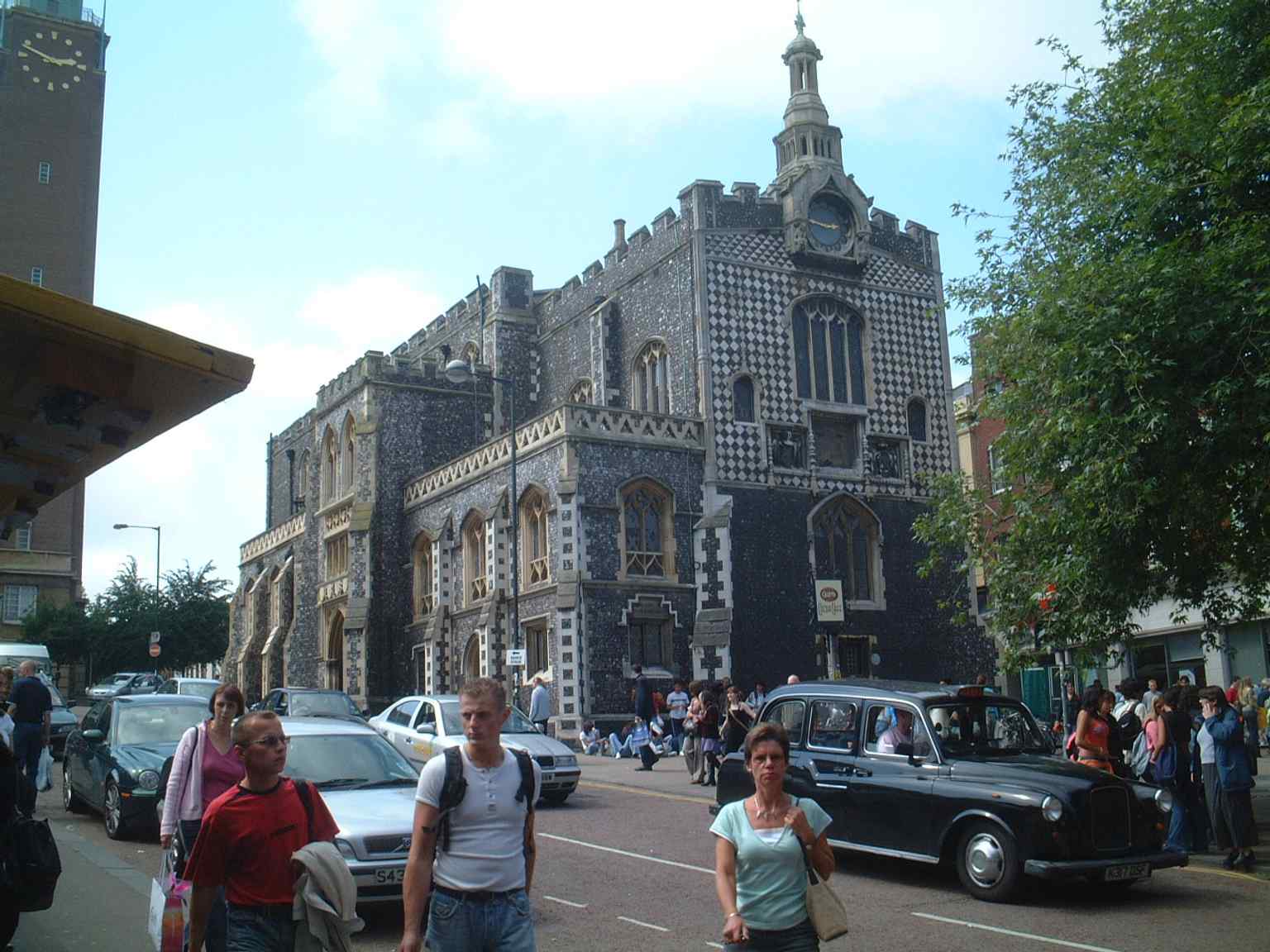
An older image of Norwich Gaol by the Guildhall, linking the site to the building’s former roles as a court and prison, including the dungeon where Thomas Bilney was held.Photo: Unknown, Wikimedia Commons, Public domain. Cropped & resized. Look for the massive pale stone rectangle of the keep perched on a steep mound, with rows of blind arches marching across its walls. This is Norwich Castle... and it began as a…Meer lezenToon minder
Open eigen pagina →Look for the massive pale stone rectangle of the keep perched on a steep mound, with rows of blind arches marching across its walls.
This is Norwich Castle... and it began as a statement of control. After the Norman Conquest, the Normans ordered a castle here sometime between ten sixty-six and ten seventy-five. First came a motte and bailey - a man-made mound with a defended yard beside it. Then, between ten ninety-four and eleven twenty-one, builders raised the stone keep you see now. It is huge even by Norman standards: about ninety-five feet by ninety feet, and roughly seventy feet high. From the market below, nobody could miss the message. Norman kings were not subtle decorators.
That message cost the town dearly. Historians reckon the builders destroyed somewhere between seventeen and one hundred and thirteen Saxon houses to make room for the castle. So this hill is not just architecture; it is conquest pressed into the street plan. And there’s a neat link here to the city you’ve already been walking through: the market and Guildhall dealt in rules, tolls, and trade, while up here the crown supplied the harder edge of authority... all wrapped in the work of stone masons.
What looks ancient and untouched is, of course, not quite that simple. In the eighteen thirties, the old medieval facing had badly weathered. Between eighteen thirty-five and eighteen thirty-nine, architect Anthony Salvin directed a major repair, and stonemason James Watson refaced the keep in Bath stone, carefully copying the original Norman ornament. If you like, check the before-and-after image in the app; it catches the castle in the middle of yet another reinvention.
For centuries, this place stopped being a palace and became Norfolk’s county jail. A gallows stood on the bridge behind the entrance lodges, and condemned prisoners died either there in public or privately inside the gaol. The castle looked down on the city, and sometimes the city looked back at an execution.
That grim history matters when you come to Robert Kett’s rebellion in fifteen forty-nine. Kett was a Wymondham yeoman tanner - a man with land, and a man who worked leather - who led Norfolk commoners against the enclosure of common land. The rebels gathered at Kett’s Oak in Hethersett, camped on Mousehold Heath for six and a half weeks, and on the twenty-ninth of July they took Norwich. Then the Earl of Warwick defeated them at Dussindale. Kett was tried in London, brought back here, and hanged from the walls of Norwich Castle on the seventh of December, fifteen forty-nine. Four hundred years later, in nineteen forty-nine, the city marked the spot with a memorial plaque. History, in Norwich, has a habit of arguing with itself.
After the last prisoners left in eighteen eighty-seven, the city bought the castle and gave it a new life. Edward Boardman led the conversion into a museum, and the Duke and Duchess of York opened it on the twenty-third of October, eighteen ninety-four. If you glance at the Great Hall image on your screen, you’ll see how the keep now leans back toward its royal past rather than its prison years.
Take one last look at that keep wall. It has been fortress, prison, warning, memorial, and museum... which is a fair amount of work for one building.
When you’re ready, head back down off the motte toward the old Anglo-Scandinavian market, then continue on to Surrey House, about an eight-minute walk away. If you want to go inside, the museum is open every day from ten AM to five PM.
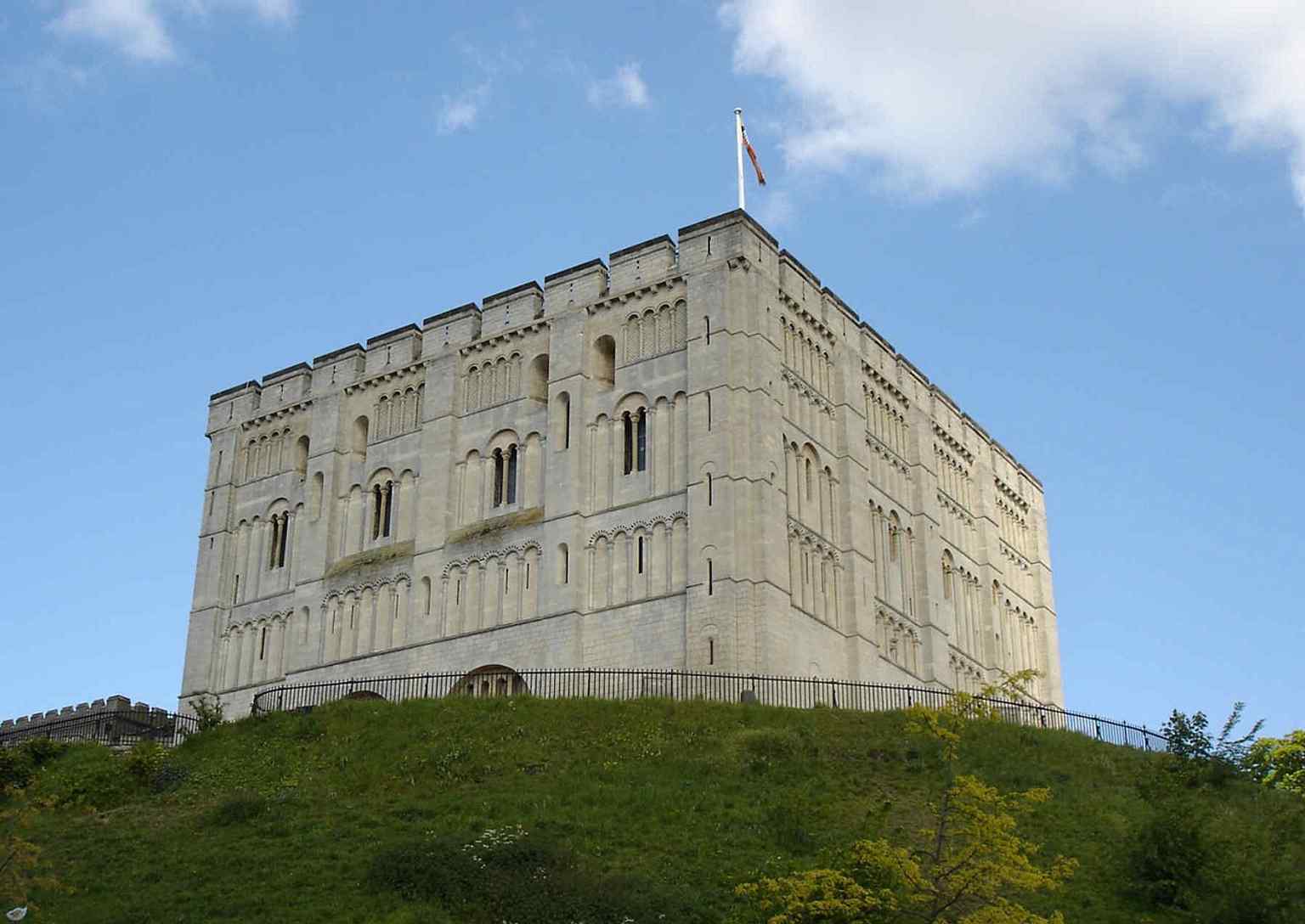
A clean modern view of Norwich Castle’s great Norman keep, the fortress William the Conqueror ordered after 1066.Photo: The original uploader was Bluemoose at English Wikipedia., Wikimedia Commons, CC BY-SA 3.0. Cropped & resized. 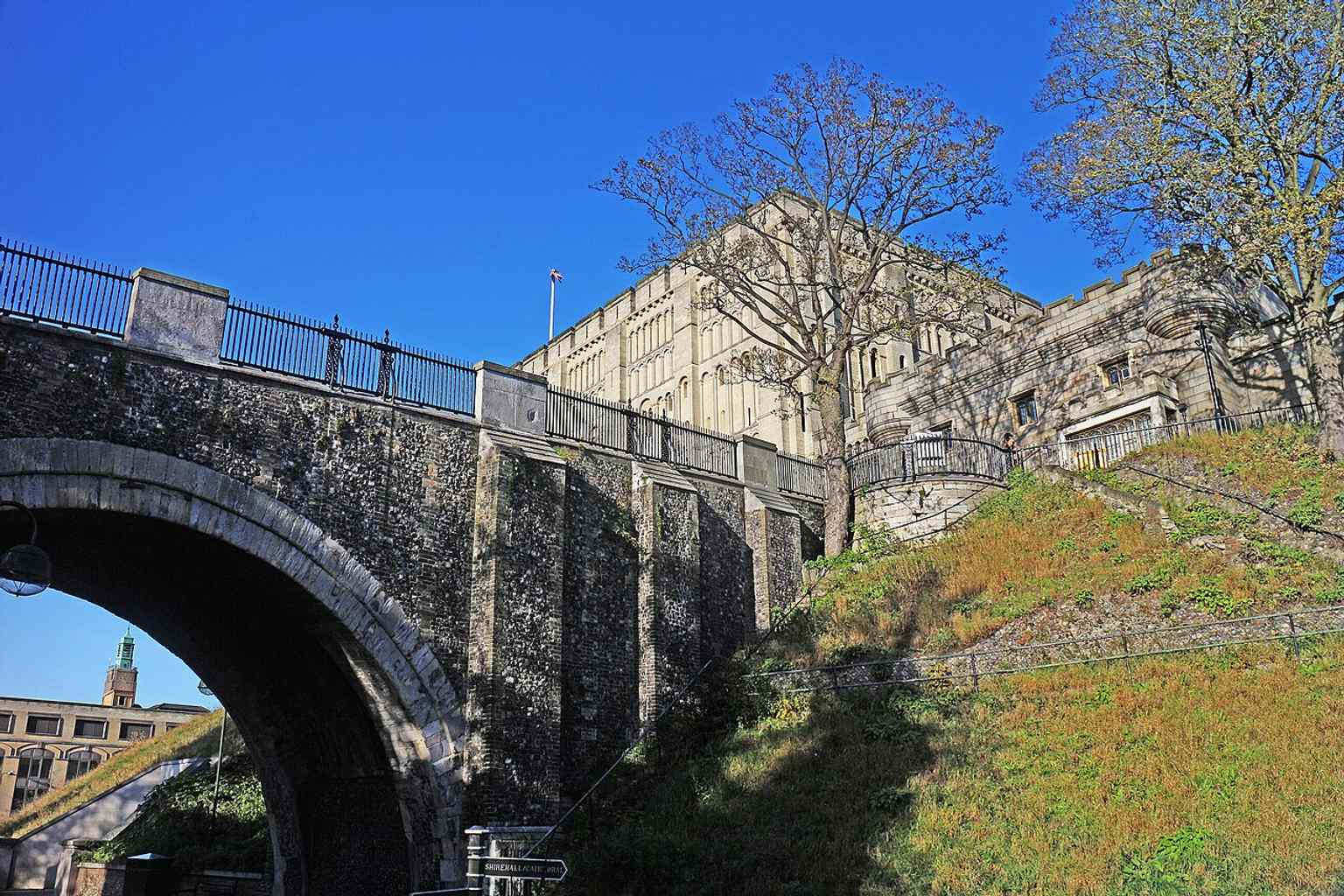
The castle forecourt and gatehouse area, part of the Grade I listed complex that later served as a county gaol.Photo: Juha Agren, Wikimedia Commons, CC BY-SA 4.0. Cropped & resized. 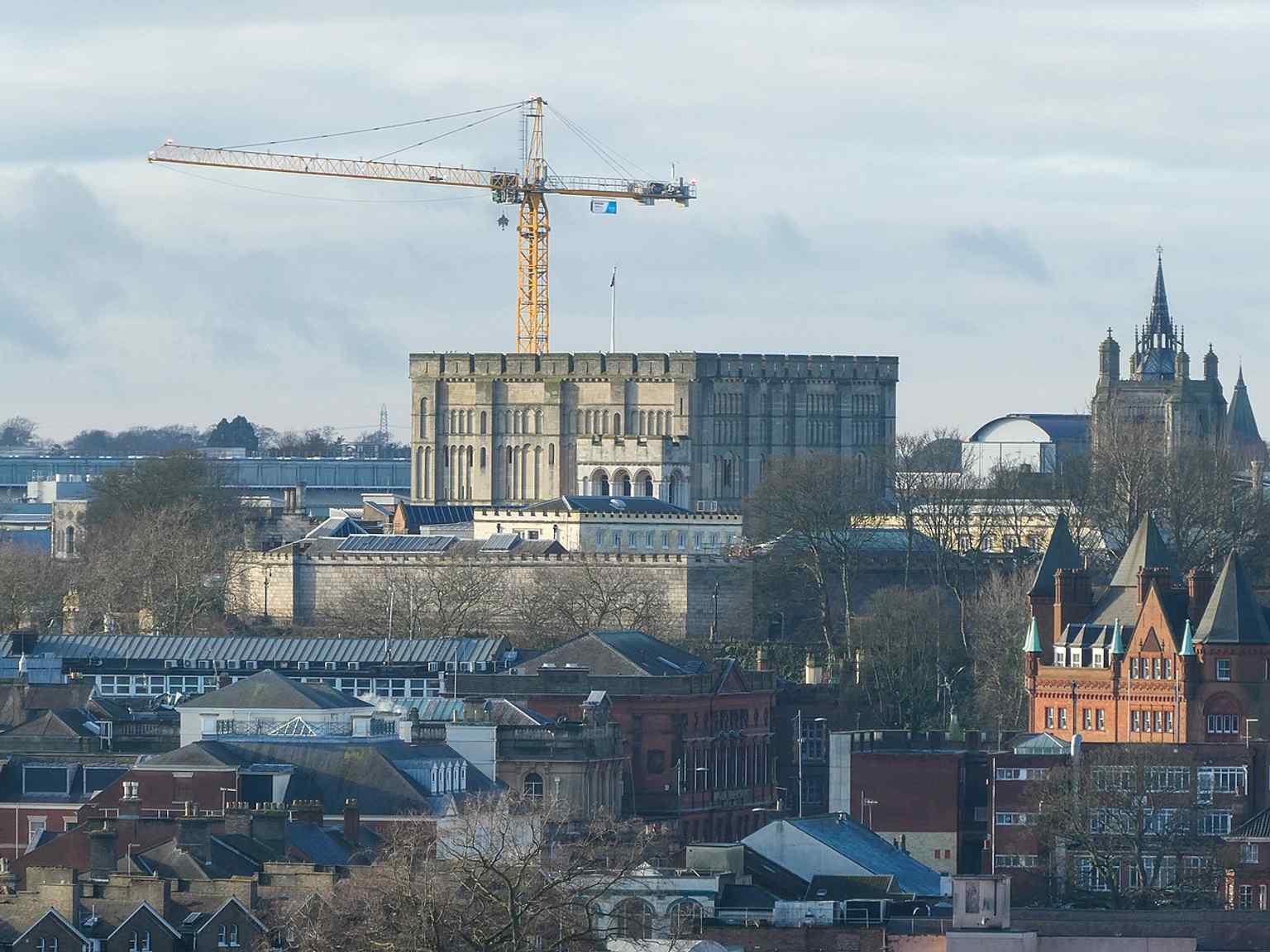
The restoration works seen from Kett’s Heights echo the castle’s 2025 rebuild, when the keep was reopened as a reconstructed royal palace.Photo: Sebastiandoe5, Wikimedia Commons, CC BY-SA 4.0. Cropped & resized. 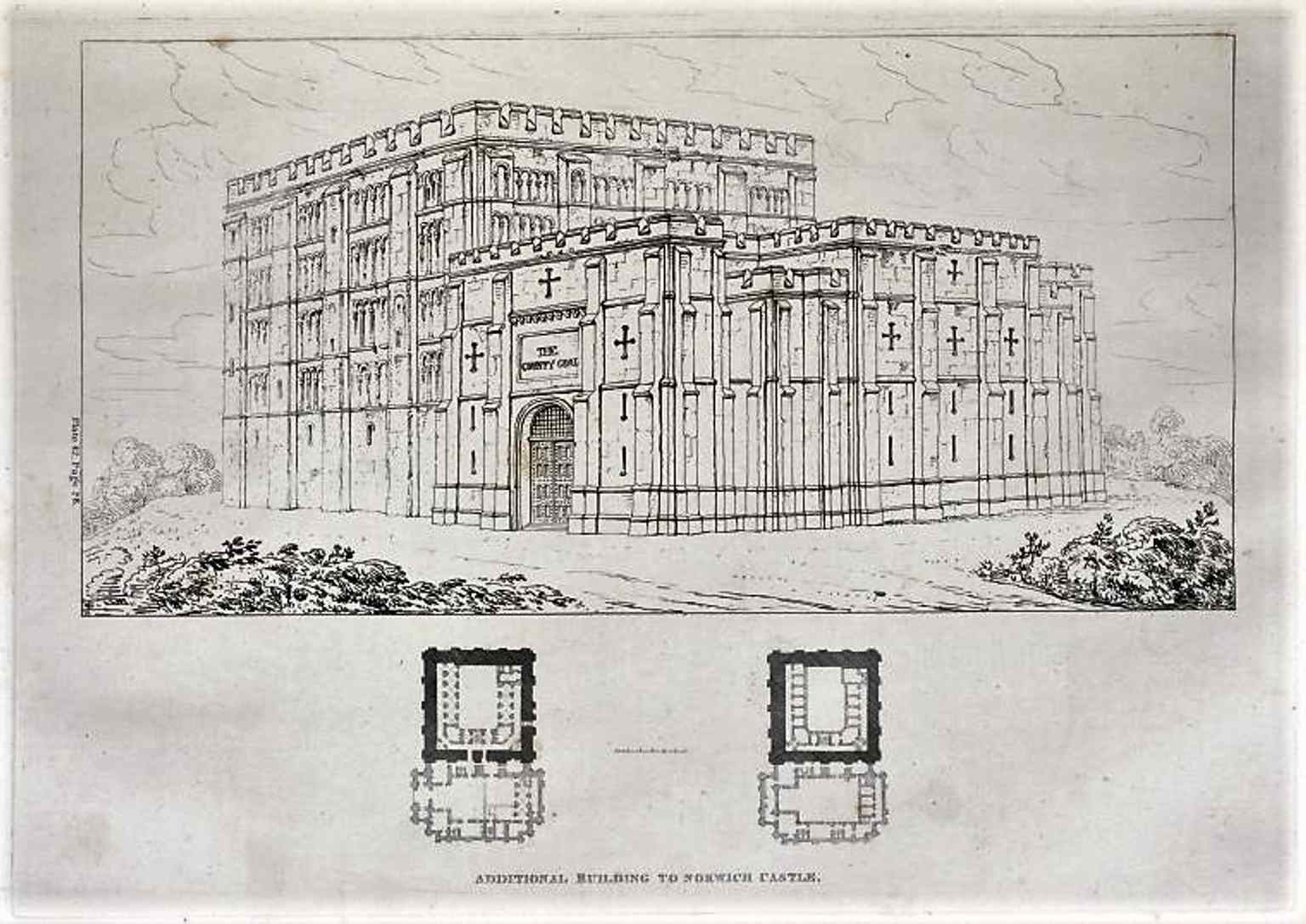
John Soane’s prison plan links the keep to its long gaol history, when the interior was rebuilt into cells in the 1790s.Photo: Sir John Soames (1753-1837), Wikimedia Commons, Public domain. Cropped & resized. 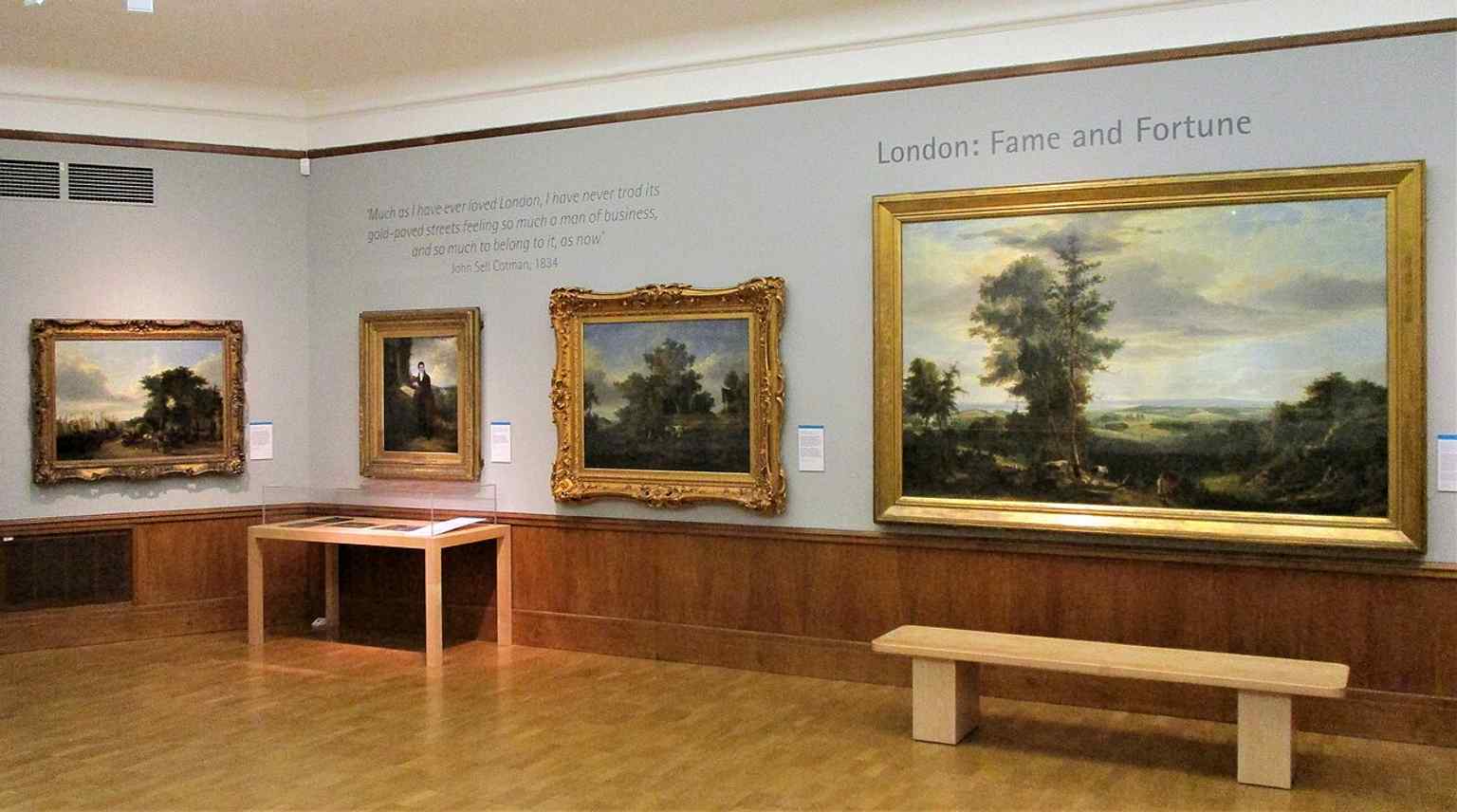
The reconstructed interior of Norwich Castle’s keep, reopened in 2025 to recreate a medieval royal palace with furnished rooms.Photo: Amitchell125, Wikimedia Commons, CC BY-SA 4.0. Cropped & resized. Look for the long brick-and-timber range with its steep tiled roof and projecting oriel window, the merchant’s window that marks Dragon Hall out from the street. This place…Meer lezenToon minder
Open eigen pagina →Look for the long brick-and-timber range with its steep tiled roof and projecting oriel window, the merchant’s window that marks Dragon Hall out from the street.
This place began as ambition in oak. Around fourteen twenty-seven, Robert Toppes, one of the richest merchants in Norwich, turned an older site into a private trading complex of almost absurd confidence. He exported worsted cloth and imported finished textiles, iron goods, wine, and spices. Before he reached thirty, Norwich made him Treasurer. Later came Sheriff, four terms as mayor, and four as member of Parliament. Not bad for a cloth dealer.
What he built here was meant to impress buyers before a single bargain started. The great hall upstairs runs about twenty-six metres, framed in English oak from some one thousand trees. It has seven bays, meaning seven structural sections, and a crown-post roof, where upright timber posts rise to help carry the span. In the triangular spaces between the roof timbers - the spandrels - he set carvings of fourteen dragons. Only one painted dragon survives. If you want a closer look at that detail, glance at your screen now. Underneath sat the undercroft, a cool storage level for bales, barrels, and cargo fresh from the river route to Great Yarmouth and on to the Low Countries.
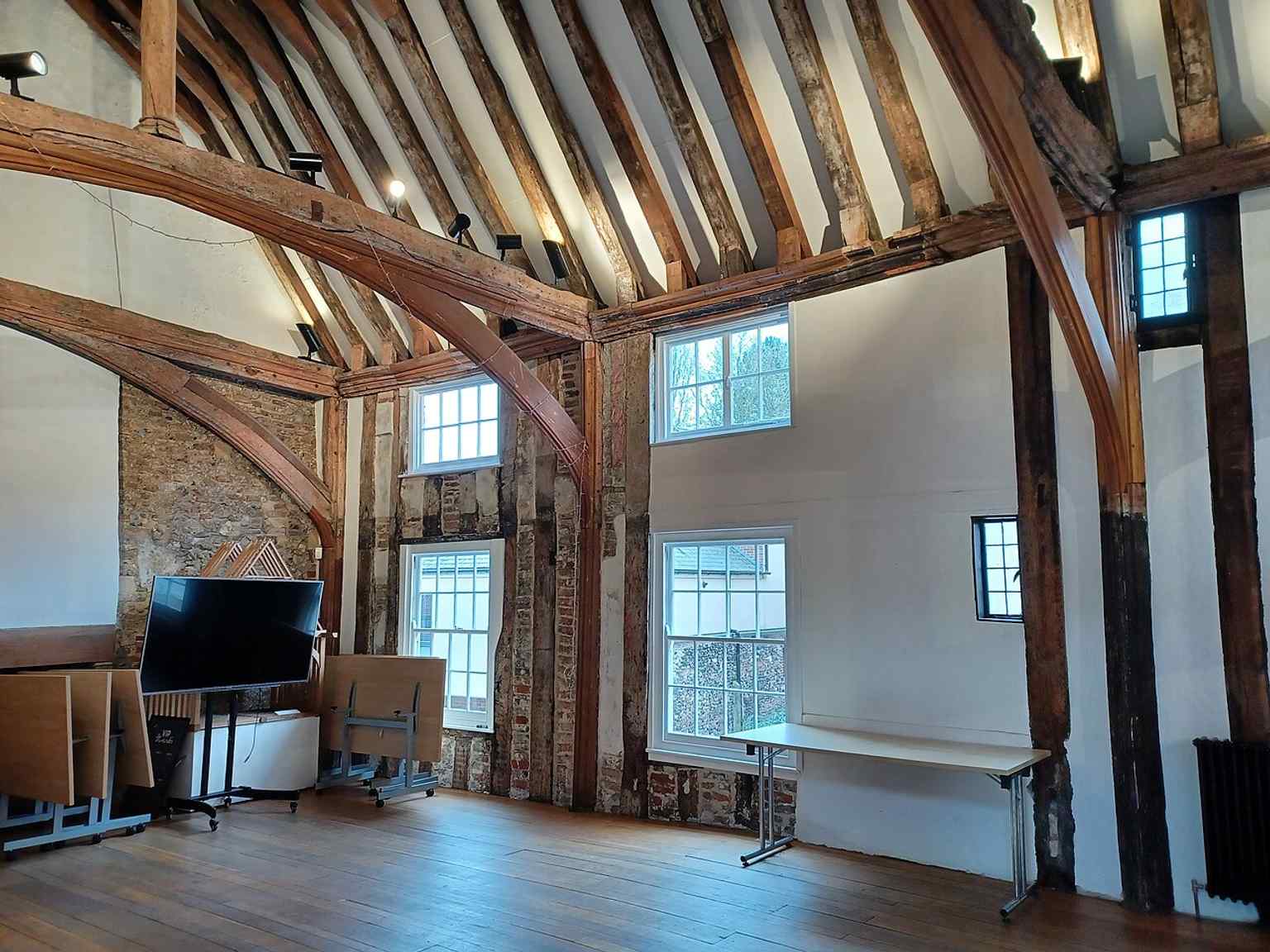
A closer look at the hall’s timber structure and carved decoration, including the famous dragon imagery that gave the building its name.Photo: Simon Burchell, Wikimedia Commons, CC BY-SA 4.0. Cropped & resized. And here is the remarkable part: scholars think this may be the only medieval trading hall in northern Europe owned by one man. Not a guild. Not a company. One merchant. Toppes wanted clients to climb up into a timber showroom with three glazed oriel windows at a time when private glass still shouted wealth.
After Toppes died in fourteen sixty-seven, the grand performance faded. The building was chopped into smaller homes, then shops, flats, and a pub called the Old Barge. Behind it, crowded tenements filled the yards. By the nineteenth century, about one hundred and fifty people lived on this site. The medieval merchant hall all but disappeared under survival.
Then came the rescue. Norwich City Council bought the building in nineteen seventy-nine. In the nineteen eighties, restoration stripped away partitions, attic floors, and later clutter, and the old hall emerged again. Archaeologists also found something wonderfully human: about fifty witch marks - protective scratches cut near windows, doors, and fireplaces, the places where trouble, or spirits, might sneak in. For the interior that Toppes meant his customers to gasp at, have a look at the app image here.
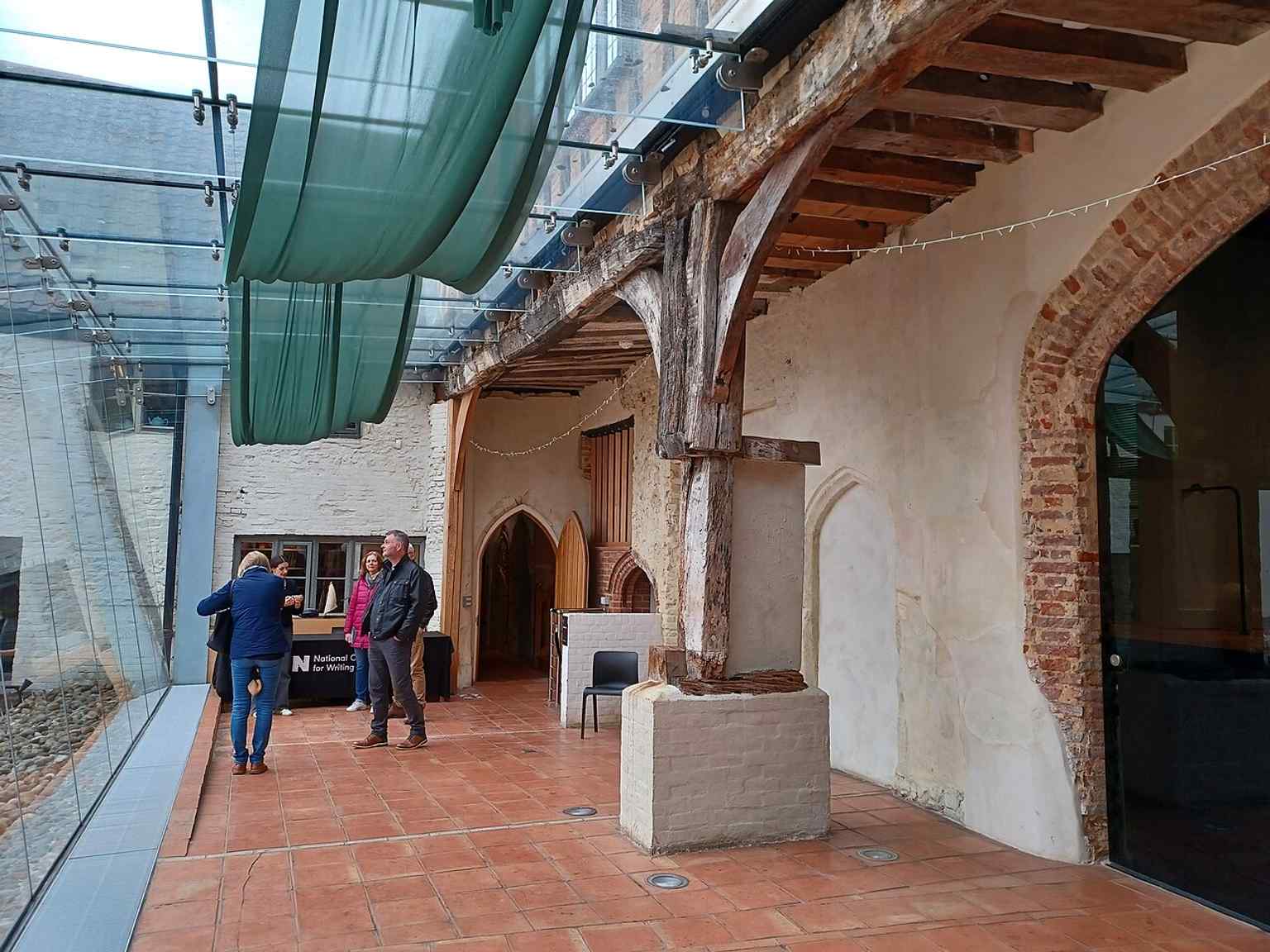
The hall’s open interior, where the crown-post roof and long proportions reflect its role as a prestigious trading space.Photo: Simon Burchell, Wikimedia Commons, CC BY-SA 4.0. Cropped & resized. Since twenty eighteen, Dragon Hall has housed the National Centre for Writing. That suits it. This building began as commerce, then held crowded lives, and now holds words.
And that feels right for Norwich. The worsted that paid for this hall is the same worsted the Strangers later refined in a city already sending cloth out through merchants like Toppes a century earlier. Thank you for walking with me. Remember the hands that made this place: the people who wove, sealed, span, spat, exported, sold, and stitched the city... and Robert Toppes, who turned their labor into this astonishing hall. Guided tours usually run once or twice a month, and the site generally opens on Sundays and Mondays from ten in the morning to three in the afternoon.
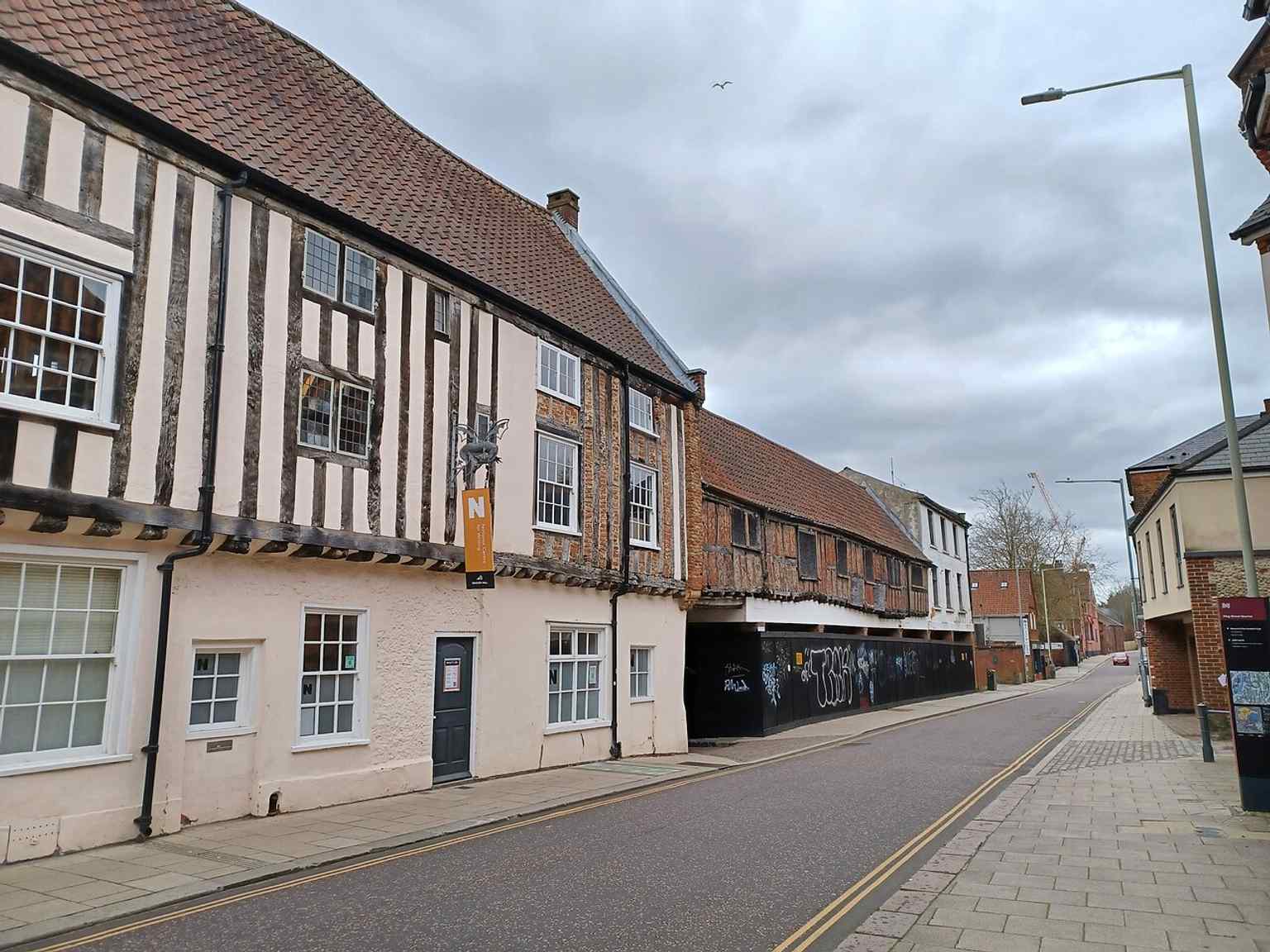
Dragon Hall’s King Street frontage, now home to the National Centre for Writing, showing the medieval merchant hall’s presence on Norwich’s historic main road.Photo: Simon Burchell, Wikimedia Commons, CC BY-SA 4.0. Cropped & resized. 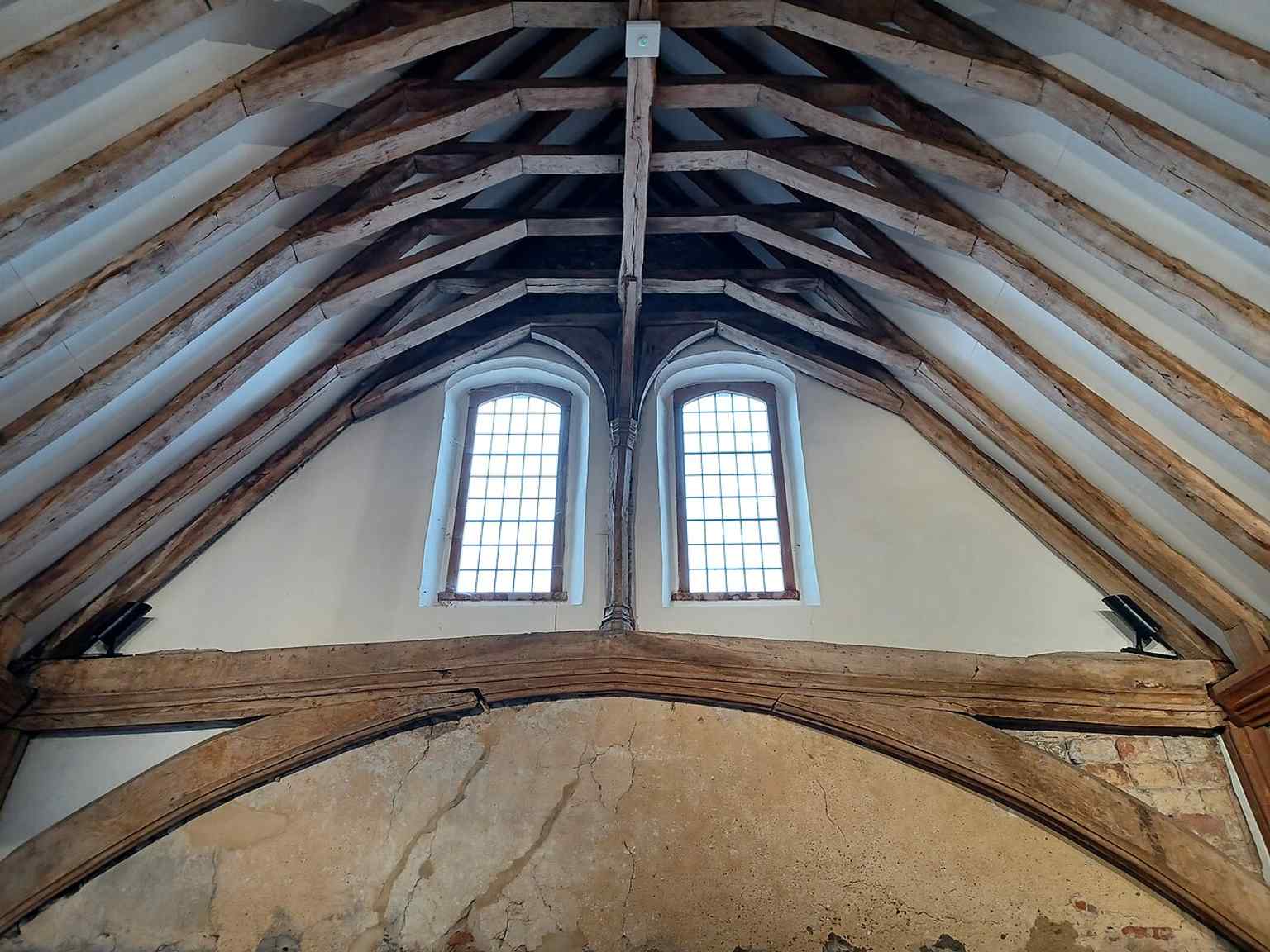
Architectural detail from the medieval hall, useful for showing the craftsmanship of the English oak roof timbers.Photo: Simon Burchell, Wikimedia Commons, CC BY-SA 4.0. Cropped & resized. 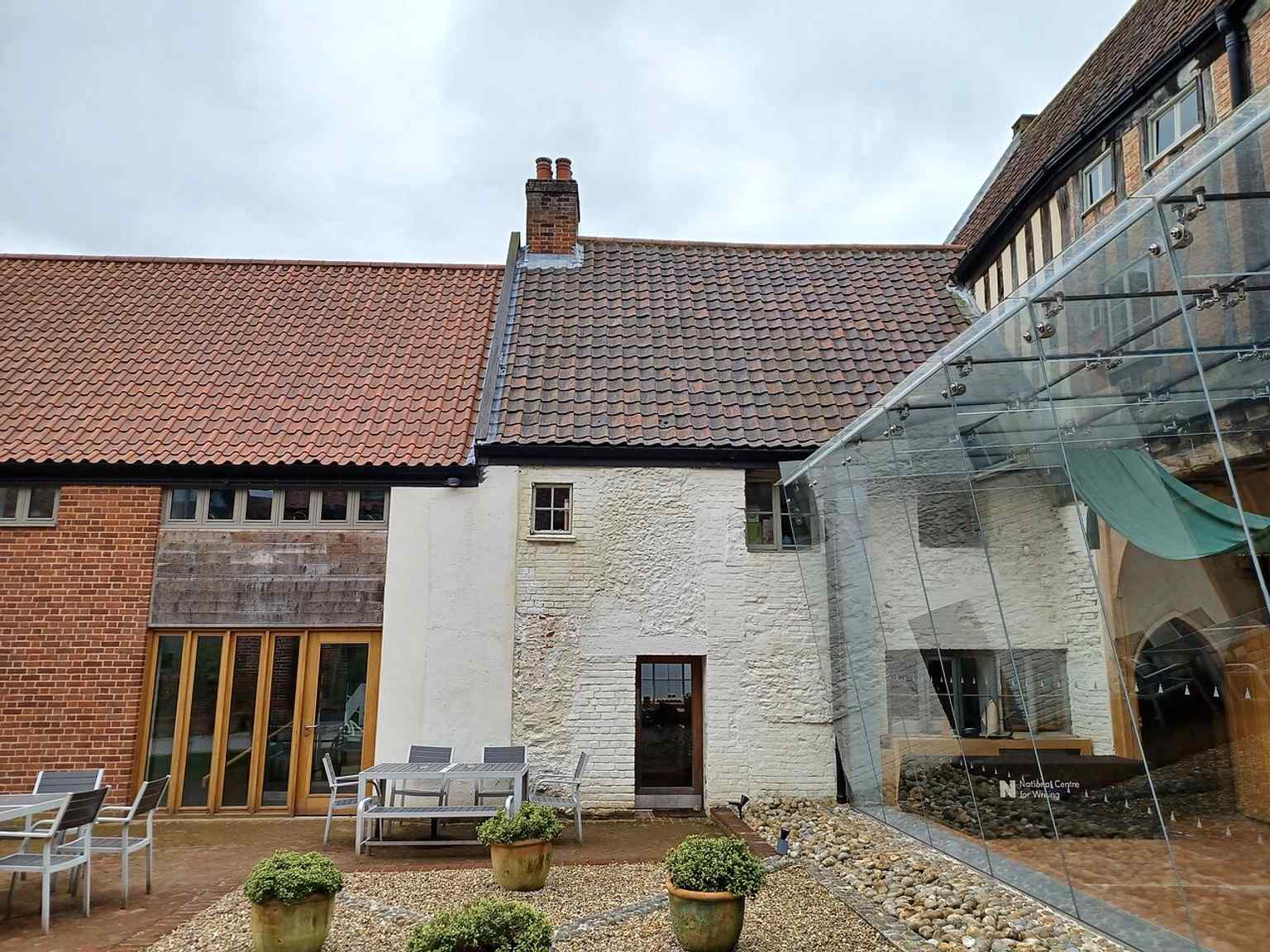
Another close interior detail, highlighting the surviving medieval fabric that was rediscovered during restoration in the late 20th century.Photo: Simon Burchell, Wikimedia Commons, CC BY-SA 4.0. Cropped & resized. 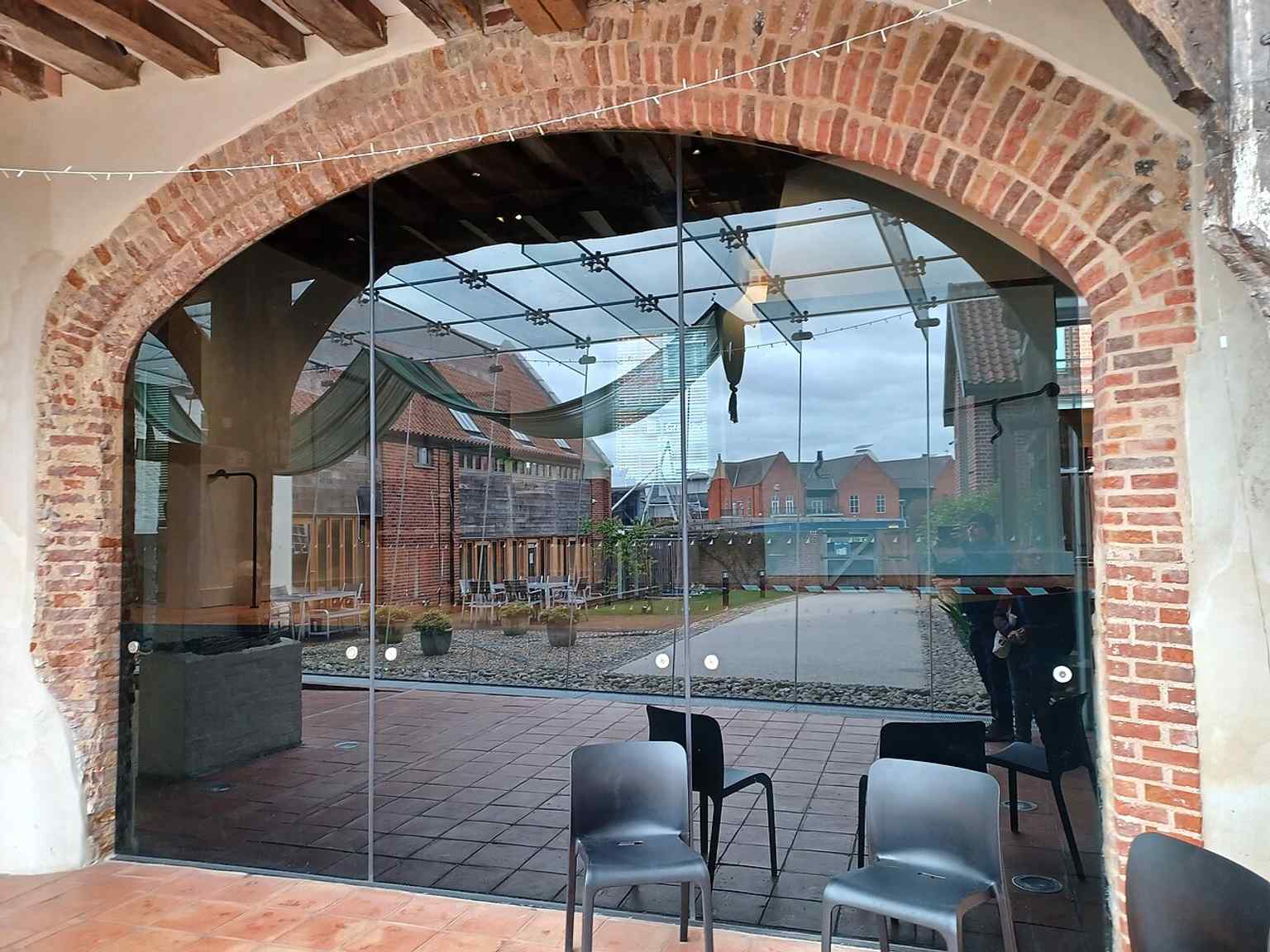
An interior view showing how the restored hall functions today as a cultural venue, while preserving its medieval merchant character.Photo: Simon Burchell, Wikimedia Commons, CC BY-SA 4.0. Cropped & resized. 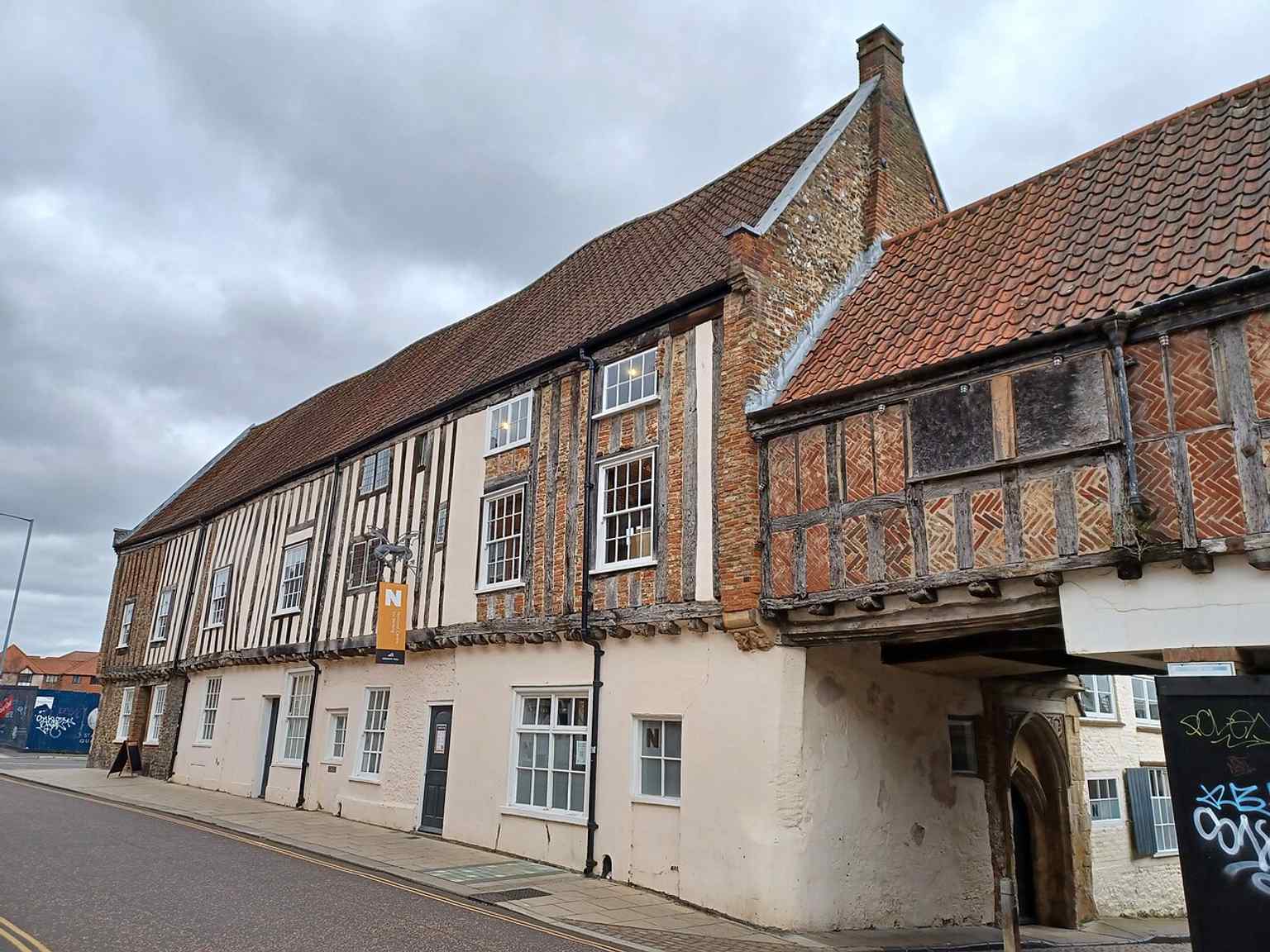
Dragon Hall seen from outside on King Street, linking the building to Norwich’s historic river-and-road trading routes.Photo: Simon Burchell, Wikimedia Commons, CC BY-SA 4.0. Cropped & resized. 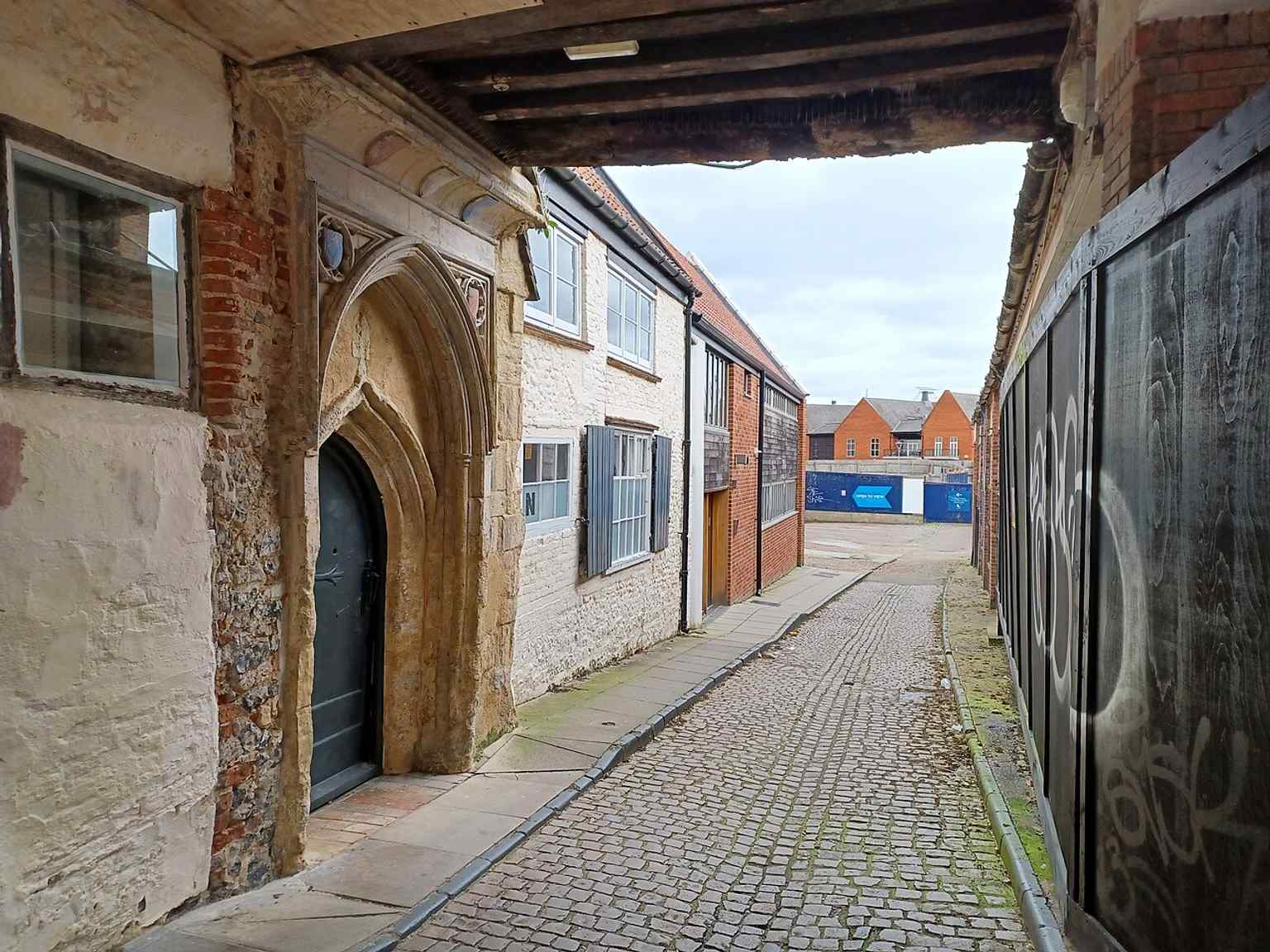
A modern exterior angle that helps place Dragon Hall in the city today, beside the route once used by medieval merchants.Photo: Simon Burchell, Wikimedia Commons, CC BY-SA 4.0. Cropped & resized.
Veelgestelde vragen
Hoe begin ik de tour?
Download na aankoop de AudaTours-app en voer je inwisselcode in. De tour is direct klaar om te starten – tik gewoon op afspelen en volg de GPS-geleide route.
Heb ik internet nodig tijdens de tour?
Nee! Download de tour voordat je begint en geniet er volledig offline van. Alleen de chatfunctie vereist internet. We raden aan om te downloaden via wifi om mobiele data te besparen.
Is dit een groepsrondleiding met gids?
Nee - dit is een audiotour met eigen gids. Je verkent zelfstandig op je eigen tempo, met audiovertelling via je telefoon. Geen tourguide, geen groep, geen schema.
Hoe lang duurt de tour?
De meeste tours duren 60-90 minuten, maar jij bepaalt het tempo volledig. Pauzeer, sla stops over of neem pauzes wanneer je wilt.
Wat als ik de tour vandaag niet kan afmaken?
Geen probleem! Tours hebben levenslange toegang. Pauzeer en hervat wanneer je wilt – morgen, volgende week of volgend jaar. Je voortgang wordt opgeslagen.
Welke talen zijn beschikbaar?
Alle tours zijn beschikbaar in meer dan 50 talen. Selecteer je voorkeurstaal bij het inwisselen van je code. Let op: de taal kan niet worden gewijzigd na het genereren van de tour.
Waar vind ik de tour na aankoop?
Download de gratis AudaTours-app uit de App Store of Google Play. Voer je inwisselcode in (verzonden per e-mail) en de tour verschijnt in je bibliotheek, klaar om te downloaden en te starten.
Als je niet tevreden bent met de tour, betalen we je aankoop terug. Neem contact met ons op via [email protected]
Veilig afrekenen met 


.jpg)


