AudaTours logoAudaTours

Manchester Audiotour: Tijdecho's van Zalen tot Torens

Audiogids15 stops

Manchester verbergt zijn felste geheimen in het volle zicht – achter grootse gotische torenspitsen, onder gebeeldhouwde stenen bogen en langs straten waar ooit opstand donderde. Onder zijn vertrouwde gezicht glinstert de stad met vergeten ambitie en onstuitbare energie. Ga op een zelfgeleid audio-avontuur dat de verborgen lagen van Manchester ontrafelt. Loop op je eigen tempo terwijl over het hoofd geziene legendes, stille drama's en wilde schandalen voor je ogen tot leven komen. Wat bracht een menigte ertoe hier samen te komen voor een protest dat Groot-Brittannië voor altijd zou opschudden? Wiens architectonische ondeugd ligt begraven binnen de oogverblindende muren van Manchester Town Hall? Waarom zongen Simon & Garfunkel over cornflakes precies in de Free Trade Hall? Met elke stap jaag je op politieke revoluties, ontdek je verloren zaken en stuit je op mysteries die alleen de lokale bevolking fluistert. Dwaal door levendige pleinen en geheime hoekjes terwijl bekende bezienswaardigheden hun stoutmoedigste verhalen onthullen. Begin de wandeling – zie de ziel van Manchester onthuld waar anderen alleen steen zien.

Tourvoorbeeld

map

Over deze tour

  • schedule
    Duur 40–60 minsGa op je eigen tempo
  • straighten
    3.3 km wandelrouteVolg het geleide pad
  • location_on
  • wifi_off
    Werkt offlineEén keer downloaden, overal gebruiken
  • all_inclusive
    Levenslange toegangOp elk moment opnieuw afspelen, voor altijd
  • location_on
    Start bij Stadhuis van Manchester

Stops op deze tour
  1. Up ahead, look for a grand, sandy-colored stone building with a towering Gothic clock spire, pointed arches, and rows of ornate windows - you can’t miss it standing tall over…Meer lezenToon minder

    Up ahead, look for a grand, sandy-colored stone building with a towering Gothic clock spire, pointed arches, and rows of ornate windows - you can’t miss it standing tall over Albert Square! Welcome to Manchester Town Hall, the city’s most magnificent example of Victorian ambition - and, trust me, no one does Gothic drama quite like Manchester! Picture yourself here in 1877. The smoke from the city’s booming cotton mills hangs in the air, chiming in with the echo of horse hooves on cobbles. Here, the townsfolk would have looked up in awe at the enormous clock tower, soaring 280 feet into the clouds, ready to outdo even London’s Big Ben - with a bell named Great Abel that's every bit as mighty. But let’s rewind even further. Before this masterpiece, all the action happened in a more modest building on King Street, just around the corner. It was nice, but as Manchester’s industry exploded, the old place got about as cramped as a tram at rush hour. So, city leaders decided, “Let’s show the world what Manchester can do!” They invited designers from across the country, and out of 137 hopefuls, a chap named Alfred Waterhouse was chosen. Now, here’s a twist - Waterhouse’s design wasn’t even the judges’ first choice for looks! But his clever layout, with sunlight streaming through dramatic Gothic windows and hidden innovations like iron frames and secret heating shafts, won them over in the end. Construction was no small job either. They laid the first stone in 1868 and used a whopping 14 million bricks. Imagine the racket! Queen Victoria herself refused to open it (what a snub!), so the mayor, Abel Heywood, did the honors in true Manchester spirit. Now, take a good look up at those statues on the façade. See Agricola over the main door - he’s the Roman who built the first fort here. St George is up on the gable, and around the corners, stand Manchester’s historic movers and shakers, from first lords of the manor to charitable legends. Every inch of the exterior was carefully designed to fight off the city’s famous ‘industrial grime.’ Instead of the usual red stone, they picked hard-wearing Pennine sandstone, determined this building wouldn’t fade into a sooty shadow of itself. If you imagine stepping inside, grand staircases sweep you up to the ceremonial heart - the Great Hall. Its mosaic floor sparkles with bees (Manchester’s symbol) and cotton flowers, both whispering tales of the city’s hardworking past. Overhead, you’ll find the famous Manchester Murals, painted by Ford Madox Brown. These huge, colorful scenes tell wild stories from Roman days to the industrial revolution, packed with characters who wouldn’t look out of place in a Netflix drama. Even the light was a challenge - Waterhouse wanted every corridor and office to feel bright, so clear glass and clever skylights chased away the city’s grey clouds. On the ground floor, wander into the Sculpture Hall and you’ll find yourself outnumbered by busts and statues of Manchester’s most brilliant minds - scientists like Dalton and Joule, anti-poverty campaigners Cobden and Bright, and artists galore. Not just a feast for the eyes, Manchester Town Hall is packed with clever features. Pipes for gas lighting were sneaked under the handrails of the spiral stairs, and hollow shafts funneled fresh air up to the highest corridors. Even now, experts marvel at the mix of beauty and brains in this building. Over the years, the Town Hall became more than just a council HQ; it’s hosted everything from epic weddings to tense political announcements - including the EU referendum result in 2016, when the city held its breath. Movie crews love it too, using its halls as a double for London’s Parliament in hit TV and films. If you’re wondering why it looks so peaceful today, that’s because it’s mid-makeover! Both the Town Hall and Albert Square are having a top-to-bottom refurb after more than 140 years of action. Don’t worry, Manchester’s patience is legendary - by summer 2026, she’ll be back in all her neo-Gothic glory. So next time you check the time on that clock tower, remember: you’re looking up at a masterpiece built to show the world that Manchester is never afraid to dream big - and always ready to ring in the future.

    Open eigen pagina →
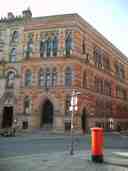
  2. Look to your left for a striking, grand red-brick building with rows of arched, stone-traced windows and an arched entrance-if you spot those Gothic details and the fancy trim…Meer lezenToon minder

    Look to your left for a striking, grand red-brick building with rows of arched, stone-traced windows and an arched entrance-if you spot those Gothic details and the fancy trim above the doorway, you’ve found the Memorial Hall. Now, while you pause right here in front of this beautiful building, let’s go for a little walk through history-without even moving your feet! Imagine it’s the 1860s: Manchester is booming, filled with the sound of horses’ hooves, market traders shouting out prices, and the distant chime of bells echoing down cobbled streets. Rising above that busy world, Thomas Worthington’s spectacular Memorial Hall stands proud with its Venetian Gothic style, looking like it’s been carefully transported from the sunlit streets of Venice to the sometimes rainy sidewalks of Manchester. Worthington himself got the design bug while strolling through Italy, and you can tell he was showing off a bit here-the stonework on the windows alone could make anyone stop and stare. But this isn’t just a pretty building. The Memorial Hall was built to mark the 200th anniversary of the 1662 Act of Uniformity-a moment in history that saw over 2,000 Anglican clergy break away, creating a wave of Nonconformist energy in England. So, this wasn’t just a meeting hall, it was a badge of defiance and independence! By the late 1800s, you’d find all sorts traipsing through its doors: poets practicing dramatic speeches, plant fanatics swapping seeds, and an alarming number of enthusiastic statisticians crunching numbers. I imagine the mix of nervous elocutionists and passionate Unitarian choir singers made for some hilarious corridor encounters! Over time, the Memorial Hall faded a bit-falling into disuse, left quiet except for the city breeze sneaking through broken windows. But in 2012, it was revived. Now, as you stand here, imagine laughter and conversation spilling out from the bar or hotel, carrying the echoes of Manchester’s rebellious past. This isn’t just stone and glass-it’s a living memory, standing proud, as if daring the city to forget its incredible stories.

    Open eigen pagina →
  3. To spot the Free Trade Hall, just look ahead for a grand, cream-coloured stone building on the corner, with two floors of large arched windows, ornate carvings, and a long…Meer lezenToon minder

    To spot the Free Trade Hall, just look ahead for a grand, cream-coloured stone building on the corner, with two floors of large arched windows, ornate carvings, and a long colonnaded facade lining the street. As you stand outside the Free Trade Hall, take a good look at its imposing, palazzo-style face-you might half expect to see Italian Renaissance nobles in togas strut out onto those balconies! Designed by Edward Walters between 1853 and 1856, this landmark stands where history, music, and a bit of mayhem have danced together for over a century and a half. The ground you’re on? That’s St Peter’s Fields, shadowed by the memory of the Peterloo Massacre-a moment so famous, they named a film after it! Imagine the roar of crowds gathered for public meetings, the murmur of anticipation in the air, and chilly Manchester winds carrying echoes of old grievances and hopes. First, picture 19th-century Manchester: cotton city, steam swirling over chimney stacks, the Corn Laws choking up everyone’s bread supply and making food painfully expensive. This site was at the heart of the fight to have those Corn Laws repealed, and when they finally fell in 1846, the city wanted a monument worthy of the struggle. So they built big, bold, and beautiful-with a façade festooned in carved figures celebrating free trade, art, and industry. You can even spot the coats of arms from Lancashire towns in the arches and, high up, statues representing the world's continents-a sort of passport to progress, if you will. But the drama wasn’t just in the architecture. The very first version of the hall was a timber pavilion built in 1840, quickly swapped for a brick upgrade in 1842, both swept away by the ambitions of Victorian Manchester. When the dazzling new hall opened, locals were so proud they funded it by passing the hat around town! Red plaques on the building record another moment: the Peterloo Massacre in 1819, when a peaceful rally for reform was crushed by force. If these walls could talk, they’d have stories to shout. Step inside (at least in your imagination) to the grand old concert hall days. The Free Trade Hall became the home of the famous Hallé Orchestra from 1858. It wasn’t just violins tuning up-actors, politicians, and some names you might recognise graced these stages. Take Charles Dickens, raising the curtain in 1857 for Wilkie Collins’s play The Frozen Deep. Or Benjamin Disraeli, standing right where you are (probably with much better hair), rallying crowds in 1872 with his “One Nation” speech. And in 1904, Winston Churchill sharpened his wit on Manchester’s sharpest-maybe warming up for Parliament. The hall was a cradle for activism too. In 1905, suffragettes Christabel Pankhurst and Annie Kenney famously heckled a politician on the question of Votes for Women, and when they were chucked out, they kept their protest going on the street-starting a movement that changed Britain. Imagine the sound of determined voices echoing through these arches. The Blitz of 1940 nearly killed the place. Bombs left the original hall an empty, windswept shell. The city had the grit to rebuild after the war, though, and in 1951, it opened as a concert hall again with Sir John Barbirolli conducting the Hallé Orchestra, and Kathleen Ferrier singing Land of Hope and Glory-her only time ever performing the piece. The music bounced off polished wood panels in oak and walnut, and the space buzzed with hope. The Free Trade Hall has rocked and rolled through the decades. Bob Dylan played here, and so did Simon & Garfunkel, debuting “Mrs. Robinson” and a whimsical song about wishing they were cornflakes-now there’s a claim to fame. Frank Zappa, Pink Floyd, Kiss, and Genesis all shook the rafters, while in one legendary upstairs room, the Sex Pistols jumpstarted the Manchester punk scene, inspiring bands like Joy Division and The Smiths. In a way, you could say every Manc gig owes this place a pint! From ballroom to hotel, the building has been through plenty of makeovers, even surviving arguments over developers and the wrecking ball-its original grand façade now guards a much quieter world of plush hotel rooms and conference calls. But next time you hear a car go by or somebody’s phone ring, remember: these stones once echoed with the hunger for freedom, the chords of revolution, and the stubborn hope of a city that never gives up.

    Open eigen pagina →
Toon 12 stops meerToon minder stopsexpand_moreexpand_less
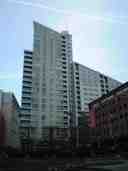
  1. To spot the Great Northern Tower, look just ahead for a tall, glassy skyscraper with a striking sloped roof, right next to the old brick Great Northern Warehouse. Alright, take a…Meer lezenToon minder

    To spot the Great Northern Tower, look just ahead for a tall, glassy skyscraper with a striking sloped roof, right next to the old brick Great Northern Warehouse. Alright, take a moment and look up at the tower before you-see how it stretches toward the sky, almost daring the clouds to touch its sharp, slanted tip? That's the Great Northern Tower, Manchester’s very own architectural daredevil! Built in the mid-2000s, this 72-metre wonder cost an eye-watering £32.8 million-imagine the number of umbrellas you could buy with that kind of money in rainy Manchester! But don’t worry, all that cash wasn’t just for show. The tower’s sloping design was inspired by its curvy next-door neighbour, the Manchester Central Convention Complex. Imagine the architects, sipping their morning tea, glancing at the old building’s wavy roof, and thinking, “Alright, we’ll have some of that action!”-and so this mini skyscraper ended up slicing the skyline from 10 storeys on one end to 25 on the other. Its outer shell gleams with glass and metal mixed with grey tiles, so on a sunny day (which does happen in Manchester, I promise), it shimmers like a modern castle. Inside, there are 257 apartments-each one sitting right in the buzzing heart of Manchester, mere steps from the city’s main tram and train stations. Talk about never missing your ride-unless you’re distracted by the stunning views from your living room. But it’s not just about the flats. The ground floor is a local legend. Through the years, bars and restaurants have come and gone-a parade of places to clink glasses, munch curry, and maybe even sing a bad karaoke ballad. Champagne at Epernay, beer at Taps, or a taste of Kolkata-if these walls could talk, they’d have some proper stories. So here stands the Great Northern Tower, glassy, sloping, never shy-an icon sharing a postcode with history, laughter, and a bit of Manchester magic. And hey, if you suddenly feel taller just peering up at it, you’re not alone!

    Open eigen pagina →
  2. To spot the Great Northern Warehouse, just look for the enormous red-brick building ahead of you, with rows and rows of small square windows and enormous white letters across the…Meer lezenToon minder

    To spot the Great Northern Warehouse, just look for the enormous red-brick building ahead of you, with rows and rows of small square windows and enormous white letters across the top that proudly spell out: “Great Northern Railway Company’s Goods Warehouse.” Now, as you stand here, imagine you're in Manchester back in the late 1800s. The air hums with the clang and rattle of freight wagons, the distant whir of hydraulic lifts, and the occasional shouts of workers-a scene so brimming with energy that you can almost feel your boots getting dusty! The Great Northern Warehouse isn’t just any lump of bricks; it’s a true industrial giant. Built to impress, and, more importantly, to withstand anything that might come its way-fire, flood, and even a particularly moody Manchester drizzle-it’s a massive fortress with enough space inside to hold 150 railway wagons at once, and then, cheekily, tuck away another 500 outside just for good measure. But this warehouse wasn’t just about sheer size. Its very bones-steel, 25 million bricks, 50,000 tons of concrete, and 12,000 tons of steel-were all held together by a jaw-dropping 65 miles of rivets. That’s long enough to stretch from Manchester nearly all the way to Liverpool! You can bet the 800 men who built it had arms like oxen and more stories than the warehouse itself. What’s most magical about this place is its secret life underground. Beneath your feet, wrapping around in shadowy twists and turns, ran the Manchester and Salford Junction Canal, with a hidden dock so goods could be whisked straight from canal barge to railway wagon, hoisted up by a web of hydraulic lifts. At the time, it was a world first: three transport worlds-rail, canal, and road-all shaking hands under one brick roof. Of course, if warehouses could talk, this one would probably sigh and brag a bit-it survived the chaos of Manchester’s bustling growth, saw Alport Town vanish beneath its bulk, and watched, brick by brick, as the city reshaped itself. Today, rather than the smell of coal or the clatter of crates, you’ll probably catch a whiff of popcorn from the Odeon Cinema or maybe a pizza from one of the restaurants inside. There’s a casino, a bowling alley, a gym, and even a car park tucked here as well-proof that even a Victorian warehouse can let its hair down and have some fun. And just when you think the old place has seen it all, there’s a new future on the horizon-plans for homes, offices, and even a shiny new tower or two. The Great Northern Warehouse? Still standing, still stubborn, still welcoming Manchester through its doors. Now, that’s what I call a true survivor!

    Open eigen pagina →
  3. To spot Mamucium, look ahead for a sturdy, reddish-brown stone wall with castellated battlements, two arched entrances, and a distinctive tower behind it, rising just in front of…Meer lezenToon minder

    To spot Mamucium, look ahead for a sturdy, reddish-brown stone wall with castellated battlements, two arched entrances, and a distinctive tower behind it, rising just in front of the modern railway bridge. Welcome, adventurer! You’re now standing at the very gateway to Roman Manchester-Mamucium. Forget the hum of city life for a moment and picture this: nearly two thousand years ago, this spot was alive with the clatter of sandals, the chatter of traders, and the constant alertness of Roman soldiers. The air would be thick with the smells of roasting grain from the granaries and smoky fires from blacksmiths hammering away, because this place wasn’t just a fort-it was one of Britain’s very first industrial estates! Mamucium was planted here around AD 79, built by Roman soldiers under the command of Julius Agricola. They picked this very bluff for its sweeping view over the River Medlock and the important Roman roads crisscrossing the land. Imagine the soldiers-many weren’t even Romans! They were auxiliaries, foreigners drafted from all corners of the Empire, just doing a hard day’s work and perhaps yearning for a hot bath rather than the cold British rain. The fort was built from turf and timber at first, but got a serious upgrade in the 2nd century-bigger, and with strong stone gateways just like the one in front of you. Now, you might think this was just a lonely old outpost, but it was more like a buzzing town. Outside the main walls, the vicus stretched out-a lively civilian settlement where families lived, children played, and shopkeepers sold everything a soldier might need (including, probably, a stiff drink!). It was home to all sorts: wives, children, fur traders, blacksmiths, bakers, and even a few suspicious fortune-tellers trying to sell you a glimpse of your destiny. The name ‘Mamucium’ may sound a bit mysterious, and for good reason. Nobody is quite sure where it came from. Some say it means ‘the place of the breast-like hill’ (blame the Romans for their poetic imaginations), others think it refers to a mother goddess once worshipped by the local Britons. Either way, the Romans stuck their Latin ending ‘-ium’ on it, turning the old name into something official for the maps and soldiers’ letters home. With time, Mamucium saw glorious days and hard times. A few centuries after it was built, the ramparts got beefed up with stone, and the place was so important it was even listed in the grand Antonine Itinerary-a sort of sat-nav for Roman roads! But don’t think life here was always easy. There’s evidence of tense treaties with the local Brigantes tribe breaking down, and the fort was even demolished and abandoned at one point in the 2nd century before being rebuilt bigger than ever. At its peak, about 500 soldiers held the fort, and the echo of their drills and orders once filled the air. Worship happened here too, both the wild and mysterious-like the cult of Mithras, with secret ceremonies by torchlight-and the almost ordinary: people left altar stones for Fortuna the Preserver, hoping luck would smile on them in this faraway corner of Britain. Merchants in the vicus ran busy shops and smoky workshops, and somewhere nearby, the city’s very first industrial zone whirred with ancient furnaces. As centuries passed, the world changed, and the pointed Roman helmets vanished from the ramparts. By the Middle Ages, Mamucium was left to wild grass and young oaks, glimpsed by curious locals who whispered tales of “Giant’s Castle” or “Tarquin’s Castle.” Centuries after the last Roman vanished, the only defenders were sheep and, possibly, the odd mischievous ghost. Then came the Industrial Revolution, and the world boomed back to life. Factory owners and canal builders bulldozed over much of the fort, leaving only fragments for later generations-until in the late 20th century, Manchester decided it was time to remember. It became the city’s first Urban Heritage Park, and the walls you see today are proud reconstructions, built to give you a taste of the ancient world amidst the modern one. So take another look: these stones are silent but they’ve seen it all-from Roman legions to Victorian trains to today’s curious explorers (that’s you!). If you listen closely, you can almost hear the salt crackle of ancient campfires or laughter from an innkeeper’s daughter trying to sell a tired soldier a cup of the local brew. And if the wind is just right, well... you may even sense the whisper of that mysterious Roman name, Mamucium, echoing across the centuries.

    Open eigen pagina →
  4. Look up ahead-towering above the red-bricked buildings is a strikingly slim glass skyscraper with a bold overhanging ledge partway up; it stands so tall and narrow that you simply…Meer lezenToon minder

    Look up ahead-towering above the red-bricked buildings is a strikingly slim glass skyscraper with a bold overhanging ledge partway up; it stands so tall and narrow that you simply can’t miss it against the Manchester skyline. Alright, you’re standing right in front of the legendary Beetham Tower-Manchester’s answer to the “You thought only London did skyscrapers?” challenge. Imagine, in the early 2000s, this slender giant began its rise on a patch of land right where ancient Roman roads once crisscrossed. By 2006, the city’s skyline would be changed forever, thanks to the Beetham Organisation and the daring vision of architects SimpsonHaugh and Partners. Soaring 169 metres above, this became the UK’s tallest building outside London for over a decade, slicing the sky like a titans’ blade. And what a blade it is-look closely and you’ll see the signature glass “blade” strutting up the side, making Beetham Tower both look taller and giving thunderclouds somewhere to aim their lightning bolts. But it’s not just for drama-this “blade” is behind one of Manchester’s most mysterious phenomena: the Beetham hum. On windy days, this tower lets out an astonishing howl, a moan that’s been described as a ghostly UFO overhead. Sometimes, musicians and sound engineers from all over have listened to that weird note, equal to a B below middle C, echoing for miles and even popping up in pop songs. When the wind gets wild, Beetham Tower hosts a one-building concert for the whole city-who needs Spotify? Inside, things are just as dramatic. The lowest floors belong to the Hilton Manchester Deansgate Hotel, where guests sleep with floor-to-ceiling views across the city. Around the 23rd floor, you’ll notice the building juts forward several metres-this is Cloud 23, a sky bar with glass floors. If you’re lucky enough to have a drink there, you can look straight down and see the streets far below-perfect for people with nerves stronger than a Mancunian’s morning coffee. Head higher still and you’ll find luxury apartments, their windows reflecting the shifting grey clouds and the rolling green hills of the Pennines and even Snowdonia on clear days. At the very top-the penthouse. That’s actually home to architect Ian Simpson himself, who thought, “Why not put a garden in the clouds?” So up came a crane with a forest of olive, lemon, and oak trees straight into his living room. Talk about taking home improvement to new heights! It wasn’t all smooth sailing, by the way. The plan was for the tower to be even taller-50 stories-but Manchester’s famously blustery weather had other ideas. Wind tests suggested any higher and the Beetham might’ve started doing its own version of the twist. As it is, on stormy days, if you listen closely, you might hear clanging or even glass creaking as the building sways just a tad in the wind. Of course, a structure this bold sparked plenty of opinions. Some folks loved how it showed Manchester’s new confidence after the tough 1990s, rising like a glass phoenix after the city centre bombing. Others thought it towered a bit too much over its Victorian neighbours. Critics said the bold, modern look torpedoed any chance of Manchester getting UNESCO World Heritage Site status. But honestly, isn’t that the most Mancunian thing ever-bold, unbothered, and making headlines while humming its own theme tune? Scattered with incidents, from a cracked glass pane requiring cordons down below, to celebrities having rooftop parties or the odd flat fire (Mario Balotelli once set his place alight with fireworks-because of course he did), this skyscraper is never boring. Even its legal wrangles have kept drama swirling around the tower, with financier battles to match any soap opera, and millions poured into keeping those glass panels safe. Today, Beetham Tower stands as a proud, shimmering beacon of 21st-century Manchester daring to reach for the clouds… and occasionally singing to them. Next time a storm hits, listen out-you might just catch the city’s tallest tune, echoing across ten counties. Isn’t it amazing what Manchester can build when it puts its mind (and a bit of eccentricity) to it? Intrigued by the architecture, occupancy or the noise during high winds? Explore further by joining me in the chat section below.

    Open eigen pagina →
  5. You’ve arrived at Castlefield Gallery! If walls could talk, these ones would probably argue about what the word “art” even means. Picture yourself in 1984, right here at Knott…Meer lezenToon minder

    You’ve arrived at Castlefield Gallery! If walls could talk, these ones would probably argue about what the word “art” even means. Picture yourself in 1984, right here at Knott Mill: the air crackling with creative energy, as a small group of artists decide it’s time Manchester had a place bursting purely with new ideas. They weren’t trying to start a revolution exactly-though, knowing artists, maybe they secretly were. Castlefield Gallery was born as a resource and a home for contemporary visual artists. It's not stuffy or intimidating. Instead, imagine hearing the echo of paintbrushes tapping, film reels spinning in the Project Space, and the sound of artists debating whether a giant banana really counts as an installation. Everything about this place says “let’s try something new”-from wild events and exhibitions, to PureScreen, which regularly throws film and video works onto the wall for anyone to experience. If you peek through the windows, you might sense the pulse of creativity-artists still gathering, learning, and sometimes nervously showing off their latest projects. The gallery is a friendly launchpad, helping fresh talent take flight, all powered by the Manchester Artists Studio Association’s dream to make art for everyone. Step closer, and you just might catch the scent of possibility (or, let’s be honest, maybe just oil paint and coffee)!

    Open eigen pagina →
  6. Look slightly up and ahead-you’ll spot a dramatic cluster of shimmering glass skyscrapers, each with sharp edges and turning angles, catching the sunlight in all sorts of ways and…Meer lezenToon minder

    Look slightly up and ahead-you’ll spot a dramatic cluster of shimmering glass skyscrapers, each with sharp edges and turning angles, catching the sunlight in all sorts of ways and towering over the city like a futuristic fortress. Welcome to Deansgate Square, where Manchester touches the clouds and every building seems to be striking a pose for the skyline! Just imagine, not too long ago, this gateway to the city centre was more of a forgotten patch, trapped between busy roads and railway lines, quietly dreaming of better days. Now, it’s become a symbol of a city that decided to grow up… literally. The four towers before you aren’t just tall-they’re Manchester’s tallest, with the South Tower reaching a whopping 201 metres, so high it makes Beetham Tower-its older and slightly jealous sibling-a bit green with envy! But rewind back to the early 2000s. The city’s leaders had a vision, forming the Great Jackson Street Development Framework. Picture a bunch of planners huddled over blueprints, determined to give Manchester a brand-new vertical playground. For years, nothing happened; the land just stayed empty-some people probably thought it was destined to be nothing more than a glorified parking lot. Then came 2007: the first bold plan promised five high-rise buildings, even a hotel and shops. It sounded grand, but as you can guess, progress was more “snail on a Sunday stroll” than sprint. Cue the dramatic entrance of the 2016 revival, thanks to Renaker Build and some brilliant architects who clearly were fans of “bigger is better.” They proposed these four towers, all at different heights and angles, so the sun glances off every face at different times, making the buildings feel like they’re shifting with the day. If you listen close enough, you might almost hear the city holding its breath the first time the cranes swung into action in July 2016. Construction was a race to the sky. First up: the South and West Towers. The ground shook as their foundations were laid, with the towers stretching higher and higher, floor by dizzying floor, until the West topped out at 45 floors and the South at 65. As the South Tower topped out in November 2018, it officially became Manchester’s new “tallest thing”-that’s not a technical term, but it might as well be! The next act: North and East Towers joined the show, rising on fresh concrete and determination. By 2020, the full quartet was finished, a family reunion of glass and steel. If you’re wondering about the value of living high above the city, just ask Legal & General, the real estate giant who snapped up the West and North Towers for their own residents-rumor has it the West Tower alone was worth about £200 million, which might make even your Monopoly money wince. Standing here, let yourself feel Manchester’s pulse: the clatter of trains just beyond, the hum of traffic on the Mancunian Way, and the sun bouncing from glass to glass with every passing cloud. Notice the bevels on each side of the towers-just subtle slices taken away to ensure each building shines in its own spotlight. Walk around and you’ll see: these angles mean no two perspectives are quite the same. And if you’re worried Manchester might stop at just these four towers, keep your eyes peeled. The Great Jackson Street plan is still spinning, with towers like The Blade, Three60, and Elizabeth Tower nearby, all eager to join the city’s race to the clouds. So look up! You’re at the crossroads of the old and the new-where a once-empty lot became a sparkling neighbourhood in the sky. Isn’t it amazing what a little bit of Manchester imagination (and a lot of steel beams) can do? Now, off we go to our next stop-just try not to trip while looking up!

    Open eigen pagina →
  7. To spot Castlefield, just look ahead for a cluster of stunning red-brick Victorian warehouses and viaducts, with a canal winding past historic buildings and a striking tower with…Meer lezenToon minder

    To spot Castlefield, just look ahead for a cluster of stunning red-brick Victorian warehouses and viaducts, with a canal winding past historic buildings and a striking tower with a pointed spire rising up on your left. Now, as you stand here, imagine Manchester’s oldest secrets swirling around your feet! You’re in Castlefield, the city’s ancient heart-a place where Romans, Victorian engineers, and modern city-dwellers have all left their mark. Under your feet stretched the mighty Mamucium fort, built by the Romans around the year 79 AD. Picture centurions marching, their sandals kicking up dust, with the shouts of traders and the clang of metal echoing off the sandstone walls. Back then, this patch of land, flanked by two rivers, was perfect for defending-and perfect for watching out for unwanted guests, or, in modern times, pesky pigeons! But like every good story, Castlefield’s changed hats more often than a cat at a fashion show. When the Romans finally packed up (leaving behind their temples, altars, and perhaps a few lost sandals), the area became “Aldport”-the Old Port. Medieval lords, including the Mosley family, built grand homes here. But, as fate would have it, their house burned down after the Siege of Manchester in 1642-a heated property dispute if ever there was one. Come the 18th century, Castlefield was about to go full steam ahead-literally. The Bridgewater Canal, the world’s first industrial canal, swept in during 1761, and with it, the click-clack of horses and barges carrying coal, cotton, and anything you could imagine. Imagine the splash and rush as boats docked at canal basins and the grown men arguing over who spilled flour into the water! These warehouses around you weren’t just for storage; they were bustling hives of industry. The first canal warehouse opened its doors in 1779, with workers hoisting goods not just with muscle, but ingenious waterwheels, and later steam engines-Manchester was in its “muscle and logic” era. Listen close, and you might still hear the clink of iron pickaxes and the scrape of wagons on cobblestones, loading up warehouses stacked high with raw materials and fine Manchester cotton. Where canals once ruled, trains were soon to thunder in. The world’s first passenger railway pulled into Liverpool Road station here in 1830, just a short stroll from where you stand. The noise, excitement, and maybe a bit of soot must have been thrilling-people could now travel faster than ever, turning Manchester into a railway superstar. Don’t be surprised if you see the massive viaducts looming overhead, like giant red-brick rivers in the sky. But with glory comes a bit of gloom. By the 20th century, the bustle faded and Castlefield slipped into decay-empty warehouses standing silent and canals almost forgotten. Thankfully, in the late 1900s, some clever minds saw beauty in these old bones. Castlefield was declared Britain’s first Urban Heritage Park in 1983, and the whole area got a much-needed facelift. Old warehouses became apartments and offices, and the canals, freed of diesel fumes, now host cheerful narrowboats and curious ducks. Listen, and you might catch the tinkling laughter from the busy bars and restaurants that now fill the basin each summer evening. Rumor has it, people resisted attempts to build massive new blocks in the area, wanting Castlefield to keep its special mix of history and urban charm. If you see a sleek modern building with plenty of awards, it could be Timber Wharf-a reminder that even Castlefield embraces a bit of the new while treasuring the old. So, whether you imagine centurions on patrol, factory workers ducking under smoke, or partygoers sipping a pint in the sun, Castlefield invites you in on its grand, centuries-long story. With every footstep, you’re tracing the edges of thrill, toil, riot, and celebration-quite the walk for one little neighborhood! Now, as you soak it all in, take a moment to listen to the city’s heartbeat here, where history is anything but quiet. Intrigued by the toponymy, present day or the geography? Explore further by joining me in the chat section below.

    Open eigen pagina →
  8. Look ahead for a striking modern building with huge, glassy cubes jutting out like the drawers of a giant’s filing cabinet-if you see several floors cantilevered boldly over…Meer lezenToon minder

    Look ahead for a striking modern building with huge, glassy cubes jutting out like the drawers of a giant’s filing cabinet-if you see several floors cantilevered boldly over Bridge Street, with a glass wall glinting in the sunlight, you’ve found the Manchester Civil Justice Centre. Alright, brace yourself-standing in front of the Civil Justice Centre is a little like meeting Manchester’s own superhero headquarters. First of all, just look up: those wild glass “fingers” sticking out the side look like they’re ready to grab a passing cloud or two, don’t they? Locals like to call it “the filing cabinet,” but I bet your home office never looked quite this dramatic! Now imagine it’s nearly 30 years ago. The 1996 Manchester bombing has left the heart of the city aching and bruised, but also determined to rebuild. The Spinningfields district, where you’re standing, was just starting to dream of something new. In a worldwide competition, architects from every corner of the globe battled to design a brand-new court for Manchester-a place to house the county court, the High Court registry, the city’s family court, and more. Big names like Foster + Partners and Kohn Pedersen Fox joined the fray. At the end, it was the bold Australian team from Denton Corker Marshall, together with British engineers Mott MacDonald, who took the prize for their clever-some say fearless-use of space, making the building seem to float above the ground. Construction started in 2003, and, let’s just say, Manchester held its breath. A £160 million deal blended public money with private muscle, and soon the biggest civil court building in over a century rose above the Irwell-long, lean, and glimmering like a modernist beacon. And in case you’re wondering, that glass wall on the western face is 60 metres tall and 60 metres wide-the biggest in Europe! Imagine all the window cleaners needed for that job. But here’s the punchline-during the wild Kyrill storm of 2007, pieces of the aluminium cladding actually blew right off the under-construction building and one even pinged down onto an unsuspecting passerby. Manchester’s buildings, it seems, really like making a dramatic entrance. When it officially opened in October 2007, people were gobsmacked. After all, the last time Britain saw a court complex on this scale was back in Victorian times-if only Queen Victoria could’ve seen this one, eh? Speaking of royalty, Queen Elizabeth II did the honours at the grand opening in February 2008. Maybe she got lost in those cantilevered “drawers” for a moment or two. The Centre’s not just a pretty face, though. There’s real cleverness here-a BREEAM Excellent rating for environmental design, with natural cross-flow ventilation channeling the fresh Manchester breezes right through the building. And underneath your feet? There’s an aquifer, discovered during construction, which now helps keep the place nice and comfortable. Some say this building is so advanced, it’s actually trickier to teach people how to use it than to build it! Technology, right? Year after year, judges and critics have fallen head over heels for this unusual building. It’s snapped up awards, from “Best Public Building” and “Project of the Year” to a shortlist for the coveted Stirling Prize. Hard-hitting critics and star architects alike have called it Manchester’s best new building-a shining symbol of the city’s fresh spirit, confidence, and rebirth after rough times. You can almost hear the pride in their voices when they talk about it. So the next time you hear someone complaining about boring civic buildings, you can tell them about Manchester’s own architectural daredevil-a place where justice is served, and where the building itself seems to soar on futuristic wings. And keep an eye out if there’s a storm-you never know when the city’s “filing cabinet” might try to file a new story of its own! Want to explore the architecture, reception or the awards in more depth? Join me in the chat section for a detailed discussion.

    Open eigen pagina →
  9. As you stand here at Heart North West, you’re actually in front of a place that’s pumped out the beating soundtrack of the North West for decades-a radio station that’s lived…Meer lezenToon minder

    As you stand here at Heart North West, you’re actually in front of a place that’s pumped out the beating soundtrack of the North West for decades-a radio station that’s lived about as many lives as a cat in Manchester rain. Let’s set the scene-close your eyes for a second and picture 1998. Oasis is blaring from car windows, Manchester United are collecting trophies like they’re going out of fashion, and on this very spot, a brand new voice bursts onto the airwaves: Century Radio. It’s the city’s “new kid on the block,” full of character, music, and the occasional splash of controversy. Imagine the energy on that first morning-crisp autumn air, phone lines buzzing, and a team led by managing director John Myers, who’s a bit of a legend in radio circles. The man didn’t mind getting his hands dirty. In fact, he even hosted the breakfast show himself under the alias John Morgan-now there’s commitment! You have to wonder: did he ever forget which name he was using mid-show? The launch of Century Radio was such a spectacle, it was featured in a BBC documentary called “Degsy Rides Again”-following the wild exploits of Derek Hatton, a local politician-turned-radio presenter, as he wrestled with the whole ‘talking to a region over lunch’ thing. Myers, going slightly grey by the second, wasn’t entirely convinced Hatton was ready for primetime. Still, when “The Degsy Debate” hit the airwaves, listeners tuned in by the thousands-maybe just to hear if he’d accidentally launch into council politics instead of playing the Top 40. But radio is nothing if not unpredictable. Enter “shock jock” Scottie McClue, another of those original voices. If you think radio today gets wild, just imagine the fiery debates and cheeky banter Century Radio offered back then! Oh, and football-how could I forget? Century managed to snag exclusive radio commentary rights for Manchester United matches, which must’ve made them the unofficial pulse of every fan’s pre- and post-match nerves. United fans across the city clung to every word, until the station eventually passed the torch to Xfm Manchester in 2007. I like to think they passed it as dramatically as an FA Cup penalty shootout. As time rolled on, and radio business deals became more tangled than a box of old headphone wires, John Myers moved on to start something new with GMG Radio. Capital Radio snapped up Century, then GCap Media, and eventually GMG Radio took over, reuniting the OG team once more-not unlike a peculiar radio family reunion, with extra coffee and dodgy ties. By 2009, another twist! Century shed its old skin, rebranding as Real Radio. This was the era of networked shows-imagine presenters like Darren Parks and Debbie Mac’s voices echoing not just here, but across every Real Radio station in the region, on weekday mornings and weekends. There’s something magic about knowing your radio host’s friendly jokes and weather updates are floating over half the country at the same time. Then came the big one. In 2014, the powers-that-be at Global, radio’s equivalent of a blockbuster movie studio, announced Real Radio would transform yet again. Enter Heart-the loveable, pop-filled, “feel good” station we know today. Picture a crackling transition, as branding changed, studios moved over to Exchange Quay, and a new batch of presenters took up the microphone. The relaunch was bang on 6 am-think of it, the dawn rising over Manchester, and a brand-new sound announcing itself to the world! But, like all good stories, there were more twists yet to come. As Heart swallowed up even more of the airwaves, local studios began to fade away. By 2019, breakfast and weekend shows weren’t local anymore-they were piped in from London, with only a sliver of regional flavor left in the drivetime slot. Former breakfast stars Joel Ross and Lorna Bancroft, and weekend dynamo Faye Bamford, hung up their headphones, making way for network giants like JK and Kelly Brook. Today, if you tune in, you’ll still catch hourly Manchester news bulletins-made right here-so the city’s spirit refuses to be silenced. In a world where everything changes at the flick of a switch, Heart North West endures, sending music, stories, and the tiniest bit of Mancunian wit out into homes, cars, offices, and maybe even your headphones as you wander the city. So next time you hum along to a tune on Heart, just remember-there’s a whole history buzzing through those speakers, deeper and twistier than a soap opera, and twice as entertaining.

    Open eigen pagina →
  10. To spot the People’s History Museum, just glance towards the bold, coppery-red building with curving edges and large glass windows right at the corner of Bridge Street and Water…Meer lezenToon minder

    To spot the People’s History Museum, just glance towards the bold, coppery-red building with curving edges and large glass windows right at the corner of Bridge Street and Water Street-there’s even a striking white sculpture swirling outside by the pavement. Welcome to the People’s History Museum, a place that truly has democracy running through its veins! Imagine you’re standing before a building that once thrummed with the hiss and clang of Victorian machinery, because this was a hydraulic pumping station back in the day. Now, instead of powering engines, it powers new ideas, stories, and the voices of everyday people-just like you or me. Step back for a moment into the past, around the late 19th century. Manchester was bursting with restless energy, steam rising from factories, workers bustling through the city. It was here, amid all this action and industry, that brave souls started fighting for big changes. Rights for workers. The right to vote. The right to play football and cheer for your favourite team after a long week! The museum you see before you celebrates all of this. It’s not just a quiet collection behind glass. This place vibrates with banners, posters, and photographs-more than 95,000 of them! There are political cartoons that poke fun at the mighty, and trade union badges that tell tiny stories of courage sewn into cloth. Inside, you’ll even hear the gentle hum of needles in the Textile Conservation studio, where delicate old banners-the largest collection in the world-are carefully stitched back to life. The museum’s story is just as twisty as the battles it commemorates. It all began down in London, hidden in Limehouse Town Hall, where the very first collection sat from 1975 to 1986. It moved up to Manchester’s old Mechanics’ Institute (imagine plenty of chalk dust, grand old books, and debates that stretch long into the night), and finally landed here at the handsome Pump House in 1994. After a sparkling £12.5 million revamp-think new wings, a glimmering glass walkway, cutting-edge exhibit spaces-the museum reopened in 2010, ready to welcome everyone who cared about freedom, fairness, and the odd bit of fun. Wander inside and you’ll find stories from the Peterloo Massacre (an event that thundered through Manchester like a drumbeat for reform), 19th-century trade unions plotting under flickering gaslight, and suffragettes defiantly smashing windows for the right to vote. Even some oddball treasures are hunted here-like the “EdStone,” Labour’s 2015 election pledge monument, or the infamous Little Red Book tossed across parliament in a flash of temper. And if you’re a fan of digging for secrets, the museum’s Labour History Archive is a goldmine, packed with election posters, communist leaflets, and handwritten letters by everyday people determined to shape history. The whole place pulses with tales of strikes, marches, celebrations, and setbacks-all woven together by voices that demand to be heard. Just imagine laughter echoing off these walls, the passionate debates, the clash of banners and, finally, the quiet pride of ordinary people whose stories made history. The People’s History Museum reminds us: sometimes the mightiest movements start with a whisper, a banner, or even a well-timed joke. Now, what story will you add to history today?

    Open eigen pagina →
  11. To spot the Coronation Street sets, just look ahead for a charming row of early 20th-century red brick terraced houses with their signature chimney stacks; you’ll see a classic…Meer lezenToon minder

    To spot the Coronation Street sets, just look ahead for a charming row of early 20th-century red brick terraced houses with their signature chimney stacks; you’ll see a classic corner shop on one end and cobbled streets underfoot, all framed by a backdrop of modern city buildings. Imagine yourself right here, standing on these legendary cobbles, surrounded by history and maybe just a hint of TV magic in the air. What you see before you is more than just a set-it’s a living, breathing chunk of British culture with stories stitched into every brick and window. Picture the echoes of actors’ lines, laughter, and maybe a few dramatic gasps as the cameras roll. This street, famous to millions as “Corrie,” has gone through more costume changes than a soap star on Christmas Special! It all began in 1960, when the very first set was squeezed inside a studio at Granada Television. Believe it or not, those original houses were only three-quarters their true size. Actors had to shuffle along a little slower to look more in proportion. Try to imagine a dramatic scene-maybe Ena Sharples is face-to-face with disaster-but having to do it all at snail’s pace so you didn’t look like a giant chasing tiny houses! The actors back then filmed dramatic collapses and even wild train crashes on painted studio floors. Just think-some of the most nail-biting moments in soap history happened on sets that were, at times, nothing more than clever backdrops and a fresh coat of paint. When editing technology caught up during the late 1960s, the set moved outdoors onto old railway sidings. Wooden facades became brick, natural light finally illuminated the street, and suddenly, Corrie looked and felt just a touch more like the real-life Salford streets it was inspired by. But if the drama didn’t chill you, the relentless wind howling down the new outside set certainly would! Actors nicknamed it “the coldest place on earth.” Fast-forward to 1982-a bigger, nearly full-size version sprang up on the backlot, finally allowing the street’s famous cobbles to run in the right direction (some things in life really are uphill struggles). The Queen herself opened the set, but the magic wasn’t just in the royal scissors: these houses were built from genuine Salford brick, and the roofs topped with real slates. Although, a little TV trickery-those chimneys you see? They’re made from lightweight fibreglass, because even Corrie houses need to watch their weight! Around you, each side of the street is stacked with decades of drama. There's the Rovers Return pub (famous for fiery arguments and the odd romantic moment), a corner shop that’s seen more secrets swapped than most Manchester cafes, a factory, garage, and even semi-detached houses added during the street’s 1989 makeover. It’s always been a street that never stands still: fires, tram crashes, love affairs-these walls have seen it all. Even the area around the set has played a supporting role-sometimes a tram stop, strip club, or casino over the years, all depending on what Weatherfield’s residents needed for that week’s plot twist. Some of the interior scenes get filmed in purpose-built studios nearby, so if a character suddenly disappears into their kitchen, rest assured-they’re not heading for a teleport. The insides and outsides don’t always add up; in the world of TV, a pub’s back room can vanish or move locations faster than a soap villain’s alibi. Today, these iconic terraced houses are part of the ITV Trafford Wharf Studios at MediaCityUK. They’ve been faithfully recreated in bigger, more detailed form, echoing the feel of real Salford, with every cobblestone polished by imagination-and perhaps the odd TV star’s stumbling getaway. The set’s even grown, with Victoria Street and Weatherfield North tram stop joining the scene recently, reflecting a world that’s always moving but never really leaves its roots. The street was inspired by Archie Street, a real lane in Ordsall, Salford, and while that original street may now be gone, a few of its cobbles survive as a quiet tribute to TV history. So as you stand outside, soak in the mix of nostalgia and invention, and let yourself feel the heartbeat of a place where every window could be hiding a secret, every doorstep has felt a thousand stories, and (as my nan used to say) you can never trust the gossip at the corner shop. Welcome to Coronation Street-where legends are made and the weather is rarely sunny, but oh, the drama is always sparkling. Ready to delve deeper into the 1960-1982, 1982-2013 or the itv trafford wharf set (2013-)? Join me in the chat section for an enriching discussion.

    Open eigen pagina →
  12. You’ll spot Granada Studios right in front of you-a big cream and orange art-deco style entrance with bold “Granada Studios” lettering above a pair of painted sunbeams, flanked by…Meer lezenToon minder

    You’ll spot Granada Studios right in front of you-a big cream and orange art-deco style entrance with bold “Granada Studios” lettering above a pair of painted sunbeams, flanked by old-fashioned gates and two traffic lights standing guard like sentries at the door. Alright, superstar, welcome to the legendary Granada Studios! You’re standing at the spot where, for over a decade, Manchester played host to its very own slice of ‘Hollywood-on-the-Irwell’-and it all started with a wild idea cooked up by Granada Television producer David Plowright. Back in the 1980s, Plowright looked out at this rundown, forgotten chunk of the city and saw something only a true showbiz dreamer could: the beating heart of British television, transformed into a place where anyone could walk in feeling like a star. The rest of Granada Group were a bit skeptical at first-perhaps they just hadn’t had their coffee-but with support from some TV heavyweights, the studios got the green light. Plowright had £3 million poured into the old Victorian warehouse next door. And then, in July 1988-cue a trumpet fanfare and the sound of shoes on red carpet-Granada Studios Tour swung open its gates. In no time, visitors flooded in. They’d planned for a couple hundred thousand folks to show up the first year. Instead, 600,000 came within just eight months-Manchester had a new star attraction, and people couldn’t get enough. Walking in, you’d find yourself transported to a bustling New York street, right in the heart of Manchester, with Times Square brought to life-yellow cabs, neon signs, and actors dressed up as police officers, ready to send you ‘walking the beat’ down a street once used for the exterior of Coronation Street itself. Speaking of Coronation Street, this was the place where superfans could stroll along the very real, very cobbled road from Britain’s longest-running soap. Mondays were off-limits though: that’s when the set was buzzing with film crews and actors. But on any other day, you were welcome to step right onto TV’s most famous street-and maybe even pop into the Rovers Return for a cheeky drink (don’t worry, even the bar staff were actors... most of the time). The tour was a feast for the senses and a playground for TV lovers. There was a mock-up of Downing Street for your inner Prime Minister (or maybe your inner troublemaker), Baker Street for Holmes and Watson fans, and even a giant set from Return of the Antelope, where furniture was huge, and you felt as small as a mouse. Oh, and let’s not forget the chroma key sessions, where you’d get to ‘star’ in your own Coronation Street scene with a bit of TV magic. Live shows kept energy high, especially a hilarious parody of a House of Commons debate-with actors poking fun at politicians, as Britain’s TV audiences cheered. Bill Bryson loved it so much he wrote about it in Notes from a Small Island. For thrill-seekers, the MotionMaster ride rocked you and rolled you in your seat as you watched daring adventures on a giant screen. For a brief, glorious moment in 1997, you could even try out Skytrak-the world’s first flying roller coaster. Only one rider per car (so no arguments over who’s in front), and if you felt the coaster was quirky and unreliable, well, you weren’t alone-it closed a year later! But all good shows come to an end. As the 90s waned, visitor numbers dropped, and Granada TV’s eye wandered to big digital dreams that didn’t quite work out. By 1999, Granada Studios Tour quietly closed its doors. The famous old sets started to vanish, buildings were repurposed, and Manchester prepared to wave goodbye to this corner of TV magic. In the years after, the Coronation Street set re-opened briefly in 2014, and thousands of fans returned to walk the cobbles before the curtain came down for good. Now, the place has transformed again-apartments, green spaces, and workshops instead of TV backlots. Even though the studios are silent, if you listen carefully, you might still hear the echo of distant applause, and the footsteps of wannabe stars, as Manchester’s past whispers through the gates. So, here we are, standing at the gates of memory, a place where every day was showtime-and everyone who walked through got their moment in the spotlight.

    Open eigen pagina →

Veelgestelde vragen

Hoe begin ik de tour?

Download na aankoop de AudaTours-app en voer je inwisselcode in. De tour is direct klaar om te starten – tik gewoon op afspelen en volg de GPS-geleide route.

Heb ik internet nodig tijdens de tour?

Nee! Download de tour voordat je begint en geniet er volledig offline van. Alleen de chatfunctie vereist internet. We raden aan om te downloaden via wifi om mobiele data te besparen.

Is dit een groepsrondleiding met gids?

Nee - dit is een audiotour met eigen gids. Je verkent zelfstandig op je eigen tempo, met audiovertelling via je telefoon. Geen tourguide, geen groep, geen schema.

Hoe lang duurt de tour?

De meeste tours duren 60-90 minuten, maar jij bepaalt het tempo volledig. Pauzeer, sla stops over of neem pauzes wanneer je wilt.

Wat als ik de tour vandaag niet kan afmaken?

Geen probleem! Tours hebben levenslange toegang. Pauzeer en hervat wanneer je wilt – morgen, volgende week of volgend jaar. Je voortgang wordt opgeslagen.

Welke talen zijn beschikbaar?

Alle tours zijn beschikbaar in meer dan 50 talen. Selecteer je voorkeurstaal bij het inwisselen van je code. Let op: de taal kan niet worden gewijzigd na het genereren van de tour.

Waar vind ik de tour na aankoop?

Download de gratis AudaTours-app uit de App Store of Google Play. Voer je inwisselcode in (verzonden per e-mail) en de tour verschijnt in je bibliotheek, klaar om te downloaden en te starten.

verified_user
Tevredenheid gegarandeerd

Als je niet tevreden bent met de tour, betalen we je aankoop terug. Neem contact met ons op via [email protected]

Veilig afrekenen met

Apple PayGoogle PayVisaMastercardPayPal

AudaTours: Audiotours

Vermakelijke, budgetvriendelijke wandeltours met eigen gids

Probeer de app arrow_forward

Geliefd bij reizigers wereldwijd

format_quote Deze tour was een geweldige manier om de stad te zien. De verhalen waren interessant zonder te gekunsteld aan te voelen, en ik vond het heerlijk om op mijn eigen tempo te verkennen.
Jess
Jess
starstarstarstarstar
Tbilisi-tour arrow_forward
format_quote Dit was een prima manier om Brighton te leren kennen zonder je als toerist te voelen. De vertelling had diepgang en context, maar overdreef het niet.
Christoph
Christoph
starstarstarstarstar
Brighton-tour arrow_forward
format_quote Begon deze tour met een croissant in de ene hand en nul verwachtingen. De app gaat gewoon mee met je, geen druk, gewoon jij, je koptelefoon en gave verhalen.
John
John
starstarstarstarstar
Marseille-tour arrow_forward

Onbeperkte audiotours

Ontgrendel toegang tot ELKE tour wereldwijd

0 tours·0 steden·0 landen
all_inclusive Onbeperkt verkennen