
Gotenburg Audiotour: Bezienswaardigheden en Erfgoed
In het hart van Gotenburg is geschiedenis in elke steen geëtst, en geheimen dwalen achter sierlijke gevels. Achter de grandeur van de stad wachten verhalen over politieke intriges, verloren geloven en ingrijpende veranderingen om ontdekt te worden. Deze zelfgeleide audiotour leidt je door historische lanen langs de Gotenburgse Synagoge, Börsen en de majestueuze Kathedraal. Ontrafel verborgen verhalen waar de meeste bezoekers gewoon aan voorbijlopen. Wie riskeerde ooit alles om hun identiteit te bewaren binnen de stille muren van de synagoge? Welk schandaal bij Börsen schokte de elite van de stad in één tumultueuze nacht? En waarom wijst een klein detail binnenin de Kathedraal op een eeuwenoude rivaliteit? Ga verder dan ansichtkaart-perfecte uitzichten. Verken lagen van rebellie, veerkracht en openbaring terwijl elke bezienswaardigheid zich onder je voeten ontvouwt. Zie bekende straten transformeren terwijl over het hoofd geziene fluisteringen uitgroeien tot onvergetelijke echo's. Ontgrendel nu de geheimen van Gotenburg – je reis door schaduwen en pracht begint met één enkele stap.
Tourvoorbeeld
Over deze tour
- scheduleDuur 70–90 minsGa op je eigen tempo
- straighten2.1 km wandelrouteVolg het geleide pad
- location_on
- wifi_offWerkt offlineEén keer downloaden, overal gebruiken
- all_inclusiveLevenslange toegangOp elk moment opnieuw afspelen, voor altijd
- location_onStart bij Hotel Royal, Göteborg
Stops op deze tour
lock_open 3 gratis previews · 12 ontgrendelen met aankoop
Kijk om je heen naar een statig lichtgeel bakstenen gebouw met twee opvallende groene koepeltorens en sierlijke ramen, direct aan de straat - dat is de Synagoge van…Meer lezenToon minder
Kijk om je heen naar een statig lichtgeel bakstenen gebouw met twee opvallende groene koepeltorens en sierlijke ramen, direct aan de straat - dat is de Synagoge van Göteborg! Stel je voor: het is het jaar 1855 en de geur van verse bakstenen hangt in de lucht. Hier, aan de Östra Larmgatan, opende men trots deze synagoge, ontworpen door August Krüger in een stijl die een beetje doet denken aan oude kastelen. Binnen is plek voor 300 mensen, maar geloof me, je zou je hier niet snel alleen voelen! Door de jaren heen is deze plek niet alleen heilig, maar soms ook erg spannend geweest. Wist je dat er zelfs speciale maatregelen zijn, zodat iedereen zich veilig kan voelen? Veiligheid eerst, ook in de synagoge! Je zou bijna zeggen dat ze meer beveiliging hebben dan de gemiddelde supermarkt. Hier werd het in december 2017 ineens héél onrustig toen een groepje met fakkels de boel probeerde te verstoren. Gelukkig stonden de stad en zelfs ministers meteen klaar om hun steun uit te spreken - samen sta je sterker, toch? Dus, als je hier staat, voel die mix van geschiedenis, spanning, maar vooral het warme welkom dat deze gemeenschap zo typeert.
Open eigen pagina →winkelcentrum in Gotenburg
Toon 12 stops meerToon minder stopsexpand_moreexpand_less
brug in centraal Göteborg
gebouw aan Gustaf Adolfs torg in Gotenburg
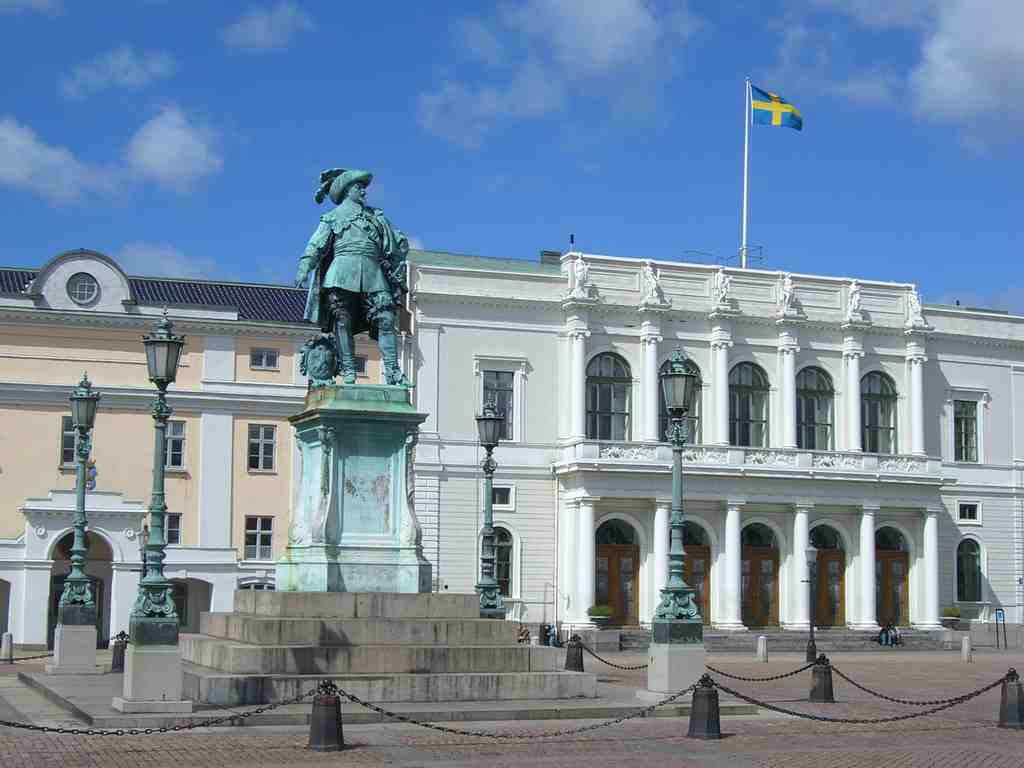
Kijk recht vooruit naar het indrukwekkende, lichtgele gebouw met grote zuilen bij de ingang en een trotse vlag hoog op het dak - dat is het Stadhuis van Göteborg. Stel je voor,…Meer lezenToon minder
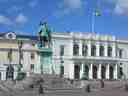
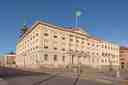
Kijk recht vooruit naar het indrukwekkende, lichtgele gebouw met grote zuilen bij de ingang en een trotse vlag hoog op het dak - dat is het Stadhuis van Göteborg. Stel je voor, het is de zeventiende eeuw. Overal hoor je bouwgeluiden, mannen sjouwen met grote bakstenen uit Amsterdam, er wordt druk gepraat in allerlei talen en de geur van vers pleisterwerk hangt in de lucht. Hier, pal aan de Stora Hamnkanalen, ontstaat een waar paleis voor de stad. Het begon allemaal een stuk bescheidener: het eerste stadhuis werd geen pracht en praal - het was gewoon een houten huis met een puntig dak, netjes verhuisd uit Nya Lödöse in 1621. Kan je je het voorstellen? Een heel stadhuis, gewoon even verplaatst. Dat kon toen nog! Maar dat houten huis was geen blijvertje. Göteborg groeide als kool, en de houten variant werd al gauw ingewisseld voor een tweede houten huis - deze keer met minstens zestien ramen en zelfs vijf sierlijke lichtkoepels. Helaas: in 1669, midden in de nacht, ja hoor, brak brand uit en werd het hele gebouw in de as gelegd. De stad moest snel handelen en zo begint het verhaal van het stenen stadhuis. Hier komt Nicodemus Tessin, de oudere, om de hoek kijken. Zijn plannen voor een nieuw stadhuis werden in 1670 helemaal goedgekeurd - een statige gevel en een bruin pannendak verschenen aan de zuidwestkant van het plein. Stel je voor, even snel een lening regelen bij Jakob von Ackern en Magnus Gripenklo, want bouwen was zeker niet goedkoop - zelfs toen niet! Dat nieuwe stadhuis werd al snel het kloppend hart van de stad. Het pand had gewelfde gangen, deftige zalen - de Stora salen kon wel 500 man herbergen. Elke woensdag klonk er muziek boven uit de zaal, en bij publieke aankondigingen bliezen de stadstrompetters een vrolijk deuntje vanaf het balkon. En voor de echte gezelligheid konden rijke burgers zelfs biljarten beneden in de Rådhuskällaren. Toch bleef het gebouw in beweging. Bijna elk decennium werkten generaties vakmannen aan uitbreidingen: prachtige trappen, toscaanse zuilen - als je omhoog kijkt, zie je hoe de kolommen uit het massieve voetstuk omhoog rijzen, alsof ze een geheim feest gaande houden op het balkon. In 1817 kreeg de gevel z’n statige uiterlijk dankzij Jonas Hagberg: een fors middendeel, dik omlijnd door stevige pilasters die hun best doen om het dak overeind te houden! En als klap op de vuurpijl kwam er in 1862 een opvallende klok bij op de voorkant, met daarboven godinnen in basrelief - Justitia en Prudentia. Ze bewaken, met wapperende jurken en wijze blikken, het icoon van Göteborg. En ineens, begin twintigste eeuw: nieuwe tijden, nieuwe eisen. Göteborg bulkt van de bedrijvigheid; het stadhuis barst uit z’n voegen. Er moest uitgebreid worden, maar hoe? Na eindeloze wedstrijdjes en discussies werd uiteindelijk in 1936 de beroemde Asplundska tillbyggnaden onthuld - het rechte, moderne stuk rechts van het oorspronkelijke gebouw. Sommige mensen dachten dat het een ramp was - “een tragedie!”, riepen boze inwoners - maar kijk nu eens hoe stijlvol oud en nieuw samen een straatbeeld vormen. Zwaai gerust naar de glazen wand verderop, want daarachter schijnt het rauwe zonlicht zo mooi naar binnen. Door de eeuwen heen veranderde het gebouw menigmaal van functie. Hier zaten ooit slimme magistraten die de stad bestuurden, werd recht gesproken, spanningen opgelost en zelfs historie geschreven: koning Karl X Gustav hield er na de Vrede van Roskilde (1658) zijn onderhandelingen in het gezelschap van hooggeplaatsten. Maar het werd ook gebruikt als gevangenis, er werd graan bewaard én - het klinkt gek - zelfs een tijd dienst gedaan als tijdelijke kerk! Je kon bijna verwachten dat er ooit pannenkoeken werden gebakken in de raadzaal, zo veelzijdig was het stadhuis. Het stadhuis is tegenwoordig weer helemaal opgefrist - na een grote renovatie van 135 miljoen kronen. Sinds 2014 huist hier het stadsbestuur. Je raadt het al: vergaderen doen ze tegenwoordig binnen, maar hopelijk niet meer bij kaarslicht en zeker niet als een stadsbrand de stad opschrikt zoals vroeger. Dus als je nu om je heen kijkt, stel je even voor hoe al die bouwmeesters, goudzoekers, rechtsprekers en stadstrompetters ooit over dit plein bunnen liepen, in de hoop om Göteborg een beetje beter of in elk geval gezelliger te maken. En hé, als het je opvalt dat de zuilen naar je lijken te roepen voor een stevige omhelzing... dan weet je dat je écht midden in de geschiedenis staat!
Open eigen pagina →straat in Göteborg
Je ziet nu een opvallend gebouw aan de noordkant van het Kungstorget, met een hoge, gebogen metalen dak en grote ramen onder een klok; kijk even omhoog naar de brede gevel, want…Meer lezenToon minder
Je ziet nu een opvallend gebouw aan de noordkant van het Kungstorget, met een hoge, gebogen metalen dak en grote ramen onder een klok; kijk even omhoog naar de brede gevel, want daar prijkt in grote letters “Saluhallen”. Stel je even voor: het is begin 1890. De geur van versgebakken brood en wilde specerijen zweeft door de lucht. Mensen met dikke bontjassen, kinderen met rode wangen en marktlui met volle schorten rennen af en aan, hun stemmen echoën onder het hoge glazen dak van deze prachtige hal. Stora Saluhallen, oftewel de Grote Markthal, werd gebouwd in 1888-1889, nadat de stad besloot dat het tijd was om van alles wat er op de markten werd verkocht, een smakelijk en overzichtelijk feest te maken. Maar weet je wat echt grappig is? Toen ze begonnen te bouwen, zou het allemaal netjes en snel klaar zijn. Maar nét als je denkt: ‘Nu schiet het lekker op!’, bleek de bouw opeens vol verrassingen te zitten. Stel je voor dat de bouwvakkers niet alleen aan het timmeren waren, maar ook werden opgehouden door de kou, lekken in het dak én onwillige stenen. Uiteindelijk liep de oplevering wat vertraging op, en volgens de burgemeester keek iedereen stiekem mee of het eindelijk gelukt was. Op 1 februari 1889 gingen de deuren open en als je goed luistert, hoor je misschien nog steeds het kabaal van de veiling die daarvoor werd gehouden, met marktkraampjes die allemaal hun plek kregen. Stora Saluhallen was niet alleen een plek om vlees, kaas, boter en melk te halen - je kon hier echt alles krijgen. En de stad haalde een “raathond” in huis, een soort oudste rattenvanger, die hier rondrende om het ongedierte weg te jagen. Jawel, zelfs toen was hygiëne geen kattenpis! Trouwens, al in 1893 stond hier een telefoon, zodat je - jawel, helemaal hypermodern - je boodschappen kon doorspelen! De hal is net zo levendig en kleurrijk gebleven als toen. Meerdere zaken zitten er al langer dan een mensenleven: Hugo Ericsons Ost verkoopt al kaas sinds 1888, en de geur van Hilda Nilssons kazen lokt nu nog klanten naar binnen. En zeg nou zelf: wie wil er geen broodje van Jerkstrands, waar het deeg nog altijd kraakt als je erin bijt? Je kon hier zelfs speciale lekkernijen krijgen zoals wild en kalkoen, en jarenlang verkochten ze meer vis dan dat de havenratten konden tellen. In de loop der jaren is dit gebouw niet alleen opgeknapt, maar bijna magisch bewaard gebleven. Tijdens de grote renovatie doken arbeiders onder vloeren en achter muren en vonden ze oude borden en vergeten teksten uit lang vervlogen tijden. Dus de volgende keer dat je hier binnenstapt, stel je dan voor dat je tussen de verhalen en geuren van ruim 130 jaar geleden loopt. Wie weet zie je nog net een schaduw van die oude raathond voorbijschieten, op zoek naar zijn volgende avontuur!
Open eigen pagina →Om het Biopalatset te vinden, kijk je naar het gebouw met grote pilaren en opvallende rode neonletters boven de ingang - alsof het zichzelf aanprijst als de ster van de…Meer lezenToon minder
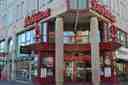
Om het Biopalatset te vinden, kijk je naar het gebouw met grote pilaren en opvallende rode neonletters boven de ingang - alsof het zichzelf aanprijst als de ster van de show! Stel je voor: het is 15 september 1995 en de geur van vers popcorn zweeft door de lucht. Je hoort het gezoem van mensen die niet kunnen wachten om hun eerste film in deze gloednieuwe multibiograf te beleven. Biopalatset is niet zomaar een bioscoop - nee, dit is het paradepaardje van Göteborg! Met tien zalen en meer dan duizend stoelen verspreid over drie verdiepingen kun je hier verdwalen tussen de spannende filmtrailers en het geroezemoes van verwachtingsvolle bezoekers. Wat deze plek extra bijzonder maakt, is dat het is ontworpen door de architecten van Semrén & Månsson, en dat de inrichting een stijlvolle touch heeft van Rutger Andersson. Maar pas op, er sluipt nog een vleugje geschiedenis door het gebouw: beneden ontdek je een stuk bastionsmuur uit de 17e eeuw, bewaard gebleven tussen al het moderne vertier. Stel je dat eens voor: honderden jaren geschiedenis onder je voeten, terwijl je je verheugt op de volgende blockbuster! En, voor de echte filmnerds: vijf zalen zijn THX-gekeurd, dus je hoort werkelijk elk fluistertje magisch helder. Dus, wie weet, misschien vang je hier niet alleen een geweldige film... maar ook een fluistering uit het verre verleden. Welkom in het paleis van de film!
Open eigen pagina →Je ziet nu een imposant, lichtgeel stenen gebouw met hoge witte zuilen en daarboven een grote toren met een groene koperen koepel en een gouden kruis; kijk recht vooruit en je…Meer lezenToon minder
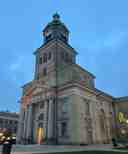
Je ziet nu een imposant, lichtgeel stenen gebouw met hoge witte zuilen en daarboven een grote toren met een groene koperen koepel en een gouden kruis; kijk recht vooruit en je kunt de klok op de toren bijna niet missen! Welkom bij de Kathedraal van Göteborg! Stel je even voor: het is 1620, het ruikt naar nat hout en modder, want alles rondom was moeras. Op deze plek stond eerst een simpele houten kerk, de allereerste in het nieuwe Göteborg, toen de stad net was gesticht. Maar ja, de Zweden wilden iets groots! De koning Gustavus Adolphus dacht: “Laten we een kathedraal bouwen waar zelfs de vogels een beetje zenuwachtig van worden!” Dus besloot hij iedereen wat graanbelasting op te leggen: een vat vol granen uit elke kerkboerderij, jaren achter elkaar. De bouw begon in 1626 en ging niet bepaald soepel: muren waren soms zo dun dat de bouwmeester Weinberg uiteindelijk de eerste opening niet durfde bij te wonen - bang dat alles zou instorten! Gelukkig stond het gebouw als een huis - soms letterlijk na een brand, want de kathedraal heeft maar liefst drie branden en evenveel heropstanden meegemaakt. Stel je voor dat je op een willekeurige dag langs de kerk liep in 1721: rook vulde de nacht toen vuur alles verorberde - de kathedraal, de naastgelegen school, maar liefst 211 huizen! Na de ramp werkten ze in recordtempo, binnen 13 maanden stond het gebouw weer overeind. Maar ja, als je eenmaal een kathedraal hebt, wil je natuurlijk échte klokken! De klokken, zo luid en helder, konden acht kilometer verder nog gehoord worden. Ook in het interieur was het feest van stijlen: van klassieke Dorische zuilen buiten, tot Empire wit en goud binnen-en een barok altaar met engelen die zelfs tijdens de grote brand van 1802 gered werden. Veel voorwerpen zijn uniek: die hoge klok met zijn gouden randen bijvoorbeeld, afkomstig uit 1751, heeft alle rampen én renovaties overleefd en tikt nu rustig verder. O ja, als je op de begane grond buiten staat: realiseer je dat je op de resten van duizenden mensen loopt. De oude begraafplaats lag pal rond de kerk; in de grond rusten hier zo’n 20.000 Göteborgers, en zelfs 3.000 mensen werden binnen in de kerk zelf begraven. Er hangt zelfs een plaquette om hen te herdenken. De kathedraal is altijd vernieuwend geweest: het was de eerste kerk in Zweden met centrale verwarming (al in 1852!), snel gevolgd door gaslampen. Alleen de toren had zijn eigen streken: begin 20e eeuw begon hij te leunen zoals de toren van Pisa, dus moest alles verstevigd worden. Tuurlijk, in ware Göteborgse stijl duurde het herstel lekker lang, maar uiteindelijk kwam alles goed. En weet je wat het mooiste is? Na elke brand, pestgolf, lekkend dak of scheve toren kwam de gemeenschap weer samen om hun kathedraal terug op te bouwen. Vandaag sta jij op diezelfde plek waar drie eeuwen aan bouwstof, emotie én soms knikkende knieën in de funderingen zitten. Dus terwijl jij omhoogkijkt naar die grote koperen koepel en voelt hoe de geschiedenis bijna tastbaar om je heen hangt, weet dat deze plek niet alleen stenen en mortel is, maar vooral verhalen, herinneringen en… een vleugje typisch Zweeds doorzettingsvermogen. En misschien, als je héél goed luistert, hoor je nog steeds het gepingel van de oude orgelpijpen of het zachte gefluister van een bouwmeester die fluistert: “Hopelijk blijft alles recht staan vandaag…”
Open eigen pagina →Kijk recht vooruit naar een robuust, vierkant stenen gebouwtje met een groen bronzen gootsteen en een inscriptie aan de voorkant, omgeven door een hekwerk en schaduwrijke bomen…Meer lezenToon minder
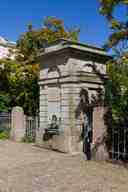
Kijk recht vooruit naar een robuust, vierkant stenen gebouwtje met een groen bronzen gootsteen en een inscriptie aan de voorkant, omgeven door een hekwerk en schaduwrijke bomen naast de straat. Welkom bij de Domkyrkobrunnen! Stel je voor, je staat hier in het jaar 1816: paarden en koetsen ratelen over de kasseien, vrouwen dragen emmers terwijl ze grappen maken over het frisse water dat hier uit de fontein stroomt. Deze bijzondere waterbron, bedacht door stadsarchitect Jonas Hagberg - vast een man met droge humor - was destijds dé plek waar de inwoners vers water konden tappen, rechtstreeks van de bron in Kallebäck. Maar wacht, de andere kant van het verhaal is nóg spannender! In de jaren 1890 dacht men er zelfs over om het hele gebouwtje plat te gooien. Gelukkig dachten sommige stadsgenoten: “Dat is zonde, het is toch een beetje het dorstige hart van de stad!” Met protest en passie redden ze het huisje en werd het in 1894 keurig opgeknapt - nu ja, dat mag ook wel als je zo hard voor het stadsleven gewerkt hebt. Er zit zelfs een filosofische boodschap in de gevel gekerfd. Onthoud: als je lichaam dorst heeft, neem water, maar als je ziel dorst heeft… dan wordt het misschien tijd om een tempel te zoeken! Dus, terwijl je hier staat te genieten van de rust, bedenk dat deze fontein al eeuwen wacht om de dorstige voorbijganger te verfrissen - net als jij nu. Grind je schoenen horen nog steeds de echo’s van al die oude verhalen.
Open eigen pagina →Aan de overkant van het kanaal zie je een imposant, lichtgeel herenhuis met drie etages, een grijze kroon op het dak - en een vlag die vrolijk boven de statige zandstenen poort…Meer lezenToon minder
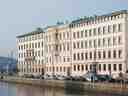
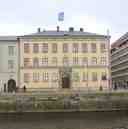
Aan de overkant van het kanaal zie je een imposant, lichtgeel herenhuis met drie etages, een grijze kroon op het dak - en een vlag die vrolijk boven de statige zandstenen poort wappert. Stel je voor: het is 1650, en hier aan het water bouwen arbeiders driftig aan wat het huis van de machtigste man van heel West-Zweden moest worden. Het ruikt naar nat hout, verse kalk, en het klinkt overal. Graaf Lennart Torstenson, grote veldheer, had namelijk bedacht dat hij zijn “ordinaire residens” hier in Göteborg wilde hebben. Slim was hij zeker: het huis werd gebouwd op een reusachtig perceel dat hij al in 1647 kocht, mét huis en tuin, en dat alles voor 1200 gouden dukaten. Maar, ironie van het lot: Torstenson wordt ziek en sterft in Stockholm, en ziet zijn schitterende paleisje in Göteborg nooit met eigen ogen. Door de jaren heen gebeurt er hier van alles. Tijdens de jaren 1658 en 1660 veranderen deze statige kamers zelfs in een klein paleis voor koning Karl X Gustav, die hier vergaderingen van de Rijksdag hield. De koning vond het zo fijn hier dat hij het huis nooit wilde verlaten... letterlijk - hij stierf daadwerkelijk hierbinnen. Even later kun je je voorstellen hoe koninklijke koetsen aankomen, paarden hinnikend bij de ingang, lakeien in de modderige straten van Göteborg, terwijl het stadsleven gonst en de vismarkter op de hoek zijn boterhammen met haring eet. In 1657 koopt de Zweedse kroon het huis, en vanaf 1700 woont de landshövding - zeg maar de gouverneur van de regio - hier. Er hebben beroemde mensen rondgelopen: koningen, ministers, zelfs George W. Bush kwam in 2001 even buurten tijdens het grote EU-topoverleg. Misschien stond hij, net als jij nu, even stil om de adellijke wapens boven de poort te bestuderen… maar dan met iets meer beveiligers om zich heen. Wat je nu ziet - de elegante zandgele gevel met rode vensters en de prachtige portaal van gotländsk zandsteen - lijkt misschien ouderwets, maar die muren hebben heel wat meegemaakt. Het huis is het oudste woonhuis van Göteborg, amper 150 meter van de machtige Göta älv. Door de eeuwen heen werd er aan verbouwd, vaak uit pure noodzaak: de stenen zijn meerdere keren gestuct, geverfd in wit of geel, schoorstenen opnieuw gezet na brand, oude leien daken vervangen omdat ze “övermåttan högt” waren, of gewoon verrot. In 1722 is de grote buitentrap gemetseld, de open haarden ingeruild voor knusse Zweedse tegelkachels, en in 1875 kreeg het huis eindelijk z'n indrukwekkende derde verdieping. Binnenin vond men in de jaren '60 zelfs 17de-eeuwse plafondschilderingen die verborgen zaten achter latere renovaties - mogelijk kroop een nieuwsgierige onderhoudsman het plafond in, stuitte op kleurige panelen, en excuseerde zich toen hij onder het stof vandaan kwam. En terwijl het altijd een statig onderkomen is gebleven, was het niet zelden een echt familiehuis: kindertjes van adellijke heren renden vroeger misschien op sokken over de krakende vloeren, terwijl buiten het leven van de stad doorging, met handelslui, soldaten, en misschien zelfs spionnen. Toch is het niet alleen geschiedenis die hier leeft. Af en toe waait er een flinke westenwind vanaf de rivier, en rammelt de vlag boven op het huis. Vroeger was dat misschien het teken voor nog een belangrijke gast, een koninklijke ontmoeting, of - wie weet - het begin van een nieuw hoofdstuk voor Göteborg. Dus als je even stil staat en kijkt naar de met adelwapens versierde gevel, bedenk dan dat je kijkt naar een huis vol verhalen van macht, verdriet, koninklijk feestgedruis en stille regenachtige dagen. Dit is waar Göteborg z’n geschiedenis in levende lijve ademt - en ook een beetje naar kalkverf ruikt.
Open eigen pagina →

Veelgestelde vragen
Hoe begin ik de tour?
Download na aankoop de AudaTours-app en voer je inwisselcode in. De tour is direct klaar om te starten – tik gewoon op afspelen en volg de GPS-geleide route.
Heb ik internet nodig tijdens de tour?
Nee! Download de tour voordat je begint en geniet er volledig offline van. Alleen de chatfunctie vereist internet. We raden aan om te downloaden via wifi om mobiele data te besparen.
Is dit een groepsrondleiding met gids?
Nee - dit is een audiotour met eigen gids. Je verkent zelfstandig op je eigen tempo, met audiovertelling via je telefoon. Geen tourguide, geen groep, geen schema.
Hoe lang duurt de tour?
De meeste tours duren 60-90 minuten, maar jij bepaalt het tempo volledig. Pauzeer, sla stops over of neem pauzes wanneer je wilt.
Wat als ik de tour vandaag niet kan afmaken?
Geen probleem! Tours hebben levenslange toegang. Pauzeer en hervat wanneer je wilt – morgen, volgende week of volgend jaar. Je voortgang wordt opgeslagen.
Welke talen zijn beschikbaar?
Alle tours zijn beschikbaar in meer dan 50 talen. Selecteer je voorkeurstaal bij het inwisselen van je code. Let op: de taal kan niet worden gewijzigd na het genereren van de tour.
Waar vind ik de tour na aankoop?
Download de gratis AudaTours-app uit de App Store of Google Play. Voer je inwisselcode in (verzonden per e-mail) en de tour verschijnt in je bibliotheek, klaar om te downloaden en te starten.
Als je niet tevreden bent met de tour, betalen we je aankoop terug. Neem contact met ons op via [email protected]
Veilig afrekenen met 




