
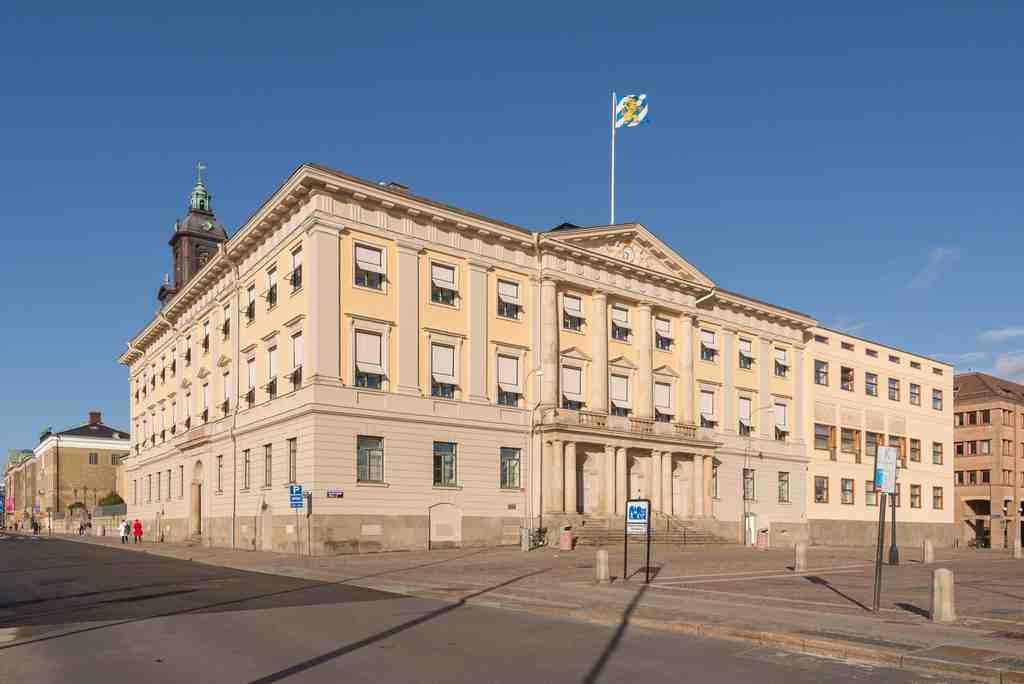
Straight ahead and to the right is Gothenburg City Hall, a massive pale yellow stone complex where a classical facade with colossal pillars and a balcony meets a surprisingly flat, unadorned modern extension next door. This building is a spectacular timeline of ambition, disaster, and architectural scandal.
Let us wind the clock back. Gothenburg's very first city hall was actually second hand. In 1621, they bought a simple wooden building from a neighboring town, took it apart, and moved it here for 554 riksdaler, which translates to roughly a million kronor or one hundred thousand dollars today. It was a bit of a bargain for a government headquarters. But a few decades later, a massive fire in 1669 reduced the city center to ash, and that wooden hall was completely destroyed.
The city leaders decided they were done with wood. They hired a prominent architect to design a fireproof stone fortress, which was completed in 1672. But the city kept growing, and by the early 1800s, they needed more space. Architect Jonas Hagberg literally wrapped the old stone building inside a brand new brick shell to support a third floor.
Take a look at your screen to see the impressive facade Hagberg created. Notice the central section that steps out toward the square. In architecture, this projecting section is called a risalit. Above the massive columns, you will see a triangular decorative space known as a tympanum. It features a clock guarded by two figures in relief. On the left is Justice holding her scales, and on the right is Prudence with a mirror, reminding the city's leaders to reflect carefully before they act.
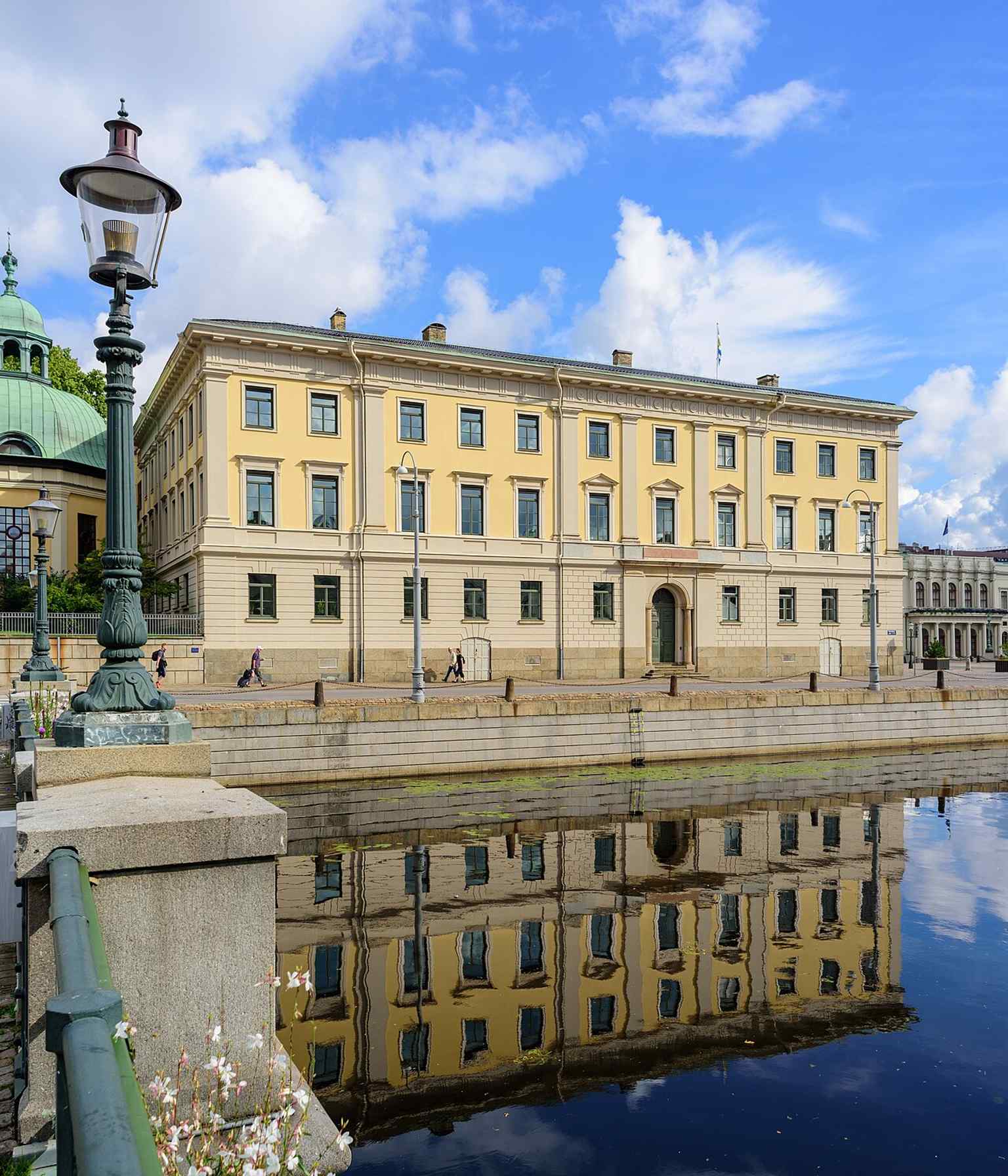
But the real drama of this building happened a century later. By 1912, the city hall was too small again. The city held a design competition for an extension, eventually won by a Swedish architect named Gunnar Asplund. Now, check your app to see the entire complex as it stands today. See that stark, boxy addition on the right side of the classical building? That is Asplund's design, finally completed in 1936.
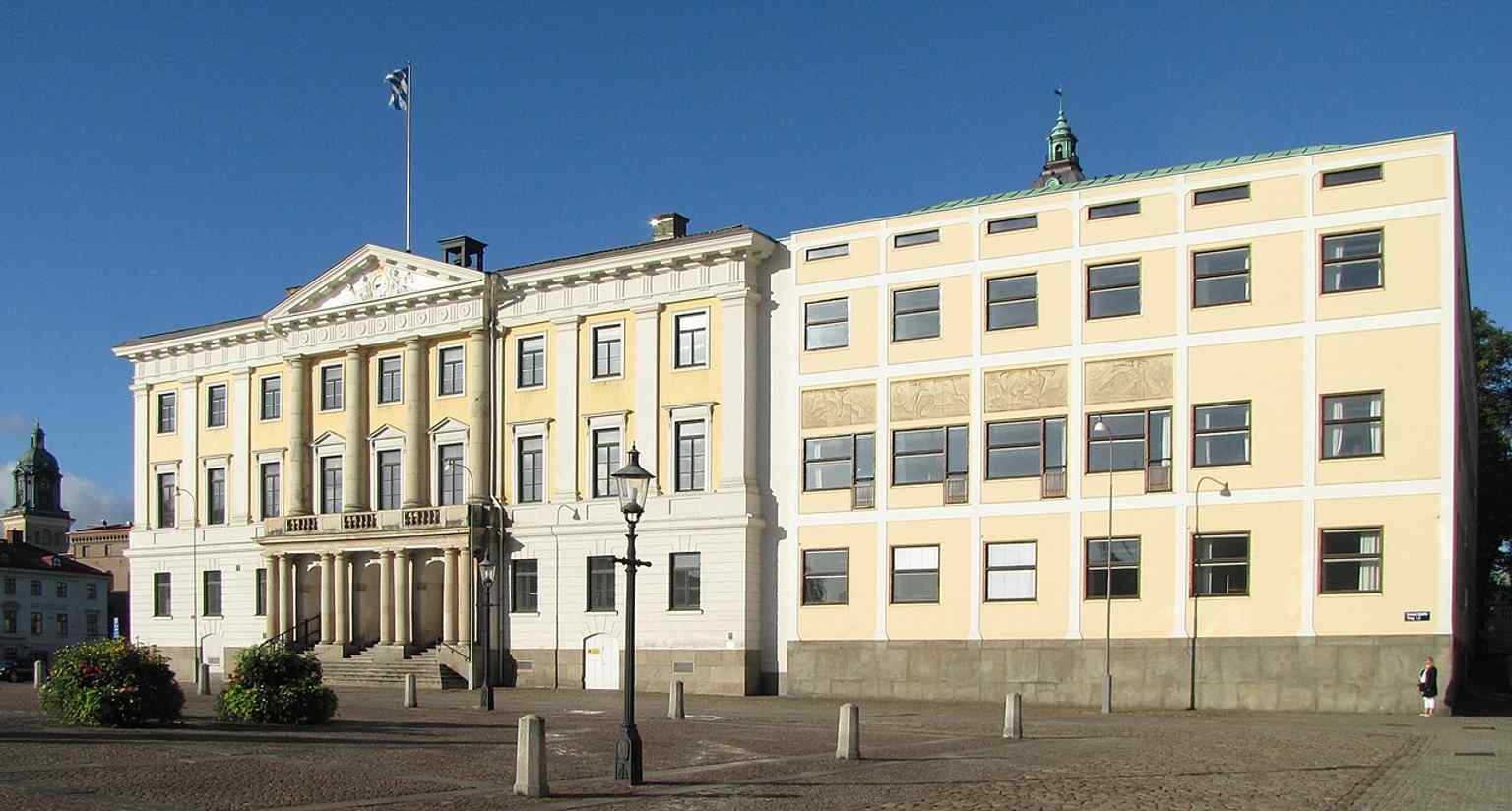
It is a prime example of functionalism, an architectural style that strips away all decoration to focus entirely on the practical use of the building. And the public absolutely hated it. When the scaffolding came down, it caused an absolute uproar. Critics called it a catastrophe and the most tragic thing in Gothenburg's recent history. They were furious that a flat, modern box was attached to their majestic classical palace.
Yet today, architecture students travel from all over the world just to study how Asplund beautifully blended the interior spaces of the old and new buildings. Over the centuries, this hall has survived fires, expansions, and intense public outrage, evolving into a fascinating, fractured mirror of Gothenburg itself. Let us leave this architectural debate behind and continue our walk.


