AudaTours logoAudaTours

Granada Audiotour: Een Reis Door Moorse Granada

Audiogids14 stops

Onder de zonovergoten straten van Granada was gerechtigheid ooit een gevaarlijk spel gespeeld door monarchen, rebellen en mysterieuze vreemdelingen. Begin aan een zelfgeleide audiotour door Centro, waar je langs grootse façades glipt, middeleeuwse drempels oversteekt en verhalen ontdekt die begraven liggen in het verwarde hart van de stad – verhalen die de meeste reizigers nooit horen. Welk geheim dwong de rechters van de Koninklijke Kanselarij om ballingschap boven loyaliteit te verkiezen? Welke verboden rituelen weerklinken in de stille kapellen van de Kerk van Santa Ana? Waarom riskeerden boodschappers alles om op stormachtige nachten een vlag te zwaaien bij de Cadí-brug? Volg verschuivende schaduwen van paleis naar plein en van brug naar klokkentoren. Luister naar de fluisteringen van politieke intriges, glimpen van vervlogen Moorse glorie en momenten van adembenemende opstand – elke stap onthult Granada opnieuw met elke echoënde voetstap. Klaar om eeuwenoude geheimen te ontrafelen die deze stenen nog steeds achtervolgen? Begin je reis onder de waakzame ogen van Granada.

Tourvoorbeeld

map

Over deze tour

  • schedule
    Duur 40–60 minsGa op je eigen tempo
  • straighten
    3.2 km wandelrouteVolg het geleide pad
  • location_on
    LocatieGranada, Spanje
  • wifi_off
    Werkt offlineEén keer downloaden, overal gebruiken
  • all_inclusive
    Levenslange toegangOp elk moment opnieuw afspelen, voor altijd
  • location_on
    Start bij Koninklijke Kanselarij van Granada

Stops op deze tour
  1. Take a look across Plaza Nueva-spot the grand, light stone palace with perfectly lined-up windows, ornate iron balconies, a majestic main entrance topped by flags, and a small old…Meer lezenToon minder

    Take a look across Plaza Nueva-spot the grand, light stone palace with perfectly lined-up windows, ornate iron balconies, a majestic main entrance topped by flags, and a small old clock perched on top; that’s your landmark! Welcome to the Royal Chancery of Granada, where justice wore a ruffled collar and powdered wig-though not, sadly, on the same day as flamenco night! Imagine yourself in late 15th-century Granada, just after the Catholic Monarchs reclaimed the city. The air hums with the excitement of a new era and new laws, as officials bustle in and out, ready to bring order to the southern territories of Spain. This very spot was chosen by the mighty Isabella I, one half of the legendary duo Ferdinand and Isabella-we’re talking royal power couple goals. After their conquest of Granada, they decided justice needed a new stage fit for kings and queens. At first, the Real Audiencia ruled from Ciudad Real, but then someone thought, “Why commute when you can rule from sunny Granada?” So, by 1505, the full court made its move, and Granada buzzed with the drama of real life trials, disputes, and sentences. The palace you’re gazing at was no quick build. Construction began in 1531 under orders from King Charles I, who decided he wanted the fanciest justice house in all of Spain. It took fifty-six years to finish-now that’s bureaucracy! Imagine the clang of chisels, the whiff of fresh mortar, and architect Francisco del Castillo pacing in the dusty courtyard, grumbling about missed deadlines and “those artistic touches” like the glorious patio, which some say was designed by the famous Diego de Siloé himself. By the time it was finally completed in 1587, with King Philip II giving his royal nod, the Chancery stood proud, glowing in the Andalusian sun. Its façade shouts “Renaissance!” with all the drama and flair you’d expect from the most iconic Mannerist masterpiece in Granada. Inside, the Real Chancillería wasn’t just for show-it ran a whole legal circus. Picture this: a president at the top, sixteen judges called oidores (which literally means “listeners”-not a bad gig, unless the complaints got loud), four Court mayors, lawyers, scores of clerks and runners. In each courtroom, the fate of southern Spain was debated-from Granada down to Malaga and over to Almería and Jaén. But even mighty Chancillerías can run out of luck. Over the centuries, reform was in the air. By the 18th century, new officials called intendants started snatching away its powers, and with Spain’s brief experiment with the 1812 Constitution, people started to wonder if these old royal courts belonged in the past. When liberalism finally took hold and the Decrees of Nueva Planta rolled out in 1834, the Chancillería was officially shut down-no more kings, no more wigs, just progress. Its records and wisdom, however, live on upstairs in the historic archive. Today, if you’re lucky, you might catch local judges bustling in and out-they definitely don’t wear ruffs anymore, but I wouldn’t rule out some dramatic gavel-banging. Still, the air here is thick with centuries of heated debate, whispered secrets, and a dash of royal intrigue. So, as you stand here, imagine the swirl of capes, the echo of voices inside, and the long, patient wait for justice under this timeless Spanish sky.

    Open eigen pagina →
  2. Look for a tall, slender brick church with a square bell tower and a beautiful carved stone doorway, nestled right at the edge of a charming little plaza between cypress trees and…Meer lezenToon minder

    Look for a tall, slender brick church with a square bell tower and a beautiful carved stone doorway, nestled right at the edge of a charming little plaza between cypress trees and colorful old houses. Welcome to the Church of Santa Ana-or, as its full name would have it, the Parish Church of San Gil and Santa Ana. You’re standing at a spot where history is layered thicker than Spanish chocolate! Picture this: the left bank of the Darro River, near Plaza Nueva, at the foot of the mighty Alhambra. Long ago, there was a grand mosque on this very plot, buzzing with the soft hum of prayer and life. But in 1537, Granada’s most celebrated architect, Diego de Siloé, got the job of designing a new church. He bought up land, rolled up his sleeves, and built this elegant marvel-so if these walls could talk, they’d do it in both Arabic and Spanish! Look up to the main entrance that faces you. This isn’t your average church doorway; it’s pure Renaissance splendor. The entrance is framed by grand Corinthian columns and, above, three sculpted figures stand in little alcoves, watched over by the Virgin and Child in a medallion at the very top. Legend has it that in the 1540s, Sebastian de Alcántara started carving this portal, adding just enough flair to make it the talk of the town-until his own son, Juan, finished the job years later. Step closer and imagine Granada in the 16th century after the conquest: new Christian monuments budding up, but still humming with the rhythms of their Islamic ancestors. Santa Ana is a Mudéjar church: built with traditional Andalusian brick and woodwork, beautifully blending styles so that even today, you see details that look like they belong to a mosque, especially the richly painted wooden ceilings over the five chapels lining the nave. Now, let’s add a little drama. That squat yet elegant bell tower to the side? Juan Castellar built it between 1561 and 1563. Try to picture him high above the street, carefully setting bricks and keeping an eye on the Alhambra up the hill. That very tower stands as a lookout and, if you listen closely, you might almost hear-and don’t worry, this isn’t a ghost story-the clang of its bell ringing over the city’s rooftops. Past the beautiful entryway and up the broad steps, the air is cool and smells faintly of incense. Inside, treasures await. There’s a sorrowful statue of the Virgin by José de Mora (from 1671), and a dramatic Calvary sculpture by Diego de Aranda. The painted murals on the walls date back centuries. The church’s sacristy guards a 16th-century chalice by Francisco Téllez and a powerful crucifix. And in the North facade, you’ll spot a mysterious red cross carved in stone-the mark of the Trinitarian Order-still there after hundreds of years. Want a dash of romance? The legendary Mariana Pineda, Granada’s 19th-century heroine, was married here before meeting her tragic fate. And the church also safeguards the remains of historian Francisco Bermúdez de Pedraza, local painter and sculptor José Risueño, and the Renaissance poet and humanist Juan Latino. Imagine the congregation: artists, rebels, scholars, and ordinary folk, all gathering beneath painted beams and flickering lanterns. Through wars and earthquakes and even the odd bit of bureaucratic confusion-parish names have changed more times than a flamenco dancer changes shoes-Santa Ana has stood solid and beautiful. Today, it remains a “Bien de Interés Cultural,” a protected treasure of Spanish heritage, its Renaissance and Mudéjar features as captivating as ever. And if you’re lucky enough to pass by during a Holy Week procession, you might hear the voices of brotherhoods singing as they wind out from these ancient doors, adding yet another layer of tradition to this remarkable site. So, take a moment. Feel the sunlight on the stone, the buzz of life in the air, and imagine the centuries of stories echoing all around you. Not bad for a church that started out as a mosque-and proves, once again, that in Granada, history is never just black and white!

    Open eigen pagina →
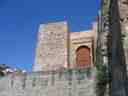
  3. To spot the Cadí Bridge, just look ahead for a strong, ancient wall crowned by a tall square tower and a grand arched wooden door set in beautiful stonework-it almost feels like…Meer lezenToon minder

    To spot the Cadí Bridge, just look ahead for a strong, ancient wall crowned by a tall square tower and a grand arched wooden door set in beautiful stonework-it almost feels like the fortress itself is inviting you to try and get past! So here you are, standing in front of one of Granada’s oldest and most secretive gateways-the legendary Puerta de Monaita, or as ancient Arab rulers called it, bab al-Unaydar. Imagine yourself back in the 11th century, just as the city’s power shifted from old medina Elvira to the brand new and bustling medina Garnata. This very wall, stretching east and west along the Albaicín, was buzzing with the clatter of hooves, the rough shouts of merchants, and the nervous chatter of guards. Here, the city’s fate was decided! This stone guardian-with two enormous horseshoe arches, built from La Malahá sandstone and Sierra Elvira stone-was the front door to the Alcazaba Qadima, the ancient fortress. Just imagine heavy wooden doors covered in iron creaking open for royal processions, or slamming shut with a thunderous thud at the first sign of trouble. Anyone wanting to get into the city had to zigzag up three steep ramps, then pass through a sharp turn inside the gate-if attackers thought they could just barge in, this entrance would give them a “twist” they’d never forget! And those stone walls surrounding you? Back in the day, they rang with the sound of armor and quick whispers of guards squeezed into the tiny square courtyard, eyes keen for surprise. Attached to your left as you enter is a defensive tower-built with lime and capped later with brick, even some limestone at the corners-watching over the neighborhood like a silent giant. According to legend, every time the king needed soldiers, he’d hang a flag right here on the gate, calling the city to arms-a medieval version of a status update. Time hasn’t always been kind; there are scars from past battles, repairs from different eras, and even a touch of modern graffiti. Yet, despite everything, this mighty gate still stands, declared a national monument, a stubborn survivor of wars, revolutions, and the occasional overenthusiastic tourist. Imagine the eerie silence after the bustle of centuries -can you feel the weight of history? Go on, give those ancient stones a nod. They’ve been waiting over 1,000 years for a little appreciation!

    Open eigen pagina →
Toon 11 stops meerToon minder stopsexpand_moreexpand_less
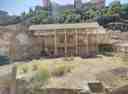
  1. Right in front of you, you’ll spot the Maristán Nazarí as a large, partly open structure surrounded by crumbling yellow-brown walls with rough patches, sheltered by a roof held up…Meer lezenToon minder

    Right in front of you, you’ll spot the Maristán Nazarí as a large, partly open structure surrounded by crumbling yellow-brown walls with rough patches, sheltered by a roof held up by thin white columns-it faces you like an ancient, sleepy giant at the foot of the green hillside. Now, let’s transport ourselves through time! Imagine standing here centuries ago. The year is 1365, and beneath your feet echo the bustling footsteps of Granada’s past. Sultans and servants, doctors and the destitute-all crossed this ground. If you listen carefully, you might even hear a distant murmur of voices and a soft splash from water as horses haul buckets from the river below. The Maristán Nazarí was no average building; it was the very first hospital built for the poor and the sick in Muslim Granada. Sultan Muhammad V ordered it to rise quickly-perhaps he was a bit impatient, or maybe he just hated waiting rooms as much as we do! In just two years, the hospital opened as both a refuge for the ill and even as a home for those suffering in mind, not just body. Picture the clatter of wooden carts, the urgent voices calling for healers, and the quiet hope of those entering through the once-grand horseshoe gateway. Back then, the building was shaped like a rectangle, wrapped around a sparkling central pool in an open courtyard. The rooms, or “crujías,” surrounded this patio, each one with smooth red floors and connected galleries where sunlight danced between archways. Just imagine: at the center, a grand stone pool flanked by two fearsome marble lions-those legendary lions now live in the Alhambra, but their memory lingers like silent guardians of forgotten tales. But of course, if you think hospitals only have a single use, the Maristán would have a good laugh at you. Fast-forward just a little, and boom-the fifteenth century brings the clang of coins: the building transforms into Granada’s Royal Mint! Now instead of patients, you’d find treasurers, busy coining money in the newly created Sala del Tesoro, or Treasure Room. Two ancient shields, one of Charles V and another of Philip II, kept watch over the royal wealth like stern, metallic bouncers. Then, as time trotted on (and it really does gallop here), the Maristán swapped coins for casks as it turned into a wine warehouse in the 1700s. Picture gigantic clay jars filling these rooms, with workers hauling barrels and the strong, sweet, earthy smell of wine drifting everywhere. Not quite the atmosphere for a hospital anymore-I doubt anyone ever tried to treat a headache in there! But the Maristán wasn’t done shape-shifting. By the 1800s, it took on an even grimmer role: a lock-up and then a crowded boarding house. Prisoners’ voices might have echoed off these walls, and families living here would have turned every corner into a little world of its own. By now the hospital’s original elegant entrance, with its shining white marble and delicate Kufic script, was just a memory-a fragment of it survives in the Alhambra Museum, reminding us what glory once stood here. Beneath your feet, archaeologists found the bones of a “qawraya”-two thick ancient walls that once let water be hauled right up from the river. Imagine the grind of carts and donkeys climbing this secret ramp carved into the hillside back when Granada’s fortifications pressed in right to the water’s edge. And if you squint, you might picture the battered medieval city wall, the city’s old gate of Bab al-Difaf, shutting out invaders, weather, and maybe even the odd stray goat! After so much drama, the Maristán couldn’t keep up its glamour forever. In the nineteenth century, much of it was demolished, leaving only sturdy fragments-the very ones you see today. They’re patched and worn, yes, but don’t let that fool you: every stone is a survivor, a stubborn scrap of memory guarded with care by a blanket of protective fabric. So as you look around, take a moment to feel the centuries pressing in. Hospitals and coins, wine and whispers, prisoners and families-the Maristán Nazarí has seen them all and is still standing, quietly waiting for someone to remember its story. And just think: the next time you’re stuck in a hospital waiting room, at least you’re not competing with a barrel of wine and a bag of old coins!

    Open eigen pagina →
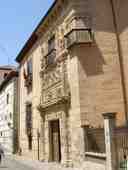
  2. To spot the Archaeological Museum of Granada, look for a grand stone façade decorated with intricate carvings and two little balconies just above the doorway, set into a warm tan…Meer lezenToon minder

    To spot the Archaeological Museum of Granada, look for a grand stone façade decorated with intricate carvings and two little balconies just above the doorway, set into a warm tan building on the historic Carrera del Darro. Now, let’s imagine ourselves whisked away on a journey through time. Right where you stand, inside these ornate stone walls of the Castril Palace, lies a treasure chest of stories waiting to be uncovered. The building itself dates back to the 16th century, when it was designed with a Renaissance patio and that spectacular façade from 1593-so fancy, it seems to almost dare you to guess what secrets it guards within! Inside, Granada’s quirky past comes alive: stone tools from the Paleolithic era-think cavemen but with less yelling and more rock art-share shelf space with mysterious objects from when the Romans ruled these lands and Gladiators may have lost their lunch nearby. The museum even holds whispers from the Bronze Age, times of ancient colonists, Visigoths who might’ve had hair just as wild as their jewelry, and beautiful relics from both Christian and Muslim cultures who once called Granada home. Imagine ancient footsteps echoing under that cool patio, every artifact a clue to human triumphs and some spectacular ancient misadventures. The best part? All these centuries come together in this one magical spot, asking brave explorers like you to unlock their tales. Who knew history could fit into one building-and never get dusty!

    Open eigen pagina →
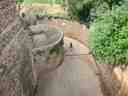
  3. To spot the Cuesta de los Chinos, look for a narrow, winding pathway below you, bordered by old stone walls and climbing between thick greenery and the ancient defenses of the…Meer lezenToon minder

    To spot the Cuesta de los Chinos, look for a narrow, winding pathway below you, bordered by old stone walls and climbing between thick greenery and the ancient defenses of the Alhambra on one side. Now, let’s step back in time together! Imagine you’re standing at the foot of the Cuesta de los Chinos, one of Granada’s most mysterious and storied ancient paths. The dirt track you see, twisting up between mossy brickwork and brushing past bare tree branches, is much more than a shortcut-it’s an artery that carried centuries of secrets, tension, and tales between the Albaicín and the dazzling palaces of the Alhambra. Listen closely: you might almost hear the echo of hurried footsteps on stones. And for good reason! According to legends, this very path was once the escape route of Boabdil, the last Moorish king of Granada, known as “el rey chico,” or “the little king.” His mother, Aixa, helped him slip away down the slippery stones and into the hands of rebels waiting beyond the city. Think of the drama-torches flickering, night air heavy with suspense, royal whispers lost among rustling leaves. I wonder if any of them tripped on these stones wearing royal slippers. That’s history for you-always a bit slippery! Oddly enough, the name “Cuesta de los Chinos”-which means “Slope of the Pebbles”-only came about in the early 1900s, because of the pebble paving that covers much of the urban stretch at the top. Its official name is “Cuesta del Rey Chico,” in honor of Boabdil’s hair-raising flight. Just when you think that’s enough names for one street, locals used to call it the “Hill of the Mills,” when watermills lined its banks, and in the 1800s it was grimly known as the “Hill of the Dead,” since it led the way to the new cemetery. Hard to imagine such a peaceful-looking path with so many names and lives! The Cuesta winds up an ancient ravine-the Barranco de la Aikibía-dividing the twin hills of the Alhambra and the Generalife. Start at the Darro River and step over the old bridge; soon, you’ll see crumbling mills, the stern walls of the Alhambra, and on the left, stone terraces marking the gardens of the Generalife floating above you. For centuries, this was the only way to cross between these two royal wonders, until a newer passage was finally punched through in the mid-1900s. You pass a Christian-era bastion with a heavy iron gate, horse stables, and in the shadows below mighty watchtowers-like the Tower of the Captive and the Tower of the Infantas-you can almost imagine soldiers on lookout, water trickling from palace gardens, and washing into the little arroyo at your feet. Keep your eyes peeled for the acueduct from the Royal Irrigation Channel, feeding the Alhambra, and soon you’ll reach the legendary Bib Algodor Gate-where Christian troops once slipped into the city, changing the fate of Granada forever. After 1525, when a larger gate was built, Bib Algodor stayed mostly closed, its ancient tales resting quietly behind thick stone walls, disturbed only by curious walkers like you. So next time you walk these stones, take a moment to listen-every pebble and brick has a story to tell, and they’re just waiting for the right set of footsteps to bring those tales to life.

    Open eigen pagina →
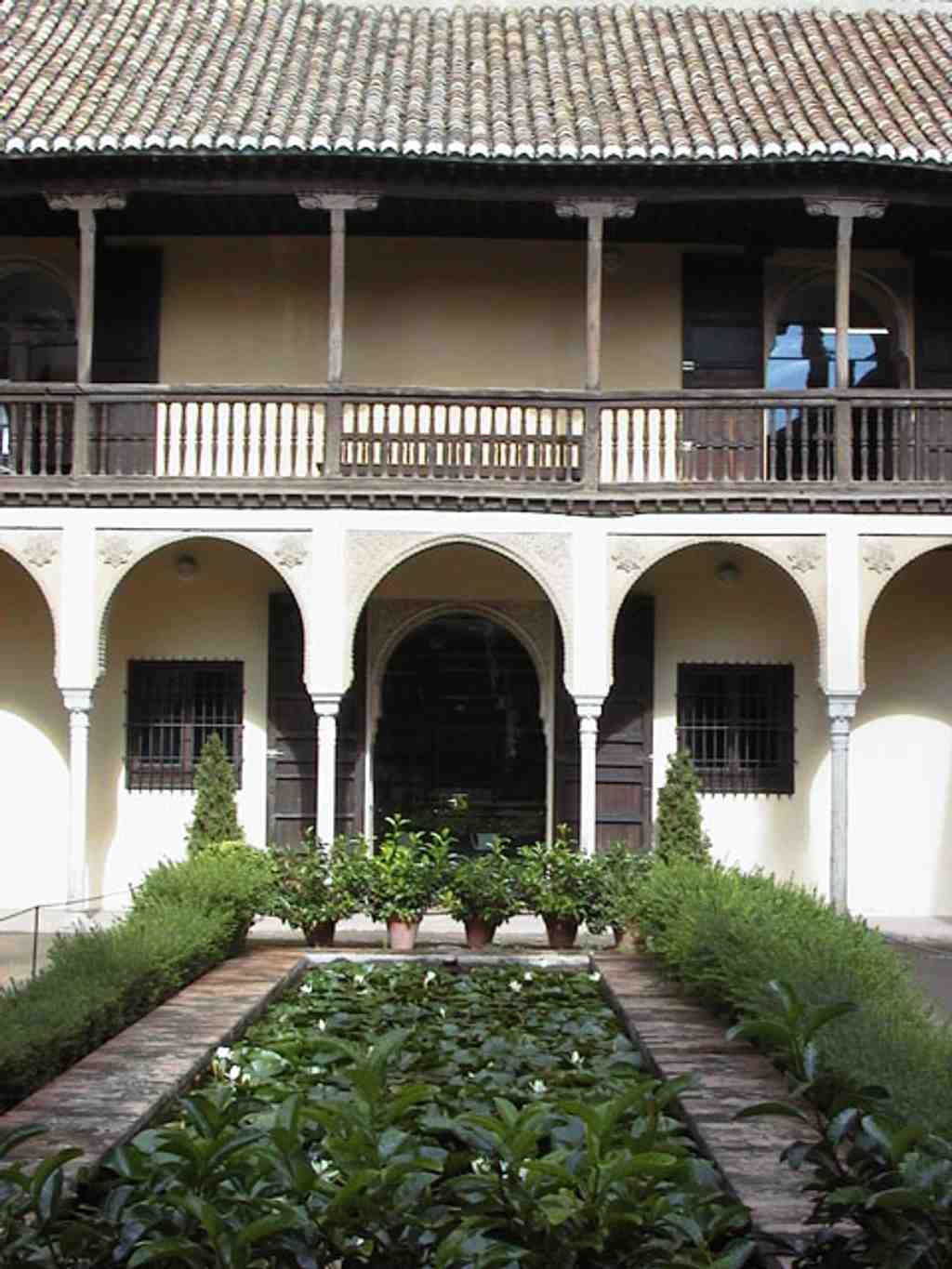
  4. To spot the Casa del Chapiz, look for a grand, whitewashed building with a tiled roof, arched wooden balconies, and a lush garden courtyard with a long, narrow pond right in front…Meer lezenToon minder

    To spot the Casa del Chapiz, look for a grand, whitewashed building with a tiled roof, arched wooden balconies, and a lush garden courtyard with a long, narrow pond right in front of you. Now that you’re here, take a moment to soak in the scent of plants and the coolness that rolls out from that shaded courtyard. Two houses sit quietly on this spot at the top of the Cuesta del Chapiz, right where the Albaicín and the road to Sacromonte meet-imagine the crescendo of voices, footsteps, and perhaps the braying of donkeys as traders and neighbors have passed here for centuries. But these aren’t just any old houses. They’re relics of Granada’s unique past, born in the 1500s when the air was thick with change and tension. Ready for a story? Well, make yourself comfortable, because these walls have heard it all. Long ago, these buildings started their lives as two separate homes built by two Moorish men, Lorenzo el Chapiz and his brother-in-law Hernán López el Ferí. Though people often call this “Casa del Chapiz” in the singular, it has always been two houses-a mix-up easy to understand since the buildings are stitched together by a shared wing. If you could step back in time, you’d see horses snorting at the entrance and families crossing the shaded patios. Lorenzo’s house, the larger of the two, was born from the bones of an even older Nasrid palace. Its heart is the big rectangular patio you see before you-the garden stretches around a central pond, once home to goldfish and a favorite spot to cool off during scorching Andalusian summers. In the old days, you’d find white marble columns holding up elegant arches, sunlight glinting from water, and the low hum of voices beneath wooden galleries. Lorenzo gave his house a fashionable update, creating an upper floor with wooden balustrades displaying Renaissance flair. It’s almost as if he wanted to show Granada that you could have the best of both worlds: Moorish charm below, Renaissance panache above. But history here is never peaceful for long. In 1571, both homes were snatched away by the Crown, after their owners joined the Morisco uprising-a time of rebellion, suspicion, and secrets whispered in dark corners. Imagine the tension in these streets, as the Spanish King, Felipe II, flexed his power and swept homes like these into royal hands. After their confiscation, the houses bounced from owner to owner, including a powerful secretary named Juan Vázquez de Salazar. The years marched on, and these grand residences slowly transformed into humble apartments and businesses-a tailor here, a baker there, pots bubbling and tools clanging, as Granada’s working class squeezed into every room, every alcove. The elegant courtyards saw children darting past, workers chatting under peeling plaster, and the once-splendid walls grew shabby and tired. By the early 20th century, these beautiful homes were teetering on the edge of ruin-an architectural cliffhanger, you might say. Thankfully, in 1919, people realized what was at stake. The old houses were declared an official monument, rescued, and finally scooped up by the State ten years later. Restoration began in earnest-a bit like taking your grandma’s favorite quilt and carefully mending every delicate patch. The architect Leopoldo Torres Balbás swung into action. Today’s lush gardens, cool galleries, and tinkling fountains are thanks largely to his careful hands. Since 1932, the Casa del Chapiz has hosted the School of Arab Studies, so scholars now fill the halls where once fish splashed and merchants bargained. Hernán’s house, just next door, is smaller but no less fascinating. Its entrance twists away from prying eyes, thanks to offset doorways that keep the central patio a secret unless you know the trick of the angle. This courtyard, too, boasts its own little pond, and wooden galleries wrap around on all four sides. Peer closer and you’ll spot a patchwork of styles: Nasrid muqarnas-a bit like honeycombed ceilings-mingle with gothic touches and even the flourish of Renaissance vases carved into marble columns. Under the north wing, the ancient cistern-an aljibe-once collected water from the Aynadamar canal, keeping the household cool and the gardens green even in the high heat of summer. So, as you stand here now, just imagine: in every creak of tile and whiff of green, you’re hearing centuries of laughter, ambition, whispers, and even political intrigue. This is not just a house, and not really just two-but a tapestry of Granada’s history, woven with light, water, and a stubborn refusal to fade away.

    Open eigen pagina →
  5. To spot the Church of San Salvador, look to your left for a striking stone portal with elaborate columns and sculptures above the door, set beneath a tall, square bell tower with…Meer lezenToon minder

    To spot the Church of San Salvador, look to your left for a striking stone portal with elaborate columns and sculptures above the door, set beneath a tall, square bell tower with iron-grilled windows-trust me, it’s hard to miss once you notice that grand entrance! Imagine standing here centuries ago-maybe you’d get a whiff of lemon blossoms drifting over the stone courtyard, the soft chatter of neighbors echoing off ancient brick. This is no ordinary church; the ground beneath your feet is layered with secrets, whispers, and some seriously dramatic history. Before the first bell ever rang from that lofty tower, this spot was at the heart of the old Albaicín neighborhood-a lively swirl of storytellers, traders, and children playing under the shade of lemon trees. Let’s rewind to the 13th century. Don’t worry, there are no history exams here-just picture this: instead of a church, you’d see the handsome silhouette of the Great Mosque of the Albaicín. This was the spiritual center for the neighborhood’s Muslim community, built under the rule of the Almohads. The mosque was huge-big enough for all the local faithful, with a prayer hall supported by an impressive forest of eighty-six marble columns. The cool, shady courtyard was planted with real, fragrant lemon trees, and across the street you’d find a bustling school and a place for weary travelers to rest. I like to think even then, people got lost in the side streets just like they do today! But change was coming, as it always does. In 1492, Granada’s keys were handed over to the Catholic Monarchs, and with the stroke of a royal pen, the mosque became a church. In 1499, Cardinal Cisneros consecrated it for Christian worship-without waiting for everyone’s permission, I might add. Granada’s Morisco community, descendants of Muslims forced to convert, must have watched the changes with heavy hearts and wary eyes. The city’s demographics rearranged, new parishes sprang up, and soon-after a papal bull from Clement VII-the church became a collegiate church in 1527, with extra clergy assigned to teach and guide the locals through their new faith. Now, let’s peek at the outside architecture. Notice how the doorway frames you in with ornate stonework and a carved niche sheltering the Virgin and Child? This grand entrance was added in 1543, a real show-stopper in the local Plateresque style. Diego Siloe, Granada’s own architectural superstar, made sure this church would impress anyone wandering past. He might even have blushed at the work done by his talented student Juan de la Maeda, who designed the chancel-the holiest part-completed in 1592. The stonemasons, Martínez and de la Vega, must’ve shed a lot of sweat (and maybe a few tears) carving each block and fitting each timber. Of course, building a monument like this doesn’t always go smoothly. The neighborhood faced tough times after the Morisco rebellion in 1568; many families were forced to leave, which meant fewer hands and pockets to help finish all that stonework. The lofty dreams for the church’s design had to scale back a bit. It’s a bit like setting out to build a castle and having to settle for a very elegant fortress-still impressive, but maybe less gold leaf than planned. As the centuries rolled on, San Salvador witnessed its own share of drama. The ground shook after the 1755 Lisbon earthquake, forcing the church’s college of canons to scatter to other buildings. By 1771, the church’s collegiate days were over, and it went back to being the heart of the local parish. But perhaps the most devastating blow was the fire of 1936, which roared through here during anti-clerical riots and almost destroyed the building entirely. Precious art, golden altars, and history-all went up in smoke. But in classic Granada fashion, they didn’t just sweep away the ashes. Restoration began almost immediately. Today, as you stand here, know that much of what you see-like the brilliant cement vaults overhead or the rebuilt stonework-comes from tireless reconstruction in the decades that followed. But one of the best secrets? The peaceful courtyard you can glimpse through the gates is still the same shape as the one in the old mosque, its arcaded horseshoe arches now sheltering quiet footsteps instead of the hush of centuries-old prayers. Even the layout of the lemon trees is a loving nod to the past. So look up at the bell tower, let your eyes linger on that intricate portal, and maybe tip your hat to the generations who’ve shaped this place-brick by brick, prayer by prayer, lemon tree by lemon tree. If walls could talk, San Salvador would have enough stories to keep us here till sunset-or at least until someone brings us a lemonade! Ready for the next stop?

    Open eigen pagina →
  6. Take a look in front of you-the Arab Baths of the Albaicín, or as some call them, the Arab baths of Calle Agua. If these ancient walls could talk, they'd probably ask for a fresh…Meer lezenToon minder

    Take a look in front of you-the Arab Baths of the Albaicín, or as some call them, the Arab baths of Calle Agua. If these ancient walls could talk, they'd probably ask for a fresh coat of paint and maybe a new roof, but oh, the stories they’d tell! Imagine yourself walking into these baths at the end of the 1100s, when Granada was buzzing with energy and the Albaicín neighborhood was the place to be. The air would have been thick with steam rising from hot water, the sound of cheerful conversation bouncing off the stone walls. Servants hurried about, keeping the chambers running smoothly. You’d pass through rooms of every temperature: an inviting changing room, a cool room, a warm space, and finally, the steamy hot one-the ancient equivalent of a spa day, but with much more interesting columns! The changing room, or vestidor, was lined with handsome triple horseshoe arches rested upon columns borrowed from the grand palaces of Córdoba and Medina Azahara. Even the pillars had a second life here, passed from one ancient dynasty to another. Step into the warm room in your mind and you’d notice marble pools, now faded into memory but once perfect for a mid-winter soak. The hustle in the background was thanks to a wood-fired boiler in the “leñera”-someone had to keep that water hot! And let's just say, sauna gossip hasn't changed much in a thousand years. But as centuries rolled on, these baths faced a cold future. By the 1500s, when using Arab baths became forbidden, this peaceful retreat fell silent, piece by piece divided among new buildings along this very street. Today, the baths are sadly abandoned and in disappointing condition-no one’s scrubbing their backs with olive soap here anymore! Still, standing among these crumbling stones, can you feel the steam and laughter, centuries gone? For a ruined bathhouse, it’s managed to hang on to plenty of mystery-and probably, a lot of secrets in its walls. Just don’t try to take a dip-the only bubbles you’ll get now are from the rain.

    Open eigen pagina →
  7. To spot the Alcazaba Cadima, look to your left for a stretch of thick, ancient stone walls rising above the rooftops, with some rounded towers still standing strong. Welcome to…Meer lezenToon minder

    To spot the Alcazaba Cadima, look to your left for a stretch of thick, ancient stone walls rising above the rooftops, with some rounded towers still standing strong. Welcome to the oldest heart of Muslim Granada-this is the Alcazaba Cadima, also known as the Old Fortress. Picture yourself here around the year 1010, where Zawi ben Ziri founded a city that would echo with stories for centuries. Imagine busy streets lined with whitewashed houses, two lively neighborhoods bustling on either side of these walls, and the clatter of horses’ hooves over cobblestones as traders hurried through the four grand gates. You’re standing by what was once a palace for kings-a place of secrets, power, and maybe a little drama too (after all, royal families are just like ours, but with more swords). High above the Albaicín, these sturdy walls kept watch over Granada, their silence broken only by the call to prayer or a gust of the hillside wind. Each stone could tell a tale: narrow escapes, tense negotiations, or midnight whispers about who might rule tomorrow. The north side here still stands, proud and weathered, keeping an ancient promise to the city below. Imagine leaning against these walls, the city stretching before you, feeling history’s heartbeat right beneath your hand. The Old Fortress might have lost its grandeur, but its spirit lingers in every stone-make sure to listen, just in case it decides to tell you a secret.

    Open eigen pagina →
  8. Look for a striking white tower with classic arched windows and intricate Arabic calligraphy near its roof, peeking above leafy trees and red-tiled roofs-this is your cue that…Meer lezenToon minder

    Look for a striking white tower with classic arched windows and intricate Arabic calligraphy near its roof, peeking above leafy trees and red-tiled roofs-this is your cue that you’ve found the Great Mosque of Granada. Now, let me take you on a little journey-no time machine necessary, just your imagination and a dash of curiosity! Can you feel the history humming through the air? Right here, in the heart of the Albaicín district, you’re standing before a building that, quite literally, breaks a five-century-long silence. In 2003, after 500 years without a mosque in Granada, the sound of prayer rose from this hilltop once again. The Mezquita Mayor de Granada shimmers with the spirit of both timeless tradition and modern renewal, an echo of the ancient world meeting the rhythm of today. But wait-don’t just focus on the tower! Past those gates lies a Mediterranean garden absolutely bursting with life: pines, ancient olive trees, pomegranate, orange, lemon-some might say it’s a fruit salad waiting to happen, but please, no snacking on the landscaping! Wander through, and you’ll see views that would have inspired poets, with the Darro valley yawning below you and the mighty Alhambra glowing atop the Sabika hill. On clear days, the snowy peaks of the Sierra Nevada shine like a crown on the horizon. Fountains and tile mosaics catch the sun, their design rooted in Andalusian tradition, crafted by skilled hands from Fez using methods older than some fairytales. Inside, the mosque itself welcomes all with its warm cedar wood panels, each piece hand-carved with verses from the Qur’an. Feel free to marvel at the vibrant marble-it's just like the marble in Jerusalem’s Al Aqsa Mosque! And those dazzling stained-glass windows in the qibla wall? Inspired by none other than Istanbul’s Blue Mosque, they dapple the prayer hall with patterns of colored light. Here’s a story most people don’t know: the minaret’s Arabic inscription, wrapping around like a jeweled belt, carries the central declaration of Muslim faith-bold, enduring, and beautifully visible to anyone passing by. And don’t rush off without peeking into the Islamic Studies Center, where you’ll find a treasure chest of books, exhibitions, language classes, and fascinating talks. You might even stumble across a friendly debate about who makes the best mint tea-trust me, that’s serious business here! Standing in the Plaza San Nicolás, surrounded by centuries of history and the buzz of daily life, you’re in a place where past and present meet, inviting everyone to pause, breathe, and feel part of Granada’s living story-just don’t try to outshine the Alhambra with your photos, okay? That would be quite the challenge!

    Open eigen pagina →
  9. To spot Sacromonte, look up at the hillside ahead and you’ll see rows of small whitewashed houses and caves tucked into the dusty slopes, surrounded by patches of green trees-just…Meer lezenToon minder

    To spot Sacromonte, look up at the hillside ahead and you’ll see rows of small whitewashed houses and caves tucked into the dusty slopes, surrounded by patches of green trees-just follow the climb where the city meets the hills. Welcome to Sacromonte, a neighborhood that holds more secrets than a magician’s hat and more stories than a flamenco guitarist has strings! Imagine you’re standing at the edge of Granada, gazing at this rolling hillside packed with quirky white cave houses that seem to have grown right out of the earth itself. Feel the sun warming the stone and catch the distant echo of a guitar. Here, you’re in the heart of the city’s Romani culture, their footsteps echoing between olive trees and down narrow paths for over 500 years. It all began on the lush banks of the Darro river, whose name comes from “of gold”-which is fitting, unless you count how many people came here hunting for treasures and only found a sore back! The neighborhood sits across from the mighty Alhambra, like an old friend winking from the other side, and it’s always been a place a little apart, a little mysterious. When the Catholic Monarchs swept into Granada in 1492, changing the whole story of Spain, Romani arrived soon after. They brought their language, Caló, a blend with Indian roots that you might still catch in a whispered conversation, and started digging homes into the rocky hills. Picture how these houses were made-people cut straight into the rock, then carved out cozy rooms as far as the stubborn earth would let them go. No two caves are alike-just like snowflakes, except they don’t melt in the sun and you can store your flamenco dress in them! Some even say that outsiders started the trend after searching for the legendary treasures left behind by the noble Arab families fleeing in secret. The most famous tale is the “Ravine of the Blacks”-when many freed slaves, left behind with little more than hope and rumor, dug into the ravines searching for gold but ended up making the first homes. The treasure? Still missing! So, if your shoes start to feel heavy, maybe you’ve stepped right over a hidden chest-just don’t try to dig with your bare hands! As time passed, Romani settled in and brought the neighborhood to life with stories, crafts, and the foot-tapping rhythms of the zambra-fiery flamenco parties so wild you’d think the hills themselves start to dance. Imagine the sound of castanets, laughter, and song swirling out from a cave at night. Curro Albaicín, a star born right here among flamenco legends, helped keep the zambra tradition alive, hosting parties attended by kings and presidents! The caves aren’t just about living-they’re also about music, love, and the unstoppable spirit of this place. Some famous caves, like Cueva de la Rocío, have belonged to fiery dancing families for generations and host zambra shows every night where the whole neighborhood comes alive. Above it all sits the grand Abbey of Sacromonte. Built after a suspiciously convenient discovery of “lead books”-ancient texts with mysterious symbols said to be a lost gospel-the Abbey still guards these forgeries along with the relics of Saint Caecilius, Granada’s co-patron. Every year, pilgrims gather for a festival that fills the air with procession music, laughter, and hope, as if the centuries themselves are parading right next to you. And if you want to peek into real cave life, the Sacromonte Caves Museum lets you wander through 11 historic caves. Each one is a living snapshot-one might hold the tools of a blacksmith, another the tangled willow reeds of a basketmaker, another a tiny stable or the spicy rhythms of a flamenco dancer in full swing. You can even learn the tricks of troglodyte architecture-if you ever decide living in a hillside sounds appealing! Over the years, Sacromonte has been a refuge, a treasure hunt, a stage, and a celebration. Its legends echo in every step and every clink of castanets-you just have to listen carefully, for there’s always another tale waiting for you. And if you join the neighborhood festivals, don’t be surprised to find yourself swept up in a parade in costume, laughing your way from cave to cave, with the spirit of Sacromonte swirling around you. If these hills could talk, they’d probably start with, “You won’t believe what happened here last night!” Ready to delve deeper into the etymology, origin of the caves or the a neighbourhood legend: ravine of the blacks (barranco de los negros)? Join me in the chat section for an enriching discussion.

    Open eigen pagina →
  10. To spot the Church of San Miguel Bajo, look for a sturdy building with brick and stone walls, covered in white plaster, and a prominent bell tower that hints at its Islamic past-a…Meer lezenToon minder

    To spot the Church of San Miguel Bajo, look for a sturdy building with brick and stone walls, covered in white plaster, and a prominent bell tower that hints at its Islamic past-a true blend of tradition and tranquility right in the Placeta de San Miguel Bajo. Now that you’re standing before this peaceful church, let’s turn back the clock-way, way back. Imagine this square echoing with the sounds of the old Albaicín, the heart of Granada’s labyrinthine historic neighborhood. Right here, you’d have found the al-Qaṣaba al-Qadīma, the grand palace of Zirid emir Badis. The palace grounds stretched out beneath your feet, alive with courtiers, whispers of power, and the fragrance of orange blossom from palace gardens. Little did anyone know, the world was about to change… Dark-eyed guards stood at the entrances, their armor clinking-probably grumbling about the odds of being replaced by a new palace, the someday-to-be-famous Alhambra. But that palace faded, and its mosque became the new soul of this spot. In the 13th century, the square buzzed with the faithful, who ducked inside for daily prayers, drawing water from a deep cistern in the mosque’s wall. (Look close at the church façade facing the square-you’ll still spot that very cistern, a survivor from those times. If stones could tell secrets, that one would probably have quite the stories!) Fast forward to 1492: imagine the victorious Catholic Monarchs marching through Granada and, despite the shaking knees of the mosque’s caretakers, it lived a little longer as a mosque for the city’s Mudéjar population. But history had other plans. By 1501, after the forced conversions post-Rebellion of the Alpujarras, Cardinal Cisneros and a decree from on high turned this once-Muslim sanctuary into one of the city's 23 brand-new parishes. The stones of the old mosque (except the ever-stubborn cistern) were knocked down, and brick by brick, from 1528 to 1577, the church as you see it now rose up-a harmony of Mudéjar woodwork and later Renaissance design. Even centuries later, San Miguel Bajo wasn’t finished with its plot twists. The congregation shrank so much by the 1800s the doors closed-though the church never lost its dignity or its ghostly charm. These days, it’s home to the brotherhood La Aurora. Services are rare, but if you visit on a Sunday, the scent of incense drifts into the square once again. If you glance up at the bell tower, you might spot pigeons gossiping, but also imagine the view: Granada sparkling under the Andalusian sun. A little bonus: across the square stands the baroque Cross of Christ. That cross once hugged the church but was relocated after the Spanish Civil War-yet another layer of history waiting for you right at your feet.

    Open eigen pagina →
  11. You’ve made it! Standing before you is the House of the Marquis of Cenete-a building that’s seen more drama than a soap opera marathon. Long before its elegant patios and tranquil…Meer lezenToon minder

    You’ve made it! Standing before you is the House of the Marquis of Cenete-a building that’s seen more drama than a soap opera marathon. Long before its elegant patios and tranquil vibe, this spot was surrounded by the green hush of gardens and orchards. Picture yourself here in the late 1400s, as the thud of horses’ hooves and the clang of armor filled the air. This was where Boabdil, the last Nasrid ruler of Granada, bunkered down during a fierce civil war with his uncle El Zagal. Let’s just say Thanksgiving family feasts had nothing on these guys. In 1492, after the Catholic Monarchs took Granada, the property landed in the hands of Rodrigo de Mendoza, the Marquis of Cenete. Fast-forward a century and in 1602, the site became home to a rather unique hospital-specialized for people with skin conditions, founded by Captain José de la Calle y Heredia. If you can smell a hint of old soap, don’t blame the air, it’s just the history lingering around. Major changes came in the 17th century, but the main patio survived, wrapped in beautiful galleries held up by twelve columns. Look closely-each column is a patchwork of styles: bits of Nasrid beauty mixed with Gothic and early Renaissance designs. If those columns could speak, they might argue over which century rocked the best fashion. Later on, nuns took over and turned this into an orphanage for girls, which lasted all the way into the 1980s. So, the next time you hear this place is just a house, remember: rebellion, miracles, makeovers, and caretaking-this house has seen it all, and it’s still standing strong, ready for the next chapter.

    Open eigen pagina →

Veelgestelde vragen

Hoe begin ik de tour?

Download na aankoop de AudaTours-app en voer je inwisselcode in. De tour is direct klaar om te starten – tik gewoon op afspelen en volg de GPS-geleide route.

Heb ik internet nodig tijdens de tour?

Nee! Download de tour voordat je begint en geniet er volledig offline van. Alleen de chatfunctie vereist internet. We raden aan om te downloaden via wifi om mobiele data te besparen.

Is dit een groepsrondleiding met gids?

Nee - dit is een audiotour met eigen gids. Je verkent zelfstandig op je eigen tempo, met audiovertelling via je telefoon. Geen tourguide, geen groep, geen schema.

Hoe lang duurt de tour?

De meeste tours duren 60-90 minuten, maar jij bepaalt het tempo volledig. Pauzeer, sla stops over of neem pauzes wanneer je wilt.

Wat als ik de tour vandaag niet kan afmaken?

Geen probleem! Tours hebben levenslange toegang. Pauzeer en hervat wanneer je wilt – morgen, volgende week of volgend jaar. Je voortgang wordt opgeslagen.

Welke talen zijn beschikbaar?

Alle tours zijn beschikbaar in meer dan 50 talen. Selecteer je voorkeurstaal bij het inwisselen van je code. Let op: de taal kan niet worden gewijzigd na het genereren van de tour.

Waar vind ik de tour na aankoop?

Download de gratis AudaTours-app uit de App Store of Google Play. Voer je inwisselcode in (verzonden per e-mail) en de tour verschijnt in je bibliotheek, klaar om te downloaden en te starten.

verified_user
Tevredenheid gegarandeerd

Als je niet tevreden bent met de tour, betalen we je aankoop terug. Neem contact met ons op via [email protected]

Veilig afrekenen met

Apple PayGoogle PayVisaMastercardPayPal

AudaTours: Audiotours

Vermakelijke, budgetvriendelijke wandeltours met eigen gids

Probeer de app arrow_forward

Geliefd bij reizigers wereldwijd

format_quote Deze tour was een geweldige manier om de stad te zien. De verhalen waren interessant zonder te gekunsteld aan te voelen, en ik vond het heerlijk om op mijn eigen tempo te verkennen.
Jess
Jess
starstarstarstarstar
Tbilisi-tour arrow_forward
format_quote Dit was een prima manier om Brighton te leren kennen zonder je als toerist te voelen. De vertelling had diepgang en context, maar overdreef het niet.
Christoph
Christoph
starstarstarstarstar
Brighton-tour arrow_forward
format_quote Begon deze tour met een croissant in de ene hand en nul verwachtingen. De app gaat gewoon mee met je, geen druk, gewoon jij, je koptelefoon en gave verhalen.
John
John
starstarstarstarstar
Marseille-tour arrow_forward

Onbeperkte audiotours

Ontgrendel toegang tot ELKE tour wereldwijd

0 tours·0 steden·0 landen
all_inclusive Onbeperkt verkennen