Barcelona Audiotour: Kunst en Erfgoed van Sant Pere, Santa Caterina en la Ribera
Een stad beroemd om zijn zonovergoten pleinen verbergt schaduwen van opstanden, verdwenen broederschappen en geheimen verzegeld in oude stenen. Deze zelfgeleide audiotour leidt door de kronkelende straatjes van Sant Pere naar het Citadelpark, het Fotografisch Archief van Barcelona, het beklijvende Klooster van Sant Agustí Vell, en meer – en onthult verhalen die de meeste reizigers nooit horen. Welke vesting zette ooit buurman tegen buurman op met kanonnen in ongemakkelijke stilte? Wie durfde de koning te trotseren om vervolgens hun toevluchtsoord vernietigd te zien worden door koninklijke toorn? Waarom bewaarden de vroegste fotoverzamelaars van Barcelona afbeeldingen van duiven naast politici, waarbij ze beide met gelijke spanning vastlegden? Loop onder gotische bogen en langs slapende fonteinen terwijl verhalen over politieke complotten, alledaagse levens gevangen in barnsteen, en onverwachte transformaties overal om je heen oprijzen. De geschiedenis knettert hier in de lucht – klaar om te ontwaken. Ontgrendel het verborgen hart van Barcelona. Begin nu en stap in de verhalen vlak onder je voeten.
Tourvoorbeeld
Over deze tour
- scheduleDuur 30–50 minsGa op je eigen tempo
- straighten2.5 km wandelrouteVolg het geleide pad
- location_on
- wifi_offWerkt offlineEén keer downloaden, overal gebruiken
- all_inclusiveLevenslange toegangOp elk moment opnieuw afspelen, voor altijd
- location_onStart bij Citadelpark
Stops op deze tour
As you approach Citadel Park, keep an eye out for a huge, lush green space right in the middle of the city. If you look around, you’ll spot grand old buildings with reddish roofs,…Meer lezenToon minder
As you approach Citadel Park, keep an eye out for a huge, lush green space right in the middle of the city. If you look around, you’ll spot grand old buildings with reddish roofs, wide paved pathways, and beautifully shaped gardens leading to a large circular pond with a fountain in the center. Look for a dramatic, ornate fountain structure towering above the trees-that’s your target, just past the water and right in the heart of the park! The park is bordered by big, straight avenues and surrounded by the buzz of the city, but inside, it’s all peace and history. Now, take a deep breath of that fresh park air and let’s step back in time together. Imagine you’re walking on land that used to echo with the stomp of soldiers’ boots and the clang of armor-because believe it or not, this peaceful green space once held a mighty fortress! This was the famous Citadel, built by order of King Philip V after a massive war over the Spanish throne in the early 1700s. For years, locals didn’t see it as a friendly neighbor-it was more like an unwelcome guest keeping watch on everyone! But times change, and so did this place. In the 19th century, a clever designer named Josep Fontserè turned the ruins of old walls into Barcelona’s own version of Parisian gardens. And by 1888, this park was dazzling visitors with fountains and palm trees at the Universal Exhibition. Now, instead of echoing cannons, the park fills with laughter, picnics, and the occasional duck quack. Take a look around-besides the beautiful pond, see if you can spot sculptures hiding among the green, or the grand building housing the Catalonian Parliament. And don’t be surprised if you spot a peacock strutting by; they’re park regulars. Not bad for a spot that once kept the whole city on edge with its watchful walls, right? Welcome to your first stop in Barcelona’s living history! Let’s get exploring.
Open eigen pagina →Alright, take a look around you. You’re almost in front of the Barcelona Photographic Archive-don’t blink, or you might miss it! From the outside, the building is a mix of…Meer lezenToon minder
Alright, take a look around you. You’re almost in front of the Barcelona Photographic Archive-don’t blink, or you might miss it! From the outside, the building is a mix of tradition and quiet elegance, tucked away on a stone-lined street. Look for large arched windows that almost invite you to peek inside, and an old wooden doorway set into solid stone walls. It’s the kind of place you wouldn’t expect to hold centuries of stories-unless you had a sixth sense for history, or maybe just a great tour guide. Standing here by the entrance, imagine you’re stepping into a treasure trove, not of gold or jewels, but of memories-a place where Barcelona’s past is developed, quite literally, on film. This is the city’s photographic time machine! The Barcelona Photographic Archive was created to collect, protect, and share thousands upon thousands of photographs, most coming from the city’s own records, but also from passionate private collectors, artists, and well...a few characters with boxes in their attics. The story begins back in 1916-about the time when people were still suspicious of those newfangled automobiles and street lamps. Barcelona’s leaders had this bright idea: “Why not, instead of just dusty papers, save the faces and places of our city as it changes?” So a few clever folks-Jaume Bofill, Ignacio de Janer, and later Agustí Duran i Sanpere-started collecting anything with historic sparkle: old portraits, city street scenes, blueprints, negatives, even postcards. You might say they had a knack for picking the good shots. Thanks to them, treasures like the vibrant scenes during Barcelona’s 1929 International Exposition were captured forever-a time when Montjuïc hill was transformed, almost overnight, and the city itself strutted in front of the world’s camera lens. Imagine the buzz: elegant visitors in fancy hats, crumbling medieval alleys giving way to art deco wonders, and somewhere in the background, a photographer trying to keep his tripod from wobbling. Over the years, photographers dashed around town snapping anything newsworthy: protests, parties, politicians, pigeons-if it happened, it probably ended up here. Even the city’s own journalists and families sometimes pitched in to fill the shelves with everyday magic. So, as you stand before these old stone walls, close your eyes for a moment and picture Barcelona’s heartbeat-preserved in black and white, sometimes a bit blurry, and always completely alive. If walls could talk, this building would yell, “Smile for the camera!” Aren’t you lucky you’re here to witness where those memories sleep, waiting to be rediscovered?
Open eigen pagina →You’ve arrived at the Convent of Sant Agustí Vell. Take a look ahead-you’ll spot a large, weathered stone wall with a doorway framed by faded carvings. It’s tucked right into the…Meer lezenToon minder
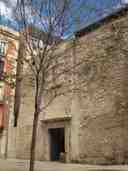
You’ve arrived at the Convent of Sant Agustí Vell. Take a look ahead-you’ll spot a large, weathered stone wall with a doorway framed by faded carvings. It’s tucked right into the plaza, with a tree reaching up in front and the old stones standing out against the pastel buildings around it. If you see a simple entrance with a bit of metal fencing and an air of ancient mystery, you’re in the right place! Now, close your eyes for a second, and try to picture this plaza centuries ago. No cars, just the steady sound of water running through the nearby Rec Comtal, which the tanners needed for their trade. Leatherworkers would be bustling about, rinsing hides and hollering to each other. The convent was started back in 1349, when people believed safety, community, and maybe a little divine help could get you through anything-especially in times of plague and war. It took over 150 years to finish the whole complex. Imagine builders clinking stones and artists carving chapels for brotherhoods that acted like medieval super-clubs. The tanners’ guild was especially powerful. Their patron, Saint Augustine, watched over their own chapel right inside these walls from the early 1400s. And just in case you wondered-if you wanted real status back then, you made sure your guild had a spot in a church, complete with a fancy altarpiece. That was peak medieval bling. But not all stories end on a high note. In 1716, the church was destroyed as a sort of royal punishment for standing up against King Philip V. The Augustinians had to pack up and move, and their old haunt became the square you’re standing in now. The convent’s ghostly walls still tell tales of crises, brotherhoods, and maybe a few very disappointed tanners. Want a plot twist? Today, this very building is home to Barcelona’s Photographic Archive, where you can travel through time with a snapshot. Oh, and there’s also the Chocolate Museum nearby. So, from sacred relics to chocolate and snapshots-talk about a glow-up. Drink in the history, feel the solid stone under your fingertips, and picture the energy of hundreds of years pulsing through this spot. Medieval Barcelona wasn’t always safe or easy, but this place was a haven-for tanners, for faith, and for anyone who needed a bit of community spirit. If these walls could talk, they’d probably gossip about everything from forbidden love to the ultimate chocolate recipe! Ready to move on, or do you want to look for secret marks the monks may have left behind?
Open eigen pagina →
Toon 8 stops meerToon minder stopsexpand_moreexpand_less
As you stand on the edge of the Isabel II Bridge, take a deep breath and listen for the distant echo of footsteps from long ago. This bridge has connected the bustling El Born…Meer lezenToon minder
As you stand on the edge of the Isabel II Bridge, take a deep breath and listen for the distant echo of footsteps from long ago. This bridge has connected the bustling El Born with the heart of Barcelona for well over a century - imagine merchants clattering past with carts, their donkeys probably more stubborn about crossing than any modern tourist with Google Maps trouble! Built in the mid-19th century and named after Queen Isabel II, this was more than a link- it was a lifeline. Picture ladies in swirling skirts and gentlemen in top hats, making their way across, maybe gossiping about the latest royal scandal or the freshest catch at the Borne Market nearby. Rumor has it, this was the spot where rivals would eye each other from opposite banks to see who'd chicken out and turn back first. It was Barcelona’s version of a staring contest… with much better views and less risk of going cross-eyed! The bridge has seen revolutions, parades, rainstorms, and summer festivals, all flowing beneath its arches. Sometimes, when the river below rushed high, the locals would swear the bridge itself seemed to shiver in anticipation. So take a moment-feel the energy under your feet, where soldiers once hurried by and lovers exchanged secret glances. If you hear a particularly persuasive pigeon calling out, don’t be surprised-Barcelona’s bridges have always had their fair share of drama. Shall we cross over to the next chapter of our tour? Don’t worry, you won’t have to duel anyone for the right of passage!
Open eigen pagina →Alright, look straight ahead and down near the edge of the path, right beside the neat rows of green plants. What you’re looking for is not tall or towering, but it’s impossible…Meer lezenToon minder
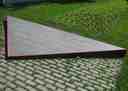
Alright, look straight ahead and down near the edge of the path, right beside the neat rows of green plants. What you’re looking for is not tall or towering, but it’s impossible to miss-a striking, flat triangle, its top pointing firmly at your toes, edged with a line of pink that catches the sunlight. The triangle is made of stone from Montjuïc mountain and lies flat on a bed of grass, like an arrow from history, measuring about as long as a small car on its base-four meters across. Inscribed on the grey surface you’ll see words in Catalan, a message etched across the stone. This isn’t just any monument. This is Barcelona’s tribute to gays, lesbians, and trans people who suffered persecution just for being themselves. It was placed here in 2011. But let me tell you, this spot wasn’t chosen by accident! Imagine, for a moment, the nerves in the City Hall as they debated if it should face the grand Sagrada Familia. But after quite the heated back-and-forth, they chose this park-the very ground where, in 1991, something tragic and terrible happened. That day, hate silenced a brave trans woman, Sonia Rescalvo. With the laying of this stone, however, Barcelona raised its voice and said, “No more hiding, no more silence. Everyone belongs.” The shape of the monument, an upside-down triangle, might remind you of something out of a geometry class, but in truth, it’s heavy with memory. During the darkest times in Nazi camps, this was the badge forced upon homosexual prisoners. Over the years, though, this symbol has been reclaimed as a sign of pride and resistance-defiance turned into hope. Stand here a moment. Picture the groups who gathered together at its opening, people from all walks of life, shouting for equality, waving rainbow flags, and maybe even telling each other bad triangle jokes-because hey, if you can’t find the right angle, you might be looking at it upside down! Barcelona wants this triangle to remind everyone that diversity is its strength and that history needs to be remembered, so no one gets left outside the circle again. So, take a picture-and if you find yourself suddenly craving a geometry lesson, don’t worry, that’s just the inspiration talking!
Open eigen pagina →Right in front of you is the impressive Borne Market, and you really can’t miss it! If you look straight ahead, you’ll see a long, rectangular building with an eye-catching roof…Meer lezenToon minder
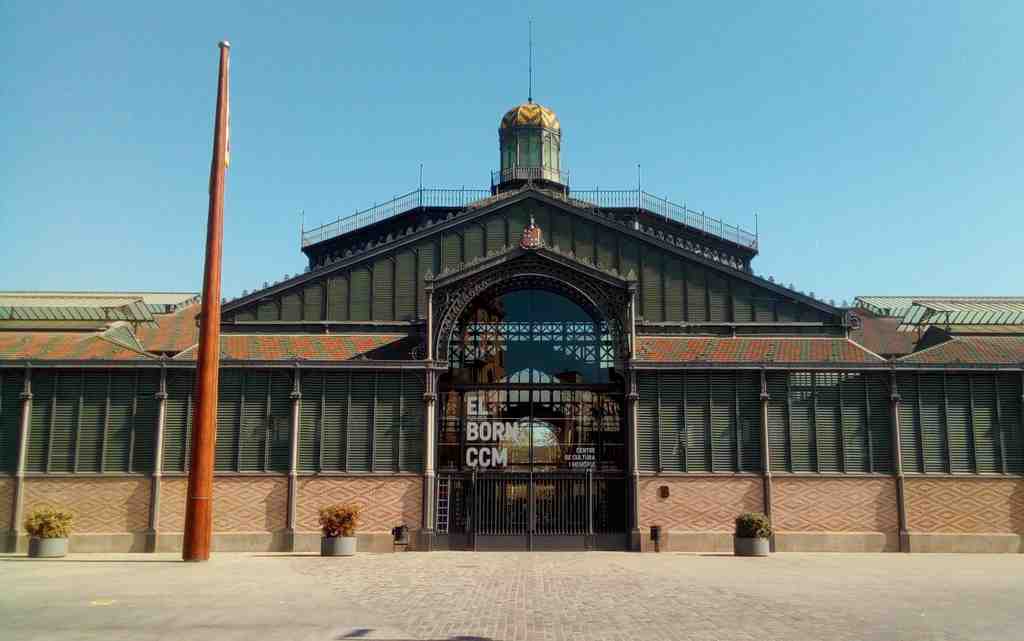
Right in front of you is the impressive Borne Market, and you really can’t miss it! If you look straight ahead, you’ll see a long, rectangular building with an eye-catching roof made of colorful tiles. The glass and iron framework is like something out of an old train station, with a large arched entrance and a small dome at the top, perched like a crown. The intricate ironwork is dazzling in the sunlight, and the building’s pattern of bricks and metal pillars gives it a sturdy, elegant look-like it’s been holding its ground for centuries. Now, let's step back in time and bring this place to life. Imagine dusty carts full of fruit and vegetables rolling right past where you’re standing, voices shouting out the day’s best deals, and the clang of iron echoing through the market halls. This building isn’t just any old market-it’s a superstar of the city’s history. Originally built back in 1876, the Borne Market was designed by a guy named Josep Fontseré, who was sort of like the rock star architect of his day. Back then, it was the central market for the neighborhood, so locals would come here to buy everything from plump tomatoes to wriggling fish, all under this magnificent iron-and-glass roof. But the market’s story doesn’t end with food. For years, it was the beating heart of the neighborhood, and then it became a warehouse for fruit and vegetables. Just when it seemed like it was heading for retirement, something absolutely amazing happened during a renovation in 2002-they found hidden medieval ruins underneath! Yes, it turns out we’re standing over an archaeological treasure chest. These remains tell the story of the Ribera neighborhood before it was destroyed in 1714, after the War of Spanish Succession. It’s a bit like Barcelona’s own secret time capsule, waiting centuries to be discovered. Today, the Borne Market is one of the most important cultural centers in Barcelona. It’s packed with exhibitions, historical displays, and interactive technology-plus, over 1.6 million people visit every year. So as you stand here, you’re not just outside a market; you’re at the entrance to centuries of stories, mysteries, and even a little bit of urban magic. And don’t worry-no need to dodge flying tomatoes these days, unless someone gets really enthusiastic about history! Take a deep breath and imagine all the lives, laughter, tension, and transformation sealed inside these walls. This building has seen it all. Ready for our next stop?
Open eigen pagina →To spot the Sant Pere neighborhood, just look ahead for a wide, stone-paved square framed by old, weathered apartment buildings. On your right, you’ll see a sturdy,…Meer lezenToon minder
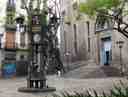
To spot the Sant Pere neighborhood, just look ahead for a wide, stone-paved square framed by old, weathered apartment buildings. On your right, you’ll see a sturdy, ancient-looking church built from grey stone, with narrow arched windows and a simple entrance, just up a few steps. And right in front of you, there’s a striking iron lamppost with a bench built into its base, topped by a clock and a little sign that says “PLAZA S PEDRO.” If you’re near this inviting square and see a church that looks like a slice of medieval Barcelona come to life, you’ve arrived. Alright, take a moment to soak up the sounds and smells around you-maybe the aroma of baking bread from a nearby bakery, or the distant hum of a scooter zipping around a corner. Welcome to Sant Pere, a neighborhood that feels like walking into a Barcelona storybook! It’s named after the monastery of Sant Pere de les Puelles, which once dominated this area. Sounds peaceful, right? Actually, the story gets a bit dramatic: the monastery’s name honors the brave girls who lived here in the 10th century-girls who courageously disfigured themselves to avoid a terrible fate during a violent raid. It sounds heavy, but it’s a testament to the spirit of resilience that has lived in these streets for ages. Close your eyes and imagine the clang of medieval bells, the whisper of nuns in the cloister, and the echo of footsteps on the old stones. Today, the neighborhood is a mix of the old world and the lively new, full of stories, small shops, bars, and local characters. And as if that’s not enough, just a short stroll from here stands the Palau de la Música Catalana, Barcelona’s own palace of music, dazzling anyone who sees it, almost like a gingerbread house built out of colored glass. So, as you stand in the heart of Sant Pere, take a deep breath and let the centuries of history settle around you. But be careful-if you listen closely, you might just hear one of those legendary medieval girls urging you to explore a little more! And remember, around here, “old city” just means there are even more secrets hiding in plain sight.
Open eigen pagina →Look ahead-on your right as you walk down Montcada Street, you’ll spot a jumble of elegant old stone walls and lofty arches, crowned with a soaring palm tree and an airy…Meer lezenToon minder
Look ahead-on your right as you walk down Montcada Street, you’ll spot a jumble of elegant old stone walls and lofty arches, crowned with a soaring palm tree and an airy staircase. That’s your sign: you’re right in front of the Museu Picasso. Five medieval palaces have been knitted together here, their thick, sandy walls and ornate details telling tales almost as vivid as the paintings inside. Now imagine it’s 1963. Picture a young, ambitious Barcelona, with little cobblestone alleys buzzing outside these very windows. Not many people know that before this place brimmed with Picasso’s wild imagination, it was a nest of medieval nobility, echoing with footsteps and the swish of gowns. That echo still lingers if you listen closely. Inside, over four thousand of Picasso’s works fill room after sunlit room. It’s like the artist has left little breadcrumbs through his life, from his earliest sketches to his more explosive creations. The museum holds gems like “The First Communion” and “Science and Charity,” painted while Picasso was barely old enough to order a beer-if only he’d waited until he was in Barcelona, right? Picasso and Barcelona were like two friends who couldn’t quit each other, so it’s no surprise he insisted the museum be here, not in his birthplace of Málaga. The idea for this wonder-cabinet came from his great friend Jaume Sabartés, who first wanted it in Málaga, but Picasso nodded to Barcelona and said, “Here. These streets are part of my story.” The city played a little game of hide-and-seek with Franco’s government, sneaking open the museum in a time when Picasso’s art wasn’t exactly “on trend” with the rulers up in Madrid. Call it a rebellious brushstroke on Barcelona’s history. As the years marched on, gifts kept pouring in: Salvador Dalí even handed over some surreal sketches, while Picasso gifted entire truckloads of art, including schoolbooks and Blue Period treasures, after Sabartés passed away. His last great donation? 920 works, including a wild bunch of family-kept paintings-proof that even artistic geniuses have closets full of old school projects. When you’re ready to head inside, think about the ghosts of centuries brushing past you-noble families, secret handshakes, and, of course, the chuckle of Picasso himself, probably wondering why we’re all staring at his homework. If you listen carefully, you might even hear a faint rustle as people turn the pages of history just above the courtyard. Enjoy the magic-this is where Barcelona and Picasso shake hands through time.
Open eigen pagina →If you’re standing in front of Santa Maria del Mar, let your eyes look straight ahead until you spot a huge, sandy-grey stone building rising above the square. It looks like…Meer lezenToon minder
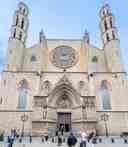
If you’re standing in front of Santa Maria del Mar, let your eyes look straight ahead until you spot a huge, sandy-grey stone building rising above the square. It looks like something out of a medieval fantasy movie with two tall, matching towers-like stone fingers pointing to the sky. At the center, over a grand doorway surrounded by elegant archways and stone carvings, is a massive circular window with delicate stonework. The whole church is set apart by its sheer size and the way it almost seems to squeeze into the narrow city streets around it, so big you have to step back to see it all. All right, take a moment and imagine yourself back in old Barcelona, with narrow streets filled with the chatter of dock workers and the salty breeze from the nearby Mediterranean. This is Santa Maria del Mar-Saint Mary of the Sea, a name that sounds almost musical, doesn’t it? Locals started building it back in 1329, right when Barcelona was bustling with merchants and sailors from all over the world. But here’s the cool part: instead of rich nobles, it was the regular folks-the fishermen, the builders, even the sailors themselves-who rolled up their sleeves and helped create this church. You know it's truly a people’s masterpiece when everyone pitches in, right? Now, step a little closer. See that round stained glass window above the entrance? That’s the famous rose window. The original one was shattered by a fierce earthquake in 1428. They rebuilt it-tough folks! And below it, the carvings show Saint Peter and Saint Paul on either side, and right above the big door, look for scenes of Jesus with Mary and Saint John. Inside, it might surprise you! Although the stone outside looks strong and sturdy, stepping in feels a bit like going underwater-cool, peaceful, and filled with streams of colored light from tall windows. Huge stone columns, spaced wider than anywhere else in Europe, support the ribbed ceilings like tree trunks in a gothic forest. Once, this place was filled with rich decorations, but a fire during the Spanish Civil War burned for eleven days! The church survived, the art didn’t. Talk about bad luck-but nothing some creative fundraising couldn’t fix. Even Barcelona’s famous football club chipped in, though only if they could get their team’s coat of arms on the glass. Hey, never miss a branding opportunity, right? So, when you look up at Santa Maria del Mar, think about all the people-ordinary people-who built it by hand, stone by stone, almost 700 years ago. And remember: behind these solid walls, stories, music, and faith have echoed for centuries. I hope you’re feeling just a little bit like a time traveler right now! Want to explore the exterior, interior or the proportions in more depth? Join me in the chat section for a detailed discussion.
Open eigen pagina →If you look straight ahead, you’ll see a massive white ship with bold red stripes and the name “Trasmediterránea” painted proudly on its side. It’s a real showstopper-a modern…Meer lezenToon minder
If you look straight ahead, you’ll see a massive white ship with bold red stripes and the name “Trasmediterránea” painted proudly on its side. It’s a real showstopper-a modern ferry with rows of tiny windows, a tall bridge at the front, and a bright red-and-white funnel toward the back. If you want to spot it easily, watch for the giant red “T” emblem-it’s hard to miss against the blue sea and sky! Now, imagine yourself standing right here in front of this maritime giant, taking in the salty air and listening as the waves lap against the hull. This isn’t just any ship-it’s part of the legendary Trasmediterránea fleet, Spain’s oldest and largest shipping company. Created back in 1916, Trasmediterránea first set sail in 1917 with a single mission: to connect the busy ports of Spain with far-off places like Morocco and Algeria, and even send Spanish oranges and minerals across the sea. Their original office wasn't far from here, right on the grand Via Laietana of Barcelona-can you picture the excitement as business leaders and adventurers dreamed up new routes? Let’s add a dash of drama: during the 80s, high-speed “Jet-Foils” raced through these waters, revolutionizing travel to the Canary Islands-blink, and you’d miss them! Picture these futuristic ferries zooming by: Over the years, Trasmediterránea has had its share of adventure. It grew from a handful of brave founders-including everyone from bankers to shipping magnates to some names you’d definitely struggle to spell-to a modern fleet, winning awards and carrying thousands of passengers, cars, and cargo to distant shores. They’ve even won quality certificates-you could say they run a pretty tight ship. (Don’t blame me, I can’t resist a nautical pun.) So as you stand here, surrounded by the scent of sea salt and the creak of ropes, remember you’re gazing at over a century of Spanish maritime history-a living link between Barcelona and the world. And if you’re tempted to climb aboard and set sail for adventure, well… you wouldn’t be the first! Intrigued by the connections and routes (after its union with naviera armas), fleet or the liveries? Make your way to the chat section and I'll be happy to provide further details.
Open eigen pagina →Take a look at its elegant façade. Back in the day, the viceroys-sort of like the king’s local managers-ruled the city from here. Picture silk curtains drawn tight, glittering…Meer lezenToon minder
Take a look at its elegant façade. Back in the day, the viceroys-sort of like the king’s local managers-ruled the city from here. Picture silk curtains drawn tight, glittering chandeliers, and the subtle rustle of documents being signed with an ink-dipped feather. That’s right, the original paperwork shuffle. Now, don’t let the serious architecture fool you. The palace saw secret meetings, urgent negotiations, and probably a few arguments over who got the biggest room. Rumor has it, late at night, even the chairs complained about all the political maneuvering. Over centuries, the palace faced plenty of changes-new rulers, new neighbors, even a few wild parties. If these walls could talk, they’d probably remind us not to poke around in their secrets… or at least to take off muddy shoes before traipsing through the corridors. The Viceroy’s Palace stands as a silent witness to the twists and turns of Barcelona’s history. Take a moment to soak in the atmosphere. Can you sense the echoes of hurried footsteps, the urgency of voices in negotiation, the odd chuckle from a servant eavesdropping in the corridor? That, my friend, is the magic of this spot. And don’t worry-while you might not leave here with a viceroy’s power, you’ll have memories of a palace that once shaped the fate of Barcelona. Just be glad you don’t have to do their paperwork!
Open eigen pagina →
Veelgestelde vragen
Hoe begin ik de tour?
Download na aankoop de AudaTours-app en voer je inwisselcode in. De tour is direct klaar om te starten – tik gewoon op afspelen en volg de GPS-geleide route.
Heb ik internet nodig tijdens de tour?
Nee! Download de tour voordat je begint en geniet er volledig offline van. Alleen de chatfunctie vereist internet. We raden aan om te downloaden via wifi om mobiele data te besparen.
Is dit een groepsrondleiding met gids?
Nee - dit is een audiotour met eigen gids. Je verkent zelfstandig op je eigen tempo, met audiovertelling via je telefoon. Geen tourguide, geen groep, geen schema.
Hoe lang duurt de tour?
De meeste tours duren 60-90 minuten, maar jij bepaalt het tempo volledig. Pauzeer, sla stops over of neem pauzes wanneer je wilt.
Wat als ik de tour vandaag niet kan afmaken?
Geen probleem! Tours hebben levenslange toegang. Pauzeer en hervat wanneer je wilt – morgen, volgende week of volgend jaar. Je voortgang wordt opgeslagen.
Welke talen zijn beschikbaar?
Alle tours zijn beschikbaar in meer dan 50 talen. Selecteer je voorkeurstaal bij het inwisselen van je code. Let op: de taal kan niet worden gewijzigd na het genereren van de tour.
Waar vind ik de tour na aankoop?
Download de gratis AudaTours-app uit de App Store of Google Play. Voer je inwisselcode in (verzonden per e-mail) en de tour verschijnt in je bibliotheek, klaar om te downloaden en te starten.
Als je niet tevreden bent met de tour, betalen we je aankoop terug. Neem contact met ons op via [email protected]
Veilig afrekenen met