

Almería Audiotour: Echo's van de Tijd in de Zonnestad
Zonlicht overspoelt de witte gevels van Almería, terwijl eeuwenoude geheimen onder de palmen en pleinen blijven hangen. Onder de warmte van deze stad wachten verborgen tunnels, oorlogsgefluister en verhalen over genezing en rebellie om ontdekt te worden. Dit is jouw zelfgeleide audiotour. Elke bocht onthult lagen die de meeste reizigers over het hoofd zien, en verbindt onrust uit het verleden met de huidige rust. Welke noodsituatie dwong duizenden ondergronds in de Refugios subterráneos? Welke verboden figuren liepen door de stenen gangen van het Hospital de Santa María Magdalena? Waarom lijken lokale duiven de voorkeur te geven aan één eenzaam standbeeld in het Parque Nicolás Salmerón? Beweeg door zonovergoten tuinen, schaduwrijke gangen en echoënde straten waar drama's zich afspeelden en geschiedenissen bijna werden uitgewist. Elke stap verscherpt je zintuigen terwijl de vergeten legendes van Almería voor je ogen weer tot leven komen. Druk op play en reis voorbij het oppervlak – de verborgen diepten van de stad roepen.
Tourvoorbeeld
Over deze tour
- scheduleDuur 40–60 minsGa op je eigen tempo
- straighten2.7 km wandelrouteVolg het geleide pad
- location_on
- wifi_offWerkt offlineEén keer downloaden, overal gebruiken
- all_inclusiveLevenslange toegangOp elk moment opnieuw afspelen, voor altijd
- location_onStart bij Centrale Markt van Almería
Stops op deze tour
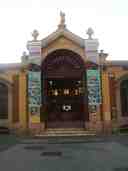
To spot the Central Market of Almería, look for a large, historic building with yellow and red brick, a grand arched entrance, and a statue of a woman holding a basket right above…Meer lezenToon minder
To spot the Central Market of Almería, look for a large, historic building with yellow and red brick, a grand arched entrance, and a statue of a woman holding a basket right above the main doors. Now, imagine you’re standing here in Almería over a hundred years ago-horses clip-clopping by, the smell of fresh oranges mixing with the salty Mediterranean breeze, and vendors shouting out their deals for the day. This very spot was chosen in the late 1800s as the perfect place for a new, unified market. The city needed somewhere grand for everyone to buy and sell, so after a few “heated” debates-and maybe a few spilled olives-the design by Antonio Martínez Pérez won the day in 1892. But it was the architect Trinidad Cuartara who actually got his hands dirty and finished this iron-and-brick masterpiece in 1897. As you marvel at the ironwork, notice the strong yet elegant structure. Two stories, five long aisles, and just a splash of drama thanks to that statue holding a basket-she's not just posing, she’s the symbol of abundance. And hey, who needs a cornucopia when you’ve got local fruit? While the market was famous for food, it’s also got quite the guest list. In 1931, Marie Curie, yes, the genius herself, stopped here with her daughter. Local florists handed her bouquets, maybe in hopes that a little genius would rub off. If you go inside, you’ll see a plaque celebrating her visit. But not all of its stories are joyful. During the Spanish Civil War, this sturdy building became a refuge for locals escaping air raids. These iron walls protected families from danger above. The market has aged gracefully, with a big renovation in the 1980s and a full makeover in 2012 after a few leaky mishaps. Fresh as ever, it’s still the heartbeat of local flavor and everyday stories. Now, let’s move on and see what stories are waiting for us next!
Open eigen pagina →To spot the Underground Shelters of Almería, look for a modern glass pavilion with sharp angles and green accents right on the corner, its minimal structure set apart from the old…Meer lezenToon minder
To spot the Underground Shelters of Almería, look for a modern glass pavilion with sharp angles and green accents right on the corner, its minimal structure set apart from the old stone buildings around it. Now, take a deep breath and imagine yourself stepping back in time to the dark days of the Spanish Civil War. It’s 1937, and the skies above Almería are anything but friendly. Imagine the anxious shouts of people running, the distant hum of planes, and the sharp whistles of bombs as 52 fierce attacks rain down on the city. That’s why you’re standing next to one of Europe’s most impressive underground shelters-a sprawling labyrinth stretching over 4 kilometers, designed to keep around 40,000 people safe beneath the very streets you’re walking on. It all started when architect Guillermo Langle Rubio, along with a team of tireless engineers, put their heads together to outsmart danger from above. The city pooled resources, even adding a special 1% tax on every purchase to cover the massive cost. Citizens, political organizations, and even local businesses chipped in-talk about teamwork with a touch of survival instinct! Building the shelters took just 16 months. They even salvaged old railway lines and beams from a nearby abandoned railroad to get construction moving quickly. These shelters were more than tunnels; they were cities beneath a city. Can you picture a wide underground corridor, benches lining the sides, echoing voices mingling with tense silences? Here, there were strict rules-no smoking, no fighting, and definitely no political debates. Children had to stay with adults, and weapons were strictly forbidden. You might even find the odd child, bored of the bombing, doodling airplanes or bombs on the damp concrete walls. Some of that original graffiti survives to this day-a curious peek into a child's mind during chaotic times. There was drama too! Stubborn at first about the cost, city officials eventually realized private shelters wouldn’t protect everyone. Wealthy residents made secret entrances from their own homes, but ordinary people found shelter in public buildings-churches, schools, even the bullring. During the wildest raids, some generous families would leave their doors wide open, waving black flags and painting “REFUGIO” outside to guide terrified neighbors inside. Going down to the main shelter, you’d find a waiting room with a glass floor, revealing the foundations of the ancient city wall and even traces of Islamic and Roman history. There was a surgical operating room built with shiny marble tiles from Macael, equipped for real emergencies. While it sounds dramatic, I promise the surgeons didn’t have to dodge falling bombs mid-operation-though the idea would make for a thrilling TV drama, right? After the war, the shelters were nearly forgotten-sealed off in 1944, briefly repurposed as temporary housing for the homeless, then lost to memory. For decades, people above went about daily life with no idea that cobwebbed tunnels snaked below, until-picture this-a work crew stumbled across the old galleries by accident during construction in 2001! Since their rediscovery, these tunnels have undergone a total facelift, opening to the public in 2006. Everything from the original benches to hand-scrawled notes survived the passage of time. And get this-back in the day, there were even kiosks above ground hiding trapdoors down into the shelters. If you could slip through, you’d find yourself where you are right now, listening and imagining lives saved by quick thinking and community spirit. So, standing here, let your mind wander a little. Picture the cool air underground, the nervous but hopeful faces pressed side by side, and the occasional burst of nervous laughter. Even today, these underground passageways aren’t just a monument-they are a lasting symbol of how Almería stood together in its darkest hour, a story told in echoes, in stone, and, probably, in more than a few giggles and groans from kids itching to go back outside. Exploring the realm of the design, capacity or the cupboard? Feel free to consult the chat section for additional information.
Open eigen pagina →

Toon 11 stops meerToon minder stopsexpand_moreexpand_less
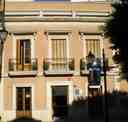
To spot the Institute of Almerian Studies, look for the salmon-colored nineteenth-century building with three tall shuttered windows upstairs, iron balconies lined with potted…Meer lezenToon minder
To spot the Institute of Almerian Studies, look for the salmon-colored nineteenth-century building with three tall shuttered windows upstairs, iron balconies lined with potted plants, and a blue plaque next to the main door at number 3 in Plaza Julio Alfredo Egea. Now, imagine you’re standing in front of a place where curious minds have always felt right at home, a building that almost seems to lean in and whisper, “Come in, there’s always something interesting happening inside!” This is the Institute of Almerian Studies-since 1980, a hive of local knowledge, the place to unravel what makes Almería tick, and perhaps, where the odd historian has lost track of time during a heated debate or two. It all began on the sweltering 24th of July, 1980, when a group inside the Diputación Provincial felt a spark of inspiration-led by José Miras Carrasco, who probably thought, “Let’s create a place just for the fascinating story of our province!” And so, with official papers rustling and important voices echoing through marble corridors, the plan for the Institute was set. They handpicked a council made up of experts passionate about everything from agriculture to history, nature to the arts. Picture President José Fernández Revuelta, Vice Presidents, secretaries, and department chiefs-each with their favorite topic, from local flowers to local gossip. The Institute has never been just an ivory tower. Anyone who’s a whiz at science, a lover of poetry, or just has a quirky obsession with Almería’s past can become a member-so long as they promise to take local culture seriously (but not themselves, hopefully-where’s the fun in that?). Inside, it’s not all stiff history: there’s an art-filled library, an archive bursting with secrets, exhibition halls with surprising artwork, and a lively events salon where audiences sometimes clap so loud, you worry about the ceiling. Over the years, the Institute has become the vibrant nerve center for lectures, seminars, guided walks, and exhibitions-sometimes, all in a single day. Rumor has it, if you stay here late enough, you might spot a ghostly historian still scribbling notes long after closing time. (Or perhaps it’s just someone desperate to win a research grant!) This beautifully restored 19th-century building was chosen for a reason-it’s full of natural light, perfect for reading, and even the plants on the balconies seem to enjoy eavesdropping on clever conversations floating up from below. The Institute’s departments cover almost every curiosity imaginable, from art and history to science and the environment. Flickers of modernity run through its historic halls; nowadays, staff tap away at computers organizing digital libraries, virtual exhibits, and online publications. Some of Spain’s most beloved Almerían writers and scientists have passed through, and perhaps, the biggest mystery is: how do they keep track of all the new discoveries? Today, the Institute stands as a generous neighbor with open arms, always inviting locals and guests alike to peek inside and connect with the stories, sounds, and visions of Almería’s ever-evolving soul. And between you and me, if you listen carefully at the door, you might just overhear the next great debate on whether Almería’s best invention is its sunshine, its history, or maybe… its sense of humor!
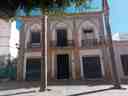
Open eigen pagina →This handsome building is the pride of Trinidad Cuartara Cassinello, the architect who made sure the council offices had plenty of personality. And let me tell you, with all the…Meer lezenToon minder
This handsome building is the pride of Trinidad Cuartara Cassinello, the architect who made sure the council offices had plenty of personality. And let me tell you, with all the drama that’s unfolded here, it definitely needed a bit of flair! The Ayuntamiento-the Spanish name for the city council-is the epicenter for Almería’s government, one of four big players sharing responsibilities with the national, regional, and provincial authorities. So, if running the city were a band, you’re staring at its lead singer! But you don’t just get any old lead singer. Since September 2022, that honor belongs to María del Mar Vázquez Agüero, who became the first female mayor in the city’s history. She took the stage after Ramón Fernández-Pacheco left to manage sustainability and… wait for it… the blue economy! That means more fish, more sea, and a bit more eco-drama at city hall. Of course, the building itself has quite a story. From 2005 all the way to 2024, it underwent an epic renovation that would have made even the Sagrada Familia say, “Are you done yet?” During those years, the council ran the city from the former Preventorio building, just across from the intermodal station-definitely not as charming as this historic spot, but hey, even politicians need to crash somewhere while their house is under construction. The staff must’ve had some wild tales about packing up city hall like it was moving day every day. Now, let’s set the mood. Imagine the city at noon, sun blazing down, the plaza bustling with locals, and suddenly, from the city hall’s carillon, the bright notes of Gaspar Vivas’s “Fandanguillo de Almería” float into the air. It’s no ordinary melody-it’s the soul of Almería, ringing out from the center of civic life. Try not to start flamenco dancing right here in the square! The council not only runs the city but also keeps tabs on a patchwork quilt of neighborhoods. From the fisherman’s quarter in El Zapillo, the cave homes of La Chanca, and the student-filled streets near the University in La Cañada, to the vibrant, modern designs in Nueva Almería, every barrio has its own character and challenges. The council manages planning, green spaces, festivals, and even throws in some urban legends-did you know there’s a neighborhood named after an old electricity plant with a towering chimney once visible across the sea? Today, the city council steers the city with a team as colorful as the blooms during Almería’s famous Feria. Mayors, deputy mayors, and councilors oversee everything: innovation, culture, water, sports, sustainability-even the all-important fiestas and blue economy. And speaking of city fiestas, when those festival lights go on, the decisions made inside this building shape the fun outside its doors. As you look up at the grand façade, with balconies perfect for waving at crowds or sneaking a peek at parades, you’re seeing more than stone and glass. This is a living stage for Almería’s evolving story, full of triumphs, debates, and maybe the occasional frantic search for that day’s agenda. After all, who knew city council meetings could be as dramatic as soap operas? So, next time you hear the Fandanguillo drifting through the plaza, remember-it’s not just music, it’s the heartbeat of Almería herself, pulsing from within these walls! When you’re ready, follow me to our next stop.
Open eigen pagina →In front of you, you’ll spot a stately, cream-colored building with grand pointed arches above its windows, sturdy stone borders, and iron balconies-just look between the two tall…Meer lezenToon minder
In front of you, you’ll spot a stately, cream-colored building with grand pointed arches above its windows, sturdy stone borders, and iron balconies-just look between the two tall palm trees in the center of the square. Now, imagine yourself in Almería in the mid-1800s. The sun is shining, the square is buzzing, and here stands the Palace of the Marquises of Torrealta-a house built for local aristocrats who definitely wanted to make the neighbors jealous! Its impressive neoclassical façade, finished in 1847, hinted at the grandeur inside, and those pointed arches gave it a look so ahead of its time that it predicted a wave of new styles no one else dared try yet. The family behind this palace, the powerful Careagas, had a tale of heroics going all the way back to the 1500s, when their ancestor sailed for the Catholic Monarchs in the battle for Mojácar. As a reward, the family got riches, titles, and, well, a fancy new address! The palace was built by José María de Careaga y Cevallos, weaving together stories of nobility, politics, and even exile: Antonia de Heredia, whose brother, the Count of Ofalia, spent years here in forced retreat-hopefully enjoying the lovely view. So, right where you’re standing, picture the whispers of power, the secrets of old aristocrats, and the relentless urge to outdo the neighbors-because style, after all, is forever!
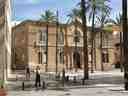
Open eigen pagina →To spot the Episcopal Palace, look for a grand, sandy-colored building right across from the cathedral, with tall windows, elegant balconies, and a facade flanked by palm trees…Meer lezenToon minder
To spot the Episcopal Palace, look for a grand, sandy-colored building right across from the cathedral, with tall windows, elegant balconies, and a facade flanked by palm trees swaying in the breeze. Now, imagine it’s the late 1800s in Almería. The streets are bustling, the sun is strong-naturally, it’s Almería-and a new palace is in the making right before your eyes. The site was once occupied by some rather tired old houses that, over centuries, saw bishops come and go. These houses had a two-story charm, with a central patio and a lush garden, but after a disastrous earthquake in 1804, they nearly collapsed in defeat. Rebuilding efforts seemed to be cursed: plans were made, but enthusiasm fizzled, budgets ran dry, and, well, centuries went by with not much happening except the slow creeping of disrepair. But suddenly, thanks to a surprising twist in Spanish history-the warming relations between the Catholic Church and the freshly restored Bourbon monarchy-the bishop finally saw the chance to build a residence fit for a high-ranking church official. Enter two local architects, Trinidad Cuartara and Enrique López Rull. In 1894, under the determined eye of Bishop Santos Zárate y Martínez, they started the ambitious job. By 1896, the palace was ready for its ribbon cutting, though workers kept hammering away for three more years (everyone needs a deadline, right?). The palace that now stands before you covers an entire block. It radiates a sort of cool medieval-classic charm with neo-Romanesque arches and strong, stately lines. If you squint, you might imagine bishops in long robes, gliding through those doors over a century ago, with a hint of drama and intrigue wafting through the halls. And of course, it’s always keeping a watchful eye on its neighbor, the cathedral-because even palaces like to gossip.
Open eigen pagina →Directly in front of you, Plaza Bendicho appears as a cozy square shaded by tall palm trees and flowering jacarandas, with a little bust on a pedestal set amid gardens and framed…Meer lezenToon minder
Directly in front of you, Plaza Bendicho appears as a cozy square shaded by tall palm trees and flowering jacarandas, with a little bust on a pedestal set amid gardens and framed by both historic and modern buildings. Imagine the gentle breeze rustling the trees as you stand in a square watched over by Celia Viñas, the beloved poet and educator whose bust rests at the plaza’s heart. Almería’s oldest preserved civil building stands nearby: the House of the Puche family, who must have made quite the entrance in 1494, strolling in with the earliest Christian settlers-probably carrying way too much luggage. If you picture it ages ago, the upstairs would be bustling with nobles discussing daily drama, while the downstairs bustled with the busy hands of the servants. Fast-forward to 1996, and the home passed into the caring hands of the Hermandad del Prendimiento, who lovingly restored it-thanks to an architect with a name as grand as the house, Ramón de Torres López. The square is more than just stone and stories; today, two energetic offices fill the scene: the Provincial Tourism Board lives in a former Music House, while the city’s environment and maintenance crews plot green plans nearby. So, you’re standing on a spot that’s been a meeting ground for poets, nobles, musicians, and, just maybe, a few overworked city workers grabbing a quick snack.
Open eigen pagina →

Veelgestelde vragen
Hoe begin ik de tour?
Download na aankoop de AudaTours-app en voer je inwisselcode in. De tour is direct klaar om te starten – tik gewoon op afspelen en volg de GPS-geleide route.
Heb ik internet nodig tijdens de tour?
Nee! Download de tour voordat je begint en geniet er volledig offline van. Alleen de chatfunctie vereist internet. We raden aan om te downloaden via wifi om mobiele data te besparen.
Is dit een groepsrondleiding met gids?
Nee - dit is een audiotour met eigen gids. Je verkent zelfstandig op je eigen tempo, met audiovertelling via je telefoon. Geen tourguide, geen groep, geen schema.
Hoe lang duurt de tour?
De meeste tours duren 60-90 minuten, maar jij bepaalt het tempo volledig. Pauzeer, sla stops over of neem pauzes wanneer je wilt.
Wat als ik de tour vandaag niet kan afmaken?
Geen probleem! Tours hebben levenslange toegang. Pauzeer en hervat wanneer je wilt – morgen, volgende week of volgend jaar. Je voortgang wordt opgeslagen.
Welke talen zijn beschikbaar?
Alle tours zijn beschikbaar in meer dan 50 talen. Selecteer je voorkeurstaal bij het inwisselen van je code. Let op: de taal kan niet worden gewijzigd na het genereren van de tour.
Waar vind ik de tour na aankoop?
Download de gratis AudaTours-app uit de App Store of Google Play. Voer je inwisselcode in (verzonden per e-mail) en de tour verschijnt in je bibliotheek, klaar om te downloaden en te starten.
Als je niet tevreden bent met de tour, betalen we je aankoop terug. Neem contact met ons op via [email protected]
Veilig afrekenen met 


