Košice Audiotour: Kazerne, Boeken en Heilige Echo's
Verken de levendige stad Košice tijdens deze boeiende tour die onderwijs, sport en cultuur combineert! Begin bij de Secundaire Beroepstechnische School aan de Kukucínova-straat, waar innovatie en traditie samenkomen in een dynamische leeromgeving. Voel vervolgens de adrenalinekick in de iconische Steel Arena, een centrum voor spannende sportevenementen en concerten. Dompel jezelf ten slotte onder in kennis en lokale charme in de Jeugdbibliotheek van de Stad Košice, een perfecte plek om te ontspannen en inspirerende boeken te ontdekken. Deze diverse tour biedt een unieke kijk op de levendige geest en het rijke gemeenschapsleven van Košice.
Tourvoorbeeld
Over deze tour
- scheduleDuur 30–50 minsGa op je eigen tempo
- straighten4.1 km wandelrouteVolg het geleide pad
- location_on
- wifi_offWerkt offlineEén keer downloaden, overal gebruiken
- all_inclusiveLevenslange toegangOp elk moment opnieuw afspelen, voor altijd
- location_onStart bij Heilige Geestkerk
Stops op deze tour
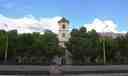
To spot the Holy Spirit Church, look straight across the trees for a pale baroque building with a red-roofed tower peeking above the greenery at the start of Južná…Meer lezenToon minder
To spot the Holy Spirit Church, look straight across the trees for a pale baroque building with a red-roofed tower peeking above the greenery at the start of Južná trieda. Welcome to the Holy Spirit Church, the oldest building in Košice-Juh! Imagine you’re standing here almost 300 years ago-the air smells of fresh stone, the same baroque tower rising above, and carriages clattering by where those tram tracks now lie. This church was built between 1730 and 1733, and if you could step inside, you’d find it draped in quiet, with beautiful ceiling paintings showing what Košice looked like back in the day, surrounded by towering town walls. It’s almost like stepping straight into a history book, only you don’t have to fight anyone for the good illustrations. But this church isn’t just about fancy art. It’s got a real heart. You’re standing where a hospital complex once cared for the poor, the old, orphans, and anyone in need as far back as the 13th century. Back then, the city walls were nearby-everything outside was a bit mysterious and dangerous, maybe with a stray goat or two wandering about. The church was the soul of this hospital; so many stories of hope, loss, and laughter echo in its stones. Though the old hospital buildings were pulled down in the 1700s, the spirit of charity lives on here: today, there’s a house for pensioners tucked into this spot. So next time someone calls you “ancient,” tell them you’re just “full of character,” like the Holy Spirit Church!
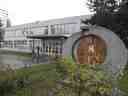
Open eigen pagina →Look for a flat, modern building with lots of windows, a Slovak flag flying near the entrance, and a large concrete sculpture set in the greenery out front-you can’t miss it, just…Meer lezenToon minder
Look for a flat, modern building with lots of windows, a Slovak flag flying near the entrance, and a large concrete sculpture set in the greenery out front-you can’t miss it, just glance to your left. Welcome! You’re now standing in front of the Primary School on Požiarnická Street, a place that’s seen decades of laughter, learning, and the occasional dramatic gym class dodgeball game. If you close your eyes and listen, you might just picture the excited buzz of hundreds of students streaming through those doors on the very first day the school opened back in September 1977. The “new” school rose from the dreams of a growing Košice and quickly became one of the city’s leading sports academies, as proud parents hoped their little ones might become the next football star. It all started when the students and teachers moved here from the Kalininova Street building, filling these halls with 710 students from grades 1 to 9. Imagine the corridors bursting with the energy of sports trainers setting up cones and whistles echoing down the hallways-by 1982, this school earned the rare honor of being among the first with “sports class” status. During the late 1980s and ‘90s, some of the young hopefuls trained here ended up topping international competitions, racking up first-place medals again, and again, and again. You might even have heard the names of famous footballers like Kamil Čontofalský or Marek Sapara-yep, they practiced their first goals right on these fields. But there’s more-this isn’t just a sports hub. Teachers here have always pushed boundaries, from pioneering IT projects to nurturing environmentalists with frog-filled school pond projects. And let’s not forget the legendary TV hosts who once nervously recited homework in these classrooms! Over the decades, the school’s led by inspiring figures, with principals who believed in big dreams and healthy snacks. Today, the halls are still alive with lessons in languages, math, computer skills, and the magic of movement. So, take a deep breath and imagine it: the hustle, the teamwork, the hope. Makes you want to join a relay race, doesn’t it?
Open eigen pagina →To spot the Kulturpark Barracks, look ahead for a striking white multi-story building surrounded by tall green trees and a modern open space dotted with oversized white planters…Meer lezenToon minder
To spot the Kulturpark Barracks, look ahead for a striking white multi-story building surrounded by tall green trees and a modern open space dotted with oversized white planters and art installations right in front of it. Alright, as you stand here, take a moment to imagine this area over a century ago. The crisp air around you is buzzing now with creativity, but back in the late 1800s, it would’ve been echoing with military boots and the sharp voices of soldiers. This whole three-hectare site, once known as the Barracks of Captain Jaroš, was alive with the strict routines of military life. Picture long rows of old buildings, a smell of bread wafting from a busy bakery inside the compound, and the low rumble of wagons rolling over cobblestones. Fast forward to the 21st century, and these once-abandoned, crumbling structures found a second chance. Košice needed something extraordinary to win the title of European Capital of Culture in 2013, and so, through ambition and a dash of imagination, the Kulturpark was born. Where soldiers once marched, artists now dance, paint, and experiment. During the big transformation, the city knocked down the towering military walls-imagine the clang and crash as the barriers came tumbling down-opening up a new urban playground for everyone. From here you can spot the main buildings, nicknamed Alpha, Bravo, and Charlie, a nod to their old military roots but now hosts for concerts, theater, exhibitions and so much more. Hidden inside are all sorts of wonderful places-a modern gallery, studios, dance halls, and even an underground parking garage called Kilo. There’s also a spot simply named Zulu, your personal air traffic control point for the arts, where you can see how every building got its fun, aviation-inspired name. And it’s not just for grown-up art lovers! There’s the LitPark, a zippy youth library, and, best of all, SteelPark-a one-of-a-kind science adventure zone. Here you can control a real electromagnet crane or try to walk a slanted magnetic bridge with special shoes, which, let’s be honest, is probably the closest you’ll get to feeling like a superhero in Košice. So, whether you’re into giant pianos, art that thinks outside the frame, or just want to relax where armies once drilled, Kulturpark is a place where history marched out-and creativity moved in, making it one of Slovakia’s brightest cultural stars. Fascinated by the reconstruction, resort or the steelpark? Let's chat about it
Open eigen pagina →
Toon 7 stops meerToon minder stopsexpand_moreexpand_less
The square sits right next to the grand Louis Pasteur University Hospital on Rastislavova Street. Imagine, in the past, doctors and nurses bustling by, perhaps rushing out to grab…Meer lezenToon minder
The square sits right next to the grand Louis Pasteur University Hospital on Rastislavova Street. Imagine, in the past, doctors and nurses bustling by, perhaps rushing out to grab a moment’s peace under the summer sun in this very park. This has always been a special spot, with the little green park in the center offering shade and a break from the city’s heat. It’s still a favorite place to escape for a quick lunch or a meeting with a friend-or, if you’re like me, a good place to tell a silly joke or two. Wander a little, and you’ll spot old hospital buildings, the well-known Astória, and the buzz of city life from all the nearby streets-Rastislavova, Brezová, Pasteurova, and Šoltésovej. Even the trams swing by with a ring and ding, linking stories from all corners of Košice. And if you get a sudden urge to write a postcard, the Košice 3 post office is just around the corner. Pasteur Square is a quiet witness to the city’s comings and goings, blending science, healing, and a little bit of everyday magic. So, take a deep breath, enjoy the atmosphere, and let yourself become part of its story!
Open eigen pagina →To spot the Church of the Queen of Peace, just look for a tall, plain cream-colored bell tower with narrow vertical windows and a cross on top, rising above a simple curved…Meer lezenToon minder
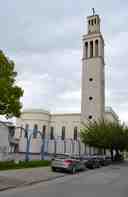
To spot the Church of the Queen of Peace, just look for a tall, plain cream-colored bell tower with narrow vertical windows and a cross on top, rising above a simple curved building across the street on Milosrdenstva. Alright, traveler! You’re now standing at the modern marvel that is the Church of the Queen of Peace, a piece of Košice’s heart built during the stormy years of 1938-1939-imagine the tension in the air back then, with Europe on edge and builders laying stone under grey cloudy skies. This church doesn’t show off with lots of decoration; it keeps things simple, focusing instead on its special mission-just like its patron, Mary, the Queen of Peace, looking over the city in troubled times. Now, after the Second Vatican Council, the inside of this church changed: out went the main altar, and up came a breathtaking stained glass window. It’s not just any window, either-it was brought to life by famed Hungarian artist Palka József. Step inside (if you get the chance), and you’ll see Mary surrounded by angels, and above her, the pure white dove of the Holy Spirit. Funny thing though, from the outside, all you get is a yellowish, honey-glazed blur, as if the window is keeping its true colors a secret unless you’re lucky enough to be inside. Since 1963, this church has been a national cultural monument-standing quietly, a beacon of both faith and history, waiting for peace to settle in like a hush after the last church bell rings.
Open eigen pagina →Now, picture the street sign back then: it read Kupeckého ulica, proudly named after the famous Slovak painter Jan Kupecký. But Košice, like a character in a drama, loves a…Meer lezenToon minder
Now, picture the street sign back then: it read Kupeckého ulica, proudly named after the famous Slovak painter Jan Kupecký. But Košice, like a character in a drama, loves a costume change! In 1938, the sign switched to Klimkovics-utca, as the city came under Hungarian influence. Suddenly, Hungarian accents filled the air, and maybe even the pastries at the corner shop changed recipes! But don’t get too comfortable: by spring of 1945, with the world shifting again after World War II, the street returned to its Slovak roots and the name Kupeckého ulica came back to stay. Over the decades, this street has witnessed whispers of history and the march of children with schoolbags, laughter, and probably a few grumpy grandpas arguing about politics on the benches. If the street itself could talk, I’m sure it would have some juicy secrets to spill! And remember: here in Košice, even the street names take you for quite an adventure. Shall we continue our tour?
Open eigen pagina →To spot the Youth Library Of The City Of Košice, look for a long, crisp white building with tall windows and a hint of modern flair, sitting just beyond an open grassy area with a…Meer lezenToon minder
To spot the Youth Library Of The City Of Košice, look for a long, crisp white building with tall windows and a hint of modern flair, sitting just beyond an open grassy area with a few leafless trees. Now, as you stand here in front of the Youth Library, imagine you're holding your favorite childhood book and stepping back in time to 1955, when the dreams of reading adventures were just beginning in Košice. This wasn’t just any library-this was the pilot project that set out to spark imaginations in every corner of Czechoslovakia, aiming to create havens for children and young people in every regional city. But here’s the twist: while the other planned children’s libraries never fully appeared, this one grew into a legend, becoming the only library of its kind, both in Slovakia and across the old Czechoslovakia. At first, it was a humble place, just three rooms bustling with bright-eyed readers on then-named Leninová street, a different world where 2,328 readers borrowed nearly 60,000 books that very first year. Through decades and many name changes, the library never lost its playful heart. From crafts and contests to wild book festivals, the staff has always been less like strict librarians and more like magicians-conjuring up wonder, sparking laughter, and guiding each tiny visitor towards a lifelong love for books and knowledge. Today, you’re standing by the headquarters of a library with 19 branches, over 14,000 regular readers (mostly kids and families!), and a mountain of books-211,000 volumes lining its shelves. Each year, the library hosts an astonishing 3,000 events, welcoming almost 160,000 visitors. Not to brag, but this place won the “Library of the Year” award in 2021 and keeps earning badges for creativity. Think of it as the Hogwarts of Košice: secret reading corners, festivals galore, and maybe even a book with your name on it, just waiting to be discovered!
Open eigen pagina →Now, picture the interwar days here: instead of today’s shops and cafes, imagine rows of military warehouses, buzzing with activity. Soldiers from the artillery regiment number…Meer lezenToon minder
Now, picture the interwar days here: instead of today’s shops and cafes, imagine rows of military warehouses, buzzing with activity. Soldiers from the artillery regiment number 111 would have marched past, boots thudding on the cobblestones, while locals exchanged cautious glances-maybe even gossiping about the latest rumors. You can almost hear the echo of marching boots and wheels on stone. I suppose if these warehouses could talk, they’d have plenty of secrets to share! So as you walk on Kukucínova, remember you’re strolling down a street woven from layers of history, identity switches, and more plot twists than a crime novel. Don’t be surprised if you start feeling a bit mysterious yourself!
Open eigen pagina →To spot the Secondary Vocational Technical School in front of you, look for a blocky, cheerful building dressed in pastel yellow with blue accents and rows of windows, standing…Meer lezenToon minder
To spot the Secondary Vocational Technical School in front of you, look for a blocky, cheerful building dressed in pastel yellow with blue accents and rows of windows, standing just behind the sidewalk and leafless trees. Welcome to the Secondary Vocational Technical School at Kukucínova 23! Imagine yourself stepping back in time to 1949, the air buzzing with the energy of young apprentices and the clatter of tools from the old working youth center. Back then, this was just a dream for local builders, created to give the youth of Košice real opportunities to learn and work with their hands. The school’s journey is like a plot twist novel! It started with three separate training centers scattered across the city-one on Jesenná street, another in Šaca, and one right here-all glowing with ambition and the promise of building not only walls but futures. Now, here’s where the plot thickens! By 1963, as concrete mixers rumbled and construction plans shuffled, all three teaching centers were united right on this spot. The building rose, and so did local hopes. Just imagine the sound of bricks, the beeping of trucks, and the echo of students’ laughter bouncing off the fresh walls. And since then, from government ministries to county management, every shift in authority added another chapter to the school’s adventures. The school’s name became official in 2009, but even before the fresh paint, generations of students were walking these halls, enduring strict headmasters, sharing inside jokes, and maybe getting a bit lost in the maze of workshops. Today, it stands as a beacon for technical skills-the place where future builders, electricians, and dreamers all take their first steps. So, as you look up at those sturdy walls and imagine the students bustling to class, remember: this isn’t just a school. It’s a living, changing story that continues to shape Košice, one skilled pair of hands at a time.
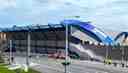
Open eigen pagina →To spot the Steel Arena, look for a futuristic-looking, massive blue-and-grey building with striking geometric shapes towering above the street on your right. Welcome to the…Meer lezenToon minder
To spot the Steel Arena, look for a futuristic-looking, massive blue-and-grey building with striking geometric shapes towering above the street on your right. Welcome to the legendary Steel Arena-Košice’s beating heart of ice, sweat, and cheers! Imagine, as you stand here, a crowd of 8,343 roaring fans, the sound of skates slicing across the ice, and banners waving for HC Košice, the home team. This arena opened its doors in 2006, named after its steel giant sponsor, U. S. Steel Košice, whose backbone literally holds Košice together. But there’s spirit in these walls too: Ladislav Troják, the homegrown hockey star who became the first Slovak to bring home World Championship gold with Czechoslovakia, is immortalized in the stadium’s name-a true local hero! Since then, Steel Arena has been buzzing with not only bone-crunching ice hockey but wild wrestling flips, epic handball goals, and even the thunderous applause for bodybuilders flexing to glory. In 2011 and 2019, the world’s hockey greats clashed here during the IIHF World Championships, as pucks pinged off the boards and hopes soared and crashed. And if you listen closely, you might just hear the ghostly echoes of a rowdy concert night, or the striking pins from the 2007 nine-pin bowling World Championships. With steel, stamina, and a whole lot of Slovak pride, Steel Arena is more than just a rink-it’s where Košice gathers to dream big, make noise, and maybe, just maybe, witness sporting history in the making!
Open eigen pagina →
Veelgestelde vragen
Hoe begin ik de tour?
Download na aankoop de AudaTours-app en voer je inwisselcode in. De tour is direct klaar om te starten – tik gewoon op afspelen en volg de GPS-geleide route.
Heb ik internet nodig tijdens de tour?
Nee! Download de tour voordat je begint en geniet er volledig offline van. Alleen de chatfunctie vereist internet. We raden aan om te downloaden via wifi om mobiele data te besparen.
Is dit een groepsrondleiding met gids?
Nee - dit is een audiotour met eigen gids. Je verkent zelfstandig op je eigen tempo, met audiovertelling via je telefoon. Geen tourguide, geen groep, geen schema.
Hoe lang duurt de tour?
De meeste tours duren 60-90 minuten, maar jij bepaalt het tempo volledig. Pauzeer, sla stops over of neem pauzes wanneer je wilt.
Wat als ik de tour vandaag niet kan afmaken?
Geen probleem! Tours hebben levenslange toegang. Pauzeer en hervat wanneer je wilt – morgen, volgende week of volgend jaar. Je voortgang wordt opgeslagen.
Welke talen zijn beschikbaar?
Alle tours zijn beschikbaar in meer dan 50 talen. Selecteer je voorkeurstaal bij het inwisselen van je code. Let op: de taal kan niet worden gewijzigd na het genereren van de tour.
Waar vind ik de tour na aankoop?
Download de gratis AudaTours-app uit de App Store of Google Play. Voer je inwisselcode in (verzonden per e-mail) en de tour verschijnt in je bibliotheek, klaar om te downloaden en te starten.
Als je niet tevreden bent met de tour, betalen we je aankoop terug. Neem contact met ons op via [email protected]
Veilig afrekenen met