Timisoara Audiotour: Bastions, Bisschoppen & Verborgen Verhalen
Onder de levendige boulevards van Timișoara kloppen eeuwen van revoluties, geheimen en verloren schatten net onder het oppervlak. Deze zelfgeleide audiotour leidt je door stenen bogen, galmende kathedralen en verborgen hoekjes waar de geschiedenis ademt – en onthult verhalen die de meeste bezoekers ontgaan. Wie verdween spoorloos in de schaduwrijke zalen van het Huniade-kasteel tijdens een middernachtelijke opstand? Waarom luiden bepaalde klokken van de Orthodoxe Kathedraal alleen op specifieke uren – en welke legende houdt de lokale bevolking aan het luisteren? Welk schandaal ontvouwde zich achter de glas-in-loodramen van de Cetate Synagoge op een stormachtige avond in 1913? Beweeg door lagen van tijd terwijl fluisteringen van drama en verwondering je meevoeren over kronkelende paden. Elke bezienswaardigheid verandert van louter stenen in levendige getuigen van opstand, intrige en vergeten glorie. Zie Timișoara opnieuw – met nieuwsgierigheid die elke stap leidt. Druk nu op afspelen en ontgrendel de hartslag onder de historische straten van Timișoara.
Tourvoorbeeld
Over deze tour
- scheduleDuur 40–60 minsGa op je eigen tempo
- straighten2.9 km wandelrouteVolg het geleide pad
- location_on
- wifi_offWerkt offlineEén keer downloaden, overal gebruiken
- all_inclusiveLevenslange toegangOp elk moment opnieuw afspelen, voor altijd
- location_onStart bij Theresiabastion
Stops op deze tour
To spot the Theresia Bastion, just look for a long, red-brick wall with arched openings, topped with a lush green lawn and a white building on one corner-it stands proudly right…Meer lezenToon minder
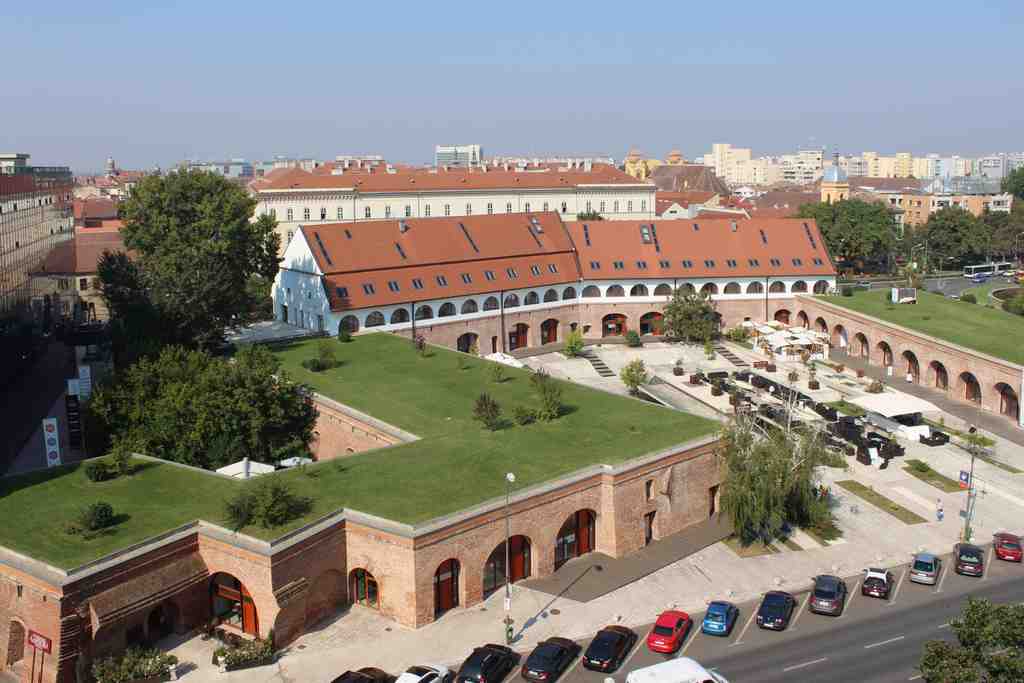
To spot the Theresia Bastion, just look for a long, red-brick wall with arched openings, topped with a lush green lawn and a white building on one corner-it stands proudly right near the busy intersection of 1989 Revolution Boulevard, with its unique grassy roof peeking above the city buzz. Welcome to Theresia Bastion, where history-believe it or not-still sometimes echoes through these arched brick corridors! If you close your eyes for just a moment, you might almost hear the distant clatter of carriages and the shuffle of soldiers' boots. This mighty structure, stretching across about 1.7 hectares, is the largest and best-preserved chunk of what once was Timișoara’s defensive fortress. Now, before you start picturing knights in armor and drawbridges, let me unwind its story for you. Once upon a chilly October in 1716, the air was thick with tension as Eugene of Savoy and his Habsburg army stormed the city, taking it from the Ottoman Turks. Back then, the Turkish fortress walls-let’s just say-weren’t a match for the new “bang and boom” of modern warfare. So, the Austrians decided to tear it all down and start afresh. Fast-forward just a few years, and you’re standing in front of the first piece of their new masterpiece-the Theresia Bastion! Construction began in 1732, right after clever engineers made sure the Bega River’s waters brought life, and a little extra moat drama, right to the foot of these walls. Originally, this wasn’t just any old wall. It was a ravelin, surrounded by water, designed to guard the food warehouses and powder room with fierce determination. If you ever wondered what defensive architects dream about, it’s this: thick brickwork, angled flanks for firing at would-be intruders, and a secret retreat for when things got dicey. In fact, the Theresia Bastion was so well-defended, it was meant to serve as a final refuge-like the “last cookie in the jar” of fortresses, always fiercely protected. But this place wasn’t all muskets and mayhem. Over the centuries, these echoing halls played host to all sorts of curious characters. Imagine the clang of hammers from workshops, the stomping of boots in riding schools, and, I kid you not, apprentice duels in the old fencing halls. Even the state archives, boarding schools, and a rather mysterious ethnographic collection found a home here. By the end of the 19th century, Timișoara decided it didn’t need most of its walls anymore (there goes the neighborhood!), but the Theresia Bastion survived, because-unlike the rest-it had usable rooms all up and down its length. Practicality saved it from the wrecking ball! These days, instead of echoing with battle cries, you’ll hear café chatter, glasses clinking, and perhaps even the thumping beat from a nightclub hidden behind those sturdy walls. Take a deep breath-you might smell roasted coffee, food wafting from nearby restaurants, or even the musty pages of the Banat Village Museum’s ethnography collections. Of course, keeping a structure this old standing takes a little TLC. In the late 1960s, architects-in their infinite 20th-century wisdom-decided to pour a little concrete and open up a new passage for cars and pedestrians. But, oops, they also erased a lot of the original details, and the defensive ditch shrank dramatically. Fast-forward again to the 2000s, and the bastion got a fresh round of restoration. Builders this time removed the old concrete, added timber frames in the brick arches, transformed the attic into an event space, and showed off those ancient wooden beams-some of them still standing strong after nearly 300 years. So as you stand here in the center of the old city, imagine yourself as both a defender and a witness to centuries of change. Look left and right along the two long flanks-once studded with cannon embrasures-and imagine the bustle of soldiers, clerks, and students all sheltering inside. The angled corners you see? They were designed for defense, forming a sharp 72° point to the east, with the “ears” of the bastion poking out on either side. Today, Theresia Bastion is more than just bricks and memories. It’s a passage, a gathering place, and-let’s be honest-a great spot for a secret snack or a night out. Next time you hear echoes in the vaults, just remember, it might be the past saying, “Hey! Not bad for a 300-year-old wall, huh?”
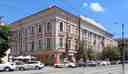
Open eigen pagina →To spot the Deschan Palace, look for a large, stately building stretching along the street, painted a soft peach color with striking white window frames, tall columns with…Meer lezenToon minder
To spot the Deschan Palace, look for a large, stately building stretching along the street, painted a soft peach color with striking white window frames, tall columns with decorated tops, and classic cornices lining the roof-right in front of you. Alright, take a breath and soak in the view-imagine stepping back nearly 300 years, right here where you’re standing. This is the Deschan Palace, built in 1735 by a family so cool they traveled all the way from France, changed their name for some extra flair, and became city legends! They started as the de Jean family, but after a fancy new title from the king, everyone called them the Deschan de Hansen family. Talk about a rebranding! Picture it: the streets bustle, but behind these impressive peach and cream walls there was the biggest plot in the whole fortress-2,400 square meters, enough space that even a nobleman’s horse would get lost if it wandered off. The head of the house, Johann Anton Deschan von Hansen, wasn’t your average rich guy. He marched alongside Prince Eugene of Savoy, survived a huge siege, and gave advice to the governor. Maybe that’s why his palace looked so grand-he needed a proper place to plot and plan, after all. But let’s talk fun, because this place was the heart of excitement! The very first bazaar in Timișoara was here. Imagine the scents of fresh bread, the chatter of traders, and the clink of coins bouncing on stone floors. Locals called it the “Bazaar” because if anything happened, it probably happened here first. They upgraded in style when, in 1830, the first ever casino in the city popped up on the first floor. Picture elegantly dressed folks spinning the roulette wheel and maybe one or two overconfident gamblers betting their lunch money. Through revolutions, renovations, and the odd bit of noble drama, the palace stood strong. Today if you peek inside, you’ll find shops instead of roulette tables, but you can almost hear the laughter and the deals whispered through the courtyards supported by grand arches. The old palace isn't just a building-it's the place where Timișoara tried out its wild side. Now, who’s ready for their own adventure? Let's go!
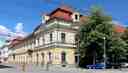
Open eigen pagina →To spot the Roman Catholic Episcopal Palace, look for a large, elegant yellow building with a classic baroque style and red-tiled roof, it sits on the corner with arched windows…Meer lezenToon minder
To spot the Roman Catholic Episcopal Palace, look for a large, elegant yellow building with a classic baroque style and red-tiled roof, it sits on the corner with arched windows all along its facade and two squared-off towers with curved tops at the corners. Welcome to the Roman Catholic Episcopal Palace! Take a look at that distinctive roof and those grand windows-no, you haven’t walked into a historical movie set, although you might expect to see someone step out in powdered wig and robes at any moment! Now, let’s slip back in time and imagine the air filled with the scent of old books and candle wax, and carriages rattling by on these quiet city streets. The story of this palace is as tangled as a priest’s laundry on a windy day. It all began in the days when Timișoara was just shaking off the dust of the Turkish occupation-a time of chaos and change. Back then, the Catholic diocese was like a traveler with nowhere to settle. The bishops bounced from town to town, always waiting for their promised home. It was only through the persistence of several bishops-and, rumor has it, imperial nagging-that things got moving. Empress Maria Theresa herself scratched her head and said, “Fine, build them a palace already!” Once completed in the mid-1700s, this very building became the heart of Catholic life in Banat. Now, imagine the daily life here: bishops roaming the halls with rustling robes, the library overflowing with tomes, the kitchen bustling with clattering pots. Over the centuries, you might have bumped into Hungarian, German, Romanian, Croatian, Slovak, Bulgarian, Czech, and even Italian worshippers. The Catholic community here was-and still is-a tapestry of cultures. But Timișoara’s Catholic bishops had it tough. The original diocese was founded way back in 1030-the first bishop, Gerard Sagredo, met a dramatic end, martyred by rebels in what is now Budapest. They named a hill in his honor; you can still visit Gellért-hegy if you ever get to Hungary. Centuries later, Catholic monks of all kinds-Franciscans, Jesuits, Piarists, and more-hustled through this neighborhood, shaping the city in everything from education to charity. Try to picture them in their habits, shuffling along these streets, perhaps trading stories or a bit of local gossip. Dark days came with communism. Suddenly, this palace, once filled with prayer and song, saw Catholic priests chased away, and its rooms commandeered. Bishop Augustin Pacha, who dared speak his mind, was thrown in prison. The palace was seized by the authorities-imagine the sadness as cherished statues, stoves, and those beautiful carved doorways were chipped away by careless hands and newcomers. Still, despite almost 50 years of tenants and bureaucrats, the spirit of this building was not lost. The baroque portal with that sneaky little mascaron above-the sculpted face in the keystone-survived to delight visitors. Next time you go inside, look for curiosity in its face, like it’s wondered who would live here next. And just think, all those years, inside its walls, priceless stained glass medallions created by Miksa Róth lay hidden, saved by clever priests from being melted down or sold during another round of state takeovers. When the palace was finally returned to the Church after 1990, these treasures re-emerged, restored to their proper home along with statues, paintings, and relics, now showcased in its own little museum for all the world to see. Today, this palace is more than just a chunk of yellow stone and brick. It’s a monument to resilience-surviving occupation, war, communism, and a parade of changing fashions. You’d never guess it hosted Emperor Franz Joseph I himself for a stay. Through all these eras, its halls have been filled with Latin prayers, whispered fears, bursts of laughter, and probably a fumbled tray of soup or two. Take one last look at its solemn face and listen-if the wind is just right, you might hear echoes of stirring sermons, shuffling monk robes, and maybe, just maybe, the soft laughter of children from one of the many cultures that called it home. That’s the Roman Catholic Episcopal Palace, keeper of secrets and silent witness to centuries of Timișoara’s drama and hope.
Open eigen pagina →
Toon 12 stops meerToon minder stopsexpand_moreexpand_less
Look for an intricate, star-shaped outline made of walls and bastions-if you’re standing nearby, just follow the sharp, zig-zag lines jutting out in every direction, those jagged…Meer lezenToon minder
Look for an intricate, star-shaped outline made of walls and bastions-if you’re standing nearby, just follow the sharp, zig-zag lines jutting out in every direction, those jagged layers are a giveaway that you’re looking at the legendary Timișoara Fortress! Alright, traveler, right where you’re standing, you’re at the heart of a place where centuries of stories echo through the earth! Imagine the ground beneath your feet rumbling with marching boots, and the air thick with anticipation-because this is where armies have clashed, stones have fallen, and the fate of an entire region was decided more than once. Ready to step into the drama? So, let’s wind the clock way, way back. The legends say there was an ancient earth fortress here, built by the mysterious Avars, but don’t try digging for it-you’ll find more rumors than ruins! The real curtain opens in the 1200s, when medieval Timișoara steps onto the stage. Here comes Charles Robert of Anjou strutting in, kingly robes fluttering, as he builds the first mighty stone fortress between 1308 and 1315 with the help of Italian craftsmen (who probably complained about local coffee the whole time). You’d have seen two rectangular fortified zones, prime real estate in feudal style, with a great big castle down south-the very spot where Huniade Castle stands today. This area didn’t just protect people; for a while, it served as the capital of the Kingdom of Hungary! Picture marketplace hustle, royal parades, and knights clanking down what’s now Alba Iulia street. But then, disaster strikes. In 1443, a huge earthquake shakes the whole place--walls tumble, towers crumble, and the townspeople have every mason in the region working overtime to rebuild. Enter the hero of the day, John Hunyadi! He brings in tough stone all the way from Vârșeț, making the fortress taller, stronger, and better defended-especially since marshes on the west side made a great natural moat. The city was booming, trade routes ran through it, and a bustling rural market grew just outside the walls. Life wasn’t always peaceful, though-it was more like an epic action movie. In 1552, the mighty Ottomans showed up with an army big enough to fill a football stadium and more, laying siege to Timișoara. For weeks, the sounds of cannon fire and clashing swords filled the air, until at last, the fortress fell, and the city became the center of a whole Ottoman province. For over 160 years, sultans called the shots from here, and the fortress bristled with minarets and lively bazaars. You wouldn’t have wanted to mess with this place-five gates, winding bastions, and water-filled moats made it nearly untouchable. But empires never last forever. Fast-forward to 1716, when another thunder of hoofbeats sounds-this time, the Habsburgs and their legendary commander Prince Eugene of Savoy storm onto the scene. After weeks of siege, with cannon blasts by day and spy missions by night, a white flag finally waved over the bastions. The fortress was in ruins from all the fighting, but the Austrians had big dreams. They rebuilt it-bigger, smarter, and sharper than ever, with the distinctive “star” shape you can see in old maps, like the one here. This wasn’t just for show-those angled bastions deflected cannonballs and let defenders fire from every corner. If you think parallel parking is hard, imagine building all that in a swamp! The fortress became so tough, it was only directly attacked once more, during the Hungarian Revolution of 1848, and it held firm. But time, as always, moves on. By the late 1800s, new advances in artillery made massive walls less useful, and the city urgently wanted room to grow. So, starting around the turn of the 20th century, the walls were gradually pulled down and the damp trenches filled in. Today, only fragments remain-Theresia Bastion, bits of old ravelins and curtain walls. But stand here, and you can feel the shadow of its star-shaped glory. So the next time you hear someone say “old stones can’t talk,” you tell them they haven’t met Timișoara Fortress! It may not hold royal courts or echo with cannon fire today, but trust me-the stories are just waiting for anyone willing to listen. Now, shall we see what other surprises Timișoara has for us onward? Fascinated by the the roman castrum, the avarian fortress or the the angevin fortress? Let's chat about it
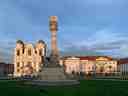
Open eigen pagina →To spot Union Square, just look for the wide open green space ahead, with a tall stone column topped by golden rays right in the center, surrounded by grand, colorful Baroque…Meer lezenToon minder
To spot Union Square, just look for the wide open green space ahead, with a tall stone column topped by golden rays right in the center, surrounded by grand, colorful Baroque buildings and a majestic church with twin towers. Welcome to Union Square, the grand stage where centuries of Timișoara’s stories come to life under your very feet! Take a deep breath-can you feel the history buzzing in the air? Imagine standing here back in the early 1700s, when this square didn’t exist yet. Instead, a massive earthwork entrenchment from the old Turkish fortress cut diagonally across this spot. You’d have mud on your boots and maybe a stray goat eyeing you suspiciously. But by 1740, the city had grand plans-those ramparts were demolished, enormous moats filled with earth, and the vision of a proper rectangle square took root. It grew larger and grander, eventually reaching 150 by 100 meters, the largest of Timișoara’s fortress squares. Now, cast your gaze around: The most important Baroque show in town is happening right here, from the elaborate facades to some of the fanciest addresses in the city. To your left, two magnificent cathedrals-one Roman Catholic, built over a whopping 38 years, and the Serbian Orthodox, finished in just three. You could say the competition was divine! The Baroque Palace, once the seat of the Banat governors and now the Museum of Art, stands proudly, keeping an eye on everyone who enters. The square has worn many hats. It’s been the scene of markets bustling with townsfolk buying bread, eggs, and the odd unlucky chicken (it really ruffled some feathers when they moved the animal market here in 1903). It even played host to food stalls and merchants until the sixties-imagine the sounds and smells mingling with the chiming bells from the domes. And in 1988-89, the whole square got a Neo-Baroque facelift, refreshed for new generations, but the heart of old Timișoara never left. Take a slow walk, circle the Plague Column gleaming in the sun, and think of how this square witnessed Banat’s union with Romania, the joy and tension of armies marching through, and countless lively debates at the café tables. Look closely at the buildings: each has a name and a story, from Three Hussars House to the House with Lions, the Baroque facades carrying secrets of powerful bishops, savvy bankers, and, of course, stubborn architects. So, next time you stroll through Union Square, give a little nod to the ghosts of merchants, soldiers, and townsfolk whose voices still echo in the cobblestones. And if you spot a pigeon perched especially proudly, well, who knows-maybe it’s just overseeing the most historic neighborhood meeting in town!
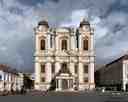
Open eigen pagina →To spot the St. George Cathedral, just look straight ahead for a grand cream-colored Baroque church with two tall towers topped by bronze domes and crosses, right at the heart of…Meer lezenToon minder
To spot the St. George Cathedral, just look straight ahead for a grand cream-colored Baroque church with two tall towers topped by bronze domes and crosses, right at the heart of the square, standing proudly among the surrounding pastel buildings. Welcome to the stage of Timișoara’s history! With its grand twin towers and creamy, sculpted façade, the St. George Cathedral has watched centuries of drama, celebration, and even a bit of chaos unfold. Picture it: It’s the 1730s, and the city is buzzing-imagine the sound of hammers and saws as the first stones are set where you’re now standing. Timișoara had just become the seat of the Bishop, thanks to Emperor Charles VI, and suddenly the city needed more sparkle-what better solution than a colossal cathedral that looks like it could charm the socks off Vienna? Construction wasn’t all smooth sailing. They started with grand visions in 1736, only for war to bring everything screeching to a halt after just one year. You can picture the workers grumbling, tools dropped, as the Austro-Turkish War put dreams on pause. Half built, the cathedral was just a glorious work-in-progress when Adalbert von Falkenstein, the original bishop, died-only to be succeeded by Nikolaus Stanislavich, who had quite the adventurous backstory himself, having fled Craiova ahead of the Ottomans. Now, with new determination, he dusted off the plans and called everyone back to work, the sound of hammers echoing across the square. The cathedral quickly became Timișoara’s pride, but it grew in fits and starts-one bit finished here, one bit started there. By the late 1740s and early 1750s, finally, the walls grew high, the first holy mass was celebrated (with music specially composed by Michael Haydn, no less-clearly, they liked to do things in style!), even though half the church was shielded behind a makeshift wooden shed. The grand opening? That took a few more decades! You’d think they were making sure every stucco swirl was just right. Carl Alexander Steinlein and Johann Theodor Kostka took over the helm for the second construction wave, adding those iconic towers-though, plot twist, their tops had to settle for clapboards instead of copper domes because, surprise, the Viennese court had a tight budget. Some things never change! Inside, it’s a feast for the eyes. Nine altars decked out in shimmering Rococo and Baroque, statues of saints watching over worshipers, and paintings by Michelangelo Unterberger-a guy whose name might trick you into thinking he switched from painting chapels to painting frescos in some world-famous chapel elsewhere. The main altar, flanked by St. Teresa of Ávila and St. Charles Borromeo, is dazzling under Josef Moser’s silver chandelier (or the “Eternal Light,” as they call it). And don’t miss that mural: St. George himself, armored up and giving a dragon a very hard time. That’s right-the cathedral’s spiritual patron was a real dragon slayer! I bet the pigeons outside aren’t even half as dramatic. If you listen closely from the square, you might catch an echo of the bells-the one remaining original, cast in 1763, still chimes after all these years. The crypt below carries secrets of its own. Over the centuries, it sheltered not only bishops like Stanislavich and Wagrain but also noble commanders and even some unfortunate civilians who rushed inside during city sieges when bombs tore down the roof in 1849, and the only safe place was underground beneath the cathedral’s thick floor. Imagine the silence and tension as they huddled in the dark, listening to distant thunder and waiting for safety to return. Let’s not forget: Between the colossal organ (a replica of the one in Paris’ Saint-Sulpice, built in 1907) and the cathedral’s infamous acoustics, this place is still very much alive, regularly hosting concerts and ceremonies in German, Hungarian, and Romanian. Even Empress Maria Theresa couldn’t resist and declared it the city’s first church back in 1756. So here you are, standing before a cathedral built on wooden pillars to stand firm above ancient marshes, a place where marble and wood came all the way from Vienna, and silver and gold glitter from every corner. Its story is one of war and peace, devotion and danger, music and mystery-and more than a little Baroque drama. Now, take a moment to step closer, touch the cold oak doors, and imagine how many people before you have come for hope, courage, or maybe to hear a little music echoing up toward the vaulted ceiling. And if you think you feel a dragon watching over you, well, maybe you do!
Open eigen pagina →The National Museum of Art Timișoara is right in front of you-look for the elegant, grand palace with rows of tall windows and sparkling lights illuminating its Baroque façade,…Meer lezenToon minder
The National Museum of Art Timișoara is right in front of you-look for the elegant, grand palace with rows of tall windows and sparkling lights illuminating its Baroque façade, making it sparkle like a jewel in the night. Welcome to one of Timișoara’s crown jewels-the National Museum of Art, nestled inside the majestic Baroque Palace! Can you imagine the stories these old, ornate walls could tell if only they could talk? You might even hear a faint echo of history if you listen hard enough. Originally, this wasn’t a museum at all, but a stately residence filled with secrets and drama from centuries past. Fast forward to 2006, after a long, almost epic saga of renovations and expanding collections, the museum opened its doors wider than ever, ready to welcome art lovers, curious wanderers, and yes, you! But the art here isn’t just paint on canvas-it’s like a vibrant family reunion. Step inside and you’ll discover the legendary “Baba Collection,” with 90 pieces by the iconic Corneliu Baba. Imagine seeing portraits that seem to look right back at you, or masterpieces like “Resting in the Field” and “Return from the Hoe”-all donated by Baba’s wife, with a few adventurous works on loan from Bucharest, like artists on a little holiday. These paintings capture moments of struggle, joy, and even a little madness-especially Baba’s “Mad King” cycle. And that’s only the beginning. Want to feel like you’ve walked into an artist’s secret club? The contemporary art rooms here vibrate with energy. Back in the 1960s, Timișoara was a brewing pot for daring young artists who wanted to shake up the old ways of painting. There’s mystery in this story: a group called “Grupul 111” formed-Roman Cotoșman, Constantin Flondor, and Ștefan Bertalan-all fascinated by new art and technology. They experimented with collages, geometric shapes, and strange new materials. Imagine them plotting late at night, like artistic detectives, trying to find the next big thing! Some artists even created “Mail-Art” to dodge censors during the tough years of the 1980s-tiny works sent secretly by post, sometimes with hidden messages inside. You could say art was their underground resistance, sneaking creativity past watchful eyes. Travel back a bit further, and you’ll uncover Banat’s old artistic treasures-icons on wood and canvas, some so old they practically hum with history. These pieces come from local workshops and distant lands-from Transylvania to Russia to Greece-and together they tell stories of village life, faith, and the dreams of their creators. Some are colorful, some are mysterious, but all have survived thanks to the dedication of past directors who traveled through muddy village roads to save them from dust and oblivion. Timișoara’s own artists from the 19th and 20th centuries light up the collection too. Picture flower markets in Naples, shimmering Italian lagoons, and the swirling dances of local festivals-artists like Johann Wälder, József Ferenczy, and Oskar Szuhanek captured the spirit of the city’s people, whether painting lively portraits, quiet rivers, or nostalgic village streets. Their art feels like a window into the heart of Banat, sometimes serious, sometimes playful, always alive. And if you love a bit of sparkle and style, the decorative arts collection is like a treasure chest. Here you’ll find everything from delicate Viennese porcelain and Italian ceramics, to French Empire clocks and Art-Deco metalwork-proof that even two centuries ago, people in Timișoara liked to surround themselves with beauty, elegance, and maybe just a little bit of glamour. European art is another star-especially the Italian paintings here, glowing with Renaissance innovations. They show saints, noble families, and mythic dramas, all with vivid color and attention to human form. The brushstrokes can almost make you believe you’ve stepped into a Venetian palace yourself. So, as you stand outside, imagine the palace as a living memory box, layers of past and present waiting to be discovered. Who knows-you might even leave with a new favorite artist or a story to tell! If the paintings could giggle, I’m sure they’d be laughing at all the dazzling secrets hidden inside these walls. Ready to step through those grand doors and let the art whisk you away through centuries of creativity? Let’s go see what magic awaits! Wondering about the historian, "baba" collection or the contemporary art? Feel free to discuss it further in the chat section below.
Open eigen pagina →Look for a corner building with soft yellow walls, green-framed windows, and a sloping red roof, sitting at the intersection of Eugene of Savoy Street and Mărășești Street-just…Meer lezenToon minder
Look for a corner building with soft yellow walls, green-framed windows, and a sloping red roof, sitting at the intersection of Eugene of Savoy Street and Mărășești Street-just ahead on your right! Alright, traveler, get ready for a story that’s bursting through old brick and echoes through the centuries. You’re standing at the Prince Eugene House, but don’t let the modest look fool you-this place is built on a gateway that once crackled with the roar of conquest and the whispers of spies! Picture this: it’s October 1716, and the Ottoman Empire has been ruling Timișoara for over 160 years. Their mighty fortress stands, surrounded by thick stone walls and guarded by five gates. Right here, under your feet, was the Rooster Gate-or, in Turkish, the Horoz Kapısı-which had seen it all: traders, soldiers, the odd merchant chicken (none of whom survived the siege). The gate tower, built way back in the medieval days, was so iconic it even landed itself a spot on the Banat of Temeswar coat of arms. But on October 18th of that year, history galloped through-a determined fellow named Eugene of Savoy, commander of the Habsburg army, fresh off victory after a tough siege, led his troops in right through this spot. You can almost hear the drumbeats, the calls of celebration, and, if you listen closely, perhaps the Ottomans softly muttering “Oh no, not again!” As the dust settled, the gate was renamed the Prince Eugene Gate in his honor. Later, thanks to a little bureaucratic creativity, it became known as the Forforosa Gate. Time marched on and, as the Austrian defense system evolved, the gate got swallowed up by new fortress walls-imagine the grand old arch slowly bricked up and hidden inside a rectangular building laid atop the old Turkish ditches, an honest-to-goodness architectural time capsule. Now, here’s a twist you might not expect: between 1739 and 1769, the Jewish community used that very building as a house of prayer. By 1817, everything had changed: the old gate and the building over it were demolished, but the bricks were reused (no waste in this city!) to build the Prince Eugene House right where you’re standing. During construction, the city said, “Hey, don’t forget to immortalize the old gate,” so the owner stuck a stone medallion above the entrance-a nod to the past, a wink to history. The real original is now at the National Museum of Banat. Despite the grand name, poor Eugene of Savoy never spent a night here-it was built some 81 years after he’d left this world! Instead, the house saw life under many owners: merchants, widows, and businessmen all had their turn. In the 20th century, the building hosted everything from vegetable shops to pubs, then a theater agency, and eventually, it even became the nerve center for local commerce and agriculture. And now? This sturdy U-shaped house, with its classicist decorations, old baroque window sills, and sun-bleached walls, continues to watch over the corner-proof that the best stories in Timișoara often start at the threshold. Take a good look at that medallion above the entrance-a little time machine, gazing out on a city that’s always moving but never forgets.
Open eigen pagina →Look ahead for a dramatic red-brick building with two towers and a big rose window featuring the Star of David-if you see colorful ceramic tiles and geometric patterns, you’ve…Meer lezenToon minder
Look ahead for a dramatic red-brick building with two towers and a big rose window featuring the Star of David-if you see colorful ceramic tiles and geometric patterns, you’ve found the Cetate Synagogue! Standing here in front of the Cetate Synagogue, you might feel like you’ve taken a sudden left turn out of Timișoara and straight into a romantic scene from The Arabian Nights-minus the flying carpets, unless city traffic really gets wild. This extraordinary building was dreamed up by Viennese architect Carl Schumann and finished back in 1865, and trust me, its story is as colorful as its brickwork. Let’s set the scene: the mid-19th century, horse-drawn carriages rattling past on dusty streets, and the Jewish community of Timișoara feeling that a grand new synagogue is just what the city needs. Thanks to Rabbi Mór Hirschfeld, the town rallied together, passing the hat for donations, and bought two plots right here-one from the old Janicsáry family, another from the Piarist college. As the foundation was laid, plans grew ambitious; this would be no ordinary synagogue. When it was first opened-right before Rosh HaShanah in September 1865-the city buzzed. In fact, it had such a regal debut that, two years later, Emperor Franz Joseph himself made an appearance, dazzling the congregation with imperial style. That’s some royal approval! 1867 wasn’t just the year for imperial visits; it’s also when Jews across the Empire gained full citizenship for the first time. You can almost imagine the joy and newfound sense of belonging echoing through these very walls. Architecturally, the Cetate Synagogue is a bit like the city’s own layer cake. Mismatched? No, eclectic! You’ll spot Romanesque Revival influences, Moorish Revival flourishes, and decorations shouting out its Jewish identity with pride. The facade-bright red and honey bricks, glazed tiles shining in the sun-draws your eye to that enormous rose window above. Peer up and you’ll see the Star of David at its heart, like a jewel crowning the building. The main entrance leads to a vestibule, where the stairs branch off to the towers and upper lodges reserved for women. Inside, benches carved for generations, a sweeping dome, and rich stained glass spill colorful light everywhere. And over there, on the far side, an organ built in 1899 by Carl Leopold Wegenstein looms, ready to fill the space with music once again. But time, as ever, moves on. For nearly 140 years, this space bustled with prayer, laughter, and maybe a little bit of “Who took my seat?” But after World War II, the local Jewish community shrank as many left for Israel, and in 1985 the synagogue’s doors closed. Yet the silence didn’t last long; the building found new life as a concert hall. Imagine music drifting from those upper galleries-violins and cellos mingling with the ghosts of old prayers. Today, after careful restoration beginning in 2017, the synagogue sparkles again-reopened not just as a place of prayer, but as a living museum for the Jewish community of Timișoara. Who knows? Perhaps as you stand here, you can hear echoes of all those lives weaving together over centuries, drawing you into the next chapter of this remarkable building’s story.
Open eigen pagina →To spot the Military Casino, just look for a white, two-story building with decorative windows, ornate stonework, and a reddish roof facing the open square-it's right here in…Meer lezenToon minder
To spot the Military Casino, just look for a white, two-story building with decorative windows, ornate stonework, and a reddish roof facing the open square-it's right here in front of you, standing a little apart from its neighbors with elegant arched windows and an inviting old-world terrace. Now, let’s step into the fascinating story of this place. Imagine you’re standing here in the mid-1700s-horses clopping through dusty streets, soldiers in crisp uniforms, and the scent of fresh lime mortar mingling with roasting chestnuts from a nearby market. After the Austrians, led by the mighty Prince Eugene of Savoy, stormed through in 1716 and kicked out the Ottoman defenders, they wasted no time wiping the slate clean. The fortress from Turkish times was flattened, and the Austrians drew up a brand new city plan-straight streets, solid walls, two grand squares, and a spirit of orderliness that would make any perfectionist weep with joy. On this very spot, back in 1744, they started building a modest home for Count Soro, one of the city's top brass. A few years later, there was even a mosque right here-the Mosque of the Silahdar. But as times changed, the mosque disappeared and the building stretched further south, swelling in size and status. By 1775, the place was truly ready for the city’s movers and shakers, though it only had a single floor at first-kind of like your favorite cake before you add that second layer of frosting. Fast-forward to the early 20th century and you’d see builders adding a grand ballroom, stained-glass windows, and a terrace looking out over the square. On weekends, this place buzzed with excitement as officers twirled their partners under twinkling chandeliers, spinning stories and sometimes secrets. The drama didn’t end with the dancing. In 1918, in the confusion of the First World War’s aftermath, a fellow named Otto Roth declared the short-lived Banat Republic from within these very walls! The celebration didn’t last long-Romanian officers, led by the serious-sounding Aurel Cosma, huffed out and started their own council over at the Opera House. Over the years, this building answered to many names-even the rather grand “Grand Établissement Illithy.” Since World War II, though, it’s firmly been the Military Casino. And if you’re imagining piles of poker chips and croupiers, think again! This casino was all about army social life: balls, banquets, and lots of brass buttons. Today, there’s less dancing and more remembering. The building houses the Military Museum now, keeping its secrets and stories alive. But if you listen closely-or maybe just let your imagination run wild-you can almost hear the echo of boots on wood, a burst of laughter, and the distant music of the officers’ orchestra drifting out into the night.
Open eigen pagina →To spot Liberty Square, look for a large open plaza paved with bright red bricks arranged in concentric circles, anchored by a beautiful sculpted monument at its center and…Meer lezenToon minder
To spot Liberty Square, look for a large open plaza paved with bright red bricks arranged in concentric circles, anchored by a beautiful sculpted monument at its center and surrounded by elegant old buildings-just straight ahead! Welcome to Liberty Square-Piața Libertății-where the stones beneath your feet have as many stories as there are bricks! Imagine you’re standing in the very heart of Timișoara’s history, with echoes of soldiers’ boots, the bustle of old markets, and whispers from revolutions past all swirling around you. Let’s take a quick stroll through time, shall we? Back in the Middle Ages, this spot was just a triangular patch of earth at a crossroads where three ancient trade routes collided. You can almost hear the clip-clop of horses, and merchants shouting deals as they passed! It was where Timișoara was first mapped out-a wild meeting point that grew into a bustling town. And if you think that’s exotic, wait until you hear what was here in Ottoman times: the city’s grandest public bath, known as the Big Bath, once hosted steamy conversations just a stone’s throw from where you’re standing. Even famous Turkish explorer Evliya Çelebi probably sweated out a tough day right here! But don’t get too relaxed, because the 18th century brought a busy transformation. The city was rebuilt, and the square took on its neat rectangular look. In 1731, the Garrison rose from the rubble of the old Turkish bazaar-if only those stones could talk, would they gossip about old traders or new recruits? The square’s northern side soon sported the grand Old City Hall and a church for the Bosnian Franciscans. Sadly, the church was torn down in 1913-apparently, modernization waits for no monk! In the early days, this square was called Paradeplatz, and the excitement was almost palpable. Imagine lines of imperial recruits, trying to march in step, probably sweating buckets and hoping not to trip during military music concerts that echoed through the air. Later, during Austrian times, locals unofficially dubbed it Stadthausplatz-a meeting spot as lively as a Saturday night party. After the epic siege of 1848-1849, when Timișoara held out bravely against Hungarian revolutionaries, the square earned its current name: Liberty Square. But don’t blink! For a while, naming rights switched back and forth between Liberty and Prince Eugene Square-named for the legendary field marshal who kicked out the Ottomans in 1716-until 1921, when Liberty Square claimed the title for good. You could say it finally earned its, well, liberty! For years, the square was a cornucopia of smells and sounds: from food and animal markets to raucous weekly gatherings, it was Timișoara’s open-air supermarket. By 1903, the market moved out, and Liberty Square got a little greener-imagine ladies in wide skirts gliding across new lawns and under young trees. Today, those greenery patches are gone, but the red brick paving beneath your feet comes from a 2015 makeover, spinning across the square like a dance from the past. As you turn around and take in the buildings-the grand Military Casino styled with Baroque swirls and Rococo flair and other classicist gems from the 1900s-just remember: you’re not just in a square. You’re on a crossroads of ages, where every step is a new chapter. So go ahead, listen for distant marching bands, or maybe even the ghostly splash of the Big Bath-the past is never far away in Liberty Square! And don’t worry, if anyone asks, you can say you really “soaked up” the history here!
Open eigen pagina →To spot Huniade Castle, just look through the greenery for a fortress-like building with reddish walls, a large rectangular tower, and a row of castle-like crenellations at the…Meer lezenToon minder
To spot Huniade Castle, just look through the greenery for a fortress-like building with reddish walls, a large rectangular tower, and a row of castle-like crenellations at the top-it’ll look almost as if a medieval stronghold sprouted in the middle of the park! Now, as you stand before Huniade Castle, you’re not just facing old bricks and stone-you’re standing at the crossroads of centuries of adventure, power, and reinvention! Imagine the year is 1307. The air is thick with the whispers of medieval intrigue. King Charles I Robert steps off his carriage and looks for a safe haven after facing angry Hungarian nobles-he wants a new royal residence, and chooses this very spot. Back then, the land beneath your feet was marshy, an island connected to Timișoara by a movable bridge made of sturdy oak pillars. You can almost hear the clang of hammers on wood, Italian craftsmen yelling orders, and the distant roll of an approaching storm. After years of hard work, the first royal castle rises here-strong, with cylindrical towers at each corner and a quiet, mysterious quadrangular courtyard at its heart. But just as things settle down, disaster: an earthquake shakes Timișoara to its foundations, sending King Charles and his entourage fleeing. The castle stands empty for a while, but soon becomes a favorite residence for Count Filippo Scolari-an Italian adventurer with a flair for the dramatic. He can’t resist making the place a touch fancier, so he revamps it in Renaissance style, filling the halls with artistic wonders and lively banquets where wine flows as freely as the king’s stories. But wait-cue the sound of armored boots on stone. Along comes John Hunyadi, a man who started as Scolari’s apprentice, but rose to be one of Hungary’s greatest knights. After a huge earthquake in 1443, John, armed with the blueprints of an Italian master, Paolo Santini de Duccio, transforms the battered castle into a proper fortress: semicircular towers for new-fangled artillery, and thick walls ready to withstand endless sieges. He even adds a great hall for knights. The castle grows more imposing and noble, and for a time, every king visiting Timișoara calls this home. What’s that? Trouble on the horizon, again! In 1552, the Ottoman armies march in, turning the castle into the residence of the beys-the big bosses of the region. Imagine the aroma of exotic spices drifting through grand halls, the clash of swords, and the murmur of Turkish prayers at dawn. The once-mighty fortress is now a symbol of Eastern rule, its walls watching silently as empires rise and fall. But the castle can’t catch a break! When the Austrians reconquer Banat in 1716, the poor old walls are battered and bruised yet again. Huniade Castle is patched up, but its days of glorious feasts are over-for now, at least. It becomes an artillery barracks and military warehouse. During the 1849 revolution, Hungarian shells pound the castle to rubble, and for a while, all you’d see here would have been ruined stone and the echo of ghosts. But, like a stubborn old hero in a fairy tale, Huniade Castle refuses to be written out of history. It gets a full makeover in 1856. Now, the main façade boasts a romantic style, with grand arched windows and a fortress look, while the inside is transformed with Gothic vaults and massive columns. The upper part of the façade is decorated with castle crenellations-perfect for dramatic sunset selfies! The main entrance, guarded by two pilasters topped with medieval weapons, is both welcoming and a warning: mind your manners or you may disturb the resident ghosts. And here’s a fun twist: in front of the castle stand two lanterns, marking Timișoara’s claim to fame as the very first city in Europe with electric street lighting, back in 1884. Look out for those! Since 1947, the castle has hosted the National Museum of Banat, revealing secrets from far earlier eras. Archaeologists even unearthed a medieval well, and deep within, the remains of towers that once promised refuge in a siege. So, as you gaze up at the reddish walls and crenellated tower, picture knights plotting at the windows, kings exchanging secrets in grand halls, and the wily murmurs of wind and history sneaking through every crack. If only these ancient bricks could talk-or maybe, just maybe, on a quiet night, they really do!
Open eigen pagina →Victory Square stretches wide before you, framed by grand, ornate façades and gardens leading straight toward the towering Metropolitan Cathedral at the far end-just look ahead…Meer lezenToon minder
Victory Square stretches wide before you, framed by grand, ornate façades and gardens leading straight toward the towering Metropolitan Cathedral at the far end-just look ahead where the tall spire rises up above all else. Welcome, traveler, to the heart that beats at the center of Timișoara-Victory Square! Imagine yourself standing where the city’s most dramatic and hopeful moments played out, surrounded by rows of stately palaces, leafy promenades, and bustling café terraces. If you listen closely, you can almost hear the buzz of life from both past and present blending in the air. What you see wasn’t always a grand square. Once, this area held the walls of the old fortress, hemming the city in and guarding its secrets. But at the dawn of the 20th century, a mighty transformation began. After Emperor Franz Joseph I finally agreed to cancel Timișoara’s fortress status in 1892, visionary architect Ludwig von Ybl started sketching dreams-a broad boulevard, bursting with light and potential. Demolition started, walls came down, and the city opened its arms to new streets, shops, and palaces. Flash forward to 1910, and the very first grand building on this square was about to rise-the Lloyd Palace, which you can still spot to your right if you stroll along the Corso promenade. The western side filled up with palaces so quickly, you’d think the builders were powered by too much Timișoara coffee! On the east, the impressive Löffler Palace set the tone before the First World War called “time out.” Never just a pretty face, Victory Square has always been the stage for big moments. Here, on December 20, 1989, the city roared with hope-Timișoara was declared the first city in Romania free of communism. Imagine the cheers, the tearful embraces, and the trembling sense of change when revolution swept through these streets, washing away decades of silence. Look north, and you’ll see the Opera and the National Theater anchoring one end. This was once Opera Square, where drama unfolded both on- and off-stage. To the south is the Metropolitan Cathedral, whose presence ended the square’s time as a main street and crowned it with a spiritual calm. Between these two giants, the square transforms as day melts into night. On the right, the Corso promenade shines with fancy façades and the whisper of bygone luxury-this was where Timișoara’s upper crust strutted, pausing at the famed Lloyd restaurant for desserts so good they nearly started their own revolution. On the left, Surogat, a more relaxed stroll, is where workers, students, and-when allowed-soldiers claimed their piece of the city’s rhythm. Don’t be surprised if you feel the urge to saunter just a little differently depending which side of the square you’re on! Victory Square is never quiet, though the sound changes with the seasons. JazzTM might pulse through the air in summer, the Timfloralis flower displays add bursts of color in spring, while winter wraps the square in Christmas lights and the hum of holiday markets. Just don’t try to outsing an opera singer at the Opera and Operetta Festival-trust me, you’ll lose. Among the square’s many treasures, look for the “she-wolf with cubs” statue, a gift from Rome in 1926 that found itself knocked down, picked up, and knocked down again thanks to shifting allegiances and a little political stubbornness. Not far from her, you’ll spot the “fountain with fish,” an enchanting splash built in 1957, with sculpted fish tails swirling in the cool water. And down by the Cathedral, the stainless steel Monument of the Crucifixion, gleaming in sunlight, stands as a solemn reminder of the city’s fight for freedom during the 1989 Revolution. So, while Victory Square looks calm today, remember you’re standing on a stage where history never really left-it just changed costumes. Take it all in, and let’s continue to the next marvelous landmark!
Open eigen pagina →Facing you at the northern side of Victory Square is a towering, bright white limestone building with a dramatic arch and balcony above its entrance-impossible to miss if you look…Meer lezenToon minder
Facing you at the northern side of Victory Square is a towering, bright white limestone building with a dramatic arch and balcony above its entrance-impossible to miss if you look for the massive rectangular block topped by a deep, shadowy alcove. Now, pause a moment and imagine-you’re standing where emperors, rebels, actors, opera divas, and revolutionaries all left their mark. The Timișoara Palace of Culture isn’t just a building; it’s been the beating heart of drama, music, and even revolution for over a century. If its walls could talk, well, we’d probably need earplugs… and popcorn. Let’s go back in time: the spot you’re at was once bustling with carriages and the march of soldiers, because the original building here was part of the city’s fortifications. But with the dreams of theatre-lovers (and pretty deep pockets), a plan was hatched to build something grander. In 1872, an Austrian emperor himself, Franz Joseph I, nodded his approval. That meant champagne and maybe fancy hats-no pressure, right? The auditorium was plush and gilded, chandeliers sparkled, and actors gazed out at nearly a thousand expectant faces. But fate has a strange sense of humor. One evening in 1880, the rumble of fire echoed through the halls. Costumes and a piano were narrowly rescued, but most of the auditorium went up in smoke. The townsfolk weren’t giving up-after all, who else could host grand balls, dramatic duels of words, and the occasional, raucous night at the theatre? The city bought back every box seat and rebuilt in style, only for flames to strike again in 1920. Seriously, if this place could collect loyalty points for fire insurance, it’d get a lifetime pass by now! Despite disaster, the community returned stronger, with architects crafting a space inspired by Italian palazzos on the outside and a vivid Neo-Romanian style inside-think grand frescos of fairytales and heroes gazing down as crowds cheered, booed, and maybe snoozed during the dull bits. But the Palace of Culture became truly historic not just for theatre, but for the fate of a region. Tucked beneath your feet, the Kronprinz Rudolf restaurant was the covert stage for a different drama: in 1918, Aurel Cosma and his companions gathered to boldly unite Banat with Romania, a daring declaration echoing up through marble and plaster. Fast forward: the world grew turbulent, and this building became the epicenter. In 1989, during the Romanian Revolution, crowds surged outside-imagine shouts, banners, hope swelling in the icy December air-as leaders in the Palace of Culture declared Timișoara the first city free from communism. The news shot out across the country like a burst of sunlight after a storm. Of course, as you see now, the building is a striking blend of old and new. Its original archways and muses are mostly gone-rumor has it some statues were pinched and now live on a house elsewhere! Decades of restoration, criticism, and even architectural controversy followed. The current dramatic arch and balcony? That’s the result of an architect’s bold, even divisive, vision in the 1930s. Some called it heroic; others just missed the old charm. Even today, there’s debate-should it stay as a symbol of revolution, or be restored to its ornate prewar glory? The compromise: parts restored, but the now-iconic arch remains. Inside, the pulse of creativity continues. The Romanian National Opera and three great theatres-Romanian, Hungarian, and German-share the stage. The Great Hall fits nearly a thousand dreamers, all gazing at frescoes of muses and mythic figures, with Ovid’s words reminding the audience to sing, to dance, and to create beauty. If you hear faint music or laughter as you peer at those carved columns and arches, maybe it’s just the next show warming up-or the ghosts of actors past, itching for an encore. So, gaze up, take in the soaring limestone and the grand, almost cinematic balcony, and know you’re in the presence of centuries of courage, art, fire, and revolution. Not bad for a night out, right?
Open eigen pagina →Look up ahead for a building that’s impossible to miss: it's soaring high into the sky with a cluster of colorful towers topped with shiny green-and-gold tiles-if you see an…Meer lezenToon minder
Look up ahead for a building that’s impossible to miss: it's soaring high into the sky with a cluster of colorful towers topped with shiny green-and-gold tiles-if you see an enormous church with multiple spires and red-and-yellow striped brickwork, you’ve found the Timișoara Orthodox Cathedral. Alright, take a deep breath and get ready for one of the most impressive and dramatic stops of our tour! You’re standing in front of the Metropolitan Cathedral, the spiritual heart of Banat and a monument so tall it could give your neck a workout just by staring at its central tower-90.5 meters high, no less. That’s nearly as tall as a 30-story building! Picture eleven towers grouped together, clad in vibrant orange-red and yellow bricks, glazed discs, and topped with towers of gleaming tiles. They’re sparkling with the colors of the Romanian flag-red, yellow, and blue, shimmering atop a sea of green. But let’s rewind the clock, just for a moment. It’s July 1919. The banners of a new era are rippling overhead as Banat becomes part of Romania. After decades where the Orthodox community felt a bit, well, neglected, suddenly everyone’s rushing to build a cathedral worthy of the city’s spirit. The new bishopric gets promoted pluckier than a puppy-first an archbishopric in 1939, then an entire metropolis in 1947, all while the city dreams of a building big enough for 5,000 excited parishioners who maybe just want a seat and a good acoustics for choir practice. Thanks to the city’s generosity, the people of Timișoara pooled their savings, even the bricks came courtesy of City Hall, and the Reșița Steel Works knocked a generous 30% off the price for 330 tons of iron. So much iron, in fact, even Magneto would’ve been impressed! The work started on March 16, 1936, and by December, the foundation stone was reverently set in place. You can imagine that solemn ceremony: candles flickering, solemn prayers, and perhaps just a hint of nervous excitement about what would eventually rise on this spot. By 1940 the cathedral was structurally complete, and when it opened, it did so with a line-up worthy of the red carpet-a king, a patriarch, bishops, and representatives of every faith in the area, all marveling at the new church’s grandeur. But then came the rumbling of World War II. In 1944, German planes dropped bombs over the city. Imagine hearts pounding as six bombs fell onto the cathedral: only one exploded, and though there was damage, the cathedral stood tall and proud, a symbol of hope even in the darkest days. The interior paintings would have to wait until 1956, delayed by war, chaos, and an economy running on fumes. Now, step closer. See the six marble columns at the entrance, holding up a grand hallway. Those columns perch atop pedestals like champions, flanked by doorways carved so carefully you have to wonder if the carpenters ever slept. The doorways themselves open not just to worshippers, but to an ocean of history and artistry-inside, ribbed domes soar above mosaic floors inspired by Banat carpets. The cathedral’s architectural style-neo-Moldavian-blends Byzantine, Ottoman, and Romanian influences. Peer at the nooks beneath the eaves, the lacquered discs that catch the sunlight, the towering central dome with a golden cross standing 83 meters high. To keep it all standing atop the soft marshy earth, the builders drove 1,186 concrete pillars 20 meters into the ground-no chance of this beauty sinking away into legend. And if you have eagle eyes, try to spot the enormous mosaic of the Three Holy Hierarchs over the entrance, crafted by the daughter of a poet-her artistry a tribute to faith and family alike. Elsewhere, you might hear a choir’s song drifting from the balcony above the narthex, built to fit 150 singers all at once. The seven bells above you weigh seven tons in total; the composer Sabin Drăgoi personally coordinated their harmonies. On a lucky day, you might even feel the air vibrate when they ring together-like a musical handshake from the past. Down in the basement is something a bit mysterious: a treasury of ancient church art, including icons, precious objects, old Romanian bibles-even relics of Joseph the New, the patron saint of Banat. This isn’t just a museum; it’s a living archive, holding the collective memory and faith of Timișoara. So as you gaze up at those intricate facades or step through the immense doors, listen for echoes of history, courage, and community. The cathedral didn’t just survive war and peace-it became a beacon for the entire city, a monument to the resilience and hope stitched into every brick and every prayer uttered within these walls. And honestly, if you can spot all eleven towers without craning your neck, you deserve your own monument in Victory Square!
Open eigen pagina →
Veelgestelde vragen
Hoe begin ik de tour?
Download na aankoop de AudaTours-app en voer je inwisselcode in. De tour is direct klaar om te starten – tik gewoon op afspelen en volg de GPS-geleide route.
Heb ik internet nodig tijdens de tour?
Nee! Download de tour voordat je begint en geniet er volledig offline van. Alleen de chatfunctie vereist internet. We raden aan om te downloaden via wifi om mobiele data te besparen.
Is dit een groepsrondleiding met gids?
Nee - dit is een audiotour met eigen gids. Je verkent zelfstandig op je eigen tempo, met audiovertelling via je telefoon. Geen tourguide, geen groep, geen schema.
Hoe lang duurt de tour?
De meeste tours duren 60-90 minuten, maar jij bepaalt het tempo volledig. Pauzeer, sla stops over of neem pauzes wanneer je wilt.
Wat als ik de tour vandaag niet kan afmaken?
Geen probleem! Tours hebben levenslange toegang. Pauzeer en hervat wanneer je wilt – morgen, volgende week of volgend jaar. Je voortgang wordt opgeslagen.
Welke talen zijn beschikbaar?
Alle tours zijn beschikbaar in meer dan 50 talen. Selecteer je voorkeurstaal bij het inwisselen van je code. Let op: de taal kan niet worden gewijzigd na het genereren van de tour.
Waar vind ik de tour na aankoop?
Download de gratis AudaTours-app uit de App Store of Google Play. Voer je inwisselcode in (verzonden per e-mail) en de tour verschijnt in je bibliotheek, klaar om te downloaden en te starten.
Als je niet tevreden bent met de tour, betalen we je aankoop terug. Neem contact met ons op via [email protected]
Veilig afrekenen met