AudaTours logoAudaTours

Lissabon Audiotour: Een Veelzijdige Reis door Santo António

Audiogids14 stops

Onder de gouden zon van Lissabon broeien geheimen achter grootse façades en historische muren. Deze stad gonst van de spanning van voetbaltriomfen, gefluisterde gebeden in verborgen heiligdommen, financiële revoluties en straten getekend door vergeten machtsstrijden. Deze zelfgeleide audiotour onthult een kant van Lissabon die de meeste bezoekers nooit zien. Hoor verhalen diep begraven in de Portugese Voetbalfederatie, de tijdloze zalen van de Synagoge van Lissabon, de handelsvloer van Euronext en andere opmerkelijke hoekjes. Waarom ontstak een kampioenschapsoverwinning meer dan alleen vreugde voor de natie? Welke mysteries schuilen achter de gesloten deuren van de synagoge? Welk eigenaardig incident bij Euronext deed de Europese markten van de ene op de andere dag verschuiven? Laat nieuwsgierigheid je meevoeren door geplaveide steegjes en marmeren lanen, langs echo's van rebellie en ongrijpbare overwinningen. Elke stop knettert van spanning en verrassing. Herontdek Lissabon als een stad van onthullingen in plaats van ansichtkaartgezichten. Klaar om in de onvertelde verhalen van Lissabon te stappen? Begin je reis nu.

Tourvoorbeeld

map

Over deze tour

  • schedule
    Duur 40–60 minsGa op je eigen tempo
  • straighten
    3.7 km wandelrouteVolg het geleide pad
  • location_on
  • wifi_off
    Werkt offlineEén keer downloaden, overal gebruiken
  • all_inclusive
    Levenslange toegangOp elk moment opnieuw afspelen, voor altijd
  • location_on
    Start bij Ascensor da Glória

Stops op deze tour

  1. Keep your eyes peeled for a bright, boxy tram car covered in eye-catching graffiti, riding up steep tracks lined by tall buildings and leafy trees-just glance along the tracks and…Meer lezenToon minder

    Keep your eyes peeled for a bright, boxy tram car covered in eye-catching graffiti, riding up steep tracks lined by tall buildings and leafy trees-just glance along the tracks and you can’t miss it! Welcome to the foot of the legendary Ascensor da Glória-Lisbon’s own stairway to heaven, well, at least to Bairro Alto! Pause a moment and listen: you’ll hear the low buzz of electric wires overhead and the gentle rattle of wheels that have carried dreamers, poets, and partygoers up this very hill for over a century. Imagine yourself standing here in 1885. The streets would smell of coal and adventure, and you’d probably hear the shouts of men in top hats arguing over newspapers while ladies fanned themselves along the cobblestones. Back then, the Glória Funicular was the talk of town-newly opened, powered not by magic or electricity, but by water. Yes, water! The same stuff you’d put in your tea gave this tram enough weight to trundle up and down all day. The steam engine wasn’t far behind, so you could say the tram was an early adopter of new tech, just with a bit of a leaky start. A French-Portuguese engineer named Raoul Mesnier du Ponsard-try saying that three times fast-led the charge. People would gape as these odd-looking cars, with their split-level benches and mysterious cables, climbed the improbable slope. “No way that’ll work!” skeptics would murmur, before sheepishly buying a ticket and hopping on for the ride. But as time ticked on and Lisbon changed its clothes for the twentieth century, the Glória kept pace. Out went water, in came steam, and soon after, electric power zapped into the lines overhead, getting passengers to Bairro Alto without breaking a sweat-or a shoe. Both cars work together as a team, with one always going up while the other comes down, like two stubborn siblings tied together on a seesaw. It’s not just a tram, it’s a dance. During the wild 1920s, new shelters popped up for passengers, and eventually, the tram became a true Lisbon pride piece, shifting under different owners but never losing its charm-or that dizzying incline of nearly 18%. In fact, it’s so beloved, there were hot debates on whether to keep certain tram buildings or not. And in 1997, the city finally made it official: Glória was a national monument, protected for good. Stand here, and you’re watching not just a tram, but a moving piece of Lisbon’s heart. Who knows-maybe if you listen closely when the tram starts climbing, you’ll hear the old city whispering secrets just for you. Ready to hop on, or do you prefer to sprint up those 17.7% slopes yourself? I promise, the tram is way more fun!

    Open eigen pagina →
  2. To spot the Hot Club of Portugal, look to your right for a low, cellar-like entrance that leads below street level into a cozy, dim-lit space with the faint sound of jazz often…Meer lezenToon minder

    To spot the Hot Club of Portugal, look to your right for a low, cellar-like entrance that leads below street level into a cozy, dim-lit space with the faint sound of jazz often floating through the stairwell. Imagine stepping down into this legendary basement, the air thick with excitement and the scent of old wood and coffee, and maybe a hint of mystery-because if these cellar walls could talk, oh, the stories they’d scat! This isn’t just any jazz club. Founded way back in 1948 by Luis Villas-Boas-the jazz-obsessed radio host who first introduced Portugal to jazz through a crackling radio show-this is the oldest jazz club in Portugal, and it’s been swinging almost every night since. Picture the early days: the crowd squeezed around tiny round tables (much like the ones you see now), drinks in hand, pulses racing as live jazz rumbled out from the corner stage. It was a new sound for Lisbon, wild and unpredictable, foreign-but soon, utterly beloved. The melodies crept into people’s hearts and Portugal’s own jazz scene was born right here. The Hot Club has played host to a parade of jazz legends. On its stage, the likes of Sarah Vaughan once sang, and legends like Ronnie Scott, Charlie Haden, and Benny Golson grooved until dawn. Musicians flocked here not just to play, but to learn, swapping skills and secrets over shared chords and midnight coffees. Its renowned jazz school has spun out many stars, and a whole lot of jazz dreams started down here in the shadows. But it’s not all trumpet solos and applause-there was drama too. In 2009, disaster struck: a fire, then a flood, swept through and forced the historic cellar to close. People mourned, but jazz isn’t easily silenced! Within two years, the Hot Club sprang back to life just up the street. Since 2012, this iconic little club has been swinging once again, proving that, like jazz itself, it can improvise its way through anything. So stand here for a moment-can you feel the music in the walls? If you listen closely, maybe you’ll hear the echoes of a saxophone solo or a tap-tap of drum brushes… and, who knows, maybe you’ll decide to stay for the next set!

    Open eigen pagina →
  3. To spot the Palacete Mayer, just look across the avenue for a grand, cream-colored rectangular building with elaborate stonework, multiple balconies, and flags flying above rows…Meer lezenToon minder

    To spot the Palacete Mayer, just look across the avenue for a grand, cream-colored rectangular building with elaborate stonework, multiple balconies, and flags flying above rows of elegant windows-it’s the stately structure next to the statue. Now, as you stand here, let’s slip back in time together-not too far, just to the end of the 19th century, when horse-drawn carriages clattered along these Lisbon streets and locals wore top hats rather than helmets on scooters! Imagine the buzz as plans for a brand new palace-a “palacete,” as the Portuguese call it-were drawn up by an Italian architect named Nicola Bigaglia. What a name, right? He was hired by a wealthy man, Adolfo de Lima Mayer, who must have wanted a home as grand and eclectic as his dreams. Construction kicked off with a mix of excitement and a touch of anxiety over the budget (sounds familiar, doesn’t it?). This lovely building quickly became the envy of Avenida da Liberdade. In 1902, it even snatched the first-ever Valmor Prize, Lisbon’s fanciest architectural trophy. The award was a big deal-basically the Oscars for buildings! Mayer got a portion of the prize money, and Bigaglia, ever the generous soul, donated his share to the city for some public works. Imagine that: a palace gifted to Lisbon twice, once in beauty and again in charity. But our story doesn’t stop there. The Palacete Mayer had quite the social calendar. In the roaring twenties, the Avenida Palace Clube took up residence and expanded the terrace-just right for elegant soirées beneath the Lisbon stars. Not long after, beautiful gardens were planted, transforming the yard into the beloved Parque Mayer, and making the palace even more enchanting. Then came a plot twist-Spain entered the scene! In the 1930s, the building was snapped up by the Spanish government and, since then, it’s worn the dual identity of historic mansion and official Embassy of Spain. Over the years, the palace has seen a fair share of makeovers, thanks to Spanish architects and Lisbon’s ever-watchful preservationists. Some say every repair added another layer to its story, like pages in a well-loved novel. So, as you gaze up at the royal arms of Spain on the stonework, the balcony railings, and windows crowned with lions and mysterious female faces, imagine all the laughter, secrets, and diplomatic whispers that have swirled inside. Not bad for a “little” palace, right? If these walls could talk, I bet they’d ask for a siesta-and then invite you to the next grand ball.

    Open eigen pagina →
Toon 11 stops meerToon minder stopsexpand_moreexpand_less
  1. Ahead of you is a tall, gleaming white building with a glass tower and vertical “CAPITOLIO” letters, standing bold and modern right in the middle of Parque Mayer-just look for the…Meer lezenToon minder

    Ahead of you is a tall, gleaming white building with a glass tower and vertical “CAPITOLIO” letters, standing bold and modern right in the middle of Parque Mayer-just look for the clean lines, sharp angles, and that striking glass tower rising up above the entrance. Step a little closer and just imagine it’s July 1931. The doors swing open and you can almost hear the excited chatter of Lisbon’s moviegoers, ready to step into a world of glitz, innovation - and just a bit of chaos. The Capitol Theater, or Cineteatro Capitólio, wasn’t just a movie house. It burst onto the scene as something the city had never seen: an art deco marvel in pure white, all crisp corners and glass that gleamed in the sunlight. It looked like a spaceship had landed in old Lisbon, and it was here to sweep everyone into the modern age. Designed by architect Luís Cristino da Silva, Capitólio was a real revolutionary-not just in its bold style but also in its soul. It was a place where the old ways of doing things got left at the door, making it one of the most important symbols of “First Modernism” in Portugal. With its minimalist lines, fierce symmetry, and that unforgettable glass tower, Capitólio was so futuristic that local architects probably spilled their coffee just looking at it. The technical achievements were astonishing for the time too-the building’s skeleton was of reinforced concrete, a wild, modern material back then. Inside, the world changed. Capitólio could host 1,500 people standing or seat 400 in plush comfort once the stage was tucked away, allowing for grand productions, wild concerts, elegant theatre, cinema, and even-you guessed it-roller skating parties on the roof. If these walls could talk, they’d belt out jazz, recite a stirring monologue, and maybe even whisper about a stunt or two in the balcony. From the earliest days, this was a house for Lisbon’s dreamers. Here, you’d catch major theatrical troupes (like when the grand national theatre burned down and the city’s finest actors needed a safe stage), Hollywood premieres, and even a little good-natured chaos, thanks to wrestling matches and boxing bouts. Of course, not everything here was quite so buttoned-up. Fast forward to the 1970s, after Portugal’s Carnation Revolution, and the theater found itself starring in a much cheekier role-showing films like “Deep Throat” and other scandalously popular movies. Lines snaked around the block, and if those walls could blush, they probably would have changed color daily. Lisbon had never seen anything like it, and for a while, this very theater became the nation’s unofficial headquarters for freedom of expression-and more than a few delighted gasps. In the 1980s, the rooftop skating rink was reborn as “Roller Magic,” where people wobbling on skates boogied to disco. But like many legends, Capitólio fell on hard times and closed its doors in the 1990s, its shining white walls slowly growing silent. Then came a second act worthy of the wildest musicals! From 2012 to 2016, a massive restoration swept through-costing roughly 10 million euros, mostly paid by the city with a little help from Casino Lisboa. The renowned architect Alberto de Souza Oliveira led a mission to bring back the building’s glory, recovering its modernist beauty and making it, once again, ready for new generations. The fresh white walls, restored glass tower, and upgraded stage equipment won Capitólio the 2016 Valmor Prize for Architecture-the Oscars of Portuguese buildings! Now under the careful eye of EGEAC, Lisbon’s cultural management company, the theater’s lights are on again, welcoming big shows, movies, and everything in between. If the spirit of the place feels electric, it’s because you’re standing where generations of Lisboetas came to be entertained, shocked, delighted, and amazed-sometimes all in one evening! So take one more look and let your imagination fill the square: the music, the crowds, the skates, the laughs, and perhaps a racy night or two. At the Capitol Theater, the show-like all great stories in Lisbon-never really ends.

    Open eigen pagina →
  2. Take a look just across the street-you’ll spot the Lima Mayer Palace by its stately white facade, ornate stonework, tall classic windows, and the grand sculpture right beside it…Meer lezenToon minder

    Take a look just across the street-you’ll spot the Lima Mayer Palace by its stately white facade, ornate stonework, tall classic windows, and the grand sculpture right beside it standing guard like a silent storyteller. Now imagine the year is 1899, carriages rolling past, and you’re here on Rua do Salitre while the wealthy Adolfo de Lima Mayer dreams big. He didn’t just want a house-he wanted a palace that would make everyone passing by stop, stare, maybe even trip over their own feet! So he hired Nicola Bigaglia, a spirited Italian architect known for his dramatic flair, to create something breathtaking. And boy, did Bigaglia deliver. This palace was so elegant and chic, it scooped up the very first Valmor Prize in 1902-imagine the Lisbon version of winning an Oscar, but for buildings! But the story doesn’t stop within those majestic walls. In the garden out back, the famous Parque Mayer was born in 1921, turning what was once quiet grandeur into a lively entertainment hotspot. Over the years, Lima Mayer Palace has seen everything-elaborate parties, whispers of political intrigue, and now, of all things, it’s the Spanish Consulate! So if the windows could talk, you’d hear tales in more than one language. You’re not just gazing at stone and windows; you’re standing in a spot where Lisbon’s old-world elegance and lively energy meet. A palace with grand dreams, gossip, and a dash of diplomatic drama-welcome to Lima Mayer!

    Open eigen pagina →
  3. To spot Avenida da Liberdade, just look straight ahead for a grand, tree-lined boulevard stretching far into the heart of the city, framed by elegant buildings and bustling with…Meer lezenToon minder

    To spot Avenida da Liberdade, just look straight ahead for a grand, tree-lined boulevard stretching far into the heart of the city, framed by elegant buildings and bustling with cars and pedestrians-think of a green river flowing through urban Lisbon, guiding your eyes from the roundabout and park towards the distant terracotta rooftops. Now, as you stand here, take a moment to imagine this glitzy avenue when it was just a posh park, the Passeio Público, where 18th-century Lisbon’s nobility paraded their latest wigs and whispered juicy gossip behind tall stone walls. Close your eyes and hear the rustle of long silk dresses and the chirp of birds in lush gardens. Yet, as the city grew wilder and fancier, the walls tumbled down, and in the late 1800s, Avenida da Liberdade rose from the gardens like a supermodel strutting the catwalk-Parisian style, of course! Turn your gaze north and south: this avenue is a thread tying together the Marquis of Pombal Square and Restauradores Square, like the sparkling necklace of Lisbon’s boulevard. But the avenue’s roots stretch deep-back to 1764, when architect Reinaldo Manuel planted the seed for the park, and later, under architect Ferreira Leal, waterfalls and fountains danced among statues of the Tagus and Douro rivers. Some of those statues are still swirling their stone skirts along the avenue today, so see if you can spot them! Avenida da Liberdade’s past isn’t just stories of fancy gardens and royal strolls, though. In 1931, the city unveiled a solemn memorial to the fallen heroes of World War I, sculpted with somber grace by Rebelo de Andrade and Maximiano Alves. Pause a moment-picture the silent gathering, the hush across the crowd as the statue was revealed. Once dotted with ornate mansions (many of which have since made way for slick hotels and buzzing office towers), the avenue is now the place to play “designer bingo.” If you can spot more luxury brands than pigeons, you’re really in Lisbon! From Chanel to Gucci to Louis Vuitton, and world-class hotels like Tivoli and Sofitel, this street’s so fancy you might have to squint from all the glitz. But, despite the luxury shops, embassies, and the constant parade of taxis and busy shoppers, the true charm of Avenida da Liberdade is its sense of transformation-a sparkly city artery that’s shifted from secret noble playground to the dazzling, cosmopolitan heart of Lisbon. Maybe, just maybe, if you listen closely, you can still hear the echo of old carriage wheels and laughter from the garden parties of centuries past-drowned out only by the modern rumble of traffic heading to the next adventure.

    Open eigen pagina →
  4. To spot Euronext Lisbon, look for a majestic neoclassical building up ahead with a grand columned entrance, a clock tower perched above, and elegant windows lining its stately…Meer lezenToon minder

    To spot Euronext Lisbon, look for a majestic neoclassical building up ahead with a grand columned entrance, a clock tower perched above, and elegant windows lining its stately facade. You’re now standing in front of Euronext Lisbon - not just a home for traders in sharp suits, but a building with a past as lively as a stock ticker at closing time! Picture this: back in 1769, when wigs were still a thing and horses outnumbered cars by, well, 100%, a group of sharp-minded businessmen formed the Assembleia dos Homens de Negócio right in downtown Lisbon. The air would have been thick with deals, the scent of old paper, and probably a pinch of nervousness - after all, fortunes could rise or fall with a flash of news. As you look at this stately building, try to imagine more than two centuries of bustling deals and whispered secrets. The stock exchange grew and changed, surviving regime changes, revolutions, and the odd market catastrophe. Things really got dramatic after the April 25th military coup in 1974, when both the Lisbon and Porto exchanges were snapped shut by the new revolutionary government. Picture heavy wooden doors slamming, traders outside with nothing left to trade but rumors! Luckily, the markets reopened a few years later-let’s face it, Portugal couldn’t resist a good deal for long. Zooming forward to the 1990s, the Lisbon exchange merged with Porto’s to create the humbly titled Bolsa de Valores de Lisboa e Porto, or BVLP. By 2001, it was hosting 65 companies and trading millions of futures and options contracts-not bad for a city that once traded spices and gold! But the real plot twist came in 2002 when Euronext swept in, buying BVLP’s shares and tying Lisbon’s fate to a pan-European market. Suddenly, our local exchange was on the world stage, with trades spanning every corner of Europe. Imagine the excitement, the nerves, and maybe someone accidentally spilling coffee on a very, very important document. And just when you thought the story was over, in 2007 Euronext Lisbon joined NYSE Euronext-yes, the biggest exchange group in the world! But plot twists, like market dips, never last. In 2014, Euronext spun off again, becoming an independent company with Lisbon right there in the heart of it. So next time you hear the PSI-20 index quoted or see a news ticker flashing market numbers, remember you’re standing where Portugal’s financial history was written, rewritten, and written again-by people chasing their fortune, one trade at a time. And hey, wouldn’t you love to have listened in on some of those heated negotiations? I bet they were worth more than their weight in gold.

    Open eigen pagina →
  5. To spot the Embassy of the Philippines, Lisbon, look for the modern building with mirrored blue glass panels and the Philippine flag above the entrance, just a few steps beyond…Meer lezenToon minder

    To spot the Embassy of the Philippines, Lisbon, look for the modern building with mirrored blue glass panels and the Philippine flag above the entrance, just a few steps beyond the elegant white-walled Casa-Museu Medeiros e Almeida on your left. Welcome to a surprising little corner of Manila-right here in the heart of Lisbon! If you listen closely, beyond the classic sounds of Portuguese city life, you might almost imagine the distant strum of a Filipino guitar and the chatter of Tagalog mixing with Portuguese. Here you stand, outside the Embassy of the Philippines-the official bridge between two nations who are nowhere near each other geographically, but share a fascinating diplomatic story. Picture it: The year is 1965, big hair, classic cars, and a very determined President Diosdado Macapagal has just decided it’s time for the Philippines to plant a diplomatic flag in Portugal. But just as quickly as the embassy opened, it disappeared again in 1974 under his successor, President Ferdinand Marcos. You can almost imagine the creak and thud of the embassy doors closing-leaving just an honorary consulate and a skeleton crew to keep the connection alive. But never fear, this relationship is as persistent as a Portuguese bakery on Sunday morning. In 2010, under President Gloria Macapagal Arroyo, the embassy came roaring back to life-alongside new posts in places like Finland, Ireland, and Poland. So if you think Lisbon is the only one who got a Filipino sequel, think again! Since then, the embassy has taken on even more responsibility, now covering not just Portugal, but also an impressive lineup of Portuguese-speaking African countries like Angola, Cape Verde, Guinea-Bissau, and São Tomé and Príncipe-talk about an overachiever! And what a lively embassy it is! Heading it now is Ambassador Paul Raymund P. Cortes, a diplomat as friendly as a Filipino fiesta, appointed by President Bongbong Marcos in 2023. Ambassador Cortes is no stranger to international action-he’s worked everywhere from Dubai to Manila-and he landed his Lisbon post after being officially welcomed by the President of Portugal in late 2023. Inside, the embassy buzzes with activities that aim to perk up the old Portugal-Philippines connection-which, as one ambassador once joked, had grown a little bit “stale.” They host weaving workshops with beautiful handwoven banig mats, chat about tourism investments over strong coffee, and protect the local Filipino community from scams, even keeping an eye out for non-existent job listings. During elections, Filipino seafarers drop by to register for voting-the embassy almost becomes a town square! But just as every tale has a twist, there was once controversy: some senators in Manila questioned if the embassy here was truly needed, since there are more Filipinos in Frankfurt than in all of Portugal! Protest marches and heated debates almost saw the doors close again, but Lisbon’s embassy prevailed-proving sometimes you need more than a spreadsheet to keep a friendship alive. So here you are, outside what looks like a stylish modern building, but carries stories of hope, closure, reunion, and the promise of new beginnings. Stop, gaze up at the flag, and listen for history’s echoes-for you’re standing at the meeting point of two worlds, each with a taste for adventure, resilience, and, quite possibly, some very good food.

    Open eigen pagina →
  6. To spot Palmela Palace, just look in front of you for a stately pale building with tall chimneys, elegant rectangular windows, iron balconies, and stone statues flanking a grand…Meer lezenToon minder

    To spot Palmela Palace, just look in front of you for a stately pale building with tall chimneys, elegant rectangular windows, iron balconies, and stone statues flanking a grand entrance gate-its name is written right on the wall. Now, take a moment to imagine the late 1700s: the air is buzzing with the sound of hammers and laughter as workers rush around the grounds of what would become Palmela Palace, all thanks to an ambitious architect named Manuel Caetano de Sousa. Picture this place not as a serious government building, but as a private family palace, gleaming with new stone, fresh ironwork, and the promise of grand parties. Sousa designed it for himself in 1792, creating a residence so impressive that even royalty took notice! The estate stood on land donated by the crown, a gift that probably had Sousa pinching himself every morning-imagine waking up here with sunlight streaming through these very windows. But the palace’s story would soon become as twisty as a detective novel. After passing to Sousa’s son, Francisco-the family architect dynasty!-misfortune struck. Francisco was banished, and his treasured palace was seized by the state! Instead of falling silent, this place went to the highest bidder, finding itself in the hands of Henrique Teixeira de Sampaio, the future 1st Count of Póvoa. With this new noble family came exquisite renovations, as if the palace was getting a brand-new wardrobe for the 19th century. Love stories and royal dramas soon followed. When the heir to Póvoa died young, his sister Maria Luísa inherited the palace, already promised in marriage-by order of the king, no less!-to the heir of the powerful Duke of Palmela. Talk about matchmaking with high stakes. Their union brought the palace under the Palmela family’s name, forever linking this elegant home to one of Portugal’s most illustrious noble houses. Look closely-you’ll see the palace proudly displays the Palmela coat of arms above the doorway, and next to the entrance can you spot the two stone statues? They symbolize “Strength” and “Work”-a not-so-subtle message from the past: “If you want a palace like this, you’d better get busy!” In the late 20th century, the drama shifted from dukes to judges. The state bought the palace in 1977, transforming it into the headquarters of Portugal’s Attorney General. But even these dignified walls weren’t safe-just a few years later, a fire ripped through the upper floors, swallowing the old chapel in minutes. Luckily, today if you peek inside, you’ll find a conference room where once only prayers whispered. So, as you stand here, let your mind wander back across the centuries-between parties, politics, and pyrotechnics, the Palmela Palace has pretty much seen it all!

    Open eigen pagina →
  7. To help you spot it, look ahead for a white stone building set back from the street, with tall arched windows framed by decorative lattices, and an inviting doorway topped with a…Meer lezenToon minder

    To help you spot it, look ahead for a white stone building set back from the street, with tall arched windows framed by decorative lattices, and an inviting doorway topped with a curved arch and flanked by elegant columns. Now, take a moment to let your eyes wander up and down these walls-you’re standing in front of the Lisbon Synagogue, the Shaaré Tikvah, or “Gates of Hope.” This place holds stories as winding as the cobbled streets of Lisbon itself. If you listen closely, you might almost hear the shuffle of footsteps from over a century ago, when the city’s Jewish community finally found their way back after centuries in the shadows. Imagine, for a moment, the year is 1497. Jews have been living in Lisbon for centuries, but overnight, everything changes. King Manuel I orders them to either leave, or become Christians. Synagogues are forced shut and handed over to Christian orders, and for those who convert, a frightening game of cat and mouse with the fearsome Inquisition begins. For hundreds of years, Jewish life survives only in secret-whispered prayers behind closed doors, celebrations hiding behind the drapes, hearts pounding at every unexpected knock. Fast forward to the early 1800s. The darkness of persecution begins to lift, just a bit, as the Inquisition is finally abolished. Jewish merchants from places like Morocco and Gibraltar-Sephardi Jews-bring vibrant new life to the quiet streets of Lisbon. Still, there’s no official synagogue, just secretive gatherings in private homes. Even as the city bustles with horse carts and market calls, the idea of building a real synagogue must have seemed like something out of a dream. But, as you can see, dreams can be persistent! Now, in the closing years of the nineteenth century, the community dares something bold. On March 4, 1897, an official request is sent far and wide: let’s build a synagogue! It takes years of petitions, paperwork, and a committee with more names than a football team roster-Leão, Abrahão, Mark, Jacob, Saul, Jaime, all juggling plans and hopes. Finally, in 1901, land is secured on Rua Alexandre Herculano. And in 1902, thanks to a generous donation, plans start to take real shape by the hand of Miguel Ventura Terra-a man with both the name and ambition for epic architecture. Picture workers bustling about as, on May 25, the cornerstone is laid by Abraham E. Levy. You’d see dust in the sunlight, hear the clang of hammers, maybe even get a whiff of sawdust and cement. By 1904, at long last, with over four centuries of waiting and hoping piled behind every brick, Lisbon’s Jews have a place of worship again. Shaaré Tikvah-Gates of Hope-stands tall with space for 400 men and 200 women, designed in a striking mix of Romanesque Revival and Byzantine Revival styles. There are elegant windows, geometric patterns, a portico flanked by strong columns-all giving a sense of both grandeur and safety. Notice how the building is slightly hidden from the main street: a leftover from an old law that said non-Catholic temples couldn’t show their faces to the thoroughfares. If you peek through the doorway, imagine an interior of pillars and galleries, a central aisle stretching up to the bima, and, above it all, the sanctuary where the Torah scrolls rest. Men sit below, women in the galleries above, everyone facing east-towards Jerusalem. There have been repairs over the years-the roof needed a little “biblical flood” of attention in the 1940s, and the grand reopening in 1949 featured none other than the Chief Rabbi of Paris himself. In 2004, the community threw quite the birthday party for its centenary-no balloon animals, but the President of Portugal and Israel’s Sephardi Chief Rabbi helped mark the occasion! Even today, there’s a sense of quiet mystery here-a story folded into Lisbon’s heart, both hidden and enduring, a monument to resilience, faith, and the courage to open new gates of hope, even when the world tries to bar the door. So as you stand here, take a breath, and imagine all those generations who waited for this building to rise-a place that whispers of hardship, defiance, and the stubborn optimism of people who refused to let hope fade away.

    Open eigen pagina →
  8. The Portuguese Football Federation, or “Federação Portuguesa de Futebol” if you want to impress the locals, has a history that goes way back-over a century! Picture Lisbon in…Meer lezenToon minder

    The Portuguese Football Federation, or “Federação Portuguesa de Futebol” if you want to impress the locals, has a history that goes way back-over a century! Picture Lisbon in 1914. The city streets echoed with the clack of horse-drawn carriages, and in smoky cafés, three regional football associations-Lisbon, Portalegre, and Porto-sat down with strong coffee and even stronger opinions to found the Portuguese Football Union. Little did they know, their tiny union would kick off (pun intended) a journey that would eventually lead to Portugal being a powerhouse in world football. Back then, the rules were simple, the football boots clunkier, and players had to travel between cities by train, which was slower than a defender realizing he’s just been nutmegged. The first big tournament, Campeonato de Portugal, didn’t even happen until 1921, and was delayed by the First World War. It’s as if the whole country had to wait until someone finally blew the whistle and shouted, “Let’s play!” In 1923, Portugal’s football body convinced FIFA to let them join the club-at a congress in Geneva-so suddenly, Portuguese football was on the global map. By the time 1926 rolled along, the organization changed its name to the Portuguese Football Federation. But it wasn’t only about changing names. Statutes had to be rewritten, presidents swapped seats a dizzying number of times, and the federation’s office changed location more than a lost tourist in Lisbon. They finally found some peace at Praça da Alegria in 1968-imagine carrying all those trophies and award plaques up the stairs, again and again, each time they moved! Fast forward to the 1980s, and you get the infamous “Saltillo Affair” of 1986. The Portuguese national team landed in Mexico for the World Cup, and let’s just say things went sideways faster than a bad slide tackle. Accusations of doping, players threatening strikes, and the press calling the situation “ridiculous”-drama worthy of a soap opera! If only social media had existed back then, the hashtag #SaltilloScandal would have trended for weeks. Still, despite all the problems, the federation kept going, and new leaders tried steering the ship back on course. Then, hope lit up once more. Portugal hosted UEFA Euro 2004, cementing its place as a European football classic. Can you imagine the excitement? Lisbon filled with jerseys, flags, and the distant smell of roasting sardines. The city practically vibrated with each goal! By 2016, the Federation opened the ultra-modern City of Football in Oeiras-not just an office, but a veritable sports campus-three-and-a-half football pitches, shiny gyms, and futuristic changing rooms. Even the President of Portugal showed up, probably hoping for VIP tickets. But the story didn’t stop there. In 2019, Portugal hosted the UEFA Nations League Finals-another shining moment. And in 2020, Portugal teamed up with Spain (and later Morocco) to put in a bid for the 2030 FIFA World Cup. If you feel the ground rumble, don’t worry-it’s probably just the anticipation building for 2030, when the world’s eyes will be back on Portugal. Inside this Federation, countless decisions are made: who manages the national teams-men, women, youth, futsal, even beach soccer (yes, football isn’t just for grass fields here-Portugal can play it on sand too!). The Federation also battles against match-fixing, violence, and doping-if anyone tries to play dirty, there’s a Disciplinary Board ready to show a red card. With bodies like the Justice Council and Arbitration Council, it’s as much about fair play in boardrooms as it is on the pitch. One last fun fact: after nearly three decades of kit deals with Nike, the Federation just signed with PUMA. So from 2025, the Portuguese teams will be roaring onto the field in PUMA stripes instead of those familiar swooshes. So, as you stand here, listen for the echoes of roaring crowds, fierce debates, victories, heartbreaks, and maybe-just maybe-a coach or two shouting, “GOOOAL!” in the boardroom. That’s the spirit of Portuguese football, alive and kicking every single day. Wondering about the institution, structure or the city of football? Feel free to discuss it further in the chat section below.

    Open eigen pagina →
  9. To spot the Autonomous University of Lisbon right in front of you, look for a grand building with a striking blue sign that boldly displays the letters "UAL" in crisp, white…Meer lezenToon minder

    To spot the Autonomous University of Lisbon right in front of you, look for a grand building with a striking blue sign that boldly displays the letters "UAL" in crisp, white font. Now, let me tell you the story of this unique place! Imagine you're standing at the entrance of not just a university, but a palace-the Palace of the Counts of Redondo. That’s right, your classroom here could once have been a noble’s drawing room. But don’t worry, the only thing ghostly here might be the midnight cravings for snacks during exam season! The adventure began on December 13, 1985, when a brilliant group called the Cooperativa de Ensino Universitário sparked a revolution in Portuguese education, opening the doors to discovery. They didn’t pick just any spot; they chose this stately palace in the heart of Lisbon, breathing new life into its walls with every aspiring mind that wandered through. You can almost hear the excited whispers of the first students on that chilly December morning-if you listen closely enough, maybe you’ll catch the echoes of their nerves and dreams. Unlike some stuffy old academies, UAL prides itself on being more than just a place to hit the books. The halls bustle with research projects, cultural events, and even the occasional soap opera drama. No, really! In 2015, the university became a stage for TVI’s soap opera "A Única Mulher." For a short while, professors dodged camera crews and students daydreamed about starring roles. Lights, camera, thesis! UAL is famous for helping students spread their wings-sometimes all the way to Brazil. Thanks to the Erasmus program, students at UAL can swing open the doors to other countries, picking up new languages, sampling wild foods, and even earning a scholarship or slashed tuition as they go. And if a student gets lost in the mountains of paperwork, don’t fret-they have canteens, bars, and even a print shop ready. It’s like a university version of a superhero headquarters. Many heroes have emerged from here, too: writers, TV personalities, politicians, and an endless parade of creative thinkers. Names like José Jorge Letria, Rita Ferro Rodrigues, and Cristina Ferreira all started right where you’re standing. Maybe the next big star is here today-perhaps even you! So whether you’re hoping to binge on knowledge or on cafeteria pastries, or maybe stumble into the background of a TV shoot, UAL is a place where the past waltzes with the future, and the atmosphere always buzzes with excitement. And who knows? The next bright idea might be just a step away.

    Open eigen pagina →
  10. In front of you is a modern, angular building of exposed concrete and large geometric windows-look up the broad stone steps to spot its bold, fortress-like facade and feel how it…Meer lezenToon minder

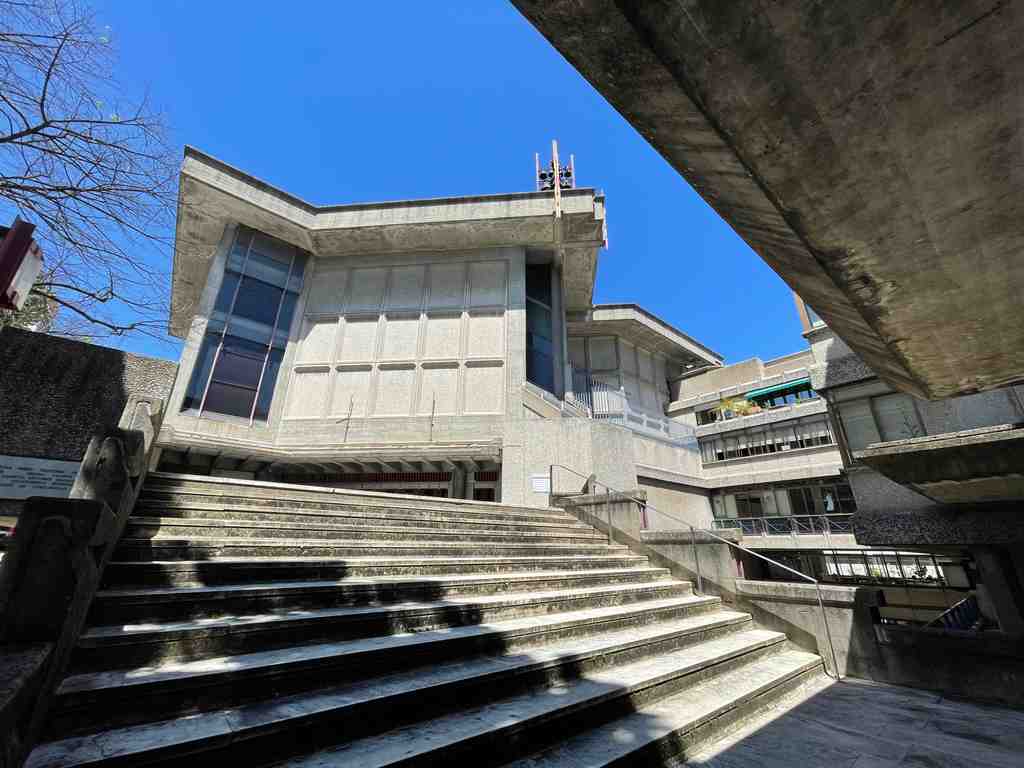
    In front of you is a modern, angular building of exposed concrete and large geometric windows-look up the broad stone steps to spot its bold, fortress-like facade and feel how it stands out from the neighborhood, yet blends right into the shape of the city. Now, let’s dive into the incredible-and maybe even a little rebellious-story of the Church of the Heart of Jesus. You might be thinking, “Is this really a church?” With its rough concrete, chunky shapes, and surprisingly modern look, it’s no wonder some folks mistake it for an art museum or a secret lair for architectural superheroes! But trust me, this is a church like no other in Lisbon. Our story begins in the 1960s, at a time when churches in Portugal were all about tradition-arches, bell towers, statues, the whole nine yards. But the city grew, and the old neighborhood church just couldn’t hold everyone anymore. So, a pair of ambitious architects, Nuno Portas and Nuno Teotónio Pereira, grabbed their drafting pencils and decided to shake things up, giving birth to a building that was destined to split opinions and win awards. They were out to prove that a sacred space could be bold, modern, and open to the city, instead of hidden behind high walls. What you see around you was built between 1962 and 1967, then opened to the public in 1970. From the start, it was an “experiment”-a word architects love when they want to scare the neighbors! The structure you’re standing in front of won the first prize in a fierce design contest and later the prestigious Valmor Prize in 1975. Not only did it break the mold, but it also broke the rules-quite literally! Instead of isolating the church, they connected it with walkways, public plazas, and steps winding down the sloping street, fusing it right into the urban block. Pay attention to how the building seems to melt into the site, with different levels and platforms, just like a mountain range built by human hands. Public space flows through it, linking two busy streets and inviting locals to walk straight through-no more locked doors or imposing boundaries. The architects’ vision was a church that breathes with the city, letting in sunlight, the voices of people, even a dog barking from time to time. That’s one way to keep things lively during mass! Step closer, and you’ll see the outer walls are made from pre-fabricated concrete panels, mixing white limestone with gently washed textures. The roughness might look intimidating, but-like a loaf of Portuguese bread with a tough crust-it’s surprisingly soft and inviting inside. They even designed the windows to capture dazzling shafts of light, so at certain hours, the church interior glows like a sunbeam has snuck inside for a peek. You won’t find just a main altar here. The platforms above and below, balconies, crypts, and galleries all pivot around two dramatic focal points-the sanctuary and the baptistery. At every level, the design pulls your attention in new directions. There’s a feeling of movement and openness, and if you listen closely on a quiet day, you might imagine the faint chords from the grand British-made pipe organ. And yes, that old organ still wheezes-some keys work, some don’t, and if you try to play a hymn, you might get a bonus soundtrack of whooshing air leaks. Here comes my favorite twist. This building didn’t just change Lisbon’s skyline, it helped launch the “Movement for the Renewal of Religious Art.” Tired of churches built as museum pieces, the architects and their allies demanded truth, clarity, and dignity from modern sacred spaces. Imagine a group of architects and priests debating late into the night, fueled by coffee-and maybe a pastry or two-about how churches should make people feel welcome and inspired, not just small and quiet. Behind its concrete skin, the Church of the Heart of Jesus is full of surprises: meeting halls, a café, mortuary chapels, and spots for social gatherings. It’s not just a house of worship, but a lively community center-one that isn’t afraid to stand out or start a conversation. So, as you stand at the foot of this striking staircase, take a moment to appreciate the thunderous ambition and delicate sensitivity poured into these walls. The light, the shadows, the textures-everything here tells a story of Lisbon’s courage to dream boldly, to break the mold, and to welcome all into a space that’s truly open to city life. And hey, if someone asks you which church in Lisbon would make the best set for a science fiction film, now you’ll know exactly where to send them! If you're curious about the description, pipe organ or the religious art renewal movement, the chat section below is the perfect place to seek clarification.

    Open eigen pagina →
  11. If you look out in front of you, you’ll spot Lisbon spread before your eyes-a sea of terracotta rooftops cascading down the hills toward the wide Tagus River, with the grand 25 de…Meer lezenToon minder

    If you look out in front of you, you’ll spot Lisbon spread before your eyes-a sea of terracotta rooftops cascading down the hills toward the wide Tagus River, with the grand 25 de Abril Bridge stretching across the water and the statue of Christ proudly watching over the city from the opposite bank. Welcome to Lisbon! You’re standing at the beating heart of Portugal’s capital-and what a story this city has to tell. Let’s travel back through the mists of time, when the first people built stone monuments on these hills, hoping maybe to keep away the rain or appease cranky neighbors. Lisbon’s roots go deep, even before the Romans swept in with their togas and fancy roads. The Phoenicians were here trading way before Caesar showed up, and rumor has it the city was named after the Greek hero Ulysses-yes, Odysseus himself-who must have really liked the local fish stew. As you look out, remember: beneath your feet lies the ancient city of Olissipo, once a bustling Roman outpost famous for a stinky fish sauce called garum. The Romans built temples, baths, and theaters here, turning Lisbon into a vibrant port on the edge of the empire. And just when you thought things couldn’t get more exciting, along came the fall of Rome-cue the parade of invaders. Vandals, Visigoths, Suebi, Moors... they all left their mark. The Alfama district, the oldest quarter still standing today, keeps secrets from the time when Arabic was the local lingo and minarets rose above the skyline. Imagine the tension in 1147 when crusader armies, led by a very determined King Afonso Henriques, stormed these hills to reclaim the city from the Moors. Swords clashed, bells rang, and suddenly Lisbon became the Christian capital-a title it still holds centuries later. By 1255, Lisbon was the official heart of Portugal, home to kings, merchants, and perhaps the odd overambitious rooster. In the 16th century, the Age of Discovery turned Lisbon into the capital of adventure. This was Europe’s gateway to Africa, India, Asia, and Brazil. Spices, gold, and the occasional armadillo flowed through its docks. Those heady days spawned the glorious Manueline architecture you can still spot today. But it wasn’t all feasts and fireworks-tragedy struck in 1755, when a massive earthquake and tsunami flattened almost everything you see. But from the ashes, the city rose anew, thanks to the determined Marquis of Pombal, who rebuilt Lisbon with broad boulevards and cozy cafés just waiting for a long conversation. Over the centuries, Lisbon has weathered invasions, revolutions, royal dramas, and even spies sneaking through its neutral harbors during World War II. You might say it’s got more layers than a pastel de nata! In the 20th century, it was the stage for revolutions-ending monarchies, dictatorships, and (thankfully) really long speeches. The Carnation Revolution of 1974 saw soldiers put flowers in their gun barrels, and freedom bloom across the city. Now you’re lingering where millions have marched, sung, and celebrated. This city has cheered for football heroes, mourned losses, and hosted pop stars, popes, and dazzling international summits. With its sunny Mediterranean climate, streets bursting with music, and neighborhoods crackling with culture from artsy Alcântara to the winding lanes of Bairro Alto, Lisbon is a city that never stops dreaming. Even today, it’s the economic and cultural powerhouse of Portugal, a city where old trams squeal up the hills and the aroma of grilled sardines drifts on the Atlantic breeze. Take it in-Lisbon’s river shimmers, the bridge glows in the golden light, and the city’s story continues, as lively and colorful as the sunset you’re watching now. Yearning to grasp further insights on the etymology, geography or the politics? Dive into the chat section below and ask away.

    Open eigen pagina →

Veelgestelde vragen

Hoe begin ik de tour?

Download na aankoop de AudaTours-app en voer je inwisselcode in. De tour is direct klaar om te starten – tik gewoon op afspelen en volg de GPS-geleide route.

Heb ik internet nodig tijdens de tour?

Nee! Download de tour voordat je begint en geniet er volledig offline van. Alleen de chatfunctie vereist internet. We raden aan om te downloaden via wifi om mobiele data te besparen.

Is dit een groepsrondleiding met gids?

Nee - dit is een audiotour met eigen gids. Je verkent zelfstandig op je eigen tempo, met audiovertelling via je telefoon. Geen tourguide, geen groep, geen schema.

Hoe lang duurt de tour?

De meeste tours duren 60-90 minuten, maar jij bepaalt het tempo volledig. Pauzeer, sla stops over of neem pauzes wanneer je wilt.

Wat als ik de tour vandaag niet kan afmaken?

Geen probleem! Tours hebben levenslange toegang. Pauzeer en hervat wanneer je wilt – morgen, volgende week of volgend jaar. Je voortgang wordt opgeslagen.

Welke talen zijn beschikbaar?

Alle tours zijn beschikbaar in meer dan 50 talen. Selecteer je voorkeurstaal bij het inwisselen van je code. Let op: de taal kan niet worden gewijzigd na het genereren van de tour.

Waar vind ik de tour na aankoop?

Download de gratis AudaTours-app uit de App Store of Google Play. Voer je inwisselcode in (verzonden per e-mail) en de tour verschijnt in je bibliotheek, klaar om te downloaden en te starten.

verified_user
Tevredenheid gegarandeerd

Als je niet tevreden bent met de tour, betalen we je aankoop terug. Neem contact met ons op via [email protected]

Veilig afrekenen met

Apple PayGoogle PayVisaMastercardPayPal

AudaTours: Audiotours

Vermakelijke, budgetvriendelijke wandeltours met eigen gids

Probeer de app arrow_forward

Geliefd bij reizigers wereldwijd

format_quote Deze tour was een geweldige manier om de stad te zien. De verhalen waren interessant zonder te gekunsteld aan te voelen, en ik vond het heerlijk om op mijn eigen tempo te verkennen.
Jess
Jess
starstarstarstarstar
Tbilisi-tour arrow_forward
format_quote Dit was een prima manier om Brighton te leren kennen zonder je als toerist te voelen. De vertelling had diepgang en context, maar overdreef het niet.
Christoph
Christoph
starstarstarstarstar
Brighton-tour arrow_forward
format_quote Begon deze tour met een croissant in de ene hand en nul verwachtingen. De app gaat gewoon mee met je, geen druk, gewoon jij, je koptelefoon en gave verhalen.
John
John
starstarstarstarstar
Marseille-tour arrow_forward

Onbeperkte audiotours

Ontgrendel toegang tot ELKE tour wereldwijd

0 tours·0 steden·0 landen
all_inclusive Onbeperkt verkennen