Kuala Lumpur Audiotour: Een reis door tijd en erfgoed**
Regen trommelt op de eeuwenoude groen betegelde boog van Petaling Street terwijl wierook opstijgt uit vergulde tempeltorens in de buurt – de straten van Kuala Lumpur bruisen van geheimen die zich net voorbij de kraampjes en neonlichten verbergen. Deze zelfgeleide audiotour ontsluit verborgen hoekjes waar fortuinen werden gewonnen in tinmijnen, schandalen zich ontvouwden onder marktoverkappingen, en gemeenschappen ontstonden uit hoop en rebellie. Ga verder dan de oppervlakkige drukte om lokale verhalen te ontdekken die de meeste bezoekers nooit horen. Wiens middernachtelijke complot schudde ooit de machtige koopmansclans van Petaling Street wakker? Welke legendes omringen een tempel in de vorm van een liggende reus? Waarom werden katten toevallige beroemdheden in de naar vis ruikende hallen van de Centrale Markt? Loop op elke hoek tussen werelden – elke boog of muurschildering fluistert drama, toewijding en veerkracht terwijl je reist van lantaarnverlichte markten naar weelderige heiligdommen. Verwacht spanning, gelach, mysterie en inzicht bij elke bocht; zie Kuala Lumpur zoals de lokale bevolking dat doet, levend met begraven verhalen. Je avontuur in het ongeziene hart van de stad begint nu – stap onder de groene boog en laat de ontdekking je leiden.
Tourvoorbeeld
Over deze tour
- scheduleDuur 30–50 minsGa op je eigen tempo
- straighten2.4 km wandelrouteVolg het geleide pad
- location_onLocatieKuala Lumpur, Maleisië
- wifi_offWerkt offlineEén keer downloaden, overal gebruiken
- all_inclusiveLevenslange toegangOp elk moment opnieuw afspelen, voor altijd
- location_onStart bij Petaling Street
Stops op deze tour
Petaling Street is easy to spot-just look for the tall, green-roofed archway adorned with rows of red lanterns and a glass roof stretching over the bustling street…Meer lezenToon minder
Petaling Street is easy to spot-just look for the tall, green-roofed archway adorned with rows of red lanterns and a glass roof stretching over the bustling street below. Welcome, traveler, to the heart and belly of Kuala Lumpur-Petaling Street, the city’s colorful and chaotic Chinatown! Take in that vivid scene in front of you; the giant green-tiled welcome arch crowned by cheerful glowing lanterns, the hum of voices, and the endless stalls stretching as far as the eye can see. It feels like stepping onto the set of an adventure movie-and, fun fact, there’s even a kungfu comedy set here, though nobody’s leaping through the air just yet! But let’s rewind history for a moment. Imagine the year is 1870-not a car or skyscraper in sight-just gritty pioneers, mostly men from Canton and Hakka China, trekking through the jungle in search of fortune in the tin mines. Kuala Lumpur was a muddy, flood-prone outpost. Market Square and nearby High Street, now Jalan Tun H.S. Lee, attracted people because it was literally higher ground-not just in social status but also above the waterline when monsoon floods rolled in! Wealthier folks built ornate shophouses here that still stand to the north of where you are now. Petaling Street itself became known in Cantonese as ‘Chee Cheong Kai,’ or Starch Factory Street. Why such a starchy name, you ask? After a civil war in the 1860s and 70s left the mines flooded and the city half-ruined, its most famous Chinese leader, Yap Ah Loy (think of him as KL’s answer to Robin Hood, minus the tights), convinced the miners not to abandon the city. Instead, he switched to farming and built a tapioca mill right here on Petaling Street. Just imagine: tubers coming in from the countryside, being ground up into flour amidst the clang and rattle of machinery -so even when fortunes shrank, this street provided something to chew on! Fast forward to today, and the legacy Yap Ah Loy started is visible in every steaming bowl of Hokkien mee or wafting cloud of grilled ikan bakar that teases your nose. You’ll find rows of Chinese, Indian, Malay, and Bangladeshi traders hanging out their wares, competing with bursts of Cantonese, Tamil, and Malay floating above the noise. If you’ve got sharp eyes-and an even sharper appetite-you’ll spot the famous Koon Kee Wanton Noodle shop near the intersection, plus a whole parade of treats from curry noodles to asam laksa sizzling in woks. Watch out, though-if you’re not ready to haggle, these traders might just hustle you faster than you can say “discount!” Not a foodie? Petaling Street has other treats too. Once you’re done here, walk past the old Chinese bookstore, or hunt for deals among knockoff watches, t-shirts, and pretty much every gadget you never knew you needed. A quick turn down the nearby Lorong Panggung leads you to Kwai Chai Hong-literally “Little Demon Lane”-where vibrant murals and QR codes bring to life stories of the neighborhood’s cheeky past. Don’t be startled if you see some ghosts in the paintings; they’re just reminders that everyone here has a story! You might even notice the shining green roof overhead, added in 2003 for a cool RM11 million. This modern canopy, known as the “Green Dragon,” hovers protectively, so you can stroll rain or shine, pausing at the two big arches at either side for a photo. Fun fact-a McDonald’s used to open its doors right at the entrance, but these days street food rules the roost. Whether you’ve got an eye for bargains, a hunger for history, or just a love of lively chaos, Petaling Street is the city’s living, breathing heart. Who knows, you might even walk away with a good deal or a ghost story-just don’t try to out-haggle the locals unless you’re ready for a battle worthy of a kungfu flick! Interested in a deeper dive into the features, development or the film? Join me in the chat section for an insightful conversation.
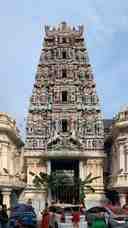
Open eigen pagina →To spot the Sri Mahamariamman Temple, look ahead for a tall, colorful tower covered in dozens of detailed sculptures of Hindu deities-this ornate structure stands out against its…Meer lezenToon minder
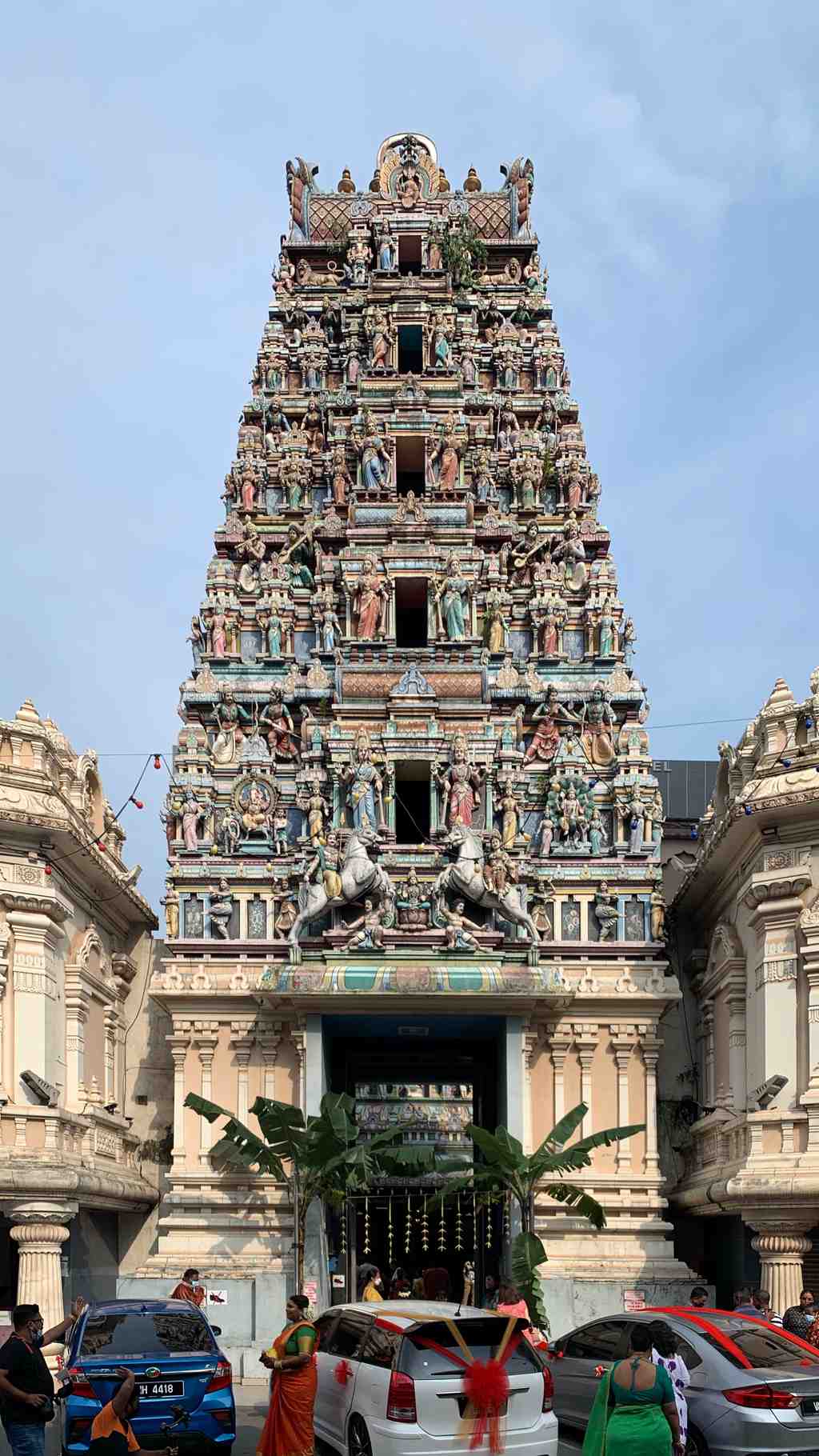
To spot the Sri Mahamariamman Temple, look ahead for a tall, colorful tower covered in dozens of detailed sculptures of Hindu deities-this ornate structure stands out against its neighbors and rises above the street with five intricate tiers. Now, let’s set the scene: You’re standing right at the threshold of a temple that’s not just the oldest Hindu temple in Kuala Lumpur, but also one of its most vibrant storytellers. Picture yourself in 1873-before the hustle and bustle of today’s city, when an Indian immigrant named K. Thamboosamy Pillai built this temple as a private shrine for his family. But shh-don’t worry, you won’t need a VIP pass to get inside; in the late 1920s, the Pillai family generously opened the temple to everyone, transforming it into a sanctuary for countless immigrants searching for comfort and community so far from home. As you gaze up at that spectacular tower, known as the gopuram, don’t bother counting all the statues-unless you have a lot of time and a ladder! There are exactly 228 brightly painted idols crowded onto that 23-meter-tall gateway, each one sculpted by expert hands brought all the way from Tamil Nadu, India. This “Raja Gopuram” was finished in 1972, and it’s designed in classic South Indian style. At its base you might almost expect to hear the murmur of stories, because each figure carved into the layers tells a myth, a hope, or a blessing. Move your eyes from street level right up to the top, and you’re looking at the temple’s “feet”-because, believe it or not, the entire temple is shaped like a giant human body lying on its back, with the gopuram as the toes, and the sanctum-the “garbagraham”-at the far end serving as the “head.” I know, it’s a yoga pose that would impress anyone. The sanctum is the most sacred spot inside, home to the powerful goddess Mariamman herself, who’s there to watch over her devotees, especially those far from their homeland. Mariamman is considered a fierce protector, a force for good, and Mother Earth herself-if Malaysia ever gets monster weather, you know who the locals are praying to! Step a bit closer and imagine the sound of temple bells and the fragrance of incense drifting on the breeze. The main prayer hall is right inside, under ceilings rich with ornate designs. Three golden onion-shaped domes mark the location of the main shrines, visible even from outside. The left shrine is dedicated to Pillaiyar, remover of obstacles-hopefully, he’ll help you find your way if you ever get lost in KL traffic! Lord Muruga, his brother, stands guard on the right. Every year, especially during Deepavali, the temple comes alive with crowds of devotees-picture families in brilliant saris, children clutching flowers, and priests chanting prayers to bring blessings. But if you want real spectacle, come during Thaipusam. At the break of dawn, thousands pack the temple to send off a majestic silver chariot. This 6.5-meter-tall chariot, made with 350 kilograms of silver and 240 bells, carries Lord Muruga and his consorts in a grand procession all the way to the Batu Caves. Before the silver version debuted in 1983, a wooden chariot (built in 1930) had the honor-though it probably creaked a bit more. Behind the main structure, don’t miss the new addition: Bangunan Mariamman, a six-story building opened after a 40-year wait, linked to temple life and helping with the overflow during massive festivals. Inside, there’s space for meetings, celebrations, and even (gasp!) basement parking-because even saints have to worry about where to put their cars in Kuala Lumpur. Through years of change-from its first humble attap hut by the railway tracks, to the brick shrine, and finally the lavish monument you see now-the Sri Mahamariamman Temple has stood as a place of hope, memory, and resilience. Managed by a dedicated board, it also guides the spiritual calendar for Malaysian Hindus. If you listen closely past the city sounds, you might just catch the echo of prayers, or perhaps the rustle of saris as a festival begins. And remember: behind all the colors and carvings is a legacy of faith, migration, and community-a living, breathing heart in the city that never shuts its doors to anyone who comes in search of a blessing… or just a little beauty. Seeking more information about the architecture, the deity or the administration? Ask away in the chat section and I'll fill you in.
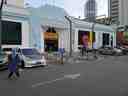
Open eigen pagina →Look ahead for a striking baby blue and white Art Deco building with the words “CENTRAL MARKET” in bold letters above the entrance, right at the edge of the car park-you can’t…Meer lezenToon minder
Look ahead for a striking baby blue and white Art Deco building with the words “CENTRAL MARKET” in bold letters above the entrance, right at the edge of the car park-you can’t miss those giant glass-block windows and the little pop of color from banners and decorative signs! Welcome to the heartbeat of Malaysian heritage-Central Market, also lovingly called Pasar Seni! Let’s take a little journey together, standing in the footsteps of tin miners, local traders, and a few rather adventurous cats who probably tried to sneak in for a tasty fish over the decades. Back in 1888-imagine the air thick with the scent of fresh seafood, the clatter of carts and shouting merchants-this spot began life as a humble wet market, built by the British, who probably thought Kuala Lumpur was just a small outpost. Little did they know this marketplace would one day become the very soul of the city. Picture the scene: the Klang River flowing nearby, buses rumbling to a halt at the busy terminal, hawkers yelling out prices, and hungry city folk jostling for the best bargains. If these old turquoise walls could talk, they’d whisper tales of early morning chaos-stalls bursting with every imaginable fruit, folks arguing passionately (but with a twinkle in their eyes) over coconuts or chili paste, and the air always buzzing with stories, gossip, and dreams. Through the years, the market grew-expanding repeatedly in the late 1800s and early 20th century, until by the 1930s, it had swelled to its current size, thanks to expansions costing the princely sum of $167,000. And then, in 1937, this gleaming Art Deco beauty you see in front of you was completed. With its symmetrical lines and pastel hues, Central Market was the place to see and be seen. But by the wild, disco-loving 1970s, change marched in. Modern Kuala Lumpur threatened to bulldoze these beloved walls and pave over old dreams. Can you feel the tension, the heartbreak? Enter the heroes of our story: the Malaysian Heritage Society, who stood tall like superheroes-capeless, but determined! Thanks to them, Central Market dodged the wrecking ball not once but twice, even as nearby developments like Dayabumi sprouted up. It wasn’t just saved; it was reborn. By 1986, after a major face-lift, Central Market looked like London’s Covent Garden-but, you know, with better weather and spicier snacks. Today’s Central Market isn’t just a place to shop. Step inside and you’ll wander past color-packed stalls representing Malay, Chinese, and Indian culture, each corner telling another story of Malaysia’s harmonious diversity. Upstairs? You’ve got savory treats galore calling your name from the food court! Out back, the Annexe hums with creativity-art galleries showcase local genius all year round, while along Kasturi Walk, the air is sweet with the scent of street snacks and the hum of buskers singing their hearts out. So whether you’re hunting for a handcrafted souvenir, hungry for a bowl of laksa, or hoping to catch some live tunes, Central Market is where Kuala Lumpur’s past and present meet for a perpetual, joyful festival. Now, who’s up for an adventure inside?
Open eigen pagina →
Toon 8 stops meerToon minder stopsexpand_moreexpand_less
To spot the National History Museum, look for a stately cream-colored building with bold arches at the front entrance, fancy rooftop domes, and a big gold sign above the…Meer lezenToon minder
To spot the National History Museum, look for a stately cream-colored building with bold arches at the front entrance, fancy rooftop domes, and a big gold sign above the doorway-it's right across from Independence Square. Now, let’s time travel together! You’re standing in front of what looks like a majestic old palace, but this building once guarded some of Malaysia’s greatest treasures. If these walls could talk, you’d hear the clattering of ancient weapons, the rustle of yellowed manuscripts, and maybe the soft clank of coins and mysterious stone tools. Inside, the collection told the tale of Malaysia from its earliest days: brave warriors sharpening their blades, traders crossing tropical seas, and sultans stamping their seals on secret documents. Imagine holding a map that shows jungles where the city now stands, or a weathered coin that jingled in someone’s pocket hundreds of years ago-maybe lost in a moment of excitement at a bustling market! There’s a touch of mystery here too: the museum has now moved its treasures, as if packing them up in a magical suitcase bound for the National Museum. But for years, this spot was the keeper of stories, where every artifact whispered about battles, bargains, and dreams that built a nation. And who knows? Maybe a few stories are still hiding in the shadows, waiting for curious listeners like you!
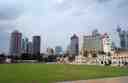
Open eigen pagina →Just ahead, you’ll spot Independence Square by its vast green field bordered by stately colonial buildings and a cluster of palm trees, with the famous Sultan Abdul Samad…Meer lezenToon minder
Just ahead, you’ll spot Independence Square by its vast green field bordered by stately colonial buildings and a cluster of palm trees, with the famous Sultan Abdul Samad Building’s copper domes gleaming to one side-just look for the massive open lawn surrounded by city towers and a soaring flagpole. Now, you’re standing right at the heart of history-welcome to Independence Square, or as locals call it, Dataran Merdeka, where the dreams of a nation took flight. Imagine the scene long ago: you’re trudging across muddy, uneven ground, because this spot was once nothing more than swampy vegetable plots owned by Yap Ah Loy, the city’s famed “Kapitan China.” But by the 1880s, everything changed when British officials decided to move the Selangor state capital from Klang to Kuala Lumpur. The British Resident, William Bloomfield Douglas, looked across this steaming, bustling city-“not exactly the picture of cleanliness,” he probably thought-and decided the west bank of the river would be the perfect spot for new government offices. The land was bought for just $50 an acre-hardly the price you'd pay for front-row seats to history. Soon, the muddy patch was drained, filled, and, with the help of a cricket-loving Brit named Ernest Birch, smoothed into the town’s very first sports field. Imagine the thwack of a cricket bat and shouts of “Howzat!” echoing over what became known as the Padang, or “field.” On one side, the exclusive Selangor Club arose-a gentleman’s haven for sipping tea and discussing matters of empire. Oddly enough, you might say this place was the “Green of Dreams”-every hit and miss on the cricket pitch now layers centuries of memory beneath your feet. Change swept the field as grand buildings rose up around it. In 1897, the magnificent Sultan Abdul Samad Building-a true relic of British ambition and Asian elegance-opened its doors, designed by the famous architects Norman, Bidwell, and Hubback. Its Indo-Saracenic style, topped with copper domes and a clocktower, still dominates the cityscape today. Picture bustling clerks, solemn judges, and spirited officials all crisscrossing the Padang, as the British grew their colonial capital, adding a town hall, post office, printing office, and railway headquarters, each building forming the backdrop to the daily rhythm of early Kuala Lumpur. But the real magic of this field wasn’t just in its British flair or sporting rivalries-it was a stage for the future. Just past midnight, on August 31st, 1957, thousands packed the Padang, hearts pounding in anticipation. The Union Jack, fluttering high on the very flagpole you see ahead, was lowered for the last time, while the Malayan flag-bright, bold, and new-rose majestically into the night. That simple act, watched by silent masses and swaying palm trees, marked the birth of an independent Malaysia. Not a single eye was dry. Since that unforgettable night, this square has become the very soul of the nation. Every year, the thunder of drums and boots on parade echoes as Malaysians celebrate their freedom at the National Day Parade. Political rallies, joyful celebrations, and even international TV shows like “The Amazing Race Asia” have all started from this historic green carpet. Look around you now-the square is a patchwork quilt of stories. There’s the 95-meter flagpole, once among the tallest in the world, standing like a sword plunged into the earth to guard the memory of independence. Find the black marble plaque at its base, forever marking the exact spot where history turned the page. See if you can spot the Cop’s Fountain, built in memory of a beloved police inspector, quietly gushing away as trams and traffic zoom past. Around its edges, the Padang is framed by the architectural wonders from every era: the Sultan Abdul Samad Building, the Royal Selangor Club, grand churches, banks, and galleries that whisper tales of colonial ballrooms, heated debates, and the slow, steady ticking of change. Somewhere below your feet hides a modern twist-an underground car park and Plaza Dataran Merdeka-though the field above remains stubbornly green and, in the rainy season, sometimes a little soggy. Oh, and here’s a nugget for your memory bank: when City Hall took the Padang back from the cricket crowd in the 1980s, they made it into the historic park you see today, inspired a little by London’s Trafalgar Square-but with a lot more sun and a lot fewer pigeons. So, take in the breeze, picture those crackling loudspeakers and the weight of the moment on that historic night-Independence Square is not just a place, it’s a living monument to the spirit of a nation. And who knows-maybe if you stand still for a second, you’ll hear the echoes of “Merdeka!” being shouted across the ages.
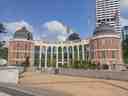
Open eigen pagina →Look for the large cream-colored building just across the street, with its bold arched windows and a sign that reads "Perpustakaan Kuala Lumpur"-you can’t miss it standing proudly…Meer lezenToon minder
Look for the large cream-colored building just across the street, with its bold arched windows and a sign that reads "Perpustakaan Kuala Lumpur"-you can’t miss it standing proudly at No. 1, Jalan Raja. Let me tell you a tale that starts in a very unexpected place: with a group of energetic kids in 1977, zipping around Jalan Tun Razak, searching for their next great story. Back then, this library began as a tiny children’s corner called Pustaka Bimbingan Kanak-Kanak-basically, a magical spot where kids under 12 could dive into books and let their imaginations soar. Picture this: laughter bouncing off shelves, crayons scribbling, and stories about superheroes and ancient kings coming alive. The dream grew bigger. In 1981, another branch popped up in Taman Tun Dr. Ismail, so even more young readers could join the fun. Then, in 1989, everything changed. The third Mayor of Kuala Lumpur-Tan Sri Dato’ Elyas Omar-decided it was time for something grand. He opened what was then called Pustaka Peringatan Kuala Lumpur, which was not just a library, but also a mini-museum showing off the city’s secrets and stories. Imagine the pride as locals came to explore old photographs and precious artifacts, right alongside tales of talking cats and time-traveling detectives. Years later, in 2000, the place got a new name to match its new mission: Perpustakaan Kuala Lumpur. The city was changing fast, and the library wanted to keep up. By 2004, it finally settled into this beautiful building you see now, a hub of learning, buzzing with activity among readers of every age. Inside, there’s something for everyone: a music and arts collection if you’re feeling creative, business and economic books if you’re thinking about your next big idea, even a treasure trove about Kuala Lumpur itself if you’re getting sentimental. Best of all? Membership is free if you live nearby-from four years old (so your toddlers can start plotting world domination early). With free WiFi, creative rooms, a children’s wonder zone, and more branches across the city than a tree in KL’s botanical gardens, this is a place where stories are waiting around every corner. So, if you suddenly hear whispers of ancient legends or the clicking of keyboards echoing through the halls, don’t worry-it’s just the sound of a million adventures waiting for you inside. And remember, libraries are like potato chips: it’s impossible to stop at just one visit!
Open eigen pagina →Imagine stepping back to 1884. The city smelt of fresh rain on grass, and the padang-the field right across Dataran Merdeka-echoed with the laughter of British officers and the…Meer lezenToon minder
Imagine stepping back to 1884. The city smelt of fresh rain on grass, and the padang-the field right across Dataran Merdeka-echoed with the laughter of British officers and the sharp crack of cricket bats. The original little wooden clubhouse, with its humble attap roof, was more rustic hideout than grand palace. Inside, you’d have met founders like H.C. Syers, with his trusty Dalmatians lounging by the door, and A. C. Norman, the government architect, mapping out yet another future landmark. Members came with high educational standards, impressive titles, and, in some cases, rather interesting stories-like the German secretary, Count Bernstorff, who took a mysterious leave of absence with a sizable chunk of the club’s funds. Perhaps he thought of it as an early version of “take a penny, leave a penny”? As the years passed and the club grew, a new clubhouse appeared in 1890-a stately two-story structure, soon followed by the signature Mock Tudor building you see today, designed by Arthur Benison Hubback in 1910. The club’s popularity soared-not just among British elites, but soon, high-ranking Malaysians, legal eagles from the nearby court, and anyone keen on a decent pint and a better story. And there were stories aplenty! The Club was nicknamed "The Spotted Dog." Was it because of H.C. Syers’s two Dalmatians, who supposedly guarded the entrance? Because of a hilariously bad attempt at drawing a leopard for the club emblem? Or simply a nod to the mixed crowd inside-where judges, lawyers, and generals all gathered? No one’s quite sure, and perhaps the club prefers its mysteries unsolved. But life here wasn’t always cricket and cocktails. Just ask the club’s architects about floods: water swept through in 1911, 1917, and with a vengeance in the 1920s. And disaster really struck in December 1970, when a fire broke out in the kitchen at 10:30 p.m. Flames tore through the main section, prompting frantic firefighting and a dramatic evacuation of guests from a children’s Christmas party. Thankfully, everyone made it out safely. Imagine the relief-though I'm sure a few partygoers were disappointed Santa didn't parachute in to help. The damage topped 1.5 million Malayan dollars, but insurance and determined spirit helped rebuild. Right on schedule, another flood swept through three days later. When it rains, it pours, right? Even after setbacks, the Club never lost its sense of humor-or its central role in city life. When City Hall threatened to turn the site into a civic center in the 1970s, the Club stood its ground. Negotiations led to a rebuilt clubhouse, completed in 1980, with all the Mock Tudor charm you see today. Sports have always been at the heart of the Club. Cricket, rugby, hockey, and football brought KL’s best and brightest together, watched closely from the famous Long Bar. Now, tradition held that women were once barred from this hallowed spot-supposedly to spare them from the wild enthusiasm of sports-obsessed gentlemen. Thankfully, in modern times, this rule has been kicked to the curb, though it required a formal vote and a bit of constitutional jiggery-pokery. Ever heard of the Hash House Harriers? That global “drinking club with a running problem” started right here! Legend says a few club members invented hash runs as a hangover cure-which just goes to show you, necessity really is the mother of invention. Fronting the field where Malaysia’s independence was proclaimed in 1957, the Club’s members roared with cheers as the national flag rose for the very first time, closing the colonial chapter and opening a new page in history. In recognition of its contributions, the club earned Royal status in 1984 and remains fiercely supported by the Sultan of Selangor. Though many original records were lost in war and fire, the legacy endures. If you listen closely, some say you can still hear the echoes of laughter, debate, and maybe, just maybe, the faint bark of a spotted dog somewhere in the background. So, hats off to you, Royal Selangor Club-a monument to sporting spirit, social connection, and a century’s worth of unforgettable stories. Shall we move on, or would you like to peek inside and test your own club-worthy wit? Wondering about the recognition, royal selangor club kiara sport annexe or the cricket? Feel free to discuss it further in the chat section below.
Open eigen pagina →To spot St. Mary’s Cathedral, just look for the charming white building with pointed windows and steep, reddish-brown tiled roofs surrounded by a tidy green lawn and simple black…Meer lezenToon minder
To spot St. Mary’s Cathedral, just look for the charming white building with pointed windows and steep, reddish-brown tiled roofs surrounded by a tidy green lawn and simple black iron fence-it sits right across from Independence Square, standing out against the backdrop of modern towers. Now, take a breath and let your mind travel back with me to the late 1800s, when Kuala Lumpur was a much sleepier outpost crisscrossed by jungle paths and horse-drawn carriages. Right where you’re standing, imagine a group of Anglican settlers gathering, dusty shoes and all, hoping for a place of worship in this far-off colonial land. Their first church was just a humble timber structure perched atop the hill now called Bukit Aman-where, if you tried building a chapel today, you would have the Royal Malaysian Police as your rather stern neighbors! That first church, consecrated in 1887 by the steely Bishop Hose, was like a tiny spiritual lighthouse for a handful of British colonial officials: no grand stained glass, but certainly no shortage of faith. As the city bustled and blossomed, so too did the congregation. Soon, their timber chapel was simply too snug for the growing numbers-some of whom were the very top hats of colonial Selangor, folks named Treacher and Swettenham, who’d help pen local history books. It was in 1893 that St. Mary’s got its ticket to move right here, on the edge of the old Padang-nowadays called Independence Square, or Dataran Merdeka, where you’ve seen all those grand parades and celebrations. Construction funds came not just from the British community, but also from local legends like Yap Kwan Seng and K. Thamboosamy Pillay-who, interestingly enough, weren’t Christians themselves, but apparently thought the town could use a bit more heavenly architecture. Maybe they figured helping out might earn them a gold star on someone’s chart upstairs. Cue the arrival of A.C.A. Norman, the government architect and a true aficionado of Early English Gothic style. He wasn’t the winner of the official church design competition, but he was the only one with a design that got the thumbs up-sometimes being second or third time lucky really does pay off! Imagine the scene in 1894 when Sir W.H. Treacher, top hat gleaming, carefully laid the foundation stone while onlookers fanned themselves in the steamy heat. By February 1895, the first brick church of the Malay Peninsula’s native states was open for business, a place where the soaring nave could fit 180 worshippers…and probably a decent amount of gossip. Inside, take a moment to imagine warm sunlight flooding through stained glass into the nave-87 feet long, 28 feet wide-while the echoes of the choir drift through the chancel’s octagonal end. See if you can spot where the pipe organ waits. Ah, the organ! It’s a story in itself: crafted by the renowned Henry Willis-yes, the same guy who built the organ at St Paul's in London! This was a secondhand buy from Frederic Duberly, an official with a love for booming chords. After Duberly’s sudden death, the organ made its way here, suffered floods, wartime damage, and was repeatedly rebuilt by the mysterious Mr. Riddell, the local master of pipes who possibly once apprenticed with Willis himself. You could say the organ has survived more dramatic twists than a soap opera-each time, rising again, ready for another Sunday. Step outside the pages of history, and you’ll find St. Mary’s still very much alive. Every Sunday the building fills with the music of centuries-old hymns during the English liturgical services, the pipes thundering at 7, 9, and 11 AM as the congregation gathers-sometimes high church, sometimes blissfully simple, but always heartfelt. Just next door, you’ve got the buzz of SMACC, the contemporary service, where young professionals, students, and families all pile in for something a little more modern, featuring a touch less incense and a lot more lively chatter. There’s even an Iban service for those from Sarawak, and Bahasa Malaysia services for folks from Sabah and Sarawak, adding extra color and warmth each week. So as you stand before those whitewashed walls, with traffic rushing behind and skyscrapers peering down, picture the layers of past and present stacked atop each other-colonials and locals coming together, floods, music, Sunday bests, and now you, right in the middle of the story. The past may be set in stone (and brick), but here at St. Mary’s, the spirit is very much alive and ringing, just like its legendary organ. Shall we see what’s next on our journey? Wondering about the architecture, organ or the sunday services? Feel free to discuss it further in the chat section below.
Open eigen pagina →To spot the Bangunan Sultan Abdul Samad, look for the grand building directly in front of the Merdeka Square-its massive clock tower and three gleaming copper domes make it stand…Meer lezenToon minder
To spot the Bangunan Sultan Abdul Samad, look for the grand building directly in front of the Merdeka Square-its massive clock tower and three gleaming copper domes make it stand out majestically against the city’s modern skyline. Welcome to the Bangunan Sultan Abdul Samad! If you’ve paused here, you are standing before one of Kuala Lumpur’s most iconic masterpieces-a building that’s seen more drama than a soap opera marathon and has outlasted more careers than a failed magician. Picture this: It’s the late 1800s. British officials in Kuala Lumpur desperately need a new government headquarters. What do they do? Why, they build the most jaw-dropping, Moorish palace-inspired building right at the heart of the city, smack in front of what’s now Merdeka Square and the Royal Selangor Club. Now, imagine the clink of tools and the bustling chatter of workers coming from behind wooden fences. The year is 1894, and the site is bursting with activity. Four million red bricks (imported from India-because apparently, local bricks just weren’t fancy enough), 2,500 barrels of cement, 18,000 loads of lime, and 5,000 pounds of copper are hauled in. The brick dust and lime scent fill the air, blending with the earthy Malaysian breeze. The foundation stone is laid by Sir Charles Bullen Hugh Mitchell, the top British official. It’s a big deal-dignitaries everywhere, speeches flying, someone’s probably losing track of their top hat. Flash forward a few years. The building, finished in 1897 and first called the “New Government Offices,” stands two stories tall, wrapping around a lovely courtyard with flower beds-a welcome place for a breather after dealing with all those endless government memos. The design? Oh, it’s got attitude. Architect A.C. Norman goes bold, tossing in arched doorways, horseshoe-shaped windows, gigantic verandas, and those three legendary domes-originally black, later upgraded to brilliant copper. The middle dome sits atop a clock tower soaring over 40 meters high, which whistles and ticks, ringing out the hours like a more tropical cousin of Big Ben. But it’s not just the architecture that’s exciting; it’s the history. This is where, at the stroke of midnight on August 31, 1957, Malaysia’s independence was born. Picture a sea of people, hearts pounding, waiting for the British Union Jack to be lowered and the Malaysian flag, the Jalur Gemilang, to be raised for the very first time. The crowd is silent, the moment is electric-the feeling of freedom literally glistening in the tropical night. It was here that an old era ended and a new nation took its very first breath. Over the years, this building has changed jobs more often than some people change passwords. It’s been a Secretariat, the state government’s headquarters, the home of the Supreme Court, and is now an important site for government offices and national ceremonies. It’s had its share of “makeovers” too-after a big flood in 1971 soaked more than just official papers, and a massive renovation in 1978, copper domes were added, sponsored partly by Australia (thanks, mates!). The inside was modernized but the outside kept its classic charm, like an aging movie star who knows just how to pose for the cameras. Of course, being in a prime spot at the meeting of two rivers means the Sultan Abdul Samad Building sometimes gets more water than it bargains for-just ask the parkade underneath about being a swimming pool during a flash flood. But the building stands strong, hosting parades, celebrations, bike races, film shoots, and more. If only these walls could talk-imagine the tales of colonial power plays, courtroom battles, triumph, and hope. Sometimes the dramatic weather adds a special effect; the skies darken, the domes glisten, and the clock stands tall against the thunder-Kuala Lumpur’s very own palace of memory and pride. So as you stand here, listen for the distant chime of the clock, an echo of all those years, celebrations, and storms. Take in the angles of the horseshoe arches and the glow of the copper domes. You’re not just looking at a building; you’re looking at a stage where history was made, with more plot twists than a detective novel. Dare I say, if you squint hard enough, you might just spot someone in Victorian garb looking for their missing umbrella. Alright, onward we go before someone in the present wonders what century you’re daydreaming about! Wondering about the original name, location or the inauguration of the building? Feel free to discuss it further in the chat section below.
Open eigen pagina →To spot the Grand Mosque-also known as Masjid Jamek-look ahead for striking onion-shaped domes flanked by two tall striped minarets, its red-and-white Moorish arches standing out…Meer lezenToon minder
To spot the Grand Mosque-also known as Masjid Jamek-look ahead for striking onion-shaped domes flanked by two tall striped minarets, its red-and-white Moorish arches standing out beneath tall palm trees, just beside the merging rivers. Ah, you’ve arrived at the legendary Masjid Jamek, Kuala Lumpur’s Grand Mosque! Let’s take a breath and listen to the city’s heart beat through this historic sanctuary. If you close your eyes for just a second, you might hear a distant river and the echo of ancient prayers. Imagine, this exact spot used to be an old burial ground-yes, a cemetery-before it was transformed into this beautiful mosque. Graves were respectfully moved, and by 1909, the mosque rose up beside the meeting of the Klang and Gombak Rivers, as if the soul of Kuala Lumpur itself needed a place to reflect. This is no ordinary house of worship-Masjid Jamek was one of the very first mosques in the city and remained the main place for congregational Friday prayers until the National Mosque was built in 1967. Designed by Arthur Benison Hubback, a British architect who’d spent time in India, the mosque’s design is a blend of Moorish and Mughal styles-you can see it in the grand arches and the domes, which would fit right in among the majestic palaces of North India. If you think those red and white stripes look a bit familiar, you’re not wrong! They’re styled after the famous Mosque of Cordoba in Spain. Even the tall minarets and little domes scattered like snowy hats on the roof are inspired by the grandeur of those faraway lands. Back when the British ruled, government officials working right across the river would cross over for prayer, needing a place close by to fulfill their daily rituals. Imagine, staff in colonial suits, rolling up their sleeves for wudu-the ritual washing-right at the riverbank! There were steps cut right into the water’s edge for them, and every morning the cool river would rush by as they prepared for prayer. But this mosque’s story isn’t all peaceful sunshine! Build a beautiful oasis, and the city will grow up and crowd around it-skyscrapers elbowing for room, traffic sneaking up on all sides. With development around it, space became tight, parking vanished, and sometimes, well, the restrooms became a bit of an adventure. The mosque’s location-so close to the rivers-also made it a magnet for drama. Floods have swept through here several times: in 1926, 1971, 2003, and, memorably, in 2007, when rain poured for hours, raising the river level until water sloshed through the mosque’s halls and even swept some cars up onto the grounds! Imagine rushing to finish your prayers, while boats-or even taxis-float by. The mosque itself is a little architectural jewel box; it can’t grow any bigger, squeezed tight by the rivers on either side. But every year, thousands still gather here, and it’s led faithfully by a long line of dedicated imams-Ustaz Muhammad bin Awang Besar, Ustaz Abdul Halim Yatim, and more recently, Imam Mohd Faisal bin Tan Mutallib. If you time your visit right, you may just hear the muadhin’s call echoing across the river, as if summoning not just the faithful but the whole bustling city. So, take a good long look at those domes and arches. This is where Kuala Lumpur’s spirit-its history, its multicultural roots, and its sometimes soggy sense of humor-all come together. Walking past the mosque today, you’re not just seeing a landmark. You’re stepping through over a century of hopes, floods, prayers, and laughter. And if you feel a few drops, don’t worry-that’s just Kuala Lumpur reminding you she always keeps things interesting! To expand your understanding of the construction, architecture or the problem, feel free to engage with me in the chat section below.
Open eigen pagina →Right in front of you, you’ll spot the Stesen LRT Masjid Jamek with its futuristic, tube-shaped structure perched above the road like a shiny metallic caterpillar, rising between…Meer lezenToon minder
Right in front of you, you’ll spot the Stesen LRT Masjid Jamek with its futuristic, tube-shaped structure perched above the road like a shiny metallic caterpillar, rising between the busy banks and city towers-just look where the glassy OCBC building and the massive tree’s canopy meet, and you can’t miss it! Alright, adventurer, take a deep breath and listen closely as the heartbeat of Kuala Lumpur ripples beneath your feet! This is Stesen LRT Masjid Jamek, the true crossroads of the city-you’re not just standing by any train station, but at an intersection layered with stories, suspense, and the steady pulse of endless footsteps. The station hums, perches above the chattering streets, and glides over the dark ribbon of the Klang River below. It’s like the city’s own magic portal: commuters swirl in and out, trains swoosh overhead and below, and steel giants - the banks and towers looming above - keep a watchful eye on it all. Now, get this: the station owes its name to the beautiful Masjid Jamek mosque just next door, so you’re standing in a place that mingles spiritual calm with city hustle. But here’s the twist: for years, this was not one, but two stations! Imagine being in a movie where you rush from one platform, dash up the stairs, cross a street, and-wait for it-have to buy a brand new ticket just to get on another train. Before 2011, that was reality! There was the Masjid Jamek station for the Ampang and Sri Petaling Lines-known back then as the STAR LRT and set up in 1996. And then there was the shiny new Kelana Jaya Line station-once called the PUTRA LRT-opened in 1999, hidden down below the ground in a warren of tunnels. They were like next-door neighbors who didn’t quite share the same kitchen… or the same tickets! Back then, commuters would emerge onto the wild streets of Jalan Tun Perak, blinking in the heat, clutching sweaty change, and sprinting to buy another ticket before melting into the next crowd. You’d spot college students from SEGi College juggling textbooks, city workers dashing to Menara OCBC or CIMB, and tourists wide-eyed with the confusion and thrill of it all. It was almost like a secret handshake-only the seasoned locals knew how to switch lines with the grace of a ninja. Then, the big transformation: in 2006, plans brewed and hammers swung as construction began on a new building, creating a proper link between the two stations. By 2008, the Plaza Masjid Jamek was open, and this place started to feel more like the single giant transit heart it was meant to be. Still, the ticket drama dragged on until 2011, when-at last-the day of ticket integration arrived! Legends say commuters briefly wept with joy, tossing their extra tickets in the air, while the turnstiles finally let everyone through with just one card swipe. It was as if the city gave a collective sigh of relief-one less daily battle! But Stesen LRT Masjid Jamek is more than a tale of tickets. It’s a city within a city, perched at the crossroads of history and the future. On one side, you have banks towering over you-OCBC, Maybank, CIMB-all symbols of KL’s ambition. On the other, winding alleys lead to Dataran Merdeka, the Royal Selangor Club, and the historic Masjid Jamek-all whispers of revolutions, prayers, and celebrations past. The roar of buses weaving through Lebuh Ampang and Hab Medan Pasar, the endless parade of city dwellers, and the quiet, graceful mosque nearby all blend into an ever-changing mural. Imagine all the moments, big and small, that have unfolded here-first dates, school adventures, job interviews, festival crowds, friends reuniting after years apart. Right now, you’re a part of that living stream. So soak it in: the clang of metal, the cool shadow from the high-rises, a river that’s seen centuries flow by, and the feeling that you’re standing right at the pulse of Kuala Lumpur, a city that never stops changing-but never forgets where it began. And if you ever get lost here, just follow the rush of people-they all end up at Masjid Jamek sooner or later!
Open eigen pagina →
Veelgestelde vragen
Hoe begin ik de tour?
Download na aankoop de AudaTours-app en voer je inwisselcode in. De tour is direct klaar om te starten – tik gewoon op afspelen en volg de GPS-geleide route.
Heb ik internet nodig tijdens de tour?
Nee! Download de tour voordat je begint en geniet er volledig offline van. Alleen de chatfunctie vereist internet. We raden aan om te downloaden via wifi om mobiele data te besparen.
Is dit een groepsrondleiding met gids?
Nee - dit is een audiotour met eigen gids. Je verkent zelfstandig op je eigen tempo, met audiovertelling via je telefoon. Geen tourguide, geen groep, geen schema.
Hoe lang duurt de tour?
De meeste tours duren 60-90 minuten, maar jij bepaalt het tempo volledig. Pauzeer, sla stops over of neem pauzes wanneer je wilt.
Wat als ik de tour vandaag niet kan afmaken?
Geen probleem! Tours hebben levenslange toegang. Pauzeer en hervat wanneer je wilt – morgen, volgende week of volgend jaar. Je voortgang wordt opgeslagen.
Welke talen zijn beschikbaar?
Alle tours zijn beschikbaar in meer dan 50 talen. Selecteer je voorkeurstaal bij het inwisselen van je code. Let op: de taal kan niet worden gewijzigd na het genereren van de tour.
Waar vind ik de tour na aankoop?
Download de gratis AudaTours-app uit de App Store of Google Play. Voer je inwisselcode in (verzonden per e-mail) en de tour verschijnt in je bibliotheek, klaar om te downloaden en te starten.
Als je niet tevreden bent met de tour, betalen we je aankoop terug. Neem contact met ons op via [email protected]
Veilig afrekenen met