AudaTours logoAudaTours

Vilnius Audiotour: Verborgen Verhalen van Kastelen tot Kathedralen

Audiogids12 stops

Ontdek de rijke geschiedenis en adembenemende architectuur van Vilnius tijdens deze boeiende tour. Begin je reis bij het majestueuze Paleis van de Groothertogen van Litouwen, waar koninklijke grandeur en fascinerende verhalen wachten. Verken het uitgestrekte Kasteelcomplex van Vilnius, een symbool van de veerkracht en het erfgoed van de stad. Bewonder de prachtige Kathedraal van Vilnius, een iconisch meesterwerk dat gotische, renaissance- en barokstijlen combineert. Onderweg dompel je jezelf onder in charmante straatjes en verborgen juweeltjes die het levendige verleden van Litouwen tot leven brengen. Deze onvergetelijke ervaring belooft een perfecte mix van cultuur, geschiedenis en schoonheid in het hart van Vilnius.

Tourvoorbeeld

map

Over deze tour

  • schedule
    Duur 40–60 minsGa op je eigen tempo
  • straighten
    2.5 km wandelrouteVolg het geleide pad
  • location_on
  • wifi_off
    Werkt offlineEén keer downloaden, overal gebruiken
  • all_inclusive
    Levenslange toegangOp elk moment opnieuw afspelen, voor altijd
  • location_on
    Start bij Getto van Vilna

Stops op deze tour
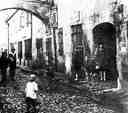
  1. To spot the site of the Vilna Ghetto, look for a narrow cobblestone street lined with old, worn buildings and a stone archway stretching across above you; the remnants of history…Meer lezenToon minder

    To spot the site of the Vilna Ghetto, look for a narrow cobblestone street lined with old, worn buildings and a stone archway stretching across above you; the remnants of history are woven right into these quiet, shadowed walls. Now, step closer and imagine yourself transported back in time, right here in 1941, in the heart of Vilnius’s old Jewish quarter. These streets once echoed with laughter, bargaining at market stalls, and the shouts of children hopping between cobblestones-perhaps like that little boy you can picture dashing past, wanting to play in a world suddenly turned upside-down. But, just beneath the surface, you’d feel tension crackling in the air like electricity before a storm. Before the Second World War, this area was a lively hub of Polish and Jewish culture. Vilnius was called “the Jerusalem of Lithuania,” famous for its culture and thinkers, its delicious bakeries, and its energetic gatherings in cafes. If you could peek inside one of these buildings, you might see a library of 45,000 books, poets standing on makeshift stages in the “House of Culture,” and parents whispering bedtime stories in Yiddish, hoping their children would sleep safely. Everything changed when the German army marched in, and with them came the horror of the Nazi occupation. The ghetto was created almost overnight following a staged attack on German soldiers, a cruel trick to justify what came next. Suddenly, thousands of Jewish families were shoved out of their homes with almost nothing-if you couldn’t carry it, you lost it. The narrow streets of the old quarter were sealed off, forming the infamous Vilna Ghetto, splitting it into the “Large” and “Small” ghettos, with a corridor running right down the center where non-Jews went about their day, mostly ignoring the desperation only meters away. Life inside was harsh, even deadly. So many people crammed together, the threat of disease was constant; a yellow sign screamed: “Attention! Danger of Infection!” Yet, partly thanks to the heroic ghetto doctors, major epidemics never struck. You can almost imagine the scratchy sound of a doctor’s heating pot as he tries to make soup from the very last potato, because hunger gnawed at everyone. But in the face of so much fear, people clung to culture, hope, and even humor wherever they could find it. If you listen closely, maybe you’ll hear a faint melody, a snatch of a song from one of the ghetto theatre’s many performances-111 in total!-that filled hearts with a flicker of courage. At night, while the city slept, this ghetto pulsed with secrets. The resistance was born here, its motto loud and proud: “We will not go like sheep to the slaughter.” Men and women, many just teenagers, became partisans, right under the noses of the Nazis. Young Yitzhak Wittenberg, one of their leaders, was once smuggled to safety by his comrades right from this maze of streets. Tension was high, and sometimes, on the darkest nights, betrayal came from within, with families torn between trying to protect their own and those who fought back against the occupiers. Sometimes, a stone thrown, an angry shout, or sobs muffled by hands would echo off these walls. As 1943 closed in and the Nazis decided to liquidate the ghetto, the air crackled with fear and heartbreak. Families hugged tight, whispering hurried goodbyes, as German boots thundered over these cobblestones, dragging thousands to camps or to the forests of Paneriai, from which most never returned. Only a few hundred of Vilna’s Jews survived, often by hiding in the forests or finding shelter with local Lithuanians. The ones that did survive-like Samuel Bak, a little boy who later painted his memories-carried these shadows for life. After the war, the city slowly grew over the pain, but the story is still hidden in plain sight, right where you’re standing. Vilnius’s Jewish community nearly vanished, its vibrant life reduced to a few echoes, a handful of books, and the stories of those who outlasted the darkness. If a chill runs down your spine, that's the past brushing past you, reminding us: every stone here has a story worth remembering. Want to explore the background, 1941: establishment of the ghetto or the 1942: quiet period in more depth? Join me in the chat section for a detailed discussion.

    Open eigen pagina →
  2. To spot the Church of Saint Nicholas, look for a cozy red-brick building with a sturdy white bell tower peeking through the bare tree branches on your left. Now, imagine yourself…Meer lezenToon minder

    To spot the Church of Saint Nicholas, look for a cozy red-brick building with a sturdy white bell tower peeking through the bare tree branches on your left. Now, imagine yourself in Vilnius during the 14th century-there’s a smell of woodsmoke in the air and the city is just a cluster of busy wooden streets. Suddenly, you stumble on this striking brick church, which, believe it or not, is the oldest one still standing in all of Lithuania! Back in 1387, this church was a beacon for German craftsmen and merchants bustling along Vokiečių Street, filling the air with the clang of hammers and the chatter of different languages. Fast forward a few hundred years, and here’s where things really heat up in the story! When speaking Lithuanian was an act of cultural pride, Saint Nicholas’s Church became the ONLY place in Vilnius where you could hear a mass in Lithuanian-it was the voice of the people, even in hard times. Whispers in Belarusian joined the chorus in the 1920s and ‘40s, brought by passionate priests whose sermons echoed through these old Gothic walls. In World War II, the church’s famous dean, Kristupas Čibiras, lost his life in a bombing-just imagine the fear and uncertainty pressing in on this historic refuge. When the grand Cathedral of Vilnius was closed by Soviet occupiers, Saint Nicholas stepped up, quietly becoming the city’s heart for believers. Outside, in a bold act of rebellion (and maybe a touch of mischief), locals raised a statue of Saint Christopher in 1959 even though the city’s coat-of-arms was banned. The church itself is a masterpiece in brick Gothic style, with elegant pillars and starry vaults overhead. Step inside and you’ll find treasures-a silver-framed painting of Saint Nicholas, a Gothic statue of St. Louis, and a bronze bust of Vytautas who’s been keeping watch since 1930. If these walls could talk, I bet they’d have legendary tales and maybe even a few church mouse jokes!

    Open eigen pagina →
  3. Here it is, right at the corner where Vokiečių and Trakų streets meet-a grand peach-pink building with tall windows, white trim, and a band of intricate sculptures and bas-reliefs…Meer lezenToon minder

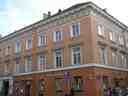
    Here it is, right at the corner where Vokiečių and Trakų streets meet-a grand peach-pink building with tall windows, white trim, and a band of intricate sculptures and bas-reliefs running just under the roof; look for the part that wraps around the corner, and you’ll know you’ve found the Tyzenhauz Palace! Now, let’s bring this stately palace to life! Imagine the sound of carriage wheels on cobblestones and the distant aroma of fresh bread from market stalls, because you’re standing in front of a building that has seen Vilnius through centuries of fortune, disaster, and of course, a little drama worthy of any soap opera. Once upon a time, back in 1579, this spot was home to a sharp-lined, Gothic building-think turrets and tall, mysterious windows-watching over a young, bustling city. But just like an old dance move, it fell out of favor and fell to pieces, too. Fast-forward to the eighteenth century, and here comes Antoni Tyzenhauz-a man so important that if mobile phones existed, even the king would’ve been on his speed dial. Besides counting Lithuania’s cash as treasurer, Tyzenhauz was a key royal manager and an industrial whiz who shook up Grodno with spinning wheels and small factories. Antoni Tyzenhauz had a grand vision and a need for something much fancier than ruins. So, around 1765, he snapped up this plot and made a call-possibly loud enough for the neighbors to hear-to none other than Giuseppe de Sacco, a Venetian architect (yes, a real Italian!). “Give me something classical-think Rome, but with better weather!” The palace rose with symmetry, strong corners, and an elegant frame, more refined than a well-buttered croissant. At the peak of its glory, Tyzenhauz must have played host to candle-lit galas and whispers of court intrigue. But as you may know, fortune’s wheel always spins. Tyzenhauz ran out of money and, after losing his position in 1777, his palace fell quiet-empty, cold, and echoing with footsteps of...well, nobody. By 1785, he was gone, and a widow by the name of Fitinhof took over, her heart set on breathing life back into these stone walls. Enter Martin Knakfuss, a German-born architect and professor-he gave the palace its simple, clean facades, and added the legendary “Silver Hall.” Picture this: 30 glorious halls, 16 smaller rooms, and dancers twirling until their feet ached in one of the biggest residences in Lithuania. The nineteenth century, though, wasn’t so kind. Our palace, once so posh, was split up and filled with shops and stores. New doors and windows popped up-less royal ball, more supermarket sweep. By the early 20th century, the place was patched up to be a hotel, and then the world cast its shadow: bombs fell in wartime, walls crumbled, and only the shell and cellars remained. Some might have given up, but not Vilnius! When most of the street went to ruins, this palace was resurrected in 1945, and by 1957 it was reimagined as, of all things, small apartments-if you ever needed proof that grandeur sometimes must make way for practicality, this is it. Packed with forty flats and, for a time, filled with the clang of spoons on kitchen pots and laughter from children, the palace changed with the world. But after Lithuania declared its independence, the Old Town’s magic returned-residents sold their homes at a premium, and offices and shops filled these storied halls. If bits of plaster could talk, they’d tell you of lost fortunes and found hope, secret parties and bomb-blasted nights. And as you gaze up at the detailed sculptures beneath the attic, remember: every window, every relief, every stone on the courtyard side has a tale to tell. This isn’t just a building-it’s a survivor, a chameleon, and one of Vilnius’s grandest keepers of secrets. Keep your eyes open; you never know what the next century will bring to Tyzenhauz Palace.

    Open eigen pagina →
Toon 9 stops meerToon minder stopsexpand_moreexpand_less
  1. To spot the Great Synagogue of Vilna, look for a large open courtyard where a school building now stands-once, this place was crowned by an imposing stone structure with…Meer lezenToon minder

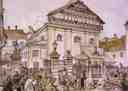
    To spot the Great Synagogue of Vilna, look for a large open courtyard where a school building now stands-once, this place was crowned by an imposing stone structure with Renaissance and Baroque style lines, topped with an arched brick facade, but today the only traces are the archaeological remains and a few subtle memorial markers. Alright, put yourself in a different time for just a moment. Imagine you’re standing right here in the heart of Vilnius’ Old Town, on what used to be Jewish Street. The year is 1633. Instead of the modern schoolyard and gentle city bustle you see and hear now, a stunning stone synagogue stretches up in front of you, its Renaissance and Baroque lines hugging the street. The walls are thick-nearly fortress-like. Now, here’s a funny bit of European history: Back in the day, local rules said synagogues couldn’t be taller than churches. But the clever builders had a solution-why go up, when you can dig down? So, you’d walk past intricate iron gates, gifts from long-gone tailors and psalm reciters, and step down into a space that looked three stories tall from the outside but soared a massive five stories within. Talk about under-the-radar architecture! Inside was a world of light and grandeur. Imagine the massive stone-floored hall, sunlight streaming through tall windows, catching flashes of gold and silver from hanging chandeliers. In the center, four powerful columns held up the whole immense structure, drawing your eye up to an elaborate three-tiered bimah-basically a raised platform where the Torah was read-so beautifully decorated it looked ready for royalty. Hanging above, a cupola twinkled, supported by eight slim columns. And don’t miss the Holy Ark on the eastern wall, a masterpiece of gilded wood with plants, animals, and a double-headed eagle perched proudly on top. It was guarded by two winding flights of iron-railed stairs, so dramatic you’d half expect to see a rabbi dash down them, Truman Show-style. But the synagogue wasn’t just about show. It was a refuge, a stronghold for the Jewish community of Vilnius-a place that could shelter hundreds in times of danger. On the holiest days before World War II, up to 5,000 people packed inside, voices rising together until the stone walls almost vibrated. Even visitors like the famous philanthropist Sir Moses Montefiore had to be given special entrance tickets because of the crowds. If you peeked into the corners, you’d see women’s galleries-balconies with small windows connecting to the main prayer hall, the result of fierce community effort and a bit of financial drama. There was even a “Chair of Elijah” in the northwest corner for special rituals, and a massive seven-branched candelabrum that, in a plot twist worthy of Sherlock Holmes, was whisked away to Moscow just before World War I. But with the coming of World War II, darkness fell. The Nazis looted, burned, and shattered what was left of this community jewel in 1941. For a while after the war, the ruins stood-a ghostly shell, quietly resisting time. Locals tried to declare it a historic monument, but in the crushing years that followed, the Soviets reduced the remaining fragments to dust. If you’d walked here in the late 1950s, you would have found, not a synagogue, but a playground and a kindergarten-a deliberate attempt to erase history. It’s like sweeping your grandmother’s porcelain tea set under a rug and calling it modern art. Yet, a few precious pieces survived-the door of the Holy Ark, a reader’s desk, and a carved bas-relief of the Ten Commandments, now kept safe in the Vilna Gaon Jewish Museum. But the heart of the synagogue, its stories and spirit, waited underground for decades. Then came the archaeologists, armed with curiosity and ground-penetrating radar. In 2015, right under the current school, they traced the old synagogue’s massive walls and even began to excavate its sunken treasures. Would you believe they found parts of the legendary Baroque bimah? In 2019, they uncovered a Hebrew inscription from a Torah reading table that quietly told of the Jewish community’s deep ties with Jerusalem. It mentioned Rabbi Eliezer and Rabbi Shmuel, brothers whose parents left Vilna for the Holy Land centuries ago-and whose gravestones were found, not here, but side by side on the Mount of Olives. Even today, the city dreams of restoring this sacred space-not as a complete replica, but as a powerful memorial, a space echoing with voices from the past and the promise of the future. So while you stand here, let your imagination fill in the walls, the shimmering chandeliers, and the crowded galleries, and remember a place that shaped Vilna’s soul for nearly 400 years. And who knows? Maybe someday, the prayers that once echoed here will rise again. Now, take a deep breath and let’s journey to our next destination. But first, don’t forget where you’re standing-sometimes the most powerful monuments are the ones you can’t fully see. For further insights on the structure, destruction or the plans of restoration, feel free to navigate to the chat section below and inquire.

    Open eigen pagina →
  2. Look for a beautiful cream-colored building with three levels of graceful arches forming a cozy courtyard-just follow the rows of arches and you’ll know you’ve arrived! Take a…Meer lezenToon minder

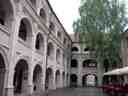
    Look for a beautiful cream-colored building with three levels of graceful arches forming a cozy courtyard-just follow the rows of arches and you’ll know you’ve arrived! Take a deep breath and imagine yourself stepping back to the 1580s. The Alumnatas stands before you, proud and silent, once alive with the eager voices of young men who’d traveled from faraway lands, all to train as priests on a mission from the Pope himself. Back when Queen Elizabeth I was barely done with her tea, Pope Gregory XIII decided Vilnius needed a place to train priests who could head into Orthodox and Protestant territories, hoping to spread a bit of papal cheer. These walls, built in elegant Renaissance style, with cool stone and shady arcades, have seen more secrets than a magician’s hat. Originally, there was a gothic house with mysterious cellars where the students may have sneaked in a forbidden snack (or two). By the 17th century, a little chapel was added at the back of the courtyard-making it perfect for peaceful prayers or, rumor has it, the occasional midnight ghost story. Imagine the courtyard glittering in candlelight, voices echoing off the arches. Sadly, by 1798 the seminar closed, handing the keys to Vilnius University, and the halls grew quieter, filled now with townsfolk instead of clergy. Last restored in 1984, the Alumnatas still holds its dignified elegance-though today, the only spirits likely to haunt you are friendly ones, possibly offering coffee at the little tables nearby!

    Open eigen pagina →
  3. To spot the Presidential Palace, just look ahead for a grand cream-colored building with tall white columns and three Lithuanian flags fluttering right out front-its elegant…Meer lezenToon minder

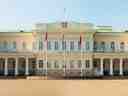
    To spot the Presidential Palace, just look ahead for a grand cream-colored building with tall white columns and three Lithuanian flags fluttering right out front-its elegant facade stands proudly at the heart of the city. Now, let me sweep you into the story of this magnificent palace! Imagine standing here in the bustling Vilnius Old Town, where centuries seem to echo off these stone columns. The Presidential Palace wasn’t always home to presidents-oh no, its walls have seen enough drama to fill a dozen seasons of your favorite TV show and then some. Long, long ago, in the 14th century, Grand Duke Jogaila, who was probably more skilled with a sword than a pen, gifted some land to the city’s bishop. The very first stones were laid right here under the gaze of Bishop Andrzej Jastrzębiec. Back then, this area would’ve smelled of fresh mortar and heard the steady thud-thud of construction. Over the years, the palace just kept growing, stretching its wings during Renaissance times, with lush gardens spreading behind its walls. It was quite the place to wander after a long day of blessing the city or, you know, dealing with medieval politics. Fast forward to the 18th century, and oh boy, the place was practically a magnet for drama. Two massive fires swept through, leaving only charred stone and ashen memories. Yet like any good palace worth its salt, it refused to let a little thing like fire get it down. The architect Laurynas Gucevičius swooped in, dusted off his blueprints, and rebuilt the palace with elegance-and a sprinkle of Vilnius flair. This building wasn’t just for bishops. Kings, emperors, and noblemen made it their crash pad when in Vilnius. Picture it: the sound of carriages on cobbles, messengers rushing in, and candles flickering in grand windows. Even Tsar Paul I of Russia decided to have a little palace staycation here in 1796. Now, let’s pause for one of my favorite episodes: The Napoleon Drama! In 1812, as Napoleon Bonaparte marched his troops into the heart of the Russian Empire, he decided to set up his war room right here. He planned military campaigns, met Lithuanian noblemen, and probably sipped on whatever the local coffee equivalent was back then. You can almost hear the footsteps and tense whispers in the halls. Even Russian Tsar Alexander I made it his home for a bit-clearly, this palace was the Airbnb of European leaders! Not to be outdone, General Kutuzov got Russia’s top military honor here after trouncing Napoleon-talk about a victory lap. Of course, after all that action, the palace needed another facelift. Enter St. Petersburg architect Vasily Stasov, who rebuilt it in a style so grand that much of what you see today is thanks to his vision. The stately Empire elements-those pillars, those wide windows-are his gift to Vilnius. In the whirlwind 20th century, the palace shimmied through various identities. It served as the Ministry of Foreign Affairs, the ELTA news agency, a military center, and even a haven for creative artists. But finally, in 1997, it became what you see now: the proud seat of the Lithuanian president. The very first to call it home was Algirdas Mykolas Brazauskas. If you glance up and see the special flag with the president’s coat of arms waving in the breeze, you’ll know the big boss is in. Here’s a fun fact: on weekends and evenings, the beautiful 1.5-hectare park out back opens to the public. Fancy a stroll behind presidential walls? Just make sure not to trip and make any international incidents-those park benches can be quite diplomatic! And before you go, remember: guided tours are offered if you book ahead. So if you have royal ambitions, here’s your chance to walk the same halls as everyone from bishops to Bonaparte. Until then, stand tall in front of the cream-colored columns-and soak in the quiet hum of centuries. On to the next adventure!

    Open eigen pagina →
  4. So, what exactly happens here? Imagine a team of language detectives buzzing around town. Their mission? To make sure everyone-from government institutions to big companies and…Meer lezenToon minder

    So, what exactly happens here? Imagine a team of language detectives buzzing around town. Their mission? To make sure everyone-from government institutions to big companies and even local cafes-respects the rules of the Lithuanian language. They don’t wear Sherlock Holmes hats, but they do check all sorts of public signs, official documents, even accounting papers! If a street sign mixes up its nouns and adjectives, this is where someone comes to sort it out. And if a radio host gets too creative with language? Well, let’s just say the Inspectors might have a gentle word-or maybe a stern letter! The job is serious, but there’s always a touch of drama. Since 1990, when Lithuania had just regained independence, language here was a powerful symbol of freedom and national pride. This team helped shape a new chapter for the country by protecting the Lithuanian language, making sure it wasn’t pushed aside by foreign tongues. From 1992, they even gained the right to hand out official warnings and fines if someone broke the language rules. Imagine: a police officer with a grammar book instead of a ticket pad! Since 2001, the language inspectors have had their own independent office. They work directly for Lithuania’s Ministry of Culture, making sure the letter of the law is always spoken-and written-in flawless Lithuanian. So if you glance at any sign on your walk that's beautifully correct, you’ll know: the friendly neighborhood language inspectors have visited! Alright, let’s keep moving-no spelling tests required!

    Open eigen pagina →
  5. To spot Cathedral Square, just look for the wide open space dominated by a grand white neo-classical cathedral with tall columns and statues on its roof, right beside a striking,…Meer lezenToon minder

    To spot Cathedral Square, just look for the wide open space dominated by a grand white neo-classical cathedral with tall columns and statues on its roof, right beside a striking, standalone bell tower that looks a bit like it got lost while trying to find a castle. Now, let your senses wake up as you step into Cathedral Square, the very heart of Vilnius! Imagine crowds hurrying across the open expanse, shoes clacking on pale stones as laughter and chatter bounce off the cathedral walls. This place is more than just a meeting spot - it’s the city’s stage, a place where history and everyday life rub elbows in the most spectacular way. Flash back to the late 1800s: this lively square didn’t even exist yet! Instead, rambling medieval and renaissance houses once crowded this spot, the air thick with chimney smoke and market shouts. And nestled amongst them was the Lower Castle, watching over everyone like a slightly overprotective relative. When the decision came to open up the space in the 19th century, the city went through a dramatic transformation. Buildings came down, and in their place, this vast open square appeared-think of it as Vilnius’ bold new living room. Suddenly, all eyes were on the square. This was where the most important gatherings took place. Picture military parades with the pounding of military boots, and the St. Casimir’s Fair filling the plaza with the scents of food and the hum of eager shoppers, their stalls bursting with colorful wares. For a time, a mighty monument to Catherine the Great towered here, gazing down upon the city-until a political twist saw it toppled for good. Fast forward a bit: the square saw it all, from German occupation to glittering Christmas trees crackling to life, outshining even the sternest of old fortresses! Each year, the tallest Christmas tree in town is crowned here while New Year’s fireworks light up the faces of thousands gathered to count down together. Here’s a detail to make you lean in close: the cathedral’s bell tower stands apart from the building, an unusual sight anywhere outside of Italy. Rumor has it the lower part of the bell tower once belonged to the defensive walls of the castle, complete with tiny loopholes for medieval archers! Or maybe, just maybe, it sits atop the bones of a pagan temple-no one knows for sure, and a hint of mystery is always good for a city square. Don’t miss the bronze monument of Gediminas, the legendary grand duke of Lithuania, his materials as international as his dreams: confiscated bronze from the Lithuanian border, Ukrainian marble, all cast in distant Tallinn and assembled in Vilnius-a truly global group project. And if you spot a simple stone tucked in the square, don’t just admire it. That’s where the Baltic Way began, with hands joining across countries for freedom. Give it a step, spin three times, and who knows? Maybe your wish will join all the echoes of past hopes. As you stand here, breathe it in-stone and history, festival lights and ancient whispers-Cathedral Square is Vilnius’ living memory, open to everyone passing by!

    Open eigen pagina →
  6. Directly ahead of you stands a striking white building with grand columns, three statues on its roof, and a tall, leaning belfry tower just to the right - you really can’t miss…Meer lezenToon minder

    Directly ahead of you stands a striking white building with grand columns, three statues on its roof, and a tall, leaning belfry tower just to the right - you really can’t miss its Neoclassical beauty shining in the sunlight! Now, take a deep breath, listen to the gentle hum of the square around you, and let’s step back in time together. Imagine yourself standing in this very spot over seven hundred years ago, when instead of marble saints and singing choirs, thunder might have boomed as worshippers prayed to Perkūnas, the old Baltic god of lightning, right here. Suddenly, don’t blink, for King Mindaugas rides in around 1251. He’d just become Lithuania’s first and only crowned king, a Christian at that, and with all the pageantry fit for a Middle Ages Netflix episode, he ordered the very first cathedral built on this site. But Mindaugas didn’t get the happy ending. After his death, the cathedral switched back into pagan hands-imagine the candles blown out, the chants turning from Christian hymns to ancient invocations. Fast forward to 1387, the year Lithuania officially converted to Christianity. You can almost see the bustle as craftsmen built a new cathedral, this time all Gothic arches and hopeful stonework. Sadly, it didn’t outlast the city’s many fires-cue the crackling and the smoke as, in 1419, flames reduced it to ashes. But Vilnius Cathedral wasn’t one to give up easily. Vytautas the Great, eager to be crowned king, built it bigger and bolder than ever for his would-be coronation-though that crown never touched his head. Those thick walls and pillars you see today? Parts are survivors from that medieval rebuild, standing proud through centuries of intrigue, coronations, and royal drama. Now listen closely: deep beneath your feet are crypts and shadowy chapels where legends now lie. Vytautas himself, saints, grand dukes, queens-resting in the cool darkness with secrets only whispered through the stones above. For centuries, rulers came here for their final sleep, and on special days, the cathedral would fill with the solemn clatter of armor and the soft flutter of silk as coronations unfolded beneath painted ceilings. And then there’s the unexpected! In 1769, long after the fires had finally left it alone, a tower built during a rushed 1600s reconstruction came crashing down in spectacular, sadly fatal fashion. That’s when the cathedral took on its current Neoclassical look-thank Laurynas Gucevičius for the grand, strictly rectangular facade you see before you. And give a wave to the statues above the entrance: Saint Casimir (Lithuania’s own), Saint Stanislaus representing Poland, and in the middle, Saint Helena clutching an immense cross, all restored just in the last few decades. Want a secret? Baroque lovers, peek around for the Saint Casimir Chapel. Built between 1623 and 1636 of Swedish sandstone and decorated by Italian sculptors and painters-Michelangelo Palloni’s frescoes, Pietro Perti’s intricate stuccowork-it’s a monument to the glories and heartbreaks of the Polish-Lithuanian Commonwealth. That chapel is about as glamorous as history gets, with more stories than a royal soap opera. But the cathedral also tells stories of survival and silence. During the Soviet era, Mass was banned, and the echo of prayers was replaced by the scrape of boxes and crates-the house of worship turned warehouse. Only in 1988 did singing rise up again, cautious, hopeful, until at last, the cathedral emerged from the Soviet shadow, fully restored and ready to greet a new independent nation. Inside, more than forty treasures-paintings, frescoes, and even the floor from Mindaugas’s day-await, some uncovered only in recent decades. The oldest fresco in Lithuania slumbers quietly on a wall below, while the altars recall a time when Christian and pagan traditions collided, merged, and mingled in mysterious ways. Restoration work has never truly stopped here. Fresh paint gleams on the walls, statues once cast out are back in their places, and every so often, the wind howls through Cathedral Square-like in 2022, when it tore away a piece of the roof. So as you stand here, let the grandeur soak in. Feel the weight of centuries, the mixture of faith, royalty, and resilience etched into every stone. And if you listen carefully, you just might hear the distant rumble of a king’s procession, the hush of sacred vows, or-if you’re really lucky-the leftover echoes from battles of gods and men, all right here in the heart of Vilnius.

    Open eigen pagina →
  7. To spot the Palace of the Grand Dukes of Lithuania, look for a huge and elegant white building with rows of tall windows, decorative Renaissance details, and a distinctive tower…Meer lezenToon minder

    To spot the Palace of the Grand Dukes of Lithuania, look for a huge and elegant white building with rows of tall windows, decorative Renaissance details, and a distinctive tower topped by a golden ornament rising above the symmetrical black roofs, right ahead of you. Now imagine yourself standing right where generations of dukes, queens, soldiers, musicians, and history lovers have stood-because in front of you is more than just a palace. It’s a building that’s been burned, plundered, demolished, and then, centuries later, incredibly, resurrected. If buildings could talk, this one would have some wild stories to tell you-some romantic, some tragic, and definitely a few that would keep you up at night. Just don’t worry-there are no reported ghosts. Yet. Let’s rewind all the way to the 15th century, when the very first stones for the Palace of the Grand Dukes were laid. At that time, the Grand Duchy of Lithuania was one of the strongest states in Europe. The original palace took shape after a fiery disaster (literally a fire) in 1419, when leaders wanted a place both impressive and secure. You’d see sharp Gothic towers, thick stone walls, and important folks in glorious robes coming and going. This place only became grander with time. As Renaissance fashion swept across Europe, so did architects and artists-some even recruited from Italy by kings with a taste for the latest trends. Sigismund I the Old, whose name was much grander than his haircut, dramatically expanded the palace, adding lush gardens, extra floors, and plenty of space for royal affairs of every variety. In the 16th century, his son Sigismund II Augustus even married here-his first wife was the Emperor of Austria’s daughter, and his second was the legendary Barbara Radziwiłł. According to one curious visitor from the Vatican, the palace glittered with more treasures than the Pope’s own stash. Imagine tapestries, golden goblets, and libraries so big you’d need a map just to find the exit. But it wasn’t always balls and banquets. As the palace bustled with operas (yes, the first in Lithuania was staged right here in 1634!) and state ceremonies, shadows began to gather. The 17th century brought war. In 1655, the Russians swept in. The palace was burned, pillaged, and left a blackened shell for more than a century. People tried to make the ruins useful-Jews ran a house here, then the Russian army moved in, even using part of the old palace as military barracks. Trees grew up through shattered walls. Fires, wars, and changing empires left the place almost forgotten, except for local legends and the pigeons. Fast forward to modern times: as Lithuania regained its freedom, archaeologists began to dig. What they found convinced the country that the site deserved more than just weeds and whispers. Between 2002 and 2018, the palace you see before you was meticulously rebuilt upon those old bones, mixing ancient remains with fresh marble-and someone even made sure the gardens were still grand enough to make Sigismund jealous. They took fragments from every age, including a quirky old merchant’s house, and knit them together into the elegant, Renaissance-style wonder you’re looking at right now. Like a phoenix from the ashes, the palace became a symbol of hope, culture, and resilience for Lithuania. It isn’t just a museum of riches or royal memories-it’s a place where contemporary history is made. In 2013, it even hosted the summit of European leaders, where presidents and prime ministers talked politics late into the night. I’ve always wondered what snacks they served. Kingly cookies? Ministerial muffins? The Palace has four grand wings: the south wing once welcomed foreign ambassadors, the east holds the oldest surviving walls, the west was home to the Grand Duke himself, and the north kept a lively theatre for entertainments. Each stone here is soaked in stories. So, as you gaze up at those white walls and elegant towers, picture not just a royal residence, but centuries of drama-weddings, wars, music, and invention-etched into every corner. And who knows: maybe tonight, when the city quiets down, the echoes of royal footsteps will drift out across the square. If you hear the faint sound of an opera or the laughter of a courtier, it’s probably just the magic of this place sneaking up on you.

    Open eigen pagina →
  8. Look for a long white building with a red roof and big columns at its entrance-right at the foot of the green hill topped with the famous Gediminas Tower, you’ll find the Lietuvos…Meer lezenToon minder

    Look for a long white building with a red roof and big columns at its entrance-right at the foot of the green hill topped with the famous Gediminas Tower, you’ll find the Lietuvos nacionalinis muziejus waiting for you. Imagine you’re about to meet a time traveler-because that’s what this museum is! The Lietuvos nacionalinis muziejus is Lithuania’s largest and oldest guardian of treasures, holding over one and a half million artifacts. The museum is so huge, it’s like a puzzle made from twelve different buildings, some of them nestled inside these old castle walls and military fortresses around you. Each one holds memories from Lithuania’s story, from ancient times to its wild ride through modern history. Now, let’s dust off the old storybook. Back in 1855, a curious count named Eustachijus Tiškevičius started something called the “Museum of Antiquities,” right after Vilnius University was closed following a heroic uprising. But trouble was lurking-after yet another rebellion, the Russian Empire moved in, split up the Lithuanian collections, and sent a whole chunk of priceless items off to Moscow. Talk about extreme souvenir hunting! Fast forward to a new wave of hopeful collectors as Jonas Basanavičius tried to rebuild the dream, only to have it interrupted by occupation and war. During Soviet times, collections were snatched up again and put under state control, but the museum always found someone passionate, like Vincas Žilėnas, to keep saving heritage, piece by piece. Here’s a twist: after Lithuania became independent again, the museum didn’t just sit around polishing old relics. Under determined leaders, it became a vibrant home for stories-some spaces remember rebellion and political prisoners, others hold the echoes of national heroes like Jonas Basanavičius or the mysterious house of stories, opened just in 2021. Inside these walls, you’ll find coins that jingled in medieval pockets, carved relics, haunting photos, and costumes that once twirled through proud Lithuanian festivals. If these halls could talk, they’d whisper everything from royal secrets to bold dreams of freedom. And don’t worry, they’ll still let YOU do the walking-no time machine required! Ready to step inside and start your own adventure in Lithuania’s story?

    Open eigen pagina →
  9. In front of you, you’ll spot a grassy hill crowned by the iconic red-brick Gediminas Tower, rising above elegant palace buildings with orange rooftops-just look up the slope and…Meer lezenToon minder

    In front of you, you’ll spot a grassy hill crowned by the iconic red-brick Gediminas Tower, rising above elegant palace buildings with orange rooftops-just look up the slope and let that fortress on the hill be your beacon! Now, take a deep breath and imagine yourself standing here centuries ago, surrounded by the sights and sounds of Vilnius’ greatest stronghold. The Vilnius Castle Complex is not just one castle, but a whole ensemble of mighty fortresses-crowning the left bank of the Neris River, right where it meets the Vilnia River. Picture it: stone walls gleaming in the sun, villagers bustling around the Lower Castle, soldiers sharpening blades atop Gediminas Hill, and, just perhaps, the faint smell of campfires drifting by. This legendary spot tells the whole epic of Vilnius! Originally, in the 10th century, the first wooden castle stood here, perched on Gediminas Hill. But it wasn’t enough for the ambitious Grand Duke Gediminas. So, in 1323, he expanded and fortified the castle, declaring Vilnius the heart of Lithuania. Over time, the Castle Complex grew to include not one, not two, but three spectacular castles: the Upper Castle you see up on the hill, the grand Lower Castle with its Palace and Cathedral, and the mysterious Crooked Castle, once perched on a nearby hill. But if you sense a bit of drama in the air, you’re on track! In the 1300s and 1400s, Vilnius Castle was a target for armies from all over Europe, especially the fierce Teutonic Knights, who attacked time and again, year after year. In 1390, their torches finally took down the Crooked Castle, burning it to the ground in a blaze that echoes through legend, never to be rebuilt. Wars and sieges continued-once even with the future King Henry IV of England amongst the attackers-and the Upper and Lower Castles stood strong through wave after wave of battle. Vilnius was a full-on medieval action movie set, minus the popcorn. There were betrayals, with nobles switching sides, plots between cousins for the Grand Duke’s crown, and all the clashing ambitions of old Lithuania! In 1419, a fire devastated the Upper Castle, but Grand Duke Vytautas managed to rebuild it in Gothic glory, adding glazed green tiles to the roof-fancy for the Middle Ages, right? The Lower Castle flourished too, its Royal Palace becoming the seat of power for the mighty Grand Dukes. It saw everything from royal coronations to the staging of the very first opera in Lithuania in 1634. Diplomats arrived from across Europe, national treasures sparkled in its halls, and artists and kings alike wandered its corridors. But after a disastrous invasion by Russian armies in 1655, the castle’s glory faded, and much of it was abandoned and later destroyed. Imagine the shattered walls and fallen towers, the echoes of clashing swords and shouts drifting away as the decades passed. Yet even as the centuries washed over Vilnius, Gediminas Tower remained-a proud stump on the skyline. In more recent years, it’s become Lithuania’s symbol of strength and independence. On every January 1st-Flag Day-the Lithuanian tricolor is raised high above the tower, waving bravely against the sky. The Tower now invites you in with modern comforts too, like a lift that whisks visitors up the steep hillside. Inside the tower and surrounding buildings, you’ll find glimpses into every century: medieval weapons, ancient coins, and models that recreate the castle’s marvelous past. The air in the museum is thick with stories, from the pagan rituals of old to the struggles for sovereignty and freedom that shaped a nation. So as you stand here, looking up at Gediminas Tower, listen for the whispers of ancient rulers, the clangor of armies, the music of long-lost banquets, and the laughter of a city that never gave up. The Vilnius Castle Complex is more than stone and earth-it’s the living heart of Lithuania’s history, pride, and resilience. And hey, if you feel the urge to pretend you’re a medieval knight or a grand duke for just a moment, I promise I won’t tell!

    Open eigen pagina →

Veelgestelde vragen

Hoe begin ik de tour?

Download na aankoop de AudaTours-app en voer je inwisselcode in. De tour is direct klaar om te starten – tik gewoon op afspelen en volg de GPS-geleide route.

Heb ik internet nodig tijdens de tour?

Nee! Download de tour voordat je begint en geniet er volledig offline van. Alleen de chatfunctie vereist internet. We raden aan om te downloaden via wifi om mobiele data te besparen.

Is dit een groepsrondleiding met gids?

Nee - dit is een audiotour met eigen gids. Je verkent zelfstandig op je eigen tempo, met audiovertelling via je telefoon. Geen tourguide, geen groep, geen schema.

Hoe lang duurt de tour?

De meeste tours duren 60-90 minuten, maar jij bepaalt het tempo volledig. Pauzeer, sla stops over of neem pauzes wanneer je wilt.

Wat als ik de tour vandaag niet kan afmaken?

Geen probleem! Tours hebben levenslange toegang. Pauzeer en hervat wanneer je wilt – morgen, volgende week of volgend jaar. Je voortgang wordt opgeslagen.

Welke talen zijn beschikbaar?

Alle tours zijn beschikbaar in meer dan 50 talen. Selecteer je voorkeurstaal bij het inwisselen van je code. Let op: de taal kan niet worden gewijzigd na het genereren van de tour.

Waar vind ik de tour na aankoop?

Download de gratis AudaTours-app uit de App Store of Google Play. Voer je inwisselcode in (verzonden per e-mail) en de tour verschijnt in je bibliotheek, klaar om te downloaden en te starten.

verified_user
Tevredenheid gegarandeerd

Als je niet tevreden bent met de tour, betalen we je aankoop terug. Neem contact met ons op via [email protected]

Veilig afrekenen met

Apple PayGoogle PayVisaMastercardPayPal

AudaTours: Audiotours

Vermakelijke, budgetvriendelijke wandeltours met eigen gids

Probeer de app arrow_forward

Geliefd bij reizigers wereldwijd

format_quote Deze tour was een geweldige manier om de stad te zien. De verhalen waren interessant zonder te gekunsteld aan te voelen, en ik vond het heerlijk om op mijn eigen tempo te verkennen.
Jess
Jess
starstarstarstarstar
Tbilisi-tour arrow_forward
format_quote Dit was een prima manier om Brighton te leren kennen zonder je als toerist te voelen. De vertelling had diepgang en context, maar overdreef het niet.
Christoph
Christoph
starstarstarstarstar
Brighton-tour arrow_forward
format_quote Begon deze tour met een croissant in de ene hand en nul verwachtingen. De app gaat gewoon mee met je, geen druk, gewoon jij, je koptelefoon en gave verhalen.
John
John
starstarstarstarstar
Marseille-tour arrow_forward

Onbeperkte audiotours

Ontgrendel toegang tot ELKE tour wereldwijd

0 tours·0 steden·0 landen
all_inclusive Onbeperkt verkennen