
Hiroshima Audiotour: Echo's van Vrede en Stedelijke Avonturen in Naka-ku
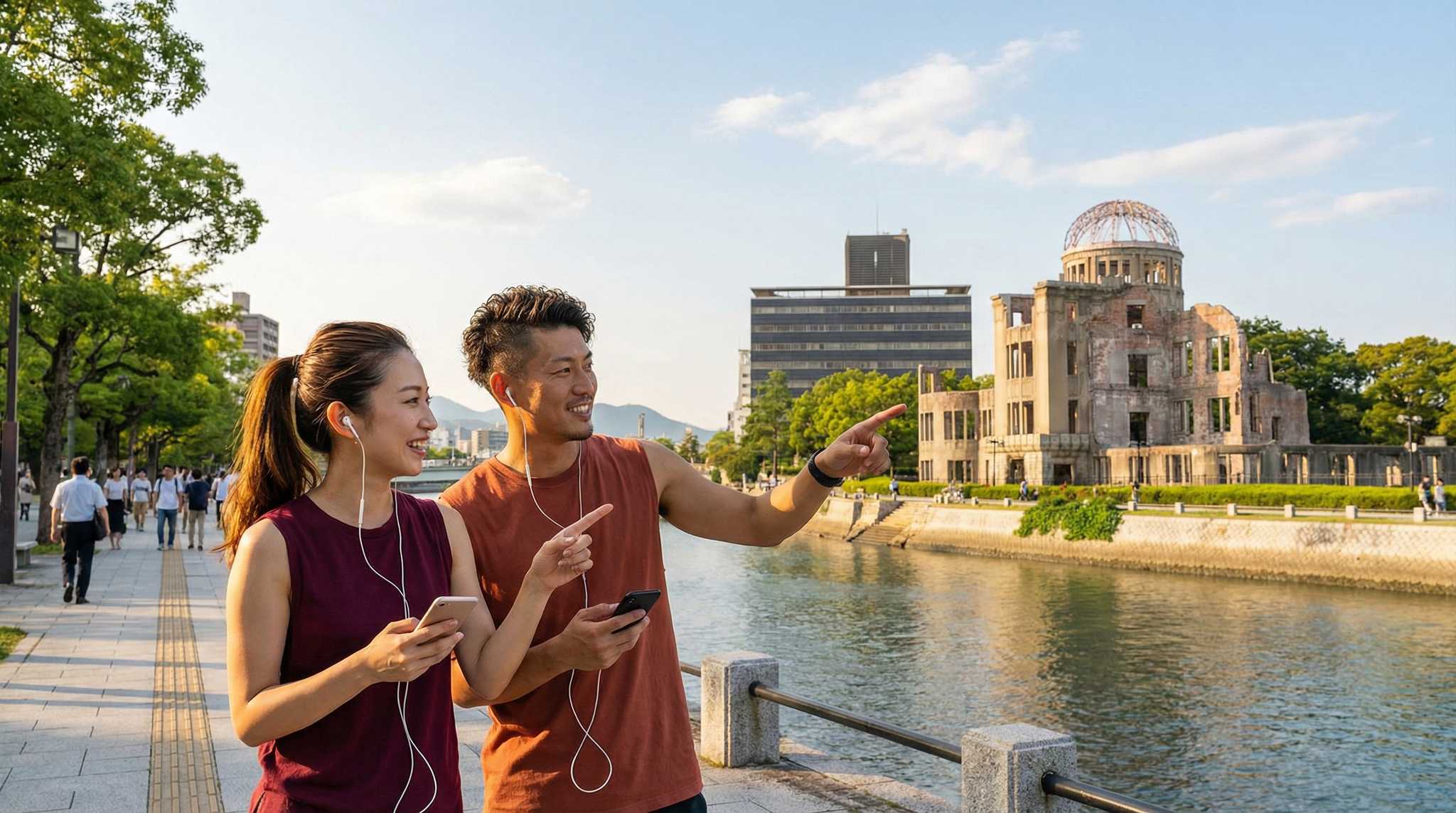
Verken het hart van Hiroshima met een bezoek aan Naka-ku, waar geschiedenis en hoop samenkomen. Begin bij het Vredespark van Hiroshima, een serene plek gewijd aan herdenking en vrede. Bewonder de iconische Atoombomkoepel, een krachtig symbool van veerkracht. Ervaar vervolgens de levendige cultuur van de stad bij het NHK Hiroshima Omroepstation. Deze tour biedt een betekenisvolle en inspirerende reis door het verleden en heden van Hiroshima.
Tourvoorbeeld
Over deze tour
- scheduleDuur 40–60 minsGa op je eigen tempo
- straighten3.5 km wandelrouteVolg het geleide pad
- location_on
- wifi_offWerkt offlineEén keer downloaden, overal gebruiken
- all_inclusiveLevenslange toegangOp elk moment opnieuw afspelen, voor altijd
- location_onStart bij Sun Mall
Stops op deze tour
Look for a large building with big, colorful GU and UNIQLO signs above its entrance, tucked beneath the high, curved glass ceiling of the shopping arcade-if you spot a crowd and…Meer lezenToon minder
Look for a large building with big, colorful GU and UNIQLO signs above its entrance, tucked beneath the high, curved glass ceiling of the shopping arcade-if you spot a crowd and bright lights, you've found Sun Mall! Alright, now take a moment to soak in the energy around you-because if these walls could talk, they’d probably gossip about decades of fashion trends and the occasional teenage drama! Sun Mall, right here in the heart of Hiroshima’s Kamiyacho, wasn’t always the bustling hub you see today. Imagine, if you will, the smoky aftermath of World War II in 1948. Hiroshima was rebuilding, and in this very spot, a tiny market called Hirogoku Shoten-gai popped up, bustling with people who’d survived unimaginable times and those returning home. It started as a T-shaped shopping street, which probably made everyone’s shoe shopping routes a bit more confusing. By the 1970s, the charm of the old market couldn’t keep up with changing tastes and newer buildings nearby. The old shops and theatres-where people once flocked for swordfighting plays, comedy shows, and magic tricks-were falling behind. You might say the neighborhood needed a little retail therapy. So, a bold vision emerged: to create a mega shopping center that could stand its ground against rival department stores. What could go wrong with a plan costing billions of yen? Well, disagreements, of course! Shop owners argued, builders hesitated, and even the city itself stepped in, refusing to hand out permits while everyone bickered. It was almost like a telenovela, just with more business suits. But in 1972, after much drama, Sun Mall’s current building finally opened its doors. The grand opening was so exciting there was even a parade-just imagine confetti, marching, and the aroma of brand-new fabric and fresh bread wafting through the air. Sun Mall quickly changed the flow of shoppers, stealing the limelight from its more famous neighbor, Hacchobori. For younger generations, it became the “it” place, a badge of coolness-although, to be fair, parents probably came here to secretly grab doughnuts or find sales. The design was as ambitious as the dream. On grand opening day, you could find a stage with an Electone keyboard for live shows on the first floor, a 400-seat “satellite” studio on the fourth, and, to everyone’s delight (especially donut lovers), Hiroshima’s very first Mister Donut-with a queue of 800 people eager for that sweet, sticky treat! The unstoppable energy made the arcade buzz, three to four times as many people walking by as before. Now, the years rolled on, and Sun Mall had to keep pace with the ever-picky preferences of shoppers. The 1980s were all neon and leg warmers, right? Well, Sun Mall threw itself a makeover party-in 1986, it reinvented itself as a temple for young people’s fashion, with new stores popping up on every floor and catchphrases like “City Bazaar” echoing through the mall. Uniqlo eventually set up shop on the second floor, and the famous supermarket “Izumi” took over the ground level, ensuring that no one ever had to shop hungry. This wasn’t just an indoor paradise of bargains and fashion experiments. Sun Mall’s rooftop became home to Japan’s first urban blueberry garden. Imagine: climbing to the roof and plucking a fresh blueberry while gazing at the city-proof that even shopping centers like to try on something new now and again. Even the mascots here have adventures! Since 2007, Stan and Chibi-Stan have been Sun Mall’s bubbly mascots, with cartoon strip stories and a loyal fanbase cheering them on. Just don’t ask them if they prefer GU or Uniqlo-they’re contractually obligated to remain neutral! Over seventy years since its humble beginnings, there’s still change in the air: the building’s due for a huge makeover, and one day, Sun Mall will be bigger and bolder than ever. But for now, as you stand here, close your eyes for a second and picture the echoes of tap-dancing feet, gossiping school kids, elderly folks reminiscing, and the occasional off-key Electone performance. That’s the spirit of Sun Mall-part fashion, part history, all Hiroshima! And if you start craving a donut, well, you’re in the right place. Ready for our next stop? Let’s stroll on to Hiroshima Prefector, where the story continues! Intrigued by the summary, floor plan or the tenant? Explore further by joining me in the chat section below.
Open eigen pagina →To spot the NHK Hiroshima Broadcasting Station, look up and ahead for a tall, modern brown building covered in rows of silvery windows with a bold “NHK” logo near the middle,…Meer lezenToon minder
To spot the NHK Hiroshima Broadcasting Station, look up and ahead for a tall, modern brown building covered in rows of silvery windows with a bold “NHK” logo near the middle, rising high above the street with an arched entrance and a clock structure at the front. Alright, now that you’re standing outside the impressive headquarters of NHK Hiroshima, let’s step into a story that spans nearly a century-full of drama, innovation, and yes, even a couple of quirky TV mascots. Imagine it’s the summer of 1928, and for the first time, the airwaves in Hiroshima are buzzing with the sounds of radio. The humble beginnings of this station, once just a small broadcaster with the call sign JOFK, would soon grow into a media giant-commanding not just Hiroshima, but all of the Chugoku region. But life at NHK hasn’t always followed a smooth script. Fast forward to August 6, 1945-the morning sky is eerily still. Suddenly, an air raid warning interrupts regular programming. Moments later, Hiroshima is plunged into chaos as the first atomic bomb in history detonates over the city. In that instant, the old NHK station is destroyed, 36 staff members lose their lives, and everything falls silent. But here’s a sign of resilience that makes history: just one day after the devastation, surviving employees gather at a backup facility and manage to get the voice of Hiroshima back on the radio. Even as the world outside is unrecognizable, those fragile radio waves carry both the city’s suffering and its determination to endure. Rumor has it that a sorrowful female announcer’s voice pleaded for help over the airwaves that day-real or not, it’s a haunting piece of broadcasting folklore. In the years since, the NHK Hiroshima Broadcasting Station has become more than a place to catch the news-it’s a guardian of memories, lessons, and hopes. Standing tall here, you’re looking at a building that doesn’t just talk about peace, but actually reaches out with programs dedicated to understanding Hiroshima’s history-the horrors endured, and the hope for a world without nuclear weapons. NHK Hiroshima produces award-winning documentaries and dramas about the bomb, like “The Hat” and “Fish of Fire,” sharing these powerful stories far beyond Japan’s borders. You might even imagine whispers of actors rehearsing lines, producers arguing over scripts, or the shuffle of staff racing to break a big story. And hey, it’s not all serious business! NHK Hiroshima has its fun side, too. For their 80th anniversary, they let viewers design their own mascots: out came “Peace-kun,” a gentle candle whose flame changes with his feelings (good luck getting him to talk though-he has a mouth shaped like ‘Hi’ from Hiroshima, but he never says a word). His sidekick, “Shamobee,” might look like a friendly rice paddle-bearing samurai, but he’s surprisingly strict about fairness and loves supporting local sports teams-always ready to turn up at an event and strike a pose. Inside this building, NHK runs like a city in miniature, split up into three main “centers” since 2023-there’s management, content creation, and a center dedicated to all things audience-related. They broadcast local news, weather, and sports, but also keep one ear tuned beyond Hiroshima-supervising other NHK stations across the region, and sometimes even teaming up with broadcasters in places like Fukuoka and Shikoku to cover big disasters together by sharing helicopter footage. You’ll find digital studios, high-tech editing rooms, and journalists fueled by endless cups of coffee from the Starbucks right inside the building. No joke-news can’t wait for sleep. But that’s only the surface. Beneath all the technology is a devotion to remembrance. Every August 6th, while much of Japan is busy with daily routines, at NHK Hiroshima, the only thing that matters is the annual Peace Memorial Ceremony. It’s broadcast live and in multiple languages-reaching millions with the message: “never again.” So next time you see the NHK logo or hear one of their news jingles, remember: this is not just a place for weather reports and baseball scores. It’s a living witness to Hiroshima’s past and present-a station that picked up the mic and spoke for a city when almost no one else could. Let’s tip a hat to the storytellers, from the ghosts of old-time radio to the tech wizards of modern TV, for keeping the heart of Hiroshima beating loud and clear. Intrigued by the history, main channels and frequencies or the main hiroshima station production programs? Explore further by joining me in the chat section below.
Open eigen pagina →To spot the Hiroshima Peace Memorial Museum, look ahead for a long, modern building raised on sturdy pillars, with tall vertical windows running across its length like a row of…Meer lezenToon minder
To spot the Hiroshima Peace Memorial Museum, look ahead for a long, modern building raised on sturdy pillars, with tall vertical windows running across its length like a row of silent sentinels-trust me, you can’t miss its striking simplicity and strong presence! Now, take a deep breath as we peek into the story of this iconic spot-because what stands before you isn’t just a building; it’s a living memory, a witness to history’s heartbeat and humanity’s hope. The Hiroshima Peace Memorial Museum opened its doors back in 1955, right in the heart of what’s now Peace Memorial Park. Every year, more than a million people wander through, searching not just for facts, but for answers, for understanding, maybe even a bit of hope-a bit like all of us, really. This museum was designed by Kenzō Tange, a star architect famous for his bold modern style, and it’s no accident it looks so unique. Its clean lines and calm gray frame offer a silent stage for stories that need no embellishment. Inside, you’ll find items left behind by those who lived through that unimaginable day in August 1945-from a scorched school uniform to a melted tricycle, and letters exchanged between world leaders, fizzing with the tension of atomic-age secrets. Some objects seem almost ordinary, until you realize they hold the weight of lives turned upside-down. The exhibits are split into two wings: one tells the story of Hiroshima before and after the bomb, letting you see how the city once bustled with life-and how it was reshaped by a single moment. You'll even find a model of the city, hauntingly showing the devastation, now upgraded with projection mapping so you can almost feel the blast ripple out in cold silence. The other wing focuses on the raw aftermath, with displays that bring you uncomfortably close to the effects of heat, blast, and radiation-a reminder that it wasn’t just buildings that were shattered. Through everything, the message is clear: out of this deep scar, Hiroshima doesn’t send a cry for revenge, but for peace. It’s a wish etched into every display, echoing with the laughter of schoolkids on field trips and the silent steps of travelers from every corner of the world. So, as you stand here, remember-this is a place where past pain has been transformed into a beacon for a better future. And remember, while you can’t press a “fix history” button, you can try not to lose your group in the museum; statistically, you have better odds than a pair of socks in a washing machine.
Open eigen pagina →


Toon 10 stops meerToon minder stopsexpand_moreexpand_less
In front of you is an open, green space with manicured trees and calm pathways, but to spot the heart of Hiroshima Peace Memorial Park, look for the unique curved stone arch with…Meer lezenToon minder
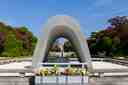
In front of you is an open, green space with manicured trees and calm pathways, but to spot the heart of Hiroshima Peace Memorial Park, look for the unique curved stone arch with a line of colorful flowers at its base-this is the Memorial Cenotaph, and through its opening you’ll glimpse the haunting shell of the A-Bomb Dome in the distance. Take a deep breath, because where you’re standing now might feel peaceful, but the air here is thick with memories and hope. Imagine the clock ticking back to August 6, 1945, at 8:15 AM, when this space was bustling with shops, homes, and laughter-Hiroshima’s busiest area, alive with dreams. In a blinding instant, everything changed. The world’s first atomic bomb exploded overhead, swallowing the city in sound, fire, and sorrow. Yet, from that devastation rose not only wreckage, but the spirit of a city determined never to forget and always to seek peace. Fast forward to today, and you’re standing in a park designed by the renowned architect Kenzō Tange-a place visited by over one million people every year, all drawn here to remember, learn, and hope. Let’s take a walk together through time and space without leaving your spot. To your right and left, you might hear gentle footsteps as visitors move respectfully, pausing here and there to reflect. Up ahead, the Memorial Cenotaph arches gracefully, almost like a sheltering shell over the list of names belonging to the bombing's victims. The inscription reads, “Let all the souls here rest in peace, for we shall not repeat the error.” It’s a floating promise-a vow spoken by all humanity, not just one nation. The arch itself is a symbol, offering shelter to spirits and a gentle reminder to us, the living, to cherish peace like it’s our last ice cream on a hot day. Just beyond it, framed perfectly, stands the A-Bomb Dome-the skeletal remains of the old Prefectural Industrial Promotion Hall. Once a proud symbol of modern progress, it’s now a sacred witness to the tragedy. Its bare dome and scarred walls have survived since that fateful morning, refusing to be erased, holding tight to the memory so we never forget. When Hiroshima rebuilt itself, many citizens pushed for this Dome to be named a UNESCO World Heritage Site. Why, you ask? Because it’s not just concrete and steel-it’s a global promise that what happened here will never be allowed to happen again. A bit of a stubborn building, don’t you think? If you wander just a little, you’ll find the Children’s Peace Monument, with the statue of a young girl raising a paper crane above her head. That’s Sadako Sasaki, who believed folding a thousand cranes might heal her from the effects of the bomb’s radiation. Today, children (and kids-at-heart) send folded cranes from all over the world, so many that you can always find a rainbow cloud of cranes fluttering near the monument. But not everything is solemn. The park is alive with hope and community, too. On August 6th every year, just after the morning silence at 8:15, you’ll hear voices raised in prayer and memory, and at sunset, lanterns float gently down the Motoyasu River, carrying wishes for peace on the water. There’s music, laughter, sometimes even the jangle of festival bells during the Hiroshima Flower Festival in spring-or beautiful lights strung up for Dreamination in winter. And if you still need a reason to ring the bell for peace, there’s the big Peace Bell over by the Children’s Monument. People from around the world come to ring it, and every chime-echoing gently-reminds us we all have a part to play in creating a world free from such horror. So, as you stand here in the quiet green, remember that every tree, every stone, and every whispering breeze has a secret. This was once a place of tragedy, transformed brick by brick, dream by dream, into a beacon of hope. The story of Hiroshima Peace Memorial Park isn’t just a reminder of what was lost, but a living call to cherish peace, protect life, and keep promising-together-never to repeat the error. For further insights on the notable symbols, ceremonies or the museums, feel free to navigate to the chat section below and inquire.
Open eigen pagina →To spot the Hiroshima Municipal Stadium (1957), just look for a round, white building with tall light towers rising up from its roof, standing proudly right across the street from…Meer lezenToon minder
To spot the Hiroshima Municipal Stadium (1957), just look for a round, white building with tall light towers rising up from its roof, standing proudly right across the street from the Hiroshima Peace Memorial Park. Now, let’s step up to the plate and rewind time to when this spot echoed with roaring crowds and the crack of baseball bats. Picture yourself here in 1957-the stadium is brand new, and the Hiroshima Toyo Carp are just getting ready to play ball for the first time in their shiny new home. Imagine nearly 32,000 fans packed inside, their cheers so loud you could feel them rumbling in your chest like a stampede of excitement. This wasn’t just a baseball field; it was a symbol of hope and renewal, built in the very heart of Hiroshima after the war. The stadium saw countless home runs, soaring pop flies, and nail-biting moments, all unfolding right next to the quiet dignity of the Peace Memorial. But, like all great legends, the stadium’s time eventually came to an end. In 2009, a sparkling new municipal stadium was finished, and the old field became a stage for amateur dreams. Its days were numbered, though: by 2010, a bittersweet bylaw signed its fate. Fans snapped up pieces of history at a lively auction-seats, signs, bits of green grass-before demolition began in late November. By February 2012, the cheers faded away, leaving just a slice of the right field stands, like a storyteller left behind to whisper memories to the future. If these walls could talk, I bet they’d still be shouting, “Play ball!”
Open eigen pagina →Right in front of you, you’ll spot the Hiroshima Prefectoral Office-look for a solid, angular government building standing confidently, usually with a bustling plaza and plenty of…Meer lezenToon minder
Right in front of you, you’ll spot the Hiroshima Prefectoral Office-look for a solid, angular government building standing confidently, usually with a bustling plaza and plenty of official-looking signage sprinkled around the entrance. As you stand here, take in the scene-a crossroads of modern city life, but also the nerve center of a region where history was made under emperors and ordinary folks alike. Just imagine: centuries ago, this land was wild and mountainous, with narrow plains hugged by the steep coast of the Seto Inland Sea. Fast forward, and here you are in the heart of Hiroshima Prefecture, a region bursting at the seams with natural wonders-over 140 islands, mountains, and sparkling rivers that cut through the landscape like nature’s highways. You can almost hear the faint sound of distant waves and summer cicadas. But this isn’t just a pretty view. Hiroshima Prefecture has always played a starring role in Japan’s story. Way back in ancient times, people called this area “Geibi,” divided into Akki in the west and Bingo in the east, each with its own dialect and flavor. From the age of stone tools buried beneath the ground, through the wild days of samurai and shoguns, to the rise and fall of feudal lords, this region has seen it all. The very name “Hiroshima” comes from a bold historical mashup: “Hiro,” a symbol of power given by clan lords, and “Shima,” borrowed from a local big-shot named Fukushima. It’s a bit like if New York were called “Yankeeburg.” The prefecture gained real global fame, though, for a reason that forever changed the world. In 1945, Hiroshima city-just a stone’s throw from here-was the first to suffer a nuclear attack, an event that echoes through every brick and stone of this place. Yet, from that devastation, Hiroshima rebuilt with a spirit as sturdy as the mountains around it. Today, it’s not just an international peace symbol, it’s a shimmering jewel for sightseeing-home to two UNESCO World Heritage Sites, including the floating torii gate of Miyajima (you may have spotted its vermillion face in many a travel brochure), and of course, the haunting beauty of the A-bomb Dome. But the story doesn’t end in the past! Hiroshima is a champion of industry and food as well-think of the famous Mazda cars speeding onto roads worldwide, or fragrant oysters sizzling on grills in seaside villages. The place is a treasure trove of crafts too: fine calligraphy brushes, gold-trimmed Buddhist altars, and intricate handmade pianos once set the beat for old Hiroshima’s factories. Let’s not forget the heartbeat of the people. For generations, local folks from mountains to the seacoast have banded together with a flavor all their own-just listen for a few minutes and you may catch a splash of Hiroshima-ben, the local dialect, in laughter and conversation. Oh, and if you’re really lucky, you might score a bite of Hiroshima-style okonomiyaki, a savory pancake so loaded with noodles and cabbage, it’s practically a meal and a dare at the same time. Trust me-I once needed a map just to finish mine. But if you think this region is all about old temples and history lessons, think again! Hiroshima is a land of sports passion: from the legendary Hiroshima Toyo Carp, Japan’s only citizen-founded baseball team, to wild football matches and Olympic dreamers. There’s a reason locals joke that the only stronger emotion than “peace” in Hiroshima is “play ball!” Still, nature here is no walk in the park-well, actually, some of it is, with national and prefectural parks covering vast, lush territory, rivers tumbling from mountain to sea, and flat rice paddies squeezed wherever space allows. But behind the beauty, there’s a wildcard: the mountains are so steep and the soil so loose that Hiroshima has more designated landslide danger zones than anywhere else in Japan. So, if you ever get lost…you might just slide into your next adventure! All in all, this prefecture is a mashup of tradition and reinvention. Whether it’s sending ships and immigrants overseas, surviving natural and manmade disasters, or leading the way in technology, arts, and peace, Hiroshima Prefecture stands as a bridge from Japan’s wild past to its vibrant, hopeful present. Whether you’re here for history, food, or just to see if you can spot an island you haven’t heard of, there’s always one surprise left-right around the next corner. Intrigued by the summary, geography and region or the population? Make your way to the chat section and I'll be happy to provide further details.
Open eigen pagina →If you look straight ahead, you’ll spot a massive, modern structure with curved green rooftops and geometric glass sections-just follow the path up past the trees, and you can’t…Meer lezenToon minder
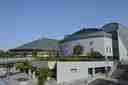
If you look straight ahead, you’ll spot a massive, modern structure with curved green rooftops and geometric glass sections-just follow the path up past the trees, and you can’t miss the distinctive silhouette of the Hiroshima Prefectural Gymnasium. Welcome to the final stop of our tour-the Hiroshima Prefectural Gymnasium, proudly known to locals as the Green Arena! Take a deep breath and imagine the sounds of cheering crowds and bouncing basketballs, because you’re standing in front of the beating heart of Hiroshima’s sports and entertainment scene. But this gymnasium wasn’t always here in this shape. Let’s roll back about 150 years. In the days of samurai, the land you’re standing on was filled with the grand houses of warriors, right beside Hiroshima Castle’s main keep. Then, in the era of the Meiji Restoration, the sound of marching boots took over as the Japanese army set up its command here, filling the area with drills, cannon fire, and the shouts of soldiers. But everything changed in seconds on August 6, 1945, when the atomic bomb leveled the heart of Hiroshima-a silence that hung heavier than any crowd inside the arena ever could. After the war, Hiroshima was determined not just to rebuild its homes and industry but to reclaim life and hope through culture and sport. So, in 1962, the people of Hiroshima built the original Prefectural Gymnasium here, making this land a symbol of rebirth. That gym hosted everything: from volleyball games to music festivals, from boxing matches to martial arts spectacles-sometimes even televised ones! Word on the street is, if these walls could talk, they’d ask for a vacation after all the action. Fast forward to 1994 and, like a superhero getting a costume upgrade, the gymnasium was rebuilt for the Hiroshima Asian Games. Enter the modern facility you see now, complete with the enormous Green Arena that can hold nearly 10,000 people. The arena has a floor big enough to land a small spaceship-48 by 80 meters-with a four-sided giant screen hanging from the ceiling for replays and dramatic countdowns. Besides the main arena, there’s a smaller hall, dojos for martial arts, an archery range, a fitness plaza, meeting rooms, and even a cozy restaurant when you need energy after all that sporting-or cheering. Hiroshima’s own volleyball heroes, the JT Thunders, call this place home, and soon the local basketball legends, the Hiroshima Dragonflies, will battle it out here too. But it’s not just about balls and goals. This place has seen all sorts of events: from epic world volleyball championships, to the World Basketball Championship, to pro wrestling where drama sometimes spilled past the ropes. In fact, a legend of the ring, Mitsuharu Misawa, tragically lost his life here, reminding all just how dramatic and real sports can be. But don’t think it’s all sweat and bruises. The gymnasium has hosted grand music events too-imagine the air trembling as hundreds of cellos fill the hall, or picture Led Zeppelin rocking out here in 1971, donating the show’s proceeds to victims of the atomic bomb. That’s right, right here, rock and roll and peace joined hands. If you peek around, you might spot athletes dashing to practice, the occasional famous face at an exhibition, or kids dreaming of their own glory. And every so often, there’s this little echo bouncing around, carrying stories from police music bands, peace music festivals, and, most recently, world leaders at the G7 Summit using the gym’s halls as the international media center. In other words, this place isn’t just a gym-it’s a living history book and a playground for hope. So, whether you’re inspired by the echoes of victory cheers, the soft brush of bows from the archers, or the distant memory of guitar riffs and applause, remember that you’re standing in a spot that’s blended the pain of Hiroshima’s past with the joy and hope of its present. It’s a story with energy, heart, and an absolutely huge roof. Thanks for joining the adventure through Naka-ku-maybe you’ll come back to cheer on a new champion, or just to enjoy the buzz of a city that never gave up! If you're keen on discovering more about the summary, facility overview or the major competitions and events, head down to the chat section and engage with me.
Open eigen pagina →
Veelgestelde vragen
Hoe begin ik de tour?
Download na aankoop de AudaTours-app en voer je inwisselcode in. De tour is direct klaar om te starten – tik gewoon op afspelen en volg de GPS-geleide route.
Heb ik internet nodig tijdens de tour?
Nee! Download de tour voordat je begint en geniet er volledig offline van. Alleen de chatfunctie vereist internet. We raden aan om te downloaden via wifi om mobiele data te besparen.
Is dit een groepsrondleiding met gids?
Nee - dit is een audiotour met eigen gids. Je verkent zelfstandig op je eigen tempo, met audiovertelling via je telefoon. Geen tourguide, geen groep, geen schema.
Hoe lang duurt de tour?
De meeste tours duren 60-90 minuten, maar jij bepaalt het tempo volledig. Pauzeer, sla stops over of neem pauzes wanneer je wilt.
Wat als ik de tour vandaag niet kan afmaken?
Geen probleem! Tours hebben levenslange toegang. Pauzeer en hervat wanneer je wilt – morgen, volgende week of volgend jaar. Je voortgang wordt opgeslagen.
Welke talen zijn beschikbaar?
Alle tours zijn beschikbaar in meer dan 50 talen. Selecteer je voorkeurstaal bij het inwisselen van je code. Let op: de taal kan niet worden gewijzigd na het genereren van de tour.
Waar vind ik de tour na aankoop?
Download de gratis AudaTours-app uit de App Store of Google Play. Voer je inwisselcode in (verzonden per e-mail) en de tour verschijnt in je bibliotheek, klaar om te downloaden en te starten.
Als je niet tevreden bent met de tour, betalen we je aankoop terug. Neem contact met ons op via [email protected]
Veilig afrekenen met 


